Showing posts with label biometrics. Show all posts

Daily Tech Digest - June 26, 2026


Quote for the day:

"Practice chaos, not just success" -- Madelyn Villamizar

🎧 Listen to this digest on YouTube Music

▶ Play Audio Digest

Duration: 24 mins • Perfect for listening on the go.


Healthcare leaders see a fatal cyber incident as inevitable

Healthcare practices face real vulnerabilities because they rely heavily on outside partners for critical operations like electronic records, telehealth, and billing. According to a recent industry report, most practices have experienced operational disruptions stemming from these vendor relationships over the past year. While healthcare leaders often trust these external companies, many admit they do not closely monitor their network connections, leaving systems exposed to targeted attacks. As the danger grows, a rising number of healthcare executives believe a fatal cyber incident is inevitable within the next five years. Despite this shared awareness, preparation remains largely inadequate. Many organizations lack basic incident response plans and continue to view cybersecurity simply as a technical expense rather than a core leadership responsibility. To fix these vulnerabilities, successful practices are changing their approach. They are moving security discussions out of the IT department and directly into the boardroom. With stricter compliance rules taking effect in 2026 and artificial intelligence becoming common in daily routines, treating security, compliance, and operations as one fully managed program is essential. Taking this steady, unified approach keeps practices running smoothly, protects sensitive data, and ultimately ensures patient safety remains the top priority.


AI fraud drives banks toward biometric identity defenses

The banking sector is rapidly accelerating its investment in biometric identity defenses as artificial intelligence-driven fraud, such as deepfakes and synthetic identities, grows increasingly sophisticated. A recent industry survey indicates that a vast majority of banking executives anticipate major disruptions from artificial intelligence over the next few years, prompting 84 percent of them to boost their cybersecurity budgets specifically to address these emerging threats. With fraud tactics evolving from simple credential theft to complex attacks that bypass standard security cameras with pre-generated media, traditional static defenses are no longer sufficient. Consequently, industry leaders are shifting toward layered security approaches that combine device analysis, behavioral risk scoring, and continuous biometric verification. Currently, about one-third of banks use biometric tools for access and payments, but nearly three-quarters plan to integrate this technology within three years. Major financial institutions and security vendors advocate for a proactive culture of vigilance, deploying adaptive authentication tools that verify human identity across every interaction point. Ultimately, securing financial systems now requires dynamic, multi-faceted identity solutions to outpace the commercialization of fraud services and protect consumers against modern synthetic identity theft.


GRC is broken. FedRAMP 20x might fix it

Governance, risk, and compliance practices have gradually lost touch with operational reality, often prioritizing documentation over actual security. Many current compliance models rely on manual sampling and static evidence to tell a flawless, polished story. This approach produces clean reports and perfect policies, but it frequently fails to reflect the messy truth of an organization's actual environment. Because the technology landscape has evolved rapidly, these outdated assurance methods no longer provide meaningful guarantees of trust or safety. The upcoming FedRAMP 20x framework represents a necessary shift away from this storytelling approach. Instead of relying on manual snapshots and curated samples, FedRAMP 20x pushes the industry toward a model based on continuous validation and engineering principles. By leveraging automation, direct system telemetry, APIs, and machine-readable evidence, the framework aims to assess entire datasets rather than isolated parts. This shift toward engineering-led compliance fundamentally changes how we measure trust. It replaces static, paperwork-heavy exercises with dynamic, automated insights that reflect the actual state of a system. Ultimately, FedRAMP 20x grounds compliance in operational truth, ensuring that security assessments reflect reality rather than just a well-crafted narrative.


Attestation in Cybersecurity: Types, Uses & Best Practices

Attestation in cybersecurity is a fundamental process that allows a system to prove its integrity, configuration, and operational state to another entity. By generating verifiable evidence, organizations can build trust across distributed environments, software supply chains, and connected devices without relying on blind faith. The process involves an attester that securely collects system data, a verifier that evaluates this evidence against trusted baselines, and a relying party that makes access decisions based on the outcome. This approach is becoming critical for regulatory compliance, such as the Cyber Resilience Act, which increasingly demands concrete proof of security rather than basic self-reporting. To implement attestation effectively, organizations should adopt a risk-based strategy that targets critical assets and high-risk lifecycle stages. Best practices include automating attestation within continuous integration and deployment pipelines, using cryptographic signatures to prevent tampering, and requiring concrete evidence like hardware-backed measurements rather than vague assumptions. Furthermore, aligning attestation checks with software bills of materials and vulnerability management provides a clearer picture of system health. Ultimately, transitioning from manual self-attestation to automated, verifiable proof helps organizations maintain rigorous security standards and ensure components remain uncompromised from development to deployment.


Why your cloud strategy is already out of date

Most cloud strategies are already out of date because they completely miss a looming crisis in the software supply chain. Right now, companies are busy moving away from major public cloud providers toward private or sovereign clouds to cut costs and gain better control over their data. However, simply changing where your servers live offers zero protection against a much larger threat: artificial intelligence is now finding deep, complex vulnerabilities in open-source software dependencies faster than human maintainers can ever patch them. The traditional system of finding and fixing software bugs was built for a slower era and is completely unprepared for this incoming volume of automated threat discovery. Consequently, organizations must immediately make supply chain security a core part of their cloud planning. This means maintaining a precise, living inventory of all software components you use, rather than treating it as a simple compliance checklist. Companies must also press their vendors for clear backup plans when critical libraries go unpatched. Finally, IT teams need to build the internal skills required to copy and independently maintain abandoned projects to ensure their systems remain secure when the wider ecosystem fails.


Behind the Scenes: Building Cross-Region Replication into Secret Management Service

The Oracle Cloud Infrastructure Secret Management Service recently introduced a cross-region replication feature, allowing customers to duplicate sensitive data, like passwords and API keys, across multiple geographic locations for robust disaster recovery. Developing this feature required thoughtful engineering to ensure system resilience without compromising existing functionality. To achieve this, the team implemented an asynchronous message queue that separates source region operations from target region health. If a target region experiences an outage, source region updates continue smoothly, and replication tasks are safely queued for later retry. Furthermore, the system processes separate messages for each target region, meaning a failure in one location will not hinder replication to others. To protect the broader fleet from localized issues, the team instituted API versioning, which prevents target regions from accepting unrecognized schema changes. They also structured the update flow to prevent unexpected software faults from spreading across regions by ensuring updates are fully processed locally before replication begins. Finally, to manage the complexities of distributed systems, sequence numbers are used to discard stale, out-of-order updates, ensuring replicas always maintain the most current state.


CTO Confidence in Scaling AI Falls for Third Straight Year

According to a recent Akkodis report, chief technology officers are growing less confident in their ability to expand artificial intelligence across their organizations. Confidence has dropped for the third consecutive year, falling from eighty-two percent in 2024 to just forty-eight percent in 2026. While many companies successfully run initial pilot programs, they struggle to integrate these tools into existing operations. The main hurdles include managing older computer systems, untangling disorganized data, and establishing clear rules for oversight. Experts note that companies remain stuck in the testing phase, incurring costs without seeing practical benefits. Simply buying more software is not the answer; businesses must build a solid foundation of reliable data and structured workflows. Currently, poor data quality remains a significant barrier. When artificial intelligence relies on messy or outdated records, it quickly amplifies mistakes across the organization. Despite these growing pains, the overall goal of technology investments is shifting. Instead of simply focusing on cutting costs or improving speed, leaders are now using these tools to drive long-term growth and create new products. Ultimately, expanding these systems requires reliable data, transparent rules, and genuine trust from the employees who use them daily.


How we approach cybersecurity risk management at Microsoft

Microsoft manages cybersecurity risk through a comprehensive, enterprise-wide framework that blends structured governance, continuous lifecycle management, and strict regulatory alignment. Central to this approach is the Cybersecurity Governance Council, a cross-functional team led by the Chief Information Security Officer, which meets twice weekly to assess emerging threats and validate mitigation strategies. This model promotes a bidirectional flow of information, ensuring that operational risks are elevated to senior leadership and integrated into strategic enterprise decisions. The company employs a four-stage risk management lifecycle: identification, assessment, mitigation, and ongoing monitoring. Risks are logged into a centralized register accessible to any employee or vendor with corporate access, fostering a culture of proactive, democratized risk reporting. Domain experts then evaluate these risks using structured criteria to assign ownership and track remediation efforts. Furthermore, Microsoft actively aligns its practices with global regulatory standards, including ISO 27001 and the NIST Cybersecurity Framework, embedding compliance into its broader enterprise risk posture. Ultimately, this scalable system goes beyond technical controls by empowering individuals, enforcing clear accountability, and utilizing strategic initiatives like the Secure Future Initiative to drive continuous improvement across the organization.

Why developer trust is fragile (and how to build it)

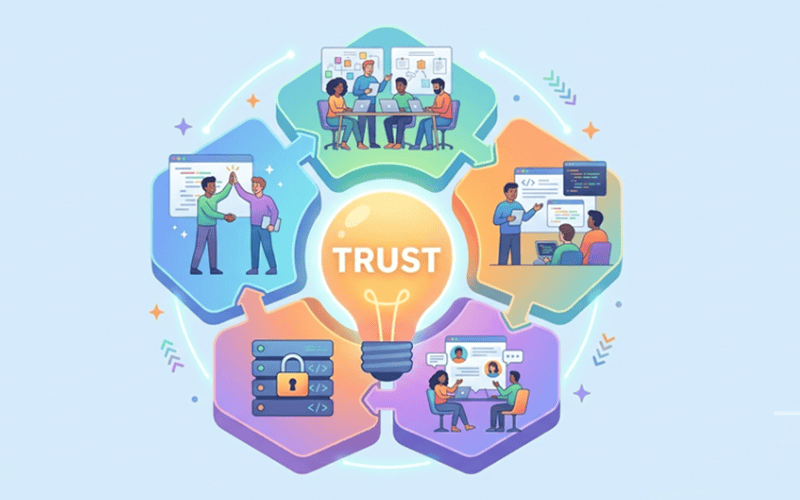
Building trust with software developers is challenging but essential, especially as artificial intelligence reshapes the technology landscape. Sanjay Sarathy, an executive at Cloudinary, explains that developers are naturally skeptical thinkers who evaluate tools critically. While they enthusiastically adopt AI to improve their workflows, they rarely trust its outputs blindly. To foster genuine allegiance, companies must view developer trust as a foundational element rather than a secondary feature. One effective strategy is offering meaningful free access to platforms, allowing developers to experiment, recognize value, and build confidence before moving projects into production. Additionally, providing technical support staffed by knowledgeable peers is vital; developers respect support teams that understand their specific language and challenges. As AI coding tools become more common, organizations must also ensure their documentation and interfaces are easily readable by AI models to minimize errors. Finally, clear and honest communication is crucial. Companies should openly acknowledge the limitations of their tools, avoid sudden changes to existing systems, and provide reliable, backward-compatible updates. By delivering consistently and respecting their time, companies can successfully earn the long-term trust and loyalty of the developer community.


Making Windows a developer platform, again

Microsoft is actively improving Windows to make it a more appealing platform for software developers by introducing tools that bridge the gap between Windows and Linux environments. A key addition is Coreutils for Windows, a package that brings standard Unix command-line utilities directly into the Windows ecosystem. This eliminates the frustrating context switching developers often face when moving between Windows and Linux systems, allowing Unix scripts and commands to run smoothly on a Windows machine. Additionally, Microsoft released Windows Developer Config, a tool designed to rapidly set up a fully functional development computer. Using automation scripts, it installs essential tools like Git, Visual Studio Code, and programming language support while also configuring the Windows Subsystem for Linux. This setup mirrors the environment of cloud-hosted development boxes but runs locally, making it highly practical for developers dealing with slow or unreliable network connections. The configuration tool ensures consistency across devices, saving teams time and preventing environment drift. Together, these updates demonstrate a clear effort to streamline daily workflows, providing software engineers with a comfortable, unified, and highly customizable environment right out of the box.

Daily Tech Digest - June 01, 2026


Quote for the day:

“The best architectures, requirements, and designs emerge from self‑organizing teams.” -- Martin Fowler

🎧 Listen to this digest on YouTube Music

▶ Play Audio Digest

Duration: 23 mins • Perfect for listening on the go.


Why AI can’t match human creative work

This Computerworld article explores why AI-generated content struggles to match the real effectiveness of human creativity, despite its overwhelming volume in today's digital marketplace. Recent industry studies in advertising and search engine optimization highlight a clear pattern: even when typical audiences cannot consciously distinguish between human and machine outputs, they consistently prefer human-created work. In advertising, human-made campaigns perform significantly better in driving sales and boosting long-term brand health because they can forge genuine emotional connections and break new ground rather than simply remixing existing data. Similarly, comprehensive data from web search results reveals that human-written articles overwhelmingly secure top rankings compared to those entirely generated by software algorithms. While automated tools have allowed an unprecedented flood of synthetic blogs, music, videos, and social media posts into the mainstream, this automated material rarely captures meaningful audience attention or real engagement. For instance, although AI-produced episodes make up a very substantial share of new podcast uploads, they currently account for less than one percent of actual listening time. Ultimately, the author concludes that while modern technology serves as a practical assistant for formatting, outlining, or brainstorming, standalone human talent remains completely indispensable for producing work that truly resonates, engages readers, and achieves tangible long-term business results.


TSA seeks biometric identity management support

The Transportation Security Administration is looking for industry assistance to modernize and maintain its internal identity management and background check systems. Through a draft work statement issued by its Enrollment Services and Vetting Programs office, the agency intends to upgrade how it processes biographical and biometric information. This initiative does not create new public-facing data collection routines; instead, it optimizes existing programs that screen pilots, commercial flight students, maritime personnel, hazardous materials drivers, and PreCheck applicants. A major focus of this comprehensive update is moving away from traditional, one-time background checks toward continuous, automated tracking. To do this, the agency plans to expand its use of the Federal Bureau of Investigation's recurrent vetting service and automate the evaluation of text-based criminal records. Additionally, the project outlines plans to integrate existing systems more deeply with Department of Homeland Security biometric databases over the next three to five years. To improve data accuracy and operational speed, the selected contractor will use data science tools, including basic machine learning, to detect data anomalies and help staff review cases more efficiently. The proposed contract includes a twelve-month base period followed by four optional one-year extensions, with all services based at the agency's Virginia headquarters.


Why ‘human in the loop’ falls short – and what to do about it

In this SiliconANGLE column, Jason Bloomberg explains why the common practice of keeping a human in the loop to oversee artificial intelligence operations is deeply flawed. While tech companies often pitch human oversight as a safety net against autonomous systems making mistakes, this method struggles to hold up under real-world pressure. On an individual level, people tend to trust automated systems too much, suffer from mental fatigue during repetitive tasks, or simply wave approvals through without checking. In corporate groups, it often leads to finger-pointing, blame-shifting, or superficial compliance. Furthermore, software systems function in mere seconds, whereas human business workflows require meetings and lengthy procedural delays, creating a massive gap in actual response times. To fix these flaws, tech providers usually suggest limiting software capabilities or building detailed tracking tools, but these heavy-handed changes slow down operations and frustrate commercial goals. Bloomberg suggests flipping the entire setup by focusing on automation in the loop instead. Rather than forcing human workers to become cogs inside an automated pipeline, software should exist purely to assist human day-to-day operations. This perspective ensures people retain ultimate responsibility, prevents software from making critical business decisions, and allows systems to grow safely without overwhelming human operators or clashing with long-term strategic plans.


Why Moving Off the Cloud Is the Easy Part and What Comes Next Is Where Things Get Hard

In this article, Eli Lahr explains that while rising costs and unpredictable performance prompt many organizations to move their digital workloads off public cloud providers, the actual migration is rarely the primary challenge. Instead, the real difficulty emerges afterward, during regular day-to-day operations. Moving away from large, centralized cloud platforms forces companies to manage internal infrastructure details that were previously handled automatically by the provider. This structural transition introduces unfamiliar administrative responsibilities, hidden technical skill gaps, and the intricate task of safely running applications across fragmented environments, including a combination of traditional on-premises hardware, local data centers, and remaining cloud components. Rather than treating this shift as a basic technology relocation, successful organizations choose to approach it as a comprehensive corporate strategy revision. They bring together their engineering, security, and financial departments early in the process to determine exactly where each distinct application belongs according to its unique performance needs, actual long-term expenses, and strict data compliance rules. Lahr recommends explicitly whiteboarding critical workloads to map out their exact structural dependencies, real monthly costs, and detailed response plans for late-night system outages or sudden traffic spikes. Ultimately, establishing precise benchmarks for baseline expenses, execution speed, and overall availability helps ensure companies achieve genuine long-term predictability.


6 critical security gaps every CISO must address

The CSO Online article highlights six essential security shortcomings that corporate security leaders need to address. First, a narrow perspective remains common; many leaders treat cybersecurity purely as a technical IT issue instead of focusing on broader business resilience and downstream operational continuity. Second, a noticeable lag exists between the swift automation used by digital attackers and the slower, more traditional response times of corporate defense teams. Similarly, security operations frequently struggle to match the rapid pace of general business changes, adoptions, and market expansions. Internal talent issues have also evolved significantly; the primary challenge is no longer just finding enough individuals to hire, but ensuring that current employees have the specific, updated skills required to handle an evolving environment. This skills gap is heavily compounded by the rapid growth of artificial intelligence, where top-down corporate initiatives and unauthorized employee tools are vastly outstripping proper security frameworks and oversight. Finally, aging tech infrastructure creates a significant vulnerability, as out-of-date systems cannot support modern security controls, leaving them exposed to easy exploitation. Rather than attempting to block every single threat, professionals are advised to use objective, risk-based prioritization to protect core company workflows and preserve long-term stability.


The Pitfalls of Defaulting to a Single Database: Why "Good Enough" Isn't Always a Good Strategy

When building software systems, it is incredibly common for modern engineering teams to default to a single database because it feels familiar, comfortable, and entirely sufficient for early stage development. However, accepting a "good enough" data architecture often introduces severe technical challenges as an organization scales. Forcing highly diverse data workloads, such as rapid transactional processing, complex analytical reporting, and unstructured document storage, into one general purpose engine creates major performance bottlenecks. No single database system can optimally handle every distinct data requirement, which forces teams to make design compromises that ultimately drag down the performance of the entire platform. Furthermore, relying on a single shared repository creates a precarious single point of failure. If that central data layer experiences an unexpected outage or suffers a performance slowdown from a poorly optimized query, every connected application and service grinds to a sudden halt. This structural centralization tightly couples unrelated services, making future software changes cumbersome and risky. Instead of settling for a monolithic database structure out of convenience, organizations achieve far greater resilience by matching distinct operational tasks with appropriate, specialized storage technologies. Choosing targeted databases minimizes resource friction, streamlines backend infrastructure management, and ensures individual services remain completely independent and stable.
The article examines how advanced artificial intelligence systems have dismantled traditional timeline safety margins for enterprise cyber defense. Historically, while AI could exploit known security flaws, it struggled to identify them independently. However, the release of Anthropic’s Claude Mythos Preview changed this dynamic by autonomously discovering thousands of zero-day vulnerabilities across major operating systems and browsers at a minimal compute cost. Consequently, the window between vulnerability disclosure and real-world exploitation has collapsed to less than ten hours, rendering traditional, calendar-based patching schedules obsolete. To address this risk, security teams are advised to replace standard severity scoring with a more dynamic, three-layer prioritization filter that integrates real-time exploitation data from federal databases and predictive scoring systems. Additionally, the proliferation of AI-driven developer platforms creates massive security risks because a single compromised host can easily expose high-value credentials across an entire corporate ecosystem. Because formal safety and authorization standards are still years away from implementation, organizations must move away from human-speed response intervals. Securing modern networks requires implementing event-driven patching for core services, conducting proactive asset discovery scans, and strictly auditing authorization boundaries to match the accelerated operational speed of automated adversaries.


Why Data “Spring Cleaning” Is Critical for AI Execution

In a Dataversity article, Michael Curry explains why enterprise data management must transition from a seasonal chore into a continuous operational discipline to support successful AI deployment. Many organizations today struggle with fragmented sources, redundant datasets, and brittle information pipelines. While these data inefficiencies were manageable during early experimental phases, they now directly block modern automation models from scaling properly. Artificial intelligence systems demand highly reliable, context-rich, and easily accessible internal records; without them, models deliver late insights or inaccurate outputs, which quickly destroys user trust. Survey data indicates that a large majority of technology leaders worry about basic quality and accessibility rather than the structural complexity of the algorithm itself. To resolve these operational bottlenecks, companies must modernize infrastructure and routinely clean their digital environments using automated classification, systematic deduplication, and regular platform profiling. Furthermore, businesses must rethink their legacy core systems, which house highly valuable data, by establishing secure, real time access instead of abandoning those platforms entirely. Ultimately, expanding these tools from isolated test pilots into broad enterprise execution requires strict data governance, clear ownership, and standardized business definitions. Because corporate information landscapes shift constantly, keeping foundations clean is a permanent obligation that directly determines if advanced tech projects succeed or stall.


Digital Twins Are Broken, AI Might Finally Fix Them

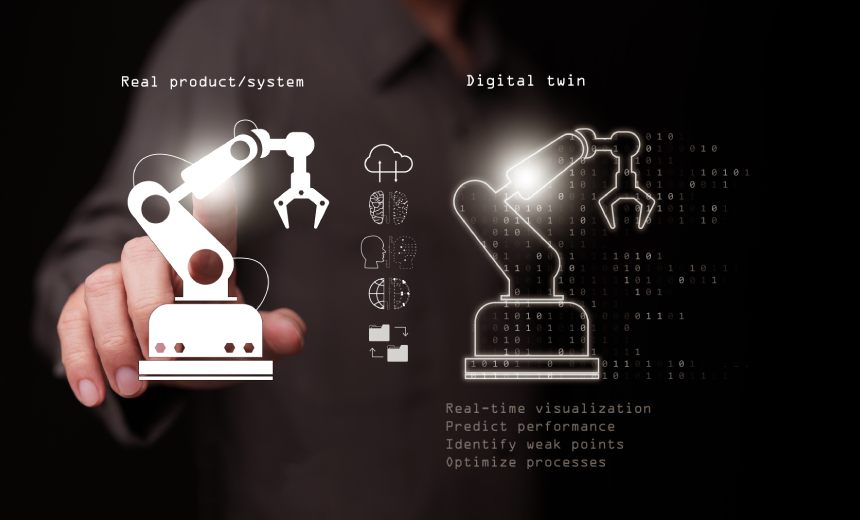
For nearly two decades, digital twins struggled to live up to their initial promises. Most companies used them merely as advanced visualization tools or static engineering models that quickly became disconnected from the physical equipment they represented. Building and maintaining these simulations was highly expensive, and fragmented data across separate corporate departments further limited their actual utility. However, the broader availability of practical artificial intelligence is changing how factories and industrial plants operate. By cleanly integrating live data feeds, modern digital twins can continuously learn from everyday operational events, environmental shifts, and machinery maintenance histories rather than remaining static. This shift allows large companies to simulate factory updates and test potential facility modifications safely without pausing active assembly lines. Beyond basic mirroring, newer setups enable virtual models to accurately predict system failures and automate adjustments directly back into real-world workflows. This ongoing progression also encourages organizations to dismantle the traditional divisions between their plant-floor operational systems and standard corporate IT networks. Ultimately, these tools working together allow manufacturers to bypass previous technical limitations. Instead of managing passive digital replicas, businesses can now run responsive systems that analyze data and optimize physical environments in real time, finally capturing real value from their data investments.


Data discovery gaps that catch enterprises off guard

In an interview with Help Net Security, Schellman CEO Avani Desai highlights a significant disconnect between what organizations believe they know about their own sensitive files and what automated discovery tools actually find. Even companies with advanced compliance dashboards and extensive data catalogs frequently overlook hidden information sitting in abandoned cloud storage, old testing setups, and legacy environments that teams assumed were turned off years ago. This lack of visibility becomes especially problematic during corporate mergers, where overlooked and heavily duplicated files can stall integration work and lead to unexpected, costly cleanups. Desai points out that while synthetic data is currently marketed heavily as a simple shortcut for basic security habits, confidential computing remains underappreciated despite its crucial ability to protect information while it is actively being processed. Interestingly, smaller firms often manage compliance and technical updates much better than large enterprises because they operate with less internal bureaucracy, fewer outdated computer systems, and far clearer lines of individual responsibility. Ultimately, mapping out company information cannot be treated as a fixed, one-off task. Desai suggests the real test of a company's readiness is knowing exactly who is responsible for continuously updating that data map after any routine system change, software update, or cloud migration takes place.

Daily Tech Digest - April 19, 2026


Quote for the day:

“In the end, it is important to remember that we cannot become what we need to be by remaining what we are.” -- Max De Pree


🎧 Listen to this digest on YouTube Music

▶ Play Audio Digest

Duration: 20 mins • Perfect for listening on the go.


Beyond the degree: What education must become in the age of AI

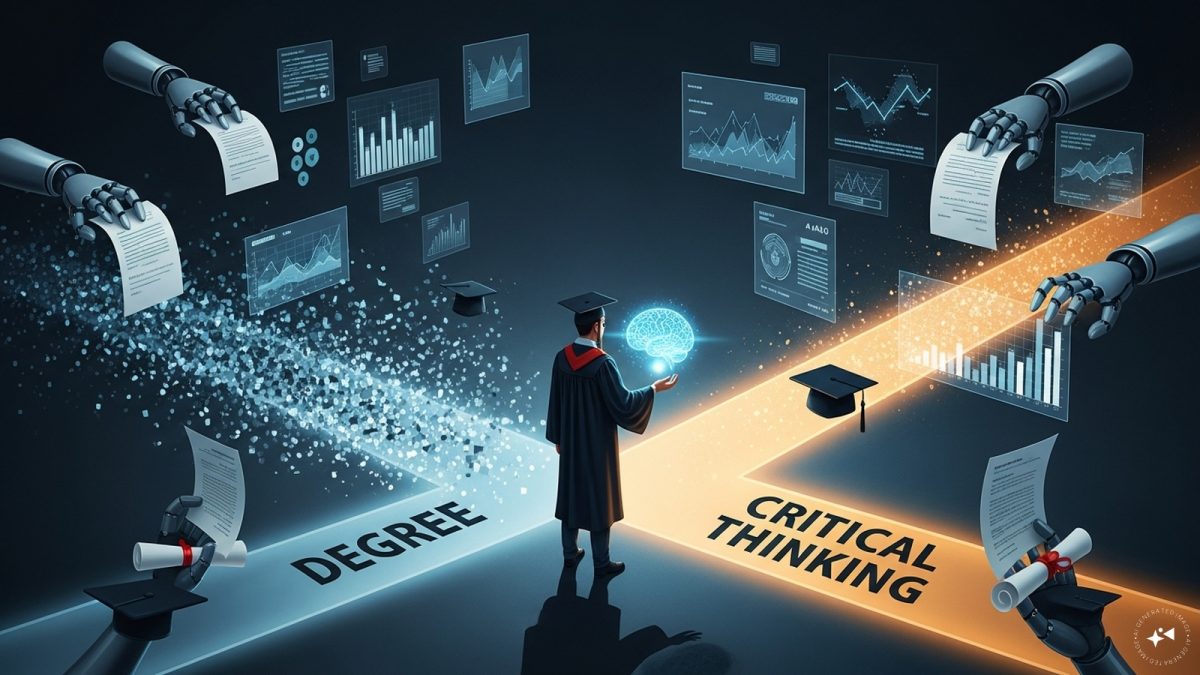
The Firstpost opinion piece titled "Beyond degree: Education in the age of AI" explores the fundamental disruption of traditional academic structures caused by rapid artificial intelligence advancements. It argues that the era where a degree served as a definitive lifelong credential is coming to an end, replaced by a pressing need for continuous, skill-based learning. As AI increasingly automates technical and administrative tasks, the article posits that the uniquely human advantage now lies in higher-order cognitive and ethical functions. Specifically, education must evolve to prioritize the ability to formulate the right questions, critically evaluate AI-generated outputs, and maintain firm personal accountability for decisions that impact society. Rather than focusing on rote memorization—which has been rendered redundant by ubiquitous digital tools—future curricula should nurture curiosity, empathy, and cross-disciplinary thinking. The author highlights that while AI democratizes knowledge through personalized learning, it also necessitates a profound shift in how we value intelligence, moving away from rigid institutional metrics toward adaptable, lifelong expertise. Ultimately, the piece concludes that the most successful individuals in an automated economy will be those who combine technological proficiency with the critical judgment and human-centric values required to guide AI responsibly. By fostering these unique human traits, the educational system can better prepare students for a complex, technology-driven future.
In her article, Angela Zhao addresses a critical architectural flaw in modern AI agent infrastructure: the lack of "Decision Coherence." Current systems typically fragment critical data across relational databases, feature stores, and vector databases, with each component operating without a shared transactional boundary. This fragmentation creates a "seam problem" where agents retrieve inconsistent, disparate views of reality—such as current account balances paired with stale behavioral signals or outdated semantic embeddings. Consequently, agents may make incorrect, irreversible decisions, particularly in high-concurrency environments like financial transaction approvals or resource allocation. To bridge this gap, Zhao introduces the concept of the "Context Lake," a system class specifically designed to enforce Decision Coherence. Unlike traditional decoupled stacks, a Context Lake integrates episodic events, semantic transformations, and procedural rules within a single transactional scope. This ensures that every decision-making context is internally consistent, semantically enriched, and strictly bounded in freshness. By moving semantic computations—like embedding generation—inside the system boundary, the Context Lake eliminates the asynchronous delays that plague existing architectures. Based on research by Xiaowei Jiang, this emerging infrastructure layer is essential for production-grade AI agents that manage fast-changing, shared states and require absolute correctness to avoid costly operational failures or system-wide logic errors.


The Algorithmic Arms Race: Navigating the Age of Autonomous Attacks

In the article "The Algorithmic Arms Race," Kannan Subbiah explores the paradigm shift from human-led cyberattacks to the rise of autonomous Cyber Reasoning Systems. This transition marks an evolution from traditional automated scripts to cognitive AI agents capable of independent reasoning, real-time adaptation, and executing the entire cyber kill chain at machine speed. Subbiah details the anatomy of these autonomous attacks, highlighting how they compress reconnaissance, weaponization, and lateral movement into rapid, self-directed sequences that outpace human intervention. Through case studies like Operation Cyber Guardian and the Shai-Hulud supply chain siege, the author illustrates a future where malware independently manages its own obfuscation and identifies obscure vulnerabilities. To counter these sophisticated threats, the article advocates for a "fighting fire with fire" strategy, urging organizations to deploy Autonomous Security Operations Centers, Moving Target Defense, and hyper-segmented Zero Trust architectures. Furthermore, Subbiah emphasizes the necessity of integrated risk analytics, mandatory Software Bill of Materials, and adversarial red teaming where AI systems challenge one another. Ultimately, the narrative stresses that in an era of machine-speed conflict, human-centric defense models are no longer sufficient; instead, organizations must embrace autonomous, resilient infrastructures while maintaining human oversight as a final ethical and operational kill switch.


Workplace stress in 2026 is still worse than before the pandemic

The 2026 Workplace Stress Report from Help Net Security highlights a concerning trend: employee stress remains significantly higher than pre-pandemic levels, with global engagement hitting a five-year low. According to Gallup’s latest findings, roughly 40% of workers worldwide experience daily stress, while negative emotions like anger and sadness persist at elevated rates. This lack of engagement is not just a cultural issue but a massive economic burden, costing the global economy approximately $10 trillion in lost productivity, or 9% of global GDP. The report indicates that managers and leaders are bearing the brunt of this emotional weight, reporting higher levels of loneliness and stress compared to individual contributors. Demographic disparities are also evident, as women and workers under the age of 35 report higher stress levels than their peers. Geographically, the United States and Canada lead the world in daily stress at 50%. Interestingly, the study finds that work location plays a role, with hybrid and remote-capable employees experiencing more stress than those in fully remote or strictly on-site roles. Ultimately, the data suggests that organizational success is deeply tied to emotional wellbeing, as engaged leaders are far more likely to thrive and mitigate the negative impacts of workplace pressure.


Most enterprises can't stop stage-three AI agent threats, VentureBeat survey finds

According to a recent VentureBeat survey, a significant security gap exists as enterprises struggle to defend against "stage-three" AI agent threats. The survey identifies a three-stage maturity model: Stage 1 focuses on observation, Stage 2 on enforcement via Identity and Access Management (IAM), and Stage 3 on isolation through sandboxed execution. While monitoring investment has surged to 45% of security budgets, most organizations remain trapped at the observation stage, leaving them vulnerable to sophisticated agentic failures where traditional guardrails prove insufficient. Data from Gravitee and the Cloud Security Alliance underscores this readiness gap, noting that only 21.9% of teams treat AI agents as distinct identity-bearing entities, while 45.6% still rely on shared API keys. This structural weakness allows for rapid lateral movement and unauthorized actions, which 72% of CISOs identify as their top priority. Despite the high demand for robust permissioning, current enterprise infrastructure often lacks the necessary runtime enforcement to contain a "blast radius" when agents go rogue. The survey highlights that while agents are already operating with privileged access to siloed data, security teams are lagging behind in providing the isolation required to stop the next wave of autonomous exploits and supply-chain breaches.


Empty Attestations: OT Lacks the Tools for Cryptographic Readiness

Operational technology (OT) systems face a critical security gap as regulators increasingly demand attestations of post-quantum cryptographic readiness despite a severe lack of specialized auditing tools. Unlike IT environments, which prioritize confidentiality and can be regularly updated, OT infrastructure focuses primarily on availability and often relies on decades-old legacy hardware with minimal processing power. This makes the implementation of modern cryptographic standards exceptionally difficult, as many devices lack the memory to execute post-quantum algorithms or have encryption hard-coded into immutable firmware. Consequently, asset owners are often forced to treat security compliance as a box-ticking exercise, producing paperwork that provides a false sense of assurance rather than genuine protection. This vulnerability is compounded by "harvest now, decrypt later" tactics and the risk of stolen firmware signing keys, which allow adversaries to maintain long-term access and potentially push malicious updates. Without OT-specific frameworks and instrumentation, these systems remain exposed to sophisticated threats like Volt Typhoon. To truly secure critical infrastructure, industry leaders and regulators must acknowledge that current IT-centric assessment models are insufficient, requiring a shift toward developing practical tools that account for the unique operational constraints and long life cycles inherent in industrial environments.


Business Risk: How It’s Changing In The Digital Economy

The digital economy has fundamentally transformed the landscape of business risk, shifting focus from traditional financial and operational concerns toward complex, technology-driven vulnerabilities. According to experts from the Forbes Business Council, risk is no longer a separate "balance sheet" issue but is now embedded in every design choice and organizational decision. Key emerging threats include data vulnerability, algorithmic bias, and cyber risks that extend across entire supply chains via sophisticated social engineering. Notably, the rapid adoption of artificial intelligence introduces "invisible" risks, such as business models quietly becoming obsolete or conflicting AI agents causing critical system outages. Furthermore, companies face unprecedented challenges regarding digital visibility and public perception; in an oversaturated market, being unseen or suffering from viral reputation damage can be as detrimental as direct financial loss. Managing these dynamic parameters requires a shift from reactive detection to proactive, upstream governance and a focus on organizational adaptability. Ultimately, the modern definition of risk centers on a firm's ability to match its cognitive capabilities with the increasing speed and non-linearity of the digital environment. To survive, leaders must move beyond standard business formulas, integrating real-time intelligence and human-centered context to navigate the uncertainty inherent in a data-driven world.


Building your cryptographic inventory: A customer strategy for cryptographic posture management

As post-quantum cryptography approaches, Microsoft emphasizes that the primary challenge for organizations is not selecting new algorithms, but discovering existing cryptographic assets. This Microsoft Security blog post outlines a strategy for building a cryptographic inventory as the foundation of Cryptography Posture Management (CPM). A cryptographic inventory is defined as a dynamic catalog encompassing certificates, keys, protocols, and libraries used across an enterprise. To manage these effectively, Microsoft proposes a continuous six-stage lifecycle: discovery, normalization, risk assessment, prioritization, remediation, and ongoing monitoring. This approach spans four critical domains—code, network, runtime, and storage—ensuring visibility into everything from source code primitives to active network sessions. Organizations can leverage existing tools like GitHub Advanced Security for code analysis, Microsoft Defender for Endpoint for runtime signals, and Azure Key Vault for centralized key management to simplify this process. Rather than a one-time project, CPM requires clear ownership and documented policy baselines to maintain security hygiene and achieve "crypto agility." By establishing these practices now, businesses can proactively identify vulnerabilities, comply with emerging global regulations, and ensure a resilient transition to a quantum-safe future. Through strategic integration of Microsoft capabilities and partner solutions, teams can transform complex cryptographic landscapes into manageable, risk-informed systems.


The Rise of Intelligent Automation: How Technology Is Redefining Work and Efficiency

The rise of intelligent automation (IA) is fundamentally reshaping the financial landscape by blending artificial intelligence with robotic process automation to create more agile, efficient, and strategic work environments. According to Global Banking & Finance Review, this shift is not merely about replacing manual labor but about redefining the nature of work itself. By automating repetitive and high-volume tasks—such as data entry, reconciliation, and compliance checks—organizations can significantly reduce human error and operational costs while accelerating processing speeds. Beyond mere efficiency, IA empowers financial institutions to leverage advanced analytics for real-time decision-making and hyper-personalized customer experiences, such as tailored loan products and instant virtual assistance. This technological evolution allows human professionals to pivot from mundane administrative roles toward high-value activities like strategic planning and creative problem-solving. Furthermore, IA enhances risk management through proactive fraud detection and seamless regulatory adherence, providing a robust framework for digital transformation. As the industry moves toward autonomous financial operations, embracing these intelligent systems becomes a competitive necessity. Ultimately, the integration of intelligent automation fosters a culture of innovation, ensuring that financial services remain resilient, secure, and customer-centric in an increasingly complex and data-driven global market.


World targets central IDV, AI agent management role with selfie biometrics

World has unveiled a major strategic expansion aimed at becoming the primary identity verification (IDV) layer for an economy increasingly dominated by agentic AI. Central to this update is the introduction of "Selfie Check," a face biometric and liveness detection service that provides a lower-assurance alternative to its high-level iris-based verification. This shift positions World as a versatile IDV provider, allowing apps to pay for proof of personhood to combat bots and deepfakes. Key features include the "Deep Face" tool, which integrates with platforms like Zoom to offer hardware-backed "root of trust" for real-time presence verification. Beyond individual authentication, the new World ID app introduces AI agent management and delegation tools, supported by partnerships with industry leaders such as AWS, Okta, and Shopify. These updates represent a comprehensive reengineering of the World stack, incorporating privacy-enhancing technologies like multi-party entropy and key rotation to keep user data unlinkable. By diversifying its verification methods and focusing on the governance of autonomous digital agents, World seeks to monetize its infrastructure as a global trust anchor. This evolution reflects a broader market push to align biometric credentials with the evolving demands of AI-driven interactions, securing human identity in an increasingly automated world.

Daily Tech Digest - April 12, 2026


Quote for the day:

“The best leaders are those most interested in surrounding themselves with assistants and associates smarter than they are.” -- John C. Maxwell


🎧 Listen to this digest on YouTube Music

▶ Play Audio Digest

Duration: 21 mins • Perfect for listening on the go.


Growing role of biometrics in everyday life demands urgent deepfake response

The rapid expansion of biometric technology into everyday life, driven by smartphone adoption and national digital identity initiatives in regions like Pakistan, Ethiopia, and the European Union, has reached a critical juncture. While these advancements promise enhanced convenience and security, they are being met with increasingly sophisticated threats from generative artificial intelligence. Specifically, the emergence of live deepfake tools such as JINKUSU CAM has begun to undermine traditional liveness detection and Know Your Customer (KYC) protocols by enabling real-time facial manipulation. This escalation is further complicated by a rise in biometric injection attacks on previously secure platforms like iOS and significant data breaches involving sensitive identity documents. As the biometric physical access control market is projected to reach nearly $10 billion by 2028, the necessity for robust, next-generation spoofing defenses has never been more urgent. From automotive innovations like biometric driver identification to the implementation of EU Digital Identity Wallets, the industry must prioritize advanced deepfake detection and cybersecurity certification schemes to maintain public trust. Failure to respond to these evolving cybercrime-as-a-service models could leave financial institutions and government services vulnerable to unprecedented levels of impersonation fraud in an increasingly digitized global landscape.


Capability-centric governance redefines access control for legacy systems

Legacy systems like z/OS and IBM i often suffer from a mismatch between their native authorization structures and modern, cloud-style identity governance models. This article explains that traditional entitlement-centric approaches strip access of its operational context, forcing approvers to certify technical identifiers they do not understand. This ambiguity often results in defensive approvals and permanent standing privileges, creating significant security risks. To address these vulnerabilities, the author introduces a capability-centric governance model that redefines access in terms of concrete business actions. Unlike static entitlement audits, this framework focuses on governing behavior and sequences of legitimate actions that might otherwise lead to fraud or error. By implementing a thin policy overlay and utilizing native platform telemetry, organizations can enforce sequence-aware segregation of duties and provide human-readable audit evidence without altering application code. This model transitions access certification from a process of inference to one of concrete evidence, ensuring that permissions are tied directly to intended business outcomes. Ultimately, capability-centric governance allows enterprises to manage legacy systems on their own terms, reducing risk by replacing abstract permissions with observable, behavior-based controls. This shift restores accountability and aligns technical enforcement with real-world operational intent, facilitating modernization without compromising the security of critical workloads.


5 Qualities That Post-AI Leaders Must Deliberately Develop

In "5 Qualities That Post-AI Leaders Must Deliberately Develop," Jim Carlough argues that while artificial intelligence transforms the workplace, the demand for human-centric leadership has never been greater. He highlights five critical qualities leaders must deliberately cultivate to navigate this new landscape. First, integrity under pressure ensures consistent, values-based decision-making that technology cannot replicate. Second, empathy in conflict fosters the trust necessary for team performance, especially during personal or professional crises. Third, maintaining composure in chaos provides essential stability and open communication when organizational uncertainty rises. Fourth, focus under competing demands allows leaders to filter through the overwhelming noise of data and notifications to prioritize what truly moves the mission forward. Finally, humor as a tool creates a culture of psychological safety, encouraging risk-taking and innovation. Carlough notes that manager engagement is at a near-historic low, making these human traits vital differentiators. Rather than asking what AI will replace, organizations should focus on how leaders must evolve to guide teams effectively. Developing these skills requires more than simple workshops; it demands consistent practice, honest reflection, and a fundamental shift in how leadership is perceived within an automated world.


Your APIs Aren’t Technical Debt. They’re Strategic Inventory.

In his insightful article, Kin Lane challenges the prevailing enterprise mindset that views legacy APIs as burdensome technical debt, arguing instead that they represent a valuable strategic inventory. Lane posits that many organizations mistakenly discard functional infrastructure in favor of costly rebuilds because they fail to effectively organize and govern what they already possess. This mismanagement becomes particularly problematic in the burgeoning era of AI, where agents and copilots require precise, discoverable, and governed capabilities rather than the noisy, verbose data structures typically designed for human developers. To bridge this gap, Lane introduces the concept of the "Capability Fleet," an operating model that transforms existing integrations into reusable, policy-driven units of work that are optimized for both machines and humans. By shifting governance from a late-stage gate to early-stage guidance—essentially "shifting left"—and focusing on context engineering to deliver only the most relevant data, enterprises can maximize the utility of their current assets. Ultimately, Lane emphasizes that the path to scalable AI production lies not in chasing the latest architectural trends, but in commanding a well-governed inventory of capabilities that provides visibility, safety, and cost-bounded efficiency for the next generation of automated workflows.


When AI stops being an experiment and becomes a new development model

The article, based on Vention’s "2026 State of AI Report," explores the pivotal transition of artificial intelligence from a series of experimental pilot projects into a foundational development model and core operating system for modern business. Research indicates that AI has reached near-universal adoption, with 99% of organizations utilizing the technology and 97% reporting tangible value. This shift signifies that AI is no longer a peripheral "side initiative" but is instead being deeply integrated across multiple business functions—often three or more simultaneously. While previous years were defined by heavy investments in raw compute power, the current landscape focuses on embedding "applied intelligence" into real-world workflows to transform how work is executed rather than simply automating existing tasks. However, this mainstream adoption introduces significant hurdles; hardware infrastructure now accounts for nearly 60% of total AI spending, and escalating cybersecurity threats like deepfakes and targeted AI attacks remain major concerns. Strategic success now depends on moving beyond superficial implementations toward creating genuine user value through specialized talent and region-specific strategies. Ultimately, the page emphasizes that as AI becomes a business-critical pillar, organizations must prioritize workforce upskilling and robust security guardrails to maintain a competitive advantage in an increasingly AI-first global economy.


Two different attackers poisoned popular open source tools - and showed us the future of supply chain compromise

In early 2026, the open-source ecosystem suffered two major supply chain attacks targeting the security scanner Trivy and the popular JavaScript library Axios, highlighting a dangerous evolution in cybercrime. The first campaign, attributed to a group called TeamPCP, compromised Trivy by injecting credential-stealing malware into its GitHub Actions and container images. This breach allowed the attackers to harvest CI/CD secrets and cloud credentials from over 10,000 organizations, subsequently using that access to pivot into other tools like KICS and LiteLLM. Shortly after, a suspected North Korean state-sponsored actor, UNC1069, targeted Axios through a highly sophisticated social engineering campaign. By impersonating company founders and creating fake collaboration environments, the attackers tricked a maintainer into installing a Remote Access Trojan (RAT) via a fraudulent software update. This granted the hackers a three-hour window to distribute malicious versions of Axios that exfiltrated users' private keys. These incidents demonstrate how adversaries are leveraging AI-driven social engineering and exploiting the inherent trust within developer communities. Security experts now emphasize the urgent need for Software Bill of Materials (SBOMs) and suggest that organizations implement a mandatory delay before adopting new software versions to mitigate the risks of poisoned updates.


Quantum Computing Is Beginning to Take Shape — Here Are Three Recent Breakthroughs

Quantum computing is rapidly evolving from a theoretical concept into a practical reality, driven by three significant recent breakthroughs that have shortened the expected timeline for its commercial viability. First, hardware stability has reached a critical turning point; Google’s Willow chip recently demonstrated that error-correction techniques can finally outperform the introduction of new errors, paving the way for fault-tolerant systems. This progress is mirrored in diverse architectures, including trapped-ion and neutral-atom technologies, which offer varying strengths in accuracy and speed. Second, researchers have achieved a more meaningful "quantum advantage" by successfully simulating complex physical models, such as the Fermi-Hubbard model, which could revolutionize material science and drug discovery. Finally, a revolutionary new error-correction scheme has drastically reduced the projected number of qubits required for advanced operations from millions to just ten thousand. While this breakthrough accelerates the path toward solving humanity’s greatest challenges, it also raises urgent security concerns, as current encryption methods like those securing Bitcoin may become vulnerable much sooner than anticipated. Collectively, these advancements signal that quantum computers are beginning to function exactly as predicted decades ago, transitioning from experimental laboratory curiosities to powerful tools capable of reshaping our digital and physical world.


From APIs to MCPs: The new architecture powering enterprise AI

The article explores the critical transition in enterprise AI architecture from traditional Application Programming Interfaces (APIs) to the emerging Model Context Protocol (MCP). For decades, APIs provided the stable, deterministic framework necessary for digital transformation, yet they are increasingly ill-suited for the dynamic, non-linear reasoning required by modern generative AI and autonomous agents. MCPs address this gap by establishing a standardized, context-aware layer that allows AI models to seamlessly interact with diverse data sources and enterprise tools. Unlike the rigid request-response nature of APIs, MCPs enable AI systems to reason about tasks before invoking tools through a governed framework with granular permissions. This architectural shift prioritizes interoperability and scalability, allowing organizations to deploy reusable, MCP-enabled tools across various models rather than building costly, brittle, and bespoke integrations for every new application. While APIs will remain essential for predictable system-to-system communication, MCPs represent the preferred mechanism for securing and streamlining AI-driven workflows. By embedding governance directly into the protocol, businesses can maintain strict security perimeters while empowering intelligent agents to access the rich context they need. Ultimately, this move from static calls to adaptive, intelligence-driven interactions marks a significant milestone in maturing enterprise AI ecosystems and operationalizing agentic technology at scale.


How to survive a data center failure: planning for resilience

In the guide "How to Survive a Data Center Failure: Planning for Resilience," Scality outlines a comprehensive strategic framework for maintaining business continuity amid infrastructure disruptions such as power outages, hardware failures, and human errors. The core of the article emphasizes that true resilience is built on proactive architectural choices and rigorous operational planning rather than reactive responses. Key technical strategies highlighted include multi-site data replication—balancing synchronous methods for zero data loss against asynchronous options for lower latency—and implementing distributed erasure coding. The guide also advocates for the 3-2-1 backup rule and the use of immutable storage to protect against ransomware. Beyond hardware, Scality stresses the importance of application-level resilience, such as stateless designs and automated failover, alongside a well-documented disaster recovery plan with clear communication protocols. Success is measured through critical metrics like Recovery Time Objective (RTO) and Recovery Point Objective (RPO), which must be validated via regular drills and automated testing. Ultimately, by integrating hybrid or multi-cloud strategies and continuous monitoring, organizations can create a robust infrastructure that minimizes downtime and protects both revenue and reputation during catastrophic events.


Going AI-first without losing your people

In the rapidly evolving digital landscape, transitioning to an AI-first organization requires a delicate balance between technological adoption and the preservation of human talent. The core philosophy of going AI-first without losing personnel centers on "people-first AI," where technology is designed to augment rather than replace the workforce. Successful integration begins with a clear roadmap that aligns business objectives with employee well-being, fostering a culture of transparency to alleviate the fear of displacement. Leaders must prioritize continuous learning and upskilling, transforming the workforce into an adaptable unit capable of collaborating with intelligent systems. Notably, surveys show that when companies offload tedious tasks to AI, nearly ninety-eight percent of employees reinvest that saved time into higher-value activities, such as creative problem-solving, strategic decision-making, and mentoring others. This synergy creates a virtuous cycle of productivity and innovation, where AI handles data-heavy busywork while humans provide the nuanced judgment and empathy that machines cannot replicate. Ultimately, the transition is not just about implementing new tools; it is a profound cultural shift that treats employees as essential partners in the AI journey, ensuring that the organization remains future-ready while maintaining its foundational human core and competitive edge.

Daily Tech Digest - April 03, 2026


Quote for the day:

"Any fool can write code that a computer can understand. Good programmers write code that humans can understand." -- Martin Fowler


🎧 Listen to this digest on YouTube Music

▶ Play Audio Digest

Duration: 21 mins • Perfect for listening on the go.


Cybersecurity in the age of instant software

In "Cybersecurity in the Age of Instant Software," Bruce Schneier explores how artificial intelligence is revolutionizing the software lifecycle and the resulting arms race between attackers and defenders. AI facilitates the rise of "instant software"—customized, ephemeral applications created on demand—which fundamentally alters traditional security paradigms. While AI significantly enhances an attacker's ability to automatically discover and exploit vulnerabilities in open-source, commercial, and legacy IoT systems, it simultaneously empowers defenders with sophisticated tools for automated patch creation and deployment. Schneier envisions a potentially optimistic future featuring self-healing networks where AI agents continuously scan and repair code, shifting the defensive advantage toward those who can share intelligence and coordinate responses. However, significant challenges remain, including the persistence of unpatchable legacy systems and the risk of attackers shifting their focus to social engineering, deepfakes, and the manipulation of defensive AI models themselves. Ultimately, the cybersecurity landscape will depend on how effectively AI can transition from writing insecure code to producing vulnerability-free applications. This evolution requires not only technological advancement but also policy shifts regarding software licensing and the right to repair to ensure a resilient digital infrastructure in an era of rapid, AI-driven software generation.


Scaling a business: A leadership guide for the rest of us

Scaling a business effectively requires a strategic shift in leadership from direct management to systemic architectural design. According to the article, scaling is defined as the ability to increase outcomes—such as revenue or customer value—faster than the growth of effort and costs. Unlike mere growth, which can amplify inefficiencies, successful scaling creates organizational leverage, resilience, and operational flow. The leadership playbook for this transition focuses on several key pillars: aligning the team around a shared definition of scale, conducting disciplined experiments to learn without excessive risk, and managing resources by decoupling capability from location. Leaders must prioritize process flow over bureaucratic control by standardizing repeatable tasks and clarifying decision rights to prevent bottlenecks. Furthermore, scaling is fundamentally a human endeavor; it necessitates making culture explicit through role clarity and psychological safety while developing a new generation of leaders. Ultimately, the executive's role evolves from being a hands-on hero who resolves every crisis to an architect who builds repeatable systems capable of handling increased volume without a proportional rise in stress. By treating scaling as a coordinated set of moves involving metrics, technology, and people, organizations can achieve sustainable expansion while protecting the core values that initially drove their success.


Why your business needs cyber insurance

Cyber insurance has evolved from a niche product into an essential safety net for modern businesses facing an increasingly hostile digital landscape. While many firms still lack coverage, the article highlights how catastrophic incidents, such as the multi-billion-pound breach at Jaguar Land Rover, demonstrate the extreme danger of absorbing full recovery costs alone. Unlike self-insuring, which is risky due to the unpredictable nature of cyberattack expenses, a comprehensive policy provides financial protection against data breaches, ransomware, and business interruption. Beyond monetary compensation, reputable insurers offer immediate access to vetted security specialists and incident response teams, effectively aligning their interests with the victim's to ensure a rapid and cost-effective recovery. However, the market is maturing; insurers now demand rigorous security hygiene, including multi-factor authentication and regular patching, before granting coverage. Consequently, the application process itself serves as a practical security roadmap for proactive organizations. To navigate this complex terrain, businesses should engage specialist brokers and maintain total transparency on proposal forms to avoid inadvertently invalidating their claims. Ultimately, cyber insurance is no longer just about liability—it is a critical component of operational resilience, providing the expertise and resources necessary to survive a major digital crisis in an interconnected world.


How To Help Employees Grow And Strengthen Your Company

The Forbes Business Council article, "How To Help Employees Grow And Strengthen Your Company," outlines eight critical strategies for leaders to foster professional development while simultaneously enhancing organizational performance. Central to this approach is the paradigm shift of accepting that employment is often temporary; by preparing employees for their future careers through skill enhancement and ownership, companies build a powerful network of loyal alumni and advocates. Development should begin on day one, with roles designed to offer real stakes and exposure to decision-making. Furthermore, the article emphasizes investing in future-focused learning, particularly regarding emerging technologies, to ensure the workforce remains competitive and engaged. Growth must be ingrained as a core organizational value and integrated into the cultural fabric, rather than treated as an occasional initiative. Leaders are encouraged to provide employees with commercial context and genuine responsibility, transforming them into appreciating assets whose confidence compounds over time. Finally, the piece highlights the necessity of prioritizing and measuring development activities to ensure a clear return on investment in the form of improved morale and loyalty. By equipping team members to evolve continuously, leaders create a lasting legacy of success that strengthens the firm’s reputation and attracts top-tier talent


Tokenomics: Why IT leaders need to pay attention to AI tokens

In the evolving digital landscape, "tokenomics" has transitioned from the cryptocurrency sector to become a vital framework for enterprise IT leaders managing generative AI and large language models (LLMs). Tokens represent the fundamental currency of AI services, encompassing the input, reasoning, and output units processed during any interaction. As AI tasks grow in complexity—particularly with the rise of agentic AI that consumes tokens at every step—understanding these metrics is essential for effective financial planning and operational governance. Most public API providers utilize tiered or volume-based pricing, making token consumption the primary driver of operational expenses. Consequently, technology executives must balance model capabilities with cost by implementing metered usage models or negotiated enterprise licenses. Beyond simple expense management, mastering tokenomics allows organizations to achieve a measurable return on investment through significant OPEX reduction. By automating mundane business processes like market analysis or medical coding, AI can shrink task completion times from days to minutes. Ultimately, treating tokens as a strategic resource enables IT leaders to allocate departmental budgets effectively, ensuring that AI deployments remain financially sustainable while delivering high-speed, high-quality results across the organization. This shift necessitates a new policy perspective where token limits and usage visibility become core components of the modern IT toolkit.
In his article, Kannan Subbiah explores the obsolescence of traditional perimeter-based security, arguing that cloud adoption and remote work have rendered "castle-and-moat" defenses ineffective in the modern era. The shift toward Zero Trust architecture is presented as a necessary response, grounded in the core philosophy of "never trust, always verify." This comprehensive model relies on three fundamental principles: explicit verification of every access request based on context, the implementation of least privilege access, and the continuous assumption of a breach. By transitioning to an identity-centric security posture, organizations can significantly reduce their "blast radius" and improve visibility through AI-driven analytics. However, Subbiah acknowledges significant implementation hurdles, such as legacy technical debt, extreme policy complexity, and the potential for developer friction. Successful adoption requires a strategic, phased approach—focusing first on "crown jewels" while utilizing micro-segmentation, mutual TLS, and continuous authentication methods. Ultimately, Zero Trust is described not as a one-time product purchase but as a fundamental cultural and architectural journey. It moves security from defending a static network boundary to protecting the data itself, ensuring that trust is earned dynamically for every single transaction across today’s increasingly complex and distributed application environments.


Event-Driven Patterns for Cloud-Native Banking: Lessons from What Works and What Hurts

In the article "Event-Driven Patterns for Cloud-Native Banking," Chris Tacey-Green explores the strategic shift toward event-driven architecture (EDA) in the financial sector. While traditional monolithic systems often struggle with scalability, EDA enables banks to decouple internal services and create transparent, immutable activity trails essential for regulatory compliance. However, the author emphasizes that EDA is not a simple shortcut; it introduces significant complexity and new failure modes that require a fundamental mindset shift. To ensure reliability in high-stakes banking environments, developers must implement robust patterns such as the transactional outbox, idempotent consumers, and explicit fault handling to prevent data loss or duplication. A critical architectural distinction highlighted is the difference between commands—intentional requests for action—and events, which are historical statements of fact. By maintaining lean event payloads and separating internal domain events from external integration events, organizations can protect their internal models from leaking across system boundaries. Ultimately, successful adoption depends as much on organizational investment in shared standards and developer training as it does on the underlying technology. Transitioning to this model allows banks to innovate rapidly by subscribing to existing data streams rather than modifying core platforms, though it necessitates a disciplined approach to manage its inherent operational challenges.


Why Enterprise AI will depend on sovereign compute infrastructure

The rapid evolution of enterprise artificial intelligence is shifting focus from model capabilities to the necessity of sovereign compute infrastructure. As organizations in sectors like finance, healthcare, and government move beyond pilot programs, they face challenges in scaling AI while maintaining control over sensitive proprietary data. While public clouds remain relevant, approximately 80% of enterprise data resides within internal systems, making data movement costly and risky. Sovereign infrastructure extends beyond mere data localization; it encompasses control over operational layers, including identity management, telemetry, and administrative planes. This ensures that critical systems remain under an organization’s authority, even if the hardware is physically domestic. In India, where the AI market is projected to contribute significantly to the GDP by 2025, this shift is particularly vital. Consequently, enterprises are increasingly adopting private and hybrid AI architectures that bring computation closer to where the data resides. This maturation of AI strategy reflects a transition where long-term success is defined not just by advanced algorithms, but by the ability to deploy them within secure, governed environments. Ultimately, sovereign compute infrastructure provides a practical path for businesses to harness AI's power without compromising their most valuable assets or operational autonomy.


Just because they can – the biometric conundrum for law enforcement

In "Just because they can – the biometric conundrum for law enforcement," Professor Fraser Sampson explores the complex ethical and legal landscape surrounding the use of biometric technology, such as live facial recognition (LFR), in policing. Historically, the debate has centered on the principle that technical capability does not mandate usage; however, Sampson suggests this perspective is shifting toward a potential liability for inaction. Drawing on recent legal cases where companies were found negligent for failing to mitigate foreseeable harms, he posits that law enforcement may face similar scrutiny if they bypass available tools that could prevent serious crimes, such as child exploitation. As biometrics become increasingly reliable and affordable, they redefine the standards for an "effective investigation" under human rights frameworks. Sampson argues that while privacy concerns remain valid, the failure to utilize effective technology creates significant moral and legal risks for the state. Consequently, the police find themselves in a precarious position: if they insist these tools are essential for modern safety, they simultaneously increase their accountability for not deploying them. The article underscores an urgent need for robust regulatory frameworks to resolve these gaps between technological potential, public expectations, and the legal obligations of the state.


The State of Trusted Open Source Report

The "State of Trusted Open Source Report," published by Chainguard and featured on The Hacker News in April 2026, provides a comprehensive analysis of open-source consumption trends across container images, language libraries, and software builds. Drawing from extensive product data and customer insights, the report highlights a critical tension in modern engineering: while developers aspire to innovate, they are increasingly bogged down by the maintenance of aging, vulnerable software components. A primary focus of the study is the persistent prevalence of known vulnerabilities (CVEs) in standard container images, often contrasting them with "hardened" or "trusted" alternatives that aim for a zero-CVE baseline. The report underscores that the security of the software supply chain is no longer just about identifying flaws but about the speed and efficiency of remediation. By examining what teams actually pull and deploy in real-world environments, the findings reveal a growing shift toward minimal, secure-by-default images as organizations seek to reduce their attack surface and meet stricter compliance mandates. Ultimately, the report serves as a call to action for the industry to prioritize "trusted" open source as the foundation for secure software development life cycles, moving beyond reactive patching to proactive, systemic security.