Showing posts with label busines continuity. Show all posts

Daily Tech Digest - May 07, 2026


Quote for the day:

"You learn more from failure than from success. Don't let it stop you. Failure builds character." -- Unknown

🎧 Listen to this digest on YouTube Music

▶ Play Audio Digest

Duration: 21 mins • Perfect for listening on the go.


Designing front-end systems for cloud failure

In the InfoWorld article "Designing front-end systems for cloud failure," Niharika Pujari argues that frontend resilience is a critical yet often overlooked aspect of engineering. Since cloud infrastructure depends on numerous moving parts, failures are frequently partial rather than absolute, manifesting as temporary network instability or slow downstream services. To maintain a usable and calm user experience during these hiccups, developers should adopt a strategy of graceful degradation. This begins with distinguishing between critical features, which are essential for core tasks, and non-critical components that provide extra richness. When non-essential features fail, the interface should isolate these issues—perhaps by hiding sections or displaying cached data—to prevent a total system outage. Technical implementation involves employing controlled retries with exponential backoff and jitter to manage transient errors without overwhelming the backend. Additionally, protecting user work in form-heavy workflows is vital for maintaining trust. Effective failure handling also requires a shift in communication; specific, reassuring error messages that explain what still works and provide a clear recovery path are far superior to generic "something went wrong" alerts. Ultimately, resilient frontend design focuses on isolating failures, rendering partial content, and ensuring that the interface remains functional and informative even when underlying cloud dependencies falter.


Scaling AI into production is forcing a rethink of enterprise infrastructure

The article "Scaling AI into production is forcing a rethink of enterprise infrastructure" explores the critical shift from AI experimentation to large-scale deployment across real business environments. As organizations move beyond proofs of concept, Nutanix executives Tarkan Maner and Thomas Cornely argue that the emergence of agentic AI is a primary driver of this transformation. Agentic systems introduce complex, autonomous, multi-step workflows that traditional infrastructures are often unequipped to handle efficiently. These sophisticated agents require real-time orchestration and secure, on-premises data access to protect sensitive enterprise information. While many organizations initially utilized the public cloud for rapid experimentation, the transition to production highlights serious concerns regarding ongoing cost, strict governance, and data control, prompting a significant shift toward private or hybrid environments. The article emphasizes that AI is designed to augment human capability rather than replace it, seeking a harmonious integration between human decision-making and automated agentic workflows. Practical applications are already emerging across various sectors, from retail’s cashier-less checkouts and targeted marketing to healthcare’s remote diagnostic tools. Ultimately, scaling AI successfully necessitates a foundational rethink of how modern enterprises coordinate their underlying infrastructure, data, and security protocols to support unpredictable workloads while maintaining overall operational stability and long-term cost efficiency.


Why ransomware attacks succeed even when backups exist

The BleepingComputer article "Why ransomware attacks succeed even when backups exist" explains that modern ransomware operations have evolved into sophisticated campaigns that systematically target and destroy an organization's backup infrastructure before deploying encryption. Rather than just locking files, attackers follow a predictable sequence: gaining initial access, stealing administrative credentials, moving laterally across the network, and then identifying and deleting backups. This includes wiping Volume Shadow Copies, hypervisor snapshots, and cloud repositories to ensure no easy recovery path remains. Several common organizational failures contribute to this vulnerability, such as the lack of network isolation between production and backup environments, weak access controls like shared admin credentials or missing multi-factor authentication, and the absence of immutable (WORM) storage. Furthermore, many organizations suffer from untested recovery processes or siloed security tools that fail to detect attacks on backup systems. To combat these threats, the article emphasizes the necessity of integrated cyber protection, featuring immutable backups with enforced retention locks, dedicated credentials, and continuous monitoring. By neutralizing the traditional "safety net" of backups, ransomware gangs effectively force victims into paying ransoms. This strategic shift highlights that basic, unprotected backups are no longer sufficient in the face of modern, targeted ransomware tactics.


Document as Evidence vs. Data Source: Industrial AI Governance

In the article "Document as Evidence vs. Data Source: Industrial AI Governance," Anthony Vigliotti highlights a critical distinction in how organizations manage information for industrial AI. Most current programs utilize a "data source" model, where documents are treated as raw material; data is extracted, and the original document is archived or orphaned. This terminal approach severs the link between data and its context, creating significant governance risks, particularly in brownfield manufacturing where legacy records carry decades of operational history. Conversely, the "evidence" model treats documents as permanent artifacts with ongoing legal and operational standing. This framework ensures documents are preserved with high fidelity, validated before downstream use, and permanently linked to any derived data through a navigable citation trail. By adopting an evidence-based posture, organizations can build a robust "Accuracy and Trust Layer" that makes AI-driven decisions defensible and auditable. This is essential for safety-critical operations and regulatory compliance, where being able to prove the provenance of data is as vital as the accuracy of the AI output itself. Transitioning from a throughput-focused extraction mindset to one centered on trust allows industrial enterprises to scale AI safely while mitigating the long-term governance debt associated with disconnected data silos.


Method for stress-testing cloud computing algorithms helps avoid network failures

Researchers at MIT have developed a groundbreaking method called MetaEase to stress-test cloud computing algorithms, helping prevent large-scale network failures and service outages that impact millions of users. In massive cloud environments, engineers often rely on "heuristics"—simplified shortcut algorithms that route data quickly but can unexpectedly break down under unusual traffic patterns or sudden demand spikes. Traditionally, stress-testing these heuristics involved manual, time-consuming simulations using human-designed test cases, which frequently missed critical "blind spots" where the algorithm might fail. MetaEase revolutionizes this evaluation process by utilizing symbolic execution to analyze an algorithm’s source code directly. By mapping out every decision point within the code, the tool automatically searches for and identifies worst-case scenarios where performance gaps and underperformance are most significant. This automated approach allows engineers to proactively catch potential failure modes before deployment without requiring complex mathematical reformulations or extensive manual labor. Beyond standard networking tasks, the researchers highlight MetaEase’s potential for auditing risks associated with AI-generated code, ensuring these systems remain resilient under unpredictable real-world conditions. In comparative experiments, this technique identified more severe performance failures more efficiently than existing state-of-the-art methods. Moving forward, the team aims to enhance MetaEase’s scalability and versatility to process more complex data types and applications.


Hacker Conversations: Joey Melo on Hacking AI

In the SecurityWeek article "Hacker Conversations: Joey Melo on Hacking AI," Principal Security Researcher Joey Melo shares his journey and methodology within the evolving field of artificial intelligence red teaming. Melo, who developed a passion for manipulating software environments through childhood gaming, now applies that curiosity to "jailbreaking" and "data poisoning" AI models. Unlike traditional penetration testing, AI red teaming focuses on bypassing sophisticated guardrails without altering source code. Melo describes jailbreaking as a process of "liberating" bots via complex context manipulation—such as tricking an LLM into believing it is operating in a future where current restrictions no longer apply. Furthermore, he explores data poisoning, where researchers test if models can be influenced by malicious prompt ingestion or untrustworthy web scraping. Despite possessing the skills to exploit these vulnerabilities for personal gain, Melo emphasizes a commitment to ethical, responsible disclosure. He views his work as a vital contribution to an ongoing "cat-and-mouse game" aimed at hardening machine learning defenses against increasingly creative threats. Ultimately, Melo believes that while AI security will continue to improve, the constant evolution of technology ensures that red teaming will remain a necessary, creative endeavor to identify and mitigate emerging risks.


Global Push for Digital KYC Faces a Trust Problem

The global movement toward digital Know Your Customer (KYC) frameworks is gaining significant momentum, as evidenced by the United Arab Emirates’ recent launch of a standardized national platform designed to streamline onboarding and bolster anti-money laundering efforts. While domestic systems are becoming increasingly sophisticated, the concept of portable, cross-border KYC remains largely elusive due to a fundamental lack of trust between international regulators. Governments and financial institutions are eager to reduce duplication and speed up compliance processes to match the rapid growth of instant payments and digital banking. However, significant hurdles persist because KYC extends beyond simple identity verification to include complex assessments of ownership structures and risk profiles, which are heavily influenced by local market contexts and legal frameworks. National regulators often prioritize sovereign control and data protection, making them hesitant to rely on third-party verification performed in different jurisdictions. Consequently, even when countries share broad anti-money laundering goals, their divergent definitions of adequate due diligence and monitoring requirements create a fragmented landscape. Ultimately, the transition to a unified digital identity ecosystem depends less on technological innovation and more on establishing mutual recognition and trust among global supervisory bodies, ensuring that sensitive identity data can be securely and reliably shared across borders.


How To Ensure Business Continuity in the Midst of IT Disaster Recovery

The content provided by the Disaster Recovery Journal (DRJ) at the specified URL serves as a foundational guide for professionals navigating the complexities of organizational stability through the lens of business continuity (BC) and disaster recovery (DR) planning. The material emphasizes that while these two disciplines are closely interconnected, they serve distinct roles in safeguarding an organization. Business continuity is presented as a holistic, high-level strategy focused on maintaining essential operations across all departments during a crisis, ensuring that personnel, facilities, and processes remain functional. In contrast, disaster recovery is defined as a specialized technical subset of BC, primarily concerned with the restoration of information technology systems, critical data, and infrastructure following a disruptive event. A primary theme of the planning process is the requirement for a structured lifecycle, which begins with a rigorous Business Impact Analysis (BIA) and Risk Assessment to identify vulnerabilities and prioritize critical functions. By defining clear Recovery Time Objectives (RTO) and Recovery Point Objectives (RPO), organizations can create targeted response strategies that minimize operational downtime. Furthermore, the resource highlights that modern planning must evolve to address contemporary challenges, such as cyber threats, hybrid work environments, and artificial intelligence integration. Regular testing, cross-functional collaboration, and plan maintenance are essential to transform static documentation into a dynamic, resilient framework capable of withstanding diverse disasters.


The Agentic AI Challenge: Solve for Both Efficiency and Trust

According to the article from The Financial Brand, agentic artificial intelligence represents the next inevitable evolution in banking, marking a fundamental shift from reactive generative AI chatbots to autonomous, proactive systems. While nearly all financial institutions are currently exploring agentic technology, a significant "execution gap" persists; most organizations remain stuck in the pilot phase due to legacy infrastructure, fragmented data silos, and outdated governance frameworks. Unlike traditional AI that merely offers recommendations, agentic systems are designed to act—executing complex workflows, coordinating multi-step transactions, and managing customer financial health in real time with minimal human intervention. The report emphasizes that while banks have historically prioritized low-value applications like back-office automation and fraud prevention, the true potential of agentic AI lies in fulfilling broader ambitions for hyper-personalization and revenue growth. As fintech competitors increasingly rebuild their transaction stacks for real-time execution and autonomous validation, traditional banks face a critical strategic choice. They must modernize their leadership mindset and core technical architecture to support the "self-driving bank" model or risk being permanently outpaced. Ultimately, embracing agentic AI is not merely a technological upgrade but a necessary structural evolution required for banks to remain competitive in an increasingly automated financial ecosystem.


Multi-model AI is creating a routing headache for enterprises

According to F5’s 2026 State of Application Strategy Report, enterprises are rapidly transitioning AI inference into core production environments, with 78% of organizations now operating their own inference services. As 77% of firms identify inference as their primary AI activity, the focus has shifted from experimentation to operational integration within hybrid multicloud infrastructures. Organizations currently manage or evaluate an average of seven distinct AI models, reflecting a diverse landscape where no single model fits every use case. This multi-model approach creates significant architectural complexities, turning AI delivery into a sophisticated traffic management challenge and AI security into a rigorous governance priority. Companies are increasingly adopting identity-aware infrastructure and centralized control planes to manage the routing, observability, and protection of inference workloads. To mitigate operational strain and rising costs, enterprises are integrating shared protection systems and cross-model observability tools. Furthermore, the convergence of AI delivery and security around inference highlights the necessity of managing multiple services to ensure availability and compliance. Ultimately, the report emphasizes that successful AI adoption depends on treating inference as a managed workload subject to the same delivery and resilience requirements as traditional enterprise applications, ensuring faster and safer operational execution.

Daily Tech Digest - March 01, 2025


Quote for the day:

"Your life does not get better by chance, it gets better by change." -- Jim Rohn


Two AI developer strategies: Hire engineers or let AI do the work

Philip Walsh, director analyst in Gartner’s software engineering practice, said that from his vantage point he sees “two contrasting signals: some leaders, like Marc Benioff at Salesforce, suggest they may not need as many engineers due to AI’s impact, while others — Alibaba being a prime example — are actively scaling their technical teams and specifically hiring for AI-oriented roles.” In practice, he said, Gartner believes AI is far more likely to expand the need for software engineering talent. “AI adoption in software development is early and uneven,” he said, “and most large enterprises are still early in deploying AI for software development — especially beyond pilots or small-scale trials.” Walsh noted that, while there is a lot of interest in AI-based coding assistants (Gartner sees roughly 80% of large enterprises piloting or deploying them), actual active usage among developers is often much lower. “Many organizations report usage rates of 30% or less among those who have access to these tools,” he said, adding that the most common tools are not yet generating sufficient productivity gains to generate cost savings or headcount reductions. He said, “current solutions often require strong human supervision to avoid errors or endless loops. Even as these technologies mature over the next two to three years, human expertise will remain critical.”


The Great AI shift: The rise of ‘services as software’

Today, AI is pushing the envelope by turning services built to be used by humans as ‘self-serve’ utilities into automatically-running software solutions that execute autonomously—a paradigm shift the venture capital world, in particular, has termed ‘Services as Software’ ... The shift is already conspicuous across industries. AI tools like Harvey AI are transforming the legal and compliance sector by analysing case law and generating legal briefs, essentially replacing human research assistants. The customer support ecosystem that once required large human teams in call centres now handles significant query volumes daily with AI chatbots and virtual agents. ... The AI-driven shift brings into question the traditional notion of availing an ‘expert service’. Software development,legal, and financial services are all coveted industries where workers are considered ‘experts’ delivering specialised services. The human role will undergo tremendous redefinition and will require calibrated re-skilling. ... Businesses won't simply replace SaaS with AI-powered tools; they will build the company's processes and systems around these new systems. Instead of hiring marketing agencies, companies will use AI to generate dynamic marketing and advertising campaigns. Businesses will rely on AI-driven quality assurance and control instead of outsourcing software testing, Quality Assurance, and Quality Control.


Resilience, Observability and Unintended Consequences of Automation

Instead of thinking of replacing work that humans might make or do, it's augmenting that work. And how do we make it easier for us to do these kinds of jobs? And that might be writing code, that might be deploying it, that might be tackling incidents when they come up, but understanding what the fancy, nerdy academic jargon for this is joint cognitive systems. But thinking instead of replacement or our functional allocation, another good nerdy academic term, we'll give you this piece, we'll give the humans those pieces. How do we have a joint system where that automation is really supporting the work of the humans in this complex system? And in particular, how do you allow them to troubleshoot that, to introspect that, to actually understand and to have even maybe the very nerdy versions of this research lay out possible ways of thinking about what can these computers do to help us? ... We could go monolith to microservices, we could go pick your digital transformation. How long did that take you? And how much care did you put into that? Maybe some of it was too long or too bureaucratic or what have you, but I would argue that we tend to YOLO internal developer technology way faster and way looser than we do with the things that actually make us money as that is the perception, the things that actually make us money.


The Modern CDN Means Complex Decisions for Developers

“Developers should not have to be experts on how to scale an application; that should just be automatic. But equally, they should not have to be experts on where to serve an application to stay compliant with all these different patchworks of requirements; that should be more or less automatic,” Engates argues. “You should be able to flip a few switches and say ‘I need to be XYZ compliant in these countries,’ and the policy should then flow across that network and orchestrate where traffic is encrypted and where it’s served and where it’s delivered and what constraints are around it.” ... Along with the physical constraint of the speed of light and the rise of data protection and compliance regimes, Alexander also highlights the challenge of costs as something developers want modern CDNs to help them with. “Egress fees between clouds are one of the artificial barriers put in place,” he claims. That can be 10%, 20% or even 30% of overall cloud spend. “People can’t build the application that they want, they can’t optimize, because of some of these taxes that are added on moving data around.” Update patterns aren’t always straightforward either. Take a wiki like Fandom, where Fastly founder and CTO Artur Bergman was previously CTO. 


A Comprehensive Look at OSINT

Cybersecurity professionals within corporations rely on public data to identify emerging phishing campaigns, data breaches, or malicious activity targeting their brand. Investigative journalists and academic researchers turn to OSINT for fact-checking, identifying new leads, and gathering reliable support for their reporting or studies. ... Avoiding OSINT or downplaying its value can leave organizations unaware of threats and opportunities that are readily discoverable to others. By failing to gather open-source data, businesses and government agencies could remain in the dark about malicious activities, negative brand impersonations, or stolen credentials circulating on forums and dark web marketplaces. In the event of a security breach or public scandal, stakeholders may view the lack of proper OSINT measures as a failure of due diligence, eroding trust and tarnishing the organization’s image. ... The primary driver behind OSINT’s growth is the vast reservoir of information generated daily by digital platforms, databases, and news outlets. This public data can be invaluable for enhancing security, improving transparency, and making more informed decisions. Security professionals, for instance, can preemptively identify threats and vulnerabilities posted openly by malicious actors. 


OT/ICS cyber threats escalate as geopolitical conflicts intensify

A persistent lack of visibility into OT environments continues to obscure the full scale of these attacks. These insights come from Dragos’ 2025 OT/ICS Cybersecurity Report, its eighth annual Year in Review, which analyzes industrial organizations’ cyber threats. .., VOLTZITE is arguably the most crucial threat group to track in critical infrastructure. Due to its dedicated focus on OT data, the group is a capable threat to ICS asset owners and operators. This group shares extensive technical overlaps with the Volt Typhoon threat group tracked by other organizations. It utilizes the same techniques as in previous years, setting up complex chains of network infrastructure to target, compromise, and steal compromising OT-relevant data—GIS data, OT network diagrams, OT operating instructions, etc.—from victim ICS organizations. ... Increasing collaboration between hacktivist groups and state-backed cyber actors has led to a hybrid threat model where hacktivists amplify state objectives, either directly or through shared infrastructure and intelligence. State actors increasingly look to exploit hacktivist groups as proxies to conduct deniable cyber operations, allowing for more aggressive attacks with reduced attribution risks.


Leveraging AR & VR for Remote Maintenance in Industrial IoT

AR tools like Microsoft’s HoloLens 2 are enabling workers on-site to receive real-time guidance from experts located anywhere in the world. Using AR glasses or headsets, on-site personnel can share their view with remote technicians, who can then overlay instructions, schematics, or step-by-step troubleshooting guidance directly onto the worker’s field of vision. This allows maintenance teams to resolve issues faster and more accurately, without the need for travel, reducing downtime and operational costs. ... By using VR simulations, workers can familiarize themselves with equipment, troubleshoot issues, and practice responses to emergencies, all in a virtual setting. This hands-on experience builds confidence and competence, ultimately improving safety and efficiency when dealing with real equipment. As IIoT systems become more sophisticated, VR training can play a key role in ensuring that the workforce is well-prepared to handle advanced technologies without risking costly mistakes or accidents. ... In the future, we can expect even more seamless integration between AR/VR systems and IIoT platforms, where real-time data from sensors and machines is directly fed into the AR/VR environment, providing a comprehensive view of machine health, performance and issues. 


Just as DNA defines an organism’s identity, business continuity must be deeply embedded in every aspect of your organization. It is more than just a collection of emergency plans or procedures; it embodies a philosophy that ensures not only survival during disruptions, but long-term sustainability as well. ... An organization without continuity is like a tree without roots—fragile and vulnerable to the slightest shock. Continuity serves as an anchor, allowing organizations to navigate crises while staying aligned with their strategic goals. Any organization that aims to grow and thrive must take a proactive approach to continuity. Continuity strategies and initiatives can be seen as the roots of a tree, natural extensions that provide stability and sustain growth. ... It is essential that both leaders and team members possess the experience and skills needed to execute their work effectively. ... Thoroughly assess your key vulnerabilities. This involves two primary methods: a BIA, which analyzes the impacts of a disturbance over time to determine recovery priorities, resource requirements, and appropriate responses; and risk analysis, which identifies risks tied to prioritized activities and critical resources. Together, these two approaches offer a comprehensive understanding of your organization’s pain points.


Keep Your Network Safe From the Double Trouble of a ‘Compound Physical-Cyber Threat'

This phenomenon, a “compound physical-cyber threat,” where a cyberattack is intentionally launched around a heatwave or hurricane, for example, would have outsized and potentially devastating effects on businesses, communities, and entire economies, according to a 2024 study led by researchers at Johns Hopkins University. “Cyber-attacks are more disruptive when infrastructure components face stresses beyond normal operating conditions,” the study asserted. Businesses and their IT and risk management people would be wise to take notice, because both cyberattacks and weather-related disasters are increasing in frequency and in the cost they exact from their victims. ... Take what you learn from the risk assessment to develop a detailed plan that outlines the steps your organization intends to take to preserve cybersecurity, business continuity, and network connectivity during a crisis. Whether you’re a B2B or B2C organization, your customers, employees, suppliers and other stakeholders expect your business to be “always on,” 24/7/365. How will you keep the lights on, the lines of communications open, and your network insulated from cyberattack during a disaster? 


‘It Won’t Happen to Us:’ The Dangerous Mindset Minimizing Crisis Preparation

The main mistakes in crisis situations include companies staying silent and not releasing official statements from management, creating a vacuum of information and promoting the spread of rumors. ... First and foremost, companies should not underestimate the importance of communication, especially when things are not going well. During a crisis, many companies prefer to sit quietly and wait without informing or sharing anything about their measures and actions in connection with the crisis. This is the wrong approach. Silence gives competitors enough space to thrive and gain a market advantage. Meanwhile, journalists won’t stop working on hot stories. When you don’t share anything meaningful with them or your audience, they may collect and publish rumors and misinformation about your company. And the lack of comments creates the ground for negative interpretations. Therefore, transparency and efficiency are key principles of anti-crisis communication. If you are clear in your messages and give quick responses, it allows the company to control the information agenda. The surefire way to gain and maintain trust is to promptly and regularly inform your company’s investors during a crisis through your own channels. 

Daily Tech Digest - November 22, 2024

AI agents are coming to work — here’s what businesses need to know

Defining exactly what an agent is can be tricky, however: LLM-based agents are an emerging technology, and there’s a level of variance in the sophistication of tools labelled as “agents,” as well as how related terms are applied by vendors and media. And as with the first wave of generative AI (genAI) tools, there are question marks around how businesses will use the technology. ... With so many tools in development or coming to the market, there’s a certain amount of confusion among businesses that are struggling to keep pace. “The vendors are announcing all of these different agents, and you can imagine what it’s like for the buyers: instead of ‘The Russians are coming, the Russians are coming,’ it’s ‘the agents are coming, the agents are coming,’” said Loomis. “They’re being bombarded by all of these new offerings, all of this new terminology, and all of these promises of productivity.” Software vendors also offer varying interpretations of the term “agent” at this stage, and tools coming to market exhibit a broad spectrum of complexity and autonomy. ... Many of the agent builder tools coming to business and work apps require little or no expertise. This accessibility means a wide range of workers could manage and coordinate their own agents.


The limits of AI-based deepfake detection

In terms of inference-based detection, ground truth is never known and assumed as such, so detection is based on a one to ninety-nine percentage that the content in question is or is not likely manipulated. Inference-based platform needs no buy-in from platforms, but instead needs robust models trained on a wide variety of deepfaking techniques and technologies in various use cases and circumstances. To stay ahead of emerging threat vectors and groundbreaking new models, those making an inference-based solution can look to emerging gen AI research to implement such methods into detection models as or before such research becomes productized. ... Greater public awareness and education will always be of immense importance, especially in places where content is consumed that could potentially be deepfaked or artificially manipulated. Yet deepfakes are getting so convincing, so realistic that even storied researchers now have a hard time differentiating real from fake simply by looking at or listening to a media file. This is how advanced deepfakes have become, and they will only continue to grow in believability and realism. This is why it is crucial to implement deepfake detection solutions in the aforementioned content platforms or anywhere deepfakes can and do exist. 


Quantum error correction research yields unexpected quantum gravity insights

So far, scientists have not found a general way of differentiating trivial and non-trivial AQEC codes. However, this blurry boundary motivated Liu, Daniel Gottesman of the University of Maryland, US; Jinmin Yi of Canada’s Perimeter Institute for Theoretical Physics; and Weicheng Ye at the University of British Columbia, Canada, to develop a framework for doing so. To this end, the team established a crucial parameter called subsystem variance. This parameter describes the fluctuation of subsystems of states within the code space, and, as the team discovered, links the effectiveness of AQEC codes to a property known as quantum circuit complexity. ... The researchers also discovered that their new AQEC theory carries implications beyond quantum computing. Notably, they found that the dividing line between trivial and non-trivial AQEC codes also arises as a universal “threshold” in other physical scenarios – suggesting that this boundary is not arbitrary but rooted in elementary laws of nature. One such scenario is the study of topological order in condensed matter physics. Topologically ordered systems are described by entanglement conditions and their associated code properties. 


Towards greener data centers: A map for tech leaders

The transformation towards sustainability can be complex, involving key decisions about data center infrastructure. Staying on-premises offers control over infrastructure and data but poses questions about energy sourcing. Shifting to hybrid or cloud models can leverage the innovations and efficiencies of hyperscalers, particularly regarding power management and green energy procurement. One of the most significant architectural advancements in this context is hyperconverged infrastructure (HCI). As we know, traditionally data centers operate using a three-tier architecture comprising separate servers, storage, and network equipment. This model, though reliable, has clear limitations in terms of energy consumption and cooling efficiency. By merging the server and storage layers, HCI reduces both the power demands and the associated cooling requirements. ... The drive to create more efficient and environmentally conscious data centers is not just about cost control; it’s also about meeting the expectations of regulators, customers, and stakeholders. As AI and other compute-intensive technologies continue to proliferate, organizations must reassess their infrastructure strategies, not just to meet sustainability goals but to remain competitive.


What is a data architect? Skills, salaries, and how to become a data framework master

The data architect and data engineer roles are closely related. In some ways, the data architect is an advanced data engineer. Data architects and data engineers work together to visualize and build the enterprise data management framework. The data architect is responsible to visualize the blueprint of the complete framework that data engineers then build. ... Data architect is an evolving role and there’s no industry-standard certification or training program for data architects. Typically, data architects learn on the job as data engineers, data scientists, or solutions architects, and work their way to data architect with years of experience in data design, data management, and data storage work. ... Data architects must have the ability to design comprehensive data models that reflect complex business scenarios. They must be proficient in conceptual, logical, and physical model creation. This is the core skill of the data architect and the most requested skill in data architect job descriptions. This often includes SQL development and database administration. ... With regulations continuing to evolve, data architects must ensure their organization’s data management practices meet stringent legal and ethical standards. They need skills to create frameworks that maintain data quality, security, and privacy.


AI – Implementing the Right Technology for the Right Use Case

Right now, we very much see AI in this “peak of inflated expectations” phase and predict that it will dip into the “trough of disillusionment”, where organizations realize that it is not the silver bullet they thought it would be. In fact, there are already signs of cynicism as decision-makers are bombarded with marketing messages from vendors and struggle to discern what is a genuine use case and what is not relevant for their organization. This is a theme that also emerged as cybersecurity automation matured – the need to identify the right use case for the technology, rather than try to apply it across the board.. ... That said, AI is and will continue to be a useful tool. In today’s economic climate, as businesses adapt to a new normal of continuous change, AI—alongside automation—can be a scale function for cybersecurity teams, enabling them to pivot and scale to defend against evermore diverse attacks. In fact, our recent survey of 750 cybersecurity professionals found that 58% of organizations are already using AI in cybersecurity to some extent. However, we do anticipate that AI in cybersecurity will pass through the same adoption cycle and challenges experienced by “the cloud” and automation, including trust and technical deployment issues, before it becomes truly productive. 


A GRC framework for securing generative AI

Understanding the three broad categories of AI applications is just the beginning. To effectively manage risk and governance, further classification is essential. By evaluating key characteristics such as the provider, hosting location, data flow, model type, and specificity, enterprises can build a more nuanced approach to securing AI interactions. A crucial factor in this deeper classification is the provider of the AI model. ... As AI technology advances, it brings both transformative opportunities and unprecedented risks. For enterprises, the challenge is no longer whether to adopt AI, but how to govern AI responsibly, balancing innovation against security, privacy, and regulatory compliance. By systematically categorizing generative AI applications—evaluating the provider, hosting environment, data flow, and industry specificity—organizations can build a tailored governance framework that strengthens their defenses against AI-related vulnerabilities. This structured approach enables enterprises to anticipate risks, enforce robust access controls, protect sensitive data, and maintain regulatory compliance across global jurisdictions. The future of enterprise AI is about more than just deploying the latest models; it’s about embedding AI governance deeply into the fabric of the organization.


Business Continuity Depends on the Intersection of Security and Resilience

The focus of security, or the goal of security, or the intended purpose of security in its most natural and traditional form, right before we start to apply it to other things, is to prevent bad things from happening, or protect the organization or protect assets. It doesn't necessarily have to be technology that does it. This is where your policies and procedures come into place. Letting users know what acceptable use policies are or what things are accepted when leveraging corporate resources. From a technology perspective, it's your firewalls, antivirus, intrusion detection systems and things of that nature. So, this is where we focus on good cyber hygiene. We're controlling the controllables and making sure that we're taking care of the things that are within our control. What about resilience? This one is near and dear to my heart. That's because I've been in tech and security for almost 25 years, and I've kind of gone through this evolution of what I think is important. We're trained as practitioners in this industry to believe that the goal is to reduce risk. We must reduce or mitigate cyber risk, or we can make other risk decisions. We can avoid it, we can accept it, or we can transfer it. But practically speaking, when we show up to work every day and we're doing something active, we're reducing risk.


How to stop data mesh turning into a data mess

Realistically, expecting employees to remember to follow data quality and compliance guidelines is neither fair nor enforceable. Adherence must be implemented without frustrating users, and become an integral part of the project delivery process. Unlikely as this sounds, a computational governance platform can impose the necessary standards as ‘guardrails’ while also accelerating the time to market of products. Sitting above an organisation’s existing range of data enablement and management tools, a computational governance platform ensures every project follows pre-determined policies, for quality, compliance, security, and architecture. Highly customisable standards can be set at global or local levels, whatever is required. ... While this might seem restrictive, there are many benefits from having a standardised way of working. To streamline processes, intelligent automated templates help data practitioners quickly initiate new projects and search for relevant data. The platform can oversee the deployment of data products by checking their compliance and taking care of the resource provisioning, freeing the teams from the burden of coping with infrastructure technicalities (on cloud or on-prem) and certifying data product compliance at the same time, before data products enter production. 


The SEC Fines Four SolarWinds Breach Victims

Companies should ensure the cyber and data security information they share within their organizations is consistent with what they share with government agencies, shareholders and the public, according to Buchanan Ingersoll & Rooney’s Sanger. This applies to their security posture prior to a breach, as well as their responses afterward. “Consistent messaging is difficult to manage given that dozens, hundreds or thousands could be responsible for an organization’s cybersecurity. Investigators will always be able to find a dissenting or more pessimistic outlook among the voices involved,” says Sanger. “If there is a credible argument that circumstances are or were worse than what the organization shares publicly, leadership should openly acknowledge it and take steps to justify the official perspective.” Corporate cybersecurity breach reporting is still relatively uncharted territory, however. “Even business leaders who intend to act with complete transparency can make inadvertent mistakes or communicate poorly, particularly because the language used to discuss cybersecurity is still developing and differs between communities,” says Sanger. “It’s noteworthy that the SEC framed each penalized company as having, ‘negligently minimized its cybersecurity incident in its public disclosures.’ 


Quote for the day:

"Perfection is not attainable, but if we chase perfection we can catch excellence." -- Vince Lombardi

Daily Tech Digest - November 02, 2024

Cisco takes aim at developing quantum data center

On top of the quantum network fabric effort, Cisco is developing a software package that includes the best way for entanglement, distribution effort, protocol, and routing algorithms, which the company is building in a protocol stack and compiler, called Quantum Orchestra. “We are developing a network-aware quantum orchestrator, which is this general framework that takes quantum jobs in terms of quantum circuits as an input, as well as the network topology, which also includes how and where the different quantum devices are distributed inside the network,” said Hassan Shapourian, Technical Leader, Cisco Outshift. “The orchestrator will let us modify a circuit for better distributability. Also, we’re going to decide which logical [quantum variational circuit] QVC to assign to which quantum device and how it will communicate with which device inside a rack.” “After that we need to schedule a set of switch configurations to enable end-to-end entanglement generations [to ensure actual connectivity]. And that involves routing as well as resource management, because, we’re going to share resources, and eventually the goal is to minimize the execution time or minimize the switching events, and the output would be a set of instructions to the switches,” Shapourian said.


How CIOs Can Fix Data Governance For Generative AI

When you look at it from a consumption standpoint, the enrichment of AI happens as you start increasing the canvas of data it can pick up, because it learns more. That means it needs very clean information. It needs [to be] more accurate, because you push in something rough, it’s going to be all trash. Traditional AI ensured that we have started cleaning the data, and metadata told us if there is more data available. AI has started pushing people to create more metadata, classification, cleaner data, reduce duplicates, ensure that there is a synergy between the sets of the data, and they’re not redundant. It’s cleaner, it’s more current, it’s real-time. Gen AI has gone a step forward. If you want to contextually make it rich, you want to pull in more RAGs into these kinds of solutions, you need to know exactly where the data sits today. You need to know exactly what is in the data to create a RAG pipeline, which is clean enough for it to generate very accurate answers. Consumption is driving behavior. In multiple ways, it is actually driving organizations to start thinking about categorization, access controls, governance. [An AI platform] also needs to know the history of the data. All these things have started happening now to do this because this is very complex.


Here’s the paper no one read before declaring the demise of modern cryptography

With no original paper to reference, many news outlets searched the Chinese Journal of Computers for similar research and came up with this paper. It wasn’t published in September, as the news article reported, but it was written by the same researchers and referenced the “D-Wave Advantage”—a type of quantum computer sold by Canada-based D-Wave Quantum Systems—in the title. Some of the follow-on articles bought the misinformation hook, line, and sinker, repeating incorrectly that the fall of RSA was upon us. People got that idea because the May paper claimed to have used a D-Wave system to factor a 50-bit RSA integer. Other publications correctly debunked the claims in the South China Morning Post but mistakenly cited the May paper and noted the inconsistencies between what it claimed and what the news outlet reported. ... It reports using a D-Wave-enabled quantum annealer to find “integral distinguishers up to 9-rounds” in the encryption algorithms known as PRESENT, GIFT-64, and RECTANGLE. All three are symmetric encryption algorithms built on a SPN—short for substitution-permutation network structure.


AI Has Created a Paradox in Data Cleansing and Management

When asked about the practices required to maintain a cleansed data set, Perkins-Munn states that in that state, it is critical to think about enhancing data cleaning and quality management. Delving further, she states that there are many ways to maintain it over time and discusses a few that include AI algorithms revolving around automated data profiling and anomaly detection. Particularly in the case of unsupervised learning models, AI algorithms automatically profile data sets and detect anomalies or outliers. Continuous data monitoring is one ongoing way to keep data clean. She also mentions intelligent data matching and deduplication, wherein machine learning algorithms improve the accuracy and efficiency of data matching and duplication processes. Apart from those, there are fuzzy matching algorithms that can identify and merge duplicate records even with minimal variations or errors. Moving forward, Perkins-Munn states that for effective data management, organizations must prioritize where to start with data cleansing, and there is no one-method-fits-all approach to it. She advises to focus on cleaning the data that directly impacts the most critical business process or decision, thus ensuring quick, tangible value.


A brief summary of language model finetuning

For language models, there are two primary goals that a practitioner will have when performing fine tuning: Knowledge injection: Teach the model how to leverage new sources of knowledge (not present during pretraining) when solving problems. Alignment (or style/format specification): Modify the way in which the language model surfaces its existing knowledge base; e.g., abide by a certain answer format, use a new style/tone of voice, avoid outputting incorrect information, and more. Given this information, we might wonder: Which fine-tuning techniques should we use to accomplish either (or both) of these goals? To answer this question, we need to take a much deeper look at recent research on the topic of fine tuning. ... We don’t need tons of data to learn the style or format of output, only to learn new knowledge. When performing fine tuning, it’s very important that we know which goal—either alignment or knowledge injection—that we are aiming for. Then, we should put benchmarks in place that allow us to accurately and comprehensively assess whether that goal was accomplished or not. Imitation models failed to do this, which led to a bunch of misleading claims/results!  
 

Bridging Tech and Policy: Insights on Privacy and AI from IndiaFOSS 2024

Global communication systems are predominantly managed and governed by major technology corporations, often referred to as Big Tech. These organizations exert significant influence over how information flows across the world, yet they lack a nuanced understanding of the socio-political dynamics in the Global South. Pratik Sinha, co-founder at Alt News, spoke about how this gap in understanding can have severe consequences, particularly when it comes to issues such as misinformation, hate speech, and the spread of harmful content. ... The FOSS community is uniquely positioned to address these challenges by collaboratively developing communication systems tailored to the specific needs of various regions. Pratik suggested that by leveraging open-source principles, the FOSS community can create platforms (such as Mastodon) that empower users, enhance local governance, and foster a culture of shared responsibility in content moderation. In doing so, they can provide viable alternatives to Big Tech, ensuring that communication systems serve the diverse needs of communities rather than being controlled by a handful of corporations with a limited understanding of local complexities.


Revealing causal links in complex systems: New algorithm reveals hidden influences

In their new approach, the engineers took a page from information theory—the science of how messages are communicated through a network, based on a theory formulated by the late MIT professor emeritus Claude Shannon. The team developed an algorithm to evaluate any complex system of variables as a messaging network. "We treat the system as a network, and variables transfer information to each other in a way that can be measured," Lozano-Durán explains. "If one variable is sending messages to another, that implies it must have some influence. That's the idea of using information propagation to measure causality." The new algorithm evaluates multiple variables simultaneously, rather than taking on one pair of variables at a time, as other methods do. The algorithm defines information as the likelihood that a change in one variable will also see a change in another. This likelihood—and therefore, the information that is exchanged between variables—can get stronger or weaker as the algorithm evaluates more data of the system over time. In the end, the method generates a map of causality that shows which variables in the network are strongly linked. 


Proactive Preparation: Learning From Crowdstrike Chaos

You can’t plan for every scenario. However, having contingency plans can significantly minimise disruption if worse case scenarios occur. Clear guidance, such as knowing who to speak to about the situation and when during outages, can help financial organisations quickly identify faults in their supply chains and restore services. ... Contractual obligations with software suppliers provide an added layer of protection if issues arise. These ensure that there’s a legally binding agreement in place to ensure suppliers handle the issue effectively. Escrow agreements are also key. They protect the critical source code behind applications by keeping a current copy in escrow and can help organisations manage risk if a supplier can no longer provide software or updates. ... supply chains are complex. Software providers also rely on their own suppliers, creating an interconnected web of dependencies. Organisations in the sector should understand their suppliers’ contingency plans to handle disruptions in their wider supply chain. Knowing these plans provides peace of mind that suppliers are also prepared for disruptions and have effective steps in place to minimise any impact.


AI Drives Major Gains for Big 3 Cloud Giants

"Over the last four quarters, the market has grown by almost $16 billion, while over the previous four quarters the respective figure was $10 billion," John Dinsdale, chief analyst at Synergy Research Group, wrote in a statement. "Given the already massive size of the market, we are seeing an impressive surge in growth." ... The Azure OpenAI Service emerged as a particular bright spot, with usage more than doubling over the past six months. AI-based cloud services overall are helping Microsoft's cloud business. ... According to Pichai, Google Cloud's success is focused around five strategic areas. First, its AI infrastructure demonstrated leading performance through advances in storage, compute, and software. Second, the enterprise AI platform, Vertex, showed remarkable growth, with Gemini API calls increasing nearly 14 times over a six-month period. ... Looking ahead, AWS plans increased capital expenditure to support AI growth. "It is a really unusually large, maybe once-in-a-lifetime type of opportunity," Jassy said about the potential of generative AI. "I think our customers, the business, and our shareholders will feel good about this long term that we're aggressively pursuing it."


GreyNoise: AI’s Central Role in Detecting Security Flaws in IoT Devices

GreyNoise’s Sift is powered by large language models (LLMs) that are trained on a massive amount of internet traffic – including which targets targeting IoT devices – that can identify anomalies in the traffic that traditional system could miss, they wrote. They said Sift can spot new anomalies and threats that haven’t been identified or don’t fit the known signatures of known threats. The honeypot analyzes real-time traffic and uses the vendor’s proprietary datasets and then runs the data through AI systems to separate routine internet activity from possible threats, which whittles down what human researchers need to focus on and delivers faster and more accurate results. ... The discovery of the vulnerabilities highlights the larger security issues for an IoT environment that number 18 billion devices worldwide this year and could grow to 32.1 billion by 2030. “Industrial and critical infrastructure sectors rely on these devices for operational efficiency and real-time monitoring,” the GreyNoise researchers wrote. “However, the sheer volume of data generated makes it challenging for traditional tools to discern genuine threats from routine network traffic, leaving systems vulnerable to sophisticated attacks.”


Quote for the day:

"If you're not confused, you're not paying attention." -- Tom Peters

Daily Tech Digest - August 26, 2024

The definitive guide to data pipelines

A key data pipeline capability is to track data lineage, including methodologies and tools that expose data’s life cycle and help answer questions about who, when, where, why, and how data changes. Data pipelines transform data, which is part of the data lineage’s scope, and tracking data changes is crucial in regulated industries or when human safety is a consideration. ... Other data catalog, data governance, and AI governance platforms may also have data lineage capabilities. “Business and technical stakeholders must equally understand how data flows, transforms, and is used across sources with end-to-end lineage for deeper impact analysis, improved regulatory compliance, and more trusted analytics,” says Felix Van de Maele, CEO of Collibra. The data ops behind data pipelines When you deploy pipelines, how do you know whether they receive, transform, and send data accurately? Are data errors captured, and do single-record data issues halt the pipeline? Are the pipelines performing consistently, especially under heavy load? Are transformations idempotent, or are they streaming duplicate records when data sources have transmission errors?


Living with trust issues: The human side of zero trust architecture

As we’ve become more dependent on technology, IT environments have become more complex. This has made threats more intense and could even pose a serious danger. To tackle these growing security challenges — which needed a stronger and more flexible approach — industry experts, security practitioners, and tech providers came together to develop the zero trust architecture (ZTA) framework. This development led to a growing recognition of the importance of prioritizing verification over trust, which made ZTA a cornerstone of modern cybersecurity strategies. The main idea behind ZTA is to “never trust, always verify.” ... Implementing the ZTA framework means that every action the IT and security teams handle is filtered through a security-first lens. However, the over-repeated mantra of “never trust, always verify” may affect the psychological well-being of those implementing it. Imagine spending hours monitoring every network activity while constantly questioning if the information is genuine and if people’s motives are pure. This suspicious climate not only affects the work environment but also spills over into personal interactions, affecting trust with others. 


Top technologies that will disrupt business in 2025

Chaplin finds ML useful for identifying customer-related trends and predicting outcomes. That sort of forecasting can help allocate resources more effectively, he says, and engage customers better — for example when recommending products. “While gen AI undoubtedly has its allure, it’s important for business leaders to appreciate the broader and more versatile applications of traditional ML,” he says. ... What Skillington touches on is the often-overlooked facet of any successful digital transformation: It all starts with data. By breaking down data silos, establishing wholistic data governance strategies, developing the right data architecture for the business, and developing data literacy across disciplines, organizations can not only gain better access to their data but also better understand how ... Edge computing and 5G are two complementary technologies that are maturing, getting smaller, and delivering tangible business results securely, says Rogers Jeffrey Leo John, CTO and co-founder of DataChat. “Edge devices such as mobile phones can now run intensive tasks like AI and ML, which were once only possible in data centers,” he says. 


Meta presents Transfusion: A Recipe for Training a Multi-Modal Model Over Discrete and Continuous Data

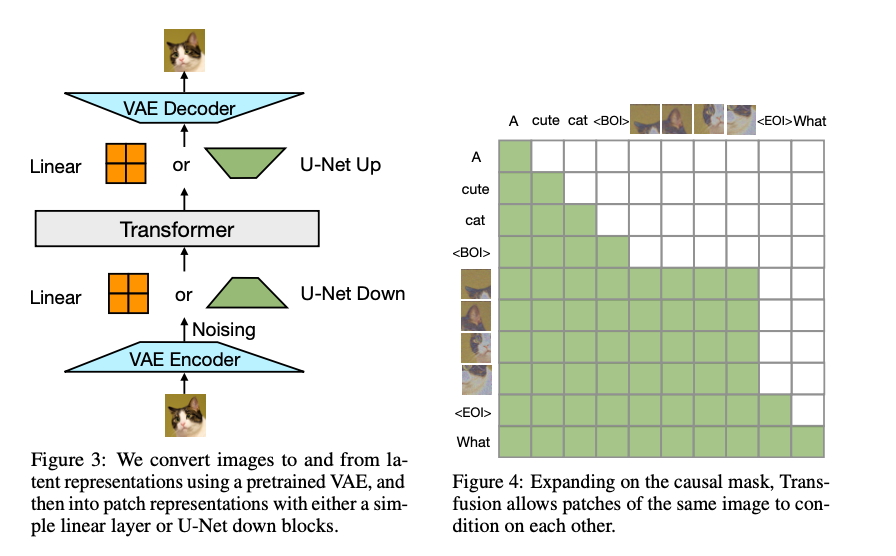
Transfusion is trained on a balanced mixture of text and image data, with each modality being processed through its specific objective: next-token prediction for text and diffusion for images. The model’s architecture consists of a transformer with modality-specific components, where text is tokenized into discrete sequences and images are encoded as latent patches using a variational autoencoder (VAE). The model employs causal attention for text tokens and bidirectional attention for image patches, ensuring that both modalities are processed effectively. Training is conducted on a large-scale dataset consisting of 2 trillion tokens, including 1 trillion text tokens and 692 million images, each represented by a sequence of patch vectors. The use of U-Net down and up blocks for image encoding and decoding further enhances the model’s efficiency, particularly when compressing images into patches. Transfusion demonstrates superior performance across several benchmarks, particularly in tasks involving text-to-image and image-to-text generation. 


AI Assistants: Picking the Right Copilot

The best assistant operates as an agent that understands what context the underlying AI can assume from its known environment. IDE assistants such as GitHub Copilot know that they are responding with programming projects in mind. GitHub Copilot examines script comments as well as syntax in a given script before crafting a suggestion. The tool examines syntax and comments against its trained datasets, consisting of GPT training and the codebase of GitHub's public repositories. GitHub Copilot was trained on the public repositories in GitHub, so it has a slightly different "perspective" on syntax than that of ChatGPT ADA. Thus, the choice of corpus for an AI model can influence what answer an AI assistant yields to users. A good AI assistant should offer a responsive chat feature to indicate its understanding of its environment. Jupyter, Tabnine, and Copilot all offer a native chat UI for the user. The chat experience influences how well a professional feels the AI assistant is working. How well it interprets prompts and how accurate the suggestions are all start with the conversational assistant experience, so technical professionals should note their experiences to see which assistant works best for their projects.


Is the vulnerability disclosure process glitched? How CISOs are being left in the dark

The elephant in the room regarding misaligned motives and communications between researchers and software vendors is that vendors frequently try to hide or downplay the bugs that researchers feel obligated to make public. “The root cause is a deep-seated fear and prioritizing reputation over security of users and customers,” Rapid7’s Condon says. “What it comes down to many times is that organizations are afraid to publish vulnerability information because of what it might mean for them legally, reputationally, and financially if their customers leave. Without a concerted effort to normalize vulnerability disclosure to reward and incentivize well-coordinated vulnerability disclosure, we can pick at communication all we want. Still, the root cause is this fear and the conflict that it engenders between researchers and vendors.” Condon is, however, sympathetic to the vendors’ fears. “They don’t want any information out there because they are understandably concerned about reputational damage. They’re seeing major cyberattacks in the news, CISOs and CEOs dragged in front of Congress or the Senate here in the US, and lawsuits are coming out against them. ...”


Level Up Your Software Quality With Static Code Analysis

Behind high-quality software is high-quality code. The same core coding principles remain true regardless of how the code was written, either by humans or AI coding assistants. Code must be easy to read, maintain, understand and change. Code structure and consistency should be robust and secure to ensure the application performs well. Code devoid of issues helps you attain the most value from your software. ... While static analysis focuses on code quality and reduces the number of problems to be found later in the testing stage, application testing ensures that your software actually runs as it was designed. By incorporating both automated testing and static analysis, developers can manage code quality through every stage of the development process, quickly find and fix issues and improve the overall reliability of their software. A combination of both is vital to software development. In fact, a good static analysis tool can even be integrated into your testing tools to track and report the percentage of code covered by your unit tests. Sonar recommends a test code coverage of 80% or your code will fail to pass the recommended standard.


Two strategies to protect your business from the next large-scale tech failure

The key to mitigating another large-scale system failure is to plan for catastrophic events and practice your response. Make dealing with failure part of normal business practices. When failure is unexpected and rare, the processes to deal with it are untested and may even result in actions which make the failure worse. Build a network and a team that can adapt and react to failures. Remember when insurance companies ran their own data centres and disaster recovery tests were conducted twice a year? ... The second strategy for minimizing large-scale failures is to avoid the software monoculture created by the concentration of digital tech suppliers. It’s more complex but worth it. Some corporations have a policy of buying their core networking equipment from three or four different vendors. Yes, it makes day-to-day management a little more difficult, but they have the assurance that if one vendor has a failure, their entire network is not toast. Whether it’s tech or biology, a monoculture is extremely vulnerable to epidemics which can destroy the entire system. In the CrowdStrike scenario, if corporate networks had been a mix of Windows, Linux and other operating systems, the damage would not have been as widespread.


India's Critical Infrastructure Suffers Spike in Cyberattacks

The adoption of emerging technologies such as AI and cloud and the focus on innovation and remote working has driven digital transformations, thus boosting companies' need for more security defenses, according to Manu Dwivedi, partner and leader for cybersecurity at consultancy PwC India. "AI-enabled phishing and aggressive social engineering have elevated ransomware to the top concern," he says. "While cloud-related threats are concerning, greater interconnectivity between IT and OT environments and increased usage of open-source components in software are increasing the available threat surface for attackers to exploit." Indian organizations also need to harden their systems against insider threats, which requires a combination of business strategy, culture, training, and governance processes, Dwivedi says. ... The growing demand for AI has also shaped the threat landscape in the country and threat actors have already started experimenting with different AI models and techniques, says PwC India's Dwivedi. "Threat actors are expected to use AI to generate customized and polymorphic malware based on system exploits, which escapes detection from signature-based and traditional detection methods," he says.


Architectural Patterns for Enterprise Generative AI Apps

In the RAG pattern, we integrate a vector database that can store and index embeddings (numerical representations of digital content). We use various search algorithms like HNSW or IVF to retrieve the top k results, which are then used as the input context. The search is performed by converting the user's query into embeddings. The top k results are added to a well-constructed prompt, which guides the LLM on what to generate and the steps it should follow, as well as what context or data it should consider. ... GraphRAG is an advanced RAG approach that uses a graph database to retrieve information for specific tasks. Unlike traditional relational databases that store structured data in tables with rows and columns, graph databases use nodes, edges, and properties to represent and store data. This method provides a more intuitive and efficient way to model, view, and query complex systems. ... Like the basic RAG system, GraphRAG also uses a specialized database to store the knowledge data it generates with the help of an LLM. However, generating the knowledge graph is more costly compared to generating embeddings and storing them in a vector database. 


Quote for the day:

"Leadership is a matter of having people look at you and gain confidence, seeing how you react. If you're in control, they're in control." -- Tom Landry