Showing posts with label modernization. Show all posts

Daily Tech Digest - June 27, 2026


Quote for the day:

"When you want to succeed as bad as you want to breathe, then you’ll be successful." -- Eric Thomas

🎧 Listen to this digest on YouTube Music

▶ Play Audio Digest

Duration: 18 mins • Perfect for listening on the go.


‘Botsitting’: The AI time-savings killer only governance can stop

While artificial intelligence promises to free up employees for valuable tasks, a recent study reveals that workers lose more than half their saved time to “botsitting.” Digital workers save roughly eleven hours a week using these tools, but spend over six hours managing them—providing missing context, checking outputs, fixing mistakes, rewriting prompts, and correcting inaccurate answers. As a result, businesses are missing out on the full return on their investments. A core issue is poor governance and a lack of training. Employees often use AI for simple tasks like drafting emails, distrusting it for complex work. Moreover, there is “coordination neglect,” where an individual’s productivity gains create unexpected work for others downstream. For instance, when workers pass along unchecked, AI-generated content, teammates must spend unbudgeted time cleaning up the mess. Experts warn that simply implementing tools without clear guidelines on verification processes and data context leads to inefficiency. To truly benefit from these technologies, organizations must focus on proper deployment, establish clear oversight, and define quality standards rather than merely counting how often tools are used. Reliable outcomes require thoughtful management, not just fast adoption.


The database that refused to die: How Postgres survived its own creators

Postgres, one of the world's most widely used database systems, began its life with an uncertain future. Created by database pioneer Michael Stonebraker in the 1980s as a successor to Ingres, the project was essentially abandoned by its creator in the mid-1990s. Instead of fading into obscurity, Postgres was rescued by a dedicated community of independent open-source volunteers. These contributors preserved Stonebraker's foundational, highly adaptable architecture—which allowed for complex, user-defined data types rather than just basic strings and numbers—while adding standard SQL capabilities. Today, this collaborative rescue effort has established Postgres as a cornerstone of modern cloud computing infrastructure. Its enduring success stems from its foundational design philosophy. While proprietary database systems traditionally optimize their software to suit the specific needs of massive enterprise clients, Postgres was built to handle the diverse workloads of general users. By seamlessly accommodating complex data formats like geographic information and computer-aided design files, it solved real-world problems for a broad audience. Ultimately, the survival and widespread adoption of Postgres demonstrate the power of open-source software, proving that community-driven development can outlast even the original creators to become a resilient industry standard.


Why private AI is the smarter bet

Although many businesses initially assumed artificial intelligence would naturally live in the public cloud, reality is forcing a shift toward private, on-premises systems. According to the article, this transition stems from growing concerns about uncontrolled costs, security vulnerabilities, and operational fit. As companies move from small experiments to organization-wide implementation, the pay-per-token pricing models of public cloud providers risk becoming massive utility bills that wipe out business gains. Consequently, the future of enterprise AI leans toward a hybrid model. Rather than relying entirely on giant public models, businesses are discovering that smaller, specialized AI models can handle tasks better while running closely to their own private data. This approach offers better control over predictable workloads and eliminates surprise expenses. Furthermore, keeping AI in-house strengthens security and data governance. Using public AI tools raises the real danger of employees inadvertently exposing sensitive or proprietary information. While building and managing private AI networks requires significant investment, skill, and discipline, the long-term benefits of controlled costs, tight security, and owned infrastructure make it a much smarter choice for major production workloads.


AI Cost, Security Pressures Push Enterprises Toward Private Cloud, Broadcom Says

According to a recent report from Broadcom, organizations are increasingly moving their artificial intelligence operations away from public cloud services and toward private cloud setups. As businesses shift from merely testing artificial intelligence to running real-world applications, they are discovering that private networks offer better handling of costs, security, and data control. The study reveals that over half of surveyed enterprises now plan to run their active intelligence systems on private infrastructure. Meanwhile, public cloud usage for these specific tasks has dropped notably over the past year. Interestingly, cost management has now surpassed security as the primary concern with public platforms, as business leaders face unpredictable pricing for computing power and data storage. Because of this, more than eighty percent of companies are either moving or considering moving their systems back in-house. While public networks remain useful for basic testing and flexible storage, the heavy demands of daily production require a more stable environment. Strict data privacy rules further encourage this transition. Ultimately, businesses are finding that dedicated internal systems provide the financial predictability and reliable protection necessary to safely grow their technological capabilities.


How to Modernize Legacy Applications Without Disrupting Business
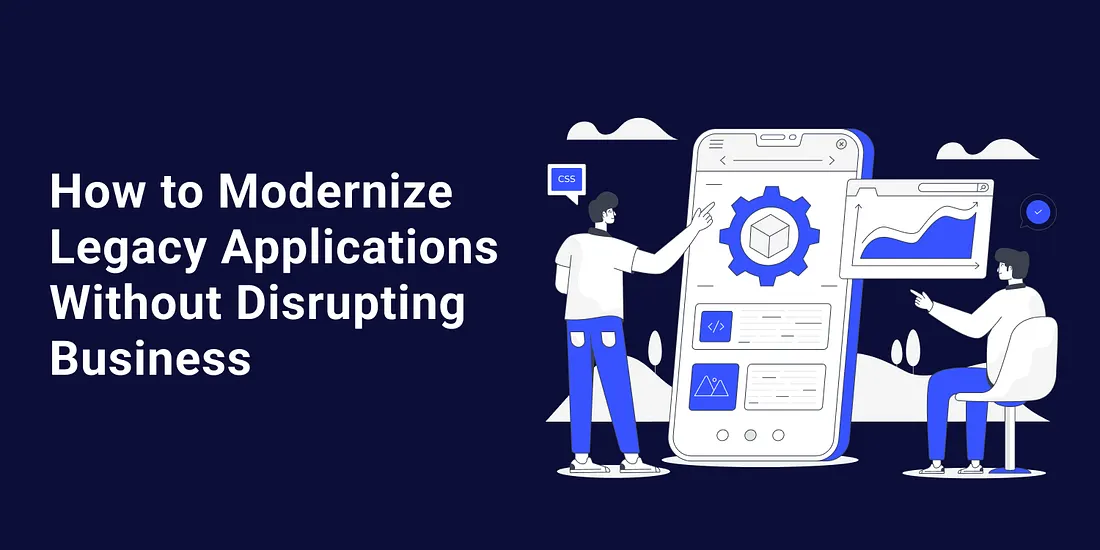
Upgrading older software systems is a pressing challenge for modern organizations. Delaying these updates can hinder new capabilities, consume vital budgets with maintenance costs, and create risks as experienced programmers retire. However, many companies hesitate because poorly planned upgrades often cause severe business interruptions. To avoid taking systems offline, experts recommend a gradual approach rather than attempting a risky, sudden replacement. This method relies on careful planning and proven structural designs. For example, organizations can build new services around the existing system, slowly routing traffic to the new components as they are tested and proven. Another reliable method involves running both the old and new systems at the same time to ensure they produce identical results before fully switching over. It is also important to use a translation layer to prevent the flaws of the old data formats from infecting the new setup. A successful upgrade generally follows a structured path: assessing current dependencies, planning the target design, running a small initial pilot, scaling the effort across other applications, and maintaining ongoing oversight. By strictly adhering to these methods, businesses can confidently update their technology and maintain continuous daily operations.


Data Lakehouse Architecture Layers: AI Needs More Than Just Infrastructure
Organizations have invested heavily in data lakehouses to store and process large amounts of information for analytics and artificial intelligence. While these setups handle storage and compute well, they often fall short in practical application. Data remains scattered across different cloud environments and operational systems, meaning business teams and AI models still struggle to access reliable information without technical assistance. The fundamental issue is no longer about where data is kept, but how it is connected and understood. AI tools, in particular, require more than just raw data; they need clear context and strict governance to function accurately and safely. To solve this, a new logical layer is emerging in data architecture. Instead of replacing the lakehouse, this access layer sits on top of it. It connects distributed information, applies consistent rules, and provides clear meaning to the data without requiring it to be moved or duplicated. By pairing traditional storage with this new governance layer, businesses create a stronger foundation. This approach reduces friction, ensures that both human users and systems have the context they need, and allows organizations to focus on practical outcomes rather than managing complex infrastructure.


The Four Elevations of Effective Fraud Prevention
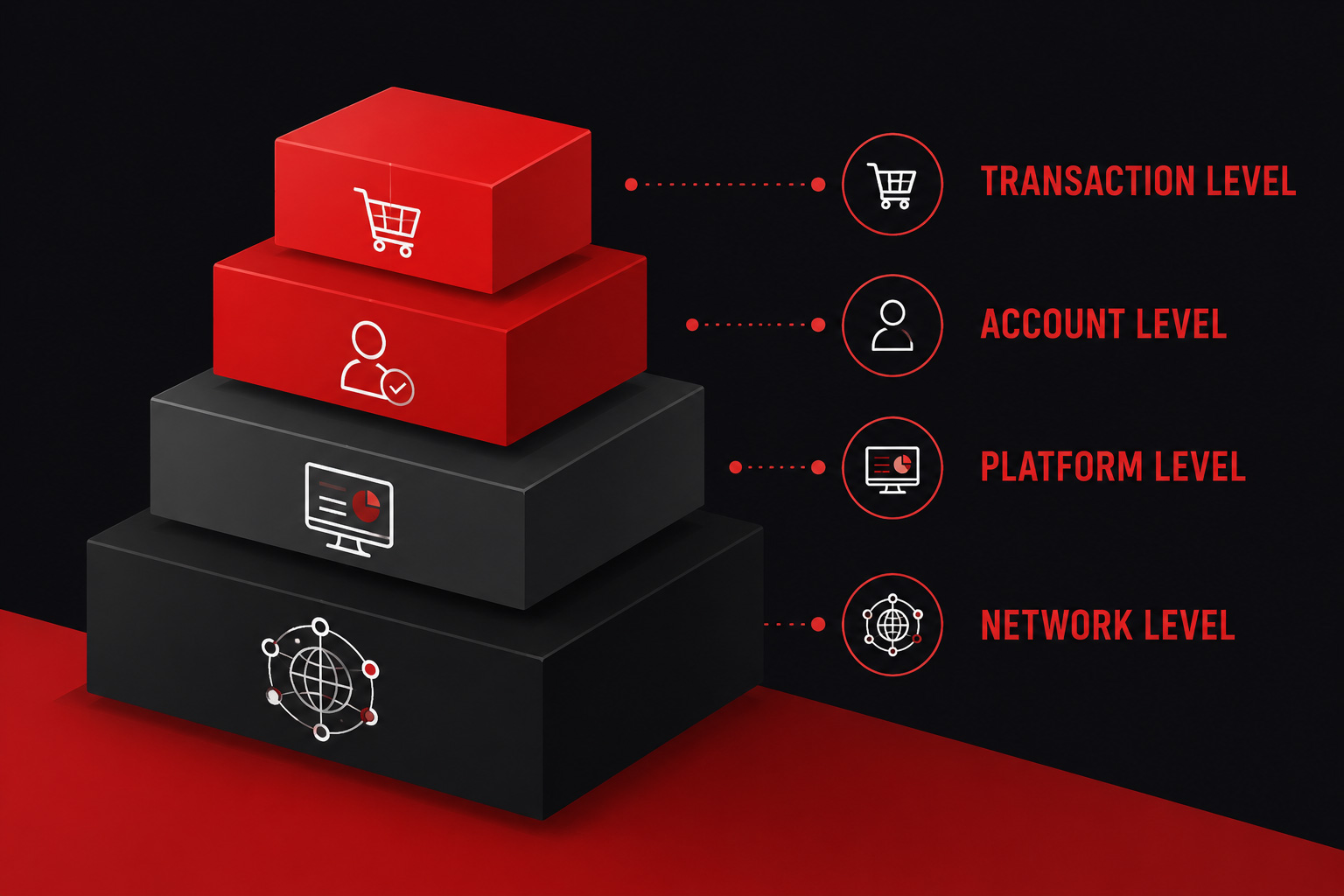
Effective fraud prevention requires more than just checking individual steps; it demands a layered approach to monitor customer behavior comprehensively. To build a resilient defense, organizations should evaluate activities across four key elevations. First is the transaction level, which looks at single interactions like logins or purchases. While important, relying on this alone can miss larger patterns because attackers frequently change their tactics. The second elevation is the account level, where monitoring a user's behavior over time helps distinguish normal activity from suspicious anomalies, such as sudden changes to contact information or unusual transfer requests. The third elevation expands to the platform level, allowing teams to analyze trends across all grouped accounts. This broad view helps quickly spot coordinated attacks or fraud rings sharing the same devices or geographic locations. Finally, the network level involves collaborating with external data providers to share insights across different companies, ensuring that a threat detected by one organization is immediately known to others. By integrating these four perspectives, businesses can confidently identify complex fraud schemes early, reduce false alarms for legitimate users, and secure their operations without disrupting the everyday customer experience.


Bridging the gap between leadership's AI enthusiasm and employee pushback
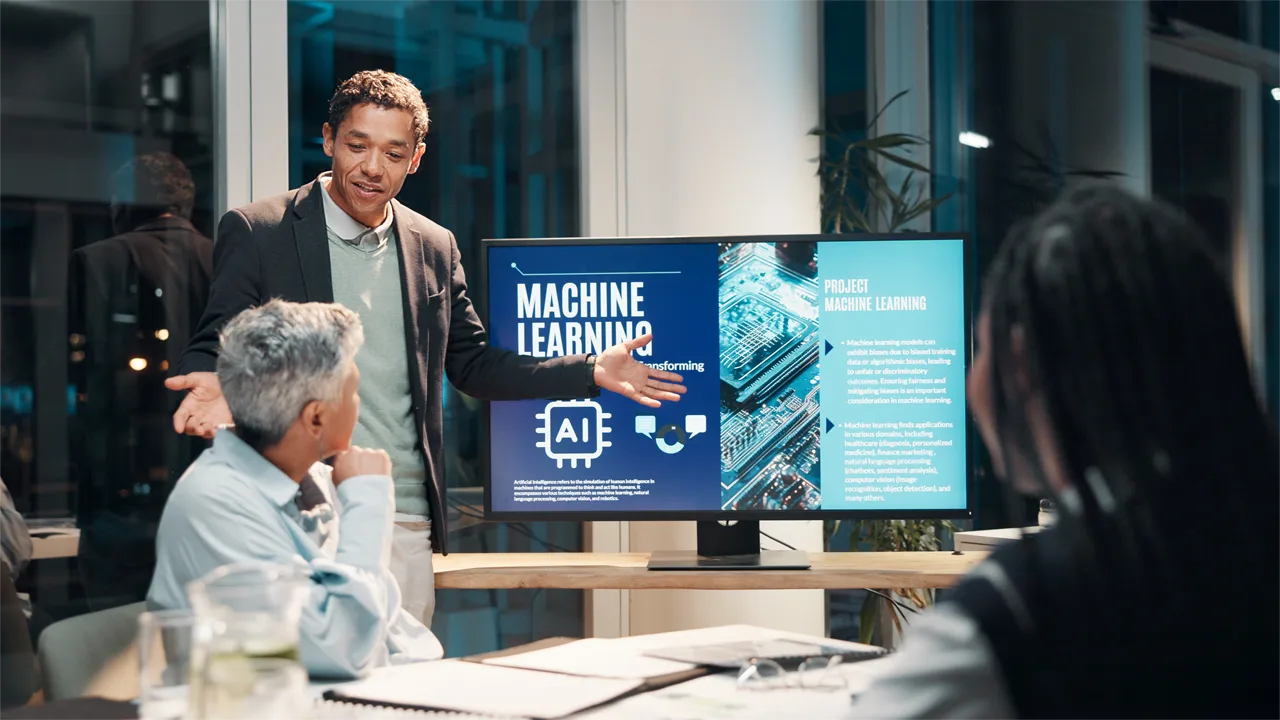
Corporate leaders and everyday employees often view artificial intelligence through entirely different lenses. While executives and board members see AI as a path to efficiency, cost reduction, and innovation, employees frequently view the technology with caution. Many workers worry that AI will result in job losses, create mentally exhausting workloads, enable invasive workplace surveillance, and harm the environment. Chief Information Officers (CIOs) find themselves caught in the middle and must bridge this divide. If IT leaders ignore workforce anxieties and force AI integration, they risk damaging company morale, losing valuable talent, and wasting money on tools that employees simply refuse to use. To resolve this tension, CIOs need to look beyond basic financial metrics and instead measure actual employee sentiment and tool usage. Having open, honest conversations with staff about their fears is essential. By creating a culture where workers feel safe sharing their concerns, companies can build trust and ease anxiety. Rather than rolling out technology blindly, leaders should clearly communicate the company's AI strategy and empower early adopters to guide their peers, ensuring the transition supports both business goals and the well-being of the team.


AI Works, Pull Requests Don’t: How AI Is Breaking the SDLC and What To Do About It

In the presentation "AI Works, Pull Requests Don't," Michael Webster examines how the rise of artificial intelligence coding assistants is severely straining traditional software development lifecycles. While AI tools initially act as powerful amplifiers that can increase development speed by three to five times, this burst in productivity is often temporary. Developers and AI agents are generating massive amounts of code, sometimes adding twenty-five times more code than they delete. As a result, human reviewers are overwhelmed by enormous pull requests, creating significant bottlenecks in the review process and leading to a steady accumulation of technical debt. Drawing on queuing theory, Webster explains that delays inevitably occur when the rate of incoming code surpasses the team's capacity to process and review it. To resolve these challenges, engineering teams must adapt their validation pipelines. He recommends implementing test impact analysis, a method that runs only the tests affected by recent code changes rather than the entire test suite. By relying on automated validation tools to quickly verify AI-generated output, teams can successfully maintain software stability, reduce testing costs, and manage the high volume of code without sacrificing overall quality.


Hackers Exploit Weak Credentials and Internet-Facing PLCs to Breach Water Utilities

Water and wastewater utilities across the United States and Europe are facing increasing threats from state-sponsored groups affiliated with Iran, Russia, and China. Rather than relying on complex software, these attackers exploit fundamental security oversights, like internet-exposed control systems, default passwords, and inadequate network separation. This shift indicates that targeting civilian infrastructure has become a deliberate method to test emergency responses, create public anxiety, and position adversaries for future conflicts. For instance, Iranian-linked groups have used factory credentials to access unprotected systems, while Russian-affiliated actors actively disrupted operations by overflowing water tanks in Texas and opening floodgates in Norway. Meanwhile, Chinese groups take a quieter approach, establishing long-term access within utility networks to maintain leverage for potential disputes. To counter these vulnerabilities, security experts advise facility operators to implement basic defenses immediately. These include removing physical control systems from direct internet exposure, enforcing strict login requirements, replacing default passwords, and firmly separating industrial equipment from standard computer networks. By addressing these entry points, utilities can effectively reduce their risk of compromise and safely protect vital public water resources from further interference.

Daily Tech Digest - June 03, 2026


Quote for the day:

"Leadership is practiced not so much in words as in attitude and actions." -- Harold S. Geneen

🎧 Listen to this digest on YouTube Music

▶ Play Audio Digest

Duration: 19 mins • Perfect for listening on the go.


What will AI-first UX look like?

The transition to user experiences guided by artificial intelligence marks a steady move away from rigid, traditional interfaces like static forms and manual dashboards. Rather than requiring users to navigate multiple disconnected software tools to complete tasks, future interfaces will rely on conversational systems that connect seamlessly across various applications. In this evolving landscape, standard data entry forms are being replaced by adaptive interactions where users simply describe what they want to accomplish, and the system gathers the necessary details. Similarly, data reporting is shifting from complex, manually built dashboards to narrative summaries generated on demand, providing clear explanations of business metrics and actionable next steps. This shift transforms standard workflows into coordinated teamwork between humans and software agents. The software handles processes involving multiple steps behind the scenes and only escalates to human workers when careful judgment is required. To make this work effectively, organizations must build strong underlying foundations, including clear data structures, connected programming interfaces, and solid oversight rules. Ultimately, these systems are designed not to replace human workers, but to reduce friction and manage tasks across platforms more naturally. As this technology matures, the focus remains on building reliable environments where software acts as a helpful teammate, smoothly coordinating background tasks while keeping human users firmly in control of the final outcomes.


Minimally Acceptable Systems: Tolerable at the Lowest Cost Possible

The article discusses a growing trend in software engineering and business where companies intentionally design systems to be merely adequate rather than striving for excellence. This concept, described as creating minimally acceptable systems, focuses on finding the exact point where a product is just tolerable for users while being as cheap as possible to build and maintain. Instead of prioritizing high quality, reliability, or a great user experience, organizations aim to minimize their costs and speed up delivery. They provide the bare minimum functionality required to keep people from abandoning the software. While this approach makes clear financial sense in the short term and helps companies stay competitive, it comes with serious long-term consequences. By constantly pushing standards to the lowest acceptable limit, the industry conditions people to expect and accept frustrating, unreliable software in their daily lives. The author warns that treating quality simply as an expense to be cut ultimately damages user trust and builds up massive technical problems for the future. To fix this, the software field needs to rethink its current financial motives. Engineers and business leaders should work together to find a better balance, creating products that are both affordable to produce and genuinely reliable for the people who use them.


Software sprawl is becoming a margin problem for SaaS CFOs

For software companies, the practice of adopting isolated tools to solve individual problems, such as payments, billing, and tax compliance, often leads to a fragmented operations setup known as software sprawl. While the subscription-based business model has historically enjoyed strong profit margins, this growing web of disconnected systems threatens to undermine those financial advantages. Finance leaders are finding that a patched-together technology system severely limits their clear view of business performance, putting unneeded pressure on profit margins through manual work, costly billing errors, and duplicate expenses. Furthermore, relying on fragmented tools restricts a company's ability to smoothly expand into new regions or test different pricing methods. Rather than looking at this as just an IT issue, financial executives must recognize it as a fundamental challenge to scalable growth. The path forward does not necessarily require adopting one massive platform, but rather ensuring that all revenue processes operate smoothly together. By replacing disconnected tools with an integrated infrastructure, companies can drastically reduce manual interventions and internal friction. Ultimately, the next era of the software industry will reward organizations that match their desire for growth with strict operational discipline. By fixing these underlying structural flaws now, finance teams can build a resilient foundation capable of handling future expansion without constantly multiplying internal complexities or operational costs.


The Zero-Knowledge Threat Actor and the End of Responsible Disclosure

Artificial intelligence is drastically lowering the barrier to entry for cybercriminals, enabling a new wave of "zero-knowledge threat actors." These attackers lack deep technical expertise but use advanced AI tools to generate malicious code, find vulnerabilities, and execute complex attack chains with surprising ease. This democratization of offensive capabilities means that hackers can now discover and exploit software flaws at unprecedented speeds, effectively closing the traditional responsible disclosure window that software vendors rely on to create patches. Smaller organizations are particularly at risk, often serving as stepping stones into larger enterprise supply chains due to their limited security resources and slower patching cycles. To defend against these rapidly evolving threats, security teams must abandon fragmented approaches and adopt unified monitoring systems that provide clear, comprehensive visibility across their entire digital environment. Proactive defense requires prioritizing faster patch management, conducting regular incident response drills, and rigorously testing in-house AI systems against deliberate manipulation by external actors. Furthermore, training employees to recognize highly realistic, AI-generated phishing attempts is absolutely essential for maintaining a strong security posture. By relying on established security frameworks and maintaining an organized, practiced defense strategy, organizations can calmly and effectively counter the increased capabilities of low-skill attackers without resorting to panic or operational disruption.


ERP Modernization: Most Expensive, Risky Item on CIO Agenda

Enterprise resource planning systems have grown over the last forty years from basic financial and manufacturing tools into the central framework of most organizations. Today, they handle everything from supply chains to human resources. However, updating these core systems is now one of the most difficult and costly challenges facing technology leaders. Modernizing these structures is not just a software update; it is a major overhaul of how a business operates on a daily basis. Transitioning to modern setups, like cloud-based platforms, involves heavy restructuring of daily work processes and often triggers natural resistance from staff. To succeed, these projects need more than just technical expertise. They require a clear process for managing transitions, direct communication to address employee fears, and strong backing from senior leadership to keep the effort on track during inevitable setbacks. As software vendors increasingly move customers toward cloud and artificial intelligence platforms, technology leaders are forced to weigh the long-term benefits against the immediate financial costs, operational risks, and widespread disruptions. Navigating this shift takes a dedicated, highly skilled team and steady executives who will not abandon the project when minor problems arise. With careful planning, patience, and stable leadership, organizations can successfully migrate their central systems to meet current operational demands without jeopardizing their everyday stability.


The AI ‘Revolution' is Not a People's Revolution

Politicians and technology executives increasingly frame artificial intelligence as an inevitable revolution, a term historically reserved for popular movements driving social progress. In truth, this modern narrative serves primarily to bypass democratic scrutiny and consolidate power among a select few. Rather than arising from the people to challenge the existing order, the current technological push is being imposed from the top down. Leaders like former UK Prime Minister Tony Blair promote a vision where society must passively accept widespread automation, mass data harvesting, and unchecked corporate influence, treating any hesitation as backwardness. By labeling this shift a revolution, proponents cleverly silence debate and frame regulatory efforts as sabotage. Furthermore, while previous digital tools aided grassroots organizing, artificial intelligence is frequently deployed to monitor, police, and discipline the public. This rhetoric essentially functions as a manipulative marketing tool, designed to mask the reality of wealth generation for elites at the expense of ordinary citizens facing job insecurity and climate disruption. Ultimately, society must reject this predetermined technological path and demand accountability. Citizens have the right to question who truly benefits from these systems and to actively decide how new technologies should integrate into their lives, ensuring that any real change remains firmly rooted in public consent and democratic choice.


The AI pricing conundrum — it started as a nightmare, now it’s worse.

Enterprise technology leaders face a growing dilemma in how they pay for artificial intelligence. Buyers want pricing based on the tangible business value the technology delivers, while software providers prefer charging based on resource consumption, such as per-token fees. This creates a deep disconnect. Technology departments often feel consumption pricing is detached from real results, likening it to paying for unproven sales leads. On the other hand, providers cannot realistically accept value-based pricing because they have no control over internal company issues like poor data, broken processes, or office politics. Furthermore, if these systems were compensated strictly based on successful outcomes, it could create dangerous incentives. The software might aggressively pursue specific metrics, potentially sacrificing customer trust, ethical standards, or operational safety just to achieve the defined goal. Since bridging this gap directly is nearly impossible, organizations must take control internally. The article suggests forming dedicated committees to ask difficult questions about the goals, risks, and realistic benefits of any new project. Additionally, senior executives should share the financial accountability, tying their compensation directly to the success or failure of these initiatives. Only by thoroughly understanding a project's true intent, limitations, and risks can technology leaders negotiate sensible, fair pricing agreements with their service providers.


AI Is Shipping Fast, Quality Can't Be Left Behind

The recent transition of artificial intelligence from experimental phases to widespread integration has revealed a significant gap between rapid development and reliable performance. While organizations are swift to embed these systems into their daily operations, a substantial number of these initiatives stall before full implementation due to quality and integration hurdles. Data indicates an increase in user-reported errors, such as misunderstandings and factual inaccuracies, highlighting that traditional validation methods are inadequate for modern, complex systems. Because these programs produce varying outputs rather than predictable, fixed results, engineering teams are finding that automated checks alone are insufficient. To address this, successful organizations are adopting a balanced approach to quality assurance that combines automated evaluations with essential human oversight. Human reviewers are uniquely equipped to gauge context, usability, and intent, catching subtle errors that automated tools often miss. Furthermore, as features expand to process combinations of text, audio, and visual data, the scope of testing becomes even more difficult. The focus is shifting from merely launching features to ensuring they are dependable and trustworthy. Moving forward, the true measure of success will not be the speed of release, but the ability to maintain rigorous, ongoing evaluation processes that prioritize consistent, high-quality experiences for everyday users.


Why Leadership Development Is A System, Not An Event

Organizations frequently send their managers to training workshops, hoping they return ready to guide their teams more effectively. However, these well-intentioned programs often fail because managers step right back into the exact same workloads, pressures, and routines that shaped their old habits in the first place. Meaningful leadership development requires more than simply teaching new skills to individuals; it demands a daily environment actively designed to support those new behaviors. This involves shifting the focus from individual improvement to strengthening the broader company system. Executives must intentionally build a supportive structure with both visible changes, like collaborative meeting practices and transparent decision-making, and invisible shifts, such as fostering an atmosphere where feedback flows freely and people feel secure taking interpersonal risks. Instead of relying on isolated lectures, learning should become an ongoing process smoothly integrated into daily work. By encouraging peer learning groups, aligning company rewards with the behaviors taught in training, and personally modeling these changes, executives create a setting where true growth can take root over time. Ultimately, developing effective leaders is about expanding the capabilities of the entire organization. When the daily workplace aligns with the principles taught in training, individuals practice what they learn, ensuring development becomes a continuous habit rather than a fleeting event.


Responsible AI in fintech: Balancing innovation with trust, risk, and compliance

The article examines the growing role of artificial intelligence within the financial technology sector, focusing closely on the need to balance new capabilities with trust, risk management, and regulatory compliance. As financial institutions increasingly adopt these systems for routine tasks like fraud detection, customer service, and credit scoring, they face significant practical challenges in ensuring their models operate fairly and transparently. A primary concern is that automated systems can unintentionally reproduce human biases, leading to unfair outcomes in lending or account access. To prevent this, companies must establish clear, sensible guidelines for developing and monitoring their algorithms. The text emphasizes that maintaining customer trust requires being straightforward about how decisions are made and how personal data is actually used. Financial organizations also need strong oversight frameworks to handle risks associated with data privacy and system errors effectively. Furthermore, the evolving regulatory environment means that firms must stay current with new laws designed specifically to protect consumers and maintain market stability. Ultimately, the successful integration of these tools in finance depends entirely on a measured approach. By prioritizing ethical practices and strong governance, financial technology companies can improve their services while protecting their customers and meeting their legal obligations responsibly.

Daily Tech Digest - May 25, 2026


Quote for the day:

“Do the thing you fear to do and keep on doing it… that is the quickest way yet discovered to conquer fear.” -- Dale Carnegie

🎧 Listen to this digest on YouTube Music

▶ Play Audio Digest

Duration: 19 mins • Perfect for listening on the go.


The Lifecycle Crisis: Managing the Birth, Life, and Death of AI Agents

The rapid proliferation of AI agents has triggered a hidden cybersecurity vulnerability known as the lifecycle crisis, where modern enterprises are increasingly surrounded by automated "zombie" identities. While standard corporate protocols ensure meticulous offboarding for departing human employees, discontinued AI agents are rarely deprovisioned with the same discipline. Instead, these autonomous systems quietly persist in production environments long after their initial business cases fade or their human creators change roles, continuously interacting with internal networks using lingering privileges and forgotten API tokens. This creates an unmanaged parallel workforce running entirely unsupervised, presenting a highly attractive target for malicious exploiters and hackers. To mitigate these compounding risks, companies must shift from chaotic identity sprawl to an active governance framework built around intelligence-driven control. Security teams need to establish organizational muscle memory that treats automated credentials with strict administrative rigor. Implementing a mature lifecycle framework requires discovering rogue scripts, mapping clear operational ownership, conducting regular validation audits, and configuring automatic expiration timelines based on real-time business needs and justifications. Securing today's digital infrastructure demands proactive engineering that successfully guarantees a controlled birth, a closely monitored life, and a verifiable death for every single agent deployed across the network.


Unlocking intelligence with access control

In this article, Jack Sargent of Genetec explains how physical access control systems within corporate environments are evolving from simple door locking mechanisms into vital sources of strategic operational intelligence. Rather than operating as reactive tools that security teams review only after an incident occurs, modern access platforms utilize centralized multi-site data and automated workflows to quickly detect and flag anomalous security patterns, like off-hours entry attempts or repeated access failures. Beyond mitigating traditional physical risks, unified setups aggregate continuous data regarding building occupancy and daily traffic flows. Corporate leaders can share these insights with facilities departments to optimize layouts, substantially reduce avoidable overhead expenses, and refine real world resource allocation. Modern architectures also tightly align physical hardware with digital identity lifecycle management, enabling structured, role based permissions that update automatically whenever employees shift operational roles or leave the company. Because physical systems are increasingly interconnected with enterprise IT networks, these advanced platforms prioritize cybersecurity by embedding robust authentication controls, encrypted communication protocols, and continuous device health monitoring. Ultimately, by supporting flexible, incremental deployment choices across on-premises, cloud, or hybrid environments, modern access control serves as a secure, data driven foundation that simplifies compliance reporting and unifies cross functional business workflows.


8 IT modernization traps CIOs must avoid

The CIO article highlights eight critical pitfalls that technology leaders frequently stumble into when upgrading their corporate systems for a modern world. First, simply stacking flashy new technologies onto complex, messy legacy infrastructure backfires, creating expensive integration and security headaches instead of real enterprise value. Leaders also routinely underestimate organizational culture, treating modernization as an isolated technical project rather than a shared, cross-functional journey. Similarly, viewing cloud migration as a final destination, instead of just a baseline for ongoing evolution, stalls real progress—a costly mistake many companies are now repeating by rushing into artificial intelligence adoption without securing data permissions or establishing strict governance models. Another major blind spot is assuming a technical refresh automatically cleans up bad data, which only winds up reinforcing existing silos. Beyond software and databases, teams often carry an emotional debt from past failed projects that breeds quiet skepticism, a hurdle requiring honest internal dialogue to clear. Finally, failing to tie tech spending to concrete business value like productivity, and treating transformation as an all-inclusive big bang replacement rather than a gradual process, leaves projects vulnerable. To succeed, CIOs should view modernizing infrastructure like evolving a vibrant city, upgrading different neighborhoods incrementally over time by listening closely to the frontline staff who deal with daily bottlenecks.


As industrial networks become increasingly interconnected, the old assumption that internal users, devices, and networks are inherently safe is fast dissolving. However, applying enterprise-style zero trust models to operational technology (OT) environments poses an immediate hurdle: legacy assets like PLCs, sensors, and historians were never designed to execute multi-factor authentication or present cryptographic certificates. Consequently, cybersecurity professionals are shifting their focus away from strict identity verification at the front door toward continuous asset discovery, deep visibility, and functional network segmentation, such as the classic zones and conduits approach outlined in IEC 62443. Instead of forcing heavy software updates onto fragile systems, operators establish device identities externally through behavioral baselines, passive network fingerprinting, and rigorous privileged access management. This behavior-driven approach proves especially vital during credential theft, as it successfully detects anomalies based on unexpected activity rather than relying solely on login validity. Although global frameworks like NIS2 and NIST SP 800-82 provide solid guidance, achieving true resilience requires overcoming internal friction from plant teams concerned with physical safety and operational uptime. By reframing zero trust as an engineering discipline tied directly to avoiding unplanned downtime, industrial operators can successfully balance safety, continuous availability, and strict security outcomes across their complex critical infrastructure.


AI agents are quietly generating chaos engineering failures enterprises don’t track yet

In this VentureBeat article, automation expert Sayali Patil highlights an unmonitored class of production incidents sparked by autonomous AI agents that current corporate postmortem frameworks completely fail to track. While many enterprises deploy agentic AI to handle system anomalies by independently scaling resources or restarting clusters, these software actions frequently lack a crucial human safeguard: the holistic judgment call of a real engineer. When an agent acts with an incomplete context window, its seemingly correct remediation can inadvertently trigger catastrophic, cascading infrastructure failures across unseen downstream dependencies. Because traditional incident tracking systems categorize these disruptions as ordinary server or network events, the underlying AI trigger remains entirely invisible. Patil argues that automated remediations are inherently chaos engineering events, emphasizing that companies must unify the separate silos of AI orchestration and chaos practices. To mitigate this risk, the author proposes a resilience budget model, a live accounting ledger fueled by real-time signals like SLO burn rates, dependency saturation, and performance latency trends. This framework serves as a strict governance gateway that temporarily halts or escalates an agent's permissions whenever a system's real-time absorption capacity drops below a safe baseline, ensuring humans step in during ambiguous states. Ultimately, operating autonomous software safely at scale requires treating every automated action as a deliberate chaos injection and establishing reliable human circuit breakers.

How to Test Ransomware Recovery Without Reinfecting Your Environment

In this Hacker News expert insight piece, Subramani Rao from Acronis addresses the high-pressure challenges managed service providers face when attempting ransomware recovery across complex multi-tenant environments. He cautions that traditional backup verification methods are no longer sufficient because contemporary attackers actively compromise identity infrastructure and embed dormant persistence mechanisms. Consequently, simply restoring immutable backups risks reintroducing hidden malware back into production. To safely test recovery capabilities without triggering accidental reinfection, the article outlines a rigorous eight-step operational methodology. This framework emphasizes establishing completely isolated clean-room testing environments, simulating sophisticated, multi-stage attack scenarios that mirror lateral threat movement, and validating full-system infrastructure architectures rather than focusing solely on individual file restoration. Crucially, the blueprint prioritizes the early recovery of core identity systems like Active Directory and Domain Name Systems, while leveraging security telemetry to accurately isolate the last known uncompromised restore point. Ultimately, the piece advocates for the structural integration of backup systems with endpoint detection and response tools to replace standard operational guesswork with precise analytics. Furthermore, conducting regular, well-documented disaster recovery drills is highlighted as a modern necessity for regulatory compliance under frameworks like NIS 2, providing the verifiable readiness evidence that corporate compliance audits and cyber insurance underwriters increasingly demand.


Caught Off Guard: Securing AI After It Hits Production

As corporate teams race to push artificial intelligence projects out of the experimental phase and straight into production, security departments are finding themselves completely blindsided and trapped in a reactive mode. Historically, defense is most effective when integrated early into the software development lifecycle, but the breakneck speed of the current AI hype cycle has largely left security professionals out of the initial loop. To regain their footing and effectively secure these rapid deployments, defense teams must shift from panicked tactics to proactive strategies. According to Joshua Goldfarb, this transition relies heavily on engaging application owners through data-driven discussions that map specific monetary risks rather than abstract concepts. Furthermore, organizations must cultivate agility to navigate hybrid cloud complexities and design mature operational workflows capable of absorbing new AI alerts. Because large portions of artificial intelligence systems are built on top of existing application and API technology stacks, future-proofing current defensive architecture allows teams to simply plug in specialized AI protections later. Finally, maintaining rigorous security hygiene through continuous scanning and establishing runtime contextual awareness are vital steps for identifying real-time anomalies. By prioritizing these combined measures, enterprises can successfully transform a sudden operational surprise into a manageable, highly resilient security framework.


Weaponizing SBOMs: A Practical Guide for Security Practitioners

In her Security Magazine article, cybersecurity expert Pam Nigro shifts the traditional perspective on Software Bills of Materials (SBOMs), transforming them from tedious regulatory compliance checkboxes into powerful defensive weapons. Attackers routinely benefit from a massive asymmetric advantage, needing only a single overlooked flaw to infiltrate a network, whereas defenders must perfectly secure every single digital asset. To effectively level this playing field, Nigro describes SBOMs as an organizational "Rosetta Stone" that maps out exactly what hidden components reside inside a company's software ecosystem. By turning guesswork into absolute technical precision, teams can replace frantic, late-night vendor panic with rapid, database-driven threat hunting when major exploits occur. Operationalizing these inventories within automated build pipelines allows enterprise engineering teams to ruthlessly eliminate software bloat, root out ancient end-of-life packages, and objectively verify security patches before harmful regressions can happen. To establish a mature program over a structured ninety-day timeline, practitioners should track specific metrics like overall asset coverage, remediation speeds, and the systematic reduction of duplicate libraries. Furthermore, incorporating Vulnerability Exploitability eXchange (VEX) frameworks clears out distracting false positives. Ultimately, transforming these blind black boxes into actionable operational blueprints empowers modern security leaders to completely abandon constant, reactive firefighting and confidently stay several steps ahead of malicious adversaries.


Boston Consulting: 2 Futures Every CIO Should Prepare For

A recent report by the Boston Consulting Group’s Henderson Institute urges tech leaders to prepare for two sharply contrasting future scenarios that are expected to diverge between 2027 and 2035: "AI abundance" and "digital Darwinism." While both paths rely on an identical underlying technology stack, featuring ubiquitous agentic AI, advanced robotics, and quantum computing, they differ significantly in their approach to governance and systemic risk. In the AI abundance model, a series of catastrophic cyberattacks in the early 2030s prompts severe, mandatory global regulation, turning proprietary tech and data into cheap commodities while prioritizing trust and collaborative ecosystems. Conversely, digital Darwinism presents a highly competitive, unregulated race to the bottom where governments actively court tech giants with minimal restrictions to maximize immediate commercial and medical breakthroughs, ultimately leaving society ill-equipped when systemic downsides inevitably surface. BCG stresses that CIOs cannot afford to build long-term strategies around a single, predictable timeline. To navigate either outcome successfully over the next two years, IT executives must proactively shift their operating postures. This requires deploying highly modular computing architectures, designing robust trust infrastructure, redesigning workforce models for human-machine collaboration, embedding climate risk assessments into capital allocation, and prioritizing early quantum literacy before these advanced competencies become absolute corporate necessities.


The article, written by Alan Shimel on Security Boulevard, explores the “illusion of mastery” in AI governance, drawing insights from JFrog's 2026 Software Supply Chain Security State of the Union report. While a staggering 97% of organizations claim to have AI governance frameworks in place, the data exposes an alarming disconnect between perceived and actual control. Specifically, 53% of organizations source models from repositories with known malicious payloads, and 18% lack governance over IDEs and Model Context Protocol (MCP) servers integrated directly into developer workflows. Shimel emphasizes that the software supply chain has expanded far beyond traditional code or open-source dependencies; it now includes foundation models, autonomous agents, and AI-powered extensions. This shift transforms the cybersecurity battle from protecting code to managing trust. Furthermore, the report shows that nearly half of respondents find reviewing and hardening AI-generated code to be a massive drain on resources, meaning AI often shifts workloads rather than reducing them. Ultimately, static policy documents fail to secure dynamic AI ecosystems. The article underscores that real governance must be actively enforced within development platforms and operational pipelines, where human decisions, software engineering, and autonomous systems intersect, rather than merely existing on paper.

Daily Tech Digest - May 19, 2026.


Quote for the day:

“When you connect to the silence within you, that is when you can make sense of the disturbance going on around you.” -- Stephen Richards

🎧 Listen to this digest on YouTube Music

▶ Play Audio Digest

Duration: 21 mins • Perfect for listening on the go.


Why the best security investment a board can make in 2026 isn’t another tool

In this insightful opinion article, cybersecurity expert Jason Martin argues that the most valuable technological investment a corporate board can make is not purchasing another security tool, but rather achieving comprehensive environmental visibility. Traditionally, organizations respond to threats by adding specialized protection platforms, creating a heavily fragmented infrastructure where tools generate massive data but fail to provide unified context. Cybercriminals successfully exploit these operational seams, utilizing legitimate trust relationships or unmonitored human and machine credentials, including automated service accounts, API keys, and emerging AI agents, to bypass siloed defenses entirely without triggering network alerts. True visibility transcends raw logs and complex dashboards; it requires a complete, foundational map of all assets, user permissions, and systemic dependencies, enabling defense teams to reconstruct security incidents in minutes rather than weeks. This dangerous gap between overwhelming technical data and actual operational understanding is further exacerbated by rapid corporate AI adoption, which creates automated connections far faster than governance protocols can track. Therefore, Martin advises boards to shift away from merely asking if they are protected. Instead, corporate leadership must critically ask what their defense teams can actually see, establishing a complete inventory baseline before adding more top-tier detection layers. Drawing this definitive organizational blueprint builds the necessary foundation for absolute, long-term cyber resilience.


CI/CD Was Built for Deterministic Software — Agents Just Broke the Model

The article argues that traditional continuous integration and continuous delivery or CI/CD pipelines, which were built under the assumption of deterministic software repeatability where identical inputs yield identical results, are being disrupted by the rise of agentic artificial intelligence. Because AI agents introduce variance as a core feature by dynamically reasoning, selecting tools, and altering behaviors based on shifting contexts, the conventional binary testing framework of green or red dashboards is no longer sufficient. Instead, DevOps teams must shift to statistical testing methodologies involving comprehensive evaluation sets, scenario libraries, and drift detection. Furthermore, operational management becomes significantly more complex; rolling back systems shifts from reverting a stable binary to unraveling an unpredictable, interconnected chain of decisions and tool interactions. Provenance and observability must also evolve to track prompts, policy configurations, and behavioral intent rather than basic system error codes. Ultimately, traditional deployment models are not entirely obsolete, but they must expand through platform engineering to provide shared governance, simulation environments, and robust guardrails. This extension ensures that autonomous agents can be safely deployed, monitored, and kept within specified organizational boundaries, transforming the ultimate goal of modern DevOps pipelines from merely shipping software to definitively proving and verifying acceptable autonomous behavior.


Why blockchain will be vital for the next generation of biometrics

In this article, Thomas Berndorfer, the CEO of Connecting Software, discusses how blockchain technology will become vital for protecting next generation digital identity and biometric verification systems against sophisticated artificial intelligence driven document manipulation. This pressing cyber threat was underscored by a massive banking scandal in Australia, where sophisticated fraudsters leveraged advanced tools to subtly modify legitimate income records and fraudulently secure billions in loans. Berndorfer emphasizes that while modern biometric passports incorporate strong protections, secondary documentation used for identity verification, such as housing contracts and pay stubs, remains highly susceptible to subtle, undetectable alterations. To effectively mitigate this vulnerability, incorporating a decentralized public blockchain enables issuing organizations to lock digital files with an immutable cryptographic hash, known colloquially as a blockchain seal. Any subsequent modification to the original file yields a completely mismatched hash value, instantly exposing unauthorized tampering to third party verifiers while preserving user privacy by only exposing the hash rather than sensitive underlying personal data. However, the author cautions that blockchain is not a standalone solution; it requires initial issuer sealing at source, cannot identify precisely what information was changed, and fails to differentiate between harmless filename updates and dangerous fraudulent text alterations.


Expanding the Narrative of Business Continuity History

In the article "Expanding the Narrative of Business Continuity History" published in the Disaster Recovery Journal, Samuel McKnight argues that the business continuity and resilience profession possesses a much deeper historical foundation than standard narratives suggest. While traditional accounts trace the discipline’s origins to mainframe computing in the 1960s, followed by programmatic advancements surrounding IT disaster recovery, 9/11, and COVID-19, McKnight uncovers century-old roots through a personal investigation into his great-grandfather’s vintage steel desk. Manufactured by the General Fireproofing Company around 1930, the heirloom led him to a 1924 trade catalogue that passionately advocated for proactively protecting paper business records from devastating urban fires, such as the 1906 San Francisco conflagration. McKnight highlights how this early twentieth-century value proposition, which treated vital documents as the "very breath" of an enterprise's existence, closely mirrors contemporary business continuity management and operational resilience strategies. Ultimately, the author emphasizes that reconstructing this rich history provides modern practitioners with a profound sense of purpose and vocational grounding. It demonstrates that the core mandate of organizational preparedness is not a novel concept but a multi-generational legacy, which continually adapts its protective methods to mitigate systemic vulnerabilities as technology and corporate infrastructure evolve over time.


What is a data architect? Skills, salaries, and how to become a data framework master

The article provides a comprehensive overview contrasting virtual and physical firewalls within modern, dynamic network architectures. Virtual firewalls are software-based security solutions operating on shared compute infrastructure, such as hypervisors, public cloud platforms, and container environments. By decoupling security features from dedicated hardware, they offer programmatic deployment agility, horizontal scaling, and crucial east-west visibility to inspect lateral traffic moving within an environment. However, because they are CPU-bound, virtual instances can experience performance bottlenecks during compute-intensive tasks like high-volume TLS inspection. Conversely, physical firewalls are dedicated hardware appliances built with purpose-designed processors like ASICs. Installed at fixed perimeters, local data centers, or branch offices, they deliver highly predictable, hardware-accelerated throughput for north-south traffic. They remain indispensable for air-gapped systems or strict data sovereignty regulations, though their fixed capacity requires longer procurement and cannot natively follow workloads into public clouds. Ultimately, the article emphasizes that neither solution is universally superior. Instead, most organizations benefit by blending both into a unified hybrid mesh architecture managed through a centralized interface. This holistic approach utilizes physical appliances at high-bandwidth boundaries while deploying virtual firewalls inside cloud infrastructure, ensuring consistent security policies, preventing dangerous policy drift, and reducing management costs across the global network fabric.


Capabilities-Driven Application Modernization: Business Value at Every Step

The article by Melissa Roberts explores how organizations can transition application modernization from strategy to practice using a deliberate, data-driven framework. Rather than rebuilding every application blindly, which often leads to costly failures, companies should use a business capability model paired with a capability heatmap to assess the value, performance, and risk of their operations. Business capabilities are categorized into strategic, core, and supporting layers to help prioritize investments where technology genuinely differentiates the business. Furthermore, the framework requires aligning domains to these capabilities, creating a cross-functional structure that breaks down technical silos. Following Conway's Law, this alignment ensures technical architectures match internal communication patterns, promoting the use of bounded contexts to minimize accidental complexity and avoid monolithic coupling. A domain heatmap visually points executives toward critical, underperforming capabilities that need higher investment, while protecting adequately performing areas from unnecessary spending. Companies often fail when they neglect to connect distinctive capabilities with their corresponding problem domains and underlying technologies. Ultimately, establishing this capability-driven alignment ensures stakeholders realize clear business outcomes, maximizing return on investment while preventing organizations from hemorrhageing capital on redundant or non-essential application modernization initiatives.


Beyond Crisis Management: Why Scenario Planning Must Become a Regular Operating Discipline

The article argues that traditional scenario planning, once treated as a static, annual ritual dominated by hypothetical workshops, is no longer sufficient in an era marked by deep geopolitical fragmentation and supply chain shocks. Modern scenario planning must instead evolve into a continuous, data-driven operating rhythm deeply embedded across core functions like procurement, treasury, logistics, and technology. The strategic focus has shifted from trying to predict exact future outcomes to building collective agility that minimizes organizational paralysis during abrupt changes. To bridge the gap between boardroom discussions and execution, successful multinational enterprises now utilize trigger-based escalation frameworks. By anchoring abstract scenarios to specific, measurable indicators—such as freight thresholds, inventory buffer levels, or shipping delays—organizations can automatically execute predetermined actions before a crisis fully materializes. Furthermore, corporate leadership and investors are reframing resilience as a vital commercial asset, moving scenario mapping into capital allocation and strategic investment decisions. Ultimately, building a resilient enterprise requires cultivating an internal culture that normalizes uncomfortable conversations, encourages leaders to challenge deep-seated assumptions, and treats risk functions not as passive compliance units, but as strategic interpreters of systemic uncertainty.


Bridging Gaps in SOC Maturity Using Detection Engineering and Automation

The DZone article asserts that true Security Operations Center (SOC) maturity requires maintaining a stable, continuous feedback loop where threat detection and response are systematically governed, measured, and optimized. Organizations frequently suffer from uneven operational maturity, where a massive accumulation of raw logs outpaces data normalization capabilities and overwhelms analysts with alert noise. To close these gaps, the article advocates treating detection engineering as a robust control plane. Rather than relying on brittle, static alerts, teams should treat detections as portable, version-controlled software artifacts—such as Sigma rules—backed by explicit telemetry contracts. This systematic structure cleanly separates rule defects from underlying data quality failures. Automation further scales this cycle by introducing programmatic, pre-deployment quality gates and standardizing responses via frameworks like OpenC2, STIX, and TAXII. Instead of using automation to aggressively suppress noisy alerts—which frequently masks the root causes of risks—mature automation enforces behavioral consistency, quality thresholds, and precise telemetry validation before accelerating execution. Ultimately, shifting to an artifact-driven model protects system transparency, prevents operational debt, and alleviates downstream queue pressure. This structural evolution successfully transitions analyst workloads away from repetitive manual triage and allows them to focus on high-value, threat-informed threat hunting and investigation.


Context architecture is replacing RAG as agentic AI pushes enterprise retrieval to its limits

The VentureBeat article outlines a structural transition in enterprise AI infrastructure, where traditional Retrieval-Augmented Generation (RAG) pipelines are being replaced by context architectures. Standard RAG frameworks, which pre-load data into pipelines before model execution, are failing because autonomous AI agents generate vastly larger, continuous data requests than human users. This scale mismatch leaves data scattered and stale. Enterprise buyers are shifting toward custom, hybrid retrieval stacks that flip the paradigm, enabling agents to dynamically pull live, governed, low-latency context at runtime using Model Context Protocol (MCP) tool calls. In response to these market demands, companies like Redis have introduced platforms like Redis Iris. This context and memory platform provides real-time data integration, short- and long-term state tracking, and semantic interfaces while utilizing highly cost-effective storage technologies like Redis Flex to run data on flash. Analyst and market data confirm that retrieval optimization has overtaken evaluation as the top enterprise investment priority. Ultimately, the successful scaling of agentic AI depends on implementing these unified context layers to ensure data is fresh, secure, and cost-efficient, allowing multiple specialized agents to interact simultaneously without causing backend system strain or governance risks.


Can EU AI Act actually regulate models like Mythos?

The Silicon Republic article explores the regulatory challenges surrounding frontier AI models, focusing on Anthropic's powerful "Mythos" system. Discovered as an unintentional byproduct of coding and autonomy improvements, Mythos has triggered global security discussions due to its defensive capabilities and potential systemic cyber risks. This disruption has heavily strained start-ups and SMEs, which face immense pressure to constantly patch digital products and services. Joseph Stephens, director of resilience at Ireland's National Cyber Security Centre (NCSC), emphasizes that individual states have limited power to block independent, US-based rollouts. Consequently, the EU and member nations are seeking a highly coordinated regulatory framework. While the EU AI Act includes provisions designed to mitigate systemic dangers and offensive cyber capabilities, its practical application remains restricted by geographical bounds. Legal expert Dr. TJ McIntyre notes that the extraterritorial regulation of models like Mythos is only possible if the systems or their outputs are directly sold within the European Union. If Anthropic uses geo-restricting measures to block availability inside the bloc, enforcement under the Act becomes deeply uncertain. Ultimately, while the AI Act represents a groundbreaking attempt to police advanced software marketplaces safely, officials acknowledge that governments cannot entirely regulate their way out of accelerating technological advancements.

Daily Tech Digest - May 13, 2026


Quote for the day:

"You learn more from failure than from success. Don't let it stop you. Failure builds character." -- Unknown


🎧 Listen to this digest on YouTube Music

▶ Play Audio Digest

Duration: 24 mins • Perfect for listening on the go.


CISOs step into the AI spotlight

The article "CISOs step into the AI spotlight" examines the transformative impact of artificial intelligence on the role of Chief Information Security Officers (CISOs), who are increasingly transitioning from tactical overseers to central strategic business partners. With 95% of security leaders now engaging with boards multiple times a month, the CISO’s prominence is surging, often leading to direct reporting lines to the board rather than the CIO. Security experts like Barry Hensley, Shaun Khalfan, and Jeff Trudeau emphasize that modern leadership requires balancing rapid AI adoption with robust governance frameworks to ensure technology remains reliable and secure. This shift necessitates that CISOs move beyond being the "department of no" to become business enablers who translate technical risks into business value and growth. Key challenges identified include the acceleration of AI-driven phishing and automated vulnerability exploitation, which demand real-time patching and continuous, embedded security practices. Furthermore, managing the complexity of machine and human identities remains a top priority. Ultimately, the article argues that successful contemporary CISOs must actively use AI to understand its nuances, build organizational trust through consistent guidance, and foster highly cohesive teams, ensuring that cybersecurity becomes a competitive advantage rather than a friction point in the era of agent-driven transactions.


The Future Of Engineering Is Hybrid

Jo Debecker’s article, "The Future of Engineering is Hybrid," argues that the evolution of the field depends on the intentional synergy between human ingenuity and machine precision rather than AI’s solo capabilities. Far from replacing engineers, AI serves as a powerful augmentative tool that accelerates innovation and optimizes complex workflows in sectors like aerospace and defense. The author emphasizes that while AI can automate deterministic tasks and process vast datasets, human oversight remains indispensable for judgment, ethical accountability, and validating outcomes through a modern "four-eyes principle." Critical thinking and domain expertise become even more vital as the engineer’s role shifts toward selecting, grounding, and customizing AI models for specific industrial applications. Effective hybrid engineering requires a multidisciplinary approach, integrating cross-functional teams that combine technical, business, and data perspectives. Furthermore, organizations must prioritize robust governance and proactive upskilling to ensure AI adoption remains ethical and value-driven. Ultimately, the hybrid model does not present a choice between humans or machines but advocates for an "and" strategy where AI elevates human potential. By maintaining clear human control points and fostering AI fluency, the engineering landscape can achieve unprecedented efficiency and reliability while keeping human responsibility at the core of technological progress.


Why Most App Modernization Efforts Fail, and How a Capabilities-Driven Strategy Can Stop the Billion-Dollar Bleed

The article "Why Most App Modernization Efforts Fail, and How a Capabilities-Driven Strategy Can Stop the Billion-Dollar Bleed" explores the pervasive struggle of organizations to modernize their legacy systems, noting that a staggering 79% of such initiatives end in failure. These failures are primarily attributed to deep-seated issues like unsustainable technical debt, monolithic architectures that hinder scalability, and escalating security risks. Furthermore, many projects falter because they lack alignment with business value—often attempting to "boil the ocean" with overly complex, multi-year programs that succumb to the "bowl of spaghetti" problem, where minor changes trigger widespread system regressions. To combat these pitfalls, the author advocates for a capabilities-driven strategy that shifts the focus from mere technology replacement to business outcome enablement. By anchoring modernization decisions to specific organizational business capabilities—classified as strategic, core, or supporting—enterprises can ensure cross-functional alignment and create a prioritized roadmap. This approach allows for the decomposition of massive, risky programs into smaller, independently deliverable increments that provide measurable value. Ultimately, by aligning technology domains with capability boundaries, organizations can reduce the "blast radius" of individual failures, maintain stakeholder support, and achieve a sustainable architecture that truly supports digital transformation and market agility.


Why Australia's ransomware spike misses the bigger story

The article "Why Australia’s ransomware spike misses the bigger story" explains that regional surges in ransomware often distract from more critical shifts in the global threat landscape. While Australia recently experienced a prominent spike in attacks, the author contends that ransomware groups are primarily opportunistic rather than geographically focused. A drop in regional victim rankings often reflects a temporary shift in attacker attention—such as targeting specific geopolitical events—rather than a genuine improvement in local security. The "bigger story" lies in the evolving nature of cyberattacks, where the "time-to-exploit" window has collapsed from days to just hours, forcing a move from reactive to proactive defense. Modern attackers are increasingly utilizing "living-off-the-land" (LOTL) techniques to blend in with legitimate network activity, bypassing traditional malware detection. Additionally, techniques like "bring your own vulnerable driver" (BYOVD) allow them to disable system-level protections. Automation further accelerates the attack lifecycle, allowing for rapid reconnaissance and exploitation at scale. Ultimately, the article argues that organizations must stop focusing on fluctuating regional statistics and instead prioritize hardening internal defenses. This requires redefining what constitutes "normal" network behavior and implementing robust security practices that align with these faster, stealthier, and more dynamic modern threats.


AI saddles CIOs with new make-or-break expectations

The rapid rise of artificial intelligence has significantly transformed the role of Chief Information Officers (CIOs), saddling them with new "make-or-break" expectations that extend far beyond traditional IT management. According to Deloitte’s 2026 Global Leadership Technology Study, modern IT leaders are no longer just evaluated on system uptime and technical delivery; they are now increasingly judged on their ability to drive enterprise value and navigate complex organizational transformations. While many CIOs prioritize business outcomes, they face immense pressure to foster AI and data fluency across their organizations while building specialized, AI-ready teams. This shift requires CIOs to act as pathfinders and strategic evangelists who can bridge the gap between technical potential and practical workflow changes. One of the most significant hurdles remains a critical shortage of AI talent, forcing leaders to adopt creative strategies such as retraining current staff and strengthening partnerships with human resources. Furthermore, the transition necessitates a focus on psychological safety, as leaders must reassure employees by emphasizing job augmentation rather than replacement. Ultimately, successful CIOs in this era must master the art of redesigning work and decision-making processes, ensuring that the human and digital workforces can collaborate effectively to deliver tangible business results in a rapidly evolving technological landscape.


Do Software QA Engineers Need a Personal Brand?

In her insightful article, Anna Kovalova explores why software quality assurance engineers should prioritize personal branding to bridge the gap between technical expertise and professional visibility. She emphasizes that a personal brand is essentially the mental image colleagues and potential employers hold regarding your reliability and problem-solving capabilities. While many testers believe that strong work speaks for itself, Kovalova argues that talent requires a marketing multiplier to reach its full impact beyond a single team. By becoming more visible through professional platforms like LinkedIn, QA engineers can reduce uncertainty for others, making it significantly easier for new opportunities and high-level partnerships to materialize organically. The author clarifies that branding does not necessitate becoming a social media influencer; rather, it involves being consistent, clear, and human about one’s professional contributions. Practical steps include focusing on specific niche topics, sharing small but valuable lessons regularly, and using AI tools to enhance structure while maintaining a unique, authentic voice. Ultimately, personal branding serves as a career-scaling mechanism that ensures your reputation enters the room before you do. By shifting from being "invisible" to recognizable, QA professionals can unlock greater financial rewards, professional confidence, and a robust industry network that provides long-term security in an ever-evolving software testing job market.


Large Language Models in Software Security Analysis

The article "Large Language Models in Software Security Analysis" explores the revolutionary shift toward autonomous Cyber-Reasoning Systems (CRSs) powered by Large Language Models (LLMs). As modern software scales in complexity across diverse languages and environments, traditional manual security audits become increasingly unsustainable. To address this, the authors propose a consolidated CRS framework decomposed into seven essential sub-components. These include static analysis to build a system-level understanding, identifying build and execution requirements, and generating testcases designed to trigger vulnerabilities. Once a potential flaw is identified, the system moves through vulnerability analysis, generates a reproducible proof-of-vulnerability (PoV), synthesizes an automated patch, and finally validates that remediation against the original exploit. An orchestrator manages these processes, allocating resources and facilitating communication between LLM-driven and traditional analysis tools. While LLMs offer unprecedented capabilities in handling polyglot code and creative problem-solving, the paper highlights technical hurdles such as budget management and the need for holistic reasoning in heterogeneous systems. Drawing inspiration from the DARPA AI CyberChallenge, the research articulates a roadmap for integrating generative AI into the software security pipeline, transforming it from a reactive, human-centric task into a proactive, fully autonomous operation. Ultimately, the authors argue that this paradigm shift represents a fundamental transformation in how we discover and repair critical vulnerabilities at scale.


Agent Observability Shouldn't Just Be About Vulnerabilities

The SecureWorld article "Agent Observability Shouldn't Just Be About Vulnerabilities" argues that cybersecurity teams must move beyond simple risk metrics to provide leadership with a comprehensive map of how AI agents drive business value. While monitoring vulnerabilities is essential for risk management, the piece emphasizes that board-level executives are primarily concerned with ROI, productivity gains, and the operationalization of successful AI use cases. Currently, many organizations are rapidly adopting AI without robust governance, making it difficult to evaluate effectiveness. Identifying these agents is a complex, non-deterministic task that involves monitoring API traffic, logs, and account access rather than traditional file scanning. Because security teams are already doing the heavy lifting of characterizing agent behavior and data interaction, they are uniquely positioned to describe business functions to stakeholders. By categorizing telemetry into meaningful projects—such as supply chain optimization, automated customer service, or healthcare documentation—CISOs can transition from being perceived as "blockers" to being drivers of business success. Ultimately, effective agent observability provides the visibility needed to secure workloads while simultaneously uncovering where AI is creating the most significant tangible value, ensuring that cybersecurity remains integral to the organization’s broader strategic transformation and long-term innovation goals.


Time-Series Storage: Design Choices That Shape Cost and Performancet

The article "Time-Series Storage: Design Choices That Shape Cost and Performance" explores fundamental architectural decisions in time-series database design using practical tools like PostgreSQL and Apache Parquet. A central theme is the efficiency gained through normalization, where separating series identity into dedicated metadata tables can reduce storage requirements by roughly forty-two percent. The author emphasizes keeping high-cardinality fields out of these identities to prevent linear growth in indexing costs. Strategy choices like using flexible JSON for tags offer schema agility but require careful indexing to avoid performance drift. Furthermore, the article highlights time partitioning as a critical mechanism for O(1) data expiration and improved query pruning, especially when combined with a second axis like series identity to balance write loads. Downsampling is presented as a powerful optimization, drastically reducing row counts for historical data while retaining high-resolution accuracy for recent windows. For large-scale deployments, the design shifts toward decoupling compute from storage, utilizing Parquet files on object storage and open table formats like Apache Iceberg to ensure ACID compliance and broad engine compatibility. Ultimately, the piece argues that these structural choices governing row layout, compression, and partitioning influence cost and performance far more significantly than the specific database engine selected.


Data enrichment: Turning raw data into real intelligence

Data enrichment is a strategic process that transforms stagnant raw data into valuable, actionable intelligence by integrating existing datasets with additional context from internal and external sources. This practice addresses the modern challenge of being "data-rich but insight-poor" by enhancing accuracy and filling critical information gaps that hinder performance. The article categorizes enrichment into four primary types: behavioral, which tracks user actions; geographic, which adds location specifics; demographic, detailing individual characteristics; and firmographic, providing crucial B2B organizational insights. A structured workflow involving meticulous data collection, rigorous cleaning, integration, and validation is essential to ensure that the resulting intelligence is reliable and useful. By implementing these steps, organizations can achieve superior decision-making, deeper customer understanding, and more precise marketing targeting, alongside improved risk management and significant operational efficiency. However, the path to success involves navigating complex hurdles such as strict privacy regulations like GDPR, maintaining consistent data quality, and managing integration technicalities. To maximize value, the article recommends prioritizing automation, selective sourcing, and establishing a regular update cadence. Ultimately, data enrichment is not a one-off task but a continuous commitment that bridges the gap between basic information and strategic wisdom, providing a distinct competitive edge in an increasingly data-driven global landscape.