Showing posts with label healthcare. Show all posts

Daily Tech Digest - June 26, 2026


Quote for the day:

"Practice chaos, not just success" -- Madelyn Villamizar

🎧 Listen to this digest on YouTube Music

▶ Play Audio Digest

Duration: 24 mins • Perfect for listening on the go.


Healthcare leaders see a fatal cyber incident as inevitable

Healthcare practices face real vulnerabilities because they rely heavily on outside partners for critical operations like electronic records, telehealth, and billing. According to a recent industry report, most practices have experienced operational disruptions stemming from these vendor relationships over the past year. While healthcare leaders often trust these external companies, many admit they do not closely monitor their network connections, leaving systems exposed to targeted attacks. As the danger grows, a rising number of healthcare executives believe a fatal cyber incident is inevitable within the next five years. Despite this shared awareness, preparation remains largely inadequate. Many organizations lack basic incident response plans and continue to view cybersecurity simply as a technical expense rather than a core leadership responsibility. To fix these vulnerabilities, successful practices are changing their approach. They are moving security discussions out of the IT department and directly into the boardroom. With stricter compliance rules taking effect in 2026 and artificial intelligence becoming common in daily routines, treating security, compliance, and operations as one fully managed program is essential. Taking this steady, unified approach keeps practices running smoothly, protects sensitive data, and ultimately ensures patient safety remains the top priority.


AI fraud drives banks toward biometric identity defenses

The banking sector is rapidly accelerating its investment in biometric identity defenses as artificial intelligence-driven fraud, such as deepfakes and synthetic identities, grows increasingly sophisticated. A recent industry survey indicates that a vast majority of banking executives anticipate major disruptions from artificial intelligence over the next few years, prompting 84 percent of them to boost their cybersecurity budgets specifically to address these emerging threats. With fraud tactics evolving from simple credential theft to complex attacks that bypass standard security cameras with pre-generated media, traditional static defenses are no longer sufficient. Consequently, industry leaders are shifting toward layered security approaches that combine device analysis, behavioral risk scoring, and continuous biometric verification. Currently, about one-third of banks use biometric tools for access and payments, but nearly three-quarters plan to integrate this technology within three years. Major financial institutions and security vendors advocate for a proactive culture of vigilance, deploying adaptive authentication tools that verify human identity across every interaction point. Ultimately, securing financial systems now requires dynamic, multi-faceted identity solutions to outpace the commercialization of fraud services and protect consumers against modern synthetic identity theft.


GRC is broken. FedRAMP 20x might fix it

Governance, risk, and compliance practices have gradually lost touch with operational reality, often prioritizing documentation over actual security. Many current compliance models rely on manual sampling and static evidence to tell a flawless, polished story. This approach produces clean reports and perfect policies, but it frequently fails to reflect the messy truth of an organization's actual environment. Because the technology landscape has evolved rapidly, these outdated assurance methods no longer provide meaningful guarantees of trust or safety. The upcoming FedRAMP 20x framework represents a necessary shift away from this storytelling approach. Instead of relying on manual snapshots and curated samples, FedRAMP 20x pushes the industry toward a model based on continuous validation and engineering principles. By leveraging automation, direct system telemetry, APIs, and machine-readable evidence, the framework aims to assess entire datasets rather than isolated parts. This shift toward engineering-led compliance fundamentally changes how we measure trust. It replaces static, paperwork-heavy exercises with dynamic, automated insights that reflect the actual state of a system. Ultimately, FedRAMP 20x grounds compliance in operational truth, ensuring that security assessments reflect reality rather than just a well-crafted narrative.


Attestation in Cybersecurity: Types, Uses & Best Practices

Attestation in cybersecurity is a fundamental process that allows a system to prove its integrity, configuration, and operational state to another entity. By generating verifiable evidence, organizations can build trust across distributed environments, software supply chains, and connected devices without relying on blind faith. The process involves an attester that securely collects system data, a verifier that evaluates this evidence against trusted baselines, and a relying party that makes access decisions based on the outcome. This approach is becoming critical for regulatory compliance, such as the Cyber Resilience Act, which increasingly demands concrete proof of security rather than basic self-reporting. To implement attestation effectively, organizations should adopt a risk-based strategy that targets critical assets and high-risk lifecycle stages. Best practices include automating attestation within continuous integration and deployment pipelines, using cryptographic signatures to prevent tampering, and requiring concrete evidence like hardware-backed measurements rather than vague assumptions. Furthermore, aligning attestation checks with software bills of materials and vulnerability management provides a clearer picture of system health. Ultimately, transitioning from manual self-attestation to automated, verifiable proof helps organizations maintain rigorous security standards and ensure components remain uncompromised from development to deployment.


Why your cloud strategy is already out of date

Most cloud strategies are already out of date because they completely miss a looming crisis in the software supply chain. Right now, companies are busy moving away from major public cloud providers toward private or sovereign clouds to cut costs and gain better control over their data. However, simply changing where your servers live offers zero protection against a much larger threat: artificial intelligence is now finding deep, complex vulnerabilities in open-source software dependencies faster than human maintainers can ever patch them. The traditional system of finding and fixing software bugs was built for a slower era and is completely unprepared for this incoming volume of automated threat discovery. Consequently, organizations must immediately make supply chain security a core part of their cloud planning. This means maintaining a precise, living inventory of all software components you use, rather than treating it as a simple compliance checklist. Companies must also press their vendors for clear backup plans when critical libraries go unpatched. Finally, IT teams need to build the internal skills required to copy and independently maintain abandoned projects to ensure their systems remain secure when the wider ecosystem fails.


Behind the Scenes: Building Cross-Region Replication into Secret Management Service

The Oracle Cloud Infrastructure Secret Management Service recently introduced a cross-region replication feature, allowing customers to duplicate sensitive data, like passwords and API keys, across multiple geographic locations for robust disaster recovery. Developing this feature required thoughtful engineering to ensure system resilience without compromising existing functionality. To achieve this, the team implemented an asynchronous message queue that separates source region operations from target region health. If a target region experiences an outage, source region updates continue smoothly, and replication tasks are safely queued for later retry. Furthermore, the system processes separate messages for each target region, meaning a failure in one location will not hinder replication to others. To protect the broader fleet from localized issues, the team instituted API versioning, which prevents target regions from accepting unrecognized schema changes. They also structured the update flow to prevent unexpected software faults from spreading across regions by ensuring updates are fully processed locally before replication begins. Finally, to manage the complexities of distributed systems, sequence numbers are used to discard stale, out-of-order updates, ensuring replicas always maintain the most current state.


CTO Confidence in Scaling AI Falls for Third Straight Year

According to a recent Akkodis report, chief technology officers are growing less confident in their ability to expand artificial intelligence across their organizations. Confidence has dropped for the third consecutive year, falling from eighty-two percent in 2024 to just forty-eight percent in 2026. While many companies successfully run initial pilot programs, they struggle to integrate these tools into existing operations. The main hurdles include managing older computer systems, untangling disorganized data, and establishing clear rules for oversight. Experts note that companies remain stuck in the testing phase, incurring costs without seeing practical benefits. Simply buying more software is not the answer; businesses must build a solid foundation of reliable data and structured workflows. Currently, poor data quality remains a significant barrier. When artificial intelligence relies on messy or outdated records, it quickly amplifies mistakes across the organization. Despite these growing pains, the overall goal of technology investments is shifting. Instead of simply focusing on cutting costs or improving speed, leaders are now using these tools to drive long-term growth and create new products. Ultimately, expanding these systems requires reliable data, transparent rules, and genuine trust from the employees who use them daily.


How we approach cybersecurity risk management at Microsoft

Microsoft manages cybersecurity risk through a comprehensive, enterprise-wide framework that blends structured governance, continuous lifecycle management, and strict regulatory alignment. Central to this approach is the Cybersecurity Governance Council, a cross-functional team led by the Chief Information Security Officer, which meets twice weekly to assess emerging threats and validate mitigation strategies. This model promotes a bidirectional flow of information, ensuring that operational risks are elevated to senior leadership and integrated into strategic enterprise decisions. The company employs a four-stage risk management lifecycle: identification, assessment, mitigation, and ongoing monitoring. Risks are logged into a centralized register accessible to any employee or vendor with corporate access, fostering a culture of proactive, democratized risk reporting. Domain experts then evaluate these risks using structured criteria to assign ownership and track remediation efforts. Furthermore, Microsoft actively aligns its practices with global regulatory standards, including ISO 27001 and the NIST Cybersecurity Framework, embedding compliance into its broader enterprise risk posture. Ultimately, this scalable system goes beyond technical controls by empowering individuals, enforcing clear accountability, and utilizing strategic initiatives like the Secure Future Initiative to drive continuous improvement across the organization.

Why developer trust is fragile (and how to build it)

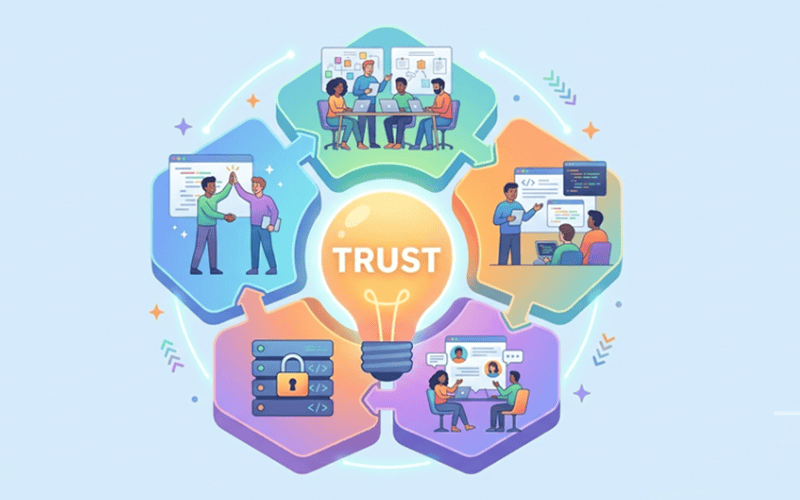
Building trust with software developers is challenging but essential, especially as artificial intelligence reshapes the technology landscape. Sanjay Sarathy, an executive at Cloudinary, explains that developers are naturally skeptical thinkers who evaluate tools critically. While they enthusiastically adopt AI to improve their workflows, they rarely trust its outputs blindly. To foster genuine allegiance, companies must view developer trust as a foundational element rather than a secondary feature. One effective strategy is offering meaningful free access to platforms, allowing developers to experiment, recognize value, and build confidence before moving projects into production. Additionally, providing technical support staffed by knowledgeable peers is vital; developers respect support teams that understand their specific language and challenges. As AI coding tools become more common, organizations must also ensure their documentation and interfaces are easily readable by AI models to minimize errors. Finally, clear and honest communication is crucial. Companies should openly acknowledge the limitations of their tools, avoid sudden changes to existing systems, and provide reliable, backward-compatible updates. By delivering consistently and respecting their time, companies can successfully earn the long-term trust and loyalty of the developer community.


Making Windows a developer platform, again

Microsoft is actively improving Windows to make it a more appealing platform for software developers by introducing tools that bridge the gap between Windows and Linux environments. A key addition is Coreutils for Windows, a package that brings standard Unix command-line utilities directly into the Windows ecosystem. This eliminates the frustrating context switching developers often face when moving between Windows and Linux systems, allowing Unix scripts and commands to run smoothly on a Windows machine. Additionally, Microsoft released Windows Developer Config, a tool designed to rapidly set up a fully functional development computer. Using automation scripts, it installs essential tools like Git, Visual Studio Code, and programming language support while also configuring the Windows Subsystem for Linux. This setup mirrors the environment of cloud-hosted development boxes but runs locally, making it highly practical for developers dealing with slow or unreliable network connections. The configuration tool ensures consistency across devices, saving teams time and preventing environment drift. Together, these updates demonstrate a clear effort to streamline daily workflows, providing software engineers with a comfortable, unified, and highly customizable environment right out of the box.

Daily Tech Digest - April 23, 2026


Quote for the day:

“Every time you have to speak, you are auditioning for leadership.” -- James Humes

🎧 Listen to this digest on YouTube Music

▶ Play Audio Digest

Duration: 19 mins • Perfect for listening on the go.


How To Navigate The New Economics Of Professionalized Cybercrime

The modern cybercrime landscape has evolved into a professionalized industry where attackers prioritize precision and severity over volume. According to recent data, while the frequency of material claims has decreased, the average cost per ransomware incident has surged, signaling a shift toward more efficient targeting. This new economic reality is defined by three primary trends: the rise of data-theft extortion, the prevalence of identity attacks, and the long-tail financial consequences that follow a breach. Because businesses have improved their backup and recovery systems, criminals have pivoted from simple encryption to threatening the exposure of sensitive data, often leveraging AI to analyze stolen information for maximum leverage. Furthermore, the professionalization of these threats extends to supply chain vulnerabilities, where a single vendor compromise can cause cascading losses across thousands of downstream clients. Consequently, cyber incidents are no longer isolated technical failures but material enterprise risks with financial repercussions lasting years. To navigate this environment, organizational leaders must shift their focus from mere operational recovery to robust data exfiltration prevention. CISOs, CFOs, and CROs must collaborate to integrate cyber risk into broader enterprise frameworks, ensuring that financial planning and security investments account for the multi-year legal, regulatory, and reputational exposures that now characterize the threat landscape.


How Agentic AI is transforming the future of Indian healthcare

Agentic AI represents a transformative shift in the Indian healthcare landscape, transitioning from passive data analysis to autonomous, goal-oriented systems that proactively manage patient care. Unlike traditional AI, which primarily focuses on reporting, agentic systems independently execute tasks such as triaging, scheduling, and continuous monitoring to address India’s strained doctor-to-patient ratio. By integrating these intelligent agents, medical facilities can streamline outpatient visits—from digital symptom recording to automated post-consultation follow-ups—significantly reducing the administrative burden on overworked clinicians. The technology is particularly vital for chronic disease management, where it provides timely nudges for medication adherence and identifies early warning signs before they escalate into emergencies. Furthermore, Agentic AI acts as a crucial support layer for frontline health workers in rural regions, bridging the clinical knowledge gap through real-time protocol guidance and decision support. While these advancements offer a scalable solution for public health, the article emphasizes that human empathy remains irreplaceable. Successful adoption requires robust frameworks for data privacy and ethical transparency, ensuring that physicians always retain final decision-making authority. Ultimately, by evolving from a mere tool into essential digital infrastructure, Agentic AI is poised to democratize access and foster a more responsive, patient-centric healthcare ecosystem across the diverse Indian population.


What a Post-Commercial Quantum World Could Look Like

The article "What a Post-Commercial Quantum World Could Look Like," published by The Quantum Insider, explores a future where quantum computing has moved beyond its initial commercial hype into a phase of deep integration and stabilization. In this post-commercial era, the focus shifts from the race for "quantum supremacy" toward the practical, ubiquitous application of quantum technologies across global infrastructure. The piece suggests that once the technology matures, it will cease to be a standalone industry of speculative startups and instead become a foundational utility, much like the internet or electricity today. Key impacts include a complete transformation of cybersecurity through quantum-resistant encryption and the optimization of complex systems in logistics, materials science, and drug discovery that were previously unsolvable. This transition will likely lead to a "quantum divide," where geopolitical and economic power is concentrated among those who have successfully integrated these capabilities into their national security and industrial frameworks. Ultimately, the article paints a picture of a world where quantum mechanics no longer represents a frontier of experimental physics but serves as the silent, invisible engine driving high-performance global economies and ensuring long-term technological resilience.


Continuous AI biometric identification: Why manual patient verification is not enough!

The article explores the critical transition from manual patient verification to continuous AI-powered biometric identification in modern healthcare. Traditional methods, such as verbal confirmations and physical wristbands, are increasingly deemed insufficient due to their susceptibility to human error and data entry inconsistencies, which often lead to fragmented medical records and life-threatening mistakes. To address these vulnerabilities, the industry is shifting toward a model of constant identity assurance using advanced technologies like facial biometrics, behavioral signals, and passive authentication. This continuous approach ensures real-time validation across all clinical touchpoints, significantly reducing the risks associated with duplicate electronic health records — currently estimated at 8-12% of total files. Furthermore, the integration of agentic AI and multimodal systems — combining fingerprints, voice, and device data — creates a secure identity layer that streamlines clinical workflows and protects patients from misidentification. With the healthcare biometrics market projected to reach $42 billion by 2030, the article argues that automating identity verification is no longer optional. Ultimately, by replacing episodic manual checks with autonomous, intelligent monitoring, healthcare organizations can enhance data integrity, safeguard financial interests against identity fraud, and, most importantly, ensure the highest standards of safety for the individuals in their care.


The 4 disciplines of delivery — and why conflating them silently breaks your teams

In his article for CIO, Prasanna Kumar Ramachandran argues that enterprise success depends on maintaining four distinct delivery disciplines: product management, technical architecture, program management, and release management. Each domain addresses a fundamental question that the others are ill-equipped to answer. Product management defines the "what" and "why," establishing the strategic vision and priorities. Technical architecture translates this into the "how," determining structural feasibility and sequence. Program management orchestrates the delivery timeline by managing cross-team dependencies, while release management ensures safe, compliant deployment to production. Organizations frequently stumble by treating these roles as interchangeable or asking a single team to bridge all four. This conflation "silently breaks" teams because it forces experts into roles outside their core competencies. For instance, an architect focused on product decisions might prioritize technical elegance over market needs, while program managers might sequence work based on staff availability rather than strategic value. When these boundaries blur, the result is often wasted effort, missed dependencies, and a fundamental misalignment between technical output and business goals. By clearly delineating these responsibilities, leaders can prevent operational friction and ensure that every capability delivered actually reaches the customer safely and generates measurable impact.


Teaching AI models to say “I’m not sure”

Researchers at MIT’s Computer Science and Artificial Intelligence Laboratory (CSAIL) have developed a novel training technique called Reinforcement Learning with Calibration Rewards (RLCR) to address the issue of AI overconfidence. Modern large language models often deliver every response with the same level of certainty, regardless of whether they are correct or merely guessing. This dangerous trait stems from standard reinforcement learning methods that reward accuracy but fail to penalize misplaced confidence. RLCR fixes this flaw by teaching models to generate calibrated confidence scores alongside their answers. During training, the system is penalized for being confidently wrong or unnecessarily hesitant when correct. Experimental results demonstrate that RLCR can reduce calibration errors by up to 90 percent without sacrificing accuracy, even on entirely new tasks the models have never encountered. This advancement is particularly significant for high-stakes applications in medicine, law, and finance, where human users must rely on the AI’s self-assessment to determine when to seek a second opinion. By providing a reliable signal of uncertainty, RLCR transforms AI from an unshakable but potentially deceptive voice into a more trustworthy tool that explicitly communicates its own limitations, ultimately enhancing safety and reliability in complex decision-making environments.


Are you paying an AI ‘swarm tax’? Why single agents often beat complex systems

The VentureBeat article discusses a "swarm tax" paid by enterprises that over-engineer AI systems with complex multi-agent architectures. Recent Stanford University research reveals that single-agent systems often match or even outperform multi-agent swarms when both are allocated an equivalent "thinking token budget." The perceived superiority of swarms frequently stems from higher total computation during testing rather than inherent structural advantages. This "tax" manifests as increased latency, higher costs, and greater technical complexity. A primary reason for this performance gap is the "Data Processing Inequality," where critical information is often lost or fragmented during the handoffs and summarizations required in multi-agent orchestration. In contrast, a single agent maintains a continuous context window, allowing for much more efficient information retention and reasoning. The study suggests that developers should prioritize optimizing single-agent models—using techniques like SAS-L to extend reasoning—before adopting multi-agent frameworks. Swarms remain useful only in specific scenarios, such as when a single agent’s context becomes corrupted by noisy data or when a task is naturally modular and requires parallel processing. Ultimately, the article advocates for a "single-agent first" approach, warning that unnecessary architectural bloat can lead to diminishing returns and inefficient resource utilization in enterprise AI deployments.


Cloud tech outages: how the EU plans to bolster its digital infrastructure

The recent global outages involving Amazon Web Services in late 2025 and CrowdStrike in 2024 have underscored the extreme fragility of modern digital infrastructure, which remains heavily reliant on a small group of U.S.-based hyperscalers. These disruptions revealed that the perceived redundancy of cloud computing is often an illusion, as many organizations concentrate their primary and backup systems within the same provider's ecosystem. Consequently, the European Union is shifting its strategy from mere technical efficiency to a geopolitical pursuit of "digital sovereignty." To mitigate the risks of "digital colonialism" and the reach of the U.S. CLOUD Act, European leaders are championing the 2025 European Digital Sovereignty Declaration. This framework prioritizes the development of a federated cloud architecture, linking national nodes into a cohesive, secure network to reduce dependence on foreign monopolies. Furthermore, the EU is investing heavily in homegrown semiconductors, foundational AI models, and public digital infrastructure. By establishing a dedicated task force to monitor progress through 2026, the bloc aims to ensure that European data remains subject strictly to local jurisdiction. This comprehensive approach seeks to bolster resilience against future technical failures while securing the strategic autonomy necessary for Europe’s long-term digital and economic security.


When a Cloud Region Fails: Rethinking High Availability in a Geopolitically Unstable World

In the InfoQ article "When a Cloud Region Fails," Rohan Vardhan introduces the concept of sovereign fault domains (SFDs) to address cloud resilience within an increasingly unstable geopolitical landscape. While traditional high-availability strategies focus on technical abstractions like multi-availability zone (multi-AZ) deployments to mitigate hardware failures, Vardhan argues these are insufficient against sovereign-level disruptions. SFDs represent failure boundaries defined by legal, political, or physical jurisdictions. Recent events, such as sudden cloud provider withdrawals or infrastructure instability in conflict zones, demonstrate how geopolitical shifts can trigger correlated failures across entire regions, rendering standard multi-AZ setups ineffective. To combat these risks, architects must shift their baseline for high availability from multi-AZ to multi-region architectures. This transition requires a fundamental rethink of distributed systems, moving beyond technical redundancy to include legal and political considerations in data replication and traffic management. The article advocates for the adoption of explicit region evacuation playbooks, the definition of geopolitical recovery targets, and the expansion of chaos engineering to simulate sovereign-level losses. Ultimately, achieving true resilience in the modern world necessitates acknowledging that cloud regions are physical and political assets, not just virtualized resources, requiring intentional design to survive jurisdictional partitions.


Inside Caller-as-a-Service Fraud: The Scam Economy Has a Hiring Process

The BleepingComputer article explores the emergence of "Caller-as-a-Service," a professionalized vishing ecosystem where cybercrime syndicates mirror the organizational structure of legitimate businesses. These industrialized fraud operations utilize a clear division of labor, employing specialized roles such as infrastructure operators, data analysts, and professional callers. Recruitment for these positions is surprisingly formal; underground job postings resemble professional LinkedIn ads, specifically seeking native English speakers with high emotional intelligence and persuasive social engineering skills. To establish credibility, recruiters often display verifiable "proof-of-profit" via large cryptocurrency balances to entice new talent. Once hired, callers are frequently subjected to real-time supervision through screen sharing to ensure strict adherence to malicious scripts and maximize victim conversion rates. Compensation models are equally sophisticated, ranging from fixed weekly salaries of $1,500 to success-based commissions of $1,000 per successful vishing hit. This service-driven model significantly lowers the barrier to entry for criminals, as it allows them to outsource the technical and interpersonal complexities of a cyberattack. Ultimately, the article emphasizes that the professionalization of the scam economy makes these threats more resilient and efficient, necessitating that defenders implement more robust identity verification and multi-factor authentication to protect individuals from these increasingly coordinated, data-driven vishing campaigns.

Daily Tech Digest - October 28, 2025


Quote for the day:

"Ideas are easy, implementation is hard." -- Guy Kawasaki


India’s AI Paradox: Why We Need Cloud Sovereignty Before Model Sovereignty

As is clear, cloud sovereignty is the new pillar supporting national security and having control over infrastructure, data, and digital operations. It has the capacity to safeguard the country’s national interests, including (but not limited to) industrial data, citizen information, and AI workloads. For India, specifically, building a sovereign digital infrastructure guarantees continuity and trust. It gives the country power to enforce its own data laws, manage computing resources for homegrown AI systems, and stay insulated from the tremors of foreign policy decisions or transnational outages. It’s the digital equivalent of producing energy at home—self-reliant, secure, and governed by national priorities. ... Sovereign infrastructure is less a matter of where data sits and more about who controls it and how securely it is managed. With connected systems, AI workloads spread across networks. This makes it imperative for security to be built into every layer and stage. As systems grow more connected and AI workloads spread across networks, security needs to be built into every layer of technology, not added as an afterthought. That’s where edge computing and modern cloud-security frameworks come in. ... There is a real cost involved in neglecting cloud sovereignty. If our AI models continue to depend upon infrastructure that lies outside our jurisdiction, any changes in foreign regulations might suddenly restrict access to critical training datasets. 


Do CISOs need to rethink service provider risk?

Security leaders face mounting pressure from boards to provide assurance about third-party risks, while services provider vetting processes are becoming more onerous — a growing burden for both CISOs and their providers. At the same time, AI is becoming integrated into more business systems and processes, opening new risks. CISOs may be forced to rethink their vetting processes with partners to maintain a focus on risk reduction while treating partnerships as a shared responsibility. ... When looking to engage a services provider, his vetting process starts with building relationships first and then working towards a formal partnership and delivery of services. He believes dialogue helps establish trust and transparency and underpin the partnership approach. “A lot of that is ironed out in that really undocumented process. You build up those relationships first, and then the transactional piece comes after that.” ... “If your questions stop once the form is complete, you’ve missed the chance to understand how a partner really thinks about security,” Thiele says. “You learn a lot more from how they explain their risk decisions than from a yes/no tick box.” Transparency and collaboration are at the heart of stronger partnerships. “You can’t outsource accountability, but you can become mature in how you manage shared responsibility,” Thiele says. ... With AI, Cruz has started to monitor vendors acquiring ISO 42001 certification for AI governance. “It’s a trend I’m seeing in some of the work that we’re doing,” she says.


The Silent Technical Debt: Why Manual Remediation Is Costing You More Than You Think

A far more challenging and costly form of this debt has silently embedded itself into the daily operations of nearly every software development team, and most leaders don’t even have a line item for it. This liability is remediation debt: The ever-growing cost of manually fixing vulnerabilities in the open source components that form the backbone of modern applications. For years, we’ve accepted this process as a necessary chore. A scanner finds a flaw, an alert is sent, and a developer is pulled from their work to hunt down a patch. ... The complexity doesn’t stop there. The report reveals that 65% of manual remediation attempts for a single critical vulnerability require updating at least five additional “transitive” dependencies, or a dependency of a dependency. This is the dreaded “dependency conundrum” that developers lament, where fixing one problem creates a cascade of new compatibility issues. ... It’s time to reframe our way of dealing with this: the goal is not just to find vulnerabilities faster but to remediate them instantly. The path forward lies in shifting from manual labor to intelligent remediation. This means evolving beyond tools that simply populate dashboards with problems and embracing platforms that solve them at their source. Imagine a system where a vulnerability is identified, and instead of creating a ticket, the platform automatically builds, tests, and delivers a fully patched and compatible version of the necessary component directly to the developer.


AI Isn’t Coming for Data Jobs – It’s Coming for Data Chaos

Data chaos arises when organizations lose control of their information landscape. It’s the confusion born from fragmentation, duplication, and inconsistency when multiple versions of “truth” compete for authority. Poor data quality and disconnected data governance processes often amplify this chaos. This chaos manifests as conflicting reports, inaccurate dashboards, mismatched customer profiles, and entire departments working from isolated datasets that refuse to align. ... Recent industry analyses reveal an accelerating imbalance in the data economy. While nearly 90% of the world’s data has been generated in just the past two years, data professionals and data stewards represent only about 3% of the enterprise workforce, creating a widening gap between information growth and the human capacity to govern it. ... Data chaos doesn’t just strain systems, it strains people. As enterprises struggle to keep pace with growing data volume and complexity, the very professionals tasked with managing it find themselves overwhelmed by maintenance work. ... When applied strategically, AI can transform the data management lifecycle from ingestion to governance reducing human toil and freeing engineers to focus on design, quality, and strategy. Paired with an intelligent data catalog, these systems make information assets instantly discoverable and reusable across business domains. AI-driven data classification tools now tag, cluster, and prioritize assets automatically, reducing manual oversight.


Why IT projects still fail

Failure today means an IT project doesn’t deliver expected benefits, according to CIOs, project leaders, researchers, and IT consultants. Failure can also mean a project doesn’t produce returns, runs so late as to be obsolete when completed, or doesn’t engage users who then shun it in response. ... IT leaders and now business leaders, too, get enamored with technologies, despite years of admonishments not to do so. The result is a misalignment between the project objectives and business goals, experienced CIOs and veteran project managers say. ... Stettler says a business owner with clear accountability is needed to ensure that business resources are available when required as well as to ensure process changes and worker adoption happen. He notes that having CIOs — instead of a business owner — try to make those things happen “would be a tail-wagging-the-dog scenario.” ... “Executives need to make more time and engage across all levels of the program. They can’t just let the leaders come talk to them. They need to do spot checks and quality reviews of deliverable updates, and check in with those throughout the program,” Stettler says. “And they have to have the attitude of ‘Bring stuff to me when I can be helpful.’” ... Phillips acknowledges that project teams don’t usually overlook entire divisions, but they sometimes fail to identify and include all the stakeholders they should in the project process. Consequently, they miss key requirements to include, regulations to consider, and opportunities to capitalize on.


The Human Plus AI Quotient: Inside Ascendion's strategy to make AI an amplifier of human talent

Technical skills evolve—mainframes lasted forty years, client-server about twenty, and digital waves even less. Skills will come and go, so we focus on candidates with a strong willingness to learn and invest in themselves. That’s foundational. What’s changed now is the importance of being open to AI. We don’t require deep AI expertise at the outset, but we do look for those who are ready to embrace it. This approach explains why our workforce is so quick to adapt to AI—it’s ingrained in how we hire and develop our people. ... The war for talent has always existed—it’s just the scale and timing that change. For us, the quality of work and the opportunities we provide are key to retention. Being fundamentally an AI-first company is a big differentiator, and our “AI-first” mindset is wired into our DNA. Our employees see a real difference in how we approach projects, always asking how AI can add value. We’ve created an environment that encourages experimentation and learning, and the IP our teams develop—sometimes even around best practices for AI adoption—becomes part of our organisational knowledge base. ... The good news is that for a large cross-section of the workforce, "skilling in AI" is not about mastery of mathematics; it's about improving English writing skills to prompt effectively. We often share prompt libraries with clients because the ability to ask the right question and interpret the output is a significant win.


Recruitment Class: What CIOs Want in Potential New Hires

Candidates should be comfortable operating in a very complex, deep digital ecosystem, Avetisyan said. Now, digital fluency means much more than knowing how to use a certain tool that is currently popular, including AI tools. There needs to be an awareness of the broader implications and responsibilities that come with implementing AI. "It's about integrating AI responsibly and designing for accessibility," Avetisyan said -- both of which represent big challenges that must be tackled and kept continuously top of mind. AI should elevate user experiences. ... There's still a need to demonstrate technical skills with human skills such as problem-solving, communication, and ethical awareness, she said. "You can't just be an exceptional coder and right away be effective in our organization if you don't understand all these other aspects," she said. One more thing: While vibe coding -- letting AI shoulder much or most of the work -- is a buzzy concept, she said she is not ready to turn her shop of developers into vibe coders. A more grounded approach to teaching AI fluency is -- or should be -- the educational mission. ... As for programming? A programmer is still a programmer, but the job has evolved to become more strategic, Ruch said. Technical talent will be needed; however, the first few revisions of code will be pre-written based on the specifications given to AI, he said.


Do programming certifications still matter?

“Certifications are shifting from a checkbox to a compass. They’re less about proving you memorized syntax and more about proving you can architect systems, instruct AI coding assistants, and solve problems end-to-end,” says Faizel Khan, lead AI engineer at Landing Point, an executive search and recruiting firm. ... Certifications really do two things, Khan adds. “First, they force you to learn by doing,” he says. “If you’re taking AWS Solutions Architect or Terraform, you don’t pass by guessing—you plan, build, and test systems. That practice matters. Second, they act as a public signal. Think of it like a micro-degree. You’re not just saying, ‘I know cloud.’ You’re showing you’ve crossed a bar that thousands of other engineers recognize.” But there are cons, too. “In tech, employers don’t just want credentials, they want proof you can deliver,” says Kevin Miller, CTO at IFS. “Programming certifications can be a valuable indicator of your baseline knowledge and competencies, especially if you’re early in your career or pivoting into tech, but their importance is dwindling.” ... “I’m more interested in a candidate’s attitude and aptitude: what problems they’ve solved, what they’ve built, and how they’ve approached challenges,” Watts says. “Certifications can show commitment and discipline, and they’re especially useful in highly specialized roles. But I’m cautious when someone presents a laundry list of certifications with little evidence of real-world application.”


Guarding the Digital God: The Race to Secure Artificial Intelligence

Securing an AI is fundamentally different from securing a traditional computer network. A hacker doesn’t need to breach a firewall if they can manipulate the AI’s “mind” itself. The attack vectors are subtle, insidious, and entirely new. ... The debate over whether people or AI should lead this effort presents a false choice. The only viable path forward is a deep, symbiotic partnership. We must build a system where the AI is the frontline soldier and the human is the strategic commander. The guardian AI should handle the real-time, high-volume defense: scanning trillions of data points, flagging suspicious queries, and patching low-level vulnerabilities at machine speed. The human experts, in turn, must set the strategy. They define the ethical red lines, design the security architecture, and, most importantly, act as the ultimate authority for critical decisions. If the guardian AI detects a major, system-level attack, it shouldn’t act unilaterally; it should quarantine the threat and alert a human operator who makes the final call. ... The power of artificial intelligence is growing at an exponential rate, but our strategies for securing it are lagging dangerously behind. The threats are no longer theoretical. The solution is not a choice between humans and AI, but a fusion of human strategic oversight and AI-powered real-time defense. For a nation like the United States, developing a comprehensive national strategy to secure its AI infrastructure is not optional.


Managing legacy medical devices that can no longer be patched

First, hospitals need to recognize that it is rarely possible to instantaneously remove a medical device, but what you can do is build a wall around that device so that only trusted, validated network traffic will be able to reach the device. Secondly, close collaboration with vendors is critical to understand available upgrade paths. Most vendors don’t want customers running legacy technologies that heighten security risk. From my perspective, if a device is too old to be secured, that’s a serious concern. Collaborate with your providers early and be transparent about budget and timeline constraints. This enables vendors to design a phased roadmap for replacing legacy systems, steadily reducing security risk over time. ... We can take a cue from manufacturing, where cyber resilience is essential to limiting the impact of attacks on the production line and broader ecosystem. No single breach should be able to bring down the entire operation. Yet many organizations still run forgotten, outdated systems. It’s critical to retire legacy assets, streamline the environment, and continuously identify and manage risk. ... We’ve seen meaningful progress when dozens of technology vendors pledged to self-regulate and build cyber resilience into their products from the outset. Unfortunately, that momentum has slowed. In my experience, however, the strongest gains often come from non‑legislative, industry‑led initiatives, when organizations voluntarily choose to prioritize security.

Daily Tech Digest - July 03, 2025


Quote for the day:

"Limitations live only in our minds. But if we use our imaginations, our possibilities become limitless." --Jamie Paolinetti


The Goldilocks Theory – preparing for Q-Day ‘just right’

When it comes to quantum readiness, businesses currently have two options: Quantum key distribution (QKD) and post quantum cryptography (PQC). Of these, PQC reigns supreme. Here’s why. On the one hand, you have QKD which leverages principles of quantum physics, such as superposition, to securely distribute encryption keys. Although great in theory, it needs extensive new infrastructure, including bespoke networks and highly specialised hardware. More importantly, it also lacks authentication capabilities, severely limiting its practical utility. PQC, on the other hand, comprises classical cryptographic algorithms specifically designed to withstand quantum attacks. It can be integrated into existing digital infrastructures with minimal disruption. ... Imagine installing new quantum-safe algorithms prematurely, only to discover later they’re vulnerable, incompatible with emerging standards, or impractical at scale. This could have the opposite effect and could inadvertently increase attack surface and bring severe operational headaches, ironically becoming less secure. But delaying migration for too long also poses serious risks. Malicious actors could be already harvesting encrypted data, planning to decrypt it when quantum technology matures – so businesses protecting sensitive data such as financial records, personal details, intellectual property cannot afford indefinite delays.


Sovereign by Design: Data Control in a Borderless World

The regulatory framework for digital sovereignty is a national priority. The EU has set the pace with GDPR and GAIA-X. It prioritizes data residency and local infrastructure. China's cybersecurity law and personal information protection law enforce strict data localization. India's DPDP Act mandates local storage for sensitive data, aligning with its digital self-reliance vision through platforms such as Aadhaar. Russia's federal law No. 242-FZ requires citizen data to stay within the country for the sake of national security. Australia's privacy act focuses on data privacy, especially for health records, and Canada's PIPEDA encourages local storage for government data. Saudi Arabia's personal data protection law enforces localization for sensitive sectors, and Indonesia's personal data protection law covers all citizen-centric data. Singapore's PDPA balances privacy with global data flows, and Brazil's LGPD, mirroring the EU's GDPR, mandates the protection of privacy and fundamental rights of its citizens. ... Tech companies have little option but to comply with the growing demands of digital sovereignty. For example, Amazon Web Services has a digital sovereignty pledge, committing to "a comprehensive set of sovereignty controls and features in the cloud" without compromising performance.


Agentic AI Governance and Data Quality Management in Modern Solutions

Agentic AI governance is a framework that ensures artificial intelligence systems operate within defined ethical, legal, and technical boundaries. This governance is crucial for maintaining trust, compliance, and operational efficiency, especially in industries such as Banking, Financial Services, Insurance, and Capital Markets. In tandem with robust data quality management, Agentic AI governance can substantially enhance the reliability and effectiveness of AI-driven solutions. ... In industries such as Banking, Financial Services, Insurance, and Capital Markets, the importance of Agentic AI governance cannot be overstated. These sectors deal with vast amounts of sensitive data and require high levels of accuracy, security, and compliance. Here’s why Agentic AI governance is essential: Enhanced Trust: Proper governance fosters trust among stakeholders by ensuring AI systems are transparent, fair, and reliable. Regulatory Compliance: Adherence to legal and regulatory requirements helps avoid penalties and safeguard against legal risks. Operational Efficiency: By mitigating risks and ensuring accuracy, AI governance enhances overall operational efficiency and decision-making. Protection of Sensitive Data: Robust governance frameworks protect sensitive financial data from breaches and misuse, ensuring privacy and security. 


Fundamentals of Dimensional Data Modeling

Keeping the dimensions separate from facts makes it easier for analysts to slice-and-dice and filter data to align with the relevant context underlying a business problem. Data modelers organize these facts and descriptive dimensions into separate tables within the data warehouse, aligning them with the different subject areas and business processes. ... Dimensional modeling provides a basis for meaningful analytics gathered from a data warehouse for many reasons. Its processes lead to standardizing dimensions through presenting the data blueprint intuitively. Additionally, dimensional data modeling proves to be flexible as business needs evolve. The data warehouse updates technology according to the concept of slowly changing dimensions (SCD) as business contexts emerge. ... Alignment in the design requires these processes, and data governance plays an integral role in getting there. Once the organization is on the same page about the dimensional model’s design, it chooses the best kind of implementation. Implementation choices include the star or snowflake schema around a fact. When organizations have multiple facts and dimensions, they use a cube. A dimensional model defines how technology needs to build a data warehouse architecture or one of its components using good design and implementation.


IDE Extensions Pose Hidden Risks to Software Supply Chain

The latest research, published this week by application security vendor OX Security, reveals the hidden dangers of verified IDE extensions. While IDEs provide an array of development tools and features, there are a variety of third-party extensions that offer additional capabilities and are available in both official marketplaces and external websites. ... But OX researchers realized they could add functionality to verified extensions after the fact and still maintain the checkmark icon. After analyzing traffic for Visual Studio Code, the researchers found a server request to the marketplace that determines whether the extension is verified; they discovered they could modify the values featured in the server request and maintain the verification status even after creating malicious versions of the approved extensions. ... Using this attack technique, a threat actor could inject malicious code into verified and seemingly safe extensions that would maintain their verified status. "This can result in arbitrary code execution on developers' workstations without their knowledge, as the extension appears trusted," Siman-Tov Bustan and Zadok wrote. "Therefore, relying solely on the verified symbol of extensions is inadvisable." ... "It only takes one developer to download one of these extensions," he says. "And we're not talking about lateral movement. ..."


Business Case for Agentic AI SOC Analysts

A key driver behind the business case for agentic AI in the SOC is the acute shortage of skilled security analysts. The global cybersecurity workforce gap is now estimated at 4 million professionals, but the real bottleneck for most organizations is the scarcity of experienced analysts with the expertise to triage, investigate, and respond to modern threats. One ISC2 survey report from 2024 shows that 60% of organizations worldwide reported staff shortages significantly impacting their ability to secure the organizations, with another report from the World Economic Forum showing that just 15% of organizations believe they have the right people with the right skills to properly respond to a cybersecurity incident. Existing teams are stretched thin, often forced to prioritize which alerts to investigate and which to leave unaddressed. As previously mentioned, the flood of false positives in most SOCs means that even the most experienced analysts are too distracted by noise, increasing exposure to business-impacting incidents. Given these realities, simply adding more headcount is neither feasible nor sustainable. Instead, organizations must focus on maximizing the impact of their existing skilled staff. The AI SOC Analyst addresses this by automating routine Tier 1 tasks, filtering out noise, and surfacing the alerts that truly require human judgment. 


Microservice Madness: Debunking Myths and Exposing Pitfalls

Microservices will reduce dependencies, because it forces you to serialize your types into generic graph objects (read; JSON or XML or something similar). This implies that you can just transform your classes into a generic graph object at its interface edges, and accomplish the exact same thing. ... There are valid arguments for using message brokers, and there are valid arguments for decoupling dependencies. There are even valid points of scaling out horizontally by segregating functionality on to different servers. But if your argument in favor of using microservices is "because it eliminates dependencies," you're either crazy, corrupt through to the bone, or you have absolutely no idea what you're talking about (make your pick!) Because you can easily achieve the same amount of decoupling using Active Events and Slots, combined with a generic graph object, in-process, and it will execute 2 billion times faster in production than your "microservice solution" ... "Microservice Architecture" and "Service Oriented Architecture" (SOA) have probably caused more harm to our industry than the financial crisis in 2008 caused to our economy. And the funny thing is, the damage is ongoing because of people repeating mindless superstitious belief systems as if they were the truth.


Sustainability and social responsibility

Direct-to-chip liquid cooling delivers impressive efficiency but doesn’t manage the entire thermal load. That’s why hybrid systems that combine liquid and traditional air cooling are increasingly popular. These systems offer the ability to fine-tune energy use, reduce reliance on mechanical cooling, and optimize server performance. HiRef offers advanced cooling distribution units (CDUs) that integrate liquid-cooled servers with heat exchangers and support infrastructure like dry coolers and dedicated high-temperature chillers. This integration ensures seamless heat management regardless of local climate or load fluctuations. ... With liquid cooling systems capable of operating at higher temperatures, facilities can increasingly rely on external conditions for passive cooling. This shift not only reduces electricity usage, but also allows for significant operational cost savings over time. But this sustainable future also depends on regulatory compliance, particularly in light of the recently updated F-Gas Regulation, which took effect in March 2024. The EU regulation aims to reduce emissions of fluorinated greenhouse gases to net-zero by 2050 by phasing out harmful high-GWP refrigerants like HFCs. “The F-Gas regulation isn’t directly tailored to the data center sector,” explains Poletto.


Infrastructure Operators Leaving Control Systems Exposed

Threat intelligence firm Censys has scanned the internet twice a month for the last six months, looking for a representative sample composed of four widely used types of ICS devices publicly exposed to the internet. Overall exposure slightly increased from January through June, the firm said Monday. One of the devices Censys scanned for is programmable logic controllers made by an Israel-based Unitronics. The firm's Vision-series devices get used in numerous industries, including the water and wastewater sector. Researchers also counted publicly exposed devices built by Israel-based Orpak - a subsidiary of Gilbarco Veeder-Root - that run SiteOmat fuel station automation software. It also looked for devices made by Red Lion that are widely deployed for factory and process automation, as well as in oil and gas environments. It additionally probed for instances of a facilities automation software framework known as Niagara, made by Tridium. ... Report author Emily Austin, principal security researcher at Censys, said some fluctuation over time isn't unusual, given how "services on the internet are often ephemeral by nature." The greatest number of publicly exposed systems were in the United States, except for Unitronics, which are also widely used in Australia.


Healthcare CISOs must secure more than what’s regulated

Security must be embedded early and consistently throughout the development lifecycle, and that requires cross-functional alignment and leadership support. Without an understanding of how regulations translate into practical, actionable security controls, CISOs can struggle to achieve traction within fast-paced development environments. ... Security objectives should be mapped to these respective cycles—addressing tactical issues like vulnerability remediation during sprints, while using PI planning cycles to address larger technical and security debt. It’s also critical to position security as an enabler of business continuity and trust, rather than a blocker. Embedding security into existing workflows rather than bolting it on later builds goodwill and ensures more sustainable adoption. ... The key is intentional consolidation. We prioritize tools that serve multiple use cases and are extensible across both DevOps and security functions. For example, choosing solutions that can support infrastructure-as-code security scanning, cloud posture management, and application vulnerability detection within the same ecosystem. Standardizing tools across development and operations not only reduces overhead but also makes it easier to train teams, integrate workflows, and gain unified visibility into risk.

Daily Tech Digest - February 04, 2025


Quote for the day:

"Develop success from failures. Discouragement and failure are two of the surest stepping stones to success." -- Dale Carnegie


Technology skills gap plagues industries, and upskilling is a moving target

“The deepening threat landscape and rapidly evolving high-momentum technologies like AI are forcing organizations to move with lightning speed to fill specific gaps in their job architectures, and too often they are stumbling,” said David Foote, chief analyst at consultancy Foote Partners. To keep up with the rapidly changing landscape, Gartner suggests that organizations invest in agile learning for tech teams. “In the context of today’s AI-fueled accelerated disruption, many business leaders feel learning is too slow to respond to the volume, variety and velocity of skills needs,” said Chantal Steen, a senior director in Gartner’s HR practice. “Learning and development must become more agile to respond to changes faster and deliver learning more rapidly and more cost effectively.” Studies from staffing firm ManpowerGroup, hiring platform Indeed, and Deloitte consulting show that tech hiring will focus on candidates with flexible skills to meet evolving demands. “Employers know a skilled and adaptable workforce is key to navigating transformation, and many are prioritizing hiring and retaining people with in-demand flexible skills that can flex to where demand sits,” said Jonas Prising, ManpowerGroup chair and CEO.


Mixture of Experts (MoE) Architecture: A Deep Dive & Comparison of Top Open-Source Offerings

The application of MoE to open-source LLMs offers several key advantages. Firstly, it enables the creation of more powerful and sophisticated models without incurring the prohibitive costs associated with training and deploying massive, single-model architectures. Secondly, MoE facilitates the development of more specialized and efficient LLMs, tailored to specific tasks and domains. This specialization can lead to significant improvements in performance, accuracy, and efficiency across a wide range of applications, from natural language translation and code generation to personalized education and healthcare. The open-source nature of MoE-based LLMs promotes collaboration and innovation within the AI community. By making these models accessible to researchers, developers, and businesses, MoE fosters a vibrant ecosystem of experimentation, customization, and shared learning. ... Integrating MoE architecture into open-source LLMs represents a significant step forward in the evolution of artificial intelligence. By combining the power of specialization with the benefits of open-source collaboration, MoE unlocks new possibilities for creating more efficient, powerful, and accessible AI models that can revolutionize various aspects of our lives.


The DeepSeek Disruption and What It Means for CIOs

The emergence of DeepSeek has also revived a long-standing debate about open-source AI versus proprietary AI. Open-source AI is not a silver bullet. CIOs need to address critical risks as open-source AI models, if not secured properly, can be exposed to grave cyberthreats and adversarial attacks. While DeepSeek currently shows extraordinary efficiency, it requires an internal infrastructure, unlike GPT-4, which can seamlessly scale on OpenAI's cloud. Open-source AI models lack support and skills, thereby mandating users to build their own expertise, which could be demanding. "What happened with DeepSeek is actually super bullish. I look at this transition as an opportunity rather than a threat," said Steve Cohen, founder of Point72. ... The regulatory non-compliance adds another challenge as many governments restrict and disallow sensitive enterprise data from being processed by Chinese technologies. A possibility of potential backdoor can't be ruled out and this could open the enterprises to additional risks. CIOs need to conduct extensive security audits before deploying DeepSeek. rganizations can implement safeguards such as on-premises deployment to avoid data exposure. Integrating strict encryption protocols can help the AI interactions remain confidential, and performing rigorous security audits ensure the model's safety before deploying it into business workflows.


Why GreenOps will succeed where FinOps is failing

The cost-control focus fails to engage architects and engineers in rethinking how systems are designed, built and operated for greater efficiency. This lack of engagement results in inertia and minimal progress. For example, the database team we worked with in an organization new to the cloud launched all the AWS RDS database servers from dev through production, incurring a $600K a month cloud bill nine months before the scheduled production launch. The overburdened team was not thinking about optimizing costs, but rather optimizing their own time and getting out of the way of the migration team as quickly as possible. ... GreenOps — formed by merging FinOps, sustainability and DevOps — addresses the limitations of FinOps while integrating sustainability as a core principle. Green computing contributes to GreenOps by emphasizing energy-efficient design, resource optimization and the use of sustainable technologies and platforms. This foundational focus ensures that every system built under GreenOps principles is not only cost-effective but also minimizes its environmental footprint, aligning technological innovation with ecological responsibility. Moreover, we’ve found that providing emissions feedback to architects and engineers is a bigger motivator than cost to inspire them to design more efficient systems and build automation to shut down underutilized resources.


Best Practices for API Rate Limits and Quotas

Unlike short-term rate limits, the goal of quotas is to enforce business terms such as monetizing your APIs and protecting your business from high-cost overruns by customers. They measure customer utilization of your API over longer durations, such as per hour, per day, or per month. Quotas are not designed to prevent a spike from overwhelming your API. Rather, quotas regulate your API’s resources by ensuring a customer stays within their agreed contract terms. ... Even a protection mechanism like rate limiting could have errors. For example, a bad network connection with Redis could cause reading rate limit counters to fail. In such scenarios, it’s important not to artificially reject all requests or lock out users even though your Redis cluster is inaccessible. Your rate-limiting implementation should fail open rather than fail closed, meaning all requests are allowed even though the rate limit implementation is faulting. This also means rate limiting is not a workaround to poor capacity planning, as you should still have sufficient capacity to handle these requests or even design your system to scale accordingly to handle a large influx of new requests. This can be done through auto-scale, timeouts, and automatic trips that enable your API to still function.


Protecting Ultra-Sensitive Health Data: The Challenges

Protecting ultra-sensitive information "is an incredibly confusing and complicated and evolving part of the law," said regulatory attorney Kirk Nahra of the law firm WilmerHale. "HIPAA generally does not distinguish between categories of health information," he said. "There are exceptions - including the recent Dobbs rule - but these are not fundamental in their application, he said. Privacy protections related to abortion procedures are perhaps the most hotly debated type of patient information. For instance, last June - in response to the June 2022 Supreme Court's Dobbs ruling, which overturned the national right to abortion - the Biden administration's U.S. Department of Health and Human Services modified the HIPAA Privacy Rule to add additional safeguards for the access, use and disclosure of reproductive health information. The rule is aimed at protecting women from the use or disclosure of their reproductive health information when it is sought to investigate or impose liability on individuals, healthcare providers or others who seek, obtain, provide or facilitate reproductive healthcare that is lawful under the circumstances in which such healthcare is provided. But that rule is being challenged in federal court by 15 state attorneys general seeking to revoke the regulations.


Evolving threat landscape, rethinking cyber defense, and AI: Opportunties and risk

Businesses are firmly in attackers’ crosshairs. Financially motivated cybercriminals conduct ransomware attacks with record-breaking ransoms being paid by companies seeking to avoid business interruption. Others, including nation-state hackers, infiltrate companies to steal intellectual property and trade secrets to gain commercial advantage over competitors. Further, we regularly see critical infrastructure being targeted by nation-state cyberattacks designed to act as sleeper cells that can be activated in times of heightened tension. Companies are on the back foot. ... As zero trust disrupts obsolete firewall and VPN-based security, legacy vendors are deploying firewalls and VPNs as virtual machines in the cloud and calling it zero trust architecture. This is akin to DVD hardware vendors deploying DVD players in a data center and calling it Netflix! It gives a false sense of security to customers. Organizations need to make sure they are really embracing zero trust architecture, which treats everyone as untrusted and ensures users connect to specific applications or services, rather than a corporate network. ... Unfortunately, the business world’s harnessing of AI for cyber defense has been slow compared to the speed of threat actors harnessing it for attacks. 


Six essential tactics data centers can follow to achieve more sustainable operations

By adjusting energy consumption based on real-time demand, data centers can significantly enhance their operational efficiency. For example, during periods of low activity, power can be conserved by reducing energy use, thus minimizing waste without compromising performance. This includes dynamic power management technologies in switch and router systems, such as shutting down unused line cards or ports and controlling fan speeds to optimize energy use based on current needs. Conversely, during peak demand, operations can be scaled up to meet increased requirements, ensuring consistent and reliable service levels. Doing so not only reduces unnecessary energy expenditure, but also contributes to sustainability efforts by lowering the environmental impact associated with energy-intensive operations. ... Heat generated from data center operations can be captured and repurposed to provide heating for nearby facilities and homes, transforming waste into a valuable resource. This approach promotes a circular energy model, where excess heat is redirected instead of discarded, reducing the environmental impact. Integrating data centers into local energy systems enhances sustainability and offers tangible benefits to surrounding areas and communities whilst addressing broader energy efficiency goals.


The Engineer’s Guide to Controlling Configuration Drift

“Preventing configuration drift is the bedrock for scalable, resilient infrastructure,” comments Mayank Bhola, CTO of LambdaTest, a cloud-based testing platform that provides instant infrastructure. “At scale, even small inconsistencies can snowball into major operational inefficiencies. We encountered these challenges [user-facing impact] as our infrastructure scaled to meet growing demands. Tackling this challenge head-on is not just about maintaining order; it’s about ensuring the very foundation of your technology is reliable. And so, by treating infrastructure as code and automating compliance, we at LambdaTest ensure every server, service, and setting aligns with our growth objectives, no matter how fast we scale. Adopting drift detection and remediation strategies is imperative for maintaining a resilient infrastructure. ... The policies you set at the infrastructure level, such as those for SSH access, add another layer of security to your infrastructure. Ansible allows you to define policies like removing root access, changing the default SSH port, and setting user command permissions. “It’s easy to see who has access and what they can execute,” Kampa remarks. “This ensures resilient infrastructure, keeping things secure and allowing you to track who did what if something goes wrong.”


Strategies for mitigating bias in AI models

The need to address bias in AI models stems from the fundamental principle of fairness. AI systems should treat all individuals equitably, regardless of their background. However, if the training data reflects existing societal biases, the model will likely reproduce and even exaggerate those biases in its outputs. For instance, if a facial recognition system is primarily trained on images of one demographic, it may exhibit lower accuracy rates for other groups, potentially leading to discriminatory outcomes. Similarly, a natural language processing model trained on predominantly Western text may struggle to understand or accurately represent nuances in other languages and cultures. ... Incorporating contextual data is essential for AI systems to provide relevant and culturally appropriate responses. Beyond basic language representation, models should be trained on datasets that capture the history, geography, and social issues of the populations they serve. For instance, an AI system designed for India should include data on local traditions, historical events, legal frameworks, and social challenges specific to the region. This ensures that AI-generated responses are not only accurate but also culturally sensitive and context-aware. Additionally, incorporating diverse media formats such as text, images, and audio from multiple sources enhances the model’s ability to recognise and adapt to varying communication styles.