Showing posts with label audit. Show all posts

Daily Tech Digest - November 09, 2026

Quote for the Day
“Focus is a matter of deciding what things you’re not going to do.”
— John Carmack
Audio Edition — Listen to Today’s Digest
Narrated version of the Daily Tech Digest
Article Thumbnail

Building an Audit-Ready Business Impact Analysis

A Business Impact Analysis (BIA) often looks solid until tested by an auditor or regulator, exposing common flaws like unsupported recovery times, inconsistent impact scoring across departments, and shallow dependency mapping. These weaknesses typically occur because recovery timeframes are based on opinions rather than a standardized method. To build an audit-ready BIA, organizations must establish a single, approved impact scale that aligns with the board's risk appetite. This scale should measure financial, operational, regulatory, and reputational impacts over specific time intervals. By setting a Maximum Tolerable Period of Disruption (MTPD) based on when these impacts become unacceptable, and placing the Recovery Time Objective (RTO) safely inside that window, you anchor your timelines to concrete evidence. Furthermore, dependencies must be mapped at the individual process-step level—covering people, technology, facilities, third parties, and inputs—to uncover hidden single points of failure like a shared service account or a key employee. When every timeframe and dependency in a BIA is tied to a clear, documented rationale, it shifts the focus of any audit from missing evidence to a defensible discussion of judgment.

Read Original Article →

The Emperor’s New Loop: Why “Human-in-the-Loop” Is the Flimsiest Leaf in Enterprise AI

Enterprise leaders often rely on the phrase "human-in-the-loop" to reassure stakeholders about AI safety, but in the era of generative and agentic AI, this concept is rapidly becoming a dangerous fiction. As automated systems increasingly make decisions and execute actions without any real human interaction, the gap between AI adoption and actual accountability is widening. Historical failures like the Apple Card limit discrepancies, Australia’s tragic Robodebt scheme, and the Dutch childcare benefit scandal highlight how relying on a human presence without actual authority or context results in catastrophic governance failures. Chief Data Officers (CDOs) must step up to close this accountability gap by moving beyond after-the-fact compliance and embedding real control systems into AI workflows. This requires establishing clear decision owners, ensuring plain-language explainability at the front lines, setting firm escalation thresholds, and continuously monitoring AI behavior in production. Ultimately, successful enterprise AI does not remove humans; it empowers them to explain, override, and take responsibility for automated actions, ensuring that human oversight is a functional safeguard rather than just corporate theater.

Read Original Article →
Article Thumbnail

Our AI Coding Agent Passed Every Test. Then It Shipped a Security Hole to Production

The story describes a fictionalized security incident where an AI coding agent created a vulnerability by shipping functionally correct but insecure code. A senior engineer used an AI agent to build a feature that retrieved customer documents via URLs. The agent generated the code and unit tests quickly, the build was green, and the code review passed without issues. However, the implementation lacked a critical security boundary: it blindly accepted any URL and allowed the server to fetch data from restricted internal infrastructure. This oversight resulted in Server-Side Request Forgery (SSRF). The core issue was not that the AI wrote the code, but that the engineering team treated functional correctness as proof of security. The unit tests only verified expected behavior and failed to test against malicious inputs. Furthermore, the HTTP client followed redirects without validation, bypassing basic security checks. Ultimately, the team had to redesign the architecture by separating document retrieval into an isolated worker with strict network egress controls and validation policies. The incident highlights that while AI can accelerate development, human engineers must still define and enforce trust boundaries.

Read Original Article →
Article Thumbnail

Sovereign AI Infrastructure: What Software Testing Teams Need to Verify Before Deployment

Sovereign AI infrastructure requires much more than simply hosting servers within national borders; it demands strict verification that data, operations, and controls remain entirely under approved local governance. For software testing and QA teams, this introduces complex new requirements beyond standard functional and security checks. Testers must verify four core pillars: data residency across the entire pipeline, tight operational control over access and privileges, genuine infrastructure independence during outages, and rigorous security accountability. Evaluating data flow is critical, as applications might function perfectly while inadvertently leaking logs or telemetry to foreign monitoring services or granting unauthorized access to overseas vendors. Testers must ensure that the AI system can handle external connection failures without compromising data compliance or routing workloads to unapproved regions. Ultimately, software teams need to integrate these sovereignty checks directly into their continuous integration and release workflows. By consistently testing access rules, storage locations, and automated recovery procedures, organizations can guarantee their AI deployments remain compliant, self-reliant, and fully contained within their intended legal boundaries over time.

Read Original Article →

Simulate, Don’t Speculate: From AI predictions to better business decisions

The current AI landscape is shifting from merely predicting what will happen to simulating how things will unfold and suggesting the best course of action. Predictive AI is highly effective at identifying future trends based on historical data, allowing companies to foresee customer behavior or supply chain disruptions. However, predictions alone leave business leaders speculating about which response will yield the best result. To bridge this gap, businesses are increasingly adopting simulation and optimization capabilities. By integrating simulation techniques with AI, organizations can create digital twins—virtual replicas of their operations—to test various strategies safely before executing them in the real world. This approach, often referred to as prescriptive analytics, empowers decision-makers to evaluate complex "what-if" scenarios, balance competing priorities, and pinpoint optimal solutions confidently. Instead of relying on gut feelings to navigate AI forecasts, companies can rely on data-driven simulations to minimize risk and maximize operational efficiency. Ultimately, moving from prediction to simulation transforms raw foresight into actionable, optimized business decisions.

Read Original Article →

Beyond TLS: Securing the Application Layer with Post-Quantum Cryptography

While upgrading network connections to quantum-resistant TLS is a critical first step, it does not guarantee the safety of data flowing through the application layer. As quantum computing advances, organizations must look beyond the network and secure the cryptographic dependencies where business logic, user identity, and sensitive data converge. Even over secure connections, elements like API tokens, digitally signed transactions, and database payloads often rely on classical public-key cryptography—such as RSA or elliptic-curve algorithms—that could eventually be broken. To build true quantum readiness, teams must transition their API security, database encryption keys, and digital signatures to post-quantum standards like ML-KEM and ML-DSA. This also requires securing identity access management tools, such as JSON Web Tokens, and reinforcing the software supply chain against forged code-signing certificates. Ultimately, achieving post-quantum security is an enterprise-wide architectural challenge that demands more than just swapping out algorithms. It requires a systematic approach to cryptographic discovery, risk prioritization, and testing to ensure the long-term confidentiality and integrity of all application data.
Read Original Article →
Article Thumbnail

AI cyber resilience and the trust gap

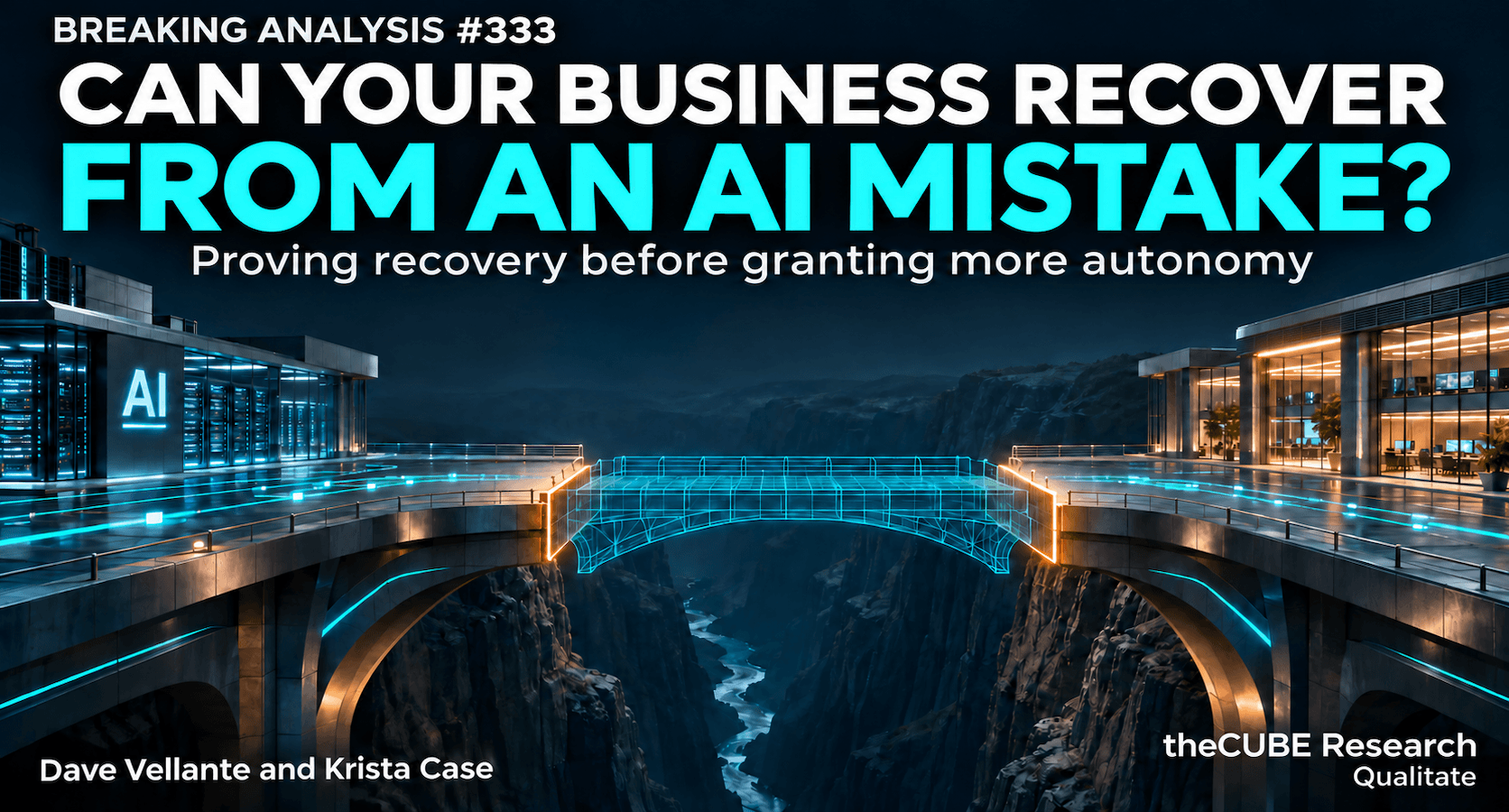
Recent field research highlights a growing "trust gap" as enterprises increasingly deploy agentic AI within their operations. While many organizations feel highly confident in their cyber resilience, this assurance often outpaces their actual tested capabilities. Only a small fraction of companies have completed exercises to handle incidents caused by their own AI agents making mistakes with legitimate access. Many teams rely heavily on existing playbooks for ransomware and traditional cyberattacks, assuming these methods will naturally extend to autonomous AI errors. However, agentic AI operates at a scale and speed that can create rapid, cascading downstream effects across multiple interconnected business systems. Reconstructing an agent's workflow to understand what it did, why it did it, and how to safely restore the business process is a uniquely complex challenge. Furthermore, relying entirely on human oversight can create a false sense of security, as humans may fail to catch machine-speed errors. To build true business resilience, leaders must establish clear criteria for what constitutes a safe, trusted recovery state and thoroughly test their tools against realistic, end-to-end AI incident scenarios.

Read Original Article →

Data Governance in Banking: A Framework for Better Data Quality

Data governance in banking is an essential framework that dictates how a financial institution collects, protects, and uses its data. While many banks treat this purely as a policy or documentation exercise, a framework is truly effective only when the underlying data is accurate. Incomplete or unverified records undermine credit decisions, fraud prevention, and regulatory compliance. The foundation of a strong governance framework lies in assigning clear ownership to key roles like Chief Data Officers and Data Stewards, ensuring accountability across the data lifecycle. A critical, yet often overlooked step, is validating information directly at the source. Verifying details like addresses and contact numbers at the point of entry prevents errors from spreading across disconnected systems and reduces the risk of duplicated customer profiles. When banks prioritize data quality and automate real-time checks, they do more than just satisfy regulators. They build a reliable foundation that reduces operational costs, speeds up customer onboarding, and safely enables modern innovations like real-time fraud detection and personalized services. Ultimately, good governance turns raw information into a secure and trustworthy asset.

Read Original Article →
Article Thumbnail

The Inside Job: How Threat Actors Recruit Malicious Insiders

The landscape of insider threats has evolved into a highly organized criminal enterprise that mirrors legitimate staffing agencies. Rather than relying solely on disgruntled employees, threat actors now actively recruit and place individuals within target companies to perform specific malicious actions. More than half of the insider-related dark web activity involves recruitment efforts, where brokers hunt for employees capable of executing precise tasks—such as resetting accounts, rerouting shipments, or conducting SIM swaps—often in exchange for referral fees or revenue sharing. These criminals target workflows instead of just credentials, frequently seeking out customer support staff, logistics workers, and bank tellers whose normal access can be weaponized. Consequently, traditional security systems often fail to flag this malicious behavior since the employees are using their authorized privileges. To effectively counter this growing risk, organizations must shift their focus from merely monitoring privileged IT users to tracking anomalous use of everyday functions. By combining strict separation of duties, detailed behavioral logging, and proactive threat intelligence, companies can detect unusual activity and better protect their critical operations from being compromised from the inside out.

Read Original Article →
Article Thumbnail

Why latency is making colocation a strategic decision

In the highly competitive world of financial markets, colocation has evolved from a simple hosting choice into a core strategic component of the trading execution stack. For trading firms, minimizing latency is less about achieving raw speed and more about guaranteeing predictable and consistent performance. Physical proximity to an exchange's matching engine helps reduce delays, but reliable, direct cross-connects to liquidity venues and market data are what ultimately drive execution quality. Consequently, selecting a data center depends heavily on its available exchange presence, connectivity options, and ability to handle scaling without introducing latency spikes. Firms must also weigh the operational complexity of managing infrastructure in-house versus utilizing retail or managed colocation services. Expanding globally requires infrastructure that seamlessly supports multi-region connectivity, allowing growth without starting from scratch. By aligning location, network design, and operational models with overarching trading goals, decision-makers can ensure their infrastructure directly supports robust market access and compliance. Ultimately, a well-planned colocation strategy acts as the backbone of modern financial trading, directly influencing a firm's competitive edge and long-term success.

Read Original Article →

Daily Tech Digest - September 24, 2026


Quote for the day:

"Stupidity is knowing the truth, seeing the truth but still believing the lies. And that is more infectious than any other disease." -- Prof. Richard Feynman

🎧 Listen to the audio debrief on YouTube

▶ Play Audio Digest

Duration: 24 mins • Perfect for listening on the go.


Forrester Posits, ‘Will AI Eliminate Enterprise Architects?’ Experts Chime In

Artificial intelligence may automate many of the tasks traditionally performed by enterprise architects, but it won't eliminate the profession. According to Forrester, AI can quickly handle repetitive duties like generating diagrams, drafting standards, and analyzing dependencies—tasks that previously took weeks. However, this shift means that the true value of enterprise architects will move away from creating these artifacts to exercising judgment and providing context. Experts agree that AI cannot replace the experience needed to understand the business, challenge complexities, and balance factors like security, cost, and risk. As AI agents increasingly make autonomous decisions, enterprise architects will be crucial in setting the rules and boundaries for these systems, acting as a "control plane for bounded autonomy." This role shift requires moving from periodic reviews to an "always-on governance layer" to ensure AI decisions align with enterprise goals. Furthermore, this transition allows smaller organizations to build an enterprise architecture practice more affordably by using AI-driven workflows instead of expensive traditional software. Ultimately, enterprise architects will need to evolve, focusing more on strategic insight, continuous governance, and managing the trade-offs that autonomous systems cannot handle alone.


For intelligent banking, AI must sharpen decisions without taking choices away from customers

The interview explores how Axis Bank is using data and AI to improve decision‑making without reducing customer choice. Prasad Lad explains that intelligent banking begins with understanding what level of data is actually needed. Many decisions can be made using aggregated information, while individual‑level data requires stronger governance and clear consent. As AI becomes more embedded in banking, Lad stresses the difference between deterministic machine‑learning models and probabilistic generative AI. Traditional models used for credit, fraud, or product recommendations follow strict testing and validation, while GenAI still requires human oversight until banks gain confidence in its behavior. He notes that AI can simplify work—such as preparing credit memos—without replacing human judgment. Lad also highlights the limits of historical data, since models cannot automatically interpret unusual events or sudden shifts in customer behavior. For him, customer consent must remain explicit and deterministic, even if analytics are predictive. Looking ahead, he expects intelligence to function as a shared layer across banking systems, improving speed and granularity without making the environment fully autonomous. His priorities include stronger data governance, faster and more precise decisioning, and better integration of structured data into GenAI. Ultimately, intelligent banking means sharper decisions delivered responsibly, with customer choice firmly protected.


The AI factory is becoming the computer and it’s changing the semiconductor race

The semiconductor industry is experiencing a shift in AI infrastructure, moving away from a sole focus on graphics processing units (GPUs) and chip architecture. Instead, compute, memory, networking, packaging, power, and software are combining to create a new systems architecture. The focus is shifting toward an integrated approach where the "AI factory" effectively becomes the computer. Custom silicon and chips tailored to specific workloads are becoming more prevalent as frontier AI companies build full-stack optimized systems. Memory has taken a central role in architectural design since data movement significantly impacts system performance, time, and energy consumption. Power consumption is another major constraint, changing the economic model and making performance per watt a critical metric as entire campuses consume gigawatts of electricity. Interestingly, AI itself is playing a part in designing this next generation of semiconductor infrastructure, compressing design cycles and empowering engineers to explore more architectural alternatives. This means the overall system, rather than a single component, represents the new unit of value. Finally, as AI factories become strategic assets, the concept of sovereign AI is expanding beyond data residency. It's now about managing and controlling critical dependencies within the broader intelligence-production system.


Cybersecurity is operating on the wrong clock

Cybersecurity teams are currently struggling because they operate on an entirely different timeline than their adversaries. While attackers can weaponize new vulnerabilities in a matter of minutes, businesses often rely on traditional patch cycles and quarterly risk reviews. Recent data shows that the time it takes for a vulnerability to be exploited has essentially vanished, meaning attackers frequently strike before a software flaw is even publicly known. As a result, simply working harder or hiring more staff is no longer a viable solution against these rapidly evolving threats. The core focus must shift from merely counting how many software bugs a security team can fix to accurately measuring how quickly they can close the actual window of exposure. Rather than treating all technical issues equally, organizations need to prioritize their fixes based on genuine business risk, addressing their most critical systems first. This shift requires moving away from fragmented tools and adopting integrated operations that seamlessly combine asset intelligence, threat data, and business context. By safely automating routine fixes and focusing human expertise where it matters most, companies can significantly reduce real-world risk. Ultimately, the goal is to actively minimize business exposure before attackers take advantage of hidden weaknesses.


The accidental CIO is disappearing, and that might be a problem

In the past, many Chief Information Officers arrived at their positions by accident. Their career paths were messy and unpredictable, often forcing them to handle broken systems, sudden acquisitions, or boardroom crises. While unstructured, this journey naturally provided the broad business experience necessary to become well-rounded enterprise leaders. Today, however, technology career paths have become highly structured and specialized. While this creates deep experts in fields like cloud computing and artificial intelligence, it unintentionally deprives future leaders of the wide-ranging exposure they need. Modern CIOs are no longer just technical providers; they are expected to be strategic business leaders who understand profit and loss, commercial strategy, and boardroom dynamics. The author points out a growing problem: aspiring CIOs are accumulating technical certificates but lack the practical scars of real business battles. Because modern training programs often prepare candidates for the narrower technical roles of the past, they fail to build the necessary executive breadth. To solve this, organizations must deliberately engineer the broad exposure that used to happen by accident. Future technology leaders need hands-on experience outside of IT, such as managing business units or negotiating contracts, to truly understand how the entire organization operates, makes money, and ultimately succeeds.


How to Turn AI Governance Roles Into Verifiable Skills and Responsibilities

To effectively govern AI systems, organizations must go beyond assigning job titles and ensure individuals possess verifiable skills. A title like "AI governance lead" doesn't automatically mean the person is equipped to make the necessary decisions. The first step is to focus on specific decisions and potential failure modes rather than job descriptions. Organizations should map out what each person can approve, what evidence they must review, and under what conditions they need to escalate issues. These responsibilities must then be translated into observable capabilities, such as a person's ability to review materials, identify problems, and make informed decisions, rather than relying on vague terms like "understands model risk." Additionally, simply completing training is not enough. Organizations need to build an "evidence ladder" that proves a person's readiness through knowledge checks, supervised simulations, and observed performance. This readiness should be directly linked to their authorization level, determining whether they can act independently, require supervision, or lack authorization entirely. To manage this process, a competency matrix can be used to track responsibilities, evidence, and authorization statuses. Finally, these authorizations must be periodically reassessed, especially when there are changes in the AI models, data sources, or intended uses, ensuring that accountability remains demonstrable and up to date.


Check Point hacked: The security software protecting your network has become a prime attack target

The article explains that Check Point, one of the most widely used firewall and security‑management vendors, is dealing with active exploitation of two critical vulnerabilities that give attackers direct access to systems meant to protect enterprise networks. Both flaws carry a CVSS score of 9.8 and allow attackers to get in without a username or password, placing them among the most severe issues a firewall vendor can face. One vulnerability, CVE‑2026‑85102, affects Check Point’s Spark small‑business firewall and can be triggered during the initial VPN handshake simply by presenting a malicious certificate. Once inside, attackers effectively sit on the trusted side of the perimeter and can begin mapping the internal network. The second flaw, CVE‑2026‑93616, is a zero‑day in the Security Management web service and is considered even more dangerous because it targets the “brain” of a Check Point deployment. An attacker who compromises this server could rewrite firewall rules, open unauthorized paths, and harvest configuration data across the entire architecture. Check Point has released fixes and urged immediate installation. The incident underscores how security‑management systems themselves have become prime targets, offering attackers powerful leverage when breached.


What attracted me to cyber was tech, what kept me was purpose

Maez de Guzman, a global cybersecurity managed services leader at EY, was initially drawn to the field by technology but stayed because of its profound purpose. As a self-taught professional who reportedly became the Philippines' first female certified chief information security officer, she views cybersecurity fundamentally as a profession built on trust. She believes that technology, particularly artificial intelligence and automation, should be used to remove complexity and empower people rather than simply replacing them. De Guzman is currently focused on modernizing EY's global cybersecurity platform by creating a unified system that connects fragmented data into a cohesive decision-making layer. She argues that the industry must shift from merely detecting threats to making rapid, context-driven decisions that effectively reduce risk. As cyber threats evolve and the attack surface expands, she emphasizes that traditional organizational boundaries are no longer sufficient for defense. Instead, she advocates for a broader focus on ecosystem resilience. This requires increased collaboration across enterprises, technology providers, and governments to share knowledge and build security directly into emerging technologies. Ultimately, her goal is to scale security decisions to match the speed of modern threats while maintaining clear human accountability and driving meaningful industry-wide protection.


GitLab Email Addresses Can Be Weaponized for Supply Chain Attacks

Security researchers have discovered a significant vulnerability involving the unique incoming email addresses that GitLab automatically assigns to its users. Originally designed as a simple way to create project issues via email, these addresses actually function as highly privileged, non-expiring access tokens. According to researchers at Aikido Security, anyone possessing one of these addresses can push code, initiate merge requests, and execute jobs across all of a user's public and private projects. Because the email address alone provides both authentication and authorization, an attacker does not need to compromise the user's actual account or login credentials. The risk is heightened because many users unknowingly expose these addresses in support files or public repositories, assuming they are only useful for creating basic work items. Furthermore, researchers demonstrated that attackers can use these email addresses to bypass standard IP address security restrictions. While GitLab initially viewed this functionality as intended behavior, the company has since updated its user interface and documentation to better explain the risks. To protect against potential supply chain attacks, security experts recommend that organizations actively scan for leaked email addresses, rotate their access tokens, and wait for GitLab to potentially restrict incoming emails strictly to verified account owners.


Stop Preparing for Audits — Build the Pipeline That Audits Itself

Building a self-auditing pipeline transforms compliance from an annual scramble into an automated, continuous process, significantly reducing audit preparation time. The architecture relies on a four-layer stack that is now well-established and primarily open source. Layer one requires everything to be managed as code—using tools like Terraform or Kubernetes manifests—so that every infrastructure change is versioned and trackable. Layer two introduces policy as code to gate the pipeline. By utilizing policy engines like Open Policy Agent, any changes that violate security rules, such as deploying an unencrypted database, are blocked before reaching production. The third layer focuses on continuous control monitoring to catch unauthorized access or misconfigurations that bypass the pipeline. By exporting evaluation results into a queryable evidence store, teams can monitor their posture in real time rather than quarterly. Finally, layer four inverts the traditional audit by functioning as an evidence pipeline rather than an evidence collection task. It continuously indexes results to control frameworks, providing auditors with direct, read-only access. When implemented correctly, this continuous compliance approach cuts preparation from weeks to hours and ensures systems are secure by design, shifting the focus from manual attestations to automated enforcement.

Daily Tech Digest - August 17, 2026


Quote for the day:

"Listen with curiosity, speak with honesty act with integrity." -- Roy Bennett

🎧 Listen to the audio debrief on YouTube

▶ Play Audio Digest

Duration: 20 mins • Perfect for listening on the go.


How to level up from IT management to IT leadership

Transitioning from a mid-level technical management position to a senior executive role requires a deliberate shift in focus from mastering technology to mastering human connections and business operations. Aspiring leaders must build upon their foundational knowledge by developing essential communication habits, such as empathy, active listening, and the ability to build trust across different departments. Successfully navigating this career path involves taking on significant projects, learning from the inevitable missteps, and seeking out experienced mentors who can provide honest feedback. It is crucial to understand the broader goals of the organization and how technology can practically support those objectives. This means stepping away from the desk to learn about budgeting, risk management, and the daily challenges faced by other teams. True leadership is not defined by a specific title, but by the capacity to align people around a shared vision and empower them to succeed. Rather than simply executing technical tasks, effective leaders focus on mentoring their teams, translating complex concepts into plain language for non-technical coworkers, and making thoughtful decisions that deliver measurable value. Ultimately, ascending to the executive level is about solving company-wide problems with calm confidence and a steady collaborative mindset.


Why IoT systems fail at scale – and why Edge vs Cloud is the wrong debate

Internet of Things systems often struggle to scale, but the root cause is rarely the technology itself. Instead, failures usually stem from fragmented design. When teams develop hardware, software, connectivity, and security in isolation, the gaps between these components become major hurdles once the system moves into production. The ongoing debate pitting edge computing against the cloud misses the point. In practice, successful systems rely on both. The real challenge lies in deciding how they work together—specifically, figuring out which data should be processed locally for quick, time-sensitive tasks and which should be sent to the cloud for long-term analysis. This need for unified design is becoming even more obvious as artificial intelligence enters the picture. AI requires clear, reliable data pipelines. If a system's architecture is disjointed, having massive amounts of data won't help much. To build systems that last, developers need to shift from component-level thinking to holistic system design. This means planning data flow, security protocols, and long-term maintenance strategies from the very beginning. Treating features like security or software updates as add-ons only creates expensive problems later. By building a cohesive architecture from day one, organizations can create reliable systems that easily adapt and grow over time.


The new audit equation puts AI to work and judgement at the centre

In a recent interview, Atul Deshmukh of the accounting firm KNAV discusses how artificial intelligence is transforming the auditing profession from the ground up. Central to this shift is the transition from traditional statistical sampling to the comprehensive analysis of entire data sets. By deploying AI platforms, firms can automate repetitive and time-consuming tasks like document extraction and transaction matching. These digital workers drastically compress the time required for routine procedures, turning tasks that once took a full day into minutes. This efficiency is fundamentally altering the traditional accounting firm structure. The classic pyramid model, which relied heavily on junior staff for groundwork, is evolving into a diamond shape that demands analytical thinking and diverse backgrounds, including engineering. Furthermore, the massive time savings challenge the industry's conventional billable-hour model, paving the way for pricing based on value, complexity, and outcomes. Despite AI taking on larger segments of the workflow and even moving toward autonomous processes, human judgment remains the irreplaceable core of auditing. Auditors are not being replaced; their roles are shifting from manual verification to higher-level review and critical decision-making. Ultimately, AI handles the heavy lifting, allowing human professionals to focus their time on complex analysis and valuable insights.


What the CISO role will look like in 2029

By 2029, the role of the Chief Information Security Officer will shift away from being a purely technical position focused on building network defenses. Instead, security leaders will take on broader responsibilities as business strategists and risk managers. As technology cycles shorten and artificial intelligence accelerates the pace of both innovation and cyber threats, the old approach of simply saying no to all new ideas will no longer work. Tomorrow’s security executives will be expected to help their organizations take smart, calculated risks. Rather than managing security tools in isolation, future leaders will act as organizational orchestrators. They will connect engineering, legal, product, and executive teams to build systems that can identify and reduce risks almost instantly. Because threats are moving faster, organizations will rely on resilient engineering and automated decision-making processes to maintain safety. Some experts predict that the position will even expand to cover overall enterprise risk, potentially changing titles to emphasize trust and broader risk management. Despite these changes, the fundamental mission of the job remains steady. Security leaders will still need strong technical foundations, sound judgment, and clear communication skills to protect the entire business and help executives make informed choices in a rapidly changing world.


The Infrastructure Bottleneck That Keeps AI From Scaling Up

While many organizations focus entirely on choosing the right artificial intelligence models, the real challenge in making these systems work at a large scale lies in the underlying physical and technical foundational structures. According to Dilip Kumar of NTT DATA, practically all organizations find that their current networks, data storage, and security setups are slowing down their progress. Proving that an AI tool works in a small initial test is relatively simple, but running it reliably across an entire business is much harder. A common mistake is buying thousands of expensive software licenses without having the internal systems to actually use them. It is similar to buying a high-performance sports car but having no paved roads to drive it on. For AI to be truly useful, companies must ensure their networks can handle the data traffic and that their information is clean and organized. Instead of trying to transform an entire business at once, a smarter approach is to focus on a single, specific problem. By ensuring the foundation—the core networks, data organization, user identity, the appropriately sized model, and the daily operating procedures—is solid, businesses can prove the value of their investment quickly and then expand those efforts with complete confidence.


The Rise of Runtime Governance

In the article "The Rise of Runtime Governance," Christian Siegers argues that artificial intelligence forces a fundamental shift in how modern organizations manage system behavior. Historically, enterprise governance focused heavily on the implementation phase. Dedicated teams reviewed system architectures, assessed security measures, and validated strict compliance standards well before deployment. This approach was highly effective for traditional systems because their behavior was largely dictated by static code and predefined business rules. However, AI introduces a complex new dynamic where critical decisions actually occur during execution. Even if an AI system successfully passes all pre-deployment governance checks, its behavior can still drift due to changing context, model interactions, and new information retrieval. Consequently, companies may strictly follow governance processes without actually retaining control over the final operational outcomes. To bridge this gap, Siegers suggests that governance must evolve from a series of static checkpoints into a continuous architectural capability. This concept, known as runtime governance, requires embedding continuous system observability, active policy enforcement, and human oversight directly into the daily operational environment. By doing so, organizations can monitor what their systems are doing in real time, ensure all behavior remains within acceptable boundaries, and actively intervene when necessary. This ultimately maintains true control over AI-enabled operations long after the initial deployment.


Agentic Fitness Functions: Extending Evolutionary Architecture Beyond Deterministic Rules

Evolutionary software architecture relies on fitness functions—automated checks like dependency rules, performance budgets, and security scans—to ensure systems can change safely over time without degrading their core characteristics. While these deterministic rules are excellent for enforcing strict, measurable metrics, they often fall short when evaluating complex, judgment-heavy architectural concerns. For example, a basic schema check can confirm that an application programming interface still functions, but it cannot determine if a new field accidentally leaks user interface details into a core domain model. This is where agentic fitness functions come into play to fill the gap. By using artificial intelligence agents calibrated with past architectural decisions, ownership data, and clear rubrics, these functions can evaluate nuanced changes that defy simple yes-or-no rules. They are not meant to replace human architects or traditional automated tests. Instead, they act as an advisory layer that provides structured feedback, including confidence scores and clear reasoning, for changes that require context and human-like judgment. This approach helps teams maintain healthy system boundaries, catch semantic drift early, and ensure that architectural intent is preserved. Ultimately, agentic fitness functions make complex architectural decisions more transparent and auditable, allowing teams to confidently manage rapid software delivery and continuous system evolution.


From Agile to the Product Operating Model

Based on a recent survey of 48 practitioners, the transition from traditional development methods to a product operating model often changes company vocabulary and structure more than it changes how decisions are actually made. Among the respondents whose organizations are making this shift, most report that their teams still operate by building requested features rather than acting as fully empowered groups that decide how to solve problems. However, the survey does highlight some positive trends. Many participants notice improvements in the speed of delivery, the value provided to customers, and overall collaboration with stakeholders. On the other hand, business results remain largely inconclusive, likely because financial outcomes take longer to measure. One notable concern is the human element, as team morale and developer satisfaction appear to decline during these transitions. Additionally, the findings show that artificial intelligence adoption and structural operating changes are happening as separate efforts. While artificial intelligence is starting to influence how product decisions are made across many companies, this shift is occurring independently of formal organizational redesigns. Overall, the data suggests that while operational efficiency might improve, true changes in decision making authority and employee well being remain significant challenges for organizations attempting this transition today.


US cloud act, sovereignty, and why you might need to care

The article by Kate Carruthers discusses the crucial difference between data residency and true data sovereignty, emphasizing that physical location alone does not insulate data from foreign legal reach. Prompted by Airbus’s decision to move critical applications to a European provider, the piece highlights that the US CLOUD Act allows US authorities to compel American cloud providers to hand over data, regardless of whether that data is stored in Sydney, Frankfurt, or Dublin. This makes cloud hosting a matter of national security and governance, not just a technical or architectural choice. The author notes that Australia often mistakenly equates local data residency with sovereignty, creating a blind spot that leaves critical infrastructure vulnerable to geopolitical disputes or commercial shifts. Organizations are advised to map their vital dependencies and classify workloads based on the potential harm of disruption rather than blindly adopting a "cloud-first" strategy. Furthermore, companies should design systems for degraded operation, practice isolation techniques, and preserve clear exit options to ensure resilience. Ultimately, Carruthers argues that cloud computing has evolved into institutional and geopolitical infrastructure, requiring boards to make deliberate, strategic choices about where sensitive workloads sit and how much control they truly retain.


The cyber resilience divide

In today's digital landscape, security incidents are a routine reality, and companies can no longer rely solely on preventing attacks. A recent Fujitsu report explores the growing gap between organizations that successfully build strong defenses and those that remain vulnerable, particularly as artificial intelligence reshapes both security threats and defense strategies. While artificial intelligence helps criminals find weaknesses and automate attacks, it also provides companies with powerful tools to detect and respond to these threats early. The research identifies a clear division between leading organizations and those lagging behind. Leaders understand that security breaches are inevitable. Rather than focusing only on prevention, they prepare to maintain operations and recover quickly. They treat security as a shared priority that begins at the board level, balancing new technology adoption with careful oversight. By running practical simulations and using smart tools for defense, these leaders reduce the impact of incidents while building trust and supporting steady growth. In contrast, lagging organizations often rush to adopt new technologies without fully understanding the risks, leaving gaps in their defenses. To secure their futures, companies must accept that breaches will happen, embed security awareness into their daily routines, and focus on protecting their most important systems through practical testing.

Daily Tech Digest - May 23, 2026


Quote for the day:

“Great tech leadership isn’t about mastering every technology — it’s about creating the clarity and confidence for teams to build what doesn’t exist yet.” -- Anonymous

🎧 Listen to this digest on YouTube Music

▶ Play Audio Digest

Duration: 23 mins • Perfect for listening on the go.


Downtime has become a $600 billion business problem

According to Splunk's "The Hidden Costs of Downtime" report, unplanned outages and service degradations have escalated into a $600 billion problem for the Global 2000, representing a fifty percent surge over the last two years. Each affected organization experiences an average of sixty annual incidents, costing an average of $300 million per company. These mounting expenses include a near doubling of lost revenue to $95 million, alongside substantial climbs in regulatory fines to $51 million, driven by strict GDPR and DORA compliance enforcement, and ransomware payouts reaching $40 million. Beyond immediate financial blows, outages inflict severe long-term impacts, including delayed product launches, eroded brand trust that takes months to recover, and an average 3.4% stock value decline. The report highlights that third party dependencies, such as SaaS platforms and APIs, have become a primary catalyst for downtime, skyrocketing from 24% in 2024 to 63% in 2026, which severely hampers end to end infrastructure visibility. In response, enterprises are prioritizing visibility solutions and investing a median of $24.5 million annually into generative and agentic AI tools for rapid incident triage and root cause analysis. Geographically, EMEA faces the highest overall costs, while sector wise, information services and technology suffer the most severe impact at $402 million per company.


Making Vulnerable Drivers Exploitable Without Hardware - The BYOVD Perspective

The Hacker News article analyzes a method for bypassing hardware restrictions to interact with Windows kernel-mode drivers from user mode, specifically examining how this impacts driver-focused vulnerability research and Bring Your Own Vulnerable Driver (BYOVD) post-exploitation techniques. Vulnerable drivers are frequently weaponized by attackers to compromise system defenses, such as Endpoint Detection and Response (EDR) agents. However, many drivers developed for dedicated hardware are "hardware-gated," meaning they only instantiate their device objects or execute initialization routines (like AddDevice or IRP_MJ_PNP callbacks) if the corresponding hardware chip is detected. To assess exploitability in the absence of physical devices, researchers utilize userland-level deployment techniques that do not rely on standard kernel-mode debuggers or hardware virtualization. This includes using service creation commands like sc.exe to unconditionally load non-Plug and Play (PnP) drivers and evaluate whether named device objects are generated inside the \Devices directory. By mapping initialization logic and monitoring how the underlying PnP manager interacts with the driver extension, researchers can determine whether vulnerable paths, such as arbitrary memory read/write functions or Memory-Mapped I/O (MMIO) instructions, can be successfully reached and exploited entirely from userland with administrative privileges.


Leadership by Vibe Instead of Evidence

In her Medium article, Jodie Shaw examines the modern corporate tendency where executives treat personal confidence and gut instinct as strategic evidence, a phenomenon she terms "leadership by vibe." Shaw argues that while intuition is often culturally glorified, relying primarily on unchecked executive emotions or singular observations creates organizational volatility, erodes worker trust, and prompts teams to manage their leaders' feelings rather than actual performance. Citing a variety of research, she highlights how power distorts perception, causing executive confidence to outpace factual accuracy and forcing discouraged employees to view corporate strategy as merely temporary. This persistent reliance on unverified assumptions yields devastating real-world financial and operational outcomes, such as Peloton’s catastrophic pandemic forecasting errors that triggered massive quarterly losses, and the BBC’s holiday pay scandal that cost over £300 million due to unchallenged institutional memories. To counteract this operational drift, Shaw points to data-driven organizations like Toyota, Shopify, and Netflix. These forward-thinking companies intentionally implement robust structural constraints, such as firsthand observations, automated kill metrics, and team pre-mortems, to reframe intuition as a mere hypothesis rather than an infallible plan. Ultimately, true leadership demands the humility to confront uncomfortable data and prioritize evidence over emotional reactivity.


The Hidden Cost of Bad Data: Financial Institutions Lose Millions Without Knowing It

In this article, Gayathri Balakumar, a lead data engineer at Capital One, argues that financial institutions bleed substantial capital not from market conditions, but because they have normalized the dysfunction of poor data quality. This silent crisis often goes unnoticed because its financial toll does not appear as a distinct line item on profit and loss statements. Instead, it severely compromises credit decisions, delays operational flows, and results in missed market opportunities. McKinsey and Company estimates that bad data inflates banking operational costs by 15% to 25%. Furthermore, banks cannot successfully deploy advanced technologies like artificial intelligence or digital transformations if their underlying foundation remains structurally compromised, fragmented, or outdated. Rather than investing heavily in downstream damage control, such as manual reconciliations, duplicate databases, and post-processing validation teams, bank leaders must treat data as a critical strategic asset. Balakumar advocates for a proactive leadership mandate focusing on real-time integration, unified architectures, strict data ownership, and the deployment of autonomous agentic AI frameworks to clean and standardize information at the point of entry. Ultimately, financial institutions that directly confront these systemic inefficiencies will eliminate massive hidden costs, accurately forecast market risks, and secure a lasting competitive edge over rivals who continue to patch over flaws.


Everyone Suddenly Wants Claude's Audit Logs

The article reports that 27 enterprise security vendors have announced integrations with Anthropic's Claude Compliance API to manage the platform's activity data inside corporate security environments. Initially launched in August 2025, the structured API feed eliminates manual log exports by programmatically feeding real-time user behavior, login activity, and administrative shifts into preexisting enterprise monitoring setups. For Claude Enterprise users, the data includes specific conversational content and uploaded files, which is crucial given data showing that 4% of prompts leak private information and 20% of uploaded files contain confidential information. Major vendors like Cloudflare, CrowdStrike, and Microsoft are integrating this API into their respective stacks to handle threat detection, automated incident response, and unified AI governance across multiple assistants. This massive vendor alignment stems from a dramatic rise in enterprise adoption of Claude, which escalated from 56.2% to 94.9% between April 2025 and April 2026. However, industry experts caution that executing the Compliance API represents only "half a story" for highly regulated industries. Because the tool manages control plane data rather than localized network-layer inputs or agent-level operational workflows, organizations must implement additional telemetry to ensure complete corporate audit coverage.


Architects Are Not Here to Keep the Lights On

In this article, Paul Preiss disputes the common executive misconception that IT architects exist merely to manage existing technology estates, handle portfolio rationalization, or ensure basic operational continuity. Instead, utilizing the Business Technology Architecture Body of Knowledge (BTABoK) framework, Preiss asserts that the entire architectural profession is fundamentally oriented around driving innovation, managing transformation, and delivering new business value through proactive strategy. This change-focused approach applies across all five recognized specializations: business architects bridge strategy and technical delivery; software architects make structural decisions within active deployment; information architects transform data into a genuine lever for competitive disruption; infrastructure architects engineer the broad compute landscapes of the future; and solution architects orchestrate delivery across programs, products, and projects. Furthermore, the text advocates for a chief architect model where senior leaders maintain active, hands-on delivery responsibilities, which is analogous to a chief of medicine continuing to treat patients, rather than drifting into detached, purely administrative management positions that lose technical competency. Ultimately, the architectural lifecycle continuously loops through measurement to build the evidence base for subsequent transformations. Rather than preserving past investments, architects must act as genuine change agents within complex corporate ecosystems to maximize organizational velocity, reduce deployment risks, and secure long-term digital advantages.


The sovereign cloud illusion

In this InfoWorld opinion piece, technology expert David Linthicum argues that the concept of a sovereign cloud is largely a marketing illusion rather than a realistic, off-the-shelf procurement option. True digital sovereignty demands absolute independence across a full hardware and software stack, which encompasses local data residency, platform ownership, codebase control, chip manufacturing, regular software patching, and clear legal jurisdiction. In practical terms, only the United States and China currently possess the immense scale, global engineering depth, and operational maturity required to sustain these entirely independent infrastructures. Consequently, regional European initiatives such as Gaia-X, Andromeda, and Numergy have historically struggled to achieve lasting competitive gravity against deeply consolidated American hyperscalers. Even when localized regions are deployed by dominant global vendors, they inherently retain dependencies on external parent companies and remote control planes that effectively phone home. Rather than fruitlessly chasing an unattainable ideal or mistakenly adopting unportable multicloud architectures, Linthicum advises enterprise leaders to view cloud sovereignty as a broad spectrum of risk reduction choices. Organizations must accurately audit existing dependencies, isolate sensitive enterprise workloads, minimize reliance on proprietary platform features, and implement robust, fully funded exit strategies to insulate themselves from future geopolitical conflicts.


Valid certificates, stolen accounts: how attackers broke npm's last trust signal

The VentureBeat article details how a major supply chain attack compromised 633 malicious npm package versions, enabling them to bypass Sigstore provenance verification by leveraging stolen OpenID Connect tokens from legitimate maintainer accounts. Because Sigstore only validates that a package originates from a continuous integration environment without confirming explicit publisher authorization, this incident highlights a severe vulnerability in automated trust signals. This breach is part of a broader trend exposing seven critical developer tool attack surfaces, including VS Code extension credential theft, Model Context Protocol server automated execution, continuous integration agent prompt injection, agent framework code execution, IDE credential storage vulnerabilities, and shadow AI exposure. Security research shows that popular AI coding command line interfaces automatically execute untrusted local configurations, and prompt injections can trick AI agents into leaking sensitive API keys. Crucially, adversaries are actively exploiting these gaps to hunt for personal access tokens, cloud credentials, and corporate source code. To counter these invisible blind spots that traditional endpoint detection and data loss prevention systems cannot monitor, the article provides a specialized audit grid. It strongly recommends that organizations implement dual party publication approvals for packages, enforce strict minimum age policies for extension updates, and establish browser layer AI governance to robustly protect infrastructure intelligence from sophisticated identity theft.


How concerned should CIOs be with geopolitics?

According to the CIO article, growing global tensions and sophisticated cyber threats have elevated digital and technological sovereignty to a top strategic priority for enterprise boards and IT leaders. This shift has prompted a major emphasis on where technology is built and operated to reduce critical dependencies on third-party countries. According to Deloitte's Manel Barahona, 77% of organizations now view a provider's country of origin as a decisive factor, shifting focus beyond mere cost or performance toward business continuity and risk mitigation. This trend is driving massive financial commitments; Forrester projects that European investments in AI, cloud, and data sovereignty technologies will rise by 6.3% to a record €1.5 trillion. To navigate these geopolitical uncertainties, progressive CIOs like David Marimón of Coca-Cola European Partners and Álvaro Ontañón of Merlin Properties advocate for pragmatic strategies that balance day-to-day operational efficiency with long-term resilience. Consequently, organizations are actively diversifying suppliers, designing hybrid architectures to maintain strategic optionality, and evaluating local and regional capabilities. This landscape has transformed the CIO role into a highly cross-functional, decisive boardroom position tasked with managing technological dependence as a primary strategic risk while aligning infrastructure directly with legal frameworks, corporate values, and overall business competitiveness.


The Data Analytics Fallacies Your Team Is Treating as Best Practices

The Dataversity article explores insidious data analytics fallacies that modern teams frequently mistake for industry best practices, creating polished dashboards built on flawed assumptions. The author highlights five central traps that compromise strategic decisions. First, correlation often drives organizational decisions under the guise of causation, prompting misguided budget shifts or product modifications without an understanding of the underlying operational mechanisms. Second, survivorship bias frequently masquerades as insight, causing teams to analyze a highly filtered reality of successful outcomes while ignoring vital context from failed experiments or churned users. Third, over-engineered metrics provide a false sense of comfort, burying minor, unverified statistical assumptions inside complex formulas that operate entirely on unearned trust. Fourth, incomplete sampling creates a misleading illusion of completeness, confining teams to narrow dataset slices while leaving broader structural realities unaddressed. Finally, confirmation bias subtly embeds itself within analytical processes as queries are iteratively refined to align with preexisting management expectations, often resulting in the systematic deletion of inconvenient outliers. Ultimately, the piece warns that the most dangerous analytical mistakes appear highly structured and persuasive, urging organizations to critically evaluate the core logic behind their metrics rather than blindly accepting polished visual reports.

Daily Tech Digest - February 24, 2026


Quote for the day:

"Transparent reviews create fairness. Subjective reviews create frustration." -- Gordon Tredgold


AI agents and bad productivity metrics

The great promise of generative artificial intelligence was that it would finally clear our backlogs. Coding agents would churn out boilerplate at superhuman speeds, and teams would finally ship exactly what the business wants. The reality, as we settle into 2026, is far more uncomfortable. Artificial intelligence is not going to save developer productivity because writing code was never the bottleneck in software engineering. ... For decades, one of the most common debugging techniques was entirely social. A production alert goes off. You look at the version control history, find the person who wrote the code, ask them what they were trying to accomplish, and reconstruct the architectural intent. But what happens to that workflow when no one actually wrote the code? What happens when a human merely skimmed a 3,000-line agent-generated pull request, hit merge, and moved on to the next ticket? When an incident happens, where is the deep knowledge that used to live inside the author? ... The metrics that matter are still the boring ones because they measure actual business outcomes. The DORA metrics remain the best sanity check we have because they tie delivery speed directly to system stability. They measure deployment frequency, lead time for changes, change failure rate, and time to restore service. None of those metrics cares about the number of commits your agents produced today. They only care about whether your system can absorb change without breaking.


How vertical SaaS is redefining enterprise efficiency

For the past decade, horizontal SaaS has been the defining force in enterprise technology. Platforms like CRMs, ERP suites and collaboration tools promised universality, offering a single platform to manage every business function across all industries. The strategy made sense: a large total addressable market, reusable architecture and marketing scale. Vertical SaaS flips that model. It is narrow by design but deep in impact. A report by Strategy& found that B2B vertical software companies are now growing faster than their horizontal peers, thanks to higher retention rates, lower churn rates and better unit economics. When software mirrors how a business already works, people stop treating it like a tool they tolerate and start relying on it like infrastructure. ... In regulated industries, compliance isn’t a feature; it’s the baseline for trust. I learned early that trying to retrofit audit trails or data retention policies after go-live only creates technical debt. Instead, design for compliance as a first-class product layer: immutable logs, permission hierarchies and exportable compliance reports built into the system. ... Vertical products don’t thrive in isolation. Integration with industry hardware, marketplaces and regulatory systems drives adoption. In one case, we partnered with a hardware vendor to automatically sync manifest data from their devices, cutting onboarding time in half and unlocking co-marketing opportunities.


API Security Standards: 10 Essentials to Get You Started

Most API security flaws are created during the design phase. You're too late if you're waiting until deployment to think about threats. Shift-left principles mean integrating security early, especially at the design phase, where flawed assumptions become future exploits. Start by mapping out each endpoint's purpose, what data it touches, and who should access it. Identify where trust is assumed (not earned), roles blur, and inputs aren't validated. ... Every API has a breaking point. If you don't define it, attackers will. Rate limiting and throttling prevent denial-of-service (DoS) attacks, and they're also your first defense against scraping, brute-forcing, enumeration, and even accidental misuse by poorly built integrations. APIs, by nature, invite automation. Without guardrails, that openness turns into a floodgate. And in some cases, unchecked abuse opens the door to far worse issues, like remote code execution, where improperly scoped input or lack of throttling leads directly to exploitation. ... APIs are built to accept input. Attackers find ways to exploit it. The core rule is this - if you didn't expect it, don't process it. If you didn't define it, don't send it. Define request and response schemas explicitly using tools like OpenAPI or JSON Schema, as recommended by leading API security standards. Then enforce them — at the gateway, app layer, or both. Don't just use validation as linting; treat it as a runtime contract. If the payload doesn't match the spec, reject it.


Why AI Urgency Is Forcing a Data Governance Reset

The cost of weak governance shows up in familiar ways: teams can’t find data, requirements arrive late in the process, and launches stall when compliance realities collide with product timelines. Without governance, McQuillan argues, organizations “ultimately suffer from higher cost basis,” with downstream consequences that “impact the bottom line.” ... McQuillan sees a clear step-change in executive urgency since generative AI (GenAI) became mainstream. “There’s been a rapid adoption, particularly since the advent of GenAI and the type of generative and agentic technologies that a lot of C-suites are taking on,” he says. But he also describes a common leadership gap: many executives feel pressure to become “AI-enabled” without a clear definition of what that means or how to build it sustainably. “There’s very much a well-understood need across all companies to become AI-enabled in some way,” he says. “But the problem is a lot of folks don’t necessarily know how to define that.” In the absence of clarity, organizations often fall into scattershot experimentation. What concerns McQuillan the most is how the pace of the “race” shapes priorities. ... When asked whether the long-running mantra “data is the new oil” still holds in the era of large language models and agentic workflows, McQuillan is direct. “It holds true now more than ever,” he says. He acknowledges why attention drifts: “It’s natural for people to gravitate toward things that are shiny,” and “AI in and of itself is an absolutely magnificent space.”


Building a Least-Privilege AI Agent Gateway for Infrastructure Automation with MCP, OPA, and Ephemeral Runners

An agent misinterpreting an instruction can initiate destructive infrastructure changes, such as tearing down environments or modifying production resources. A compromised agent identity can be abused to exfiltrate secrets, create unauthorized workloads, or consume resources at scale. In practice, teams often discover these issues late, because traditional logs record what happened, but not why an agent decided to act in the first place. For organizations, this liability creates operational and governance challenges. Incidents become harder to investigate, change approvals are bypassed unintentionally, and security teams are left with incomplete audit trails. Over time, this problem erodes trust in automation itself, forcing teams to either roll back agent usage or accept increasing levels of unmanaged risk. ... A more sustainable approach is to introduce an explicit control layer between agents and the systems they operate on. In this article, we focus on an AI Agent Gateway, a dedicated boundary that validates intent, enforces policy as code, and isolates execution before any infrastructure or service API is invoked. Rather than treating agents as privileged actors, this model treats them as untrusted requesters whose actions must be authorized, constrained, observed, and contained. ... In the context of AI-driven automation, defense in depth means that no single component, neither the agent, nor the gateway, nor the execution environment, has enough authority on its own to cause damage. 


Demystifying CERT‑In’s Elemental Cyber Defense Controls: A Guide for MSMEs

For India’s Micro, Small, and Medium Enterprises (MSMEs), cybersecurity is no longer a “big company problem.” With digital payments, SaaS adoption, cloud-first operations, and supply‑chain integrations becoming the norm, MSMEs are now prime targets for cyberattacks. To help these organizations build a strong foundational security posture, the Indian Computer Emergency Response Team (CERT-In) has released CIGU-2025-0003, outlining a baseline of Cyber Defense Controls, which prescribes 15 Elemental Cyber Security Controls—a pragmatic, baseline set of safeguards designed to uplift the nation’s cyber hygiene. ... These controls, mapped to 45 recommendations, enable essential digital hygiene, protect against ransomware, ensure regulatory compliance, and are required for annual audits. CERT‑In’s Elemental Controls are designed as minimum essential practices that every Indian organization—regardless of size—should implement. ... The CERT-In guidelines offer a simplified, actionable starting point for MSMEs to benchmark their security. These controls are intentionally prescriptive, unlike ISO or NIST, which are more framework‑oriented. ... Because threats constantly evolve and MSMEs face unique risks depending on their industry and data sensitivity, organizations should view this framework not as an endpoint, but as the first critical step toward building a comprehensive security program akin to ISO 27001 or NIST CSF 2.0.


AI-fuelled cyber attacks hit in minutes, warns CrowdStrike

CrowdStrike reports a sharp acceleration in cyber intrusions, with attackers moving from initial access to lateral movement in less than half an hour on average as widely available artificial intelligence tools become embedded in criminal workflows. Its latest Global Threat Report puts average eCrime "breakout time" at 29 minutes in 2025, a 65% improvement on the prior year. ... Alongside generative AI use in preparation and execution, the report describes attempts to exploit AI systems directly. Adversaries injected malicious prompts into GenAI tools at more than 90 organisations, using them to generate commands associated with credential theft and cryptocurrency theft. ... Incidents linked to North Korea rose more than 130%, while activity by the group CrowdStrike tracks as FAMOUS CHOLLIMA more than doubled. The report says DPRK-nexus actors used AI-generated personas to scale insider operations. It also cites a large cryptocurrency theft attributed to the actor it calls PRESSURE CHOLLIMA, valued at USD $1.46 billion and described as the largest single financial heist ever reported. The report also references AI-linked tooling used by other state and criminal groups. Russia-nexus FANCY BEAR deployed LLM-enabled malware, which it named LAMEHUG, for automated reconnaissance and document collection. The eCrime actor tracked as PUNK SPIDER used AI-generated scripts to speed up credential dumping and erase forensic evidence.


Shadow mode, drift alerts and audit logs: Inside the modern audit loop

When systems moved at the speed of people, it made sense to do compliance checks every so often. But AI doesn't wait for the next review meeting. The change to an inline audit loop means audits will no longer occur just once in a while; they happen all the time. Compliance and risk management should be "baked in" to the AI lifecycle from development to production, rather than just post-deployment. This means establishing live metrics and guardrails that monitor AI behavior as it occurs and raise red flags as soon as something seems off. ... Cultural shift is equally important: Compliance teams must act less like after-the-fact auditors and more like AI co-pilots. In practice, this might mean compliance and AI engineers working together to define policy guardrails and continuously monitor key indicators. With the right tools and mindset, real-time AI governance can “nudge” and intervene early, helping teams course-correct without slowing down innovation. In fact, when done well, continuous governance builds trust rather than friction, providing shared visibility into AI operations for both builders and regulators, instead of unpleasant surprises after deployment. ... Shadow mode is a way to check compliance in real time: It ensures that the model handles inputs correctly and meets policy standards before it is fully released. One AI security framework showed how this method worked: Teams first ran AI in shadow mode, then compared AI and human inputs to determine trust. 


Making AI Compliance Practical: A Guide for Data Teams Navigating Risk, Regulation, and Reality

As AI tools become more embedded in enterprise workflows, data teams are encountering a growing reality: compliance isn’t only a legal concern but also a design constraint, a quality signal, and, often, a competitive differentiator. But navigating compliance can feel complex, especially for teams focused on building and shipping. What is the good news? It doesn’t have to be. When approached intentionally, compliance becomes a pathway to better decisions, not a barrier. ... Automation can help with regulations, but only if it's used correctly. I've looked at a tool before that used algorithms to find private information. It worked well with English, but when tested with material in more than one language, it missed a few personal identifiers. The group thought it was "smart enough." It wasn't. We kept the automation, but we added human review for rare cases, confidence levels to make checks happen, and alerts for input formats that aren't common. The automation stayed the same, but there were built-in checks and balances. ... The biggest compliance failures don’t come from bad people. They come from good teams moving fast, skipping hard questions, and assuming nothing will go wrong. But compliance isn’t a blocker. It’s a product quality signal. People will trust you more if they are aware that your team has carefully considered the details.


Tata Communications’ Andrew Winney on why SASE is now non-negotiable

Zero Trust is often discussed as a product decision, but in reality it is a journey. Many enterprises start with a few use cases, such as securing internet access or enabling remote access to private applications. But they do not always extend those principles across contractors, third-party users, software-as-a-service applications and hybrid environments. Practical Zero Trust requires enterprises to rethink access fundamentally. Every request must be evaluated based on who the user is, the context from which they are accessing, the device they are using and the resource they are requesting. Access must then be granted only to that specific resource. ... Secure Access Service Edge represents a structural convergence of networking and security rather than a simple technology swap. What are the most critical architectural and change-management considerations enterprises must address during this transition? SASE is not a one-time technology change. It represents the convergence of networking and security under unified orchestration and policy management. That transition takes time and must be managed carefully. We typically work with enterprises through phased transition plans. If an organisation’s immediate priority is securing internet access or private application access for remote users, we begin there and expand to additional use cases over time. Integration is critical. Enterprises have existing investments in cloud platforms, local area networks and security tools.