Showing posts with label data management. Show all posts

Daily Tech Digest - July 01, 2026


Quote for the day:

"Winners are not afraid of losing. But losers are. Failure is part of the process of success. People who avoid failure also avoid success." -- Robert T. Kiyosaki

🎧 Listen to this digest on YouTube Music

▶ Play Audio Digest

Duration: 18 mins • Perfect for listening on the go.


Cloud repatriation is back on the agenda

Cloud repatriation is making a significant return to the enterprise agenda, driven by the need to optimize workload placement rather than a simple nostalgia for on-premises infrastructure. Organizations are increasingly shifting applications and data from public clouds to colocation centers, hosted private clouds, or managed service providers. The primary catalyst for this shift is cost. While public cloud pricing is excellent for variable workloads, the expenses associated with predictable, always-on core systems—like compute, storage, and egress fees—often balloon unexpectedly over time. Performance is another critical factor. Many data-heavy applications benefit from being physically closer to users or systems to reduce latency and manage data gravity effectively. Additionally, stringent compliance, data sovereignty, and security requirements make dedicated infrastructure safer and easier to audit than sprawling hyperscale setups. Finally, repatriation helps companies avoid vendor lock-in, restoring architectural control and operational freedom. This trend does not indicate a failure of the public cloud model. Instead, it reflects a maturation in enterprise IT strategy. Leaders are moving away from a one-size-fits-all approach, thoughtfully evaluating whether each application belongs in the cloud or in a more predictable, closely controlled environment.


The Hidden Risks of Holding Excessive Data

While many organizations naturally want to hold onto as much information as possible, storing excessive data is a growing liability. The principle of data minimization by collecting only what is strictly necessary and properly disposing of it afterward is now a baseline requirement across global privacy frameworks like the GDPR and California privacy laws. When companies retain outdated emails, redundant files, and obsolete system logs, they significantly increase their vulnerability to data breaches, regulatory fines, and legal action. Unnecessary data also inflates operational and financial costs by straining backup systems and increasing cloud storage expenses for information that serves no real business purpose. Simply having a policy for data retention is not enough; organizations must ensure that they securely and permanently erase information they no longer need. Traditional deletion methods often leave underlying files intact and recoverable, whereas secure erasure completely destroys the data. By adopting secure file disposal practices, companies can systematically reduce their risk exposure, improve the effectiveness of their overall security posture, and limit their legal liability. Ultimately, treating data minimization as a practical routine helps businesses reduce unnecessary costs while safely strengthening their long-term operational resilience and stability.


A CIO's guide to building a strategic finance roadmap that delivers ROI from week one.

The introduction of artificial intelligence requires organizations to completely rethink how they handle finance transformation. Instead of simply updating old systems piece by piece, companies must rebuild their financial operations from the ground up. This structural shift forces financial officers and IT leaders to collaborate from the very beginning, breaking down traditional departmental silos. To succeed, businesses need a strategic roadmap created by a planner who can effectively bridge the gap between complex technology and daily finance. A core principle of this approach is to "live on the first floor while building the second." This means designing initiatives that deliver immediate, continuous returns rather than making stakeholders wait years for a final payoff. Long-term projects without short-term results often suffer from lost funding and team fatigue. By securing quick, measurable wins, leaders maintain the momentum and confidence required to fund future phases. Underpinning this new structure is a rock-solid data foundation, which acts as the essential plumbing for all future tools, compliance, and security measures. Ultimately, the finance department of the future will seamlessly blend human expertise with advanced digital tools through careful, step-by-step implementation.


The SBOM Just Became a Liability With a Date on It

For years, creating a software bill of materials—a detailed list of all the components inside an application—was simply a good habit. Now, upcoming regulations like the EU Cyber Resilience Act are turning this voluntary practice into a strict legal requirement by late 2027. This shift fundamentally changes how organizations must handle the open-source code they use. Currently, an incomplete list of software components is just an operational blind spot that teams can fix on their own schedule. Soon, however, it will become a documented legal liability. Failing to accurately report software dependencies will be treated much like a financial misstatement, directly exposing executives to accountability. The core issue is that relying on external, open-source code introduces real risks if those tools fail or are compromised, similar to a manufacturer relying on an unpredictable supplier. To prepare, companies cannot rely on manual, last-minute audits to satisfy regulators. Instead, they must integrate strong tracking directly into how they build and source their software. The goal is no longer just having the document, but ensuring that the information inside it is entirely accurate and defensible.


The AI Token Costs That Can Break Cybersecurity

As cybersecurity tools increasingly adopt artificial intelligence to detect and investigate threats automatically, organizations face a new, unpredictable challenge: skyrocketing costs. Traditional security software is typically priced through predictable licenses. In contrast, advanced AI models charge by the token, meaning companies pay for every piece of data the system reads or writes. While basic machine learning and simple text generation have manageable costs, autonomous AI agents can run continuously, analyzing massive amounts of security data to track down threats. Because these agents operate without human pacing, a single complex investigation can consume millions of tokens in minutes, quickly exhausting security budgets. This financial unpredictability puts security leaders in a difficult position. If budgets run dry, teams might be forced to limit the data they analyze or disable automated investigations, which creates blind spots and compromises safety. To maintain strong defenses without breaking the bank, organizations must strategically balance their use of different AI technologies. By using traditional machine learning for broad detection and reserving costly autonomous agents for targeted actions, companies can achieve effective security outcomes while keeping their operational expenses manageable.


Architectural Patterns: Moving Beyond Cloud-Native to Local-First

In a recent InfoQ podcast, Adam Wiggins, co-founder of Heroku and Ink & Switch, discusses the architectural shift from a strictly cloud-native approach to a "local-first" paradigm. He notes that while the cloud era brought immense benefits like real-time collaboration and easy sharing, it also led to an over-reliance on centralized infrastructure for simple operations. This "everything-in-the-cloud" model can strip users of the control and data ownership they once had with traditional desktop files, and it creates critical vulnerabilities when network connectivity drops or servers fail. To bridge this gap, Wiggins advocates for local-first software that prioritizes offline capability, low latency, and user agency, without sacrificing cloud collaboration. He highlights how mature technologies like Conflict-free Replicated Data Types (CRDTs) allow local nodes—such as a user's phone or computer—to operate independently and sync seamlessly with a central server, much like the speedy issue-tracking tool Linear. Furthermore, he anticipates future advancements like bringing robust version control (branching, merging) to non-code tools and running smaller, high-performance AI models locally for routine tasks. Ultimately, the local-first movement is not a rejection of the cloud, but a pragmatic correction aiming for a balanced, resilient middle ground.


How to Build a CDO Career That Lasts Beyond 3 Years: Lessons From a 10-Year Stint In the Same Organization
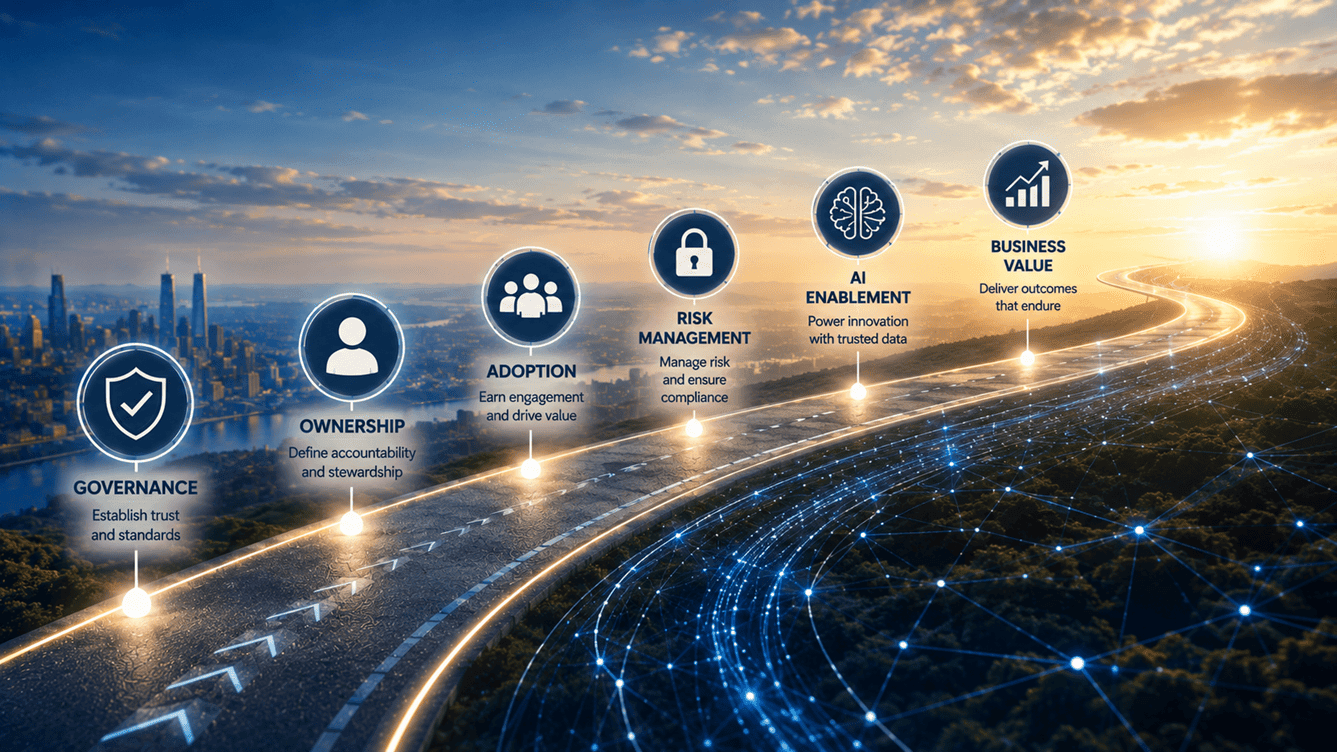
Chief Data Officers (CDOs) often struggle to maintain their positions beyond three years because data transformations require long-term commitment, yet expectations are frequently set for short-term fixes. Based on the ten-year tenure of Justin Heller, former CDO of Synchrony Financial, building a lasting data career requires shifting the perspective from viewing data management as a temporary project to treating it as an ongoing operational capability. A successful CDO prioritizes business processes over technology and focuses on establishing clear data ownership based on expertise rather than mandates. Effective data governance should not be a policing function; instead, it must serve as an enabler that solves actual business problems, addresses regulatory risks, and supports decision-making. To drive adoption, leaders must focus on shared risks and outcomes rather than rigid compliance. While technology buzzwords come and go, the core challenges of trust, accountability, and documentation remain unchanged. Ultimately, a CDO's longevity depends on their ability to translate technical initiatives into tangible business impacts, such as improved efficiency and reduced risk, acting as a bridge between technical teams and business stakeholders.


What happens when an insurer thinks like a tech company

Aviva India is redefining its approach to insurance by shifting away from traditional methods and acting more like a technology company. Led by Chief Technology Officer Gyanendra Singh, the company is focusing on reducing friction for customers by using technology to create simpler and faster experiences. One of their major achievements is speeding up policy issuance from weeks to just a few minutes, primarily by integrating digital public infrastructure and paperless purchasing systems. They are also utilizing artificial intelligence for practical improvements, such as health assessment kiosks that use facial scans and automated document processing to speed up underwriting decisions. Instead of treating insurance as a product that is only used during emergencies or yearly renewals, Aviva is building a broader wellness system that tracks physical activity, offers diet recommendations, and rewards healthy behavior. Singh emphasizes that all technological investments must prove their value by directly improving customer experience and operational efficiency. Looking to the future, the company aims to move from a reactive model to a proactive one that actively prevents risks. Ultimately, Aviva believes that combining this modern, data-driven approach with strong data privacy and human empathy will set successful insurers apart in the coming decade.


12 System Design Patterns Every Developer Should Know
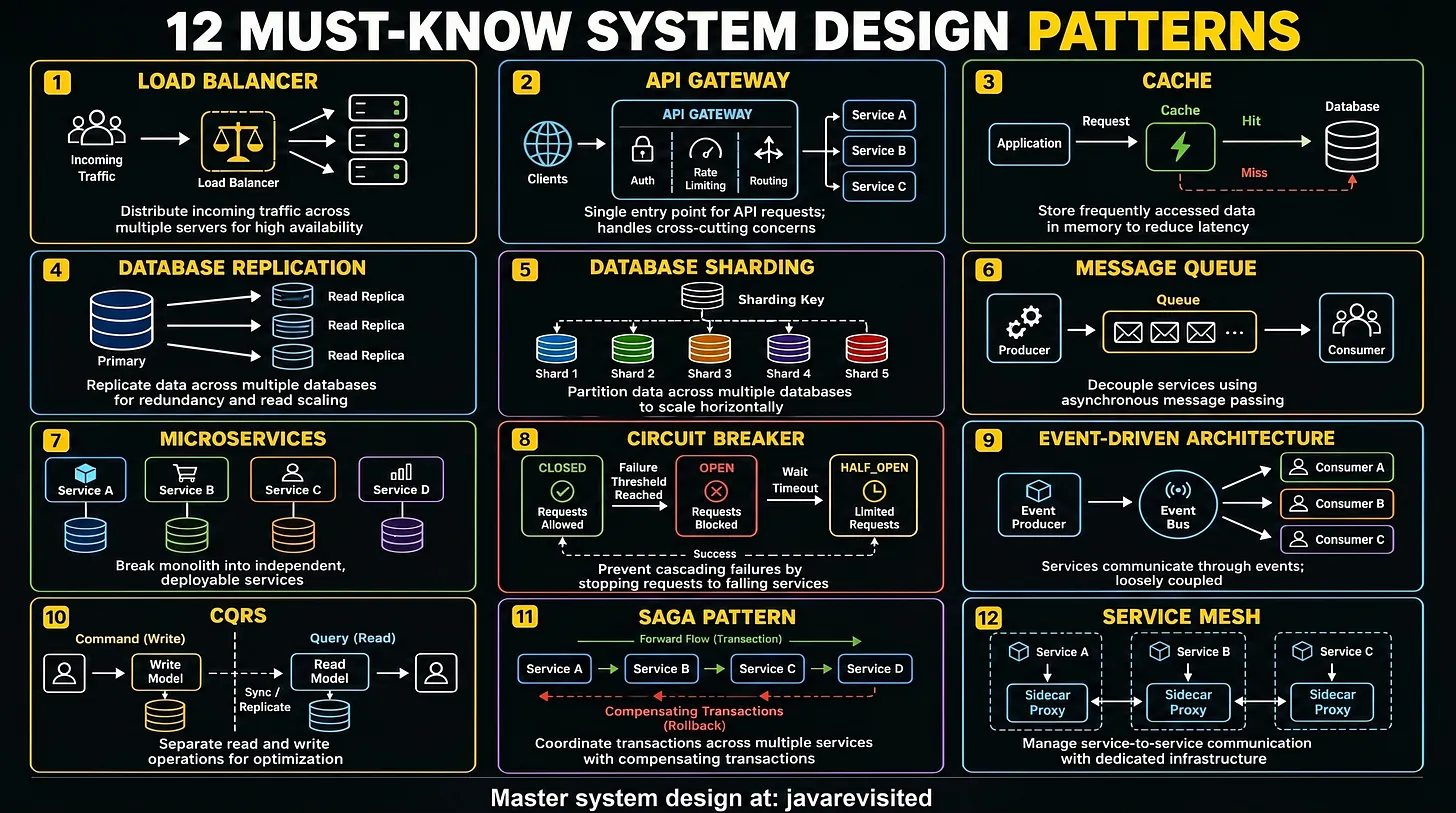
The recently published article outlines twelve fundamental design patterns that are necessary for software developers to master in order to build reliable and efficient applications. Understanding these common patterns provides a clear and structured approach to solving complex architectural challenges and is particularly useful for engineers preparing for technical interviews. The text emphasizes that rather than simply memorizing solutions, developers should deeply grasp the underlying concepts of how different components interact within a larger network. The discussed patterns focus on strategies for managing network traffic and preventing server overload, utilizing tools such as gateways, load balancers, and rate limiters. The resource also highlights methods for ensuring data consistency and general availability, touching on database separation, temporary data storage, and message publication models. Furthermore, concepts like the circuit breaker pattern are presented as essential ways for maintaining application stability when external or dependent services fail. By integrating these basic architectural blueprints into their standard knowledge base, developers can make informed decisions regarding speed, wait times, and system resilience. Ultimately, familiarizing oneself with these twelve structural patterns equips engineers with the practical methods required to design systems capable of handling actual operational demands effectively.


Why Post-Quantum Cryptography Starts With Credentials

Quantum computers will eventually break the public-key cryptography that currently protects sensitive data, creating an urgent security challenge. Although capable quantum hardware may still be a decade away, attackers are already using a tactic called "Harvest Now, Decrypt Later." This means they capture encrypted data today, intending to unlock it when quantum technology catches up. Government agencies like the NSA and NIST are already setting deadlines to transition to quantum-resistant algorithms, a process that can take large enterprises several years to complete. The most significant risk lies in long-lived credentials and non-human identities, like service accounts and API keys. Because these credentials often persist for years, they are highly valuable targets for early harvesting. To prepare for a post-quantum future, organizations should adopt a credentials-first approach. This starts with taking a thorough inventory of existing cryptography and prioritizing the protection of secrets based on their lifespan and risk level. Migrating to hybrid cryptography—combining classical and quantum-resistant algorithms—offers a strong defense. Building systems with "crypto-agility" will also allow organizations to update their security protocols easily as standards evolve, ensuring long-term protection against emerging threats.

Daily Tech Digest - June 22, 2026


Quote for the day:

“Conceptual integrity is the most important consideration in system design.” -- Frederick P. Brooks Jr.

🎧 Listen to this digest on YouTube Music

▶ Play Audio Digest

Duration: 22 mins • Perfect for listening on the go.


6 Key Requirements for Securing AI Agents Before the POC

Before running an AI proof of concept, organizations must treat AI agents like critical machinery by implementing safety controls before deployment. Industry experts recommend six practical requirements for securing these systems. First, give AI agents their own distinct identities rather than letting them assume the identity of a human user. Second, separate permissions for data sources, people, and agents, ensuring agents only access what is absolutely necessary. Third, establish strong data management by tracking data quality, checking for biases, and protecting privacy so the systems understand the context of the information they process. Fourth, protect passwords and credentials by keeping them out of the foundational code and only providing them when the system is actually running, ensuring agents never have direct access to raw secrets. Fifth, establish clear rules for which software parts automated coding tools are allowed to use, preventing the introduction of outdated or weak components into your systems. Finally, plan for unexpected behavior by setting up thorough monitoring, including decision records and action tracking, to understand exactly what the agents are doing in real time. These steps provide a secure foundation for safe operations.


Applying DAMA-DMBOK to Humanitarian Data Initiatives

The article written by Stanyslas Matayo outlines a practical approach for applying data management principles from the DAMA-DMBOK framework to humanitarian organizations. These agencies frequently struggle to maintain data continuity due to high staff turnover, limited funding, and fragmented operations across headquarters, regional branches, and country offices. To resolve this, the author advocates for a hybrid operating model where headquarters establishes foundational standards while local offices maintain operational accountability. Crucially, the strategy shifts data ownership away from technical specialists, placing data governance responsibilities onto cross-functional sector leaders and program heads instead. The framework introduces a lightweight structure, including a sustainability checklist and a duplication-checking classification system, which can be implemented without creating new headcount or restructuring departments. This model also blends innovation directly into the standard data lifecycle, ensuring that local data prototypes have a clear path toward broader organizational adoption. Ultimately, by treating data as a shared organizational asset and publishing clear business glossaries and catalogs, humanitarian entities can realistically advance their data maturity, ensuring that vital situational and beneficiary information survives personnel rotations and continues to inform field decisions reliably.


Anatomy of a retail ransomware attack: Tabletop simulates modern mayhem methods

At the Infosecurity Europe conference, cybersecurity firm Semperis hosted an interactive simulation lasting two hours to test how organizations handle modern digital threats. The exercise centered on a fictional supermarket chain equipped with an artificial intelligence system managing its supply chain. Participants were split into attacking and defending teams, taking ten minute turns to outmaneuver one another. The attackers, playing a state sponsored group, aimed to cause severe operational chaos and damage the company reputation rather than simply secure a financial payout. They exploited an external logistics partner to breach the internal network, stole loyalty card records, and disrupted heating, ventilation, and payroll systems. To overwhelm the defenders, the attackers flooded security monitors with false alarms, placed bizarre delivery orders, and released a fabricated video of the chief executive officer to provoke public anger online. Conversely, the defending team refused to pay the ransom demands. They quickly established independent communication channels to bypass internal confusion and relied on a decoy network to trap the intruders away from genuine customer data. Ultimately, the simulation demonstrated that successfully surviving a major digital crisis depends much more on adaptable human decisions, clear communication, and solid teamwork than on software alone.


Real-Time Isn’t a Feature. It’s a Requirement in Modern Energy Systems

Modern energy grids demand instant data processing, shifting real-time operations from a luxury to an absolute necessity. Traditional systems and cloud-based analytics, while useful for long-term planning, introduce too much latency for the split-second decisions required by today's distributed energy resources, battery storage systems, and renewable generation. Relying on cloud architecture to handle high-frequency telemetry from these assets causes crippling delays and creates unnecessary bandwidth costs. Instead, processing must occur at the edge, close to the equipment. Edge computing eliminates latency by analyzing vast amounts of data locally and forwarding only critical changes to centralized servers. However, deploying effective edge solutions is primarily a software challenge rather than a hardware one. Edge platforms must seamlessly ingest, normalize, and timestamp data across a wide range of protocols from various manufacturers. Open, standards-based architectures are essential to ensure interoperability and protect utilities from vendor lock-in as their operations expand. Ultimately, transitioning to real-time edge processing forms the foundation for advanced analytics, autonomous coordination, and market participation. Utilities that adapt their infrastructure to support these decentralized systems will thrive, while those relying strictly on centralized data platforms risk falling permanently behind.


How Boards Should Think About AI Vendor Risk

When bringing artificial intelligence into a company, corporate boards must treat vendor risk as a fundamental business exposure rather than a routine software purchase or an IT checklist. Because these tools evolve, learn from sensitive inputs, and can behave unpredictably over time, legacy procurement methods are no longer enough. Instead of getting bogged down in technical weeds or polished vendor presentations, directors should focus their oversight on three straightforward questions: What specific company data goes into the tool? Which operational decisions does the output influence? Who holds named accountability if something goes wrong? High-stakes functions like pricing, customer service, or hiring demand far stricter limits than simple drafting tasks. To govern effectively, boards must look past vague policy drafts and demand brief, plain-English summaries that highlight real vulnerabilities, such as data leakage, intellectual property ownership, and whether the company can cleanly exit a contract without disruption. Rather than sitting through endless status updates, directors should ensure every review drives a concrete choice to accept, fund, fix, limit, or drop the tool. Ultimately, managing outside technology requires clear boundaries and steady oversight before unmanaged tools spread too deeply across the business.


How to Lead Through Uncertainty with Strategic Resilience

In today's unpredictable business world, leaders often struggle to guide their organizations through sudden market changes and unexpected disruptions. This article explains that simply reacting to crises is no longer enough; organizations need to build deep strategic resilience. The root of the problem usually lies in poor visibility and unclear priorities, which cause hesitation, rumors, and wasted effort. These issues persist because many companies are trapped by rigid habits, isolated departments, and a heavy focus on short-term quarterly profits that discourage long-term preparation. To break this cycle, the author advises leaders to adopt a more disciplined yet adaptable approach. First, leadership teams should practice scenario planning by imagining different future challenges, helping them spot early warning signs and adjust their plans without losing sight of their main goals. Second, companies must dismantle strict hierarchies to allow teams to make decisions and solve problems flexibly. Finally, honest and frequent communication is essential to calm internal anxieties and keep everyone moving in the same direction. By shifting the workplace culture to support learning and balancing immediate results with long-term stability, leaders can confidently steer their teams through the unknown.


Malware Has Gotten Smarter. Here's How Your Antivirus Has, Too

Antivirus software is undergoing a necessary shift to keep pace with modern digital threats. In the past, security programs functioned much like a bouncer checking faces against a list of known troublemakers; they relied almost entirely on databases of recognized code signatures to catch dangerous files. However, malicious code now changes far too rapidly for manual cataloging to keep up. Attackers routinely design software that automatically rewrites itself with every new infection, making it impossible to spot by identity alone. To solve this problem, modern security systems have moved away from simple recognition and now focus on active observation. Using machine learning and steady monitoring, these tools watch how a program actually behaves once it enters a computer. Instead of asking whether a file looks familiar, the software asks whether it is acting strangely. For example, it watches for programs that suddenly try to lock down dozens of personal files or make quiet network connections in the middle of the night. By looking for abnormal patterns rather than specific names, modern antivirus software can identify and stop brand-new attacks before they have a chance to cause any actual harm.


Why building ‘stress intelligence’ is essential for decision-making in an age of constant crisis

Today’s business and political leaders operate in an environment of constant, overlapping emergencies, leaving them with almost no time to recover before the next problem hits. Recent surveys show that more than half of top executives feel severely stressed, and most expect these pressures to keep growing. While a moderate amount of tension can sharpen focus and boost performance, chronic exhaustion does the exact opposite. Neuroscience confirms that prolonged, intense pressure damages working memory, narrows attention, reduces creativity, and distorts how people evaluate risk. Consequently, leaders often make poor choices based on incomplete information right when the stakes are highest. To counter this dangerous cycle, individuals must develop what experts call stress intelligence. Far beyond basic wellness perks or simple breathing apps, this is a practical skill centered on recognizing how tension impairs human judgment in real time. It requires executives to understand their personal reaction patterns under pressure, whether they freeze up or act too impulsively, and put safeguards in place to protect their thinking. By learning to respect these biological limits, management teams can maintain their composure, evaluate consequences clearly, and make consistently wiser decisions during critical global moments.
The conversation around unsanctioned artificial intelligence at work is fundamentally changing. Originally, security teams focused on preventing employees from accidentally pasting sensitive company data into public chatbots. Today, however, the real danger is far more structural: it has become a challenge of internal access control. Across organizations, teams are quietly building their own automated AI assistants and connecting them directly to vital systems like sales databases, shared documents, and code repositories. Unlike standard software, these new AI agents act independently, meaning they can use stored credentials to read, update, or even delete production files without human oversight. To make these tools work smoothly, staff frequently grant them broad permissions that go unmonitored. This creates an enormous blind spot where automated accounts retain elevated access long after the employee who set them up moves to another project or leaves the company entirely. Traditional security measures and simple website blocks fail here because they rely on predictable human behavior. To safely manage this shift, companies must stop viewing AI solely as a data leak to plug and start treating these automated helpers as distinct users that require continuous tracking, clear ownership, and strictly limited digital keys.


CISO Diaries: Jason Stradley on Turning Cybersecurity into a Business Decision

In this interview, veteran Chief Information Security Officer Jason Stradley discusses the modern evolution of cybersecurity leadership from purely technical roles into strategic business functions. He argues that a security team’s primary purpose is not to eliminate all possible hazards, but rather to help an organization take necessary operational risks safely. Stradley spends most of his workday on communication, risk evaluation, and planning rather than managing software directly. He notes that balancing a company's desire for rapid growth against the reality of complex digital threats remains his biggest daily challenge. To protect systems effectively without slowing down operations, he relies on fundamental practices like enforcing multifactor authentication and building a strong culture of awareness. Stradley cautions against the common mistake of buying more software tools to fix deeper structural problems, emphasizing instead that clear human accountability and structured procedures are what actually prevent major disruptions. When measuring success, he focuses purely on practical outcomes, such as how quickly a team detects an intrusion and how much downtime is avoided. Looking toward the next decade, he expects routine tasks to become automated, allowing security professionals to focus on identity management, data privacy, and artificial intelligence.

Daily Tech Digest - June 21, 2026


Quote for the day:

“Any architecture that is too complex to explain is probably wrong.” -- Martin Fowler

🎧 Listen to this digest on YouTube Music

▶ Play Audio Digest

Duration: 20 mins • Perfect for listening on the go.


Compliance Without Chaos In Modern Delivery

Treating compliance as a sudden, stressful emergency before an audit is both painful and unnecessary. Instead of bolting rules onto the very end of software delivery, engineering teams can build straightforward checks directly into their daily routines. When you integrate requirements into the tools developers already use, the process stops feeling like an obstacle course. By tying approvals to code reviews and enforcing standards through automatic checks, your regular deployment systems naturally generate all the proof an auditor needs. This approach removes the need to hunt down scattered evidence across chat logs and spreadsheets, turning documentation into an automatic background task. Furthermore, managing system permissions carefully and continuously monitoring critical settings helps keep minor oversights from escalating into major incidents. Preparing for reviews should look much like preparing for a standard software update, relying on simple, repeatable checklists rather than frantic last-minute efforts. Ultimately, compliance works best when it functions as a shared operational habit across every department. By making security guidelines clear, practical, and automated, teams can maintain momentum while turning complex audits into routine, minor administrative checks.


SDLC Data Governance Critical as AI Systems Outpace Human Oversight

As artificial intelligence rapidly accelerates the pace of software development, engineering teams face a growing challenge in overseeing vast changes made with minimal human involvement. With AI systems now capable of independently writing thousands of lines of code, running tests, and deploying product features overnight, traditional manual reviews are no longer practical or safe. This shift requires organizations to move away from treating governance as a slow, end-of-process afterthought. Instead, they must build active controls directly into the software delivery pipeline. Currently, a significant gap exists because many companies lack the automated audit trails needed to track these autonomous activities, creating serious compliance and security vulnerabilities. To address this, organizations must establish systems that enforce policies and validate code at the exact moment it is generated. This approach demands a clear focus on traceability and explainability, ensuring that every automated decision can be clearly understood and audited. As a result, software engineers are evolving from daily implementers into strategic orchestrators who manage and direct these pipelines. Success ultimately depends on fostering a culture of shared responsibility across departments to ensure that autonomous delivery remains fully accountable and easy for humans to monitor.


Agentic AI’s challenge is getting agents to act like a team, not a crowd

Adding more artificial intelligence agents to a company does not automatically improve operations; in fact, uncoordinated agents can create confusion and conflicting decisions. As businesses expand from single experimental tools to multiple agents working across departments like finance and supply chain, the main obstacle is getting these units to cooperate. To solve this, companies need a central coordination system that acts as a manager. This system relies on four key functions: distributing tasks appropriately, maintaining a shared memory so all agents access the exact same data, enabling instant communication during unexpected events, and providing strict safety and compliance oversight. When agents share a single version of the truth, operations run much smoother. For example, connected systems can automatically identify and fix IT issues, noticeably reducing downtime. However, significant hurdles remain. Organizations struggle with fragmented and poor-quality data, which inevitably leads to flawed automated decisions. Furthermore, balancing automated freedom with necessary human judgment on sensitive or high-risk matters continues to be difficult. Ultimately, the true value of multi-agent systems relies entirely on the strength of their shared infrastructure rather than the sheer number of agents deployed.


When Everyone Uses AI, Companies Risk Losing Critical Skills

As companies adopt artificial intelligence for everyday tasks, they face a quiet but serious risk: losing the essential human skills that keep their businesses strong. When employees rely on technology to write reports, analyze numbers, and solve standard problems, they miss out on the daily practice required to build deep expertise. Traditionally, junior staff develop intuition, critical thinking, and sound judgment by working through basic, practical assignments. By handing these core learning opportunities over to automated systems, organizations accidentally break their internal development paths. Over time, a company's shared knowledge can fade, leaving future managers without the practical foundation needed to judge automated answers or steer the business through unexpected crises. To prevent this talent gap, executives must rethink how daily work and professional growth fit together. Instead of focusing only on immediate speed and cost savings, leaders need to deliberately create moments where staff are forced to practice independent reasoning. Companies must protect their core capabilities by treating technology as a helpful assistant rather than a complete replacement for human thought. Ultimately, true resilience comes from capable people who know how to think for themselves.


The Attack Surface Your Security Team Isn’t Governing Yet

The rapidly rising use of artificial intelligence agents introduces a growing attack surface that standard security tools cannot effectively monitor. While security teams have historically focused on managing human users, machine accounts now outnumber them and create severe vulnerabilities. Unlike regular human users who log in, complete a specific single task, and leave a simple audit log, these autonomous agents operate continuously across multiple systems at once. They make independent decisions and link tasks together in ways that older software cannot track. To maintain control, organizations must move beyond basic identity management, which only asks who has access, and focus instead on tracking the actual actions these software agents perform. Adding these controls after the systems are already live is a failing approach, because the behavior is too complex to untangle later. Security leaders must build clear rules and full visibility directly into the core infrastructure from the very beginning. By creating permanent, reliable records of every single action an agent takes, companies can protect their sensitive data and easily provide concrete proof of safe operation to external regulators, board members, and internal executive leadership teams.


We Had a Perfectly Good Data Store. That Was the Problem

In this article, a data engineering professional shares the realization that recurring data quality issues are often architectural flaws rather than problems with the information itself. When an organization faces constant complaints about late or incorrect data, engineers usually waste time fixing symptoms instead of addressing the underlying cause: forcing an operational database to serve analytical users. To solve this, the team successfully migrated reference data from MongoDB to a governed platform without replacing the original database. Their approach relied on three major decisions: retaining MongoDB as the definitive source of truth, consolidating four independent extraction pipelines into a single path using Kafka and Iceberg tables on S3, and treating published data as a clear product. This effectively separated data truth, transport, and consumption into distinct layers. Interestingly, the primary hurdles during this transition were not technical pipeline components, but rather social and organizational friction. Overcoming disagreements around data ownership, naming conventions, and searchability proved to be the most demanding part of the process, demonstrating that a successful architecture relies just as much on clear human alignment as it does on the underlying software.


How Application Control Engines Support Zero Trust Security Strategies

This article explains how application control engines serve as a foundational enforcement layer within a zero-trust security architecture. Traditional workplace security practices often assume that software initially installed by internal IT departments is inherently safe. In contrast, zero-trust strategies reject this premise, operating under a default-deny rule where no software is trusted automatically. An application control engine translates this philosophy into technical enforcement by dictating exactly what programs can run, how they operate, and what data they can access. Crucially, the engine does not just evaluate applications at the time of installation; it continuously monitors their behavior in real time during execution. This ongoing runtime oversight is vital for stopping sophisticated threats, like fileless attacks, that hijack legitimate, pre-approved software to bypass traditional filters. By establishing centralized policy management, these engines ensure consistent rules across an entire network, which also simplifies compliance with major regulatory frameworks and cyber insurance mandates. Ultimately, integrating an application control engine moves an organization away from fragile assumptions of trust, replacing them with a reliable, data-driven system of continuous verification that protects software at the execution layer.


Metal-to-agent is the foundation of scalable enterprise AI

As artificial intelligence usage expands rapidly inside enterprises, relying entirely on metered external cloud services is becoming financially unsustainable. Red Hat chief technology officer Chris Wright argues that organizations must transition from renting outside models to operating their own internal computing infrastructure. To solve this, the company proposes a unified framework that connects raw physical hardware directly to automated software assistants. This layered setup organizes the technology stack into five distinct tiers: a stable operating system that shares expensive processors efficiently, an optimized delivery tier that speeds up response times, a central control gateway that enforces usage limits and prevents system overloads, a secure management hub for software agents, and a flexible hardware base that avoids strict vendor dependency. Wright notes that because open source models are advancing fast enough to match major commercial options in a matter of months, signing rigid contracts with a single provider is a dangerous gamble. By adopting a platform run entirely on their own servers, businesses maintain the freedom to choose the best tool for each job, keeping operating expenses predictable while ensuring sensitive company data remains strictly protected.


Why resilient data centres are built, not just designed

In this article, the author explains that true data centre resilience cannot merely exist on paper; it must be proven through careful, real-world execution. While power distribution plans often look flawless during the design phase, the actual construction and implementation introduce significant practical challenges. A major hurdle involves working within live operational environments, where upgrades or expansions must occur without interrupting existing services. This requires meticulous coordination, detailed risk assessments, and precise sequencing, particularly when working near energized systems. Furthermore, electrical setups are deeply tied to critical mechanical components like cooling systems, which often consume a massive portion of the facility's total energy. Misalignment between these teams during installation can create serious operational risks. Long-term success also depends heavily on high-quality commissioning and thorough documentation to ensure the infrastructure remains fully maintainable over time. Ultimately, as growing demands from digital services and artificial intelligence put more pressure on infrastructure, building a reliable facility requires an understanding of how systems interact under real conditions. True resilience is not just an abstract concept; it is something that must be built, tested, and verified on-site.


5 Strategies for Reinforcing Supply Chain Cybersecurity

As digital tools become deeply integrated into manufacturing, interconnected supply chains face greater exposure to online threats. A single breach at an outside supplier can halt operations, compromise private data, and create severe legal liabilities. To secure these systems, companies can adopt five straightforward practices. First, monitoring early threat indicators helps teams spot and block minor attacks, such as phishing schemes targeting smaller vendors, before they hit main production lines. Second, businesses should build and regularly practice an incident response plan that covers traditional computer networks as well as physical factory equipment. Third, digital security must be built into new technology from the very beginning rather than added as a quick fix later. Fourth, executives must encourage open cooperation across all internal departments, ensuring that legal, purchasing, and factory operators share responsibility instead of working alone. Finally, organizations need a thorough oversight program for their external contractors, relying on upfront evaluations, clear contract rules, and routine audits. Treating defense as a normal part of daily operations allows manufacturers to grow safely while keeping their essential infrastructure running smoothly without sudden disruption.

Daily Tech Digest - June 20, 2026


Quote for the day:

"Outstanding leaders go out of their way to boost the self-esteem of their personnel." -- Sam Walton

🎧 Listen to this digest on YouTube Music

▶ Play Audio Digest

Duration: 21 mins • Perfect for listening on the go.


Why AI coding debt is different

The rapid adoption of artificial intelligence in software development is generating an entirely new challenge: cognitive debt. Unlike traditional technical debt, which usually involves poorly written or messy code, cognitive debt arises when software works perfectly but no human understands exactly how or why it was built. Because AI tools generate code at unprecedented speeds, developers often bypass the crucial, slower process of thinking through specific scenarios and internalizing the underlying logic. Furthermore, many AI tools operate without essential background knowledge, such as past design choices or specific security rules, resulting in code that may function in isolation but lacks overall coherence. To prevent this accumulation of invisible debt, organizations must shift their focus from merely generating code to rigorously checking it. This involves building strong internal practices that provide AI with necessary historical knowledge before it writes a single line. Most importantly, engineering teams must establish strict human ownership, ensuring a developer takes the time to thoroughly review and comprehend the final product. By balancing the speed of AI generation with careful oversight and deep understanding, companies can maintain healthy, reliable systems without sacrificing their future stability or falling into irreversible complications.


Why Every CISO Needs a Head of AppSec in the Age of Vibecoding

The rise of AI-assisted software development has drastically increased the speed at which code is generated and deployed. While this shift enhances developer productivity, it also introduces subtle flaws and misconfigurations at a scale that outpaces traditional security measures. For a Chief Information Security Officer (CISO), directly overseeing application security is no longer practical. To maintain control without slowing down engineering, organizations must introduce a dedicated Head of Application Security. This role acts as a vital bridge between the security and development teams, turning abstract vulnerabilities into clear, actionable fixes that fit naturally into everyday workflows. Instead of treating security as a roadblock, a capable Head of Application Security enables developers to build safely and efficiently. Furthermore, while automated tools handle known issues, this leader ensures human testers remain focused on uncovering complex attack paths that machines miss. By delegating the daily operational details of application security to a specialized leader, the CISO can step back and focus on broader risk management and strategy. Ultimately, restructuring security leadership is essential for companies wanting to build software quickly without taking on unmanaged risks.


A perfect storm: data centers and tornadoes

The article examines the growing collision between data center expansion and the rising threat of tornadoes. As the demand for digital infrastructure pushes these vital facilities into regions known for volatile weather patterns, operators face a complex challenge. The piece highlights that relying on standard commercial building practices is no longer sufficient to protect critical hardware and ensure uninterrupted operations. Instead, modern data centers must incorporate specialized physical hardening from the ground up. This involves constructing reinforced concrete walls and specialized roofing designed to withstand extreme wind speeds and dangerous flying debris. Beyond structural defenses, the analysis strongly emphasizes the necessity of implementing comprehensive disaster recovery strategies. A key component is building geographic redundancy into the network architecture, ensuring that if one specific facility goes offline, other locations can seamlessly manage the computing load. Maintaining reliable backup power generation and secondary cooling systems is also essential to survive the immediate aftermath of a storm when local utility grids fail. Ultimately, securing digital assets against nature's unpredictability requires a steady, proactive approach, blending structural engineering with thorough contingency planning to keep essential services running smoothly.


OT vs IT Security: Key Differences Explained for Controls Engineers

Operational Technology (OT) security and Information Technology (IT) security serve different purposes and operate under distinct priorities. While IT security safeguards corporate data networks with a primary focus on keeping information confidential, intact, and available, OT security protects industrial control systems like programmable logic controllers and manufacturing lines. Because a failure in these industrial environments can lead to damaged equipment or physical harm, OT flips the traditional model to prioritize availability and safety above all else, often minimizing confidentiality. A major challenge for controls engineers is that standard IT practices do not easily transfer to the plant floor. For example, you cannot simply update an industrial controller the way you patch a laptop. These devices require uninterrupted operation, rigorous testing, and strict vendor approvals, making routine updates costly and disruptive. Furthermore, as enterprise networks increasingly connect with industrial systems to share data—a trend known as IT/OT convergence—traditional boundaries disappear. This connectivity introduces new vulnerabilities to legacy equipment that was never designed for modern internet threats. Bridging this gap requires careful network segmentation and a shared understanding between IT departments and plant engineers to keep production running safely.


AI Governance vs Data Governance: Why They Need Opposite Approaches

The article highlights the distinct but complementary needs of data and artificial intelligence governance within modern organizations. It points out that traditional data management programs often fail within their first year because they rely on rigid, centralized control that internal teams actively resist. To succeed, these data initiatives must instead link directly to specific business goals and decentralize their efforts across departments. Conversely, managing artificial intelligence requires the exact opposite organizational approach. Because AI development usually begins in isolated, scattered teams, it actually requires a centralized strategy to mature effectively and deliver consistent value. To resolve this structural tension, the text advocates for an adaptable framework that thoughtfully balances central standards with flexible, everyday execution. This method adjusts the level of control based on the organization's maturity and the specific risks involved in each project. Furthermore, the rapid adoption of modern AI tools demands a renewed focus on unstructured information, such as plain text documents, which is inherently harder to organize than traditional databases. Companies are strongly advised to systematically discover, tag, and connect this unstructured information to ensure their automated systems remain reliable and safe for long-term enterprise use.


Security considerations for adopting Claude Code and Cowork for SMBs

When small and medium-sized businesses decide to adopt AI tools like Claude, security leaders must carefully balance rapid deployment with essential safety measures. The primary step is understanding the specific plan your organization requires, as advanced security features like single sign-on and compliance tools are restricted to higher-tier subscriptions. Rather than granting broad access, it is safer to control your exposure by selectively assigning licenses for different products—such as Chat, Code, or Cowork—based on actual employee needs. As you introduce these tools, avoid turning on every feature at once. Instead, evaluate the risks of each capability and roll them out gradually. Features like web search or automated skills introduce vulnerabilities, making strict management of API keys and data access critical. Limit the number of people who can generate administrative keys to maintain tight control. Additionally, remember that you cannot outsource your data governance. It is your responsibility to monitor what information flows into the system and verify the accuracy of what comes out. By relying on a phased approach and leveraging existing security vendors, you can confidently integrate new technologies while keeping your business secure.


Every AI Agent Is an Identity. Most Organizations Don't Treat Them That Way

As AI agents evolve from simple productivity tools into powerful actors that can trigger workflows, write code, and update records, they are effectively becoming new digital identities within enterprise networks. However, most organizations are failing to secure them as such. According to the article, security teams traditionally focus on managing the identities of human employees and service accounts, leaving AI agents largely ungoverned. These agents are frequently connected to critical business platforms like Salesforce, GitHub, and production databases, often receiving overly broad permissions just to ensure they work smoothly. This creates a sprawling network of hidden actors with high levels of system access. While much of the AI security conversation has centered on software risks like bad prompts or incorrect outputs, the greater threat lies in what these tools can actually access. An overprivileged AI agent compromised by a malicious plugin can become a dangerous pathway for major data theft or system damage. To safely adopt AI technology, organizations must start treating AI agents exactly like standard network identities. This requires continuous tracking, strictly restricting their permissions to match their exact purpose, and systematically applying the same exact security rules used for human employees.


CIOs: tear down the wall between resilience and data security

For years, organizations have treated keeping systems online and keeping data safe as two separate jobs handled by different teams. However, the rapid adoption of artificial intelligence is proving that this separation is no longer practical. Rather than creating entirely new problems, AI is exposing existing flaws in how companies manage their files and information. When employees use AI assistants, these tools can easily find and share old or sensitive documents that were left unsecured, revealing a severe lack of basic organization and control. To solve this, technology leaders must unite their safety and system recovery efforts. First, companies need to understand exactly what information they have, where it lives, and who should see it before they roll out new tools. Second, they must use automated systems to manage rules and access, because human review simply cannot keep up with the speed of automated requests. Finally, businesses must clearly track what automated programs are doing and why, to ensure they meet future legal standards. Ultimately, attempting to block these new tools will fail. Instead, leaders must safely guide their use by building a unified, trustworthy foundation.


France and Germany Boost Digital Sovereignty Push

France and Germany are strengthening their commitment to European digital sovereignty through a coordinated approach and substantial new funding. To reduce reliance on foreign technology, the French government announced an initial 13 billion euro investment fund, expected to grow to 15 billion euros by the end of the year, aimed at supporting domestic and regional technology firms. Institutional investors, including aerospace and defense partners, are backing this initiative. Half of the capital is dedicated to deep technology sectors such as artificial intelligence, quantum computing, biotechnology, and space exploration. This focus on artificial intelligence is particularly timely given recent United States export controls that restricted European access to advanced models from companies like Anthropic. These restrictions have intensified demands for regional self-sufficiency and highlighted the strategic importance of European developers like France's Mistral AI. The new funding represents the third phase of a broader effort to close the financing gap for scaling tech businesses in the region. Although Germany previously approached such initiatives with caution, shifting geopolitical dynamics and concerns over the reliability of American technology services have united the two nations in their drive to secure technological independence.


Data Observability: Guidance for Data Leaders

Many organizations struggle to ensure their artificial intelligence systems receive reliable information. Although experts recognize the necessity of tracking data as it moves through systems, many leaders still treat this practice as a future goal rather than an immediate requirement. Without a clear view into their data systems, companies are left guessing whether their information is accurate and safe to use. As artificial intelligence shifts from simply providing answers to taking independent actions, relying on guesswork is no longer acceptable. Information pathways are becoming increasingly complicated, making it easier for mistakes to happen or for incorrect details to reach the wrong destination. Proper oversight helps address these complications, including the growing challenge of fragmented systems. Fundamentally, observing your data means proving that the right information arrives exactly when and where it is needed. This practice requires finding and fixing errors before they impact the business. Instead of merely checking if a system is turned on, organizations must validate that the information flowing through it is completely trustworthy. By maintaining a continuous, clear view of their data, organizations can confidently support their advanced technologies and ensure reliable outcomes.

Daily Tech Digest - June 13, 2026


Quote for the day:

“The biggest risk to software quality is complexity.” -- Martin Fowler

🎧 Listen to this digest on YouTube Music

▶ Play Audio Digest

Duration: 24 mins • Perfect for listening on the go.


Hard Problems in Cybersecurity: Past, Present, and Future

The recent article in Communications of the ACM outlines the historical evolution of computing systems to contextualize both past and future security challenges. Early systems were relatively simple to secure because they were isolated and operated by specialists. As technology progressed through shared networks and personal computers, the number of ways to compromise these machines grew dramatically. The personal computer era, in particular, introduced significant vulnerabilities because software built for everyday users lacked fundamental safety measures. However, this period also prompted essential defense innovations, such as automated software updates, secure programming practices, and the widespread adoption of strong cryptography. Learning from these struggles, modern mobile operating systems adopted much stricter models, limiting user privileges and relying on curated application stores to reduce risks. Today, the landscape is dominated by massive cloud platforms and connected physical infrastructure, which offer robust baseline protections but also serve as highly attractive targets for attackers. Looking ahead, the rapid integration of artificial intelligence presents a new frontier of complex problems. Because modern AI relies on data correlation rather than traditional rule-based programming, securing these systems requires entirely new analytical frameworks. Ultimately, the authors emphasize that while we have made significant defensive strides, the increasing complexity of technology demands continuous innovation to build resilient and verifiable systems.


Why cloud outages are such a stubborn problem

While cloud computing initially promised greater reliability, recent data reveals that system outages are becoming an increasingly difficult challenge to solve. According to industry analysis, the root cause of these disruptions is shifting away from simple physical hardware failures. Instead, the problems are now deeply tied to the growing complexity of the software, networks, and operational procedures used to manage large environments. Redundant hardware offers little protection when an outage stems from a faulty configuration update or an automation error. As cloud platforms stack countless services and dependencies on top of one another, a single mistake can quickly ripple across an entire network. Interestingly, relying heavily on automation has not eliminated human error; rather, it has simply shifted where those mistakes occur. When teams bypass safety protocols or rush changes without proper testing, automation can actually speed up a system failure. The financial impact remains significant, with many organizations reporting major financial losses from single incidents. To address this, cloud providers and their customers must move beyond simply adding more equipment. They need to prioritize strict operational discipline, transparent incident reporting, and improved change management. The future of reliable cloud services relies not on endless expansion, but on building systems that are straightforward to operate, easy to understand, and resilient against procedural mistakes.


Why Data Is No Longer the New Oil—And What Replaced It

For years, business leaders treated data as the "new oil," believing that simply amassing vast amounts of information would guarantee a competitive advantage. Today, this comparison is increasingly outdated. Because nearly every organization now generates massive streams of digital information, data is no longer scarce. Instead, we have entered an era of attention scarcity, where the overwhelming volume of raw information makes it difficult to determine what actually matters. In this environment, intelligence has replaced data as the primary driver of economic value. The businesses succeeding today are not necessarily those with the largest datasets, but rather those capable of transforming complex information into clear, actionable insights faster than their competitors. Raw data only represents potential; it requires context and interpretation to become valuable. Technologies like artificial intelligence are accelerating this shift by acting as sophisticated filters that separate signal from noise, highlight patterns, and support forecasting. However, technology alone is not the ultimate advantage. The most resilient organizations combine this technological intelligence with human judgment. Technology can process information and accelerate analysis, but human leaders are needed to provide context and make the final choices. Ultimately, the modern digital economy relies on learning speed, where the core objective is no longer to collect everything, but to understand better.


Introducing the Open Knowledge Format

As artificial intelligence models become more integrated into organizational workflows, they often struggle with a lack of specific, internal context. Currently, vital knowledge like database schemas, metrics definitions, and operational guides is scattered across incompatible systems, forcing teams to repeatedly build custom ways to feed information to their AI tools. To solve this fragmentation, Google Cloud has introduced the Open Knowledge Format (OKF). OKF is an open, vendor-neutral standard designed to organize context so that both humans and automated systems can easily read it. Rather than introducing a new software platform or requiring complex integrations, OKF relies on a simple structure: directories of standard text files using Markdown, paired with basic YAML headers for organizing metadata. This straightforward approach allows any team to create and maintain a shared library of knowledge using standard version control. Because OKF establishes a common language, documents written by different people or systems can be understood by different AI models without translation. The design rests on three principles: it requires minimal strict formatting, it separates how information is created from how it is used, and it remains independent of any specific vendor. By turning scattered data into portable, easily updatable text files, OKF helps organizations equip their automated tools with the accurate, actionable context needed to work effectively.


Google researchers introduce 'faithful uncertainty,' allowing LLMs to offer best guesses instead of hallucinations

To address the ongoing challenge of factual errors in large language models, Google researchers have proposed a new method called faithful uncertainty. Historically, developers have tried to eliminate these errors by forcing models to strictly answer or stay silent. However, this approach forces models to discard valuable information if they are even slightly unsure, sacrificing overall usefulness. To resolve this tradeoff between trustworthiness and helpfulness, the researchers suggest reframing the problem. Instead of treating every factual mistake as a fundamental failure, they classify them as confident errors—incorrect information presented with unearned authority. Faithful uncertainty solves this by aligning a model's words with its actual internal confidence. Rather than acting all-knowing, the model can offer educated guesses and clearly express when it is uncertain, much like a human expert. This practical self-awareness is particularly important for autonomous systems that rely on external tools. It allows the software to accurately recognize when it knows an answer and when it needs to search an external database, avoiding wasted time or incorrect outputs. While teaching models this dynamic sense of doubt is difficult due to their constantly evolving knowledge bases, it represents a vital shift. By mastering this balance, developers can build reliable enterprise systems that remain highly capable without misleading their human users.


While OT security is maturing, risk is not slowing down

As industrial organizations increasingly connect their physical operations to modern digital networks, securing these environments has rightly become a priority for senior leadership. A recent industry report highlights that companies are taking a much more realistic look at their security defenses. Instead of overestimating their readiness, many teams are recognizing previously hidden gaps as they adopt better monitoring tools. This clearer perspective means they are detecting intrusions more often, which is actually a positive sign of improved awareness rather than simply an increase in attacks. However, challenges remain significant. Attackers are staying hidden inside systems for longer periods, and many organizations still lack complete visibility across their entire operational network. Furthermore, while teams are modernizing their equipment to improve performance, this added connectivity demands that security be built in from the start rather than added as an afterthought. Regulatory pressures are also mounting, meaning compliance is quickly becoming an immediate operational requirement rather than a future goal. To navigate these ongoing risks, companies must focus on the fundamentals. By keeping digital and physical networks properly separated, tightly managing remote access, and closely aligning their security and engineering teams, organizations can ensure that their operations remain resilient and fully protected against an evolving landscape of threats.


The 7 Levels Of Leadership: A Mirror And A Compass For Leaders

Many organizations struggle with a hidden crisis because they view leadership as a simple binary trait rather than a spectrum. Based on extensive global research and practice, a new framework breaks leadership down into seven distinct levels, offering both a mirror for current managers and a compass for future growth. The spectrum begins at the bottom with the "Non-Leader," who avoids responsibility, and the "Pseudo-Leader," who talks a good game but relies solely on positional power rather than earned trust. At the third tier sits the standard "Leader," who effectively manages teams and achieves results. While many see this as the peak, it is actually just the foundation. The fourth level is the "Sensei Leader," who focuses on mentoring and reproducing their skills in others. Next is the "Legacy-Driven Leader," who sacrifices short-term popularity to build lasting institutional health. The sixth level, the "Conscious Leader," leads with deep self-awareness and a higher purpose. Finally, the "Superconscious Leader" operates beyond ego, handling immense complexity to transform people and systems long after they are gone. Ultimately, the future of business relies on deeply human leadership. Organizations that understand these levels can better evaluate where their teams stand and intentionally build the infrastructure needed to develop true, lasting influence.


Why CIOs should reopen the build vs. buy question

The article argues that technology leaders should reconsider the long-standing advice of automatically defaulting to buying software rather than building it. For the past twenty years, purchasing off-the-shelf products was the most rational way to control costs and minimize the risks associated with custom systems. However, three major technological shifts have altered this dynamic. First, artificial intelligence tools have drastically reduced the cost and time required to build custom applications, making it financially realistic to customize complex workflows. Second, modern development platforms have allowed non-technical employees in finance, marketing, and operations to easily create functional internal tools. Third, the difficult technical requirements of building custom software—such as security, scalability, and authentication—are now easily accessible as managed services. Because of these changes, automatically choosing pre-built software can slowly destroy a company's competitive edge by forcing the business to conform to a vendor's standardized process. While buying remains the logical choice for everyday administrative tasks like payroll or identity management, any capability that sets a company apart from its competitors should now be custom-built. To adapt, the chief information officer must shift from simply blocking new projects to providing strong architectural guidance, ensuring that internal development happens safely without restricting valuable business innovation.


Building a High-Performance Testing Strategy for Distributed Development Teams

Managing software quality across globally distributed teams requires moving beyond traditional methods to strategies that bridge time zones and minimize delays. A high-performance testing approach neutralizes geographic distances by ensuring unified visibility, reliable automation, and shared accountability. To achieve this, organizations should adjust their testing focus, prioritizing integration and contract tests over heavy end-to-end suites. This protects system stability without causing bottlenecks. Catching issues early is critical, so teams should build automated checks directly into the development process using tools that scan code and manage environments on demand. Artificial intelligence can also help maintain tests as applications evolve, reducing manual upkeep. Quality must become a shared responsibility rather than a separate department's task. Tracking metrics like developer test contributions and encouraging cross-site collaboration helps foster a culture where everyone owns the outcome. Supporting this effort requires scalable cloud infrastructure that can replicate production environments and simulate user traffic from different regions. Finally, clear communication protocols, such as documented decision logs and written updates, ensure teams stay aligned without needing simultaneous meetings. By combining scalable infrastructure, automated safeguards, and a unified culture of ownership, remote engineering hubs can maintain steady release cycles and deliver reliable software regardless of where the code is written.


Moving Mountains: Migrating Legacy Code in Weeks instead of Years

The presentation outlines the essential transition from fragile, experimental AI agent prototypes to robust production systems. A central theme focuses on moving away from monolithic prompt designs and long linear loops, which frequently stall or fail silently when encountering real-world constraints like network limits or high operational costs. To resolve these vulnerabilities, the speaker advocates for systematic refactoring strategies, specifically decomposing large, complicated workflows into coordinated networks of specialized sub-agents with narrow, well-defined responsibilities. This separation of concerns ensures greater system reliability and simplifies troubleshooting. Furthermore, the discussion highlights the importance of replacing hardcoded states and unpredictable natural language formatting with dynamic data pipelines and strict structural contracts verified at runtime. By implementing automated testing frameworks, continuous evaluation metrics, and persistent memory layers, engineering teams can dramatically decrease context data overhead and eliminate runaway cloud expenditures. Ultimately, refactoring AI agents is not merely about organizing code, but about shifting the developer's responsibilities from manually inspecting individual outputs to designing the overarching architectural guardrails that guide autonomous execution. This disciplined engineering approach minimizes unexpected mistakes and guarantees that these autonomous agent-driven systems remain stable, predictable, secure, and fully compliant with enterprise governance standards when deployed in live production environments.