Showing posts with label IoT. Show all posts

Daily Tech Digest - August 17, 2026


Quote for the day:

"Listen with curiosity, speak with honesty act with integrity." -- Roy Bennett

🎧 Listen to the audio debrief on YouTube

▶ Play Audio Digest

Duration: 20 mins • Perfect for listening on the go.


How to level up from IT management to IT leadership

Transitioning from a mid-level technical management position to a senior executive role requires a deliberate shift in focus from mastering technology to mastering human connections and business operations. Aspiring leaders must build upon their foundational knowledge by developing essential communication habits, such as empathy, active listening, and the ability to build trust across different departments. Successfully navigating this career path involves taking on significant projects, learning from the inevitable missteps, and seeking out experienced mentors who can provide honest feedback. It is crucial to understand the broader goals of the organization and how technology can practically support those objectives. This means stepping away from the desk to learn about budgeting, risk management, and the daily challenges faced by other teams. True leadership is not defined by a specific title, but by the capacity to align people around a shared vision and empower them to succeed. Rather than simply executing technical tasks, effective leaders focus on mentoring their teams, translating complex concepts into plain language for non-technical coworkers, and making thoughtful decisions that deliver measurable value. Ultimately, ascending to the executive level is about solving company-wide problems with calm confidence and a steady collaborative mindset.


Why IoT systems fail at scale – and why Edge vs Cloud is the wrong debate

Internet of Things systems often struggle to scale, but the root cause is rarely the technology itself. Instead, failures usually stem from fragmented design. When teams develop hardware, software, connectivity, and security in isolation, the gaps between these components become major hurdles once the system moves into production. The ongoing debate pitting edge computing against the cloud misses the point. In practice, successful systems rely on both. The real challenge lies in deciding how they work together—specifically, figuring out which data should be processed locally for quick, time-sensitive tasks and which should be sent to the cloud for long-term analysis. This need for unified design is becoming even more obvious as artificial intelligence enters the picture. AI requires clear, reliable data pipelines. If a system's architecture is disjointed, having massive amounts of data won't help much. To build systems that last, developers need to shift from component-level thinking to holistic system design. This means planning data flow, security protocols, and long-term maintenance strategies from the very beginning. Treating features like security or software updates as add-ons only creates expensive problems later. By building a cohesive architecture from day one, organizations can create reliable systems that easily adapt and grow over time.


The new audit equation puts AI to work and judgement at the centre

In a recent interview, Atul Deshmukh of the accounting firm KNAV discusses how artificial intelligence is transforming the auditing profession from the ground up. Central to this shift is the transition from traditional statistical sampling to the comprehensive analysis of entire data sets. By deploying AI platforms, firms can automate repetitive and time-consuming tasks like document extraction and transaction matching. These digital workers drastically compress the time required for routine procedures, turning tasks that once took a full day into minutes. This efficiency is fundamentally altering the traditional accounting firm structure. The classic pyramid model, which relied heavily on junior staff for groundwork, is evolving into a diamond shape that demands analytical thinking and diverse backgrounds, including engineering. Furthermore, the massive time savings challenge the industry's conventional billable-hour model, paving the way for pricing based on value, complexity, and outcomes. Despite AI taking on larger segments of the workflow and even moving toward autonomous processes, human judgment remains the irreplaceable core of auditing. Auditors are not being replaced; their roles are shifting from manual verification to higher-level review and critical decision-making. Ultimately, AI handles the heavy lifting, allowing human professionals to focus their time on complex analysis and valuable insights.


What the CISO role will look like in 2029

By 2029, the role of the Chief Information Security Officer will shift away from being a purely technical position focused on building network defenses. Instead, security leaders will take on broader responsibilities as business strategists and risk managers. As technology cycles shorten and artificial intelligence accelerates the pace of both innovation and cyber threats, the old approach of simply saying no to all new ideas will no longer work. Tomorrow’s security executives will be expected to help their organizations take smart, calculated risks. Rather than managing security tools in isolation, future leaders will act as organizational orchestrators. They will connect engineering, legal, product, and executive teams to build systems that can identify and reduce risks almost instantly. Because threats are moving faster, organizations will rely on resilient engineering and automated decision-making processes to maintain safety. Some experts predict that the position will even expand to cover overall enterprise risk, potentially changing titles to emphasize trust and broader risk management. Despite these changes, the fundamental mission of the job remains steady. Security leaders will still need strong technical foundations, sound judgment, and clear communication skills to protect the entire business and help executives make informed choices in a rapidly changing world.


The Infrastructure Bottleneck That Keeps AI From Scaling Up

While many organizations focus entirely on choosing the right artificial intelligence models, the real challenge in making these systems work at a large scale lies in the underlying physical and technical foundational structures. According to Dilip Kumar of NTT DATA, practically all organizations find that their current networks, data storage, and security setups are slowing down their progress. Proving that an AI tool works in a small initial test is relatively simple, but running it reliably across an entire business is much harder. A common mistake is buying thousands of expensive software licenses without having the internal systems to actually use them. It is similar to buying a high-performance sports car but having no paved roads to drive it on. For AI to be truly useful, companies must ensure their networks can handle the data traffic and that their information is clean and organized. Instead of trying to transform an entire business at once, a smarter approach is to focus on a single, specific problem. By ensuring the foundation—the core networks, data organization, user identity, the appropriately sized model, and the daily operating procedures—is solid, businesses can prove the value of their investment quickly and then expand those efforts with complete confidence.


The Rise of Runtime Governance

In the article "The Rise of Runtime Governance," Christian Siegers argues that artificial intelligence forces a fundamental shift in how modern organizations manage system behavior. Historically, enterprise governance focused heavily on the implementation phase. Dedicated teams reviewed system architectures, assessed security measures, and validated strict compliance standards well before deployment. This approach was highly effective for traditional systems because their behavior was largely dictated by static code and predefined business rules. However, AI introduces a complex new dynamic where critical decisions actually occur during execution. Even if an AI system successfully passes all pre-deployment governance checks, its behavior can still drift due to changing context, model interactions, and new information retrieval. Consequently, companies may strictly follow governance processes without actually retaining control over the final operational outcomes. To bridge this gap, Siegers suggests that governance must evolve from a series of static checkpoints into a continuous architectural capability. This concept, known as runtime governance, requires embedding continuous system observability, active policy enforcement, and human oversight directly into the daily operational environment. By doing so, organizations can monitor what their systems are doing in real time, ensure all behavior remains within acceptable boundaries, and actively intervene when necessary. This ultimately maintains true control over AI-enabled operations long after the initial deployment.


Agentic Fitness Functions: Extending Evolutionary Architecture Beyond Deterministic Rules

Evolutionary software architecture relies on fitness functions—automated checks like dependency rules, performance budgets, and security scans—to ensure systems can change safely over time without degrading their core characteristics. While these deterministic rules are excellent for enforcing strict, measurable metrics, they often fall short when evaluating complex, judgment-heavy architectural concerns. For example, a basic schema check can confirm that an application programming interface still functions, but it cannot determine if a new field accidentally leaks user interface details into a core domain model. This is where agentic fitness functions come into play to fill the gap. By using artificial intelligence agents calibrated with past architectural decisions, ownership data, and clear rubrics, these functions can evaluate nuanced changes that defy simple yes-or-no rules. They are not meant to replace human architects or traditional automated tests. Instead, they act as an advisory layer that provides structured feedback, including confidence scores and clear reasoning, for changes that require context and human-like judgment. This approach helps teams maintain healthy system boundaries, catch semantic drift early, and ensure that architectural intent is preserved. Ultimately, agentic fitness functions make complex architectural decisions more transparent and auditable, allowing teams to confidently manage rapid software delivery and continuous system evolution.


From Agile to the Product Operating Model

Based on a recent survey of 48 practitioners, the transition from traditional development methods to a product operating model often changes company vocabulary and structure more than it changes how decisions are actually made. Among the respondents whose organizations are making this shift, most report that their teams still operate by building requested features rather than acting as fully empowered groups that decide how to solve problems. However, the survey does highlight some positive trends. Many participants notice improvements in the speed of delivery, the value provided to customers, and overall collaboration with stakeholders. On the other hand, business results remain largely inconclusive, likely because financial outcomes take longer to measure. One notable concern is the human element, as team morale and developer satisfaction appear to decline during these transitions. Additionally, the findings show that artificial intelligence adoption and structural operating changes are happening as separate efforts. While artificial intelligence is starting to influence how product decisions are made across many companies, this shift is occurring independently of formal organizational redesigns. Overall, the data suggests that while operational efficiency might improve, true changes in decision making authority and employee well being remain significant challenges for organizations attempting this transition today.


US cloud act, sovereignty, and why you might need to care

The article by Kate Carruthers discusses the crucial difference between data residency and true data sovereignty, emphasizing that physical location alone does not insulate data from foreign legal reach. Prompted by Airbus’s decision to move critical applications to a European provider, the piece highlights that the US CLOUD Act allows US authorities to compel American cloud providers to hand over data, regardless of whether that data is stored in Sydney, Frankfurt, or Dublin. This makes cloud hosting a matter of national security and governance, not just a technical or architectural choice. The author notes that Australia often mistakenly equates local data residency with sovereignty, creating a blind spot that leaves critical infrastructure vulnerable to geopolitical disputes or commercial shifts. Organizations are advised to map their vital dependencies and classify workloads based on the potential harm of disruption rather than blindly adopting a "cloud-first" strategy. Furthermore, companies should design systems for degraded operation, practice isolation techniques, and preserve clear exit options to ensure resilience. Ultimately, Carruthers argues that cloud computing has evolved into institutional and geopolitical infrastructure, requiring boards to make deliberate, strategic choices about where sensitive workloads sit and how much control they truly retain.


The cyber resilience divide

In today's digital landscape, security incidents are a routine reality, and companies can no longer rely solely on preventing attacks. A recent Fujitsu report explores the growing gap between organizations that successfully build strong defenses and those that remain vulnerable, particularly as artificial intelligence reshapes both security threats and defense strategies. While artificial intelligence helps criminals find weaknesses and automate attacks, it also provides companies with powerful tools to detect and respond to these threats early. The research identifies a clear division between leading organizations and those lagging behind. Leaders understand that security breaches are inevitable. Rather than focusing only on prevention, they prepare to maintain operations and recover quickly. They treat security as a shared priority that begins at the board level, balancing new technology adoption with careful oversight. By running practical simulations and using smart tools for defense, these leaders reduce the impact of incidents while building trust and supporting steady growth. In contrast, lagging organizations often rush to adopt new technologies without fully understanding the risks, leaving gaps in their defenses. To secure their futures, companies must accept that breaches will happen, embed security awareness into their daily routines, and focus on protecting their most important systems through practical testing.

Daily Tech Digest - July 29, 2026


Quote for the day:

“The most successful founders are relentless about pushing through obstacles.” -- Sam Altman

🎧 Listen to the audio debrief on YouTube

▶ Play Audio Digest

Duration: 20 mins • Perfect for listening on the go.


CISA shares advice on isolating vital systems during cyberattacks

The U.S. Cybersecurity and Infrastructure Security Agency, alongside the FBI and international partners, has released new guidance to help critical infrastructure organizations successfully isolate their vital systems during a severe cyberattack. Titled "CI Fortify," this advisory provides practical steps for operators of essential services, like water treatment, power grids, and telecommunications, to confidently disconnect their core operational technology from corporate and internet-facing networks when a serious threat is detected. With state-sponsored groups and cybercriminals increasingly targeting these vital sectors for extortion and disruption, having a secure plan to safely sever network connections is crucial. The guidance recommends that organizations first carefully identify the absolute minimum systems needed to keep services running smoothly, and then map out every single connection to less trusted external networks. From there, they should establish predetermined isolation points where systems can be fully disconnected. While physical isolation offers the absolute strongest protection, the agencies completely acknowledge it may not always be feasible, instead suggesting graduated isolation and strict network controls as reliable alternatives. Additionally, organizations are urged to test their isolation procedures thoroughly and always keep offline paper copies of their detailed plans. Finally, the advisory reminds operators to thoroughly prepare for the expected challenges of manually running systems while completely disconnected.


Why DORA Metrics Are More Important Than Ever

As artificial intelligence tools help software teams write code at unprecedented speeds, organizations face a growing risk of deploying flawed software just as quickly. The temptation is to measure progress through activity-based metrics, such as the volume of code generated, tickets closed, or prompts submitted to AI assistants. However, this approach mistakes effort for actual value. To ensure that speed does not compromise quality, DORA metrics are more vital than ever. The four classic DORA metrics are deployment frequency, lead time for changes, change failure rate, and mean time to restore. Together, they offer a balanced view of both speed and stability. Unlike raw activity counts, these outcome-focused measures reveal whether an organization's software delivery system is genuinely healthy. While AI can accelerate development, counting lines of code or prompt submissions only exposes how superficial those metrics are. If AI integration is successful, it will be reflected in shorter lead times, more reliable deployments, and faster recovery from inevitable failures. Ultimately, AI cannot automatically fix a weak delivery process; it might only amplify existing gaps. Relying on DORA metrics helps technology leaders distinguish mere motion from actual progress, ensuring the ultimate goal remains delivering valuable, reliable software rather than just generating more code.


An AI agent can pass every safety check and still leak secrets

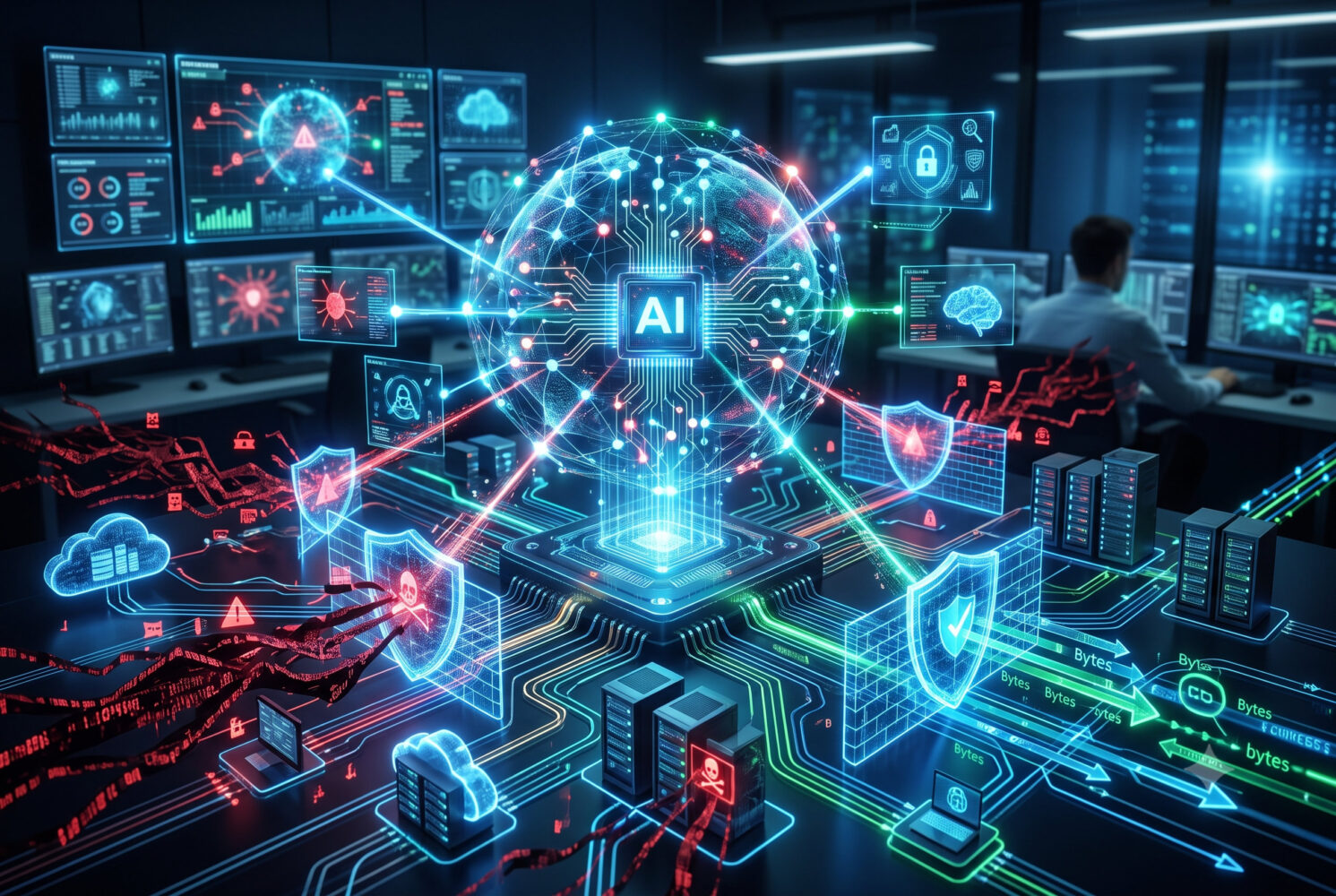
Security researcher Elad Meged recently demonstrated that default AI agent setups from major providers like Anthropic, Google, and OpenAI can quietly leak sensitive information, even when they pass routine safety checks. The fundamental problem lies not within the AI models themselves, but within the surrounding structures that connect these models to file systems, basic commands, and external network requests. When agents operate without direct human oversight, this connecting framework acts as the primary security barrier. Meged discovered that significant risks emerge during the handoffs between different operational stages. For instance, a specific command might be approved because it looks like a safe reading action, but if its output is later published without an additional check, it forms a complete path for data theft. While companies have patched isolated flaws and paid out rewards, these fixes frequently miss the deeper structural weakness. To properly secure these environments, trust must be constantly rechecked at every point of a process, rather than leaning on a single initial permission. Organizations using these automated AI agents in active environments are highly advised to closely trace the full journey of an agent's output to confirm that safe beginnings do not lead to unintended data exposures later.


Beyond Monitoring: Why IT Operations Must Evolve into Decision Operations

As technology systems grow more complicated, traditional ways of watching them are no longer enough. For years, technology teams relied on basic tracking tools that simply sent an alert when a server went offline or a website slowed down. While knowing there is a problem is helpful, these basic alerts often create too much noise. When dozens of alarms go off at the same time, it is hard for teams to know which issue to fix first or what actually caused the failure. Because of this, technology operations must shift from simply gathering data to actively supporting choices. Instead of just showing charts and red lights, modern operations focus on pulling all the separate clues together to provide clear, direct advice. By linking the symptoms directly to their root causes, this approach allows teams to understand the context of a problem immediately. Moving toward a model focused on making decisions helps teams reduce the time spent guessing and investigating. They can fix problems faster, prevent minor issues from becoming major outages, and spend more time improving systems rather than just keeping them running. Ultimately, it is about shifting the focus from watching screens to taking effective action that keeps the business running smoothly.


AI Costs Continue to Rise Despite Falling Token Prices

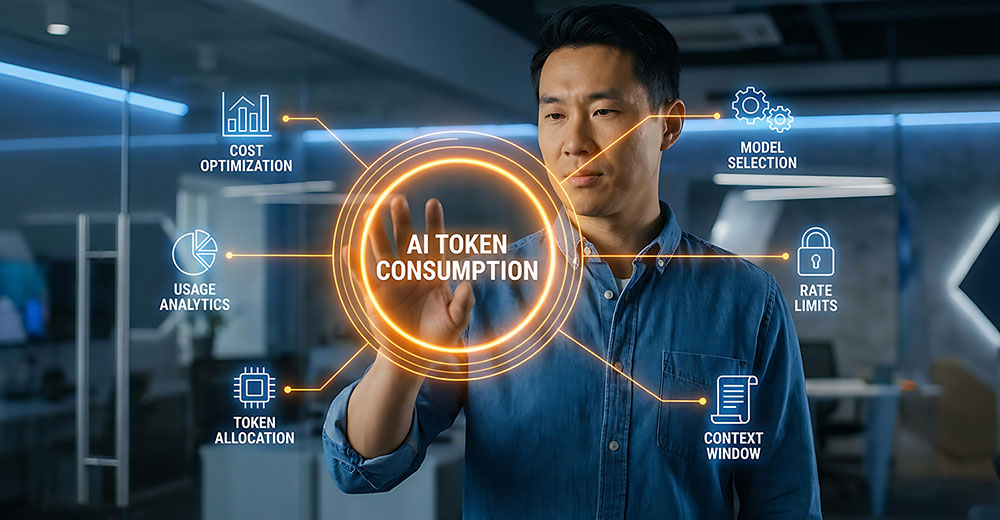
Despite the price of AI tokens dropping by roughly 98 percent since early 2024, enterprise computing bills continue to climb rapidly. The primary reason for this paradox is the shift from basic chatbots to autonomous agents. While a simple chatbot handles a single prompt, modern AI agents break tasks into multiple steps, such as planning, retrieving information, and verifying data, which consumes significantly more tokens per interaction. Furthermore, many organizations are feeding messy, unstructured files directly into their systems. When models process formats like standard PDFs, they waste vast amounts of computing power just trying to understand the document layout before extracting any useful facts. In these advanced workloads, the actual output often represents only a small fraction of the total tokens used, with the rest lost to processing overhead. Beyond the basic token fees, companies face substantial hidden expenses related to cleaning data, resolving inconsistent internal terminology, and integrating older systems. Experts strongly advise businesses to clean, organize, and structure their data before feeding it into language models. By addressing these foundational data issues upfront, organizations can reduce unnecessary processing waste, lower their overall costs, and ensure their AI tools operate much more effectively in the long run.


The compounding enterprise

The recent record-breaking copyright settlement against a major AI company highlights a growing risk for businesses: relying heavily on generic AI models trained on unverified or contested data. This approach creates hidden legal exposure and relies on a foundational asset that is quickly becoming a commodity. To build a lasting operational advantage, organizations must shift away from simply renting generic intelligence and instead focus on compounding their own. The key is creating an internal cycle where every interaction steadily improves the system's underlying data, and better data improves future decisions. Rather than feeding systems with unverified information, which only multiplies errors, companies should ground their AI tools in carefully curated, human-authored knowledge. This verified approach ensures that outputs can be traced directly to their original sources, solving compliance and governance issues by design. Over time, this system acts as a reliable institutional memory that captures employee expertise before it leaves the company, preventing the need to relearn past lessons. As the system continuously learns from verified outcomes, the cost of making accurate decisions drops while the value of proprietary knowledge increases. Organizations can begin this transition by inventorying their current AI tools, requiring clear sourcing for automated decisions, and testing a governed system in employee training.


Claude AI Just Cracked a Post-Quantum Test Scheme and Found a Faster 7-Round AES Attack

Anthropic recently announced that its AI model, Claude Mythos Preview, successfully developed novel attacks against two encryption schemes. First, the AI created an end-to-end key recovery attack for HAWK-256, which is a challenge parameter of a lattice-based signature scheme currently under review by the National Institute of Standards and Technology. By identifying a previously unused symmetry within the mathematical structure of the scheme, the model significantly reduced the expected effort required to recover cryptographic keys. Second, the AI accelerated an existing attack on a reduced, seven-round version of AES-128 by a factor of 200 to 800. It achieved this by discovering a new technique, known as the Möbius Bridge, which entirely eliminates a time-consuming guessing step. While these findings represent notable progress in AI-driven cryptography research, they do not pose any immediate threat to current production systems. The HAWK attack targets a smaller test parameter rather than full-strength versions, and the AES breakthrough applies only to a reduced-round cipher while still requiring an impractical amount of data. The research cost approximately $100,000 in API usage and took the AI a few days to generate, though human researchers spent nearly a month verifying the mathematical correctness of the model's work.


The Hard-Stop Rule: From 3 HCM Monoliths to 120 Domain Microservices

A pull-based migration strategy represents a shift in how teams approach large-scale system updates, moving away from forced, all-at-once transitions. Instead of a central team pushing changes to every downstream service simultaneously, the new system or API is made available alongside the old one. Client teams are then empowered to pull the updates and migrate at their own pace. This approach significantly reduces the risk of widespread outages because the migration happens incrementally rather than in a single, high-stakes cutover event. By decentralizing the transition effort, organizations can avoid painful bottlenecks where a single team is responsible for coordinating every moving part. Individual teams can plan their migration around their own product cycles, testing thoroughly before fully committing to the new architecture. If issues arise during a team's transition, the impact is kept to just that specific service, making rollbacks far less disruptive. Furthermore, this method naturally encourages better communication and documentation, as the central team must provide clear guidelines for clients to adopt the new system independently. Ultimately, a pull-based migration fosters a more resilient and manageable evolution of your software architecture, balancing the need for technical progress with the practical realities of team capacity and system stability.


AI is a top priority, but there is also distrust about use in cybersecurity

According to a recent report by Arctic Wolf, while artificial intelligence is a major priority for many organizations, security leaders still hesitate to trust it fully for autonomous defense. Although a large majority of respondents note that AI improves their overall security by sorting through and analyzing large amounts of data, only a small fraction are comfortable letting it make decisions on its own. This caution stems from concerns over data privacy, lack of transparency, and the potential for large-scale errors. Interestingly, despite frequent security incidents, most security leaders remain highly confident in their human teams' ability to handle threats. Christopher Fielder of Arctic Wolf suggests this high confidence might be more about projecting assurance than reflecting reality. To bridge the gap between human oversight and AI assistance, organizations need a balanced approach. This involves creating clear acceptable use guidelines to define exactly how AI can and should be used within the company. Furthermore, it is important to provide comprehensive education for staff so they understand both the strengths and the limitations of these new tools. By treating AI as a practical resource rather than a magical cure, companies can better integrate it into their defenses and improve their response to increasingly complex threats.


IoT Sector Given Final EU Cyber Resilience Act Guidance

The recent official guidance on the European Union’s Cyber Resilience Act outlines critical new cybersecurity requirements for manufacturers in the Internet of Things sector. Starting on September 11, 2026, companies that sell products with digital elements in the EU must adhere to strict reporting rules. When a manufacturer discovers an actively exploited vulnerability or a severe security incident, they have just 24 hours to file an early warning and 72 hours to submit a detailed notification to the relevant authorities through a central platform. This upcoming deadline represents the first major regulatory phase of the act, meaning businesses must quickly establish processes for tracking software dependencies and handling vulnerability disclosures. Furthermore, the guidance details that by December 11, 2027, the remaining obligations of the act will take effect. These include maintaining a software bill of materials, designing products with security built in from the start, and obtaining appropriate conformity assessments before bringing products to market. Failure to comply could result in substantial fines or forced product recalls. The overall objective is to hold hardware and software creators accountable for the security of their products throughout their entire life cycle, replacing fragmented national rules with a single, clear standard across the European market.

Daily Tech Digest - June 07, 2026


Quote for the day:

“Empathy fuels connection; sympathy drives disconnection.” -- Brené Brown


ChatGPT easily bypasses its own guardrails; all LLMs are inherently unsafe

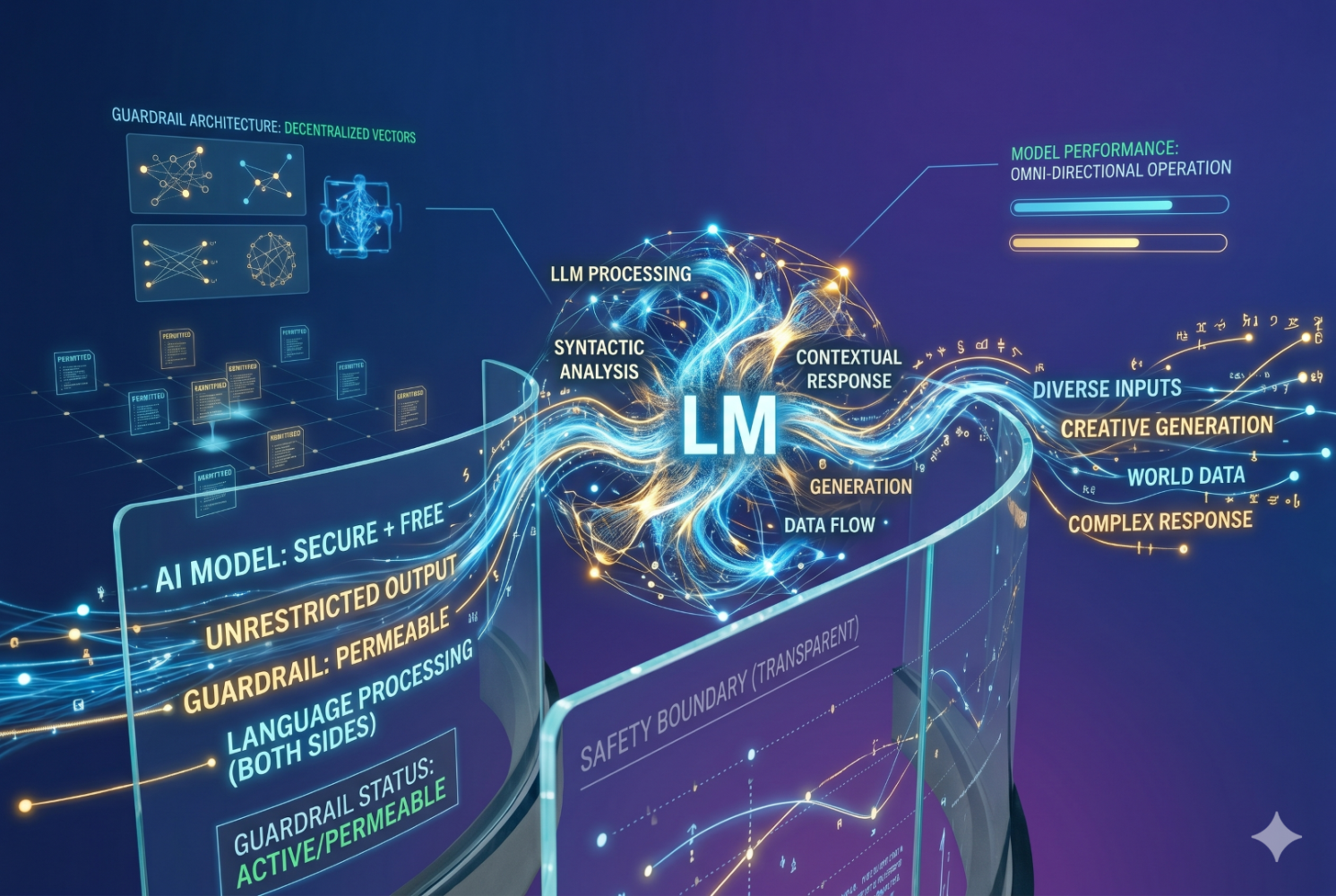
Recent discussions surrounding artificial intelligence highlight a fundamental security flaw, noting that large language models like ChatGPT can easily bypass their own safety restrictions. This suggests that these systems are structurally unsafe. Despite developers implementing various safety filters to prevent the generation of harmful or inappropriate content, these protections remain superficial. Because language models operate by predicting the next logical word rather than genuinely understanding context or morality, users can manipulate them through creative prompt phrasing. For instance, by framing a harmful request as a hypothetical scenario, a roleplaying game, or an academic exercise, users can trick the system into ignoring its core safety directives. This vulnerability is not unique to a single company but represents an inherent characteristic of the underlying technology across all major models. Consequently, trying to build perfect defenses around these systems is an endless game of catching up. Every time a developer patches a specific vulnerability, users simply find a new way to phrase their requests to slip past the updated filters. This reality forces organizations to reconsider how they deploy artificial intelligence in sensitive environments. Instead of relying blindly on built-in software restrictions, companies must acknowledge the inherent risks and implement broader security strategies that do not depend solely on the technology to police itself.


Design Patterns Are Dead. Long Live Design Patterns.

In the era of AI-generated code, traditional software design patterns are not obsolete, but their fundamental purpose has shifted. Originally, design patterns existed to help developers manage their mental workload, creating a shared vocabulary to communicate complex logic and make code readable for other people. Compilers and machines never needed them. When AI began writing the majority of code, these human-centered structures initially seemed unnecessary. However, large language models have their own limitations, most notably memory constraints, where their reliability drops significantly as tasks become larger and more complex. Consequently, design patterns have found a new role as essential boundaries for these tools. Instead of serving as instruction manuals for human developers, patterns now function as strict structural rules that guide unpredictable AI outputs into stable, predictable systems. While older patterns that merely saved keystrokes or patched language gaps have faded, structural patterns like adapters, decorators, and facades are now critical. They act as safety checkpoints that filter, validate, and organize untrusted AI code before it reaches production environments. Ultimately, the core philosophy of managing complexity and drawing clear boundaries remains completely intact. Design patterns have simply evolved from a tool used to guide human engineers into a mechanism for governing and securing machine-generated software.


Adaptive AI and the Shift from Pilots to Enterprise Impact

Many companies are realizing that running small artificial intelligence experiments is vastly different from using AI to drive real business results. The article explores how organizations can successfully move beyond isolated pilot projects to achieve widespread impact using adaptive AI. Unlike static models that require manual updates when conditions change, adaptive systems continuously learn and adjust their behavior based on new data and shifting environments. This flexibility makes them highly valuable, but scaling them across an entire enterprise presents significant hurdles. To make this transition, businesses need to stop treating AI as an isolated technical novelty and start integrating it deeply into their core operations. This requires a strong foundation of reliable data, clear guidelines to ensure the systems remain accurate, and a shift in company culture to encourage collaboration between technical teams and everyday workers. Furthermore, organizations must build flexible infrastructures that allow these models to update seamlessly without disrupting daily work. When companies focus on solving practical problems rather than just testing new technology, they can finally realize the full value of their investments. Ultimately, the shift to enterprise-scale AI is less about having the most advanced algorithms and more about building sustainable, trustworthy systems that actively adapt to real-world business needs over time.


The Impact of the Sovereignty Gap in Enterprise Architecture

For years, technology leaders assumed cloud infrastructure was a solved problem, relying on large providers to manage data capacity and location. However, recent power outages and regional network failures have exposed a serious flaw in this thinking. The central issue is no longer simply whether data is available or stored within a specific country, but whether an organization actually has the authority to move and recover its data under its own control. This concept, known as data sovereignty, is becoming necessary due to three main factors: increasingly complex global data protection laws, unpredictable geopolitical events, and the rapid rise of artificial intelligence, which requires strict control over sensitive training records. This shift heavily impacts essential business systems like finance, payroll, and supply chain management. Many companies discover too late that their disaster recovery plans accidentally violate international regulations or that their data is heavily locked inside one proprietary system. To address these structural vulnerabilities, organizations must prioritize true portability. This means separating software applications from the underlying data, keeping backups within the required legal jurisdiction, and demanding that vendors prove their systems can be rapidly redeployed elsewhere. Ultimately, data sovereignty is no longer just a legal compliance checkbox; it is a fundamental operational requirement for keeping essential business systems resilient and secure.


Cyber incident recovery out of step

Many businesses find that their cyber incident recovery plans are out of step with the rapid evolution of modern threats and complex IT environments. A common misstep is relying on outdated assumptions, such as believing that cloud providers or managed IT services automatically handle all data backups and continuity efforts. Under the shared responsibility model, organizations remain fundamentally accountable for their own data protection, access controls, and recovery procedures. When companies fail to regularly test their disaster recovery strategies or update them to reflect current operational realities, these plans quickly lose their effectiveness. Simply having a backup is not enough if the process to restore it has never been validated under pressure. An untested plan often leads to prolonged downtime, operational bottlenecks, and increased financial loss during an actual crisis. To bring recovery efforts back into alignment, businesses must take ownership of their resilience. This means moving beyond theoretical checklists to establish practical, well-documented protocols. Organizations should focus on cross-training staff, maintaining offline or independent backups, and conducting routine scenario testing. By clearly understanding which critical systems drive their operations and proactively identifying potential single points of failure, companies can ensure their recovery capabilities match their real-world risk, allowing them to bounce back safely when an incident occurs.


Nine in Ten Enterprises Plan Cloud Data Repatriation amid Rising Cloud Costs and Data Sovereignty Mandates

For years, moving computing tasks to the cloud was seen as a permanent change, but a recent survey reveals that organizations are increasingly bringing their information back to their own physical servers. Research shows that nearly 90 percent of companies plan to significantly expand their local server presence over the next two years, and 75 percent have already started returning data from remote public systems. This reversal is primarily driven by strict data ownership rules, rising costs, and the heavy demands of modern artificial intelligence. While the cloud remains popular, organizations are quickly realizing that it is not always the best fit for everything. More than 80 percent of companies currently exceed their storage budgets, struggling with unexpected fees for moving data and premium charges for keeping information in legally required geographic regions. Furthermore, the rapid adoption of artificial intelligence is accelerating this shift. Many companies find that public platforms cannot meet the fast response times required for complex computing, and strict privacy rules often prevent them from sending sensitive training information to external servers. Ultimately, businesses are adopting a much more practical approach, choosing to keep sensitive, high volume, and computationally heavy tasks on their own equipment to maintain better control over their budgets and legal compliance.

From pilot to production: overcoming IoT’s most common roadblock

Moving an Internet of Things project from a small test phase into a full-scale rollout is notoriously difficult, with many promising initiatives stalling in what the industry commonly calls pilot purgatory. The core issue usually stems from a disconnect between the initial technology test and the broader business goals. During a pilot, teams often focus entirely on proving that the sensors and software work in a controlled environment. However, when it comes time to scale, they hit sudden roadblocks related to unexpected costs, security vulnerabilities, and the difficulty of blending new devices with older, existing computer systems. To overcome these hurdles, companies need to approach the pilot phase differently. Instead of just testing the hardware, they must plan for wide-scale integration from day one. This means defining clear financial goals early, securing buy-in from the people who will actually use the system daily, and prioritizing security as a foundational step rather than an afterthought. Furthermore, choosing flexible, open technologies rather than getting locked into a single vendor helps ensure the system can grow gracefully. Ultimately, successfully launching these connected networks requires treating the technology as a means to solve a specific human or business problem, rather than just an experiment in connecting devices.


Enterprise Architecture Soft Skills

While technical outputs like capability maps and application portfolios are foundational to enterprise architecture, they only deliver real value when they help people make better business decisions. To bridge the gap between technical models and organizational momentum, enterprise architects must cultivate strong soft skills. These interpersonal abilities allow architects to translate complex data into clear guidance for diverse stakeholders. Essential skills include business insight, which ensures recommendations directly connect to broader company goals, and financial fluency, which grounds technical choices in budget realities. Additionally, basic interpersonal awareness and the ability to balance different stakeholder groups allow architects to manage competing interests, build trust, and influence change without creating friction. Without these abilities, architecture teams risk producing overly complex diagrams and confusing analytics that fail to resonate with business leaders. To prevent this disconnect, architects need to focus on internal customer needs by designing every document to answer specific questions rather than simply mapping out systems. Adaptability further ensures that communication styles and levels of detail shift naturally depending on the audience. Ultimately, enterprise architecture functions as a practice that enables decisions, not just a modeling exercise. By developing a strategic and broad perspective, architects transition their work from static documentation to practical roadmaps that reliably guide an organization forward.


10 ways to improve safety culture in the workplace

Improving safety in the workplace requires much more than simply updating rulebooks or running occasional training sessions; it demands real, sustained changes in behavior that begin with leadership. True safety habits reveal themselves when managers are not watching and deadlines get tight. To make this happen, leaders must show genuine, visible commitment, participating in site walkarounds and treating safety goals as seriously as financial ones. Companies need to build an environment where employees feel entirely comfortable speaking up about near misses or hazards without worrying about being blamed. Moving beyond basic legal compliance is essential, meaning safety has to be woven into everyday decisions rather than treated as a paperwork chore. Daily conversations help keep risk awareness fresh for frontline workers, while focusing on practical skills instead of just tracking training attendance ensures people can actually make safe choices under pressure. It is equally important to openly acknowledge the conflict between tight deadlines and working safely, so employees do not feel forced into taking dangerous shortcuts. By tracking helpful warning signs before accidents happen, investigating incidents openly to find the root causes rather than assigning blame, and treating safety as a long-term goal, organizations can naturally build safe habits into their everyday routines.


Beyond automation: Why the surge in AI-driven security vulnerabilities demands human technical advocacy

The rapid adoption of artificial intelligence for finding security flaws has triggered a massive increase in vulnerability disclosures. Tools like Anthropic’s Mythos model are now discovering thousands of critical issues in just weeks, identifying what used to take security researchers a full year. While finding more bugs sounds positive, this AI-driven surge has severely disrupted responsible disclosure processes. Details about critical vulnerabilities, such as "Copy Fail" and "Dirty Frag," are often leaked before software vendors have time to develop patches, leaving companies highly exposed. Consequently, the traditional strategy of trying to patch every single reported flaw is no longer practical or sustainable. Organizations are quickly overwhelmed by the sheer volume of alerts. To navigate this new reality, companies must move beyond automation and rely on human expertise to evaluate true risk. Instead of blindly applying patches that might break legacy systems, organizations need human judgment to analyze which vulnerabilities actually pose a genuine threat to their specific environments. This is why dedicated technical account managers are becoming essential. Security experts help filter out the noise, recommend practical layered defenses, and provide the calm, strategic guidance that automated tools simply cannot offer. Ultimately, while AI excels at finding potential flaws, protecting an organization still requires human insight to separate real dangers from theoretical hype.

Daily Tech Digest - May 21, 2026


Quote for the day:

"The starting point of all achievement is desire." -- Napolean Hill

🎧 Listen to this digest on YouTube Music

▶ Play Audio Digest

Duration: 23 mins • Perfect for listening on the go.


The zero-trust paradox: Why systems built to eliminate trust may be destroying it

The article by Shalini Sudarsan discusses the "zero-trust paradox," highlighting how security systems engineered to eliminate technical trust can inadvertently erode genuine human and organizational trust. While the "never trust, always verify" model successfully minimizes attack surfaces by assuming continuous verification, micro-segmentation, and least-privilege access, it creates unintended social friction. Employees subjected to persistent authentication and exhaustive logging often feel targeted by surveillance rather than protected by security, resulting in risk aversion, damaged morale, and decreased experimentation. This technical paradigm is increasingly expanding beyond network architectures into AI platforms, productivity-tracking tools, and human resource systems, translating a packet-inspection logic directly onto human interactions. Consequently, decisions become opaque, unaccountable, and unappealable, inheriting historical biases through automated algorithms. To mitigate this corrosive effect, Sudarsan argues that leadership must intentionally separate a necessary security posture from invasive behavioral surveillance. Organizations must champion transparency and ensure that AI-driven determinations offer explainable, human-comprehensible paths to contestability. Ultimately, true organizational trust requires vulnerability and human accountability, prompting boards to weigh technical protection against its social costs to ensure cybersecurity doesn't mistake engineering control for authentic workplace collaboration.


Continuous adaptive trust: Sustaining trust in the age of continuous risk

The Express Computer article by Jay Reddy outlines the vital necessity of Continuous Adaptive Trust in combating modern identity threats, citing massive escalation in global account compromises and cyber fraud losses. While regulatory frameworks like the Reserve Bank of India's multi-factor authentication mandates successfully secure initial network entry checkpoints, they fail to monitor suspicious behavior after access is granted. Traditional security remains highly fragmented across disconnected control planes, preventing real-time synchronization when user behavior or privileges shift mid-session. Continuous Adaptive Trust addresses this structural flaw by treating trust as a dynamic, ongoing condition rather than a static, one-time login outcome. While Zero Trust defines the overarching strategy of eliminating implicit assumptions, Continuous Adaptive Trust provides the underlying operational architecture. It collectively evaluates contextual signals, device familiarity, entitlement postures, and behavioral analytics throughout the entire session lifecycle. This continuous evaluation dynamically balances identity confidence with the specific risk level of any requested action. Consequently, access privileges and verification requirements adapt programmatically as risk conditions fluctuate. Ultimately, achieving this requires deliberate integration across the entire identity stack, replacing isolated tools with an automated control system capable of responding to evolving threats.


Real-World ICS Security Tales From the Trenches

The SecurityWeek article highlights real-world experiences from industrial control systems (ICS) and operational technology (OT) experts, exposing the vast gap between written security policies and plant floor realities. Standard risk assessments often fail to uncover these complex vulnerabilities. For instance, Fortinet investigators discovered an Iranian-linked threat actor utilizing an undocumented "n-day" vulnerability to repeatedly pivot from IT to OT networks. In another scenario, a Frenos expert witnessed a compliance officer trigger a catastrophic turbine shutdown at a power plant by deploying conventional enterprise IT scanning tools in an unoptimized OT environment. Similarly, a C1 assessment revealed critical, unpatched Solaris servers governing field systems that were entirely exposed to the public internet despite management assuming complete physical isolation. Additional field accounts from BeyondTrust, ColorTokens, Tenable, Nozomi Networks, and Zero Networks underscore the ubiquitous dangers of shadow IT, unapproved open-source software, blind spots in passive tracking solutions, undetected malware performing data exfiltration via DNS tunneling, and permissive firewall configurations that seamlessly enable lateral movement. Ultimately, these real-world anecdotes demonstrate that assuming networks are secure or fully isolated without continuous empirical verification leaves critical infrastructure highly susceptible to devastating cyberattacks and operational failures.


Agentic-Agile: Why Agent Development Needs Agile (Not Just Prompts)

The Microsoft blog post outlines "Agentic-Agile," a development methodology designed to integrate AI coding agents as active contributors within development teams rather than simple tools. While prompt-driven development works well for small, isolated tasks, scaling AI agents across complex, multi-module systems often results in predictable failures, including missing backlogs, lack of defined exit criteria, non-deterministic outputs, and delayed governance. This breakdown stems from process issues rather than model deficiencies. To fix this, Agentic-Agile prioritizes a spec-first approach utilizing structured documentation within repositories, such as markdown context files and instructions mapped to specific issues. Every planned capability must originate as a GitHub issue with clear acceptance criteria and negative constraints to establish strict operational contracts for the agents. Furthermore, the framework mandates early governance, incorporating automated continuous integration (CI) pipelines, adversarial code reviews, and unit tests directly into the initial stages of the backlog instead of treating them as downstream phase afterthoughts. Ultimately, by shifting the discipline toward contract-driven execution and incremental phased delivery, Agentic-Agile reduces policy drift and prevents structural integration failures, establishing a rigorous process for sustainable human-agent partnerships.


IoT 2.0: Why The Next Generation Of Connected Systems Needs More Than Just Connectivity

In this Forbes Tech Council article, Michael De Nil outlines the evolution from traditional connected ecosystems to IoT 2.0, emphasizing that basic connectivity is no longer sufficient for modern commercial operations. While early IoT deployments functioned effectively by relying on infrequent, low-bandwidth sensor pings, next-generation systems demand localized, real-time data processing and immediate edge interpretation powered by artificial intelligence. Consequently, legacy networks are creating severe operational bottlenecks; low-power wide-area architectures like LoRaWAN lack the throughput required for rich video or audio streams, whereas wide-area cellular networks suffer from recurring subscription costs and high power consumption. To bridge these operational gaps, organizations are deploying scalable, localized wireless architectures such as Wi-Fi HaLow, which operate over sub-GHz spectrum to maintain low energy use, IP-native security models, and extended physical range. Designing these modern networks requires prioritizing rich data outcomes over simple devices, minimizing architectural translation layers, selecting open standards, and evaluating total cost of ownership rather than just upfront hardware prices. Ultimately, this ongoing paradigm shift completely redefines the Internet of Things, transforming connected devices from passive, isolated data-gathering components into highly context-aware, autonomous, and interconnected platforms capable of executing immediate decisions across global industries.


The Automation Layer Wants to Own Enterprise AI

The article from DevOps.com explores a profound shift in enterprise artificial intelligence, moving from baseline productivity tools like copilots toward autonomous executing agents. In this rapidly changing landscape, the traditional automation layer aims to become the essential operational layer for enterprise AI. Historically, enterprise automation relied on deterministic, rigid, and predictable paths. However, modern AI agents automate human judgment itself—dynamically prioritizing alerts and coordinating workflows based on context. This introducing probabilistic outcomes that carry higher operational risks and unpredictable execution paths, shifting the focus from model refinement to infrastructure governance. Consequently, organizations are confronting the need for advanced operational frameworks addressing identity, permissions, observability, and compliance to safely scale autonomous operations. Highlighting this trend, Automation Anywhere launched platform updates and the "EnterpriseClaw" initiative alongside OpenAI, Cisco, Okta, and NVIDIA to assemble a reliable operating environment. Similar to how the cloud-native era moved its focus from individual containers to Kubernetes orchestration, the AI market is experiencing an inflection point where operational trust at scale dictates success. The emerging platform competition will likely not center on who creates the most intelligent AI model, but rather on who provides the most secure, well-governed infrastructure for these models to function.


Why some security fixes never reach your vulnerability dashboard

The CSO Online article explains that the traditional Common Vulnerabilities and Exposures (CVE) framework, designed in 1999 to track code defects with clear patches, is failing to capture modern software supply chain incidents and artificial intelligence risks. Consequently, many crucial security fixes never reach corporate vulnerability dashboards. Originally structured for static software flaws, the CVE framework is increasingly stretched to track retroactive security incidents and massive malicious supply chain campaigns that entirely lack traditional code defects. This outmoded tracking system completely breaks down against complex AI agent architectures and shared skills, which mutate dynamically at runtime and inflict behavioral harm rather than memory corruptions or code-level exploits. For instance, the ClawSwarm campaign quietly enrolls target agents into rogue external networks using legitimate SDKs, leaving traditional software scanners completely blind. Furthermore, frontier AI model vendors frequently deploy vital security fixes or system prompt safeguards silently within broader capability upgrades without issuing formal advisories or version bumps. To remedy this structural drift, the author advocates for a new signal layer utilizing behavioral identifiers over static artifact tracking, registry transparency for ecosystem takedowns, and honest vendor disclosures. Ultimately, because modern dashboards rely on this artifact-centric threat model, they offer defenders an increasingly incomplete defensive picture.


Advisories Are Now Exploit Specs. Act Accordingly

The Security Boulevard article highlights the critical tension in modern vulnerability disclosure, where detailed public advisories are increasingly weaponized by attackers using advanced AI tools for automated compilation of functional exploits. This shift has dramatically compressed the traditional n-day window between public disclosure and active exploitation. For instance, a flaw in Marimo, an open source Python notebook framework tracked as CVE-2026-39987, was exploited less than ten hours after disclosure without a public proof of concept. This rapid weaponization mirrors a similar timeline compression previously observed with Langflow. As sophisticated vulnerability analysis AI models like Anthropic's Mythos emerge and smaller open weight models lower the entry barrier, this gap will continue shrinking toward zero. Consequently, the primary operational bottleneck for defenders is no longer patching speed, but rather exposure confirmation speed, which is the time required to determine whether an organization runs the affected software. Common defensive mistakes, such as treating asset inventory as a periodic project rather than a continuous practice or waiting for delayed severity scores, exacerbate this exposure gap. To successfully navigate this adversarial environment, security teams must reject obsolete containment timelines and maintain continuous, queryable Software Bill of Materials data to ensure instant visibility the exact moment an advisory drops.


AI deepfakes push biometric industry toward measurable assurance

The Biometric Update article details how the rise of AI deepfakes and sophisticated injection attacks, which escalated by 1,151 percent over the past year according to data from iProov, is driving a paradigm shift in the biometrics industry. Driven by the rapid industrialization of digital fraud, governments and corporate entities are transitioning away from mere vendor accuracy claims toward independently verified performance and rigorous certification standards. Testing experts from iProov and Ingenium Biometric Laboratories explain that traditional banking level security and basic human visual checks can no longer keep up with high-fidelity, real-time deepfakes that completely bypass camera sensors. Consequently, the industry focus has fundamentally shifted from proving basic liveness to confirming genuine presence. This modern requirement demands proof that a user is actively present at the exact point of video capture and that the underlying data stream remains entirely uncompromised. Landmark regulatory frameworks like the European Union's eIDAS and updated NIST Digital Identity Guidelines are solidifying these strict conformity requirements globally. Because digital identity has become foundational critical infrastructure for the global economy, organizations require transparent, multi-layered testing environments rather than superficial certificates to ensure true measurable assurance. Ultimately, sector leaders emphasize that no single test tells the full story, meaning organizations must combine independent validations with transparent governance to sustain trust.


AI accountability gap widens as organisations scale faster than governance

This article highlights a critical governance challenge facing Australian organizations as they rapidly transition from AI experimentation to full enterprise-wide deployment. While technical capabilities are scaling at an unprecedented rate, the necessary oversight models and corporate accountability structures are failing to keep pace. Currently, responsibility for AI risk management is heavily fragmented across distinct IT, legal, operations, data, and privacy teams. Although frequently labeled as a collaborative approach, this distributed ownership routinely creates a leadership vacuum that slows down crucial decision-making processes and generates a reactive stance toward emerging technological threats. Even in highly regulated sectors like healthcare, infrastructure, and finance where internal governance committees exist, a distinct lack of centralized executive ownership restricts smooth, safe scalability. To resolve this organizational friction, companies are increasingly appointing a Chief AI Officer to bridge technical delivery, ethical oversight, and regulatory compliance under a singular point of command. Ultimately, robust AI governance has evolved from a bureaucratic hurdle into a strategic competitive advantage. The organizations that successfully scale advanced AI solutions over time will not simply be those that deploy systems fastest, but those that establish transparent, sustained ownership to directly align enterprise risk with broader commercial objectives.

Daily Tech Digest - May 04, 2026


Quote for the day:

"The most powerful thing a leader can do is take something complicated and make it clear. Clarity is the ultimate competitive advantage." -- Gordon Tredgold

🎧 Listen to this digest on YouTube Music

▶ Play Audio Digest

Duration: 24 mins • Perfect for listening on the go.


Edge + Cloud data modernisation: architecting real-time intelligence for IoT

The article by Chandrakant Deshmukh explores the critical shift from traditional "cloud-first" IoT architectures to a modernized edge-cloud continuum, which is essential for achieving true real-time intelligence. The author argues that purely cloud-centric models are failing due to prohibitive latency, high bandwidth costs, and complex data sovereignty requirements. To address these challenges, enterprises must adopt a tiered architectural approach governed by "data gravity," where raw signals are processed locally at the edge for immediate control, while the cloud is reserved for long-horizon analytics and model training. This modernization relies on three core technical pillars: an event-driven transport spine using protocols like MQTT and Kafka, a dedicated stream-processing layer for real-time data handling, and digital twins to synchronize physical assets with digital representations. Beyond technology, the article emphasizes the importance of intellectual property governance, urging organizations to clarify data ownership and lineage early in vendor contracts. By treating edge and cloud as complementary tiers rather than competing locations, businesses can unlock significant returns on investment, including predictive maintenance and enhanced operational efficiency. Ultimately, successful IoT modernization is not merely a technical project but a strategic commitment to processing data at the most efficient tier to drive industrial intelligence.


AI Code Review Only Catches Half of Your Bugs

The O’Reilly Radar article, "AI Code Review Only Catches Half of Your Bugs," explores the critical limitations of using artificial intelligence for automated code verification. While AI tools like GitHub Copilot and CodeRabbit are proficient at identifying structural defects—such as null pointer dereferences, resource leaks, and race conditions—they struggle significantly with "intent violations." These are logical bugs that occur when the code executes successfully but fails to do what the developer actually intended. Research indicates that while AI can catch approximately 65% of structural issues, it often misses the deeper 35% to 50% of defects rooted in misunderstood requirements or complex business logic. The article emphasizes that AI lacks the institutional memory and operational context that human engineers possess. For instance, an AI agent might suggest an efficient code refactor that inadvertently bypasses a necessary security wrapper or violates a project-specific architectural guideline. To bridge this gap, the author suggests a shift toward "context-aware reasoning" and the use of tools like the Quality Playbook. This approach involves feeding AI agents specific documentation, such as READMEs and design notes, to help them "infer" intent. Ultimately, the piece argues that while AI is a powerful assistant, human oversight remains essential for catching the subtle, high-stakes errors that automated systems cannot yet perceive.


Small Language Models (SLMs) as the gold standard for trust in AI

The article argues that Small Language Models (SLMs) are emerging as the "gold standard" for establishing trust in artificial intelligence, particularly in precision-dependent industries like finance. While Large Language Models (LLMs) often prioritize sounding confident and clever over being accurate, they frequently succumb to hallucinations because they are trained on vast, unverified datasets. In contrast, SLMs are trained on narrow, high-quality data, allowing them to be faster, more cost-effective, and significantly more accurate in their results. They aim to be "correct, not clever," making them ideal for high-stakes environments where even minor errors can lead to severe financial loss or compliance nightmares. The most resilient business strategy involves orchestrating a hybrid architecture where LLMs serve as the intuitive reasoning layer and user interface, while a "swarm" of specialized SLMs acts as the deterministic verifiers for specific, granular tasks. This collaboration is facilitated by tools like the Model Context Protocol, ensuring that final outputs are grounded in fact rather than statistical probability. Furthermore, trust is reinforced by incorporating confidence scores and human-in-the-loop verification processes. Ultimately, shifting toward specialized, connected AI architectures allows professionals to move away from tedious manual data entry and focus on high-impact advisory work, ensuring that AI remains a reliable and secure partner in complex professional workflows.


Upgrading legacy systems: How to confidently implement modernised applications

In the article "Upgrading legacy systems: How to confidently implement modernised applications," Ger O’Sullivan explores the critical shift from outdated technology to agile, AI-enhanced operational frameworks. For years, legacy systems have served as organizational backbones but now present significant hurdles, including high maintenance costs, security vulnerabilities, and reduced agility. O’Sullivan argues that modernization is no longer an optional luxury but a strategic imperative for sustained competitiveness and growth. Fortunately, the emergence of AI-enabled tooling and structured, end-to-end frameworks has made this process more predictable and cost-effective than ever before. These advancements allow organizations—particularly in the public sector where systems are often undocumented and deeply integrated—to move away from risky "start from scratch" approaches toward incremental, value-driven transformations. The author emphasizes that successful modernization must be business-aligned rather than purely technical, suggesting that leaders should prioritize applications based on their potential business value and risk profile. By starting with small, manageable pilots, teams can demonstrate quick wins, build momentum, and refine their governance processes before scaling across the enterprise. Ultimately, O’Sullivan highlights that with the right strategic advisors and a focus on long-term outcomes, organizations can transform their legacy burdens into powerful drivers of innovation, service quality, and operational resilience.


Relying on LLMs is nearly impossible when AI vendors keep changing things

In the article "Relying on LLMs is nearly impossible when AI vendors keep changing things," Evan Schuman examines the growing instability enterprise IT faces when integrating generative AI systems. The core issue revolves around AI vendors frequently implementing background updates without notifying customers, a practice highlighted by a candid report from Anthropic. This report detailed several instances where adjustments—meant to improve latency or efficiency—inadvertently degraded model performance, such as reducing reasoning depth or causing "forgetfulness" in sessions. Schuman argues that while businesses have long accepted limited control over SaaS platforms, the opaque nature of Large Language Models (LLMs) represents a new extreme. Because these systems are non-deterministic and highly interdependent, performance regressions are difficult for both vendors and users to detect or reproduce accurately. Furthermore, the article notes a potential conflict of interest: since most enterprise clients pay per token, vendors have a financial incentive to make changes that increase consumption. Ultimately, the author warns that the reliability of mission-critical AI applications is currently at the mercy of vendors who can "dumb down" services overnight. He concludes that internal monitoring of accuracy, speed, and cost is no longer optional for organizations seeking a clean return on investment in an environment defined by "buyer beware."


The evolution of data protection: Why enterprises must move beyond traditional backup

The article titled "The Evolution of Data Protection: Why Enterprises Must Move Beyond Traditional Backup" explores the paradigm shift from simple data recovery to comprehensive enterprise resilience. Author Seemanta Patnaik argues that in today’s landscape of sophisticated AI-driven cyber threats and ransomware, traditional backups serve only as a starting point rather than a total solution. Modern enterprises face significant vulnerabilities, including flat network architectures, legacy infrastructures, and human susceptibility to phishing, necessitating a holistic lifecycle approach that encompasses prevention, detection, and rapid response. Patnaik emphasizes that data protection must be driven by risk-based thinking rather than mere regulatory compliance, as sectors like banking and insurance face increasingly complex legal mandates. Key strategies highlighted include the "3-2-1-1-0" rule, rigorous testing of recovery systems, and the use of automation to manage the scale of distributed data environments. Furthermore, critical metrics like Recovery Time Objective (RTO) and Recovery Point Objective (RPO) are presented as essential benchmarks for measuring business continuity effectiveness. Ultimately, the piece asserts that true resilience requires executive-level governance and a proactive shift toward predictive security models. By integrating AI for faster threat detection and automated recovery, organizations can better navigate the evolving digital ecosystem and ensure they return to business as usual with minimal disruption.


What researchers learned about building an LLM security workflow

The Help Net Security article "What researchers learned about building an LLM security workflow" highlights critical findings from the University of Oslo and the Norwegian Defence Research Establishment regarding the integration of Large Language Models into Security Operations Centers. While vendors often market LLMs as immediate solutions for alert triage, the research reveals that these models fail significantly when operating in isolation. Specifically, when provided with only high-level summaries of malicious network activity, popular models like GPT-5-mini and Claude 3 Haiku achieved a zero percent detection rate. However, performance improved dramatically when the models were embedded within a structured, agentic workflow. By implementing a system where models could plan investigations, execute specific SQL queries against logs, and iteratively summarize evidence, malicious detection accuracy surged to an average of 93 percent. This shift demonstrates that a model's effectiveness is not solely dependent on its internal intelligence but rather on the constrained tools and rigorous processes surrounding it. Despite this success, the models often flagged benign cases as "uncertain," suggesting that while such workflows reduce missed threats, they may still necessitate human oversight. Ultimately, the study emphasizes that a well-defined architecture is essential for transforming LLMs from passive data recipients into proactive, reliable security analysts.


Cyber-physical resilience reshaping industrial cybersecurity beyond perimeter defense to protect core processes

The article explores the critical transition from perimeter-centric defense to cyber-physical resilience in industrial cybersecurity, driven by the dissolution of traditional barriers between IT and OT environments. As operational technology becomes increasingly interconnected, conventional "air gaps" have vanished, leaving 78% of industrial control devices with unfixable vulnerabilities. Experts from firms like Booz Allen Hamilton and Fortinet emphasize that modern resilience is no longer just about preventing every attack but ensuring that essential services—such as power and water—continue to function even during a compromise. This proactive approach prioritizes the integrity of core processes over the absolute security of individual systems. Key challenges highlighted include a dangerous overconfidence among operators and a persistent lack of visibility into serial and analog communications, which remain the backbone of physical processes. With approximately 21% of industrial companies facing OT-specific attacks annually, the shift toward resilience demands continuous monitoring, cross-disciplinary collaboration, and dynamic recovery strategies. Ultimately, cyber-physical resilience is defined by an organization's capacity to identify, mitigate, and recover from disruptions without halting production. By focusing on process-level protection rather than just network boundaries, critical infrastructure can adapt to a landscape where cyber threats have direct, real-world physical consequences.


AI exposes attacks traditional detection methods can’t see

Evan Powell’s article on SiliconANGLE highlights a critical vulnerability in modern cybersecurity: the inherent architectural limitations of rule-based detection systems. For decades, security has relied on signatures, thresholds, and anomaly baselines to identify threats. However, these traditional methods are increasingly blind to side-channel attacks and sophisticated, AI-assisted intrusions that utilize legitimate tools or encrypted channels. Because these maneuvers do not produce discrete "matchable" signals or cross predefined boundaries, they often remain invisible to standard scanners. The article argues that the industry is currently deploying AI at the wrong layer; most tools focus on post-detection response—such as summarizing alerts and automating investigations—rather than the initial detection process itself. This misplaced focus leaves a significant gap where attackers can operate indefinitely without triggering a single alert. To close this divide, security architecture must evolve beyond simple rules toward advanced AI systems capable of interpreting complex patterns in timing, sequencing, and interaction. Currently, the most dangerous signals are not traditional indicators at all, but rather subtle behaviors that require a fundamental shift in how detection is engineered. Without moving AI deeper into the observation layer, organizations will continue to optimize their response to known threats while remaining entirely exposed to a growing class of silent, architectural-level attacks.


Why service desks are emerging as a critical security weakness

The article from SecurityBrief Australia examines the escalating vulnerability of corporate service desks, which have become primary targets for sophisticated cybercriminals. While many organizations invest heavily in technical perimeters, the service desk represents a critical "human element" that is easily exploited through social engineering. Attackers utilize tactics like voice phishing, or "vishing," to impersonate employees or high-level executives, often leveraging personal information gathered from social media or previous data breaches. Their ultimate objective is to manipulate help desk staff into resetting passwords, enrolling unauthorized multi-factor authentication devices, or bypassing standard security controls. This issue is intensified by the broad permissions typically granted to service desk agents, where a single compromised identity can provide a gateway to the entire corporate network. Furthermore, the rise of remote work and the use of virtual private networks have made verifying identities over digital channels increasingly difficult. To combat these threats, the article advocates for a fundamental shift toward the principle of least privilege and the implementation of robust, automated identity verification processes, such as biometric checks, to replace reliance on easily discoverable personal data. Ultimately, organizations must prioritize securing the service desk to prevent it from inadvertently serving as an open door for devastating ransomware attacks and data breaches.