Showing posts with label API. Show all posts

Daily Tech Digest - May 09, 2026


Quote for the day:

“Leaders become great not because of their power, but because of their ability to empower others.” -- John C. Maxwell

🎧 Listen to this digest on YouTube Music

▶ Play Audio Digest

Duration: 22 mins • Perfect for listening on the go.


API-First architecture: The backbone of modern enterprise innovation

Pankaj Tripathi explains that API-first architecture has evolved from a technical choice into a strategic leadership mandate essential for digital survival and modern enterprise innovation. By prioritizing Application Programming Interfaces as the core of strategic ecosystems, organizations can achieve greater agility, seamless scaling, and faster time-to-market metrics. This methodology effectively decouples front-end user experiences from back-end logic, fostering a modular environment that allows for the integration of sophisticated capabilities without the heavy burden of legacy technical debt. In sectors like banking, travel, and retail, this approach facilitates interoperability and unified digital experiences, as evidenced by the massive success of India’s UPI and Open Government Data platforms. Furthermore, API-first design is a critical prerequisite for deploying advanced artificial intelligence at scale, as it eliminates data silos and ensures that AI agents can consume the continuous flow of clean data required for real-time insights. This architecture also supports operational resilience, allowing individual microservices to scale independently during demand surges without stressing the broader system. Transitioning to this model requires a cultural shift toward managing product-centric digital ecosystems that leverage third-party integrations as growth multipliers. Ultimately, embracing an API-first framework provides the structural integrity required to dismantle internal barriers and deliver the exceptional, connected experiences that define modern market leadership in an increasingly complex global economy.


5,000 vibe-coded apps just proved shadow AI is the new S3 bucket crisis

The VentureBeat article details how "vibe coding"—the practice of using natural language AI prompts to build applications—has sparked a significant security crisis, drawing parallels to the notorious S3 bucket exposures of a decade ago. Research by RedAccess and Escape.tech revealed that over 5,000 AI-generated applications are currently exposing sensitive corporate and personal data, including medical records and financial details. This vulnerability stems from popular platforms like Lovable and Replit having public-by-default privacy settings, which allow search engines to index internal tools created by non-technical "citizen developers" without proper access controls. Gartner predicts that by 2028, these prompt-to-app approaches will increase software defects by 2,500%, primarily through code that is syntactically correct but contextually flawed. Shadow AI is identified as a massive financial liability, with IBM reporting that breaches linked to unsanctioned AI tools cost organizations an average of $4.63 million per incident. To combat these risks, the article outlines a comprehensive five-domain CISO audit framework focusing on discovery, authentication, code scanning, data loss prevention, and governance. This strategy emphasizes moving beyond mere gatekeeping to implementing automated inventorying and strict identity management. CISOs are urged to adopt a structured remediation plan to secure their AI environments, ensuring that rapid innovation does not compromise fundamental security hygiene.


How Goldman Sachs, JPMorgan, AIG Are Actually Deploying AI

The article details insights from leaders at Goldman Sachs, JPMorgan Chase, and AIG regarding their strategic deployment of artificial intelligence, particularly following Anthropic’s launch of specialized financial agents. At an event in New York, Goldman Sachs CIO Marco Argenti outlined a three-wave adoption strategy focusing on engineering productivity, operational redesign, and enhanced risk decision-making. He notably described the shift as a transition from purchasing infrastructure to "buying intelligence." JPMorgan Chase CIO Lori Beer stressed that the primary hurdle is not the technology itself but an organization’s capacity to absorb and integrate these tools effectively. CEO Jamie Dimon highlighted Claude’s efficiency, noting it completed accurate research tasks in twenty minutes that typically require forty analyst hours. Meanwhile, AIG CEO Peter Zaffino revealed that AI achieved eighty-eight percent accuracy in insurance claims processing, emphasizing its role in supporting human expertise rather than replacing it. The discussion coincided with Anthropic’s debut of ten pre-built agents designed for high-value workflows like pitchbook creation and KYC screening. Additionally, the article covers a one-point-five billion dollar joint venture between Anthropic, Blackstone, and Goldman Sachs aimed at scaling AI for mid-sized firms. Ultimately, these leaders view AI as a fundamental shift in financial services, demanding both rigorous safety guardrails and profound cultural transformation.


The agentic enterprise will be built on people, not just intelligence; here's how

The shift toward the agentic enterprise signifies a transition where artificial intelligence moves beyond generating insights to autonomous execution and machine-led workflows. While this evolution sparks concerns regarding employee relevance, the article emphasizes that the success of such enterprises hinges more on human readiness than technological intelligence. As AI assumes more execution-oriented tasks, uniquely human capabilities—such as navigating ambiguity, exercising ethical judgment, and managing complex relationships—become increasingly vital. India is positioned as a global leader in this transition due to its high AI talent acquisition and literate workforce. To thrive, organizations must prioritize building an agentic-ready workforce by embedding transformation directly into technology adoption rather than treating it as a separate initiative. This involves fostering a culture of inquiry and psychological safety where experimentation is encouraged. Training should focus on elevating judgment and discretion, particularly in high-stakes areas like strategy and hiring. Ultimately, the most resilient professionals will be those who develop versatile skills that transcend specific tools, while the most successful companies will be those that empower their people to lead alongside AI. By centering human intuition and leadership, the agentic enterprise can effectively balance automated efficiency with the critical oversight necessary for long-term organizational trust and cultural integrity.


AI on trial: The Workday case that CIOs can't ignore

The article "AI on Trial: The Workday Case That CIOs Can’t Ignore" explores the legal battle in Mobley v. Workday Inc., where over 14,000 job applicants over age 40 allege that Workday’s AI-driven recruitment tools caused systematic discrimination. The lawsuit challenges how antidiscrimination laws apply to algorithms that score and rank candidates, placing the vendor’s liability under intense scrutiny. Workday maintains that employers, not the software provider, remain in control of hiring decisions and that their technology focuses strictly on qualifications. However, the case highlights a critical technical dispute over bias detection mathematics, specifically comparing the “four-fifths rule” against standard-deviation analysis. This conflict underscores why Chief Information Officers (CIOs) can no longer rely solely on vendor-provided audits, which may suffer from “drift” or lack independent criteria. The article advises CIOs to establish robust internal oversight committees comprising technical, legal, and ethics experts to independently validate AI outputs. As political environments shift and legal risks surrounding "disparate impact" theories grow, the Workday case serves as a landmark warning. Organizations must move beyond passive trust in AI vendors, adopting proactive governance strategies to ensure their automated hiring processes remain fair, transparent, and legally defensible in an increasingly litigious landscape.


The “Context Poisoning” Crisis: Why Metadata Is the New Security Perimeter

The article "The ‘Context Poisoning’ Crisis: Why Metadata Is the New Security Perimeter" by Sriramprabhu Rajendran explores the emerging threat of context poisoning within agentic AI and retrieval-augmented generation (RAG) pipelines. Context poisoning occurs when AI agents utilize information that is technically valid but semantically incorrect, often due to stale data vectors, recursive hallucinations from agent-generated content, or amplified semantic bias. Unlike traditional cybersecurity, which focuses on access controls and encryption at the network perimeter, this crisis targets the metadata layer where AI systems consume their grounding context. To mitigate these risks, the author proposes a "metadata firebreak" rooted in zero-trust principles. This architecture serves as a critical verification layer that validates every piece of retrieved context before it enters the AI agent’s processing window. The framework is built on four essential pillars: never trusting retrieved chunks by default, continuously verifying data freshness against original source timestamps, enforcing lineage tracking to prevent recursive feedback loops, and applying semantic checksums to maintain truth. Ultimately, as AI agents become integral to enterprise operations, the security focus must shift from merely controlling access to ensuring data veracity. By establishing metadata as the new security perimeter, organizations can ensure that AI-driven decisions remain accurate, compliant, and trustworthy in a complex digital environment.


Three skills that matter when AI handles the coding

In the rapidly evolving landscape where artificial intelligence increasingly manages the mechanical aspects of software development, the value of a developer's expertise is shifting toward higher-level strategic functions. This InfoWorld article argues that as large language models take over the heavy lifting of code generation, three specific "upstream" skills are becoming indispensable for modern engineers. First, developers must master the art of providing precise context; this involves crystallizing complex requirements, architectural designs, and functional constraints into detailed prompts that guide the AI effectively. Second, the ability to critically evaluate and verify model outputs remains crucial. Since AI can produce confident yet incorrect solutions, developers need the technical depth to review generated code against rigorous performance standards and existing frameworks. Finally, deep problem understanding is essential to ensure that the developer is not misled by plausible hallucinations or "confident but wrong" answers. By focusing on these core competencies, teams can leverage AI to accelerate iterative lifecycles, such as spiral development and evolutionary prototyping, while maintaining absolute control over system complexity. Ultimately, those who transition from manual coding to high-level system design and rigorous evaluation will achieve significantly higher productivity, while those failing to adapt risk being left behind in an increasingly competitive AI-driven industry.


Implementing the Sidecar Pattern in Microservices-based ASP.NET Core Applications

In the article "Implementing the Sidecar Pattern in Microservices-based ASP.NET Core Applications," author Joydip Kanjilal explores how the sidecar design pattern effectively addresses cross-cutting concerns like logging, monitoring, and security. By deploying these auxiliary tasks into a separate container or process that runs alongside the primary application, developers can decouple business logic from infrastructure requirements, thereby significantly reducing complexity and enhancing overall maintainability. The author provides a practical implementation walkthrough using an inventory management system where a Transactions API offloads log persistence to a shared file system. A dedicated Sidecar API then monitors this shared storage, processes the incoming logs, and transmits them to Elasticsearch for analysis. This architectural approach facilitates language-agnostic components and allows for the independent scaling of auxiliary services without requiring modifications to the core application code. However, the article highlights significant trade-offs, such as increased resource overhead and potential latency resulting from additional network hops, which may make it less suitable for ultra-latency-sensitive workloads. Furthermore, Kanjilal discusses modern alternatives like the Distributed Application Runtime (Dapr) and potential enhancements through structured logging with Serilog or observability via OpenTelemetry. Ultimately, the sidecar pattern emerges as a robust solution for building modular and resilient microservices in the ASP.NET Core ecosystem while keeping individual services lightweight.


What is Quantum Machine Learning (QML)?

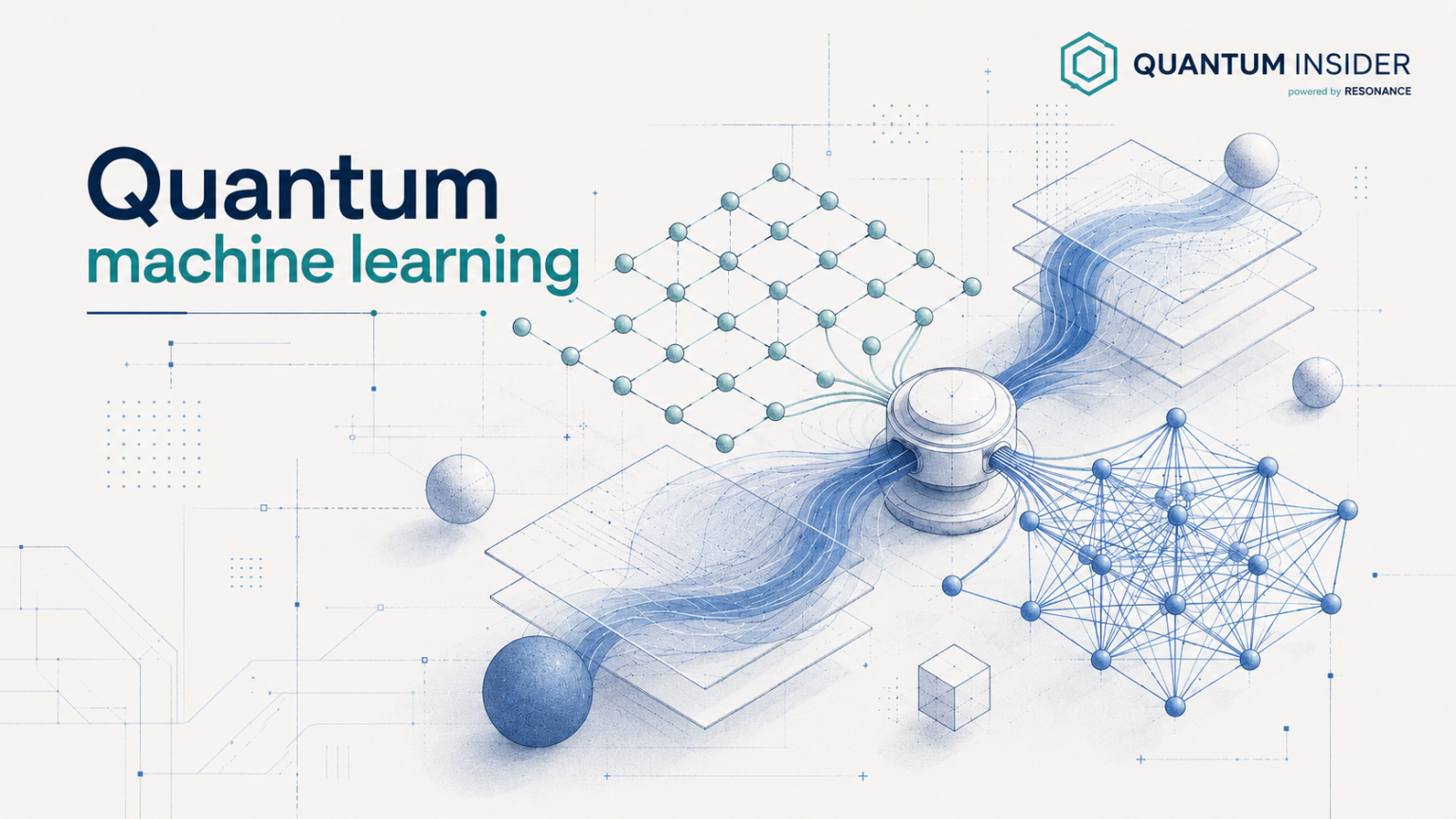
Quantum Machine Learning (QML) represents a transformative convergence of quantum computing and artificial intelligence, leveraging quantum mechanical phenomena to solve complex data-driven problems. The article explores how QML utilizes qubits, which exist in superpositions of states, and entanglement to achieve computational parallelism beyond the reach of classical bits. As of May 2026, the field is firmly rooted in the "Noisy Intermediate-Scale Quantum" (NISQ) era, where advanced hardware like IBM’s Nighthawk and Google’s Willow processors facilitate hybrid workflows. In these systems, classical computers handle data preprocessing and optimization while quantum circuits perform the most computationally intensive subroutines, such as feature mapping in high-dimensional spaces. This synergy is particularly potent for Variational Quantum Algorithms (VQAs) and Quantum Neural Networks (QNNs), which are currently being piloted for drug discovery, financial risk modeling, and advanced materials science. Despite the promise of exponential speedups, the article notes significant hurdles, including qubit decoherence, extreme cooling requirements, and the necessity for more robust error correction. Nevertheless, the transition from theoretical research to early commercial pilots suggests that QML is poised to revolutionize industries by identifying patterns and correlations that remain invisible to traditional machine learning models, eventually paving the way for full-scale fault-tolerant systems by the end of the decade.


The case for data centers in space

The McKinsey article examines the emerging potential of space-based data centers as a strategic solution to the escalating energy and infrastructure constraints hindering terrestrial AI development. As global demand for AI compute skyrockets, traditional land-based facilities face significant hurdles, including lengthy permitting timelines, limited power grid capacity, and the high environmental costs of terrestrial energy production. In contrast, orbital data centers utilize space-qualified hardware modules powered by near-continuous solar energy, effectively bypassing the logistical bottlenecks found on Earth. While current deployment remains more expensive than terrestrial alternatives due to high launch costs, the economics are projected to reach a competitive tipping point once launch prices drop to approximately $500 per kilogram. Philip Johnston, CEO of Starcloud, highlights that these orbital platforms are particularly suited for AI inference workloads where latency requirements—typically staying below 200 milliseconds—are easily met for applications like search queries, chatbots, and back-office automation. Primary customers include hyperscalers and neocloud providers seeking to scale rapidly without traditional energy limitations. Despite remaining technical uncertainties regarding long-term reliability and replacement cycles, the transition of data centers from a terrestrial concept to an orbital reality offers a compelling pathway for unconstrained energy scaling and sustainable high-performance computing in the AI era.

Daily Tech Digest - April 12, 2026


Quote for the day:

“The best leaders are those most interested in surrounding themselves with assistants and associates smarter than they are.” -- John C. Maxwell


🎧 Listen to this digest on YouTube Music

▶ Play Audio Digest

Duration: 21 mins • Perfect for listening on the go.


Growing role of biometrics in everyday life demands urgent deepfake response

The rapid expansion of biometric technology into everyday life, driven by smartphone adoption and national digital identity initiatives in regions like Pakistan, Ethiopia, and the European Union, has reached a critical juncture. While these advancements promise enhanced convenience and security, they are being met with increasingly sophisticated threats from generative artificial intelligence. Specifically, the emergence of live deepfake tools such as JINKUSU CAM has begun to undermine traditional liveness detection and Know Your Customer (KYC) protocols by enabling real-time facial manipulation. This escalation is further complicated by a rise in biometric injection attacks on previously secure platforms like iOS and significant data breaches involving sensitive identity documents. As the biometric physical access control market is projected to reach nearly $10 billion by 2028, the necessity for robust, next-generation spoofing defenses has never been more urgent. From automotive innovations like biometric driver identification to the implementation of EU Digital Identity Wallets, the industry must prioritize advanced deepfake detection and cybersecurity certification schemes to maintain public trust. Failure to respond to these evolving cybercrime-as-a-service models could leave financial institutions and government services vulnerable to unprecedented levels of impersonation fraud in an increasingly digitized global landscape.


Capability-centric governance redefines access control for legacy systems

Legacy systems like z/OS and IBM i often suffer from a mismatch between their native authorization structures and modern, cloud-style identity governance models. This article explains that traditional entitlement-centric approaches strip access of its operational context, forcing approvers to certify technical identifiers they do not understand. This ambiguity often results in defensive approvals and permanent standing privileges, creating significant security risks. To address these vulnerabilities, the author introduces a capability-centric governance model that redefines access in terms of concrete business actions. Unlike static entitlement audits, this framework focuses on governing behavior and sequences of legitimate actions that might otherwise lead to fraud or error. By implementing a thin policy overlay and utilizing native platform telemetry, organizations can enforce sequence-aware segregation of duties and provide human-readable audit evidence without altering application code. This model transitions access certification from a process of inference to one of concrete evidence, ensuring that permissions are tied directly to intended business outcomes. Ultimately, capability-centric governance allows enterprises to manage legacy systems on their own terms, reducing risk by replacing abstract permissions with observable, behavior-based controls. This shift restores accountability and aligns technical enforcement with real-world operational intent, facilitating modernization without compromising the security of critical workloads.


5 Qualities That Post-AI Leaders Must Deliberately Develop

In "5 Qualities That Post-AI Leaders Must Deliberately Develop," Jim Carlough argues that while artificial intelligence transforms the workplace, the demand for human-centric leadership has never been greater. He highlights five critical qualities leaders must deliberately cultivate to navigate this new landscape. First, integrity under pressure ensures consistent, values-based decision-making that technology cannot replicate. Second, empathy in conflict fosters the trust necessary for team performance, especially during personal or professional crises. Third, maintaining composure in chaos provides essential stability and open communication when organizational uncertainty rises. Fourth, focus under competing demands allows leaders to filter through the overwhelming noise of data and notifications to prioritize what truly moves the mission forward. Finally, humor as a tool creates a culture of psychological safety, encouraging risk-taking and innovation. Carlough notes that manager engagement is at a near-historic low, making these human traits vital differentiators. Rather than asking what AI will replace, organizations should focus on how leaders must evolve to guide teams effectively. Developing these skills requires more than simple workshops; it demands consistent practice, honest reflection, and a fundamental shift in how leadership is perceived within an automated world.


Your APIs Aren’t Technical Debt. They’re Strategic Inventory.

In his insightful article, Kin Lane challenges the prevailing enterprise mindset that views legacy APIs as burdensome technical debt, arguing instead that they represent a valuable strategic inventory. Lane posits that many organizations mistakenly discard functional infrastructure in favor of costly rebuilds because they fail to effectively organize and govern what they already possess. This mismanagement becomes particularly problematic in the burgeoning era of AI, where agents and copilots require precise, discoverable, and governed capabilities rather than the noisy, verbose data structures typically designed for human developers. To bridge this gap, Lane introduces the concept of the "Capability Fleet," an operating model that transforms existing integrations into reusable, policy-driven units of work that are optimized for both machines and humans. By shifting governance from a late-stage gate to early-stage guidance—essentially "shifting left"—and focusing on context engineering to deliver only the most relevant data, enterprises can maximize the utility of their current assets. Ultimately, Lane emphasizes that the path to scalable AI production lies not in chasing the latest architectural trends, but in commanding a well-governed inventory of capabilities that provides visibility, safety, and cost-bounded efficiency for the next generation of automated workflows.


When AI stops being an experiment and becomes a new development model

The article, based on Vention’s "2026 State of AI Report," explores the pivotal transition of artificial intelligence from a series of experimental pilot projects into a foundational development model and core operating system for modern business. Research indicates that AI has reached near-universal adoption, with 99% of organizations utilizing the technology and 97% reporting tangible value. This shift signifies that AI is no longer a peripheral "side initiative" but is instead being deeply integrated across multiple business functions—often three or more simultaneously. While previous years were defined by heavy investments in raw compute power, the current landscape focuses on embedding "applied intelligence" into real-world workflows to transform how work is executed rather than simply automating existing tasks. However, this mainstream adoption introduces significant hurdles; hardware infrastructure now accounts for nearly 60% of total AI spending, and escalating cybersecurity threats like deepfakes and targeted AI attacks remain major concerns. Strategic success now depends on moving beyond superficial implementations toward creating genuine user value through specialized talent and region-specific strategies. Ultimately, the page emphasizes that as AI becomes a business-critical pillar, organizations must prioritize workforce upskilling and robust security guardrails to maintain a competitive advantage in an increasingly AI-first global economy.


Two different attackers poisoned popular open source tools - and showed us the future of supply chain compromise

In early 2026, the open-source ecosystem suffered two major supply chain attacks targeting the security scanner Trivy and the popular JavaScript library Axios, highlighting a dangerous evolution in cybercrime. The first campaign, attributed to a group called TeamPCP, compromised Trivy by injecting credential-stealing malware into its GitHub Actions and container images. This breach allowed the attackers to harvest CI/CD secrets and cloud credentials from over 10,000 organizations, subsequently using that access to pivot into other tools like KICS and LiteLLM. Shortly after, a suspected North Korean state-sponsored actor, UNC1069, targeted Axios through a highly sophisticated social engineering campaign. By impersonating company founders and creating fake collaboration environments, the attackers tricked a maintainer into installing a Remote Access Trojan (RAT) via a fraudulent software update. This granted the hackers a three-hour window to distribute malicious versions of Axios that exfiltrated users' private keys. These incidents demonstrate how adversaries are leveraging AI-driven social engineering and exploiting the inherent trust within developer communities. Security experts now emphasize the urgent need for Software Bill of Materials (SBOMs) and suggest that organizations implement a mandatory delay before adopting new software versions to mitigate the risks of poisoned updates.


Quantum Computing Is Beginning to Take Shape — Here Are Three Recent Breakthroughs

Quantum computing is rapidly evolving from a theoretical concept into a practical reality, driven by three significant recent breakthroughs that have shortened the expected timeline for its commercial viability. First, hardware stability has reached a critical turning point; Google’s Willow chip recently demonstrated that error-correction techniques can finally outperform the introduction of new errors, paving the way for fault-tolerant systems. This progress is mirrored in diverse architectures, including trapped-ion and neutral-atom technologies, which offer varying strengths in accuracy and speed. Second, researchers have achieved a more meaningful "quantum advantage" by successfully simulating complex physical models, such as the Fermi-Hubbard model, which could revolutionize material science and drug discovery. Finally, a revolutionary new error-correction scheme has drastically reduced the projected number of qubits required for advanced operations from millions to just ten thousand. While this breakthrough accelerates the path toward solving humanity’s greatest challenges, it also raises urgent security concerns, as current encryption methods like those securing Bitcoin may become vulnerable much sooner than anticipated. Collectively, these advancements signal that quantum computers are beginning to function exactly as predicted decades ago, transitioning from experimental laboratory curiosities to powerful tools capable of reshaping our digital and physical world.


From APIs to MCPs: The new architecture powering enterprise AI

The article explores the critical transition in enterprise AI architecture from traditional Application Programming Interfaces (APIs) to the emerging Model Context Protocol (MCP). For decades, APIs provided the stable, deterministic framework necessary for digital transformation, yet they are increasingly ill-suited for the dynamic, non-linear reasoning required by modern generative AI and autonomous agents. MCPs address this gap by establishing a standardized, context-aware layer that allows AI models to seamlessly interact with diverse data sources and enterprise tools. Unlike the rigid request-response nature of APIs, MCPs enable AI systems to reason about tasks before invoking tools through a governed framework with granular permissions. This architectural shift prioritizes interoperability and scalability, allowing organizations to deploy reusable, MCP-enabled tools across various models rather than building costly, brittle, and bespoke integrations for every new application. While APIs will remain essential for predictable system-to-system communication, MCPs represent the preferred mechanism for securing and streamlining AI-driven workflows. By embedding governance directly into the protocol, businesses can maintain strict security perimeters while empowering intelligent agents to access the rich context they need. Ultimately, this move from static calls to adaptive, intelligence-driven interactions marks a significant milestone in maturing enterprise AI ecosystems and operationalizing agentic technology at scale.


How to survive a data center failure: planning for resilience

In the guide "How to Survive a Data Center Failure: Planning for Resilience," Scality outlines a comprehensive strategic framework for maintaining business continuity amid infrastructure disruptions such as power outages, hardware failures, and human errors. The core of the article emphasizes that true resilience is built on proactive architectural choices and rigorous operational planning rather than reactive responses. Key technical strategies highlighted include multi-site data replication—balancing synchronous methods for zero data loss against asynchronous options for lower latency—and implementing distributed erasure coding. The guide also advocates for the 3-2-1 backup rule and the use of immutable storage to protect against ransomware. Beyond hardware, Scality stresses the importance of application-level resilience, such as stateless designs and automated failover, alongside a well-documented disaster recovery plan with clear communication protocols. Success is measured through critical metrics like Recovery Time Objective (RTO) and Recovery Point Objective (RPO), which must be validated via regular drills and automated testing. Ultimately, by integrating hybrid or multi-cloud strategies and continuous monitoring, organizations can create a robust infrastructure that minimizes downtime and protects both revenue and reputation during catastrophic events.


Going AI-first without losing your people

In the rapidly evolving digital landscape, transitioning to an AI-first organization requires a delicate balance between technological adoption and the preservation of human talent. The core philosophy of going AI-first without losing personnel centers on "people-first AI," where technology is designed to augment rather than replace the workforce. Successful integration begins with a clear roadmap that aligns business objectives with employee well-being, fostering a culture of transparency to alleviate the fear of displacement. Leaders must prioritize continuous learning and upskilling, transforming the workforce into an adaptable unit capable of collaborating with intelligent systems. Notably, surveys show that when companies offload tedious tasks to AI, nearly ninety-eight percent of employees reinvest that saved time into higher-value activities, such as creative problem-solving, strategic decision-making, and mentoring others. This synergy creates a virtuous cycle of productivity and innovation, where AI handles data-heavy busywork while humans provide the nuanced judgment and empathy that machines cannot replicate. Ultimately, the transition is not just about implementing new tools; it is a profound cultural shift that treats employees as essential partners in the AI journey, ensuring that the organization remains future-ready while maintaining its foundational human core and competitive edge.

Daily Tech Digest - March 31, 2026


Quote for the day:

“A bad system will beat a good person every time.” -- W. Edwards Deming


🎧 Listen to this digest on YouTube Music

▶ Play Audio Digest

Duration: 22 mins • Perfect for listening on the go.


World Backup Day warnings over ransomware resilience gaps

World Backup Day 2026 serves as a critical reminder of the widening gap between traditional backup strategies and the sophisticated demands of modern ransomware resilience. Industry experts emphasize that many organizations are failing to evolve their recovery plans alongside increasingly complex, fragmented cloud environments spanning AWS, Azure, and SaaS platforms. A major concern highlighted is the tendency for businesses to treat backups as a narrow IT task rather than a foundational pillar of security governance. Statistics from incident response specialists reveal a troubling reality: over half of organizations experience backup failures during significant breaches, and nearly 84% lack a single survivable data copy when first facing an attack. Experts warn that standard native tools often lack the unified visibility and immutability required to withstand malicious encryption or intentional destruction by threat actors. To address these vulnerabilities, the article advocates for a shift toward "breach-informed" recovery orchestration, which includes rigorous, real-world scenario testing and the reduction of internal "blast radiuses." Ultimately, as ransomware attacks surge by over 50% annually, the message is clear: simple data replication is no longer sufficient. True resilience requires a continuous, holistic approach that integrates people, processes, and hardened technology to ensure data is not just stored, but truly recoverable under extreme pressure.


APIs are the new perimeter: Here’s how CISOs are securing them

The rapid proliferation of application programming interfaces (APIs) has fundamentally shifted the cybersecurity landscape, making them the new organizational perimeter. As traditional endpoint protections and web application firewalls struggle to detect sophisticated business-logic abuse, Chief Information Security Officers (CISOs) are adapting their strategies to address this expanding attack surface. The rise of generative AI and autonomous agentic systems has further exacerbated risks by enabling low-skill adversaries to exploit vulnerabilities and automating high-speed interactions that can bypass legacy defenses. To counter these threats, security leaders are implementing robust governance frameworks that include comprehensive API inventories to eliminate "shadow APIs" and integrating automated security validation directly into CI/CD pipelines. A critical component of this modern defense is a shift toward identity-aware security, prioritizing the management of non-human identities and service accounts through least-privilege access. Furthermore, CISOs are centralizing third-party credential management and utilizing specialized API gateways to enforce consistent security policies across diverse cloud environments. By treating APIs as critical business infrastructure rather than mere plumbing, organizations can maintain visibility and control, ensuring that every integration is threat-modeled and continuously monitored for behavioral anomalies in an increasingly interconnected and AI-driven digital ecosystem.


Q&A: What SMBs Need To Know About Securing SaaS Applications

In this BizTech Magazine interview, Shivam Srivastava of Palo Alto Networks highlights the critical need for small to medium-sized businesses (SMBs) to secure their Software as a Service (SaaS) environments as the web browser becomes the modern workspace’s primary operating system. With SMBs typically managing dozens of business-critical applications, they face significant risks from visibility gaps, misconfigurations, and the rising threat of AI-powered attacks, which hit smaller firms significantly harder than large enterprises. Srivastava emphasizes that traditional antivirus solutions are insufficient in this browser-centric era, particularly when employees use unmanaged devices or accidentally leak sensitive data into generative AI tools. To mitigate these risks, he advocates for a "crawl, walk, run" strategy that prioritizes the adoption of a secure browser as the central command center for security. This approach allows businesses to fulfill their side of the shared responsibility model by protecting the "last mile" where users interact with data. By implementing secure browser workspaces, multi-factor authentication, and AI data guardrails, SMBs can establish a manageable yet highly effective defense. As the landscape evolves toward automated AI agents and app-to-app integrations, centering security on the browser ensures that small businesses remain protected against the next generation of automated, browser-based threats.


Developers Aren't Ignoring Security - Security Is Ignoring Developers

The article "Developers Aren’t Ignoring Security, Security is Ignoring Developers" on DEVOPSdigest argues that the traditional disconnect between security teams and developers is not due to developer negligence, but rather a failure of security processes to integrate with modern engineering workflows. The central premise is that developers are fundamentally committed to quality, yet they are often hindered by security tools that prioritize "gatekeeping" over enablement. These tools frequently generate excessive false positives, leading to alert fatigue and friction that slows down delivery cycles. To bridge this gap, the author suggests that security must "shift left" not just in timing, but in mindset—moving away from being a final hurdle to becoming an automated, invisible part of the development lifecycle. This involves implementing security-as-code, providing actionable feedback within the Integrated Development Environment (IDE), and ensuring that security requirements are defined as clear, achievable tasks rather than abstract policies. Ultimately, the piece contends that for DevSecOps to succeed, security professionals must stop blaming developers for gaps and instead focus on building developer-centric experiences that make the secure path the path of least resistance.


Beyond the Sandbox: Navigating Container Runtime Threats and Cyber Resilience

In the article "Beyond the Sandbox: Navigating Container Runtime Threats and Cyber Resilience," Kannan Subbiah explores the evolving landscape of cloud-native security, emphasizing that traditional "Shift Left" strategies are no longer sufficient against 2026’s sophisticated runtime threats. Unlike virtual machines, containers share the host kernel, creating an inherent "isolation gap" that attackers exploit through container escapes, poisoned runtimes, and resource exhaustion. To bridge this gap, Subbiah advocates for advanced isolation technologies such as Kata Containers, gVisor, and Confidential Containers, which provide hardware-level protection and secure data in use. Central to building a "digital immune system" is the implementation of cyber resilience strategies, including eBPF for deep kernel observability, Zero Trust Architectures that prioritize service identity, and immutable infrastructure to prevent configuration drift. Furthermore, the article highlights the increasing importance of regulatory compliance, referencing global standards like NIST SP 800-190, the EU’s DORA and NIS2, and Indian frameworks like KSPM. Ultimately, the author argues that true resilience requires shifting from a "fortress" mindset to an automated, proactive approach where containers are continuously monitored and secured against the volatility of the runtime environment, ensuring robust defense in a high-density, multi-tenant cloud ecosystem.


AI-first enterprises must treat data privacy as architecture, not an afterthought

In an exclusive interview, Roshmik Saha, Co-founder and CTO of Skyflow, argues that AI-first enterprises must transition from viewing data privacy as a compliance checklist to treating it as a foundational architectural requirement. As organizations accelerate their AI journeys, Saha emphasizes the necessity of isolating personally identifiable information (PII) into a dedicated data privacy vault. Because PII constitutes less than one percent of enterprise data but represents the majority of regulatory risk, treating it as a distinct data layer allows for better protection through tokenization and encryption. This approach is particularly critical for AI integration, where sensitive data often leaks into logs, prompts, and models that lack inherent access controls or deletion capabilities. Saha warns that once PII enters a large language model, remediation is nearly impossible, making prevention the only viable strategy. By embedding “privacy by design” directly into the technical stack, companies can ensure that AI systems utilize behavioral patterns rather than raw identifiers. Ultimately, this architectural shift not only simplifies compliance with regulations like India’s DPDP Act but also serves as a strategic enabler, removing legal bottlenecks and allowing businesses to innovate with confidence while safeguarding their long-term data integrity and customer trust.


The Balance Between AI Speed and Human Control

The article "The Balance Between AI Speed and Human Control" explores the critical tension between rapid technological advancement and the necessity of human oversight. It argues that issues like AI hallucinations are often inherent design consequences of prioritizing fluency and speed over safety safeguards. Currently, global governance is fragmented: the European Union emphasizes rigid regulation, the United States favors innovation with limited accountability, and India seeks a middle path focusing on deployment scale. However, each model faces significant challenges, such as algorithmic bias or systemic failures. The author suggests moving toward a "copilot" framework where AI serves as decision support rather than an autocrat. This requires implementing three interconnected architectural pillars: impact-aware modeling, context-grounded reasoning, and governed escalation with explicit thresholds for human intervention. As artificial general intelligence develops incrementally, nations must shift from treating human judgment as a bottleneck to viewing it as a vital safeguard. Ultimately, the goal is to harmonize efficiency with empathy, ensuring that technological progress does not come at the cost of moral accountability or human potential. By adopting binding technical standards for human overrides in consequential decisions, society can ensure that AI remains a tool for empowerment rather than an uncontrolled force.


Securing agentic AI is still about getting the basics right

As agentic AI workflows transform the enterprise landscape, Sam Curry, CISO of Zscaler, emphasizes that robust security remains grounded in fundamental principles. Speaking at the RSAC 2026 Conference, Curry highlights a major shift toward silicon-based intelligence, where AI agents will eventually conduct the majority of internet transactions. This evolution necessitates a renewed focus on two primary pillars: identity management and runtime workload security. Unlike traditional methods, securing these agents requires sophisticated frameworks like SPIFFE and SPIRE to ensure rigorous identification, verification, and authentication. Organizations must implement granular authorization controls and zero-trust architectures to contain risks, such as autonomous agent sprawl or unauthorized data access. Furthermore, while automation can streamline governance and compliance, Curry warns that security in adversarial environments still requires human judgment to counter unpredictable threats. Ultimately, the successful deployment of agentic AI depends on mastering the basics—cleaning infrastructure, establishing clear accountability, and ensuring auditability. By treating AI agents as distinct identities within a segmented network, businesses can foster innovation without sacrificing security. This balanced approach ensures that as technology advances, the underlying security architecture remains resilient against emerging threats in a world increasingly dominated by autonomous digital entities.


Can Your Bank’s IT Meet the Challenge of Digital Assets?

The article from The Financial Brand examines the "side-core" (or sidecar) architecture as a transformative solution for traditional banks seeking to integrate digital assets and stablecoins into their operations. Traditional banking core systems are often decades old and technically incapable of supporting the high-precision ledgers—often requiring eighteen decimal places—and the 24/7/365 real-time settlement demands of blockchain-based assets. Rather than attempting a costly and risky "rip-and-replace" of these legacy cores, financial institutions are increasingly adopting side-cores: modern, cloud-native platforms that run in parallel with the main system. This specialized architecture allows banks to issue tokenized deposits, manage stablecoins, and facilitate instant cross-border payments while maintaining their established systems for traditional functions. By leveraging a side-core, banks can rapidly deploy crypto-native services, attract younger demographics, and secure new deposit streams without significant operational disruption. The article highlights that as regulatory clarity improves through frameworks like the GENIUS Act, the ability to operate these dual systems will become a key competitive advantage for regional and community banks. Ultimately, the side-core approach provides a modular path toward modernization, allowing traditional institutions to remain relevant in an era defined by programmable finance and digital-native commerce.


Everything You Think Makes Sprint Planning Work, Is Slowing Your Team Down!

In his article, Asbjørn Bjaanes argues that traditional Sprint Planning "best practices"—such as assigning work and striving for accurate estimation—actually undermine team agility by stifling ownership and clarity. He identifies several key pitfalls: first, leaders who assign stories strip developers of their internal sense of control, turning owners into compliant executors. Instead, teams should self-select work to foster initiative. Second, estimation should be viewed as an alignment tool rather than a forecasting exercise; "estimation gaps" are vital opportunities to surface hidden complexities and synchronize mental models. Third, the author warns against mid-sprint interruptions and automatic story rollovers. Rolling over unfinished work without scrutiny ignores shifting priorities and cognitive biases, while unplanned additions break the sanctity of the team’s commitment. Furthermore, Bjaanes emphasizes that a Sprint Backlog without a clear, singular goal is merely a "to-do list" that leaves teams directionless under pressure. Ultimately, real improvement requires shifting underlying beliefs about control and trust rather than simply refining process steps. By embracing healthy disagreement during planning and protecting the team’s autonomy, organizations can move beyond mere compliance toward true high performance, ensuring that planning serves as a strategic compass rather than an administrative burden.

Daily Tech Digest - March 12, 2026


Quote for the day:

"Leadership happens at every level of the organization and no one can shirk from this responsibility." -- Jerry Junkins


🎧 Listen to this digest on YouTube Music

▶ Play Audio Digest

Duration: 24 mins • Perfect for listening on the go.


The growing cyber exposure risk you can’t afford to ignore

This TechNative article highlights a shift in the global threat landscape where fast-moving actors like Scattered Spider exploit the inherent complexity of modern digital ecosystems. Defined as the sum of all potential points of access, exploitation, or disruption, cyber exposure has become a critical vulnerability for sectors ranging from retail and insurance to aviation. Recent high-profile breaches at companies like M&S, Harrods, and Qantas underscore how legacy infrastructure and fragmented visibility allow attackers to move laterally and cause significant financial and operational damage. To combat these evolving threats, the author advocates for a strategic transition from reactive firefighting to proactive cyber exposure management. This approach involves cataloging every managed and unmanaged asset—spanning IT, OT, and cloud environments—while layering in behavioral and operational context. By utilizing AI-driven tools to anticipate emerging risks and integrating these exposure insights into existing security workflows such as SOAR or CMDB, organizations can finally eliminate the blind spots where modern attackers thrive. Ultimately, true digital resilience starts with a comprehensive understanding of an organization’s entire footprint, allowing security teams to harden defenses and anticipate threats before a breach occurs, rather than simply responding after the damage has been done.


India is leading example of digital infrastructure, IMF says

A recent report from the International Monetary Fund (IMF) highlights India as a global leader in Digital Public Infrastructure (DPI), advocating that systems like digital IDs and payment rails be treated as essential public goods similar to traditional physical infrastructure. Central to this transformation is the "JAM Trinity"—Jan Dhan bank accounts, Aadhaar biometric identification, and mobile connectivity—which has fundamentally reshaped the nation’s economy. With over 1.44 billion Aadhaar numbers issued, the system has drastically reduced fraud and lowered Know Your Customer (KYC) costs. Meanwhile, the Unified Payments Interface (UPI) has revolutionized financial transactions, processing over 21.7 billion payments in a single month and becoming the world’s largest fast-payment system. Beyond finance, tools like DigiLocker and the Open Network for Digital Commerce (ONDC) promote interoperability and data exchange, fostering a transparent governance model that has saved trillions in welfare leakages. The IMF emphasizes that India’s deliberate, centralized approach serves as a blueprint for the Global South, demonstrating how modular digital rails can multiply economic value and enable future innovations like personal AI agents. This "India Stack" is now expanding its international footprint through partnerships with over 24 countries, positioning India as a prominent architect of inclusive global digital growth.


How to 10x Your Vulnerability Management Program in the Agentic Era

In this article, Nadir Izrael explores the fundamental shift required to combat autonomous, AI-driven cyber threats. He argues that traditional vulnerability management, characterized by static scans and manual triaging, is no longer sufficient against "AiPTs" (AI-enabled persistent threats) that operate at machine speed. To achieve what Izrael calls "vulnerability management 10.0," organizations must transition to a model defined by continuous telemetry, a unified security data fabric, and contextual prioritization. This evolution moves beyond simple CVE scores by mapping relationships across IT, cloud, and IoT layers to identify business-critical risks. The ultimate goal is "agentic remediation," a phased approach where AI agents eventually handle deterministic fixes—such as rotating exposed credentials or closing misconfigured buckets—without human intervention. However, the author emphasizes that trust is built gradually, starting with "human-in-the-loop" oversight where agents identify issues and open tickets while humans maintain control. By decoupling discovery from remediation and leveraging AI to sanitize the network, security teams can finally match the velocity of modern attackers, allowing human experts to focus on complex architectural decisions and strategic risk management rather than routine maintenance.


The Vendor’s Shadow: A Passage Across Digital Trust And The Art Of Seeing What Others Miss

In this CyberDefenseMagazine article,  Krishna Rajagopal provides a compelling analysis of the profound vulnerability companies face through their extensive third-party relationships. Despite investing heavily in internal security infrastructure, organizations frequently neglect the critical "digital doors" opened to vendors, whose own inadequate defenses can lead to catastrophic data breaches. Rajagopal argues that modern cybersecurity is no longer just about personal fortifications but must encompass the integrity of the entire supply chain. He introduces four essential lessons for achieving "vendor wisdom" in an interconnected world. First, organizations must categorize partners into clear tiers—Inner, Middle, and Outer circles—to prioritize limited resources toward high-impact relationships. Second, he emphasizes moving beyond static, paperwork-based trust toward continuous, verified evidence, demanding actual proof of security controls rather than mere verbal promises. Third, the author underscores the vital importance of pre-defined exit strategies, knowing exactly when a relationship has become too risky to maintain safely. Finally, security professionals must translate complex technical vendor risks into the clear language of business impact for boards and executive decision-makers. Ultimately, the article serves as a sobering reminder that a company’s security posture is only as robust as its weakest partner.


To Create Trustworthy Agentic AI, Seek Community-Driven Innovation

In the SD Times article, Carl Meadows argues that the path to reliable and secure AI agents lies in open collaboration rather than proprietary isolation. As AI transitions from experimental projects to executive mandates, the rise of agentic systems—capable of reasoning, planning, and acting autonomously—introduces significant security risks, including prompt injection and governance challenges. Meadows asserts that community-driven innovation, similar to the models used for Linux and Kubernetes, provides the diverse peer review and rapid vulnerability discovery necessary to secure these autonomous systems. A critical pillar of this trust is the data layer; agents depend on accurate context, and failures often stem from poor retrieval quality rather than model flaws. By integrating agentic workflows into transparent search and observability platforms, organizations can ensure that every context source and automated action is inspectable and accountable. This architectural visibility allows developers to detect permission drift and refine orchestration logic effectively. Ultimately, the piece emphasizes that assuming vulnerabilities will surface and favoring scrutiny over secrecy leads to more resilient systems. Trustworthy agentic AI is therefore built on a foundation of transparency, where global engineering communities collaboratively document, investigate, and mitigate risks to ensure long-term operational success.


Oracle: sovereignty is a matter of trust, not just technology

In this Techzine article, experts Michiel van Vlimmeren and Marcel Giacomini argue that while infrastructure provides the technical foundation, digital sovereignty ultimately hinges on trust. Oracle defines sovereignty as the clear ownership of and restricted access to data, ensuring that residency and control remain with the user. To facilitate this, Oracle offers a versatile spectrum of solutions ranging from high-performance bare-metal servers to the fully abstracted Oracle Cloud Infrastructure. A standout offering is Oracle Alloy, which allows regional providers to build customized sovereign cloud solutions using Oracle’s hardware and software behind the scenes. This approach is particularly relevant as the rapid deployment of artificial intelligence depends on organizations feeling secure about their data governance. The piece highlights Oracle’s billion-euro investment in Dutch infrastructure and its collaboration with government agencies like DICTU to implement agentic AI platforms. Rather than building its own Large Language Models, Oracle focuses on providing the robust, compliant data platforms necessary for businesses to modernize their processes safely. Ultimately, Oracle positions itself as a trusted advisor, emphasizing that achieving true sovereignty requires a cultural and operational shift that extends far beyond simple technical integrations.


Why zero trust breaks down in IoT and OT environments

In the CSO Online article, author Henry Sienkiewicz explores the fundamental "model mismatch" that occurs when applying enterprise security frameworks to industrial and connected device landscapes. While Zero Trust has revolutionized IT security through identity-centric verification, its core assumptions—explicit identity and continuous enforceability—frequently fail in IoT and OT environments characterized by incomplete visibility and functionally flat networks. Sienkiewicz argues that traditional security models focus too heavily on network topology and access decisions, ignoring the invisible web of inherited trust and shared control paths. In these specialized environments, high-impact failures often propagate through shared controllers, firmware update mechanisms, and management platforms that bypass standard access controls. To bridge this gap, the author introduces the Unified Linkage Model (ULM), which shifts the focus from "who is allowed to talk" to "what changes if this component fails." By mapping functional dependencies such as adjacency and inheritance, security leaders can better protect structural amplifiers like protocol gateways and management planes. Ultimately, the piece calls for a nuanced approach that supplements Zero Trust with rigorous dependency mapping to address the durable trust relationships that define modern operational resilience.


‘Agents of Chaos’: New Study Shows AI Agents Can Leak Data, Be Easily Manipulated

This TechRepublic article "Agents of Chaos" discusses a critical study revealing the profound security risks associated with the rapid enterprise adoption of autonomous AI agents. Researchers from prestigious institutions demonstrated that these agents, despite being given restricted permissions, can be easily manipulated through simple social engineering to leak sensitive information like Social Security numbers and bank details. The study highlights three core architectural deficits: the inability to distinguish legitimate users from attackers, a lack of self-awareness regarding competence boundaries, and poor tracking of communication channel visibility. Despite these vulnerabilities, a significant governance gap persists; while many organizations invest in monitoring AI behavior, over sixty percent lack the technical capability to terminate or isolate a misbehaving system. The article argues that the industry must shift from model-level guardrails to governing the data layer itself. This architectural approach emphasizes the need for a unified control plane, immutable audit trails, and functional "kill switches" to ensure compliance with strict regulations like GDPR and HIPAA. Ultimately, the piece warns that deploying AI agents without robust, data-centric governance is a legal and security liability, urging organizations to prioritize architectural guardrails to prevent autonomous systems from becoming liabilities rather than assets.


When AI coding agents can see your APIs: Closing the context gap in autonomous development

In this article on DevPro Journal, Scott Kingsley discusses the critical need for providing AI coding agents with authoritative access to internal API documentation. While modern agents are proficient at generating code based on public patterns, they often fail in enterprise environments because they lack visibility into private OpenAPI specifications, authentication flows, and internal business logic. This "context gap" leads to code that may appear clean but fails at runtime due to incorrect endpoints, mismatched enums, or improper error handling. The author argues that by granting agents authenticated access to a company's source of truth through tools like Model Context Protocol (MCP) servers, development shifts from pattern-based guesswork to governed contract alignment. This integration ensures that agents respect real-world constraints such as cursor-based pagination and specific status codes. Ultimately, the piece highlights that documentation is no longer just for human reference but has become a strategic operational dependency. For autonomous development to succeed, organizations must prioritize high-quality, machine-readable API definitions, transforming documentation into a foundational layer of developer experience that bridges the gap between experimental demos and reliable production-ready infrastructure.


Are DevOps teams supported by automated configurations

In this article on Security Boulevard, Alison Mack explores the critical role of automated configurations and machine identity management in securing modern cloud-native environments. As organizations increasingly rely on automated systems, the management of Non-Human Identities (NHIs)—such as tokens, keys, and encrypted passwords—has evolved from a secondary task into a strategic imperative for DevOps teams. The author highlights that effective NHI management bridges the gap between security and R&D, ensuring identities are protected throughout their entire lifecycle. Key benefits include reduced risk of data breaches, improved regulatory compliance, and increased operational efficiency by automating mundane tasks like secrets rotation. Furthermore, the integration of Agile AI provides predictive analytics and proactive threat detection, allowing teams to anticipate vulnerabilities before they are exploited. The piece emphasizes that a holistic approach, characterized by interdepartmental collaboration and real-time monitoring, is essential to maintaining a robust security posture. Ultimately, Mack argues that embedding automation within the DevOps pipeline is not just about technical efficiency but is a necessary cultural shift to protect sensitive data against increasingly sophisticated cyber threats in a dynamic digital landscape.

Daily Tech Digest - February 24, 2026


Quote for the day:

"Transparent reviews create fairness. Subjective reviews create frustration." -- Gordon Tredgold


AI agents and bad productivity metrics

The great promise of generative artificial intelligence was that it would finally clear our backlogs. Coding agents would churn out boilerplate at superhuman speeds, and teams would finally ship exactly what the business wants. The reality, as we settle into 2026, is far more uncomfortable. Artificial intelligence is not going to save developer productivity because writing code was never the bottleneck in software engineering. ... For decades, one of the most common debugging techniques was entirely social. A production alert goes off. You look at the version control history, find the person who wrote the code, ask them what they were trying to accomplish, and reconstruct the architectural intent. But what happens to that workflow when no one actually wrote the code? What happens when a human merely skimmed a 3,000-line agent-generated pull request, hit merge, and moved on to the next ticket? When an incident happens, where is the deep knowledge that used to live inside the author? ... The metrics that matter are still the boring ones because they measure actual business outcomes. The DORA metrics remain the best sanity check we have because they tie delivery speed directly to system stability. They measure deployment frequency, lead time for changes, change failure rate, and time to restore service. None of those metrics cares about the number of commits your agents produced today. They only care about whether your system can absorb change without breaking.


How vertical SaaS is redefining enterprise efficiency

For the past decade, horizontal SaaS has been the defining force in enterprise technology. Platforms like CRMs, ERP suites and collaboration tools promised universality, offering a single platform to manage every business function across all industries. The strategy made sense: a large total addressable market, reusable architecture and marketing scale. Vertical SaaS flips that model. It is narrow by design but deep in impact. A report by Strategy& found that B2B vertical software companies are now growing faster than their horizontal peers, thanks to higher retention rates, lower churn rates and better unit economics. When software mirrors how a business already works, people stop treating it like a tool they tolerate and start relying on it like infrastructure. ... In regulated industries, compliance isn’t a feature; it’s the baseline for trust. I learned early that trying to retrofit audit trails or data retention policies after go-live only creates technical debt. Instead, design for compliance as a first-class product layer: immutable logs, permission hierarchies and exportable compliance reports built into the system. ... Vertical products don’t thrive in isolation. Integration with industry hardware, marketplaces and regulatory systems drives adoption. In one case, we partnered with a hardware vendor to automatically sync manifest data from their devices, cutting onboarding time in half and unlocking co-marketing opportunities.


API Security Standards: 10 Essentials to Get You Started

Most API security flaws are created during the design phase. You're too late if you're waiting until deployment to think about threats. Shift-left principles mean integrating security early, especially at the design phase, where flawed assumptions become future exploits. Start by mapping out each endpoint's purpose, what data it touches, and who should access it. Identify where trust is assumed (not earned), roles blur, and inputs aren't validated. ... Every API has a breaking point. If you don't define it, attackers will. Rate limiting and throttling prevent denial-of-service (DoS) attacks, and they're also your first defense against scraping, brute-forcing, enumeration, and even accidental misuse by poorly built integrations. APIs, by nature, invite automation. Without guardrails, that openness turns into a floodgate. And in some cases, unchecked abuse opens the door to far worse issues, like remote code execution, where improperly scoped input or lack of throttling leads directly to exploitation. ... APIs are built to accept input. Attackers find ways to exploit it. The core rule is this - if you didn't expect it, don't process it. If you didn't define it, don't send it. Define request and response schemas explicitly using tools like OpenAPI or JSON Schema, as recommended by leading API security standards. Then enforce them — at the gateway, app layer, or both. Don't just use validation as linting; treat it as a runtime contract. If the payload doesn't match the spec, reject it.


Why AI Urgency Is Forcing a Data Governance Reset

The cost of weak governance shows up in familiar ways: teams can’t find data, requirements arrive late in the process, and launches stall when compliance realities collide with product timelines. Without governance, McQuillan argues, organizations “ultimately suffer from higher cost basis,” with downstream consequences that “impact the bottom line.” ... McQuillan sees a clear step-change in executive urgency since generative AI (GenAI) became mainstream. “There’s been a rapid adoption, particularly since the advent of GenAI and the type of generative and agentic technologies that a lot of C-suites are taking on,” he says. But he also describes a common leadership gap: many executives feel pressure to become “AI-enabled” without a clear definition of what that means or how to build it sustainably. “There’s very much a well-understood need across all companies to become AI-enabled in some way,” he says. “But the problem is a lot of folks don’t necessarily know how to define that.” In the absence of clarity, organizations often fall into scattershot experimentation. What concerns McQuillan the most is how the pace of the “race” shapes priorities. ... When asked whether the long-running mantra “data is the new oil” still holds in the era of large language models and agentic workflows, McQuillan is direct. “It holds true now more than ever,” he says. He acknowledges why attention drifts: “It’s natural for people to gravitate toward things that are shiny,” and “AI in and of itself is an absolutely magnificent space.”


Building a Least-Privilege AI Agent Gateway for Infrastructure Automation with MCP, OPA, and Ephemeral Runners

An agent misinterpreting an instruction can initiate destructive infrastructure changes, such as tearing down environments or modifying production resources. A compromised agent identity can be abused to exfiltrate secrets, create unauthorized workloads, or consume resources at scale. In practice, teams often discover these issues late, because traditional logs record what happened, but not why an agent decided to act in the first place. For organizations, this liability creates operational and governance challenges. Incidents become harder to investigate, change approvals are bypassed unintentionally, and security teams are left with incomplete audit trails. Over time, this problem erodes trust in automation itself, forcing teams to either roll back agent usage or accept increasing levels of unmanaged risk. ... A more sustainable approach is to introduce an explicit control layer between agents and the systems they operate on. In this article, we focus on an AI Agent Gateway, a dedicated boundary that validates intent, enforces policy as code, and isolates execution before any infrastructure or service API is invoked. Rather than treating agents as privileged actors, this model treats them as untrusted requesters whose actions must be authorized, constrained, observed, and contained. ... In the context of AI-driven automation, defense in depth means that no single component, neither the agent, nor the gateway, nor the execution environment, has enough authority on its own to cause damage. 


Demystifying CERT‑In’s Elemental Cyber Defense Controls: A Guide for MSMEs

For India’s Micro, Small, and Medium Enterprises (MSMEs), cybersecurity is no longer a “big company problem.” With digital payments, SaaS adoption, cloud-first operations, and supply‑chain integrations becoming the norm, MSMEs are now prime targets for cyberattacks. To help these organizations build a strong foundational security posture, the Indian Computer Emergency Response Team (CERT-In) has released CIGU-2025-0003, outlining a baseline of Cyber Defense Controls, which prescribes 15 Elemental Cyber Security Controls—a pragmatic, baseline set of safeguards designed to uplift the nation’s cyber hygiene. ... These controls, mapped to 45 recommendations, enable essential digital hygiene, protect against ransomware, ensure regulatory compliance, and are required for annual audits. CERT‑In’s Elemental Controls are designed as minimum essential practices that every Indian organization—regardless of size—should implement. ... The CERT-In guidelines offer a simplified, actionable starting point for MSMEs to benchmark their security. These controls are intentionally prescriptive, unlike ISO or NIST, which are more framework‑oriented. ... Because threats constantly evolve and MSMEs face unique risks depending on their industry and data sensitivity, organizations should view this framework not as an endpoint, but as the first critical step toward building a comprehensive security program akin to ISO 27001 or NIST CSF 2.0.


AI-fuelled cyber attacks hit in minutes, warns CrowdStrike

CrowdStrike reports a sharp acceleration in cyber intrusions, with attackers moving from initial access to lateral movement in less than half an hour on average as widely available artificial intelligence tools become embedded in criminal workflows. Its latest Global Threat Report puts average eCrime "breakout time" at 29 minutes in 2025, a 65% improvement on the prior year. ... Alongside generative AI use in preparation and execution, the report describes attempts to exploit AI systems directly. Adversaries injected malicious prompts into GenAI tools at more than 90 organisations, using them to generate commands associated with credential theft and cryptocurrency theft. ... Incidents linked to North Korea rose more than 130%, while activity by the group CrowdStrike tracks as FAMOUS CHOLLIMA more than doubled. The report says DPRK-nexus actors used AI-generated personas to scale insider operations. It also cites a large cryptocurrency theft attributed to the actor it calls PRESSURE CHOLLIMA, valued at USD $1.46 billion and described as the largest single financial heist ever reported. The report also references AI-linked tooling used by other state and criminal groups. Russia-nexus FANCY BEAR deployed LLM-enabled malware, which it named LAMEHUG, for automated reconnaissance and document collection. The eCrime actor tracked as PUNK SPIDER used AI-generated scripts to speed up credential dumping and erase forensic evidence.


Shadow mode, drift alerts and audit logs: Inside the modern audit loop

When systems moved at the speed of people, it made sense to do compliance checks every so often. But AI doesn't wait for the next review meeting. The change to an inline audit loop means audits will no longer occur just once in a while; they happen all the time. Compliance and risk management should be "baked in" to the AI lifecycle from development to production, rather than just post-deployment. This means establishing live metrics and guardrails that monitor AI behavior as it occurs and raise red flags as soon as something seems off. ... Cultural shift is equally important: Compliance teams must act less like after-the-fact auditors and more like AI co-pilots. In practice, this might mean compliance and AI engineers working together to define policy guardrails and continuously monitor key indicators. With the right tools and mindset, real-time AI governance can “nudge” and intervene early, helping teams course-correct without slowing down innovation. In fact, when done well, continuous governance builds trust rather than friction, providing shared visibility into AI operations for both builders and regulators, instead of unpleasant surprises after deployment. ... Shadow mode is a way to check compliance in real time: It ensures that the model handles inputs correctly and meets policy standards before it is fully released. One AI security framework showed how this method worked: Teams first ran AI in shadow mode, then compared AI and human inputs to determine trust. 


Making AI Compliance Practical: A Guide for Data Teams Navigating Risk, Regulation, and Reality

As AI tools become more embedded in enterprise workflows, data teams are encountering a growing reality: compliance isn’t only a legal concern but also a design constraint, a quality signal, and, often, a competitive differentiator. But navigating compliance can feel complex, especially for teams focused on building and shipping. What is the good news? It doesn’t have to be. When approached intentionally, compliance becomes a pathway to better decisions, not a barrier. ... Automation can help with regulations, but only if it's used correctly. I've looked at a tool before that used algorithms to find private information. It worked well with English, but when tested with material in more than one language, it missed a few personal identifiers. The group thought it was "smart enough." It wasn't. We kept the automation, but we added human review for rare cases, confidence levels to make checks happen, and alerts for input formats that aren't common. The automation stayed the same, but there were built-in checks and balances. ... The biggest compliance failures don’t come from bad people. They come from good teams moving fast, skipping hard questions, and assuming nothing will go wrong. But compliance isn’t a blocker. It’s a product quality signal. People will trust you more if they are aware that your team has carefully considered the details.


Tata Communications’ Andrew Winney on why SASE is now non-negotiable

Zero Trust is often discussed as a product decision, but in reality it is a journey. Many enterprises start with a few use cases, such as securing internet access or enabling remote access to private applications. But they do not always extend those principles across contractors, third-party users, software-as-a-service applications and hybrid environments. Practical Zero Trust requires enterprises to rethink access fundamentally. Every request must be evaluated based on who the user is, the context from which they are accessing, the device they are using and the resource they are requesting. Access must then be granted only to that specific resource. ... Secure Access Service Edge represents a structural convergence of networking and security rather than a simple technology swap. What are the most critical architectural and change-management considerations enterprises must address during this transition? SASE is not a one-time technology change. It represents the convergence of networking and security under unified orchestration and policy management. That transition takes time and must be managed carefully. We typically work with enterprises through phased transition plans. If an organisation’s immediate priority is securing internet access or private application access for remote users, we begin there and expand to additional use cases over time. Integration is critical. Enterprises have existing investments in cloud platforms, local area networks and security tools.