Showing posts with label creativity. Show all posts

Daily Tech Digest - January 06, 2026


Quote for the day:

"Our expectation in ourselves must be higher than our expectation in others." -- Victor Manuel Rivera


Data 2026 outlook: The rise of semantic spheres of influence

While data started to garnering attention last year, AI and agents continued to suck up the oxygen. Why the urgency of agents? Maybe it’s “fear of missing out.” Or maybe there’s a more rational explanation. According to Amazon Web Services Inc. CEO Matt Garman, agents are the technology that will finally make AI investments pay off. Go to the 12-minute mark in his recent AWS re:Invent conference keynote, and you’ll hear him say just that. But are agents yet ready for prime time? ... And of course, no discussion of agentic interaction with databases is complete without mention of Model Context Protocol. The open-source MCP framework, which Anthropic PBC recently donated to the Linux Foundation, came out of nowhere over the past year to become the de facto standard for how AI models connect with data. ... There were early advances for extending governance to unstructured data, primarily documents. IBM watsonx.governance introduced a capability for curating unstructured data that transforms documents and enriches them by assigning classifications, data classes and business terms to prepare them for retrieval-augmented generation, or RAG. ... But for most organizations lacking deep skills or rigorous enterprise architecture practices, the starting points for defining semantics is going straight to the sources: enterprise applications and/or, alternatively, the newer breed of data catalogs that are branching out from their original missions of locating and/or providing the points of enforcement for data governance. In most organizations, the solution is not going to be either-or.


Engineering Speed at Scale — Architectural Lessons from Sub-100-ms APIs

Speed shapes perception long before it shapes metrics. Users don’t measure latency with stopwatches - they feel it. The difference between a 120 ms checkout step and an 80 ms one is invisible to the naked eye, yet emotionally it becomes the difference between "smooth" and "slightly annoying". ... In high-throughput platforms, latency amplifies. If a service adds 30 ms in normal conditions, it might add 60 ms during peak load, then 120 ms when a downstream dependency wobbles. Latency doesn’t degrade gracefully; it compounds. ... A helpful way to see this is through a "latency budget". Instead of thinking about performance as a single number - say, "API must respond in under 100 ms" - modern teams break it down across the entire request path: 10 ms at the edge; 5 ms for routing; 30 ms for application logic; 40 ms for data access; and 10–15 ms for network hops and jitter. Each layer is allocated a slice of the total budget. This transforms latency from an abstract target into a concrete architectural constraint. Suddenly, trade-offs become clearer: "If we add feature X in the service layer, what do we remove or optimize so we don’t blow the budget?" These conversations - technical, cultural, and organizational - are where fast systems are born. ... Engineering for low latency is really engineering for predictability. Fast systems aren’t built through micro-optimizations - they’re built through a series of deliberate, layered decisions that minimize uncertainty and keep tail latency under control.


Everything you need to know about FLOPs

A FLOP is a single floating‑point operation, meaning one arithmetic calculation (add, subtract, multiply, or divide) on numbers that have decimals. Compute benchmarking is done in floating point/fractional rather than integer/whole numbers because floating point is far more accurate of a measure than integers. A prefix is added to FLOPs to measure how many are performed in a second, starting with mega- (millions) the giga- (billions), tera- (trillions), peta- (quadrillions), and now exaFLOPs (quintillions). ... Floating point in computing starts at FP4, or 4 bits of floating point, and doubles all the way to FP64. There is a theoretical FP128, but it is never used as a measure. FP64 is also referred to as double-precision floating-point format, a 64-bit standard under IEEE 754 for representing real numbers with high accuracy. ... With petaFLOPS and exaFLOPs becoming a marketing term, some hardware vendors have been less than scrupulous in disclosing what level of floating-point operation their benchmarks use. It’s not it’s not uncommon for a company to promote exascale performance and then saying the little fine print that they’re talking about FP8, according to Snell. “It used to be if someone said exaFLOP, you could be pretty confident that they meant exaFLOP according to 64-bit scientific computing, but not anymore, especially in the field of AI, you need to look at what’s going behind that FLOP,” said Snell.


From SBOM to AI BOM: Rethinking supply chain security for AI native software

An effective AI BOM is not a static document generated at release time. It is a lifecycle artifact that evolves alongside the system. At ingestion, it records dataset sources, classifications, licensing constraints, and approval status. During training or fine-tuning, it captures model lineage, parameter changes, evaluation results, and known limitations. At deployment, it documents inference endpoints, identity and access controls, monitoring hooks, and downstream integrations. Over time, it reflects retraining events, drift signals, and retirement decisions. Crucially, each element is tied to ownership. Someone approved the data. Someone selected the base model. Someone accepted the residual risk. This mirrors how mature organizations already think about code and infrastructure, but extends that discipline to AI components that have historically been treated as experimental or opaque. To move from theory to practice, I encourage teams to treat the AI BOM as a “Digital Bill of Lading, a chain-of-custody record that travels with the artifact and proves what it is, where it came from, and who approved it. The most resilient operations cryptographically sign every model checkpoint and the hash of every dataset. By enforcing this chain of custody, they’ve transitioned from forensic guessing to surgical precision. When a researcher identifies a bias or security flaw in a specific open-source dataset, an organization with a mature AI BOM can instantly identify every downstream product affected by that “raw material” and act within hours, not weeks.


Beyond the Firehose: Operationalizing Threat Intelligence for Effective SecOps

Effective operationalization doesn't happen by accident. It requires a structured approach that aligns intelligence gathering with business risks. A framework for operationalizing threat intelligence structures the process from raw data to actionable defence, involving key stages like collection, processing, analysis, and dissemination, often using models like MITRE ATT&CK and Cyber Kill Chain. It transforms generic threat info into relevant insights for your organization by enriching alerts, automating workflows (via SOAR), enabling proactive threat hunting, and integrating intelligence into tools like SIEM/EDR to improve incident response and build a more proactive security posture. ... As intel maturity develops, the framework continuously incorporates feedback mechanisms to refine and adapt to the evolving threat environment. Cross-departmental collaboration is vital, enabling effective information sharing and coordinated response capabilities. The framework also emphasizes contextual integration, allowing organizations to prioritize threats based on their specific impact potential and relevance to critical assets. This ultimately drives more informed security decisions. ... Operationalization should be regarded as an ongoing process rather than a linear progression. If intelligence feeds result in an excessive number of false positives that overwhelm Tier 1 analysts, this indicates a failure in operationalization. It is imperative to institute a formal feedback mechanism from the Security Operations Center to the Intelligence team.


Compliance vs. Creativity: Why Security Needs Both Rule Books and Rebels

One of the most common tensions in the SOC arises from mismatched expectations. Compliance officers focus on control documentation when security teams are focusing on operational signals. For example, a policy may require multi-factor authentication (MFA), but if the system doesn’t generate alerts on MFA fatigue or unusual login patterns, attackers can slip past controls without detection. It’s important to also remember that just because something’s written in a policy doesn’t mean it’s being protected. A control isn’t a detection. It only matters if it shows up in the data. Security teams need to make sure that every big control, like MFA, logging, or encryption, has a signal that tells them when it’s being misused, misconfigured, or ignored. ... In a modern SOC, competing priorities are expected. Analysts want manageable alert volumes, red teams want room to experiment, and managers need to show compliance is covered. And at the top, CISOs need metrics that make sense to the board. However, high-performing teams aren’t the ones that ignore these differences. They, again, focus on alignment. ... The most effective security programs don’t rely solely on rigid policy or unrestricted innovation. They recognize that compliance offers the framework for repeatable success, while creativity uncovers gaps and adapts to evolving threats. When organizations enable both, they move beyond checklist security. 


AI governance through controlled autonomy and guarded freedom

Controlled autonomy in AI governance refers to granting AI systems and their development teams a defined level of independence within clear, pre-established boundaries. The organization sets specific guidelines, standards and checkpoints, allowing AI initiatives to progress without micromanagement but still within a tightly regulated framework. The autonomy is “controlled” in the sense that all activities are subject to oversight, periodic review and strict adherence to organizational policies. ... In practice, controlled autonomy might involve delegated decision-making authority to AI project teams, but with mandatory compliance to risk assessment protocols, ethical guidelines and regulatory requirements. For example, an organization may allow its AI team to choose algorithms and data sources, but require regular reports and audits to ensure transparency and accountability. Automated systems may operate independently, yet their outputs are monitored for biases, errors or security vulnerabilities. ... Deciding between controlled autonomy and guarded freedom in AI governance largely depends on the nature of the enterprise, its industry and the specific risks involved. Controlled autonomy is best suited for sectors where regulatory compliance and risk mitigation are paramount, such as banking, healthcare or government services. ... Both controlled autonomy and guarded freedom offer valuable frameworks for AI governance, each with distinct strengths and potential drawbacks. 


The 20% that drives 80%: Uncovering the secrets of organisational excellence

There are striking universalities in what truly drives impact. The first, which all three prioritise, is the belief that employee experience is inseparable from customer experience. Whether it is called EX = CX or framed differently, the sharp focus on making the workplace purposeful and engaging is foundational. Each business does this in a unique way, but the intent is the same: great employee experience leads to great customer experience. ... The second constant is an unwavering drive for business excellence. This is a nuanced but powerful 20% that shapes 80% of outcomes. Take McDonald’s, for instance: the consistency of quality and service, whether you are in Singapore, India, Japan or the US, is remarkable. Even as we localise, the core excellence remains unchanged. The same is true for Google, where the reliability of Search and breakthroughs in AI define the brand, and for PepsiCo, where high standards across foods and beverages define the brand.  ... The third—and perhaps most challenging—is connectedness. For giants of this scale, fostering deep connections across global, regional and country boundaries, and within and across teams, is crucial. It is about psychological safety, collaboration, and creating space for people to connect and recognise each other. This focus on connectedness enables the other two priorities to flourish. If organisations keep these three at the heart of their practice, they remain agile, resilient, and, as I like to put it, the giants keep dancing.


Turning plain language into firewall rules

A central feature of the design is an intermediate representation that captures firewall policy intent in a vendor agnostic format. This representation resembles a normalized rule record that includes the five tuple plus additional metadata such as direction, logging, and scheduling. This layer separates intent from device syntax. Security teams can review the intermediate representation directly, since it reflects the policy request in structured form. Each field remains explicit and machine checkable. After the intermediate representation is built, the rest of the pipeline operates through deterministic logic. The current prototype includes a compiler that translates the representation into Palo Alto PAN OS command line configuration. The design supports additional firewall platforms through separate back end modules. ... A vendor specific linter applies rules tied to the target firewall platform. In the prototype, this includes checks related to PAN OS constraints, zone usage, and service definitions. These checks surface warnings that operators can review. A separate safety gate enforces high level security constraints. This component evaluates whether a policy meets baseline expectations such as defined sources, destinations, zones, and protocols. Policies that fail these checks stop at this stage. After compilation, the system runs the generated configuration through a Batfish based simulator. The simulator validates syntax and object references against a synthetic device model. Results appear as warnings and errors for inspection.


Why cybersecurity needs to focus more on investigation and less on just detection and response

The real issue? Many of today’s most dangerous threats are the ones that don’t show up easily on detection radars. Think about the advanced persistent threats (APTs) that remain hidden for months or the zero-day attacks that exploit vulnerabilities no one even knew existed. These threats may slip right past the detection systems because they don’t act in obvious ways. That’s why, in these cases, detection alone isn’t enough. It’s just the first step. ... Think of investigation as the part where you understand the full story. It’s like detective work: not just looking at the footprints, but figuring out where they came from, who’s leaving them, and why they’re trying to break in in the first place. You can’t stop a cyberattack with detection alone if you don’t understand what caused it or how it worked. And if you don’t know the cause, you can’t appropriately respond to the detected threat. ... The cost of neglecting investigation goes beyond just missing a threat. It’s about missed opportunities for learning and growth. Every attack offers a lesson. By investigating the full scope of a breach, you gain insights that not only help in responding to that incident but also prepare you to defend against future ones. It’s about building resilience, not just reaction. Think about it: If you never investigate an incident thoroughly, you’re essentially ignoring the underlying risk that allowed the threat to flourish. You might fix the hole that was exploited, but you won’t have a clear understanding of why it was there in the first place. 

Daily Tech Digest - February 20, 2025


Quote for the day:

"Increasingly, management's role is not to organize work, but to direct passion and purpose." -- Greg Satell


The Business Case for Network Tokenization in Payment Ecosystems

Network tokenization replaces sensitive Primary Account Numbers with tokens, rendering stolen data useless to fraudsters and addressing a major area of fraud: online payments. "Fraud rates are seven times higher online than in physical stores, as criminals exploit exposed card numbers," Mastercard's chief digital officer Pablo Fourez told Information Security Media Group. Shifting to tokenization protects businesses from financial losses and safeguards reputation and customer trust. ... But adoption of network tokenization does come with challenges including issuer readiness, regulatory hurdles and inconsistent implementations. Integrating network tokenization across multiple card networks requires multiple integrations, ensuring interoperability and maintaining high security standards, Fourez said. Compliance with varying regulatory requirements and achieving scalability without performance issues can be resource-intensive, he said. Ramakrishnan points to delays in token provisioning that may slow the speed of transactions if the technology is not scalable. Situations in which one entity in the payment ecosystem does not use network tokens can be major failure points that can lead to transaction failure and cart abandonment.


The hidden gap in cyber recovery: What happens when roles and processes are overlooked

There’s a big difference between disaster recovery (DR) and cyber recovery. For DR, infrastructure and backup teams are the central players and an organization can be up and running in no time. Cyber recovery, however, involves the entire business — backup teams, network teams, cloud personnel, incident response teams from security, teams that are validating the active directory before restores, as well as the application owners and business owners that depend on those functions. ... “There are bigger questions that you only get to by testing your process,” Grantham says. “Whatever your business is, it’s about looking at that data and saying, how do I provide access in this modified environment? For every one of the applications supporting that, having a run book to say, this is the people, the process, linked to the technology to get me to a user in the system performing their daily function because they need to be able to do their job. That run book gets them there. If your data is just sitting on a hard drive in the middle of a data center, how does that help your business?” ... “The idea that cyber recovery strategies require continual evolution, just like zero trust is an evolution of different identity standards, is not something that a lot of businesses have accepted yet,” Grantham says. 


Microsoft Makes Quantum Computing Breakthrough With New Chip

While it’s been working on its own quantum computing hardware, Microsoft has also been building out a quantum computing stack, with its Q# development language and quantum algorithms that can run on the quantum hardware from IonQ, Pasqal, Quantinuum, QCI, and Rigetti that’s available through Azure — but the most powerful systems so far are still in the 20-30 qubit range. ... A prototype fault-tolerant quantum computer will be available “in years, not decades,” promised Chetan Nayak, Microsoft’s VP of quantum hardware. The potential of topological qubits is why DARPA announced earlier this month that Microsoft is one the first two companies to be invited to join its rigorous program for investigating whether it’s possible to build a useful quantum computer — where the value of the computing it can do is worth more than what it costs to build and run — by 2033, using what the agency calls underexplored systems. ... Initially, there are just eight physical qubits in the Majorana 1 QPU, which Microsoft can assign in different ways to get the number of logical qubits it wants. Calling it a QPU is a reminder that there will probably be a lot of different kinds of quantum computer, and that researchers will pick the one that suits them — like choosing a different GPU for a specific workload.


CISO Conversations: Kevin Winter at Deloitte and Richard Marcus at AuditBoard

A CISO can only be as good as the security team. Assembling a strong team requires good selection and effective management: that is, who do you recruit, and how do you maintain top efficiency? Recruitment is a balance between multiple individual rock stars and a single cohesive team. That’s a personal choice for each CISO, but usually involves a compromise: the best possible individuals with the widest possible range of diversity that will still make a single team. Having recruited the team, the CISO must help them excel both as individuals and one team. “I love the Japanese concept of ‘ikigai’,” said Marcus. Ikigai can be defined as finding your life’s purpose – the meeting point of personal passion, skills, mission, and vocation. “I think you need to deliver an experience for the security team that checks all these boxes. They need to have interesting problems. They need to be using modern technology with some autonomy over what they use. You need to provide a sense of purpose – that what they’re doing is not just about the immediate technical work, but will have a broader impact on the company, the industry, and the world at large. And of course, you must pay them what they’re worth. I think if you do all these things, you’ll have a very happy and motivated and engaged team.”


Will AI destroy human creativity? No - and here's why

Today's AI models do more than automate. They engage. They understand user input conversationally, simulate thought processes, and adapt to preferences. AI's ability to adapt comes from machine learning constantly improving by analyzing huge amounts of data. This has made AI smarter and easier for people and businesses to use. The impact is undeniable in creative industries as AI tools can design logos, generate intricate artwork, and write compelling narratives, offering creators new possibilities. These advancements are transforming how people work, create, and innovate. Generative AI is now the focus of business strategies, with companies using these technologies to enhance efficiency and engage with their audiences in new ways. ... That said, the role of human creativity isn't being erased; it's evolving. Perhaps the designers and writers of tomorrow aren't disappearing but transforming into prompt engineers and crafting ideas in collaboration with these tools, mastering a new kind of artistry. Let's face it: Just because AI creates something doesn't mean it's good. The ability to discern, curate, and refine that intangible "eye" for greatness will always remain profoundly human. Unless, of course, Skynet becomes a reality.


Unknown and unsecured: The risks of poor asset visibility

Asset visibility remains a critical issue because organizations often lack a real-time, unified view of their IT, OT, and cloud environments. Shadow IT, unmanaged endpoints, remote work and third-party integrations create blind spot which increases attack vectors. Without complete visibility, security teams struggle to detect and respond to threats effectively, leaving organizations vulnerable to breaches and compromises. Good visibility across enterprise assets is no longer just a nice to have, it’s a necessity to survive in the digital world. ... Improving visibility of digital assets is critical for all organizations, otherwise, blind spots will exist in networks which criminals can exploit. Organizations must treat every endpoint as a potential entry point, ensuring it is seen and secured. It’s also important to remember that perfect technology doesn’t exist, vulnerabilities will always surface in products, so organizations must not only have an inventory of their assets, but also the ability to apply patches and security updates automatically, without necessarily having to pull all systems down. Improving OT visibility requires a specialised approach due to the sensitive nature of legacy and ICS systems.


Hacking Cybersecurity Leadership

Cybersecurity culture often fosters a sense of individualism that lends itself to operating in isolation—individual interest in areas of cybersecurity lead to individually-driven projects, individual certifications, etc. That being said, being siloed is not a sustainable mode of operation. For most cyber professionals, the challenges are too complex to resolve individually and negative experiences (failure, shame, guilt, embarrassment, etc.), when experienced alone, are likely to take an even greater toll than when those experiences are shared with others. ... In order to boost a sense of competence at the individual level, leaders need to create a learning-oriented environment that provides opportunities for individuals to explore, gather, and practice applying new information. There are specific strategies to build or strengthen these aspects of the work environment. ... Leaders can also embrace a growth-mindset culture whereby mistakes do not equate to failures; rather, mistakes are repositioned as learning opportunities to develop and grow. This allows individuals to safely explore and practice various aspects of their work. It’s important to note that this approach also requires a shift toward more developmental, rather than punitive or evaluative, feedback.


Real-World AppSec Priorities Observed in BSIMM15

Many organizations are still in the nascent stages of defining AI-specific attack surfaces and integrating security mechanisms. To stay ahead of these emerging risks, organizations should proactively gather intelligence on AI-related threats, establish secure design patterns for AI models, and ensure that AI security is seamlessly integrated into existing policies and frameworks. Proactivity is key here — a well-rounded strategy to leverage the potential AI can offer must be accompanied by strategic approaches to counter risks and threats it introduces. The use of adversarial testing, which involves simulating potential attacks to identify vulnerabilities, has more than doubled over the past year. This trend indicates a growing recognition among companies of the importance of continuously testing AI models to prevent them from being exploited by malicious actors. While it is not yet possible to definitively attribute the rise in these BSIMM activities to AI-specific concerns, it is evident that these practices will play a crucial role in addressing the emerging risks associated with AI. ... The decline does raise a red flag around the preparedness of organizations to defend against the evolving threat landscape. It also illustrates a need for security education and awareness initiatives. 


Why Best-of-Breed Security Is Non-Negotiable for SIEM

With cyber threats evolving at an unprecedented pace, security leaders can no longer afford to treat SIEM as just another layer in a bloated security stack. Instead, they must take a strategic approach, ensuring that their SIEM leverages truly best-of-breed security—one that enhances integration, streamlines operations, and delivers actionable threat intelligence. So, is more always better? Or is it time to redefine what best-of-breed really means for SIEM? ... The appeal of best-of-breed security is clear: superior threat detection, deeper visibility, and greater flexibility to adapt to evolving threats. However, this approach also introduces complexity. Managing multiple vendors, ensuring seamless integration, and avoiding operational inefficiencies can quickly become overwhelming. So, how do security leaders strike the right balance? Success lies in strategic selection, integration, and optimization—choosing tools that complement each other and enhance Security Information and Event Management (SIEM) rather than adding more noise. Adopting a best-of-breed security approach within a SIEM framework offers several advantages. By integrating specialized security solutions, organizations can optimize threat detection, improve agility, and reduce reliance on a single vendor. 


Digital twins and transitioning to a greener, safer industrial sector

Shah finds the term digital twins is often misunderstood. “Digital twins are not a single technology and standalone solution, but a strategic framework – one that combines and leverages multiple technologies. This can include AI, reality capture, 3D reality models and advanced web technologies which create a virtual 3D replica of an industrial site and its facilities.” Aiming to be the first climate-neutral continent by 2050, Europe has set some aspirational goals and according to Shah, digital twins could be a real game-changer in how the world could future-proof its industrial sites and transition to net zero. ... She noted many industrial sites struggle with issues related to technical documents and on the ground conditions, and this is an issue because inaccurate information can cause accidents to occur. AI and 3D rendered models enable experts to envision a scene in real time, allowing for greater accuracy than is often permitted by a physical walk-through of a facility. “What’s more, site personnel can also simulate processes like ‘lockout tagout’ safely, where machines are isolated and shut down for maintenance, without real-world risks and predict what could go wrong if an asset was isolated incorrectly, for example.

Daily Tech Digest - November 10, 2024

Technical Debt: An enterprise’s self-inflicted cyber risk

Technical debt issues vary in risk level depending on the scope and blast radius of the issue. Unaddressed high-risk technical debt issues create inefficiency and security exposure while diminishing network reliability and performance. There’s the obvious financial risk that comes from wasted time, inefficiencies, and maintenance costs. Adding tools potentially introduces new vulnerabilities, increasing the attack surface for cyber threats. A lot of the literature around technical debt focuses on obsolete technology on desktops. While this does present some risk, desktops have a limited blast radius when compromised. Outdated hardware and unattended software vulnerabilities within network infrastructure pose a much more imminent and severe risk as they serve as a convenient entry point for malicious actors with a much wider potential reach. An unpatched or end-of-life router, switch, or firewall, riddled with documented vulnerabilities, creates a clear path to infiltrating the network. By methodically addressing technical debt, enterprises can significantly mitigate cyber risks, enhance operational preparedness, and minimize unforeseen infrastructure disruptions. 


Why Your AI Will Never Take Off Without Better Data Accessibility

Data management and security challenges cast a long shadow over efforts to modernize infrastructures in support of AI and cloud strategies. The survey results reveal that while CIOs prioritize streamlining business processes through cloud infrastructures, improving data security and business resilience is a close second. Security is a persistent challenge for companies managing large volumes of file data and it continues to complicate efforts to enhance data accessibility. Nasuni’s research highlights that 49% of firms (rising to 54% in the UK) view security as their biggest problem when managing file data infrastructures. This issue ranks ahead of concerns such as rapid recovery from cyberattacks and ensuring data compliance. As companies attempt to move their file data to the cloud, security is again the primary obstacle, with 45% of all respondents—and 55% in the DACH region—citing it as the leading barrier, far outstripping concerns over cost control, upskilling employees and data migration challenges. These security concerns are not just theoretical. Over half of the companies surveyed admitted that they had experienced a cyber incident from which they struggled to recover. Alarmingly, only one in five said they managed to recover from such incidents easily. 


Exploring DORA: How to manage ICT incidents and minimize cyber threat risks

The SOC must be able to quickly detect and manage ICT incidents. This involves proactive, around-the-clock monitoring of IT infrastructure to identify anomalies and potential threats early on. Security teams can employ advanced tools such as security automation, orchestration and response (SOAR), extended detection and response (XDR), and security information and event management (SIEM) systems, as well as threat analysis platforms, to accomplish this. Through this monitoring, incidents can be identified before they escalate and cause greater damage. ... DORA introduces a harmonized reporting system for serious ICT incidents and significant cyber threats. The aim of this reporting system is to ensure that relevant information is quickly communicated to all responsible authorities, enabling them to assess the impact of an incident on the company and the financial market in a timely manner and respond accordingly. ... One of the tasks of SOC analysts is to ensure effective communication with relevant stakeholders, such as senior management, specialized departments and responsible authorities. This also includes the creation and submission of the necessary DORA reports.


What is Cyber Resilience? Insurance, Recovery, and Layered Defenses

While cyber insurance can provide financial protection against the fallout of ransomware, it’s important to understand that it’s not a silver bullet. Insurance alone won’t save your business from downtime, data loss, or reputation damage. As we’ve seen with other types of insurance, such as property or health insurance, simply holding a policy doesn’t mean you’re immune to risks. While cyber insurance is designed to mitigate financial risks, insurers are becoming increasingly discerning, often requiring businesses to demonstrate adequate cybersecurity controls before providing coverage. Gone are the days when businesses could simply “purchase” cyber insurance without robust cyber hygiene in place. Today’s insurers require businesses to have key controls such as multi-factor authentication (MFA), incident response plans, and regular vulnerability assessments. Moreover, insurance alone doesn’t address the critical issue of data recovery. While an insurance payout can help with financial recovery, it can’t restore lost data or rebuild your reputation. This is where a comprehensive cybersecurity strategy comes in — one that encompasses both proactive and reactive measures, involving components like third-party data recovery software.


Integrating Legacy Systems with Modern Data Solutions

Many legacy systems were not designed to share data across platforms or departments, leading to the creation of data silos. Critical information gets trapped in isolated systems, preventing a holistic view of the organization’s data and hindering comprehensive analysis and decision-making. ... Modern solutions are designed to scale dynamically, whether it’s accommodating more users, handling larger datasets, or managing more complex computations. In contrast, legacy systems are often constrained by outdated infrastructure, making it difficult to scale operations efficiently. Addressing this requires refactoring old code and updating the system architecture to manage accumulated technical debt. ... Older systems typically lack the robust security features of modern solutions, making them more vulnerable to cyber-attacks. Integrating these systems without upgrading security protocols can expose sensitive data to threats. Ensuring robust security measures during integration is critical to protect data integrity and privacy. ... Maintaining legacy systems can be costly due to outdated hardware, limited vendor support, and the need for specialized expertise. Integrating them with modern solutions can add to this complexity and expense. 


The challenges of hybrid IT in the age of cloud repatriation

The story of cloud repatriation is often one of regaining operational control. A recent report found that 25% of organizations surveyed are already moving some cloud workloads back on-premises. Repatriation offers an opportunity to address these issues like rising costs, data privacy concerns, and security issues. Depending on their circumstances, managing IT resources internally can allow some organizations to customize their infrastructure to meet these specific needs while providing direct oversight over performance and security. With rising regulations surrounding data privacy and protection, enhanced control over on-prem data storage and management provides significant advantages by simplifying compliance efforts. ... However, cloud repatriation can often create challenges of its own. The costs associated with moving services back on-prem can be significant: new hardware, increased maintenance, and energy expenses should all be factored in. Yet, for some, the financial trade-off for repatriation is worth it, especially if cloud expenses become unsustainable or if significant savings can be achieved by managing resources partially on-prem. Cloud repatriation is a calculated risk that, if done for the right reasons and executed successfully, can lead to efficiency and peace of mind for many companies.


IT Cost Reduction Strategies: 3 Unexpected Ways Enterprise Architecture Can Help

Easier said than done with the traditional process of manual follow-ups hampered by inconsistent documentation often scattered across many teams. The issue with documentation also often means that maintenance efforts are duplicated, wasting resources that could have been better deployed elsewhere. The result is the equivalent of around 3 hours of a dedicated employee’s focus per application per year spent on documentation, governance, and maintenance. Not so for the organization that has a digital-native EA platform that leverages your data to enable scalability and automation in workflows and messaging so you can reach out to the most relevant people in your organization when it's most needed. Features like these can save an immense amount of time otherwise spent identifying the right people to talk to and when to reach out to them, making a company's Enterprise Architecture the single source of truth and a solid foundation for effective governance. The result is a reduction of approximately a third of the time usually needed to achieve this. That valuable time can then be reallocated toward other, more strategic work within the organization. We have seen that a mid-sized company can save approximately $70 thousand annually by reducing its documentation and governance time.


How Rules Can Foster Creativity: The Design System of Reykjavík

Design systems have already gained significant traction, but many are still in their early stages, lacking atomic design structures. While this approach may seem daunting at first, as more designers and developers grow accustomed to working systematically, I believe atomic design will become the norm. Today, most teams create their own design systems, but I foresee a shift toward subscription-based or open-source systems that can be customized at the atomic level. We already see this with systems like Google’s Material UI, IBM’s Carbon, Shopify’s Polaris, and Atlassian’s design system. Adopting a pre-built, well-supported design system makes sense for many organizations. Custom systems are expensive and time-consuming to build, and maintaining them requires ongoing resources, as we learned in Reykjavík. By leveraging a tried-and-tested design system, teams can focus on customization rather than starting from scratch. ontrary to popular belief, this shift won’t stifle creativity. For public services, there is little need for extreme creativity regarding core functionality - these products simply need to work as expected. AI will also play a significant role in evolving design systems.


Eyes on Data: A Data Governance Study Bridging Industry and Academia

The researcher, Tony Mazzarella, is a seasoned data management professional and has extensive experience in data governance within large organizations. His professional and research observations have identified key motivations for this work: Data Governance has a knowledge problem. Existing literature and publications are overly theoretical and lack empirical guidance on practical implementation. The conceptual and practical entanglement of governance and management concepts and activities exacerbates this issue, leading to divergent definitions and perceptions that data governance is overly theoretical. The “people” challenges in data management are often overlooked. Culture is core to data governance, but its institutionalization as a business function coincided first in the financial services industry with a shift towards regulatory compliance in response to the 2008 financial crisis. “Data culture” has re-emerged in all industries, but it implies the governance function is tasked with fostering culture change rather than emphasizing that data governance requires a culture change, which is a management challenge. Data Management’s industry-driven nature and reactive ethos result in unnecessary change as the macroenvironment changes, undermining process resilience and sustainability.


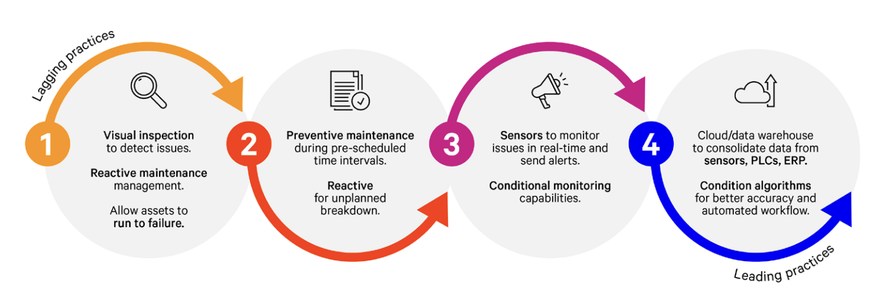
The future of data center maintenance

Condition-based maintenance and advanced monitoring services provide operators with more information about the condition and behavior of assets within the system, including insights into how environmental factors, controls, and usage drive service needs. The ability to recommend actions for preventing downtime and extending asset life allows a focus on high-impact items instead of tasks that don't immediately affect asset reliability or lifespan. These items include lifecycle parts replacement, optimizing preventive maintenance schedules, managing parts inventories, and optimizing control logic. The effectiveness of a service visit can subsequently be validated as the actions taken are reflected in asset health analyses. ... Condition-based maintenance and advanced monitoring services include a customer portal for efficient equipment health reporting. Detailed dashboards display site health scores, critical events, and degradation patterns. ... The future of data center maintenance is here – smarter, more efficient, and more reliable than ever. With condition-based maintenance and advanced monitoring services, data centers can anticipate risks and benchmark assets, leading to improved risk management and enhanced availability.


Quote for the day:

"It's not about how smart you are--it's about capturing minds." -- Richie Norton

Daily Tech Digest - March 02, 2024

Rust on the Rise: New Advocacy Expected to Advance Adoption

Recent advocacy and research efforts from agencies like the National Security Agency (NSA), Cybersecurity and Infrastructure Security Agency (CISA), National Institute of Standards and Technology (NIST), and ONCD “can serve as valuable evidence of the considerable risk memory-safety vulnerabilities pose to our digital ecosystem,” the Rust Foundation‘s Executive Director & CEO, Rebecca Rumbul, told The New Stack. Moreover, Rumbul said The Rust Foundation believes that the Rust programming language is the most powerful tool available to address critical infrastructure security gaps. “As an organization, we are steadfast in our commitment to further strengthening the security of Rust through programs like our Security Initiative,” she said. Meanwhile, looking specifically at software development for space systems, the ONCD report says: both memory-safe and memory-unsafe programming languages meet the organization’s requirements for developing space systems. “At this time, the most widely used languages that meet all three properties are C and C++, which are not memory-safe programming languages, the report said.


The Power of Hyperautomation in Banking

Hyperautomation improves the operational efficiency within banks significantly as it helps in automating routine processes, that include document processing, transaction reconciliations, data entry, decreasing the requirement for manual intervention. Therefore, this not only augments processes but it also reduces errors, leading to a more reliable as well as cost-effective operation. Banks can use hyperautomation to offer personalized, 24/7 services to their customers. Chatbots & virtual assistants powered by Artificial Intelligence can respond to inquiries as well as perform transactions around the clock. Faster response times coupled with the ability for tailoring services to separate customer requirements leading to enhanced customer satisfaction as well as loyalty. “Hyperautomation facilitates organizations to improve customer experience by reducing the friction in user self-service applications and streamlining broken onboarding processes. It enables faster support and sales query resolution through relevant integrations, AI/ML, and assistive technologies,” says Arvind Jha, Former General Manager – Product Management and Marketing, Newgen Software.


What Is Data Completeness and Why Is It Important?

Data completeness is an important aspect of Data Quality. Data Quality is a reference to how accurate and reliable the data is overall. Data completeness specifically focuses on missing data or how complete the data is, rather than concerns of inaccurate or duplicated data. A lack of data completeness is normally the result of information that was never collected. For example, if a customer’s name and email address are supposed to be collected, but the email address is missing, it is difficult to communicate with the customer. ... Missing chunks of information restrict or bias the decision-making process. Attempting to perform analytics with incomplete data can produce blind spots and biases, and result in missed opportunities. Currently, business leaders use data analytics to make decisions that range from marketing to investment strategies to medical diagnostics. In some situations, data missing key pieces of information is still used, which can lead to dangerous mistakes and false conclusions. Assessing and improving data completeness should be done before performing analytics.


A socio-technical approach to data management is crucial in our decentralised world

To improve the odds of successfully building an effective data management strategy, working with a trusted and experienced data partner to help shift the organisation’s data culture is a crucial - and often missing - step. The Data and Analytics Leadership Annual Executive Survey 2023 found that cultural factors are the biggest obstacle to delivering value from data investments. Data fabrics, meshes and modern data stacks will continue to consolidate an increasingly decentralised world by making the management of data easier. However, to ensure control over security and governance, and to extract value from data that is trustworthy requires a tactical shift to what we call a socio-technical approach. In other words, any strategy must be made up of an investment in people, process and technology to be successful. This is because data management involves more than the technical aspects of data storage, processing and analysis. It also includes the social aspects of data governance, change management, data quality management, user upskilling and collaboration between different teams. Organisations that know how to use technology the best will have an edge over their competitors.


Blockchain is one step away from mainstream adoption

Blockchain’s growth is already reshaping traditional business processes and models. In the financial sector, blockchain facilitates faster and more secure transactions. Supply chain management benefits from increased transparency and traceability, ensuring the authenticity and integrity of products. Smart contracts automate and streamline complex agreements, minimizing the risk of fraud and error. And in addition to sparking rising trading volumes, the SEC’s approval of spot bitcoin ETFs sent a global signal of validation to governments reviewing the viability of blockchain applications in both the private and public sectors. Importantly, the evolution of blockchain has given credence to — and bestowed practicality upon — the concept of decentralized finance (DeFi). We’re already in a reality where traditional financial services are replicated, and even improved, using blockchain technology. This is transformative because it will eliminate the need for intermediaries, opening the door to financial participation for virtually anyone with internet access. This democratization of finance has the potential to provide financial services to underserved populations and redefine the global financial landscape.


Biometrics Regulation Heats Up, Portending Compliance Headaches

What this all means is that it will be complicated for companies doing business nationally because they will have to audit their data protection procedures and understand how they obtain consumer consent or allow consumers to restrict the use of such data and make sure they match the different subtleties in the regulations. Contributing to the compliance headaches: The executive order sets high goals for various federal agencies in how to regulate biometric information, but there could be confusion in terms of how these regulations are interpreted by businesses. For example, does a hospital's use of biometrics fall under rules from the Food and Drug Administration, Health and Human Services, the Cybersecurity and Infrastructure Security Agency, or the Justice Department? Probably all four. ... Meanwhile, AI-induced deepfake video impersonations by criminals that abuse biometric data like face scans are on the rise. Earlier this year, a deepfake attack in Hong Kong was used to steal more than $25 million, and there are certainly others who will follow as AI technology gets better and easier to use for producing biometric fakes. The conflicting regulations and criminal abuses could explain why consumer confidence in biometrics has taken a nosedive.


The Role of Data in Crafting Personalized Customer Journeys

Through comprehensive customer profiles, data is sourced from multiple touchpoints in silos such as online visitors, purchases done, forms, customer support units, social media engagement, mobile app usage, and other channels as recognized in the CRM system. This further facilitates real-time data processing and identifies customer behaviors and preferences. As briefly discussed previously, predictive analytics consumes historical customer data and powers forecasting of expected behaviors and preferences. This segments data based on different parameters such as demographics, behaviors, preferences, etc. Ultimately, it acts as the seed for planting responsive marketing campaigns. While we are at it, an important strategy is cross-channel integration. Given the scale of marketing landscape, it is important to consider all channels and systems. So, the data collected from multiple sources is then integrated and analyzed through data management platforms to create a cross-channel, unified 360 view. Such interoperability delivers an omnichannel experience, thereby increasing their lifetime value. To ensure better customer loyalty, implement practices in alignment with the regulations. 


Checkout Lessons: What Banks Need to Borrow from eCommerce

eCommerce has much to teach the financial and healthcare industries, which also experience high seasonality and peak traffic periods. Events like 401(k) sign-ups, healthcare enrollments, and tax days are notorious for bringing down systems. In my experience, performance is synonymous with user experience. ... Many digital-first banks don’t operate physical branches. Their success is due to a singular focus on user experience, performance, speed, flexibility, and a mobile-first approach. This is what has won over the current generation of young people who do not need to visit a teller. It’s crucial for banks to recognize the importance of these advancements and to take action. Otherwise, they risk losing their competitive edge. In the U.S., some banks perform exceptionally well with only an online presence, with USAA as a prime example. Some companies, like Capital One, are innovating by transforming their banks into cafés. They provide WiFi, allowing customers to work and do more than just banking. This shift dramatically enhances the user experience.


Fintech at its Finest: Adding Value with Innovation

The best fintech platforms are constantly listening to their customers. Whether that’s through harnessing the power of AI to create an optimal user experience or continuously innovating based on customer feedback, a good fintech is creating exactly what its customers want and need. ... The best fintech platforms have innovative technologies at their core and are increasingly harnessing AI and machine learning to enhance their services. But crucially, they are also designed to be intuitive for users. After all, businesses have just 10 minutes to set up digital accounts or risk losing consumer trust. Millennials and Gen Z make up a significant part of fintech’s core market, so it’s providers who can cater to tech-savvy generations and prioritise smooth customer experiences that will differentiate themselves in an increasingly crowded market. ... In the bustling world of fintech, the top platforms set themselves apart by cleverly blending practices to ensure they keep growing and succeed – even when faced with challenges. These platforms develop excellent solutions, using technologies like blockchain, AI and fancy data analytics to tackle old financial problems and improve user experiences. 


Enabling Developers To Become (More) Creative

What influence does collaboration have on creativity? Now we are starting to firmly tread into management territory! Since software engineering happens in teams, the question becomes how to build a great team that's greater than the sum of its parts. There are more than just a few factors that influence the making of so-called "dream teams". We could use the term "collective creativity" since, without a collective, the creativity of each genius would not reach as far. The creative power of the individual is more negligible than we dare to admit. We should not aim to recruit the lone creative genius, but instead try to build collectives of heterogeneous groups with different opinions that manage to push creativity to its limits. ... Managers can start taking simple actions towards that grand goal. For instance, by helping facilitate decision-making, as once communication goes awry in teams, the creative flow is severely impeded. Researcher Damian Tamburri calls this problem "social debt." Just like technical debt, when there's a lot of social debt, don't expect anything creative to happen. Managers should act as community shepherds to help reduce that debt.


Quote for the day:

"A real entrepreneur is somebody who has no safety net underneath them." -- Henry Kravis

Daily Tech Digest - February 09, 2024

India’s data protection law: Reimagining a new era of innovation led digital markets

E-commerce platforms would have to make changes in their user interfaces of websites and apps, with clearer communication with users for consent, processing, erasing or grievance addressal. Moreover, the e-commerce platforms will have to completely erase all personal data when the user refutes the continuity of consent or when the purpose intended is served. The platforms will also have to now carry out a verifiable parental consent mechanism to provide services to children below 18 years of age but cannot track or carry out behavioural monitoring of the child, unless exempted separately by the government. This is a complex subject, as many e-commerce platforms already follow due checks for ensuring parental control below a certain age. Moreover, payments in e-commerce for principals below 18 years of age would anyway require guardianship of a parent or legal guardian, as per mandated by RBI . E-commerce players, however, will still need to adopt the additional obligations. For AI systems, which are now becoming increasingly integral to the operations of e-commerce platforms, this means a shift towards more transparent and ethical data usage practices. 


Key strategies for ISO 27001 compliance adoption

ISO 27001 fundamentally breaks down to: “What information security risks do we face? How should we best manage them?”Just as the chicken may come before the egg, note that what should happen in this case is that you identify the risks first and then select the controls that help to manage those risks. You definitely don’t have to apply all of the controls, and nearly all organisations treat some, validly, as non-applicable in their Statement of Applicability. For example, businesses where all employees work remotely simply don’t have the full range of risks that can benefit from mitigation by the physical controls. When it comes to performance evaluation, it’s largely a case of working through the relevant clauses and controls and agreeing how good a job the organisation is doing trying to meet the associated requirements. The ones that are selected for monitoring, measurement and evaluation will depend on the type and size of the organisation and its business objectives. These are basically key performance indicators (KPIs) for information security and might include supplier evaluations and documented events, incidents, and vulnerabilities.


Breach Roundup: US Bans AI Robocalls

Telecom regulators voted unanimously Thursday to make AI-generated robocalls illegal under the 1991 Telephone Consumer Protection Act, which prohibits robocalls from using "artificial" voices. The new rule allows the FCC to order telephone carriers not to facilitate illegal robocalls and empowers individual consumers or organizations to file lawsuits against violators. The decision comes amid concerns that AI could be used to disseminate misinformation about the election. A robocall featuring a deepfake of President Joe Biden urging voters in New Hampshire to stay home on primary day caused controversy in January. The New Hampshire attorney general on Tuesday said he had identified the source of the calls as Texas-based Life Corporation and its owner, Walter Monk. State Attorney General John M. Formella said the calls had been routed through a provider called Lingo Telecom, also based in Texas. New Hampshire issued a cease-and-desist order to Life Corporation, and the FCC sent a cease-and-desist letter to Lingo Telecom. "Bad actors are using AI-generated voices in unsolicited robocalls to extort vulnerable family members, imitate celebrities and misinform voters," FCC Chairwoman Jessica Rosenworcel said in a statement.


Stifling Creativity in the Name of Data

Pitt challenges the notion that data and creativity are mutually exclusive. Builders should base decisions on both metrics and imaginative thinking. Focus obsessively on either, and you lose sight of the problem you aim to solve. "Data can contribute to developer improvement," Pitt concludes, "but developers should not solely rely on it." By the same token, visionaries in the throes of invention must temper flights of fancy with reality checks. Synthesis of human and machine intelligence unlocks maximum potential. But for Pitt, the human mind still reigns supreme when it comes to pushing boundaries and bringing new ideas to life. Software development draws its lifeblood from creative problem solvers who feel intrinsically rewarded by shipping inventive products. Data should inform and empower that mission, not impose limits or demand validation at every turn. The analytics will have their say, but imagination must lead the way. That balance, elusive as it may be, unlocks sustainable innovation as technology’s tides continue rising.


How Generative AI Will Change The Jobs Of Teachers

As generative AI reshapes the world of education, teachers will find their role evolving further away from being providers of knowledge and towards becoming learning facilitators. Perhaps the most significant shift in the role of educators will be an increased focus on nurturing skills such as critical thinking, creativity, and emotional intelligence. These skills will be paramount in a future where our worth is increasingly measured by our ability to perform tasks that machines cannot do or are not as proficient in. Beyond academic teaching, educators play a critical role in safeguarding the welfare of their students, a responsibility that extends far beyond the confines of traditional teaching. This involves not only protecting students from physical harm but also supporting their emotional and mental health, ensuring a safe and inclusive learning environment that fosters resilience and respect. The human touch provided by teachers becomes an indispensable pillar of education, emphasizing the irreplaceable value of empathy and understanding in nurturing well-rounded, emotionally secure individuals. Teachers will, of course, also have a very important role to play in making sure their students are able to use generative AI itself.


5 ways CIOs can help gen AI achieve its lightbulb moment

Being realistic means understanding the pros and cons and sharing this information with customers, employees, and peers in the C-suite. They’ll also appreciate your candor. Make an authoritative warts-and-all list so they can be clearly explained and understood. As AI advisors have pointed out, some downsides include the black box problem, AI’s vulnerability to misguided human arguments, hallucinations, and the list goes on. ... a corporate use policy and associated training can help educate employees on some risks and pitfalls of the technology, and provide rules and recommendations to get the most out of the tech, and, therefore, the most business value without putting the organization at risk. In developing your policy, be sure to include all relevant stakeholders, consider how gen AI is used today within your organization and how it may be used in the future, and share broadly across the organization. You’ll want to make the policy a living document and update it on a suitable cadence as needed. Having this policy in place can help to protect against a number of risks concerning contracts, cybersecurity, data privacy, deceptive trade practice, discrimination, disinformation, ethics, IP, and validation.


Why companies are leaving the cloud

The cloud had no way of delivering on the hype of 2010 to 2015 that gushed about lower costs, better agility, and better innovation. Well, two out of three is not bad, right? The cost of the cloud is where things usually go off the rails. The cloud is still the most convenient platform for building and deploying new systems, such as generative AI, and it also has the latest and greatest of pretty much everything. However, when enterprises run workloads and data sets using traditional infrastructure patterns, such as business applications that process and store data the same way they did when on-premises, there is a negative cost impact to using a public cloud. In other words, those who attempted to use the cloud as a simple host for their workloads and took no steps to optimize those workloads for their new location had much larger bills than expected. Moreover, they didn’t gain any real advantage by leveraging a public cloud for those specific workloads. The cloud is a good fit for modern applications that leverage a group of services, such as serverless, containers, or clustering. However, that doesn’t describe most enterprise applications.


The EU’s Artificial Intelligence Act, explained

In terms of data governance and protection, the EU Artificial Intelligence Act aligns with existing EU data protection laws, including the General Data Protection Regulation (GDPR), to ensure the ethical handling of personal data in AI systems. This includes provisions for data quality, security and privacy, ensuring that AI systems process data in a manner that respects user privacy and data protection rights. The act also provides specific guidelines for biometric identification, stressing the importance of safeguarding personal privacy and security, particularly in the handling of sensitive biometric data. Additionally, it categorizes certain AI systems as high-risk, necessitating stringent compliance and oversight to mitigate potential harms and risks associated with their use. The act establishes specific criteria for identifying and regulating high-risk AI systems. These criteria focus on AI applications that have significant implications for individuals’ rights and safety, like those used in critical infrastructure, employment and essential public services. The regulation mandates strict compliance standards and certification requirements for these systems, ensuring they meet high levels of safety, transparency and accountability. 


US creates advisory group to consider AI regulation

The consortium “will ensure America is at the front of the pack” in setting AI safety standards while encouraging innovation, US Secretary of Commerce Gina Raimondo said in a statement. “Together we can confront these challenges to develop the measurements and standards we need to maintain America’s competitive edge and develop AI responsibly.” In addition to the announcement of the new consortium, the Biden administration this week named Elizabeth Kelly, a former economic policy adviser to the president, as director of the newly formed US Artificial Intelligence Safety Institute (USAISI), an organization within NIST that will house AISIC. It’s unclear whether the coalition’s work will lead to regulations or new laws. While President Joe Biden issued an Oct. 30 executive order on AI safety, the timeline for the consortium’s work is up in the air. Furthermore, if Biden loses the presidential election later this year, momentum for AI regulations could stall. However, Biden’s recent executive order suggests some regulation is needed. “Harnessing AI for good and realizing its myriad benefits requires mitigating its substantial risks,” the executive order says. 


Chinese Hackers Preparing 'Destructive Attacks,' CISA Warns

The report says that Chinese hackers have exfiltrated diagrams and documentation related to operational technology, including SCADA systems, relays and switchgear - data "crucial for understanding and potentially impacting critical infrastructure systems," CISA said. Volt Typhoon actors in some cases had the capability to access camera surveillance systems at critical infrastructure facilities, it also said. The U.S. government and the Five Eyes intelligence-sharing alliance first publicly disclosed the existence of Volt Typhoon in May after cyber defenders had detected activity in Guam and the United States. The Pacific island is just hours away from Taiwan via airplane and is the site of two major American military bases. Microsoft, which also divulged the existence of Volt Typhoon in May, said the group has been active since mid-2021. ... "The information that we are releasing with this advisory is reflecting a strategic shift in PRC malicious cyber activity," Goldstein said. CISA has observed Chinese hacking groups moving away from espionage campaigns toward "prepositioning for future disruptive or destructive attacks," he added.


Quote for the day:

"All you need is ignorance and confidence and the success is sure." -- Mark Twain

Daily Tech Digest - August 08, 2023

The Value of a Virtual Chief Information Security Officer

The value of vCISO services extends beyond technical expertise. It plays a vital role in raising awareness of various security incidents, threat detection and fostering a culture of cybersecurity within your organization. Through employee training and education programs, they empower your staff to identify and mitigate potential risks, ultimately strengthening your overall information security program and your security posture. Additionally, a vCISO helps you navigate the complexities of incident detection and incident response, and breach management. In the unfortunate event of a security incident, they can provide immediate support, guiding you through the necessary steps to contain the breach, minimize damage, and restore operations swiftly. This proactive approach to incident management and managed detection can save your business valuable time, money, and reputation. Lastly, a vCISO keeps a vigilant eye on the evolving cybersecurity landscape, constantly monitoring emerging threats, vulnerabilities, threat intelligence, and regulatory changes.


Engineering as Art: Embracing Creativity beyond Science

Spending years gaining experience and refining skills may constrain our imagination, creativity, and focus. Cultivating a "Beginner's Mind" suggests that embracing this mindset can lead to acquiring new abilities, making wiser choices, and fostering empathy. The essence of a Beginner's Mind lies in liberating ourselves from preconceived notions about the future, thus reducing the risk of stress or disappointment. Adopting a beginner's mindset proves beneficial for artists, allowing them to overcome creative blocks, initiate fresh ideas, and break free from self-imposed limitations. However, this mindset is broader than artists; engineers and less creative individuals can also benefit from it. Through years of dedicated practice and execution, our minds unconsciously develop recurring patterns, transforming them into mental shortcuts, rules, and best practices. I’ve had success getting into a beginner’s mindset over the years by avoiding pre-judgment when learning new technologies and working with a beginner in the domain.


AI as the next computing platform

In all its forms, AI is powerful because it spots and leverages patterns. This makes it a tool aiding one of humankind’s greatest cognitive skills. Pattern insight is the basis of the scientific method and the servicing of markets — our society’s twin cornerstones of innovation. For example, pattern-spotting AI is core to understanding how proteins fold, and it’s how a generative AI service trains on an LLM, deciding what to write next. Whether it’s humans or machines searching for patterns, and increasingly it will be both, the quality of the outcome depends on the quality of the data, to a point with rich, diverse and above all accurate data may be the single greatest driver of success. Serving this need will be a big business in the growth of the AI platform. Like its predecessors, the capabilities of the AI platform will improve, to a point where both employees and customers will expect accurate and timely information, more efficient use of resources, and personalization that changes depending on the context of the moment. Thus, it is a business not just of one pattern, but an intersection of several, at new levels of complexity and risk management.


Software services industry in transition

The companies share one problem as a common denominator: How do they transform their business model to address AI-enabled changes that seem to be moving at the speed of light? Especially in the last 6-9 months, ChatGPT has captivated global attention with its AI potential. ChatGPT, an AI Chatbot, acts like a human assistant answering questions based on human prompts. The tool is transforming the ideation and creative process in industries as diverse as advertising, marketing, and engineering. Another tool, GitHub Copilot, has revolutionised the field of AI-assisted code development by providing coding support in major software languages. Likewise, Databricks has released an AI tool that accepts English as input and outputs the needed code. These tools are available today for anyone to use. Customer service, which has long been supported by the Indian Business Process Outsourcing (BPO) industry, is already witnessing chatbots, touted as “the next big thing in technology”, being increasingly deployed in place of human agents.


Three Horizons of Your API Journey

APIs are designed and developed as part of the application and architecture planning process to integrate tightly with underlying systems, infrastructure and backend or data applications. This approach emphasizes the importance of well-defined, well-documented and reusable APIs with the goal of deploying them as the foundation for scalable and interoperable systems. ... These governance practices ensure consistent API design, security, versioning and life-cycle management across the organization, enabling efficient collaboration and integration with external stakeholders. Ideally, much of this is automated with baseline schemas set for API creation and policy types for different APIs classes. Because the API stack is flexible and loosely coupled, this horizon stage is where the platform ops team should evaluate new technologies that could help their organization improve their API systems — new formats like GraphQL, generative AI tools for automated and updated documentation and languages like Denon that generate API-friendly code out of the box.


Composable Enterprise – An Enterprise Architect View

By definition, composable enterprise focuses on modularity. Modularity means being able to recompose and compose the IT landscape. It is achieved by organizing data into small, discrete units used to create new data sets faster and effortlessly. Composable enterprise moves away from single, large, and complex applications to decoupled business procedures. These modular business procedures are modified into workflows for particular purposes and integrated across the organization’s technology stack. ... Once you have understood the ecosystem, it’s time to assess the composability need and identify the scope. Specifically, focus on areas that need composability the most. Ask questions such as “Where do I need a faster time-to-market?” Use the inventories generated in the first step, including value streams, customer journeys, and business capabilities. This will help you assess and determine where to improve time-to-market and efficiency. As a result, you can prioritize your composability efforts in those areas to optimize speed-to-market.


6 interview questions for agile tech leads

A tech team lead’s responsibilities can vary significantly across organizations and teams, with some expecting tech leads to be hands-on coding with the team, while others expect them to function as a solutions architect. Simon Metson, VP of engineering at EDB, recommends using a straightforward test to evaluate coding skills. “We use a simple, and deliberately so, coding test prior to the interview,” he says. “The resulting app, which should take an hour or two to complete, gives us something to discuss in the interview and assess how the candidate codes, solves problems, and communicates.” Metson says the test isn’t just about technical chops, and is more about how the candidate plans for scalability. “The question I like to ask is, how they’d scale out the application so that instead of running for one person, it’s used by millions. That’s a good test of how they approach complexity, what technologies they’re familiar with or interested in, and how they think about teams and crossing organizational boundaries.


Agile Planning With Generative AI

Generative AI will eventually impact the entire DevOps life cycle from plan to operate. I started as a developer but have been a product manager for most of my career; for me, the ‘Holy Grail of DevOps’ would be one where product managers (PMs) and business analysts (BAs) were able to define a future state of a business process and press a button to deliver it without any developers, designers or testers involved. This dream is not practical in the near term and is not really desirable in the long term, either. PMs and BAs are good at understanding the needs of users and translating them into features but aren’t interaction designers. ... So my dream is to build a team where the BAs can define the changes and a small team of very talented architects and interaction designers can realize those changes in 10% of the time it takes today without requiring a large team to implement the details. This is similar to what has happened in manufacturing where robots and numerically controlled machines are able to do the heavy lifting with the help of operators.


Has Microsoft cut security corners once too often?

It seems all but certain that the cybersecurity corner-cuttings that happened in the China attack were done by some mid-level manager. That manager was confident that opting for a slight cost reduction  would not be a job risk. Had there been a legitimate fear of getting fired or even just having their career advancement halted, that manager would have not chosen to violate security policy. The sad truth, though, is that the manager confidently knew that Microsoft values margin and market share far more than cybersecurity. Think of any company you believe takes cybersecurity seriously, such as RSA or Boeing. Would a manager there ever dare to openly violate cybersecurity rules? If this is all true, why don’t enterprises take their business elsewhere? This brings us back to the “you can’t get fired for hiring Microsoft” adage. If your enterprise uses the Microsoft cloud — or, for that matter, cloud services at Google or Amazon — and there’s a cybersecurity disaster, chances are excellent senior management will blame Microsoft.


Workplace monitoring needs worker consent, says select committee

While the government said in its AI whitepaper that it would empower existing regulators – including the HSE – to create tailored, context-specific rules that suit the ways AI is being used in the sectors they scrutinise, the Ada Lovelace Institute said in July 2023 that, because “large swathes” of the UK economy are either unregulated or only partially regulated, it is not clear who would be responsible for scrutinising AI deployments in a range of different contexts. Responding to the connected technologies report, Andrew Pakes, deputy general secretary of Prospect Union, said that although the monitoring of employees through various devices is becoming increasingly commonplace, regulation is lagging well behind implementation. “These are important recommendations from the Culture, Media and Sport committee report and would go some way to identifying the true scale of the issue, through government research, and catching up with the reality of worker surveillance. In particular, it is vital that workers are fully informed and involved in the design and use of monitoring software and what is being done with the data collected,” he said.


Quote for the day:

“When people go to work, they shouldn’t have to leave their hearts at home.” -- Betty Bender