Showing posts with label cloud repatriation. Show all posts

Daily Tech Digest - November 18, 2026

Quote for the Day
“Without data, you’re blind; without insight, you’re paralyzed.”
— Geoffrey Moore
Audio Edition — Listen to Today’s Digest
Narrated version of the Daily Tech Digest
Article Thumbnail

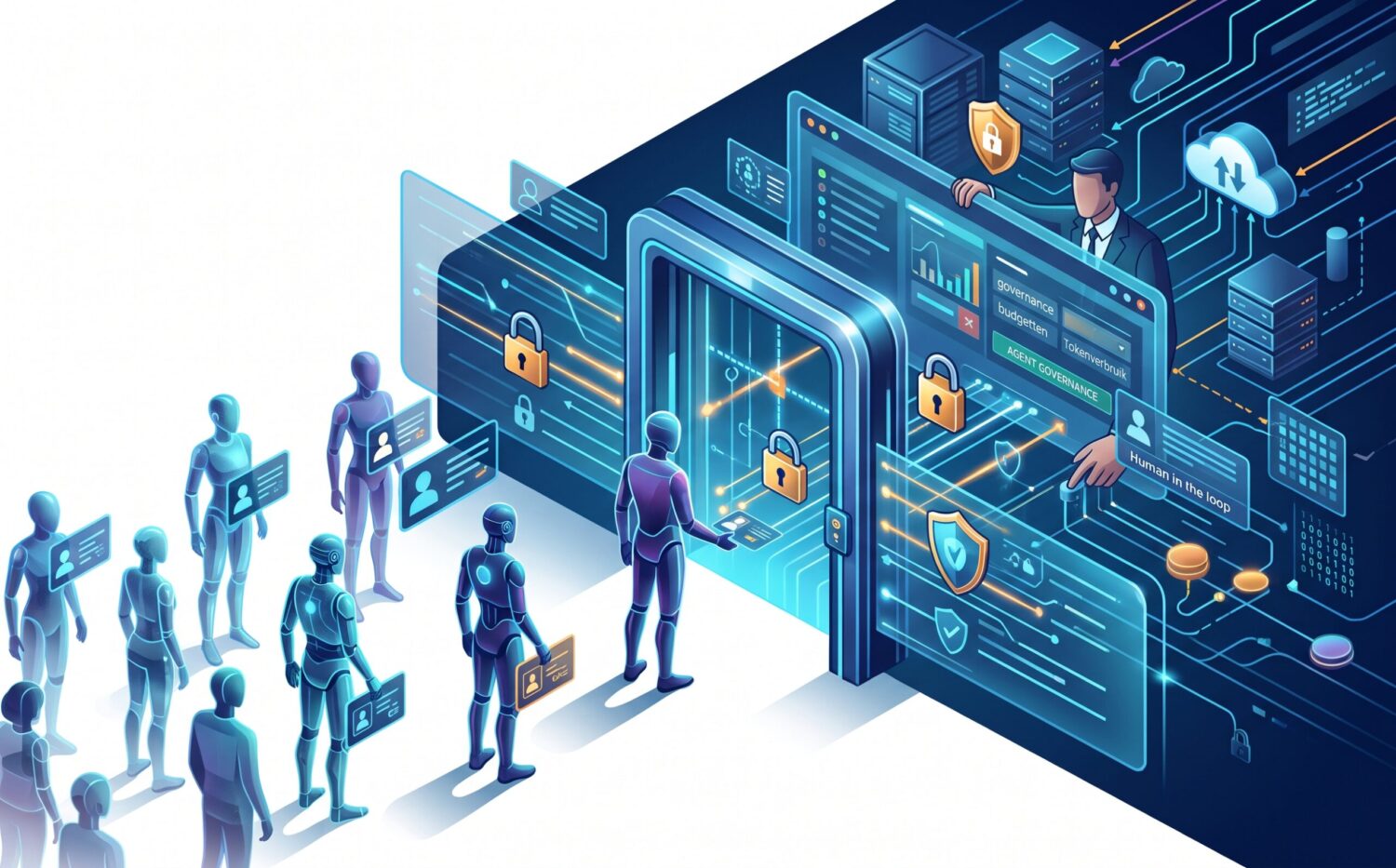
AI agents are tapping into APIs: is governance ready?

As artificial intelligence agents increasingly gain direct access to business applications and APIs, organizations face a major challenge in maintaining proper IT governance. According to Hans Bot, an enterprise architect at Yenlo, businesses must fundamentally update how they control these digital entities. Because agents now act independently on behalf of users, standard access controls are no longer sufficient. If unmanaged, these "shadow agents" can gain excessive permissions across a network, creating significant security risks. To solve this, Bot argues that every AI agent requires a distinct digital identity and credentials, much like a human employee. This allows systems to properly authenticate the agent, define the scope of its actions, and revoke its access when no longer needed. Additionally, traditional API gateways are inadequate for monitoring agents because agents exhibit behavior and consume resources rather than just passing data. This shift demands specialized management tools to evaluate an agent's effectiveness, track its usage, and implement conditional authorization for critical tasks. Ultimately, organizations must treat AI agents as an independent digital workforce that requires careful supervision and secure lifecycle management.

Read Original Article →

The Invisible Threat: Understanding the Hidden Risks of AWS Supply Chain Attacks

Amazon Web Services powers countless business operations, but relying on third-party tools and open-source software introduces hidden vulnerabilities. Supply chain attacks occur when cybercriminals infiltrate an organization’s cloud environment by compromising these external connections rather than attacking the core infrastructure directly. Even if internal security is remarkably strong, a flaw in a trusted external package or development pipeline can easily give attackers a foothold. Once inside, they can escalate privileges, move laterally across systems, expose highly sensitive data, or severely disrupt applications. A recent incident involving the data platform Qubole showed how attackers actively exploited outdated cross-account permissions to secretly access customer cloud environments and steal information. Preventing these invisible threats requires a critical shift in focus well beyond the immediate cloud setup. Organizations must actively manage their entire software supply chain by maintaining a complete inventory of software components, continuously monitoring third-party behavior, and enforcing strict access controls. Regularly reviewing permissions, securing deployment pipelines, scanning workloads for weaknesses, and evaluating vendor security practices are essential steps to ensure external connections never become the weak link in your infrastructure.

Read Original Article →
Article Thumbnail

The FIPS Fallacy Behind Classified Data Protection

As artificial intelligence and connected operations push vast amounts of classified information to field devices, the risk of losing sensitive data has escalated. A dangerous misconception has emerged among security officials who rely solely on FIPS-certified encrypted drives to protect classified data at rest. While these drives meet federal standards for encryption, they only validate the cryptography itself, not the security of the overall system. If an adversary captures a device, encryption alone cannot prevent access without robust authentication measures. True data protection requires a combination of encryption and independent authentication layers, ensuring that physical possession of a device does not mean access to its contents. The National Security Agency has already outlined a comprehensive architecture for this through its Commercial Solutions for Classified program. In the past, cost and complexity deterred widespread adoption of these solutions, but today, this technology is readily available and competitively priced through standard defense suppliers. With clear policy direction and accessible technology, organizations must move beyond the false security of basic encryption and implement complete data protection architectures before a lost device turns into a national security incident.

Read Original Article →

Cybersecurity Has a Resolution Problem. Exposure Debt Is the Proof

For years, the primary goal in cybersecurity was finding vulnerabilities before attackers could exploit them. Thanks to better tools and artificial intelligence, security teams are now discovering system flaws at an unprecedented speed and scale. However, this success has created a new operational problem: organizations simply cannot fix these issues as fast as they find them. Even though teams are resolving problems quicker than before, the sheer volume of new findings is causing massive backlogs. This growing pile of known but unfixed vulnerabilities is known as exposure debt. Every unresolved issue sitting in a queue represents a real risk that attackers, who are also using artificial intelligence to speed up their own capabilities, can exploit. While improving discovery methods remains important, finding a flaw is effectively meaningless if it stays open indefinitely. Organizations need to consciously shift their focus and resources toward the later stages of the security process. By investing in better validation, clear ownership, and faster engineering responses, security leaders can ensure they are actually reducing their overall risk rather than just adding to a constant list of problems to solve.

Read Original Article →
Article Thumbnail

You’ve decided to repatriate cloud workloads. Now what?

After years of shifting operations to the cloud, many organizations are now moving workloads back to their own facilities or shared data centers. This shift is not a rejection of cloud computing but a necessary rebalancing to create blended environments. Companies are making this move to regain control over security, navigate data privacy rules, and reduce the hidden costs of moving large amounts of data. Artificial intelligence applications, in particular, are returning to local servers to protect sensitive information and manage expenses. However, bringing operations back in-house introduces major hurdles. Companies face severe shortages in physical space and power capacity, making it difficult to house new equipment. They must also untangle complex networks and redesign applications that were originally built for specific cloud platforms. Furthermore, there is a significant skills gap, as many teams have lost traditional hardware expertise over the last decade. To succeed, leaders must secure physical space early and design their networks to seamlessly connect across multiple environments. They should also maintain an automated, user-friendly experience while investing heavily in training their staff to manage both physical and digital infrastructure effectively.

Read Original Article →

Maintainers don’t need more AI bug reports. They need fixes.

Open source software maintainers are currently overwhelmed by a flood of automated, poor bug reports generated by artificial intelligence. Rather than helping, these raw findings create unnecessary work, as developers must sift through false positives and duplicates to find real issues. To solve this, GitHub and Microsoft recently partnered on a pilot program called Codename MDASH, designed to rethink how artificial intelligence assists developers. Instead of simply dumping raw scan results on project leaders, the program used a careful, layered process. First, an automated system scanned six widely used open source projects to flag potential vulnerabilities. Next, an intelligent triage tool filtered out duplicates and irrelevant alerts. Crucially, human security researchers then reviewed every remaining finding by hand. As a result, the thousands of initial alerts were narrowed down to just 99 verified, private reports, each including a suggested patch. This approach worked well. By receiving a clear fix rather than a vague warning, maintainers were able to resolve more than half of the issues rapidly. The pilot demonstrates that artificial intelligence is most valuable when it provides verified solutions rather than just pointing out endless potential problems.

Read Original Article →
Article Thumbnail

What IT Teams Can Learn From OT About Store Security

Recent cyberattacks on European supermarket refrigeration systems highlight a major security gap in retail: connected store equipment often lacks clear ownership. Devices like refrigeration controllers often fall into a gray area between facilities teams, IT departments, and external contractors. Because no single group owns the risk, these systems frequently run on outdated firmware and escape standard IT security checks. When attackers access these systems through exposed web interfaces, the results are devastating, leading to spoiled inventory, fires, and complex operational recovery. IT leaders can address this by adopting the Purdue model, an approach long used by operational technology (OT) teams to segment networks into distinct layers. Instead of allowing direct internet access to critical hardware, this model ensures each layer only communicates with its immediate neighbors. By combining this tiered structure with zero-trust principles to strictly manage third-party and contractor access, retailers can drastically reduce their exposure. The first practical step is simply identifying what equipment exists, who owns it, and ensuring it is no longer directly exposed to the internet.

Read Original Article →
Article Thumbnail

New security needs emerge as physical access threats surpass cybercrime concerns at data centres for the first time

For the first time in nearly a decade, data center professionals are reporting that physical and human threats have finally surpassed traditional cybercrime concerns like ransomware. The explosive growth of artificial intelligence has completely transformed these facilities into high-value targets, housing critical multi-million-dollar hardware and blurring the line between physical and digital security. Insiders, whether acting with malicious intent or simply making negligent mistakes, pose the absolute greatest risk because they already possess valid access credentials. Their routine actions can easily blend in with normal daily tasks, making them very hard to detect and incredibly costly when data breaches actually occur. To directly address this growing issue, facility operators are now rapidly adopting advanced physical security measures, such as continuous biometric tracking and strict entrance controls, to verify human identity throughout an entire site. This shift is also heavily driven by the urgent need to protect essential supporting infrastructure, like water cooling and renewable energy systems, which are increasingly vital for high-density computer workloads. As new regulatory frameworks continue to tighten globally, organizations must actively integrate their physical and digital security strategies to ensure comprehensive resilience against all vulnerabilities.

Read Original Article →
Article Thumbnail

Putting AI in a Cage: The Architecture of Controlled Intelligence

As artificial intelligence systems evolve from simple text generators into capable agents that can interact with APIs, modify files, and execute tasks, our approach to security must shift from focusing solely on the model to securing the entire architecture around it. An AI model is merely the reasoning engine; the real risk lies in the authority and tools granted to it. To safely harness these capabilities, we must place AI in a controlled environment built on seven essential layers: a replaceable model for intelligence, orchestration to coordinate tasks, strict least-privilege permissions, isolated execution environments like sandboxes, independent validation to verify outcomes, comprehensive observability to track actions, and human control for high-stakes decisions. By separating a system’s raw capability from its granted authority, we prevent issues like prompt injection and excessive agency from turning minor mistakes or malicious inputs into catastrophic failures. The ultimate goal is not to maximize an agent’s autonomy at the expense of safety, but to design a structured, verifiable workspace where it can perform useful work while remaining securely contained and accountable.

Read Original Article →
Article Thumbnail

17 Human Capabilities Leaders Should Prioritize In The AI Era

As artificial intelligence takes on more technical and operational tasks in the workplace, smart leaders are shifting their focus to uniquely human skills that technology cannot replicate. Rather than just relying on algorithms to generate data and answers, employees must use their own judgment to interpret results, question assumptions, and make sense of ambiguity. To thrive in the AI era, leaders should prioritize developing skills like critical thinking, proactive accountability, and emotional intelligence within their teams. Empathy remains essential for building trust-based relationships, while the ability to manage conflict and disagree constructively ensures that human insight catches what algorithms might miss. Furthermore, teams need to cultivate the capacity for strategic application and discernment, shifting their value from merely producing information to evaluating it wisely. While AI accelerates speed and efficiency, it requires humans to supply context, ethical judgment, and creative problem-solving. Ultimately, the integration of AI in everyday work makes our ability to connect, lead, and think critically more important than ever for driving long-term business success.

Read Original Article →

Daily Tech Digest - November 04, 2026

Quote for the Day
“The team owns the process — the Scrum Master owns the improvement.”
— Henrik Kniberg
Audio Edition — Listen to Today’s Digest
Narrated version of the Daily Tech Digest
Article Thumbnail

How good is your cloud exit strategy?

The article argues that most enterprises assume they can leave a cloud provider whenever they want, but the way systems are actually built makes that far harder in practice. A cloud exit strategy isn’t about abandoning the cloud; it’s about avoiding architectural choices that quietly lock the business into one provider. The piece explains that portability is a business requirement, not just a technical ideal. If pricing changes, regulations shift, or a region goes down, the organization should have options that don’t require a multi‑year rewrite. The article highlights four areas where lock‑in usually hides: identity systems tied too tightly to a provider’s access model, data stored in proprietary formats or managed services without a clear extraction path, networking built around provider‑specific constructs, and infrastructure‑as‑code templates that encode assumptions only one cloud understands. It stresses that using native services is fine as long as the dependency is intentional and documented. The steady message is that cloud exit architecture is about flexibility — knowing what can move, what can’t, and what trade‑offs you’re accepting before they become constraints.

Read Original Article →

Industrial AI adoption outpaces security readiness, leaving OT environments exposed to emerging threats

The integration of artificial intelligence into industrial and operational technology is happening faster than the security measures needed to protect it. While many organizations are adopting AI to improve efficiency and predictive maintenance, they often lack the tools to detect when these models or the data feeding them have been compromised. Unlike traditional cyberattacks, a manipulated AI model might not trigger standard security alerts. Instead, it often looks like a routine equipment failure, a slow loss of efficiency, or a subtle change in physical processes, making it hard to identify. Attackers can exploit these systems by feeding them bad data or manipulating the models to make unsafe decisions. Because AI relies on sensor inputs that were not originally designed with modern security in mind, the physical safety of industrial plants is at risk. To safely use AI, organizations must treat these tools as advisors rather than giving them direct operational control. They should also rely on strict engineering practices, continuous monitoring, and independent safety systems to ensure reliable operations.

Read Original Article →
Article Thumbnail

Your Tools Should Answer to the Profession

Enterprise architects are often trapped by software tools that force them into proprietary data models, making it difficult to transfer work or change vendors. Instead of software companies dictating what an architecture artifact is, the profession itself should define the standards. Using the Business Technology Architecture Body of Knowledge (BTABoK), architects can rely on open models and shared formats, ensuring that their daily work remains highly accessible and transferable. When tools adopt these open standards, they no longer need to invent custom data structures that limit flexibility. Instead, software vendors can compete on practical features like better editing, deeper analysis, and smoother collaboration. To support this shift, a formal licensing and accreditation program ensures tools faithfully read and write standard formats without quietly altering them. While experimental platforms like Ergane help test and refine these open standards, the ultimate goal is a diverse market of independent tools that all speak the same language. By taking control of the standards, architects ensure their models remain readable, portable, and relevant for years, freeing teams from restrictive vendor lock-in.

Read Original Article →
Article Thumbnail

Beyond the HR File: Governing Employee Data Under India’s DPDP Act

ndia’s Digital Personal Data Protection (DPDP) Act of 2023 changes how businesses must handle employee information, clarifying that employment itself does not grant a company unlimited rights to an individual’s personal data. While the law permits organizations to process data for specific employment purposes—such as managing payroll or protecting corporate assets—it does not offer a blanket exemption for activities like using personal phone numbers for public customer service, featuring employee photographs in marketing campaigns, or circulating full resumes to prospective clients. Employers must carefully examine the true purpose of their data collection, establish clear legal boundaries, and ensure that data is only shared or retained as strictly necessary. For uses outside essential employment functions, companies must obtain specific, informed, and optional consent without pressuring staff. To stay compliant and lower risks, organizations should document their data practices, implement strong security controls, rely on business-managed communication tools, and minimize the personal details shared externally. Ultimately, safeguarding employee privacy requires treating their data with the same careful governance applied to customer information.

Read Original Article →
Article Thumbnail

Elon Musk Says Neuralink's Blindsight Will Bring Sight to the Blind

Elon Musk recently announced that Neuralink’s second product, Blindsight, is engineering-ready and aims to restore vision for the blind, including those without sight since birth. The device works by bypassing the eyes entirely, using a camera to send visual data directly to a brain implant. This implant stimulates the visual cortex to create tiny flashes of light, forming a low-resolution map of a person's surroundings. While the hardware and robotic surgical implementation represent notable engineering progress, medical experts advise caution regarding the real-world timeline and functional results. Regulatory approval for such a complex brain implant will likely take years of rigorous safety trials. Furthermore, researchers point out that previous attempts at cortical stimulation have struggled to produce useful, patterned vision beyond simple flickering lights. For patients blind since birth, the brain often repurposes the visual cortex for other senses, complicating how these signals might be perceived. Ultimately, while Blindsight brings advanced hardware to the table, solving the long-term biological and neurological challenges of artificial vision remains a significant hurdle.

Read Original Article →
Article Thumbnail

The most popular programming languages in 2026 – and some good news on developer job growth

Recent data from 2026 shows that despite the rapid rise of autonomous AI coding assistants, the core landscape of software development remains remarkably stable. According to an analysis of multiple industry surveys, the most popular programming languages have barely shifted. Python, Java, and JavaScript continue to dominate the top three spots, while legacy systems ensure languages like COBOL and Fortran maintain a persistent presence. However, the most significant finding contradicts the widespread fear of a developer replacement crisis. Since the widespread adoption of these advanced coding tools, the month-over-month growth rate for software development jobs has actually increased. In fact, current demand for developers is actively outpacing overall job market growth. The data suggests that rather than eliminating the need for human programmers, these efficiencies may be driving new demands and altering the structure of the profession. Ultimately, the fundamental tools of the trade remain the same, and the market for developers continues to expand, proving that human oversight and architectural skills are still highly valued in the industry.

Read Original Article →
Article Thumbnail

The End Of Software Archaeology: Why The Old Rules Of System Modernization No Longer Apply

Modernizing older business software systems has historically felt like archaeology. As systems age, they accumulate layers of unrecorded choices, outdated assumptions, and quick fixes that make them difficult to update without causing unexpected failures. For a long time, developers had to manually trace how these systems worked before they could safely improve them, a slow and risky process that often took up the majority of their time. However, the approach to system modernization is changing because of artificial intelligence. Instead of manually digging through old code, engineering teams can now use AI to generate detailed maps of a system's structure. These tools analyze dependencies and business context, revealing exactly how different components interact and where vulnerabilities hide. By providing a clear picture of what relies on what, AI helps organizations decide precisely which parts of a system require an update and which reliable elements they can leave alone. This targeted approach prevents the need for complete, expensive system rebuilds, allowing companies to upgrade their technology safely, efficiently, and with much greater clarity.

Read Original Article →

Future-proofing enterprise AI: The impact of post-quantum cryptography on Red Hat AI Enterprise

As the rapid growth of generative AI collides with the emerging threat of quantum computing, organizations must rethink how they protect their data. Current encryption methods are vulnerable to "harvest now, decrypt later" attacks, where malicious actors intercept and store sensitive AI models and proprietary data until quantum computers become powerful enough to break standard security. To counter this, Red Hat is integrating new post-quantum cryptography standards into its AI platform. Rather than abruptly abandoning classical encryption, this approach uses a hybrid model, combining traditional and quantum-safe algorithms to secure data in transit. This shift fundamentally protects the entire machine learning lifecycle. During data ingestion, upgraded network connections prevent surveillance. Within automated pipelines, quantum-safe digital signatures verify software components, blocking compromised code before it runs. Finally, securely signing the trained AI models ensures that these valuable assets remain tamper-proof in storage. By embedding these advanced cryptographic defenses across the architecture, organizations can confidently build and deploy artificial intelligence without exposing their most valuable intellectual property to future quantum threats.

Read Original Article →

Digital sovereignty starts with knowing your exit

Digital sovereignty is increasingly becoming a board-level priority as organizations recognize the risks of deep dependence on single technology vendors. Triggered by geopolitical events and sudden technology restrictions, business leaders are realizing that true operational resilience requires more than just securing data; it demands a clear exit strategy from key suppliers. Rather than completely avoiding major providers, organizations are urged to build flexible, modular systems that allow them to switch services if costs spike or access is restricted. Experts recommend taking an inventory of current vendor dependencies and identifying critical areas where alternative solutions are necessary. Open-source software offers a pathway to independence, as it grants organizations the right to inspect, modify, and migrate their code without being locked into proprietary constraints. Ultimately, achieving digital resilience means negotiating exit terms before signing new contracts and treating core services like cloud computing as interchangeable utilities. By planning for departure from the start, companies can ensure that staying with a vendor remains a deliberate choice rather than a costly necessity.

Read Original Article →

The rise of AI governance: Why organisations need a new generation of risk leaders

The article argues that as AI becomes deeply embedded in business decisions, organisations need a new generation of risk leaders who can oversee how these systems are designed, deployed, monitored, and challenged. Michael Sell of GARP explains that AI governance can’t sit only with technical teams; it requires shared accountability across boards, business leaders, risk functions, technology, and HR. He highlights the growing demand for roles such as AI risk managers, governance officers, assurance specialists, and model‑risk experts, along with the need to upskill existing professionals in areas like bias, data quality, security, model drift, and responsible‑AI principles. Sell stresses that oversight must span the entire AI lifecycle and that employees should feel confident questioning AI outputs rather than accepting them automatically. He also notes that leadership must develop enough literacy to understand AI risks and their impact on strategy and accountability. The article’s steady message is that organisations cannot scale AI safely without building governance talent, strengthening human judgement, and creating a culture where people can challenge machine‑generated decisions.

Read Original Article →

Daily Tech Digest - October 25, 2026

Quote for the Day
“The only way to win is to learn faster than anyone else.”
— Eric Ries
Audio Edition — Listen to Today’s Digest
Narrated version of the Daily Tech Digest
Article Thumbnail

Core Concepts in Infrastructure Cost Management

The article revisits how organizations should think about infrastructure cost management by comparing on‑premise and cloud deployment patterns. It notes that a decade ago, cloud was widely seen as the inevitable future, but recent shifts show that on‑premise environments still offer advantages worth reconsidering. On‑premise setups involve not just servers but the full physical ecosystem — racks, networking gear, cooling, power, and security — all of which carry long‑term financial and operational implications. The piece explains that while on‑premise environments are often labeled inflexible, they can be surprisingly adaptable when paired with modern automation frameworks. The real challenges lie in hardware lifespan decisions, sizing development and QA environments, managing shared analytic workloads, and maintaining disaster‑recovery sites that are costly to keep idle. These factors shape both capital and operational expenses over many years. The article’s steady message is that cost management requires understanding the trade‑offs between flexibility, predictability, and long‑term commitments, and that both cloud and on‑premise models have strengths that deserve thoughtful evaluation rather than assumptions.

Read Original Article →

Container Security Checklist for CI/CD Pipelines: 30 Checks From Commit to Runtime

This article presents a practical security checklist containing 30 checks for container images as they move through continuous integration and deployment pipelines. The core message is that actual security comes from enforcing rules, not just listing best practices. The checks span eight stages, from the initial code commit to runtime monitoring. In the early stages, teams should build minimal images, remove all secrets, and lock down third-party actions. Later stages focus on vulnerability scanning that blocks risky deployments, generating software bills of materials, and digitally signing images to guarantee they came from a trusted build. At deployment, admission controllers must verify signatures and restrict permissions so images cannot run with root access or modify the underlying host. Because the pipeline itself is a high-privilege system that can be compromised, securing the build process is just as important as securing the image. Implementing these checks incrementally—starting with basic Dockerfile hygiene—prevents common mistakes and ensures a cleaner, safer production environment.

Read Original Article →
Article Thumbnail

Cloud repatriation: What CISOs need to know

The article explains that cloud repatriation is becoming a practical concern for CISOs, not because enterprises are abandoning the cloud, but because many workloads no longer fit the cloud‑first assumptions of the past decade. Surveys show that while 86% of CIOs plan to move at least some workloads back on‑premises, only about 8–9% intend a full exit, meaning most organizations are simply recalibrating workload placement rather than rejecting cloud altogether. Cost discipline is a major driver, with private cloud often delivering 40–50% lower total cost of ownership for steady‑state workloads. Compliance, data‑gravity issues, and high‑intensity AI workloads also push certain systems back into controlled environments. The article stresses that hybrid infrastructure is becoming the long‑term norm, where each workload “earns” its placement based on economics, performance, and risk. For CISOs, this shift introduces new responsibilities: reassessing threat models, ensuring consistent controls across mixed environments, and preparing for operational risks tied to vendor concentration and geopolitical disruptions. The message is steady — repatriation is about precision, not retreat, and CISOs must adapt security strategies accordingly.

Read Original Article →

The Cybersecurity Reality Check: Ten Myths That Matter

The article challenges ten common assumptions that often mislead leaders about cybersecurity and explains why these misconceptions create real risk. It notes that serious incidents rarely stem from exotic technical failures; instead, they usually begin with flawed beliefs about who attackers target, where responsibility sits, or what “adequate protection” really means. One myth is that small organizations are too insignificant to attract attention, but attackers typically exploit exposed systems using automated tools, making size irrelevant. Smaller firms may even be more vulnerable because they have fewer security resources and weaker monitoring. Another misconception is that cybersecurity is purely an IT function, when governance and accountability actually rest with leadership. The article stresses that regulatory scrutiny in the UK and EU has intensified, and breaches can quickly lead to investigations, litigation, business interruption, and reputational harm. Ultimately, the piece argues that organizations must be able to justify their security measures as proportionate to their risks and abandon assumptions that no longer match today’s threat landscape.

Read Original Article →
Article Thumbnail

When Trust Fails: What the eMudhra Certificate Incident and PHP Vulnerabilities Teach Us About Zero Trust Security

In October 2026, two distinct cybersecurity events—a certificate failure by eMudhra and critical remote code execution flaws in PHP—highlighted a fundamental lesson for software engineers: trust must be constantly verified. The eMudhra incident involved weak intermediate cryptographic keys generated by a flawed process. Even though eMudhra itself was not hacked, the incident proved that secure connections rely on trustworthy underlying processes, not just a padlock icon. Meanwhile, the PHP vulnerabilities demonstrated that securing an application requires patching the entire software stack, not just the core code, because a vulnerable runtime can serve as an easy entry point. Together, these events show why modern systems must move away from assuming that any internal network or familiar request is automatically safe. Instead, engineers should adopt a strict verification approach. This means validating identity, authorization, and context at every boundary, properly handling access tokens, and protecting communication between internal services. Ultimately, security is an ongoing engineering process of continuous verification rather than a single static feature or one-time setup.

Read Original Article →

What OT detection actually reveals

Securing operational technology (OT) environments requires a fundamentally different approach than standard IT security. While conventional IT tools excel at spotting network anomalies, they lack the critical physical process context needed to recognize when otherwise legitimate industrial commands are used for malicious disruption. OT detection platforms solve this by combining industrial protocol awareness with a deep understanding of normal operational behavior and physical constraints. A solid asset inventory is the foundational first step. From there, effective OT security relies on five core capabilities: monitoring industrial protocol anomalies, establishing strict baselines for process behavior, tracking engineering workstation activity, closely managing remote vendor access, and correlating traffic across the IT/OT boundary. Because OT involves physical processes where any disruption can impact safety, detection must be paired with structured, pre-planned response strategies. Automated actions are generally safe only at the IT or DMZ layers. Any direct intervention touching physical plant controllers requires clear authorization from operations teams to ensure production environments remain safe and stable.

Read Original Article →
Article Thumbnail

AI accelerates path from IT compromise to OT targeting

The article explains that AI is accelerating the path from IT compromise to OT targeting, making industrial environments more exposed than before. Attackers can now use AI to quickly analyze stolen IT data, map relationships, and identify the most valuable operational assets to target. This shortens the traditional gap between breaching corporate networks and moving into industrial systems. The piece notes that modern OT environments are increasingly connected to cloud services, remote access tools, and SaaS platforms, creating more entry points and making it harder to maintain clear separation between IT and OT. AI also helps attackers craft more convincing phishing messages, automate reconnaissance, and generate malware tailored to specific environments. At the same time, defenders struggle with legacy systems, inconsistent visibility, and slow patch cycles. The article argues that organizations must rethink OT security by improving asset inventories, tightening identity controls, and preparing for faster, more automated attack chains. Its message is steady: AI has changed the tempo of intrusions, and OT security must adapt to match that speed.

Read Original Article →

The next manufacturing cyber threat is manipulation of AI-driven decisions

As manufacturing becomes increasingly connected, the nature of cybersecurity threats is shifting. According to Pradipta Patro, Chief Information Security Officer at Polycab India Limited, the next major risk isn't just about keeping hackers out of the network. It is about protecting the artificial intelligence systems that influence critical operational decisions. If an attacker manipulates the data feeding an AI model, the system could make unsafe or faulty decisions without triggering traditional alarms. This goes beyond compromised information, directly threatening production quality, equipment reliability, and even worker safety on the factory floor. To address this, security must be built into factories from the ground up rather than added later as an afterthought. Manufacturers need complete visibility into all connected devices, strong network boundaries between IT and operations, and meaningful human oversight of AI decisions. Ultimately, cyber resilience must be treated as a core business continuity issue. The most successful factories will be those that can fully trust their automated systems because they secured the underlying data first.

Read Original Article →
Article Thumbnail

Digital twins in oil and gas: from simulation to real-time optimisation

Digital twins in the oil and gas sector are evolving from isolated engineering studies into practical tools that drive daily operations. Historically, creating a digital twin took months and became outdated as soon as the physical equipment changed. Today, advanced models can be built quickly, update automatically alongside physical wear, and connect across entire systems. A key shift is the use of physics-based modeling rather than just relying on historical data. Purely statistical models struggle when equipment faces new or unobserved conditions. By grounding the software in the actual laws of fluid dynamics and heat transfer, operators receive reliable, real-time recommendations they can trust. This approach accounts for uncertainty, allowing teams to optimize active equipment and reduce waste like methane flaring by safely pushing production closer to its true limits. Solving the challenge of scaling these tools in energy operations also opens the door for similar efficiency gains in other complex, high-demand environments, such as data centers and power grids.

Read Original Article →
Article Thumbnail

Data Sovereignty is Becoming a Design Principle for Enterprise AI

In the past, data sovereignty simply meant knowing the physical location of your company’s servers to meet regional laws. Today, artificial intelligence has fundamentally changed this. Because data now constantly flows through various external applications, language models, and processing tools, maintaining control over it has become much more complex. Instead of trying to lock down an entire organization, companies should focus on individual tasks. For example, processing public marketing information requires far less strict control than handling sensitive medical records. A major challenge is ensuring that safety rules follow the information wherever it goes. When original records are transformed into formats that AI can read, those new formats must inherit the same restrictions. Tracking this movement requires strong underlying data tagging. To manage this effectively, businesses should view sovereignty as a flexible budget. They must calmly weigh the need for strict control against the benefits of using advanced, external technology. Ultimately, building a flexible setup allows teams to continuously adjust their safety measures as rules and technology evolve.

Read Original Article →

Daily Tech Digest - July 01, 2026


Quote for the day:

"Winners are not afraid of losing. But losers are. Failure is part of the process of success. People who avoid failure also avoid success." -- Robert T. Kiyosaki

🎧 Listen to this digest on YouTube Music

▶ Play Audio Digest

Duration: 18 mins • Perfect for listening on the go.


Cloud repatriation is back on the agenda

Cloud repatriation is making a significant return to the enterprise agenda, driven by the need to optimize workload placement rather than a simple nostalgia for on-premises infrastructure. Organizations are increasingly shifting applications and data from public clouds to colocation centers, hosted private clouds, or managed service providers. The primary catalyst for this shift is cost. While public cloud pricing is excellent for variable workloads, the expenses associated with predictable, always-on core systems—like compute, storage, and egress fees—often balloon unexpectedly over time. Performance is another critical factor. Many data-heavy applications benefit from being physically closer to users or systems to reduce latency and manage data gravity effectively. Additionally, stringent compliance, data sovereignty, and security requirements make dedicated infrastructure safer and easier to audit than sprawling hyperscale setups. Finally, repatriation helps companies avoid vendor lock-in, restoring architectural control and operational freedom. This trend does not indicate a failure of the public cloud model. Instead, it reflects a maturation in enterprise IT strategy. Leaders are moving away from a one-size-fits-all approach, thoughtfully evaluating whether each application belongs in the cloud or in a more predictable, closely controlled environment.


The Hidden Risks of Holding Excessive Data

While many organizations naturally want to hold onto as much information as possible, storing excessive data is a growing liability. The principle of data minimization by collecting only what is strictly necessary and properly disposing of it afterward is now a baseline requirement across global privacy frameworks like the GDPR and California privacy laws. When companies retain outdated emails, redundant files, and obsolete system logs, they significantly increase their vulnerability to data breaches, regulatory fines, and legal action. Unnecessary data also inflates operational and financial costs by straining backup systems and increasing cloud storage expenses for information that serves no real business purpose. Simply having a policy for data retention is not enough; organizations must ensure that they securely and permanently erase information they no longer need. Traditional deletion methods often leave underlying files intact and recoverable, whereas secure erasure completely destroys the data. By adopting secure file disposal practices, companies can systematically reduce their risk exposure, improve the effectiveness of their overall security posture, and limit their legal liability. Ultimately, treating data minimization as a practical routine helps businesses reduce unnecessary costs while safely strengthening their long-term operational resilience and stability.


A CIO's guide to building a strategic finance roadmap that delivers ROI from week one.

The introduction of artificial intelligence requires organizations to completely rethink how they handle finance transformation. Instead of simply updating old systems piece by piece, companies must rebuild their financial operations from the ground up. This structural shift forces financial officers and IT leaders to collaborate from the very beginning, breaking down traditional departmental silos. To succeed, businesses need a strategic roadmap created by a planner who can effectively bridge the gap between complex technology and daily finance. A core principle of this approach is to "live on the first floor while building the second." This means designing initiatives that deliver immediate, continuous returns rather than making stakeholders wait years for a final payoff. Long-term projects without short-term results often suffer from lost funding and team fatigue. By securing quick, measurable wins, leaders maintain the momentum and confidence required to fund future phases. Underpinning this new structure is a rock-solid data foundation, which acts as the essential plumbing for all future tools, compliance, and security measures. Ultimately, the finance department of the future will seamlessly blend human expertise with advanced digital tools through careful, step-by-step implementation.


The SBOM Just Became a Liability With a Date on It

For years, creating a software bill of materials—a detailed list of all the components inside an application—was simply a good habit. Now, upcoming regulations like the EU Cyber Resilience Act are turning this voluntary practice into a strict legal requirement by late 2027. This shift fundamentally changes how organizations must handle the open-source code they use. Currently, an incomplete list of software components is just an operational blind spot that teams can fix on their own schedule. Soon, however, it will become a documented legal liability. Failing to accurately report software dependencies will be treated much like a financial misstatement, directly exposing executives to accountability. The core issue is that relying on external, open-source code introduces real risks if those tools fail or are compromised, similar to a manufacturer relying on an unpredictable supplier. To prepare, companies cannot rely on manual, last-minute audits to satisfy regulators. Instead, they must integrate strong tracking directly into how they build and source their software. The goal is no longer just having the document, but ensuring that the information inside it is entirely accurate and defensible.


The AI Token Costs That Can Break Cybersecurity

As cybersecurity tools increasingly adopt artificial intelligence to detect and investigate threats automatically, organizations face a new, unpredictable challenge: skyrocketing costs. Traditional security software is typically priced through predictable licenses. In contrast, advanced AI models charge by the token, meaning companies pay for every piece of data the system reads or writes. While basic machine learning and simple text generation have manageable costs, autonomous AI agents can run continuously, analyzing massive amounts of security data to track down threats. Because these agents operate without human pacing, a single complex investigation can consume millions of tokens in minutes, quickly exhausting security budgets. This financial unpredictability puts security leaders in a difficult position. If budgets run dry, teams might be forced to limit the data they analyze or disable automated investigations, which creates blind spots and compromises safety. To maintain strong defenses without breaking the bank, organizations must strategically balance their use of different AI technologies. By using traditional machine learning for broad detection and reserving costly autonomous agents for targeted actions, companies can achieve effective security outcomes while keeping their operational expenses manageable.


Architectural Patterns: Moving Beyond Cloud-Native to Local-First

In a recent InfoQ podcast, Adam Wiggins, co-founder of Heroku and Ink & Switch, discusses the architectural shift from a strictly cloud-native approach to a "local-first" paradigm. He notes that while the cloud era brought immense benefits like real-time collaboration and easy sharing, it also led to an over-reliance on centralized infrastructure for simple operations. This "everything-in-the-cloud" model can strip users of the control and data ownership they once had with traditional desktop files, and it creates critical vulnerabilities when network connectivity drops or servers fail. To bridge this gap, Wiggins advocates for local-first software that prioritizes offline capability, low latency, and user agency, without sacrificing cloud collaboration. He highlights how mature technologies like Conflict-free Replicated Data Types (CRDTs) allow local nodes—such as a user's phone or computer—to operate independently and sync seamlessly with a central server, much like the speedy issue-tracking tool Linear. Furthermore, he anticipates future advancements like bringing robust version control (branching, merging) to non-code tools and running smaller, high-performance AI models locally for routine tasks. Ultimately, the local-first movement is not a rejection of the cloud, but a pragmatic correction aiming for a balanced, resilient middle ground.


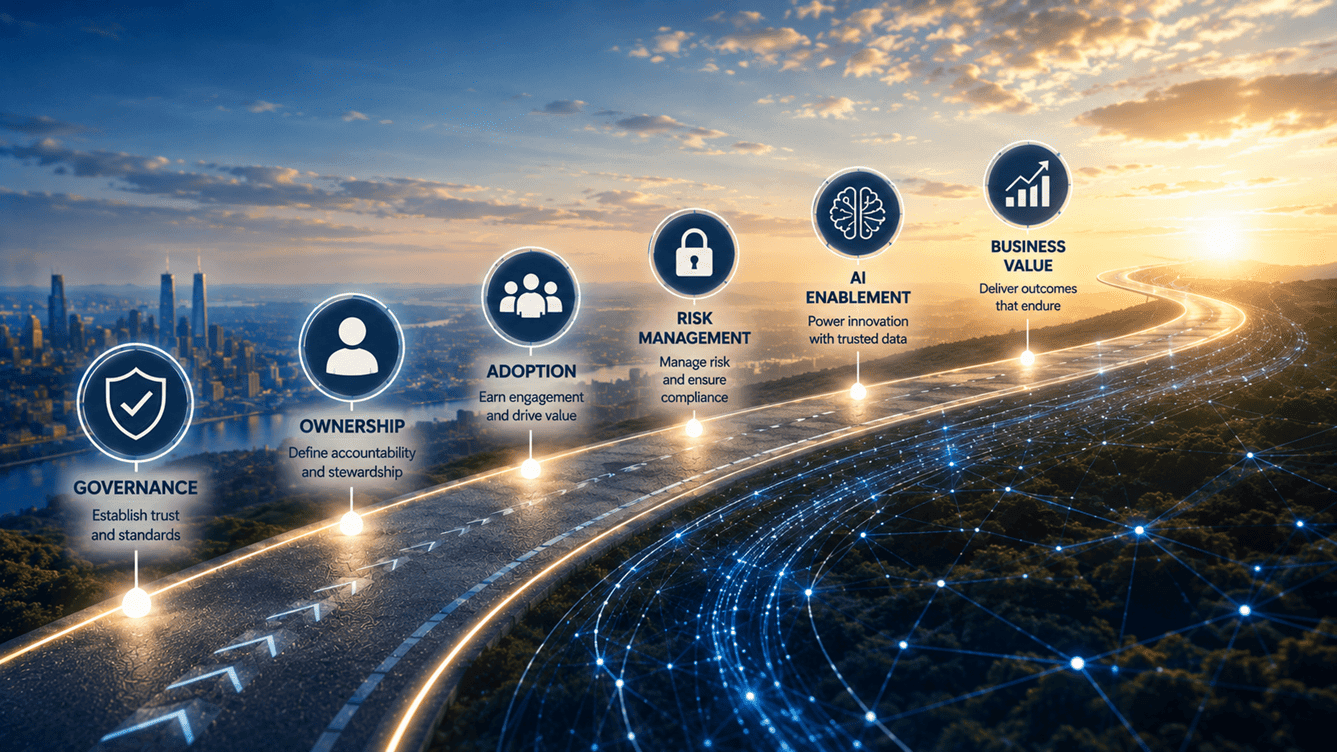
How to Build a CDO Career That Lasts Beyond 3 Years: Lessons From a 10-Year Stint In the Same Organization

Chief Data Officers (CDOs) often struggle to maintain their positions beyond three years because data transformations require long-term commitment, yet expectations are frequently set for short-term fixes. Based on the ten-year tenure of Justin Heller, former CDO of Synchrony Financial, building a lasting data career requires shifting the perspective from viewing data management as a temporary project to treating it as an ongoing operational capability. A successful CDO prioritizes business processes over technology and focuses on establishing clear data ownership based on expertise rather than mandates. Effective data governance should not be a policing function; instead, it must serve as an enabler that solves actual business problems, addresses regulatory risks, and supports decision-making. To drive adoption, leaders must focus on shared risks and outcomes rather than rigid compliance. While technology buzzwords come and go, the core challenges of trust, accountability, and documentation remain unchanged. Ultimately, a CDO's longevity depends on their ability to translate technical initiatives into tangible business impacts, such as improved efficiency and reduced risk, acting as a bridge between technical teams and business stakeholders.


What happens when an insurer thinks like a tech company

Aviva India is redefining its approach to insurance by shifting away from traditional methods and acting more like a technology company. Led by Chief Technology Officer Gyanendra Singh, the company is focusing on reducing friction for customers by using technology to create simpler and faster experiences. One of their major achievements is speeding up policy issuance from weeks to just a few minutes, primarily by integrating digital public infrastructure and paperless purchasing systems. They are also utilizing artificial intelligence for practical improvements, such as health assessment kiosks that use facial scans and automated document processing to speed up underwriting decisions. Instead of treating insurance as a product that is only used during emergencies or yearly renewals, Aviva is building a broader wellness system that tracks physical activity, offers diet recommendations, and rewards healthy behavior. Singh emphasizes that all technological investments must prove their value by directly improving customer experience and operational efficiency. Looking to the future, the company aims to move from a reactive model to a proactive one that actively prevents risks. Ultimately, Aviva believes that combining this modern, data-driven approach with strong data privacy and human empathy will set successful insurers apart in the coming decade.


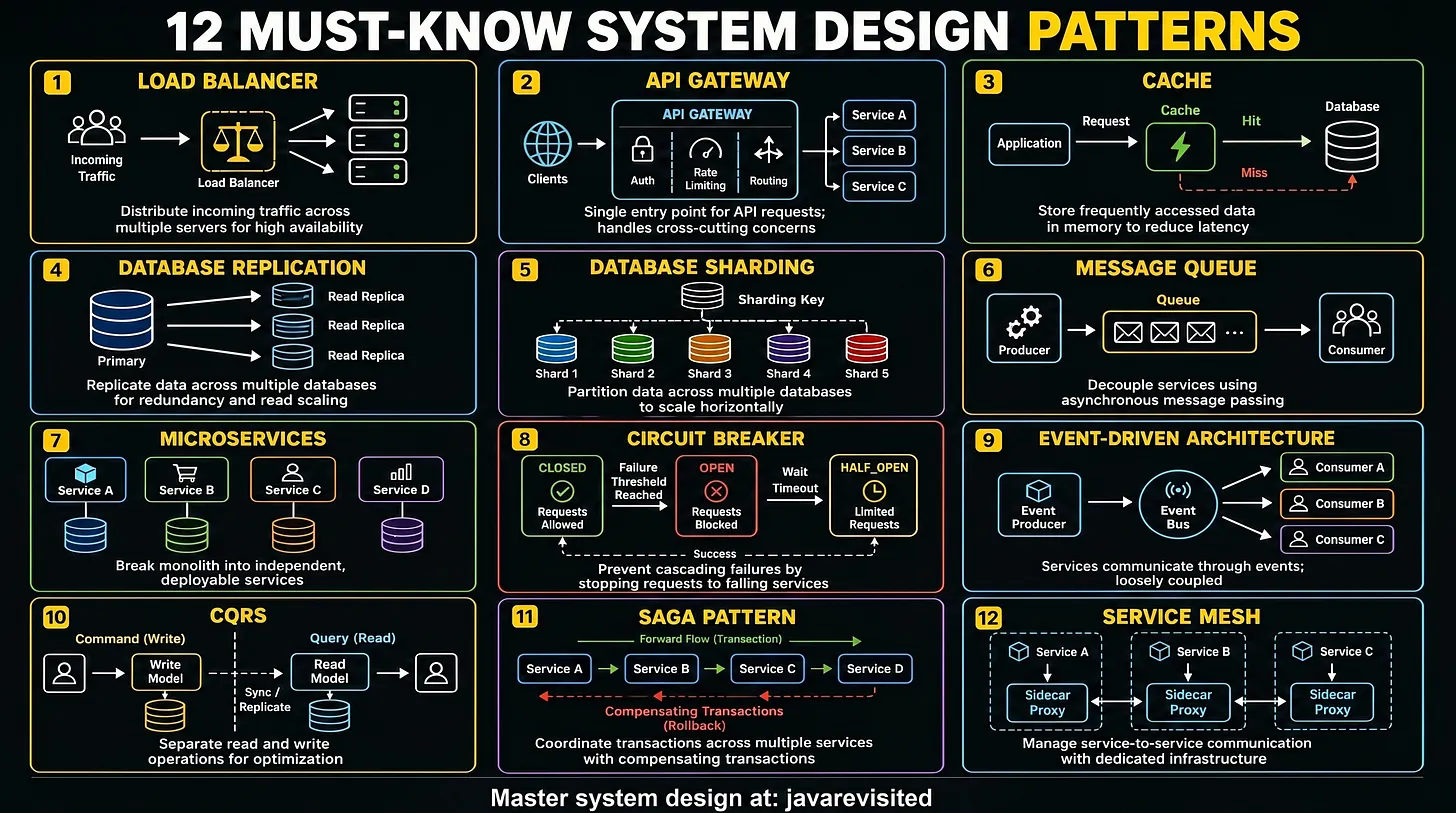
12 System Design Patterns Every Developer Should Know

The recently published article outlines twelve fundamental design patterns that are necessary for software developers to master in order to build reliable and efficient applications. Understanding these common patterns provides a clear and structured approach to solving complex architectural challenges and is particularly useful for engineers preparing for technical interviews. The text emphasizes that rather than simply memorizing solutions, developers should deeply grasp the underlying concepts of how different components interact within a larger network. The discussed patterns focus on strategies for managing network traffic and preventing server overload, utilizing tools such as gateways, load balancers, and rate limiters. The resource also highlights methods for ensuring data consistency and general availability, touching on database separation, temporary data storage, and message publication models. Furthermore, concepts like the circuit breaker pattern are presented as essential ways for maintaining application stability when external or dependent services fail. By integrating these basic architectural blueprints into their standard knowledge base, developers can make informed decisions regarding speed, wait times, and system resilience. Ultimately, familiarizing oneself with these twelve structural patterns equips engineers with the practical methods required to design systems capable of handling actual operational demands effectively.


Why Post-Quantum Cryptography Starts With Credentials

Quantum computers will eventually break the public-key cryptography that currently protects sensitive data, creating an urgent security challenge. Although capable quantum hardware may still be a decade away, attackers are already using a tactic called "Harvest Now, Decrypt Later." This means they capture encrypted data today, intending to unlock it when quantum technology catches up. Government agencies like the NSA and NIST are already setting deadlines to transition to quantum-resistant algorithms, a process that can take large enterprises several years to complete. The most significant risk lies in long-lived credentials and non-human identities, like service accounts and API keys. Because these credentials often persist for years, they are highly valuable targets for early harvesting. To prepare for a post-quantum future, organizations should adopt a credentials-first approach. This starts with taking a thorough inventory of existing cryptography and prioritizing the protection of secrets based on their lifespan and risk level. Migrating to hybrid cryptography—combining classical and quantum-resistant algorithms—offers a strong defense. Building systems with "crypto-agility" will also allow organizations to update their security protocols easily as standards evolve, ensuring long-term protection against emerging threats.