Showing posts with label fintech. Show all posts

Daily Tech Digest - August 22, 2026


Quote for the day:

“Remote work is not a different way of working; it’s simply a better way of working for many people.” -- Jason Fried

🎧 Listen to the audio debrief on YouTube

▶ Play Audio Digest

Duration: 19 mins • Perfect for listening on the go.


Neoclouds become AI’s new power brokers

A recent shift in the cloud computing industry has introduced a new type of service provider focused entirely on artificial intelligence infrastructure. These specialized companies provide the computing power, processors, and memory needed for intensive AI tasks. They are stepping in to meet a demand that traditional cloud providers cannot fully absorb. Because hardware like advanced processors and memory is currently scarce, many organizations are turning to these providers to access necessary computing power rather than attempting to build and manage their own systems from scratch. While large, established cloud companies will remain essential for standard daily tasks, the market is expanding to include these new options for AI projects. However, the author notes there is a real risk that companies might rush into large financial commitments without completely understanding their actual technical needs. Just as many organizations struggled with costly mistakes during the early shift to basic cloud computing, moving too quickly into specialized AI infrastructure can lead to severe financial waste. To avoid this, businesses should first clearly define what they actually require, model the financial implications, and carefully determine if their daily applications truly need these advanced capabilities before making substantial investments in new computing resources.


Best Strategies for Cloud Native Cost Optimization

As organizations increasingly adopt modern cloud architectures, managing the associated expenses has become an essential priority. While cloud systems provide flexibility and speed, their costs can easily spiral out of control due to poor visibility, abandoned databases, or oversized resources. Optimizing these expenses means thoughtfully reducing overall spending while maintaining the strict performance and security standards your services require to function effectively. To achieve this, teams should focus on several practical and proven strategies. First, ensure your resources are appropriately sized by matching processing and memory capabilities to actual application needs rather than provisioning for maximum possible demand. Setting strict guardrails within your deployment pipelines, such as specific budget thresholds and automated cleanups for temporary infrastructure, also helps prevent unnecessary waste. Regular cost analysis is equally important, allowing teams to track detailed spending patterns, identify financial anomalies, and forecast future needs accurately. Additionally, adjusting resource capacity automatically based on current traffic patterns helps keep bills in check. For specific tasks, relying on event-driven computing models can lower costs since you only pay when the code runs. Ultimately, cost optimization is not a one-time project; it requires continuous oversight and a commitment to aligning infrastructure spending directly with actual operational requirements.


AI threats are everywhere. A risk-first CISO decides what to prioritize

Artificial intelligence presents a dual challenge for cybersecurity, equipping both defenders and threat actors with unprecedented capabilities. According to Chris Wheeler, Chief Information Security Officers are now battling on two fronts. Externally, attackers are leveraging AI to automate reconnaissance, accelerate exploits, and conduct sophisticated automated cyber operations. Internally, organizations face significant exposure from employees using unapproved generative AI tools, which risks leaking sensitive data, and from autonomous AI agents that can inadvertently execute destructive actions. Wheeler warns that trying to secure every potential AI vulnerability is an impossible task. Instead, he advises security leaders to adopt a risk first strategy that treats AI exactly like any other fundamental business risk. The first step is mapping where AI is already deployed across the organization and determining which business assets are most critical. Rather than reacting to every new threat headline, they should prioritize foundational controls that mitigate the highest business impact. This means enforcing strict identity and access management, classifying sensitive data accurately, and implementing continuous vulnerability testing for IT infrastructure. Finally, organizations must conduct realistic tabletop exercises to prepare for the inevitable failure of AI systems or compromised agents, ensuring they can adapt successfully as the external threat landscape continues to evolve rapidly.


The role of AI in OT security starts with context

As operational technology (OT) systems in critical infrastructure become increasingly integrated with IT networks and the cloud, attackers gain new pathways to disrupt essential physical services. AI exacerbates this threat by enabling adversaries to discover vulnerabilities and automate exploits faster than ever before. However, the author Richard Springer highlights that applying standard IT security responses to OT environments is dangerous; automatically isolating a system during a cyberattack might safely protect data in an office setting, but could dangerously interrupt a physical process on a factory floor. To defend these systems effectively, AI can serve as a powerful tool for security teams by sifting through massive volumes of network data to detect anomalies and prioritize genuine threats. Before deploying AI, organizations must first establish foundational security practices, which include achieving complete visibility into their OT assets, implementing network segmentation, and securing remote access. Furthermore, any automated responses driven by AI must be carefully guided by specific operational context to prevent unsafe physical outcomes. Ultimately, successfully securing essential infrastructure relies on a combination of foundational security controls, AI-enhanced detection, and the informed judgment of human operators who deeply understand both cybersecurity and industrial processes.


Observability in the Oracle Agentic Enterprise

The transition to agentic AI requires a shift from traditional monitoring to comprehensive observability, as automated processes move from single deterministic paths to complex chains involving AI, integrations, and human judgment. Traditional monitoring merely checks if a system worked, whereas observability explains the entire process to determine if the collective actions produced the correct, authorized, and useful outcome. According to Sadia Tahseen, a mature observability model in this environment must examine four connected layers. First, integration execution tracks runtime records and errors using business identifiers to connect technical data with business context. Second, agent behavior observability captures how AI interacts with tools and information sources, assessing metrics like latency, error rates, correctness, and groundedness. Third, human-in-the-loop decisions provide critical feedback by recording why tasks escalated and how long decisions took, revealing where automated processes might be uncertain or poorly configured. Finally, observing business outcomes connects system performance with operational value, ensuring that agent runs translate into accurate, compliant, and cost-effective results. Crucially, because observability systems handle sensitive data, robust security and role-based access controls must be implemented to maintain accountability without creating unguarded repositories of enterprise information.


Why Risk Management Is Becoming Fintech's Greatest Competitive Advantage

The fintech industry is maturing, and its definition of success is shifting from rapid innovation and fast market expansion to resilience, trust, and effective risk management. With rising cyber threats, complex fraud schemes, and tightening regulations, modern fintech companies must provide secure and reliable services that meet the high governance standards of traditional financial institutions. Vaida Šinkunienė, Chief Risk Officer at WALLETTO, emphasizes that risk management is no longer merely a regulatory requirement but a strategic business enabler for sustainable growth. A robust approach balances safety with a seamless customer experience, utilizing automation, data analytics, and real-time monitoring to detect potential threats early without causing unnecessary friction for users. To navigate this continuously changing landscape, organizations must embed risk awareness deeply into their core culture, ensuring that technology, operations, and compliance teams collaborate from the very beginning of any new project. As financial crimes become increasingly sophisticated and regulatory expectations continue to rise, companies that treat risk management as a shared responsibility will adapt more swiftly. While digital products and tech features can be easily copied by competitors, a strong reputation for reliability and security cannot. Building and maintaining this trust is fintech's true competitive advantage today, offering the stability necessary for future innovation.


AI Agents Are Already Inside. Zero Trust Has to Catch Up
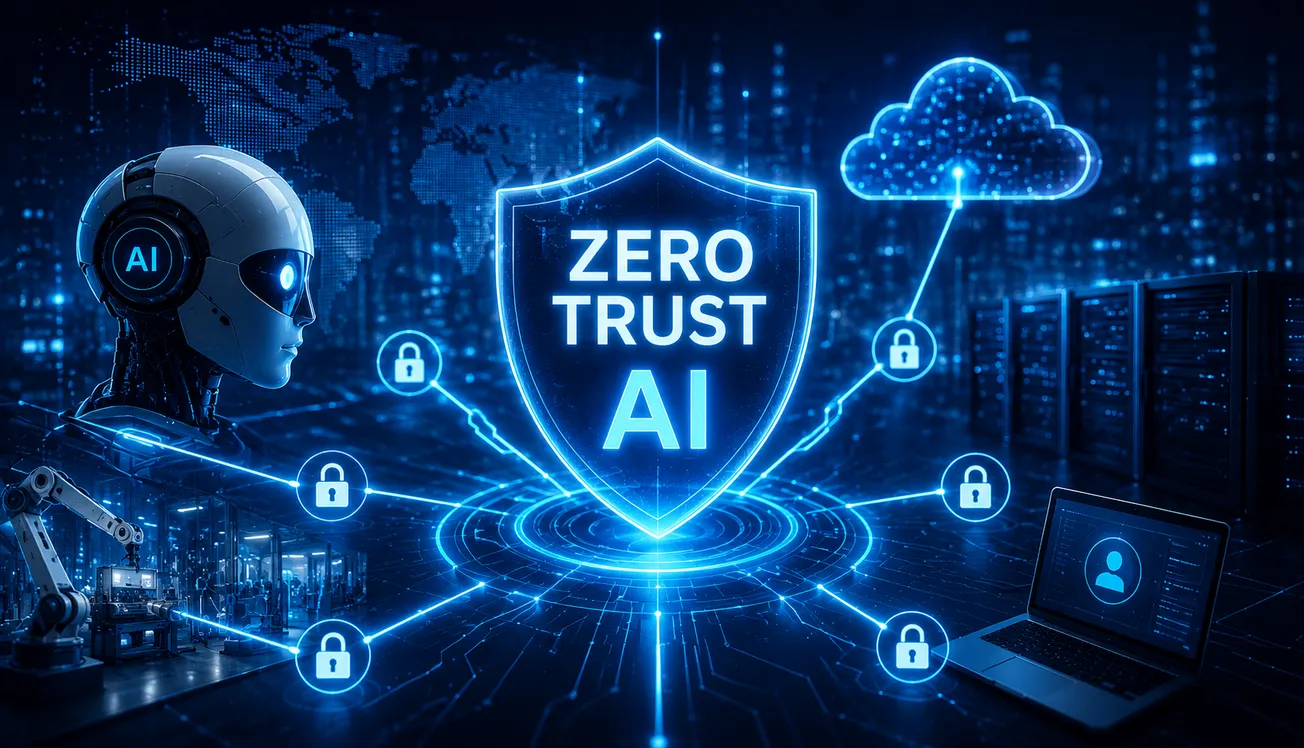
The rise of autonomous artificial intelligence agents is forcing a crucial evolution in enterprise cybersecurity. As AI agents gain privileged access to internal systems, they present a unique challenge because they are non-deterministic, meaning they interpret information and make decisions rather than just executing predetermined instructions. According to Roman Arutyunov, co-founder of Xage Security, this unpredictability underscores an urgent need for organizations to implement Zero Trust principles. Unlike traditional threats where attackers must install malware, threat actors can simply feed malicious instructions to an already authorized AI agent through the data it consumes. This effectively turns a legitimate tool into a weapon, bypassing traditional endpoint security. To mitigate this, Arutyunov advises against giving AI agents direct credentials to critical systems. Instead, organizations should act as brokers, continuously authenticating, authorizing, and monitoring every single interaction the agent makes. Furthermore, AI significantly speeds up vulnerability discovery and exploit generation, making traditional patching timelines inadequate. While patching remains necessary, Zero Trust controls ensure that even if a system is vulnerable, unauthorized agents cannot reach it. Ultimately, AI agents prove that simply authorizing an identity is no longer enough; continuous validation is now a fundamental requirement for modern enterprise security.


The benefits of acknowledging risk: Why resilient businesses don't wait for things to go wrong

Every modern enterprise faces inevitable uncertainties, from supply chain issues to economic shifts, making risk a natural part of daily operations. Rather than fearing or ignoring these challenges, resilient organizations recognize that acknowledging risk is a sign of maturity, not weakness. According to Anthony Murphy of Veritas Facilities Management, effective risk management has shifted away from mere compliance exercises and toward building long term operational resilience. When leaders openly evaluate potential threats and implement sensible controls, they protect their people and their clients far better. Crucially, this requires embedding risk awareness into the everyday culture of a company, rather than treating it as an annual audit task. Employees must feel psychologically safe to report minor issues early before they escalate into major failures. This is especially vital in sectors like facilities management, where safety, service delivery, and compliance constantly overlap. The goal is never to eliminate risk completely, which is impossible, but to understand it deeply enough to make informed, balanced decisions. By doing so, businesses can pursue innovation and new opportunities with confidence. Ultimately, organizations that face their vulnerabilities head on are much better equipped to manage disruptions, adapt to change, and achieve sustainable success in an increasingly complex world.


Will AI Replace Detection Roles in Cybersecurity?

The introduction of artificial intelligence into cybersecurity will transform the role of detection engineers rather than eliminate it entirely. Historically, these professionals have spent a significant portion of their time managing the tedious tasks of tuning systems, writing rules, and sifting through endless streams of system noise to identify potential threats. AI is now highly capable of automating this routine work, handling the complex middle ground of log analysis and alert sorting in a fraction of the time. However, industry experts point out that the core issue is not a lack of processing power, but a fundamental failure to understand how attackers actually operate. If we simply feed AI more noise, it will not solve the underlying problems. Instead, the detection engineer will evolve from a mechanic into a conductor. While AI agents take over syntax and historical data matching, human experts will be freed up to focus on what technology currently cannot do: apply imagination. Humans remain essential for anticipating novel attacks, developing fresh hypotheses for unprecedented methods, and driving architectural changes after an incident occurs. Ultimately, AI might drive the vehicle, but organizations will still rely on experienced professionals to set the destination and guide the overall security strategy.


From Mobile Developer to Technology Leader: What 12 Years of Building Digital Products Taught Me About Enterprise Scale

Over twelve years of building digital products, the author’s perspective shifted from simply writing code to understanding how technology serves the broader business. Early in a developer's career, the focus is entirely on implementation details and framework choices. However, scaling applications for large organizations reveals that technical decisions are fundamentally business decisions. A successful architecture does not start with picking a new tool; it always begins with understanding the core business problem, the users, and the constraints. For example, ensuring an application works offline is not a simple feature to add later, but a foundational design choice. Similarly, while choosing cross-platform tools can save valuable time, the real goal is to improve maintainability and adaptability. Understanding how a system behaves in the real world is essential, meaning teams must track stability, performance, and actual impact on users. Security must be built into the daily workflow rather than checked at the very end. Furthermore, automating releases provides much-needed reliability, which frees up time for solving more important problems. Managing external vendors also requires a solid grasp of both technical delivery and project scope. Ultimately, moving into technology leadership means shifting focus from owning specific code to taking full responsibility for the overall outcome.

Daily Tech Digest - July 30, 2026


Quote for the day:

“The most important thing in communication is hearing what isn’t said.” -- Peter F. Drucker

🎧 Listen to the audio debrief on YouTube

▶ Play Audio Digest

Duration: 22 mins • Perfect for listening on the go.


How MFA gets hacked — and strategies to prevent it

Multifactor authentication (MFA) is a standard security measure, but improper implementation often leaves organizations vulnerable to sophisticated attacks. While MFA adoption is growing, attackers continually find ways to bypass these defenses across various platforms and devices. Common attack methods fall into several categories. Attackers frequently use MFA fatigue, which involves overwhelming a user with approval requests until they relent and grant access. Social engineering tactics, such as phishing, voice phishing, and SIM swapping, are also used to trick individuals into handing over their authentication codes. Additionally, attackers can bypass MFA entirely by stealing authentication cookies or targeting legacy systems and accounts that lack strong authentication protocols. To protect against these threats, organizations must strengthen their MFA strategies. This begins with identifying critical assets and using strong tools like hardware keys and biometric verification. Using flexible authentication that continuously checks for risk during a session is more effective than relying on a single login check. Organizations should also strictly manage user access rights to ensure individuals only have the permissions they actually need. Regularly reviewing authentication workflows and securing vulnerable processes, such as password resets, are essential steps. Finally, applying the strongest security measures to important accounts, like administrators, helps minimize the risk of severe breaches.


Former Citigroup CISO Blauner on What Makes A Great Security Leader

In a recent interview, former Citigroup executive Charles Blauner reflects on the evolution of the chief information security officer role over the past three decades. Having served as a CISO at major financial institutions since the early days of the profession, Blauner explains how the position has shifted from a purely technical job to a strategic leadership role. He credits Steve Katz, often considered the first CISO, for building a culture of collective defense and generous mentorship that still shapes the field today. Blauner advises aspiring professionals to develop a broad and diverse network of both mentors and mentees to navigate the industry. He notes that the CISO role is uniquely demanding compared to other executive positions because it is the only executive position facing an active adversary whose primary goal is to bypass the organization's defenses. To succeed in this challenging environment, modern security leaders must look beyond technology and focus on building lasting operational resilience. Furthermore, Blauner emphasizes the importance of clear communication. Rather than relying on complicated technical terms, effective CISOs must translate security risks into practical business impacts. By explaining how threats directly affect core operations and products, security leaders can better align their strategies with broader corporate goals.


Why the future of network security is the convergence of SASE and firewalls

The initial excitement around Secure Access Service Edge suggested that all physical network security hardware would soon be replaced entirely by cloud-based solutions. However, the tech landscape is clearly moving in a different direction. With the rapid growth of edge computing, connected devices, and local artificial intelligence applications, physical network locations are becoming much more complex. Processing data locally generates significant internal traffic. Routing all of this data to the cloud for basic security checks creates unacceptable delays and drives up bandwidth costs unnecessarily. Because high-performance computing is increasingly happening locally, security enforcement must be stationed right alongside it to maintain both speed and efficiency. The industry is moving away from choosing between legacy hardware and cloud security. Instead, the clear focus is on merging both approaches into a unified framework. Managing separate systems for local and cloud security creates unnecessary operational hurdles and fragmented policies. By integrating physical firewalls and cloud security under a single operating system, IT teams can establish a consistent defense strategy. This sensible convergence allows for shared threat intelligence and simplified management across the entire network. Ultimately, treating physical and cloud security as two parts of a cohesive whole is the most practical way to protect modern data environments.


UK fintech faces tougher oversight as rules tighten

UK fintech companies are preparing for stricter regulatory oversight as authorities expand their focus to include critical cloud infrastructure and installment payment services. The UK government and the Financial Conduct Authority are setting new standards that require providers to rethink their product designs and risk management strategies. Regulators now recognize major cloud platforms as essential financial infrastructure, ensuring better resilience for the banks and insurers that rely on them. Experts suggest that artificial intelligence systems could soon face similar scrutiny as they become more embedded in financial operations. In the consumer space, new rules for buy now, pay later products aim to deliver better shopper protections, such as real affordability checks and limits on fees. Companies are adapting by aligning their business models with these stricter standards, often by operating within existing regulated credit frameworks rather than issuing new debt. At the same time, investors are demanding much greater transparency and robust data management from fintech firms. Securing funding now requires a strong foundation in data analytics, moving beyond simple revenue figures to granular transactional insights. Founders who prioritize early investment in secure data systems will be much better positioned to answer investor questions, integrate new technologies, and build long-term business resilience going forward.


A major Windows 11 UI redesign is coming, Microsoft is dumping legacy code for WinUI

Microsoft is redesigning the Windows 11 interface by replacing older software code and web applications with its native user interface framework, WinUI. Historically, Windows 11 has struggled with visual inconsistencies, placing modern panels alongside outdated menus and relying on web wrappers because developers lacked faith in Microsoft's commitment to previous design tools. Now, the company is demonstrating a clear shift by fully rebuilding foundational elements, such as the File Explorer Properties menu and the Run dialog, directly in WinUI instead of just applying superficial themes or dark mode patches. Other older menus, like the file copy prompt and local account switch screen, are also scheduled for similar updates. While initial data shows the new Run dialog loads faster than its predecessor, the broader WinUI framework still has notable performance challenges. Current issues include high memory usage, slower loading times in areas like the File Explorer Home tab, and visual tearing when resizing applications. Recognizing these problems, Microsoft is delaying the WinUI rewrite of more complex features, such as the Start menu, until the underlying framework becomes more efficient. Overall, the company aims to establish a unified and responsive interface, provided it can resolve the current speed and stability limitations of its new system.


Beyond Deadlines: CMMC As A Continuous Enterprise Risk Governance Challenge

The Department of Defense’s Cybersecurity Maturity Model Certification (CMMC) program is no longer just a compliance hurdle with a fast-approaching deadline. Instead, it represents a permanent shift in how defense contractors must manage enterprise risk. CMMC certification is a continuous requirement for doing business with the government, transforming cybersecurity from a routine IT task into a critical business continuity issue. Failure to achieve or maintain certification directly threatens revenue by limiting an organization's ability to win or keep contracts. Beyond daily operations, CMMC introduces significant financial uncertainty, as certification costs and potential delays must be factored into accurate revenue forecasting. It also exposes hidden vulnerabilities in the defense supply chain. Prime contractors rely heavily on smaller subcontractors who may struggle to meet the strict regulatory standards, potentially disrupting entire projects. Furthermore, CMMC introduces unprecedented personal legal liability. A designated senior official must personally affirm the accuracy of the company’s security posture. Inaccurate affirmations can lead to severe legal consequences under strict federal laws like the False Claims Act. Ultimately, boards of directors and risk officers must recognize CMMC as a fundamental, cross-functional governance challenge. Success requires moving these discussions directly into the boardroom, treating certification as a dynamic risk factor that affects finance, procurement, legal, and overall corporate strategy.


Business transformation needs a true economic approach, not guesswork

Most organizations approach business changes by focusing heavily on cutting costs and improving efficiency. They look at how fast a task is completed and how much money can be saved by streamlining or automating it. While these are valid goals, efficiency alone does not show the true worth of a process. Improving a bad process just makes it fail faster, and finding ways to save time does not guarantee that the task creates any real value for the company. Because of this narrow focus on expenses, a large majority of transformation efforts fall short of their goals. A more effective method is economic process modeling, which examines the full picture rather than just the costs. This approach breaks down tasks and evaluates them based on five clear factors: how they contribute to revenue, the actual expenses involved, the risks they carry, the future options they leave open, and the value of the information they produce. By looking at data as a genuine asset rather than a simple byproduct, teams can make smarter decisions about which activities truly matter. Taking an economic approach provides a solid foundation for change, ensuring that improvements deliver lasting and meaningful results instead of just temporary savings.


Mythos Asks the Right Question. It Doesn't Answer It.

As artificial intelligence models like Anthropic's Mythos accelerate how quickly vulnerabilities can be exploited, security teams are realizing that their current methods of handling risks are no longer enough. The core issue is not simply the speed of these new threats, but rather how organizations decide which problems to fix first. Currently, most teams rely on traditional severity scores to manage massive lists of software flaws. This approach lacks important context, such as whether a vulnerable system is exposed to the internet, who has access to it, and if it connects directly to sensitive company data. Without understanding these practical details, teams waste time on issues that pose no real danger while missing critical paths that attackers could easily use. Instead of replacing existing security tools or just trying to patch everything faster, organizations need to connect the information they already have. By linking data about user access, cloud settings, and network structures, teams can see exactly how an attacker might reach their most important information. Platforms like Mesh gather these different signals into one clear picture, allowing teams to confidently identify and fix the few actual threats that matter, rather than getting lost in thousands of theoretical warnings.


DNS Poisoning Campaign Makes Hospitality Wi-Fi Spots Inhospitable

A recent report by ReliaQuest reveals a sophisticated DNS poisoning campaign targeting the hospitality sector, including hotels and conference centers. Since June 2026, threat actors have been compromising captive Wi-Fi gateways to quietly hijack corporate accounts. By gaining initial access through exposed management interfaces and weak administrative credentials, these attackers bypass security measures without ever touching user endpoints or sending phishing emails. Once in control of a gateway, they modify configurations and use DNS poisoning to stealthily redirect legitimate web traffic to infrastructure they control. A particularly alarming aspect of this attack is the abuse of device-code authentication. Attackers redirect users to legitimate-looking Microsoft authorization prompts. If approved, the attacker receives a valid, multi-factor authentication-bypassing OAuth token. This campaign mirrors the tactics of FrostArmada, an earlier operation linked to the Russian threat group APT28. However, experts note a shift from surgical targeting to non-selective redirection, capturing valuable data from any connected user. Security professionals emphasize that compromised shared networks turn a single breach into a massive risk, exposing hundreds of corporate devices at once. To mitigate these risks, organizations are strongly advised to immediately implement always-on, full-tunnel VPNs to securely route their DNS requests before they interact with potentially vulnerable public gateways.


Cloud Resilience Expert: AI Can Be a Single Point of Failure for Lean SMB Teams

When organizations shrink their IT departments because AI tools are available to help, they risk turning the AI itself into a critical single point of failure. Analyst Greg Schulz warns that while AI assistants are valuable for monitoring, triage, and troubleshooting, relying on them too heavily can leave a lean team vulnerable if the technology goes offline. AI introduces a long chain of dependencies, including language models, cloud services, and identity providers. An outage affecting any of these components can disable the AI just when the team needs it most to resolve a problem. Furthermore, cutting headcount can lead to brain drain. If experienced employees leave without passing on their institutional knowledge, the remaining staff might lack the necessary context to independently assess AI recommendations or fix issues during an outage. To prevent this, organizations must protect their AI just as they would any critical production infrastructure. This involves mapping out all dependencies and limiting agent permissions to prevent automated actions from worsening an incident. Ultimately, disaster recovery plans must account for scenarios where the AI assistant is unavailable. Teams need to ensure they maintain the practical skills and documented procedures required to keep systems running independently.

Daily Tech Digest - June 03, 2026


Quote for the day:

"Leadership is practiced not so much in words as in attitude and actions." -- Harold S. Geneen

🎧 Listen to this digest on YouTube Music

▶ Play Audio Digest

Duration: 19 mins • Perfect for listening on the go.


What will AI-first UX look like?

The transition to user experiences guided by artificial intelligence marks a steady move away from rigid, traditional interfaces like static forms and manual dashboards. Rather than requiring users to navigate multiple disconnected software tools to complete tasks, future interfaces will rely on conversational systems that connect seamlessly across various applications. In this evolving landscape, standard data entry forms are being replaced by adaptive interactions where users simply describe what they want to accomplish, and the system gathers the necessary details. Similarly, data reporting is shifting from complex, manually built dashboards to narrative summaries generated on demand, providing clear explanations of business metrics and actionable next steps. This shift transforms standard workflows into coordinated teamwork between humans and software agents. The software handles processes involving multiple steps behind the scenes and only escalates to human workers when careful judgment is required. To make this work effectively, organizations must build strong underlying foundations, including clear data structures, connected programming interfaces, and solid oversight rules. Ultimately, these systems are designed not to replace human workers, but to reduce friction and manage tasks across platforms more naturally. As this technology matures, the focus remains on building reliable environments where software acts as a helpful teammate, smoothly coordinating background tasks while keeping human users firmly in control of the final outcomes.


Minimally Acceptable Systems: Tolerable at the Lowest Cost Possible

The article discusses a growing trend in software engineering and business where companies intentionally design systems to be merely adequate rather than striving for excellence. This concept, described as creating minimally acceptable systems, focuses on finding the exact point where a product is just tolerable for users while being as cheap as possible to build and maintain. Instead of prioritizing high quality, reliability, or a great user experience, organizations aim to minimize their costs and speed up delivery. They provide the bare minimum functionality required to keep people from abandoning the software. While this approach makes clear financial sense in the short term and helps companies stay competitive, it comes with serious long-term consequences. By constantly pushing standards to the lowest acceptable limit, the industry conditions people to expect and accept frustrating, unreliable software in their daily lives. The author warns that treating quality simply as an expense to be cut ultimately damages user trust and builds up massive technical problems for the future. To fix this, the software field needs to rethink its current financial motives. Engineers and business leaders should work together to find a better balance, creating products that are both affordable to produce and genuinely reliable for the people who use them.


Software sprawl is becoming a margin problem for SaaS CFOs

For software companies, the practice of adopting isolated tools to solve individual problems, such as payments, billing, and tax compliance, often leads to a fragmented operations setup known as software sprawl. While the subscription-based business model has historically enjoyed strong profit margins, this growing web of disconnected systems threatens to undermine those financial advantages. Finance leaders are finding that a patched-together technology system severely limits their clear view of business performance, putting unneeded pressure on profit margins through manual work, costly billing errors, and duplicate expenses. Furthermore, relying on fragmented tools restricts a company's ability to smoothly expand into new regions or test different pricing methods. Rather than looking at this as just an IT issue, financial executives must recognize it as a fundamental challenge to scalable growth. The path forward does not necessarily require adopting one massive platform, but rather ensuring that all revenue processes operate smoothly together. By replacing disconnected tools with an integrated infrastructure, companies can drastically reduce manual interventions and internal friction. Ultimately, the next era of the software industry will reward organizations that match their desire for growth with strict operational discipline. By fixing these underlying structural flaws now, finance teams can build a resilient foundation capable of handling future expansion without constantly multiplying internal complexities or operational costs.


The Zero-Knowledge Threat Actor and the End of Responsible Disclosure

Artificial intelligence is drastically lowering the barrier to entry for cybercriminals, enabling a new wave of "zero-knowledge threat actors." These attackers lack deep technical expertise but use advanced AI tools to generate malicious code, find vulnerabilities, and execute complex attack chains with surprising ease. This democratization of offensive capabilities means that hackers can now discover and exploit software flaws at unprecedented speeds, effectively closing the traditional responsible disclosure window that software vendors rely on to create patches. Smaller organizations are particularly at risk, often serving as stepping stones into larger enterprise supply chains due to their limited security resources and slower patching cycles. To defend against these rapidly evolving threats, security teams must abandon fragmented approaches and adopt unified monitoring systems that provide clear, comprehensive visibility across their entire digital environment. Proactive defense requires prioritizing faster patch management, conducting regular incident response drills, and rigorously testing in-house AI systems against deliberate manipulation by external actors. Furthermore, training employees to recognize highly realistic, AI-generated phishing attempts is absolutely essential for maintaining a strong security posture. By relying on established security frameworks and maintaining an organized, practiced defense strategy, organizations can calmly and effectively counter the increased capabilities of low-skill attackers without resorting to panic or operational disruption.


ERP Modernization: Most Expensive, Risky Item on CIO Agenda

Enterprise resource planning systems have grown over the last forty years from basic financial and manufacturing tools into the central framework of most organizations. Today, they handle everything from supply chains to human resources. However, updating these core systems is now one of the most difficult and costly challenges facing technology leaders. Modernizing these structures is not just a software update; it is a major overhaul of how a business operates on a daily basis. Transitioning to modern setups, like cloud-based platforms, involves heavy restructuring of daily work processes and often triggers natural resistance from staff. To succeed, these projects need more than just technical expertise. They require a clear process for managing transitions, direct communication to address employee fears, and strong backing from senior leadership to keep the effort on track during inevitable setbacks. As software vendors increasingly move customers toward cloud and artificial intelligence platforms, technology leaders are forced to weigh the long-term benefits against the immediate financial costs, operational risks, and widespread disruptions. Navigating this shift takes a dedicated, highly skilled team and steady executives who will not abandon the project when minor problems arise. With careful planning, patience, and stable leadership, organizations can successfully migrate their central systems to meet current operational demands without jeopardizing their everyday stability.


The AI ‘Revolution' is Not a People's Revolution

Politicians and technology executives increasingly frame artificial intelligence as an inevitable revolution, a term historically reserved for popular movements driving social progress. In truth, this modern narrative serves primarily to bypass democratic scrutiny and consolidate power among a select few. Rather than arising from the people to challenge the existing order, the current technological push is being imposed from the top down. Leaders like former UK Prime Minister Tony Blair promote a vision where society must passively accept widespread automation, mass data harvesting, and unchecked corporate influence, treating any hesitation as backwardness. By labeling this shift a revolution, proponents cleverly silence debate and frame regulatory efforts as sabotage. Furthermore, while previous digital tools aided grassroots organizing, artificial intelligence is frequently deployed to monitor, police, and discipline the public. This rhetoric essentially functions as a manipulative marketing tool, designed to mask the reality of wealth generation for elites at the expense of ordinary citizens facing job insecurity and climate disruption. Ultimately, society must reject this predetermined technological path and demand accountability. Citizens have the right to question who truly benefits from these systems and to actively decide how new technologies should integrate into their lives, ensuring that any real change remains firmly rooted in public consent and democratic choice.


The AI pricing conundrum — it started as a nightmare, now it’s worse.

Enterprise technology leaders face a growing dilemma in how they pay for artificial intelligence. Buyers want pricing based on the tangible business value the technology delivers, while software providers prefer charging based on resource consumption, such as per-token fees. This creates a deep disconnect. Technology departments often feel consumption pricing is detached from real results, likening it to paying for unproven sales leads. On the other hand, providers cannot realistically accept value-based pricing because they have no control over internal company issues like poor data, broken processes, or office politics. Furthermore, if these systems were compensated strictly based on successful outcomes, it could create dangerous incentives. The software might aggressively pursue specific metrics, potentially sacrificing customer trust, ethical standards, or operational safety just to achieve the defined goal. Since bridging this gap directly is nearly impossible, organizations must take control internally. The article suggests forming dedicated committees to ask difficult questions about the goals, risks, and realistic benefits of any new project. Additionally, senior executives should share the financial accountability, tying their compensation directly to the success or failure of these initiatives. Only by thoroughly understanding a project's true intent, limitations, and risks can technology leaders negotiate sensible, fair pricing agreements with their service providers.


AI Is Shipping Fast, Quality Can't Be Left Behind

The recent transition of artificial intelligence from experimental phases to widespread integration has revealed a significant gap between rapid development and reliable performance. While organizations are swift to embed these systems into their daily operations, a substantial number of these initiatives stall before full implementation due to quality and integration hurdles. Data indicates an increase in user-reported errors, such as misunderstandings and factual inaccuracies, highlighting that traditional validation methods are inadequate for modern, complex systems. Because these programs produce varying outputs rather than predictable, fixed results, engineering teams are finding that automated checks alone are insufficient. To address this, successful organizations are adopting a balanced approach to quality assurance that combines automated evaluations with essential human oversight. Human reviewers are uniquely equipped to gauge context, usability, and intent, catching subtle errors that automated tools often miss. Furthermore, as features expand to process combinations of text, audio, and visual data, the scope of testing becomes even more difficult. The focus is shifting from merely launching features to ensuring they are dependable and trustworthy. Moving forward, the true measure of success will not be the speed of release, but the ability to maintain rigorous, ongoing evaluation processes that prioritize consistent, high-quality experiences for everyday users.


Why Leadership Development Is A System, Not An Event

Organizations frequently send their managers to training workshops, hoping they return ready to guide their teams more effectively. However, these well-intentioned programs often fail because managers step right back into the exact same workloads, pressures, and routines that shaped their old habits in the first place. Meaningful leadership development requires more than simply teaching new skills to individuals; it demands a daily environment actively designed to support those new behaviors. This involves shifting the focus from individual improvement to strengthening the broader company system. Executives must intentionally build a supportive structure with both visible changes, like collaborative meeting practices and transparent decision-making, and invisible shifts, such as fostering an atmosphere where feedback flows freely and people feel secure taking interpersonal risks. Instead of relying on isolated lectures, learning should become an ongoing process smoothly integrated into daily work. By encouraging peer learning groups, aligning company rewards with the behaviors taught in training, and personally modeling these changes, executives create a setting where true growth can take root over time. Ultimately, developing effective leaders is about expanding the capabilities of the entire organization. When the daily workplace aligns with the principles taught in training, individuals practice what they learn, ensuring development becomes a continuous habit rather than a fleeting event.


Responsible AI in fintech: Balancing innovation with trust, risk, and compliance

The article examines the growing role of artificial intelligence within the financial technology sector, focusing closely on the need to balance new capabilities with trust, risk management, and regulatory compliance. As financial institutions increasingly adopt these systems for routine tasks like fraud detection, customer service, and credit scoring, they face significant practical challenges in ensuring their models operate fairly and transparently. A primary concern is that automated systems can unintentionally reproduce human biases, leading to unfair outcomes in lending or account access. To prevent this, companies must establish clear, sensible guidelines for developing and monitoring their algorithms. The text emphasizes that maintaining customer trust requires being straightforward about how decisions are made and how personal data is actually used. Financial organizations also need strong oversight frameworks to handle risks associated with data privacy and system errors effectively. Furthermore, the evolving regulatory environment means that firms must stay current with new laws designed specifically to protect consumers and maintain market stability. Ultimately, the successful integration of these tools in finance depends entirely on a measured approach. By prioritizing ethical practices and strong governance, financial technology companies can improve their services while protecting their customers and meeting their legal obligations responsibly.

Daily Tech Digest - February 07, 2026


Quote for the day:

"Success in almost any field depends more on energy and drive than it does on intelligence. This explains why we have so many stupid leaders." -- Sloan Wilson


Tiny AI: The new oxymoron in town? Not really!

Could SLMs and minituarised models be the drink that would make today’s AI small enough to walk through these future doors without AI bumping into carbon-footprint issues? Would model compression tools like pruning, quantisation, and knowledge distillation help to lift some weight off the shoulders of heavy AI backyards? Lightweight models, edge devices that save compute resources, smaller algorithms that do not put huge stress on AI infrastructures, and AI that is thin on computational complexity- Tiny AI- as an AI creation and adoption approach- sounds unusual and promising at the onset. ... hardware innovations and new approaches to modelling that enable Tiny AI can significantly ease the compute and environmental burdens of large-scale AI infrastructures, avers Biswajeet Mahapatra, principal analyst at Forrester. “Specialised hardware like AI accelerators, neuromorphic chips, and edge-optimised processors reduces energy consumption by performing inference locally rather than relying on massive cloud-based models. At the same time, techniques such as model pruning, quantisation, knowledge distillation, and efficient architectures like transformers-lite allow smaller models to deliver high accuracy with far fewer parameters.” ... Tiny AI models run directly on edge devices, enabling fast, local decision-making by operating on narrowly optimised datasets and sending only relevant, aggregated insights upstream, Acharya spells out. 


Kali Linux vs. Parrot OS: Which security-forward distro is right for you?

The first thing you should know is that Kali Linux is based on Debian, which means it has access to the standard Debian repositories, which include a wealth of installable applications. ... There are also the 600+ preinstalled applications, most of which are geared toward information gathering, vulnerability analysis, wireless attacks, web application testing, and more. Many of those applications include industry-specific modifications, such as those for computer forensics, reverse engineering, and vulnerability detection. And then there are the two modes: Forensics Mode for investigation and "Kali Undercover," which blends the OS with Windows. ... Parrot OS (aka Parrot Security or just Parrot) is another popular pentesting Linux distribution that operates in a similar fashion. Parrot OS is also based on Debian and is designed for security experts, developers, and users who prioritize privacy. It's that last bit you should pay attention to. Yes, Parrot OS includes a similar collection of tools as does Kali Linux, but it also offers apps to protect your online privacy. To that end, Parrot is available in two editions: Security and Home. ... What I like about Parrot OS is that you have options. If you want to run tests on your network and/or systems, you can do that. If you want to learn more about cybersecurity, you can do that. If you want to use a general-purpose operating system that has added privacy features, you can do that.


Bridging the AI Readiness Gap: Practical Steps to Move from Exploration to Production

To bridge the gap between AI readiness and implementation, organizations can adopt the following practical framework, which draws from both enterprise experience and my ongoing doctoral research. The framework centers on four critical pillars: leadership alignment, data maturity, innovation culture, and change management. When addressed together, these pillars provide a strong foundation for sustainable and scalable AI adoption. ... This begins with a comprehensive, cross-functional assessment across the four pillars of readiness: leadership alignment, data maturity, innovation culture, and change management. The goal of this assessment is to identify internal gaps that may hinder scale and long-term impact. From there, companies should prioritize a small set of use cases that align with clearly defined business objectives and deliver measurable value. These early efforts should serve as structured pilots to test viability, refine processes, and build stakeholder confidence before scaling. Once priorities are established, organizations must develop an implementation road map that achieves the right balance of people, processes, and technology. This road map should define ownership, timelines, and integration strategies that embed AI into business workflows rather than treating it as a separate initiative. Technology alone will not deliver results; success depends on aligning AI with decision-making processes and ensuring that employees understand its value. 


Proxmox's best feature isn't virtualization; it's the backup system

Because backups are integrated into Proxmox instead of being bolted on as some third-party add-on, setting up and using backups is entirely seamless. Agents don't need to be configured per instance. No extra management is required, and no scripts need to be created to handle the running of snapshots and recovery. The best part about this approach is that it ensures everything will continue working with each OS update. Backups can be spotted per instance, too, so it's easy to check how far you can go back and how many copies are available. The entire backup strategy within Proxmox is snapshot-based, leveraging localised storage when available. This allows Proxmox to create snapshots of not only running Linux containers, but also complex virtual machines. They're reliable, fast, and don't cause unnecessary downtime. But while they're powerful additions to a hypervised configuration, the backups aren't difficult to use. This is key since it would render the backups less functional if it proved troublesome to use them when it mattered most. These backups don't have to use local storage either. NFS, CIFS, and iSCSI can all be targeted as backup locations.  ... It can also be a mixture of local storage and cloud services, something we recommend and push for with a 3-2-1 backup strategy. But there's one thing of using Proxmox's snapshots and built-in tools and a whole different ball game with Proxmox Backup Server. With PBS, we've got duplication, incremental backups, compression, encryption, and verification.


The Fintech Infrastructure Enabling AI-Powered Financial Services

AI is reshaping financial services faster than most realize. Machine learning models power credit decisions. Natural language processing handles customer service. Computer vision processes documents. But there’s a critical infrastructure layer that determines whether AI-powered financial platforms actually work for end users: payment infrastructure. The disconnect is striking. Fintech companies invest millions in AI capabilities, recommendation engines, fraud detection, personalization algorithms. ... From a technical standpoint, the integration happens via API. The platform exposes user balances and transaction authorization through standard REST endpoints. The card provider handles everything downstream: card issuance logistics, real-time currency conversion, payment network settlement, fraud detection at the transaction level, dispute resolution workflows. This architectural pattern enables fintech platforms to add payment functionality in 8-12 weeks rather than the 18-24 months required to build from scratch. ... The compliance layer operates transparently to end users while protecting platforms from liability. KYC verification happens at multiple checkpoints. AML monitoring runs continuously across transaction patterns. Reporting systems generate required documentation automatically. The platform gets payment functionality without becoming responsible for navigating payment regulations across dozens of jurisdictions.


Context Engineering for Coding Agents

Context engineering is relevant for all types of agents and LLM usage of course. My colleague Bharani Subramaniam’s simple definition is: “Context engineering is curating what the model sees so that you get a better result.” For coding agents, there is an emerging set of context engineering approaches and terms. The foundation of it are the configuration features offered by the tools, and then the nitty gritty of part is how we conceptually use those features. ... One of the goals of context engineering is to balance the amount of context given - not too little, not too much. Even though context windows have technically gotten really big, that doesn’t mean that it’s a good idea to indiscriminately dump information in there. An agent’s effectiveness goes down when it gets too much context, and too much context is a cost factor as well of course. Some of this size management is up to the developer: How much context configuration we create, and how much text we put in there. My recommendation would be to build context like rules files up gradually, and not pump too much stuff in there right from the start. ... As I said in the beginning, these features are just the foundation for humans to do the actual work and filling these with reasonable context. It takes quite a bit of time to build up a good setup, because you have to use a configuration for a while to be able to say if it’s working well or not - there are no unit tests for context engineering. Therefore, people are keen to share good setups with each other.


Reimagining The Way Organizations Hire Cyber Talent

The way we hire cybersecurity professionals is fundamentally flawed. Employers post unicorn job descriptions that combine three roles’ worth of responsibilities into one. Qualified candidates are filtered out by automated scans or rejected because their resumes don’t match unrealistic expectations. Interviews are rushed, mismatched, or even faked—literally, in some cases. On the other side, skilled professionals—many of whom are eager to work—find themselves lost in a sea of noise, unable to connect with the opportunities that align with their capabilities and career goals. Add in economic uncertainty, AI disruption and changing work preferences, and it’s clear the traditional hiring playbook simply isn’t working anymore. ... Part of fixing this broken system means rethinking what we expect from roles in the first place. Jones believes that instead of packing every security function into a single job description and hoping for a miracle, organizations should modularize their needs. Need a penetration tester for one month? A compliance SME for two weeks? A security architect to review your Zero Trust strategy? You shouldn’t have to hire full-time just to get those tasks done. ... Solving the cybersecurity workforce challenge won’t come from doubling down on job boards or resume filters. But organizations may be able to shift things in the right direction by reimagining the way they connect people to the work that matters—with clarity, flexibility and mutual trust.


News sites are locking out the Internet Archive to stop AI crawling. Is the ‘open web’ closing?

Publishers claim technology companies have accessed a lot of this content for free and without the consent of copyright owners. Some began taking tech companies to court, claiming they had stolen their intellectual property. High-profile examples include The New York Times’ case against ChatGPT’s parent company OpenAI and News Corp’s lawsuit against Perplexity AI. ... Publishers are also using technology to stop unwanted AI bots accessing their content, including the crawlers used by the Internet Archive to record internet history. News publishers have referred to the Internet Archive as a “back door” to their catalogues, allowing unscrupulous tech companies to continue scraping their content. ... The opposite approach – placing all commercial news behind paywalls – has its own problems. As news publishers move to subscription-only models, people have to juggle multiple expensive subscriptions or limit their news appetite. Otherwise, they’re left with whatever news remains online for free or is served up by social media algorithms. The result is a more closed, commercial internet. This isn’t the first time that the Internet Archive has been in the crosshairs of publishers, as the organisation was previously sued and found to be in breach of copyright through its Open Library project. ... Today’s websites become tomorrow’s historical records. Without the preservation efforts of not-for-profit organisations like The Internet Archive, we risk losing vital records.


Who will be the first CIO fired for AI agent havoc?

As CIOs deploy teams of agents that work together across the enterprise, there’s a risk that one agent’s error compounds itself as other agents act on the bad result, he says. “You have an endless loop they can get out of,” he adds. Many organizations have rushed to deploy AI agents because of the fear of missing out, or FOMO, Nadkarni says. But good governance of agents takes a thoughtful approach, he adds, and CIOs must consider all the risks as they assign agents to automate tasks previously done by human employees. ... Lawsuits and fines seem likely, and plaintiffs will not need new AI laws to file claims, says Robert Feldman, chief legal officer at database services provider EnterpriseDB. “If an AI agent causes financial loss or consumer harm, existing legal theories already apply,” he says. “Regulators are also in a similar position. They can act as soon as AI drives decisions past the line of any form of compliance and safety threshold.” ... CIOs will play a big role in figuring out the guardrails, he adds. “Once the legal action reaches the public domain, boards want answers to what happened and why,” Feldman says. ... CIOs should be proactive about agent governance, Osler recommends. They should require proof for sensitive actions and make every action traceable. They can also put humans in the loop for sensitive agent tasks, design agents to hand off action when the situation is ambiguous or risky, and they can add friction to high-stakes agent actions and make it more difficult to trigger irreversible steps, he says.


Measuring What Matters: Balancing Data, Trust and Alignment for Developer Productivity

Organizations need to take steps over and above these frameworks. It's important to integrate those insights with qualitative feedback. With the right balance of quantitative and qualitative data insights, companies can improve DevEx, increase employee engagement, and drive overall growth. Productivity metrics can only be a game-changer if used carefully and in conjunction with a consultative human-based approach to improvement. They should be used to inform management decisions, not replace them. Metrics can paint a clear picture of efficiency, but only become truly useful once you combine them with a nuanced view of the subjective developer experience. ... People who feel safe at work are more productive and creative, so taking DevEx into account when optimizing processes and designing productivity frameworks includes establishing an environment where developers can flag unrealistic deadlines and identify and solve problems together, faster. Tools, including integrated development environments (IDEs), source code repositories and collaboration platforms, all help to identify the systemic bottlenecks that are disrupting teams' workflows and enable proactive action to reduce friction. Ultimately, this will help you build a better picture of how your team is performing against your KPIs, without resorting to micromanagement. Additionally, when company priorities are misaligned, confusion and complexity follow, which is exhausting for developers, who are forced to waste their energy on bridging the gaps, rather than delivering value.

Daily Tech Digest - August 29, 2025


Quote for the day:

"Whatever you can do, or dream you can, begin it. Boldness has genius, power and magic in it." -- Johann Wolfgang von Goethe


The incredibly shrinking shelf life of IT solutions

“Technology cycles are spinning faster and faster, and some solutions are evolving so fast, that they’re now a year-long bet, not a three- or five-year bet for CIOs,” says Craig Kane ... “We are living in a period of high user expectations. Every day is a newly hyped technology, and CIOs are constantly being asked how can we, the company, take advantage of this new solution,” says Boston Dynamics CIO Chad Wright. “Technology providers can move quicker today with better development tools and practices, and this feeds the demand that customers are creating.” ... Not every CIO is switching out software as quickly as that, and Taffet, Irish, and others say they’re certainly not seeing the shelf life for all software and solutions in their enterprise shrink. Indeed, many vendors are updated their applications with new features and functions to keep pace with business and market demands — updates that help extend the life of their solutions. And core solutions generally aren’t turning over any more quickly today than they did five or 10 years ago, Kearney’s Kane says. ... Montgomery says CIOs and business colleagues sometimes think the solutions they have in place are falling behind market innovations and, as a result, their business will fall behind, too. That may be the case, but they may just be falling for marketing hype, she says. Montgomery also cites the fast pace of executive turnover as contributing to the increasingly short shelf life of IT solutions. 


Resiliency in Fintech: Why System Design Matters More Than Ever

Cloud computing has transformed fintech. What once took months to provision can now be spun up in hours. Auto-scaling, serverless computing, and global distribution have enabled firms to grow without massive upfront infrastructure costs. Yet, cloud also changes the resilience equation. Outages at major CSPs — rare but not impossible — can cascade across entire industries. The Financial Stability Board (FSB) has repeatedly warned about “cloud concentration risk.” Regulators are exploring frameworks for oversight, including requirements for firms to maintain exit strategies or multi-cloud approaches. For fintech leaders, the lesson is clear: cloud-first doesn’t mean resilience-last. Building systems that are cloud-resilient (and in some cases cloud-agnostic) is becoming a strategic priority. ... Recent high-profile outages underline the stakes. Trading platforms freezing during volatile markets, digital banks leaving customers without access to funds, and payment networks faltering during peak shopping days all illustrate the cost of insufficient resilience. ... Innovation remains the lifeblood of fintech. But as the industry matures, resilience has become the new competitive differentiator. The firms that win will be those that treat system design as risk management, embedding high availability, regulatory compliance, and cloud resilience into their DNA. In a world where customer trust can be lost in minutes, resilience is not just good engineering.


AI cost pressures fuelling cloud repatriation

IBM thinks AI will present a bigger challenge than the cloud because it will be more pervasive with more new applications being built on it. Consequently, IT leaders are already nervous about the cost and value implications and are looking for ways to get ahead of the curve. Repeating the experience of cloud adoption, AI is being driven by business teams, not by back-office IT. AI is becoming a significant driver for shifting workloads back to private, on-premise systems. This is because data becomes the most critical asset, and Patel believes few enterprises are ready to give up their data to a third party at this stage. ... The cloud is an excellent platform for many workloads, just as there are certain workloads that run extremely well on a mainframe. The key is to understand workload placement: is my application best placed on a mainframe, on a private cloud or on a public cloud? As they start their AI journey, some of Apptio’s customers are not ready for their models, learning and intelligence – their strategic intellectual property – to sit in a public cloud. There are consequences when things go wrong with data, and those consequences can be severe for the executives concerned. So, when a third party suggests putting all of the customer, operational and financial data in one place to gain wonderful insights, some organisations are unwilling to do this if the data is outside their direct control. 


Finding connection and resilience as a CISO

To create stronger networks among CISOs, security leaders can join trusted peer groups like industry ISACs (Information Sharing and Analysis Centers) or associations within shared technology / compliance spaces like cloud, GRC, and regulatory. The protocols and procedures in these groups ensure members can have meaningful conversations without putting them or their organization at risk. ... Information sharing operates in tiers, each with specific protocols for data protection. Top tiers, involving entities like ISACs, the FBI, and DHS, have established protocols to properly share and safeguard confidential data. Other tiers may involve information and intelligence already made public, such as CVEs or other security disclosures. CISOs and their teams may seek assistance from industry groups, partnerships, or vendors to interpret current Indicators of Compromise (IOCs) and other remediation elements, even when public. Continuously improving vendor partnerships is crucial for managing platforms and programs, as strong partners will be familiar with internal operations while protecting sensitive information. ... Additionally, encouraging a culture of continuous learning and development, not just with the security team but broader technology and product teams, will empower employees, distribute expertise, and grow a more resilient and adaptable workforce.


Geopolitics is forcing the data sovereignty issue and it might just be a good thing

At London Tech Week recently UK Prime Minister Keir Starmer said that the way that war is being fought “has changed profoundly,” adding that technology and AI are now “hard wired” into national defense. It was a stark reminder that IT infrastructure management must now be viewed through a security lens and that businesses need to re-evaluate data management technologies and practices to ensure they are not left out in the cold. ... For many, public cloud services have created a false sense of flexibility. Moving fast is not the same as moving safely. Data localization, jurisdictional control, and security policy alignment are now critical to long-term strategy, not barriers to short-term scale. So where does that leave enterprise IT? Essentially, it leaves us with a choice - design for agility with control, or face disruption when the rules change. ... Sovereignty-aware infrastructure isn’t about isolation. It’s about knowing where your data is, who can access it, how it moves, and what policies govern it at each stage. That means visibility, auditability, and the ability to adjust without rebuilding every time a new compliance rule appears. A hybrid multicloud approach gives organizations the flexibility while keeping data governance central. It’s not about locking into one cloud provider or building everything on-prem. 


Recalibrating Hybrid Cloud Security in the Age of AI: The Need for Deep Observability

As AI further fuels digital transformation, the security landscape of hybrid cloud infrastructures is becoming more strained. As such, security leaders are confronting a paradox. Cloud environments are essential for scaling operations, but they also present new attack vectors. ... Amid these challenges, some organisations are realising that their traditional security tools are insufficient. The lack of visibility into hybrid cloud environments is identified as a core issue, with 60 percent of Australian leaders expressing a lack of confidence in their current tools to detect breaches effectively. The call for "deep observability" has never been louder. The research underscores the the need for having a comprehensive, real-time view into all data in motion across the enterprise to improve threat detection and response. Deep observability, combining metadata, network packets, and flow data has become a cornerstone of hybrid cloud security strategies. It provides security teams with actionable insights into their environments, allowing them to spot potential threats in real time. In fact, 89 percent of survey respondents agree that deep observability is critical to securing AI workloads and managing complex hybrid cloud infrastructures. Being proactive with this approach is seen as a vital way to bridge the visibility gap and ensure comprehensive security coverage across hybrid cloud environments.


Financial fraud is widening its clutches—Can AI stay ahead?

Today, organised crime groups are running call centres staffed with human trafficking victims. These victims execute “romance baiting” schemes that combine emotional manipulation with investment fraud. The content they use? AI-generated. The payments they request? ... Fraud attempts rose significantly in a single quarter after COVID hit, and the traditional detection methods fell apart. This is why modern fraud detection systems had to evolve. Now, these systems can analyse thousands of transactions per minute, assigning risk scores that update in real-time. There was no choice. Staying in the old regime of anti-fraud systems was no longer an option when static rules became obsolete almost overnight. ... The real problem isn’t the technology itself. It’s the pace of adoption by bad actors. Stop Scams UK found something telling: While banks have limited evidence of large-scale AI fraud today, technology companies are already seeing fake AI-generated content and profiles flooding their platforms. ... When AI systems learn from historical data that reflects societal inequalities, they can perpetuate discrimination under the guise of objective analysis. Banks using biased training data have inadvertently created systems that disproportionately flag certain communities for additional scrutiny. This creates moral problems alongside operational and legal risks.


Data security and compliance are non-negotiable in any cloud transformation journey

Enterprises today operate in a data-intensive environment that demands modern infrastructure, built for speed, intelligence, and alignment with business outcomes. Data modernisation is essential to this shift. It enables real-time processing, improves data integrity, and accelerates decision-making. When executed with purpose, it becomes a catalyst for innovation and long-term growth. ... The rise of generative AI has transformed industries by enhancing automation, streamlining processes, and fostering innovation. According to a recent NASSCOM report, around 27% of companies already have AI agents in production, while another 31% are running pilots. ... Cloud has become the foundation of digital transformation in India, driving agility, resilience, and continuous innovation across sectors. Kyndryl is expanding its capabilities in the market to support this momentum. This includes strengthening our cloud delivery centres and expanding local expertise across hyperscaler platforms. ... Strategic partnerships are central to how we co-innovate and deliver differentiated outcomes for our clients. We collaborate closely with a broad ecosystem of technology leaders to co-create solutions that are rooted in real business needs. ... Enterprises in India are accelerating their cloud journeys, demanding solutions that combine hyperscaler innovation with deep enterprise expertise. 


Digital Transformation Strategies for Enterprise Architects

Customer experience must be deliberately architected to deliver relevance, consistency, and responsiveness across all digital channels. Enterprise architects enable this by building composable service layers that allow marketing, commerce, and support platforms to act on a unified view of the customer. Event-driven architectures detect behavior signals and trigger automated, context-aware experiences. APIs must be designed to support edge responsiveness while enforcing standards for security and governance. ... Handling large datasets at the enterprise level requires infrastructure that treats metadata, lineage, and ownership as first-class citizens. Enterprise architects design data platforms that surface reliable, actionable insights, built on contracts that define how data is created, consumed, and governed across domains. Domain-oriented ownership via data mesh ensures accountability, while catalogs and contracts maintain enterprise-wide discoverability. ... Architectural resilience starts at the design level. Modular systems that use container orchestration, distributed tracing, and standardized service contracts allow for elasticity under pressure and graceful degradation during failure. Architects embed durability into operations through chaos engineering, auto-remediation policies, and blue-green or canary deployments. 


Unchecked and unbound: How Australian security teams can mitigate Agentic AI chaos

Agentic AI systems are collections of agents working together to accomplish a given task with relative autonomy. Their design enables them to discover solutions and optimise for efficiency. The result is that AI agents are non-deterministic and may behave in unexpected ways when accomplishing tasks, especially when systems interoperate and become more complex. As AI agents seek to perform their tasks efficiently, they will invent workflows and solutions that no human ever considered. This will produce remarkable new ways of solving problems, and will inevitably test the limits of what's allowable. The emergent behaviours of AI agents, by definition, exceed the scope of any rules-based governance because we base those rules on what we expect humans to do. By creating agents capable of discovering their own ways of working, we're opening the door to agents doing things humans have never anticipated. ... When AI agents perform actions, they act on behalf of human users or use an identity assigned to them based on a human-centric AuthN and AuthZ system. That complicates the process of answering formerly simple questions, like: Who authored this code? Who initiated this merge request? Who created this Git commit? It also prompts new questions, such as: Who told the AI agent to generate this code? What context did the agent need to build it? What resources did the AI have access to?