Showing posts with label quantum computing. Show all posts

Daily Tech Digest - August 07, 2026


Quote for the day:

“When you connect to the silence within you, that is when you can make sense of the disturbance going on around you.” -- Stephen Richards

🎧 Listen to the audio debrief on YouTube

▶ Play Audio Digest

Duration: 24 mins • Perfect for listening on the go.


Everything Banks Need to Know About RBI’s Cybersecurity, Technology Risk, Resilience & Assurance Framework, 2026

The Reserve Bank of India has introduced a comprehensive framework for commercial banks, effective July 2026, to manage cybersecurity, technology risks, and operational resilience. This unified directive replaces previous guidelines, bringing governance, incident response, business continuity, and audit requirements under a single regulatory umbrella. At its core, the mandate emphasizes strong board oversight. It requires banks to formalize technology strategies and ensure new technology aligns with broader business goals. A key shift is the elevated role of the Chief Information Security Officer, who must now report directly to executive leadership and present quarterly risk reviews to the board. The framework also outlines rigorous technical and operational standards. Banks must maintain complete inventories of information assets, secure their data lifecycles, and enforce strict access controls, including mandatory multifactor authentication for privileged accounts. Network defenses must be layered, and critical applications face stringent security testing. To ensure continuous vigilance, institutions are required to establish dedicated security operations centers, conduct regular vulnerability assessments, and run complete disaster recovery drills every six months. Furthermore, banks remain fully accountable for risks introduced by external vendors. If a cyber incident occurs, it must be reported to the regulator within six hours, ensuring swift communication and response.


How Leaders Can Make Decisions In A Synthetic Reality

In the next decade, a crucial skill for business leaders will be the ability to tell the difference between what is real and what is synthetic. Artificial intelligence has made it easier and cheaper to create convincing fake documents, voices, and videos, increasing the risk of deception in business. Because of this, leaders face the difficult task of balancing the need to make fast decisions with the necessity of thoroughly checking their information. Taking evidence at face value is no longer a safe option. Instead, leaders must build a habit of verifying information and asking for clear proof of its origins. Relying entirely on detection software is not enough, as these tools often make mistakes. Instead, organizations should naturally build verification into their daily work processes, tracking how information is created and changed over time. When making choices, leaders should weigh the cost of a delayed decision against the dangers of relying on false information. It is important to avoid rushing due to artificial pressure, which can easily cloud judgment and lead to mistakes. Ultimately, building a culture of healthy skepticism where people regularly ask for proof will help maintain trust and accuracy. By slowing down to confirm reality, leaders can confidently navigate this new environment.


How Secure Data Destruction Protects Businesses from Data Breaches

When companies replace old computers, servers, and phones, they often assume a quick deletion or standard formatting erases all sensitive information. In reality, these basic actions only remove the file pathways, leaving the actual data completely intact and easily recoverable by anyone with free software. Secure data destruction offers a permanent, verifiable solution to ensure that payroll files, customer records, and saved passwords do not leave your building when equipment is sold, recycled, or discarded. Instead of relying on simple deletion, proper secure destruction involves thorough overwriting, cryptographic erasing, or physically shredding the storage media so no working surface remains. Choosing the right method depends on whether the hardware still has value for reuse or if it has reached the end of its life. Implementing a strict data disposal process is also a vital regulatory requirement under laws like the UK GDPR. Mishandling old storage drives is a compliance failure that can lead to significant penalties. To protect your organization, you must maintain a clear disposal policy, track every device by its serial number, and obtain item-level certificates of destruction. By doing so, you create a clear audit trail and permanently eliminate a major risk of unauthorized data recovery.


The AI agent presents a new identity puzzle

As AI agents become more deeply integrated into modern IT infrastructure, they present a unique challenge that bridges the gap between traditional human and machine identities. To address this growing complexity, security platforms like Okta are treating AI agents as a distinct middle-ground category, assigning them their own unique identities. This crucial step prevents agents from gradually accumulating excessive privileges, which is a common security risk when a single agent is continuously repurposed for multiple distinct tasks. While implementing a simple kill switch might seem like an easy solution for rogue agents, doing so can trigger unintended disruptions across connected enterprise systems. Instead, organizations are encouraged to adopt a flexible identity fabric that links every agent's actions directly back to a human owner, ensuring full traceability and accountability at all times. This approach minimizes operational friction while maintaining robust security protocols. Real-world applications, such as those implemented at Greenwheels, highlight the importance of realistic oversight and a supportive, no-blame workplace culture where employees feel comfortable reporting potential security concerns. By carefully managing these agent identities and keeping their permissions strictly tailored to specific tasks, businesses can safely harness the benefits of artificial intelligence without exposing their networks to unnecessary vulnerabilities.


How quantum integration is reshaping enterprise cloud workflows

The article explains how quantum computing, though still in its noisy and early stage, is gradually finding practical use through hybrid quantum‑classical models. Pure quantum systems remain years away from broad commercial reliability, but companies like D‑Wave argue that their annealing‑based machines already help with complex optimization tasks such as scheduling, routing, and resource planning. Major cloud providers are integrating quantum hardware into their platforms, allowing enterprises to experiment without owning specialized equipment. Services like IBM’s Qiskit Runtime, AWS Braket, Azure Quantum, and Nvidia’s CUDA‑Q let developers build and test hybrid applications where quantum processors handle narrow, mathematically intense workloads while classical systems manage the rest. Early trials show promise: HSBC explored quantum‑enabled bond‑trading algorithms, and industrial firms like BMW and Airbus are using hybrid methods to model chemical reactions relevant to fuel cells. The article also notes that integrating quantum into DevOps pipelines can help organizations prepare for future quantum systems by enabling simulation, circuit testing, and cost‑efficient experimentation. Challenges remain, including probabilistic outputs, hardware constraints, and the need for specialized validation. Still, the piece presents a steady outlook: hybrid approaches offer a practical bridge, helping enterprises build readiness and explore targeted use cases while full‑scale quantum computing continues to mature.


Designing for change, not for convenience

The article explores how rapid shifts in AI technology are forcing data centers to rethink how they are designed, especially around cooling. Traditional approaches no longer hold up as power density rises and facilities generate far more heat in smaller spaces. Ginger Phelps of PowerHouse argues that the most resilient data centers are not the ones with the flashiest technology, but the ones built to adapt. She explains that cooling choices now involve careful trade-offs: air‑cooled systems reduce water use but demand more power, while water‑heavy systems are efficient but raise environmental and community concerns. Because sites vary widely in climate, water availability, and local expectations, no single solution works everywhere. The article emphasizes planning for worst‑case conditions, building in redundancy, and considering alternatives such as closed‑loop liquid cooling and non‑potable water sources to reduce strain on communities. It also notes that AI hardware is evolving faster than buildings can be constructed, making flexibility a core design principle. Rather than reinventing everything, operators are encouraged to rethink familiar systems and tailor them to each location. The message is steady and practical: long‑lasting data centers come from thoughtful, context‑driven design that anticipates change rather than convenience.


U.S. Startups Need Not Bureaucracy, but Provable Software Quality

As United States startups grow and attempt to work with large enterprise clients, they often realize that simply having a working product is no longer enough. Big companies expect clear proof that a vendor can handle software errors, manage new releases, and limit operational risks. Without this discipline, poor testing quickly becomes a serious commercial risk that can cost them major contracts. Daniil Khudenko helps these growing tech companies transition from informal, fast-paced development to mature quality systems. He achieves this without adding the heavy corporate rules that typically slow down progress. Instead, he focuses on practical engineering habits, such as keeping accurate records of decisions, protecting essential software functions, and identifying the most severe risks before heavily relying on automated testing. When development teams actually understand their vulnerabilities, they can use automation and artificial intelligence effectively to support consistent testing, rather than just moving faster without direction. Khudenko's practical approach ensures that startups build a solid foundation of evidence, which is absolutely necessary for passing enterprise reviews and meeting strict security standards. By making software quality assurance a clear and repeatable process, he enables growing companies to maintain their signature speed while proving to demanding clients that their operations are fully reliable and under control.


Stop Calling It AI Testing—It’s Time for AI Validation Engineering

The transition from traditional software testing to AI validation engineering is necessary because artificial intelligence systems operate fundamentally differently than conventional applications. Traditional software testing relies on predictable inputs and exact expected outcomes, treating software evaluation as a final checkpoint before a release. However, AI systems are dynamic and often non-deterministic, meaning they can produce varied responses to similar inputs and lack a strict specification to check against. Simply running standard tests is inadequate. AI validation engineering approaches quality assurance as an ongoing, system-wide practice rather than a periodic check. These engineers do not just evaluate an isolated model for basic accuracy; they assess the entire pipeline from data ingestion to actual human interaction. They build robust frameworks that continuously monitor for performance degradation caused by shifting user behavior or changing data sources, ensuring outputs remain grounded in reality. Furthermore, this emerging discipline bridges the gap between technical evaluation and organizational governance, ensuring systems meet strict accountability and security standards. Establishing a dedicated role for AI validation engineers creates clear ownership of product quality in live environments. This continuous oversight prevents harmful errors, supports regulatory compliance, and ensures that organizations deploy reliable systems capable of safely handling complex, real-world interactions over time.


Silicon Superconducting Modality Stakes a Claim in Quantum Landscape

The recent article examines how the combination of silicon and superconducting materials is emerging as a serious contender in the race to build practical quantum computers. For years, engineers have explored various hardware designs, each with its own set of strengths and limitations. Now, researchers are successfully pairing superconducting circuits with silicon substrates. This is a deliberate shift that takes full advantage of the vast manufacturing infrastructure already established by the traditional computer chip industry. A main challenge in quantum hardware has always been keeping the delicate processing units stable long enough to complete complex calculations. Early superconducting models struggled with material defects that caused rapid information loss. However, recent developments show that using new metals on silicon, along with improved surface-cleaning techniques, drastically reduces these errors. These refined designs have successfully pushed stability times past the one-millisecond mark, a highly important milestone for the field. By merging the fast operation speeds typical of superconducting systems with the reliable, large-scale production capabilities of silicon, this approach offers a clear path toward building larger machines. The piece highlights that as researchers continue to refine these methods, the silicon-superconducting hybrid model has firmly established itself as a leading option for the future of advanced computing.


Should data centre security be measured by uptime, not optics?

The article argues that the industry must shift its approach to evaluating data center security, moving away from superficial visual indicators toward a more performance-based metric: uninterrupted availability, or uptime. Traditionally, organizations have placed heavy emphasis on the optics of security. This includes visible measures such as tall perimeter fences, biometric scanners, security guards, and a long list of compliance certifications. While these elements remain necessary, the author contends they can create a false sense of safety if the underlying infrastructure remains vulnerable to invisible threats like cyberattacks, power grid failures, or natural disasters. Instead, the piece suggests that true security is best demonstrated by a facility's ability to maintain continuous operations under stress. Uptime serves as the ultimate proof of a secure environment because it requires a holistic defense strategy. A data center that successfully resists outages must possess not only physical safeguards but also robust digital defenses, system redundancies, and proactive maintenance protocols. By measuring security through the lens of uptime, businesses can better assess actual resilience rather than just the appearance of safety. Ultimately, the focus should always remain on keeping critical services running smoothly and reliably, proving that the facility can handle modern operational challenges effectively without any major interruptions.

Daily Tech Digest - July 31, 2026


Quote for the day:

“It’s hard to do a really good job on anything you don’t think about in the shower.” -- Paul Graham

🎧 Listen to the audio debrief on YouTube

▶ Play Audio Digest

Duration: 20 mins • Perfect for listening on the go.


Why it’s time to end developer ‘blind trust’ in software code

Software supply chain security company NetRise has updated its toolset to address the growing risk of compromised code packages by eliminating the blind trust developers often place in external software dependencies. As supply chain attacks become much more common, malicious packages can easily slip into automated enterprise builds and spread widely before security teams even notice them. To prevent this problem, NetRise is introducing package trust enforcement directly into everyday developer workflows. The enhanced platform evaluates the safety of code components before they are downloaded. The update includes three main enforcement mechanisms: a firewall for the command line interface, an extension for the Visual Studio Code editor, and plugins for artificial intelligence coding assistants like Gemini and Claude. By checking dependencies at the exact moment a developer or an AI assistant attempts to install them, the system can immediately block harmful or noncompliant files right at the source. This clear approach shifts security measures earlier into the development lifecycle, smoothly moving away from reactive responses to proactive defense. Company leadership emphasizes that software should always prove its integrity and origin before it is ever allowed to run. By integrating these essential checks into standard coding environments, organizations can confidently build applications without relying on unverified external code.


Security regression testing and abuse case testing for technical teams

Security testing often relies on isolated events like penetration tests, but technical teams achieve better results by integrating security regression and abuse case testing directly into the software delivery lifecycle. Security regression testing ensures that previously resolved vulnerabilities do not reappear after code refactoring, dependency updates, or configuration shifts. While traditional testing verifies that a system works for authorized users, security regression adds negative assertions to confirm that unauthorized actions are consistently blocked. To complement this, abuse case testing transforms theoretical threat models and past security incidents into concrete, testable scenarios from an attacker's perspective. Instead of just identifying risks, teams build specific tests to verify trust boundaries, business logic, and authorization rules. By prioritizing high-value controls, such as authentication, session management, and access control, organizations can focus their efforts on areas with the highest business risk and change frequency. Implementing these tests effectively requires a balanced approach. Teams should automate predictable checks within their deployment pipelines using standard testing tools, while reserving manual validation for complex workflows. Maintaining isolated test environments and ensuring reliable, noise-free automated checks prevents alert fatigue. Ultimately, this proactive strategy catches vulnerabilities much earlier in the process, reduces rework, and builds a significantly more resilient application over time.


Can AI Agents Be Aligned with Human Rights?

As artificial intelligence advances from simple chatbots to autonomous agents capable of making complex, extended decisions, the need to align these systems with human values becomes critical. Historically, the tech industry has focused on safety measures applied only after a model is built, often prioritizing corporate liability over broader societal impact. However, recent research explores a proactive training method which embeds international human rights law directly into the AI development process. By using globally recognized standards like the Universal Declaration of Human Rights, developers can provide models with a concrete framework to evaluate the consequences of their actions before they are deployed. In practical experiments, models trained with human rights guidelines proved better at recognizing severe, irreversible harms and protecting vulnerable groups compared to those trained on standard corporate safety rules. Instead of merely offering defensive legal disclaimers, human rights aligned agents actively considered how their choices might affect society at large. To make this the standard, the industry must develop new benchmarks to measure societal impact and create rules for when different rights conflict. Ultimately, building safer AI requires collaboration between computer scientists, legal experts, and civil society to ensure that future technology answers to universally shared legal standards rather than subjective company policies.


Quantum Computers May Put Internet Traffic at Risk. NIST Is Safeguarding Computers With New Standards

Quantum computers represent a significant future threat to current encryption methods, placing sensitive data such as financial transactions, medical records, and government secrets at serious risk. To effectively address this, the National Institute of Standards and Technology (NIST) has finalized three post-quantum cryptography (PQC) standards after more than a decade of transparent global research. While a quantum computer capable of breaking modern encryption does not yet exist, the urgency stems from adversaries continually intercepting and storing encrypted data today with the strict intention of unlocking it once the proper technology becomes fully available. Transitioning to these new PQC standards will be a complex, industry-wide process that inevitably takes years. Organizations are advised to begin planning immediately by carefully inventorying their current cryptographic systems, prioritizing their most sensitive data, and collaborating with technology vendors to implement PQC securely. For everyday individuals, the best preparation is simply to ensure their personal devices and software are set to install updates automatically. Over time, everyday applications and web services will smoothly adopt these new algorithms. Upgrading our cryptographic infrastructure is undoubtedly a substantial undertaking, but it ultimately provides a clear opportunity to systematically modernize aging systems and ensure our information remains highly secure and fully resilient.


The blueprint for innovation: 3 ways regulatory readiness is a competitive advantage

Instead of viewing regulations as an obstacle to innovation, successful companies recognize early compliance as a distinct advantage. Rather than waiting for new rules to pass and treating compliance as an afterthought, sensible leaders are embedding governance directly into their initial designs. This proactive method focuses on three main strategies. First, organizations build a strong foundation by integrating necessary controls at the start of a project, such as adding transparency features to artificial intelligence tools or placing fraud detection inside payment systems. Second, companies ensure their internal teams work together effectively. Instead of keeping risk and compliance departments isolated, they encourage shared responsibility across product, engineering, and operations. This steady collaboration ensures that regulatory readiness becomes a natural part of daily work and helps maintain a consistent customer experience. Finally, businesses expand their available resources by adopting a flexible approach that includes building, buying, and partnering for new tools. In highly regulated fields, partnering with established experts can reduce risks and prevent companies from wasting time recreating existing capabilities. By making governance a core part of their daily strategy, organizations can confidently adapt to new technologies, rising customer expectations, and shifting rules, building lasting resilience from the ground up.


The Problem Is Prompt Debt

The article outlines the growing challenge of "prompt debt," a concept that directly mirrors technical debt in traditional software development. As engineers increasingly rely on artificial intelligence language models to build features, they often construct complex and highly specific instructions to force these systems to produce the exact desired output. While this approach solves immediate problems and gets applications running quickly, it ultimately creates a significant long-term maintenance burden. The main issue is that these intricate instructions are deeply tied to a specific version of a model. When the underlying model receives an update or is swapped out for a different system, the previously reliable instructions tend to break or perform poorly, forcing teams to start over entirely. The author explains that we are essentially writing a new kind of code, yet we lack the mature testing environments, debugging tools, and version control methods that standard programming currently enjoys. To get ahead of this problem, development teams must start treating their instructions as formal software components rather than quick fixes. This means prioritizing simplicity over clever hacks, building reliable evaluation systems, and maintaining clear records of changes. Managing this new form of debt requires adopting disciplined engineering habits before the ongoing maintenance cost becomes completely unmanageable.


Timeless Compliance: Why Better Questions Beat Bigger Frameworks

In his article, Matt Honea argues that effective AI compliance programs should abandon massive, convoluted frameworks in favor of concise, targeted checklists. Much like the proven success of surgical and pre-flight checklists, a highly focused set of questions yields far better results than hundreds of broad inquiries that merely invite creative writing from vendors. While major frameworks like the EU AI Act, NIST, and ISO 42001 provide solid foundational guidelines, they often translate poorly into bloated vendor assessments that fail to measure actual risk or scale appropriately. To build a truly timeless compliance strategy, organizations must ensure their questions are directly answerable with concrete evidence, such as system logs, configurations, and formal evaluation reports. These questions should be strictly scoped to the specific system's risk tier, objectively measurable, and directly relevant to actual business decisions. Honea suggests that standardizing an industry-wide model card – a consistent schema detailing model versioning, data retention policies, performance benchmarks, and inference parameters – could streamline this entire process, similar to how SOC 2 standardized security reporting. Ultimately, robust AI compliance remains an observability challenge. By prioritizing clear evidence, continuous measurement, and a firm understanding of system mechanics over performative paperwork, companies can create lasting programs that adapt easily to regulatory shifts.


The post-quantum mandate isn't about algorithms, it's about operational trust

Many organizations mistakenly view the upcoming shift to post-quantum cryptography simply as a task of swapping out old algorithms for new ones. However, recent regulatory changes and finalized standards highlight that this transition is fundamentally about securing long-term operational trust. Adversaries are already intercepting sensitive information with the intention of decrypting it once quantum computing technology matures. As a result, businesses cannot afford to wait for hardware to catch up before addressing their vulnerabilities. The core challenge lies not in picking the correct mathematical formulas, but in managing millions of digital certificates, cryptographic keys, and device identities across a complex enterprise. This requires a continuous lifecycle management approach. Organizations must first gain clear visibility into their current cryptographic assets to understand exactly where and how these tools are deployed. Once mapped, companies need to prioritize updating systems that handle long-term data, embedded hardware, and critical infrastructure. True readiness involves building a flexible environment capable of adapting to new standards without causing operational disruptions. Moving forward, the most resilient organizations will be those that move past static security checklists. By establishing continuous oversight of their trust mechanisms from basic hardware up through complex cloud systems, businesses can confidently navigate the post-quantum landscape.


Beyond the password: Why behavioral biometrics is becoming banking’s last line of defense

Account takeover fraud remains a growing threat to the financial industry, despite the widespread use of traditional login methods like passwords and multi-factor authentication. These standard security measures check if someone has the correct login details, but they cannot verify if the person using those details is the actual account owner. To address this blind spot, banks are increasingly turning to behavioral biometrics as an essential layer of defense. Rather than just checking credentials at the front door, behavioral biometrics continuously monitors how a person interacts with their account during a session. By analyzing distinct habits such as typing speed, mouse movements, and navigation patterns, the system establishes a baseline for legitimate users. If a fraudster gains access using stolen information, their behavior will immediately stand out as unusual, allowing the system to detect the intrusion well before any money is transferred. Financial institutions are heavily investing in this technology, recognizing the need to shift from a single login checkpoint to a continuous verification process. At the same time, experts note that the artificial intelligence systems powering these fraud detection efforts must also be protected from direct attacks. Ultimately, analyzing human behavior offers a critical, proactive approach to securing our global financial infrastructure against modern criminals.


Why Technology Strategy Now Matters More Than Technology Spending

For years, companies believed that bigger technology budgets automatically led to better business results. However, simply spending more money on software and infrastructure often results in duplicated systems, rising costs, and unnecessary complexity. Today, success depends far more on a clear technology strategy than on the overall size of the budget. Technology is no longer just a support function for departments like finance or human resources; it is a core business capability that shapes how a company operates and competes. Instead of buying isolated software to fix individual problems, organizations are now building extended plans that directly support their main goals. Every investment should advance a specific business objective, such as improving daily operations or preparing for artificial intelligence. In fact, effective artificial intelligence deployment requires strong foundational strategies, including reliable data and organized processes, rather than just rapid spending. Furthermore, a key part of modern technology strategy is simplification. By reducing overlapping systems and standardizing platforms, companies lower maintenance costs and improve flexibility. Strong governance ensures that every new tool aligns with the broader company framework. Ultimately, businesses achieve true agility and lasting value when their technology decisions are guided by a unified strategy rather than isolated spending habits.

Daily Tech Digest - July 23, 2026


Quote for the day:

“People will never forget how you made them feel.” -- Maya Angelou

🎧 Listen to the audio debrief on YouTube

▶ Play Audio Digest

Duration: 23 mins • Perfect for listening on the go.


Seven sins of the modern software developer

The article takes a candid look at how modern developers are bending long‑standing engineering norms now that large language models and agentic IDEs can generate, fix, and scaffold code with very little human effort. It frames these behaviors as “sins” not in a moral sense, but as habits that quietly erode craftsmanship. Developers increasingly skip foundational knowledge, assuming the AI will choose the right patterns or frameworks. Documentation is often ignored; instead, programmers paste entire stack traces into an AI chat and accept whatever fix it proposes. The piece notes that many developers no longer understand how their back ends are wired because they rely on AI‑generated scaffolding that “just sort of… ran it,” including security rules they never fully review . The article also highlights a growing detachment from architectural discipline: teams let AI handle data flows, deployment setups, and even language translation, turning engineers into “copy‑paste orchestrators” rather than deliberate designers. While the tone is humorous, the underlying message is serious: AI can accelerate development, but it can also tempt developers to abandon the practices that keep systems understandable, secure, and maintainable. The author urges readers to stay honest about these shortcuts and re‑anchor themselves in thoughtful engineering rather than letting convenience dictate their craft.


Shadow AI is becoming enterprise security’s biggest blind spot

Shadow AI, the article explains, has become one of the biggest blind spots in enterprise security because employees adopt AI tools far faster than organizations can govern them. As Help Net Security notes, workers now use AI to summarize documents, analyze spreadsheets, write code, and automate tasks, often without formal approval . These tools frequently slip in through everyday software updates or personal accounts, making them hard to detect or control. The real risk isn’t just unauthorized tools but unauthorized data movement — employees rarely stop to consider what information an AI feature might capture or where that data might be stored . Even companies with clear policies discover far more AI usage than expected once they start investigating. Attempts to block tools often fail because employees simply switch devices or use built‑in AI features already present in business applications. This creates a growing visibility gap: organizations may believe they have only a handful of sanctioned AI systems, while dozens operate quietly in the background. The article stresses that shadow AI is usually accidental, driven by convenience and deadlines rather than malice, but the security implications are serious. Without stronger governance, training, and monitoring, sensitive data can leak, compliance obligations can be breached, and AI‑driven workflows can evolve outside any formal oversight.


AI, security operations and the new race against time

The piece explains how AI is reshaping security operations by compressing the time defenders have to understand and respond to threats. Attackers are already using autonomous agents to scan networks, chain exploits, and move laterally at speeds that outpace human analysts. As the article notes, AI “changes the tempo of intrusion,” turning what used to be hours or days of attacker activity into minutes. This shift creates a new race against time: defenders must detect, interpret, and act before an automated adversary completes its workflow. Traditional SOC processes—manual triage, ticket queues, and human‑driven investigation—cannot keep up with this pace. The article argues that security teams need AI systems of their own, not as replacements for analysts but as tools that can summarize logs, correlate signals, and surface the most urgent issues quickly. It also stresses that automation must be paired with guardrails, since AI can generate false positives or misjudge context if left unchecked. The core message is that the advantage now goes to whichever side can act faster with the help of AI. Security operations must evolve from slow, linear processes to tightly orchestrated workflows where humans and machines work together to keep pace with automated threats.


Are data centers ready for ‘quantum in the cloud’?

The article examines whether today’s data centers are prepared to host quantum computers as cloud‑based services, noting that the shift from lab prototypes to production‑grade systems requires a different level of engineering maturity. Quantum‑Computing‑as‑a‑Service is gaining momentum, with analysts projecting a market of up to $26 billion by 2030 . But most quantum machines are still fragile, research‑grade devices that demand specialized cooling, careful calibration, and hands‑on maintenance. To operate them reliably in a cloud environment, vendors must redesign hardware to be more compact, modular, and serviceable — including hot‑swappable components, standardized rack formats, and elimination of single points of failure. The article also highlights early deployments, such as Oxford Quantum Computing installing multiple quantum processing units directly in colocation facilities to ensure uptime and meet customer requirements for low‑latency access and data‑sovereignty constraints . These examples show that quantum systems can coexist with traditional data‑center infrastructure, but only with significant adaptation on both sides. Overall, the piece conveys calm realism: quantum in the cloud is coming, major providers are investing, and the potential value is high — but widespread readiness depends on engineering quantum machines to behave like dependable data‑center resources rather than delicate laboratory instruments.


From outsourcing to ownership: How we brought development in-house without breaking delivery

The article describes how one company shifted from outsourced development to an in‑house model without slowing delivery, emphasizing that the change required discipline rather than dramatic reinvention. The team had relied on vendors for years, which created predictable patterns: long handoffs, limited architectural control, and a growing gap between what the business needed and what external teams could deliver. Bringing development back inside the organization meant rebuilding core practices — ownership of code, clearer product direction, and tighter collaboration between engineering and business teams. The author explains that success came from starting small, choosing a few critical products, and pairing internal engineers with existing vendor teams so knowledge transfer happened gradually instead of abruptly. They focused on predictable delivery, stable architecture, and reducing dependency on external decision‑making. Over time, internal teams became confident enough to take full ownership, and delivery speed improved because decisions no longer required external negotiation. The article stresses that the goal was not to eliminate vendors entirely but to ensure the company controlled its most important systems. The overall message is calm and practical: insourcing works when it is done deliberately, with clear priorities, steady capability building, and a willingness to reshape processes rather than rushing toward independence.


Data protection, digital trust and AI: Building the foundations of India’s next growth story

The article argues that India’s next phase of digital growth depends on treating data protection, digital trust, and responsible AI as core foundations rather than afterthoughts. It explains that India’s privacy journey, which began with the 2017 Puttaswamy judgment, has matured into a full regulatory framework through the Digital Personal Data Protection Act, 2023, and the DPDP Rules, 2025. These laws shift organizations from policy anticipation to operational readiness, requiring consent management, retention controls, breach‑response processes, and privacy‑by‑design to be built directly into everyday decision‑making. The authors note that this framework places individuals at the center of the digital ecosystem, giving citizens clearer rights over how their data is collected, used, and erased. Penalties of up to ₹250 crore for inadequate safeguards underscore the seriousness of compliance. The article also highlights how India’s digital public infrastructure — including platforms like DigiLocker — shows what trusted, identity‑linked services can achieve at national scale. Overall, the piece presents data protection as a strategic business priority that strengthens trust, accountability, and resilience. It argues that as AI adoption accelerates, India’s growth story will depend on embedding strong governance and transparent data practices so innovation and public confidence advance together.


AI agents aren't confidently wrong because of bad context — they're wrong because of bad data engineering

The article argues that AI agents often fail not because they misunderstand context, but because the underlying data engineering is flawed. It explains that many organizations rush to build agentic systems on top of messy pipelines, outdated schemas, and brittle integrations. When an agent receives incomplete, duplicated, or poorly labeled data, it produces confident but incorrect actions — not because the model is reckless, but because the foundation beneath it is unreliable. The author notes that teams frequently blame “bad prompts” or “missing context,” when the real issue is that their data flows were never designed for autonomous decision‑making. Agents depend on clean event streams, consistent identifiers, and predictable structures, yet most enterprise systems still contain silent failures: stale tables, broken joins, untracked edge cases, and logic scattered across legacy services. The piece stresses that traditional analytics can tolerate these imperfections, but autonomous systems cannot. To make agents dependable, organizations must treat data engineering as a first‑order discipline — validating inputs, enforcing contracts, instrumenting pipelines, and eliminating ambiguity before the agent ever sees the data. The core message is calm and practical: agents are only as reliable as the plumbing beneath them, and fixing that plumbing is the real work of making AI trustworthy.


AI Agents Force CRM Vendors to Rethink Their Platforms

The article explains how AI agents are pushing CRM vendors to rethink how their platforms are built and what they should actually do for customers. Traditional CRM systems were designed around static workflows, manual data entry, and rule‑based automation. But AI agents can now take on full segments of the sales cycle — identifying leads, drafting outreach, updating records, and coordinating follow‑ups — without waiting for human input at every step. This shift forces CRM vendors to reconsider long‑standing assumptions about how their products should function. Instead of serving as passive databases, CRMs must become environments where autonomous agents can operate safely, consistently, and with clear guardrails. That means better data quality, stronger integration layers, and architectures that support goal‑driven decision‑making rather than simple triggers. The article also notes that AI agents reduce the burden on sales teams by eliminating much of the repetitive work that once made CRM upkeep a chore. As a result, vendors must design platforms that are more flexible, more transparent, and more capable of handling autonomous workflows. The core message is steady and practical: AI agents aren’t just an add‑on feature — they fundamentally change what a CRM needs to be, and vendors who adapt will shape the next generation of customer‑management tools.


When Identity Verification Fails: Lessons from a Real-World SIM Swap and Near Account Takeover

The article recounts a real SIM‑swap attack to show how identity verification can fail even when a company believes its controls are solid. The victim noticed his phone suddenly losing service — the first sign that an attacker had convinced the carrier to move his number to a different SIM. With that foothold, the attacker tried to reset passwords and access financial accounts, relying on the fact that many services still treat SMS messages as proof of identity. What stopped the takeover was not a single safeguard but a mix of luck, quick action, and stronger authentication on a few key accounts. The investigation revealed how easily social‑engineering can bypass call‑center procedures, especially when staff rely on superficial checks or feel pressured to resolve customer issues quickly. It also showed how attackers chain small weaknesses: outdated recovery paths, over‑reliance on phone numbers, and inconsistent use of multifactor authentication. The article’s tone is steady and cautionary. It argues that organizations must treat identity verification as a security control, not a customer‑service formality. That means reducing dependence on SMS, tightening recovery workflows, and training support teams to recognize manipulation. The broader lesson is simple: identity failures rarely come from one big mistake — they come from many small ones lining up at the wrong moment.


10 cool things Copilot can do in PowerPoint

The article walks through ten practical ways Copilot can make working in PowerPoint easier, focusing on everyday tasks rather than flashy tricks. It explains that Copilot can turn a rough outline into a clean, structured deck, saving time on the initial setup. It can also rewrite slide text to be clearer or more concise, adjust tone, and help reduce clutter without changing the core message. For visuals, Copilot can generate images, suggest layouts, and reorganize content so slides look more polished with less manual tweaking. The article notes that Copilot can summarize long documents into a few slides, which is useful when preparing executive updates or briefing materials. It can also create speaker notes, build sample timelines, and help reshape dense data into simpler charts. Another helpful feature is the ability to restyle an entire deck to match a theme or brand without reformatting each slide. Throughout the piece, the tone is steady: Copilot doesn’t replace thoughtful presentation design, but it removes much of the repetitive work that slows people down. The overall message is that Copilot acts as a quiet assistant — one that helps users start faster, clean up slides more easily, and focus on the parts of a presentation that actually require human judgment.

Daily Tech Digest - July 10, 2026


Quote for the day:

“When people are financially invested, they want a return. When people are emotionally invested, they want to contribute.” -- Simon Sinek

🎧 Listen to this digest on YouTube Music

▶ Play Audio Digest

Duration: 22 mins • Perfect for listening on the go.


The next killer AI feature? No AI at all

As artificial intelligence increasingly saturates everyday technology, a growing number of people are experiencing frustration rather than excitement. While tech companies forcefully integrate these capabilities into search engines, email, and productivity apps, many users find the additions unhelpful, invasive, and distracting. This widespread fatigue is creating an unexpected opportunity in the technology market: the ability to pay for services that are completely free of artificial intelligence. Consumers are demonstrating a willingness to spend money on platforms that prioritize simplicity and privacy over automated features. For example, Kagi, a paid search engine that omits automated summaries and advertisements, has seen its subscriber base double as people seek out cleaner, more reliable search results. Similarly, privacy-focused alternatives like DuckDuckGo are experiencing increased adoption whenever major providers push more automated features. This shift highlights a distinct gap between what companies are building and what users actually want. Ultimately, the next highly sought-after software feature might simply be the absence of automated assistance, allowing people to work peacefully and deliberately without forced interruptions. For organizations willing to deliver high-quality, streamlined tools, providing an escape from this technological clutter could prove to be a highly successful and reliable long-term business strategy.


Practical challenges in managing Kubernetes at enterprise scale

Managing Kubernetes at an enterprise scale introduces complex challenges that go far beyond basic engineering and deployment tasks. While the system effectively automates container orchestration, running it in a large organization shifts the focus heavily toward governance and standardization. Rather than relying on developers to become infrastructure experts, companies must create a structured environment with clear guidelines, approved templates, and standard security controls. Access permissions and network policies require continuous review and rigorous testing to prevent security gaps, as default settings are rarely sufficient over extended periods of time. Additionally, resource management becomes a direct financial concern, meaning engineering teams must collaborate closely with finance departments to monitor operational efficiency and control rising cloud costs. Automation features like autoscaling require careful configuration using relevant performance signals, and system observability must be designed to answer specific operational questions rather than just collecting endless data logs. Routine upgrades demand thorough, complete testing instead of last minute heroic efforts. Ultimately, Kubernetes cannot fix poorly built applications on its own. Success requires the platform team to operate with a product mindset, building a reliable internal system that balances developer speed with strict security and financial accountability.


Strategic Board Oversight: Architecting Institutional Fidelity in 2026

Effective board oversight requires more than passively checking boxes for compliance; it demands an active dedication to an organization’s core purpose. With upcoming regulatory changes, such as the UK’s 2026 requirement for explicit declarations on internal controls, directors must shift from simply observing past operations to actively guiding future strategy. Currently, over half of board members lack access to real-time data between meetings, leaving them vulnerable to significant blind spots. To close this gap, boards need to adopt clear frameworks and digital tools that provide continuous, reliable information without crossing the line into micromanagement. The key is maintaining a healthy balance where directors support their executives while rigorously testing their underlying assumptions. This approach relies on fostering an environment of complete honesty, where management feels safe sharing bad news early. Practical methods, like applying a structured test to every proposal to clearly check its aim, authority, evidence, and risks, help ensure that decisions are based on hard facts rather than hopeful assumptions. Ultimately, strong oversight protects the long-term value and historical knowledge of the institution, ensuring that leaders act with clear authority and objective evidence to navigate complex challenges confidently.


Why Entrepreneurs Who Master the Art of the Value Chain Have a Greater Advantage

The article argues that entrepreneurs gain a meaningful advantage when they learn to see any product or service as a composition of interconnected parts rather than a single, isolated offering. This perspective, described as mastering the “art of the value chain,” helps entrepreneurs understand that opportunities usually sit within broader systems of value. Instead of focusing only on what customers see, the article encourages looking at the underlying elements that make a product work — technology, processes, expertise, infrastructure, distribution and support — and recognizing how these pieces rely on one another. The author explains that strong entrepreneurial judgment comes from identifying where within this composition one can add value, strengthen weak links or reorganize existing elements to create better outcomes. Many successful ventures, such as Airbnb and Netflix, did not invent entirely new products; they reconfigured existing value structures in ways that improved utility for everyone involved. The article also stresses that some of the most valuable positions in a value chain are not the most visible ones, but the ones that quietly enable other parts to function well. As industries grow more complex and technologies multiply, the ability to understand how value flows through a system becomes an increasingly important entrepreneurial skill.


Standalone CDPs Fade as Enterprise Suites Expand

The customer data platform industry is undergoing a significant shift. For years, businesses relied on standalone systems to gather customer information from different sources—like websites, mobile apps, and physical stores—and piece it together into a single, unified profile. Now, these independent systems are slowly fading out. Instead, companies prefer to manage customer data directly within their existing cloud setups or larger, integrated marketing toolkits. This change is driven by a desire for efficiency. Rather than moving data into a separate platform, businesses want to use it right where it lives. This approach prevents data duplication and keeps everything streamlined. However, it also brings new challenges. When data stays in its original storage, its quality must be excellent from the start, and analyzing it frequently can drive up computing costs. Furthermore, as businesses rely more on artificial intelligence to make real-time decisions based on this data, they need to implement strict safeguards. Marketers must understand exactly how these automated systems make choices to ensure fair and accurate outcomes. Ultimately, the focus has shifted away from simply collecting and organizing data. Today, the priority is putting that information to work seamlessly within broader, more powerful business systems.


The Hidden Security Risks of Reduced Summer IT Coverage

The article explains that summer often creates quiet but significant security risks for organizations because IT and security teams typically operate with fewer people. Attackers take advantage of this seasonal slowdown, knowing that reduced oversight and slower response times make it easier to slip past defenses. The piece notes that common issues such as delayed patching, slower investigations and missing institutional knowledge can turn routine alerts into overlooked threats. Phishing and business email compromise become especially dangerous when approval chains are disrupted and employees are less inclined to verify unusual requests. The article also highlights how modern attacks move quickly, often using automation and AI, while many organizations still rely on manual processes that depend on someone being available at the right moment. This mismatch becomes more pronounced during vacation periods. To counter these gaps, the article stresses the value of automation, including automated patching, intelligent alert prioritization and runbook execution, which help maintain steady protection even when staffing is thin. Continuous monitoring ensures threats are detected and contained regardless of schedules. The overall message is that summer exposes weaknesses, but the real solution is building year‑round resilience that does not depend solely on human availability.


IT isn’t holding AI back, your business processes are

While most IT leaders feel confident in their ability to deploy artificial intelligence, the real barrier to realizing its value lies in outdated business processes. According to a recent survey, over 80% of senior IT executives trust their teams to roll out AI, yet 75% recognize that their operating models must change significantly. The core issue is that applying advanced technology to inefficient, manual routines such as spreadsheet data entry will not yield meaningful improvements. Instead of treating AI as a basic software upgrade or simply hosting prompt engineering workshops, organizations need to fundamentally redesign how work gets done. This requires a deep understanding of current workflows to identify where tasks stall and where AI can actually help. True progress demands that companies stop treating AI like a fancy word processor and start examining their core operations to determine what should be automated, supported by technology, or left to humans. To succeed, this shift requires strong commitment from top executives and tight collaboration between IT and business operations. IT teams cannot build systems in isolation; they must understand practical business problems, data quality, and management rules from the start. Ultimately, unlocking the full potential of artificial intelligence is less about overcoming technological limits and more about restructuring how an enterprise operates day to day.


India’s Aadhaar Shows Foreign Dependencies Reach Beyond US-China

When India introduced its Aadhaar digital identity system, the government presented it as a homegrown achievement. It was framed as a sovereign infrastructure built to free the country from relying on American or Chinese technology. However, this narrative overlooks a critical reality: the system relies heavily on the Japanese multinational firm NEC Corporation, which provided the core fingerprint matching technology. Because Japan maintains strong relations with India and lacks a colonial history, NEC has largely escaped the strict scrutiny applied to Western and Chinese firms. This situation highlights a significant flaw in current debates about digital sovereignty. Often, the push for technological independence simply means substituting one foreign dependency for another based on geopolitical convenience rather than genuine autonomy. While NEC technology performs well in controlled testing, its practical application in India has struggled. Authentication success rates hover around 94 percent, resulting in millions of failed attempts every month and cutting off vulnerable rural populations from essential services. Because NEC operates behind the scenes, there is a distinct lack of accountability for these failures. Ultimately, selecting preferred foreign suppliers does not equate to actual control over digital infrastructure. True digital sovereignty requires transparent and democratic oversight rather than just picking more favorable international partners.


India’s DPDP Act and the GenAI paradox in the context of sovereignty

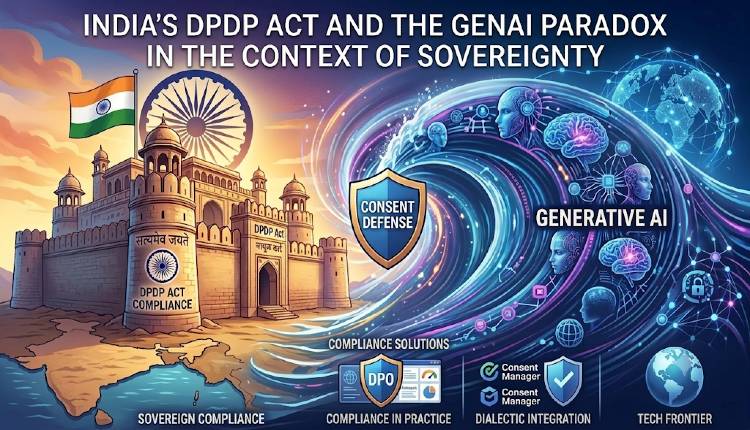
India recently introduced the Digital Personal Data Protection Act to secure the privacy of its citizens. The law focuses on clear rules like gathering only necessary data, strictly defining its purpose, securing explicit consent, and allowing people to delete their personal information. However, this creates a major conflict with generative artificial intelligence. These models operate by absorbing massive amounts of information without a specific end goal in mind, which makes securing specific consent almost impossible. Furthermore, once personal data is permanently integrated into a complex model, extracting and deleting it becomes incredibly difficult and expensive. This mismatch presents a deep paradox for policymakers trying to govern borderless technology with rigid, location-based rules. Beyond basic consumer privacy, the government is increasingly concerned about national security. Officials worry that foreign platforms could analyze patterns in the queries submitted by government employees, potentially revealing sensitive strategic information. As a result, businesses are currently working hard to adjust their operations to comply with these strict new regulations, while the government simultaneously limits the use of certain foreign tools and invests heavily in domestic alternatives. Ultimately, India faces the complex challenge of comprehensively protecting its people's data and maintaining its national sovereignty without stalling necessary technological progress.


How Hyperscale Infrastructure, Sovereign AI And Quantum Computing Redefine Enterprise Strategy

Data centers are no longer just places to store static information; they have become the central engines of the digital economy. Modern "hyperscale data centers" are filled with advanced processors working together to analyze information and create new content continuously. Because processing power is now essential for survival, huge amounts of money that used to go into traditional industries are now flowing into artificial intelligence infrastructure. Recognizing this shift, many countries are building their own local tech hubs. This push for "sovereign AI" allows nations to keep their data secure while training systems that reflect their unique languages and cultures. This move is reshaping international alliances, as countries secure the critical minerals and technology they need to stay independent. Looking ahead, adding quantum computing into these data centers will be the next major leap, potentially solving incredibly complex problems in seconds and upending current security protocols. For business leaders, this means that computing power is no longer just a basic tech expense but a core part of long-term strategy. Organizations and nations that invest in their own infrastructure and talent will secure their competitive edge, while those that do not risk falling behind and relying entirely on outside technology.

Daily Tech Digest - July 03, 2026


Quote for the day:

"Working hard to get better regardless of your mood is what separates the great from the good" -- Vala Afshar

🎧 Listen to this digest on YouTube Music

▶ Play Audio Digest

Duration: 19 mins • Perfect for listening on the go.


What do AI observability tools actually do?

Current AI observability tools are struggling to keep pace because AI systems fail differently than traditional software. Instead of generating clear error codes, AI models drift, hallucinate, and degrade unpredictably. Today's tools largely rely on static, backward-looking evaluations that assess model outputs after the fact rather than observing runtime behavior in live, unpredictable environments. Security concerns, such as prompt injection and data leaks, have prompted the development of real-time guardrails, but these remain largely reactive and fail to address the root causes of failures. As the industry shifts toward autonomous AI agents that make decisions and execute multi-step workflows, observability must evolve into a comprehensive control layer. This requires independent, tamper-proof tracking mechanisms like eBPF operating at the kernel level to ensure accurate data collection without relying on potentially flawed application-level instrumentation. Ultimately, future AI observability must feature behavioral anomaly detection, dynamic data collection, and integration directly into AI workflows. This ensures that observability acts as a foundational infrastructure layer rather than a reactive afterthought, enabling both human engineers and AI agents to monitor, debug, and improve complex systems with complete trust.


The 80/20 Flip: Why Your Data Problem Is a Symptom of a Deeper Business Problem

Many businesses fall into the trap of the "80/20 flip," where their data teams spend eighty percent of their time cleaning and reconciling conflicting information and only twenty percent generating valuable insights. This imbalance happens because departments often build isolated systems tailored to their specific needs, leading to a lack of an enterprise-wide truth. Consequently, organizations operate with a false sense of confidence, relying on heavily curated reports that mask underlying inconsistencies until external scrutiny—like an audit or regulatory review—exposes the messy reality. The rapid adoption of artificial intelligence makes this hidden issue far more urgent today. When AI models are trained on fragmented and unverified information, they operationalize those flaws at scale, producing confident but inaccurate outputs, amplifying hidden biases, and increasing regulatory risk. Reversing this ratio is not a technology challenge; it is a fundamental business issue. It requires establishing clear authority over data definitions, enforcing accountability where information is first created, and ensuring business leaders actively manage data quality. Companies that fail to establish a reliable foundation of truth will spend years debugging their AI models instead of trusting them to drive meaningful results.


Quantum Breakthroughs Compress Post-Quantum Computing Timeline

Recent advancements by technology companies like Microsoft, Google, and Amazon Web Services are significantly accelerating the timeline for practical quantum computing. According to industry reports, these organizations have made substantial, measurable progress in improving the reliability and error correction capabilities of quantum systems. As these technical improvements continue to build upon one another, experts now anticipate that resource-efficient, error-corrected quantum computers will become a reality much sooner than previously estimated. This faster rate of development directly impacts the cybersecurity landscape by shrinking the available window for adopting post-quantum security measures. Current encryption methods rely on complex mathematical problems that would take traditional computers an impractically long time to solve, but functional quantum computers will be capable of breaking them with relative ease. Because the arrival date for these advanced machines is moving closer, organizations have less time to thoughtfully transition their networks and shield their sensitive data from potential compromise. As a result, the effort to implement quantum-safe cryptography is becoming a more immediate priority. Information security leaders are now advised to begin preparing their IT systems for this transition earlier than initially planned to ensure long-term data protection.


Beyond Prompt Injection

As AI systems evolve from simple text generators into autonomous programs capable of making decisions and interacting with external tools, the way we secure them must completely change. Recently, indirect prompt injection transitioned from a theoretical risk into an active threat affecting production systems, earning the top spot on major security watchlists. However, focusing solely on prompt injection is no longer enough. The core issue is that securing these new, independent AI agents requires a fundamentally different threat model. Because agents can reason, plan, and execute actions on their own, they introduce unpredictable behaviors that traditional security testing simply cannot catch. They shift the security boundary away from individual components and directly onto the data itself. If an agent is compromised, it can autonomously escalate privileges, misuse credentials, or trigger rapid supply chain failures while completely evading human oversight. Therefore, organizations need to stop treating AI risk as just a model flaw and recognize it as a broader architectural challenge. To keep these powerful systems safe, teams must adopt specialized security frameworks designed specifically to handle the unique autonomy and complexity of agent-driven environments before deploying them.


The hidden cost of security complexity in modern enterprises

Many enterprises continue to increase their cybersecurity budgets yet find themselves feeling less secure because of growing operational complexity. Rather than improving defense, accumulating dozens of disconnected security tools and dashboards often creates fragmented systems that overwhelm teams. This sprawl generates alert fatigue, creates blind spots, and ultimately slows down the response time to actual threats. When tools are added without clear integration or ownership, they build a complex environment that attackers can easily exploit through inconsistent policy enforcement and undetected gaps. The financial and operational toll is substantial, showing up in longer breach containment times, higher incident costs, and severe staff burnout. To counter this, organizations must shift their focus from simply buying more products to rationalizing their security architecture. This means ensuring that existing systems work together seamlessly to provide clear, unified visibility and measurable control outcomes. By prioritizing integration, automation, and speed over sheer volume of defenses, leadership can eliminate the hidden gaps that adversaries rely on. Ultimately, true resilience requires a strategic commitment to simplifying operations, ensuring that the security infrastructure is cohesive, manageable, and genuinely effective at reducing risk.


How enterprises are splitting AI between the edge and cloud

As businesses deploy artificial intelligence into physical infrastructure like robotics and agricultural equipment, they are increasingly dividing AI workloads between edge devices and the cloud. This split strategy helps companies balance the need for immediate, on-site decision-making with the immense computing power required to train complex algorithms. For example, Luminous Robotics uses edge computing to ensure their solar-panel-installing robots can react and make physical adjustments in real time, avoiding the delays that come with relying on remote servers. However, the vast amounts of sensory data these robots gather are periodically uploaded to the cloud, where larger AI models are continuously refined and later pushed back to the robots as updates. Similarly, agricultural firm Syngenta processes some sensor data directly on farm equipment, while relying on cloud-based systems to analyze broader trends like weather patterns and soil health. While these physical AI systems operate semi-autonomously, both companies emphasize that human oversight remains a critical component to ensure safety and validate recommendations. Ultimately, this hybrid approach allows organizations to achieve the speed necessary for physical operations while still benefiting from the continuous learning capabilities of the cloud.


The Future of AI in Banking is Becoming Clearer. Do These Three Things Now to Stay on Course

The banking industry is moving past the initial hype of artificial intelligence, with clear, practical applications finally emerging. Financial institutions are transitioning from small-scale experiments to broad deployments that prioritize measurable returns on investment. Instead of chasing every new technological trend, banks are focusing on integrating this technology to improve their core operations. This means automating routine back-office tasks, which naturally frees up employees to handle more complex, relationship-building work. On the customer-facing side, artificial intelligence is allowing banks to offer highly tailored services and proactive financial guidance based on a customer's unique habits and needs. Beyond basic customer service, these tools are significantly enhancing risk management by accurately identifying fraudulent activities and evaluating creditworthiness with far greater precision. However, to fully capture these benefits, organizations recognize that they must invest heavily in updating their older data infrastructure and maintaining strict privacy standards. Success in this new era requires a change in mindset: viewing artificial intelligence not just as a basic cost-cutting measure, but as a fundamental shift in how financial services operate. By strategically implementing these modern tools, banks are setting a strong foundation for long-term growth and stability.


Identity Was Never the Real Problem. Intent Is — and Almost Nobody Is Building For It Yet

Recent security breaches involving automated systems demonstrate that identity is no longer the core problem; flawed authorization is. Traditional credentials, such as standard access keys or session tokens, are built to verify whether access is broadly valid. However, they consistently fail to check the actual purpose behind that access. For instance, a token issued for routine infrastructure maintenance might be manipulated to alter sensitive transactions, simply because the underlying system never questions the reason for the action. While a human employee misusing access typically leaves a slow, noticeable trail of individual steps, this gap becomes a severe risk with independent AI agents. If an attacker manipulates the specific task an AI believes it is supposed to perform, the program can drift from its objective and execute hundreds of unauthorized actions at machine speed. Crucially, it does this while its identity remains completely legitimate and fully authenticated. To address this risk, organizations must shift toward intent-bound authorization. Rather than relying solely on static permissions, systems must continuously verify whether an ongoing action strictly matches its originally declared purpose before granting access. By securing the underlying intent rather than merely verifying credentials, companies can safely manage these powerful programs.


Microservices Without the Drama

Transitioning to microservices is often necessary when a single application struggles under competing demands, but it ultimately replaces internal simplicity with network complexity. To keep these isolated services from becoming a burden, organizations must carefully define service boundaries based on distinct business functions rather than arbitrary technical layers. This pragmatic approach prevents unnecessary connections and eliminates confused ownership. Once separated, services need sensible communication strategies that actively assume failure, relying on basic protections like timeouts and retries to maintain stability. Crucially, each microservice must exclusively own its data; relying on a shared database simply reintroduces the exact dependencies the architecture was meant to eliminate. Consistent, predictable deployment processes are equally important, ensuring that system updates remain routine rather than highly stressful events. Furthermore, because user requests now travel across multiple separate systems, strong observability through centralized logs, metrics, and tracing is not an optional extra—it is the only way to effectively diagnose hidden problems. Ultimately, a successful microservices strategy is as much an organizational shift as a technical one. The architecture only thrives when focused teams take complete responsibility for their services from initial code to production support.


Mind the Gap: Data Rabbits

Many organizations rush to move their analytics to the cloud, hoping to bypass IT backlogs and lower costs. At first, letting different teams spin up their own data environments seems like a quick and affordable fix. However, this decentralized approach quickly spirals out of control. Teams end up building overlapping pipelines and isolated data repositories that multiply like rabbits. Before long, executives find themselves arguing over mismatched numbers because each department is pulling from its own unverified source. What began as a cost-saving shortcut transforms into an expensive, tangled mess of duplicated efforts and unreliable information. To solve this, companies need to strike a balance between strict control and total data anarchy. IT teams should support temporary workspaces for testing but enforce strict expiration dates so they do not become permanent. Establishing clean, verified core data sets ensures that everyone pulls from the same reliable foundation. Finally, organizations must change their internal culture to reward teams for sharing and reusing existing resources rather than building completely new ones from scratch. By addressing these habits, companies can reduce waste, ensure accuracy, and build a truly efficient modern data environment.