Showing posts with label augmented reality. Show all posts

Daily Tech Digest - March 01, 2025


Quote for the day:

"Your life does not get better by chance, it gets better by change." -- Jim Rohn


Two AI developer strategies: Hire engineers or let AI do the work

Philip Walsh, director analyst in Gartner’s software engineering practice, said that from his vantage point he sees “two contrasting signals: some leaders, like Marc Benioff at Salesforce, suggest they may not need as many engineers due to AI’s impact, while others — Alibaba being a prime example — are actively scaling their technical teams and specifically hiring for AI-oriented roles.” In practice, he said, Gartner believes AI is far more likely to expand the need for software engineering talent. “AI adoption in software development is early and uneven,” he said, “and most large enterprises are still early in deploying AI for software development — especially beyond pilots or small-scale trials.” Walsh noted that, while there is a lot of interest in AI-based coding assistants (Gartner sees roughly 80% of large enterprises piloting or deploying them), actual active usage among developers is often much lower. “Many organizations report usage rates of 30% or less among those who have access to these tools,” he said, adding that the most common tools are not yet generating sufficient productivity gains to generate cost savings or headcount reductions. He said, “current solutions often require strong human supervision to avoid errors or endless loops. Even as these technologies mature over the next two to three years, human expertise will remain critical.”


The Great AI shift: The rise of ‘services as software’

Today, AI is pushing the envelope by turning services built to be used by humans as ‘self-serve’ utilities into automatically-running software solutions that execute autonomously—a paradigm shift the venture capital world, in particular, has termed ‘Services as Software’ ... The shift is already conspicuous across industries. AI tools like Harvey AI are transforming the legal and compliance sector by analysing case law and generating legal briefs, essentially replacing human research assistants. The customer support ecosystem that once required large human teams in call centres now handles significant query volumes daily with AI chatbots and virtual agents. ... The AI-driven shift brings into question the traditional notion of availing an ‘expert service’. Software development,legal, and financial services are all coveted industries where workers are considered ‘experts’ delivering specialised services. The human role will undergo tremendous redefinition and will require calibrated re-skilling. ... Businesses won't simply replace SaaS with AI-powered tools; they will build the company's processes and systems around these new systems. Instead of hiring marketing agencies, companies will use AI to generate dynamic marketing and advertising campaigns. Businesses will rely on AI-driven quality assurance and control instead of outsourcing software testing, Quality Assurance, and Quality Control.


Resilience, Observability and Unintended Consequences of Automation

Instead of thinking of replacing work that humans might make or do, it's augmenting that work. And how do we make it easier for us to do these kinds of jobs? And that might be writing code, that might be deploying it, that might be tackling incidents when they come up, but understanding what the fancy, nerdy academic jargon for this is joint cognitive systems. But thinking instead of replacement or our functional allocation, another good nerdy academic term, we'll give you this piece, we'll give the humans those pieces. How do we have a joint system where that automation is really supporting the work of the humans in this complex system? And in particular, how do you allow them to troubleshoot that, to introspect that, to actually understand and to have even maybe the very nerdy versions of this research lay out possible ways of thinking about what can these computers do to help us? ... We could go monolith to microservices, we could go pick your digital transformation. How long did that take you? And how much care did you put into that? Maybe some of it was too long or too bureaucratic or what have you, but I would argue that we tend to YOLO internal developer technology way faster and way looser than we do with the things that actually make us money as that is the perception, the things that actually make us money.


The Modern CDN Means Complex Decisions for Developers

“Developers should not have to be experts on how to scale an application; that should just be automatic. But equally, they should not have to be experts on where to serve an application to stay compliant with all these different patchworks of requirements; that should be more or less automatic,” Engates argues. “You should be able to flip a few switches and say ‘I need to be XYZ compliant in these countries,’ and the policy should then flow across that network and orchestrate where traffic is encrypted and where it’s served and where it’s delivered and what constraints are around it.” ... Along with the physical constraint of the speed of light and the rise of data protection and compliance regimes, Alexander also highlights the challenge of costs as something developers want modern CDNs to help them with. “Egress fees between clouds are one of the artificial barriers put in place,” he claims. That can be 10%, 20% or even 30% of overall cloud spend. “People can’t build the application that they want, they can’t optimize, because of some of these taxes that are added on moving data around.” Update patterns aren’t always straightforward either. Take a wiki like Fandom, where Fastly founder and CTO Artur Bergman was previously CTO. 


A Comprehensive Look at OSINT

Cybersecurity professionals within corporations rely on public data to identify emerging phishing campaigns, data breaches, or malicious activity targeting their brand. Investigative journalists and academic researchers turn to OSINT for fact-checking, identifying new leads, and gathering reliable support for their reporting or studies. ... Avoiding OSINT or downplaying its value can leave organizations unaware of threats and opportunities that are readily discoverable to others. By failing to gather open-source data, businesses and government agencies could remain in the dark about malicious activities, negative brand impersonations, or stolen credentials circulating on forums and dark web marketplaces. In the event of a security breach or public scandal, stakeholders may view the lack of proper OSINT measures as a failure of due diligence, eroding trust and tarnishing the organization’s image. ... The primary driver behind OSINT’s growth is the vast reservoir of information generated daily by digital platforms, databases, and news outlets. This public data can be invaluable for enhancing security, improving transparency, and making more informed decisions. Security professionals, for instance, can preemptively identify threats and vulnerabilities posted openly by malicious actors. 


OT/ICS cyber threats escalate as geopolitical conflicts intensify

A persistent lack of visibility into OT environments continues to obscure the full scale of these attacks. These insights come from Dragos’ 2025 OT/ICS Cybersecurity Report, its eighth annual Year in Review, which analyzes industrial organizations’ cyber threats. .., VOLTZITE is arguably the most crucial threat group to track in critical infrastructure. Due to its dedicated focus on OT data, the group is a capable threat to ICS asset owners and operators. This group shares extensive technical overlaps with the Volt Typhoon threat group tracked by other organizations. It utilizes the same techniques as in previous years, setting up complex chains of network infrastructure to target, compromise, and steal compromising OT-relevant data—GIS data, OT network diagrams, OT operating instructions, etc.—from victim ICS organizations. ... Increasing collaboration between hacktivist groups and state-backed cyber actors has led to a hybrid threat model where hacktivists amplify state objectives, either directly or through shared infrastructure and intelligence. State actors increasingly look to exploit hacktivist groups as proxies to conduct deniable cyber operations, allowing for more aggressive attacks with reduced attribution risks.


Leveraging AR & VR for Remote Maintenance in Industrial IoT

AR tools like Microsoft’s HoloLens 2 are enabling workers on-site to receive real-time guidance from experts located anywhere in the world. Using AR glasses or headsets, on-site personnel can share their view with remote technicians, who can then overlay instructions, schematics, or step-by-step troubleshooting guidance directly onto the worker’s field of vision. This allows maintenance teams to resolve issues faster and more accurately, without the need for travel, reducing downtime and operational costs. ... By using VR simulations, workers can familiarize themselves with equipment, troubleshoot issues, and practice responses to emergencies, all in a virtual setting. This hands-on experience builds confidence and competence, ultimately improving safety and efficiency when dealing with real equipment. As IIoT systems become more sophisticated, VR training can play a key role in ensuring that the workforce is well-prepared to handle advanced technologies without risking costly mistakes or accidents. ... In the future, we can expect even more seamless integration between AR/VR systems and IIoT platforms, where real-time data from sensors and machines is directly fed into the AR/VR environment, providing a comprehensive view of machine health, performance and issues. 


Just as DNA defines an organism’s identity, business continuity must be deeply embedded in every aspect of your organization. It is more than just a collection of emergency plans or procedures; it embodies a philosophy that ensures not only survival during disruptions, but long-term sustainability as well. ... An organization without continuity is like a tree without roots—fragile and vulnerable to the slightest shock. Continuity serves as an anchor, allowing organizations to navigate crises while staying aligned with their strategic goals. Any organization that aims to grow and thrive must take a proactive approach to continuity. Continuity strategies and initiatives can be seen as the roots of a tree, natural extensions that provide stability and sustain growth. ... It is essential that both leaders and team members possess the experience and skills needed to execute their work effectively. ... Thoroughly assess your key vulnerabilities. This involves two primary methods: a BIA, which analyzes the impacts of a disturbance over time to determine recovery priorities, resource requirements, and appropriate responses; and risk analysis, which identifies risks tied to prioritized activities and critical resources. Together, these two approaches offer a comprehensive understanding of your organization’s pain points.


Keep Your Network Safe From the Double Trouble of a ‘Compound Physical-Cyber Threat'

This phenomenon, a “compound physical-cyber threat,” where a cyberattack is intentionally launched around a heatwave or hurricane, for example, would have outsized and potentially devastating effects on businesses, communities, and entire economies, according to a 2024 study led by researchers at Johns Hopkins University. “Cyber-attacks are more disruptive when infrastructure components face stresses beyond normal operating conditions,” the study asserted. Businesses and their IT and risk management people would be wise to take notice, because both cyberattacks and weather-related disasters are increasing in frequency and in the cost they exact from their victims. ... Take what you learn from the risk assessment to develop a detailed plan that outlines the steps your organization intends to take to preserve cybersecurity, business continuity, and network connectivity during a crisis. Whether you’re a B2B or B2C organization, your customers, employees, suppliers and other stakeholders expect your business to be “always on,” 24/7/365. How will you keep the lights on, the lines of communications open, and your network insulated from cyberattack during a disaster? 


‘It Won’t Happen to Us:’ The Dangerous Mindset Minimizing Crisis Preparation

The main mistakes in crisis situations include companies staying silent and not releasing official statements from management, creating a vacuum of information and promoting the spread of rumors. ... First and foremost, companies should not underestimate the importance of communication, especially when things are not going well. During a crisis, many companies prefer to sit quietly and wait without informing or sharing anything about their measures and actions in connection with the crisis. This is the wrong approach. Silence gives competitors enough space to thrive and gain a market advantage. Meanwhile, journalists won’t stop working on hot stories. When you don’t share anything meaningful with them or your audience, they may collect and publish rumors and misinformation about your company. And the lack of comments creates the ground for negative interpretations. Therefore, transparency and efficiency are key principles of anti-crisis communication. If you are clear in your messages and give quick responses, it allows the company to control the information agenda. The surefire way to gain and maintain trust is to promptly and regularly inform your company’s investors during a crisis through your own channels. 

Daily Tech Digest - November 21, 2024

Building Resilient Cloud Architectures for Post-Disaster IT Recovery

A resilient cloud architecture is designed to maintain functionality and service quality during disruptive events. These architectures ensure that critical business applications remain accessible, data remains secure, and recovery times are minimized, allowing organizations to maintain operations even under adverse conditions. To achieve resilience, cloud architectures must be built with redundancy, reliability, and scalability in mind. This involves a combination of technologies, strategies, and architectural patterns that, when applied collect ... Cloud-based DRaaS solutions allow organizations to recover critical workloads quickly by replicating environments in a secondary cloud region. This ensures that essential services can be restored promptly in the event of a disruption. Automated backups, on the other hand, ensure that all extracted data is continually saved and stored in a secure environment. Using regular snapshots can also provide rapid restoration points, giving teams the ability to revert systems to a pre-disaster state efficiently. ... Infrastructure as code (IaC) allows for the automated setup and configuration of cloud resources, providing a faster recovery process after an incident. 


Agile Security Sprints: Baking Security into the SDLC

Making agile security sprints effective requires organizations to embrace security as a continuous, collaborative effort. The first step? Integrating security tasks into the product backlog right alongside functional requirements. This approach ensures that security considerations are tackled within the same sprint, allowing teams to address potential vulnerabilities as they arise — not after the fact when they're harder and more expensive to fix. ... By addressing security iteratively, teams can continuously improve their security posture, reducing the risk of vulnerabilities becoming unmanageable. Catching security issues early in the development lifecycle minimizes delays, enabling faster, more secure releases, which is critical in a competitive development landscape. The emphasis on collaboration between development and security teams breaks down silos, fostering a culture of shared responsibility and enhancing the overall security-consciousness of the organization. Quickly addressing security issues is often far more cost-effective than dealing with them post-deployment, making agile security sprints a necessary choice for organizations looking to balance speed with security.


The new paradigm: Architecting the data stack for AI agents

With the semantic layer and historical data-based reinforcement loop in place, organizations can power strong agentic AI systems. However, it’s important to note that building a data stack this way does not mean downplaying the usual best practices. This essentially means that the platform being used should ingest and process data in real-time from all major sources, have systems in place for ensuring the quality/richness of the data and then have robust access, governance and security policies in place to ensure responsible agent use. “Governance, access control, and data quality actually become more important in the age of AI agents. The tools to determine what services have access to what data become the method for ensuring that AI systems behave in compliance with the rules of data privacy. Data quality, meanwhile, determines how well an agent can perform a task,” Naveen Rao, VP of AI at Databricks, told VentureBeat. ... “No agent, no matter how high the quality or impressive the results, should see the light of day if the developers don’t have confidence that only the right people can access the right information/AI capability. This is why we started with the governance layer with Unity Catalog and have built our AI stack on top of that,” Rao emphasized.


Enhancing visibility for better security in multi-cloud and hybrid environments

The number one challenge for infrastructure and cloud security teams is visibility into their overall risk–especially in complex environments like cloud, hybrid cloud, containers, and Kubernetes. Kubernetes is now the tool of choice for orchestrating and running microservices in containers, but it has also been one of the last areas to catch speed from a security perspective, leaving many security teams feeling caught on their heels. This is true even if they have deployed admission control or have other container security measures in place. Teams need a security tool in place that can show them who is accessing their workloads and what is happening in them at any given moment, as these environments have an ephemeral nature to them. A lot of legacy tooling just has not kept up with this demand. The best visibility is achieved with tooling that allows for real-time visibility and real-time detection, not point-in-time snapshotting, which does not keep up with the ever-changing nature of modern cloud environments. To achieve better visibility in the cloud, automate security monitoring and alerting to reduce manual effort and ensure comprehensive coverage. Centralize security data using dashboards or log aggregation tools to consolidate insights from across your cloud platforms.

How Augmented Reality is Shaping EV Development and Design

Traditionally, prototyping has been a costly and time-consuming stage in vehicle development, often requiring multiple physical models and extensive trial and error. AR is disrupting this process by enabling engineers to create and test virtual prototypes before building physical ones. Through immersive visualizations, teams can virtually assess design aspects like fit, function, and aesthetics, streamlining modifications and significantly shortening development cycles. ... One of the key shifts in EV manufacturing is the emphasis on consumer-centric design. EV buyers today expect not just efficiency but also vehicles that reflect their lifestyle choices, from customizable interiors to cutting-edge tech features. AR offers manufacturers a way to directly engage consumers in the design process, offering a virtual showroom experience that enhances the customization journey. ... AR-assisted training is one frontier seeing a lot of adoption. By removing humans from dangerous scenarios while still allowing them to interact with those same scenarios, companies can increase safety while still offering practical training. In one example from Volvo, augmented reality is allowing first responders to assess damage on EV vehicles and proceed with caution.


Digital twins: The key to unlocking end-to-end supply chain growth

Digital twins can be used to model the interaction between physical and digital processes all along the supply chain—from product ideation and manufacturing to warehousing and distribution, from in-store or online purchases to shipping and returns. Thus, digital twins paint a clear picture of an optimal end-to-end supply chain process. What’s more, paired with today’s advances in predictive AI, digital twins can become both predictive and prescriptive. They can predict future scenarios to suggest areas for improvement or growth, ultimately leading to a self-monitoring and self-healing supply chain. In other words, digital twins empower the switch from heuristic-based supply chain management to dynamic and granular optimization, providing a 360-degree view of value and performance leakage. To understand how a self-healing supply chain might work in practice, let’s look at one example: using digital twins, a retailer sets dynamic SKU-level safety stock targets for each fulfillment center that dynamically evolve with localized and seasonal demand patterns. Moreover, this granular optimization is applied not just to inventory management but also to every part of the end-to-end supply chain—from procurement and product design to manufacturing and demand forecasting. 


Illegal Crypto Mining: How Businesses Can Prevent Themselves From Being ‘Cryptojacked’

Business leaders might believe that illegal crypto mining programs pose no risks to their operations. Considering the number of resources most businesses dedicate to cybersecurity, it might seem like a low priority in comparison to other risks. However, the successful deployment of malicious crypto mining software can lead to even more risks for businesses, putting their cybersecurity posture in jeopardy. Malware and other forms of malicious software can drain computing resources, cutting the life expectancy of computer hardware. This can decrease the long-term performance and productivity of all infected computers and devices. Additionally, the large amount of energy required to support the high computing power of crypto mining can drain electricity across the organization. But one of the most severe risks associated with malicious crypto mining software is that it can include other code that exploits existing vulnerabilities. ... While powerful cybersecurity tools are certainly important, there’s no single solution to combat illegal crypto mining. But there are different strategies that business leaders can implement to reduce the likelihood of a breach, and mitigating human error is among the most important. 


10 Most Impactful PAM Use Cases for Enhancing Organizational Security

Security extends beyond internal employees as collaborations with third parties also introduce vulnerabilities. PAM solutions allow you to provide vendors with time-limited, task-specific access to your systems and monitor their activity in real time. With PAM, you can also promptly revoke third-party access when a project is completed, ensuring no dormant accounts remain unattended. Suppose you engage third-party administrators to manage your database. In this case, PAM enables you to restrict their access based on a "need-to-know" basis, track their activities within your systems, and automatically remove their access once they complete the job. ... Reused or weak passwords are easy targets for attackers. Relying on manual password management adds another layer of risk, as it is both tedious and prone to human error. That's where PAM solutions with password management capabilities can make a difference. Such solutions can help you secure passwords throughout their entire lifecycle — from creation and storage to automatic rotation. By handling credentials with such PAM solutions and setting permissions according to user roles, you can make sure all the passwords are accessible only to authorized users. 


The Information Value Chain as a Framework for Tackling Disinformation

The information value chain has three stages: production, distribution, and consumption. Claire Wardle proposed an early version of this framework in 2017. Since then, scholars have suggested tackling disinformation through an economics lens. Using this approach, we can understand production as supply, consumption as demand, and distribution as a marketplace. In so doing, we can single out key stakeholders at each stage and determine how best to engage them to combat disinformation. By seeing disinformation as a commodity, we can better identify and address the underlying motivations ... When it comes to the disinformation marketplace, disinformation experts mostly agree it is appropriate to point the finger at Big Tech. Profit-driven social media platforms have understood for years that our attention is the ultimate gold mine and that inflammatory content is what attracts the most attention. There is, therefore, a direct correlation between how much disinformation circulates on a platform and how much money it makes from advertising. ... To tackle disinformation, we must think like economists, not just like fact-checkers, technologists, or investigators. We must understand the disinformation value chain and identify the actors and their incentives, obstacles, and motivations at each stage.


Why do developers love clean code but hate writing documentation?

In fast-paced development environments, particularly those adopting Agile methodologies, maintaining up-to-date documentation can be challenging. Developers often deprioritize documentation due to tight deadlines and a focus on delivering working code. This leads to informal, hard-to-understand documentation that quickly becomes outdated as the software evolves. Another significant issue is that documentation is frequently viewed as unnecessary overhead. Developers may believe that code should be self-explanatory or that documentation slows down the development process. ... To prevent documentation from becoming a second-class citizen in the software development lifecycle, Ferri-Beneditti argues that documentation needs to be observable, something that can be measured against the KPIs and goals developers and their managers often use when delivering projects. ... By offloading the burden of documentation creation onto AI, developers are free to stay in their flow state, focusing on the tasks they enjoy—building and problem-solving—while still ensuring that the documentation remains comprehensive and up-to-date. Perhaps most importantly, this synergy between GenAI and human developers does not remove human oversight. 


Quote for the day:

"The harder you work for something, the greater you'll feel when you achieve it." -- Unknown

Daily Tech Digest - October 27, 2024

Who needs a humanoid robot when everything is already robotic?

The service sector will see a surge in delivery robots, streamlining last-mile package and food delivery logistics. Advanced cleaning robots will maintain both homes and commercial spaces. urgical robots performing minimally invasive procedures with high precision will benefit healthcare. Rehabilitation robots and exoskeletons will transform physical therapy and mobility, while robotic prosthetics will offer enhanced functionality to those who need them. At the microscopic level, nanorobots will revolutionize drug delivery and medical procedures. Agriculture will increasingly embrace harvesting and planting robots to automate crop management, with specialized versions for tasks like weeding and dairy farming. Autonomous vehicles and drone delivery systems will transform the transportation sector, while robotic parking solutions will optimize urban spaces. Military and defense applications will include reconnaissance drones, bomb disposal robots, and autonomous combat vehicles. Space exploration will continue to rely on advanced rovers, satellite-servicing robots, and assistants for astronauts on space stations. Underwater exploration robots and devices monitoring air and water quality will benefit environmental and oceanic research. 


Cybersecurity Isn't Easy When You're Trying to Be Green

Already, some green energy infrastructure has fallen prey to attackers. Charging stations for electric vehicles typically require connectivity, which makes them vulnerable to both compromise and disruption. In 2022, pro-Ukrainian hacktivists compromised chargers in Moscow to display messages of support for Ukraine. In 2019, a solar firm could no longer manage its 500 megawatts of wind and solar sites in the western US after a denial-of-service attack targeted an unpatched firewall, the FBI stated in a Private Industry Notification (PIN) in July. The risk could extend all the way to homeowners, who increasingly have adopted rooftop solar and need to be connected to be able to deliver their solar power and be credited. "This issue will only become more important as small solar systems continue to grow. When every house is a power plant, every house is a target," Morten Lund, of counsel for Foley & Lardner LLP, wrote in a brief directed at energy companies. "In many ways, the distributed nature of solar energy provides significant protection against catastrophic failures. But without sufficient protection at the project level, this strength quickly becomes a weakness."


A look at risk, regulation, and lock-in in the cloud

The threat here, if indeed it is a threat, is multifaceted. Firstly, financial implications can be significant. When a company heavily invests in a specific vendor’s ecosystem, the costs of migrating to a different provider, both in terms of money and resources, can be prohibitive. The reality is that any technology comes with a certain degree of lock-in. That is why I’m often amazed at enterprises that ask me for zero lock-in in any enterprise technology decision. It just does not exist. The question is how do we minimize the impact of the lock-in that any use of technology brings. This is something I explain extensively to enterprises. The risk is operational; dependencies on proprietary APIs and services might necessitate extensive application rewriting. ... Whether governmental regulation is a boon or a bane is a matter of perspective. On one side, it could enforce fairness, ensuring that no single provider exploits its position to the detriment of customers. Conversely, excessive regulation might stifle innovation and limit the aggressive evolution that characterizes the tech world. Also, we should consider that these regulations exist within one or a few countries, and as enterprises are now mostly international firms, that has less of the chilling effect that most expect.


Biometrics options expand, add more layers to secure financial services

The range of technologies being brought to bear against different fraud vectors also includes Herta’s biometrics being utilized by the EU’s EITHOS project to detect deepfakes, and age assurance and automated border control measures a pair of governments are looking into for contract opportunities. ... Mastercard is rolling out passkeys for payments in the Middle East and North Africa, following their launch in India. Starting with the noon Payments platform in the UAE, the Payment Passkey Service will by offered as a more secure alternative to OTPs at online checkouts. A Washington, D.C.-based think tank says America has a digital verification divide, due to the lack of documents possessed by low-income and marginalized people and the conflation of biometrics for ID verification with surveillance and law enforcement. Login.gov has helped less than it is supposed to so far, but evidence from ID.me suggests that the situation could be improved with biometrics. Panama has introduced a national digital ID and wallet for identity verification to access public and private services online. The digital ID is available to both citizens and permanent residents, and essentially digitizes the national ID card supplied by Mühlbauer and partners. 


AI Won’t Fix Your Software Delivery Problems

You can assess your personal productivity because it’s a feeling rather than a number. You don’t feel productive when dealing with busy work or handling constant interruptions. When you get a solid chunk of time to complete a task, you feel great. If an organization is interested in this kind of productivity, it should check in on employee satisfaction because people tend to be more satisfied when they can get things done. The State of DevOps report confirms this problem, as the high ratings for AI-driven productivity aren’t reducing toil work or improving software delivery performance, which we’ve long held to be a solid way for development teams to contribute to the organization’s goals. ... Given the intense focus on increasing the speed of coding, we’re likely seeing suboptimization on a massive scale. Writing code is rarely the bottleneck for feature development. Speeding up the code itself is less valuable if you aren’t catching the bugs it introduces with automated tests. It also fails to address the broader software delivery system or guarantee your features are useful to users. If you aren’t working at the constraint, your optimizations don’t improve throughput. In many cases, optimizing away from the constraint harms the end-to-end system.




The mainframe’s future in the age of AI

Running AI on mainframes as a trend is still in its infancy, but the survey suggests many companies do not plan to give up their mainframes even as AI creates new computing needs, says Petra Goude ... “AI can be assistive technology,” Dyer says. “I see it in terms of helping to optimize the code, modernize the code, renovate the code, and assist developers in maintaining that code.” ... “Many institutions are willing to resort to artificial intelligence to help improve outdated systems, particularly mainframes,” he says. “AI reduces the burden on several work phases, such as code rewriting or replacing databases, which streamlines the whole upgrading stage.” ... Many organizations have their mission-critical data residing on mainframes, and it may make sense to run AI models where that data resides, Dyer says. In some cases, that may be a better alternative than moving mission-critical data to other hardware, which may not be as secure or resilient, she adds. “You have both your customer data and then you have what I’ll call the operational data on the mainframe,” she says. “I can see the value of being able to develop and run your models directly right there, because you don’t have to move your data, you have very low latency, high throughput, all those things that you would want for certain types of AI applications.” 


How (and why) federated learning enhances cybersecurity

Federated learning’s popularity is rapidly increasing because it addresses common development-related security concerns. It is also highly sought after for its performance advantages. Research shows this technique can improve an image classification model’s accuracy by up to 20% — a substantial increase. ... Once the primary algorithm aggregates and weighs participants’ updates, it can be reshared for whatever application it was trained for. Cybersecurity teams can use it for threat detection. The advantage here is twofold — while threat actors are left guessing since they cannot easily exfiltrate data, professionals pool insights for highly accurate output. Federated learning is ideal for adjacent applications like threat classification or indicator of compromise detection. The AI’s large dataset size and extensive training build its knowledge base, curating expansive expertise. Cybersecurity professionals can use the model as a unified defense mechanism to protect broad attack surfaces. ML models — especially those that make predictions — are prone to drift over time as concepts evolve or variables become less relevant. With federated learning, teams could periodically update their model with varied features or data samples, resulting in more accurate, timely insights.


Augmented Reality's Healthcare Revolution

Many observers believe that AR's most immediate benefit will be in training both current and future healthcare professionals. "AR enables students to interact with virtual content in a real-world setting, providing contextualized learning experiences," Stegman says. Meanwhile, full virtual reality (VR), will offer a completely immersive training environment in which students can practice clinical skills without the risks associated with real patient care. ... As AR begins entering the healthcare mainstream, deep-pocketed large hospitals and specialized medical centers will most likely be the leading adopters, says SOTI's Anand. He reports that his firm's latest healthcare report found that 89% of US healthcare industry respondents agree that artificial intelligence simplifies tasks. "This gives a hint that healthcare organizations are already on the path to integrating advanced technologies," Anand notes. ... AR technology is rapidly evolving, and improvements in hardware (such as AR glasses and headsets), software, and integration with other medical technologies, are rapidly making AR more practical and effective. "As these technologies mature, they will become more accessible and affordable," Reitzel predicts.


Achieving peak cyber resilience

In a non-malicious, traditional disaster incident such as hardware failure or accidental deletion, the backup platform isn’t a target. Recovery is straightforward with a recent backup copy. You can quickly recover right back to the original location or an alternative location. In contrast, a cyberattack maliciously goes after anything and everything, making recovery complex. Backups are an especially attractive target for hackers because they represent an organization’s last line of defense. In a cyberattack scenario, the priority is containing the breach to stop further damage. Forensics teams must pinpoint how the attacker gained entry, find vulnerabilities and malware, and prevent reinfection by diagnosing which systems were potentially affected. Data decontamination is then needed to ensure threats aren’t reintroduced during recovery. Ransomware events can also necessitate coordination across IT disciplines, various business teams, legal, public, investor and government entities. Disaster recovery is likely something your organization deals with only infrequently. ... Cybercriminals have been enjoying the first-mover advantage in putting AI to work for their nefarious purposes. AI tools have allowed them to increase the frequency, speed and scale of their attacks. But now it’s time to fight fire with fire.


Who Are the AI Goliaths in the Banking Industry? A New Index Reveals a Growing Divide

In the Leadership pillar, banks have significantly increased their AI-related communications. The 50 Index banks published over 1,250 references to “AI” across annual reports, press releases, and company LinkedIn posts—representing a 59% increase year-over-year. This increase in “volume” was accompanied by an increase in “substance,” both across Investor Relations materials and in the engagement of Executive leaders across external media, industry conferences, and LinkedIn. As AI investments mature, the pressure is mounting for banks to demonstrate tangible returns. While 26 banks are now reporting outcomes from AI use cases, only 6 are disclosing financial impacts, and just two (DBS and JPMorgan Chase) are attempting to estimate total realized dollar outcomes across all AI investments. JPMorgan Chase, for instance, reported that the value they assign to their AI use cases is between $1 billion to $1.5 billion in fields such as customer personalization, trading, operational efficiencies, fraud detection, and credit decisioning. DBS, on the other hand, reported an economic value of SGD 370 million from its use of AI/ML in 2023, more than double the value from the previous year.


Quote for the day:

"The quality of leadership, more than any other single factor, determines the success or failure of an organization." -- Fred Fiedler & Martin Chemers

Daily Tech Digest - January 03, 2024

5 best practices for digital twin implementation

Rather than wait until post-build, consider initiating digital twins during the planning, design, and construction phases of your projects. At the planning stage, this can enable plan simulation and various what-if scenario testing prior to committing to real-world investment. Part of the benefit of digital twins is they can address the full lifecycle from construction twins to operational twins. The digital twins, therefore, know far more than after-the-fact asset management systems, and the learnings and insights captured by the twin during design and build can improve operations and maintenance. According to Rapos, early incorporation allows for better data collection, more accurate modeling, and immediate feedback during the construction or development phase. It’s crucial to understand that digital twins aren’t just a final product, but a dynamic tool that evolves and adds value throughout the project’s life. Delaying its development can result in missed opportunities for optimization and innovation.


Why exit the cloud? 37signals explains

37signals was a significant cloud user with a $3.2 million cloud budget for 2022. The company pledged $600,000 to procure Dell servers, envisioning significant savings during the next five years. Of course, there were questions, and Hansson did an excellent job of addressing them one by one in the FAQ, such as the additional costs in terms of humans needed to run the on-premises systems, how optimization only took them so far in the cloud, and how they handled security requirements. Hansson also explained the limited abilities of cloud-native applications to reduce costs and highlighted the need for a world-class team to address security concerns, which the company has. Notably, privacy regulations and GDPR compliance were underscored as reasons for European companies to opt for self-owned hardware as opposed to relying on the cloud. Of course, this is not the case for everyone. ... Everyone is looking for a single answer, and it doesn’t exist. The requirements of your systems will dictate what platform you should use—not whatever seems trendy. Sometimes the cloud provides the most value, but not always.


Size doesn’t matter!

Small enterprises are less likely to have dedicated IT staff, let alone afford cyber security specialists. Security solutions are usually considered too expensive(Chidukwani 2022) and their technical features come across as overwhelmingly complex to be handled in-house. As a consequence, there is a tendency to rely heavily on external IT vendors that provide sub-optimal support without customized care(Benz 2020). Fear-driven, some business owners take up the reactive route. Instead of a unified threat solution, they continue to buy off-the-shelf security products in response to recent emerging threats, leaving may leakages unplugged and ineffective protection. These human, financial, and technical resource constraints create a puzzling gap between the cyber security awareness of small business leaders and their commensurate commitment to address the risk. Alongside the well-known construct of the ‘digital divide”, academic literature now also acknowledges a ‘security divide’, what with lagging investments in cybersecurity solutions coupled with increasing cyber incidents at SMEs (Heidt et al., 2019).


Cybersecurity challenges emerge in the wake of API expansion

APIs are already the fundamental building blocks of any modern organization today, and that will become even more evident going forward. As organizations look to transform their digital business and enter the era of the API economy, we expect that we will be building and using more and more APIs. That’s especially true if we take a look at some of the trends that are happening in technology nowadays. Things like VR/AR glasses, wearable devices, and voice-controlled devices all require APIs to work. APIs will play a more critical role as the world transitions to more browserless devices. All this growth and expansion means more APIs, requests, and security challenges. The toughest thing about API security is that, in most cases, organizations don’t know that hackers exploit their APIs because they don’t have access to API data in real-time. That’s why tooling, which allows you to do that, will become even more critical.


Attackers Abuse Google OAuth Endpoint to Hijack User Sessions

OAuth enables applications to get access to data and resources to other trusted online services and sites based on permissions set by a user, and it is the mechanism responsible for the authentication handoff between the sites. While the standard is certainly useful, it also presents risk to organizations if it's not implemented correctly, and there are a number of ways attackers can abuse vulnerable instances and the standard itself. For example, security researchers have found flaws in its implementation that have exposed key online services platforms such as Booking.com and others to attack. Meanwhile, others have used malicious OAuth apps of their creation to compromise Microsoft Exchange servers. In the case of the Google endpoint, the OAuth exploit discovered by Prisma targets Google Chrome's token_service table to extract tokens and account IDs of logged-in Chrome profiles, according to CloudSEK. That table contains two "crucial" columns, titled "service (GAIA ID)" and "encrypted_token," Karthick M explained.


Observability in 2024: More OpenTelemetry, Less Confusion

Observability has transcended its traditional association with monitoring to find bugs and to resolve outages, and now extends its influence across different interfaces, tools, and demonstrating enhanced openness and compatibility to increasingly make forecasts. These frecasts can involve predicting outages before they happen, cost shifts, resources usage and other variables that certainly would be much harder and mostly involve trial and error previously. ...  “This means that organizations can now use a single agent to collect observability data across their increasingly distributed and therefore complex universe of microservices applications,” “This could significantly simplify one of today’s most significant pain points in observability: instrumentation. Developers can now benefit from the continuously increasing auto-instrumentation capabilities of OpenTelemetry and no longer have to worry about instrumenting their code for specific observability platforms,” Volk said. However, such a freedom of choice due to a proliferation of tools has created challenges of its own.


IT’s Key Role in Planting ESG Effort

The one thing we know about all compliance measures is that they require new levels of integration that the company usually lacks. If you can focus on integration work now, you will be more agile-and better prepared for ESG regs when they hit. Keep your ears to the ground - You can learn a lot about the directions ESG is taking from your outside audit firms, regulators and your internal legal or regulatory department. These entities already have information in advance on future ESG directions and what laws or regulations are likely to be forthcoming. Do your part internally - Several years ago, I was visiting with the CIO of a large healthcare company in the Northeast. He told me that the company wanted to trim its carbon footprint and that the first place the company looked for tangible results was in the data center. “This prompted us to move more IT to the cloud, and even to build a new, eco-friendly data center,” he said. “We virtualized servers as much as possible, reduced energy consumption, mandated that all new equipment we purchased used less power, and even redid the HVAC unit airflows.”


Why 2024 will be the year of ‘augmented mentality’

With this AI technology now available for consumer use, companies are rushing to build them into systems that can guide you through your daily interactions. This means putting a camera, microphone and motion sensors on your body in a way that can feed the AI model and allow it to provide context-aware assistance throughout your life. The most natural place to put these sensors is in glasses, because that ensures cameras are looking in the direction of a person’s gaze. Stereo microphones on eyewear (or earbuds) can also capture the soundscape with spatial fidelity, allowing the AI to know the direction that sounds are coming from — like barking dogs, honking cars and crying kids. In my opinion, the company that is currently leading the way to products in this space is Meta. Two months ago they began selling a new version of their Ray-Ban smart glasses that was configured to support advanced AI models. The big question I’ve been tracking is when they would roll out the software needed to provide context-aware AI assistance.


Google flaunts concurrency, optimization as cloud rivals overhaul platforms

Kazmaier explains that Google’s approach to concurrency avoids spinning up more virtual machines and instead improves performance on a sub-CPU level unit. “It moves these capacity units seamlessly around, so you may have a query which is finishing and freeing up resources, which can be moved immediately to another query which can benefit from acceleration. All of that micro-optimization takes place without the system sizing up. It's constantly giving you the ideal projection of the capacity you use on the workloads you run,” he says. A paper from Gartner earlier last year approved of the approach. "A mix of on-demand and flat-rate pricing slot reservation models provides the means to allocate capacity across the organization. Based on the model used, slot resources are allocated to submitted queries. Where slot demand exceeds current availability, additional slots are queued and held for processing once capacity is available. This processing model allows for continued processing of concurrent large query workloads," it says.


As AI Advances, Who Is Looking to Its Architecture?

There is a case to be made, though, that enterprise architects have a much more fundamental role to play in our current phase of technological evolution than simply implementing its advancements into our workflows. AI solutions must seek to enhance the role of the enterprise architecture and their productivity, not attempt to supplant it. Standards are important not just because they enable collaboration, but because they build consensus. A successful standard draws on the insights and expertise of the whole community of practitioners which needs to use it. In that process, many conversations are had – and occasionally quite fraught ones – in the interest of finding a common understanding of what a good, mature, responsible, successful approach looks like. One that puts the human at the center of the decision loop. The point of listing so many of AI’s potential positive outcomes earlier in this article was not just to emphasize how dramatic and wide-ranging its impact could be. 


Quote for the day:

"People often say that motivation doesn't last. Well, neither does bathing - that's why we recommend it daily." -- Zig Ziglar

Daily Tech Digest - October 14, 2023

What is tokenization?

Tokenization is the process of issuing a digital representation of an asset on a (typically private) blockchain. These assets can include physical assets like real estate or art, financial assets like equities or bonds, nontangible assets like intellectual property, or even identity and data. Tokenization can create several types of tokens. Stablecoins, a type of cryptocurrency pegged to real-world money designed to be fungible, or replicable, are one example. Another type of token is an NFT—a nonfungible token, or a token that can’t be replicated—which is a digital proof of ownership people can buy and sell. Tokenization is potentially a big deal. Industry experts have forecast up to $5 trillion in tokenized digital-securities trade volume by 2030. There’s been hype around digital-asset tokenization for years, since its introduction back in 2017. But despite the big predictions, it hasn’t yet caught on in a meaningful way. We are seeing slow movement: US-based fintech infrastructure firm Broadridge now facilitates more than $1 trillion monthly on its distributed ledger platform.


MVP or TVP? Why Your Internal Developer Platform Needs Both

“TVP is about ‘thinness’ to try and avoid a massive platform. TVP is something that remains throughout an organizational evolution — it should always be the thinnest viable — whereas MVP is normally the first stage of something larger.” This shift toward investment in long-term thinness is extremely important. Gregor Hohpe calls this a “sinking platform” in his 2022 PlatformCon talk “The Magic of Platforms.” ... You can leave your platform the same because you invested all this kind of money, and we call this a sinking platform as the water level rises, right; it might be justified from investment, but you are kind of duplicating things that are now available in the base platform.” Hohpe goes on to describe how platform teams need to intentionally decide on their philosophy when it comes to supporting their platform: “Or you build a ‘floating platform’ where, when the base platform gains the capabilities you have built, you say ‘Oh, perfect! I don’t need my part anymore. I can let the base platform handle that, and I can innovate further on top. I build new things.'”


7 Blockchain Technology Mistakes You Should Watch Out For

The application of Blockchain for secure information exchange and storing records leads to many wrong beliefs. CIOs get confused between Data Base Management Systems (DBMS) and blockchain. The existing blockchain platforms cannot provide support for complex data models and do not provide assurance of high throughput or low latency. They were built to provide an immutable, authoritative, and trusted record of events among a dynamic assortment of unrelated stakeholders. ... Smart Contract is a code that automatically executes legally relevant events and actions that are part of the agreement. The main utility of Smart Contracts is to reduce the need for trusted intermediaries, prevent fraud and reduce arbitration costs. They are commonly associated with cryptocurrencies like Bitcoin and are fundamental building blocks of Decentralized Finance (DeFi) applications. Although, at present Smart Contracts are not necessarily an agreement that has been approved by law, with some countries being an exception.


Practicing Good Green Governance Leads to Profits

Let’s begin by defining green governance. It refers to a set of principles and practices aimed at promoting environmental sustainability and responsible management of natural resources within a clear governance and decision-making framework. A green-minded corporation should integrate environmental considerations into policies, regulations, and actions throughout all divisions of its business. Green governance aims to balance economic and environmental practices to create a profitable and sustainable future. ... Practicing green governance requires a holistic approach that considers the interconnectedness of environmental, operational, and economic systems to balance human needs and the health of the planet with the company’s bottom line and valuation. That balance is what helps ensure a sustainable and prosperous future for all stakeholders. ... Many companies want to showcase their greenness in a credible and trustworthy way but find the current system of backward-looking, voluntary standards and the myriad of ESG metrics to be daunting, arduous, and costly.


The Future is Now: IoT and the Evolution of Business Computing

The proliferation of IoT devices and sensors is generating massive amounts of data that provides invaluable insights for business decision-making. However, organizations need talent to properly analyze and derive meaning from these huge IoT datasets. A business management and accounting online degree is valuable in helping to develop the analytics skills needed to fully capitalize on IoT capabilities. These programs prepare the next generation of data-driven business leaders who will drive transformative change through IoT adoption. With access to real-time data from across the enterprise, managers can gain unprecedented visibility into operations. Marketers can analyze IoT data to understand customer behavior patterns and rapidly adjust campaigns. Supply chain personnel can identify and resolve bottlenecks as they occur. Executives can track core business metrics in real time to guide strategic decisions. The sheer volume of IoT data brings a paradigm shift in business computing where decisions are proactive, not reactive.


Psychological safety at the workplace

People show up at work with different states of mental well-being. So, empathy is absolutely non-negotiable. A meaningful way to be empathetic is to be mindful of our language and its impact on the other person. For instance, instead of the confrontational approach where one might say, “Your code is quite bad and not what I expected” say, “I know that you are capable of writing great code. Let’s figure out what happened this time.” This manner of checking in with each other on their state of mind and creating a space for team members to discuss their mental health without fear of judgment is a move in the right direction. ... Welcome different perspectives, and when people offer them, disagree with respect. People tend to cushion their ideas when they fear judgment. For instance, they might say, “this is probably a silly idea,” or “this may be a dumb question.” Reassure them that all ideas are welcome. Watch out for groupthink — the tendency of the minority to stay silent in order not to upset the majority. Invite opinions from everyone. 


The future of augmented reality is AI

Whenever we in the tech media or tech industry think or talk about AR, we tend to focus on what kind of holographic imagery we might see superimposed on the real world through our AR glasses. We imagine hands-free Pokémon Go, or radically better versions of Google Glass. But since the generative AI/LLM-based chatbot revolution struck late last year, it has become increasingly clear that of all the pieces that make up an AR experience, holographic digital virtual objects is the least important. The glasses are necessary. Android phones and iPhones have had “augmented reality” capabilities for years, and nobody cares because looking at your phone doesn’t compare to just seeing the world hands-free through glasses. The cameras and other sensors are necessary. It’s impossible to augment reality if your device has no way to perceive reality. The AI is necessary. We need AI to interpret and make sense of arbitrary people, objects, and activity in our fields of view.


How to maintain a harmonious workplace atmosphere in multigenerational firms

Ensuring the well-being of a multigenerational workforce is crucial for any organisation. HR can play a key role in this by implementing policies and programs that cater to the unique needs and preferences of different generations. For instance, offering flexible work arrangements, mentoring programs, and personalised professional development opportunities can help employees of all ages feel valued and supported. Additionally, providing access to resources and benefits that address specific health and wellness concerns can help ensure that employees stay healthy and productive throughout their careers. “By prioritising the well-being of all employees, regardless of age or background, organisations can create a more inclusive and supportive workplace environment that promotes work-life balance. Creating a diverse, equitable, and inclusive workplace is essential for fostering a positive and productive work environment. 


Oh No, the Software Consultants Are Coming!

Sadly, consultants are still used to back up a decision that has already been made by management. So a sudden presence of consultants is often viewed as positively as the arrival of sharks around a stalled boat. But in most cases, consultants are just hired to see why an area is not performing in some way. It is perfectly common for them to tell management that they are the problem. That might shorten the engagement, but you can do that sort of thing when you are not an employee. More realistically, consultants might need to explain to staff why systematic changes will improve the company’s prospects, which still leaves the unspoken threat about what happens if things don’t change. And yet, many developers do fall into ruts and moving on may truly be the best thing to do. And of course, escaping a death march project is not always the worst thing that can happen. By the way, if you are staff, always ask consultants for career advice. Not only is it free, but it won’t be biased by your background or colored by employer motives.


CBDC and stablecoins: Early coexistence on an uncertain road

It is too early to confidently forecast the trajectory and endgame for CBDCs and stablecoins, given the multitude of unresolved design factors still in play. For instance, will central banks focus first on retail or wholesale use cases, and emphasize domestic or cross-border applications? And how rapidly will national agencies pursue regulation of stablecoins prior to issuing their own CBDCs? To begin to understand some of the potential scenarios, we need to appreciate the variety and applications of CBDCs and stablecoins. There is no single CBDC issuance model, but rather a continuum of approaches being piloted in various countries. ... At the opposite end of the spectrum, China’s CBDC pilot relies on private-sector banks to distribute and maintain eCNY (digital yuan) accounts for their customers. The ECB approach under consideration involves licensed financial institutions each operating a permissioned node of the blockchain network as a conduit for distribution of a digital euro.


Quote for the day:

"Anything is possible when you have the right people there to support you." -- Misty Copeland

Daily Tech Digest - June 14, 2022

Business Architecture - A New Depiction

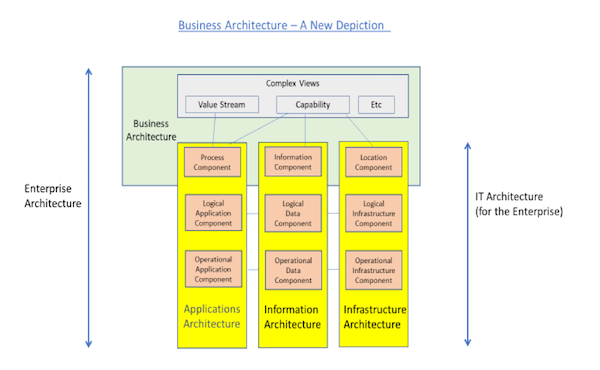
Crucial to this depiction are components which exist in both the vertical pillars and the horizontal Business Architecture layer as follows: Application Architecture: includes the Business Process component, to associate application components (logical & operational) with the business activity they support. Information Architecture: includes the Information Component from a business perspective separately from any logical or operational representation of that information by data (structured or unstructured). Infrastructure Architecture: contains the location component. This is to recognize that business infrastructure is linked to an organization / location either by physical installation or network access. Business Architecture consists of these business components – shared with the other domains – and, in addition, more complex views which link the architecture with the business plans. For example, an architecture view for a business capability (as defined through capability-based planning) would show how the components support that capability. The 3 vertical domains can be considered to constitute IT Architecture (for the enterprise). 


Meet Web Push

One goal of the WebKit open source project is to make it easy to deliver a modern browser engine that integrates well with any modern platform. Many web-facing features are implemented entirely within WebKit, and the maintainers of a given WebKit port do not have to do any additional work to add support on their platforms. Occasionally features require relatively deep integration with a platform. That means a WebKit port needs to write a lot of custom code inside WebKit or integrate with platform specific libraries. For example, to support the HTML <audio> and <video> elements, Apple’s port leverages Apple’s Core Media framework, whereas the GTK port uses the GStreamer project. A feature might also require deep enough customization on a per-Application basis that WebKit can’t do the work itself. For example web content might call window.alert(). In a general purpose web browser like Safari, the browser wants to control the presentation of the alert itself. But an e-book reader that displays web content might want to suppress alerts altogether. From WebKit’s perspective, supporting Web Push requires deep per-platform and per-application customization.


Introduction to Infrastructure as Code - Part 1: Introducing IaC

In recent years, development has shifted away from monolithic applications and towards microservices architectures and cloud-native applications. However, modernizing apps introduces complexity, as maintaining the cloud computing architecture requires infrastructure automation tools, efficient provisioning, and scaling of new resources. Too many developers still see infrastructure provisioning and management as an opaque process that Ops teams perform using GUI tools like the Azure Portal. Infrastructure as code (IaC) challenges that notion. The practice of IaC unifies development and operations, creating a close bond between code and infrastructure. Why should we use IaC? When you develop an application, you create code, build and version it, and deploy the artifact through the DevOps pipeline. IaC allows you to create your infrastructure in the cloud using code, enabling you to version and execute that code whenever necessary. This three-article series starts with an introduction to IaC. Then, the following two articles in this series show how to use the Bicep language and Terraform HCL syntax to create templates and automatically provision resources on Azure.


VPN providers flee Indian market ahead of new data rules

The new directive by India's top cybersecurity agency, the Indian Computer Emergency Response Team (Cert-In), requires VPN, Virtual Private Server (VPS) and cloud service providers to store customers' names, email addresses, IP addresses, know-your-customer records, and financial transactions for a period of five years. SurfShark announced on Wednesday in a post titled "Surfshark shuts down servers in India in response to data law," that it "proudly operates under a strict "no logs" policy, so such new requirements go against the core ethos of the company." SurfShark is not the first VPN provider to pull its servers from the country following the directive. ExpressVPN also decided to take the same step just last week, and NordVPN has also warned that it will be removing physical servers if the directives are not reversed. ... Like many businesses around the world, Indian companies have increased their reliance on VPNs since the COVID-19 pandemic forced many employees to work from home. VPN adoption grew to allow employees to access sensitive data remotely, even as companies started adopting other secure means to allow remote access such as Zero Trust Network Access and Smart DNS solutions.


5 top deception tools and how they ensnare attackers

To work, deception technologies essentially create decoys, traps that emulate natural systems. These systems work because of the way most attackers operate. For instance, when attackers penetrate the environment, they typically look for ways to build persistence. This typically means dropping a backdoor. In addition to the backdoor, attackers will attempt to move laterally within organizations, naturally trying to use stolen or guessed access credentials. As attackers find data and systems of value, they will deploy additional malware and exfiltrate data, typically using the backdoor(s) they dropped. With traditional anomaly detection and intrusion detection/prevention systems, enterprises try to spot these attacks in progress on their entire networks and systems. Still, the problem is these tools rely on signatures or susceptible machine learning algorithms and throw off a tremendous number of false positives. Deception technologies, however, have a higher threshold to trigger events, but these events tend to be real threat actors conducting real attacks.


MIT built a new reconfigurable AI chip that can reduce electronic waste

The team's optical communication system comprises paired photodetectors and LEDs patterned with tiny pixels. The photodetectors feature an image sensor for receiving data, and LEDs transmit that data to the next layer. Since the components must work like a LEGO-like reconfigurable AI chip, they must be compatible. "The sensory chip at the bottom receives signals from the outside environment and sends the information to the next chip above by light signals. The next chip, which is a processor layer, receives the light information and then processes the pre-programmed function. Such light-based data transfer continues to other chips above, thus performing multi-functional tasks as a whole," the team explained. ... The team fabricated a single chip with a computing core that measured about four square millimeters. The chip is stacked with three image recognition "blocks", each comprising an image sensor, optical communication layer, and artificial synapse array for classifying one of three letters, M, I, or T. They then shone a pixellated image of random letters onto the chip and measured the electrical current that each neural network array produced in response.


Augmented reality head-up displays: Navigating the next-gen driving experience

HUDs work by projecting a transparent 2D or 3D digital image of navigational and hazard warning information, for example, onto the windscreen of the vehicle. These projected images then merge with the driver's view of the road ahead. Windshield HUDs, for example, are set up so that the driver does not need to shift their gaze away from the road in order to view the relevant, timely information. This technology helps to keep the driver's attention on the road, as opposed to the driver having to look down at the dashboard or navigation system. Technological advances in this area have led to HUDs with holographic displays and AR in 3D. This added depth perception makes it possible to project computer-generated virtual objects in real time into the driver's field of view to warn, inform or entertain the user. The driver's alertness to road obstacles is increased by enabling shorter obstacle visualization times, and eye strain and driving stress levels are reduced. "Holographic HUDs are paramount if we are to explore the possibilities of augmented and mixed reality for road safety," said Jana


Nigerian Police Bust Gang Planning Cyberattacks on 10 Banks

The operation was a coordinated effort between the Economic and Financial Crimes Commission of Nigeria, Interpol, the National Central Bureaus and law enforcement agencies of 11 countries across Southeast Asia, according to Interpol. The operation was initiated after Interpol's private sector partner Trend Micro provided operational intelligence to the agency about the "emergence and usage of Agent Tesla malware" in this case. Agent Tesla was found on the mobile phones and laptops of the syndicate members that were seized by the EFCC during the bust. "Through its global police network and constant monitoring of cyberspace, Interpol had the globally sourced intelligence needed to alert Nigeria to a serious security threat where millions could have been lost without swift police action," Interpol Director of Cybercrime Craig Jones says in the statement. "Further arrests and prosecutions are foreseen across the world as intelligence continues to come in and investigations unfold." 


10 ways DevOps can help reduce technical debt

In most cases, technical debt occurs because development teams take shortcuts to meet tight deadlines and struggle with constant changes. But better collaboration between dev and ops can shorten SDLC, fasten deployments, and increase their frequency. Moreover, CI/CD and continuous testing make it easier for teams to deal with changes. Overall, the collaborative culture encourages code reviews, good coding practices, and robust testing with mutual help. ... Technical debt is best controlled when managed continuously, which becomes easier with DevOps. As it facilitates constant communication, teams can track debt, facilitate awareness and resolve it as soon as possible. Team leaders can also include technical debt review into backlog and schedule maintenance sprints to deal with it promptly. Moreover, DevOps reduces the chances of incomplete or deferred tasks in the backlog, helping prevent technical debt. ... A true DevOps culture can be the key to managing technical debt over long periods. DevOps culture encourages strong collaboration between cross-functional teams, provides autonomy and ownership, and practices continuous feedback and improvement.


Once is never enough: The need for continuous penetration testing

The traditional attitude to manual pen testing is kind of like the traditional approach to driving navigation: nothing can replace the sophistication and accrued knowledge of a human. A taxi driver will always beat Google Maps, and a trained pen testing professional will find vulnerabilities and attacks that automated tests may miss, or identify responses that appear legitimate to automated software but are actually a threat. The truth is, on a case-by-case basis, this could conceivably be true. But with off-the-shelf tools and services like RaaS (Ransomware as a Service) or MaaS (Malware as a Service) that use AI/ML capabilities to enhance attack efficiency – you’d need an army of pen testers to truly meet the challenges of today’s cyber threats. And once you’d found, trained and employed them – cyberattackers would simply increase their automation efforts and you’d need to draft another army. Not a sustainable cybersecurity model, clearly. Similarly, the widescale adoption of agile development methodologies has translated into increasingly frequent software releases.


Quote for the day:

"If you are truly a leader, you will help others to not just see themselves as they are, but also what they can become." -- David P. Schloss