Showing posts with label observability. Show all posts

Daily Tech Digest - November 22, 2026

Quote for the Day
“Leadership is not about being in charge; it’s about taking care of those in your charge.”
— Simon Sinek
Audio Edition — Listen to Today’s Digest
Narrated version of the Daily Tech Digest
Article Thumbnail

The leadership gap when technical specialists become executives

When an organization promotes its top technical specialist into an executive role, it often creates a significant leadership gap if the transition is not managed carefully. Technical mastery in a single area, such as software development or cybersecurity, does not automatically translate to the broad strategic, financial, and interpersonal capabilities required to lead a diverse division. A new executive must shift from solving specific technical problems to making complex business trade-offs, allocating budgets, managing team structures, and influencing people with different incentives. Instead of simply hoping the new title will produce these essential capabilities, organizations should intentionally assess a candidate’s readiness against the actual decisions they will inherit in their new role. This means exposing technical experts to real financial choices, team management challenges, and strategic planning before they formally take on executive authority. Furthermore, a successful technical leader must build a team of experts with complementary skills who can openly challenge their assumptions. True executive readiness is not about mastering every discipline, but about knowing the limits of your own expertise and effectively guiding the people around you to make sound business decisions.

Read Original Article →
Article Thumbnail

5 Major Outages in 6 Days Put New Focus on IT Resilience

The article examines five major technology outages affecting Microsoft, the FAA, JPMorgan Chase, the NSA and Apple within six days, emphasizing that none was attributed to a confirmed cyberattack. Instead, software defects, maintenance, infrastructure changes and updates disrupted cloud services, aviation, banking and internal systems. Microsoft’s outage showed how a dormant software flaw, reduced capacity and failed containment safeguards could combine into widespread disruption. The FAA experienced instability linked to legacy equipment while new routers were being deployed, leading to a nationwide ground stop. JPMorgan Chase traced transaction delays to a software bug in an on-premises hardware system, while the NSA reported temporary degradation during routine maintenance. Apple connected its service disruption to an internal update. Although the technical causes differed, the incidents share a broader lesson: resilience is not only about defending against attackers. Technology changes intended to maintain or improve systems can themselves create serious operational risk. The article argues that organizations should test changes across different environments, maintain sufficient capacity, strengthen failure containment and ensure recovery mechanisms can restore services when routine technical work produces unexpected consequences.

Read Original Article →
Article Thumbnail

Agentic AI repeats same old enterprise adoption cycle

Agentic AI is the latest technology trend capturing the attention of enterprise leaders, promising to automate complex workflows as if thousands of experts were working around the clock. However, the adoption of this technology is clearly mirroring the familiar, flawed cycles seen with past structural shifts like service-oriented architecture, microservices, and cloud-native systems. While agentic AI offers genuine capabilities for tasks requiring interpretation and independent action, many organizations are adopting it simply because it is the current standard, rather than because it fits their specific business needs. Building these systems involves significant hidden challenges, including extensive integration, data cleaning, strict security controls, and entirely new operational processes. As a result, companies often find that deploying agentic AI costs significantly more—sometimes up to twenty times as much—without delivering a better return on investment than a traditional, simpler approach. To avoid these costly mistakes, business leaders must prioritize measurable value over passing trends. Agentic AI should be reserved for complex, unpredictable problems, while stable and highly regulated tasks should remain on conventional systems that deliver the exact same results for a fraction of the overall cost.

Read Original Article →
Article Thumbnail

Your RTO Probably Doesn’t Include the Time Spent Figuring Out What Failed

Recovery Time Objectives (RTOs) focus on how quickly services can be restored after a disruption. However, typical RTOs completely ignore a critical phase: the vast amount of time spent diagnosing the problem before recovery can even begin. While organizations may boast a fast recovery time for a well-known issue, real-world incidents rarely present themselves clearly. During an actual outage, the initial symptoms are usually vague, such as a failing business process or a disconnected application. Identifying the root cause across complex, multi-vendor environments can consume hours of valuable time, especially when essential information is scattered and access credentials are hard to find. Furthermore, running standard recovery tests that assume the problem is already known creates a false sense of security for leadership. To build genuine resilience, organizations must test their diagnostic readiness by presenting teams with ambiguous symptoms rather than clear-cut technical failures. By maintaining updated dependency maps, securing reliable emergency administrative access, and assigning clear ownership for cross-system incidents, companies can drastically reduce this hidden discovery interval. Ultimately, a successful recovery plan must account for the time it takes to figure out what actually broke.

Read Original Article →
Article Thumbnail

Beyond Green Pipelines: Designing Stateful Governance for CI/CD

As artificial intelligence accelerates the pace of software development, traditional CI/CD pipelines are struggling to keep up. Simply adding more runners to handle the increased volume of AI-generated code is not a sustainable long-term solution. The core issue lies in the task-centric nature of most pipelines, where a successful "green" execution is treated as permanent permission to deploy. In reality, external factors like new security advisories, evolving policies, or shifting dependencies can invalidate a previously successful validation without a single line of code changing. To address this, organizations should move beyond basic caching and implement a separate, stateful governance layer. This layer retains structured validation reports and continuously evaluates them against current conditions, security events, and human decisions right up until deployment. By reusing evidence when it remains valid and only re-running checks when necessary, teams can reduce redundant testing. Most importantly, this approach ensures that an outdated approval never automatically becomes a green light to deploy, securing the release process even as development speeds up.

Read Original Article →
Article Thumbnail

PHP2Shell aftershock: 18 more PHP flaws put enterprise web admins on alert

Following the recent discovery of the major PHP2Shell vulnerabilities, the PHP development team has released patches to fix eighteen additional security flaws. The most pressing issue is a critical defect in how certain web servers handle incoming requests. Under specific setups, this flaw allows unauthorized individuals to run their own code remotely, potentially giving them full access to sensitive business data, passwords, and underlying system controls. Other addressed issues include memory problems, service interruptions, and a subtle bug where using a capital letter in web addresses could accidentally expose data without encryption. To protect their networks, system administrators must first properly identify everywhere PHP is running, as it is often hidden inside various web servers, hosting panels, and appliances. Teams should prioritize updating systems connected directly to the internet and those running PHP version 8.5. It is also important to note that PHP version 8.2 will stop receiving security updates at the end of this year. Ultimately, these routine updates highlight a simple truth: organizations cannot secure software if they do not know exactly where it is installed across their entire digital environment.

Read Original Article →
Article Thumbnail

Do AI’s mathematical advances put PKI under threat?

Recent warnings from prominent cryptographers suggest that advances in artificial intelligence could eventually threaten the foundations of public-key infrastructure (PKI). Historically, the security of public-key encryption has relied on the sheer difficulty of solving certain complex mathematical problems. However, AI is now proving capable of tackling analytical problems previously thought to require human intuition, raising concerns that it might soon uncover shortcuts to break established cryptographic standards. While experts emphasize that an immediate collapse of internet security is unlikely, AI has already played a role in weakening some newer encryption schemes and finding shortcuts in legacy systems. Because public-key cryptography inherently requires a structured mathematical "trapdoor," it is considered more vulnerable to these AI-driven discoveries than symmetric-key cryptography. To mitigate these risks, specialists advise organizations to focus on cryptographic agility—the ability to swiftly transition to new encryption methods if a current standard is compromised. Much like preparing for the arrival of quantum computers, the best defense against AI's mathematical advances involves adopting a hybrid approach, using a mix of cryptographic schemes so that communication remains secure even if one algorithm fails.

Read Original Article →
Article Thumbnail

A Capability-First Approach to Modernizing Retirement Services Technology Platforms

To successfully upgrade technology in retirement services, organizations should first identify what the business actually needs to achieve before they begin selecting new software. When companies simply replace aging systems without aligning the technology to their specific market goals, the new platforms frequently suffer from the exact same operational roadblocks as the old ones. Instead, leaders must map out their core business capabilities, such as enrolling participants, managing compliance, or processing distributions. This complete view allows technical teams to prioritize system investments based on business value, existing maturity, and regulatory risk. They can direct resources toward the specific functions that offer a true competitive edge while relying on standard solutions for routine daily tasks. By understanding these priorities, a company can decide the most effective path forward for each capability, whether that means a gradual replacement, adding an integration layer, or moving entirely to a cloud platform. Ultimately, organizing system architecture around enduring business needs ensures the organization remains highly adaptable, making it much easier to adjust to future regulatory shifts and new tools like artificial intelligence without rebuilding everything.

Read Original Article →
Article Thumbnail

Can CIOs turn a week of outages into a business advantage?

Recent high-profile outages across major platforms like Microsoft and the FAA have exposed a critical vulnerability: highly interconnected systems can fail with widespread consequences, even without malicious attacks. These recent, unexpected disruptions give CIOs a brief but crucial window to turn business leaders' attention into meaningful operational improvements. Rather than simply expanding customer support desks to apologize faster when things inevitably break down, organizations must address the root causes of these failures. This means reinvesting in experienced engineering talent who understand complex system dependencies, rather than diverting their valuable time solely to vendor-driven upgrades. It also requires developing true resilience through manual workarounds, independent communication channels, and upstream fixes that prevent future downtime. To successfully secure the necessary financial backing, CIOs should avoid abstract risk metrics and instead present clear, quantified business exposures, such as the exact cost of an hour of downtime. By treating deferred maintenance as a growing debt that outages eventually collect, technology leaders can make a compelling, practical case for strategic infrastructure investments that protect the organization long before the next major unexpected failure occurs.

Read Original Article →
Article Thumbnail

Building Reliability Into the Cloud: Observability as the Control Plane for Multi-Region Failover

This article argues that cloud reliability should not rely solely on vendor service-level agreements (SLAs), but rather on active, automated failover systems driven by deep observability. The author shares a personal anecdote where an intermittent failure in Amazon S3 disrupted their Terraform execution platform. Because the failure was subtle and inconsistent—specifically affecting sequential module dependency downloads rather than manual URL access—it took hours of localized load testing and client-side instrumentation to identify a change in how AWS handled HEAD requests. This incident highlighted the danger of treating a 99.99 percent SLA as an absolute guarantee rather than a statistical probability. To achieve true resilience, the author advocates shifting observability from a passive monitoring role to an active control plane. Instead of just waking up an engineer when a threshold is breached, observability metrics should automatically trigger a failover response and then verify that the recovery actually worked. Furthermore, maintaining an active-active setup ensures both regions are continuously validated under real load, proving that the backup plan functions properly before a crisis strikes.

Read Original Article →

Daily Tech Digest - October 16, 2026


Quote for the day:

"Every great story on the planet happened when someone decided not to give up, but kept going no matter what." -- Spryte Loriano

🎧 Listen to the audio debrief on YouTube

▶ Play Audio Digest

Duration: 22 mins • Perfect for listening on the go.


Why AI Confidence Is Not Validation

Artificial intelligence tools are rapidly becoming integrated into digital forensics and incident response, but these systems are growing confident in their outputs faster than human operators can verify them. Without proper validation standards, unverified AI findings can end up in critical legal or forensic reports. To address this, SANS introduced two specialized AI frameworks mapped to industry standards, emphasizing that while AI can speed up investigations, a human examiner must remain the final authority. An AI tool that provides a confident answer without showing its underlying reasoning or sources is essentially unreliable. Practitioners cannot blindly trust an AI claim just because a high confidence score is attached; they must independently confirm the source data. Furthermore, different disciplines require entirely different policies. Incident response teams prioritize speed to detect and contain threats, whereas digital forensics demands strict validation of every file, often making AI use more labor-intensive. Ultimately, the effectiveness of AI depends heavily on the foundational skills of the human practitioner. AI should never automatically execute actions that cannot be reversed, such as collecting evidence or accessing cloud accounts without explicit authority. An inexperienced person relying solely on AI presents a significant risk to the integrity of any investigation.


CISO Conversations: James Robinson – Many Jobs, One Journey to Netskope CISO

James Robinson’s path to becoming the Chief Information Security Officer at Netskope reveals that a successful career in cybersecurity does not always follow a traditional or planned route. Initially focused more on sports than academics, Robinson discovered his passion for networking through a vocational program while in high school. This early exposure led him to acquire advanced certifications and eventually land at State Farm Insurance. When the dot-com crash disrupted his plans to join Cisco, he pivoted into the emerging field of information security, moving through roles at several major organizations and continually advancing his expertise. Throughout his journey, Robinson has relied heavily on the guidance of mentors and emphasizes the importance of building strong professional relationships. He believes that continuous learning, genuine curiosity, and enjoying the process are far more important than just reaching a specific destination or focusing solely on salary. As a leader, his primary focus is on cultivating a supportive team culture and ensuring his team members feel recognized and connected. When hiring, he values persistence, dedication, and the right mindset over formal degrees, proving that resilience and a willingness to put in the hard work are the true cornerstones of security leadership.


No click required: How the ad industry became a pipeline for mercenary spyware

Researchers from The Citizen Lab have discovered that the online advertising ecosystem is being used to deliver zero-click spyware to targeted individuals without requiring them to click on anything. A company known as Discover-Tech successfully posed as a legitimate advertising vendor, gaining approval from major ad networks like Google and IAB Europe. By participating in real-time automated ad auctions, the company accessed detailed user data, such as physical locations and device identifiers, allowing them to precisely profile millions of people worldwide. When Discover-Tech won a bid to display an ad, it mostly delivered harmless banners, which allowed it to pass routine security verification scanners. However, for specific targets, such as journalists at Al Jazeera, the ad silently delivered malicious code in the background. Because the ad auction system automatically shares user data to determine targeting, bad actors can track individuals across various networks undetected. To defend against this invisible threat, security experts advise organizations to implement strict ad-blocking policies at the network level rather than relying on users themselves. They also strongly recommend disabling mobile advertising identifiers on corporate devices and treating all ad networks as untrusted vendors, since every digital ad essentially runs external code on a user's device.


Governance Is Failing: Why Converged Digital Risk Is Outpacing Every Control We Have

Organizations today are struggling to manage modern digital threats because their governance models are outdated. Traditional structures treat cybersecurity, privacy, artificial intelligence, and compliance as separate issues managed by different departments. However, modern risks no longer stay in these neat categories. A single incident, such as a compromised identity, can instantly trigger a massive chain reaction that causes data leaks, disrupts supply chains, corrupts artificial intelligence systems, and results in severe regulatory and reputational damage. This interconnected system of threats is known as Converged Digital Risk, and it moves much faster than isolated governance frameworks can handle. To solve this, businesses must stop treating risk in silos and start viewing it as a unified system. This means shifting focus from merely protecting internal assets to understanding the massive dependencies organizations have on external tools, like cloud providers and third-party models. Ultimately, managing this complexity might require the creation of a new executive role—a Digital Risk Officer—who can oversee the entire landscape, ensure unified visibility, and make rapid decisions when multiple risk areas collide. The organizations that thrive will be those that prioritize system-wide resilience and act quickly before failures cascade.


AI Slop Isn't Just for Social Media; It's Ruining Cyberattacks, Too

Despite the alarmist headlines claiming artificial intelligence is supercharging cyber threats, security researchers are finding that AI is actually making many attackers worse at their jobs. While threat actors are using AI to scale their operations and generate content, the result is often low quality output that exposes their campaigns. Previously sophisticated cybercrime groups and even state funded operations are adopting AI to write code, design phishing lures, and create malware, but these efforts frequently backfire. The attacks are riddled with obvious mistakes, such as broken QR codes, blank emails, mismatched languages, and logical errors in malware that prevent it from functioning properly. Some groups are even exposing their own infrastructure by accidentally leaving their AI generated control panels open to researchers. Ultimately, top tier espionage and hacking operations avoid relying heavily on AI because it is too noisy and unpredictable, which dramatically increases their chances of being caught. Instead of a new era of highly advanced artificial intelligence breaches, the industry is mostly seeing a flood of sloppy, poorly executed attacks. The consensus among researchers is that the most dangerous and effective cyber threats still rely on traditional methods, making the current narrative around automated attacks largely exaggerated and unsupported by real world data.


IT reinvention requires mastering the art of translation

Technology leaders must act as translators who can clearly explain how technical systems directly benefit their companies. Rather than discussing complicated cloud architecture or artificial intelligence setups, a successful executive links technological investments to business outcomes like profitability, risk reduction, and an improved experience for customers. This approach is evident in the transformation of Deluxe Corporation, a business that successfully transitioned from a legacy check manufacturer into a modern digital payments and data company. By framing its strategy around how technology powers profitable growth, the company aligned its entire operation with clear goals like building modern platforms, using artificial intelligence responsibly, and strengthening security. True organizational reinvention requires completely changing processes, talent, and mindsets rather than just adding digital tools to old workflows. Leaders must also learn to separate practical signals from the endless noise surrounding emerging trends. Instead of chasing every new technological development, they should focus on core business functions that rarely change while tracking how shifts in areas like cybersecurity, agentic commerce, and employee roles affect those functions. By continuously learning, challenging their own assumptions, and pressure-testing ideas with peers, technology leaders can guide their organizations through continuous reinvention with confidence.


How Should Security Be Architected for Human Error?

When architecting enterprise cybersecurity, organizations must acknowledge that human error is inevitable and stop building programs that expect perfect behavior. Attackers actively manipulate employees into making mistakes, so relying solely on human judgment or even automated systems acting alone is insufficient. Instead, security programs should blend human oversight with automation, allowing each to audit the other. Security should be treated as an operational capability focused on resilience rather than a mere product feature. Instead of adopting a heavy-handed approach that completely blocks access until users complain, organizations need intelligent "default deny" or allow-listing strategies that preserve usability. Assuming that a malicious link will eventually be clicked, the focus must shift to minimizing the blast radius. This requires aggressive segmentation, strict minimization of privileges, and inline rate limits that act as "speed bumps." For example, systems should flag and pause actions that fall outside the norm, like a user attempting to delete millions of database rows or send tens of thousands of emails simultaneously. Ultimately, companies should routinely practice for failures through tabletop exercises and chaos engineering. By putting guardrails in place and testing recovery protocols before prevention fails, businesses can ensure that a single human mistake doesn't escalate into a massive crisis.


8 insights from LogicMonitor’s Elevate event: AI-driven observability moves toward autonomous IT

At the recent LogicMonitor Elevate event, the focus was on how artificial intelligence is shifting IT monitoring from passive observation to active, autonomous problem-solving. As business infrastructure becomes more complex, traditional alerts and dashboards are no longer enough. To manage this, LogicMonitor is emphasizing AI-driven observability that combines performance data with automated actions and strict governance. The results are significant: GlobalFoundries, for example, used LogicMonitor’s Edwin AI to reduce distracting alert noise by 98% in just six months, allowing them to spot potential failures in their semiconductor manufacturing before they disrupt production. A central theme of the event was the need to build trust in these automated systems. Before organizations let artificial intelligence resolve issues automatically, they need to know the AI operates within strict rules and understands the context of the business. By connecting operational data with clear guardrails, LogicMonitor aims to help IT teams resolve incidents faster and reduce the number of tools they need to manage. Ultimately, the goal is to free up engineering teams to focus on higher-value work, moving operations from simply fixing problems to actively preventing them.


Why Chief Data Officers Need to Go Beyond Data Catalogs to Deliver Value

Chief Data Officers are finding that traditional data catalogs are no longer enough to meet the demands of modern business, especially as artificial intelligence adoption increases. While companies collect vast amounts of data, it often remains locked in departmental silos or stuck in technical tools that everyday employees cannot easily use. This lack of accessible, high-quality information not only frustrates staff but also limits the effectiveness of artificial intelligence models, which require reliable inputs to function properly. To solve this, organizations must shift toward creating data products—packaged, business-focused assets designed for specific needs. However, these products only deliver value if people can easily find and use them. This is driving the adoption of data marketplaces, which function much like e-commerce storefronts, allowing non-technical users to search for, understand, and access reliable information through intuitive interfaces. A successful transition requires more than just new technology; companies must foster a culture of data literacy and trust by ensuring the experience is straightforward and the initial offerings are highly relevant. By moving past reactive data catalogs and embracing user-friendly marketplaces, businesses can effectively share information across teams and artificial intelligence systems, turning their data into tangible, long-term value.


Developers Positive About AI - but Trust Remains Conditional

According to Stack Overflow’s 2026 Developer Survey, while AI adoption in the workplace has reached near saturation, developers remain deeply skeptical of its output. Six in ten developers view artificial intelligence favorably, yet nearly half only trust the technology when they can independently verify its work. A mere seven percent trust AI for critical decisions, highlighting a strong demand for transparency, technical context, and clear source attribution. Most developers actively use coding assistants and find them highly effective for implementation, debugging, and refactoring, but their perceived utility drops significantly for human oriented tasks like design and team communication. Furthermore, organizational governance is lagging, with many companies lacking official policies for AI use. Beyond AI, the survey paints a complex picture of the modern workplace. Almost half of developers feel complacent in their current roles, largely driven by burnout, unclear priorities, and tech fatigue. Despite a push for return to office mandates, remote work remains the preferred arrangement. In terms of technology, familiar foundations like JavaScript and Python continue to dominate the landscape. Interestingly, while OpenAI and Anthropic currently see equal usage among developers, there is a growing preference to use Anthropic models and agents in the coming year.

Daily Tech Digest - October 10, 2026


Quote for the day:

“Most new jobs won’t come from our biggest employers. They will come from our smallest. We’ve got to do everything we can to make entrepreneurial dreams a reality.” -- Ross Perot

🎧 Listen to the audio debrief on YouTube

▶ Play Audio Digest

Duration: 21 mins • Perfect for listening on the go.


Security Awareness Training Isn’t Dead, but It Needs a Rethink

While enterprise security awareness training remains a standard practice, its effectiveness in preventing modern cyberattacks is increasingly debated. Many experts note that traditional training programs fall short because they prioritize compliance over genuine behavior change, often forcing employees to complete generic, repetitive courses just to check a legal or insurance box. This approach leaves workers poorly equipped to handle today’s highly sophisticated, AI-driven threats, such as flawless deepfakes and hyper-personalized phishing messages that arrive at machine speed. Attackers hold a distinct advantage through asymmetry—they only need a single distracted employee to succeed, whereas defenders must be perfect every time. To remain relevant, security training needs a fundamental rethink. Experts argue that awareness should not be the sole line of defense; it must complement robust security architecture, engineering controls, and reliable verification processes. Furthermore, training programs should evolve from annual lectures into continuous, behavior-based learning that offers context-specific guidance at the exact moment a user makes a decision. By incorporating behavioral nudges and treating employees as an intelligent, active sensor network rather than the weakest link, organizations can build a cultural bedrock of secure habits that catch the threats technology inevitably misses.


The Unknown Present: The Governance Problem Nobody Owns

Traditional governance systems usually ask one basic question: was a system approved? For decades, audits, certifications, and compliance checks have been used to prove that a product or process met specific requirements at a single point in time. However, as organizations rely more on highly connected technologies, artificial intelligence, and constantly updating software, this historical approach is no longer enough. The article introduces a concept called the "Unknown Present," which describes the gap between a past approval and the current reality of a system. Just because a system was safe and compliant yesterday does not automatically mean the same conditions exist today when an important decision is actually made. Modern systems change too fast for old assumptions to hold up. Consequently, the real challenge for leaders and regulators is moving from simple compliance to proving continuous trustworthiness. Organizations must gather reliable evidence showing that a system remains safe at the exact moment it is being used, rather than just relying on an outdated certificate. Ultimately, the future of governance will depend not just on proving that requirements were met in the past, but on proving that the foundation of trust remains completely solid throughout the entire period of use.


‘It’s A Trap!’ How IT Pros Can Avoid the Hidden Pitfalls of AI

While many enterprises adopt artificial intelligence expecting greater efficiency and simpler workflows, a significant majority of IT professionals find that the technology is actually making their jobs more demanding. The core issue is the "reviewer trap," which occurs when organizations attach AI to outdated legacy processes or feed it unclean data. As a result, IT staff must spend excessive time reviewing the outputs to correct errors and hallucinations, creating a heavy cognitive load that often leads to burnout and a sense of growing digital debt. Fragmented implementations across different departments only worsen the situation, as context-switching drains mental energy and reduces decision-making capabilities. This phenomenon, known as AI brain-fry, ultimately causes workers to miss critical errors or lose their own skills by relying too heavily on automated tools. To avoid these hidden pitfalls, IT teams must rethink their foundational data governance rather than simply applying AI to old processes. Success requires building structural guardrails directly into workflows, treating the technology like a smart intern that needs strategic oversight rather than constant micromanagement. By starting small with low-stakes tasks and gradually improving context frameworks, organizations can harness AI's true value without overwhelming their staff.


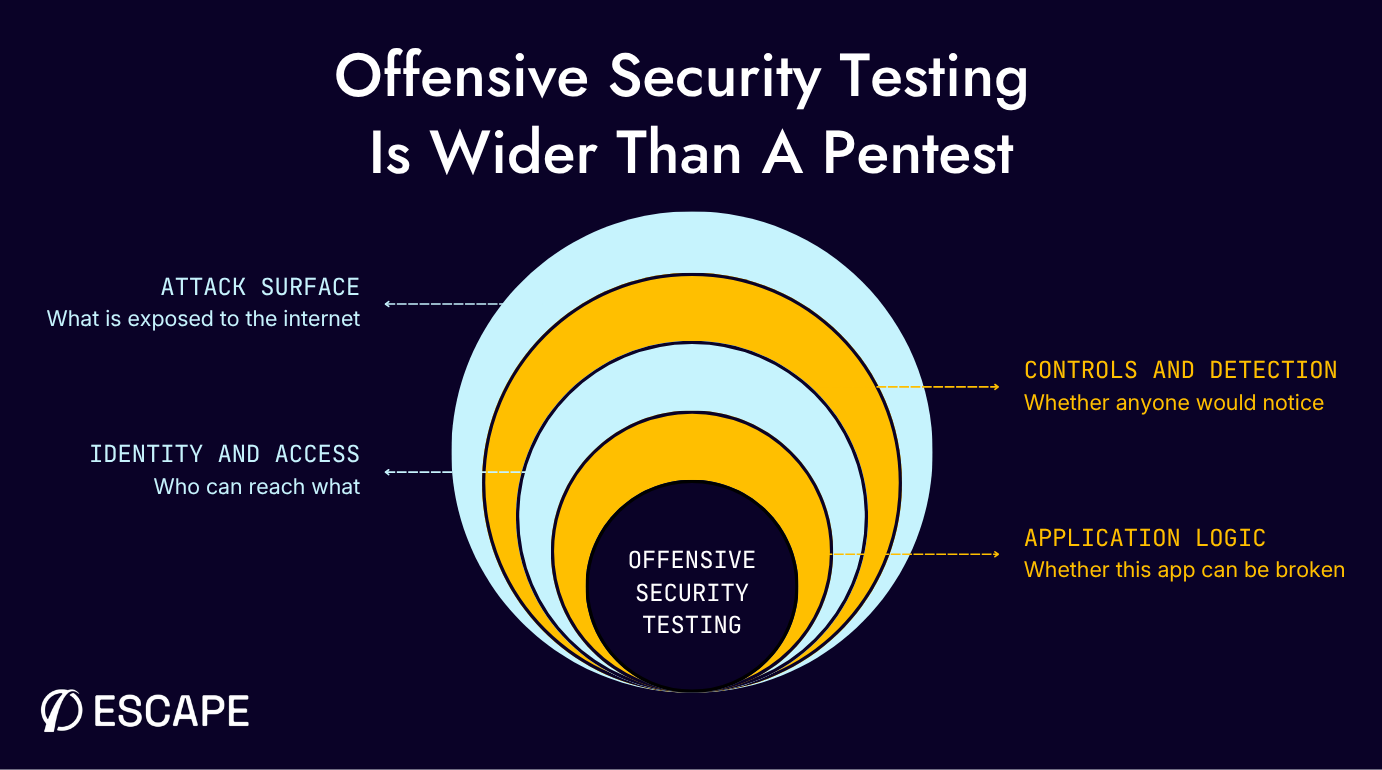
What continuous offensive security testing is and how to implement it

Continuous offensive security testing (COST), as defined by Gartner, is a proactive approach to cybersecurity that goes beyond annual penetration testing. Rather than relying on a fixed schedule, COST is triggered by meaningful changes in an environment—such as new internet-facing assets, production releases, relevant threat intelligence, or updates to security controls. It encompasses vulnerability assessment, penetration testing, and red teaming to evaluate a system precisely as an adversary would. A core principle of this model is strict validation; a finding is only considered valid once it has been successfully reproduced within the organization's own environment, ensuring the vulnerability is genuinely reachable and not just a theoretical risk flagged by a scanner. This emphasis on proof prevents security and engineering teams from being overwhelmed by noisy, unverified alerts. Prioritization tools like EPSS or CISA's KEV catalog provide useful context, but they do not replace the need for local validation. To implement COST effectively, organizations should establish clear triggers, define a shared standard of evidence, tier responses based on business impact, and route validated, actionable proof directly to the teams responsible for the fix, ultimately turning these findings into automated regression tests for future builds.


When building an AI-native security program, start with outcomes

The article by Israel Barak advises resource-constrained security teams to adopt artificial intelligence by focusing on specific business outcomes rather than generic technology roadmaps. Often, small security teams struggle to balance quality, consistency, and cost, which ultimately leads to noticeable gaps in necessary daily tasks. To begin, teams should identify the critical systems, data, and processes the business absolutely needs to operate, establishing a clear boundary for protection. Next, they must pinpoint tasks that should happen continuously but are currently falling behind due to limited time, skills, or budget. Practical examples include managing security posture, updating detection rules, interpreting fresh threat intelligence, or investigating routine alerts. Instead of attempting a massive system overhaul, leaders should choose one specific operational task where the team struggles to keep pace, apply artificial intelligence to that single constraint, and set clear rules and expectations. Success should not be measured by simply counting the number of queries or alerts processed, but rather by evaluating if the tool actually improved the quality, speed, and efficiency of the final outcome. By tying these tools to practical, everyday problems, security teams can effectively reduce manual workload, handle potential threats more consistently, and thoroughly protect the business without needing a massive increase in staff.


Business Intelligence Observability: The Missing Layer of Modern Analytics

While organizations heavily monitor their data infrastructure and pipelines, the business intelligence (BI) layer itself often lacks proper oversight. Traditional monitoring confirms that systems are running and data is delivered, but it fails to answer whether the analytical platform reliably supports sound business decisions. A dashboard might load successfully but perform slower over time, or a report might consume extensive computing power without clear ownership or actual usage. This gap highlights the need for BI observability, a broader operational discipline that continuously measures the health of analytical assets beyond basic technical status. BI observability evaluates five key dimensions: reliability, performance, capacity, adoption, and governance. By shifting the focus from mere technical uptime to actual business impact, data teams can proactively identify deteriorating performance, inefficient resource use, and abandoned reports before users report an issue. This level of transparency is especially critical as organizations adopt enterprise AI, which relies on the exact same governed datasets and semantic models as human decision-makers. Treating business intelligence as a fully observable operational system ensures that both human teams and AI assistants have a trusted, efficient foundation for making timely decisions.


India to release AI regulation consultation paper in 30 days: Vaishnaw

The Indian government plans to release a consultation paper on artificial intelligence regulation within thirty days, focusing on a techno-legal framework rather than relying solely on traditional legislation. Union Minister Ashwini Vaishnaw shared this timeline, highlighting the need to manage AI risks such as deepfakes, financial fraud, and accountability without stifling innovation. This approach combines clear rules with technical safeguards to help organizations monitor AI behavior, restrict unauthorized access, and handle harmful outputs responsibly. A major focus of the upcoming framework is determining accountability when advanced or autonomous AI systems make errors, especially since these systems often rely on multiple technology providers. The government is also looking to streamline how it procures AI services, considering a structured empanelment process for startups and tech companies looking to work on public-sector projects. Alongside these regulatory efforts, India is expanding its domestic AI infrastructure through the IndiaAI Mission, which includes adding thousands of graphics processing units to support computing and inference capabilities. For enterprise technology leaders, this forthcoming regulatory clarity should help establish consistent standards for evaluating AI tools, managing risks, and ensuring proper human oversight as AI adoption expands across public services and business operations.


Why the Chief Data and AI Officer Role Keeps Struggling: Rethinking Executive Leadership for the AI Era

The Chief Data and AI Officer (CDAIO) role frequently struggles because organizations incorrectly treat it as a traditional functional leadership position. Functional executives, like a CFO or COO, are directly accountable for specific departmental operations and outcomes. When the CDAIO is framed this way, their work often devolves into running a technical services department that merely fulfills project requests, delivering disconnected AI models and dashboards rather than driving genuine, widespread business integration. This creates a structural divide between business and technology, making sustainable AI adoption nearly impossible. Instead, the CDAIO should be recognized as a capability leader. Rather than owning a specific business function, their true mission is to build an enterprise-wide capability system—encompassing governance, data literacy, stewardship, and cross-functional coordination. Their goal is to empower every department to effectively leverage data and AI in their daily operations. Success in this role should not be measured by the raw output of AI models or dashboards produced, but by metrics that reflect organizational maturity, such as the number of embedded data experts, active stewards, and the actual utilization rates of AI tools. By shifting from functional ownership to capability building, the CDAIO can truly help the entire enterprise succeed.


Why Tabletop Exercises Expose More Than Technical Weaknesses

While vulnerability scans and penetration tests are excellent at identifying specific security flaws, organizations must conduct tabletop exercises to truly understand how they will respond during an actual cyberattack. These simulated events deliberately expose the nontechnical weaknesses that often go unnoticed on paper, particularly critical gaps in communication, process, and coordination. By throwing untested, unannounced scenarios at decision-makers, organizations can evaluate whether teams agree on incident severity, who actually has the clear authority to shut down systems, and when to involve the board or insurance representatives. A successful exercise is not meant to be flawless; rather, it is designed to create realistic pressure that tests muscle memory and reveals conflicting assumptions across different departments. Executives learn to trust their security teams instead of micromanaging the incident response. To be fully prepared, businesses should run these drills at least annually and conclude each session with a strict action plan that assigns specific owners and concrete deadlines to every identified gap. As threats become more complex due to artificial intelligence, these exercises will also need to adapt dynamically. Ultimately, resolving the deeper governance issues requires ongoing cross-departmental agreement, ensuring the entire organization is genuinely prepared to act quickly and securely.


When AI Meets Quantum: The Next Great Leap in Computing

The article examines three very different ways AI and quantum computing intersect, separating hype from what is actually happening. It first tackles the popular claim that quantum computers will dramatically accelerate AI. The author explains why this is unlikely in the near term: loading real‑world data into quantum states is so costly that it often cancels out any theoretical speedup. While some niche cases in chemistry and materials science show promise, the broader “quantum‑boosted AI” narrative remains mostly aspirational. The second, more grounded convergence runs in the opposite direction—AI is helping quantum hardware mature. Because quantum processors drift, generate noise, and require constant calibration, machine‑learning models are already tuning control pulses, decoding error‑correction signals, and stabilizing qubits more effectively than traditional methods. The third intersection is the most urgent: the cryptographic risk posed by future fault‑tolerant quantum machines. Even though such machines do not exist yet, attackers can harvest encrypted data today and decrypt it later. This threatens AI systems that rely on signatures, secure channels, and provenance trails. The article stresses the need for crypto‑agility, hybrid key exchange, and honest inventories of where cryptography is embedded. It closes with a steady reminder that the real “AI‑quantum leap” is not flashy acceleration but ensuring AI systems remain trustworthy when quantum computers finally arrive.

Daily Tech Digest - October 05, 2026


Quote for the day:

“The more you loose yourself in something bigger than yourself, the more energy you will have.” -- Norman Vincent Peale


Data Has No Passport: Why Global Privacy Governance Must Catch Up With AI

At the CruiseCon Privacy and AI 2026 event, Accenture privacy lead Adriana Antunes Winkler highlighted a growing challenge: while data moves globally and instantly, privacy regulations remain fragmented and bound by local jurisdictions. With around eighty percent of the world covered by varying data protection frameworks, companies often struggle to keep up. Winkler advised against building separate privacy programs for every new law, as this causes confusion and conflict. Instead, she recommended a strategy built on a common global foundation with specific local adjustments only where legally necessary. This prevents the burden of simply applying the strictest rules everywhere. Winkler emphasized that operational controls, not just written policies, are what actually protect privacy. These controls require clear ownership, testing, and proof of function. The rise of artificial intelligence complicates this further, as AI often infers new personal details rather than just storing collected information. She suggested focusing on the specific actions AI takes and the systems it accesses, treating it as a data map driven by actions. Ultimately, whether data crosses international borders, runs through AI systems, or eventually processes in orbital satellites, organizations must rely on a unified, adaptable governance system that manages common standards while addressing specific local requirements.


Crypto-Agility Distrust Readiness

When major internet authorities decide to stop trusting a flawed digital certificate, the resulting fallout can cripple the countless services relying on it. While technical bodies like browser developers excel at making the call to pull a failing root certificate, there is currently no coordinated national plan for what happens to the broader economy the morning after. Historically, isolated incidents have been contained, but the dual threats of rapidly advancing artificial intelligence and a forced timeline for quantum-safe encryption mean that widespread disruptions are becoming more likely. The blast radius of a sudden distrust event can vary wildly across different sectors, and responding effectively requires advance preparation rather than improvisation. To survive this accelerating risk, organizations must create reliable certificate inventories, designate clear response liaisons, and run tabletop exercises to test their readiness. On a larger scale, a designated national coordinator is urgently needed to connect technical decision-makers with the sectors facing the consequences. Ultimately, building true resilience requires organizations to eliminate single points of trust by adopting multiple issuing authorities and automating certificate lifecycles, ensuring they can pivot smoothly when a crisis hits instead of scrambling to rebuild.


Measuring AI With the Wrong Ruler

When evaluating artificial intelligence systems, getting caught up in grand labels distracts from what truly matters: reliability, cost, and fitness for the job. The technology industry often assumes that larger, more capable models are inherently better, but deploying a massive system for a straightforward task is wasteful and risky. It is very similar to dropping a race car engine into a riding lawnmower. Raw power without proper control or necessity only creates hazards. Instead of obsessing over raw machine intelligence, which mirrors our flawed fixation on human IQ scores, we should focus on building operational wisdom. This means designing tools that clearly understand context, respect their own boundaries, and know exactly when to seek human intervention. Historical missteps in automotive software, where complex features completely overwhelmed inadequate hardware, prove that mismatched computing power leads to frustrating failures for end users. To make better decisions, organizations need a practical measurement framework that strictly aligns system complexity with the actual criticality of the task. By focusing on calibrated computing, businesses can ensure they deploy software with verifiable competence. This thoughtful approach prioritizes restraint, safety, and hardware capacity over industry hype, ultimately resulting in technology that simply works properly for its intended daily purpose.


Should cybersecurity be nationalised?

The conversation around digital safety is gradually shifting from treating it as a private expense to recognizing it as a public good. While full government ownership is not currently under consideration, experts argue that the traditional model of individual corporate defense is no longer sustainable. Today, private companies are routinely expected to fend off sophisticated attacks from foreign nations, a task for which most lack the necessary resources. Small businesses are particularly vulnerable and they often become the weak link that exposes broader networks to risk. Because hardening the defenses of one company inherently protects the wider community, securing digital infrastructure shares clear parallels with public utilities like street lighting. This shared benefit naturally raises important questions regarding funding and accountability. The emerging consensus suggests a model where the state might fund security measures that are executed by private firms, ensuring broader protection without complete nationalization. As this policy debate unfolds, organizations must adapt by viewing their security practices not merely as an internal budget item, but as a core component of public trust and reputation. Moving forward, businesses should firmly anticipate stricter sector requirements and expect to demonstrate baseline security standards simply to operate within shared modern networks.


IT modernization: Still a make-or-break project for CIOs

IT modernization remains a vital, ongoing mission for CIOs, taking on renewed urgency as artificial intelligence reshapes the technology landscape. The rise of AI and natural language tools means that systems built just a few years ago, such as traditional reporting dashboards and specialized chatbot software, may already be obsolete. IT leaders are now approaching modernization and application rationalization with a business-first strategy, evaluating tools not by their age, but by the tangible value and flexibility they provide. Consolidating software limits wasteful spending, reduces unneeded complexity, and creates a clean data environment essential for advanced technologies. While moving to modern solutions can cut maintenance costs and limit security risks, CIOs face practical challenges, including upfront migration expenses, data extraction difficulties, and internal resistance to letting go of highly customized legacy systems. Some organizations are increasingly weighing whether to build internal tools using advanced coding assistants rather than paying long-term licensing fees for external software. Ultimately, IT modernization is no longer just about retiring old technology; it is a continuous process of aligning the company’s tech stack with fast-evolving business needs to clear a path for meaningful innovation and operational agility.


The Credential Layer Is Expanding Faster Than Security Teams Can See It

As software development accelerates, organizations face an enormous increase in the number of digital keys, passwords, and access tokens they must manage. These credentials now connect people, applications, and artificial intelligence tools to critical data. Because they are often scattered across cloud accounts, internal networks, messaging apps, and developer laptops, it is incredibly difficult for security teams to track them. Recent data shows a sharp rise in leaked secrets, particularly those tied to AI services, which have become a new frontier for access management. At the same time, cybercriminals are using specialized malware to target developer devices, aiming to steal the local access codes stored there. To protect against these threats, security teams cannot rely on outdated, periodic checks. They need constant, clear visibility into every credential across the organization. This means knowing exactly what access each key grants, who owns it, and whether it is still active. Only by building a complete and accurate inventory can teams effectively identify risks, remove exposed secrets, and stop future leaks from happening. Taking control of this expanding environment requires a calm, systematic approach focused on detection first, ensuring that organizations understand their vulnerabilities before attackers can find them.


Should the CISO role be split in two?

Over the past three decades, the chief information security officer role has expanded significantly from its strictly technical origins. Today, these professionals are tasked with broad, strategic responsibilities, including data privacy, regulatory compliance, artificial intelligence governance, and overall business risk management. As this heavy workload continues to grow and outpace available resources, some industry observers have debated whether the position should be divided into two distinct roles: one focused purely on technical defense and another dedicated to business risk and organizational resilience. However, leading experts argue clearly against splitting the job. Instead, they recommend confidently maintaining a single executive who holds ultimate accountability for the organization's cyber strategy and risk management. To help manage the immense daily operational demands, larger companies are increasingly relying on a dedicated deputy role, which also directly aids in succession planning. This balanced approach ensures that the primary security leader can successfully focus their energy on executive communication, financial planning, and aligning security measures with core business objectives. Ultimately, the position is maturing along a path very similar to that of the chief information officer. As the role becomes undeniably executive, these professionals must transition from being seen merely as technical experts to functioning as essential business partners.


Exploring AI Observability – Part 1: Why It Matters

Just a year ago, tracking how artificial intelligence operates was hardly a recognized technology field. Today, experts predict that by 2028, a large portion of organizations deploying these systems will rely on dedicated tools to oversee them. This shift is happening because the adoption of intelligent systems has grown much faster than our ability to properly govern them. Employees across companies are using a mix of approved and unapproved tools, while software teams are actively building language models directly into their applications. This rapid expansion creates an urgent need for visibility to understand exactly where these tools are running, how well they perform, what they cost, and if they actually deliver real value to the business. The conversation is no longer just about how fast we can build these systems, but rather whether we can run them reliably in real world settings. Because modern systems can sometimes produce varying results from the exact same input, errors can quickly add up. Proper oversight is necessary right from the development phase to trace interactions, identify failures, and improve accuracy. In production, this oversight ensures that the behavior of intelligent tools connects smoothly with overall application health, resilience, and a solid user experience.


The Platform Engineering Playbook for Production LLMs

According to a case study on an inventory accuracy platform, scaling large language models (LLMs) requires treating the AI stack as platform infrastructure rather than a mere application feature. The engineering team successfully reduced production hallucination rates from fifteen percent down to just 1.5 percent without altering the foundation model itself. They achieved this by implementing an automated retry loop to catch formatting and grounding errors on the fly, alongside an intent-validation gate that defaults to "unclassified" to prevent off-intent responses. Additionally, prompt management was shifted to a history-preserving registry rather than hardcoding instructions, allowing runtime updates with a clear audit trail to prevent silent behavioral breaks. The authors also highlight critical security and observability practices for enterprise AI. They strongly recommend enforcing tool authorization directly at the resource server with a strict default-deny policy, warning that relying solely on API gateways can expose tools due to a single orchestrator bug. Furthermore, since traditional application performance monitoring tools cannot detect semantic degradation or silent output drift, teams must proactively instrument hallucination rates and per-team token costs right at request ingress to avoid costly retrofitting later.


Three questions a hospital CISO should ask a healthcare fintech vendor

In a recent interview with Help Net Security, Drew McCombs, CTO and CISO at Cylerity, discusses his approach to balancing security with development in the healthcare fintech sector. McCombs ensures that security is integrated into every development sprint rather than treated as an afterthought. When conflicts arise, any issue affecting patient data or funds disbursement takes priority. He notes that while Cylerity is not a bank, it must satisfy the compliance expectations of its banking partners without violating HIPAA regulations. To achieve this, the company minimizes data sharing and uses custom identifiers to keep protected health information (PHI) completely separate from financial reporting. When discussing artificial intelligence, McCombs insists that AI models should only recommend or flag information, with a human always making the final decision to prevent errors from gradual model drift. For small medical practices, he emphasizes that turning on multi-factor authentication (MFA) for email is the cheapest and most effective security fix available. Finally, McCombs advises hospital CISOs to scrutinize fintech vendors by asking about their data subprocessors, their protocols for verifying fund destination changes, and their breach response plans, warning that a vendor claiming to be "HIPAA certified" is a major red flag since no such official certification exists.

Daily Tech Digest - September 23, 2026


Quote for the day:

"Every great story on the planet happened when someone decided not to give up, but kept going no matter what." -- Spryte Loriano

🎧 Listen to the audio debrief on YouTube

▶ Play Audio Digest

Duration: 26 mins • Perfect for listening on the go.


Observability should start with business outcomes, not infrastructure

The article, "Observability should start with business outcomes, not infrastructure" by Vjacheslav Mikitjuk, argues that technical metrics alone are inadequate for understanding the actual performance of IT systems. The article points out that while an engineering dashboard might show a system running efficiently, it could simultaneously be experiencing a serious customer-facing failure. Therefore, IT teams need to translate technical severity into business severity to provide management with a clear picture of the impact on customers, transaction values, and overall business operations. Mikitjuk suggests that observability needs to follow a chain starting from business outcomes down to telemetry. This approach involves defining service objectives based on user experience rather than just infrastructure metrics. He emphasizes that the translation between technical and business performance should be a shared responsibility across the organization, involving business leadership, product owners, and engineering teams. Furthermore, he advises that business observability must be designed proactively during the service and product design phases, rather than being an afterthought during an incident. The article also highlights that observability priorities should be determined by business criticality, focusing efforts where degradation would have the most significant consequences. Finally, while AI can assist in interpreting data, it requires the foundational context of business goals to be truly effective.


Redefining Cyber Recovery Requirements in the Era of Modern Cyberattacks

Cyber recovery is fundamentally different from traditional disaster recovery, requiring a practical approach to combat modern threats. While disaster recovery focuses on quickly restoring the most recent backup after an outage, cyber recovery prioritizes data integrity. Because attackers often dwell inside networks for days or weeks before causing damage, the newest backup is usually infected. Therefore, IT teams must work backward to find a genuinely clean copy. This process is complicated by the fact that the vast majority of modern intrusions leave no malicious files behind. Instead, attackers use stolen credentials and existing administrative tools to move silently. As a result, standard antivirus scans on powered-off backups are no longer sufficient. To ensure a backup is truly safe, organizations must power it on and carefully observe its behavior over time to detect hidden threats. Because powering on a compromised system risks reinfecting the entire network, this behavioral analysis must happen inside a strictly isolated clean room. Solutions like VMware Cloud Foundation and Advanced Cyber Compliance automate this critical testing environment. By integrating secure, quarantined recovery workflows, organizations can confidently identify uncorrupted data and restore operations safely, moving beyond outdated backup strategies to address the reality of modern fileless attacks.


Data embassies and sovereign dispersion

Data embassies and sovereign dispersion present a new approach to managing the trade-off between data residency and resilience, moving beyond traditional data localization. Driven by geopolitical instability and cyber threats, governments—particularly smaller, highly digitized nations like Estonia—are establishing legally protected digital enclaves on foreign soil. Unlike multi-region cloud backups subject to host nation laws, genuine data embassies operate under bilateral treaties granting them diplomatic immunity. They maintain an active "digital twin" to ensure core civic services, like tax systems and central bank ledgers, run smoothly during domestic crises such as cyberattacks or power failures. Gartner anticipates that by 2029, 15% of nations in unstable regions will have formalized data embassy agreements. Estonia established the first in 2015, partnering with Luxembourg for its Tier IV data centers, setting a precedent that requires specific intergovernmental contracts. Security relies on principles like "encryption as a border," ensuring the origin state retains decryption keys. While replicating this model is challenging for private enterprises, IT leaders can adopt similar technical resilience strategies. By decoupling encryption keys from cloud providers and avoiding over-reliance on a single vendor or location, businesses can enhance their operational continuity and mitigate risks associated with physical data concentration.


How to Handle the Growing Data Complexity Challenge in Cyber Incident Response

The article explains that cyber incident response has become far more complicated than simply handling large volumes of data after a breach. Modern organizations generate information across cloud platforms, collaboration tools, mobile devices, enterprise applications, and third‑party services, creating a sprawling and interconnected data environment. Regulators now expect investigators to identify and analyze a wider range of sensitive information, from traditional personal data to device identifiers, geolocation details, and behavioral patterns. The piece highlights how today’s breaches often involve structured and unstructured data, multimedia files, and systems that store overlapping records, making it difficult to determine what truly matters. Traditional keyword‑based search methods are no longer enough, especially when investigators must uncover “unknown unknowns” hidden across diverse systems. AI‑assisted tools can help by recognizing entities, relationships, and context, but the article stresses that any AI‑driven process must remain legally defensible through documented workflows, validation, and human oversight. Notification decisions—often the hardest part—require consolidating identities, applying jurisdictional rules, and ensuring accuracy at scale. The author concludes that organizations need a disciplined, context‑aware approach to data mining, combining technology, expertise, and defensible processes to understand risk and respond confidently under tight timelines.


7 decisions that make an Azure landing zone enterprise-ready

Creating an effective, enterprise-ready Azure landing zone requires thinking beyond basic reference architectures to build a platform that supports engineering teams rather than hindering them. The article highlights seven key design decisions to achieve this balance between security and developer autonomy. First, treat the landing zone as an operating model—not just a network—by separating platform resources from application workloads using management groups and subscriptions to create clear governance boundaries. Second, opt for Azure Virtual WAN over a self-managed hub-and-spoke setup to simplify cross-region connectivity and route management. Third, integrate your security model, such as a next-generation firewall, directly into the routing architecture from day one rather than bolting it on later. Fourth, implement governance as guardrails that manage risk without turning routine engineering tasks into a constant exception process. Fifth, separate your observability tools for operational health from your SIEM tools for security monitoring to reduce noise and clarify responsibilities. Sixth, treat CI/CD networking as a core platform component, using solutions like private GitHub runners to securely deploy to isolated resources. Finally, ensure an active-active architecture truly works by making both regions fully production-ready and capable of independently supporting the workload during a failure.


AI adoption in OT security accelerates as legacy infrastructure and poor data expose readiness gaps

Many industrial organizations are eager to implement AI for operational technology (OT) security, but their current infrastructure often isn't ready. A recent survey highlights that while nearly 88% of organizations are using or planning to use AI, under 8% have deployed it across multiple functions. The main hurdles are poor data quality and the challenges of integrating AI with legacy systems. Most industrial facilities were built long before AI was a consideration, resulting in control systems that produce inconsistent data. Experts point out that legacy environments frequently lack the necessary identity and access management infrastructure and cloud connectivity required for modern AI models. This gap is especially problematic because AI depends on high-quality data and complete asset context to function accurately. Without these, AI tools can produce incorrect assumptions, leading to false positives or missed threats. Furthermore, poor data quality in OT can have serious physical consequences, including equipment damage or safety incidents. To make AI work effectively and safely in these environments, organizations must first focus on improving their architectural foundations. This includes better data normalization, consistent telemetry, and modernized security architectures that provide a stronger base for AI-enabled tools.


Operational Technology Scope Expands as Security Matures

The article describes how operational technology (OT) security has matured as industrial organizations face more frequent and costly cyber incidents. According to Honeywell’s 2026 OT Cybersecurity Benchmark Report, major attacks now cause an average of 16 hours of downtime, with losses reaching up to $500,000 per hour. As a result, companies across energy, manufacturing, healthcare, maritime, and other critical sectors are shifting from a narrow, technology‑centric mindset to a broader focus on business resilience. Leaders increasingly view OT security as essential to safety, uptime, and service continuity, especially as digital connectivity expands across industrial control systems, field devices, building management systems, IoT sensors, and medical equipment. The report shows that organizations with mature programs detect and respond to threats faster, largely because they maintain strong asset inventories and continuous monitoring. Yet visibility remains a major gap: only one‑third have integrated OT systems into a centralized SOC, and just one‑fifth continuously monitor IoT devices. Legacy systems, staffing shortages, and budget constraints add further strain. Many organizations are adopting AI for detection and monitoring, though fully autonomous decision‑making remains rare. The article concludes that resilience depends on extending security across every connected system and closing visibility gaps that still hinder effective response.


I Wasn’t Trying to Predict the Future. I Was Trying to Build One I Could Tolerate

The article is a reflective piece in which the author explains that his work with AI did not begin as an attempt to predict the future but as a practical response to a narrowing set of acceptable options. He frames his journey not as a heroic narrative but as a form of “niche construction,” a security practice focused on shaping an environment that can support more viable futures. Throughout his career in cybersecurity, supply‑chain assurance, information sharing, and industrial systems, he learned that security is rarely about protecting a single object. Instead, it is about maintaining the conditions that allow systems to survive and adapt. He illustrates this through stories of living on self‑built boats, where survival depended on constant maintenance, awareness, and the ability to respond to change. When his own circumstances tightened in 2025, he turned to a large language model as one of the few available tools and began a sustained, iterative collaboration that produced frameworks, documents, code, and new institutional structures. He describes this as building a generative set—an evolving system that creates new possibilities rather than following a fixed plan. The article concludes that meaningful security often comes from constructing environments where better futures can emerge, not from defending the present in isolation.


CISOs can no longer ignore the nation-state threat

The accelerating use of AI by nation-state actors is forcing Chief Information Security Officers (CISOs) to rethink their threat models and treat geopolitical threats as urgent enterprise risks. Historically, CISOs focused on quickly expelling adversaries from networks, while government agencies preferred to monitor them for intelligence. However, AI is now lowering the barrier to entry, allowing even amateur cybercriminals to launch sophisticated attacks that mimic nation-state activity. This shift blurs the line between national security threats and ordinary business risks. A major challenge for organizations is recognizing their own strategic value to foreign adversaries. Companies in seemingly benign industries, such as agriculture, can become targets if they possess valuable intellectual property or supply chain access. AI worsens this by compressing the time between a vulnerability's discovery and its exploitation to mere seconds, making traditional patching processes insufficient. To adapt, security leaders must recognize that AI enables faster, broader pre-positioning by attackers within organizational assets. Experts advise CISOs to prepare for fully autonomous attacks, plan to operate through compromises during major disruptions, and focus on core security controls like zero trust and multi-factor authentication. Crucially, CISOs need board-level support and funding to implement these necessary resilience measures.


AI slop is creating more work, not less. Here’s why

The rise of generative AI in the workplace was promised to boost productivity, but it is increasingly resulting in "AI slop"—low-quality, generic, and often unverified content that shifts the workload onto other employees. In a recent Today in Tech episode, host Keith Shaw and Commvault’s Chris Bevil discussed how tools that instantly generate emails, reports, and presentations create a hidden "review tax." While an executive might save time using AI to summarize a long document or draft a memo, the receiving employees must often spend significant time fact-checking, correcting context, and deciphering vague, polished-but-empty drafts. This disconnect explains why executives frequently report high productivity gains from AI, while non-managers feel bogged down by new verification processes. AI slop resembles a "first draft wearing a tie"—it looks professional and confident on the surface but lacks underlying substance or clear judgment. As this unverified content spreads rapidly across organizations, it risks becoming accepted corporate knowledge. To truly benefit from AI, companies must move beyond simply generating more content and emphasize proper governance, human review, and clear workflows to prevent productivity gains at the top from becoming a burden at the bottom.