Showing posts with label LLM. Show all posts

Daily Tech Digest - June 28, 2026


Quote for the day:

"Hard work beats talent when talent doesn't work hard." -- Tim Notke

🎧 Listen to this digest on YouTube Music

▶ Play Audio Digest

Duration: 17 mins • Perfect for listening on the go.


Ford learned the hard way that AI can't replace experienced engineers

Ford recently discovered that artificial intelligence cannot substitute for the nuanced judgment of experienced engineers. In an effort to modernize its manufacturing and engineering systems, the automaker integrated AI to accelerate decision making and streamline vehicle development. Executives assumed that automated systems and adjusted design requirements would naturally yield high quality products. However, this approach backfired. As veteran engineers left the company, their undocumented institutional knowledge was excluded from the datasets used to train Ford’s AI models. Consequently, the technology struggled to identify and prevent defects, contributing to quality control issues and leading the industry in vehicle recalls. To resolve these challenges, Ford rehired and promoted over 350 seasoned engineers. Rather than replacing human expertise, AI now serves as a supportive tool. These veteran engineers are currently guiding how data is collected, interpreted, and fed into the AI systems to rebuild a reliable foundation. Furthermore, Ford created a dedicated software quality assurance team and introduced automated AI driven testing to catch defects early in the development cycle. This transition reflects a balanced strategy where the company relies on both advanced computing power and decades of practical automotive experience to prevent problems before they occur.


Where AI meets OT: Cybersecurity for a physical world

Integrating artificial intelligence into operational technology requires a careful approach because, unlike business software, industrial systems have physical consequences. While artificial intelligence offers clear benefits for manufacturing, such as improved maintenance and quality control, it introduces unique risks when connected to machines and factory floors. Industrial environments often rely on older, existing systems and operate on strict schedules with limited downtime, making new technology harder to test and implement safely. Furthermore, software models can become inaccurate over time as physical equipment naturally ages, which means these tools require ongoing checks against actual physical outcomes rather than just historical data. The level of risk also depends on how much control the system has. An advisory tool leaves the final decision to a human, whereas a system that directly alters machinery settings requires far stricter oversight. True human oversight means operators must fully understand the technology's recommendations and know when to override them. Adding these new digital connections also expands the cybersecurity risk, as attackers could manipulate the data feeding the models. Ultimately, these tools hold steady value for industrial operations, but they must be introduced with strong discipline, clear operating limits, and reliable backup plans.


How to Build a Powerful LLM Knowledge Base

Building a knowledge base powered by large language models is a practical, reliable way to store and retrieve your personal or company information, leading to better decision-making and clearer team alignment. To create an effective system, you must start by identifying all your daily information sources, such as meeting notes, project management tools, and coding assistants. The critical step is fully automating the collection process; requiring any manual entry virtually guarantees that valuable context will eventually be forgotten and lost. Once your data is automatically synced into the system on a regular schedule, you can use a coding agent to extract insights. You can do this actively by directly asking your agent questions when you need specific answers. Alternatively, you can configure your agent to passively draw on the knowledge base while it works on routine tasks. This passive retrieval can be managed either through a centralized index file or via an embedding-based search that pulls relevant information as needed. Ultimately, consistently capturing and accessing your unique, everyday context creates a distinct long-term advantage, ensuring that valuable insights are preserved and always ready to assist you in your daily work.


Is the CIO Role Merging Into the Business?

For decades, the role of the Chief Information Officer followed a predictable path, slowly shifting from managing basic operations to supporting broader strategy. However, recent trends indicate that this steady progression is becoming obsolete. The middle ground is collapsing, forcing a clear divide in the profession. On one hand, some leaders remain stuck in traditional management, treating technology as a separate, functional necessity. On the other hand, a new breed of technology executives is emerging as true enterprise operators who share responsibility for revenue and actively shape commercial models. In the most effective organizations, technology is no longer just a supporting layer; it is the central system for making decisions. As companies embed artificial intelligence deeply into their core operations and bring critical capabilities inside the firm, the person leading technology must also architect these decision-making systems. Consequently, the traditional boundary between technology leadership and business leadership is rapidly fading. Instead of simply elevating the position to a more strategic level, the core responsibilities are dissolving directly into the business itself. Ultimately, the future landscape will be defined not by better technology departments, but by whether the conventional title needs to exist at all.


Deep dive: Do underwater data centers make sense?

The article evaluates the practicality of underwater data centers as an alternative to land-based facilities, which struggle with high energy consumption and space limitations. Traditional data centers use tremendous amounts of power, largely just to keep servers cool. Submerging these facilities allows companies to use the ocean as a natural cooling system, significantly reducing energy requirements. Beyond energy savings, placing data centers offshore brings them closer to coastal populations. This proximity shortens the distance data travels, leading to faster loading times for end users. Research also indicates that underwater servers are surprisingly reliable. Because they are sealed in a nitrogen-rich environment without human foot traffic or temperature swings, hardware fails much less frequently. Despite these benefits, the underwater model has distinct disadvantages. Routine maintenance is virtually impossible; broken servers cannot be quickly swapped out. Furthermore, researchers are still studying how the continuous release of heat might alter local marine ecosystems. There are also valid concerns regarding the physical security of underwater cables. While the approach provides clear advantages in efficiency and speed, these formidable logistical and environmental challenges complicate the decision of whether underwater data centers are a sensible long-term investment.


5 T-SQL features that should already exist (2026 SQL Server wish list)
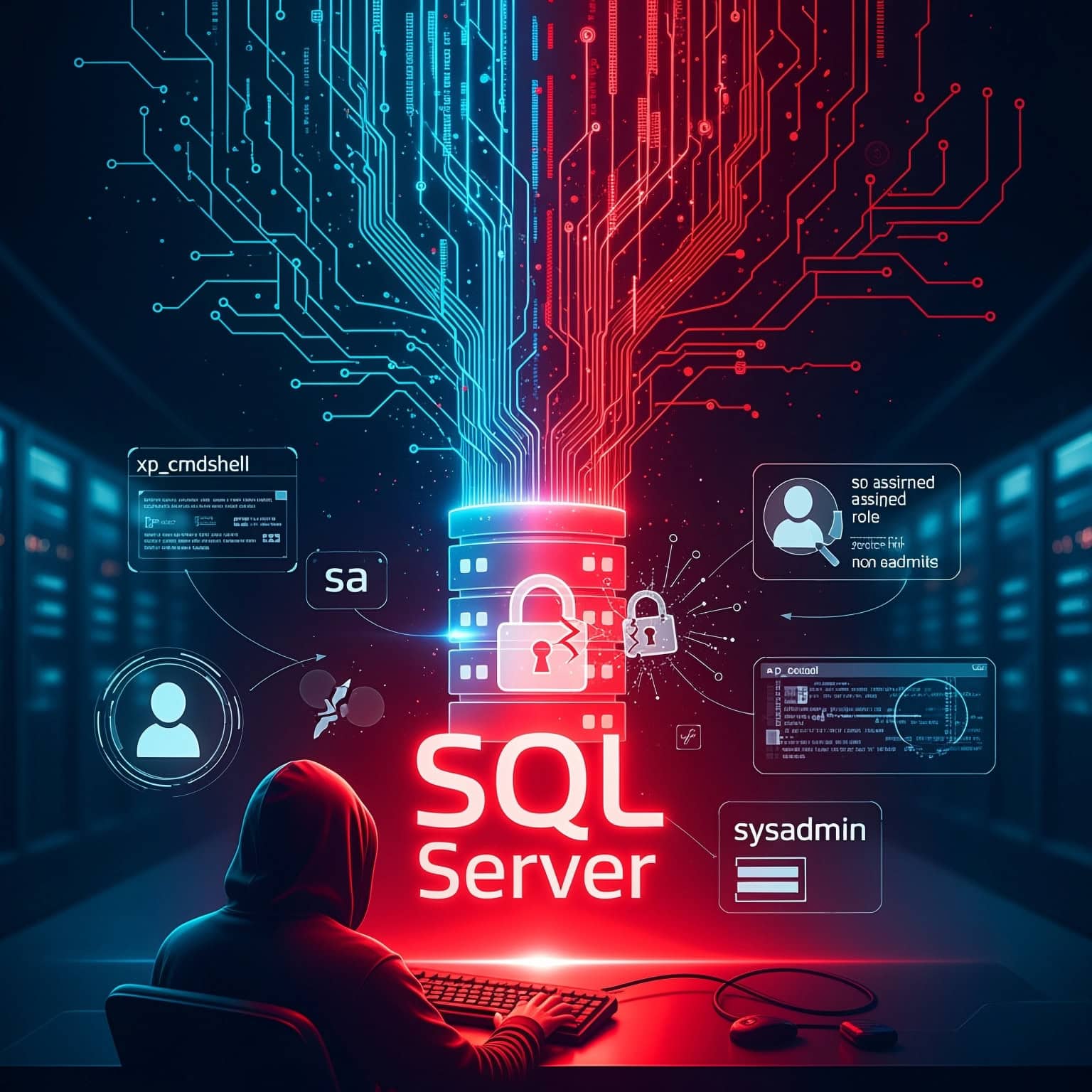
In a recent article by Edward Pollack on Simple Talk, the author reflects on the state of Microsoft SQL Server in 2026 and outlines five practical features he believes should be natively supported in T-SQL and the platform. While SQL Server remains a highly mature database system, Pollack highlights specific areas where daily tasks for developers and database administrators could be made far more efficient. First, he argues for the native ability to import data from compressed file formats, specifically Apache Parquet, which would eliminate the need to deal with cumbersome plain text files like CSV. Second, he requests native support for arrays, providing a straightforward alternative to using text strings or XML to store lists of values. Third, he advocates for an "OVERLAPS" function to simplify complex date logic into a single line of code. Fourth, Pollack points out that the current licensing model is overly complicated and suggests it should be as transparent as the monthly estimates provided for Azure SQL. Finally, he suggests expanding cloud blob storage integration so that files and scripts can be managed centrally in the cloud rather than on local drives.


Shaping a lasting AI strategy in a fast-changing world

As artificial intelligence becomes a standard tool in business, simply having access to the technology is no longer enough to stand out. Because most companies will use the same core platforms and models, a well-defined strategy is what will truly set an organization apart. The current landscape is marked by more capable and affordable systems that act as helpful assistants rather than outright replacements for human workers. Development teams are already showing how humans and these tools can work together effectively. To succeed, leaders need to shift their focus from the technology itself to how it supports their long-term goals over the next three to five years. This requires answering difficult questions about the company's future direction, understanding current weaknesses, and identifying the specific skills needed for tomorrow. Decision-makers must also practice restraint, choosing a few reliable platforms and focusing on clear priorities rather than chasing every new trend. By thoughtfully integrating these tools into daily workflows and supporting human decision-making, businesses can improve their customer experience and operations. Ultimately, the tools are just the vehicle; a steady, clear strategy is the route that determines long-term success.


The Unglamorous Side of Rust Web Development

In 2026, Rust remains a powerful choice for web development, offering excellent performance and safety. However, developers still face notable friction before their code even compiles. The current ecosystem often requires teams to assemble their own setups from scratch, lacking the complete, ready-to-use frameworks seen in other programming languages. Several specific challenges slow down the daily development process. Asynchronous programming in Rust provides great flexibility, but it complicates debugging and creates lengthy, hard-to-read error traces. Database management is another hurdle, as developers frequently have to write and maintain the same database structure in multiple places instead of using a single unified approach. Additionally, error handling across different tools remains inconsistent. The heavy reliance on generated code and complex type systems significantly increases compilation times, making it harder for developers to test small changes quickly. Despite these hurdles, the community is actively working on solutions. New frameworks are emerging to provide more complete starting points and reduce repetitive setup tasks. Ultimately, while Rust requires a larger initial investment of time and effort compared to simpler alternatives, its long-term reliability and speed make it a sensible choice for projects where stability is a core requirement.

The AI Agent Tech Stack Explained

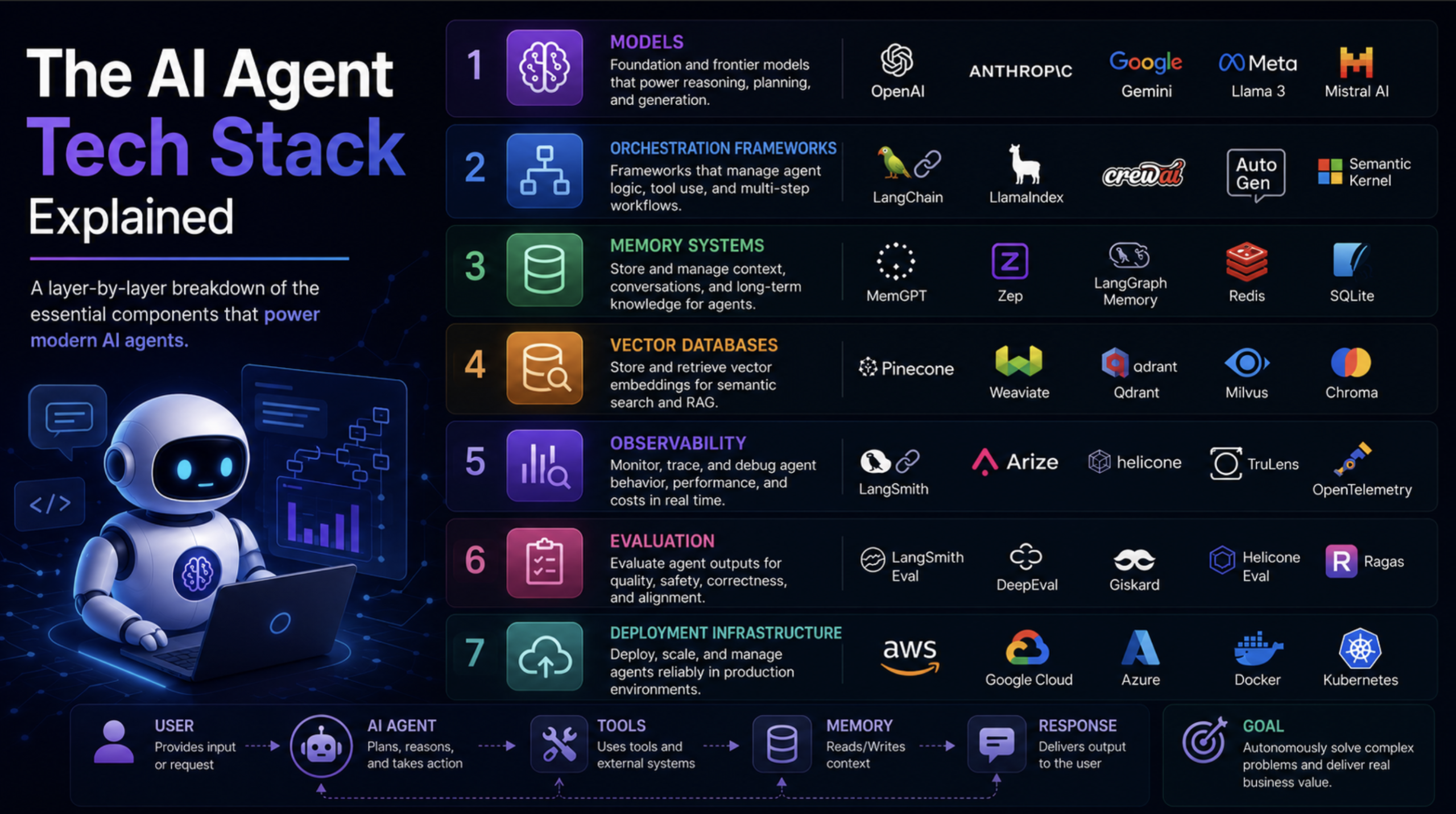
The article outlines the seven fundamental layers required to build and deploy functional artificial intelligence agents. It moves beyond basic models to explain the complete technical infrastructure needed for real-world applications. The guide begins with the foundation model, which acts as the central brain for reasoning. The second layer is the orchestration framework, serving as a nervous system to manage actions and control flow. Next, the third layer covers memory systems that provide essential context by tracking working, episodic, semantic, and procedural information. The fourth layer focuses on vector databases and document retrieval, allowing agents to access private information securely. The remaining layers detail tool integrations for performing outside actions, observability platforms for monitoring performance, and the final deployment infrastructure necessary for hosting. By breaking down the architecture into these distinct components, the text clarifies that successful systems rely heavily on a well-connected technology stack rather than just a single language model. It provides a clear, practical roadmap for software engineers and technical leads who want to understand how to assemble these exact pieces, whether they are building a simple prototype or scaling an application for production.

A Case for a Human-Centric AI Legislative Framework in India

In "A Case for a Human-Centric AI Legislative Framework in India," the author argues that India’s current approach to governing artificial intelligence is insufficient for protecting its citizens. While the Ministry of Electronics and Information Technology recently suggested relying on existing laws and self-regulation to foster innovation, the article points out that AI is fundamentally different from traditional software. Because AI programs operate as highly complex systems, relying on outdated frameworks like the Information Technology Act leaves users vulnerable to fraud, manipulation, and bias. Furthermore, the author critiques recent amendments for placing unreasonable takedown burdens on tech companies without providing clear state-defined guardrails. By comparing India’s strategy with the European Union’s user-focused risk models and China’s strict algorithm rules, the article advocates for a new Artificial Intelligence Regulation Act. This proposed legislation would introduce a risk-based grading system, establish an independent AI ombudsperson, and mandate transparency in training data. It even suggests giving citizens a copyright over their own faces to prevent unauthorized data usage. Ultimately, the piece makes a strong case that responsible innovation requires specific, human-centric laws to ensure safety and accountability for all users today.

Daily Tech Digest - June 13, 2026


Quote for the day:

“The biggest risk to software quality is complexity.” -- Martin Fowler

🎧 Listen to this digest on YouTube Music

▶ Play Audio Digest

Duration: 24 mins • Perfect for listening on the go.


Hard Problems in Cybersecurity: Past, Present, and Future

The recent article in Communications of the ACM outlines the historical evolution of computing systems to contextualize both past and future security challenges. Early systems were relatively simple to secure because they were isolated and operated by specialists. As technology progressed through shared networks and personal computers, the number of ways to compromise these machines grew dramatically. The personal computer era, in particular, introduced significant vulnerabilities because software built for everyday users lacked fundamental safety measures. However, this period also prompted essential defense innovations, such as automated software updates, secure programming practices, and the widespread adoption of strong cryptography. Learning from these struggles, modern mobile operating systems adopted much stricter models, limiting user privileges and relying on curated application stores to reduce risks. Today, the landscape is dominated by massive cloud platforms and connected physical infrastructure, which offer robust baseline protections but also serve as highly attractive targets for attackers. Looking ahead, the rapid integration of artificial intelligence presents a new frontier of complex problems. Because modern AI relies on data correlation rather than traditional rule-based programming, securing these systems requires entirely new analytical frameworks. Ultimately, the authors emphasize that while we have made significant defensive strides, the increasing complexity of technology demands continuous innovation to build resilient and verifiable systems.


Why cloud outages are such a stubborn problem

While cloud computing initially promised greater reliability, recent data reveals that system outages are becoming an increasingly difficult challenge to solve. According to industry analysis, the root cause of these disruptions is shifting away from simple physical hardware failures. Instead, the problems are now deeply tied to the growing complexity of the software, networks, and operational procedures used to manage large environments. Redundant hardware offers little protection when an outage stems from a faulty configuration update or an automation error. As cloud platforms stack countless services and dependencies on top of one another, a single mistake can quickly ripple across an entire network. Interestingly, relying heavily on automation has not eliminated human error; rather, it has simply shifted where those mistakes occur. When teams bypass safety protocols or rush changes without proper testing, automation can actually speed up a system failure. The financial impact remains significant, with many organizations reporting major financial losses from single incidents. To address this, cloud providers and their customers must move beyond simply adding more equipment. They need to prioritize strict operational discipline, transparent incident reporting, and improved change management. The future of reliable cloud services relies not on endless expansion, but on building systems that are straightforward to operate, easy to understand, and resilient against procedural mistakes.


Why Data Is No Longer the New Oil—And What Replaced It

For years, business leaders treated data as the "new oil," believing that simply amassing vast amounts of information would guarantee a competitive advantage. Today, this comparison is increasingly outdated. Because nearly every organization now generates massive streams of digital information, data is no longer scarce. Instead, we have entered an era of attention scarcity, where the overwhelming volume of raw information makes it difficult to determine what actually matters. In this environment, intelligence has replaced data as the primary driver of economic value. The businesses succeeding today are not necessarily those with the largest datasets, but rather those capable of transforming complex information into clear, actionable insights faster than their competitors. Raw data only represents potential; it requires context and interpretation to become valuable. Technologies like artificial intelligence are accelerating this shift by acting as sophisticated filters that separate signal from noise, highlight patterns, and support forecasting. However, technology alone is not the ultimate advantage. The most resilient organizations combine this technological intelligence with human judgment. Technology can process information and accelerate analysis, but human leaders are needed to provide context and make the final choices. Ultimately, the modern digital economy relies on learning speed, where the core objective is no longer to collect everything, but to understand better.


Introducing the Open Knowledge Format

As artificial intelligence models become more integrated into organizational workflows, they often struggle with a lack of specific, internal context. Currently, vital knowledge like database schemas, metrics definitions, and operational guides is scattered across incompatible systems, forcing teams to repeatedly build custom ways to feed information to their AI tools. To solve this fragmentation, Google Cloud has introduced the Open Knowledge Format (OKF). OKF is an open, vendor-neutral standard designed to organize context so that both humans and automated systems can easily read it. Rather than introducing a new software platform or requiring complex integrations, OKF relies on a simple structure: directories of standard text files using Markdown, paired with basic YAML headers for organizing metadata. This straightforward approach allows any team to create and maintain a shared library of knowledge using standard version control. Because OKF establishes a common language, documents written by different people or systems can be understood by different AI models without translation. The design rests on three principles: it requires minimal strict formatting, it separates how information is created from how it is used, and it remains independent of any specific vendor. By turning scattered data into portable, easily updatable text files, OKF helps organizations equip their automated tools with the accurate, actionable context needed to work effectively.


Google researchers introduce 'faithful uncertainty,' allowing LLMs to offer best guesses instead of hallucinations

To address the ongoing challenge of factual errors in large language models, Google researchers have proposed a new method called faithful uncertainty. Historically, developers have tried to eliminate these errors by forcing models to strictly answer or stay silent. However, this approach forces models to discard valuable information if they are even slightly unsure, sacrificing overall usefulness. To resolve this tradeoff between trustworthiness and helpfulness, the researchers suggest reframing the problem. Instead of treating every factual mistake as a fundamental failure, they classify them as confident errors—incorrect information presented with unearned authority. Faithful uncertainty solves this by aligning a model's words with its actual internal confidence. Rather than acting all-knowing, the model can offer educated guesses and clearly express when it is uncertain, much like a human expert. This practical self-awareness is particularly important for autonomous systems that rely on external tools. It allows the software to accurately recognize when it knows an answer and when it needs to search an external database, avoiding wasted time or incorrect outputs. While teaching models this dynamic sense of doubt is difficult due to their constantly evolving knowledge bases, it represents a vital shift. By mastering this balance, developers can build reliable enterprise systems that remain highly capable without misleading their human users.


While OT security is maturing, risk is not slowing down

As industrial organizations increasingly connect their physical operations to modern digital networks, securing these environments has rightly become a priority for senior leadership. A recent industry report highlights that companies are taking a much more realistic look at their security defenses. Instead of overestimating their readiness, many teams are recognizing previously hidden gaps as they adopt better monitoring tools. This clearer perspective means they are detecting intrusions more often, which is actually a positive sign of improved awareness rather than simply an increase in attacks. However, challenges remain significant. Attackers are staying hidden inside systems for longer periods, and many organizations still lack complete visibility across their entire operational network. Furthermore, while teams are modernizing their equipment to improve performance, this added connectivity demands that security be built in from the start rather than added as an afterthought. Regulatory pressures are also mounting, meaning compliance is quickly becoming an immediate operational requirement rather than a future goal. To navigate these ongoing risks, companies must focus on the fundamentals. By keeping digital and physical networks properly separated, tightly managing remote access, and closely aligning their security and engineering teams, organizations can ensure that their operations remain resilient and fully protected against an evolving landscape of threats.


The 7 Levels Of Leadership: A Mirror And A Compass For Leaders

Many organizations struggle with a hidden crisis because they view leadership as a simple binary trait rather than a spectrum. Based on extensive global research and practice, a new framework breaks leadership down into seven distinct levels, offering both a mirror for current managers and a compass for future growth. The spectrum begins at the bottom with the "Non-Leader," who avoids responsibility, and the "Pseudo-Leader," who talks a good game but relies solely on positional power rather than earned trust. At the third tier sits the standard "Leader," who effectively manages teams and achieves results. While many see this as the peak, it is actually just the foundation. The fourth level is the "Sensei Leader," who focuses on mentoring and reproducing their skills in others. Next is the "Legacy-Driven Leader," who sacrifices short-term popularity to build lasting institutional health. The sixth level, the "Conscious Leader," leads with deep self-awareness and a higher purpose. Finally, the "Superconscious Leader" operates beyond ego, handling immense complexity to transform people and systems long after they are gone. Ultimately, the future of business relies on deeply human leadership. Organizations that understand these levels can better evaluate where their teams stand and intentionally build the infrastructure needed to develop true, lasting influence.


Why CIOs should reopen the build vs. buy question

The article argues that technology leaders should reconsider the long-standing advice of automatically defaulting to buying software rather than building it. For the past twenty years, purchasing off-the-shelf products was the most rational way to control costs and minimize the risks associated with custom systems. However, three major technological shifts have altered this dynamic. First, artificial intelligence tools have drastically reduced the cost and time required to build custom applications, making it financially realistic to customize complex workflows. Second, modern development platforms have allowed non-technical employees in finance, marketing, and operations to easily create functional internal tools. Third, the difficult technical requirements of building custom software—such as security, scalability, and authentication—are now easily accessible as managed services. Because of these changes, automatically choosing pre-built software can slowly destroy a company's competitive edge by forcing the business to conform to a vendor's standardized process. While buying remains the logical choice for everyday administrative tasks like payroll or identity management, any capability that sets a company apart from its competitors should now be custom-built. To adapt, the chief information officer must shift from simply blocking new projects to providing strong architectural guidance, ensuring that internal development happens safely without restricting valuable business innovation.


Building a High-Performance Testing Strategy for Distributed Development Teams

Managing software quality across globally distributed teams requires moving beyond traditional methods to strategies that bridge time zones and minimize delays. A high-performance testing approach neutralizes geographic distances by ensuring unified visibility, reliable automation, and shared accountability. To achieve this, organizations should adjust their testing focus, prioritizing integration and contract tests over heavy end-to-end suites. This protects system stability without causing bottlenecks. Catching issues early is critical, so teams should build automated checks directly into the development process using tools that scan code and manage environments on demand. Artificial intelligence can also help maintain tests as applications evolve, reducing manual upkeep. Quality must become a shared responsibility rather than a separate department's task. Tracking metrics like developer test contributions and encouraging cross-site collaboration helps foster a culture where everyone owns the outcome. Supporting this effort requires scalable cloud infrastructure that can replicate production environments and simulate user traffic from different regions. Finally, clear communication protocols, such as documented decision logs and written updates, ensure teams stay aligned without needing simultaneous meetings. By combining scalable infrastructure, automated safeguards, and a unified culture of ownership, remote engineering hubs can maintain steady release cycles and deliver reliable software regardless of where the code is written.


Moving Mountains: Migrating Legacy Code in Weeks instead of Years

The presentation outlines the essential transition from fragile, experimental AI agent prototypes to robust production systems. A central theme focuses on moving away from monolithic prompt designs and long linear loops, which frequently stall or fail silently when encountering real-world constraints like network limits or high operational costs. To resolve these vulnerabilities, the speaker advocates for systematic refactoring strategies, specifically decomposing large, complicated workflows into coordinated networks of specialized sub-agents with narrow, well-defined responsibilities. This separation of concerns ensures greater system reliability and simplifies troubleshooting. Furthermore, the discussion highlights the importance of replacing hardcoded states and unpredictable natural language formatting with dynamic data pipelines and strict structural contracts verified at runtime. By implementing automated testing frameworks, continuous evaluation metrics, and persistent memory layers, engineering teams can dramatically decrease context data overhead and eliminate runaway cloud expenditures. Ultimately, refactoring AI agents is not merely about organizing code, but about shifting the developer's responsibilities from manually inspecting individual outputs to designing the overarching architectural guardrails that guide autonomous execution. This disciplined engineering approach minimizes unexpected mistakes and guarantees that these autonomous agent-driven systems remain stable, predictable, secure, and fully compliant with enterprise governance standards when deployed in live production environments.

Daily Tech Digest - May 13, 2026


Quote for the day:

"You learn more from failure than from success. Don't let it stop you. Failure builds character." -- Unknown


🎧 Listen to this digest on YouTube Music

▶ Play Audio Digest

Duration: 24 mins • Perfect for listening on the go.


CISOs step into the AI spotlight

The article "CISOs step into the AI spotlight" examines the transformative impact of artificial intelligence on the role of Chief Information Security Officers (CISOs), who are increasingly transitioning from tactical overseers to central strategic business partners. With 95% of security leaders now engaging with boards multiple times a month, the CISO’s prominence is surging, often leading to direct reporting lines to the board rather than the CIO. Security experts like Barry Hensley, Shaun Khalfan, and Jeff Trudeau emphasize that modern leadership requires balancing rapid AI adoption with robust governance frameworks to ensure technology remains reliable and secure. This shift necessitates that CISOs move beyond being the "department of no" to become business enablers who translate technical risks into business value and growth. Key challenges identified include the acceleration of AI-driven phishing and automated vulnerability exploitation, which demand real-time patching and continuous, embedded security practices. Furthermore, managing the complexity of machine and human identities remains a top priority. Ultimately, the article argues that successful contemporary CISOs must actively use AI to understand its nuances, build organizational trust through consistent guidance, and foster highly cohesive teams, ensuring that cybersecurity becomes a competitive advantage rather than a friction point in the era of agent-driven transactions.


The Future Of Engineering Is Hybrid

Jo Debecker’s article, "The Future of Engineering is Hybrid," argues that the evolution of the field depends on the intentional synergy between human ingenuity and machine precision rather than AI’s solo capabilities. Far from replacing engineers, AI serves as a powerful augmentative tool that accelerates innovation and optimizes complex workflows in sectors like aerospace and defense. The author emphasizes that while AI can automate deterministic tasks and process vast datasets, human oversight remains indispensable for judgment, ethical accountability, and validating outcomes through a modern "four-eyes principle." Critical thinking and domain expertise become even more vital as the engineer’s role shifts toward selecting, grounding, and customizing AI models for specific industrial applications. Effective hybrid engineering requires a multidisciplinary approach, integrating cross-functional teams that combine technical, business, and data perspectives. Furthermore, organizations must prioritize robust governance and proactive upskilling to ensure AI adoption remains ethical and value-driven. Ultimately, the hybrid model does not present a choice between humans or machines but advocates for an "and" strategy where AI elevates human potential. By maintaining clear human control points and fostering AI fluency, the engineering landscape can achieve unprecedented efficiency and reliability while keeping human responsibility at the core of technological progress.


Why Most App Modernization Efforts Fail, and How a Capabilities-Driven Strategy Can Stop the Billion-Dollar Bleed

The article "Why Most App Modernization Efforts Fail, and How a Capabilities-Driven Strategy Can Stop the Billion-Dollar Bleed" explores the pervasive struggle of organizations to modernize their legacy systems, noting that a staggering 79% of such initiatives end in failure. These failures are primarily attributed to deep-seated issues like unsustainable technical debt, monolithic architectures that hinder scalability, and escalating security risks. Furthermore, many projects falter because they lack alignment with business value—often attempting to "boil the ocean" with overly complex, multi-year programs that succumb to the "bowl of spaghetti" problem, where minor changes trigger widespread system regressions. To combat these pitfalls, the author advocates for a capabilities-driven strategy that shifts the focus from mere technology replacement to business outcome enablement. By anchoring modernization decisions to specific organizational business capabilities—classified as strategic, core, or supporting—enterprises can ensure cross-functional alignment and create a prioritized roadmap. This approach allows for the decomposition of massive, risky programs into smaller, independently deliverable increments that provide measurable value. Ultimately, by aligning technology domains with capability boundaries, organizations can reduce the "blast radius" of individual failures, maintain stakeholder support, and achieve a sustainable architecture that truly supports digital transformation and market agility.


Why Australia's ransomware spike misses the bigger story

The article "Why Australia’s ransomware spike misses the bigger story" explains that regional surges in ransomware often distract from more critical shifts in the global threat landscape. While Australia recently experienced a prominent spike in attacks, the author contends that ransomware groups are primarily opportunistic rather than geographically focused. A drop in regional victim rankings often reflects a temporary shift in attacker attention—such as targeting specific geopolitical events—rather than a genuine improvement in local security. The "bigger story" lies in the evolving nature of cyberattacks, where the "time-to-exploit" window has collapsed from days to just hours, forcing a move from reactive to proactive defense. Modern attackers are increasingly utilizing "living-off-the-land" (LOTL) techniques to blend in with legitimate network activity, bypassing traditional malware detection. Additionally, techniques like "bring your own vulnerable driver" (BYOVD) allow them to disable system-level protections. Automation further accelerates the attack lifecycle, allowing for rapid reconnaissance and exploitation at scale. Ultimately, the article argues that organizations must stop focusing on fluctuating regional statistics and instead prioritize hardening internal defenses. This requires redefining what constitutes "normal" network behavior and implementing robust security practices that align with these faster, stealthier, and more dynamic modern threats.


AI saddles CIOs with new make-or-break expectations

The rapid rise of artificial intelligence has significantly transformed the role of Chief Information Officers (CIOs), saddling them with new "make-or-break" expectations that extend far beyond traditional IT management. According to Deloitte’s 2026 Global Leadership Technology Study, modern IT leaders are no longer just evaluated on system uptime and technical delivery; they are now increasingly judged on their ability to drive enterprise value and navigate complex organizational transformations. While many CIOs prioritize business outcomes, they face immense pressure to foster AI and data fluency across their organizations while building specialized, AI-ready teams. This shift requires CIOs to act as pathfinders and strategic evangelists who can bridge the gap between technical potential and practical workflow changes. One of the most significant hurdles remains a critical shortage of AI talent, forcing leaders to adopt creative strategies such as retraining current staff and strengthening partnerships with human resources. Furthermore, the transition necessitates a focus on psychological safety, as leaders must reassure employees by emphasizing job augmentation rather than replacement. Ultimately, successful CIOs in this era must master the art of redesigning work and decision-making processes, ensuring that the human and digital workforces can collaborate effectively to deliver tangible business results in a rapidly evolving technological landscape.


Do Software QA Engineers Need a Personal Brand?

In her insightful article, Anna Kovalova explores why software quality assurance engineers should prioritize personal branding to bridge the gap between technical expertise and professional visibility. She emphasizes that a personal brand is essentially the mental image colleagues and potential employers hold regarding your reliability and problem-solving capabilities. While many testers believe that strong work speaks for itself, Kovalova argues that talent requires a marketing multiplier to reach its full impact beyond a single team. By becoming more visible through professional platforms like LinkedIn, QA engineers can reduce uncertainty for others, making it significantly easier for new opportunities and high-level partnerships to materialize organically. The author clarifies that branding does not necessitate becoming a social media influencer; rather, it involves being consistent, clear, and human about one’s professional contributions. Practical steps include focusing on specific niche topics, sharing small but valuable lessons regularly, and using AI tools to enhance structure while maintaining a unique, authentic voice. Ultimately, personal branding serves as a career-scaling mechanism that ensures your reputation enters the room before you do. By shifting from being "invisible" to recognizable, QA professionals can unlock greater financial rewards, professional confidence, and a robust industry network that provides long-term security in an ever-evolving software testing job market.


Large Language Models in Software Security Analysis

The article "Large Language Models in Software Security Analysis" explores the revolutionary shift toward autonomous Cyber-Reasoning Systems (CRSs) powered by Large Language Models (LLMs). As modern software scales in complexity across diverse languages and environments, traditional manual security audits become increasingly unsustainable. To address this, the authors propose a consolidated CRS framework decomposed into seven essential sub-components. These include static analysis to build a system-level understanding, identifying build and execution requirements, and generating testcases designed to trigger vulnerabilities. Once a potential flaw is identified, the system moves through vulnerability analysis, generates a reproducible proof-of-vulnerability (PoV), synthesizes an automated patch, and finally validates that remediation against the original exploit. An orchestrator manages these processes, allocating resources and facilitating communication between LLM-driven and traditional analysis tools. While LLMs offer unprecedented capabilities in handling polyglot code and creative problem-solving, the paper highlights technical hurdles such as budget management and the need for holistic reasoning in heterogeneous systems. Drawing inspiration from the DARPA AI CyberChallenge, the research articulates a roadmap for integrating generative AI into the software security pipeline, transforming it from a reactive, human-centric task into a proactive, fully autonomous operation. Ultimately, the authors argue that this paradigm shift represents a fundamental transformation in how we discover and repair critical vulnerabilities at scale.


Agent Observability Shouldn't Just Be About Vulnerabilities

The SecureWorld article "Agent Observability Shouldn't Just Be About Vulnerabilities" argues that cybersecurity teams must move beyond simple risk metrics to provide leadership with a comprehensive map of how AI agents drive business value. While monitoring vulnerabilities is essential for risk management, the piece emphasizes that board-level executives are primarily concerned with ROI, productivity gains, and the operationalization of successful AI use cases. Currently, many organizations are rapidly adopting AI without robust governance, making it difficult to evaluate effectiveness. Identifying these agents is a complex, non-deterministic task that involves monitoring API traffic, logs, and account access rather than traditional file scanning. Because security teams are already doing the heavy lifting of characterizing agent behavior and data interaction, they are uniquely positioned to describe business functions to stakeholders. By categorizing telemetry into meaningful projects—such as supply chain optimization, automated customer service, or healthcare documentation—CISOs can transition from being perceived as "blockers" to being drivers of business success. Ultimately, effective agent observability provides the visibility needed to secure workloads while simultaneously uncovering where AI is creating the most significant tangible value, ensuring that cybersecurity remains integral to the organization’s broader strategic transformation and long-term innovation goals.


Time-Series Storage: Design Choices That Shape Cost and Performancet

The article "Time-Series Storage: Design Choices That Shape Cost and Performance" explores fundamental architectural decisions in time-series database design using practical tools like PostgreSQL and Apache Parquet. A central theme is the efficiency gained through normalization, where separating series identity into dedicated metadata tables can reduce storage requirements by roughly forty-two percent. The author emphasizes keeping high-cardinality fields out of these identities to prevent linear growth in indexing costs. Strategy choices like using flexible JSON for tags offer schema agility but require careful indexing to avoid performance drift. Furthermore, the article highlights time partitioning as a critical mechanism for O(1) data expiration and improved query pruning, especially when combined with a second axis like series identity to balance write loads. Downsampling is presented as a powerful optimization, drastically reducing row counts for historical data while retaining high-resolution accuracy for recent windows. For large-scale deployments, the design shifts toward decoupling compute from storage, utilizing Parquet files on object storage and open table formats like Apache Iceberg to ensure ACID compliance and broad engine compatibility. Ultimately, the piece argues that these structural choices governing row layout, compression, and partitioning influence cost and performance far more significantly than the specific database engine selected.


Data enrichment: Turning raw data into real intelligence

Data enrichment is a strategic process that transforms stagnant raw data into valuable, actionable intelligence by integrating existing datasets with additional context from internal and external sources. This practice addresses the modern challenge of being "data-rich but insight-poor" by enhancing accuracy and filling critical information gaps that hinder performance. The article categorizes enrichment into four primary types: behavioral, which tracks user actions; geographic, which adds location specifics; demographic, detailing individual characteristics; and firmographic, providing crucial B2B organizational insights. A structured workflow involving meticulous data collection, rigorous cleaning, integration, and validation is essential to ensure that the resulting intelligence is reliable and useful. By implementing these steps, organizations can achieve superior decision-making, deeper customer understanding, and more precise marketing targeting, alongside improved risk management and significant operational efficiency. However, the path to success involves navigating complex hurdles such as strict privacy regulations like GDPR, maintaining consistent data quality, and managing integration technicalities. To maximize value, the article recommends prioritizing automation, selective sourcing, and establishing a regular update cadence. Ultimately, data enrichment is not a one-off task but a continuous commitment that bridges the gap between basic information and strategic wisdom, providing a distinct competitive edge in an increasingly data-driven global landscape.

Daily Tech Digest - April 27, 2026


Quote for the day:

"Security is not a product, but a process. It is a mindset that assumes the 'impossible' will happen, and builds the walls before the water starts rising." -- Inspired by Bruce Schneier

🎧 Listen to this digest on YouTube Music

▶ Play Audio Digest

Duration: 17 mins • Perfect for listening on the go.


Your AI strategy is all wrong

In this Computerworld article, Mike Elgan argues that the prevailing corporate strategy of using artificial intelligence to slash headcount is fundamentally flawed. While mass layoffs provide immediate cost savings, Elgan cites research from the Royal Docks School of Business and Law suggesting that organizations should instead prioritize "knowledge ecosystems" built on human-AI collaboration. The core issue is that AI excels at rapid data processing and complex task execution, but it lacks the critical judgment, ethical reasoning, and contextual understanding inherent to human experts. Furthermore, an over-reliance on automated tools risks a "skills atrophy paradox," where employees lose the ability to perform independently. To avoid these pitfalls, Elgan suggests that leaders must redesign workflows around strategic handoffs rather than total replacements. This involves shifting employee training toward metacognition—learning how to effectively integrate personal expertise with AI outputs—and creating new roles focused on AI specialization. Ultimately, companies that treat AI as a tool to augment collective intelligence will achieve compounding, long-term advantages over those that merely optimize for short-term productivity gains. By keeping humans in authorship of decisions, businesses ensure they remain legally defensible and ethically grounded while leveraging the unprecedented speed and analytical power that modern AI provides.


The New Software Economics: Earn the Right to Invest Again, in 90-day Cycles

"The New Software Economics: Earn the Right to Invest Again in 90-Day Cycles" by Leonard Greski explores the evolving financial landscape of technology, emphasizing how the shift to subscription-based infrastructure and cloud computing has moved IT spending from balance sheets to income statements. This transition complicates traditional software capitalization practices, such as ASC 350-40, which often conflict with the modern reality of continuous delivery. To address these challenges, Greski proposes a breakthrough framework called "earning the right to invest again." This model shifts focus from rigid accounting treatments to accountability for value generation through 90-day investment cycles. The process involves shipping a "thin slice" of functionality within 30 to 60 days, immediately monetizing that slice through revenue increases or measurable cost reductions, and then using that evidence to fund the next tranche of development. By treating application development as a series of bounded pilots rather than fixed-scope projects, organizations can better manage uncertainty and align spending with actual end-user value. Greski concludes by recommending strategic actions for modern executives, such as prioritizing value streams over projects, pre-writing AI policies, and integrating FinOps into senior leadership, to ensure technology investments remain agile, evidence-based, and fiscally responsible in a rapidly changing digital economy.


Deepfake threats exploiting the trust inside corporate systems

The article "Deepfake threats exploiting the trust inside corporate systems" by Anthony Kimery on Biometric Update explores a dangerous evolution in cybercrime, as detailed in a new playbook by AI security firm Reality Defender. Deepfake technology has transitioned from isolated fraud schemes into sophisticated attacks that infiltrate internal corporate workflows, specifically targeting the "trust boundaries" businesses rely on for daily operations. This shift poses a severe risk to sensitive processes such as password resets, access recovery, internal meetings, and executive communications. Because traditional security models often equate seeing or hearing a person with identity assurance, synthetic media can now bypass standard technical controls by mimicking trusted colleagues or leadership. Once these digital imitations enter internal approval chains or customer service interactions, they can cause significant damage before traditional systems recognize the breach. Reality Defender emphasizes that organizations must transition from ad hoc reactions to a structured strategy involving real-time detection, procedural response, and operational containment. The fundamental issue is that modern deepfakes have effectively broken the assumption that sensory verification is foolproof. To mitigate this risk, the article suggests that early visibility and forensic accountability are more critical than absolute certainty, urging organizations to establish clear protocols for handling suspicious media.


Why Integration Tech Debt Holds Back SaaS Growth

The article "Why Integration Tech Debt Holds Back SaaS Growth" by Adam DuVander explains how a specific form of technical debt—integration debt—acts as a silent anchor for SaaS companies. While typical technical debt involves internal code quality, integration debt arises from the rapid, often "quick-and-dirty" connections made between a platform and the third-party apps its customers use. To achieve early market traction, many SaaS providers build fragile, custom integrations that lack scalability and robust error handling. Over time, these brittle connections require constant maintenance, pulling engineering resources away from core product innovation. This creates a "growth paradox" where the very integrations intended to attract new users eventually prevent the company from scaling effectively or entering enterprise markets that demand high reliability. DuVander argues that to sustain long-term growth, companies must transition from these bespoke, hard-coded integrations to a more strategic, platform-led approach. By investing in a unified integration architecture or using specialized tools to handle third-party connectivity, SaaS providers can reduce maintenance overhead, improve system reliability, and free their developers to focus on delivering unique value, thereby "paying down" the debt that stifles competitive agility.


Why GCCs Must Move to Product-Led Models to Stay Relevant

In the article "Why GCCs Must Move to Product-Led Models to Stay Relevant," the author argues that Global Capability Centers (GCCs) are at a critical crossroads. Historically established as cost-arbitrage hubs focused on back-office operations and service delivery, GCCs are now facing pressure to evolve into value-driven entities. To maintain their strategic importance within parent organizations, they must transition from a project-centric approach to a product-led operating model. This shift requires integrating engineering excellence with business outcomes, moving beyond merely executing tasks to owning end-to-end product lifecycles. A product-led GCC prioritizes user-centric design, agile methodologies, and cross-functional teams that include product managers, designers, and engineers. By fostering a culture of innovation and data-driven decision-making, these centers can accelerate speed-to-market and enhance customer experiences. Furthermore, the article highlights that a product mindset helps attract top-tier talent who seek ownership and impact rather than repetitive support roles. Ultimately, for GCCs to survive the era of digital transformation and AI, they must shed their identity as "cost centers" and emerge as "innovation engines" that proactively contribute to the global enterprise's growth, scalability, and long-term competitive advantage.


Cold Data, Hot Problem: Why AI Is Rewriting Enterprise Storage Strategy

In the article "Cold Data, Hot Problem," Brian Henderson discusses how the surge of generative AI is fundamentally altering enterprise storage strategies. Traditionally, organizations categorized data into "hot" (frequently accessed) and "cold" (archived), with the latter relegated to low-cost, slow-access tiers. However, the rise of Large Language Models (LLMs) has turned this "cold" data into a "hot" asset, as historical archives are now vital for training models and providing context through Retrieval-Augmented Generation (RAG). This shift creates a significant bottleneck: traditional archival storage cannot provide the high-throughput, low-latency access required for modern AI workloads. To solve this, Henderson argues that enterprises must modernize their data architecture by adopting high-performance "all-flash" object storage and unified data platforms. These solutions bridge the gap between performance and scale, allowing companies to leverage their entire data estate without the latency penalties of legacy silos. By integrating advanced data management and FinOps principles, organizations can ensure that their storage infrastructure is not just a passive repository, but a dynamic engine for AI innovation. Ultimately, the article emphasizes that surviving the AI era requires treating all data as potentially active, ensuring it is discoverable, accessible, and ready for immediate computational use.


Context decay, orchestration drift, and the rise of silent failures in AI systems

In "Context Decay, Orchestration Drift, and the Rise of Silent Failures in AI Systems," Sayali Patil explores the "reliability gap" in enterprise AI—a dangerous disconnect where systems appear operationally healthy but are behaviorally broken. Unlike traditional software, where failures trigger clear error codes, AI failures are often "silent," meaning the system remains functional while producing confidently incorrect or stale results. Patil identifies four critical failure patterns: context degradation, where models reason over incomplete or outdated data; orchestration drift, where complex agentic sequences diverge under real-world pressure; silent partial failure, where subtle performance drops erode user trust before reaching alert thresholds; and the automation blast radius, where a single early misinterpretation propagates across an entire business workflow. To combat these risks, the article argues that traditional infrastructure monitoring (uptime and latency) is insufficient. Instead, organizations must adopt "behavioral telemetry" and intent-based testing frameworks. By shifting the focus from "is the service up?" to "is the service behaving correctly?", enterprises can build disciplined infrastructure capable of withstanding production stress. This transition requires shared accountability across teams to ensure that AI deployments remain reliable, evidence-based, and fiscally responsible in an increasingly automated digital economy.


AI is reshaping DevSecOps to bring security closer to the code

The integration of artificial intelligence into DevSecOps is fundamentally transforming the software development lifecycle by shifting security from a reactive, post-deployment validation to a continuous, proactive enforcement mechanism. According to industry experts cited in the article, AI is reshaping three primary areas: secure coding, issue detection, and automated remediation. By embedding third-party security tooling directly into coding assistants, organizations can now provide real-time policy guidance, secrets detection, and dependency validation as code is written. This "shift left" approach ensures that security is no longer an afterthought but a foundational component of the generation workflow. Furthermore, AI-driven automation helps bridge the persistent gap between development and security teams by providing contextual fixes and reducing the manual burden of triaging vulnerabilities. Beyond mere tooling, this evolution demands a strategic shift in skills, requiring developers to become more security-conscious while security professionals transition into architectural oversight roles. Ultimately, AI-enhanced DevSecOps enables enterprises to maintain a rapid pace of innovation without compromising the integrity of the software supply chain. By leveraging intelligent agents to monitor and enforce guardrails throughout the development pipeline, businesses can more effectively mitigate risks in an increasingly complex and fast-paced digital landscape.


Unpacking the SECURE Data Act

The article "Unpacking the SECURE Data Act" by Eric Null, featured on Tech Policy Press, critically analyzes the House Republicans' newly proposed federal privacy bill, the Securing and Establishing Consumer Uniform Rights and Enforcement (SECURE) Data Act. Null argues that the legislation represents a significant step backward for American privacy protections. Rather than establishing a robust national standard, the bill mirrors industry-friendly state laws, such as Kentucky’s, but often excludes even their basic safeguards, like impact assessments or protections for smart TV and neural data. A primary concern highlighted is the bill's strong preemption regime, which would override more protective state laws, effectively turning federal law into a "ceiling" rather than a "floor." Furthermore, the Act contains broad exemptions that allow companies to bypass compliance through simple privacy policies, terms of service contracts, or by labeling data collection as "internal research" to train AI systems. Null contends that the bill’s data minimization standards are essentially the status quo, providing a "free pass" for companies to continue invasive data practices as long as they are disclosed. Ultimately, the article warns that the SECURE Data Act prioritizes industry interests over meaningful consumer rights, leaving individuals vulnerable in an increasingly AI-driven digital economy.


Why legacy data centre networks are no longer fit for purpose

The article "Why legacy data centre networks are no longer fit for purpose" highlights the critical disconnect between traditional infrastructure and the explosive demands of modern computing, particularly driven by artificial intelligence and high-performance workloads. Legacy networks, often built on rigid, three-tier architectures, struggle with the "east-west" traffic patterns prevalent in today’s virtualized environments. These older systems frequently suffer from high latency, limited scalability, and significant energy inefficiencies, making them a liability as power costs and sustainability regulations intensify. The shift toward AI-ready data centers necessitates a transition to leaf-spine architectures and software-defined networking, which provide the high-bandwidth, low-latency fabrics required for parallel processing. Furthermore, legacy hardware often lacks the integrated security and real-time observability needed to defend against sophisticated cyber threats. The piece emphasizes that staying competitive in 2026 requires more than just incremental updates; it demands a fundamental modernization of the network fabric to ensure agility and reliability. By moving away from siloed, hardware-centric models toward modular and automated infrastructure, organizations can achieve the density and flexibility required for future growth. Ultimately, the article argues that failing to replace these aging systems risks operational bottlenecks and financial strain in an increasingly cloud-native world.

Daily Tech Digest - April 11, 2026


Quote for the day:

"To accomplish great things, we must not only act, but also dream, not only plan, but also believe." -- Anatole France


🎧 Listen to this digest on YouTube Music

▶ Play Audio Digest

Duration: 18 mins • Perfect for listening on the go.


AI agents aren’t failing. The coordination layer is failing

The article "AI agents aren't failing—the coordination layer is failing" asserts that the primary bottleneck in scaling AI is not the performance of individual agents, but rather the absence of a sophisticated "coordination layer." As organizations transition to multi-agent environments, relying on direct agent-to-agent communication creates quadratic complexity that leads to race conditions, outdated context, and cascading failures. To solve these issues, the author introduces the "Event Spine" pattern, a centralized architectural foundation using ordered event streams. This approach enables agents to maintain a shared state without direct queries, significantly reducing latency and redundant processing. Implementing this infrastructure reportedly slashed end-to-end latency from 2.4 seconds to 180 milliseconds and reduced CPU utilization by 36 percent. The article concludes that multi-agent AI is effectively a distributed system requiring the same explicit coordination frameworks that the industry found essential for microservices. Enterprises must invest in this "spine" now to prevent agent proliferation from turning into unmanageable chaos. By focusing on the infrastructure connecting these agents, developers can ensure that their AI systems work as a cohesive unit rather than a collection of competing, inefficient silos that are prone to failure at scale.


Agents don’t know what good looks like. And that’s exactly the problem.

In this O’Reilly Radar article, Luca Mezzalira reflects on a discussion between Neal Ford and Sam Newman regarding the inherent limitations of agentic AI in software architecture. The central thesis is that while AI agents are exceptionally skilled at generating code and executing local tasks, they lack a fundamental understanding of what "good" looks like in a global architectural context. Agents typically optimize for immediate task completion, often neglecting long-term maintainability, systemic scalability, and the subtle trade-offs essential to sound design. This creates a significant risk where automated efficiency leads to architectural erosion and technical debt if left unchecked. Mezzalira argues that the solution lies not in making agents "smarter" in isolation, but in establishing robust human-led governance and automated guardrails that define and enforce quality standards. As agents handle more routine coding duties, the role of the human developer must evolve from a "T-shaped" specialist into a "Comb-shaped" professional who possesses both deep technical expertise and the broad systemic vision required to orchestrate these tools effectively. Ultimately, the article emphasizes that the true value of human engineers in the AI era is their unique ability to maintain architectural integrity and provide the contextual judgment that machines currently cannot replicate.


Understanding tokenization and consumption in LLMs

The article "Understanding Tokenization and Consumption in LLMs" explains the fundamental role of tokenization in how large language models (LLMs) interpret user input and calculate costs. Tokenization involves breaking text into smaller subunits, such as word fragments or punctuation, allowing models to process diverse languages and complex syntax efficiently. This granular approach is critical because LLMs generate responses iteratively, token by token, and billing is typically based on the total sum of tokens in both the prompt and the resulting output. The author compares leading platforms like ChatGPT, Claude Cowork, and GitHub Copilot, noting that while they share core principles, their specific tokenization algorithms and pricing structures vary. For instance, ChatGPT uses byte pair encoding for general efficiency, whereas GitHub Copilot is optimized for programming syntax. To manage costs and improve performance, the article suggests best practices for prompt engineering, such as using concise language, avoiding redundancy, and breaking complex tasks into smaller segments. Ultimately, a deep understanding of token consumption enables professionals to optimize their AI workflows, predict expenses accurately, and select the most appropriate platform for their specific organizational needs, whether for general content generation or specialized software development.


Data Centres Without the Compute

The article "Data Centres Without the Compute" explores a paradigm shift in data center architecture, moving away from traditional server-centric designs where compute, memory, and storage are tightly coupled. Stuart Dee argues that modern workloads, especially AI and real-time analytics, have exposed memory as a dominant constraint rather than compute. This shift is facilitated by advancements in photonics and the Innovative Optical and Wireless Network (IOWN), which dissolves physical boundaries through end-to-end optical paths. By replacing traditional electronic switching with all-optical networking, latency and energy consumption are significantly reduced, enabling memory disaggregation at scale. Consequently, data centers can evolve into specialized, software-defined environments where memory resides in dense, energy-efficient arrays that are accessed remotely by compute-heavy facilities. This "data-centric infrastructure" allows for dynamic resource composition across metropolitan distances, transforming the network into a memory backplane. Ultimately, the article suggests that the future of digital infrastructure lies in decoupling resources, allowing memory to be located where power and cooling are optimal while compute remains closer to users. This transition marks the end of the locality assumption, paving the way for a federated model where data centers serve as modular components within a broader optical system.


What Every Business Leader Needs to Understand About Sovereign AI

Sovereign AI is emerging as a critical strategic imperative for business leaders, transcending its role as a mere technical requirement to become a fundamental pillar of long-term resilience and competitive advantage. According to insights from Dataversity, sovereignty should be viewed as an offensive strategy rather than a defensive posture, enabling organizations to build robust compliance frameworks and mitigate significant risks such as reputational damage and legal fines. While many companies currently focus sovereignty efforts on data and infrastructure, a key shift involves extending this control to the intelligence layer—the AI models themselves—where crucial decision-making occurs. A hybrid sovereignty approach is recommended, balancing internal control over sensitive assets with external partnerships to foster innovation while avoiding vendor lock-in. By 2030, the global market for sovereign AI is projected to reach $600 billion, highlighting its potential to unlock new market opportunities and scale. For leaders, treating sovereignty as a structural necessity rather than discretionary spend is essential for ensuring AI accuracy and reliability. This proactive "sovereignty-by-design" methodology ultimately transforms regulatory compliance into business superiority, allowing enterprises to navigate a complex, fragmented global landscape while maintaining absolute ownership of their most valuable digital intelligence and future innovation.


Turning Military Experience Into Cyber Advantage

The blog post "Turning Military Experience Into Cyber Advantage" by Chetan Anand explores how the discipline and operational expertise of veterans translate into a strategic asset for the cybersecurity industry. Anand argues that cybersecurity should be viewed not merely as a technical IT function, but as enterprise risk management conducted within a digital battlespace—a concept inherently familiar to military personnel. Key attributes such as risk assessment, situational awareness, and structured decision-making under pressure map directly onto roles in security operations, threat modeling, and incident response. Furthermore, the article highlights the growing demand for military leadership in Governance, Risk, and Compliance (GRC) roles, where integrity and accountability are paramount. Veterans are encouraged to overcome common misconceptions, such as the necessity of coding skills, and focus on articulating their experience in business terms rather than military jargon. By prioritizing a problem-solving mindset and leveraging mentorship programs like ISACA’s, transitioning service members can bridge the gap between their tactical background and civilian career requirements. Ultimately, the piece positions military service as a foundational training ground for the rigorous demands of modern cyber defense, provided veterans effectively translate their unique skills into organizational value and business outcomes.


The Hidden ROI of Visibility: Better Decisions, Better Behavior, Better Security

In his article for SecurityWeek, Joshua Goldfarb explores the "hidden ROI" of cybersecurity visibility, arguing that its fundamental value extends far beyond traditional compliance and auditing functions. Using a personal anecdote about how home security cameras deterred a hostile neighbor, Goldfarb illustrates that visibility serves as a powerful psychological deterrent. When users and technical teams know their actions are being recorded, they are significantly more likely to adhere to security policies and avoid risky behaviors like visiting restricted sites or installing unvetted software. Beyond behavioral changes, comprehensive visibility across network, endpoint, and application layers—including APIs and AI capabilities—fosters more collaborative, data-driven relationships between security departments and application owners. This objective approach effectively shifts internal discussions from subjective friction to actionable risk management. Furthermore, high-quality data enables more informed decision-making and precise risk assessments, both of which are critical in complex, modern hybrid-cloud environments. Although achieving total transparency is often resource-intensive, Goldfarb emphasizes that the resulting honesty, improved organizational culture, and strategic clarity provide a distinct competitive advantage. Ultimately, visibility transforms security from a reactive technical function into a proactive organizational catalyst that encourages integrity and operational excellence across the entire enterprise ecosystem.


Out of the Shadows: How CIOs Are Racing to Govern AI Tools

The rise of "shadow AI"—the unauthorized deployment of artificial intelligence tools by employees—presents a critical challenge for contemporary CIOs. Unlike traditional shadow IT, these autonomous systems frequently process sensitive data and make consequential decisions without oversight from legal or security departments. Research indicates that while over 90% of employees admit to entering corporate information into AI tools without approval, more than half of organizations still lack a formal governance framework. This gap leads to significant financial liabilities, with shadow AI breaches costing enterprises an average of $4.63 million. To combat this, CIOs are moving beyond restrictive measures to establish proactive governance playbooks. These strategies include forming cross-functional AI committees, implementing real-time discovery tools, and classifying applications into sanctioned, restricted, and forbidden categories. Furthermore, experts suggest that organizations must leverage AI to monitor AI, using automated assessment pipelines to keep pace with rapid innovation. Ultimately, the goal is to create a "frictionless" official path for AI adoption that renders the shadow path obsolete. By balancing the velocity of innovation with robust security controls, leadership can protect intellectual property while empowering the workforce to utilize these transformative technologies safely and effectively within a transparent, structured environment.


Smartphones as Micro Data Centers: A Creative Edge Solution?

The article "Smartphones as Micro Data Centers: A Creative Edge Solution?" by Christopher Tozzi explores the revolutionary potential of pooling the resources of billions of mobile devices to create decentralized, miniature data centers. By clustering the CPU, memory, and storage of smartphones, organizations can deploy flexible, low-cost infrastructure capable of hosting diverse workloads. This innovative approach is particularly well-suited for edge computing and AI inference, as it places processing power closer to end-users to minimize latency and enhance real-time analysis. Furthermore, repurposing discarded handsets offers significant sustainability benefits by reducing e-waste and avoiding the capital-intensive construction of traditional facilities. However, several technical hurdles remain, including software compatibility issues arising from the ARM-based architecture of mobile chips versus conventional x86 servers. Additionally, the lack of dedicated, high-capacity GPUs and the absence of mature clustering software currently limits the ability to handle heavy AI acceleration or large-scale enterprise tasks. Despite these limitations, smartphone-based micro-data centers represent a creative and efficient shift in digital infrastructure. As the demand for localized computing continues to surge, this crowdsourced model provides a viable, sustainable pathway for scaling the internet's edge while maximizing the utility of existing global hardware resources.


Why India’s AI future needs both sovereign control and heritage depth

Arun Subramaniyan, CEO of Articul8, outlines a strategic vision for India’s AI future that balances sovereign security with cultural heritage. He argues that India must develop sovereign models to safeguard critical infrastructure and national security while simultaneously building heritage models that utilize the nation’s vast linguistic and historical knowledge. This dual approach ensures both protection and global influence, serving billions across diverse markets. For enterprises, the focus must shift from generic foundation models, which often fail in high-stakes industrial contexts, to domain-specific AI trained on deep institutional knowledge. These specialized models provide the accuracy and security required for regulated sectors like energy, manufacturing, and banking. Subramaniyan identifies data fragmentation and the rapid pace of technological change as primary bottlenecks, suggesting that platform partners can help organizations absorb this complexity. Ultimately, India’s unique position—characterized by rapid infrastructure expansion and a wealth of untapped cultural data—offers a once-in-a-generation opportunity to lead in the global AI landscape. By encoding local regulatory and business contexts into AI frameworks, India can move beyond simple pilot projects to large-scale, production-ready deployments that drive real economic value while preserving its unique intellectual legacy and ensuring digital sovereignty.