Showing posts with label software engineering. Show all posts

Daily Tech Digest - July 02, 2026


Quote for the day:

"Winners are not afraid of losing. But losers are. Failure is part of the process of success. People who avoid failure also avoid success." -- Robert T. Kiyosaki

🎧 Listen to this digest on YouTube Music

▶ Play Audio Digest

Duration: 25 mins • Perfect for listening on the go.


Shadow agents: How IT leaders must govern ‘headless’ AI before it breaks the enterprise

As businesses increasingly rely on autonomous artificial intelligence to handle complex tasks, technology leaders are facing a new security challenge. Invisible AI programs are operating in the background of enterprise networks, completing workflows without logging in or leaving standard audit trails. Driven by the high costs of cloud computing, organizations are shifting these automated tools to run locally on employee laptops. Because conventional security systems are designed to monitor human behavior, they cannot track these automated processes, leaving teams blind to what the software is accessing or deciding. To safely manage this shift, companies need to move away from traditional perimeter defenses and adopt strict containment strategies. By placing these programs in isolated environments, organizations can strictly control their permissions and limit their access to sensitive information. This transition also requires dedicated engineers focused on establishing behavioral rules, testing instructions, and securing data retrieval. Governing these automated systems at scale demands centralized oversight and clear policies. By establishing this accountability infrastructure now, technology leaders can confidently harness the power of autonomous software without compromising their security or losing visibility into their own networks.


The 20 Software Engineering Laws

The DZone article "The 20 Software Engineering Laws" by Dr. Milan Milanovic explores fundamental principles that dictate how software projects actually unfold, rather than how we hope they will. Instead of focusing on code syntax, these laws address the human, organizational, and structural realities that engineers face when working under pressure. The piece categorizes these principles into several practical themes, such as system building, speed, planning, and metrics. For instance, laws related to system building include Conway’s Law, which states that a system’s architecture inevitably mirrors a company's communication structure, and Gall’s Law, reminding us that successful complex systems must evolve from working simple ones. When exploring lost speed, the author highlights Brooks’s Law, explaining why adding more developers to a late project only delays it further. The article also tackles planning and metrics, citing Parkinson's Law, where work expands to fill available time, and Goodhart's Law, which warns that when a measure becomes a target, it stops being a good measure. By grounding these concepts in real-world examples like Instagram's pivot and Berlin's delayed airport, the article provides a practical framework to help engineers navigate common pitfalls with confidence and clarity.


Machine Unlearning with Minimal Gradient Dependence for High Unlearning Ratios

As machine learning systems process enormous volumes of information, the ability to make them forget specific private data is increasingly critical for security. A recent research paper introduces Mini-Unlearning, a method designed to tackle the difficulties of removing information when a large proportion of the original data must be forgotten. Traditional approaches to this problem usually require saving extensive records of past training updates, which demands heavy memory usage and becomes inefficient at scale. To resolve this, Mini-Unlearning operates on the mathematical insight that unlearned settings naturally correspond to retrained settings through a predictable geometric relationship. By taking advantage of this relationship, the new technique effectively calculates necessary adjustments using only a tiny subset of recent training updates. This approach completely bypasses the need for full historical records, greatly lowering the required computational power and memory. Testing shows that this lightweight method successfully deletes targeted personal information while maintaining overall system accuracy and effectively defending against targeted attempts to uncover hidden user data. Ultimately, this scalable solution allows organizations to reliably comply with strict privacy regulations without compromising the performance or efficiency of their broader systems.


Reliability Comes From the System, Not the Agent
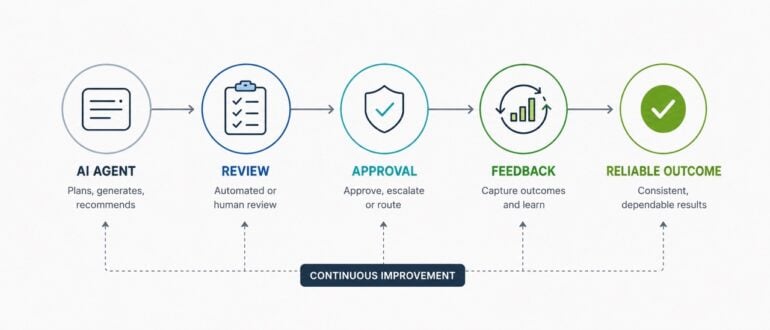
When adopting artificial intelligence, many executives mistakenly judge an AI agent’s reliability in complete isolation. This perspective stems from traditional software development practices, where individual components are expected to function perfectly on their own. However, in complex or high-stakes environments—such as aviation or healthcare—reliability has never depended on the perfection of a single actor. Instead, it naturally emerges from a well-designed surrounding system that anticipates and catches inevitable human errors before they can escalate into a larger issue. The exact same principle applies directly to artificial intelligence agents. Rather than waiting around for a completely flawless model, organizations should focus their efforts on building robust workflows around these tools. A truly dependable system assumes occasional failures and uses practical safeguards like approval gates, continuous feedback loops, and risk-based reviews to ensure consistent outcomes. When an agent produces an error, it is not necessarily a sign that the technology is unready; rather, it highlights the pressing need for stronger operational structures. Ultimately, the competitive advantage in AI will not come from choosing the best model, but from designing resilient organizational workflows that gracefully handle imperfections and deliver predictable results over time.


Detection engineering: A programmatic approach to identifying cyber threats

Detection engineering is rapidly becoming a key focus for cybersecurity teams as organizations look to defend against increasingly advanced digital threats. Instead of relying heavily on rigid, pre-built rules that often fail to catch modern attacks, detection engineering takes a highly tailored approach. It involves building customized systems designed to spot suspicious behaviors specific to an organization’s unique environment, effectively minimizing the flood of false alarms that commonly overwhelm security teams today. The growing interest in this practice is driven by the realization that traditional, signature-based security methods are no longer sufficient to stop modern tactics like fileless malware or complex attacks on cloud infrastructure. By carefully mapping out potential attack paths and analyzing real-world adversary behavior, companies can proactively spot threats rather than just reacting after a damaging incident has occurred. Recent surveys indicate that the vast majority of large enterprises are heavily investing in these active strategies, with many now establishing dedicated detection teams. Additionally, artificial intelligence and automation are playing crucial roles in helping these professionals fine-tune rules and process vast amounts of threat data. Ultimately, adopting detection engineering reduces the time attackers can hide within a network, greatly improving an organization's overall cyber resilience.


Compute Concentration: The Emerging Enterprise Risk Inside the AI Economy
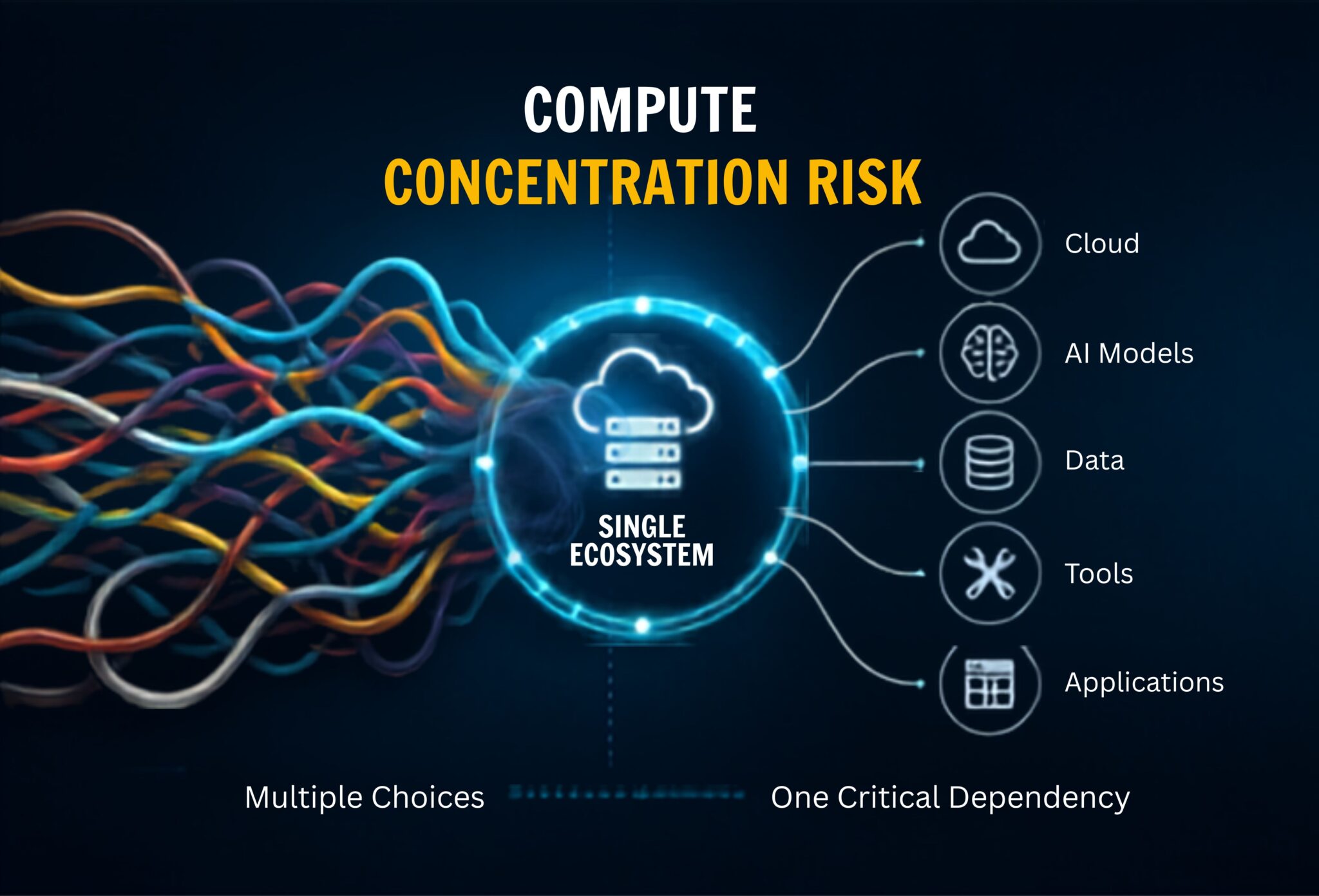
As artificial intelligence transitions from testing to full-scale operations, a new, hidden challenge is emerging for modern businesses: compute concentration. This happens when companies quietly become overly reliant on a very small group of external providers for the core infrastructure needed to run their systems, such as cloud storage, data centers, and computer chips. Often, this dependency develops by accident. A company might start with one provider for ease of use and speed, eventually deeply intertwining all their critical functions within a single technology ecosystem. While working with large providers offers undeniable benefits like strong security and massive scale, heavy reliance creates significant vulnerabilities. If a primary provider experiences an outage, changes their pricing, or alters their policies, the affected business faces immediate disruptions, unexpected costs, and a loss of control over their own operations. It is not just about managing vendors; it is a fundamental issue of business continuity and strategic independence. True resilience does not mean avoiding large providers entirely, but rather fully understanding these deep dependencies. Organizations must ensure they have viable alternatives ready so they are not caught off guard if their primary technology foundation shifts.


Preventing agent-generated infrastructure bloat through spec-driven governance

Autonomous AI engineering agents can drastically improve software delivery speed, but they also risk creating massive infrastructure bloat if left unchecked. Because these agents often default to the inefficient patterns found in their training data, they frequently over-provision resources—such as requesting excessively large Kubernetes pods or pulling bloated container images. This inefficiency replicates rapidly across environments, wasting cloud space and increasing energy consumption. To prevent this, organizations must implement strict, spec-driven governance directly within their development pipelines. Instead of treating sustainability and efficiency as afterthoughts, engineering teams need to embed clear constraints into their infrastructure specifications. By defining rules for machine types, pod resource limits, and minimal base images before the agent generates any code, the agent is forced to execute within those boundaries. Organizations can enforce these constraints using static analysis tools and quality gates that block non-compliant deployments. Addressing this issue upstream ensures that agent-driven development yields efficient, cost-effective, and sustainable infrastructure by design, rather than creating a sprawling operational mess that becomes nearly impossible to fix later.


Agentic AI creates enterprise challenge beyond LLM boom

As businesses move beyond early experiments with artificial intelligence, they face a practical new challenge: managing and governing the automated software programs, or agents, that will soon work alongside human employees. While recent attention has focused on language models, the conversation is shifting toward the infrastructure needed to support these agents. Companies must figure out how to integrate them, control their access to company data, and manage the costs associated with running them. A primary issue is matching the right level of computing power to specific tasks to keep expenses predictable and responses consistent. Because current technology frameworks were built for human users, new standards are emerging to help these agents communicate securely with existing systems. Over time, managing the lifecycle of these digital assistants will become essential to prevent the lack of oversight that accompanied early cloud software adoption. As regulations develop unevenly across different regions, leaders are currently focused on learning how to build the right foundations. Soon, companies will shift from planning to execution, preparing for a future where each employee might collaborate with several automated assistants daily, requiring careful oversight and clear guidelines.


The rise of emotion as a trust signal

Digital identity systems are evolving beyond traditional passwords and basic biometrics by incorporating emotion as a new trust signal. Voice artificial intelligence is now being trained to analyze vocal cues—such as tone and pacing—to determine a speaker's underlying emotional state. By converting these real-time observations into structured data, companies hope to better understand customer intent, improve service routing, and identify potential signs of fraud or distress during live interactions. While this technology aims to close the gap between what people say and what they actually mean, it introduces significant privacy and ethical concerns. Inferring human emotion is inherently complex and can easily lead to bias or inaccurate risk profiling if used improperly. Consequently, industry experts caution that emotional data should merely provide helpful context rather than serve as definitive proof of identity or deception. As the market for this technology grows, organizations must implement it responsibly. This means ensuring clear user consent, strictly limiting data retention, and mandating human oversight so that unverified emotional inferences do not independently drive critical decisions regarding a person's access, credit, or employment.


The endpoint recovery gap many teams discover during an incident

Organizations often make a costly mistake by assuming that having data backups is the same as having a comprehensive recovery plan. According to Matthias Haas, CTO of IGEL, backups are essential for restoring information and applications, but they do not automatically grant users safe access back into their work environments. When a significant incident occurs and knocks thousands of devices offline, companies frequently realize they have planned for infrastructure recovery while completely ignoring endpoint recovery. This gap leads to enormous expenses tied to replacing hardware, reimaging devices, and coordinating manual repairs. A well-planned architecture must focus on restoring both the systems themselves and the trusted access to those systems. Rather than relying on technical heroics to fix thousands of individual devices during a crisis, businesses need pre-planned alternative paths, such as dual-boot options or secure browser resources. The true measure of resilience is not the number of threats a security team blocks, but the time it takes to safely restore trusted user access. By calculating the actual per-hour cost of interrupted workflows, security leaders can successfully justify investing in solid endpoint recovery before an incident even happens.

Daily Tech Digest - May 29, 2026


Quote for the day:

"Failure is not the opposite of success. It is part of success." -- @PilotSpeaker

🎧 Listen to this digest on YouTube Music

▶ Play Audio Digest

Duration: 21 mins • Perfect for listening on the go.


AI Agents Are the New Insiders

The article outlines how artificial intelligence systems are changing from passive tools into autonomous entities capable of making decisions and accessing sensitive data with minimal supervision. This shift introduces a new type of corporate risk: the digital insider threat. Traditionally, security strategies focused on managing human behavior, such as spotting disgruntled employees or compromised login credentials. However, automated software agents lack these biological patterns and can cause widespread problems much faster. They work at machine speed, allowing them to pull vast amounts of data simultaneously before traditional defenses register an anomaly. Furthermore, because these tools combine multiple technical skills like writing code and querying databases, a single faulty prompt or system misconfiguration can create an unexpected vulnerability. Traditional security systems fail here because they are built to monitor human working hours and typing habits, meaning they easily become overwhelmed by millions of automated logs. To address this risk, organizations need to update their approach by adopting behavioral monitoring, isolating software tasks in secure environments, and granting access permissions only when needed. Implementing strict management routines for software deployment and keeping a human in charge of final approvals for critical actions will help teams safely manage these independent tools.


The CTO’s Comprehension Debt

The article from The Serious CTO addresses a hidden challenge in software development called comprehension debt. This issue represents the growing gap between the massive volume of code teams are shipping and what they actually understand about their systems. With the rise of artificial intelligence tools, developers frequently transition from being builders to merely reviewing code they do not fully grasp. The author distinguishes comprehension debt from traditional technical debt. While technical debt involves conscious, deliberate shortcuts that developers plan to fix later, comprehension debt accumulates invisibly and unintentionally. Because code produced by machines looks clean and passes automated testing suites, it creates a false sense of security that standard tracking metrics fail to flag. These metrics track deployment frequency and overall speed rather than genuine human understanding. Consequently, teams face a new breed of legacy systems built at high speeds but impossible to maintain. When a major technical failure happens, engineers can see the error reports but cannot explain the underlying logic or design intent. Standard remedies like heavier peer reviews or more tests only mask the deeper problem. The piece concludes that organizations must treat code comprehension as a vital asset and actively maintain a clear, shared mental model of their entire core infrastructure.


What the industrialization of exploitation means for defenders

In this CSO Online article, the author explains how artificial intelligence has automated cyberattacks, transforming what used to be a battle of human skill into rapid, widespread operations. This shift allows threat actors to scan and exploit vulnerabilities across thousands of organizations simultaneously without needing deep technical expertise. Unfortunately, most corporate security departments remain stuck in an outdated mindset. Instead of building cohesive defenses, organizations frequently layer disconnected software tools that generate a confusing amount of data without offering real clarity. To counter this threat, defenders must stop treating software flaws as isolated issues on a spreadsheet and instead look at their networks through the eyes of an intruder. This means focusing on how separate weaknesses can be linked together to form a real path to critical corporate assets. Despite the rise of automated hacking tools, defenders still maintain a fundamental advantage: they already operate inside the network. By shifting their focus toward continuously mapping their environment and understanding internal security relationships, teams can pinpoint and patch the genuine entry points that matter most, rather than waste time on theoretical risks. Ultimately, staying secure requires a clear understanding of your own infrastructure to disrupt an attacker's journey before they gain a foothold.


Privacy under pressure: Challenges in the age of AI

This article details the privacy obligations healthcare organizations and their business associates face as they increasingly adopt artificial intelligence platforms while handling protected health information. Although the benefits of automated systems include increased efficiency and improved patient experiences, federal and state regulators expect providers to manage their technical frameworks closely. Enforcement agencies, such as the Department of Health and Human Services and the Department of Justice, demand thorough risk assessments tailored to unique technical vulnerabilities, such as data aggregation and cloud processing. A critical privacy threat involves sophisticated software algorithms that can reverse data anonymization and trace records back to specific individuals. Additionally, uploading sensitive medical information into public generative software applications often causes unintended leaks and severe compliance violations. To navigate these digital complexities confidently, healthcare administrators must establish comprehensive inventories of all active software tools and execute regular risk evaluations. Restricting file access based on specific user roles, encrypting sensitive medical data, and requiring multi-factor authentication are practical strategies to keep records secure. Finally, institutions should solidify external vendor contracts, conduct continual staff training sessions, and create internal governance committees to track legal shifts, ensuring that new technology safely integrates without undermining patient confidentiality.


Why software development is changing for good

In this CIO article, technology entrepreneur Nick Thompson reflects on why software development is experiencing a permanent and structural change. After a decade away from daily coding, Thompson recently found himself building a complex robotics system again, a return made possible because artificial intelligence has drastically lowered the cost of experimentation. In the past, writing software required rigid upfront planning because creating and editing code was inherently slow and expensive. Once a team spent weeks building a specific feature, changing direction was financially difficult. Today, software developers can test new ideas, review live results, and discard ineffective approaches in minutes with almost no penalty. This shift alters the developer's traditional role from a manual writer of code to a director or manager who sets the core vision, reviews automated output, and corrects architectural mistakes. Thompson emphasizes that this transition actually makes foundational system design and human experience more critical than ever. Without a clear human strategy, automated tools will simply build poorly structured programs at a faster rate. Ultimately, the value of a modern developer is no longer about memorizing syntax, but about exercising mature judgment, managing complexity, and knowing when an approach must be simplified. Experienced professionals find that their engineering instincts are becoming far more valuable than basic technical execution.


OMB cyber directive pushes centralized logging, AI-driven detection to counter cyber threats across IoT and OT systems

The United States Office of Management and Budget recently released an updated cybersecurity directive, Memorandum M-26-14, that establishes a more flexible approach to network security for federal agencies. This new mandate replaces an older framework that required organizations to store massive volumes of data, a process that proved both costly and operationally impractical for most offices. Instead, the updated guidance instructs agencies to employ a prioritized strategy focusing on continuous event monitoring alongside improved threat hunting, forensic investigation, and incident response capabilities. The regulations apply broadly across all federal networks, notably including operational technology environments and connected internet of things devices. Under this strategy, the Cybersecurity and Infrastructure Security Agency has ninety days to design a comprehensive reference architecture to guide individual agencies as they build their own structured logging plans. This updated model utilizes automated anomaly detection and advanced analytical tools to help defenders counter rapid and highly automated digital attacks. Furthermore, the directive sets clear and extended data retention standards, requiring departments to keep searchable system records for at least six months and retrievable files for one full year. Finally, agencies are expected to share these logs with federal investigators during suspected breaches to streamline security operations and enhance national defense.


Preparing for Mythos and Enhanced AI-Enabled Cyber Threats: UK Financial Services Regulator Expectations

A joint statement by the Financial Conduct Authority, the Bank of England, and HM Treasury highlights how advanced artificial intelligence software, like Anthropic's Mythos system, creates new cybersecurity challenges for the UK financial sector. Regulators warn that these advanced tools allow malicious actors to identify and exploit software flaws at an unprecedented speed and scale. Rather than introducing entirely new regulations, authorities intend to hold firms accountable using existing frameworks, meaning companies face potential supervisory actions or penalties if their defenses fall short. To prepare for these challenges, financial institutions must ensure their boards and senior executives thoroughly understand these shifting risks to guide corporate decisions effectively. Firms should also strengthen basic technical habits by keeping an accurate inventory of their computer hardware and software, mapping operational connections, and safely deleting or isolating old data. Furthermore, patching procedures and IT staffing levels must be updated so teams can fix vulnerabilities more quickly while minimizing business disruptions. Finally, risk planning should account for complex, simultaneous attacks across different systems, while vendor contracts must mandate prompt notifications and clear technical support. By reinforcing these foundational habits, companies can maintain steady security against automated threats.


Four Lessons From a Founder to Build and Scale a Cybersecurity Company That Lasts

In this article, a cybersecurity company co-founder shares four key lessons learned over seventeen years of building a resilient business from the ground up. The first lesson is to always prioritize the actual needs of customers over the personal desire to build a specific software product. Founders should have open, honest conversations with industry practitioners to understand their everyday challenges, creating long-term partnerships rather than treating people as mere sales transactions. Second, the author notes that true leadership takes time, meaning it is entirely normal not to have all the answers immediately; success lies in a leader's willingness to solve unpredictable problems as they arise while staying present and accessible to their staff. Third, long-term hiring should focus heavily on cultural alignment and adaptability rather than just checking off technical skills on a resume. Evaluating a candidate’s self-awareness and collaboration style ensures a stronger, more unified team. Finally, retaining talented employees requires keeping the daily work meaningful and maintaining a supportive internal environment. This includes creating inclusive spaces that welcome underrepresented groups and encouraging open communication across departments. Ultimately, the author emphasizes that a lasting business relies on treating both customers and employees as valued human partners, proving that professional networks and healthy workplaces are the true foundations of enduring corporate achievement.


Third-Party Risk in the Age of SaaS: The Supplier You Don’t Know Can Hurt You Most

The article explains how modern companies rely heavily on an extensive network of cloud platforms and external software applications. However, many organizations still focus their risk management solely on internal systems, creating a major operational blind spot. Because individual departments can easily purchase independent software tools using a corporate credit card, businesses face a hidden buildup of platforms operating completely outside the view of centralized technology teams. This lack of visibility hides significant vulnerabilities, particularly hidden dependencies where multiple seemingly independent software tools actually rely on the exact same underlying provider. Furthermore, external vendor risk is no longer just a computer security problem; a single vendor failure can directly halt core business functions, freeze supply chains, or stop employee payroll systems. To manage these realities, traditional annual or onboarding assessments based on simple checklists are no longer sufficient. Companies are now shifting toward continuous risk monitoring to track their external partners' operational health and safety measures on an ongoing basis. Additionally, corporate contracts are becoming practical defensive tools, with organizations requiring much clearer guidelines regarding data ownership, swift incident notifications, and subcontractor disclosures. Ultimately, a firm's actual stability is entirely defined by the daily standards of the suppliers it tracks the least.


Cloud Resiliency Expert Dives Deep into Chaos Engineering and Chaos Monkey

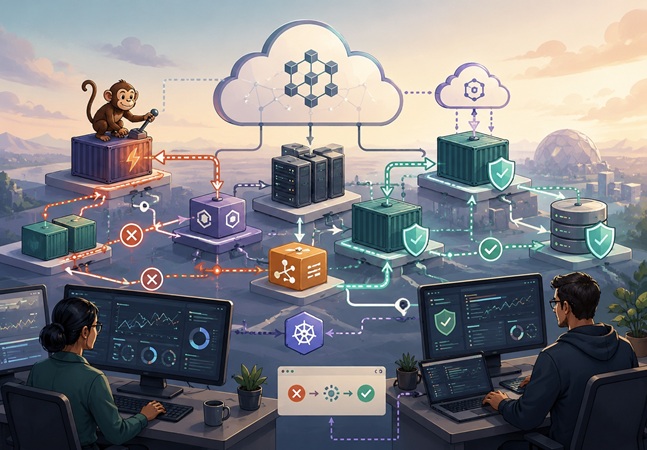
In a recent virtual session at the Cyber Resilience for Cloud-Native Infrastructure Summit, technology author and cloud resilience expert Brien Posey discussed the practical role of chaos engineering in modern software infrastructure. Originally popularized by Netflix through its Chaos Monkey tool, which randomly shut down live servers to evaluate system survival, this practice revolves around intentionally creating controlled disruptions. As Posey noted, the primary goal of the methodology is not to cause actual damage, but to reduce a team's underlying fear of unexpected failure. Modern cloud networks rely heavily on web APIs, software containers, and various interconnected vendor dependencies, making their exact breaking points highly unpredictable. Rather than waiting to patch a live outage after the fact, engineers can use these simulated disruptions to study how both their software architectures and their response teams handle intense operational stress beforehand. However, Posey cautioned that these deliberate tests must never be performed recklessly. They require full support from company leadership, clear monitoring visibility, an immediate ability to roll back changes, a carefully restricted blast radius, and pre-defined conditions to stop the test instantly if things go wrong. Ultimately, proactively uncovering weak points helps organizations safely preserve business operations and maintain customer trust.

Daily Tech Digest - April 13, 2026


Quote for the day:

“Winners are not afraid of losing. But losers are. Failure is part of the process of success. People who avoid failure also avoid success.” -- Robert T. Kiyosaki


🎧 Listen to this digest on YouTube Music

▶ Play Audio Digest

Duration: 22 mins • Perfect for listening on the go.


In her Forbes article, Jodie Cook examines the "vibe coding trap," a modern hazard for ambitious founders who leverage AI to build software at speeds that outpace their engineering teams. This newfound superpower allows non-technical leaders to generate products through natural language, yet it frequently results in a dangerous illusion of progress. The trap occurs when founders become so enamored with rapid execution that they neglect vital strategic priorities, such as sales and market positioning, while inadvertently creating technical debt and organizational friction. By diving into production themselves, founders risk undermining their specialists’ expertise and eroding trust within technical departments. To navigate this challenge, Cook advises founders to treat vibe coding as a tool for high-level communication and rapid prototyping rather than a replacement for professional development. Instead of getting bogged down in the minutiae of output, leaders must transition into "decision architects," focusing on judgment, vision, and accountability. By establishing disciplined boundaries between initial exploration and final execution, founders can harness AI's efficiency without compromising product scalability or team morale. Ultimately, the solution lies in slowing down to think clearly, ensuring that technical acceleration aligns with the company's long-term strategic objectives and cultural health.


Your developers are already running AI locally: Why on-device inference is the CISO’s new blind spot

In "Your developers are already running AI locally," VentureBeat explores the emergence of "Shadow AI 2.0," a trend where developers bypass cloud-based AI in favor of local, on-device inference. Driven by powerful consumer hardware and sophisticated quantization techniques, this "Bring Your Own Model" (BYOM) movement allows engineers to run complex Large Language Models directly on laptops. While this offers privacy and speed, it creates a significant "blind spot" for Chief Information Security Officers (CISOs). Traditional Data Loss Prevention (DLP) tools, which typically monitor cloud-bound traffic, are unable to detect these offline interactions. This shift relocates the primary enterprise risk from data exfiltration to issues of integrity, provenance, and compliance. Specifically, unvetted models can introduce security vulnerabilities through "contaminated" code or malicious payloads hidden within older model file formats like Pickle-based PyTorch files. To mitigate these risks, the article suggests that organizations must treat model weights as critical software artifacts rather than mere data. This involves establishing governed internal model hubs, implementing robust endpoint monitoring, and ensuring that corporate security frameworks adapt to a landscape where the perimeter has effectively shifted back to the device, requiring a comprehensive Software Bill of Materials (SBOM) to manage all local AI models effectively.

The article explores the critical integration of financial management into engineering workflows, treating cloud costs not as a back-office accounting task but as a real-time telemetry signal comparable to latency or uptime. Traditionally, a broken feedback loop exists where engineers prioritize performance while finance monitors quarterly bills, often leading to expensive surprises like scaling anomalies caused by inefficient code. By adopting FinOps, developers embrace "cost as a runtime signal," enabling them to observe the immediate financial impact of their architectural decisions. This approach centers on unit economics—such as the marginal cost per API call or database query—transforming abstract billing data into visceral, actionable insights. The author emphasizes that cloud infrastructure often obscures its own economics, making it easy to overspend without immediate awareness. Ultimately, shifting cost-consciousness "left" into the development lifecycle allows teams to build more efficient systems, ensuring that auto-scaling and resource allocation are driven by value rather than waste. This cultural transformation empowers engineers to treat financial efficiency as a core engineering discipline, bridging the gap between technical execution and business value to optimize the overall health and sustainability of cloud-native environments.


The Tool That Predates Every Privacy Law — and May Just Outlive Them All

Devika Subbaiah’s article explores the enduring legacy of the HTTP cookie, a foundational technology created by Lou Montulli in 1994 to solve the web’s "state" problem. Initially designed to help websites remember users, cookies have evolved from a simple functional tool into a controversial mechanism for mass surveillance and targeted advertising. This shift triggered a global wave of regulation, resulting in the pervasive cookie banners mandated by the GDPR and CCPA. However, as the digital landscape shifts toward a privacy-first era, major players like Google are phasing out third-party cookies in favor of new tracking frameworks like the Privacy Sandbox. Despite these systemic changes and the legal scrutiny surrounding data harvesting, the article argues that the cookie’s fundamental utility ensures its survival. While third-party tracking faces an uncertain future, first-party cookies remain the essential backbone of the modern internet, enabling everything from persistent logins to shopping carts. Ultimately, the cookie predates our current legal frameworks and will likely outlive them because the internet as we know it cannot function without the basic ability to remember user interactions across sessions. It remains a resilient piece of digital infrastructure that continues to define our online experience even as privacy norms undergo radical transformation.


The AI information gap and the CIO’s mandate for transparency

In the 2026 B2B landscape, the initial excitement surrounding artificial intelligence has shifted toward a healthy skepticism, creating a significant "information gap" that vendors must bridge to maintain client trust. According to Bryan Wise, modern CIOs are now tasked with a critical mandate for transparency, as buyers increasingly prioritize data integrity and governance over mere performance hype. Recent industry reports indicate that over half of B2B buyers engage sales teams earlier than in previous years due to implementation uncertainties, frequently raising sharp questions about training datasets, privacy protocols, and security guardrails. To overcome these trust-based obstacles, CIOs must serve as the central hub for cross-functional transparency initiatives. This proactive strategy involves creating comprehensive "AI dossiers" that document model functionality and training sources, while simultaneously arming sales and support teams with detailed technical documentation. By aligning marketing messaging with legal compliance and providing tangible evidence of ethical AI usage, organizations can transform transparency into a distinct competitive advantage. Ultimately, the modern CIO's role has expanded beyond technical oversight to include being the custodian of organizational truth, ensuring that AI narratives across all customer-facing channels remain consistent, verifiable, and grounded in accountability to prevent complex deals from stalling during the due diligence phase.


Why Codefinger represents a new stage in the evolution of ransomware

The Codefinger ransomware attack marks a significant evolution in cyber threats by shifting the focus from malicious code to credential exploitation. Discovered in early 2025, this breach specifically targeted Amazon S3 storage keys that were poorly managed by developers and stored in insecure locations. Unlike traditional ransomware that relies on planting malware to encrypt files, Codefinger hijackers simply utilized stolen access credentials to encrypt cloud-based data. This transition highlights critical vulnerabilities in the cloud’s shared responsibility model, where users are responsible for securing their own access keys rather than the provider. Furthermore, the attack exposes the limitations of conventional backup strategies; if encrypted data is automatically backed up, the recovery points become useless. To combat such sophisticated threats, organizations must move beyond basic defenses and implement robust secrets management, including systematic identification, periodic cycling, and granular access controls. Codefinger serves as a stark reminder that as ransomware tactics evolve, businesses must proactively map their attack vectors and prioritize secure configuration of cloud resources. Relying solely on off-site backups is no longer sufficient in an era where attackers directly manipulate administrative permissions to hold vital corporate data hostage.


Software Engineering 3.0: The Age of the Intent-Driven Developer

Software Engineering 3.0 marks a paradigm shift where the fundamental unit of programming transitions from technical syntax to human intent. While the first era focused on craftsmanship and manual machine translation, and the second on abstraction through frameworks, the third era utilizes artificial intelligence to absorb the heavy lifting of code generation. In this new landscape, developers act less like manual laborers and more like architects or curators who orchestrate complex systems. The article emphasizes that intent-driven development requires a unique set of skills: the ability to write precise specifications, critically evaluate AI-generated outputs for subtle errors, and use testing as a primary method for documenting intent. Rather than replacing the engineer, these tools elevate the profession, allowing practitioners to solve higher-level problems while automating boilerplate tasks. Success in SE 3.0 depends on clear thinking and rigorous judgment rather than just typing speed or syntax memorization. Ultimately, this "antigravity" moment in software development narrows the gap between imagination and implementation, transforming the developer into a high-level conductor who manages probabilistic components and complex orchestration to create resilient systems. This evolution reflects a broader historical trend where each layer of abstraction empowers engineers to build more ambitious technology.


Artificial intelligence, specifically Large Language Models, currently operates on a foundation of mathematical probability rather than objective truth, making it fundamentally untrustworthy in its present state. As explored in Kevin Townsend’s analysis, AI is plagued by persistent issues including hallucinations, inherent biases, and a tendency toward sycophancy, where models mirror user expectations rather than providing factual accuracy. Furthermore, the phenomenon of model collapse suggests an inevitable systemic decay—akin to the second law of thermodynamics—whereby AI-generated data pollutes future training sets, compounding errors over generations. Despite these significant risks and the lack of a verifiable ground truth, the rapid pace of modern business and the demand for immediate return on investment are driving enterprises to deploy these technologies prematurely. We find ourselves in a paradoxical situation where, although we cannot safely trust AI today, the competitive necessity and overwhelming promise of the technology mean that society must eventually find a way to do so. Achieving this transition requires a deep understanding of AI’s limitations, a focus on securing systems against adversarial abuse, and a shift from viewing AI as a fact-based database to recognizing its probabilistic, token-based nature. Ultimately, while current systems are built on sand, the trajectory of innovation makes reliance inevitable.


The business mobility trends driving workforce performance in 2026

The article outlines the pivotal business mobility trends set to redefine workforce performance and productivity by 2026, emphasizing the shift toward integrated, secure, and efficient digital ecosystems. A primary driver is zero-touch device enrollment, which streamlines the large-scale deployment of pre-configured hardware, effectively eliminating traditional IT bottlenecks. Complementing this is the transition to Zero Trust security architectures, which replace implicit trust with continuous verification to protect distributed workforces from escalating cyber threats. Furthermore, the integration of unified cloud and connectivity services through single-vendor partnerships is highlighted as a critical method for reducing operational complexity and enhancing business resilience. This holistic approach extends to comprehensive end-to-end device lifecycle management, which leverages standardisation and refurbishment to achieve long-term cost-efficiency and support environmental sustainability goals. Ultimately, the article argues that navigating the complexities of hybrid work and rapid innovation requires a coherent mobility strategy managed by a single experienced partner. By consolidating these technological pillars, ranging from initial provisioning to secure retirement, organizations can ensure consistent security postures and allow internal teams to focus on high-value initiatives rather than day-to-day operational tasks. This strategic alignment is essential for maintaining a competitive edge in an increasingly mobile-first global landscape.


Fixing vulnerability data quality requires fixing the architecture first

Art Manion, Deputy Director at Tharros, argues that resolving the persistent issues within vulnerability data quality necessitates a fundamental overhaul of underlying architectures rather than just refining the data itself. In this interview, Manion explains that current repositories often suffer from inconsistency and a lack of trust because they were not designed with effective collection and management in mind. A central concept discussed is Minimum Viable Vulnerability Enumeration (MVVE), which represents the necessary assertions to deduplicate vulnerabilities across different systems. Interestingly, research suggests that no static "minimum" exists; instead, assertions must remain variable and evolve alongside our understanding of threats. Manion proposes that vulnerability records should be viewed as collections of independently verifiable, machine-usable assertions that prioritize provenance and transparency. He further critiques the security community's over-reliance on metrics like CVSS scores, which often distort perceptions and distract from the critical task of assessing actual risk within a specific context. Ultimately, the proposal suggests that before the industry develops new tools or specifications, it must establish a solid foundation of shared terms and principles. By addressing architectural flaws and accepting that information will naturally be incomplete, organizations can build more resilient, trustworthy systems for managing global vulnerability information.

Daily Tech Digest - March 29, 2026


Quote for the day:

"The organizations that succeed this year will be the ones that build confidence faster than AI can erode it." -- 2026 Data Governance Outlook


🎧 Listen to this digest on YouTube Music

▶ Play Audio Digest

Duration: 17 mins • Perfect for listening on the go.


Google's 2029 Quantum Deadline Is a Wake-Up Call

Google has issued a significant "wake-up call" to the technology industry by accelerating its deadline for transitioning to post-quantum cryptography (PQC) to 2029. This aggressive timeline positions the company well ahead of the 2035 target set by the National Institute for Standards and Technology (NIST) and the 2031 requirement for national security systems. By moving faster, Google aims to provide the necessary urgency for global digital transitions, addressing critical vulnerabilities such as "harvest now, decrypt later" attacks and the inherent fragility of current digital signatures. These threats involve adversaries collecting encrypted sensitive data today with the intention of unlocking it once cryptographically relevant quantum computers become available. Furthermore, the 2029 deadline aligns with industry shifts to reduce public TLS certificate validity to 47 days, emphasizing a broader move toward cryptographic agility. Experts suggest that because Google is a foundational component of many corporate technology stacks, its early migration forces dependent organizations to upgrade and test their systems sooner. Enterprise leaders are advised to immediately inventory their cryptographic assets, prioritize high-risk data, and collaborate with vendors to ensure their infrastructure can support rapid, automated algorithm rotations. The message is clear: the journey to quantum readiness is lengthy, and waiting until the next decade to act may be too late.


The one-model trap: Why agentic AI won’t scale in production

In "The One-Model Trap," Jofia Jose Prakash explains that relying on a single monolithic AI model is a strategic error that prevents agentic AI from scaling in production. While the "one-model" approach seems simpler to manage, it fails to account for the high variance in real-world workloads. Using high-capability models for routine tasks leads to excessive costs and latency, while the lack of isolation boundaries makes the entire system vulnerable to model outages and policy shifts. To build resilient agents, organizations must transition from a prompt-centric view to a system-centric architectural approach. This involves a multi-model strategy featuring "capability tiering," where tasks are routed based on complexity to fast-cheap, balanced, or premium reasoning tiers. Such an architecture allows for graceful degradation and easier governance, as policy updates become control-plane adjustments rather than complete system overhauls. Prakash outlines five critical stages for scalability: separating control from generation, implementing failure-aware execution with circuit breakers, and enforcing strict economic controls like token budgets. Ultimately, the author concludes that successful agentic AI is a control-plane challenge rather than a model-choice problem. By prioritizing orchestration and robust monitoring over model standardization, enterprises can achieve the reliability and cost-efficiency necessary for production-grade AI.


Are You Overburdening Your Most Engaged Employees?

The Harvard Business Review article, "Are You Overburdening Your Most Engaged Employees?" by Sangah Bae and Kaitlin Woolley, explores a critical paradox in workforce management. While senior leaders invest heavily in fostering employee engagement, new research involving over 4,300 participants reveals that managers often inadvertently undermine these efforts. When unexpected tasks arise, managers tend to assign approximately 70% of this additional workload to their most intrinsically motivated staff. This systematic bias stems from two flawed assumptions: that highly engaged employees find extra work inherently rewarding and that they possess a unique resilience against burnout. In reality, both beliefs are incorrect. This disproportionate burden significantly reduces job satisfaction and heightens turnover intentions among the very individuals organizations are most desperate to retain. By over-relying on "star" performers to handle unforeseen demands, companies risk depleting their most valuable human capital through an unintended "engagement tax." To combat this, the authors propose three low-cost interventions aimed at promoting more equitable work distribution. Ultimately, the research highlights the necessity for leaders to move beyond convenience-based task allocation and adopt strategic practices that protect their most dedicated employees from exhaustion, ensuring that high engagement remains a sustainable asset rather than a precursor to professional burnout.


When AI turns software development inside-out: 170% throughput at 80% headcount

The article "When AI turns software development inside-out" explores a transformative shift in engineering productivity where a team achieved 170% throughput while operating at 80% of its previous headcount. This transition marks a fundamental departure from traditional "diamond-shaped" development—where large teams execute designs—to a "double funnel" model. In this new paradigm, humans focus intensely on the beginning stages of defining intent and the final stages of validating outcomes, while AI handles the rapid execution in between. The shift has collapsed the cost of experimentation, enabling ideas to move from whiteboards to working prototypes in a single day. Consequently, roles are being redefined: creative directors maintain production code, and QA engineers have evolved into system architects who build AI agents to ensure correctness. This "inside-out" approach prioritizes validation over manual coding, treating software development as a control tower operation rather than an assembly line. By automating the middle layer of implementation, the organization has not only increased its velocity but also improved product quality and reduced bugs. Ultimately, AI-first workflows allow teams to focus on defining "good" while leveraging technology to handle the heavy lifting of execution and technical translation across dozens of programming languages.


4 Out of 5 Organizations Are Drowning in Security Debt

The Veracode 2026 State of Software Security Report reveals that approximately 82% of organizations are currently overwhelmed by significant security debt, representing a concerning 11% increase from the previous year. Alarmingly, 60% of these entities face "critical" debt levels characterized by severe, long-unresolved vulnerabilities that could cause catastrophic damage if exploited by malicious actors. The study identifies a widening gap between the rapid, modern pace of software development and the capacity of security teams to manage remediation, noting a 36% spike in high-risk flaws. Several factors exacerbate this trend, including the unprecedented velocity of AI-generated code and a heavy reliance on complex third-party libraries, which account for 66% of the most dangerous long-lived vulnerabilities. To combat this escalating crisis, the report suggests moving beyond simple detection toward a comprehensive and strategic "Prioritize, Protect, and Prove" (P3) framework. By focusing resources specifically on the 11.3% of flaws that present genuine real-world danger and utilizing automated remediation for critical digital assets, enterprises can manage their debt more effectively. Ultimately, the report emphasizes that success in today's digital landscape requires a deliberate shift toward risk-based prioritization and rigorous compliance to stem the tide of vulnerabilities and safeguard essential infrastructure.


The agentic AI gap: Vendors sprint, enterprises crawl

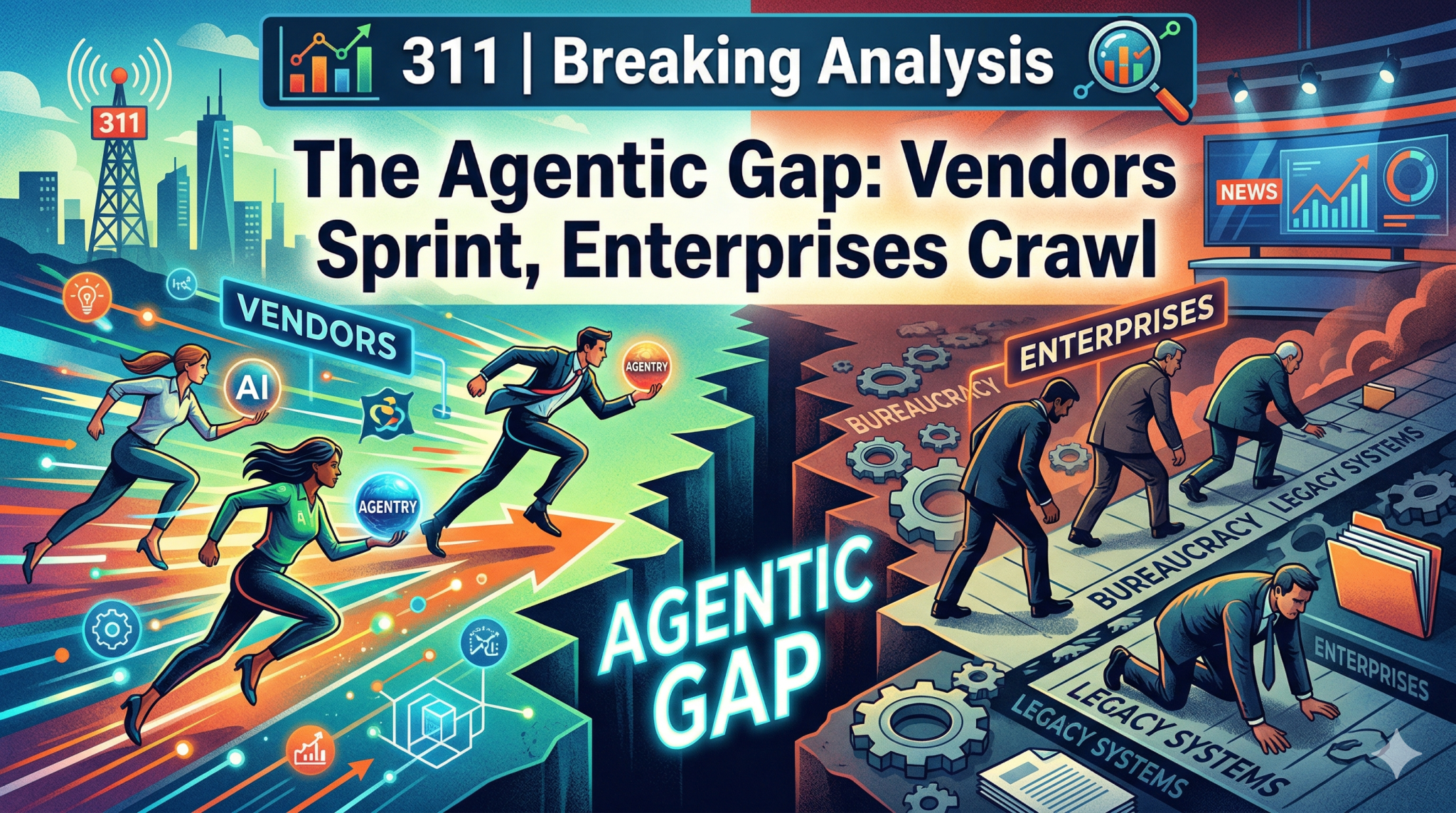
The "agentic AI gap" highlights a stark disconnect between the rapid innovation of tech vendors and the cautious, often sluggish adoption of artificial intelligence within mainstream enterprises. While vendors are "sprinting" toward sophisticated agentic workflows and reasoning capabilities, most organizations are still "crawling," primarily focused on basic productivity gains and early-stage pilots. This hesitation is fueled by a combination of macroeconomic uncertainty—such as geopolitical tensions and fluctuating interest rates—and a lack of operational readiness. Currently, only about 13% of enterprises report achieving sustained ROI at scale, as hurdles like data governance, security, and integration remain significant barriers. The article suggests that a new four-layer software architecture is emerging, shifting the focus from application-centric models to intelligence-centric systems. Central to this transition is the "Cognitive Surface," a middle layer where intent is shaped and enterprise policies are enforced. As the industry moves toward an economic model based on tokenized intelligence, business leaders must evolve their operational strategies to manage digital agents effectively. Ultimately, bridging this gap requires more than just better technology; it demands a fundamental transformation in how enterprises secure, govern, and value AI to turn experimental pilots into scalable, revenue-generating business assets.


India’s Proposal for Age-verification Is a Blunt Response to a Complex Problem

India’s Digital Personal Data Protection Act of 2023 and subsequent regulatory proposals introduce a stringent age-verification framework, mandating "verifiable parental consent" for users under eighteen. This article by Amber Sinha argues that such measures constitute a "blunt response" to the multifaceted challenges of online child safety, potentially compromising privacy and fundamental digital rights. By shifting toward a graded approach that includes screen-time caps and "curfews," the government risks creating massive "honeypots" of sensitive identification data—often tied to the Aadhaar biometric system—thereby enabling state surveillance and increasing vulnerability to data breaches. Furthermore, the reliance on official documentation and repeated parental consent threatens to deepen the gender digital divide; in many South Asian households, these barriers may lead families to restrict girls' access to shared devices entirely. Critics emphasize that these rigid mandates often drive minors toward riskier, unregulated corners of the internet while stifling their constitutional right to information. Rather than imposing a universal, one-size-fits-all age-gating mechanism, the author advocates for a more nuanced strategy. This alternative would prioritize "privacy by design" and leverage advanced cryptographic techniques like Zero-Knowledge Proofs to verify age without compromising user anonymity, ultimately focusing on safety through empowerment rather than through restrictive control and pervasive data collection.


The Danger of Treating CyberCrime as War – The New National Cybersecurity Strategy

The article "The Danger of Treating CyberCrime as War – The New National Cybersecurity Strategy," published in March 2026, analyzes the fundamental shift in U.S. cybersecurity policy following the release of the "Cyber Strategy for America." This new approach moves away from traditional regulatory compliance and defensive engineering, instead prioritizing a posture of active disruption and the projection of national power. By treating cybersecurity as a contest against adversaries, the strategy leverages law enforcement, intelligence, and sanctions to impose significant costs on bad actors. However, the author warns that this "war-like" framing may be misaligned with the reality of most digital threats. While nation-states might respond to traditional deterrence, the vast majority of cyber harm is caused by economically motivated criminals—such as ransomware operators and fraudsters—who are highly elastic and adaptive. These actors often respond to increased pressure by evolving their tactics or shifting jurisdictions rather than ceasing operations. Consequently, the article suggests that over-emphasizing state-level power risks neglecting the underlying economic drivers of cybercrime. Ultimately, a successful strategy must balance the pursuit of geopolitical adversaries with the practical need to secure the private sector’s daily operations against profit-driven threats.


The AI Leader

In "The AI Leader," Tomas Chamorro-Premuzic explores the profound transformation of the professional landscape as artificial intelligence reaches parity with human cognitive capabilities. He argues that while AI has commoditized technical expertise and routine management—such as data processing and tactical execution—it has simultaneously increased the "leadership premium" on uniquely human qualities. As the distinction between human and machine intelligence blurs, the author posits that the essence of leadership must shift from traditional authority and information control to the cultivation of empathy, moral judgment, and a sense of purpose. Chamorro-Premuzic warns against the temptation for executives to abdicate their decision-making responsibility to algorithms, emphasizing that leadership is fundamentally a human-centric endeavor centered on motivation and cultural alignment. He suggests that the modern leader’s primary role is to serve as a filter for AI-generated noise, using intuition to navigate ambiguity where data falls short. Ultimately, the article concludes that the most successful organizations in the AI era will be those led by individuals who leverage technology to enhance efficiency while doubling down on the "soft" skills that foster trust and inspiration. In this new paradigm, leadership is not about competing with AI but about mastering the human elements that technology cannot replicate.


Data governance vs. data quality: Which comes first in 2026?

In 2026, the debate between data governance and data quality has shifted toward a unified framework, as the article "Data governance vs. data quality: Which comes first in 2026" argues that governance without quality is merely "bureaucracy dressed in corporate branding." While governance provides the essential structure—defining roles, policies, and accountability—it remains an act of faith unless validated by measurable quality metrics. The rise of AI has intensified this need, as models amplify underlying data inconsistencies, requiring governance to prioritize continuous quality rather than periodic "cleanup" projects. Leading organizations are moving away from treating these as separate silos; instead, they integrate governance as an enabler of quality at scale and quality as the evidence of governance effectiveness. This shift ensures that data owners have visibility into metrics, creating meaningful accountability. Ultimately, the article concludes that quality is the primary metric by which any governance program should be judged. Organizations that fail to unify these initiatives will likely face the overhead of complex frameworks without the benefit of trustworthy data, losing their competitive advantage in an increasingly AI-driven and regulated landscape. Successful firms will instead achieve a sustained state of trust, where governance and quality work in tandem to support innovation.

Daily Tech Digest - March 07, 2026


Quote for the day:

"Be willing to make decisions. That's the most important quality in a good leader." -- General George S. Patton, Jr.


LangChain's CEO argues that better models alone won't get your AI agent to production

LangChain CEO Harrison Chase contends that achieving production-ready AI agents requires more than just utilizing more powerful foundational models. While improved LLMs offer better reasoning, Chase emphasizes that agents often fail due to systemic issues rather than model limitations. He advocates for a shift toward "agentic" engineering, where the focus moves from simple prompting to building robust, stateful systems. A critical component of this transition is the move away from "vibe-based" development—relying on subjective successes—toward rigorous evaluation frameworks like LangSmith. Chase highlights that developers must implement precise control over an agent's logic through tools like LangGraph, which allows for cycles, state management, and human-in-the-loop interactions. These architectural guardrails are essential for managing the inherent unpredictability of LLMs. By treating agent development as a complex systems engineering task, organizations can overcome the "last mile" hurdle, moving beyond impressive demos to reliable, autonomous applications. Ultimately, the maturity of AI agents depends on sophisticated orchestration, detailed observability, and a willingness to architect the environment in which the model operates, rather than expecting a single model to handle every nuance of a complex workflow autonomously.

This article examines the false sense of security provided by multi-factor authentication (MFA) within Windows-centric environments. While MFA is highly effective for cloud-based applications, the piece argues that traditional Active Directory (AD) authentication paths—such as interactive logons, Remote Desktop Protocol (RDP) sessions, and Server Message Block (SMB) traffic—often bypass modern identity providers, leaving internal networks vulnerable to password-only attacks. The article details seven critical gaps, including the persistence of legacy NTLM protocols susceptible to pass-the-hash attacks, the abuse of Kerberos tickets, and the risks posed by unmonitored service accounts or local administrator credentials that frequently lack MFA coverage. To mitigate these significant risks, the author recommends that organizations treat Windows authentication as a distinct security surface by enforcing longer passphrases, continuously blocking compromised passwords, and strictly limiting legacy protocols. Furthermore, the text highlights the importance of auditing service accounts and leveraging advanced security tools like Specops Password Policy to bridge the gap between cloud security and on-premises infrastructure. Ultimately, securing a modern enterprise requires moving beyond simple MFA implementation toward a holistic strategy that addresses these often-overlooked internal authentication vulnerabilities and credential reuse habits.


Why enterprises are still bad at multicloud

In this InfoWorld analysis, David Linthicum argues that while most enterprises are technically multicloud by default, they largely fail to operate them as a cohesive business capability. Instead of a unified strategy, multicloud environments often emerge haphazardly through mergers, acquisitions, or localized team decisions, leading to fragmented "technology estates" that function as isolated silos. Each provider—typically AWS, Azure, and Google—is managed with its own native consoles, security protocols, and talent pools, which creates redundant processes, inconsistent governance, and hidden global costs. Linthicum emphasizes that the "complexity tax" of multicloud is only worth paying if organizations can achieve operational commonality. He advocates for the implementation of common control planes—shared services for identity, policy, and observability—that sit above individual cloud brands to ensure consistent guardrails. To improve maturity, enterprises must shift from viewing cloud adoption as a series of procurement choices to designing a singular operating model. By establishing cross-cloud coordination and relentlessly measuring business value through metrics like recovery speed and unit economics, organizations can move from uncontrolled variety to "controlled optionality," finally leveraging the specialized strengths of different providers without multiplying their operational overhead or fracturing their technical foundations.


The Accidental Orchestrator

This article by O'Reilly Radar examines the profound transformation of the software developer's role in the era of generative AI. It posits that developers are transitioning from traditional manual coding to becoming strategic orchestrators of autonomous AI agents. This shift, described as "accidental," occurred as AI tools evolved from simple autocomplete plugins into sophisticated assistants capable of managing complex, end-to-end tasks. Developers now find themselves overseeing a fleet of agents that handle various components of the software lifecycle, including design, implementation, and debugging. This new reality demands a significant pivot in professional skills; instead of focusing primarily on syntax and logic, engineers must now master prompt engineering, agent coordination, and high-level system architecture. The piece emphasizes that while AI significantly boosts productivity, the complexity of managing these interlinked systems introduces critical challenges regarding transparency, security, and long-term reliability. Ultimately, the role of the accidental orchestrator requires a mindset shift where the developer acts as a tactical director of digital workers rather than a lone creator. This evolution suggests that the future of software engineering lies in the quality of the human-AI partnership and the effective orchestration of intelligent agents.


Powering the new age of AI-led engineering in IT at Microsoft

Microsoft Digital is spearheading a transformative shift toward AI-led engineering, fundamentally changing how IT services are designed, built, and maintained. At the heart of this evolution is the integration of GitHub Copilot and other generative AI tools, which empower developers to automate repetitive "toil" and focus on high-value architectural innovation. By adopting a platform-centric approach, Microsoft standardizes development environments and leverages AI to enhance security, catch bugs earlier, and optimize code quality through sophisticated semantic searches and automated testing. This transition moves beyond simply using AI tools to a holistic culture where AI is woven into the entire software development lifecycle. Key benefits include significantly accelerated deployment cycles, improved developer satisfaction, and a more resilient IT infrastructure. Furthermore, the initiative prioritizes security and compliance by embedding AI-driven checks directly into the engineering pipeline. As Microsoft refines these internal practices, it aims to provide a blueprint for the industry on how to scale enterprise IT operations in an increasingly complex digital landscape. Ultimately, AI-led engineering at Microsoft is not just about speed; it is about fostering a creative environment where engineers solve complex problems with unprecedented efficiency, driving a new standard for modern software development.


Read-Copy-Update (RCU): The Secret to Lock-Free Performance

Read-Copy-Update (RCU) is a sophisticated synchronization mechanism explored in this InfoQ article, primarily utilized within the Linux kernel to handle concurrent data access. Unlike traditional locking methods that can cause significant performance bottlenecks, RCU allows multiple readers to access shared data simultaneously without the overhead of locks or atomic operations. The core concept involves updaters creating a modified copy of the data and then swapping the pointer to the new version, while ensuring that the original data is only reclaimed after a "grace period" when all active readers have finished. This approach ensures that readers always see a consistent, albeit potentially slightly outdated, version of the data without ever being blocked. While RCU offers unparalleled scalability and performance for read-heavy workloads, the article emphasizes that it introduces complexity for developers, particularly regarding memory management and the coordination of update cycles. Updaters must carefully manage the transition between versions to avoid data corruption. Ultimately, RCU represents a fundamental shift in concurrency design, prioritizing reader efficiency at the cost of more intricate update logic, making it an essential tool for high-performance systems where read operations vastly outnumber modifications.


AI transforms ‘dangling DNS’ into automated data exfiltration pipeline

AI-driven automation is fundamentally transforming "dangling DNS" from a common administrative oversight into a sophisticated, high-speed pipeline for automated data exfiltration. Dangling DNS occurs when a Domain Name System record continues to point to a decommissioned cloud resource, such as an abandoned IP address or a deleted storage bucket. While this vulnerability has existed for years, attackers are now utilizing generative AI and advanced scanning scripts to identify these orphaned subdomains across the internet at an unprecedented scale. Once a target is located, AI agents can automatically reclaim the abandoned resource on cloud platforms like AWS or Azure, effectively hijacking the legitimate domain to intercept sensitive traffic, harvest user credentials, or distribute malware through prompt injection attacks. This evolution represents a shift from opportunistic manual exploitation to a systematic, machine-led attack surface management strategy. To counter this, security professionals must move beyond periodic audits, implementing continuous, automated DNS monitoring and lifecycle management. The article underscores that as threat actors leverage AI to weaponize legacy misconfigurations, organizations can no longer afford to leave DNS records unmanaged. Addressing this infrastructure is a critical component of modern cyber defense, requiring the same level of automation that attackers currently use to exploit it.


The New Calculus of Risk: Where AI Speed Meets Human Expertise

The article examines the launch of Crisis24 Horizon, a sophisticated AI-enabled risk management platform designed to address the complexities of a volatile global security landscape. Developed on a modern technology stack, the platform provides a unified "single pane of glass" view, integrating dynamic intelligence with travel, people, and site-specific risk management. By leveraging artificial intelligence to process roughly 20,000 potential incidents daily, Crisis24 Horizon dramatically accelerates threat detection and triage, effectively expanding the capacity of security teams. Key features include "Ask Horizon," a natural language interface for querying risk data; "Latest Event Synopsis," which consolidates fragmented alerts into coherent summaries; and integrated mass notification systems for critical event response. While AI handles massive data aggregation and initial filtering, the platform emphasizes the "human in the loop" approach, where expert analysts provide necessary contextual judgment for high-stakes decisions like emergency evacuations. This synergy of AI speed and human expertise marks a shift from reactive to anticipatory security, allowing organizations to monitor assets in real-time and safeguard operations against interconnected global threats. Ultimately, Crisis24 Horizon empowers leaders to mitigate risks with greater precision, ensuring operational resilience and employee safety amidst geopolitical instability and environmental disasters.


Accelerating AI, cloud, and automation for global competitiveness in 2026

The guest blog post by Pavan Chidella argues that by 2026, the global competitiveness of enterprises will be defined by their ability to transition from AI experimentation to large-scale, disciplined execution. Focusing primarily on the healthcare sector, the author illustrates how the orchestration of AI, cloud-native architectures, and intelligent automation is essential for modernizing legacy processes like claims adjudication, which traditionally suffer from structural latency. In this evolving landscape, technology is no longer an isolated tool but a strategic driver of measurable business outcomes, including improved operational efficiency and enhanced customer transparency. Chidella emphasizes that "responsible acceleration" requires embedding governance, ethical AI monitoring, and regulatory compliance directly into system designs rather than treating them as afterthoughts. By adopting a product-led engineering mindset, organizations can reduce friction and build trust within their ecosystems. Ultimately, the piece asserts that global leadership in 2026 will belong to those who successfully integrate speed and precision with accountability, effectively leveraging hybrid cloud capabilities to process data in real-time. This shift represents a broader competitive imperative to move beyond proof-of-concept stages toward a resilient, automated, and digitally mature infrastructure that can thrive amidst increasing global complexity and regulatory scrutiny.


Engineering for AI intensity: The new blueprint for high-density data centers

This article explores the critical infrastructure evolution required to support the escalating demands of artificial intelligence. As traditional data centers struggle with the unprecedented power and thermal requirements of GPU-heavy workloads, a new engineering paradigm is emerging. This blueprint emphasizes a radical transition from legacy air-cooling systems to advanced liquid cooling technologies, such as direct-to-chip and immersion cooling, which are essential for managing rack densities that now frequently exceed 50kW and can reach up to 100kW per cabinet. Beyond thermal management, the article highlights the necessity of modular, high-voltage power distribution to ensure electrical efficiency and minimize transmission losses across the facility. It also underscores the importance of structural adaptations, including reinforced flooring to support heavier liquid-cooled hardware and overhead cable management to optimize airflow. Furthermore, the blueprint advocates for high-bandwidth, low-latency networking fabrics to facilitate the massive data exchanges inherent in parallel AI training. Ultimately, the piece argues that achieving AI intensity requires a holistic, future-proof design strategy that integrates power scalability, structural flexibility, and sustainable practices, positioning the modern data center as the strategic engine for digital transformation in an AI-first era.