Showing posts with label DevOps. Show all posts

Daily Tech Digest - July 21, 2026


Quote for the day:

“When something is important enough, you do it even if the odds are not in your favor.” -- Elon Musk

🎧 Listen to the audio debrief on YouTube

▶ Play Audio Digest

Duration: 24 mins • Perfect for listening on the go.


True tech sovereignty could be a bridge too far for Europe

Europe’s ambition to achieve true technological sovereignty and break free from United States providers will likely fall short due to deep, persistent dependencies. According to a recent Forrester report, European nations will make only marginal progress toward digital independence over the next five years. The continent relies heavily on major American cloud providers, who currently control sixty-five percent of the European market. Shifting away from these established platforms or abandoning decades of investment in vital software applications is not a simple switch; it requires a massive, disruptive overhaul that many organizations simply cannot execute. Furthermore, Europe lacks the necessary infrastructure and manufacturing capabilities to stand alone, currently designing a mere one percent of global computer chips. While there is a lot of hype surrounding tech sovereignty driven by geopolitical tensions and data privacy concerns, there are actually no new overarching regulations forcing companies to make this complicated transition. Despite localized efforts, such as the French government moving toward open-source operating systems or new European Union funding for local semiconductor manufacturing, the fundamental gaps remain too large to close quickly. Consequently, industry experts advise that European organizations should focus on managing their technological dependencies rather than attempting to avoid them entirely.


Software-Defined Cabins Transform How Drivers Interact With Vehicles Through Multimodal Systems

Modern vehicle interiors are rapidly shifting from traditional mechanical designs to highly intelligent, software-driven environments. Instead of relying solely on physical buttons and switches, modern car cabins now function like digital ecosystems that constantly learn and adapt to their occupants. This transformation depends on multimodal systems, which seamlessly combine voice, touch, and gesture controls to create a natural user experience. For instance, a vehicle might automatically switch from voice commands to touchscreen input if background noise levels rise too high. Ensuring these features work flawlessly together requires significant engineering efforts, such as advanced audio synchronization and transitioning to more powerful electrical systems. However, many automakers still struggle to deliver a truly intuitive experience, with recent studies showing that drivers frequently find new in-car technology confusing and distracting. Because software is increasingly viewed as the core identity of a vehicle, an enormous majority of consumers admit they would switch car brands simply to get a better digital interface. Ultimately, the most successful automakers will be those that provide simple, highly personalized technology that safely assists the driver without causing unnecessary frustration.


SOCs face a human challenge as AI speeds alerts and threats

Security operations centers are struggling with a severe human challenge as artificial intelligence dramatically speeds up both threat discovery and alert generation. For decades, many organizations have built up a massive backlog of ignored software vulnerabilities, essentially carrying a massive technological burden. Today, automated tools are suddenly exposing these hidden flaws at an unprecedented pace, burying security professionals under a relentless avalanche of automated alerts. Analysts must now spend excessive amounts of time meticulously verifying whether this incoming information represents a genuine threat or simply a frustrating false positive. This dynamic causes severe cognitive overload and rapidly escalates employee burnout. Successful, mature security teams handle this by acting like fire departments; they rely on carefully refined processes, well rehearsed drills, and clear procedures, allowing them to absorb the sudden surge without panicking. In stark contrast, unprepared and understaffed teams are collapsing under the intense pressure. The future of modern cybersecurity depends heavily on adapting how these teams are structured. Experts suggest organizations must move away from rigid, traditional hierarchies toward highly collaborative groups. By using artificial intelligence to automate repetitive manual tasks, companies can better support the human defenders who remain absolutely essential for evaluating the complex threats that machines uncover.


Post-quantum cryptography: are we sleepwalking into the next Y2K moment?

Many organizations treat the shift to post-quantum security as a distant concern, repeating the same delay tactics seen before the Y2K bug. However, the risk is already active. Attackers are currently stealing protected information with the intention of unlocking it once quantum computers become powerful enough to break standard encryption. This means any sensitive data with a long shelf life is vulnerable today. Moving to new security standards will be significantly harder than fixing older date codes because encryption is deeply embedded across modern software, hardware, and external services. Most companies do not even have a complete inventory of where they use these protective measures. With government deadlines for phasing out current encryption methods approaching by the end of the decade, the window for a smooth transition is closing. Major security migrations take years to execute properly. The most urgent step for any business is gaining clear visibility into their systems to understand exactly what information is protected and how it is secured. Instead of waiting for a sudden crisis, teams must begin mapping their infrastructure and planning their upgrades immediately. Treating this transition as an active governance issue rather than a future technology problem will prevent a rushed and costly panic.

Remediating Vulnerabilities With LLMs: Inside Ivanti's Automation Push

Software vendor Ivanti is successfully using artificial intelligence to identify and fix security vulnerabilities within its own products. After realizing the potential of newer language models, the company launched an internal project with two main goals: discovering security flaws that traditional scanning tools miss and automatically repairing known weaknesses. When scanning tools detect a potential issue, Ivanti uses artificial intelligence agents to pull the affected code, write a fix, verify the solution, and send it to human engineers for final review. Eventually, the company hopes to remove humans from this repair loop entirely. The results have been surprisingly effective, particularly in finding missing authentication checks that standard security tools often overlook. To manage the rising costs of these computing models, Ivanti carefully restricts their use to complex tasks rather than wasting resources on basic setup procedures. Despite these promising early results, the company notes that this technology does not immediately level the playing field against cybercriminals. Attackers can operate recklessly without worrying about safe implementation or computing costs. Furthermore, while artificial intelligence speeds up how fast software companies can issue fixes, internal technology teams still face the heavy burden of constantly installing those necessary updates across their own enterprise networks.

Explaining DevOps vs. DataOps

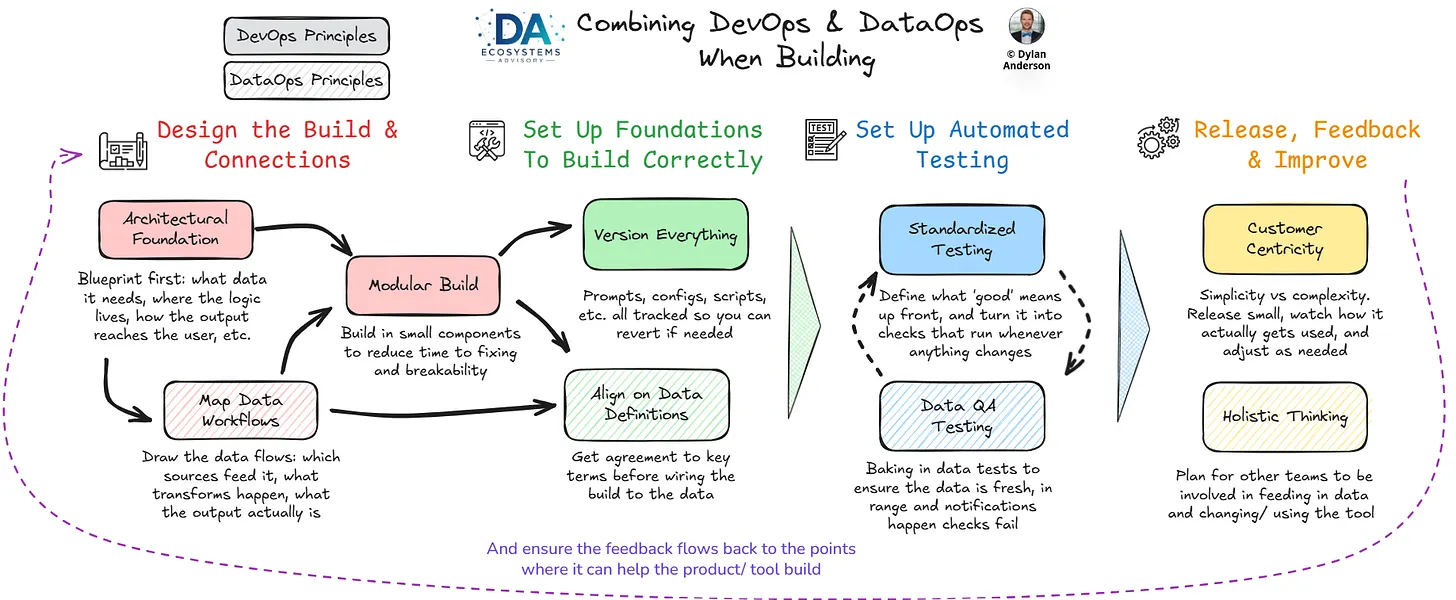
The concepts of Development Operations and Data Operations are essential disciplines for building and maintaining reliable technological systems, especially in the current era of artificial intelligence. Development Operations focuses on the smooth creation and stable release of software. Historically, software developers and operations teams had conflicting goals, with developers wanting to build fast and operations wanting stability. Development Operations unites these sides by emphasizing small, frequent updates, automated testing, clear code versioning, and shared responsibility for the final product. Data Operations applies similar rigorous principles to managing information, but it deals with unique challenges. Unlike software code, which remains static until changed by a person, data flows continuously, decays over time, and originates from sources outside a company's direct control. Because of these unpredictable factors, Data Operations requires constant monitoring, automated quality checks, and clear definitions to ensure the information remains accurate and trustworthy. Whether a team is building traditional software or experimenting with new artificial intelligence tools, combining these two frameworks is crucial. Development Operations ensures the software itself is built logically and can be updated safely, while Data Operations ensures the information flowing through that software remains reliable. Applying both prevents teams from building chaotic, unmaintainable systems.


What Enduring Leadership Looks Like in an Age of Disruption

The article reflects on how leaders can remain effective in a world where disruption is constant rather than occasional. It explains that traditional leadership models, built for predictable environments, no longer match today’s reality of rapid technological change, shifting workforce expectations, and global uncertainty. The author argues that enduring leadership begins with creating clarity even when answers are incomplete. People do not expect leaders to foresee every outcome, but they do expect steady communication and a sense of direction. Adaptability is presented as another essential trait, not as a sign of inconsistency but as evidence of maturity—leaders must be willing to question old assumptions and adjust their approach as conditions evolve. The piece also highlights the importance of emotional intelligence, noting that disruption affects people as much as systems. Leaders who understand this can reduce anxiety, strengthen engagement, and make better decisions. Investing in people is described as a practical necessity rather than a nice‑to‑have, since strong leadership pipelines help organizations absorb change more smoothly. Finally, the article emphasizes values as the anchor that sustains trust. When leaders act consistently and ethically, employees are more likely to support difficult decisions. Overall, enduring leadership is portrayed as a calm, principled way of guiding others through uncertainty without losing sight of purpose.


Finding the right balance between autonomy and scale

The article explores how CIOs can find a practical balance between giving business units autonomy and creating scale through centralization. It explains that both approaches have strengths and weaknesses: autonomy encourages speed and local ownership, while centralization supports efficiency, consistency, and shared learning. The challenge, the author notes, is that many organizations end up with a mix of both without a clear rationale, leading to duplicated systems, rising costs, and unnecessary complexity. Drawing on Paul Krebs’ experience at Koch Industries and Coca‑Cola, the piece describes centralization as a design choice rather than a rigid doctrine. Some capabilities—like infrastructure, cybersecurity, cloud management, and collaboration platforms—naturally benefit from scale and should remain centralized. Others, such as certain applications or data functions, can shift closer to the business as teams mature. The article stresses that standardization and centralization are not the same, and leaders can blend them to meet regional or business‑specific needs without creating one‑off solutions. It also argues that business architecture should guide technology decisions, especially in areas like ERP consolidation and M&A integration. Ultimately, the author encourages CIOs to revisit operating models regularly, recognizing that the right balance changes as capabilities grow and organizational needs evolve.


The EU’s AI transparency deadline is weeks away. Is your enterprise ready?

The article explains that the EU’s AI transparency rules are about to take effect, and companies have only a short time left to prepare. Beginning August 2, any organization offering AI systems in the EU must clearly tell users when they are interacting with AI, whether through chatbots, AI‑generated text, or deepfakes. The rules apply broadly, covering both EU and non‑EU companies if their systems are used in Europe. The Commission has issued guidelines and a voluntary code of practice to help organizations comply, though those who choose not to sign will face closer scrutiny. Content must carry machine‑readable markers and one of three labels—“AI,” “Fully AI‑generated,” or “Partially AI‑modified”—unless it is creative or satirical deepfake material. The article notes that compliance is not just about labeling but about building a durable transparency pipeline that can withstand audits. Companies must track responsibility for content, ensure marks survive real‑world editing, and maintain evidence for regulators. Contracts may need updating, and procurement processes must include requirements for marking and verification. The author stresses that sustained compliance requires ongoing testing, clear ownership, and a consistent baseline across jurisdictions, with local adjustments layered on top.


Platform Engineering for Everyone - Success Can’t Be Coded

The talk centers on why platform engineering succeeds only when treated as a product rather than an infrastructure project. Max Korbacher explains that many internal platforms fail because teams begin with tools or portals instead of a clear purpose, often installing something like Backstage only to discover it is empty and costly to configure: “You install it first… and it’s empty… you need five engineers and a couple of months” . He argues that infrastructure‑first thinking leads teams to focus on technology rather than the people who will use the platform, noting that engineers often avoid asking users what they actually need: “It’s not my nature to go out and ask people, what do you really want?” . Korbacher describes how organizational waves, hype cycles, and duplicated effort create patchwork systems that exhaust DevOps teams and push companies toward platform engineering as a more stable, product‑driven approach. Success, he says, requires principles, understanding user drivers, defining a clear purpose, and measuring outcomes with meaningful metrics. He stresses that adoption—not technical elegance—is the real indicator of value, and that platforms thrive only when they solve common problems, reduce waste, and make everyday work easier for developers, security teams, and even business stakeholders.

Daily Tech Digest - June 30, 2026


Quote for the day:

“Success does not consist in never making mistakes but in never making the same one a second time.” -- George Bernard Shaw

🎧 Listen to this digest on YouTube Music

▶ Play Audio Digest

Duration: 23 mins • Perfect for listening on the go.


When software developers and AI agents share the learning

When integrating AI agents into software development, organizations achieve the most value when they build systems that enable shared learning. Drawing inspiration from Shopify's successful "River" AI agent, the approach underscores the importance of having AI agents operate in public view, such as shared Slack channels, rather than in private developer environments. This visibility turns every interaction, success, or course correction into a searchable transcript that the entire engineering team can learn from. As developers observe and guide the agent, their hard-won solutions and domain-specific knowledge become accessible to others, essentially writing documentation through the act of working itself. While not every company needs to copy Shopify's exact infrastructure, the underlying principle is essential for modern teams: agentic workflows should be inspectable and reusable. Instead of merely aiming to make individual developers write code faster in isolated silos, enterprises should build workflows that transform private breakthroughs into collective team assets. Ultimately, the true potential of AI coding assistants is realized when they operate in the open, allowing the whole organization to tap into a growing repository of shared, compounding knowledge.


A Deeper Understanding of Fear and Its Impact on Data Quality

Many organizations mistakenly view data quality as just a technical issue, investing heavily in tools and platforms while overlooking the human element. A key reason data quality problems persist is fear. When workplace environments lack psychological safety, employees hesitate to report issues, challenge assumptions, or escalate concerns. Instead of openly discussing data flaws, they resort to workarounds, silence, or superficial compliance because they worry about blame, delaying projects, or facing negative consequences. The hesitation to speak up allows known problems to linger and grow into operational or regulatory risks. Fear in this context is a reaction to perceived threats or uncertainty, and it can be either productive or unproductive. Productive fear drives transparency and prevention, prompting teams to address risks head-on. Unproductive fear, however, suppresses communication and problem-solving, causing people to hide or ignore data issues. To genuinely improve data quality, organizations must go beyond technical solutions and address the behavioral conditions that foster fear. Building trust and creating an environment where employees feel safe to share difficult truths are essential steps in ensuring accurate and reliable data.


How to keep your IT talent pipeline from collapsing

The rise of artificial intelligence is creating a challenge for IT talent pipelines as companies increasingly replace entry-level roles with AI automation. While this may offer short-term cost savings, experts warn it could lead to a severe shortage of experienced senior staff in the future. Senior engineers develop crucial skills—like system scaling, troubleshooting, and architectural design—through hands-on experience and making mistakes, rather than just writing code. If early-career roles vanish, companies risk losing the very training grounds that produce future technology leaders. To prevent this pipeline collapse, organizations need to rethink how they hire and train junior talent. Instead of using AI to eliminate positions, IT leaders should pair early-career professionals with experienced mentors in structured development programs. These setups allow young developers to use AI as a tool to accelerate their output while senior mentors help them build critical judgment, systems thinking, and a deeper understanding of business context. By shifting from informal learning to intentional mentorship models, companies can balance the efficiency of AI with the practical experience required to cultivate the next generation of capable senior IT professionals.


Security in the Machine Age: Expert Insights on AI Threat Evolution

As artificial intelligence rapidly integrates into modern systems, security professionals must move beyond traditional methods that primarily protect data and deterministic software. To secure AI systems effectively, engineers need to understand probabilistic outcomes, adapting to new threats like prompt injection, data poisoning, and model drift. Today’s most destructive attacks occur where untrusted external data interacts with AI instructions, particularly in systems directly linked to enterprise tools and automation. When an AI agent processes manipulated information—such as a malicious document or prompt—it can be tricked into executing harmful actions while appearing completely legitimate. Defending against these vulnerabilities requires continuous behavioral validation rather than static rules, treating AI as unpredictable actors instead of trusted software components. Organizations must develop specialized observability tools, conduct rigorous adversarial testing, and foster strong collaboration between security and machine learning teams. While technical exploits are a serious concern, AI also dramatically lowers the barrier for sophisticated social engineering, enabling highly personalized, automated phishing and deepfake campaigns at scale. Ultimately, success in this new landscape depends on building resilient, visible systems rather than attempting to achieve perfect security, acknowledging that AI threats evolve continuously.


Cybersecurity That Actually Works In Real DevOps Teams

In the fast-paced world of software development, cybersecurity often becomes a messy afterthought rather than a built-in habit. However, treating security as an everyday operational practice rather than a compliance checklist can significantly reduce risks. A practical approach starts with simply knowing what you have. By taking a clear inventory of your systems, user access, and exposed data, you can understand where your real vulnerabilities lie and safely remove what you no longer need. Building security checks directly into your regular delivery process makes safe choices automatic for engineers, catching issues like exposed passwords or unsafe software packages before they go live. Managing passwords and sensitive information also requires discipline; they should be stored in dedicated systems with strictly limited, temporary access instead of being hidden in code or configuration files. Furthermore, because modern networks have blurry edges, identity has become your main line of defense. Enforcing multi-factor authentication and granting only the minimal permissions necessary are vital steps toward protecting environments. Finally, focus on meaningful monitoring rather than collecting endless server logs. By watching for specific unusual activities, teams can detect and respond to genuine problems quickly and calmly, without being overwhelmed by noise.


AI Literacy Is at the Core of Online Safety

As artificial intelligence becomes woven into daily life, online safety now requires much more than strong passwords and secure links; it demands true digital literacy. People must learn to identify modern deception, including synthetic reviews, cloned voices, and highly persuasive but false responses. This shift is especially challenging for older adults, who increasingly rely on these tools for learning but may lack the experience to spot confident yet incorrect answers. Similarly, the generation caught between caring for aging parents and teenagers faces mounting pressure to manage these evolving risks. Two of the most pressing threats today are manipulated online shopping experiences and voice scams that realistically mimic loved ones to create a false sense of panic. Because conversational search tools present answers as polished and certain, users often mistake confidence for credibility. The most effective defense is a steady, cautious mindset combined with solid verification habits. Whenever an automated tool makes specific claims or urges immediate action, users should pause and independently verify the information through a trusted external source, rather than relying on provided links. Ultimately, staying safe means pairing the convenience of modern technology with a healthy dose of skepticism.


Your phone numbers are an identity credential you don’t fully control

Phone numbers have quietly become a primary way we prove our identity online, serving as the default tool for logins, password resets, and security codes. However, relying on a phone number as an identity credential presents a serious security risk because you do not actually own it. Mobile network operators completely control your phone number and routinely recycle inactive numbers by issuing them to new customers. If you change your number and forget to update an old account, the next person assigned that number can easily intercept your text messages, giving them unauthorized access to your personal, financial, or social media accounts. Furthermore, phone numbers are highly vulnerable to targeted hijacking, such as SIM swapping, where attackers trick customer service representatives into transferring your number to their device. The core problem is that text-based verification methods only check the phone number, not the physical device or the person holding it. To properly secure online accounts, organizations must shift away from relying on easily intercepted text messages and instead adopt authentication methods that verify the physical hardware, ensuring that the person logging in is truly the rightful owner.


What You Bring to AI Determines the Result

The O'Reilly Radar article examines the reality that artificial intelligence is only as effective as the human expertise and context guiding it. Rather than acting as a standalone solution that automatically resolves complex challenges, AI functions primarily as an amplifier of the knowledge, data, and problem-framing skills supplied by the user. The author explains that professionals who achieve the most reliable results are those who already possess deep practical experience and know exactly what a high-quality outcome looks like. This foundational background allows them to provide precise context, formulate clear instructions, and critically evaluate the generated output for hidden errors. Without this necessary understanding, users risk accepting answers that appear plausible but are ultimately incorrect, which can lead to fragile or misguided systems. The piece emphasizes that working successfully with these tools requires a deliberate approach: conducting research beforehand, iterating carefully on the AI’s suggestions, and applying strict critical thinking. Ultimately, an AI system's success is not determined solely by its underlying model. It relies heavily on the quality of the input data and the operational rigor of the humans directing it, proving that human intuition remains essential.


Ransomware Resilience: What Happens When You Pay the Ransom?

When an organization chooses to pay a ransom after a cyberattack, the consequences are rarely as straightforward as simply regaining access to their systems. While paying might seem like the quickest path to restoring normal operations, it offers no guarantees. Attackers often provide faulty decryption tools, leaving companies unable to recover all their missing data. Furthermore, yielding to extortion demands makes an organization a prime target for future attacks. Criminals realize the company is willing to pay, and because the underlying security flaws often remain unresolved, repeat breaches are incredibly common. Even after the payment is made, businesses still face the expensive and time-consuming process of fully removing the malicious software from their networks to prevent reinfection. Additionally, many attackers now steal sensitive information before locking the systems, creating a secondary threat where they demand more money to prevent the data from being published online. Ultimately, relying on ransom payments is a flawed strategy. True resilience requires a shift away from hoping for a quick fix. Organizations must focus instead on practical preparation, such as maintaining secure, isolated data backups and practicing comprehensive recovery plans, ensuring they can restore their own operations independently without negotiating with criminals.


Executive Risk During High-Profile Events

High-profile global gatherings, such as the upcoming 2026 FIFA World Cup, create prime networking opportunities for corporate executives, but they also significantly amplify security risks. Because executives are highly visible during these major events, threat actors often use them to gather critical intelligence rather than launching immediate technical attacks like malware. Public travel patterns, social media updates, and appearances at VIP hospitality suites expand an executive’s digital footprint far beyond standard corporate security perimeters. Since traditional defenses like endpoint monitoring and corporate access controls cannot track public exposure or hospitality insiders, this dynamic creates a dangerous blind spot for protection teams. To mitigate these risks effectively, modern security strategies must prioritize threat intelligence and continuous monitoring over simple device-level defenses. Connecting digital profiles to real-world individuals allows security teams to understand who is orchestrating the surveillance and what their motives might be. By combining automated digital exposure assessments with specialized human investigations, organizations can identify and neutralize emerging threats before they escalate into physical incidents. This proactive approach ensures executives can safely participate in global events and maximize their business opportunities without compromising their personal or corporate security.

Daily Tech Digest - June 23, 2026


Quote for the day:

“Growth is painful. Change is painful. But nothing is as painful as staying stuck.” -- N.R. Narayana Murthy

🎧 Listen to this digest on YouTube Music

▶ Play Audio Digest

Duration: 23 mins • Perfect for listening on the go.


Your AI strategy may be training employees to stop thinking

Relying too heavily on artificial intelligence for routine writing and summarizing is quietly wearing away the critical thinking skills that businesses depend on. Researchers warn that as employees repeatedly use automated tools to generate content, the original context and factual accuracy of that information begin to break down. Over time, errors multiply, outputs become generic, and staff members lose trust in their own daily processes. Correcting these automated mistakes often demands so much human review that it completely wipes out any initial time savings. To protect the quality of their work, companies need to establish clear boundaries. Instead of allowing workers to use automated tools for broad tasks like writing generic reports or crafting standard job applications, managers should require structured, factual information that relies on genuine human experience. Using tailored internal data rather than generic public systems also helps keep facts straight. By pairing genuine human judgment with automated efficiency, businesses can use technology to organize actual human knowledge rather than replace the thinking process entirely. Setting these practical limits ensures that automated tools actually support staff rather than encouraging them to stop thinking altogether.


Loop Engineering

The recent O'Reilly Radar article by Jonas Steinberger and Addy Osmani introduces loop engineering, which marks a major shift in how developers interact with artificial intelligence. Rather than relying on traditional prompt engineering, where a human types instructions and waits for responses one step at a time, loop engineering focuses on building systems that correct themselves and operate independently. In this new model, the artificial intelligence is simply one part of a larger machine built to plan tasks, utilize tools, evaluate its own work, and fix mistakes without constant human oversight. Developers are no longer just conductors of single tasks; they become orchestrators who manage entire automated workflows. The authors explain that the core of this method is the surrounding code that enforces rules, budget limits, and safety checks to ensure the intelligence stays on track. By setting firm boundaries, such as a maximum number of steps or cost caps, developers prevent the system from getting trapped in endless errors. Finally, the authors caution against blindly trusting the system, warning that developers risk losing their understanding of how the code actually functions if they surrender too much control.


Why open infrastructure will define the AI era

Software engineers increasingly rely on paid artificial intelligence tools to assist with writing code, which introduces the risk of becoming trapped within the closed systems of a few large technology corporations. Building an entire strategy on proprietary platforms forces companies to accept the shifting rules, sudden policy changes, and rising prices of specific vendors, creating expensive and fragile technical dependencies. In response to these challenges, a growing movement toward open foundations is gaining momentum across the software industry, mirroring the historical development of the early internet and operating systems like Linux. By adopting publicly accessible models, shared communication standards, and neutral management tools, organizations retain the practical freedom to swap out individual parts as their needs change. This open approach prevents businesses from being locked into the network of a single provider and eliminates the need to rebuild systems completely whenever a vendor alters its direction. Connecting different layers of technology through universal agreements provides essential stability and flexibility. Ultimately, historical patterns in computing suggest that open systems succeed because they grant organizations lasting control and independence, ensuring they do not pay endless rent for basic operational tools.


The Hidden Engineering Challenge Behind Successful GenAI Deployment

While many organizations invest in generative artificial intelligence pilots, very few successfully transition these into scalable business operations. The primary hurdle is rarely the model itself, but rather the operational and systems engineering challenges required for safe, effective deployment. Pilots often fail because they rely on controlled datasets that do not easily translate to complex enterprise systems, leading to errors and risks. To overcome this, organizations must shift their focus from simply selecting the best model to building a resilient infrastructure. This involves adopting a comprehensive, multidimensional evaluation framework that measures performance at the component, task, and broader business outcome levels. Additionally, a robust foundation requires five essential layers: data, orchestration, training, observability, and security. Relying on flexible, open-source frameworks allows companies to adapt quickly and build reusable systems. Strategically, businesses should begin with human-assisted augmentation rather than full automation, ensuring strict safeguards and continuous human oversight. By fostering cross-functional collaboration among engineering, product, and subject matter experts, companies can align technical implementations with shared business goals. Ultimately, achieving sustainable value depends entirely on rigorous planning, structured implementation, and maintaining dependable operational guardrails rather than merely chasing the largest models.


6 security leader tips for mastering business risk

As cybersecurity increasingly dictates financial health, Chief Information Security Officers must expand their focus beyond technology to manage broader company risks. The article outlines six practical steps for security leaders making this transition. First, they should partner directly with colleagues in finance, legal, and operations to understand the company’s actual risk tolerance. Second, security strategies must support overarching business goals, ensuring that protective measures do not inadvertently hinder operations or harm employee satisfaction. Third, leaders need to build strong internal relationships through routine conversations to learn what genuinely worries their fellow executives. Fourth, crisis simulations should test real business dilemmas, such as whether to pay a ransom or when to disclose a breach, rather than stopping at technical fixes. Fifth, security chiefs should study the business itself by reading annual reports and earnings transcripts, or by pursuing formal corporate governance education. Finally, cyber risks must be quantified in actual financial figures and placed on the central enterprise risk register alongside legal and market threats. By speaking the language of revenue and probability rather than technical jargon, security professionals can secure the executive support necessary to protect the entire organization.


The Cost of ‘Good Enough’ SQL in a High-Volume Database Environment

In high-volume database environments, settling for "good enough" SQL queries can become surprisingly expensive. While a query might pass testing and return accurate results, minor inefficiencies like a suboptimal join or an unnecessary table scan are magnified exponentially in production. Because these queries are executed thousands or millions of times, small flaws accumulate into massive resource drains. This multiplier effect leads to increased CPU consumption, higher software licensing costs, and slower overall system performance. The problem often starts during development, where time pressures, overreliance on automated tools, and a lack of deep database expertise cause developers to prioritize immediate functionality over long-term efficiency. As data volumes grow and concurrency increases, what was once an acceptable access path can become a major bottleneck. To prevent these hidden taxes from dragging down the system, organizations must stop treating SQL performance as an afterthought. Instead, teams should adopt a continuous and intentional approach to database management. By thoroughly reviewing queries for actual efficiency, carefully designing indexes, and prioritizing performance just as highly as functionality, companies can ensure their database workloads remain stable, predictable, and cost-effective as they scale.


Scrum That Actually Works for DevOps Teams

Applying standard Scrum to infrastructure and operations teams often fails because rigid two week cycles ignore the daily reality of unexpected outages, urgent security patches, and routine support requests. Rather than abandoning the framework completely, teams can adapt it into a practical tool by stripping away strict rituals and keeping only what helps them coordinate and finish work. The first step is cleaning up the task backlog. Instead of a messy pile of vague technical chores, tasks should be written as clear outcomes that explain why the work matters, with only the next few weeks planned in detail. Next, teams must practice honest capacity planning. Because platform engineers routinely handle urgent interruptions, scheduling total uninterrupted project focus is unrealistic. By explicitly setting aside a time buffer for reactive support and maintenance based on past data, teams avoid the recurring frustration of missed targets. In addition, sprint goals should be broad enough to survive sudden disruptions. Finally, daily meetings should remain short and focused entirely on helping team members solve immediate problems, rather than serving as tedious status reports for management. These straightforward adjustments create a balanced workflow that accommodates daily chaos without unnecessary stress.


'Lack of support' as Australia lags behind on blockchain

Australia's digital investment sector is growing steadily, with rising interest in converting physical assets, such as mining resources, into digital shares to make them easier to manage and trade. However, the nation risks losing ground to international peers like Singapore due to prolonged regulatory delays and complicated government grant processes. Industry experts, including Black Tie CEO Caroline Macdonald, note that modern investors increasingly demand transparent, immediate control over their portfolios rather than relying strictly on traditional fund managers. While digital asset systems already contribute one percent of the national gross domestic product, widespread public adoption remains constrained by overly complex user interfaces. To overcome these practical barriers, companies are deploying hybrid platforms that pair standard, familiar website designs with secure underlying ledgers. Additionally, businesses are focusing on practical applications of artificial intelligence to educate clients rather than chasing temporary industry trends. Because the basic infrastructure has proven its stability, the primary challenge is no longer proving whether the systems actually function. Instead, the immediate focus has shifted toward securing clearer federal guidance, refining the daily user experience, and ensuring the country remains a competitive destination for international talent and investment capital.


From Block-Based Programming to Vibe Coding

The evolution of how we write software is moving toward higher levels of abstraction, shifting from visual methods to natural language commands. For years, visual systems that use interlocking shapes helped beginners learn the logic of software development without worrying about precise typing or grammar rules. These tools successfully opened the door for many people to understand foundational concepts like loops and conditionals. Now, the approach known as vibe coding takes this accessibility a step further by allowing users to describe what they want a program to do using ordinary text. Instead of dragging and dropping shapes, individuals can instruct artificial intelligence to draft the actual lines of code based on their plain language descriptions. This transition changes the developer's role from writing every detail to guiding and refining the output generated by the system. While this method lowers the barrier to entry and speeds up the creation process, it also introduces new responsibilities. Users must carefully review the generated results to ensure accuracy, security, and reliability. Ultimately, this progression reflects a broader trend of making software creation more intuitive, focusing more on the underlying purpose of the program rather than the mechanical steps required to build it.


The ICS Exploit Pipeline Is Built for Destruction, Not Theft

Industrial control systems face a severe mismatch between how companies measure risk and how attackers actually operate. Today, corporate risk models borrow heavily from traditional information technology, focusing on the financial fallout of stolen data records and regulatory fines. However, recent data reveals that the vulnerability pipeline for industrial hardware is overwhelmingly built to break physical infrastructure rather than steal from it. In fact, flaws that exclusively enable equipment destruction outnumbered pure data theft vulnerabilities five to one last year. When attackers target power grids, water plants, or factories, they rarely use complex, custom software to cause damage. Instead, they exploit basic network weaknesses, such as stolen passwords or bypassed login screens, to gain access to the control room. Once inside, they simply use the machinery’s native operating commands to trigger emergency shutdowns or override safety switches. Because traditional risk calculators were never designed to evaluate a ruined turbine or a halted assembly line, they systematically leave organizations exposed. To defend these environments effectively, companies must stop treating physical operations like standard data networks and begin evaluating their security based on actual machinery downtime, physical repair costs, and human safety.

Daily Tech Digest - June 04, 2026


Quote for the day:

"Success... seems to be connected with action. Successful people keep moving. They make mistakes, but they don't quit." -- Conrad Hilton

🎧 Listen to this digest on YouTube Music

▶ Play Audio Digest

Duration: 19 mins • Perfect for listening on the go.


Zero trust isn’t broken, but most companies are doing it wrong

Fifteen years after its introduction, the security approach known as zero trust remains widely misunderstood and difficult for many organizations to put into practice. While the core idea of always verifying access rather than relying on a traditional network perimeter is universally recognized as essential, the execution gap is significant. Studies show that a vast majority of companies struggle with implementation, often because they mistakenly treat zero trust as a product you can buy or a specific technology you can plug in. In reality, it is an ongoing strategy and a shift in mindset that requires breaking down internal barriers and fostering teamwork. Successful adoption does not have to be expensive or overwhelmingly complex. It begins with identifying your most critical data and understanding how it flows across your systems. From there, organizations should start small, map out a clear plan, and maximize the tools they already have, such as multifactor authentication. Importantly, the rise of artificial intelligence does not make this approach obsolete; instead, it highlights the need for strict access controls and careful monitoring. Because businesses and threats constantly evolve, zero trust is never truly finished. It requires continuous management, practical measurement, and a steady commitment to protecting the resources that matter most.


AI’s next enterprise test: moving from pilot hype to production discipline

The transition of artificial intelligence in the workplace is moving from early testing into a demanding phase of practical application. While a vast majority of businesses have experimented with the technology, only a small fraction currently see a measurable return on their investment. Moving a project from a pilot program to daily operation requires focusing on organizing information properly rather than just the technology itself. This means companies must first ensure their data is carefully captured, stored, and classified before introducing artificial intelligence tools. Cloud storage solutions play a necessary role here, allowing organizations to manage information securely and efficiently. Furthermore, technology partners are shifting from traditional support roles to becoming shared owners of the final business outcomes. The focus is now on integrating new systems smoothly while closely monitoring costs, as the expenses tied to running these models can rise unpredictably. Businesses must adopt strict financial discipline and clear guidelines to manage these evolving expenses. Additionally, while service providers offer necessary tools for security, companies must ultimately take responsibility for their own data governance and compliance. The true test for enterprises, particularly in growing markets like India, lies in moving past the initial excitement. Success will belong to those who build reliable, affordable, and secure systems that produce clear, practical results.
The May 2026 cyberattack on the Canvas learning platform offers clear warnings for leaders about the risks hidden in third-party services. During final exams, the extortion group ShinyHunters compromised the system, stealing massive amounts of personal data and disrupting operations for thousands of schools. Interestingly, the attackers did not breach the heavily guarded main network. Instead, they found a weak spot in a secondary, free tool designed for teachers, which lacked the strict security checks applied to the primary product. This incident highlights that a company is only as secure as its least protected side system. For executives and security teams, the main takeaway is that simply checking off compliance boxes is no longer enough when evaluating vendors. Leaders need to look closer at a partner's ability to actually respond to crises and communicate honestly during an emergency. The article points out that the vendor’s initial poor communication, describing the attack as routine maintenance, only created more confusion and distrust. Furthermore, organizations must stop holding onto unnecessary historical data, which simply acts as a large magnet for criminals who want to steal sensitive information. As extortion tactics expand beyond simple disruptions, companies must focus on honest communication, smart data reduction, and a wider view of their true vulnerabilities.


Strategy Can Be Copied, Culture Cannot: Anil Khandelwal’s stirring call to HR

In his keynote at the People Matters Talent and Tech Summit 2026, former Bank of Baroda Chairman Dr. Anil Khandelwal shared a clear message on what truly builds lasting organizations. While many focus purely on software and quick financial gains, he argued that real strength lies in unseen elements like culture, trust, and steady leadership. He made a straightforward point that competitors can easily copy your business strategy or your technology, but they cannot replicate your culture. True culture shows up in everyday decisions and how people act when nobody is watching, rather than in nice slogans pinned to a wall. For human resources professionals, Khandelwal suggested that the primary goal should not just be managing recruitment or running basic training sessions. Instead, HR must work closely with top executives to ensure they are deeply involved in developing their teams. He also questioned the value of expensive, formal leadership courses, pointing out that strong leaders are forged through consistent, daily practice and honest personal reflection. As workplaces continue to adopt new tools like artificial intelligence, he warned that technology can automate tasks but can never replace human values or ethical judgment. Ultimately, to build institutions that last for generations, leaders must prioritize and nurture the people who make up the heart of the organization.


Who authorized the algorithm? Reckoning with ungoverned AI

As organizations begin to deploy autonomous artificial intelligence, many are discovering a serious problem: these systems are often operating completely unsupervised. Teams are activating AI programs that access sensitive databases, negotiate with vendors, and make critical decisions without any human approval or oversight. This lack of accountability creates severe security and compliance risks, exposing a massive management gap that falls directly on the shoulders of the Chief Information Officer. The role of the CIO has fundamentally changed from merely maintaining technology systems to actively directing business strategy and protecting revenue. However, without strict rules in place, this new power is reckless. To fix this, companies must stop relying on basic compliance checklists and instead adopt a strict verification approach to AI. This means treating every AI tool like an unknown visitor: carefully limiting what data it can access, continuously monitoring its behavior, and keeping a permanent record of its actions. Security rules that enforce clear boundaries and demand proof of identity before any data is exchanged are now essential. Ultimately, as artificial intelligence becomes woven into every business process, the technology leader who masters its oversight will naturally lead the enterprise. Those who leave these systems unchecked will find themselves facing costly mistakes and completely unmanageable operations.


Architectural Change Cases: A Practical Tool for Evolutionary Architectures

Software architectures inevitably degrade as business priorities, technologies, and operating environments shift over time. To handle this reality, teams can use architectural change cases, a practical method for anticipating how early design decisions might need to evolve. While traditional architecture decision records document past choices and their rationales, change cases look ahead to expose hidden assumptions and assess a system's future resilience. A change case identifies a potential shift, such as a change in performance needs, unexpected security threats, or shifting business goals, and outlines how it could impact the existing design. It estimates the likelihood of the shift, the specific choices that would be affected, possible alternatives, and the rough cost of reversing course. Instead of designing for rigid permanence or engaging in endless speculative debates, teams can use this approach to map out contingency plans and build flexibility into their systems. Identifying these potential shifts often involves conducting preemptive failure reviews or running stress tests to see how a system might break under pressure. By acknowledging that change is unavoidable, architectural change cases provide a structured, calm way to manage uncertainty. They help engineering teams make informed trade-offs, reduce the cost of future modifications, and ensure the system remains maintainable throughout its entire lifespan.


From critical to controlled: Cutting vulnerabilities in a live manufacturing environment

Managing vulnerabilities in operational technology and industrial control systems requires a different approach than traditional IT environments. When a scanner flags a critical issue in a live manufacturing facility, you cannot always apply a patch and move on immediately. Instead, security teams need a structured process to determine if the vulnerability is genuinely exploitable within their specific setup. First, establish an automated and accurate inventory to confirm the device exists, is in use, and check its network location. Next, verify that the vulnerable software component is actually present, as scanners often rely solely on version numbers without verifying the installation. You must also evaluate network reachability to see if the asset is exposed to the internet or corporate networks. If the device is exposed, review existing defenses like network segmentation, firewall rules, and strong passphrases to see if they block the attacker's path. By understanding exactly how a specific vulnerability is exploited, you can apply targeted fixes like blocking specific ports. Sometimes, patching is impossible due to uptime requirements or legacy equipment. In those cases, you must formally accept the risk and implement temporary compensating controls. Ultimately, the goal is to carefully assess your actual exposure, apply practical defenses, and thoroughly document your findings rather than simply reacting to alarming scanner scores.


Legal Issues for Data Professionals: Preventive Healthcare and Data

The role of data in modern medicine is expanding significantly, particularly within the field of preventive healthcare. Unlike traditional medicine, which primarily focuses on treating existing illnesses through interventions like surgery or medication, preventive healthcare takes a proactive approach. It achieves this by combining traditional medical records with alternative data sources, such as fitness trackers, remote monitoring devices, and personally reported wellness habits. Through the Internet of Medical Things, this varied information is connected and shared among medical professionals, hospitals, and consumer applications. This integration allows both individuals and their healthcare providers to monitor health trends, improve daily personal care routines, and address potential issues before they require traditional medical intervention. Beyond hospitals and clinics, this data is highly valuable to fitness programs, addiction treatment centers, pharmacies, and corporate wellness initiatives. A key benefit of this evolving system is that it places more control in the hands of individuals, allowing them to access and manage their own health information more effectively. However, for this model to succeed, the underlying data must be continuously updated to ensure it remains accurate and completely trustworthy. Ultimately, preventive healthcare demonstrates how combining everyday consumer technology with standard medical practices can fundamentally improve overall wellness and patient outcomes.


How Smart Organizations Govern AI Before AI Governs Them

As artificial intelligence becomes deeply integrated into everyday business operations, organizations need a clear strategy to manage its risks without slowing down progress. An enterprise AI governance framework provides the practical rules and structures necessary to use AI responsibly and securely. Rather than acting as a barrier, this approach establishes essential boundaries that help teams build and use systems with confidence. The foundation of good governance involves setting clear policies, assigning accountable owners, classifying risks, and maintaining continuous monitoring to catch errors or unpredictable behavior. A successful framework covers everything from executive strategy and data tracking to managing bias and ensuring human oversight. It proves useful for companies of all sizes. Small businesses benefit from simple protections that prevent costly mistakes, while midsize companies gain consistency across different departments. For large organizations handling complex and widespread AI deployments, a central operating model is essential to prevent fragmented controls and maintain regulatory compliance. Ultimately, defining how AI is developed, tested, and maintained builds lasting trust with both customers and employees. It also brings operational discipline, ensuring that decisions are documented and easy to trace. By establishing a clear process for approving and reviewing AI systems, organizations can safely navigate the technology and achieve reliable, long-term results.


The End of Reactive DevOps: AI-Driven Observability for Zero-Defect Digital Systems

For years, technology teams believed that collecting massive amounts of system data was the key to fixing software problems. However, this approach is failing. Modern software setups are now so complex and update so rapidly that failures spread before engineers can even begin to find the source. Instead of lacking visibility, teams are overwhelmed by disconnected alerts, charts, and data points, creating a costly delay between finding a problem and actually solving it. This delay does more than frustrate engineers; it damages customer trust and hurts the bottom line. Relying heavily on manual investigation after an outage has already occurred is no longer a sustainable option. The industry is now shifting away from merely reacting to system crashes and moving toward preventing them entirely. To handle the scale of modern systems, organizations are adopting artificial intelligence to process this overwhelming amount of information. Rather than simply collecting data for human review, these intelligent systems analyze patterns, catch subtle changes early, and predict potential instability before users are ever affected. Simply gathering more data only creates more noise and increases costs without resolving underlying issues faster. Ultimately, the goal is to use intelligent tools to automatically verify and resolve problems, allowing teams to maintain smooth, uninterrupted services without constant manual intervention.

Daily Tech Digest - May 16, 2026


Quote for the day:

“A leader’s real power is measured not by the decisions they make, but by the decisions they enable.” -- Leadership Principle


🎧 Listen to this digest on YouTube Music

▶ Play Audio Digest

Duration: 17 mins • Perfect for listening on the go.


Digital twins reshape network and data center management

As demanding artificial intelligence workloads exponentially increase modern network complexity and push data center power densities past traditional physical limits, digital twins are rapidly transitioning from specialized enterprise edge cases into baseline operational tools. Unlike static design simulations, these digital twins act as continuously synchronized virtual replicas of live environments. For network management teams, these twins provide mathematically verified, current behavioral models derived from device configurations and state data, allowing engineers to safely test infrastructure updates and reduce unplanned outages by as much as seventy percent. Meanwhile, data center engineers utilize advanced computational fluid dynamics and electrical simulations within the twin to model extreme power loads, rack layouts, and cooling strategies before touching physical hardware, mitigating risks for high density systems like Nvidia clusters that exceed one hundred fifty kilowatts per rack. Integrating artificial intelligence further enhances these virtual models via natural language querying interfaces, which eliminate configuration hallucinations by grounding outputs in verified facts, and autonomous agentic workflows that independently diagnose errors or optimize cooling efficiency. Ultimately, as hybrid cloud architectures and dense processing clusters fully outpace manual oversight, the combination of artificial intelligence and digital twins delivers the essential baseline planning foundation required to maintain enterprise operational stability.


The Pipeline That Shapes the Work: On Build Systems, CI/CD, and Deployment Infrastructure

In this article, Andras Ludanyi argues that build and deployment pipelines are not neutral technical constraints but important policy documents encoded in automation that structurally dictate engineering workflows. At the core of software development is the feedback loop, and its speed acts as the central variable shaping developer behavior. Rapid feedback loops, resolving in just a few minutes, enable engineers to maintain cognitive context and continuously integrate small, low risk changes. Conversely, slow pipelines enforce costly context switching and encourage risky change batching, which expands the error diagnostic surface when failures occur. To maximize efficiency, pipelines must be intentionally designed rather than haphazardly accumulated over time. This requires utilizing structured stages, running fast static analysis and unit testing before parallelized integration tests, while deferring heavy comprehensive validation to later deployment gates. Furthermore, deployment frequency is entirely governed by pipeline friction. Smooth automation fosters routine, frequent deployments, while high friction processes breed massive, infrequent releases accompanied by extensive organizational ceremony. Finally, adopting infrastructure as code mitigates environment drift and instability by subjecting environment configurations to the same version controlled rigor as application code. Ultimately, treating the pipeline as a first class engineering artifact yields substantial compounding returns across team productivity, software quality, and system reliability.


Cyber Resilience Is Now a CEO Metric, Not a CISO KPI

Historically managed by specialized IT teams and Chief Information Security Officers (CISOs), cybersecurity has rapidly evolved into a critical enterprise-wide responsibility falling under the direct purview of Chief Executive Officers (CEOs). This fundamental paradigm shift is heavily driven by accelerated business digitization and the emergence of highly sophisticated, AI-enabled threats like advanced phishing, synthetic voice cloning, and deepfakes. Consequently, a dangerous organizational maturity gap has opened between aggressive digital adoption and lagging cyber preparedness. Modern cyber disruptions are no longer isolated technical failures; instead, they carry massive enterprise-wide consequences, including immediate operational paralysis, compounding financial liabilities, strict regulatory penalties, and severe reputational damage. Because absolute risk prevention is increasingly unrealistic in today’s volatile landscape, forward-thinking organizations must pivot from basic cybersecurity to holistic cyber resilience. This comprehensive strategy prioritizes an organization's structural capability to absorb ongoing disruptions, contain damage, maintain operational continuity, and swiftly adapt. Therefore, the contemporary CEO's mandate extends far beyond simply approving technology budgets to actively cultivating an integrated, cross-functional resilience culture. Ultimately, cyber resilience is no longer a narrow IT performance metric, but rather a defining test of corporate leadership, governance, and long-term enterprise sustainability, effectively ensuring the preservation of overall stakeholder trust.


The Strategic Impact Of Edge Computing And AI On Modern Manufacturing

In "The Strategic Impact of Edge Computing and AI on Modern Manufacturing," John Healy discusses how industrial organizations use localized data processing to optimize real-time efficiency and productivity. As automation generates unprecedented data volumes, edge computing addresses traditional cloud latency by moving compute power closer to machinery and sensors, a market projected to surpass $380 billion by 2028. By integrating artificial intelligence, edge systems amplify these operational benefits through predictive maintenance, automated equipment adjustments, and enhanced energy efficiency, which ultimately lower costs. Furthermore, keeping data local improves data governance and strengthens cybersecurity against rising industrial threats, with forecasts indicating that nearly 74% of global data will process outside traditional data centers by the early 2030s. Despite these advantages, expanding edge initiatives often stalls due to organizational fragmentation and misaligned information technology (IT) and operational technology (OT) teams. Overcoming these barriers requires shared accountability, utilizing existing industrial assets, and targeting high-value use cases like real-time quality monitoring. Ultimately, the convergence of AI and edge computing represents a structural shift that bridges traditional automation with advanced capabilities like digital twins and robotics. For instance, mobile warehouse robots rely on this localized processing to navigate dynamic environments safely. By adopting these systems, manufacturers establish a defining capability for future industrial performance.


Leadership During Crisis: How Technology Firms Can Build Cultures That Bend Without Breaking

In the fast-paced technology sector, crises are uniquely complex due to their high velocity, visibility, systemic interdependence, and heavy emotional load on engineering teams. Moving past traditional command-and-control structures, modern organizational resilience demands a shift toward building an adaptable corporate culture that bends without breaking. According to Kannan Subbiah, a resilient culture functions as an essential operating system anchored by psychological safety, radical transparency, and decentralized decision-making. Effective crisis leaders must intentionally cultivate an agile mindset where calm is contagious, prioritizing clear, actionable daily direction over absolute long-term certainty. Furthermore, maximizing employee engagement is highly critical to mitigate pervasive crisis fatigue and sustain performance under intense pressure. Communication serves as a leadership superpower, requiring managers to share updates early, maintain an empathetic and accountable tone, and completely avoid blaming individuals. When making high-stakes choices, utilizing structured frameworks helps separate critical operational signals from distracting background noise while empowering specialized teams to act autonomously. Finally, the post-crisis phase serves as the ultimate test of leadership, necessitating blameless postmortems, enhanced capabilities, and consistent actions to rebuild trust. Ultimately, the future of tech crisis management relies on an intersection of human-centered empathy, data-driven insights, and adaptive execution, proving that crises do not build leaders but reveal them.


Why DevOps Is Critical for Modern Business Resilience

In a rapidly changing business environment marked by evolving cyber threats and shifting market demands, modern business resilience relies heavily on the strategic adoption of DevOps practices. According to the article, DevOps establishes a vital cultural and technical bridge between development and operations teams, replacing siloed organizational workflows and blame games with a unified model of shared responsibility. This profound paradigm shift accelerates enterprise innovation through microservices and essential technical drivers like Continuous Integration and Continuous Delivery (CI/CD), which actively minimize human error and automate seamless code deployment. Furthermore, the proactive practice of DevSecOps embeds security protocols directly into every single stage of the software development life cycle, ensuring that critical vulnerabilities are mitigated early and cost-effectively rather than treated as a mere afterthought. To proactively preempt failures, modern organizations leverage comprehensive observability frameworks enhanced by artificial intelligence to identify backend system issues before customers ever notice. From an architectural perspective, operational resilience is heavily reinforced through active-active configurations that run critical applications simultaneously across multiple geographic cloud regions to guarantee faster disaster recovery. Ultimately, cultivating true business resilience is primarily an ongoing cultural challenge that requires leadership to foster psychological safety, continuous learning, and robust documentation, empowering agile teams to intentionally prepare for and adapt to unexpected market disruptions.


Autonomous systems are finally working. Security is next

In this article, Chris Lentricchia argues that cybersecurity is reaching a transformative 'Waymo moment,' moving from human-driven alert analysis to autonomous systems. Over the past decade, the industry heavily prioritized threat detection, which created an overwhelming volume of alerts. However, because attackers achieve lateral movement in an average of twenty-nine minutes, human-speed investigation remains the primary bottleneck. True defense requires rapidly executing the OODA loop, consisting of observation, orientation, decision, and action, which human security teams cannot accomplish given the scale of modern data. To fix this structural asymmetry, autonomous security systems must absorb the investigative sequence. Instead of requiring analysts to manually gather context from fragmented tools, autonomous platforms can compile and present a completed threat assessment instantly. Furthermore, automated remediation mechanisms can bridge the gap between decision and action by executing real-time protective measures, such as isolating compromised workloads or revoking user credentials, while maintaining human oversight. The widespread adoption of artificial intelligence accelerates interaction speeds even further, requiring continuous validation models. Ultimately, cybersecurity success will not be determined by expanded visibility or better alerts, but by the ability to autonomously complete the entire response cycle faster than modern attackers can exploit environments.


The cloud native CTO

The article "The Cloud-Native CTO: Airbnb & Pinterest," published by Data Center Dynamics, analyzes the strategic evolution of infrastructure engineering and technology leadership within modern, hyper-growth digital platforms. By exploring the cloud architecture of major systems like Airbnb and Pinterest, the piece highlights their shift entirely away from legacy physical data centers toward mature, cloud-native ecosystems built atop public hyperscalers such as Amazon Web Services. It details how these companies manage immense global scale, supporting billions of data points and millions of active users without managing on-premises server hardware. A central focus of the text is the integration of advanced machine learning, real-time personalization, and algorithmic recommendation engines directly into the core platform frameworks. These complex, data-heavy workloads require dynamic architectures relying on microservices, containerized deployments, and robust distributed database layers. Furthermore, the analysis breaks down the multi-faceted responsibilities of a modern chief technology officer, emphasizing the continuous need to balance rapid product feature deployment against rigorous cloud spend optimization, regional data compliance, and systemic reliability. Ultimately, the publication underscores that mastering a cloud-native operation demands a total organizational pivot, converting system infrastructure into a highly agile, competitive asset that continuously fuels corporate growth and technological innovation.


How Intelligent Operations Are Reshaping Manufacturing

The article outlines how manufacturing is shifting from reactive to intelligent operations to combat severe macroeconomic pressures like supply chain disruptions, rising quality demands, and labor shortages. Advanced emerging technologies, including the Industrial Internet of Things, edge artificial intelligence, 5G, and agentic AI, are converging to replace traditional digitization with smart manufacturing. Leaders from prominent corporations like Blue Star, Apollo Tyres, and Uno Minda highlight that successful transformations rely heavily on structured maturity assessments and strong data architectures rather than isolated pilot projects. For instance, unified data fabrics and internal artificial intelligence models are actively streamlining root cause analysis, quality assurance, and predictive maintenance across production environments. Furthermore, these complex strategies must seamlessly incorporate data sovereignty, robust operational technology cybersecurity, and enterprise modernization frameworks. Ultimately, manufacturing chief information officers emphasize that the most difficult aspect of achieving a resilient, intelligent factory ecosystem is not deploying the technology itself, but rather cultivating the internal talent, skills, and change management required to scale these advanced systems. Consequently, workforce readiness remains a central constraint on operations, making human capability building the definitive cornerstone of modern industrial evolution.


Vector embedding security gap exposes enterprise AI pipelines

The article introduces VectorSmuggle, an open-source research framework by Jascha Wanger of ThirdKey that exposes a significant security vulnerability in enterprise AI pipelines, specifically regarding vector embeddings used in Retrieval-Augmented Generation (RAG). As companies convert sensitive documents into high-dimensional numerical vectors, traditional Data Loss Prevention (DLP) and egress monitoring tools remain completely blind to this data format. VectorSmuggle demonstrates six steganographic methods, including adding noise, scaling, and rotating, to clandestinely hide unauthorized payloads within these embeddings. Crucially, the perturbed vectors continue to function normally for legitimate search queries, allowing data exfiltration to go entirely unnoticed. Testing across prominent embedding models from OpenAI, Nomic, Gemma, Snowflake, and MXBai revealed that while statistical detectors can catch noise-based alterations, vector rotation seamlessly evades standard anomaly detection by preserving mathematical relationships. This rotation technique can smuggle roughly 1,920 bytes per vector across popular databases like FAISS and Chroma. To counter this invisible infrastructure-layer threat, the project introduces VectorPin, a defensive mechanism that cryptographically signs embeddings upon creation to flag any subsequent tampering. Wanger warns that while most contemporary AI security efforts focus on the visible model layer, the underlying plumbing remains highly vulnerable to sophisticated data leakage.