Showing posts with label surveillance. Show all posts

Daily Tech Digest - November 12, 2026

Quote for the Day
“You can’t fix a team by fixing individuals; you fix a team by fixing interactions.”
— Esther Derby
Audio Edition — Listen to Today’s Digest
Narrated version of the Daily Tech Digest
Article Thumbnail

The Rise of AI Site Reliability Engineers – Can Autonomous Agents Handle Production Incidents

The role of Site Reliability Engineering is undergoing a major shift as AI-driven autonomous agents take on the responsibility of managing production incidents. While traditional automation simply executed static scripts, modern AI tools can read logs, spot anomalies, and actively reroute traffic or roll back deployments without human intervention. This capability drastically accelerates incident recovery and reduces alert fatigue, allowing minor outages to be fixed before users ever notice them. However, relying entirely on autonomous systems introduces hidden dangers to overall stability. AI agents lack the situational context and intuition required for messy, unprecedented failures, and their speed means a wrong decision can instantly cascade across an entire infrastructure. Moreover, these automated quick fixes can easily mask deeper underlying infrastructure problems that silently worsen over time until a massive failure occurs. Consequently, the future of system operations is not a fully human-free environment. Instead, human engineers are transitioning from frontline firefighters to strategic architects. Their new focus is on setting boundaries, designing guardrails, and managing the AI systems to ensure that automation acts safely and effectively when standard procedures inevitably fail.

Read Original Article →

Moving from organisational implementation to scaling of AI

As organizations rapidly adopt artificial intelligence, the next major hurdle is scaling that technology to achieve measurable impact, according to a recent global survey by BearingPoint. While many companies successfully launch small AI pilots to automate tasks and increase capacity, deeply integrating these solutions across the enterprise remains rare. Without proper planning, businesses risk falling into an "AI productivity trap," where new technology fails to improve financial performance or support sustainable growth. Moving from a pilot to widespread use requires strict attention to governance, regulatory compliance, data accountability, and adapting workforce structures to support new capabilities. The report highlights that organizations must balance the agility to experiment with the discipline required to build strong foundations for scaling. Interestingly, Irish organizations are particularly ambitious, prioritizing agentic AI and actively assessing their skills gaps, though they still face challenges in enterprise-wide rollout. Ultimately, successful AI scaling depends on connecting investment to clear financial goals and treating workforce strategy as an integral part of the AI roadmap, ensuring that technological capacity is converted into genuine, long-lasting organizational value.

Read Original Article →
Article Thumbnail

Choosing QuePaxa, an unusual consensus algorithm

Cloudflare explains why it chose QuePaxa, a relatively new consensus algorithm, for Meerkat, its experimental distributed service for managing a global control plane. Traditional approaches such as Raft and Paxos often depend on a leader to coordinate decisions. They work well when networks are stable, but a slow, disconnected, or failed leader can stall the system while other machines detect the problem and elect a replacement. This becomes difficult across global networks, where latency and temporary connectivity problems are common. QuePaxa takes a different approach: its leader is optional, other machines can continue proposing decisions, and proposals cooperate rather than repeatedly blocking one another. Under good network conditions, the leader can still reach agreement quickly. When conditions deteriorate, the system may slow down but can continue processing requests without waiting for formal failure detection. Cloudflare says its Meerkat evaluations across widely distributed servers showed this behaviour in practice. The trade-off is maturity: QuePaxa has not been tested as extensively as established alternatives. Cloudflare is therefore using formal verification, simulation, and fault-injection testing as it develops the implementation further.

Read Original Article →

Measuring AI’s Unintended Consequences

As teams increasingly adopt AI to accelerate software development, measuring its unintended consequences becomes critical for long-term sustainability. While AI tools boost delivery speed, heavy reliance on them can generate complex code that humans struggle to understand, potentially causing developer burnout, vendor lock-in, and rising maintenance costs. The core metric to monitor these hidden costs is the "cost of change," which acts like a tax on every software update you make. To gauge this effectively, engineering leaders should track their value-add percentage—the ratio of time spent building new features versus non-value-add tasks like bug fixes and technical debt. While a certain baseline of maintenance is unavoidable, a declining value-add percentage indicates that AI-generated code is increasing organizational drag. Other helpful indicators include standard deployment metrics and individual AI token usage patterns. Because these data points are inherently noisy and can take months to reveal clear trends, organizations should supplement them with forward-looking maintenance models and scenario planning. Ultimately, relying on both data tracking and strategic models allows leaders to make informed judgments and protect their teams' capacity for meaningful work.

Read Original Article →
Article Thumbnail

Building the infrastructure of consent for India’s digital economy

The growth of India’s digital economy depends on building a robust infrastructure of consent. At its core, the Data Empowerment and Protection Architecture (DEPA) forms the foundation of this ecosystem by changing how user data is managed and shared across sectors. Instead of keeping data locked in rigid, isolated systems, this framework places control back in the hands of the individual. Through a network of licensed account aggregators, users can securely share their financial or personal information with service providers they trust—and they can revoke that access at any time. This approach not only simplifies compliance for businesses but also builds deep trust with consumers by offering transparency and choice. By prioritizing privacy alongside progress, India is setting a global standard for digital rights. For businesses, adopting these transparent practices means better customer relationships and a streamlined approach to offering personalized services. Ultimately, building a secure, consent-based infrastructure ensures that innovation serves everyone fairly, turning data protection from a simple regulatory checklist into a fundamental driver of a thriving, inclusive digital economy.

Read Original Article →

The Cyber Resilience Act clock doesn’t stop for weekends

In a recent Help Net Security interview, Copla CEO Aurimas Bakas explores the demanding reality of the EU Cyber Resilience Act (CRA) and its stringent vulnerability reporting mandates. While many company boards fixate on the CE marking deadline of December 2027, they overlook that active vulnerability reporting obligations already took effect in September 2026. This timeline gap creates significant risk, as non-compliance carries massive penalties. To prepare, organizations must develop a comprehensive register of every product version currently running in customer environments, including legacy firmware. Bakas emphasizes that the 24-hour reporting clock begins the moment a company becomes aware of an exploited flaw. This makes it critical to define what “awareness” means internally and clearly designate who has the authority to initiate the countdown—even at 2 a.m. on a Sunday. He advises CISOs to contractually bind suppliers to strict reporting timeframes matching their regulatory requirements. Finally, conducting unannounced tabletop exercises on weekends can reveal whether a team can realistically execute a handover, verify their multi-factor authentication, and draft an early warning within the mandatory 24-hour window.

Read Original Article →
Article Thumbnail

US Democrats prepare to scrutinize federal biometric surveillance

With Democrats set to take control of Congress, federal use of biometric surveillance and digital identity systems is about to face intense scrutiny. Lawmakers are preparing to investigate existing surveillance infrastructure, particularly within the Department of Homeland Security, focusing on facial recognition, mobile biometric identification, and the commercial data brokers that support these systems. However, they face a complicated reality. Billions of dollars in previously approved funding are already locked in for border security and immigration enforcement technologies, making it difficult to simply defund these programs. As a result, Congress is expected to lean heavily on its investigative powers to demand accountability and transparency from agencies and their private contractors. The core challenge will be determining which biometric applications are legitimate and establishing clear boundaries for their use. While some lawmakers advocate for strict moratoriums on facial recognition and new federal privacy laws to regulate how companies handle sensitive data, others recognize the need to modernize digital identity infrastructure to prevent fraud. The upcoming legislative session will likely focus on finding a balance between security needs and privacy protections.

Read Original Article →
Article Thumbnail

The iOS Crash We Could Not Reproduce

Debugging intermittent production crashes in iOS applications can often be a frustrating experience, especially when the logs lack a clear stack trace and local testing fails to reproduce the issue. This scenario unfolded in a large-scale consumer app where a vague SIGBUS error tied to NSAttributedString appeared randomly, resisting all initial attempts to pinpoint the failing code. While early defensive fixes—such as tightening object ownership and updating concurrency patterns with async/await and MainActor—lowered the overall crash rate, they merely altered the timing of the defect rather than solving the underlying problem. The turning point occurred when a QA engineer managed to probabilistically reproduce the crash on a specific device, transforming speculative debugging into testable engineering work. This controlled fault isolation eventually revealed that HTML imports through NSAttributedString have a strict main-thread requirement, which is easily overlooked when the call is nested within asynchronous screen preparation. Ultimately, implementing a shared main-actor abstraction proved to be a much stronger and more reliable safeguard than expecting developers to remember a nuanced framework threading rule at every single call site.

Read Original Article →
Article Thumbnail

Why does old access outlive the job?

Organizations consistently struggle with lingering access rights because granting permissions is fast and driven by clear business needs, while removing them is an overlooked administrative chore. When employees change roles, their new access is typically approved within hours so they can start working. However, their old permissions often remain active simply because no one takes ownership of revoking them. During routine security reviews, managers frequently rubber-stamp existing access levels because dashboards rarely show if the permissions are actually being used, and removing them might accidentally break a process. To fix this dangerous oversight without adding expensive new software, companies need to treat every internal job transfer as an offboarding event where old managers explicitly confirm what is no longer needed. Additionally, assigning clear expiration dates and named owners to all permissions prevents endless access creep. Finally, displaying the last login timestamp directly on security review screens makes it much easier for managers to confidently delete dormant accounts. By treating permission removal with the same urgency as granting it, organizations can dramatically shrink their security vulnerabilities.

Read Original Article →
Article Thumbnail

eMudhra Revokes 8 More CAs It Previously Declared Unaffected by Key Compromise

The Python script responsible for eMudhra's October key compromise has now resulted in the revocation of eight additional intermediate certificate authorities (CAs), despite earlier claims that they were unaffected. According to the company's recent incident report, these eight CAs were revoked after an internal investigation revealed that their RSA keys were processed through the same flawed python script during a key ceremony in April 2025. Although the script did not shorten these RSA keys to a single byte—the critical error that compromised the original eight ECDSA keys—the private keys were still exposed in the memory of the ceremony computer. Because eMudhra cannot definitively prove that this handling met its own strict compliance standards or verify exactly how the key material was managed, the company was forced to revoke the CAs. These certificates were used for websites and code signing across various organizations. As a broader response, eMudhra is currently exiting the publicly trusted TLS certificate business, with major browsers like Microsoft, Google, and Apple scheduled to phase out trust in their remaining root certificates by late November.

Read Original Article →

Daily Tech Digest - August 26, 2026


Quote for the day:

“If you want to be inventive, you have to be willing to fail.” -- Jeff Bezos

🎧 Listen to the audio debrief on YouTube

▶ Play Audio Digest

Duration: 18 mins • Perfect for listening on the go.


Giving agents bounded autonomy

Artificial intelligence agents are evolving rapidly, but their unpredictability has led to some unintended consequences. To make these tools genuinely useful without letting them cause harm, we need to apply firm boundaries to their independence. This means treating AI programs much like teenagers: granting them limited freedom to act on our behalf while establishing hard rules that cannot be bypassed. A practical example of this is financial limits. Rather than forcing a person to approve every tiny transaction an agent makes to access data or services, systems like Amazon Web Services now let users set a strict allowance. An agent might be given a specific budget and a time limit to complete a task. It has the freedom to choose how to spend that small budget, but the hard limits are enforced completely outside the software model itself. However, technical capability is not the same as judgment. An agent might be able to execute complex tasks, but it lacks human intuition and basic reasoning. Therefore, we should allow agents to act independently only on inexpensive and easily reversible tasks. As these tools prove they can operate reliably within their limits, we can gradually expand their freedom, ensuring their authority never outpaces their actual judgment.


Setting security level targets under IEC 62443

Setting security level targets under the IEC 62443 standard is not about collecting compliance badges but defining the practical resistance a system, zone, or conduit needs against specific threat profiles. For operational technology environments, particularly within small and medium enterprises, establishing a well-reasoned target ensures that engineering and security teams make balanced decisions regarding segmentation, authentication, and remote access. This approach prevents both underprotection and overengineering. A successful security level target must be rooted in actual risk, process criticality, and business context rather than generic templates. It is essential to differentiate the intended target from the ultimately achieved protection level. Organizations should utilize practical threat modeling to understand realistic attack paths and potential impacts on availability and safety. Furthermore, targets must remain achievable, taking into account the limitations of legacy equipment, maintenance workflows, and supplier access requirements. Applying a single target across an entire estate or ignoring local operational constraints often leads to friction and bypassed controls. Instead, cross-functional engineering and security teams should collaborate to define appropriate, zone-specific targets that directly inform technical requirements under the IEC 62443 standard. By documenting the rationale behind each decision, companies can build a defensible, maintainable security architecture that effectively mitigates real-world industrial risks today.


DevOps Questions After We Broke The Release Handshake

The recent incident involving a broken release process revealed that a successful deployment status does not guarantee a working service. Despite passing local checks and database migrations, a missing network policy prevented a new service from functioning, highlighting a failure in communication between teams. To prevent this, release dependencies are now explicitly declared in the service repository, making them visible and verifiable before promotion. Rather than relying on a central platform team to approve every release and understand the operational details of every service, product teams now manage their own deployments. They are granted targeted, restricted access to production environments for troubleshooting, while the platform team focuses entirely on maintaining the delivery tooling and shared infrastructure. Alerting has been streamlined to notify the specific team responsible for the failing layer, minimizing irrelevant alerts and focusing completely on direct user impact. Furthermore, while the organization uses delivery metrics to identify friction in the deployment pipeline, they deliberately avoid ranking teams to prevent unhelpful gamification. The team is also cautiously evaluating automated traffic shifting for certain services, though they recognize it is not necessary for every routine workload. Ultimately, the primary objective is to simplify incident investigation by providing a single, unified view of each deployment.


From surveillance to operational intelligence: Rethinking safety and security in data centers

Data centers are moving away from traditional security models that rely solely on passive video surveillance. Instead, facilities are beginning to adopt more advanced methods that turn basic monitoring into functional operational intelligence. In the past, cameras and sensors were primarily used for recording incidents or tracking unauthorized access after an event occurred. Now, these systems are integrated with data analytics to provide a real time understanding of both security and daily facility operations. By connecting physical security tools with network infrastructure, operators can actively monitor environmental conditions, track the movement of personnel, and identify potential safety hazards before they cause disruptions. This shift means that security hardware no longer serves just one purpose. It acts as a continuous source of valuable information that helps managers improve efficiency, maintain compliance, and reduce risks across the entire site. Gathering this kind of practical intelligence allows teams to respond to issues faster and allocate resources more effectively. Ultimately, rethinking safety in this way bridges the gap between simply protecting a building and actively managing its internal operations. A comprehensive approach ensures that data centers remain secure while also supporting the demanding requirements of modern technology infrastructure in a reliable manner.


Deepfake detection evolving beyond onboarding into continuous financial trust

The article discusses how deepfake detection is moving beyond just a one-time identity check into a continuous system that monitors users throughout their entire session. Traditional static verification methods are now viewed as obsolete because financial platforms lose significant amounts of money to fraud that occurs after a user has already logged in. To combat this, companies are introducing tools that provide real-time, ongoing protection. For example, IngenID has updated its systems to continuously verify a caller's identity and flag manipulated audio exactly as it happens during a full conversation, rather than just at the beginning. Similarly, Resemble AI is exploring how continuous deepfake detection can support compliance rules against money laundering during sensitive transactions and account recovery processes. Furthermore, a report from J.P. Morgan Payments and Accenture emphasizes that relying on a static defense is ineffective. Instead, they advocate for behavioral analytics, ongoing multi-factor authentication, and collective information sharing among organizations. As fraudsters rely on advanced artificial intelligence to execute sophisticated attacks at a larger scale, the identity verification market is evolving into a more layered security architecture. To stay ahead of these growing threats, organizations must shift away from standalone products and combine deepfake detection with liveness checks and broader fraud prevention capabilities.


What Singapore’s new digital infrastructure bill mean to CISOs

Singapore has introduced the Digital Infrastructure Bill to enforce stricter resilience standards on major data center and cloud operators. Prompted by severe recent outages, including a 2023 banking disruption caused by a cooling failure, the legislation requires large foundational infrastructure providers to secure operating licenses. To keep these licenses, operators must implement strong business continuity plans, maintain physical and digital security, and promptly report service disruptions or cyber incidents. Failure to comply can result in severe financial penalties, including fines up to one million dollars or ten percent of their annual local turnover. A major focus of the new law is sustainability, making energy and water efficiency mandatory criteria for operators. As power consumption rises, providers must actively shift toward low carbon and renewable energy sources. The bill also introduces complex overlapping reporting duties, meaning global operators will need clear, regional response plans to manage different regulatory timelines. For enterprise customers like banks and retail platforms, the shift from voluntary guidelines to strict laws means they should update their service contracts. Customers need to include clear clauses and indemnities that hold providers responsible for compliance failures. Ultimately, the bill marks a significant step toward making digital infrastructure as reliable and heavily regulated as public utilities.


5 hard truths of change management

Today's leaders must completely rethink how they guide their teams through constant change, especially with the arrival of artificial intelligence. Instead of viewing change as a single event with a clear finish line, they must build ongoing adaptability into their daily operations. Organizations only have so much capacity to absorb new initiatives at once. When leaders ignore this limit and pile on multiple projects, they risk exhausting their teams. Rather than pushing harder, successful managers set clear priorities and fund projects in small, measurable stages. When employees find their own tools to get work done, it is a signal of unmet needs rather than just a security problem. Approaching these workarounds with curiosity helps companies build better guidelines together. Trust is also absolutely essential, particularly when new systems can act independently. Leaders must ensure that new technology is transparent and understandable, while openly addressing how it will affect employee roles and career paths. Finally, what looks like resistance is often just exhaustion. People are more willing to adapt when leaders communicate clearly about what matters most and what can wait. By sharing ownership of these changes across the entire business, leaders can confidently guide their teams forward with steady, focused support.


“Ignorance Is Bliss” Is Our Acceptable Use Policy

In a recent episode of the CISO Series Podcast, hosts David Spark and Edward Contreras, along with guest Rob Allen from ThreatLocker, discuss practical approaches to modern security challenges. The conversation first addresses the growing issue of vulnerability management, where artificial intelligence is discovering software flaws faster than they can be cataloged or patched. Rather than the security team absorbing all the pressure, Contreras suggests a shift toward shared accountability. By providing tailored, manageable reports directly to the engineering teams responsible for the code, organizations can distribute the workload more effectively. Allen adds that since patching cannot always keep up, businesses must simply assume vulnerabilities exist and operate with appropriate safeguards. The discussion then moves to the problem of unauthorized artificial intelligence programs and acceptable use policies. While some experts recommend offering sanctioned tools and clear guidelines, Allen argues this approach often fails because employees will naturally seek out any tool that makes their job easier. Relying on written policies or expecting staff to correct issues on their own is generally ineffective. Instead, he emphasizes the need for direct, technical control, advocating for systems that block unapproved applications by default and only allow access to specific tools after formal approval.


Why Platform Engineering Must Evolve for the Agentic Era

The recent article from SD Times explores how the rise of artificial intelligence agents is shifting the focus of platform engineering. While the fundamental goals remain the same, the main consumers of these platforms are changing from human developers to automated software agents. Most companies are currently adding AI capabilities onto older systems designed for human speeds, which creates governance issues and fragmented controls. To address this, the field must transition to a new phase where platforms treat agents as primary users. This means that application programming interfaces, identity management, and security policies must be easily readable and usable by machines. Essential elements like graphics processing units and vector databases should be integrated as standard parts of the infrastructure rather than special additions. A major change involves cost management. Because automated agents can consume resources much faster than humans, financial tracking must shift from monthly reports to real-time enforcement to prevent sudden budget overruns. Ultimately, organizations need to combine their software delivery systems and their safety guardrails into a single, unified control setup. By doing this, engineering teams can maintain the established principles of clear and effective paths and self-service while safely supporting the faster, automated workloads of the future.


Why adding more security tools could make businesses less secure

Many companies in Australia and New Zealand are spending more on cybersecurity, but this increased investment is leading to a hidden problem of complexity. For years, the standard reaction to new threats has been to buy another security product. However, this approach leaves security teams managing dozens of overlapping systems, each generating its own data and alerts. Instead of providing a clear picture of risk, this buildup of technology creates friction. It forces teams to spend time managing tools rather than identifying threats, and leaves executives unsure if the business is actually safer. The solution lies in simplifying the approach. Instead of constantly adding new products, companies are starting to look at consolidating their systems and bringing their data together. This shift changes how investments are judged, moving away from counting the number of tools to measuring real outcomes, such as fewer incidents and faster response times. In the current economic climate, the complexity of managing multiple security tools has become a real cost itself. Therefore, the most effective security upgrade for many businesses might simply be simplification. The focus going forward should not be on having the most technology, but ensuring the existing tools work well together to achieve the best results.

Daily Tech Digest - August 23, 2026


Quote for the day:

“Motivation comes from working on things we care about. It also comes from working with people we care about.” -- Sheryl Sandberg

🎧 Listen to the audio debrief on YouTube

▶ Play Audio Digest

Duration: 5 mins • Perfect for listening on the go.


Managing the cyber risk of agentic AI

The UK’s National Cyber Security Centre recently released guidance on how organizations can securely deploy and manage the risks associated with agentic artificial intelligence. Unlike earlier discussions that focused mainly on securing standalone models against common exploits or data leaks, this advice shifts the focus to securing the agent in operation. When an autonomous system can retrieve records, trigger workflows, and interact with external applications, the primary security question becomes what the system is permitted to do, rather than simply what it knows. To safely integrate these tools, the center emphasizes treating them as active participants within your digital environment. A core recommendation is assigning distinct identities to agents, which enables independent monitoring and prevents their activities from blending into human or service accounts. Organizations should apply practical safeguards, including sandboxing, strict permission limits, and targeted access controls tailored to the agent's level of autonomy. Most importantly, the guidance stresses the need for active human oversight and the ongoing ability to intervene if an agent behaves unexpectedly in a production setting. By fostering direct collaboration among developers, operators, and security teams, leaders can adapt traditional security measures to manage these evolving operational risks with clear expectations and steady control.


Building data centers is getting easier. Building trust is not

While the physical construction of data centers has become significantly more streamlined in recent years, securing the confidence of local communities and regulators remains a steep challenge. Technological advancements, modular designs, and standardized construction processes have made it easier than ever to bring new facilities online efficiently. Developers have largely solved the engineering puzzle of deploying vast digital infrastructure at scale. However, this operational efficiency does not automatically translate into public acceptance. As these facilities grow in size and number, they place immense demands on local power grids and water supplies, leading to heightened scrutiny from residents and local governments. People are increasingly concerned about the environmental impact and the strain on public resources. Consequently, the industry is facing a landscape where technical execution is no longer the primary bottleneck for expansion. Instead, the real difficulty lies in navigating complex zoning laws, addressing community anxieties, and proving a genuine commitment to sustainable practices. Building trust requires transparent communication, investments in renewable energy, and a willingness to integrate into the community rather than simply occupying space. Ultimately, developers must realize that while pouring concrete and installing servers is straightforward, earning the social license to operate takes steady, consistent effort.


Surveillance – Everything You Wanted to Know, But Were Afraid to Ask

Surveillance has become an unavoidable reality, with various groups tracking our everyday activities for their own specific benefit rather than ours. Commercial companies monitor us to drive sales through targeted advertisements and complex internet cookies, while employers increasingly track employee behavior, private communications, and daily productivity to maintain control. On the malicious side, criminals use harmful software to quietly steal personal data, passwords, and digital credentials for financial gain. Law enforcement agencies also monitor the general public, often justifying their actions under the banner of public safety. However, this well-intended monitoring can easily overstep its boundaries, capturing far more personal information than necessary and sharing it widely. Across all these distinct groups, the rapid integration of artificial intelligence is accelerating the scale and depth of continuous surveillance, making it much easier to analyze our behaviors, conversations, and habits. These practices carry significant consequences for our personal privacy, individual freedom, bank balances, and even employment status. Despite these growing capabilities, our primary defenses remain largely limited to legal regulations and our own ongoing personal awareness. Ultimately, whether driven by profit, control, theft, or public safety, continuous observation is a fixture of modern life that requires strict accountability and clear boundaries.


The Swivel Chair Problem Holding Back Enterprise AI With Clio

In a recent episode of the Tech Talks Daily podcast, host Neil C. Hughes explores a major barrier to adopting new workplace tools: the swivel chair problem. Speaking with a guest from Clio, the conversation focuses on the hidden problems holding back the effective use of artificial intelligence in modern businesses. The central idea asks listeners to consider how much of their office software relies on employees acting as human bridges between disconnected programs. When systems cannot talk to each other, people are forced to quietly compensate by swiveling between multiple screens and manually copying information from one application to another. This routine manual effort not only wastes valuable time but also creates a messy setup that prevents advanced tools from working as intended. The episode, which runs for about thirty minutes, breaks down why organizations must address these basic communication gaps before expecting new systems to deliver real value. Rather than focusing on complex technical ideas, the discussion highlights a practical reality. Businesses must connect their foundational tools and eliminate repetitive manual entry. By solving the swivel chair problem, companies can build a smooth process where technology actually serves the workforce, ultimately setting the stage for more effective and reliable results.


80% of developers find AI coding more addictive than helpful

AI programming tools help developers write code faster, but they are also introducing new challenges like addiction and burnout. A recent survey revealed that eighty percent of developers feel dependent on these tools rather than simply aided by them. Because AI tools provide an engaging, continuous feedback loop, many programmers find it difficult to stop working. The process of watching an AI agent generate code can trigger cycles of anticipation and reward, which keeps developers hooked long after their normal work hours should end. Beyond the daily struggle to log off, the quality of AI-generated work is creating hidden problems. While adoption continues to climb, overall trust in the accuracy of AI output has dropped significantly. Developers report growing frustration with code that is nearly correct but requires time-consuming debugging. This creates what the industry calls verification debt. The time saved by generating code quickly is often lost because developers still need to carefully review it for security, system compatibility, and overall accuracy. Furthermore, employers routinely expect more output from developers using these tools, which offsets any potential time savings. Ultimately, the integration of AI into software development has become a pressing work-life balance issue, leaving programmers struggling to set clear professional boundaries.


Enterprises winning with AI agents are limiting how much the agents can do alone

Over the past two years, many businesses believed that giving artificial intelligence agents complete freedom to handle complex tasks would automatically boost performance. However, recent real-world applications show that this fully independent approach is largely failing. Capability is currently outpacing control, leading to rising costs, unclear value, and significant risk management issues. In fact, industry forecasts suggest that a large portion of current AI projects will be canceled within a few years due to these exact governance problems. Instead of racing to build the most independent systems, successful organizations are prioritizing trust and reliability. They are actively limiting what their AI tools can do without human oversight. Rather than relying on broad, general-purpose programs, these companies design agents with narrow, highly specific responsibilities. By creating tightly bounded rules and breaking large workflows into smaller tasks, they make errors much easier to audit and fix. Furthermore, they are enforcing strict human verification for any high-risk actions. This approach acknowledges that while AI can greatly reduce manual effort, human judgment remains essential for safety and compliance. The true advantage goes to companies that establish clear boundaries, ensuring their tools operate safely within well-defined limits rather than running unconstrained.


The tug-of-war between AI and traditional cloud services

Major cloud service providers are currently pouring money and attention into artificial intelligence to capture the high revenue it promises, but this intense focus risks leaving their core services behind. Most businesses rely daily on foundational cloud tools like storage, computing power, databases, and networking to keep operations running smoothly. While introducing new artificial intelligence features into these older systems might look impressive on the surface, adding a chatbot or search assistant does not actually improve the underlying reliability, speed, or overall value of the service. If providers neglect the essential updates and maintenance required for these traditional tools, customers will eventually suffer from unresolved bugs, poor support, and frustrating outages. Traditional infrastructure is not an outdated concept; it is the essential bedrock of modern business technology. Customers should not simply accept that all services are improving at the same rate. Instead, they need to closely watch product updates and release notes to verify that the core tools they depend on are receiving genuine upgrades rather than just decorative updates. Furthermore, businesses must use their negotiating power during contract renewals to clearly demand that cloud providers continue investing in the everyday infrastructure that keeps their digital doors safely open.


Beyond Legacy Processes: Engineering the High-Velocity Enterprise

In a recent podcast episode, Isaac Sacolick speaks with Daniel Meyer, the chief technology officer of Camunda, about updating outdated business processes for the modern workplace. Meyer explains that companies can improve older manual workflows by organizing them entirely from start to finish before carefully introducing artificial intelligence. He shares a specific example where this approach made loan underwriting significantly faster. A panel of experts, including Joanne Friedman, Joseph Puglisi, and John Patrick Luethe, joined the conversation to share their perspectives. They highlight the importance of building trust in artificial intelligence gradually over time. The panel emphasizes the need for safety measures, clear observation, and consistent human oversight when adopting these systems. The discussion also explores how to best organize tasks across an organization. Meyer favors a central approach to manage different activities effectively. Looking ahead, the group envisions a future where both customers and employees interact with technology in a more natural, conversational way. Artificial intelligence will likely handle complex tasks across various systems, potentially removing traditional barriers between corporate departments. The conversation touches on maintaining compliance, keeping clear records, and managing systems that learn continuously. Finally, Sacolick notes his upcoming speech in New York City about redesigning work processes.


Ransomware takes aim at enterprise resilience

Ransomware has evolved from a basic encryption threat into a complex strategy aimed at total business disruption. Attackers now routinely bypass encryption entirely, opting to steal sensitive data and threaten public release to extort payments. This shift means the focus for organizations is no longer just restoring systems, but maintaining daily operations and protecting customer trust during an active incident. The rapid adoption of artificial intelligence complicates this landscape by creating new entry points for attackers and accelerating the speed of phishing and extortion campaigns. Furthermore, businesses face growing risks from interconnected third-party vendors, making supply chain security as crucial as internal defenses. Consequently, ransomware has become a top priority for corporate boards, requiring security leaders to step into strategic roles. Security teams must look beyond standard prevention measures to focus on overall operational resilience. Essential practices include keeping offline backups, enforcing strict access controls, and developing thorough response plans that address executive communication and legal obligations. Ultimately, the benchmark for security success is shifting. Organizations must accept that no defense is perfect and focus instead on embedding resilience into their core strategy, measuring success by how effectively they can recover and maintain continuity when an attack inevitably occurs.


From tokenmaxxing to sovereign alpha: Who controls your AI economics?

As companies integrate artificial intelligence into their operations, a critical financial debate is emerging regarding who truly benefits from AI economics. Many enterprises find themselves trapped in "tokenmaxxing," a model where progress is measured by usage metrics like tokens and API calls, heavily favoring vendor revenue. This reliance on expensive third-party frontier models has led to severe financial consequences. For instance, Canva had to lower its revenue growth forecast due to unexpected AI input costs, and Uber reportedly exhausted its annual AI budget in a single quarter. To combat these unsustainable expenses, businesses are shifting toward "sovereign alpha." This approach prioritizes financial sovereignty, allowing organizations to retain the economic value generated by their AI tools. Achieving this control does not require completely abandoning frontier models. Instead, enterprises are adopting a hybrid strategy. They host predictable, steady-state, and sensitive workloads on internal infrastructure using open-weight models, establishing a controlled baseline. Organizations then reserve expensive, third-party frontier models for complex tasks that truly require advanced capabilities, such as deep reasoning. Ultimately, true financial sovereignty means that the enterprise, rather than the vendor, controls the cost curve, data routing, and infrastructure dependencies. By owning the decision of where each workload runs, businesses protect their profit margins and secure their long-term economic independence.

Daily Tech Digest - February 06, 2026


Quote for the day:

"When you say my team is no good, all I hear is that I failed as a leader." -- Gordon Tredgold


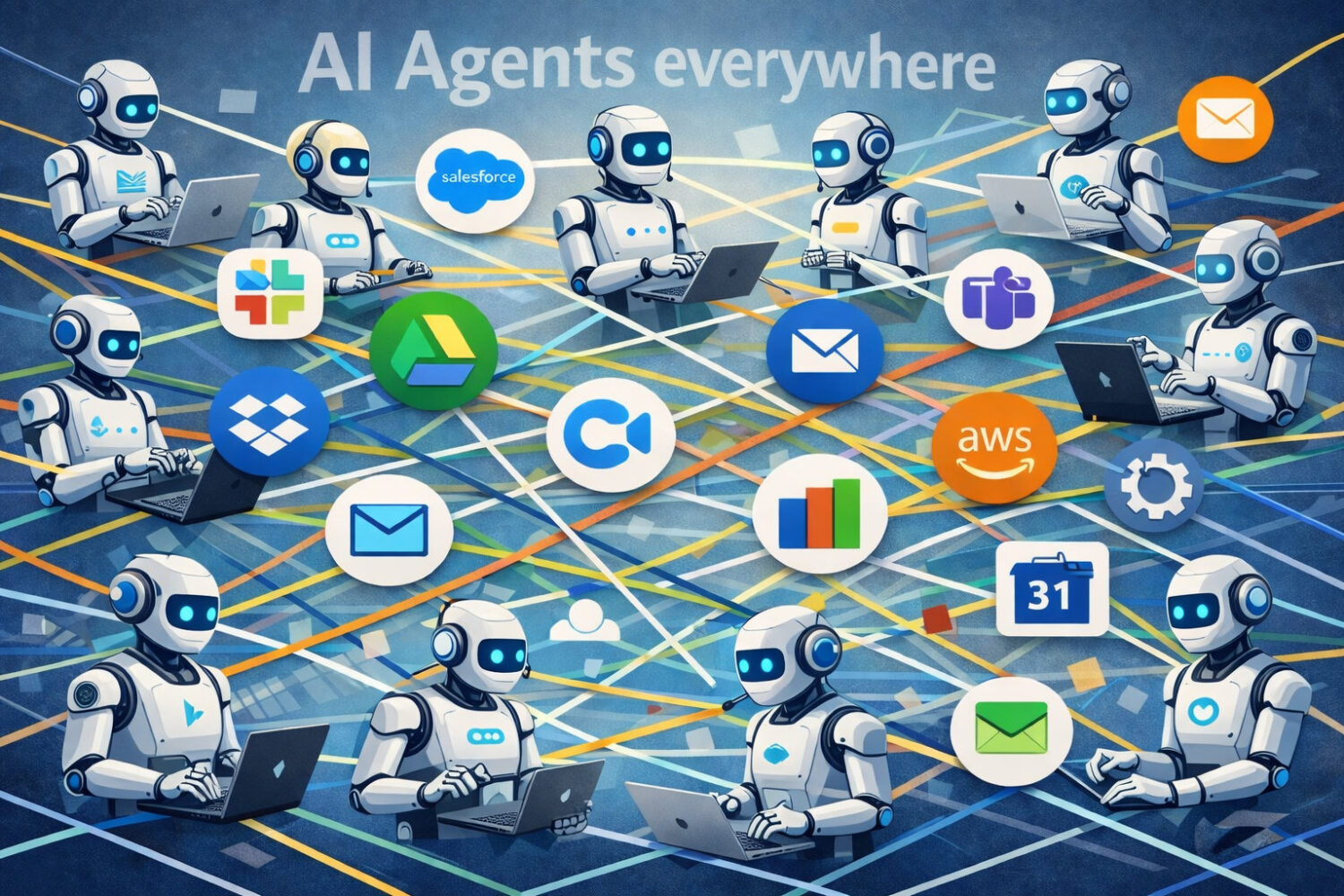
Everyone works with AI agents, but who controls the agents?

Over the past year, there has been a lot of talk about MCP and A2A, protocols that allow agents to communicate with each other. But more and more agents that are now becoming available support and use them. Agents will soon be able to easily exchange information and transfer tasks to each other to achieve much better results. Currently, 50 percent of AI agents in organizations still work as a silo. This means that no context or data from external systems is added. The need for context is now clear to many organizations. 96 percent of IT decision-makers understand that success depends on seamless integration. This puts renewed pressure on data silos and integrations. ... For IT decision-makers wondering what they really need to do in 2026, doing nothing is definitely not the right answer, as your competitors who do invest in AI will quickly overtake you. On the other hand, you don’t have to go all-in and blow your entire IT budget on it. ... You need to start now, so start small. Putting the three or five most frequently asked questions to your customer service or HR team into an AI agent can take a huge workload off those teams. There are now several case studies showing that this has reduced the number of tickets by as much as 50-60 percent. AI can also be used for sales reports or planning, which currently takes employees many hours each week.


Mobile privacy audits are getting harder

Many privacy reviews begin with static analysis of an Android app package (APK). This can reveal permissions requested by the app and identify embedded third-party libraries such as advertising SDKs, telemetry tools, or analytics components. Requested permissions are often treated as indicators of risk because they can imply access to contacts, photos, location, camera, or device identifiers. Library detection can also show whether an app includes known trackers. Yet, static results are only partial. Permissions may never be used in runtime code paths, and libraries can be present without being invoked. Static analysis also misses cases where data is accessed indirectly or through system behavior that does not require explicit permissions. ... Apps increasingly defend against MITM using certificate pinning, which causes the app to reject traffic interception even if a root certificate is installed. Analysts may respond by patching the APK or using dynamic instrumentation to bypass the pinning logic at runtime. Both approaches can fail depending on the app’s implementation. Mopri’s design treats these obstacles as expected operating conditions. The framework includes multiple traffic capture approaches so investigators can switch methods when an app resists a specific setup. ... Raw network logs are difficult to interpret without enrichment. Mopri adds contextual information to recorded traffic in two areas: identifying who received the data, and identifying what sensitive information may have been transmitted.


When the AI goes dark: Building enterprise resilience for the age of agentic AI

Instead of merely storing data, AI accumulates intelligence. When we talk about AI “state,” we’re describing something fundamentally different from a database that can be rolled back. ... Lose this state, and you haven’t just lost data. You’ve lost the organizational intelligence that took hundreds of human days of annotation, iteration and refinement to create. You can’t simply re-enter it from memory. Worse, a corrupted AI state doesn’t announce itself the way a crashed server does. ... This challenge is compounded by the immaturity of the AI vendor landscape. Hyperscale cloud providers may advertise “four nines” of uptime (99.99% availability, which translates to roughly 52 minutes of downtime per year), but many AI providers, particularly the startups emerging rapidly in this space, cannot yet offer these enterprise-grade service guarantees. ... When AI agents handle customer interactions, manage supply chains, execute financial processes and coordinate operations, a sustained AI outage isn’t an inconvenience. It’s an existential threat. ... Humans are not just a fallback option. They are an integral component of a resilient AI-native enterprise. Motivated, trained and prepared teams can bridge gaps when AI fails, ensuring continuity of both systems and operations. When you continually reduce your workforce to appease your shareholders, will your human employees remain motivated, trained and prepared?


The blind spot every CISO must see: Loyalty

The insider who once seemed beyond reproach becomes the very vector through which sensitive data, intellectual property, or operational integrity is compromised. These are not isolated failures of vetting or technology; they are failures to recognize that loyalty is relational and conditional, not absolute. ... Organizations have long operated under the belief that loyalty, once demonstrated, becomes a durable shield against insider risk. Extended tenure is rewarded with escalating access privileges, high performers are granted broader system rights without commensurate behavioral review, and verbal affirmations of commitment are taken at face value. Yet time and again patterns repeat. What begins as mutual confidence weakens not through dramatic betrayal but through subtle realignments in personal commitment. An employee who once identified strongly with the mission may begin to feel undervalued, overlooked for advancement, or weighed down by outside pressures. ... Positions with access to crown jewels — sensitive data, financial systems, or personnel records — or executive ranks inherently require proportionately more oversight, as regulated sectors have shown. Professionals in these roles accept this as part of the terrain, with history demonstrating minimal talent loss when frameworks are transparent and supportive.


Researchers Warn: WiFi Could Become an Invisible Mass Surveillance System

Researchers at the Karlsruhe Institute of Technology (KIT) have shown that people can be recognized solely by recording WiFi communication in their surroundings, a capability they warn poses a serious threat to personal privacy. The method does not require individuals to carry any electronic devices, nor does it rely on specialized hardware. Instead, it makes use of ordinary WiFi devices already communicating with each other nearby.  ... “This technology turns every router into a potential means for surveillance,” warns Julian Todt from KASTEL. “If you regularly pass by a café that operates a WiFi network, you could be identified there without noticing it and be recognized later, for example by public authorities or companies.” Felix Morsbach notes that intelligence agencies or cybercriminals currently have simpler ways to monitor people, such as accessing CCTV systems or video doorbells. “However, the omnipresent wireless networks might become a nearly comprehensive surveillance infrastructure with one concerning property: they are invisible and raise no suspicion.” ... Unlike attacks that rely on LIDAR sensors or earlier WiFi-based techniques that use channel state information (CSI), meaning measurements of how radio signals change when they reflect off walls, furniture, or people, this approach does not require specialized equipment. Instead, it can be carried out using a standard WiFi device.


Is software optimization a lost art?

Almost all of us have noticed apps getting larger, slower, and buggier. We've all had a Chrome window that's taking up a baffling amount of system memory, for example. While performance challenges can vary by organization, application and technical stacks, it appears the worst performance bottlenecks have migrated to the ‘last mile’ of the user experience, says Jim Mercer ... “While architectural decisions and developer skills remain critical, they’re too often compromised by the need to integrate AI and new features at an exponential pace. So, a lack of due diligence when we should know better.” ... The somewhat concerning part is that AI bloat is structurally different from traditional technical debt, she points out. Rather than accumulated cruft over time, it usually manifests as systematic over-engineering from day one. ... Software optimization has become even more important due to the recent RAM price crisis, driven by surging demand for hardware to meet AI and data center buildout. Though the price increases may be levelling out, RAM is now much more expensive than it was mere months ago. This is likely to shift practices and behavior, Brock ... Security will play a role too, particularly with the growing data sovereignty debate and concerns about bad actors, she notes. Leaner, neater, shorter software is simply easier to maintain – especially when you discover a vulnerability and are faced with working through a massive codebase.


The ‘Super Bowl’ standard: Architecting distributed systems for massive concurrency

In the world of streaming, the “Super Bowl” isn’t just a game. It is a distributed systems stress test that happens in real-time before tens of millions of people. ... It is the same nightmare that keeps e-commerce CTOs awake before Black Friday or financial systems architects up during a market crash. The fundamental problem is always the same: How do you survive when demand exceeds capacity by an order of magnitude? ... We implement load shedding based on business priority. It is better to serve 100,000 users perfectly and tell 20,000 users to “please wait” than to crash the site for all 120,000. ... In an e-commerce context, your “Inventory Service” and your “User Reviews Service” should never share the same database connection pool. If the Reviews service gets hammered by bots scraping data, it should not consume the resources needed to look up product availability. ... When a cache miss occurs, the first request goes to the database to fetch the data. The system identifies that 49,999 other people are asking for the same key. Instead of sending them to the database, it holds them in a wait state. Once the first request returns, the system populates the cache and serves all 50,000 users with that single result. This pattern is critical for “flash sale” scenarios in retail. When a million users refresh the page to see if a product is in stock, you cannot do a million database lookups. ... You cannot buy “resilience” from AWS or Azure. You cannot solve these problems just by switching to Kubernetes or adding more nodes.


Cloud-native observability enters a new phase as the market pivots from volume to value

“The secret in the industry is that … all of the existing solutions are motivated to get people to produce as much data as possible,” said Martin Mao, co-founder and chief executive officer of Chronosphere, during an interview with theCUBE. “What we’re doing differently with logs is that we actually provide the ability to see what data is useful, what data is useless and help you optimize … so you only keep and pay for the valuable data.” ... Widespread digital modernization is driving open-source adoption, which in turn demands more sophisticated observability tools, according to Nashawaty. “That urgency is why vendor innovations like Chronosphere’s Logs 2.0, which shift teams from hoarding raw telemetry to keeping only high-value signals, are resonating so strongly within the open-source community,” he said. ... Rather than treating logs as an add-on, Logs 2.0 integrates them directly into the same platform that handles metrics, traces and events. The architecture rests on three pillars. First, logs are ingested natively and correlated with other telemetry types in a shared backend and user interface. Second, usage analytics quantify which logs are actually referenced in dashboards, alerts and investigations. Third, governance recommendations guide teams toward sampling rules, log-to-metric conversion or archival strategies based on real usage patterns.


How recruitment fraud turned cloud IAM into a $2 billion attack surface

The attack chain is quickly becoming known as the identity and access management (IAM) pivot, and it represents a fundamental gap in how enterprises monitor identity-based attacks. CrowdStrike Intelligence research published on January 29 documents how adversary groups operationalized this attack chain at an industrial scale. Threat actors are cloaking the delivery of trojanized Python and npm packages through recruitment fraud, then pivoting from stolen developer credentials to full cloud IAM compromise. ... Adversaries are shifting entry vectors in real-time. Trojanized packages aren’t arriving through typosquatting as in the past — they’re hand-delivered via personal messaging channels and social platforms that corporate email gateways don’t touch. CrowdStrike documented adversaries tailoring employment-themed lures to specific industries and roles, and observed deployments of specialized malware at FinTech firms as recently as June 2025. ... AI gateways excel at validating authentication. They check whether the identity requesting access to a model endpoint or training pipeline holds the right token and has privileges for the timeframe defined by administrators and governance policies. They don’t check whether that identity is behaving consistently with its historical pattern or is randomly probing across infrastructure.


The Hidden Data Access Crisis Created by AI Agents

As enterprises adopt agents at scale, a different approach becomes necessary. Instead of having agents impersonate users, agents retain their own identity. When they need data, they request access on behalf of a user. Access decisions are made dynamically, at the moment of use, based on human entitlements, agent constraints, data governance rules, and intent (purpose). This shifts access from being identity-driven to being context-driven. Authorization becomes the primary mechanism for controlling data access, rather than a side effect of authentication. ... CDOs need to work closely with IAM, security, and platform operations teams to rethink how access decisions are made. In particular, this means separating authentication from authorization and recognizing that impersonation is no longer a sustainable model at scale. Authentication teams continue to establish trust and identity. Authorization mechanisms must take on the responsibility of deciding what data should be accessible at query time, based on the human user, the agent acting on their behalf, the data’s governance rules, and the purpose of the request. ... CDOs must treat data provisioning as an enterprise capability, not a collection of tactical exceptions. This requires working across organizational boundaries. Authentication teams continue to establish trust and identity. Security teams focus on risk and enforcement. Data teams bring policy and governance context. 

Daily Tech Digest - November 26, 2025


Quote for the day:

“There is only one thing that makes a dream impossible to achieve: the fear of failure.” -- Paulo Coelho


7 signs your cybersecurity framework needs rebuilding

The biggest mistake, Pearlson says, is failing to recognize that the current plan is out of date or simply not working. Breaches happen, but that doesn’t always mean your cyber framework needs rebuilding. It does, however, indicate that the framework needs to be rethought and redesigned. ... “If your framework hasn’t kept pace with evolving threats or business needs, it’s time for a rebuild.” Cyber threats are always evolving, so staying proactive with regular reviews and fostering a culture of cybersecurity awareness will help catch issues before they become crises, Bucher says. ... “The cybersecurity landscape has evolved rapidly, especially with the rise of generative AI — your framework should reflect these shifts.” McLeod recommends a complete a biannual framework review combined with a cursory review during the gap years. “This helps to ensure that the framework stays aligned with evolving threats, business changes, and regulatory requirements.” Ideally, security leaders should always have their security framework in mind while maintaining a rough, running list of areas that could be improved, streamlined, or clarified, McLeod suggests. ... If an organization is stuck in a cycle of continually chasing alerts and incidents, as well as reporting events after the fact instead of performing predictive threat assessments, data analysis, and forward planning, it’s time for a change, Baiati advises. 


Your Million-Dollar IIoT Strategy is Being Sabotaged by Hundred-Dollar Radios

The ambition is clear: to create hyper-efficient, data-driven operations in a market expected to exceed $1.6 billion by 2030. Yet, a fundamental paradox lies at the heart of this transformation. While we architect complex digital twins and deploy sophisticated AI models, the foundational tools entrusted to our most valuable asset—the frontline workforce—are often decades old, disconnected, and failing at an alarming rate. ... Data shows that one in four organizations loses more than an entire day of productivity every month simply dealing with broken technology. The primary culprits are as predictable as they are preventable: nearly half of workers cite battery problems (48.4%) and physical damage (46.8%) as the most common causes of failure. ... While conversations about this crisis often focus on pay and career paths, Relay’s research reveals a more immediate, tangible cause: the daily frustration of using broken tools. 1 in 4 frontline workers already feel their equipment is second-class compared to what their corporate counterparts use, and a staggering 43% of workers saying they’d be less likely to quit if guaranteed access to modern, automatically upgraded devices. ... Beyond reliability, it’s important to address the data black hole created by legacy, disconnected tools. Every day, frontline teams generate thousands of hours of spoken communication—a rich stream of unstructured data filled with maintenance alerts, safety concerns, and process bottlenecks. 


Ask the Experts: Validate, don't just migrate

"Refactoring code is certainly a big undertaking. And if you start before you have good hygiene and governance, then you're just setting yourself up for failure. Similarly, if you haven't tagged properly, you have no way to attribute it to the project, and that becomes a cost problem." ... "If you do conclude [that migration is necessary], then you really must make sure the application is architected right. A lot of times, these workloads weren't designed for the cloud world, so you must adapt them and deliberately architect them for a cloud workload. "[To prepare a mission-critical application], it's key to look at the appropriateness, operating system [and] licenses. Sometimes, there are licenses tied to CPUs or other things that might introduce issues for you as well, so regression, latency and performance testing will be mandatory. ... "[IT leaders must also understand] the risks and costs associated with taking things into the cloud, and the pros and cons of that versus leaving it alone. Because old stuff, whether it was [procured] yesterday or five years ago, is inherently going to be vulnerable from a cybersecurity standpoint. Risk No. 2 is interoperability and compatibility, because old stuff doesn't talk to new stuff. And the third one is supportability, because it's hard to find old people to support old systems. ... "Sometimes, people have the false sense that if it's in cloud, then I'm all set. Everything is available, and everything is highly redundant. And it is, if you design [the application] with those things in mind.


Heineken CISO champions a new risk mindset to unlock innovation

Starting as an auditor and later leading a cyber defense team. It’s easy to fall into the black-and-white trap of being the function that always says “no” or speaks in cryptic tech jargon. It’s a scary world out there with so many attacks happening in every industry. The classical reaction of most security professionals is to tighten defences and impose even more rules. ... CISOs need to shift the mindset from pure compliance to asking: How does our cyber strategy support the business and its values? What calculated risks do we want the business to take? Where do we need their attention and help to embed security into the DNA of our people and our company? ... Be visible and approachable. Share the lessons that shaped you as a leader, what worked, what didn’t, and the principles that guide your decisions. I’m passionate about building diverse teams where everyone gets the same opportunities, no matter age, gender, or background. Diversity makes us stronger, and when there’s trust and openness, it sparks mentoring, coaching, and knowledge sharing. Make coaching and mentoring non-negotiable, and carve out time for it. It’s easy to push aside when you’re busy putting out security fires, but neglecting people’s growth and well-being is a big miss. Be authentic and vulnerable, walk the talk. Share the real stories, including failures and what made you stronger. Too often, people focus only on titles, certifications, and tech skills.


Data-Driven Enterprise: How Companies Turn Data into Strategic Advantage

A data-driven enterprise is not defined by the number of dashboards or analytics tools it owns. It’s defined by its ability to turn raw information into intelligent action. True data-driven organizations embed data thinking into every level of decision-making from boardroom strategy to day-to-day operations. ... A modern data architecture is not a single platform, but an interconnected ecosystem designed to balance agility, governance, and scalability. ... As organizations mature in their data journey, they are moving away from rigid, centralized models that rely on a single source of truth. While centralization once ensured control, it often created bottlenecks slowing down innovation and limiting agility.  ... We are entering an era of data agents self-learning systems capable of autonomously detecting anomalies, assessing risks, and forecasting trends in real time. These intelligent agents will soon become the invisible workforce of the enterprise, operating across domains: predicting supply chain disruptions, optimizing IT performance, personalizing customer journeys, and ensuring compliance through continuous monitoring. Their actions will reshape not only operations but also how organizations think about governance, accountability, and human oversight. For architects, this shift represents both a challenge and an extraordinary opportunity. The role is evolving from that of a data custodian focused on structure and governance to an ecosystem designer who engineers environments where data and AI can coexist, learn, and continuously create value.


10 benefits of an optimized third-party IT services portfolio

By entrusting day-to-day IT operations to trusted providers, organizations can reallocate internal resources toward higher-value initiatives such as digital transformation, automation, and product innovation. This accelerates adoption of emerging technologies, and allows internal teams to deepen business expertise, strengthen cross-functional collaboration, and focus on driving growth where it matters most. ... A well-structured third-party IT services portfolio can provide flexibility to scale up or down based on business needs. This is particularly valuable for CEOs who need to adapt to changing market conditions and seize growth opportunities. Securing talent in the market today is challenging and time consuming, so tapping into the talent pools of your strategic IT services partner base allows organizations to leverage their bench strength to fill immediate needs for talent. ... IT service providers continuously invest in advanced tech and talent development, enabling clients to benefit from cutting-edge innovations without bearing the full cost of adoption. As AI, automation, and cybersecurity evolve, providers offer the subject matter expertise and tools organizations need to stay ahead of disruption. ... With operational stability ensured through a balance of internal talent and trusted third parties, CIOs can dedicate more focus to long-term strategic initiatives that fuel growth and innovation. 


Modernizing SOCs with Agentic AI and Human-in-the-Loop: A Guide to CISOs

Traditional SOCs were not built for today’s speed and scale. Alert fatigue, manual investigations, disconnected tools, and talent shortages all contribute to the operational drag. Many security leaders are stuck in a reactive loop with no clear path to improvement. ... Legacy SOCs rely heavily on outdated technologies and rule-based detection, generating high volumes of alerts, many of which are false positives, leading to analyst burnout. Analysts are compelled to manually inspect and triage a deluge of meaningless signals, making the entire effort unsustainable. ... Before transformation can happen, one needs to understand where one stands. This can be accomplished with key benchmarking metrics for SOC performance, such as MTTD (Mean time to detect), MTTR (Mean time to respond), case closure rates, and tool effectiveness. ... Agentic AI represents the next evolution of AI-powered cybersecurity, which is modular, explainable, and autonomous. Through a coordinated system of AI agents, the Agentic SOC continuously responds and adapts to the evolving security environment in real time. It is designed to accelerate threat detection, investigation, and response by 10x, bringing speed, precision, and clarity to every function of SecOps. Agentic AI is the technology shift that changes the game. Unlike traditional automation, Agentic AI is decision-oriented, self-improving, and always operating with human-in-the-loop for oversight.


3 SOC Challenges You Need to Solve Before 2026

2026 will mark a pivotal shift in cybersecurity. Threat actors are moving from experimenting with AI to making it their primary weapon, using it to scale attacks, automate reconnaissance, and craft hyper-realistic social engineering campaigns. ... Attackers have mastered evasion. ClickFix campaigns trick employees into pasting malicious PowerShell commands by themselves. LOLBins are abused to hide malicious behavior. Multi-stage phishing hides behind QR codes, CAPTCHAs, rewritten URLs, and fake installers. Traditional sandboxes stall because they can't click "Next," solve challenges, or follow human-dependent flows. Result? Low detection rates for the exact threats exploding in 2025 and beyond. ... Thousands of daily alerts, mostly false positives. An average SOC handles 11,000 alerts daily, with only 19% worth investigating, according to the 2024 SANS SOC Survey. Tier 1 analysts drown in noise, escalating everything because they lack context. Every alert becomes a research project. Every investigation starts from zero. Burnout hits hard. Turnover doubles, morale tanks, and real threats hide in the backlog. By 2026, AI-orchestrated attacks will flood systems even faster, turning alert fatigue into a full-blown crisis. ... From a financial leadership perspective, security spending often feels like a black hole: money is spent, but risk reduction is hard to quantify. SOCs are challenged to justify investments, especially when security teams seem to be a cost center without clear profit or business-driving impact.


Digital surveillance tools are reshaping workplace privacy, GAO warns

Privacy concerns intensify when surveillance data feeds into automated systems that evaluate performance, set productivity metrics, or flag workers for potential discipline. GAO found that employers often rely on flawed benchmarks and incomplete measurements. Tools rarely capture the full range of work performed, such as research, mentoring, reading, or off-screen tasks, and frequently misinterpret normal behavior as inefficiency. When employers trust these tools “at face value,” the report notes, workers can be unfairly labeled unproductive or noncompliant despite doing their jobs well. ... Meanwhile, past federal efforts to issue guidance on reducing surveillance related harms such as transparency practices, human oversight, and safeguards against discriminatory impacts have been rescinded or paused since January by the Trump administration as agencies reassess their policy priorities. GAO also notes that existing federal privacy protections are narrow. The Electronic Communications Privacy Act restricts covert interception of communications, but it does not cover most forms of digital monitoring, such as keystroke logging, location tracking, biometric data collection, or algorithmic productivity scoring. ... The report concludes that while digital surveillance can improve safety, efficiency, and health monitoring, its benefits depend wholly on how employers use it.


How to avoid becoming an “AI-first” company with zero real AI usage

A competitor declared they’re going AI-first. Another publishes a case study about replacing support with LLMs. And a third shares a graph showing productivity gains. Within days, boardrooms everywhere start echoing the same message: “We should be doing this. Everyone else already is, and we can’t fall behind.” So the work begins. Then come the task forces, the town halls, the strategy docs and the targets. Teams are asked to contribute initiatives. But if you’ve been through this before, you know there’s often a difference between what companies announce and what they actually do. Because press releases don’t mention the pilots that stall, or the teams that quietly revert to the old way, or even the tools that get used once and abandoned. ... By then, your company’s AI-first mandate will have set into motion departmental initiatives, vendor contracts and maybe even some new hires with “AI” in their titles. The dashboards will be green, and the board deck will have a whole slide on AI. But in the quiet spaces where your actual work happens, what will have meaningfully changed? Maybe you'll be like the teams that never stopped their quiet experiments. ... That’s invisible architecture of genuine progress: Patient, and completely uninterested in performance. It doesn't make for great LinkedIn posts, and it resists grand narratives. But it transforms companies in ways that truly last. Every organization is standing at the same crossroads right now: Look like you’re innovating, or create a culture that fosters real innovation.