Showing posts with label application security. Show all posts

Daily Tech Digest - January 13, 2026


Quote for the day:

"Don't let yesterday take up too much of today." -- Will Rogers


When AI Meets DevOps To Build Self-Healing Systems
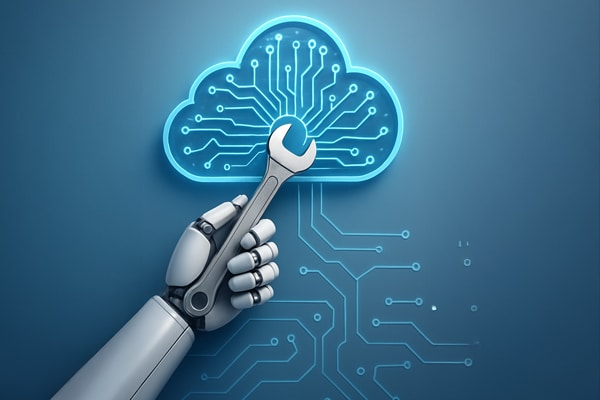
Self-healing systems do not just react to events and incidents — they analyse historic data, identify early triggers or symptoms of failures, and act. For example, if a service is known to crash when it runs out of memory, a self-healing system can observe metrics like memory consumption, predict when the service may fail with very low memory, and take action to fix the issue—like restarting the service or allocating more memory—without human intervention. In AIOps, self-healing systems are powered by data science in terms of machine learning models, real-time analytics, and automated workflows. ... Self-healing systems don’t just rely on static rules and manual checks; they utilise real-time data streams and apply pattern and anomaly detection through machine learning to ascertain the state of the environment. A self-healing system is trying to gauge its own health all the time — CPU utilisation, latency, memory, throughput, traffic, security anomalies, etc — to preemptively address an impending failure. The key component of every self-healing system is a cycle that reflects the process followed by intelligent agents: Detect → Diagnose → Act. ... The integration of artificial intelligence and DevOps signifies an important change in the way modern IT systems are built, managed, and evolved. As we have discussed here, AIOps is not just an extension of a type of automation — it is changing the way operations are modelled from reactive to intelligent, self-healing ecosystems.


Building a product roadmap: From high-level vision to concrete plans

A roadmap provides the anchor to keep everyone aligned amid constant flux. Yet many organizations still treat roadmaps as static artifacts — a one-and-done exercise intended to appease executives or investors. That’s a mistake. The most effective roadmaps are living documents evolving with the product and market realities. ... If strategy defines direction, milestones are the engine that keeps the train moving. Too often, teams treat milestones as arbitrary checkpoints or internal deadlines. Done right, these can become powerful tools for motivation, alignment and storytelling. ... The best roadmaps aren’t written by PMs — they’re co-authored by teams. That’s why I advocate for bottom-up collaboration anchored in executive alignment. Before any roadmap offsite, sync with the CEO or leadership team. Understand what they care about and why. If they disagree with priorities, resolve those conflicts early. Then bring that context into a team workshop. During the session, identify technical leads — those trusted voices who can translate into action. Encourage them to pre-think tradeoffs and dependencies before the group session. ... The perfect roadmap doesn’t exist and that’s the point. Remember, the goal isn’t to build a flawless plan, but a resilient one. As President Dwight D. Eisenhower said, “Plans are useless, but planning is indispensable.” ... Vision without execution is hallucination. But execution without vision is chaos. The magic of product leadership lies in balancing both: crafting a roadmap that’s both inspiring and achievable.


Scattered network data impedes automation efforts

As IT organizations mature their network automation strategies, it’s becoming clear that network intent data is an essential foundation. They need reliable documentation of network inventory, IP address space, topology and connectivity, policies, and more. This requirement often kicks off a network source of truth (NSoT) project, which involves network teams discovering, validating, and consolidating disparate data in a tool that can model network intent and provide programmatic access to data for network automation tools and other systems. ... IT leaders do not understand the value of NSoT solutions. The data is already available, although it’s scattered and of dubious quality. Why should we spend money on a product or even extra engineers to consolidate it? “Part of the issue is that we’ve got leadership that are not infrastructure people,” said a network engineer with a global automobile manufacturer. “It’s kind of a heavy lift to get them to buy into it, because they see that applications are running fine over the network. ‘Why do I need to spend money on this is?’ And we tell them that the network is running fine, but there will be failures at some point and it’s worth preventing that.” ... NSoT isn’t a magic bullet for solving the problems IT organizations have with poor network documentation and scattered operational data. Network engineering teams will need to discover, validate, reconcile, and import data from multiple repositories. This process can be challenging and time-consuming. Some of this data will difficult to find. 


What insurers expect from cyber risk in 2026

Cyber insurers are beginning to use LLMs to translate internet scale data into structured inputs for underwriting and portfolio analysis. These applications target specific pain points such as data gaps and processing delays. Broader change across pricing or risk selection remains gradual. ... AI supported workflows begin to reduce repetitive tasks across those stages. Automation supports data entry, document review, and routine verification. Human oversight remains central for judgment based decisions. The research links this shift to measurable operational effects. Fewer manual touches per claim reduce processing time and error rates. Claims teams gain capacity without proportional increases in staffing. ... Age verification and online safety legislation introduce unintended cyber risk. Requirements that reduce online anonymity create high value identity datasets that attract attackers. The research highlights rising exposure to identity based coercion, insider compromise, and extortion. Once personal identity data is leaked, attackers gain leverage that can translate into access to corporate systems. This dynamic supports long term campaigns by organized groups and state aligned actors. ... Data orchestration becomes a core capability. Insurers and reinsurers integrate signals including security posture, threat activity, and loss experience into shared models. Consistent views across teams and regions support portfolio governance. This shift places emphasis on actionability. Data value depends on timing and relevance within workflows rather than volume alone. 


Human + AI Will Define the Future of Work by 2027: Nasscom-Indeed Report

This emerging model of Humans + AI working together is reported as the next phase of transformation, where success depends on how effectively AI will augment human capabilities, empower employees, and align with organizational purpose. The report highlights that the most effective human–AI partnerships are emerging across higher-order activities such as scope definition, system architecture, and data model design. At the same time, more routine and repeatable tasks, including boilerplate code generation and unit test creation, are expected to be increasingly automated by AI over the next two to three years. ... To stay relevant in a Human + AI workplace, the report emphasizes that individuals should build capability, adaptability, and continuous learning. This includes experience with using AI tools (prompting, critical review of output, combining AI speed with human judgment), moving up the value chain (e.g., developers from coding to architecture thinking), building multidisciplinary skills (tech + domain + professional skills), and focusing on outcomes over credentials by creating repositories of work samples showing measurable impact. ... Organizations have already started taking measures to address these challenges. Every seven in ten HR leaders are focusing on upskilling, more than half focusing on modernizing systems. With respect to AI adoption, 79% prioritize internal reskilling as a dominant strategy. 


From vulnerability whack-a-mole to strategic risk operations

“Software bills of materials are just an ingredients list,” he notes. “That’s helpful because the idea is that through transparency we will have a shared understanding. The problem is that they don’t deliver a shared understanding because the expectation of anyone in security who reads the SBOM is the first job they’ll do is run those versions against vulnerability databases.” This creates a predictable problem: security teams receive SBOMs, scan them for vulnerabilities, and generate alerts for every CVE match, regardless of whether those vulnerabilities actually affect the product. ... To make SBOMs truly useful, Kreilein introduces VEX (Vulnerability Exploitability Exchange), an open standards framework that addresses the context problem. VEX provides four status messages: affected, not affected, under investigation, and fixed. “What we want to start doing is using a project called VEX that gives four possible status messages,” Kreilein explains. ... Developers aren’t refusing to patch because they don’t care about security. They’re worried that upgrading a component will break the application. “If my application is brittle and can’t take change, I cannot upgrade to the non-vulnerable version,” Kreilein explains. “If I don’t have effective test automation and integration and unit testing, I can’t guarantee that this upgrade won’t break the application.” This reframing shifts the security conversation from compliance and mandates to engineering fundamentals. Better test coverage, better reference architectures, and better secure-by-design practices become security initiatives.


AI backlash forces a reality check: humans are as important as ever

Companies are now moving beyond the hype and waking up to the consequences of AI slop, underperforming tools, fragmented systems, and wasted budgets, said Brooke Johnson, chief legal officer at Ivanti. “The early rush to adopt AI prioritized speed over strategy, leaving many organizations with little to show for their investments,” Johnson said. Organizations now need to balance AI, workforce empowerment and cybersecurity at the same they’re still formulating strategies. That’s where people come in. ... AI is becoming less a tech problem and more of an adoption hurdle, Depa said. “What we’re seeing now more and more is less of a technology challenge, more of a change management, people, and process challenge — and that’s going to continue as those technologies continue to evolve,” he said. DXC Technology is taking a similar approach, designing tools where human insight, judgment, and collaboration create value that AI can’t do alone, said Dan Gray, vice president of global technical customer operations at the company. ... Companies might have to accept underutilizing some of the AI gains in the near term. AI could help workers complete their tasks in half the time and enjoy a leisurely pace. Alternately, employees might burn out quickly by getting more work. “If you try to lay them off, you don’t have a good workforce left. If you let them be, why are you paying them? So that’s a paradox,” Seth said.


Physical AI is the next frontier - and it's already all around you

Physical AI can be generally defined as AI implemented in hardware that can perceive the world around it and then reason to perform or orchestrate actions. Popular examples including autonomous vehicles and robots -- but robots that utilize AI to perform tasks have existed for decades. So what's the difference? ... Saxena adds that while humanoid robots will be useful in instances where humans don't want to perform a task, either because it is too tedious or too risky, they will not replace humans. That's where AI wearables, such as smart glasses, play an important role, as they can augment human capabilities. But beyond that, AI wearables might actually be able to feed back into other physical AI devices, such as robots, by providing a high-quality dataset based on real-life perspectives and examples. "Why are LLMs so great? Because there is a ton of data on the internet, for a lot of the contextual information and whatnot, but physical data does not exist," said Saxena. ... Given the privacy concerns that may come from having your everyday data used to train robots, Saxena highlighted that the data from your wearables should always be kept at the highest level of privacy. As a result, the data -- which should already be anonymized by the wearable company -- could be very helpful in training robots. That robot can then create more data, resulting in a healthy ecosystem. "This sharing of context, this sharing of AI between that robot and the wearable AI devices that you have around you is, I think, the benefit that you are going to be able to accrue," added Asghar.


Unlocking the Power of Geospatial Artificial Intelligence (GeoAI)

GeoAI is more than sophisticated map analytics. It is a strategic technology that blends AI with the physical world, allowing tech experts to see, understand, and act on patterns that were previously invisible. From planning sustainable cities to protecting wildlife, it’s helping experts tackle significant challenges with precision and speed. As the world generates more location-based data every day, GeoAI is becoming a must-have tool. It’s not just tech – it’s a way to make the world work better. ... To make it simpler. Machine learning spots trends, computer vision interprets images, GIS organizes it all, and knowledge graphs tie it together. The result? GeoAI can take a chaotic pile of data and deliver clear answers, like telling a city where to build a new park or warning about a wildfire risk. It’s a powerhouse that’s making location-based decisions faster and smarter. In all, GeoAI is transforming the speed at which we extract meaning from complex datasets, thereby enabling us to address the Earth’s most pressing challenges. ... Though powerful, GeoAI is not without challenges. Effective implementation requires careful attention to data privacy, technical infrastructure, and organizational change management. ... Leaders who take GeoAI seriously stand to gain more than just incremental improvements. With the right systems in place, they can respond faster, make smarter decisions, and get better results from every field team in the network. 


For application security: SCA, SAST, DAST and MAST. What next?

If you think SAST and SCA are enough, you’re already behind. The future of app security is posture, provenance and proof, not alerts. ... Posture is the ‘what.’ Provenance is the ‘how’. The SLSA framework gives us a shared vocabulary and verifiable controls to prove that artifacts were built by hardened, tamper‑resistant pipelines with signed attestations that downstream consumers can trust. When I insist on SLSA Level 2 for most services and Level 3 for critical paths, I am not chasing compliance theater; I am buying integrity that survives audit and incident. Proof is where SBOMs finally grow up. Binding SBOM generation to the build that emits the deployable bits, signing them and validating at deploy time moves SBOMs from “ingredient lists” to enforceable controls. The CNCF TAG‑Security best practices v2 paper is my practical map, personas, VEX for exploitability, cryptographic verification to ensure tests actually ran, and prescriptive guidance for cloud‑native factories. ... Among the nexts, AI is the most mercurial. NIST’s final 2025 guidance on adversarial ML split threats across PredAI and GenAI and called out prompt injection in direct and indirect form as the dominant exploit in agentic systems where trusted instructions co mingle with untrusted data. The U.S. AI Safety Institute published work on agent hijacking evaluations, which I treat as required red‑team reading for anyone delegating actions to tools.

Daily Tech Digest - August 05, 2025


Quote for the day:

"Let today be the day you start something new and amazing." -- Unknown


Convergence of Technologies Reshaping the Enterprise Network

"We are now at the epicenter of the transformation of IT, where AI and networking are converging," said Antonio Neri, president and CEO of HPE. "In addition to positioning HPE to offer our customers a modern network architecture alternative and an even more differentiated and complete portfolio across hybrid cloud, AI and networking, this combination accelerates our profitable growth strategy as we deepen our customer relevance and expand our total addressable market into attractive adjacent areas." Naresh Singh, senior director analyst at Gartner, told Information Security Media Group that the merger of two networking heavyweights would make the networking landscape interesting in the near future. ... Security vendors have long tackled cyberthreats through robust portfolios, including next-generation firewalls, endpoint security, secure access service edge, intrusion detection system or intrusion prevention system, software-defined wide area network and network security management. But the rise of AI and large language models has introduced new risks that demand a deeper transformation across people, processes and technology. As organizations recognize the need for a secure foundation, many are accelerating their AI adoption initiatives.


Blind spots at the top: Why leaders fail

You’ve stopped learning. Not because there’s nothing left to learn, but because your ego can’t handle starting from scratch again. You default to what worked five years ago. Meanwhile, your environment has moved on, your competitors have pivoted, and your team can smell the stagnation. Ultimately, you are an architect of resilience and trust. As Alvin Toffler warned, “The illiterate of the 21st century will not be those who cannot read and write, but those who cannot learn, unlearn, and relearn.” ... Believing you’re always right is a shortcut to irrelevance. When you stop listening, you stop leading. You confuse confidence with competence and dominance with clarity. You bulldoze feedback and mistake silence for agreement. That silence? It’s fear. ... Stress is part of the job. But if every challenge sends you into a spiral, your people will spend more time managing your mood than solving real problems. Fragile leaders don’t scale. Their teams shrink. Their influence dries up. Strong leadership isn’t about acting tough. It’s about staying grounded when things go sideways. ... You think you’re empowering, but you’re micromanaging. You think you’re a visionary, but your team sees a control freak. You think you’re a mentor, but you dominate every meeting. The gap between intent and impact? That’s where teams disengage. The worst part? No one will tell you unless you build a culture where they can.


9 habits of the highly ineffective vibe coder

It’s easy to think that one large language model is the same as any other. The interfaces are largely identical, after all. In goes some text and out comes a magic answer, right? LLMs even tend to give similar answers to easy questions. And their names don’t even tell us much, because most LLM creators choose something cute rather than descriptive. But models have different internal structures, which can affect how well they unpack and understand problems that involve complex logic, like writing code. ... Many developers don’t realize how much LLMs are affected by the size of their input. The model must churn through all the tokens in your prompt before it can generate something that might be useful to you. More input tokens require more resources. Habitually dumping big blocks of code on the LLM can start to add up. Do it too much and you’ll end up overwhelming the hardware and filling up the context window. Some developers even talk about just uploading their entire source folder “just in case.” ... AI assistants do best when they’re focusing our attention on some obscure corner of the software documentation. Or maybe they’re finding a tidbit of knowledge about some feature that isn’t where we expected it to be. They’re amazing at searching through a vast training set for just the right insight. They’re not always so good at synthesizing or offering deep insight, though.


How to Eliminate Deployment Bottlenecks Without Sacrificing Application Security

As organizations embrace DevOps to accelerate innovation, the traditional approach of treating security as a checkpoint begins to break down. The result? Security either slows releases or, even worse, gets bypassed altogether amidst the need to deliver as quickly as possible. ... DevOps has reshaped software delivery, with teams now expected to deploy applications at high velocity, using continuous integration and delivery (CI/CD), microservices architectures, and container orchestration platforms like Kubernetes. But as development practices evolved, many security tools have not kept pace. While traditional Web Application Firewalls (WAFs) remain effective for many use cases, their operational models can become challenging when applied to highly dynamic, modern development environments. In such scenarios, they often introduce delays, limit flexibility, and add operational burden instead of enabling agility. ... Modern architectures introduce constant change. New microservices, APIs, and environments are deployed daily. Traditional WAFs, built for stable applications, rely on domain-first onboarding models that treat each application as an isolated unit. Every new domain or service often requires manual configuration, creating friction and increasing the risk of unprotected assets.


Anthropic wants to stop AI models from turning evil - here's how

In a paper released Friday, the company explores how and why models exhibit undesirable behavior, and what can be done about it. A model's persona can change during training and once it's deployed, when user inputs start influencing it. This is evidenced by models that may have passed safety checks before deployment, but then develop alter egos or act erratically once they're publicly available ... Anthropic admitted in the paper that "shaping a model's character is more of an art than a science," but said persona vectors are another arm with which to monitor -- and potentially safeguard against -- harmful traits. In the paper, Anthropic explained that it can steer these vectors by instructing models to act in certain ways -- for example, if it injects an evil prompt into the model, the model will respond from an evil place, confirming a cause-and-effect relationship that makes the roots of a model's character easier to trace. "By measuring the strength of persona vector activations, we can detect when the model's personality is shifting towards the corresponding trait, either over the course of training or during a conversation," Anthropic explained. "This monitoring could allow model developers or users to intervene when models seem to be drifting towards dangerous traits."


From Aspiration to Action: The State of DevOps Automation Today

One of the report's clearest findings is the advantage of engaging QA teams earlier in the development cycle. Teams practicing shift-left testing — bringing QA into planning, design, and early build phases — report higher satisfaction rates and stronger results overall. In fact, 88% of teams with early QA involvement reported satisfaction with their quality processes, and those teams also experienced fewer escaped defects and more comprehensive test coverage. Rather than testing at the end of the development cycle, early QA involvement enables faster feedback loops, better test design, and tighter alignment with user requirements. It also improves collaboration between developers and testers, making it easier to catch potential issues before they escalate into expensive fixes. ... While more DevOps teams recognize the importance of integrating security into the software development lifecycle (SDLC), sizable gaps remain. ... Many organizations still treat security as a separate function, disconnected from their routine QA and DevOps processes. This separation slows down vulnerability detection and remediation. These findings show the need for teams to better integrate security practices earlier in the SDLC, leveraging AI-driven tools that facilitate proactive threat detection and management.


Why the AI era is forcing a redesign of the entire compute backbone

Traditional fault tolerance relies on redundancy among loosely connected systems to achieve high uptime. ML computing demands a different approach. First, the sheer scale of computation makes over-provisioning too costly. Second, model training is a tightly synchronized process, where a single failure can cascade to thousands of processors. Finally, advanced ML hardware often pushes to the boundary of current technology, potentially leading to higher failure rates. ... As we push for greater performance, individual chips require more power, often exceeding the cooling capacity of traditional air-cooled data centers. This necessitates a shift towards more energy-intensive, but ultimately more efficient, liquid cooling solutions, and a fundamental redesign of data center cooling infrastructure. ... One important observation is that AI will, in the end, enhance attacker capabilities. This, in turn, means that we must ensure that AI simultaneously supercharges our defenses. This includes end-to-end data encryption, robust data lineage tracking with verifiable access logs, hardware-enforced security boundaries to protect sensitive computations and sophisticated key management systems. ... The rise of gen AI marks not just an evolution, but a revolution that requires a radical reimagining of our computing infrastructure. 


Industry Leaders Warn MSPs: Rolling Out AI Too Soon Could Backfire

“The biggest risk actually out there is deploying this stuff too soon,” he said. “If you push it really, really hard, your customers are going to be like, ‘This is terrible. I hate it. Why did you do this?’ That will change their opinion on AI for everything moving forward.” The message resonated with other leaders on the panel, including Heddy, who likened AI adoption to on-boarding a new employee. “I would not put my new employees in front of customers until I have educated them,” he said. “And so yes, you should roll [AI] out to your customers only when you are sure that what it is delivering is going to be good.” ... “Everybody’s just sort of siloed in their own little chat box. Wherever this agentic future is, we can all see that’s where it’s going, but at what point do we trust an agent to actually do something? ... “So what are the steps? What is the training that has to happen? How do we have all this information in context for the individual, the team, the entire organization? Where we’re headed is clear. Just … how long does that take?” ... “Don’t wait until you think you have it nailed and are the expert in the world on this to go have a conversation because those who are not experts on it are going to go have conversations with your customers about AI. We should consume it to make ourselves a better company, and then once we understand it well enough to sell it, only then should we go and try to sell it.”


Why Standards and Certification Matter More Than Ever

A major obstacle for enterprise IT teams is the lack of interoperability. Today's networked services span multiple clouds, edge locations and on-premises systems. Each environment brings unique security and compliance needs, making cohesive service delivery difficult. Lifecycle Service Orchestration (LSO), developed and advanced by Mplify, formerly MEF, offers a path through this complexity. With standardized and certified APIs and consistent service definitions, LSO supports automated provisioning and service management across environments and enables seamless interoperability between providers and platforms. ... In a world of constant change, standards and certification are strategic necessities. ... By reuniting around proven frameworks, organizations can modernize more confidently. Certification provides a layer of trust, ensuring solutions meet real-world requirements and work across the environments that enterprises rely on most. ... Standards and certification offer a way to cut through the complexity so networks, services and AI deployments can evolve without introducing new risks. Enterprises that succeed won't be the ones asking whether to adopt LSO, SASE or GPUaaS, but rather finding smart, swift ways to put them into practice.


Security tooling pitfalls for small teams: Cost, complexity, and low ROI

Retrofitting enterprise-grade platforms into SMB environments is often a disaster in the making. These tools are designed for organizations with layers of bureaucracy, complex structures, and entire teams dedicated to each security and compliance function. A large enterprise like Microsoft or Salesforce might have separate teams for governance, risk, compliance, cloud security, network security, and security operations. Each of those teams would own and manage specialized tooling, which in itself assumes domain experts running the show. ... “Compliance is not security” is a statement that sparks heated debates amongst many security experts. However, the reality is that even checklist-based compliance can help companies with no security in place build a strong foundation. Frameworks like SOC 2 and ISO 27001 help establish the baseline of a strong security program, ensuring you have coverage across critical controls. If you deal with Personally Identifiable Information (PII), GDPR is the gold standard for privacy controls. And with AI adoption becoming unavoidable, ISO 42001 is emerging as a key framework for AI governance, helping organizations manage AI risk and build responsible practices from the ground up.

Daily Tech Digest - April 25, 2025


Quote for the day:

"Whatever you can do, or dream you can, begin it. Boldness has genius, power and magic in it." -- Johann Wolfgang von Goethe


Revolutionizing Application Security: The Plea for Unified Platforms

“Shift left” is a practice that focuses on addressing security risks earlier in the development cycle, before deployment. While effective in theory, this approach has proven problematic in practice as developers and security teams have conflicting priorities. ... Cloud native applications are dynamic; constantly deployed, updated and scaled, so robust real-time protection measures are absolutely necessary. Every time an application is updated or deployed, new code, configurations or dependencies appear, all of which can introduce new vulnerabilities. The problem is that it is difficult to implement real-time cloud security with a traditional, compartmentalized approach. Organizations need real-time security measures that provide continuous monitoring across the entire infrastructure, detect threats as they emerge and automatically respond to them. As Tager explained, implementing real-time prevention is necessary “to stay ahead of the pace of attackers.” ... Cloud native applications tend to rely heavily on open source libraries and third-party components. In 2021, Log4j’s Log4Shell vulnerability demonstrated how a single compromised component could affect millions of devices worldwide, exposing countless enterprises to risk. Effective application security now extends far beyond the traditional scope of code scanning and must reflect the modern engineering environment. 


AI-Powered Polymorphic Phishing Is Changing the Threat Landscape

Polymorphic phishing is an advanced form of phishing campaign that randomizes the components of emails, such as their content, subject lines, and senders’ display names, to create several almost identical emails that only differ by a minor detail. In combination with AI, polymorphic phishing emails have become highly sophisticated, creating more personalized and evasive messages that result in higher attack success rates. ... Traditional detection systems group phishing emails together to enhance their detection efficacy based on commonalities in phishing emails, such as payloads or senders’ domain names. The use of AI by cybercriminals has allowed them to conduct polymorphic phishing campaigns with subtle but deceptive variations that can evade security measures like blocklists, static signatures, secure email gateways (SEGs), and native security tools. For example, cybercriminals modify the subject line by adding extra characters and symbols, or they can alter the length and pattern of the text. ... The standard way of grouping individual attacks into campaigns to improve detection efficacy will become irrelevant by 2027. Organizations need to find alternative measures to detect polymorphic phishing campaigns that don’t rely on blocklists and that can identify the most advanced attacks.


Does AI Deserve Worker Rights?

Chalmers et al declare that there are three things that AI-adopting institutions can do to prepare for the coming consciousness of AI: “They can (1) acknowledge that AI welfare is an important and difficult issue (and ensure that language model outputs do the same), (2) start assessing AI systems for evidence of consciousness and robust agency, and (3) prepare policies and procedures for treating AI systems with an appropriate level of moral concern.” What would “an appropriate level of moral concern” actually look like? According to Kyle Fish, Anthropic’s AI welfare researcher, it could take the form of allowing an AI model to stop a conversation with a human if the conversation turned abusive. “If a user is persistently requesting harmful content despite the model’s refusals and attempts at redirection, could we allow the model simply to end that interaction?” Fish told the New York Times in an interview. What exactly would model welfare entail? The Times cites a comment made in a podcast last week by podcaster Dwarkesh Patel, who compared model welfare to animal welfare, stating it was important to make sure we don’t reach “the digital equivalent of factory farming” with AI. Considering Nvidia CEO Jensen Huang’s desire to create giant “AI factories” filled with millions of his company’s GPUs cranking through GenAI and agentic AI workflows, perhaps the factory analogy is apropos.


Cybercriminals switch up their top initial access vectors of choice

“Organizations must leverage a risk-based approach and prioritize vulnerability scanning and patching for internet-facing systems,” wrote Saeed Abbasi, threat research manager at cloud security firm Qualys, in a blog post. “The data clearly shows that attackers follow the path of least resistance, targeting vulnerable edge devices that provide direct access to internal networks.” Greg Linares, principal threat intelligence analyst at managed detection and response vendor Huntress, said, “We’re seeing a distinct shift in how modern attackers breach enterprise environments, and one of the most consistent trends right now is the exploitation of edge devices.” Edge devices, ranging from firewalls and VPN appliances to load balancers and IoT gateways, serve as the gateway between internal networks and the broader internet. “Because they operate at this critical boundary, they often hold elevated privileges and have broad visibility into internal systems,” Linares noted, adding that edge devices are often poorly maintained and not integrated into standard patching cycles. Linares explained: “Many edge devices come with default credentials, exposed management ports, secret superuser accounts, or weakly configured services that still rely on legacy protocols — these are all conditions that invite intrusion.”


5 tips for transforming company data into new revenue streams

Data monetization can be risky, particularly for organizations that aren’t accustomed to handling financial transactions. There’s an increased threat of security breaches as other parties become aware that you’re in possession of valuable information, ISG’s Rudy says. Another risk is unintentionally using data you don’t have a right to use or discovering that the data you want to monetize is of poor quality or doesn’t integrate across data sets. Ultimately, the biggest risk is that no one wants to buy what you’re selling. Strong security is essential, Agility Writer’s Yong says. “If you’re not careful, you could end up facing big fines for mishandling data or not getting the right consent from users,” he cautions. If a data breach occurs, it can deeply damage an enterprise’s reputation. “Keeping your data safe and being transparent with users about how you use their info can go a long way in avoiding these costly mistakes.” ... “Data-as-a-service, where companies compile and package valuable datasets, is the base model for monetizing data,” he notes. However, insights-as-a-service, where customers provide prescriptive/predictive modeling capabilities, can demand a higher valuation. Another consideration is offering an insights platform-as-a-service, where subscribers can securely integrate their data into the provider’s insights platform.


Are AI Startups Faking It Till They Make It?

"A lot of VC funds are just kind of saying, 'Hey, this can only go up.' And that's usually a recipe for failure - when that starts to happen, you're becoming detached from reality," Nnamdi Okike, co-founder and managing partner at 645 Ventures, told Tradingview. Companies are branding themselves as AI-driven, even when their core technologies lack substantive AI components. A 2019 study by MMC Ventures found 40% of surveyed "AI startups" in Europe showed no evidence of AI integration in their products or services. And this was before OpenAI further raised the stakes with the launch of ChatGPT in 2022. It's a slippery slope. Even industry behemoths have had to clarify the extent of their AI involvement. Last year, tech giant and the fourth-most richest company in the world Amazon pushed back on allegations that its AI-powered "Just Walk Out" technology installed at its physical grocery stores for a cashierless checkout was largely being driven by around 1,000 workers in India who manually checked almost three quarters of the transactions. Amazon termed these reports "erroneous" and "untrue," adding that the staff in India were not reviewing live footage from the stores but simply reviewing the system. The incentive to brand as AI-native has only intensified. 


From deployment to optimisation: Why cloud management needs a smarter approach

As companies grow, so does their cloud footprint. Managing multiple cloud environments—across AWS, Azure, and GCP—often results in fragmented policies, security gaps, and operational inefficiencies. A Multi-Cloud Maturity Research Report by Vanson Bourne states that nearly 70% of organisations struggle with multi-cloud complexity, despite 95% agreeing that multi-cloud architectures are critical for success. Companies are shifting away from monolithic architecture to microservices, but managing distributed services at scale remains challenging. ... Regulatory requirements like SOC 2, HIPAA, and GDPR demand continuous monitoring and updates. The challenge is not just staying compliant but ensuring that security configurations remain airtight. IBM’s Cost of a Data Breach Report reveals that the average cost of a data breach in India reached ₹195 million in 2024, with cloud misconfiguration accounting for 12% of breaches. The risk is twofold: businesses either overprovision resources—wasting money—or leave environments under-secured, exposing them to breaches. Cyber threats are also evolving, with attackers increasingly targeting cloud environments. Phishing and credential theft accounted for 18% of incidents each, according to the IBM report. 


Inside a Cyberattack: How Hackers Steal Data

Once a hacker breaches the perimeter the standard practice is to beachhead, and then move laterally to find the organisation’s crown jewels: their most valuable data. Within a financial or banking organisation it is likely there is a database on their server that contains sensitive customer information. A database is essentially a complicated spreadsheet, wherein a hacker can simply click SELECT and copy everything. In this instance data security is essential, however, many organisations confuse data security with cybersecurity. Organisations often rely on encryption to protect sensitive data, but encryption alone isn’t enough if the decryption keys are poorly managed. If an attacker gains access to the decryption key, they can instantly decrypt the data, rendering the encryption useless. ... To truly safeguard data, businesses must combine strong encryption with secure key management, access controls, and techniques like tokenisation or format-preserving encryption to minimise the impact of a breach. A database protected by Privacy Enhancing Technologies (PETs), such as tokenisation, becomes unreadable to hackers if the decryption key is stored offsite. Without breaching the organisation’s data protection vendor to access the key, an attacker cannot decrypt the data – making the process significantly more complicated. This can be a major deterrent to hackers.


Why Testing is a Long-Term Investment for Software Engineers

At its core, a test is a contract. It tells the system—and anyone reading the code—what should happen when given specific inputs. This contract helps ensure that as the software evolves, its expected behavior remains intact. A system without tests is like a building without smoke detectors. Sure, it might stand fine for now, but the moment something catches fire, there’s no safety mechanism to contain the damage. ... Over time, all code becomes legacy. Business requirements shift, architectures evolve, and what once worked becomes outdated. That’s why refactoring is not a luxury—it’s a necessity. But refactoring without tests? That’s walking blindfolded through a minefield. With a reliable test suite, engineers can reshape and improve their code with confidence. Tests confirm that behavior hasn’t changed—even as the internal structure is optimized. This is why tests are essential not just for correctness, but for sustainable growth. ... There’s a common myth: tests slow you down. But seasoned engineers know the opposite is true. Tests speed up development by reducing time spent debugging, catching regressions early, and removing the need for manual verification after every change. They also allow teams to work independently, since tests define and validate interfaces between components.


Why the road from passwords to passkeys is long, bumpy, and worth it - probably

While the current plan rests on a solid technical foundation, many important details are barriers to short-term adoption. For example, setting up a passkey for a particular website should be a rather seamless process; however, fully deactivating that passkey still relies on a manual multistep process that has yet to be automated. Further complicating matters, some current user-facing implementations of passkeys are so different from one another that they're likely to confuse end-users looking for a common, recognizable, and easily repeated user experience. ... Passkey proponents talk about how passkeys will be the death of the password. However, the truth is that the password died long ago -- just in a different way. We've all used passwords without considering what is happening behind the scenes. A password is a special kind of secret -- a shared or symmetric secret. For most online services and applications, setting a password requires us to first share that password with the relying party, the website or app operator. While history has proven how shared secrets can work well in very secure and often temporary contexts, if the HaveIBeenPawned.com website teaches us anything, it's that site and app authentication isn't one of those contexts. Passwords are too easily compromised.

Daily Tech Digest - October 07, 2024

AI Agents: The Intersection of Tool Calling and Reasoning in Generative AI

Building robust and reliable agents requires overcoming many different challenges. When solving complex problems, an agent often needs to balance multiple tasks at once including planning, interacting with the right tools at the right time, formatting tool calls properly, remembering outputs from previous steps, avoiding repetitive loops, and adhering to guidance to protect the system from jailbreaks/prompt injections/etc. Too many demands can easily overwhelm a single agent, leading to a growing trend where what may appear to an end user as one agent, is behind the scenes a collection of many agents and prompts working together to divide and conquer completing the task. This division allows tasks to be broken down and handled in parallel by different models and agents tailored to solve that particular piece of the puzzle. It’s here that models with excellent tool calling capabilities come into play. While tool-calling is a powerful way to enable productive agents, it comes with its own set of challenges. Agents need to understand the available tools, select the right one from a set of potentially similar options, format the inputs accurately, call tools in the right order, and potentially integrate feedback or instructions from other agents or humans.


Transforming cloud security with real-time visibility

Addressing the visibility problem first, enables security teams to understand real risk and fix misconfigurations across the organization much faster. As an example, we encounter many teams that face the same misconfiguration across hundreds of assets owned by thousands of developers. Without the right visibility into assets’ behavior, organizations have to go through every individual team, explain the risk, check if their workload actually utilizes the misconfiguration, and then configure it accordingly – essentially an impossible task. With runtime insights, security teams immediately understand what specific assets utilize the misconfigurations, which developers own them, and all the relevant risk contexts around them. This takes what could be a 6-month long project involving the whole R&D org into a simple task completed in a day and involving a few individuals. ... One of the top challenges organizations face is maintaining consistent compliance across various cloud environments, especially when those environments are highly dynamic and deployed by multiple stakeholders who don’t necessarily have the right expertise in the space. The solution lies in taking a dual approach.


Patrolling the Micro-Perimeter to Enhance Network Security

As companies move into industrial automation, remote retail sites, remote engineering, etc., the systems and applications used by each company group may need to be sequestered from corporate-wide employee access so that only those users authorized to use a specific system or application can gain access. From a network perspective, segments of the network, which become internal network micro security peripheries, surround these restricted access systems and applications, so they are only available for the users and user devices that are authorized to use them. Multi-factor security protocols are used to strengthen user signons, and network monitoring and observability software polices all activity at each network micro-periphery. The mission of a zero-trust network is to "trust no one," not even company employees, with unlimited access to all network segments, systems, and applications. This is in contrast to older security schemes that limited security checks and monitoring to the external periphery of the entire enterprise network but that didn't apply security protocols to micro-segments within that network. 


CIO intangibles: 6 abilities that set effective IT execs apart

Change leadership is different, and it’s very much a CIO-level skill, she says. “Change leadership is inspiring and motivating you to want to make the change. It’s much more about communication. It’s about navigating the different parts of the organization. It’s co-leading.” It’s one thing, she says, for an IT leader or a change management team to tell users, “This is what we’re doing and why we’re doing it.” It’s at a whole other level to have a business leader say, “Hey team, we’re next. This is what we’re doing. This is why it’s important and here are my expectations of you.” That’s what effective change leadership can accomplish. ... For critical thinking, CIOs need another intangible skill: the ability to ask the right questions. “It’s the whole idea of being more curious,” says Mike Shaklik, partner and global head of CIO advisory at Infosys Consulting. “The folks who can listen well, and synthesize while they listen, ask better questions. They learn to expect better answers from their own people. If you add intentionality to it, that’s a game-changer.” ... “In today’s environment, a lot of technology work does not happen inside of the IT organization,” Struckman says. “Yet leadership expects the CIO to understand how it all makes sense together.”


Building an Internal Developer Platform: 4 Essential Pillars

Infrastructure as Code (IaC) is the backbone of any modern cloud native platform. It allows platform engineering teams to manage and provision infrastructure (such as compute, storage and networking resources) programmatically using code. IaC ensures that infrastructure definitions are version-controlled, reusable and consistent across different environments. ... Security, governance and compliance are integral to managing modern infrastructure, but manual policy enforcement doesn’t scale well and can create bottlenecks. Policy as Code (PaC) helps solve this challenge by programmatically defining governance, security and operational policies. These policies are automatically enforced across cloud environments, Kubernetes clusters and CI/CD pipelines. Essentially, they “shift down security” into the platform. ... GitOps is an operational model where all system configurations, including application deployments, infrastructure and policies, are managed through Git repositories. By adopting GitOps, platform teams can standardize how changes are made and ensure that the actual system state matches the desired state defined in Git.


Chief risk storyteller: How CISOs are developing yet another skill

Creating a compelling narrative is also important to bolster the case for investment in the cybersecurity program, when it comes to restructuring or starting a new program it becomes very important. Hughes estimates the base set of requirements in the Center for Internet Security Controls Framework is a $2 to $3 million expense. “That’s a massive expense, so that storytelling and dialogue between you and the rest of the company to create that new, forward expense is significant,” he says. However, just as some stories have their skeptics, CISOs also need to be able to defend their risk story, particularly when there’s big dollars attached to it. De Lude has found it can be helpful to stress test the story or presentation with challenge sessions. “I might invite different people to a run through and explain the concept and ask for potential objections to test and develop a robust narrative,” she says. De Lude has found that drawing on internal expertise of people with strong communications skills can help learn how to project a story in a way that’s compelling. “Having someone lend support who wasn’t a cyber expert but knew how to really convey a strong message in all sorts of different ways was a gamer change,” she says.


The Disruptive Potential of On-Device Large Language Models

On-device personal AI assistants transform each device into a powerful companion that mimics human interaction and executes complex tasks. These AI assistants can understand context and learn about their owner's preferences, allowing them to perform a wide range of activities — from scheduling appointments to creative writing — even when offline. By operating directly on the user's device, these AI assistants ensure privacy and fast response times, making them indispensable for managing both routine and sophisticated tasks with ease and intelligence. ... Voice control for devices is set to become significantly more powerful and mainstream, especially with advancements in on-device large language models. Companies like FlowVoice are already paving the way, enabling near-silent voice typing on computers. ... On-device AI therapists have the potential to become mainstream due to their ability to offer users both privacy and responsive, engaging conversations. By operating directly on the user's device, these AI therapists ensure that sensitive data remains private and secure, minimizing the risk of breaches associated with cloud-based services.


Why cloud computing is losing favour

There are various reasons behind this trend. “In the early days, cloud repatriations were often a response to unsuccessful migrations; now they more often reflect changes in market pricing,” says Adrian Bradley, head of cloud transformation at KPMG UK. “The inflation of labour costs, energy prices and the cost of the hardware underpinning AI are all driving up data centre fees. For some organisations, repatriation changes the balance in the relative cost and value of on-premise or hybrid architectures compared to public clouds.” ... There are risks that can come with cloud repatriation. James Hollins, Azure presales solution architect at Advania, highlights the potential to disrupt key services. “Building from scratch on-premises could be complex and risky, especially for organisations that have been heavily invested in cloud-based solutions,” he says. “Organisations accustomed to cloud-first environments may need to acquire or retrain staff to manage on-premises infrastructure, as they will have spent the last few years maintaining and operating in a cloud-first world with a specific skillset.” Repatriation can lead to higher licensing costs for third-party software that many businesses do not anticipate or budget for, he adds. 


Proactive Approaches to Securing Linux Systems and Engineering Applications

With AI taking the world by storm, it is more important than ever for you, as an IT professional, to be vigilant and proactive about security vulnerabilities. The rapid advancement of AI technologies introduces new attack vectors and sophisticated threats, as malicious actors can leverage AI to automate and scale their attacks, potentially exploiting vulnerabilities at an unprecedented rate and complexity, making traditional security measures increasingly challenging to maintain. Your role in implementing these measures is crucial and valued. ... Diligent patch management is critical for maintaining the security and stability of Linux systems and applications. Administrators play a vital role in this process, ensuring that patches are applied promptly and correctly. ... Automation tools and centralized patch management systems are invaluable for streamlining the patch deployment process and reducing human error. These tools ensure that patches are applied consistently across all endpoints, enhancing overall security and operational efficiency. Administrators can patch the system and applications using configuration management tools like Ansible and Puppet. 


The Role of Architects in Managing Non-Functional Requirements

One of the strongest arguments for architects owning NFRs is that non-functional aspects are deeply integrated into the system architecture. For example, performance metrics, scalability, and security protocols are all shaped by architectural decisions such as choice of technology stack, data flow design, and resource allocation. Since architects are responsible for making these design choices, it makes sense that they should also ensure the system meets the NFRs. When architects own NFRs, they can prioritise these elements throughout the design phase, reducing the risk of conflicts or last-minute adjustments that could compromise the system’s stability. This ownership ensures that non-functional aspects are not seen as afterthoughts but rather integral parts of the design process. ... Architects typically have a high-level, end-to-end view of the system, enabling them to understand how various components interact. This holistic perspective allows them to evaluate trade-offs and balance functional and non-functional needs without compromising the integrity of the system. For example, an architect can optimise performance without sacrificing security or usability by making informed decisions that consider all NFRs. 


Quote for the day:

"Nothing ever comes to one, that is worth having, except as a result of hard work." -- Booker T. Washington

Daily Tech Digest - March 17, 2024

Generative AI will drive a foundational shift for companies — IDC

“Over the last year, most organizations debated creating Chief AI Officers and centers of excellence to decide how to embed AI and create new business centers for new AI-enabled products and services,” said Rick Villars, group vice president of IDC’s Worldwide Research division. CIOs are also rethinking their capital investment plans and staffing needs based on AI initiatives, according to Villars, including how AI will affect an organization’s long-term revenue and profitability. Most organizations are likely to choose a hybrid approach to building out their AI plans — that is, companies will partner with service providers while also customizing existing AI platforms such as ChatGPT, as well as building their own proprietary, but smaller, AI models for specific use cases. “All applications you buy will become more intelligent. ... Phil Carter, group vice president of IDC’s Worldwide Thought Leadership Research, said organizations shouldn’t expect an immediate ROI from their investments. Like other major economic shifts, such as arrival of the tractors for farming, the arrival of genAI technology can take decades to achieve widespread adoption and ROI.


Blockchain in trademark and brand protection, explained

Through the use of blockchain technology, firms are able to generate irreversible documentation of product legitimacy. It is possible to provide each product with a unique identification number that allows retailers and customers to instantly confirm its legitimacy. In addition to shielding customers against fake items, this also helps firms preserve their goodwill, ensure data integrity, and win over new customers. Additionally, supply chains benefit from the transparency and traceability that blockchain offers, allowing firms to monitor the flow of goods from manufacturing to distribution. Businesses can use blockchain technology to confirm the legitimacy of products and spot any illegal or fake goods that are trading in the market. ... it might be difficult and expensive to integrate blockchain technology with current systems and procedures. To apply blockchain efficiently, firms might need to redesign their infrastructure and make considerable investments in new technology and knowledge. This can be a major hurdle, particularly for smaller companies with tighter budgets. The implementation of blockchain in brand protection is further complicated by problems with scalability and interoperability.


Open source is not insecure

It’s too easy whenever there is a major vulnerability to malign the overall state of open source security. In fact, many of these highest profile vulnerabilities show the power of open source security. Log4shell, for example, was the worst-case scenario for an OSS vulnerability at a scale and visibility level—this was one of the most widely used libraries in one of the most widely used programming languages. (Log4j was even running on the Mars rover. Technically this was the first intergalactic OSS vulnerability!) The Log4shell vulnerability was trivial to exploit, incredibly widespread, and seriously consequential. The maintainers were able to patch it and roll it out in a matter of days. It was a major win for open source security response at the maintainer level, not a failure. ... But today, most software consumption is occurring outside of distributions. The programming language package managers themselves—npm (JavaScript), pip (Python), Ruby Gems (Ruby), composer (PHP)—look and feel like Linux distribution package managers, but they work a little differently. They basically offer zero curation—anyone can upload a package and mimic a language maintainer.


AI is keeping GitHub chief legal officer Shelley McKinley busy

“I would say that AI is taking up [a lot of] my time — that includes things like ‘how do we develop and ship AI products,’ and ‘how do we engage in the AI discussions that are going on from a policy perspective?,’ as well as ‘how do we think about AI as it comes onto our platform?’,” McKinley said. The advance of AI has also been heavily dependent on open source, with collaboration and shared data pivotal to some of the most preeminent AI systems today — this is perhaps best exemplified by the generative AI poster child OpenAI, which began with a strong open-source foundation before abandoning those roots for a more proprietary play ... “Regulators, policymakers, lawyers… are not technologists,” McKinley said. “And one of the most important things that I’ve personally been involved with over the past year, is going out and helping to educate people on how the products work. People just need a better understanding of what’s going on, so that they can think about these issues and come to the right conclusions in terms of how to implement regulation.” At the heart of the concerns was that the regulations would create legal liability for open source “general purpose AI systems,” which are built on models capable of handling a multitude of different tasks.


Is OpenAI Opening Up To Quantum?

It’s likely that the potential for quantum to solve certain computational tasks critical to OpenAI’s growth is one reason for the quantum feelers, as it were. First, as AI models become more sophisticated, the computational resources required to train them have skyrocketed. Quantum computing offers a potential solution to this bottleneck, promising speed-ups for specific types of computations, including those involved in machine learning and optimization problems. Quantum computers could one day — relying on superposition and entanglement — process vast amounts of data in ways that classical computers will struggle to manage and — again, eventually — use far less economic and environmental resources. ChatGPT CEO Sam Altman recently made headlines for reports that he was seeking $7 trillion to make chips, apparently to feed this massive need for speed and processing power. He’s since said the reports on that figure were inaccurate, but the move still underscores OpenAI’s computational dilemma — grow, but reduce costs and improve performance. In a sentence, then, the potential integration of quantum computing with AI could boost model efficiency.


Flexera 2024 State of the Cloud Reveals Spending as the Top Challenge of Cloud Computing

“This is a complex year for cloud adoption. Organizations are navigating economic uncertainties by investing in generative AI, security, and sustainability while prioritizing cost management,” said Brian Adler, Senior Director, Cloud Market Strategy at Flexera. He further added “Cloud adoption continues to grow. The shift toward hybrid and multi-cloud environments underscores the importance of comprehensive cost management, with nearly half of all workloads and data now in the public cloud. FinOps practices and cloud centers of excellence are growing as companies move toward centralized, strategic cloud management.” The report also shows an increase in multi-cloud usage, increasing to 89% from 87% last year. Sixty-one percent of large enterprises use multi-cloud security, and 57% use multi-cloud FinOps as cost optimization tools. Organizations are taking a centralized approach to cloud with 63% of organizations already having a cloud center of excellence (CCOE) and 14% planning on creating one within the next year. Sustainability has been high on the priority list of organizations.


Cloud CISO Perspectives: Easing the psychological burden of leadership

CISOs are the public face of an organization’s security team, and they sit at the nexus of the security experts, engineers, and developers who report to them, the organization’s security policies, and the executives and board of directors who they report to. They often are blamed for security breaches that occur on their watch, and yet CISOs are not fleeing their jobs — recent data suggests that, despite the stress of the role, they stay at their employer for more than four and a half years at a time. While a CISO who has stayed with one company for five years has clearly demonstrated their dedication to defending their organization’s data and supporting its security teams, it doesn’t mean that they’re happy. High-profile data breaches are on the rise, and government agencies are imposing stricter regulatory requirements including increasing levels of legal accountability (and even personal liability) for their organization’s cybersecurity posture. The stresses CISOs contend with can take a psychological toll, lead to poor decision-making, and even burnout. 


Tech Transformation in Food Technology with AI

AI-driven predictive analytics offer crop management assistance. AI employs historical data, weather patterns, and soil conditions to detect crop yield forecasts, optimal planting times, and potential disease outbreaks. This proactive approach allows farmers to implement preventive measures, adjust farming practices, and mitigate risks, ultimately improving crop quality and quantity. ... Automation is crucial in streamlining food processing operations. AI-powered robotics and machine learning systems automate repetitive tasks such as sorting, grading, and packaging, enhancing efficiency, consistency, and speed. This reduces labour costs and minimises human errors, ensuring uniform product quality and meeting stringent industry standards and consumer expectations. ... AI technologies optimise every aspect of the food supply chain, from farm to fork. AI algorithms optimise logistics by analysing data on transportation, inventory management, and consumer preferences. They minimise transportation costs and reduce food wastage. Real-time monitoring and predictive analytics enable proactive decision-making, ensuring timely delivery and optimal utilisation of resources.


Modernizing Data Management with Karen Lopez

“One thing I’ve found working in the data industry is that there’s always something new coming over the horizon,” Lopez began. “Even so, we can still find ourselves suffering from the same struggles I was working on 35 years ago.” However, she pointed out, although relational databases were the core of everything until about 10 years ago, at that time there was an explosion of other types of databases and data stores -- a fact that makes the addition of the word “modern” much more meaningful than it otherwise might have been. “There are just so many more opportunities for new approaches to data management now,” she added. “I’m usually more of a skeptic when I see ‘modern’ in front of anything,” Lopez said. “There are certain standards, principles, and practices that work even in this new environment. It usually takes someone with a lot of hard-won experience to be able to tell whether one of these new systems or tools is trustworthy. Some of these things may be really exciting, but they just don’t catch on. For example, maybe they’re not scalable or they don’t meet the cost-benefit test -- there are plenty of reasons.”


Navigating Application Security in the AI Era

AI-generated code and organization-specific AI models have quickly become important parts of corporate IP. This begs the question: Can compliance protocols keep up? AI-generated code is typically created by puzzling together multiple pieces of code found in publicly available code stores. However, issues arise when AI-generated code pulls these pieces from open source libraries with license types that are incompatible with an organization’s intended use. Without regulation or oversight, this type of “non-compliant” code based on un-vetted data can jeopardize intellectual property and sensitive information. Malicious reconnaissance tools could automatically extract the corporate information shared with any given AI model, or developers may share code with AI assistants without realizing they’ve unintentionally revealed sensitive information. ... AI can be used to deliberately create malicious, difficult-to-detect code and insert it into open-source projects. AI-driven attacks are often vastly different than what human hackers would create – and different from what most security protocols are designed to protect, allowing them to evade detection. 


Quote for the day:

"The ability to summon positive emotions during periods of intense stress lies at the heart of effective leadership." -- Jim Loehr