Showing posts with label road-map. Show all posts

Daily Tech Digest - April 10, 2026


Quote for the day:

"Things may come to those who wait, but only the things left by those who hustle." -- Abraham Lincoln


🎧 Listen to this digest on YouTube Music

▶ Play Audio Digest

Duration: 21 mins • Perfect for listening on the go.


How Agile practices ensure quality in GenAI-assisted development

The integration of Generative AI (GenAI) into software development promises significant productivity gains, yet it introduces substantial risks to code quality and architectural integrity. To mitigate these dangers, the article emphasizes that traditional Agile practices provide the essential guardrails needed for reliable AI-assisted development. Core methodologies like Test-Driven Development (TDD) serve as the foundation, where writing failing tests before generating AI code ensures the output meets precise executable specifications. Similarly, Behavior-Driven Development (BDD) and Acceptance Test-Driven Development (ATDD) utilize plain-language scenarios to ensure AI solutions align with actual business requirements rather than just producing plausible-looking code. Pair programming further enhances this safety net; studies indicate that code quality actually improves when humans and AI work together in a navigator-executor dynamic. Beyond individual practices, organizations must invest in robust continuous integration (CI) pipelines and updated code review protocols specifically tailored for AI-generated logic. By making TDD non-negotiable and establishing clear AI usage guidelines, teams can harness the speed of GenAI without compromising the stability or long-term health of their software systems. Ultimately, these disciplined Agile approaches transform GenAI from a potential liability into a controlled and highly effective engine for modern software engineering success.


Why—And How—Business Leaders Should Consider Implementing AI-Powered Automation

In the Forbes article "Why—And How—Business Leaders Should Consider Implementing AI-Powered Automation," Danny Rebello emphasizes that while AI-driven automation offers immense potential for streamlining complex data and operational efficiency, its success depends on maintaining a strategic balance with human interaction. Rebello argues that over-automation risks alienating customers who still value the personal touch and problem-solving capabilities of human staff. To implement these technologies effectively, leaders should first identify specific areas where automation provides the most significant time-saving benefits without sacrificing the customer experience. The author advises prioritizing one process at a time and maintaining a "human-in-the-loop" approach for nuanced tasks like customer support. Furthermore, Rebello suggests launching small pilot programs to gather feedback and minimize organizational disruption. By adopting the customer's perspective and evaluating whether automation simplifies or complicates the user journey, businesses can leverage AI to handle data-heavy background tasks while preserving the essential human connections that drive long-term loyalty. This measured approach ensures that AI serves as a powerful tool for growth rather than a barrier to authentic engagement, ultimately allowing teams to focus on high-level strategy and creative brainstorming while the technology manages repetitive, data-intensive workflows.


5 questions every aspiring CIO should be prepared to answer

The article emphasizes that aspiring CIOs must master the "elevator pitch" by translating technical initiatives into strategic business value. To impress C-suite executives and board members, IT leaders should be prepared to answer five critical questions that demonstrate their business acumen rather than just technical expertise. First, they must articulate how IT initiatives, like cloud migrations, deliver quantified business value and align with strategic goals. Second, they should showcase how technology serves as a catalyst for growth and revenue, moving beyond simple productivity gains. Third, when addressing technology risks, leaders should focus on operational resilience or the competitive risk of falling behind, rather than just listing security threats. Fourth, discussions regarding emerging technologies like generative AI should highlight competitive differentiation and enhanced customer experiences rather than implementation details. Finally, aspiring CIOs must explain how they are improving organizational agility and effectiveness by fostering decentralized decision-making and treating data as a vital corporate asset. By avoiding technical jargon and focusing on overarching business objectives, future IT leaders can effectively signal their readiness for C-level responsibilities and build the necessary trust with executive leadership to advance their careers.


New framework lets AI agents rewrite their own skills without retraining the underlying model

Researchers have introduced Memento-Skills, a groundbreaking framework that enables autonomous AI agents to develop, refine, and rewrite their own functional skills without needing to retrain the underlying large language model. Unlike traditional methods that rely on static, manually designed prompts or simple task logs, Memento-Skills utilizes an evolving external memory scaffolding. This system functions as an "agent-designing agent" by storing reusable skill artifacts as structured markdown files containing declarative specifications, specialized instructions, and executable code. Through a process called "Read-Write Reflective Learning," the agent actively mutates its memory based on environmental feedback. When a task execution fails, an orchestrator evaluates the failure trace and automatically rewrites the skill’s code or prompts to patch the error. To ensure stability in production, these updates are guarded by an automatic unit-test gate that verifies performance before saving changes. In testing on the GAIA benchmark, the framework improved accuracy by 13.7 percentage points over static baselines, reaching 66.0%. This innovation allows frozen models to build robust "muscle memory," enabling enterprise teams to deploy agents that progressively adapt to complex environments while avoiding the significant time and financial costs typically associated with model fine-tuning or retraining.


The role of intent in securing AI agents

In the evolving landscape of artificial intelligence, traditional identity and access management (IAM) frameworks are proving insufficient for securing autonomous AI agents. While identity-first security establishes accountability by identifying ownership and access rights, it fails to evaluate the appropriateness of specific actions as agents adapt and chain tasks in real-time. This article argues that intent-based permissioning is the critical missing component, as it explicitly scopes an agent’s defined purpose rather than granting indefinite, static privileges. By integrating identity, intent, and runtime context—such as environmental sensitivity and timing—organizations can enforce least-privilege policies that prevent "privilege drift," where agents quietly accumulate unnecessary access. This shift allows security teams to govern at a scalable level by reviewing high-level intent profiles instead of auditing thousands of individual technical calls. Practical implementation involves treating agents as first-class identities, requiring documented intent profiles, and continuously validating behavior against declared objectives. Ultimately, anchoring permissions to an agent’s purpose ensures that access remains dynamic and purpose-bound, providing a robust safeguard against the inherent unpredictability of autonomous systems. Without this intent-aware layer, identity-based controls alone cannot effectively scale AI safety or maintain rigorous accountability in production environments.


Do Ceasefires Slow Cyberattacks? History Suggests Not

The relationship between kinetic military ceasefires and digital warfare is complex, as historical data indicates that a cessation of physical hostilities rarely translates to a "digital stand-down." According to research highlighted by Dark Reading, cyber operations often remain steady or even intensify during truces, serving as an asymmetric pressure valve when traditional combat is paused. While groups like the Iranian-aligned Handala may announce temporary pauses against specific nations, they often continue targeting other adversaries, maintaining that the cyber war operates independently of military agreements. Past conflicts, such as those involving Hamas and Israel or Russia and Ukraine, demonstrate that warring parties frequently use diplomatic pauses to pivot toward secondary targets or gain leverage for future negotiations. In some instances, cyberattacks have even increased during ceasefires as actors seek alternative methods to exert influence without technically violating military terms. A notable exception occurred during the 2015 Iran nuclear deal negotiations, which saw a genuine lull in malicious activity; however, this remains an outlier. Ultimately, security experts warn that threat actors view diplomatic lulls as technicalities rather than boundaries, meaning organizations must remain vigilant despite peace talks, as the digital battlefield often ignores the boundaries set by physical treaties.


The Roadmap to Mastering Agentic AI Design Patterns

The roadmap for mastering agentic AI design patterns emphasizes moving beyond simple prompt engineering toward architectural strategies that ensure predictable and scalable system behavior. The foundational pattern is ReAct, which integrates reasoning and action in a continuous loop to ground model decisions in observable results. For higher quality, the Reflection pattern introduces a self-correction cycle where agents critique and refine their outputs. To move from information to action, the Tool Use pattern establishes a structured interface for agents to interact with external systems securely. When tasks grow complex, the Planning pattern breaks goals into sequenced subtasks, while Multi-Agent systems distribute specialized roles across several coordinated units. Crucially, developers must treat pattern selection as a rigorous production decision, starting with the simplest viable structure to avoid premature complexity and high latency. Effective deployment requires robust evaluation frameworks, observability for debugging, and human-in-the-loop guardrails to manage safety risks. By systematically applying these architectural templates, creators can build AI agents that are not only capable but also reliable, debuggable, and adaptable to real-world requirements. This strategic approach ensures that agentic behavior remains consistent even as project complexity increases, ultimately leading to more sophisticated and trustworthy autonomous applications.


Upstream network visibility is enterprise security’s new front line

Lumen Technologies' 2026 Defender Threatscape Report, published by its research arm Black Lotus Labs, argues that the front line of enterprise security has shifted from traditional endpoints to upstream network visibility. By leveraging its position as a major internet backbone provider, Lumen gains unique telemetry into nearly 99% of public IPv4 addresses, allowing it to detect malicious patterns before they reach internal networks. The report highlights several alarming trends: the use of generative AI to rapidly iterate malicious infrastructure, a pivot toward targeting unmonitored edge devices like VPN gateways and routers, and the industrialization of proxy networks using compromised residential and SOHO devices to bypass zero-trust controls. Notable threats include the Kimwolf botnet, which achieved record-breaking 30 Tbps DDoS attacks by exploiting residential proxies. The article emphasizes that while most organizations utilize endpoint detection and response, attackers are increasingly operating in blind spots where these tools cannot see. To counter this, Lumen advises defenders to prioritize edge device security, replace static indicator blocking with pattern-based network detection, and treat residential IP traffic as a potential threat signal rather than a trusted source. Ultimately, backbone-level visibility provides the critical context needed to identify and disrupt sophisticated cyberattacks in their preparatory stages.


Artificial intelligence and biology: AI’s potential for launching a novel era for health and medicine

In his article for The Conversation, James Colter explores the transformative potential of artificial intelligence in addressing the staggering complexity of biological systems, which contain more unique interactions than stars in the known universe. Traditionally, medical science relied on slow, iterative observations, but AI now enables researchers to organize and perceive biological data at scales far beyond human capacity. Colter highlights disruptive models like DeepMind’s AlphaGenome, which predicts how gene variants drive conditions such as cancer and Alzheimer’s. A central theme is the field's necessary transition from purely statistical, correlation-based models to "causal-aware" AI. By utilizing experimental perturbations—purposeful disruptions to biology—scientists can distinguish direct cause and effect from mere noise or compensatory mechanisms. Despite significant hurdles, including high dimensionality and biological variance, Colter argues that integrating multi-modal datasets with robust experimental validation can overcome current data limitations. Ultimately, this trans-disciplinary synergy between AI and biology is poised to launch a novel era of medicine characterized by accelerated drug discovery and optimized personalized treatments. By moving toward a mechanistic understanding of life, researchers are on the precipice of solving some of humanity's most persistent health challenges, from chronic dysfunction to the fundamental processes of aging and regeneration.


The vibe coding bubble is going to leave a lot of broken apps behind

The "vibe coding" phenomenon represents a shift in software development where AI tools allow non-programmers to build functional applications through simple natural language prompts. However, this trend has created a bubble that threatens the long-term stability of the digital ecosystem. While vibe coding excels at rapid prototyping, it often bypasses the rigorous debugging and architectural planning essential for robust software. Many individuals entering this space are motivated by online clout or quick profits rather than a commitment to software longevity. Consequently, they often abandon their projects once the initial excitement fades. The primary risk lies in technical debt and maintenance; apps built without foundational coding knowledge are difficult to update when APIs change or operating systems evolve. This lack of ongoing support ensures that many "weekend projects" will inevitably fail, leaving users with a trail of broken, non-functional applications. Ultimately, the article argues that while AI democratizes creation, true development requires more than just a "vibe"—it demands a commitment to the tedious, long-term work of maintenance. As the current hype cycle cools, consumers will likely bear the cost of this unsustainable surge in disposable software, highlighting the critical difference between creating a prototype and sustaining a professional product.

Daily Tech Digest - January 13, 2026


Quote for the day:

"Don't let yesterday take up too much of today." -- Will Rogers


When AI Meets DevOps To Build Self-Healing Systems

Self-healing systems do not just react to events and incidents — they analyse historic data, identify early triggers or symptoms of failures, and act. For example, if a service is known to crash when it runs out of memory, a self-healing system can observe metrics like memory consumption, predict when the service may fail with very low memory, and take action to fix the issue—like restarting the service or allocating more memory—without human intervention. In AIOps, self-healing systems are powered by data science in terms of machine learning models, real-time analytics, and automated workflows. ... Self-healing systems don’t just rely on static rules and manual checks; they utilise real-time data streams and apply pattern and anomaly detection through machine learning to ascertain the state of the environment. A self-healing system is trying to gauge its own health all the time — CPU utilisation, latency, memory, throughput, traffic, security anomalies, etc — to preemptively address an impending failure. The key component of every self-healing system is a cycle that reflects the process followed by intelligent agents: Detect → Diagnose → Act. ... The integration of artificial intelligence and DevOps signifies an important change in the way modern IT systems are built, managed, and evolved. As we have discussed here, AIOps is not just an extension of a type of automation — it is changing the way operations are modelled from reactive to intelligent, self-healing ecosystems.


Building a product roadmap: From high-level vision to concrete plans

A roadmap provides the anchor to keep everyone aligned amid constant flux. Yet many organizations still treat roadmaps as static artifacts — a one-and-done exercise intended to appease executives or investors. That’s a mistake. The most effective roadmaps are living documents evolving with the product and market realities. ... If strategy defines direction, milestones are the engine that keeps the train moving. Too often, teams treat milestones as arbitrary checkpoints or internal deadlines. Done right, these can become powerful tools for motivation, alignment and storytelling. ... The best roadmaps aren’t written by PMs — they’re co-authored by teams. That’s why I advocate for bottom-up collaboration anchored in executive alignment. Before any roadmap offsite, sync with the CEO or leadership team. Understand what they care about and why. If they disagree with priorities, resolve those conflicts early. Then bring that context into a team workshop. During the session, identify technical leads — those trusted voices who can translate into action. Encourage them to pre-think tradeoffs and dependencies before the group session. ... The perfect roadmap doesn’t exist and that’s the point. Remember, the goal isn’t to build a flawless plan, but a resilient one. As President Dwight D. Eisenhower said, “Plans are useless, but planning is indispensable.” ... Vision without execution is hallucination. But execution without vision is chaos. The magic of product leadership lies in balancing both: crafting a roadmap that’s both inspiring and achievable.


Scattered network data impedes automation efforts

As IT organizations mature their network automation strategies, it’s becoming clear that network intent data is an essential foundation. They need reliable documentation of network inventory, IP address space, topology and connectivity, policies, and more. This requirement often kicks off a network source of truth (NSoT) project, which involves network teams discovering, validating, and consolidating disparate data in a tool that can model network intent and provide programmatic access to data for network automation tools and other systems. ... IT leaders do not understand the value of NSoT solutions. The data is already available, although it’s scattered and of dubious quality. Why should we spend money on a product or even extra engineers to consolidate it? “Part of the issue is that we’ve got leadership that are not infrastructure people,” said a network engineer with a global automobile manufacturer. “It’s kind of a heavy lift to get them to buy into it, because they see that applications are running fine over the network. ‘Why do I need to spend money on this is?’ And we tell them that the network is running fine, but there will be failures at some point and it’s worth preventing that.” ... NSoT isn’t a magic bullet for solving the problems IT organizations have with poor network documentation and scattered operational data. Network engineering teams will need to discover, validate, reconcile, and import data from multiple repositories. This process can be challenging and time-consuming. Some of this data will difficult to find. 


What insurers expect from cyber risk in 2026

Cyber insurers are beginning to use LLMs to translate internet scale data into structured inputs for underwriting and portfolio analysis. These applications target specific pain points such as data gaps and processing delays. Broader change across pricing or risk selection remains gradual. ... AI supported workflows begin to reduce repetitive tasks across those stages. Automation supports data entry, document review, and routine verification. Human oversight remains central for judgment based decisions. The research links this shift to measurable operational effects. Fewer manual touches per claim reduce processing time and error rates. Claims teams gain capacity without proportional increases in staffing. ... Age verification and online safety legislation introduce unintended cyber risk. Requirements that reduce online anonymity create high value identity datasets that attract attackers. The research highlights rising exposure to identity based coercion, insider compromise, and extortion. Once personal identity data is leaked, attackers gain leverage that can translate into access to corporate systems. This dynamic supports long term campaigns by organized groups and state aligned actors. ... Data orchestration becomes a core capability. Insurers and reinsurers integrate signals including security posture, threat activity, and loss experience into shared models. Consistent views across teams and regions support portfolio governance. This shift places emphasis on actionability. Data value depends on timing and relevance within workflows rather than volume alone. 


Human + AI Will Define the Future of Work by 2027: Nasscom-Indeed Report

This emerging model of Humans + AI working together is reported as the next phase of transformation, where success depends on how effectively AI will augment human capabilities, empower employees, and align with organizational purpose. The report highlights that the most effective human–AI partnerships are emerging across higher-order activities such as scope definition, system architecture, and data model design. At the same time, more routine and repeatable tasks, including boilerplate code generation and unit test creation, are expected to be increasingly automated by AI over the next two to three years. ... To stay relevant in a Human + AI workplace, the report emphasizes that individuals should build capability, adaptability, and continuous learning. This includes experience with using AI tools (prompting, critical review of output, combining AI speed with human judgment), moving up the value chain (e.g., developers from coding to architecture thinking), building multidisciplinary skills (tech + domain + professional skills), and focusing on outcomes over credentials by creating repositories of work samples showing measurable impact. ... Organizations have already started taking measures to address these challenges. Every seven in ten HR leaders are focusing on upskilling, more than half focusing on modernizing systems. With respect to AI adoption, 79% prioritize internal reskilling as a dominant strategy. 


From vulnerability whack-a-mole to strategic risk operations

“Software bills of materials are just an ingredients list,” he notes. “That’s helpful because the idea is that through transparency we will have a shared understanding. The problem is that they don’t deliver a shared understanding because the expectation of anyone in security who reads the SBOM is the first job they’ll do is run those versions against vulnerability databases.” This creates a predictable problem: security teams receive SBOMs, scan them for vulnerabilities, and generate alerts for every CVE match, regardless of whether those vulnerabilities actually affect the product. ... To make SBOMs truly useful, Kreilein introduces VEX (Vulnerability Exploitability Exchange), an open standards framework that addresses the context problem. VEX provides four status messages: affected, not affected, under investigation, and fixed. “What we want to start doing is using a project called VEX that gives four possible status messages,” Kreilein explains. ... Developers aren’t refusing to patch because they don’t care about security. They’re worried that upgrading a component will break the application. “If my application is brittle and can’t take change, I cannot upgrade to the non-vulnerable version,” Kreilein explains. “If I don’t have effective test automation and integration and unit testing, I can’t guarantee that this upgrade won’t break the application.” This reframing shifts the security conversation from compliance and mandates to engineering fundamentals. Better test coverage, better reference architectures, and better secure-by-design practices become security initiatives.


AI backlash forces a reality check: humans are as important as ever

Companies are now moving beyond the hype and waking up to the consequences of AI slop, underperforming tools, fragmented systems, and wasted budgets, said Brooke Johnson, chief legal officer at Ivanti. “The early rush to adopt AI prioritized speed over strategy, leaving many organizations with little to show for their investments,” Johnson said. Organizations now need to balance AI, workforce empowerment and cybersecurity at the same they’re still formulating strategies. That’s where people come in. ... AI is becoming less a tech problem and more of an adoption hurdle, Depa said. “What we’re seeing now more and more is less of a technology challenge, more of a change management, people, and process challenge — and that’s going to continue as those technologies continue to evolve,” he said. DXC Technology is taking a similar approach, designing tools where human insight, judgment, and collaboration create value that AI can’t do alone, said Dan Gray, vice president of global technical customer operations at the company. ... Companies might have to accept underutilizing some of the AI gains in the near term. AI could help workers complete their tasks in half the time and enjoy a leisurely pace. Alternately, employees might burn out quickly by getting more work. “If you try to lay them off, you don’t have a good workforce left. If you let them be, why are you paying them? So that’s a paradox,” Seth said.


Physical AI is the next frontier - and it's already all around you

Physical AI can be generally defined as AI implemented in hardware that can perceive the world around it and then reason to perform or orchestrate actions. Popular examples including autonomous vehicles and robots -- but robots that utilize AI to perform tasks have existed for decades. So what's the difference? ... Saxena adds that while humanoid robots will be useful in instances where humans don't want to perform a task, either because it is too tedious or too risky, they will not replace humans. That's where AI wearables, such as smart glasses, play an important role, as they can augment human capabilities. But beyond that, AI wearables might actually be able to feed back into other physical AI devices, such as robots, by providing a high-quality dataset based on real-life perspectives and examples. "Why are LLMs so great? Because there is a ton of data on the internet, for a lot of the contextual information and whatnot, but physical data does not exist," said Saxena. ... Given the privacy concerns that may come from having your everyday data used to train robots, Saxena highlighted that the data from your wearables should always be kept at the highest level of privacy. As a result, the data -- which should already be anonymized by the wearable company -- could be very helpful in training robots. That robot can then create more data, resulting in a healthy ecosystem. "This sharing of context, this sharing of AI between that robot and the wearable AI devices that you have around you is, I think, the benefit that you are going to be able to accrue," added Asghar.


Unlocking the Power of Geospatial Artificial Intelligence (GeoAI)

GeoAI is more than sophisticated map analytics. It is a strategic technology that blends AI with the physical world, allowing tech experts to see, understand, and act on patterns that were previously invisible. From planning sustainable cities to protecting wildlife, it’s helping experts tackle significant challenges with precision and speed. As the world generates more location-based data every day, GeoAI is becoming a must-have tool. It’s not just tech – it’s a way to make the world work better. ... To make it simpler. Machine learning spots trends, computer vision interprets images, GIS organizes it all, and knowledge graphs tie it together. The result? GeoAI can take a chaotic pile of data and deliver clear answers, like telling a city where to build a new park or warning about a wildfire risk. It’s a powerhouse that’s making location-based decisions faster and smarter. In all, GeoAI is transforming the speed at which we extract meaning from complex datasets, thereby enabling us to address the Earth’s most pressing challenges. ... Though powerful, GeoAI is not without challenges. Effective implementation requires careful attention to data privacy, technical infrastructure, and organizational change management. ... Leaders who take GeoAI seriously stand to gain more than just incremental improvements. With the right systems in place, they can respond faster, make smarter decisions, and get better results from every field team in the network. 


For application security: SCA, SAST, DAST and MAST. What next?

If you think SAST and SCA are enough, you’re already behind. The future of app security is posture, provenance and proof, not alerts. ... Posture is the ‘what.’ Provenance is the ‘how’. The SLSA framework gives us a shared vocabulary and verifiable controls to prove that artifacts were built by hardened, tamper‑resistant pipelines with signed attestations that downstream consumers can trust. When I insist on SLSA Level 2 for most services and Level 3 for critical paths, I am not chasing compliance theater; I am buying integrity that survives audit and incident. Proof is where SBOMs finally grow up. Binding SBOM generation to the build that emits the deployable bits, signing them and validating at deploy time moves SBOMs from “ingredient lists” to enforceable controls. The CNCF TAG‑Security best practices v2 paper is my practical map, personas, VEX for exploitability, cryptographic verification to ensure tests actually ran, and prescriptive guidance for cloud‑native factories. ... Among the nexts, AI is the most mercurial. NIST’s final 2025 guidance on adversarial ML split threats across PredAI and GenAI and called out prompt injection in direct and indirect form as the dominant exploit in agentic systems where trusted instructions co mingle with untrusted data. The U.S. AI Safety Institute published work on agent hijacking evaluations, which I treat as required red‑team reading for anyone delegating actions to tools.

Daily Tech Digest - December 24, 2025


Quote for the day:

"The only person you are destined to become is the person you decide to be." -- Ralph Waldo Emerson


When is an AI agent not really an agent?

If you believe today’s marketing, everything is an “AI agent.” A basic workflow worker? An agent. A single large language model (LLM) behind a thin UI wrapper? An agent. A smarter chatbot with a few tools integrated? Definitely an agent. The issue isn’t that these systems are useless. Many are valuable. The problem is that calling almost anything an agent blurs an important architectural and risk distinction. ... If a vendor knows its system is mainly a deterministic workflow plus LLM calls but markets it as an autonomous, goal-seeking agent, buyers are misled not just about branding but also about the system’s actual behavior and risk. That type of misrepresentation creates very real consequences. Executives may assume they are buying capabilities that can operate with minimal human oversight when, in reality, they are procuring brittle systems that will require substantial supervision and rework. Boards may approve investments on the belief that they are leaping ahead in AI maturity, when they are really just building another layer of technical and operational debt. Risk, compliance, and security teams may under-specify controls because they misunderstand what the system can and cannot do. ... demand evidence instead of demos. Polished demos are easy to fake, but architecture diagrams, evaluation methods, failure modes, and documented limitations are harder to counterfeit. If a vendor can’t clearly explain how their agents reason, plan, act, and recover, that should raise suspicion. 


Five identity-driven shifts reshaping enterprise security in 2026

Organizations that continue to treat identity as a static access problem will fall behind attackers who exploit AI-powered automation, credential abuse, and identity sprawl. The enterprises that succeed will be those that re-architect identity security as a continuous, data-aware control plane, one built to govern humans, machines, and AI with the same rigor, visibility, and accountability. ... Unlike traditional shadow IT, shadow AI is both more powerful and more dangerous. Employees can deploy advanced models trained on sensitive company data, and these tools often store or transmit privileged credentials, API keys, and service tokens without oversight. Even sanctioned AI tools become risky when improperly configured or connected to internal workflows. ... With AI-driven automation, sophisticated playbooks previously reserved for top-tier nation-states become accessible to countries, and non-state actors, with far fewer resources. This levels the playing field and expands the number of threat actors capable of meaningful, identity-focused cyber aggression. In 2026, expect more geopolitical disruptions driven by identity warfare, synthetic information, and AI-enabled critical infrastructure targeting. ... Machine identities have become the primary source of privilege misuse, and their growth shows no sign of slowing. As AI-driven automation accelerates and IoT ecosystems proliferate, organizations will hit a governance tipping point.2026 will force security teams to confront a tough reality. Identity-first security can’t stop with humans. 


Implementing NIS2 — without getting bogged down in red tape

NIS2 essentially requires three things: concrete security measures; processes and guidelines for managing these measures; and robust evidence that they work in practice. ... Therefore, two levels are crucial for NIS2: the technical measures and the evidence that they are effective. This is precisely where the transformation of recent years becomes apparent. Previously, concepts, measures, and specifications for software and IT infrastructures were predominantly documented in text form. ... The second area that NIS2 and the new Implementing Regulation 2024/2690 for digital services are enshrining in law is vulnerability management in the company’s own code and supply chain. This requires regular vulnerability scans, procedures for assessment and prioritization, timely remediation of critical vulnerabilities, and regulated vulnerability handling and — where necessary — coordinated vulnerability disclosure. Cloud and SaaS providers also face additional supply chain obligations ... The third area where NIS2 quickly becomes a paper tiger is the combination of monitoring, incident response, and the new reporting requirements. The directive sets clear deadlines: early warning within 24 hours, a structured report after 72 hours, and a final report no later than one month. ... NIS2 forces companies to explicitly define their security measures, processes, and documentation. This is inconvenient — ​​especially for organizations that have previously operated largely on an ad-hoc basis. 


Rethinking Anomaly Detection for Resilient Enterprise IT

Being armed with this knowledge is only the first step, though. The next challenge is detecting anomalies consistently and accurately in complex environments. This task is becoming increasingly difficult as IT environments undergo continuous digital transformation, shift towards hybrid-cloud setups, and rely on legacy systems that are well past their prime. These challenges introduce dynamic data, pushing IT leaders to rethink their anomaly detection processes. ... By incorporating seasonal patterns, user behavior, and workload types, adaptive baselines filter out the noise and highlight genuine deviations. Another factor to integrate is the overall context of a situation. Metrics rarely operate in isolation. During planned deployment, it would be anticipated for a spike in network latency. This same spike would be seen completely differently if it were to occur during steady operations. By combining telemetry with contextual signals, anomaly detection systems can separate the expected from the unexpected. ... Anomaly detection is meant to strengthen operations and improve overall resilience. However, it is not capable of delivering on this promise when teams are constantly swimming through the seas of generated alerts. By contextually and comprehensively adopting new approaches to the variety of anomalies, systems can identify root causes, uniformly correct systemic failures created from multiple metrics points, and mitigate the risk of outages.


Bridging the Gap: Engineering Resilience in Hybrid Environments (DR, Failover, and Chaos)

Resilience in a hybrid environment isn't just about preventing failure; it’s about enduring it. It requires moving beyond hope as a strategy and embracing a tripartite approach: Robust Disaster Recovery (DR), automated Failover, and proactive Chaos Engineering. ... Disaster Recovery is your insurance policy for catastrophic events. It is the process of regaining access to data and infrastructure after a significant outage—a hurricane hitting your primary data center, a massive ransomware attack, or a prolonged regional cloud failure. ... While DR handles catastrophes, Failover handles the everyday hiccups. Failover is the (ideally automatic) process of switching to a redundant or standby system upon the failure of the primary system, mostly automatic. Failover mechanisms in a hybrid environment ensure immediate operational continuity by automatically switching workloads from a failed primary system (on-premises or cloud) to a redundant secondary system with minimal downtime. This requires coordinating recovery across cloud and on-premises platforms. ... Chaos engineering is a proactive discipline used to stress-test systems by intentionally introducing controlled failures to identify weaknesses and build resilience. In hybrid environments—which combine on-premises infrastructure with cloud resources—this practice is essential for navigating the added complexity and ensuring continuous reliability across diverse platforms.


Should CIOs rethink the IT roadmap?

As technology consultancy West Monroe states: “You don’t need bigger plans — you need faster moves.” This is a fitting mantra for IT roadmap development today. CIOs should ask themselves where the most likely business and technology plan disrupters are going to come from. ... Understandably, CIOs can only develop future-facing technology roadmaps with what they see at a present point in time. However, they do have the ability to improve the quality of their roadmaps by reviewing and revising these plans more often. ... CIOs should revisit IT roadmaps quarterly at a minimum. If roadmaps must be altered, CIOs should communicate to their CEOs, boards, and C-level peers what’s happening and why. In this way, no one will be surprised when adjustments must be made. As CIOs get more engaged with lines of business, they can also show how technology changes are going to affect company operations and finances before these changes happen ... Equally important is emphasizing that a seismic change in technology roadmap direction could impact budgets. For instance, if AI-driven security threats begin to impact company AI and general systems, IT will need AI-ready tools and skills to defend and to mitigate these threats. ... Now is the time for CIOs to transform the IT roadmap into a more malleable and responsive document that can accommodate the disruptive changes in business and technology that companies are likely to experience.


Why shadow IT is a growing security concern for data centre teams

It is essential to recognise that employees use shadow IT to get their work done efficiently, not to deliberately create security risks. This should be front of mind for any IT teams and data centre consultants involved in infrastructure design and security provision. Finding blame or taking an approach that blocks everything does not work. A more effective way to address shadow IT use is to invest for the long term in a culture which promotes IT as a partner to workplace productivity, not something which is a hindrance. Ideally, this demands buy-in from senior management. Although it falls to IT teams to provide people with the tools for their jobs, providing choice, listening to employees’ requests and offering prompt solutions, will encourage the transparency so much needed for IT to analyse usage patterns, identify potential issues and address minor issues before they grow into costly problems. Importantly, this goes a long way towards embracing new technologies and avoiding employees turning to shadow IT that they find and use without approval. ... While IT teams are focused on gaining visibility and control over the software, hardware and services gainfully used by their organisations, they also need to be careful not to stifle innovation. It is here that data centre operators can share ideas on ways to best achieve this balance, as there is never going to be one model that suits every business. 


From Digitalization to Intelligence: How AI Is Redefining Enterprise Workflows

In the AI economy, digitalization plays another important role—turning paper documents into data suitable for LLM engines. This will become increasingly important as more sites restrict crawlers or require licensing, which reduces the usable pool of data. A 2024 report from the nonprofit watchdog Epoch AI projected that large language models (LLMs) could run out of fresh, human-generated training data as soon as 2026. Companies that rely purely on publicly available crawl data for continuous scaling likely will encounter diminishing returns. To avoid the looming publicly accessed data shortage, enterprises will need to use their digitized documents and corporate data to fine‐tune models for domain specific tasks rather than rely only on generic web data. Intelligent capture technologies can now recognize document types, extract key entities, and validate information automatically. Once digitized, this data flows directly into enterprise systems where AI models can uncover insights or predict outcomes. ... Automation isn’t just about doing more with less; it’s about learning from every action. Each scan, transaction, or decision strengthens the feedback loop that powers enterprise AI systems. The organizations recognizing this shift early will outpace competitors that still treat data capture as a back-office function. The winners will be those that turn the last mile of digitalization into the first mile of intelligence.


Boardrooms demand tougher AI returns & stronger data

Budget scrutiny is increasing as wider economic conditions remain uncertain and as organisations review early generative AI experiments. "AI investment is no longer about FOMO. Boards and CFOs want answers about what's working, where it's paying off, and why it matters now. 2026 will be a year of focus. Flashy experiments and perpetual pilots will lose funding. Projects that deliver measurable outcomes will move to the center of the roadmap," said McKee, CEO, Ataccama. ... "For years people have predicted that AI will hollow out data teams, yet the closer you get to real deployments, the harder that story is to believe. Once agents take over the repetitive work of querying, cleaning, documenting, and validating data, the cost of generating an insight will begin falling toward zero. And when the cost of something useful drops, demand rises. We've seen this pattern with steam engines, banking, spreadsheets, and cloud compute, and data will follow the same curve," said Keyser. Keyser said easier access to data and analysis is likely to change behaviours in business units that have not traditionally engaged with central data groups. He expects a rise in AI-literate staff across operational functions and a larger need for oversight. ... The organizations that adopt agents will discover something counterintuitive. They won't end up with fewer data workers, but more. This is Jevons paradox applied to analytics. When insight becomes easier, curiosity will expand and decision-making will accelerate.


The Blind Spots Created by Shadow AI Are Bigger Than You Think

If you think it’s the same as the old “shadow IT” problem with different branding, you’re wrong. Shadow AI is faster, harder to detect, and far more entangled with your intellectual property and data flows than any consumer SaaS tool ever was. ... Shadow AI is not malicious in nature; in fact, the intent is almost always to improve productivity or convenience. Unfortunately, the impact is a major increase in unplanned data exposure, untracked model interactions, and blind spots across your attack surface. ... Most AI tools don’t clearly explain how long they keep your data. Some retrain on what you enter, others store prompts forever for debugging, and a few had almost no limits at all. That means your sensitive info could be copied, stored, reused for training, or even show up later to people it shouldn’t. Ask Samsung, whose internal code found its way into a public model’s responses after an engineer uploaded it. They banned AI instantly. Hardly the most strategic solution, and definitely not the last time you’ll see this happen. ... Shadow AI bypasses Identity controls, DLP controls, SASE boundaries, Cloud logging, and Sanctioned inference gateways. All that “AI data exhaust” ends up scattered across a slew of unsanctioned tools and locations. Your exposure assessments are, by default, incomplete because you can’t protect what you can’t see. ... Shadow AI has changed from an occasional or unusual instance case to everyday behavior happening across all departments.

Daily Tech Digest - September 10, 2025


Quote for the day:

"Don't be pushed around by the fears in your mind. Be led by the dreams in your heart." -- Roy T. Bennet


Identify and eliminate the silent killers of developer productivity

Code reviews are a critical part of the development lifecycle, designed to improve code quality, share knowledge, and catch bugs before they get to production. But they are a significant bottleneck when not handled with care. ... This isn’t just a matter of lost time; it’s a killer of flow. Developers are forced into a constant state of context switching, losing their focus and momentum. You need to establish clear expectations and protocols for code reviews. ... Poor documentation forces a constant stream of interruptions and meetings that pull senior developers away from their own work to answer questions. It’s a prime example of a process failure that creates a huge amount of hidden, unproductive work. Make documentation a first-class citizen in your development process. ... Then there’s the peer who, perhaps with good intentions, cuts corners. They deliver a feature that “looks like it works” for a project manager who is hungry for a win. The PM, not seeing the technical debt or the flawed logic, approves it and pushes for immediate deployment. This undermines the entire team, as it normalizes a low-quality standard and signals that bad behavior is rewarded. You must step in and resolve these interpersonal and process conflicts. Use one-on-one meetings to address these issues directly and set clear expectations. It’s your job to ensure that the team’s decisions are respected and that the quality bar is not lowered for the sake of speed.


Industry leaders urge strong strategies for post-quantum readiness

Questions remain about the readiness of cryptographic solutions to withstand future quantum attacks. Sinha addressed these concerns directly: "Post quantum cryptography is here. DigiCert has been working along with other cryptography experts. We've been collaborating with the National Institute of Standards and Technology, NIST. Last year...NIST had announced the first three post quantum cryptography algorithms. One for encryption and two for authentication. They are the FIPS 203, 204 and 205 standards." ... Panelists underscored the importance of cryptographic inventory. "Creating the cryptographic inventory is the step zero of beginning any migration. And the complexity of creating...the cryptographic inventory cannot be overstated. It's a...real hard task, but it's really essential. It's the step zero because the inventory gives you the roadmap. How do you begin the journey? How do you start prioritising your systems and your applications?" said Chauhan. Luke Valenta added, "A cryptographic inventory is never going to be complete. So it's all really about the...process, and, and journey of putting that together. At Cloudflare in our migration, we started this inventory and we used that to figure out what are the highest priority systems to transition to post quantum first." Reilly noted, "Just raising the awareness and visibility of all the places where an enterprise uses cryptography - it can be a shock when that depth and breadth of the required transformation becomes apparent..."


Tech Debt: Why Fixing the Foundation Comes Before Building the Castle

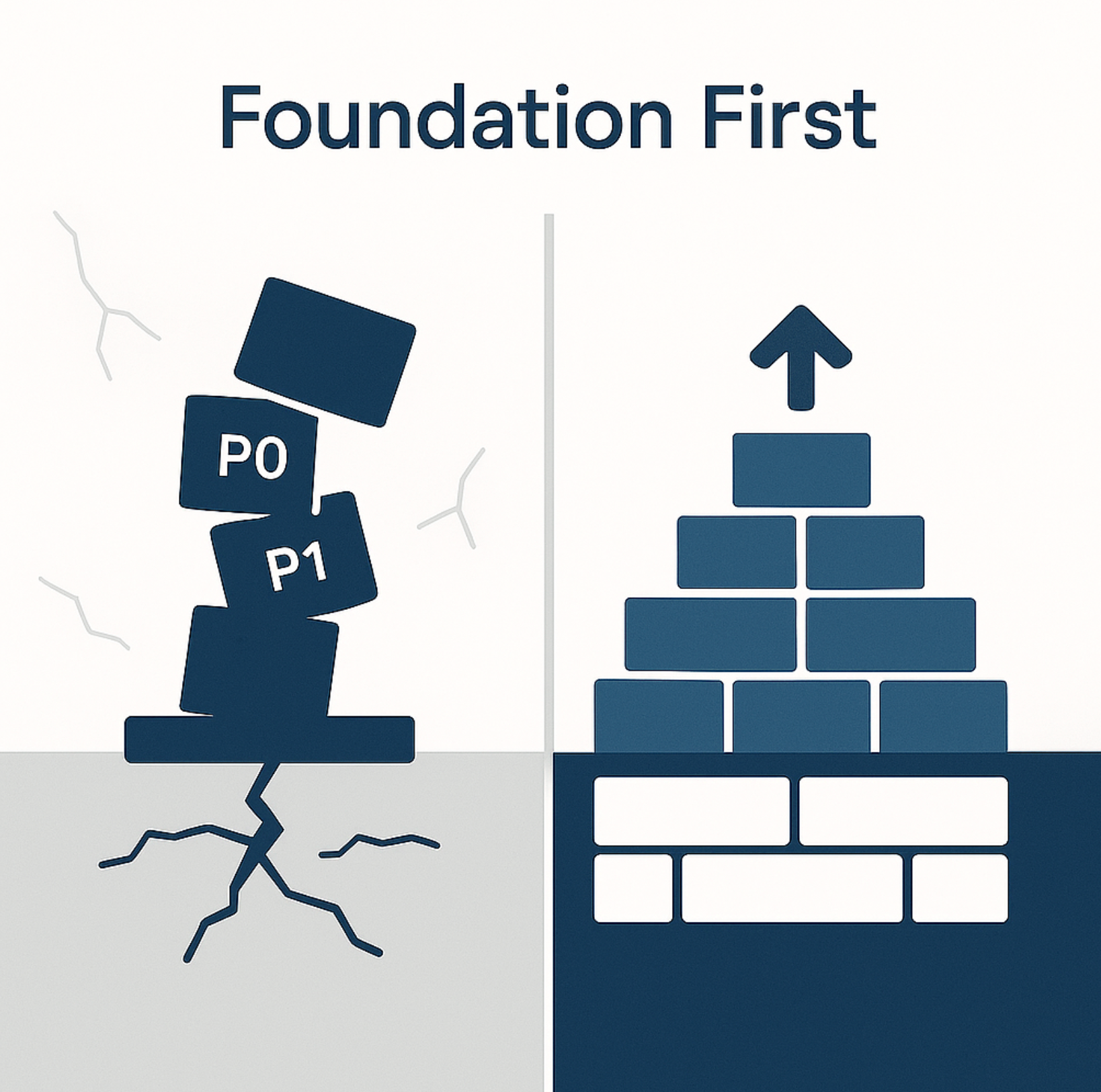
Tech debt is about everything that stems from unstable foundations. I had to learn this during our scaling journey. Early on, we made quick decisions to ship features fast. But as we grew, those shortcuts started choking our growth. Companies pay an additional 10 to 20 percent to address tech debt on top of the costs of any project, and we felt every percentage point. The real killer isn't just the extra time – it's the opportunity cost. While your team is fixing yesterday's shortcuts, your competitors are building tomorrow's features. Developers working on the right things can accelerate a company's move into new markets or product areas and help companies differentiate themselves at disproportionate rates. But there's a human cost too. Nobody likes working with a significant handicap and being unproductive day after day. ... Here's where most companies get it wrong. They think innovation means constantly adding new features, launching new products, exploring new markets. But true innovation requires a stable foundation. 30 percent of CIOs surveyed believe that more than 20 percent of their technical budget ostensibly dedicated to new products is diverted to resolving issues related to tech debt. You're essentially pouring money into a bucket with holes in it. I've learned that the most innovative companies aren't necessarily the ones building the flashiest features – they're the ones who've mastered the discipline of maintaining clean, stable systems that can support rapid innovation.


Regulatory bodies close in on AI chatbots as LLMs face greater scrutiny

As regulators roll out online safety laws designed to protect kids from harms associated with porn and social media, a new threat has crept up behind them that could overshadow both. AI chatbots – exemplified by OpenAI’s large language model, ChatGPT – have been around long enough to prove themselves popular, and risky. ... Inman-Grant says schools have “been reporting that 10- and 11-year-old children are spending up to six hours per day on AI companions.” Moreover, it’s not just that they’re befriending LLMs – it’s that they’re often friends with benefits, or “sexualized chatbots.” “We don’t need to see a body count to know that this is the right thing for the companies to do,” says the commissioner. “I don’t want to see Australian lives ruined or lost as a result of the industry’s insatiable need to move fast and break things.” ... Brazilian authorities are pressuring Meta to immediately remove AI chatbots that “simulate child profiles and engage in sexual conversations with users.” According to PPC Land, the bots in question are those created using Meta AI Studio, a tool for developing custom AI chatbots. In mid-August, Brazil’s Attorney General (AGU) issued an “extrajudicial notice” giving Meta 72 hours to remove the erotic kiddie chatbots. It references Article 217-A of Brazil’s Penal Code, which criminalizes sexual acts with minors under 14 years old.The AGU argues that this includes simulated sexual interactions with AI. Under Brazilian law, platforms are liable for harmful content hosted on their services.


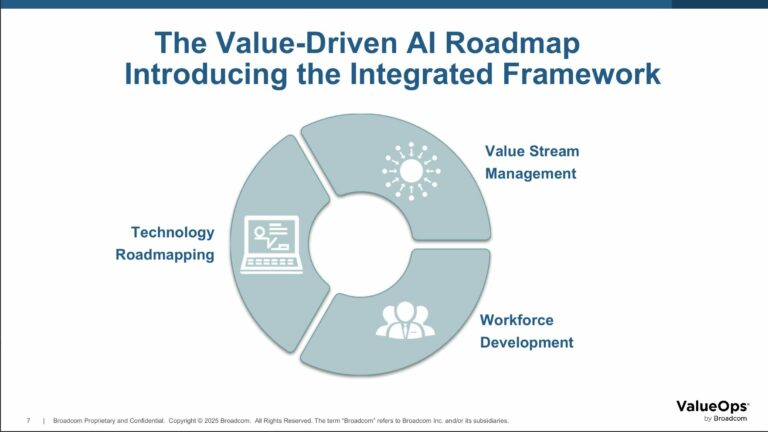
The Value-Driven AI Roadmap

The use of value stream management helps organizations map their processes, identifying impediments to delivering software that has value, and using automation to collect metrics that give insights into those processes – and even anticipate where the next hurdles might pop up, Knight said. “I’m going to map the process out, look at where things are and say, hey, I could put an AI agent here, then create a program and a plan to do that in a technology roadmap to line up with it,” he explained. Technology roadmapping involves aligning AI – what the organization is using now and what its needs might be a few years down the road – with business value. Staying on top of technology involves changes being driven by the market, the level of capability maturity within the organization, and finding where the gaps in your technology exist. “Roadmapping is more about helping organizations line up the change of different technologies and how to roll that out,” he said. Finally, Knight pointed out, assessing the skills within your workforce, where training is needed, and how willing the workers are to change, is critical. “It’s about how people in the future, in organizations, will have AI agents that work for them. And you think about it having extra capabilities where I’m going to have this set of skills with these people, but I may have an agent that works for me,” Knight said. “Maybe that agent does paralegal work for me.


The Hidden Cost of Overuse and Misuse of Data Storage

At first glance, storing everything might not seem like a huge problem. But when you factor in rising energy prices and ballooning data volumes, the cracks in that strategy start to show. Over time, outdated storage practices, from legacy systems to underused cloud buckets, can become a surprisingly expensive problem. ... what often gets overlooked are the hidden costs: the backup of low-value data, the power consumption of idle systems, or the surprise charges that come from cloud services which are not being monitored properly. Then there’s the operational cost. Disorganised or poorly labelled data makes access slower and compliance tougher. It also increases security risks, especially if sensitive information is spread across uncontrolled environments. The longer these issues go unchecked, the more danger there is of a snowball effect. ... Cutting storage costs is an obvious benefit but it’s far from the only one. A smarter, edge-driven strategy helps businesses build a more efficient, resilient, and sustainable digital infrastructure ... By processing and filtering data locally, organisations reduce the energy demands of transmitting and storing large volumes centrally, supporting both carbon reduction targets and lower utility costs. As sustainability reporting becomes more critical, this can also help meet Scope 2 emissions goals.


9 cloud strategy questions every IT leader must answer

Cloud platforms are increasingly procured by non-IT teams. Establishing a unified decision framework that brings together expertise from across the enterprise to guide the cloud lifecycle, from selection to sunsetting, is key. Without this, “organizations face fragmented architectures, redundant tools, and compliance gaps,” says CIO Mentor’s Topinka ... Working with multiple cloud partners can offer negotiating leverage and access to best-of-breed services, but it also compounds complexity and requires a range of expertise. ... “The maturity and advancement of cloud solutions depend on the team’s culture and their ability to operate and innovate within the cloud,” Hackett Group’s Nathan adds. ... “Clear visibility into consumption patterns, resource allocation, and usage metrics is essential,” says Nathan, noting that cloud financial management practices help maintain accountability and prevent cost overruns, particularly in multicloud environments. Allocating cloud costs directly to business units or product teams also increases transparency and encourages more efficient use of cloud resources, according to Kocherlakota. ... Cloud adoption without attendant legacy modernization can backfire, S&P Global’s Kocherlakota says. “Simply using the cloud as a data center while maintaining legacy applications can lead to cost creep,” he says. “Investing in transforming legacy systems optimizes infrastructure and boosts efficiency.”


Has Cloud Security Reached Its Breaking Point?

The comfortable assumptions that have guided cloud security for the past decade are crumbling. Supply chain attacks cascade through thousands of projects simultaneously. ... The GitHub Actions compromise (CVE-2025-30066) represents an evolutionary leap in supply chain attacks. What started as a single compromised Personal Access Token cascaded through 23,000+ repositories by exploiting dependency chains. Attackers retroactively modified version tags and implemented memory dumping to extract AWS keys, GitHub tokens and RSA keys from CI/CD logs. ... 89 percent of enterprises run multi-cloud environments, but only 23 percent have full visibility across their infrastructure. This creates a perfect storm where 70 percent of attacks span three or more cloud surfaces simultaneously ... While experts predict quantum computers will break current encryption by 2027 to 2030, the 'harvest now, decrypt later' attacks are already underway. Only 24 percent of organizations have started post-quantum cryptography preparation, leaving millions of encrypted communications vulnerable to future decryption. ... The evidence is clear that incremental improvements cannot address the mathematical realities we face. Security already struggled to scale for cloud workloads without core organizational and process changes; with AI adoption accelerating, it is impossible unless enterprises address foundational gaps.


Probably Secure: A Look at the Security Concerns of Deterministic vs Probabilistic Systems

From a security standpoint, there are places where probability belongs, and places where it absolutely does not. Identity authentication, transaction authorization, cryptographic key validation, and agent permissions must be rooted in deterministic validation, not statistical confidence. Generative AI, while powerful, can easily mislead developers, suggesting insecure code, leaking secrets through logs, or introducing unsafe patterns without clear visibility. Even well-structured retrieval-augmented generation (RAG) systems have a fundamental limitation: you can’t “tune” them for security beyond scrutinizing all input and output, leaving room for mistakes that attackers can exploit. Your tooling needs to treat probabilistic intelligence as a supplement rather than a trust anchor, reinforcing every critical security decision with deterministic, provable checks. ... Probabilistic tools are powerful for risk detection, prioritization, and context enrichment. Generative AI may accelerate development, but without deterministic guardrails, it can also accelerate risk. Teams need to focus on closing this gap by combining the strengths of AI-driven detection with hardened, verifiable validation for every secret, token, and non-human identity. This layered model ensures that organizations can safely leverage AI-driven insights while preserving a foundation of cryptographic certainty.


What do cybercriminals know about the retail sector that we don’t?

“Stolen customer data is valuable to fraudsters. So, retail is particularly vulnerable because retailers store large quantities of consumer data.” With so much to lose, retailers should be taking more care to protect themselves, but that is no easy feat. The scale of their operations means their businesses have many moving parts. Their supply chains are long and complex, involving an intricate and ever-changing network of suppliers. ... While external cybersecurity advisors are often called in after a breach has occurred, it is also wise to have them on board as a pre-emptive measure, as Kirsten Whitfield, co-head of law firm Fieldfisher’s cyber breach team in London, explains “Get a forensics provider on board to help close down an incident, and engage them in advance, as they could stress test the systems against common attack vectors from their knowledge of hacking groups,” she says. “Even engage a professional ransomware negotiator who can profile attackers.” On the technical front, the biggest challenge is to keep pace with the growth in AI. Hackers are using it, so retailers need to invest in defensive AI to fight fire with fire. “Investing as regulators expect you to will not necessarily mean you are iron clad,” says Whitfield. “Hackers are increasingly sophisticated and use tools like AI, so it is a good idea to invest in it, too, though you don’t want to rush into buying AI that you think will protect you but has not been fully understood.”

Daily Tech Digest - July 12, 2025


Quote for the day:

"If you do what you’ve always done, you’ll get what you’ve always gotten." -- Tony Robbins


Why the Value of CVE Mitigation Outweighs the Costs

When it comes to CVEs and continuous monitoring, meeting compliance requirements can be daunting and confusing. Compliance isn’t just achieved; rather, it is a continuous maintenance process. Compliance frameworks might require additional standards, such as Federal Information Processing Standards (FIPS), Federal Risk and Authorization Management Program (FedRAMP), Security Technical Implementation Guides (STIGs) and more that add an extra layer of complexity and time spent. The findings are clear. Telecommunications and infrastructure companies reported an average of $3 million in new revenue annually by improving their container security enough to qualify for security-sensitive contracts. Healthcare organizations averaged $7.3 million in new revenue, often driven by unlocking expansion into compliance-heavy markets. ... The industry has long championed “shifting security left,” or embedding checks earlier in the pipeline to ensure security measures are incorporated throughout the entire software development life cycle. However, as CVE fatigue worsens, many teams are realizing they need to “start left.” That means: Using hardened, minimal container images by default; Automating CVE triage and patching through reproducible builds; Investing in secure-by-default infrastructure that makes vulnerability management invisible to most developers


Generative AI: A Self-Study Roadmap

Building generative AI applications requires comfort with Python programming and basic machine learning concepts, but you don't need deep expertise in neural network architecture or advanced mathematics. Most generative AI work happens at the application layer, using APIs and frameworks rather than implementing algorithms from scratch. ... Modern generative AI development centers around foundation models accessed through APIs. This API-first approach offers several advantages: you get access to cutting-edge capabilities without managing infrastructure, you can experiment with different models quickly, and you can focus on application logic rather than model implementation. ... Generative AI applications require different API design patterns than traditional web services. Streaming responses improve user experience for long-form generation, allowing users to see content as it's generated. Async processing handles variable generation times without blocking other operations. ... While foundation models provide impressive capabilities out of the box, some applications benefit from customization to specific domains or tasks. Consider fine-tuning when you have high-quality, domain-specific data that foundation models don't handle well—specialized technical writing, industry-specific terminology, or unique output formats requiring consistent structure.


Announcing GenAI Processors: Build powerful and flexible Gemini applications

At its core, GenAI Processors treat all input and output as asynchronous streams of ProcessorParts (i.e. two-way aka bidirectional streaming). Think of it as standardized data parts (e.g., a chunk of audio, a text transcription, an image frame) flowing through your pipeline along with associated metadata. This stream-based API allows for seamless chaining and composition of different operations, from low-level data manipulation to high-level model calls. ... We anticipate a growing need for proactive LLM applications where responsiveness is critical. Even for non-streaming use cases, processing data as soon as it is available can significantly reduce latency and time to first token (TTFT), which is essential for building a good user experience. While many LLM APIs prioritize synchronous, simplified interfaces, GenAI Processors – by leveraging native Python features – offer a way for writing responsive applications without making code more complex. ... GenAI Processors is currently in its early stages, and we believe it provides a solid foundation for tackling complex workflow and orchestration challenges in AI applications. While the Google GenAI SDK is available in multiple languages, GenAI Processors currently only support Python.


Scaling the 21st-century leadership factory

Identifying priority traits is critical; just as important, CEOs and their leadership teams must engage early and often with high-potential employees and unconventional thinkers in the organization, recognizing that innovation often comes from the edges of the business. Skip-level meetings are a powerful tool for this purpose. Most famously, Apple’s Steve Jobs would gather what he deemed the 100 most influential people at the company, including young engineers, to engage directly in strategy discussions—regardless of hierarchy or seniority. ... A culture of experimentation and learning is essential for leadership development—but it must be actively pursued. “Instillation of personal initiative, aggressiveness, and risk-taking doesn’t spring forward spontaneously,” General Jim Mattis explained in his 2019 book on leadership, Call Sign Chaos. “It must be cultivated for years and inculcated, even rewarded, in an organization’s culture. If the risk-takers are punished, then you will retain in your ranks only the risk averse,” he wrote. ... There are multiple ways to streamline decision-making, including redefining decision rights to focus on a handful of owners and distinguishing between different types of decisions, as not all choices are high stakes. 


Lessons learned from Siemens’ VMware licensing dispute

Siemens threatened to sue VMware if it didn’t provide ongoing support for the software and handed over a list of the software it was using that it wanted support for. Except that the list included software that it didn’t have any licenses for, perpetual or otherwise. Broadcom-owned VMware sued, Siemens countersued, and now the companies are battling over jurisdiction. Siemens wants the case to be heard in Germany, and VMware prefers the United States. Normally, if unlicensed copies of software are discovered during an audit, the customer pays the difference and maybe an additional penalty. After all, there are always minor mistakes. The vendors try to keep these costs at least somewhat reasonable, since at some point, customers will migrate from mission-critical software if the pain is high enough. ... For large companies, it can be hard to pivot quickly. Using open-source software can help reduce the risk of unexpected license changes, and, for many major tools there are third-party service providers that can offer ongoing support. Another option is SaaS software, Ringdahl says, because it does make license management a bit easier, since there’s usually transparency both for the customer and the vendor about how much usage the product is getting.


Microsoft says regulations and environmental issues are cramping its Euro expansion

One of the things that everyone needs to consider is how datacenter development in Europe is being enabled or impeded, Walsh said. "Because we have moratoriums coming at us. We have communities that don't want us there," she claimed, referring particularly to Ireland where local opposition to bit barns has been hardening because of the amount of electricity they consume and their environmental impact. Another area of discussion at the Datacloud keynote was the commercial models for acquiring datacenter capacity, which it was felt had become unfit for the new environment where large amounts are needed quickly. "From our perspective, time to market is essential. We've done a lot of leasing in the last two years, and that is all time for market pressure," Walsh said. "I also manage land acquisition and land development, which includes permitting. So the joy of doing that is that when my permits are late, I can lease so I can actually solve my own problems, which is amazing, but the way things are going, it's going to be very difficult to continue to lease the infrastructure using co-location style funding. It's just getting too big, and it's going to get harder and harder to get up the chain, for sure," she explained. ... "European regulations and planning are very slow, and things take 18 months longer than anywhere else," she told attendees at <>Bisnow's Datacenter Investment Conference and Expo (DICE) in Ireland.


350M Cars, 1B Devices Exposed to 1-Click Bluetooth RCE

The scope of affected systems is massive. The developer, OpenSynergy, proudly boasts on its homepage that Blue SDK — and RapidLaunch SDK, which is built on top of it and therefore also possibly vulnerable — has been shipped in 350 million cars. Those cars come from companies like Mercedes-Benz, Volkswagen, and Skoda, as well as a fourth known but unnamed company. Since Ford integrated Blue SDK into its Android-based in-vehicle infotainment (IVI) systems in November, Dark Reading has reached out to determine whether it too was exposed. ... Like any Bluetooth hack, the one major hurdle in actually exploiting these vulnerabilities is physical proximity. An attacker would likely have to position themselves within around 10 meters of a target device in order to pair with it, and the device would have to comply. Because Blue SDK is merely a framework, different devices might block pairing, limit the number of pairing requests an attacker could attempt, or at least require a click to accept a pairing. This is a point of contention between the researchers and Volkswagen. ... "Usually, in modern cars, an infotainment system can be turned on without activating the ignition. For example, in the Volkswagen ID.4 and Skoda Superb, it's not necessary," he says, though the case may vary vehicle to vehicle. 


Leaders will soon be managing AI agents – these are the skills they'll need, according to experts

An AI agent is essentially just "a piece of code", says Jarah Euston, CEO and Co-Founder of AI-powered labour platform WorkWhile, which connects frontline workers to shifts. "It may not have the same understanding, empathy, awareness of the politics of your organization, of the fears or concerns or ambitions of the people around that it is serving. "So managers have to be aware that the agent is only as good as how you've trained it. I don't think we're close yet to having agents that can operate without any human oversight. "As a manager, you want to leverage the AI to make you and your team more productive, but you constantly have to be checking, iterating and training your tools to get the most out of them."  ... Technological skills are expected to become increasingly vital over the next five years, outpacing the growth of all other skill categories. Leading the way are AI and big data, followed closely by networking, cybersecurity and overall technological literacy. The so-called 'soft skills' of creative thinking and resilience, flexibility and agility are also rising in importance, along with curiosity and lifelong learning. Empathy is one skill AI agents can't learn, says Women in Tech's Moore Aoki, and she believes this will advantage women.


Common Master Data Management (MDM) Pitfalls

In addition to failing to connect MDM’s value with business outcomes, “People start with MDM by jumping in with the technology,” Cooper said. “Then, they try to fit the people, processes, and master data into their selected technology.” Moreover, in the process of prioritizing technology first, organizations take for granted that they have good data quality, data that is clean and fit for purpose. Then, during a major initiative, such as migrating to a cloud environment, they discover their data is not so clean. ... Organizations fall into the pitfalls above and others because they try to do it alone, and most have never done MDM before. Instead, “Organizations have different capabilities with MDM,” said Cooper, “and you don’t know what you don’t know.” ... Connecting the MDM program to business objectives requires talking with the stakeholders across the organization, especially divisions with direct financial risks such as sales, marketing, procurement, and supply. Cooper said readers should learn the goals of each unit and how they measure success in growing revenue, reducing cost, mitigating risk, or operating more efficiently. ... Cooper advised focusing on data quality – e.g., through reference data – rather than technology. In the figure below, a company has data about a client, Emerson Electric, as shown on the left. 


Why Cloud Native Security Is More Complex Than You Think

Enterprise security tooling can help with more than just the monitoring of these vulnerabilities though. And, often older vulnerabilities that have been patched by the software vendor will offer “fix status” advice. This is where a specific package version is shown to the developer or analyst responsible for remediating the vulnerability. When they upgrade the current package to that later version, the vulnerability alert will be resolved. To confuse things further, the applications running in containers or serverless functions also need to be checked for non-compliance. Warnings that may be presented by security tooling when these applications are checked against recognised compliance standards, frameworks or benchmarks for noncompliance are wide and varied. For example, if a serverless function has overly permissive access to another cloud service and an attacker gets access to the serverless function’s code via a vulnerability, the attack’s blast radius could exponentially increase as a result. Or, often compliance checks reveal how containers are run with inappropriate network settings. ... At a high level, these components and importantly, how they interact with each other, is why applications running in the cloud require time, effort and specialist expertise to secure them.