Showing posts with label requirements gathering. Show all posts

Daily Tech Digest - October 07, 2024

AI Agents: The Intersection of Tool Calling and Reasoning in Generative AI

Building robust and reliable agents requires overcoming many different challenges. When solving complex problems, an agent often needs to balance multiple tasks at once including planning, interacting with the right tools at the right time, formatting tool calls properly, remembering outputs from previous steps, avoiding repetitive loops, and adhering to guidance to protect the system from jailbreaks/prompt injections/etc. Too many demands can easily overwhelm a single agent, leading to a growing trend where what may appear to an end user as one agent, is behind the scenes a collection of many agents and prompts working together to divide and conquer completing the task. This division allows tasks to be broken down and handled in parallel by different models and agents tailored to solve that particular piece of the puzzle. It’s here that models with excellent tool calling capabilities come into play. While tool-calling is a powerful way to enable productive agents, it comes with its own set of challenges. Agents need to understand the available tools, select the right one from a set of potentially similar options, format the inputs accurately, call tools in the right order, and potentially integrate feedback or instructions from other agents or humans.


Transforming cloud security with real-time visibility

Addressing the visibility problem first, enables security teams to understand real risk and fix misconfigurations across the organization much faster. As an example, we encounter many teams that face the same misconfiguration across hundreds of assets owned by thousands of developers. Without the right visibility into assets’ behavior, organizations have to go through every individual team, explain the risk, check if their workload actually utilizes the misconfiguration, and then configure it accordingly – essentially an impossible task. With runtime insights, security teams immediately understand what specific assets utilize the misconfigurations, which developers own them, and all the relevant risk contexts around them. This takes what could be a 6-month long project involving the whole R&D org into a simple task completed in a day and involving a few individuals. ... One of the top challenges organizations face is maintaining consistent compliance across various cloud environments, especially when those environments are highly dynamic and deployed by multiple stakeholders who don’t necessarily have the right expertise in the space. The solution lies in taking a dual approach.


Patrolling the Micro-Perimeter to Enhance Network Security

As companies move into industrial automation, remote retail sites, remote engineering, etc., the systems and applications used by each company group may need to be sequestered from corporate-wide employee access so that only those users authorized to use a specific system or application can gain access. From a network perspective, segments of the network, which become internal network micro security peripheries, surround these restricted access systems and applications, so they are only available for the users and user devices that are authorized to use them. Multi-factor security protocols are used to strengthen user signons, and network monitoring and observability software polices all activity at each network micro-periphery. The mission of a zero-trust network is to "trust no one," not even company employees, with unlimited access to all network segments, systems, and applications. This is in contrast to older security schemes that limited security checks and monitoring to the external periphery of the entire enterprise network but that didn't apply security protocols to micro-segments within that network. 


CIO intangibles: 6 abilities that set effective IT execs apart

Change leadership is different, and it’s very much a CIO-level skill, she says. “Change leadership is inspiring and motivating you to want to make the change. It’s much more about communication. It’s about navigating the different parts of the organization. It’s co-leading.” It’s one thing, she says, for an IT leader or a change management team to tell users, “This is what we’re doing and why we’re doing it.” It’s at a whole other level to have a business leader say, “Hey team, we’re next. This is what we’re doing. This is why it’s important and here are my expectations of you.” That’s what effective change leadership can accomplish. ... For critical thinking, CIOs need another intangible skill: the ability to ask the right questions. “It’s the whole idea of being more curious,” says Mike Shaklik, partner and global head of CIO advisory at Infosys Consulting. “The folks who can listen well, and synthesize while they listen, ask better questions. They learn to expect better answers from their own people. If you add intentionality to it, that’s a game-changer.” ... “In today’s environment, a lot of technology work does not happen inside of the IT organization,” Struckman says. “Yet leadership expects the CIO to understand how it all makes sense together.”


Building an Internal Developer Platform: 4 Essential Pillars

Infrastructure as Code (IaC) is the backbone of any modern cloud native platform. It allows platform engineering teams to manage and provision infrastructure (such as compute, storage and networking resources) programmatically using code. IaC ensures that infrastructure definitions are version-controlled, reusable and consistent across different environments. ... Security, governance and compliance are integral to managing modern infrastructure, but manual policy enforcement doesn’t scale well and can create bottlenecks. Policy as Code (PaC) helps solve this challenge by programmatically defining governance, security and operational policies. These policies are automatically enforced across cloud environments, Kubernetes clusters and CI/CD pipelines. Essentially, they “shift down security” into the platform. ... GitOps is an operational model where all system configurations, including application deployments, infrastructure and policies, are managed through Git repositories. By adopting GitOps, platform teams can standardize how changes are made and ensure that the actual system state matches the desired state defined in Git.


Chief risk storyteller: How CISOs are developing yet another skill

Creating a compelling narrative is also important to bolster the case for investment in the cybersecurity program, when it comes to restructuring or starting a new program it becomes very important. Hughes estimates the base set of requirements in the Center for Internet Security Controls Framework is a $2 to $3 million expense. “That’s a massive expense, so that storytelling and dialogue between you and the rest of the company to create that new, forward expense is significant,” he says. However, just as some stories have their skeptics, CISOs also need to be able to defend their risk story, particularly when there’s big dollars attached to it. De Lude has found it can be helpful to stress test the story or presentation with challenge sessions. “I might invite different people to a run through and explain the concept and ask for potential objections to test and develop a robust narrative,” she says. De Lude has found that drawing on internal expertise of people with strong communications skills can help learn how to project a story in a way that’s compelling. “Having someone lend support who wasn’t a cyber expert but knew how to really convey a strong message in all sorts of different ways was a gamer change,” she says.


The Disruptive Potential of On-Device Large Language Models

On-device personal AI assistants transform each device into a powerful companion that mimics human interaction and executes complex tasks. These AI assistants can understand context and learn about their owner's preferences, allowing them to perform a wide range of activities — from scheduling appointments to creative writing — even when offline. By operating directly on the user's device, these AI assistants ensure privacy and fast response times, making them indispensable for managing both routine and sophisticated tasks with ease and intelligence. ... Voice control for devices is set to become significantly more powerful and mainstream, especially with advancements in on-device large language models. Companies like FlowVoice are already paving the way, enabling near-silent voice typing on computers. ... On-device AI therapists have the potential to become mainstream due to their ability to offer users both privacy and responsive, engaging conversations. By operating directly on the user's device, these AI therapists ensure that sensitive data remains private and secure, minimizing the risk of breaches associated with cloud-based services.


Why cloud computing is losing favour

There are various reasons behind this trend. “In the early days, cloud repatriations were often a response to unsuccessful migrations; now they more often reflect changes in market pricing,” says Adrian Bradley, head of cloud transformation at KPMG UK. “The inflation of labour costs, energy prices and the cost of the hardware underpinning AI are all driving up data centre fees. For some organisations, repatriation changes the balance in the relative cost and value of on-premise or hybrid architectures compared to public clouds.” ... There are risks that can come with cloud repatriation. James Hollins, Azure presales solution architect at Advania, highlights the potential to disrupt key services. “Building from scratch on-premises could be complex and risky, especially for organisations that have been heavily invested in cloud-based solutions,” he says. “Organisations accustomed to cloud-first environments may need to acquire or retrain staff to manage on-premises infrastructure, as they will have spent the last few years maintaining and operating in a cloud-first world with a specific skillset.” Repatriation can lead to higher licensing costs for third-party software that many businesses do not anticipate or budget for, he adds. 


Proactive Approaches to Securing Linux Systems and Engineering Applications

With AI taking the world by storm, it is more important than ever for you, as an IT professional, to be vigilant and proactive about security vulnerabilities. The rapid advancement of AI technologies introduces new attack vectors and sophisticated threats, as malicious actors can leverage AI to automate and scale their attacks, potentially exploiting vulnerabilities at an unprecedented rate and complexity, making traditional security measures increasingly challenging to maintain. Your role in implementing these measures is crucial and valued. ... Diligent patch management is critical for maintaining the security and stability of Linux systems and applications. Administrators play a vital role in this process, ensuring that patches are applied promptly and correctly. ... Automation tools and centralized patch management systems are invaluable for streamlining the patch deployment process and reducing human error. These tools ensure that patches are applied consistently across all endpoints, enhancing overall security and operational efficiency. Administrators can patch the system and applications using configuration management tools like Ansible and Puppet. 


The Role of Architects in Managing Non-Functional Requirements

One of the strongest arguments for architects owning NFRs is that non-functional aspects are deeply integrated into the system architecture. For example, performance metrics, scalability, and security protocols are all shaped by architectural decisions such as choice of technology stack, data flow design, and resource allocation. Since architects are responsible for making these design choices, it makes sense that they should also ensure the system meets the NFRs. When architects own NFRs, they can prioritise these elements throughout the design phase, reducing the risk of conflicts or last-minute adjustments that could compromise the system’s stability. This ownership ensures that non-functional aspects are not seen as afterthoughts but rather integral parts of the design process. ... Architects typically have a high-level, end-to-end view of the system, enabling them to understand how various components interact. This holistic perspective allows them to evaluate trade-offs and balance functional and non-functional needs without compromising the integrity of the system. For example, an architect can optimise performance without sacrificing security or usability by making informed decisions that consider all NFRs. 


Quote for the day:

"Nothing ever comes to one, that is worth having, except as a result of hard work." -- Booker T. Washington

Daily Tech Digest - May 06, 2020

4 Ways to Avoid Cost-Cutting Amid Economic Uncertainty

Image: Pixabay
Traditional approaches to budget management simply won’t cut it in this stark new landscape. Indeed, they never did. Imprecise, tactical budget-cutting is little more than a panic-driven, high-risk response to crisis. And as you start thinking about what -- and how and when-- you need to cut, you can’t afford to think strictly in terms of reducing expenses. Dollars matter, of course: Just don’t be myopic. Focus instead on business value, on the things you retain that drive that value, and on what the business will require as you eventually shift into recovery mode. ... CIOs must now identify and focus on initiatives that help the CEO and the business ensure the organization survives and thrives during this crisis. Partnership across the board is key for IT as the department must work in lockstep with the rest of the organization to identify big-ticket items that should be kept if they result in long-term savings. This may even include cost increases as the organization doubles down on the things that matter most. But if they drive long-term value and all partners are on the same page, it’s infinitely smarter than blunt-force cutting.


Tech-Driven Next-Gen Corporate Banking

Indeed, the biggest challenge may be persuading top executives to put the priority on a comprehensive and inclusive approach to fostering organizational excellence across corporate banking operations. In many instances, it is difficult for all of the business units and support units to embrace a wholesale paradigm shift. Attachment to internal organizational silos, new team dynamics, and modifying control functions mean that making the necessary change is never easy. At the same time, by taking the lead in the shift to digital, cutting-edge corporate banking operations can establish a superior position versus other challengers and new entrants. Some pioneering banks have already carved out comparatively large customer bases and are steadily accruing expertise related to data gathering, remittance processing, conflict resolution, and payment making. Notably, some banks are already making pioneering efforts in data analysis and AI. 


Why metadata is crucial in implementing a solid data strategy

Why metadata is crucial in implementing a solid data strategy image
Aside from the critical compliance issue, businesses can find great advantages in good metadata management. A host of misguided decisions are ordinarily made based on wrong or inaccurate information – usually due to non-consistent record labelling, duplicates, or non-explicit naming practices, which means that the latest and most accurate data might easily be lost or missed among the old or wrong ones. This is why it’s crucial to ensure all data is combined in a single source of truth which can yield accurate insights for businesses to make well-informed decisions on. Ensuring that the file metadata is kept organised and up to date –what is commonly referred to as data lineage– is important for quality control. It allows for better visibility, and so helps organisations to keep track of all data iterations and movements. Accurate metadata records play a key role in managing the rest of the data as well, helping maintain, integrate, edit, secure it and audit it as benefits the business. Correctly governed, metadata can be a vital factor in enabling innovation, future-forward initiatives and what will eventually become the new normal. One such example is AI.


Business Service vs. Product Thinking


If by product you just mean software as a trade good, services are more attractive. If by service you mean something low level and technical, products are more attractive. The legacy of definitional disagreement between ITSM vs. SOA plays into this issue”. Hinchcliffe said, “I’d say that you can’t have a product without a service. But you can’t have a good service without it being treated as a product”. With respect to question, Hinchcliffe said, “yes, project portfolio and service management still have value, but they are becoming much more operational and productized”. CIO David Seidl agrees with Dion when he says, “massive scaling of how we do online instruction, handling growth in conferencing, softphones, and collaboration technology. Remote support issues for people who have never worked at home. Even things like re-engineering solutions for remote work. We need to plan and run these darn things. We need to support them and their integrations. We need to understand their lifecycle, and where that intersects with all of the other things we have running. If you don’t keep a broad view…you fail”.


Sonatype Nexus vs. JFrog: Pick an open source security scanner


Both Sonatype and JFrog frame their open source security scanning strategies in the broader context of an SDLC rapid development framework. Sonatype prioritizes automation, while JFrog centers on swift code delivery. The products have similar security scanning processes. Each tool analyzes defined policies and checks code against a set of online repositories of problems. The scanning process is recursive; a vulnerable low-level element will reflect on any higher-level packages that include it, up to the application and project levels. Users see the issues the tools find, and the hierarchies those issues affect, in the GUI. Both JFrog and Sonatype also can generate alerts for violations, which in turn can trigger specific actions. Sonatype's Nexus platform enables teams to universally manage artifact libraries. Nexus harmonizes project management and code management, to accelerate development.


Forces of nature


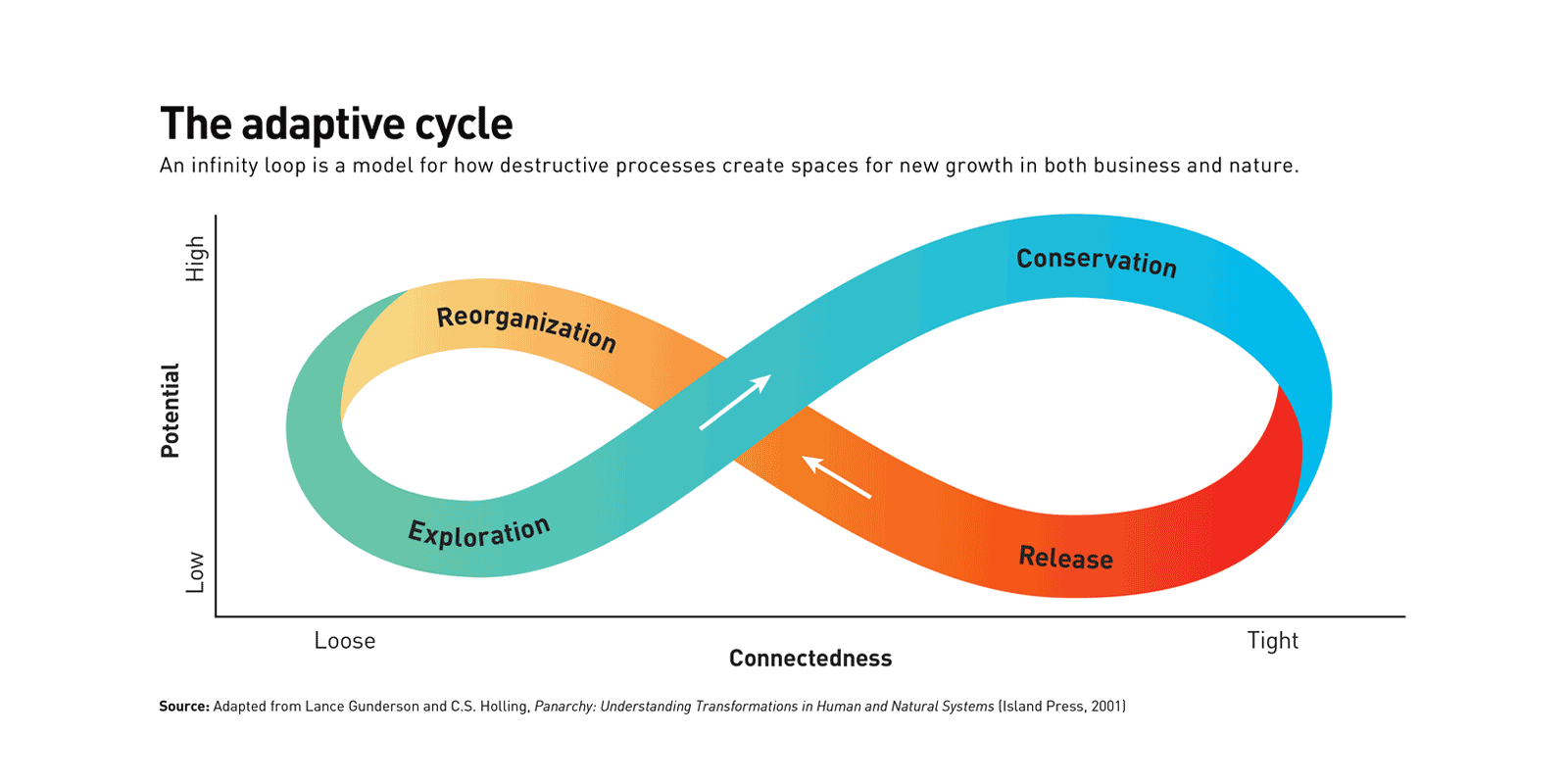
Most nascent enterprises die in the early stage, because passion is not sufficient to guarantee commercial success. Those startups that survive develop a logic for their value creation process and assemble their value chain, moving into a stage of Reason. Former innovators evolve into managers. They are still free to act, but now they know what to do and their task is clear: to scale the enterprise as rapidly as possible. As companies move into the Reason part of the cycle, their priorities become raising financial resources, managing growth, recruiting people, and preserving the startup culture. But these priorities become increasingly challenging as scale and geographic dispersion grow. According to anthropologist Robin Dunbar, head of the Social and Evolutionary Neuroscience Research Group at Oxford University, the maximum number of personal relationships that human beings can comfortably maintain is about 150. So once an organization grows beyond that size, more formality is required. Managers must turn to the panoply of mainstream management methods. They do so for the very best of reasons: to embed and preserve the enterprise’s recipe for success.


Cisco spotlights new IT roles you've never heard of

certification leadership strategy project management check progress busnessman leader by natali mis
Business translator: The business translator works to better turn the needs of business into service-level, security and compliance requirements that can be applied and monitored across the network. The translator also works to use network and network data for business value and innovation, and their knowledge of networking and application APIs will help them glue the business to the IT landscape. Network guardian: A network guardian works to bridge network and security architectures. They build the distributed intelligence of the network into security architecture and the SecOps process. This is where networking and security meet, and the guardian is at the center of it all, pulling in and pushing out vast amounts of data, distilling it and then taking action to identify faults or adapt to shutdown attackers. Network commander: Intent-based networking builds on controller-based automation and orchestration processes. The network commander takes charge of these processes and practices that ensure the health and continuous operation of the network controller and underlying network.


Critical Metrics to Keep Delivering Software Effectively in the "New Normal" World

For organisations delivering software in an Agile way, a sensible place to start is a set of metrics that tie back to core Agile principles – so that everyone is focused on the ultimate Agile goal of increasing customer satisfaction through “the early and continuous delivery of valuable software” – despite the challenges thrown up by the ‘new normal’ world. As Reuben Sutton, Plandek’s VP Engineering notes, “We have had to move to a fully remote working environment overnight, during one of the most intense software delivery periods our company has ever known. The Agile delivery metrics that our teams track and understand have been our ‘North star’. We know that we are still going in the right direction, as we can see it objectively in the metrics.” If Agile principles are the ‘north star’ around which you set your goals in the ‘new normal’ world, then you will need an effective framework for adopting them. In our experience, this framework needs to provide a simple hierarchy of metrics, so that they are understood and adopted by everyone.


Should you let a cloud maturity model judge you?

Should you let a cloud maturity model judge you?
The issue that I have now with the many cloud computing maturity models out there—and there are many—is that people often rely on them too much. They can dilute the larger picture of the right way to do cloud adoption and how an organization should set the appropriate priorities. For instance, it never should be about using a specific cloud-based technology, such as serverless, containers, Kubernetes, or machine learning. It’s about leveraging the cloud for the right purposes that are consistent with serving the business. These maturity models do offer a beneficial measure of culture and internal processes, which are actually more important than adopting trendy cloud technology. Indeed, unless technology is employed specifically to serve the needs of the business, technology (including cloud technology) can take you back a few steps. You’re ultimately not aligning business requirements with the correct and pragmatic use of cloud and noncloud technology. Don’t get me wrong, there are some helpful and some not so helpful maturity models out there. As I practice enterprise cloud migrations, including assessment and planning, I use some of these models as foundational benchmarks at times.


Example of Writing Functional Requirements for Enterprise Systems

It is worth mentioning that while system requirements described all object types without exception, we didn't need to write use cases for all of them. Many of the object types represented lists of something (countries, months, time zones, etc.) and were used similarly. This allowed us to save our analysts’ time. An interesting question is which stakeholders and project team members use which requirement level. Future end users can read general scenarios, but use cases are too complicated for them. Because of this, our analysts just discussed them with end users and didn’t ask them to read or review use cases. Programmers usually need algorithms, checks and system requirements. You definitely can respect a programmer who reads use cases. Test engineers need all levels of requirements, since they test the system at all levels. In comparison with, for example, MS Word documents that are still widely used, Wiki allowed our requirements to be changed by several team members at the same time.


Quote for the day:


"Humility is a great quality of leadership which derives respect and not just fear or hatred." -- Yousef Munayyer


Daily Tech Digest - November 03, 2016

Machines can now recognize something after seeing it once, Cybercrime in Canada: The impact on SMBs, How integrated reporting is changing the role of the accounting profession, Saudi Arabia turns to big data to boost business innovation and more.

Machines Can Now Recognize Something After Seeing It Once

The best algorithms can recognize things reliably, but their need for data makes building them time-consuming and expensive. An algorithm trained to spot cars on the road, for instance, needs to ingest many thousands of examples to work reliably in a driverless car. Gathering so much data is often impractical—a robot that needs to navigate an unfamiliar home, for instance, can’t spend countless hours wandering around learning. Oriol Vinyals, a research scientist at Google DeepMind, a U.K.-based subsidiary of Alphabet that’s focused on artificial intelligence, added a memory component to a deep-learning system—a type of large neural network that’s trained to recognize things by adjusting the sensitivity of many layers of interconnected components roughly analogous to the neurons in a brain. 


A glimpse of the future, part three: the internet of things

Certainly, there are many projects that are focused upon creating a self-sustaining planet where, instead of using fossil fuels or other dirty power systems, we get all our energy from the Sun. Elon Musk’s company announced just the other day a range of new house tiles that look like tiles but are actually solar panels. The world is changing fast, super-fast, and much of it being driven by the visionary Elon Musk but he’s not alone. For example, Jeff Bezos is quietly building a whole new world through Amazon. In fact, it seems that we have two sorts of billionaires out there. Those who want to create new solutions for the future (Musk, Bezos and Branson), and those who want to solve present problems in the future (Gates, Buffett, Zuckerberg).


Mobile apps to take over HR technology

Businesses are showing interest in using mobile tools to measure the culture of their business. “That is becoming interesting and big,” he said. Deloitte, for example, has introduced an app called CulturePath. It asks people 10 to 15 questions about their workplace, such as how much freedom they have, how safe they feel and how much collaboration there is, to assess the culture of the organisation. “In most companies, the CEO believes the culture is a certain way. It may be that way around him or her, but it may be completely different out in the company depending on who the manager is,” he said. ... A number of recruitment tools now have tracking systems that measure how diverse the process is, highlighting any unconscious bias.


Cybercrime in Canada: The impact on SMBs

The picture of Canadian SMB cybersecurity that emerges from this survey is of many good intentions and a broad awareness that cybercrime is a threat to organizations. For instance, 96% of SMB employees think backing up company files is important, and 92% think having IT security software installed on all devices is an important IT security measure. A very encouraging 88% place a strong emphasis on “training on your company’s IT security procedures”. Yet much work remains to be done. Only 43% on SMB employees felt confident that their business and its reputation could “survive and thrive” after a cyberattack. And only 40% said they were “very satisfied” with their company’s current IT security policies, procedures, and products.


One in three targeted cyberattacks results in a security breach: Accenture Survey

A new security survey from Accenture has found that, in the past twelve months, roughly one in three targeted cyber attacks resulted in an actual security breach, which equates to two to three effective attacks per month for the average company. Still, a majority of security executives (75 percent) surveyed are confident in their ability to protect their enterprises from cyberattacks. For the survey report ‘Building Confidence: Facing the Cybersecurity Conundrum,’ Accenture surveyed 2,000 enterprise security practitioners representing companies with annual revenues of $1 billion or more in 15 countries about their perceptions of cyber risks, the effectiveness of current security efforts and the adequacy of existing investments.


How Integrated Reporting Is Changing The Role Of The Accounting Profession

The ability to adapt to the rapidly changing business environment and anticipate the information needs of our investors, shareholders, partners and clients is a vital part of corporate reporting. At its core is the need to develop and use a best practice approach that will assist the decision-making process and contribute to the successful implementation of our strategy. As I lead the implementation of the Integrated Reporting (IR) framework and embed its principles into the fabric of our corporate reporting, my goal is to influence behavior and shift the focus to a more comprehensive view of the factors that contribute to increased strategic alignment and the long-term sustainability of our institution.


Saudi Arabia turns to big data to boost business innovation

“When you are only focusing on your strategy, you can miss significant changes in the business model of your industry and suddenly a brand new competitor arrives on your doorstep. This is why Saudi CIOs are becoming more anchored in their business strategy.” Barig Siraj, director of IT and ERP at Zahid Group, one of the region’s biggest conglomerates, agreed that big data strategy would loom large as his business becomes more globalised. Although Zahid is not currently undertaking big data initiatives, Siraj said global partners of its leasing division, such as Caterpillar and Volvo Trucks, would soon require data exchange and analytics to gain global information insights.


Q&A With The Author on "Designing the Requirements”, an Alternative Approach

Obviously the book is about design of IT applications but I have long felt that it is very odd that IT design should be so different from other kinds of design like designing a building. For instance, you would never incrementally design a house; start by designing a wall say, showing it to the customer and asking if that was what they wanted and then, when they were happy with that, showing them another wall and so on. When starting on this journey many years ago, I wanted to know exactly how IT design was different from “normal” design and why. And the first point I noticed was that design of buildings or machines was hierarchical. It’s the hierarchy that gives you traceability – if something is changed or breaks, you go up the hierarchy to understand the ramifications on the rest of the design.


The True Potential of RegTech: Fostering Systemic Financial Stability

RegTech platforms to date have primarily been designed to help major financial institutions meet the burgeoning, new demands of regulators and policymakers. Yet RegTech offers regulators much more. It offers a proportionate risk-based approach where access to and analysis of data enables more granular and effective supervision of markets and market participants. This new form of data reporting and monitoring has the potential to benefit macro-level supervision and stability ... Yet to date RegTech has fallen far short of this vision. For now, RegTech’s growth has principally been in processes that substantially decrease compliance costs and the potential for regulatory fines. The most immediate practical use has been to make it easier to attact and monitor clients in compliance with know-your-customer (KYC) rules.


Do We Need Two Types of CIO?

More traditional CIOs, with a long history of infrastructure projects, are likely to be more suited, and more comfortable, keeping the lights on. They will be focused on automating core tasks and driving efficiencies in existing processes. Whereas more digitally ambitious “change agents” will want to explore disruptive technologies to transform operational models altogether. A good example of this is the IoT2.0 approach adopted by Panera Bread to digitally mobilize customer-facing processes, including ordering and paying. I talked about Panera’s innovations in some more detail in my previous post. Perhaps there is a role for both types of CIO―and perhaps we’ll see a rewriting of senior job titles to reflect this increasing alignment between IT and business strategy.


Quote for the day:


“I do not think that there is any other quality so essential to success of any kind as the quality of perseverance.” -- John D. Rockefeller


November 08, 2015

AIOTI publishes recommendations on the future of the Internet of Things

The report from WG01 built on the work of the IoT Research Cluster (IERC) and is focused on boosting the IoT technological advancements and converging the shaping and development of new dynamic business models and IoT ecosystems. Aschair of the AIOTI WG01, Dr. Ovidiu Vermesan Chief, Scientist at SINTEFsaid: "our report will promote the market emergence of IoT and overcome the fragmentation of 'silos', architectures and applications. IoT technology is the needed enabler for eliminating the 'digital divide' and creating the basis for the implementation of the Digital Single Market".


What the Windows 7 Pro sales lifecycle changes mean to consumers and business buyers

Enterprise deployments are essentially immune from the Microsoft sales lifecycle. In big organizations, IT departments buy Volume License editions of Windows with the Software Assurance add-on, which give them the freedom to deploy a consistent image of whatever Windows version they've chosen as their corporate standard. The two-year extension makes it easier for small and medium-size businesses to get some of that flexibility. Because the end-of-sales date for consumer editions of Windows 7 PCs arrived as scheduled in 2014, new PCs running those editions are difficult to find. But business PCs with Windows 7 preinstalled can continue to be sold until late 2016.


Connecting humans and computers

It’s important to think about how wearable devices could incorporate larger viewing experience, either by extending the display or leveraging external displays opportunistically. There is some exciting research going on at Microsoft, Mitsubishi and Disney which is looking into projecting displays from wearables onto nearby walls, so that information within the device is easier to expose and interact with. As these devices become really small, I think that these factors will be critical to balancing user experience with form and maintaining the convenience that we have with desktop and notebook computing.The next issue with wearables is the quality of inference from sensor data. In my opinion as a researcher, Fitbit and other activity trackers of that sort are inadequate due to poor inference qualities.


Digital Transformation Going Mainstream in 2016, IDC Predicts

The digital technologies that are changing the economics and practices of traditional business — cloud computing, mobile devices, advanced data analysis and artificial intelligence — are better, cheaper and more widely available. “Mainstream companies in every industry are realizing they’ll be disrupted if they don’t get moving now,” said Frank Gens, IDC’s chief analyst and the report’s principal author. Many of these companies, according to IDC, are not moving fast enough. It predicts that a third of the top 20 companies in every industry will be “disrupted” over the next three years, meaning their revenue, profits and market position will deteriorate — not that they will go out of business.


How will blockchain technology transform financial services?

For the financial services sector it offers the opportunity to overhaul existing banking infrastructure, speed settlements and streamline stock exchanges, although regulators will want to be assured that it can be done securely. The developments potentially combine two of the most dynamic industries: the computing hub of Silicon Valley and the money management of Wall Street and the City of London. “We could go the way that file transfer technology changed music, allowing new businesses like iTunes to emerge,” says Michael Harte, chief operations and technology officer at Barclays. “That is why there is such feverish activity at the moment.”


The ironic history of the hybrid cloud

It is interesting to note that the frame of reference for this was the mainframe, which was the prevalent form of Enterprise Computing at the time. Ironically, in many ways cloud computing actually evolved from core concepts that are very mainframe centric. By the way, it should come as some surprise that the mainframe, which was called dead back in the 1980s, is growing at 20 percent year over year according to IBM’s latest financials [Disclosure: IBM is a client of the writer]. However Licklider’s vision went well beyond the initial Internet, which was more about communication. This vision was for everyone on the globe to be interconnected and able to access programs and data at any site from anywhere.


How NSX Simplifies and Enables True Disaster Recovery with Site Recovery Manager

The primary use cases are full site disaster recovery scenarios or unplanned outage where the primary site can go down due to a disaster and secondary site takes immediate control and enables business continuity. The other key use case is planned datacenter migration scenarios where one could migrate workloads from one site to another maintaining the underlying networking and security profiles. The main difference between the two use cases is the frequency of the synchronization runs. In a datacenter migration use case you can take one datacenter running NSX and reproduce the entire networking configuration on the DR side in a single run of the synchronization workflow or run it once initially and then a second time to incrementally update the NSX objects before cutover.


Microservices Decoded: Best Practices and Stacks

Earlier incarnations of microservice concepts were aptly titled 'Service Oriented Architecture' (SOA), however this term was too broad in scope and specific implementation strategies were vague. ... Clarity within software engineering field surrounding microservice architecture is currently a bit ambiguous. This is a result of the immaturity of the architecture itself and lack of industry agreed upon conventions. As microservice solutions gain notoriety the more refined, low-level definitions and specification criteria will also inherently evolve. Until these definitions and specifications mature we will can analyze and identify a number of generally accepted characteristics surrounding microservices based on pioneers who have implemented scaled and functioning microservice solutions.


Bitcoin is off to the races again - and it could soar higher

"The global banks and wire-houses have meaningfully gotten involved in the space," said Michael Sonnenshein, director of business development and sales at Grayscale Investments, which manages the Bitcoin Investment Trust, a publicly listed vehicle that tracks bitcoin. "In 2013, they were beginning to dip their toe, but primarily behind closed doors and within internal working groups." There are still lingering issues surrounding bitcoin's validity. To be sure, it is volatile and - because its loosely regulated - a draw for frauds and criminals. Some big names in the crytptocurrency community - perhaps most notably Blythe Masters, the CEO of Digital Asset Holdings - have been critical of bitcoin and say the underpinning blockchain technology is actually what's most sexy to Wall Street.


Best Practices for Optimizing the Requirements Process

This web seminar will focus on best practices for creating a fully optimized requirements life cycle that can be leveraged by any organization into project success. Drawing upon years of experience from many successful projects, the experts from Greenridge Business Systems will offer insight into how to take advantage of a “people, process and technology” approach to requirements that can have a dramatic positive impact. A case study involving a large-scale government project will also be showcased. Attendees will also learn requirements gathering best practices when large numbers of stakeholders are involved and how visualization reduces confusion through real-time collaboration and the use of fully immersive and functional simulations.


Quote for the day:


"People don't resist change. They resist being changed." -- Peter M. Senge


May 03, 2015

Thinking Differently About Risk
The growing problem of cyber threats is also a relatively new and increasingly important component of overall risk for almost every business. In addition to the very real threat of clandestine hackers sneaking past firewalls and stealing vital customer and business data, cyber threats also include more mundane concerns, such as an employee inadvertently releasing proprietary information on the Internet. In the latter case, a bad problem can very quickly be made worse if the information is picked up by social media, where it can spread virally around the world in a matter of days, if not hours. So as always, the benefits of new technologies must be balanced against the new and previously unknown risks that they engender.


Six successful innovators and the lessons we should learn from them
Ask someone to think of an entrenched and immutable industry, and automotive would likely make a list of his or her top ten. With a century of history, entrenched competitors, and a business model that's changed very little, automotive would seem like the last industry a startup with an unconventional product would attempt to enter. However, Elon Musk and Tesla Motors made a bold entrance into this market with an unconventional product and a business model so different that it's faced everything from skepticism to legal challenges. Just because a system, process, competitor, or even a whole industry seems monolithic and immune to change doesn't make it so.


Agile versus Architecture
Planning and Management make the development safer for all though. They makes the development fault tolerant. Say a risk materialises, a key developer moves on, falls sick or... The planning should have have considered that to avoid disaster, at some cost, indeed. Hence, even if the principles sound liberating, an all Agile approach of development is a risk in itself because it may endanger the project.  After all, the legacy managed approach is there for this very reason: to provide external visibility, reduce risks and dependencies and render a development as predictable as possible. Without forecasting effort and costs, the project cannot be even sanctioned.


Agile Enterprise Architecture – A Good to Great Evolution
There are substantial benefits when we effectively apply the intentional architecture, provided the iteration is not slowed down. An Agile Architect is a role in an agile team who provides inputs and technical direction based on the Architecture vision to the enterprise and ensures that the design and architecture of an individual application is in conformance with enterprise architecture vision. ... Being Great at anything requires practice. Agile teams needs to use tools and techniques which support constant change e.g. Continuous Integration, testing and refactoring Bottom line “Think long term and act short term “. Understand the agility the business needs, understand what helps you to align to the Enterprise Architecture Vision and choose design wisely!


How to Solve a Difficult Forecasting Problem
Too often, in dealing with our urgent business forecasting problems, we go for the first type of costly and time-consuming solution. Sometimes it may not be obvious that there are alternative approaches. Or sometimes we may have hired an unscrupulous consultant who will (of course) suggest a costly and time-consuming answer. Consider the apparent problem of generating highly granular forecasts, such as by customer/item for a manufacturer, or store/item for a retailer. There can be millions of time series at this most granular level. It may appear that we need to forecast all of them. So we buy terabytes of storage and the fastest processors to be able to model and forecast each of these millions of series.


The Horror of Hybrid Cloud and the real reason why you needed a Chief Digital Officer
Don't get me wrong, there are very strategic CIOs out there but these aren't the problem, in those companies you see adaptation happening already. However if you had found yourself lumbered with a non strategic CIO then these are the people you should have been planning to replace with a more strategic CIO - which after all was the real reason we hired CDOs (Chief Digital Officers).  Assuming you didn't do something crass and get lumbered with a non strategic CDO (i.e. constantly waffling on about innovation, disruption and story telling without any clear understanding of the landscape) then now is probably the time to be considering that change. If, however you only hired a CDO because every other company did then heaven help you.


The Truth About Smartphone Apps That Secretly Connect to User Tracking and Ad Sites
The user tracking sites that apps connect to are less pervasive. More than 70 percent of apps do not connect to any user tracking sites. But those that do can be extravagant, some connecting to more than 800 user tracking sites. What’s more many of these are created by organizations that Google has designated with “top developer status.” The worst offender is an app called Eurosport Player which connects to 810 different user tracking sites. A small proportion of the apps even seem designed to connect to suspicious sites connected with malware. Most users of these apps will have little, if any, knowledge of this kind of behavior. So Vigneri and co have developed their own app that monitors the behavior of others on a user’s smartphone and reveals exactly which external sites these apps are attempting to connect to.


DevOps style performance monitoring for .NET
Recently I began looking for an application performance management solution for .NET. My requirements are code level visibility, end to end request tracing, and infrastructure monitoring in a DevOps production setup. DotTrace is clearly the most well-known tool for code level visibility in development setups, but it can’t be used in a 24×7 production setup. DotTrace also doesn’t do typical Ops monitoring. Unfortunately a Google search didn’t return much in terms of a tool comparison for .NET production monitoring. So I decided to do some research on my own. Following is a short list of well-known tools in the APM space that support .NET. My focus is on finding an end-to-end solution and profiler-like visibility into transactions.


Cloud Native Architectures - a Conversation with Matt Stine
... there are a lot of aspects of what we're now calling microservices that sound very similar to SOA when compared to the first several paragraphs of SOA’s Wikipedia page. I think the real difference is in how SOA was monetized by vendors. Their focus was normally on putting everything into this new piece of middleware called an Enterprise Service Bus that was replacing all of the other large pieces of middleware that were no longer in vogue to sell. Not to say that ESB technology is bad; it was the way that we were using it, replacing one big monolithic thing with another monolithic thing; taking all the complexity from here and shoving it into there. None of that was actually required to make a move to a more service-oriented architecture.


Traceability and Modeling of Requirements in Enterprise Architecture 
As we can see, functional and nonfunctional requirements are members of both solution and problem space. The idea is that requirements are used as a bridge between the problem and the solution space and in order to cross this bridge we have to move from generic, high abstraction level requirements, to more refined ones. On the one hand the generic requirements describe how the enterprise architect formulates the given architectural problem, and on the other hand the more refined requirements provide the rationalization behind specific design decisions


Quote for the day:

"Failure is a prerequisite for great success. If you want to succeed faster, double your rate of failure." -- Brian Tracy

March 29, 2015

Compliance biggest cloud security challenge
Of those concerned most about compliance, 58 percent said that cloud services violated data protection laws in their country, 31 percent said they violated internal security policies, and 11 percent said they violated laws against moving sensitive data out of a country. As a result of the data residency laws in particular, there were significant geographical differences in whether companies opted for encryption or tokenization. CipherCloud's technology allows companies to use platforms such as Salesforce, Office 365 and Gmail while encrypting sensitive data and allowing the companies to control the encryption keys. And the encryption mechanism used still allows for some functionality to be preserved, including searching and sorting while the data is still in encrypted form.


Implement Performance Measurement in Project Ripples
One of the easy-to-correct reasons that most organisations do get paralysed with performance measurement is that they stack too much at the start: learning the methodology; proving the methodology; engaging the entire organistion in applying the methodology; tailoring and tweaking the methodology; perfecting each step of the methodology and striving to hit high-performance targets. ... It might sound counterintuitive, but starting smaller actually means you achieve much more, and much faster. That’s what a system of project ripples achieves. We implement performance measurement systematically, in ever-growing ripples of projects.


The Role of Domain Experts in Data Science
Domain expertise is most relevant, perhaps, in the interpretation of insights, particularly those insights gained using unsupervised learning about the workings of complex physical processes. An example of just such a situation was the use of Aster discovery platform to perform root cause analysis of failures in a multiple aircraft fleet from aircraft sensor and maintenance data. While the analysis started with no a priori model, a post prioriinterpretation of the results from the path analysis and the subsequent follow-up to improve aircraft safety certainly required domain expertise.


5 Ways For IT Organizations To Enable Business Success
When it comes to all the challenges facing IT organizations these days, there is no shortage of issues to focus on–everything from retiring legacy systems to figuring how to do more with less. Given the competing priorities, it’s critically important for IT organization to focus their efforts on the initiatives that will have the most strategic impact on the business. With that said–and to that end–there are things every IT organization should do to enable their business partners to succeed:


Control vs Chaos: Taming the Project Requirements Beast
One of the intrinsic challenges in software development occurs in the initial elicitation phase, when stakeholders get together and figure out what they want to achieve. The analysis, specification, and validation stages are all important moments in the project requirements definition and management, but elicitation remains a crucial first step, one that will determine the fate of the whole project. When the requirements are clear and realistic from the outset, the rest of the project unfolds naturally, even gracefully, but when the requirements are vague and impractical, they create problems that invariably snowball.


Right Now, The IoT is Like the Internet of the 1990s
Tibbets compares it to the early days of the web, which saw "a decade or more of unrestrained value" before patterns and standards around security started to emerge. "So one of the things we need to learn from is, once we learn from that value piece—which is really crucial, otherwise you're going to have a really secure thing that no one uses—that very next step has to be the follow-up, how to understand that value, and how to secure it," he says. ... "Every bike should be connected, so you can figure out where it is when it gets stolen. Bikes get stolen all the time," he says. "Once you're into less expensive products like that, it's going to become more ubiquitous."


Humanizing Big Data: The Smart Guide to Tracking Customers
“Humanizing Big Data” contends that every business recognizes the power of collecting and learning from data. But Strong insists the problem has to do with where some businesses focus when getting this information. More and more, businesses may be exclusively focusing on technology to bring in customers only to forget the customer in the process. But placing too much emphasis on technology without considering its impact on human behavior can have implications that affect the bottom line of a business now and in the future, Strong says. In other words, humans are more than a collection of clicks, Likes, mentions and Pins.


Beware of these IoT designs with security flaws
Preventing someone from attacking a device via Baby Duck Authentication is almost impossible for the average consumer-grade electronic device. The money, time, and effort put into Blu-Ray DVD security or satellite television set-top box protection is the level of effort to make something robust in the consumer market. That level of effort is rarely economical for consumer-grade hardware. ... Secret Handshakes are a very insecure design pattern because they are trivial and obvious to spoof. If a Secret Handshake can be captured, then it can be replayed. Anti-replay design patterns exist, but they often add complexity to a process or workflow that does not tolerate a lot of complexity, like the reset procedure, reconfiguration procedure, or initialisation process.


Half of enterprises have no budget at all for mobile security, survey finds
These are large companies we're talking about. Put that in the context that today's enterprises spend millions of dollars on security, locking down everything from databases to desktops. However, scant attention is being paid to today's client of choice: mobile apps. These findings come from new research released by IBM and the Ponemon Institute, which looked at the two sides of mobile security -- the apps that enterprise teams produce for customers, employees and clients. Looking at internal app development, the study concludes that mobile security is virtually non-existent, even in the largest corporations.


Beena Ammanath, GE on the Industrial Internet for Data-driven Innovation
The Industrial Internet connects brilliant machines with people at work and data analytics to find new ways to address major global challenges and improve healthcare, increase transportation and energy efficiency, and eliminate waste across every major industry. The Industrial Internet will unleash a productivity revolution to build, power, move and cure the world. ... The global economic impact of building cleaner, safer, more productive railroads, airlines, hospitals and power plants will transform industry and help our customers be more efficient and productive. By eliminating downtime, waste and guesswork, the Industrial Internet will save hundreds of billions of dollars, unleashing a productivity revolution.


Quote for the day:

"The leader who exercises power with honor will work from the inside out, starting with himself." -- Blaine Lee

November 16, 2014

How to Become a Data Scientist in 8 Easy Steps
Our friends over at DataCamp just came out with a cool new infographic entitled “Become a Data Scientist in 8 easy steps.” This hits home to a lot of people who are trying to enter this new industry hoping to satisfy a lot of unfilled job openings. The question is how best to make this transition. The useful infographic below will help answer this question by outlining the process of becoming a data scientist ... These are all excellent tips, so examine the infographic carefully for more detail. You too can become part of the “sexiest job of the 21st Century!”


Search for Growth in Social, Mobile Fuels Tech M&A Boom
“Now it’s disruptive technology that’s in the crosshairs,” Liu said. “Consolidation involves coporations needing to catch up in a way that they are not able to do fast enough orignaically.” The aggregate global value of all publicly disclosed-value deals set a new post-dotcom era quarterly high of US$73.7 billion [b], up 41 percent sequentially and 4 percent year over year. At 923 deals in total, overall volume also set a record for any quarter since 2000, rising 6 percent sequentially and 31 percent year over year. Corporations, as opposed to private equity deals, continue to drive the growth, increasing aggregate value 40 percent sequentially and 9 percent year over year to $65.3 billion.


IoT Won’t Work Without Artificial Intelligence
The big problem will be finding ways to analyze the deluge of performance data and information that all these devices create. If you’ve ever tried to find insight in terabytes of machine data, you know how hard this can be. It’s simply impossible for humans to review and understand all of this data – and doing so with traditional methods, even if you cut down the sample size, simply takes too much time. We need to improve the speed and accuracy of big data analysis in order for IoT to live up to its promise.


What Every Business Owner Needs to Know About Data Sovereignty
Unfortunately, the laws and regulations protecting digital information can be extremely complex. They are dependent on different governments and jurisdictions, and data stored in certain countries may or may not be subject to subpoena by another country’s government. As an IT professional, you’re likely responsible for ensuring that your company’s data is fully protected. However, you need to provide your business’s owner with the basics to enable him or her to make the best decisions for the company — and the valuable data it possesses. For those who don’t work with technology all day, however, the variables can be overwhelming.


Collective intelligence, big data and IEML
There are two big problems with this landscape: The first is related to the methodology; today we use mainly statistical methods and logical methods. It is very difficult to have a semantic analysis of the data, because we do not have a semantic code, and let’s remember that every thing we analyze is coded before we analyze it. ... So you need a semantic code to have a semantic analysis. We do not have it yet, but I think that IEML will be that code. The second problem is the fact that this analysis of data is currently in the hands of very powerful or rich players –big governments, big companies. It is expensive and it is not easy to do –you need to learn how to code, you need to learn how to read statistics, is not easy.


MSSP: Integrate, NOT Outsource!
This means that for the MSSP to work well for you, process integration must be carefully planned. Here we talked about the alert response integration (and here about the SLAs), but the same applies to device management (integrate with your change management and reporting),incident response (integrate with your IR) and many other processes. This also means that this focus on integration allows you to vary the degree of security ‘outsourcing’ or externalization. If your plan – monitor – triage – respond – refine chain is well planned, you can almost painlessly engage external resources (MSSP, consultants, etc) at whatever stage: need more help with cleaning the mess? Call that IR consultant. Want to shift some perimeter monitoring duties outside? Go get that MSSP.


Requirements Discovery and Constraints Analysis
The process of requirements discovery broadly involves elicitation of functional and non-functional requirements from business needs. A business or enterprise architect’s role in requirements discovery is wider and broader in terms of scope, responsibility and, nature and stage of engagement. ... The nature of business concerns will not be limited to problems addressable by technology solution but also include considerations such as investments, ROI (Return on Investments), business case, timelines, priorities, risks and solution strategies potentially involving an eco-system of internal and external stakeholders (e.g. technology providers).


Simulation-Based Embedded Agile Development
While simulations containing embedded software need not be developed in an agile manner, Scrum’s agile framework helps realize greater benefits from a SiS approach. One Scrum event is the sprint review, in which the development team demonstrates what was accomplished during the sprint. It can be challenging to have something visual to demonstrate with embedded software development as there is often little to “see.” We might get only a blinking light or a wiggling fin. ... When such feedback is used in the sprint review as well as daily collaboration, these collective learning opportunities allow more nimble responses to necessary changes in requirements and design.


BlazeMeter, New Relic Team Up To Deliver Richer App Performance Testing Analytics
“Data analysis is most valuable when you can understand and act upon it instantly. Testing makes it easy to trigger a symptom, but you need monitoring to identify the root problem in the first place,” Girmonsky told IDN. “Together, BlazeMeter and New Relic provide their customers a full 360-degree view of their systems. Customers can dynamically define the KPIs they want to analyze, query the application and instantly understand the specific quirks of their system,” he added. The growing BlazeMeter/New Relic partnership is also a sign of how IT is increasing its use of machine data and big data to improve their software lifecycle -- design, development, testing and operations.


Optimizing Enterprise Risk for Value Creation
With IT risk being a subset of Enterprise risk, and given the pervasiveness of technology within the business, optimizing IT risk has a direct and positive effect on the overall risk of the organization. So important is risk optimization of the Enterprise’s IT to the organization that within COBIT 5 there is not one, but two, dedicated processes - ‘Ensure Risk Optimization’and ‘Manage Risk’.  The Ensure Risk Optimization process is within the Governance area of the COBIT 5 framework and is supported by 3 governance practices and 16 activities. The process ensures that the enterprise’s risk appetite and tolerance are understood and not exceeded by Enterprise IT, the impact of IT risk to enterprise value is identified and managed, and the potential for compliance failures is minimized.


Quote for the day:

"Take the first step in faith. You don't have to see the whole staircase, just take the first step." -- Martin Luther King Jr.

November 15, 2014

5 Hadoop Security Projects
While other projects attempt to improve Hadoop’s security from the inside, Apache Knox Gateway tries to do it from the outside. Apache Knox Gateway creates a security perimeter between Hadoop and the rest of the world by providing a REST API gateway for interacting with Hadoop clusters. All communication with Hadoop is done via Knox Gateway, which controls and moderates it. Knox includes the following features: LDAP and Active Directory integration, support for identity federation based on HTTP headers, and service-level authorization and auditing.


Amazon Phishing Attacks Pick Up for Holiday Shopping Season
"If you get an email with a Word attachment, don't open it, just go to the site, log into your account, and all the transaction history is right there readily available." he said. "It's always a good idea to go right to the horse's mouth." So far this month, AppRiver has quarantined more than 600,000 email messages with the subject line "Your Amazon Order Has Dispatched (#3digits-7digits-7digits)" and a return address of "amazon.co.uk." The attached Word document has a macro that installs a Trojan dropper that creates a process named "SUVCKSGZTGK.exe" and the dropper then installs a keylogger that harvests banking information, email logins, and social media accounts.


ETH Researchers Develop a Thought-Controlled Genetic Interface
Using the interface they designed, the ETH team showed a human volunteer wearing an EEG cap could use his thoughts to trigger production of a particular protein, called SEAP, in human kidney cells growing in a petri dish. He could also turn on supplies of the cells that had been implanted under the skin of lab mice. The research is interesting because it shows how futuristic brain implants might function, Folcher and company write in this week’s Nature Communications. Such devices, the ETH authors speculate, might sense a person’s feelings of pain (or perhaps oncoming epileptic seizure) and then automatically trigger brain cells to pump out a helpful biotech drug.


Facebook nudges users to take control with privacy makeover
"Over the past year, we've introduced new features and controls to help you get more out of Facebook, and listened to people who have asked us to better explain how we get and use information," wrote Erin Egan, Facebook's chief privacy officer. "Protecting people's information and providing meaningful privacy controls are at the core of everything we do, and we believe today's announcement is an important step." Facebook has had its share of privacy controversies. It has repeatedly been criticized for its privacy policies and even for the difficulty in using privacy controls.


Why bug bounty hunters love the thrill of the chase
“Having a look at the security community, we can tell that there are a lot of top-notch bug hunters who fulfill nearly all of the above points. On the other hand, there are ‘unskilled’ or new bug hunters who try to make some quick bucks by using one-click-tools and sometimes go as far as threatening the business owners. We refuse to call these people ‘bug hunters’,” they said. They enjoy bug bounty hunting because it gives them the freedom to break things whenever they want. “By submitting useful reports the chances are good that more and more companies will get the idea about responsible disclosure,” they said in calling bug bounty hunting the ultimate in crowdsourcing.


Security Skills Gap Continues to Stymie Enterprise Cyber-Defenses
"Good resources are scarce and you have to find new ways to provide needed security services," Chip Tsantes, chief technology officer of the cyber-security practice at Ernst & Young, told eWEEK. “You have to be more creative to find the skills that you need.” The lack of information-security professionals has been a common theme over the past five years. More recently, government hiring and the increase in the number of devices added to networks requiring security support has led to a continue shortfall in skilled security people, which Cisco estimates at 1 million workers worldwide.


10 Big Data Career Killers
Data scientists are in high demand. The Big Data market will grow anywhere from 20 percent to 40 percent annually through 2017, depending on the market forecast you trust most. But even an industry boom doesn't guarantee job security. Here are 10 missteps that can stop your Big Data career in its tracks. Note: Special thanks to Jack Welch, executive chairman of Jack Welch Management Institute at Strayer University. Taking poetic and editorial license, we adjusted his "10 Career-Killing Pitfalls" list to focus on the Big Data market.


Next-Generation Robot Needs Your Help
“It is very good idea,” says Bilge Mutlu, an assistant professor at the University of Wisconsin, Madison, who researches the interaction between humans and robots. “It’s a lot more flexible and adaptable to day-to-day environments.” Human-robot collaboration is already increasing in industrial settings (see “Increasingly, Robots of All Sizes are Human Workmates”). Finding ways for machines to collaborate in other settings could hasten the development of a new generation of service robot. “I am 100 percent sure that if people embraced robots with limitations we would have them in our homes as we speak,” Veloso says.


Chief data officer: My mixed and nuanced musings on the need for one
When people say that "data is the new oil," they're usually making a general statement on how deeply modern organizations depend on data to drive transactions, analytics and processes in general. It's not a statement about public sector institutions but about organizations of any sort. It's in that context that many organizations decide to appoint something called a chief data officer (CDO) to oversee this precious resource. If you want a deep dive into what the CDO role entails, I strongly urge you to download this excellent whitepaper from the IBM Center for Applied Insights.


Fifty Quick Ideas to Improve Your User Stories
Teams often struggle selling stories as small chunks of work that need to fit into a sprint. Business stakeholders simply don't care about that (fully justified), because this is purely technical. We end up coming back to organising things that are easy to develop, not that are valuable to a stakeholder. Small stories are good not because they fit into a sprint, but because an organisation can quickly get feedback from them. A story is supposed to deliver something valuable to a stakeholder, and if so, we should be able to decide if the work is really done or not from a business perspective, learn from that delivery and get ideas for future work.


Quote for the day:

"Ninety-nine percent of all failures come from people who have a habit of making excuses." -- George Washington Carver

November 09, 2014

How Your Clients Can Use COBIT and BiSL to Manage Their Information
Most of BiSL’s guidance addresses the first point, whereas COBIT is stronger in the second area. Many COBIT practices apply to business information management and contribute to providing assurance that business information management processes are executed effectively. Business information managers who want to use COBIT key practices, to assure themselves and stakeholders that the information systems (in the broadest sense of the word) are under control, can use BiSL to help them decide how to implement the key practices. BiSL does not provide specific guidance as to how to comply with the key practices, but gives an extensive description of the content of the processes.


Agile and SaaS – Lessons for Value Realization
SaaS and Agile combine to enable more nimble project governance. Business leaders are able to steer the project in two-week increments to gain maximum benefit by focusing resources on features that yield immediate value, while deferring “nice-to-have” features for future deployments. As well, business leaders gain the confidence to manage the project in this way, knowing that the Agile approach means that Release 1 will indeed be the first of many value-adding deployments in a multi-release program.


TGF: Impact of the Internet of Things Version 1.0
The latest wave of developments takes interworking still further by incorporating objects of all sorts into the network of IT services, information, organizations and people. This is the Internet of Things (IoT) that provides the potential for e-devices to be commonly built into infrastructure such as roads, vehicles, localities (e.g. smart cities), homes, livestock and even people (e.g. for measuring bodily functions). Many organizations, including governments, are realizing that there are financial, social and other benefits that are emerging though the use of networks of e-devices for the collection of data (e.g. the monitoring of people and their environment for health purposes) or raising alerts (e.g. when river levels rise).


5 Steps to Actionable Key Performance Indicators
A KPI (Key Performance Indicator) should immediately inform the reader how the business is performing which in turn should suggest what actions need to be taken. And if we are measuring the effectiveness of a website, the KPIs need to inform us how the site is doing in driving our business objectives. But most don’t. Too many organizations create Top-10 lists: Top-10 pages, downloads, videos, keywords, referrers, etc. Is it important to know which documents were downloaded the most, or what keywords drove the most traffic to your site?


List of sample KPIs in 5 perspectives of BSC
Here is a general list of key performance indicators which are divided into categories. This list should not be viewed as a must have set of indicators, but it is based on the experiences of many companies and researches related to scorecards. ... t is often reasonable to evaluate not only the efficiency of some production processes and operations at a given moment, but also assess the potential of these indicators, and the opportunities to improve them in order to increase production output and broaden production line.


Agile Enterprise Architecture Increases IT Relevance
Five years ago, Cisco started on an enterprise architecture journey to unify business strategy with IT investments. Today, all of our planning and decision-making is based on an agile, well-defined architecture-based framework.We make it real by ensuring that everything we do in IT is based on business architecture. We understand what our clients are doing and what they need, and then translate that into technology architecture and roadmaps that deliver capabilities to meet their needs. ... Enterprise architecture is a springboard for cultivating consistent communication and transparency between IT and the business. It’s a mechanism for helping our users across Cisco derive strong business value from IT.


Architecturally Significant Requirements
As you progress in your career you will learn that architectural requirements are hard to determine, primarily because they need to be gathered so early in the lifecycle before anything is really known. We know that architects should start early in project lifecycles based on when an architect engages in a project, with the end goal being integration into the innovation and project funding lifecycle itself. Hopefully, your organization has learned that getting an architect engaged before the project kickoff will not only save you money but is at the root of incremental innovation. Either way at some point the solution architect will be faced with a business case and business architecture


KeyStone Security and Architecture Review
This presentation will cover architectural and procedural security concepts within KeyStone, specifically Trusts or Delgations, AMQP Security with KeyStone and integration with a Corporate LDAP for single source of truth. Given the distributed nature of OpenStack KeyStone plays a major role in binding all of the Projects together but not much is mentioned about how to do this with KeyStone or what the pitfalls and dangers of hooking up a centralized Security System to the rest of the cloud will be. Not only do you have to be wary of the services that connect to KeyStone but you also have to be cautious of the kinds of input and data you give to KeyStone from external sources.


Testing the Internet of Things: The Human Experience
“Human Experience” testing has the following components of human interaction with the device. We should test all things physical, including sizes, shapes and genders of the users. We should also include sensory reactions including sight, sound, and touch. Orientation or the interaction with human movement is an incredible crucial part of the test. We must plan for testing in various geographical locations, different weather conditions and contexts. Finally we must consider value and most thoroughly test in terms of the users’ perceptions, mindsets, biases and emotions when interacting with the device.


Agency TheoryAgency theory assumes that the interests of owners and managers are inherently in conflict and that defensive activities are necessary by owners to protect these interests. Stewardship theory points out that these assumptions aren't always true. A series of theoretical propositions concerning the stewardship model were made by Davis, Schoorman and Donaldson. Their ideas, in conjunction with ideas on best practices in IT governance from Weill and Ross  provide an explanation for variance in the effectiveness of a varietv of governance models. Application of the stewardship model results in several novel approaches to IT governance and technology management, especially with regard to post implementation value delivery


Quote for the day:

"If the rate of change on the outside exceeds the rate of change on the inside, the end is near." -- Jack Welch