Showing posts with label budget. Show all posts

Daily Tech Digest - August 18, 2026


Quote for the day:

"Be miserable. Or motivate yourself. Whatever has to be done, it's always your choice." -- Wayne Dyer

🎧 Listen to the audio debrief on YouTube

▶ Play Audio Digest

Duration: 24 mins • Perfect for listening on the go.


AI can find zero-days but still can’t reliably write secure code

While artificial intelligence has become highly capable at discovering new vulnerabilities and writing exploits, it still struggles significantly with writing secure code and fixing security flaws. Recent studies highlight a growing imbalance between these offensive and defensive capabilities, showing that a large portion of code generated by artificial intelligence contains known vulnerabilities. This gap poses a serious risk for organizations using these tools to speed up software development, as the models often introduce technical debt and security exposure alongside faster delivery times. Experts note that writing secure code is inherently difficult, and language models lack the necessary organizational context, such as specific architectures, threat models, and internal policies, to do it reliably on their own. Simply improving training data is unlikely to solve this problem entirely. Instead, the software industry is shifting toward using specialized environments that embed strict security checks, context, and validation workflows directly into the development process. These systems provide the necessary constraints to produce safer software. However, automated systems cannot replace human judgment. Traditional testing tools and human oversight remain absolutely essential. Ultimately, experienced human developers must maintain control over reviewing and approving all code changes to ensure the final product is genuinely secure and robust.


A New Paradigm for IT Budgeting

Traditional annual IT budgeting often frustrates organizations because it relies on rigid planning cycles that stifle flexibility and waste valuable time. When companies prioritize individual projects and force them to compete above a funding threshold, they unintentionally encourage padded estimates and a rush to spend remaining funds at the end of the year. This conventional approach measures success by how well teams stick to initial estimates rather than the actual value they deliver, leaving IT departments struggling to keep pace with changing business needs. To resolve these issues, organizations can shift toward an envelope-based portfolio model. Instead of evaluating dozens of isolated projects, leadership allocates funds into broader strategic envelopes, such as improving operational efficiency or enhancing the customer experience. This method simplifies financial management by keeping the focus on outcomes rather than strict plan adherence. Leaders are given the authority to adjust priorities and reallocate resources as conditions change without restarting the entire budgeting process. Artificial intelligence can further assist by streamlining early-stage planning and identifying helpful patterns across initiatives. Ultimately, adopting this envelope approach transforms IT from a constrained, overworked service provider into a responsive partner focused on delivering meaningful results and adapting calmly to new challenges.


European sovereignty is an opportunity to take a giant leap forward

The conversation around European digital sovereignty is maturing beyond a simple desire to disconnect from American tech giants. Instead, it presents a rare chance to skip over outdated legacy systems and build modern data infrastructure from the ground up. However, achieving this requires more than just new hardware. Currently, many companies struggle because small innovation teams work in isolation while the broader workforce remains stuck on older applications. While European legislation has laid the groundwork for technological independence, the actual services and applications needed to run on these new platforms are still missing. Experts emphasize that successful modernization relies on unifying fragmented data across sectors, much like managing national public works through a single, coordinated system. This level of integration demands deep collaboration across companies rather than isolated efforts. Furthermore, the belief that Europe lacks the necessary talent is a misconception; many major tech platforms were built by small teams with European roots. The actual barriers holding the continent back are a lack of venture capital and stifling regulatory hurdles. To truly succeed, Europe must shift its focus from excessive regulation to creating strong commercial incentives, trusting that the local talent and technology are already fully equipped to manage the transition.


When AI Writes the Code, Specifications Need an Exit Strategy

In the era of AI-generated software, there is a growing temptation to view formal specifications as relics of the past. When artificial intelligence can churn out functional code in seconds, the urge to skip documentation and planning in favor of immediate execution is powerful. Yet, this convenience comes with a hidden cost: a loss of control over the resulting codebase. As the article argues, relying solely on AI to write code without a structured roadmap is a recipe for long-term technical debt. An "exit strategy" is essential. This means maintaining clear, human-readable specifications that act as a blueprint for the system, independent of the tools used to create it. If you cannot understand, modify, or debug your own software without the AI’s help, you have surrendered your agency. True engineering requires foresight, not just rapid output. Specifications provide the necessary guardrails, ensuring that even if an AI writes the initial implementation, the architecture remains grounded in human logic and understandable business requirements. Ultimately, an exit strategy is not about abandoning AI, but about ensuring that developers retain the authority and insight required to manage and evolve their systems effectively over time.


A better approach to generative UI

The article discusses how software developers should approach building dynamic interfaces in applications powered by artificial intelligence. It argues that teams must avoid the common mistake of letting models generate executable code, such as HTML or JavaScript, directly during a live user session. Although having an interface adapt instantly to a user's request sounds appealing, allowing an artificial intelligence to write raw code at run time compromises crucial security, testing, and architectural boundaries. It can lead to unpredictable behaviors and bypass the established rules for user permissions. Instead, the author advocates for a safer method called structured interface intent. With this strategy, the artificial intelligence does not invent the interface code. Rather, it simply chooses from a controlled, pre-defined menu of trusted interface blocks that the core application already knows how to handle. The model returns basic data indicating which visual elements are needed, and the application itself manages the actual display and execution of tasks. By relying on a verified registry of components rather than raw generated code, developers keep absolute control over the application's state, security protocols, and business rules, ensuring that the software system remains dependable, completely safe, and highly predictable while still offering a flexible user experience.


Balancing Sustainable Computing and Computing for Sustainability

The article discusses the critical need to balance two essential goals: making our technology greener and using technology to protect the environment. On one hand, sustainable computing focuses on reducing the heavy environmental toll of our digital lives. As computers become more powerful and data centers grow, they consume massive amounts of energy and produce significant electronic waste. To address this, the industry must develop hardware that uses less energy, improve how computers are manufactured, and create longer lasting devices. On the other hand, computing for sustainability involves using advanced digital tools to solve broad environmental challenges. We can use powerful algorithms and data analysis to optimize power grids, predict climate patterns, and manage natural resources more effectively. However, a conflict arises because the very tools needed to solve these global issues require immense computing power, which in turn increases energy use and carbon emissions. The piece argues that successfully navigating this tension requires a coordinated effort across different fields. Engineers, software developers, and policymakers must work together to ensure that the environmental benefits of new digital solutions outweigh the physical costs of running them. Ultimately, we must design technology that serves the planet without quietly adding to its burdens.


Why people, not technology, drive digital transformation

Akio Ueda argues that digital transformation is fundamentally about people rather than just implementing new tools. Often, companies deploy advanced systems like artificial intelligence or cloud computing but fail to see real, meaningful changes in their daily operations. This happens largely because employees lack the necessary skills to integrate these complex tools into their regular workflows. Ueda emphasizes that technical experts alone cannot drive transformation. True success requires individuals who understand business challenges, focus on customer needs, and can clearly guide organizational change. He points out that a strong talent strategy must align seamlessly with a company's core business goals and be supported by consistent policies across all departments. Training programs alone are not enough; employees must apply their learning practically to bridge the gap between knowing and doing. Furthermore, recognizing and rewarding these efforts through internal and external praise is a practical way to build motivation and confidence. Ultimately, a chief information officer's role is shifting from merely managing technology to developing the people who will execute the strategy. Investing in human potential is the most reliable way to ensure that technological advancements translate into lasting business value, empowering an organization to adapt, grow, and thrive in a constantly changing modern landscape.


How To Build Executive Presence From The Inside Out

True executive presence is not about having a prestigious job title or projecting a polished, charismatic image. Instead, it relies entirely on inner traits and deliberate daily behaviors that build lasting trust and credibility. To develop this presence, you must focus on how you interact with others and manage yourself during stressful situations. It begins with emotional intelligence and the ability to read a room, ensuring you set a calm emotional tone rather than simply reacting to pressure. Small actions like offering a genuine smile and actively listening before you speak go a long way in making your peers feel valued and understood. Furthermore, speaking up with courage to say the hard things, rather than feigning absolute certainty, shows authentic leadership. Another effective but often ignored habit is intentionally pausing before you respond to difficult questions. Taking a brief moment to breathe signals capacity and thoughtfulness rather than anxiety or haste. Real presence also requires you to be fully engaged in every interaction, putting away distractions to focus on the people in front of you. Ultimately, your character, competence, and conduct must align consistently over time. When your actions match your words day after day, you develop a grounded leadership identity that people respect and follow.


Why Some Companies Are Pulling Back on AI Coding

Although artificial intelligence promised to change software development by drastically speeding up code generation, some organizations are now reconsidering their heavy reliance on these tools. The initial enthusiasm is giving way to a more measured approach as engineering teams encounter practical challenges with automated coding. One major concern is the degradation of code review cultures; because AI-generated code often looks correct at first glance, developers may review it less rigorously, allowing subtle bugs and security vulnerabilities to slip into production. Furthermore, companies are noticing structural issues within their software. While these tools can write functional snippets, they often lack the broad context needed to adhere to a project's long-term design patterns, leading to fragmented systems and rising technical debt over time. Data privacy remains another critical issue, as sharing proprietary business logic or sensitive customer information with external language models poses significant security and compliance risks. Finally, leaders are observing a decline in deep system knowledge among their engineering teams. When developers rely too heavily on automated prompts rather than grappling with complex logic themselves, institutional knowledge suffers. Consequently, rather than abandoning these tools entirely, many businesses are pulling back to establish stricter guidelines, ensuring that human judgment and solid engineering practices remain central to their operations.


Why Traditional Data Governance Cannot Secure Business Decisions

Traditional data governance focuses on describing and organizing information through tools like glossaries, catalogs, and data lineage. While these methods help organizations understand what their data means and where it comes from, they often fail to connect that information to the actual business decisions it supports. Organizations do not govern data just to create better catalogs; they do so to ensure they can confidently grant, deny, fund, or authorize actions. The main limitation of traditional models is that they document data without showing how it secures critical operations. To fix this gap, organizations must adopt a decision focused approach. This means treating important business decisions as the central framework for governance. By separating business choices from data management tasks and linking them together, companies can create a clear chain of trust. This chain connects a requirement to a specific decision, the rules that guide it, the data used, the controls that verify it, and the evidence that proves it was handled correctly. Moving forward, governance must go beyond simply adding more descriptions to a database. It requires building a complete system where rules, controls, and error corrections are directly tied to their business consequences. This approach ensures organizations can clearly explain, defend, and trust their decisions.

Daily Tech Digest - March 10, 2026


Quote for the day:

"A leader has the vision and conviction that a dream can be achieved. He inspires the power and energy to get it done." -- Ralph Nader


🎧 Listen to this digest on YouTube Music

▶ Play Audio Digest

Duration: 37 mins • Perfect for listening on the go.

Job disruption by AI remains limited — and traditional metrics may be missing the real impact

This article on computerworld explores the current state of artificial intelligence in the workforce. Despite widespread alarm, data from Challenger, Gray & Christmas indicates that AI accounted for roughly 8 to 10 percent of job cuts in early 2026. Researchers from Anthropic argue that traditional metrics fail to capture the nuances of AI integration, introducing an "observed exposure" methodology. This technique combines theoretical large language model capabilities with actual usage data, revealing that while certain roles—such as computer programmers and customer service representatives—have high exposure to automation, actual deployment lags significantly behind technical potential. Currently, AI functions primarily as a tool for task-based augmentation rather than full-scale replacement, which enhances worker productivity but complicates entry-level hiring. The report suggests that while immediate mass unemployment hasn't materialized, the long-term impact will require a fundamental re-engineering of workflows. This shift may disproportionately affect younger workers as companies struggle to balance AI efficiency with the necessity of maintaining a pipeline of human talent. Ultimately, the transition necessitates a strategic realignment of human roles to ensure sustainable growth in an intelligence-native era.


Why Password Audits Miss the Accounts Attackers Actually Want

This article on BleepingComputer highlights a critical disconnect between standard compliance-driven password audits and the actual tactics used by cybercriminals. While traditional audits prioritize technical requirements like complexity and rotation, they often overlook the context that makes an account vulnerable. For instance, a password can be statistically "strong" yet already compromised in a previous breach; research indicates that 83% of leaked passwords still meet regulatory standards. Furthermore, audits frequently neglect "orphaned" accounts belonging to former employees or contractors, which provide silent entry points for attackers. Service accounts—often over-privileged and exempt from expiry policies—represent another major blind spot. The piece argues that point-in-time snapshots are insufficient against continuous threats like credential stuffing. To be truly effective, security teams must shift toward continuous monitoring, incorporating breached-password screening and risk-based prioritization. By expanding the scope to include dormant, external, and service accounts, organizations can move beyond mere compliance to address the high-value targets that attackers prioritize. Ultimately, securing a digital environment requires recognizing that a compliant password is not necessarily a safe one in the face of modern, targeted exploitation.


AI is supercharging cloud cyberattacks - and third-party software is the most vulnerable

The latest Google Cloud Threat Report, as analyzed by ZDNET, highlights a significant escalation in cybersecurity risks where artificial intelligence is increasingly being used to "supercharge" cloud-based attacks. The report reveals a dramatic collapse in the window between the disclosure of a vulnerability and its mass exploitation, shrinking from weeks to mere days. Rather than targeting the highly secured core infrastructure of major cloud providers, threat actors are now focusing their efforts on unpatched third-party software and code libraries. This shift emphasizes that the modern supply chain remains a critical weak point for many organizations. Furthermore, the report notes a transition away from traditional brute force attacks toward more sophisticated identity-based compromises, including vishing, phishing, and the misuse of stolen human and non-human identities. Data exfiltration is also evolving, with "malicious insiders" increasingly using consumer-grade cloud storage services to move confidential information outside the corporate perimeter. To combat these AI-powered threats, Google’s experts recommend that businesses adopt automated, AI-augmented defenses, prioritize immediate patching of third-party tools, and strengthen identity management protocols. Ultimately, the report serves as a stark warning that in the current threat landscape, speed and automation are no longer optional but essential components of a robust cybersecurity strategy.


Change as Metrics: Measuring System Reliability Through Change Delivery Signals

This article highlights that system changes account for the vast majority of production incidents, necessitating their treatment as primary reliability indicators. To manage this risk, the author proposes a framework centered on three core business metrics: Change Lead Time, Change Success Rate, and Incident Leakage Rate. While aligned with DORA principles, this model specifically focuses on delivery quality by distinguishing between immediate deployment failures and latent defects that manifest as post-release incidents. To operationalize these goals, technical control metrics such as Change Approval Rate, Progressive Rollout Rate, and Change Monitoring Windows are introduced to provide actionable insights into pipeline friction and risk. The piece further advocates for a platform-agnostic, event-centric data architecture to collect these signals across diverse, distributed environments. This centralized approach avoids the brittleness of platform-specific logging and provides a unified view of system health. Ultimately, the framework empowers organizations to transform change management from a reactive necessity into a proactive, measurable engineering capability. By integrating these metrics, development teams can effectively balance the need for high-speed delivery with the imperative of system stability, ensuring that rapid innovation does not come at the expense of user experience or operational reliability.


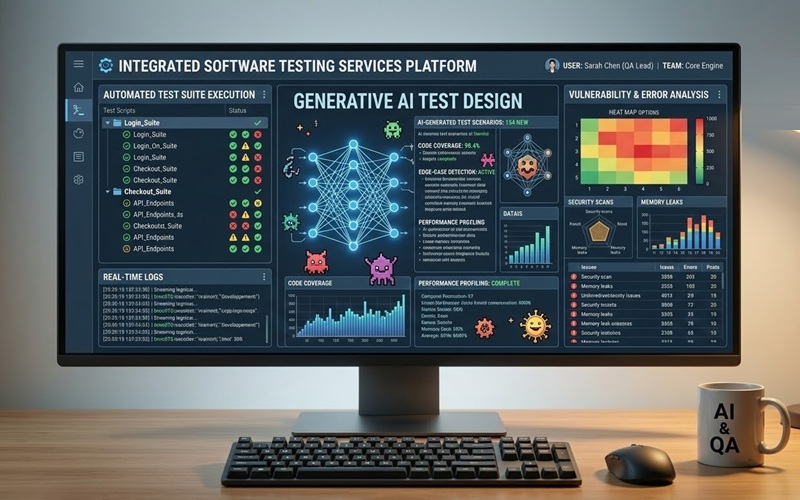
The future of generative AI in software testing

In this article on Techzine, experts Hélder Ferreira and Bruno Mazzotta discuss the transformative shift of AI from a simple task accelerator to a fundamental structural layer within delivery pipelines. As global IT investment in AI is projected to surge toward $6.15 trillion by 2026, the software testing landscape is evolving beyond early challenges like hallucinations and "vibe coding" toward a sophisticated "quality intelligence layer." The authors outline four critical areas where AI adds strategic value: generating complex scenario-based datasets, suggesting high-risk exploratory prompts, automating defect triage to identify regression patterns, and enabling context-aware execution that prioritizes testing based on actual risk rather than volume. Crucially, the piece argues that while AI can significantly enhance velocity, sustainable success depends on maintaining "humans-in-the-loop" to ensure traceability and accountability. In this new era, the primary differentiator for enterprises will not be the sheer amount of AI deployed, but the effectiveness of their governance frameworks. By linking intent with execution and using AI as connective tissue across the lifecycle, organizations can achieve a balance where rapid delivery is supported by explainable automation and human-verified confidence in software quality.


CIOs cut IT corners to manufacture budget for AI

In this CIO.com article, author Esther Shein examines the aggressive strategies IT leaders are employing to fund artificial intelligence initiatives amidst stagnant overall budgets. Faced with intense pressure from boards and executive leadership to prioritize AI, many CIOs are being forced to make difficult trade-offs that jeopardize long-term stability. Common tactics include delaying non-critical infrastructure refreshes, such as server expansions and network improvements, which are often pushed out by twelve to eighteen months. Additionally, organizations are aggressively consolidating vendors, renegotiating contracts, and cutting legacy software subscriptions to free up capital. Some leaders have even implemented strict "self-funding" mandates where every new AI project must be offset by equivalent cuts elsewhere. Beyond technical sacrifices, the human element is also affected, with many departments reducing reliance on contractors or trimming internal staff to reallocate funds toward high-impact AI use cases. While these measures enable rapid deployment, they frequently lead to the accumulation of technical debt and a narrower scope for implementations. Ultimately, the piece warns that while these "corners" are being cut to fuel innovation, the resulting lack of focus on foundational maintenance could present significant operational risks in the future.


Beyond Prompt Injection: The Hidden AI Security Threats in Machine Learning Platforms

In the article "Beyond Prompt Injection: The Hidden AI Security Threats in Machine Learning Platforms," the focus of AI security shifts from headline-grabbing prompt injections to the critical vulnerabilities within MLOps infrastructure. While many security teams prioritize protecting chatbots from manipulation, the underlying platforms used to train and deploy models often present a far more dangerous attack surface. Through a red team engagement, researchers demonstrated how a simple self-registered trial account could be used to achieve remote code execution on a provider’s cloud infrastructure. By deploying a seemingly legitimate but malicious machine learning model, attackers can exploit the fact that these platforms must execute arbitrary code to function. The study highlights a significant risk: once RCE is achieved, weak network segmentation can allow adversaries to bypass trust boundaries and access sensitive internal databases or services. This effectively turns a managed ML environment into a gateway for lateral movement within a corporate network. To mitigate these threats, the article stresses that organizations must move beyond model-centric security and adopt robust infrastructure protections, including strict network isolation, continuous behavior monitoring, and a "zero-trust" approach to user-deployed artifacts, ensuring that the convenience of rapid AI development does not come at the cost of total system compromise.


Enterprise agentic AI requires a process layer most companies haven’t built

The VentureBeat article emphasizes that while 85% of enterprises aspire to implement agentic AI within the next three years, a staggering 76% acknowledge that their current operations are fundamentally unequipped for this transition. The core issue lies in the absence of a "process layer"—a critical foundation of optimized workflows and operational intelligence that provides AI agents with the necessary context to function effectively. Without this layer, agents are essentially "guessing," leading to a lack of reliability that causes 82% of decision-makers to fear a failure in return on investment. The piece argues that the primary hurdle is not merely technological but rather rooted in organizational structure and change management. Most companies suffer from siloed data and fragmented processes that hinder the seamless integration of autonomous systems. To overcome these barriers, businesses must prioritize process optimization and operational visibility, ensuring that AI-driven initiatives are linked to strategic executive outcomes. Simply layering advanced AI over inefficient, legacy frameworks will likely result in costly friction. Ultimately, for agentic AI to move beyond experimental pilots and deliver scalable value, organizations must first build a robust architectural bridge that connects sophisticated models with the complex, real-world logic of their daily business operations and high-stakes organizational decision cycles.


Building resilient foundations for India’s expanding Data Centre ecosystem

In "Building resilient foundations for India's expanding Data Centre ecosystem," Saurabh Verma explores the rapid evolution of India’s data infrastructure and the urgent necessity of prioritizing long-term resilience over mere capacity. As cloud adoption and 5G accelerate growth across hubs like Mumbai, Chennai, and Hyderabad, the sector faces escalating challenges that demand a sophisticated understanding of risk management. The article argues that modern data centres are no longer just IT assets but critical infrastructure whose failure directly impacts the digital economy. Beyond physical damage, business interruptions often result in massive financial losses, contractual penalties, and significant reputational harm. Climate change has emerged as a significant operational reality, with heatwaves and flooding stressing cooling systems and electrical grids. Furthermore, the convergence of cyber and physical risks means that digital disruptions can quickly translate into tangible infrastructure damage. Construction complexities and logistical interdependencies further amplify potential losses, making early risk engineering essential for success. Ultimately, the piece emphasizes that resilience must be a core design pillar rather than an afterthought. By integrating disciplined risk management from site selection through operations, Indian providers can gain a commercial advantage, securing better investment and insurance terms while building a sustainable, trustworthy backbone for the nation’s digital future.


CVE program funding secured, easing fears of repeat crisis

The Common Vulnerabilities and Exposures (CVE) program has successfully secured stable funding, alleviating industry-wide fears of a repeat of the 2025 crisis that nearly crippled global vulnerability tracking. As detailed in the CSO Online report, the Cybersecurity and Infrastructure Security Agency (CISA) and the MITRE Corporation have renegotiated their contract, transitioning the 26-year-old program from a discretionary expenditure to a protected line item within CISA's budget. This structural change effectively eliminates the "funding cliff" that previously required a last-minute emergency extension. While CISA leadership emphasizes that the program is now fully funded and evolving, some experts note that the specifics of the "mystery contract" remain opaque. The resolution comes at a critical time, as the cybersecurity community had already begun developing contingencies, such as the independent CVE Foundation, to reduce reliance on a single government source. Despite the financial stability, challenges regarding transparency, modernization, and international governance persist. The article underscores that while the immediate threat of a service lapse has faded, the incident served as a stark reminder of the global security ecosystem's fragility. Moving forward, the focus shifts toward ensuring this essential public resource remains resilient against future political or administrative shifts within the United States government.

Daily Tech Digest - February 25, 2026


Quote for the day:

"To strongly disagree with someone, and yet engage with them with respect, grace, humility and honesty, is a superpower" -- Vala Afshar


Is ‘sovereign cloud’ finally becoming something teams can deploy – not just discuss?

Historically, sovereign cloud discussions in Europe have been driven primarily by risk mitigation. Data residency, legal jurisdiction, and protection from international legislation have dominated the narrative. These concerns are valid, but they have framed sovereign cloud largely as a defensive measure – a way to reduce exposure – rather than as an enabler of innovation or value creation. Without a clear value proposition beyond compliance, sovereign cloud has struggled to compete with hyperscale public cloud platforms that offer scale, maturity, and rich developer ecosystems. The absence of enforceable regulation has further compounded this. ... Policymakers and enterprises are also beginning to ask a more practical question: where does sovereign cloud actually create the most value? The answer increasingly points to innovation ecosystems, critical national capabilities, and trust. First, there is a growing recognition that sovereign cloud can underpin domestic innovation, particularly in areas such as AI, advanced research, and data-intensive start-ups. Organisations working with sensitive datasets, intellectual property, or public funding often require cloud environments that are both scalable and secure. ... Second, the sovereign cloud is increasingly being aligned with critical digital infrastructure. Sectors like healthcare, energy, transportation, and defence depend on continuity, accountability, and control. 


India’s DPDP rules 2025: Why access controls are priority one for CIOs

The security stack has traditionally broken down at the point of data rendering or exfiltration. Firewalls and encryption protect the data in transit and at rest, but once the data is rendered on a screen, the risk of data breaches from smartphone cameras, screenshots, or unauthorized sharing occurs outside of the security stack’s ability to protect it. ... Poor enterprise access practices amplify this risk. Over-provisioned user accounts, inconsistent multi-factor authentication, poor logging, and the absence of contextual checks make it easy for insider threats, credential compromise, and supply chain breaches to succeed. Under DPDP, accountability also extends to processors, so third-party CRM or cloud access must meet the same security standards. ... Shift from trust by implication to trust by verification. Implement least-privilege access to ensure users view only required apps and data. Add device posture with device binding, location, time, watermarking and behavior analysis to deny suspicious access. ... Implement identity infrastructure for just-in-time access and automated de-Provisioning based on role changes. Record fine-grained, immutable logs (user, device, resource, date/time) for breach analysis and annual retention. ... Enable dynamic, user-level watermarks (injecting username, IP address, timestamp) for forensic analysis. Prohibit unauthorized screen capture, sharing, or download activity during sensitive sessions, while permitting approved business processes.


What really caused that AWS outage in December?

The back-story was broken by the Financial Times, which reported the 13-hour outage was caused by a Kiro agentic coding system that decided to improve operations by deleting and then recreating a key environment. AWS on Friday shot back to flag what it dubbed “inaccuracies” in the FT story. “The brief service interruption they reported on was the result of user error — specifically misconfigured access controls — not AI as the story claims,” AWS said. ... “The issue stemmed from a misconfigured role — the same issue that could occur with any developer tool (AI powered or not) or manual action.” That’s an impressively narrow interpretation of what happened. AWS then promised it won’t do it again. ... The key detail missing — which AWS would not clarify — is just what was asked and how the engineer replied. Had the engineer been asked by Kiro “I would like to delete and then recreate this environment. May I proceed?” and the engineer replied, “By all means. Please do so,” that would have been user error. But that seems highly unlikely. The more likely scenario is that the system asked something along the lines of “Do you want me to clean up and make this environment more efficient and faster?” Did the engineer say “Sure” or did the engineer respond, “Please list every single change you are proposing along with the likely result and the worst-case scenario result. Once I review that list, I will be able to make a decision.”


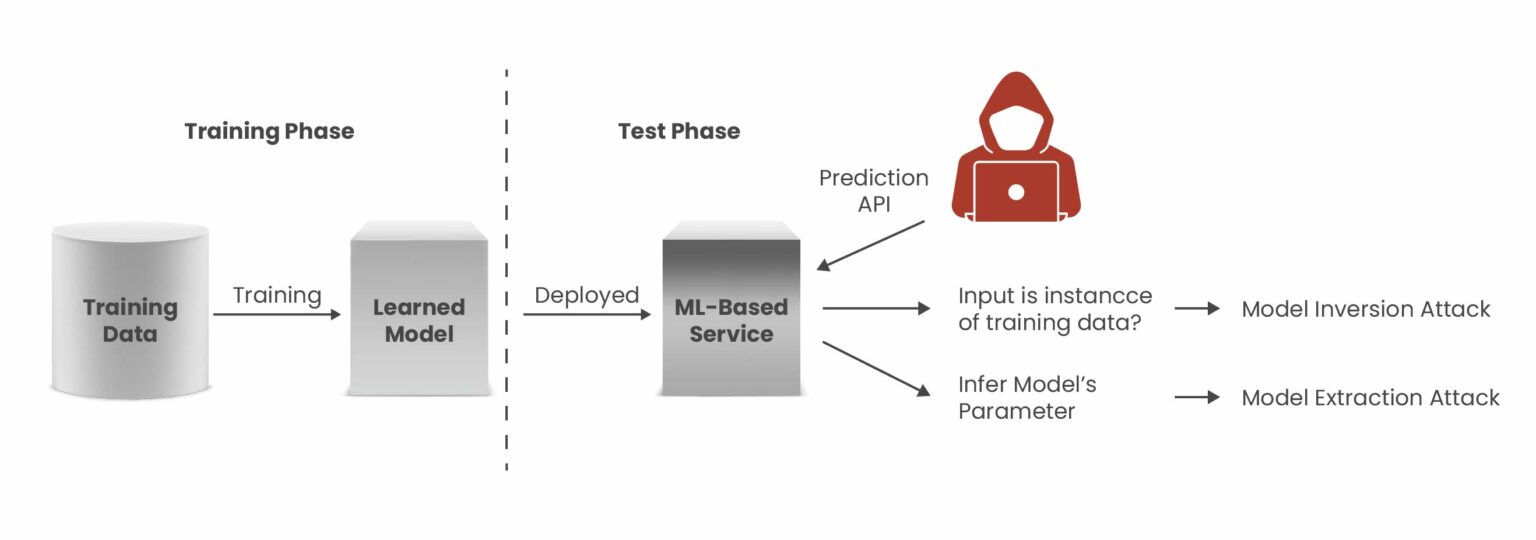
Model Inversion Attacks: Growing AI Business Risk

A model inversion attack is a form of privacy attack against machine learning systems in which an adversary uses the outputs of a model to infer sensitive information about the data used to train it. Rather than breaching a database or stealing credentials, attackers observe how a model responds to input queries and leverage those outputs, often including confidence scores or probability values, to reconstruct aspects of the training data that should remain private. ... This type of attack differs fundamentally from other ML attacks, such as membership inference, which aims to determine whether a specific data point was part of the training set, and model extraction, which seeks to copy the model itself. ... Successful model inversion attacks can inflict significant damage across multiple areas of a business. When attackers extract sensitive training data from machine learning models, organizations face not only immediate financial losses but also lasting reputational harm and operational setbacks that continue well beyond the initial incident. ... Attackers target inference-time privacy by moving through multiple stages, submitting carefully crafted queries, studying the model’s responses, and gradually reconstructing sensitive attributes from the outputs. Because these activities can resemble normal usage patterns, such attacks frequently remain undetected when monitoring systems are not specifically tuned to identify machine learning–related security threats.


It’s time to rethink CISO reporting lines

The age-old problem with CISOs reporting into CIOs is that it could present — or at least appear to present — a conflict of interest. Cybersecurity consultant Brian Levine, a former federal prosecutor who serves as executive director of FormerGov, says that concern is even more warranted today. “It’s the legacy model: Treat security as a technical function instead of an enterprise‑wide risk discipline,” he says. ... Enterprise CISOs should be reporting a notch higher, Levine argues. “Ideally, the CISO would report to the CEO or the general counsel, high-level roles explicitly accountable for enterprise risk. Security is fundamentally a risk and governance function, not a cost‑center function,” Levine points out. “When the CISO has independence and a direct line to the top, organizations make clearer decisions about risk, not just cheaper ones." ... Painter is “less dogmatic about where the CISO reports and more focused on whether they actually have a seat at the table,” he says. “Org charts matter far less than influence,” he adds. “Whether the CISO reports to the CIO, the CEO, or someone else, the real question is this: Are they brought in early, listened to, and empowered to shape how the business operates? When that’s true, the structure works. When it’s not, no reporting line will save it.” ... “When the CISO reports to the CIO, risk can be filtered, prioritized out of sight, or reshaped to fit a delivery narrative. It’s not about bad actors. It’s about role tension. And when that tension exists within the same reporting line, risk loses.”


AI drives cyber budgets yet remains first on the chop list

Cybersecurity budgets are rising sharply across large organisations, but a new multinational survey points to a widening gap between spending on artificial intelligence and the ability to justify that spending in business terms. ... "Security leaders are getting mandates to invest in AI, but nobody's given them a way to prove it's working. You can't measure AI transformation with pre-AI metrics," Wilson said. He added that security teams struggle to translate operational data into board-level evidence of reduced risk. "The problem isn't that security teams lack data. They're drowning in it. The issue is they're tracking the wrong things and speaking a language the board doesn't understand. Those are the budgets that get cut first. The window to fix this is closing fast," Wilson said. ... "We need new ways to measure security effectiveness that actually show business impact, because boards don't fund faster ticket closure, they fund measurable risk reduction and business resilience. We have to show that we're not just responding quickly but eliminating and improving the conditions that allow incidents to happen in the first place," he said. ... Security leaders reported pressure to invest in AI, while also struggling to link those investments to outcomes executives recognise as resilience and risk reduction. The report argues this tension may become harder to sustain if economic conditions tighten and boards begin looking for costs to cut.


A cloud-smart strategy for modernizing mission-critical workloads

As enterprises mature in their cloud journeys, many CIOs and senior technology leaders are discovering that modernization is not about where workloads run — it’s about how deliberately they are designed. This realization is driving a shift from cloud-first to cloud-smart, particularly for systems the business cannot afford to lose. A cloud-smart strategy, as highlighted by the Federal Cloud Computing Strategy, encourages agencies to weigh the long-term, total costs of ownership and security risks rather than focusing only on immediate migration. ... Sticking indefinitely with legacy systems can lead to rising maintenance costs, inability to support new business initiatives, security vulnerabilities and even outages as old hardware fails. Many organizations reach a tipping point where they must modernize to stay competitive. The key is to do it wisely — balancing speed and risk and having a solid strategy in place to navigate the complexity. ... A cloud-smart strategy aligns workload placement with business risk, performance needs and regulatory expectations rather than ideology. Instead of asking whether a system can move to the cloud, cloud-smart organizations ask where it performs best. ... Rather than lifting and shifting entire platforms, teams separate core transaction engines from decisioning, orchestration and experience layers. APIs and event-driven integration enable new capabilities around stable cores, allowing systems to evolve incrementally without jeopardizing operational continuity.


Enterprises still can't get a handle on software security debt – and it’s only going to get worse

Four-in-five organizations are drowning in software security debt, new research shows, and the backlog is only getting worse. ... "The speed of software development has skyrocketed, meaning the pace of flaw creation is outstripping the current capacity for remediation,” said Chris Wysopal, chief security evangelist at Veracode. “Despite marginal gains in fix rates, security debt is becoming a much larger issue for many organizations." Organizations are discovering more vulnerabilities as their testing programs mature and expand. Meanwhile, the accelerating pace of software releases creates a continuous stream of new code before existing vulnerabilities can be addressed. ... "Now that AI has taken software development velocity to an unprecedented level, enterprises must ensure they’re making deliberate, intelligent choices to stem the tide of flaws and minimize their risk," said Wysopal. The rise in flaws classed as both “severe” and “highly exploitable” means organizations need to shift from generic severity scoring to prioritization based on real-world attack potential, advised Veracode. As such, researchers called for a shift from simple detection toward a more strategic framework of Prioritize, Protect, and Prove. ... “We are at an inflection point where running faster on the treadmill of vulnerability management is no longer a viable strategy. Success requires a deliberate shift,” said Wysopal.


Protecting your users from the 2026 wave of AI phishing kits

To protect your users today, you have to move past the idea of reactive filtering and embrace identity-centric security. This means your software needs to be smart enough to validate that a user is who they say they are, regardless of the credentials they provide. We’re seeing a massive shift toward behavioral analytics. Instead of just checking a password, your platform should be looking at communication patterns and login behaviors. If a user who typically logs in from Chicago suddenly tries to authorize a high-value financial transfer from a new device in a different country, your system should do more than just send a push notification. ... Beyond the tech, you need to think about the “human” friction you’re creating. We often prioritize convenience over security, but in the current climate, that’s a losing bet. Implementing “probabilistic approval workflows” can help. For example, if your system’s AI is 95% sure a login is legitimate, let it through. If that confidence drops, trigger a more rigorous verification step. ... The phishing scams of 2026 are successful because they leverage the same tools we use for productivity. To counter them, we have to be just as innovative. By building identity validation and phishing-resistant protocols into the core of your product, you’re doing more than just securing data. You’re securing the trust that your business is built on. 


GitOps Implementation at Enterprise Scale — Moving Beyond Traditional CI/CD

Most engineering organizations running traditional CI/CD pipelines eventually hit the ceiling. Deployments work until they don’t, and when they break, the fixes are manual, inconsistent and hard to trace. ... We kept Jenkins and GitHub Actions in the stack for build and test stages where they already worked well. Harness remained an option for teams requiring more sophisticated approval workflows and governance controls. We ruled out purely script-based push deployment approaches because they offered poor drift control and scaled badly. ... Organizational resistance proved more challenging to address than the technical work. Teams feared the new approach would introduce additional bureaucracy. Engineers accustomed to quick kubectl fixes worried about losing agility. We ran hands-on workshops demonstrating that GitOps actually produced faster deployments, easier rollbacks and better visibility into what was running where. We created golden templates for common deployment patterns, so teams did not have to start from scratch. ... Unexpected benefits emerged after full adoption. Onboarding improved as deployment knowledge now lived in Git history and manifests rather than in senior engineers’ heads. Incident response accelerated because traceability let teams pinpoint exactly what changed and when, and rollback became a consistent, reliable operation. The shift from push-based to pull-based operations improved security posture by limiting direct cluster access.

Daily Tech Digest - December 21, 2025


Quote for the day:

"Don't worry about being successful but work toward being significant and the success will naturally follow." -- Oprah Winfrey


Is it Possible to Fight AI and Win?

What’s the most important thing security teams need to figure out? Organizations must stop talking about AI like it’s a death star of sorts. AI is not a single, all-powerful, monolithic entity. It’s a stack of threats, behaviors, and operational surfaces and each one has its own kill chain, controls, and business consequences. We need to break AI down into its parts and conduct a real campaign to defend ourselves. ... If AI is going to be operationalized inside your business, it should be treated like a business function. Not a feature or experiment, but a real operating capability. When you look at it that way, the approach becomes clearer because businesses already know how to do this. There is always an equivalent of HR, finance, engineering, marketing, and operations. AI has the same needs. ... Quick fixes aren’t enough in the AI era. The bad actors are innovating at machine speed, so humans must respond at machine speed with appropriate human direction and ethical clarity. AI is a tool. And the side that uses it better will win. If that isn’t enough, AI will force another reality that organizations need to prepare for. Security and compliance will become an on-demand model. Customers will not wait for annual reports or scheduled reviews. They will click into a dashboard and see your posture in real time. Your controls, your gaps, and your response discipline will be visible when it matters, not when it is convenient.


Cybersecurity Budgets are Going Up, Pointing to a Boom

Nearly all of the security leaders (99%) in the 2025 KPMG Cybersecurity Survey plan on upping their cybersecurity budgets in the two-to-three years to come, in preparation for what may be the upcoming boom in cybersecurity. More than half (54%) say budget increases will fall between 6%-10%. “The data doesn’t just point to steady growth; it signals a potential boom. We’re seeing a major market pivot where cybersecurity is now a fundamental driver of business strategy,” Michael Isensee, Cybersecurity & Tech Risk Leader, KPMG LLP, said in a release. “Leaders are moving beyond reactive defense and are actively investing to build a security posture that can withstand future shocks, especially from AI and other emerging technologies. This isn’t just about spending more; it’s about strategic investment in resilience.” ... The security leaders recognize AI is amassing steam as a dual catalyst—38% are challenged by AI-powered attacks in the coming three years, with 70% of organizations currently committing 10% of their budgets to combating such attacks. But they also say AI is their best weapon to proactively identify and stop threats when it comes to fraud prevention (57%), predictive analytics (56%) and enhanced detection (53%). But they need the talent to pull it off. And as the boom takes off, 53% just don’t have enough qualified candidates. As a result, 49% are increasing compensation and the same number are bolstering internal training, while 25% are increasingly turning to third parties like MSSPs to fill the skills gap.


How Neuro-Symbolic AI Breaks the Limits of LLMs

While AI transforms subjective work like content creation and data summarization, executives rightfully hesitate to use it when facing objective, high-stakes determinations that have clear right and wrong answers, such as contract interpretation, regulatory compliance, or logical workflow validation. But what if AI could demonstrate its reasoning and provide mathematical proof of its conclusions? That’s where neuro-symbolic AI offers a way forward. The “neuro” refers to neural networks, the technology behind today’s LLMs, which learn patterns from massive datasets. A practical example could be a compliance system, where a neural model trained on thousands of past cases might infer that a certain policy doesn’t apply in a scenario. On the other hand, symbolic AI represents knowledge through rules, constraints, and structure, and it applies logic to make deductions. ... Neuro-symbolic AI introduces a structural advance in LLM training by embedding automated reasoning directly into the training loop. This uses formal logic and mathematical proof to mechanically verify whether a statement, program, or output used in the training data is correct. A tool such as Lean,4 is precise, deterministic, and gives provable assurance. The key advantage of automated reasoning is that it verifies each step of the reasoning process, and not just the final answer. 


Three things they’re not telling you about mobile app security

With the realities of “wilderness survival” in mind, effective mobile app security must be designed for specific environmental exposures. You may need to wear some kind of jacket at your office job (web app), but you’ll need a very different kind of purpose-built jacket as well as other clothing layers, tools, and safety checks to climb Mount Everest (mobile app). Similarly, mobile app development teams need to rigorously test their code for potential security issues and also incorporate multi-layered protections designed for some harsh realities. ... A proactive and comprehensive approach is one that applies mobile application security at each stage of the software development lifecycle (SDLC). It includes the aforementioned testing in the stages of planning, design, and development as well as those multi-layered protections to ensure application integrity post-release. ... Whether stemming from overconfidence or just kicking the can down the road, inadequate mobile app security presents an existential risk. A recent survey of developers and security professionals found that organizations experienced an average of nine mobile app security incidents over the previous year. The total calculated cost of each incident isn’t just about downtime and raw dollars, but also “little things” like user experience, customer retention, and your reputation.


Cybersecurity in 2026: Fewer dashboards, sharper decisions, real accountability

The way organisations perceive risk is one of the most important changes predicted in 2026. Security teams spent years concentrating on inventory, which included tracking vulnerabilities, chasing scores and counting assets. The model is beginning to disintegrate. Attack-path modelling, on the other hand, is becoming far more useful and practical. These models are evolving from static diagrams to real-world settings where teams may simulate real attacks. Consider it a cyberwar simulation where defenders may test “what if” scenarios in real time, comprehend how a threat might propagate via systems and determine whether vulnerabilities truly cause harm to organisations. This evolution is accompanied by a growing disenchantment with abstract frameworks that failed to provide concrete outcomes. The emphasis is shifting to risk-prioritized operations, where teams start tackling the few problems that actually provide attackers access instead than responding to clutter. Success in 2026 will be determined more by impact than by activities. ... Many companies continue to handle security issues behind closed doors as PR disasters. However, an alternative strategy is gaining momentum. Communicate as soon as something goes wrong. Update frequently, share your knowledge and acknowledge your shortcomings. Post signs of compromise. Allow partners and clients to defend themselves. Particularly in the middle of disorder, this seems dangerous. 


AI and Latency: Why Milliseconds Decide Winners and Losers in the Data Center Race

Many traditional workloads can tolerate latency. Batch processing doesn’t care if it takes an extra second to move data. AI training, especially at hyperscale, can also be forgiving. You can load up terabytes of data in a data center in Idaho and process it for days without caring if it’s a few milliseconds slower. Inference is a different beast. Inference is where AI turns trained models into real-time answers. It’s what happens when ChatGPT finishes your sentence, your banking AI flags a fraudulent transaction, or a predictive maintenance system decides whether to shut down a turbine. ... If you think latency is just a technical metric, you’re missing the bigger picture. In AI-powered industries, shaving milliseconds off inference times directly impacts conversion rates, customer retention, and operational safety. A stock trading platform with 10 ms faster AI-driven trade execution has a measurable financial advantage. A translation service that responds instantly feels more natural and wins user loyalty. A factory that catches a machine fault 200 ms earlier can prevent costly downtime. Latency isn’t a checkbox, it’s a competitive differentiator. And customers are willing to pay for it. That’s why AWS and others have “latency-optimized” SKUs. That’s why every major hyperscaler is pushing inference nodes closer to urban centers.


Why developers need to sharpen their focus on documentation

“One of the bigger benefits of architectural documentation is how it functions as an onboarding resource for developers,” Kalinowski told ITPro. “It’s much easier for new joiners to grasp the system’s architecture and design principles, which means the burden’s not entirely on senior team members’ shoulders to do the training," he added. “It also acts as a repository of institutional knowledge that preserves decision rationale, which might otherwise get lost when team members move to other projects or leave the company." ... “Every day, developers lose time because of inefficiencies in their organization – they get bogged down in repetitive tasks and waste time navigating between different tools,” he said. “They also end up losing time trying to locate pertinent information – like that one piece of documentation that explains an architectural decision from a previous team member,” Peters added. “If software development were an F1 race, these inefficiencies are the pit stops that eat into lap time. Every unnecessary context switch or repetitive task equals more time lost when trying to reach the finish line.” ... “Documentation and deployments appear to either be not routine enough to warrant AI assistance or otherwise removed from existing workflows so that not much time is spent on it,” the company said. ... For developers of all experience levels, Stack Overflow highlighted a concerning divide in terms of documentation activities.


AI Pilots Are Easy. Business Use Cases Are Hard

Moving from pilot to purpose is where most AI journeys lose momentum. The gap often lies not in the model itself, but in the ecosystem around it. Fragmented data, unclear ROI frameworks and organizational silos slow down scaling. To avoid this breakdown, an AI pilot must be anchored to clear business outcomes - whether that's cost optimization, data-led infrastructure or customer experience. Once the outcomes are defined, the organization can test the system with the specific data and processes that will support it. This focus sets the stage for the next 10 to 14 months of refinement needed to ready the tool for deeper integration. When implementation begins, workflows become self-optimizing, decisions accelerate and frontline teams gain real-time intelligence. As AI moves beyond pilots, systems begin spotting patterns before people do. Teams shift from retrospective analysis to live decision-making. Processes improve themselves through constant feedback loops. These capabilities unlock efficiency and insight across businesses, but highly regulated industries such as banking, insurance, and healthcare face additional hurdles. Compliance, data privacy and explainability add layers of complexity, making it essential for AI integration to include process redesign, staff retraining and organizationwide AI literacy, not just within technical teams.


Why your next cloud bill could be a trap

 “AI-ready” often means “AI–deeply embedded” into your data, tools, and runtime environment. Your logs are now processed through their AI analytics. Your application telemetry routes through their AI-based observability. Your customer data is indexed for their vector search. This is convenient in the short term. In the long term, it shifts power. The more AI-native services you consume from a single hyperscaler, the more they shape your architecture and your economics. You become less likely to adopt open source models, alternative GPU clouds, or sovereign and private clouds that might be a better fit for specific workloads. You are more likely to accept rate changes, technical limits, and road maps that may not align with your interests, simply because unwinding that dependency is too painful. ... For companies not prepared to fully commit to AI-native services from a single hyperscaler or in search of a backup option, these alternatives matter. They can host models under your control, support open ecosystems, or serve as a landing zone for workloads you might eventually relocate from a hyperscaler. However, maintaining this flexibility requires avoiding the strong influence of deeply integrated, proprietary AI stacks from the start. ... The bottom line is simple: AI-native cloud is coming, and in many ways, it’s already here. The question is not whether you will use AI in the cloud, but how much control you will retain over its cost, architecture, and strategic direction. 


IT and Security: Aligning to Unlock Greater Value

While many organisations have made strides in aligning IT and security, communication breakdowns can remain a challenge. Historically, friction between these two departments was driven by a lack of communication and competing priorities. For the CISO or head of the security team, reducing the company’s attack surface, limiting access privileges, or banning apps that might open their organisation up to unnecessary, additional risks are likely to be core focus areas. ... The good news is, there are more opportunities now than ever before for IT and security operations to naturally converge – in endpoint management, patch deployment, identity and access management, you name it. It can help to clearly document IT and security’s roles and responsibilities and practice scenarios with tabletop exercises to get everyone on the same page and identify coverage gaps. ... In addition to building versatile teams, organisations should focus on consolidating IT and security toolkits by prioritising solutions that expedite time to value and boost visibility. We’ve said this in security for a long time: you can’t protect (or defend against) what you can’t see. With shared visibility through integrated platforms and consolidated toolkits, both IT and security teams can gain real-time insights into infrastructure, threats, vulnerabilities, and risks before they can impact business. Solutions that help IT and security teams rapidly exchange critical information, accelerate response to incidents, and document the triaging process will make it easier to address similar instances in the future.

Daily Tech Digest - December 14, 2025


Quote for the day:

“It is never too late to be what you might have been.” -- George Eliot


Six questions to ask when crafting an AI enablement plan

As we near the end of 2025, there are two inconvenient truths about AI that every CISO needs to take into their heart. Truth #1: Every employee who can is using generative AI tools for their job. Even when your company doesn’t provide an account for them, even when your policy forbids it, even when the employee has to pay out of pocket. Truth #2: Every employee who uses generative AI will (or likely has already) provided this AI with internal and confidential company information. ... In the case of AI, this refers to the difference between the approved business apps that are trusted to access company data and the growing number of untrusted and unmanaged apps that have access to that data without the knowledge of IT or security teams. Essentially, employees are using unmonitored devices, which can hold any number of unknown AI apps, and each of those apps can introduce a whole lot of risk to sensitive corporate data. ... Simply put, organizations cannot afford to wait any longer to get a handle on AI governance. ... So now, the job is to craft an AI enablement plan that promotes productive use and throttles reckless behaviors. ... Think back to the mid‑2000s, when SaaS crept into the enterprise through expense reports and project trackers. IT tried to blacklist unvetted domains, finance balked at credit‑card sprawl, and legal wondered whether customer data belonged on “someone else’s computer.” Eventually, we accepted that the workplace had evolved, and SaaS became essential to modern business.


Why most enterprise AI coding pilots underperform (Hint: It's not the model)

When organizations introduce agentic tools without addressing workflow and environment, productivity can decline. A randomized control study this year showed that developers who used AI assistance in unchanged workflows completed tasks more slowly, largely due to verification, rework and confusion around intent. The lesson is straightforward: Autonomy without orchestration rarely yields efficiency. ... Security and governance, too, demand a shift in mindset. AI-generated code introduces new forms of risk: Unvetted dependencies, subtle license violations and undocumented modules that escape peer review. Mature teams are beginning to integrate agentic activity directly into their CI/CD pipelines, treating agents as autonomous contributors whose work must pass the same static analysis, audit logging and approval gates as any human developer. GitHub’s own documentation highlights this trajectory, positioning Copilot Agents not as replacements for engineers but as orchestrated participants in secure, reviewable workflows. ... Under the hood, agentic coding is less a tooling problem than a data problem. Every context snapshot, test iteration and code revision becomes a form of structured data that must be stored, indexed and reused. As these agents proliferate, enterprises will find themselves managing an entirely new data layer: One that captures not just what was built, but how it was reasoned about. 


Enabling small language models to solve complex reasoning tasks

Researchers from MIT’s Computer Science and Artificial Intelligence Laboratory (CSAIL) developed a collaborative approach where an LLM does the planning, then divvies up the legwork of that strategy among smaller ones. Their method helps small LMs provide more accurate responses than leading LLMs like OpenAI’s GPT-4o, and approach the precision of top reasoning systems such as o1, while being more efficient than both. Their framework, called “Distributional Constraints by Inference Programming with Language Models” (or “DisCIPL”), has a large model steer smaller “follower” models toward precise responses when writing things like text blurbs, grocery lists with budgets, and travel itineraries. ... You may think that larger-scale LMs are “better” at complex prompts than smaller ones when it comes to accuracy and efficiency. DisCIPL suggests a surprising counterpoint for these tasks: If you can combine the strengths of smaller models instead, you may just see an efficiency bump with similar results. The researchers note that, in theory, you can plug in dozens of LMs to work together in the DisCIPL framework, regardless of size. In writing and reasoning experiments, they went with GPT-4o as their “planner LM,” which is one of the models that helps ChatGPT generate responses. 


Key trends accelerating Industrial Secure Remote Access (ISRA) Adoption

As essential maintenance and diagnostic activities continue to shift toward remote and digital execution, they become exposed to cyber risks that were not present when plants, fleets, and factories operated as isolated, closed systems. Compounding the challenge, many industrial organizations still lack the expertise and skill sets to select and operate the proper technologies that establish secure remote connections efficiently and securely. This, unfortunately, results in operational delays and slower response in critical or emergency situations. Industrial Cyber emphasizes that controlled, identity-bound, and fully auditable access to critical tasks is key to ensuring secure remote access functions as an operational and business enabler—without introducing new pathways for malicious actors. ... Compounding the risk, OT environments frequently rely on legacy hardware that lacks modern encryption capabilities, leaving these connections especially vulnerable. By centralizing access governance, securely managing vendor credentials, streamlining access-request workflows, and maintaining consistent audit trails, industrial organizations can regain control over third-party access. ... Industrial Cyber recognizes two solutions from SSH. 1) PrivX OT is purpose-built for industrial environments. The solution provides passwordless, keyless, and just-in-time industrial secure remote access using short-lived certificates and micro-segmentation to reduce risk. 2) NQX delivers quantum-safe, high-speed network encryption for site-to-site connectivity.


Navigating AI Liability: What Businesses That Utilize AI Need to Know

Cybercriminals can now use generative AI to create extremely convincing deepfakes. These deepfakes can then be used for corporate espionage, identity theft and phishing scams. AI software may end up automatically aggregating and analyzing huge amounts of data from multiple sources. This can increase privacy invasion risks when comprehensive profiles of people are compiled without their awareness or consent. AI systems which experience glitches or malfunctions, let others have unauthorized access to them, or lack robust security could lead to sensitive data being exposed. ... It is risky for your business to publish AI-generated content because AI models are trained on vast amounts of copyrighted material. The models thus end up not always creating original material, and sometimes create material which is identical to or extremely similar to copyrighted content. “It was the AI’s fault” will not be a valid argument in court if this happens to your business. Ignorance is not a defense in a copyright infringement claim. ... Content that is fully generated by AI has no copyright protection. AI-generated content that is significantly edited by humans may receive copyright protection, but the situation is murky. Original content that is created by humans and is then slightly edited or optimized by AI will usually receive full copyright protection. A lot of businesses now document the process of content creation to prove that humans created the content and preserve copyright protection.


When the Cloud Comes Home: What DBAs Need to Know About Cloud Repatriation

One of the main drivers for cloud repatriation is cost. Early cloud migrations were often justified by projected savings because there would be no more hardware to maintain. Furthermore, the cloud promised flexible scaling and pay-as-you-go pricing. Nevertheless, for many enterprises, those savings have proven elusive. Data-intensive workloads, in particular, can rack up significant cloud bills. Every I/O operation, network transfer, and storage request adds up. When workloads are steady and predictable, the cloud’s on-demand elasticity can actually become more expensive than on-prem capacity. DBAs, who often have a front-row seat to performance and utilization metrics, can play a crucial role in identifying when cloud costs are out of alignment with business value. ... In highly regulated industries, compliance concerns are another driver. Regulations such as HIPAA, PCI-DSS, GDPR and more, require your applications and the data they access to be secure and controlled. Organizations may find that managing sensitive data in the cloud introduces risk, especially when data residency, auditability, or encryption requirements evolve. Repatriating workloads can restore a sense of control and predictability—key traits valued by DBAs. ... Today’s computing needs demand an IT architecture that embraces the cloud, but also on premises workloads, including the mainframe. Remember, data gravity attracts applications to where the data resides. 


SaaS price hikes put CIOs’ budgets in a bind

Subscription prices from major SaaS vendors have risen sharply in recent months, putting many CIOs in a bind as they struggle to stay within their IT budgets. ... While inflation may have driven some cost increases in past months, rates have since stabilized, meaning there are other factors at play, Tucciarone says. Vendors are justifying subscription price hikes with frequent product repackaging schemes, consumption-based subscription models, regional pricing adjustments, and evolving generative AI offerings, he adds. “Vendors are rationalizing this as the cost of innovation and gen AI development,” he says. ... SaaS data platforms fall into a similar category as other mission-critical applications, Aymé adds, because the cost of moving an organization’s data can be prohibitively expensive, in addition to the price of a new SaaS tool. Kunal Agarwal, CEO and cofounder of data observability platform Unravel Data, also pointed to price increases for data-related SaaS tools. Data infrastructure costs, including cloud data warehouses, lakehouses, and analytics platforms, have risen 30% to 50% in the past year, he says. Several factors are driving cost increases, including the proliferation of computing-intensive gen AI workloads and a lack of visibility into organizational consumption, he adds. “Unlike traditional SaaS, where you’re paying for seats, these platforms bill based on consumption, making costs highly variable and difficult to predict,” Agarwal says.


How to simplify enterprise cybersecurity through effective identity management

“It is challenging for a lot of organizations to get a complete picture of what their assets are and what controls apply to those assets,” Persaud says. He explains that Deloitte’s identity solution assisted the customer in connecting users with the assets they utilized. As they discovered these assets, they were able to fine-tune the security controls that were applied to each in a more refined fashion. “If the system is going to [process] financial data and other private information, we need to put the right controls in place on the identity side,” he says. “We’ve been able to bring those two pieces together by correlating discovery of assets with discovery of identity and lining that up with controls from the IT asset management system.” ... “If you think from a broader risk management perspective, this has been fundamental to our security model,” he says. The ability to simply track the locations of employees and assign risk accordingly is a significant advancement in risk monitoring for a company growing its international presence. The company looks out for instances of impossible travel, such as if an employee has entered the system in one location and then in another at a distant location that they could not have possibly reached during a specified period, an alert is raised. Security analysts also use the software to scan for risky sign-ins. If a user logs in from an IP that has been blacklisted, an alert is raised. They have increasingly relied on conditional access policies that rely on monitoring user behavior. 


When an AI Agent Says ‘I Agree,’ Who’s Consenting?

The most autonomous agents can execute a chain of actions related to a transaction—such as comparing, booking, paying, forwarding the invoice. The broader the autonomy, the tighter the frame: precise contractual rules, allow-lists, budgets, a kill-switch, clear user notices, and, where required, electronic signatures. At this point the question stops being technical and becomes legal: under what framework does each agent-made click have effect, on whose authority, and with what safeguards? European law and national laws already offer solid anchors—agency and online contracting, signatures and secure payments, fair disclosure—now joined by the newer eIDAS 2 and the AI Act. ... Under European law, an AI agent has no will of its own. It is a means of expressing—or failing to express—someone’s will. Legally, someone always consents: the user (consumer) or a representative in the civil law sense. If an agent “accepts” an offer, we are back to agency: the act binds the principal only within the authority granted; beyond that, it is unenforceable. The agent is not a new subject of law. ... Who is on the hook if consent is tainted? First, the business that designs the onboarding. Europe’s Digital Services Act (DSA) bans deceptive interfaces (“dark patterns”) that materially impair a user’s ability to make a free, informed choice. A pushy interface can support a finding of civil fraud and a regulatory breach. Second, the principal is bound only within the mandate. 


AI cybercrime agents will strike in 2026: Are defenders ready?

The prediction itself isn’t novel. What’s sobering is the math behind it—and the widening gap between how fast organisations can defend versus how quickly they’re being attacked. “The groups that convert intelligence into monetisation the fastest will set the tempo,” Rashish Pandey, VP of marketing & communications for APAC at Fortinet, told journalists at a media briefing earlier this week. “Throughput defines impact.” This isn’t about whether AI will be weaponised—that’s already happening. The urgent question is whether defenders can close what Fortinet calls the “tempo differential” before autonomous AI agents fundamentally alter the economics of cybercrime. ... The evolution extends beyond speed. Fortinet’s predictions highlight how attackers are weaponising generative AI for rapid data analysis—sifting through stolen information to identify the most valuable targets and optimal extortion strategies before defenders even detect the breach. This aligns with broader attack trends: ransomware operations increasingly blend system disruption with data theft and multi-stage extortion. Critical infrastructure sectors—healthcare, manufacturing, utilities—face heightened risk as operational technology systems become targets. ... “The ‘skills gap’ is less about scarcity and more about alignment—matching expertise to the reality of machine-speed, data-driven operations,” Pandey noted during the briefing.