Showing posts with label maturity. Show all posts

Daily Tech Digest - February 23, 2026


Quote for the day:

"Prepare, work smarter, Learn from your Mistakes. These are the secret to success!" -- Elizabeth McCormick


What’s wrong (and right) with AI coding agents

“At the scale AI is generating pull requests today, humans simply can’t keep up. You don’t check the accuracy of Excel with an abacus… and in 2026 we shouldn’t expect maintainers to manually inspect machine-speed code without machine-speed assistance,” said Fox. “AI reviews can go deeper than humans in many cases. They don’t get tired, they can reason across large codebases… and they can spot patterns at a scale no individual reviewer can hold in their head. If AI is generating more code, the only viable answer is to use AI to help review and validate it. You have to fight fire with fire.” ... He reminds us that quantity does not always equal quality – especially in the AI-driven world we now live in. He notes that, at least for now, the reality is that AI development tools and ‘vibe coding’ can generate a lot of code very quickly, but code that’s often slower and more memory‑hungry than what a skilled developer would write. ... Although this entire discussion is focused on the now-increasingly-automated command line, it feels like the real focus should be higher and architecture has been mentioned already. “We’re entering a world where, with AI, software changes are propagating faster than governance models can track them. That means AI tools are, plain and simple, accelerating systemic complexity. When an AI agent can generate and deploy changes across interconnected enterprise systems, there’s real danger in the invisible dependencies and downstream effects most orgs can’t fully see,” said Ido Gaver


Identity verification systems are struggling with synthetic fraud

The researchers tied the growth of synthetic identity fraud to the increasing use of AI tools, which can generate convincing fake documents that pass casual inspection. “The biggest risk I see in the next 12 to 18 months is the growing and advancing use of AI. AI is creating fake people, fake voices, and fake documents. Bad actors are using these capabilities to open accounts, take over existing accounts, and impersonate real people in places like bank branches,” Lewis said. ... Financial institutions remain a major target for identity fraud due to access to credit, account funding, and cash movement. A successful fraudster can monetize a single fake or synthetic identity for tens of thousands of dollars before detection, making the sector a frequent target. Online-only retail banks recorded the highest rate of failed identity verification among the financial institution categories in Intellicheck’s dataset. The report also found elevated failure rates across businesses serving underbanked consumers, including check cashing, payday lending, subprime lending, and lease-to-own services. ... AI tools are being used to produce synthetic IDs that are difficult for humans to spot. Lewis said attackers are already using AI and large language models to generate documents that can bypass basic checks. “AI and LLM can create fake ID’s that can easily pass the templating test, old methods don’t work and ID verification service providers can’t rest on their laurels,” Lewis said. 


Neoclouds: Meeting demand for AI acceleration

This surge in demand for AI acceleration has seen a surprising benefactor. According to Tiger Research, cryptocurrency mining firms, seeking to reduce their exposure to bitcoin’s volatile pricing, are redirecting their graphics processing unit (GPU) farms toward AI acceleration applications. ... Before the emergence of neoclouds a few years ago, if an organisation wanted to work with AI, it had no choice but to go to a hyperscaler like Amazon Web Services (AWS) or Google. While the hyperscalers offer AI infrastructure as part of their vast public cloud services portfolio, Roy Illsley, chief analyst at Omdia, says the hyperscalers tend to be expensive and, as he recalls, a few years ago, there was very little choice other than Google’s AI offerings. ... AI infrastructure strategies are becoming inherently hybrid and multicloud by design – not as a by-product of supplier sprawl, but as a deliberate response to workload reality. The cloud market is fragmenting along functional lines, and neoclouds occupy a clear and growing role within that landscape. “Neoclouds started as GPU as a service. If you needed GPUs, these companies bought or leased GPUs from Nvidia, and then they would slice them and sell them off to people in smaller groups and bundles,” says Omdia’s Illsley. However, over time, neocloud providers have added software stacks and developed other services to meet the demand of IT buyers who need GPU power and the software stack required for AI training or AI inferencing.


Sam Altman just said what everyone is thinking about AI layoffs

This isn’t the first time industry stakeholders questioned the veracity of AI-related layoffs. A study by Oxford Economics in January this year claimed most layoffs are due to “more traditional drivers” such as overhiring or poor financial performance. ... "While a rising number of firms are pinning job losses on AI, other more traditional drivers of job layoffs are far more commonly cited,” the report said. “What's more, we suspect some firms are trying to dress up layoffs as a good news story rather than bad news, such as past over-hiring." ... “There’s some real displacement by AI of different kinds of jobs,” he said. “We’ll find new kinds of jobs as we do with every tech revolution. I would expect that the real impact of AI doing jobs in the next few years will begin to be palpable.” Altman’s prediction here aligns with research from Gartner and Forrester on the potential impact of AI on the global jobs market. In January, Forrester predicted 10 million jobs could be lost worldwide as enterprise adoption ramps up. ... Despite a string of studies pointing to the contrary, some tech industry figures still believe that AI will eventually render some workers obsolete. In a recent interview with the Financial Times, for example, Microsoft AI CEO Mustafa Suleyman insisted AI will begin replacing “white collar” workers within 18 months. “I think we’re going to have a human-level performance on most if not all professional tasks,” Suleyman told


Jailbreaking the matrix: How researchers are bypassing AI guardrails to make them safer

As AI assistants move from novelty to infrastructure, helping write code, summarizing medical notes and answering customer questions, the biggest question isn't just what these systems can do, but what happens when they are pushed to do what they shouldn't. "By showing exactly how these defenses break, we give AI developers the information they need to build defenses that actually hold up," Jha said. "The public release of powerful AI is only sustainable if the safety measures can withstand real scrutiny, and right now, our work shows that there's still a gap. We want to help close it." ... Focusing on the internal workings of the LLM allows more accurate measurements of failures while encouraging the development of more robust defenses against the failure of safety measures. According to the researchers, HMNS can help reveal whether specific internal pathways, if exploited, could cause a breakdown. That information can guide stronger training, monitoring and defense strategies. ... Understanding the security shortcomings of LLMs is critical as they become more widespread. Companies like Meta, Alibaba and others have released powerful AI models that are available to anyone. While each platform incorporates safety layers meant to keep it from being misused, the UF team has found that those safety layers can be systematically bypassed.


Plan vs. planning: Why continuous planning must traverse time

The problem is not the plan’s quality. The problem is that a plan freezes a moment in time while the organization continues to move through time. Planning, by contrast, must be a continuous discipline, remaining active as assumptions decay, signals emerge and constraints shift. ... Planning exists to test those assumptions continuously, a distinction long recognized in leadership and management literature that separates planning as an ongoing discipline from planning as a static artifact. Plans are optimized for agreement and commitment. Planning is optimized for learning, decision-making and managing consequences in the face of uncertainty. In practice, this means consequences must be visible at the moment of decision, not discovered months later through execution. ... Many enterprises optimize for compliance, predictability and approval at the expense of feedback and adaptation. Learning is pushed downstream, arriving only after outcomes are locked in and costs incurred. Systems theorist Russell Ackoff described this dynamic clearly: “Most organizations are not short of information. They are short of the ability to learn from it.” Continuous planning restores learning by design, not as postmortem analysis, but as pre-decision feedback. Feedback that arrives before commitment changes behavior. Feedback that arrives after execution becomes an explanation. In volatile environments, that timing difference is decisive, which is why scenario planning and structured foresight have re-emerged as critical executive tools.


The rise of AI factories: Powering an era of pervasive intelligence

In India alone, Google is building a gigawatt-scale AI hub in Visakhapatnam. Microsoft is expanding its cloud and AI footprint in Pune and Chennai and creating a new “India South Central” region in Hyderabad. In partnership with NVIDIA, Reliance Jio is developing a major AI data center in Jamnagar for nationwide GPU-as-a-service offerings. TCS is planning a 1-gigawatt AI data center, likely in Gujarat or Maharashtra, to support startups, hyperscalers, and government institutions. And as part of its Stargate project, OpenAI is actively scouting locations in India for what could become one of the largest AI data centers in all of Asia. ... The growth of AI represents a fundamental transformation in how the world builds and operates computing infrastructure. While traditional data centers are designed for general-purpose workloads, AI superclusters are purpose-built facilities that function as industrial-scale intelligence production systems. And their output is defined by new metrics — most notably tokens per watt and tokens per dollar — that quantify the efficiency and productivity of intelligence at scale. ... To deliver the performance at scale that AI requires, silicon designers are increasingly turning to multi-die designs, including 3D integrated circuits (3DIC) and chiplet-based architectures. While these chip designs offer gains that traditional monolithic SoCs cannot achieve cost-effectively, they also introduce significant complexity to the design process.


Cognizant CAIO Babak Hodjat explains how Agentic AI will transform enterprises

One of the things that agentic systems do is they allow for a diversity of data sources because you can actually have an agent responsible for a data source talking to other agents responsible for other data sources. Your interface into this system could be a consolidation of information and decisions that come from these disparate sources. It is the first time that we can actually have a mapping between intent and disparate sources of data and applications. I think that will work well. That kind of design can work well in a country like India with such diversity of data. ... Population-based approaches like genetic algorithms are very good at non-linear optimisation, especially if you are looking at multiple outcomes at the same time. Pretty much every problem that we look at is multi-objective. Every problem that we look at has improved revenue but reduced costs. You look at curing disease but reduce impact on the economy. It is always more than one outcome that we are looking at. In problems like optimisation of power grids or managing urban traffic systems, these are very well-suited algorithms. ... There are two opposing forces when it comes to AI. Scaling laws mean that building bigger is more powerful, and building bigger typically means using more energy. Many companies are looking at green sources for that additional consumption. On the other hand, companies are optimising models to be smaller and less energy-hungry. For multi-agent systems, smaller models can be more cost-effective and greener.


Inference Becomes the Next AI Chip Battleground

Inference has fundamentally different economics and performance requirements than training, said Karl Freund, founder and principal analyst at Cambrian AI Research. Training AI models is a cost center, while inference is a “profit center” that directly generates revenue. Freund and Kimball noted that while GPUs deliver excellent performance, they often carry architectural features optimized for training that don’t always translate to lower latency or higher efficiency in pure inference use cases. Purpose-built inference chips – ASICs and other accelerators – can deliver faster responses, improved energy efficiency, and lower total cost of ownership. ... "As inference workloads exceed the total amount of training workloads in terms of token output, there will be a greater need for diversity because alternative XPU architectures can achieve better efficiency on some specific inferencing tasks,” said Brendan Burke, research director of semiconductors, supply chain, and emerging tech at Futurum Group. ... Inference opportunities span data centers and the edge, and requirements vary widely by workload and deployment. “The inference you do in your autonomous vehicle is far different than the inferencing you do when you’re an online customer service bot,” Kimball said. ... Analysts expect Nvidia to maintain dominance in both training and inference, but diverse requirements create space for specialized solutions to capture share. 


Why the CFO's Playbook Belongs on Every CIO's Desk

Recent research from Gartner on how CFOs are allocating budgets gives CIOs insight into what priorities look like across departments, and where technology and AI can help move the needle. The research firm's CFO Report: Q1 2026 finds that while budgets are shifting and AI ambitions are high, enterprise-wide AI success remains an aspiration rather than a reality. ... AI is also changing the conversation on ROI for both finance and technology leaders. "There's a lot more to evaluating the success of some of this investment in technology than simply just ROI, and AI is definitely helping change that," Abbasi said. "AI isn't your traditional asset." Unlike standard hardware expenditures, AI investments don't have predictable depreciation curves, and the ways in which returns on AI investment may show up across the business can vary. They may manifest in time to market, customer satisfaction or competitive positioning, not just in cost savings, Abbasi said. CIOs should be sure to articulate how AI will generate strategic returns rather than focus on pitching it as a capital project. "It changes the way you measure the effectiveness of AI, as well as how you measure your business more holistically," he said. "It's not like a traditional asset because you don't necessarily know what the outcomes are going to be for some of these AI projects."

Daily Tech Digest - February 08, 2026


Quote for the day:

"The litmus test for our success as Leaders is not how many people we are leading, but how many we are transforming into leaders" -- Kayode Fayemi


Why agentic AI and unified commerce will define ecommerce in 2026

Agentic AI and unified commerce are set to shape ecommerce in 2026 because the foundations are now in place: consumers are increasingly comfortable using AI tools, and retailers are under pressure to operate seamlessly across channels. ... When inventory, orders, pricing, and customer context live in disconnected systems, both humans and AI struggle to deliver consistent experiences. When those systems are unified, retailers can enable more reliable automation, better availability promises, and more resilient fulfillment, especially at peak. ... Unified commerce platforms matter because they provide a single operational framework for inventory, orders, pricing, and customer context. That coordination is increasingly critical as more interactions become automated or AI-assisted. ... The shift toward “agentic” happens when AI can safely take actions, like resolving a customer service step, updating a product feed, or proposing a replenishment recommendation, based on reliable data and explicit rules. That’s why unified commerce matters: it reduces the risk of automation acting on partial truth. Because ROI varies dramatically by category, maturity, and data quality, it’s safer to avoid generic percentage claims. The defensible message is: companies that pair AI with clean operational data and clear governance will unlock automation faster and with fewer reputational risks. ... Ultimately, success in 2026 will not be defined by how many AI features a retailer deploys, but by how well their systems can interpret context, act reliably, and scale under pressure.


EU's Digital Sovereignty Depends On Investment In Open-Source And Talent

We argue that Europe must think differently and invest where it matters, leveraging its strengths, and open technologies are the place to look. While Europe does not have the tech giants of the US and China, it possesses a huge pool of innovation and human capital, as well as a small army of capable and efficient technology service providers, start-ups, and SMEs. ... Recent data shows that while Europe accounts for a substantial share of global open source developers, its contribution to open source-derived infrastructure remains fragmented across countries, with development being concentrated in a small number of countries. ... Europe may not have a Silicon Valley, but it has something better: a robust open source workforce. We are beginning to recognize this through fora such as the recent European Open Source Awards, which celebrated European citizens and residents working on things ranging from the Linux kernel and open office suites to open hardware and software preservation. ... Europe has a chance of succeeding. Historically, Europe has done a good job in making open source and open standards a matter of public policy. For example, the European Commission's DG DIGIT has an open source software strategy which is being renewed this year, and Europe possesses three European Standards Organizations, including CEN, CENELEC, and ETSI. While China has an open source software strategy, Europe is arguably leading the US in harnessing the potential of open technologies as a matter of public and industrial policy, and it has a strong foundation for catching up to China.


Is artificial general intelligence already here? A new case that today's LLMs meet key tests

Approaching the AGI question from different disciplinary perspectives—philosophy, machine learning, linguistics, and cognitive science—the four scholars converged on a controversial conclusion: by reasonable standards, current large language models (LLMs) already constitute AGI. Their argument addresses three key questions: What is general intelligence? Why does this conclusion provoke such strong reactions? And what does it mean for ... "There is a common misconception that AGI must be perfect—knowing everything, solving every problem—but no individual human can do that," explains Chen, who is lead author. "The debate often conflates general intelligence with superintelligence. The real question is whether LLMs display the flexible, general competence characteristic of human thought. Our conclusion: insofar as individual humans possess general intelligence, current LLMs do too." ... "This is an emotionally charged topic because it challenges human exceptionalism and our standing as being uniquely intelligent," says Belkin. "Copernicus displaced humans from the center of the universe, Darwin displaced humans from a privileged place in nature; now we are contending with the prospect that there are more kinds of minds than we had previously entertained." ... "We're developing AI systems that can dramatically impact the world without being mediated through a human and this raises a host of challenging ethical, societal, and psychological questions," explains Danks.


Biometrics deployments at scale need transparency to help businesses, gain trust

As adoption invites scrutiny, more biometrics evaluations, completed assessments and testing options come available. Communication is part of the same issue, with major projects like EES, U.S. immigration and protest enforcement, and more pedestrian applications like access control and mDLs all taking off. ... Biometric physical access control is growing everywhere, but with some key sectorial and regional differences, Goode Intelligence Chief Analyst Alan Goode explains in a preview of his firm’s latest market research report on the latest episode of the Biometric Update Podcast. Imprivata could soon be on the market, with PE owner Thoma Bravo working with JPMorgan and Evercore to begin exploring its options. ... A panel at the “Identity, Authentication, and the Road Ahead 2026” event looked at NIST’s work on a playbook to help businesses implement mDLs. Representatives from the NCCoE, Better Identity Coalition, PNC Bank and AAMVA discussed the emerging situation, in which digital verifiable credentials are available, but people don’t know how to use them. ... DHS S&T found 5 of 16 selfie biometrics providers met the performance goals of its Remote Identity Validation Rally, Shufti and Paravision among them. RIVR’s first phase showed that demographically similar imposters still pose a significant problem for many face biometrics developers.


The Invisible Labor Force Powering AI

A low-cost labor force is essential to how today’s AI models function. Human workers are needed at every stage of AI production for tasks like creating and annotating data, reinforcing models, and moderating content. “Today’s frontier models are not self-made. They’re socio-technical systems whose quality and safety hinge on human labor,” said Mark Graham, a professor at the University of Oxford Internet Institute and a director of the Fairwork project, which evaluates digital labor platforms. In his book Feeding the Machine: the Hidden Human Labor Powering AI (Bloomsbury, 2024), Graham and his co-authors illustrate that this global workforce is essential to making these systems usable. “Without an ongoing, large human-in-the-loop layer, current capabilities would be far more brittle and misaligned, especially on safety-critical or culturally sensitive tasks,” Graham said. ... The industry’s reliance on a distributed, gig-work model goes back years. Hung points to the creation of the ImageNet database around 2007 as the moment that set the referential data practices and work organization for modern AI training. ... However, cost is not the only factor. Graham noted that cost arbitrage plays a role, but it is not the whole explanation. AI labs, he said, need extreme scale and elasticity, meaning millions of small, episodic tasks that can be staffed up or down at short notice, as well as broad linguistic and cultural coverage that no single in-house team can reproduce.


Code smells for AI agents: Q&A with Eno Reyes of Factory

In order to build a good agent, you have to have one that's model agnostic. It needs to be deployable in any environment, any OS, any IDE. A lot of the tools out there force you to make a hard trade off that we felt wasn't necessary. You either have to vendor lock yourself to one LLM or ask everyone at your company to switch IDEs. To build like a true model agnostic, vendor agnostic coding agent, you put in a bunch of time and effort to figure out all the harness engineering that's necessary to make that succeed, which we think is a fairly different skillset from building models. And so that's why we think companies like us actually are able to build agents that outperform on most evaluations from our lab. ... All LLMs have context limits so you have to manage that as the agent progresses through tasks that may take as long as eight to ten hours of continuous work. There are things like how you choose to instruct or inject environment information. It's how you handle tool calls. The sum of all of these things requires attention to detail. There really is no individual secret. Which is also why we think companies like us can actually do this. It's the sum of hundreds of little optimizations. The industrial process of building these harnesses is what we think is interesting or differentiated. ... Of course end-to-end and unit tests. There are auto formatters that you can bring in, SaaS static application security testers and scanners: your sneaks of the world.


Software-Defined Vehicles Transform Auto Industry With Four-Stage Maturity Framework For Engineers

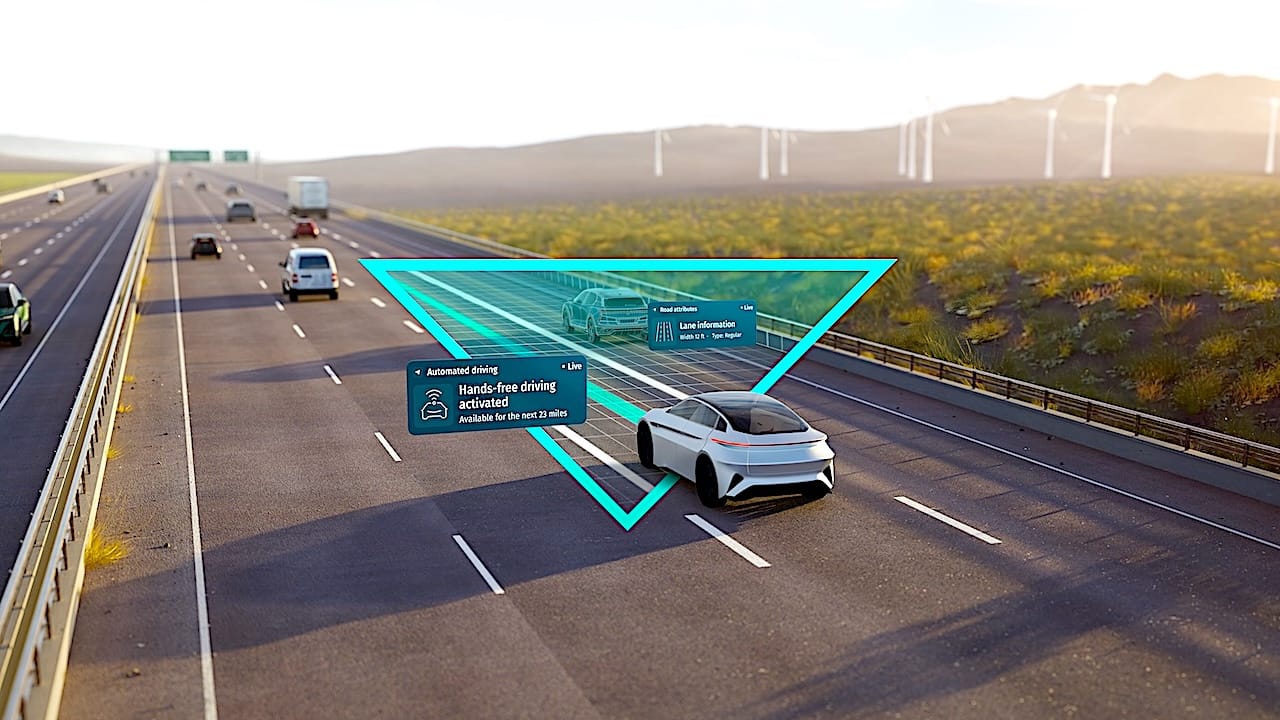
More refined software architectures in both edge and cloud enable the interpretation of real-time data for predictive maintenance, adaptive user interfaces, and autonomous driving functions, while cloud-based AI virtualized development systems enable continuous learning and updates. Electrification has only further accelerated this evolution as it opened the door for tech players from other industries to enter the automotive market. This represents an unstoppable trend as customers now expect the same seamless digital experiences they enjoy on other devices. ... Legacy vehicle systems rely on dozens of electronic control units (ECUs), each managing isolated functions, such as powertrain or infotainment systems. SDVs consolidate these functions into centralized compute domains connected by high-speed networks. This architecture provides hardware and software abstraction, enabling OTA updates, seamless cross-domain feature integration, and real-time data sharing, are essential for continuous innovation. ... Processing sensor data at the edge – directly within the vehicle – enables highly personalized experiences for drivers and passengers. It also supports predictive maintenance, allowing vehicles to anticipate mechanical issues before they occur and proactively schedule service to minimize downtime and improve reliability. Equally important are abstraction layers that decouple software applications from underlying hardware.


Cybersecurity and Privacy Risks in Brain-Computer Interfaces and Neurotechnology

Neuromorphic computing is developing faster than predicted by replicating the human brain's neural architecture for efficient, low-power AI computation. As highlighted in talks around brain-inspired chips and meshing, these systems are blurring distinctions between biological and silicon-based computation. In the meanwhile, bidirectional communication is made possible by BCIs, such as those being developed by businesses and research facilities, which can read brain activity for feedback or control and possibly write signals back to affect cognition. ... Neural data is essentially personal. Breaches could expose memories, emotions, or subconscious biases. Adversaries may reverse-engineer intentions for coercion, fraud, or espionage as AI decodes brain scans for "mind captioning" or talent uploading. ... Compromised BCIs blur cyber-physical boundaries farther than OT-IT convergence already has. A malevolent actor might damage medical implants, alter augmented reality overlays, or weaponize neurotech in national security scenarios. ... Implantable devices rely on worldwide supply chains prone to tampering. Neuromorphic hardware, while efficient, provides additional attack surfaces if not designed with zero-trust principles. Using AI to process neural signals can introduce biases, which may result in unfair treatment in brain-augmented systems 


Designing for Failure: Chaos Engineering Principles in System Design

To design for failure, we must understand how the system behaves when failure inevitably happens. What is the cost? What is the impact? How do we mitigate it? How do we still maintain over 99% uptime? This requires treating failure as a default state, not an exception. ... The first step is defining steady-state behavior. Without this, there is no baseline to measure against. ... Chaos experiments are most valuable in production. This is where real traffic patterns, real user behavior, and real data shapes exist. That said, experiments must be controlled. ... Chaos Engineering is not a one-off exercise. Systems evolve. Dependencies change. Teams rotate. Experiments should be automated, repeatable, and run continuously, either as scheduled jobs or integrated into CI/CD pipelines. Over time, experiments can be expanded to test higher-impact scenarios. ... Additional considerations include health checks, failover timing, and data consistency. Strong consistency simplifies reasoning but reduces availability. Eventual consistency improves availability but introduces complexity and potential inconsistency windows. ... Network failures are unavoidable in distributed systems. Latency spikes, packets get dropped, DNS fails, and sometimes the network splits entirely. Many system outages are not caused by servers crashing, but by slow or unreliable communication between otherwise healthy components. This is where several of the classic fallacies of distributed computing show up, especially the assumption that the network is reliable and has zero latency.


Why SMBs Need Strong Data Governance Practices

Good data governance for small businesses is about building trust, control and scalability into your data from day one. Governance should be built into the data foundation, not bolted on later. Small businesses move fast, and governance works best when it’s native to how data is managed. That means choosing platforms that apply security, access controls and compliance consistently across all data, without requiring manual oversight or specialized teams. Additionally, clear visibility and control over what data exists and who can access it is essential. Even at a smaller scale, businesses handle sensitive information ranging from customer and financial data to operational insights. ... Governance also future proofs the business. Regulations are becoming more complex, customer expectations for data protection are rising, and AI systems must have high-quality, well-governed data to perform reliably. Small businesses that treat governance as a foundation are better positioned to adopt AI and safely expand into new use cases, markets and regulatory environments without needing to rearchitect later. At the same time, strong data governance improves day-to-day efficiency. When data is well governed, teams can spend more time acting on insights and less time questioning data quality, managing access manually or duplicating work. ... From a cybersecurity perspective, governance provides the controls and visibility needed to reduce attack surfaces and detect misuse. 

Daily Tech Digest - November 12, 2024

Researchers Focus In On ‘Lightcone Bound’ To Develop An Efficiency Benchmark For Quantum Computers

The researchers formulated this bound by first reinterpreting the quantum circuit mapping challenge through quantum information theory. They focused on the SWAP “uncomplexity,” the lowest number of SWAP operations needed, which they determined using graph theory and information geometry. By representing qubit interactions as density matrices, they applied concepts from network science to simplify circuit interactions. To establish the bound, in an interesting twist, the team employed a Penrose diagram — a tool from theoretical physics typically used to depict spacetime geometries — to visualize the paths required for minimal SWAP-gate application. They then compared their model against a brute-force method and IBM’s Qiskit compiler, with consistent results affirming that their bound offers a practical minimum SWAP requirement for near-term quantum circuits. The researchers acknowledge the lightcone model has some limitations that could be the focus of future work. For example, it assumes ideal conditions, such as a noiseless processor and indefinite parallelization, conditions not yet achievable with current quantum technology. The model also does not account for single-qubit gate interactions, focusing only on two-qubit operations, which limits its direct applicability for certain quantum circuits.


Evaluating your organization’s application risk management journey

One way CISOs can articulate application risk in financial terms is by linking security improvement efforts to measurable outcomes, like cost savings and reduced risk exposure. This means quantifying the potential financial fallout from security incidents and showing how preventative measures mitigate these costs. CISOs need to equip their teams with tools that will help them protect their business in the short and long term. A study we commissioned with Forrester found that putting application security measures in place could save average organization millions in terms of avoided breach costs. ... To keep application risk management a dynamic, continuous process, CISOs integrate security into every stage of software development. Instead of relying on periodic assessments, organisations should implement real-time risk analysis, continuous monitoring, and feedback mechanisms to enable teams to address vulnerabilities promptly as they arise, rather than waiting for scheduled evaluations. Incorporating automation can also play a key role in streamlining this process, enabling quicker remediation of identified risks. Building on this, creating a security-first mindset across the organisation – through training and clear communication – ensures risk management adapts to new threats, supporting both innovation and compliance.


How a Second Trump Presidency Could Shape the Data Center Industry

“We anticipate that the incoming administration will have a keen focus on AI and our nation’s ability to be the global leader in the space,” Andy Cvengros, managing director, co-lead of US data center markets for JLL, told Data Center Knowledge. He said to do that, the industry will need to solve the transmission delivery crisis and continue to increase generation capacity rapidly. This may include reactivating decommissioned coal and nuclear power plants, as well as commissioning more of them. “We also anticipate that state and federal governments will become much more active in enabling the utilities to proactively expand substations, procure long lead items and support key submarket expansion through planned developments,” Cvengros said. ... Despite the federal government’s likely hands-off approach, Harvey said he believes large corporations might support consistent, global standards – especially since European regulations are far stricter. “US companies would prefer a unified regulatory framework to avoid navigating a complex patchwork of rules across different regions,” he said. Still, Europe’s stronger regulatory stance on renewable power might lead some companies to prioritize US-based expansions, where subsidies and fewer regulations make operations more economically feasible.


Data Breaches are a Dime a Dozen: It’s Time for a New Cybersecurity Paradigm

The modern-day ‘stack’ includes many disparate technology layers—from physical and virtual servers to containers, Kubernetes clusters, DevOps dashboards, IoT, mobile platforms, cloud provider accounts, and, more recently, large language models for GenAI. This has created the perfect storm for threat actors, who are targeting the access and identity silos that significantly broaden the attack surface. The sheer volume of weekly breaches reported in the press underscores the importance of protecting the whole stack with Zero Trust principles. Too often, we see bad actors exploiting some long-lived, stale privilege that allows them to persist on a network and pivot to the part of a company’s infrastructure that houses the most sensitive data. ... Zero Trust access for modern infrastructure benefits from being coupled with a unified access mechanism that acts as a front-end to all the disparate infrastructure access protocols – a single control point for authentication and authorization. This provides visibility, auditing, enforcement of policies, and compliance with regulations, all in one place. These solutions already exist on the market, deployed by security-minded organizations. However, adoption is still in early days. 


AI’s math problem: FrontierMath benchmark shows how far technology still has to go

Mathematics, especially at the research level, is a unique domain for testing AI. Unlike natural language or image recognition, math requires precise, logical thinking, often over many steps. Each step in a proof or solution builds on the one before it, meaning that a single error can render the entire solution incorrect. “Mathematics offers a uniquely suitable sandbox for evaluating complex reasoning,” Epoch AI posted on X.com. “It requires creativity and extended chains of precise logic—often involving intricate proofs—that must be meticulously planned and executed, yet allows for objective verification of results.” This makes math an ideal testbed for AI’s reasoning capabilities. It’s not enough for the system to generate an answer—it has to understand the structure of the problem and navigate through multiple layers of logic to arrive at the correct solution. And unlike other domains, where evaluation can be subjective or noisy, math provides a clean, verifiable standard: either the problem is solved or it isn’t. But even with access to tools like Python, which allows AI models to write and run code to test hypotheses and verify intermediate results, the top models are still falling short.


Can Wasm replace containers?

One area where Wasm shines is edge computing. Here, Wasm’s lightweight, sandboxed nature makes it especially intriguing. “We need software isolation on the edge, but containers consume too many resources,” says Michael J. Yuan, founder of Second State and the Cloud Native Computing Foundation’s WasmEdge project. “Wasm can be used to isolate and manage software where containers are ‘too heavy.’” Whereas containers take up megabytes or gigabytes, Wasm modules take mere kilobytes or megabytes. Compared to containers, a .wasm file is smaller and agnostic to the runtime, notes Bailey Hayes, CTO of Cosmonic. “Wasm’s portability allows workloads to run across heterogeneous environments, such as cloud, edge, or even resource-constrained devices.” ... Wasm has a clear role in performance-critical workloads, including serverless functions and certain AI applications. “There are definitive applications where Wasm will be the first choice or be chosen over containers,” says Luke Wagner, distinguished engineer at Fastly, who notes that Wasm brings cost-savings and cold-start improvements to serverless-style workloads. “Wasm will be attractive for enterprises that don’t want to be locked into the current set of proprietary serverless offerings.”


Authentication Actions Boost Security and Customer Experience

Authentication actions can be used as effective tools for addressing the complex access scenarios organizations must manage and secure. They can be added to workflows to implement convenience and security measures after users have successfully proven their identity during the login process. ... When using authentication actions, first take some time to fully map out the customer journey you want to achieve, and most importantly, all of the possible variations of this journey. Think of your authentication requirements as a flowchart that you control. Start by mapping out your requirements for different users and how you want them to sign up and authenticate. Understand the trade-off between security and user experience. Consider using actions to enable a frictionless initial login with a simple authentication method. You can use step-up authentication as a technique that increases the level of assurance when the user needs to perform higher-privilege operations. You can also use actions to implement dynamic behavior per user. For instance, you can use an action that captures an identifier like an email to identify the user. Then you can use another action to look up the user’s preferred authentication method or methods to give each user a personalized experience.


How Businesses use Modern Development Platforms to Streamline Automation

APIs are essential for streamlining data flows between different systems. They enable various software applications to communicate with each other, automating data exchange and reducing manual input. For instance, integrating an API between a customer relationship management (CRM) system and an email marketing platform can automatically sync contact information and campaign data. This not only saves time, but also minimizes errors that can occur with manual data entry. ... Workflow automation tools are designed to streamline business processes by automating repetitive steps and ensuring smooth transitions between tasks. These tools help businesses design and manage workflows, automate task assignments, and monitor progress. For example, tools like Asana and Monday.com allow teams to automate task notifications, approvals, and status updates. By automating these processes, businesses can improve collaboration and reduce the risk of missed deadlines or overlooked tasks. Workflow automation tools also provide valuable insights into process performance, enabling companies to identify bottlenecks and optimize their operations. This leads to more efficient workflows and better resource management.

“Micromanagement is one of the fastest ways to destroy IT culture,” says Jay Ferro, EVP and chief information, technology, and product officer at Clario. “When CIOs don’t trust their teams to make decisions or constantly hover over every detail, it stifles creativity and innovation. High-performing professionals crave autonomy; if they feel suffocated by micromanagement, they’ll either disengage or leave for an environment where they’re empowered to do their best work.” ... One of the most challenging issues facing transformational CIOs is the overwhelming demand to take on more initiatives, deliver to greater scope, or accept challenging deadlines. Overcommitting to what IT can reasonably accomplish is an issue, but what kills IT culture is when the CIO leaves program leaders defenseless when stakeholders are frustrated or when executive detractors roadblock progress. “It demoralizes IT when there is a lack of direction, no IT strategy, and the CIO says yes to everything the business asks for regardless of whether the IT team has the capacity,” says Martin Davis, managing partner at Dunelm Associates. “But it totally kills IT culture when the CIO doesn’t shield teams from angry or disappointed business senior management and stakeholders.”


Understanding Data Governance Maturity: An In-Depth Exploration

Maturity in data governance is typically assessed through various models that measure different aspects of data management such as data quality and compliance and examines processes for managing data’s context (metadata) and its security. Maturity models provide a structured way to evaluate where an organization stands and how it can improve for a given function. ... Many maturity models are complex and may require significant time and resources to implement. Organizations need to ensure they have the capacity to effectively handle the complexity involved in using these models. Additionally, some data governance maturity models do not address the relevant related data management functions, such as metadata management, data quality management, or data security to a sufficient level of detail for some organizations. ... Implementing changes based on maturity model assessments can face resistance; organizational culture may not accept the views discovered in an assessment. Adopting and sustaining effective change management strategies and choosing a maturity model carefully can help overcome resistance and ensure successful implementation.


Quote for the day:

"Whenever you see a successful person, you only see the public glories, never the private sacrifices to reach them." -- Vaibhav Shah

Daily Tech Digest - July 09, 2024

AI stack attack: Navigating the generative tech maze

Successful integration often depends on having a solid foundation of data and processing capabilities. “Do you have a real-time system? Do you have stream processing? Do you have batch processing capabilities?” asks Intuit’s Srivastava. These underlying systems form the backbone upon which advanced AI capabilities can be built. For many organizations, the challenge lies in connecting AI systems with diverse and often siloed data sources. Illumex has focused on this problem, developing solutions that can work with existing data infrastructures. “We can actually connect to the data where it is. We don’t need them to move that data,” explains Tokarev Sela. This approach allows enterprises to leverage their existing data assets without requiring extensive restructuring. Integration challenges extend beyond just data connectivity. ... Security integration is another crucial consideration. As AI systems often deal with sensitive data and make important decisions, they must be incorporated into existing security frameworks and comply with organizational policies and regulatory requirements.


How to Architect Software for a Greener Future

Firstly, it’s a time shift, moving to a greener time. You can use burstable or flexible instances to achieve this. It’s essentially a sophisticated scheduling problem, akin to looking at a forecast to determine when the grid will be greenest—or conversely, how to avoid peak dirty periods. There are various methods to facilitate this on the operational side. Naturally, this strategy should apply primarily to non-demanding workloads. ... Another carbon-aware action you can take is location shifting—moving your workload to a greener location. This approach isn’t always feasible but works well when network costs are low, and privacy considerations allow. ... Resiliency is another significant factor. Many green practices, like autoscaling, improve software resilience by adapting to demand variability. Carbon awareness actions also serve to future-proof your software for a post-energy transition world, where considerations like carbon caps and budgets may become commonplace. Establishing mechanisms now prepares your software for future regulatory and environmental challenges.


Evaluating board maturity: essential steps for advanced governance

Most boards lack a firm grasp of fundamental governance principles. I'd go so far as to say that 8 or 9 out of 10 boards could be described this way. Your average board director is intelligent and respected within their communities. But they often don't receive meaningful governance training. Instead, they follow established board norms without questioning them, which can lead to significant governance failures. Consider Enron, Wells Fargo, Volkswagen AG, Theranos, and, recently, Boeing—all have boards filled with recognized experts. However inadequate oversight caused or allowed them to make serious and damaging errors. This is most starkly illustrated by Barney Frank, co-author of the Dodd-Frank Act (passed following the 2008 financial crisis) and a board member of Silicon Valley Bank while it collapsed. Having brilliant board members doesn't guarantee effective governance. The point is that, for different reasons, consultants and experts can 'misread' where a board is at. Frankly, this is most often due to just being lazy. But sometimes it is due to just not being clear about what to look for.


Mastering Serverless Debugging

Feature flags allow you to enable or disable parts of your application without deploying new code. This can be invaluable for isolating issues in a live environment. By toggling specific features on or off, you can narrow down the problematic areas and observe the application’s behavior under different configurations. Implementing feature flags involves adding conditional checks in your code that control the execution of specific features based on the flag’s status. Monitoring the application with different flag settings helps identify the source of bugs and allows you to test fixes without affecting the entire user base. ... Logging is one of the most common and essential tools for debugging serverless applications. I wrote and spoke a lot about logging in the past. By logging all relevant data points, including inputs and outputs of your functions, you can trace the flow of execution and identify where things go wrong. However, excessive logging can increase costs, as serverless billing is often based on execution time and resources used. It’s important to strike a balance between sufficient logging and cost efficiency. 


Implementing Data Fabric: 7 Key Steps

As businesses generate and collect vast amounts of data from diverse sources, including cloud services, mobile applications, and IoT devices, the challenge of managing, processing, and leveraging this data efficiently becomes increasingly critical. Data fabric emerges as a holistic approach to address these challenges by providing a unified architecture that integrates different data management processes across various environments. This innovative framework enables seamless data access, sharing, and analysis across the organization irrespective of where the data resides – be it on-premises or in multi-cloud environments. The significance of data fabric lies in its ability to break down silos and foster a collaborative environment where information is easily accessible and actionable insights can be derived. By implementing a robust data fabric strategy, businesses can enhance their operational efficiency, drive innovation, and create personalized customer experiences. Implementing a data fabric strategy involves a comprehensive approach that integrates various Data Management and processing disciplines across an organization.


Empowering Self-Service Users in the Digital Age

Ultimately, portals must strike the balance between freedom and control, which can be achieved by ensuring flexibility with role-based access control. Granting end users the freedom to deploy within a secure framework of predefined permissions creates an environment ripe for innovation within a robustly protected environment. This means users can explore, experiment and innovate without concerns about security boundaries or unnecessary hurdles. But of course, as with any project, organizations can’t afford to build something and consider that job done. Measuring success is ongoing. Metrics such as how often the portal is accessed, who uses what, which service catalogs are used and how the portal usage should be tracked, along with other relevant data will help point to any areas that need improvement. It is also important to remember that it is collaborative work between the platform team and end users. And in technology, there is always room for improvement. For instance, recent advances in AI/ML could soon be leveraged to analyze previously inaccessible datasets and generate smarter and faster decision-making.


Desperate for power, AI hosts turn to nuclear industry

As opposed to adding new green energy to meet AI’s power demands, tech companies are seeking power from existing electricity resources. That could raise prices for other customers and hold back emission-cutting goals, according The Wall Street Journal and other sources. According to sources cited by the WSJ, the owners of about one-third of US nuclear power plants are in talks with tech companies to provide electricity to new data centers needed to meet the demands of an artificial-intelligence boom. ... “The power companies are having a real problem meeting the demands now,” Gold said. “To build new plants, you’ve got to go through all kinds of hoops. That’s why there’s a power plant shortage now in the country. When we get a really hot day in this country, you see brownouts.” The available energy could go to the highest bidder. Ironically, though, the bill for that power will be borne by AI users, not its creators and providers. “Yeah, [AWS] is paying a billion dollars a year in electrical bills, but their customers are paying them $2 billion a year. That’s how commerce works,” Gold said.


Fake network traffic is on the rise — here’s how to counter it

“Attempting to homogenize the bot world and the potential threat it poses is a dangerous prospect. The fact is, it is not that simple, and cyber professionals must understand the issue in the context of their own goals...” ... “Cyber professionals need to understand the bot ecosystem and the resulting threats in order to protect their organizations from direct network exploitation, indirect threat to the product through algorithm manipulation, and a poor user experience, and the threat of users being targeted on their platform,” Cooke says. “As well as [understanding] direct security threats from malicious actors, cyber professionals need to understand the impact on day-to-day issues like advertising and network management from bot profiles as a whole,” she adds. “So cyber professionals must ensure that the problem is tackled holistically, protecting their networks, data and their users from this increasingly sophisticated threat. Measures to detect and prevent malicious bot activity must be built into new releases, and cyber professionals should act as educational evangelists for users to help them help themselves with a strong awareness of the trademarks of fake traffic and malicious profiles.” 


Researchers reveal flaws in AI agent benchmarking

Since calling the models underlying most AI agents repeatedly can increase accuracy, researchers can be tempted to build extremely expensive agents so they can claim top spot in accuracy. But the paper described three simple baseline agents developed by the authors that outperform many of the complex architectures at much lower cost. ... Two factors determine the total cost of running an agent: the one-time costs involved in optimizing the agent for a task, and the variable costs incurred each time it is run. ... Researchers and those who develop models have different benchmarking needs to those downstream developers who are choosing an AI to use their applications. Model developers and researchers don’t usually consider cost during their evaluations, while for downstream developers, cost is a key factor. “There are several hurdles to cost evaluation,” the paper noted. “Different providers can charge different amounts for the same model, the cost of an API call might change overnight, and cost might vary based on model developer decisions, such as whether bulk API calls are charged differently.”


10 ways to prevent shadow AI disaster

Shadow AI is practically inevitable, says Arun Chandrasekaran, a distinguished vice president analyst at research firm Gartner. Workers are curious about AI tools, seeing them as a way to offload busy work and boost productivity. Others want to master their use, seeing that as a way to prevent being displaced by the technology. Others became comfortable with AI for personal tasks and now want the technology on the job. ... shadow AI could cause disruptions among the workforce, he says, as workers who are surreptitiously using AI could have an unfair advantage over those employees who have not brought in such tools. “It is not a dominant trend yet, but it is a concern we hear in our discussions [with organizational leaders],” Chandrasekaran says. Shadow AI could introduce legal issues, too. ... “There has to be more awareness across the organization about the risks of AI, and CIOs need to be more proactive about explaining the risks and spreading awareness about them across the organization,” says Sreekanth Menon, global leader for AI/ML services at Genpact, a global professional services and solutions firm. 


Quote for the day:

“In matters of principle, stand like a rock; in matters of taste, swim with the current. ” -- Thomas Jefferson

Daily Tech Digest - April 09, 2022

Essentials of Enterprise Architecture Tool

EA tools allow organizations to map out their business process architecture, business capability architecture, application architecture, data architecture, integration architecture, and technology architecture. The common capabilities of EA Tool are, EA Repository supports business, information, technology, and solution viewpoints and their relationships and supports business direction, vision, strategy, etc EA Modelling, support the minimum viewpoints of business, information, solutions, and technology. Modeling of As-Is and Target state, Impact Analysis, and Roadmaps Decision Analysis, capabilities such as gap analysis, traceability, impact analysis, scenario planning, and system thinking. Multiple Views support multiple views for different types of audiences/users such as Executives, Architects/Designers, Business Planners, Suppliers, etc. Support customization and extensions of meta-model, diagrams, menus, matrices, and reports Collaboration and Sharing, provide good collaboration-oriented features, which include simultaneous model editing, a shared remote repository, version management including model comparison and merge, easy publishing, and review capabilities


Could Blockchain Be Sustainability’s Missing Link?

Environmental sustainability is only one use case for blockchain technology. Companies can use distributed ledgers for social sustainability and governance. For example, pharmaceutical companies can collect data on a blockchain that identifies and traces prescription drugs. This data collection can prevent consumers from falling prey to counterfeit, stolen, or harmful products. Banks can collateralize physical assets, such as land titles, on a blockchain to keep an unalterable record and protect consumers from fraud. In supply chain finance, organizations can use distributed ledger technology to match the downstream flow of goods with the upstream flow of payments and information. That can help level the playing field for smaller financial institutions. Sustainability must be seamless. ServiceNow recently partnered with Hedera to help organizations easily adopt digital ledger technology on the Now Platform. This partnership provides a seamless connection between trusted workflows across organizations.


Supply chain woes? Analytics may be the answer

Enterprises face multiple risks throughout their supply chains, Deloitte says, including shortened product life cycles and rapidly changing consumer preferences; increasing volatility and availability of resources; heightened regulatory enforcement and noncompliance penalties; and shifting economic landscapes with significant supplier consolidation. ... “Often people think of the supply chain as one thing and it is not,” Korba says. “We think of the supply chain as the sum of several parts of the whole business operation — from understanding customer demand to materials management and manufacturing or sourcing and purchasing, to logistics and transportation, to inventory management and automated replenishment orders at Optimas and at our customers’ locations.” A key to success is the ability for all the supply chain tools the company uses to work together seamlessly, to help keep customers appropriately stocked and better manage costs, demand, inventory, production, and suppliers. The information provided through analytics needs to address financial issues such as cashflow and pricing on the supply and demand sides.


Cloud 2.0: Serverless architecture and the next wave of enterprise offerings

Serverless architecture brings two benefits. First, it enables a pay-as-you-go model on the full stack of technology and on the most granular basis possible, thereby reducing the overall run cost. The pay-as-you-go model is activated by putting functions into production via the operator of the serverless ecosystem only when they are needed. Therefore, serverless architecture not only reduces costs below the economies of scale provided by cloud-based setups capable of operating infrastructure at large scale, but also reduces idle capacity. Second, serverless architecture provides ecosystem access for the underlying infrastructure as well as the entire functionality, thereby drastically reducing the cost to transform the company’s IT environment. Ecosystem access for functions is achieved through the provider’s FaaS and BaaS models instead of being redeveloped for every client. While ecosystem access in SaaS was only possible for the entire software package, with serverless architecture even small-scale functions can be reused, thereby offering more flexibility and reusability on a broad basis.


Meta wants to turn real life into a free-to-play

Companies adopting the free-to-play monetization techniques in their titles naturally have an incentive to max out the users’ shopping sprees. To this end, they can deploy a whole array of design decisions, from annoying pop-ups with links to in-game shops to more sophisticated tools. The latter use behavioral data and psychological tricks to goad the users into spending more. Some of the latest patents coming from leading industry names, such as Activision, put machine learning at the service of the company’s bottom line. Tweaking the matchmaking system to prompt new players to spend more? Check. Clustering players in groups to target them with tailored messaging, offerings, and prices? Check. These and other techniques live and breathe behavioral data. As such, they do raise red flags in terms of data exploitation, especially if you consider who tends to fall for them the hardest. Free-to-play games make a solid chunk of their revenues off a very small subset of their player base, the so-called “whales,” as high-paying players are known in the industry.


Managing Complex Dependencies with Distributed Architecture at eBay

The eBay engineering team recently outlined how they came up with a scalable release system. The release solution leverages distributed architecture to release more than 3,000 dependent libraries in about two hours. The team is using Jenkins to perform the release in combination with Groovy scripts. As we learnt from Randy Shoup (VP of engineering and chief architect at eBay) and Mark Weinberg (VP, core product engineering at eBay) had systemic challenges with releasing major dependencies, leading to the equivalent of distributed monoliths. Late last year, eBay began migrating their legacy libraries to a Mavenized source code. The engineering team needed to consider the complicated dependency relationships between the libraries before the release. The prerequisite of one library release is that all the dependencies of it must have been released already, but considering the large number of candidate libraries and the complicated dependency relationships in each other, it will cause a considerable impact on release performance if the libraries release sequence cannot be orchestrated well.


Mark Zuckerberg’s vision for the metaverse is off to an abysmal start

While Meta’s promotional vision for metaverse worlds is a series of distinct snapshots, other metaverse platforms, such as Decentraland, The Sandbox, and Cryptovoxels, feature some level of urban planning. Like in many real-world cities, they use a grid system with plots of land distributed on a horizontal plane. This allows for property to be easily parceled and sold. However, many of these plots have remained empty, demonstrating that they are primarily traded speculatively. In some instances, content—buildings and things to do, see, and buy within them—has been added to plots of land, in an effort to create value. Virtual property developer the Metaverse Group is leasing Decentraland parcels and offering in-house architectural services to tenants. Its parent company, Tokens.com, has virtual headquarters there too, a blocky sci-fi-style tower in an area called Crypto Valley. ... Real cities are now choosing to emulate themselves in the metaverse. South Korea’s Metaverse 120 Centre will provide both recreational and administrative public services. 


SARB notes benefits, risks in using distributed ledger technology

One of the primary risks stems from the lack of regulatory certainty as the existing legal and regulatory frameworks for financial markets were not designed for trading, clearing or settling on DLT, he added. Innovation should be done in a way that the financial system is taken forward to benefit society as a whole, including contributing to achieving objectives such as improving efficiency, lowering barriers to entry for financial activity and addressing any challenges restricting access to meaningful financial services. ... “PK2 has demonstrated that building a platform for a tokenised security would impact on the existing participants in the financial market ecosystem, as several functions currently being performed by separately licensed market infrastructures could be carried out on a single shared platform. ... Further, the report, produced in partnership with the Intergovernmental Fintech Working Group and financial industry participants, highlights several legal, regulatory and policy implications that need to be carefully considered in the application of DLT to financial markets.


Why There is No Digital Future Without Blockchain

In web3, new storage solutions allow people to store data for each other in a secure and decentralized way. This makes it much, much, more difficult to obtain user data through hacking a server full of data. At the same time, the way data will be managed on the user-side is that it will be completely permission-based. Users will be able to manage data access on the fly, giving and withdrawing permission to personal data when needed. In our vision, this will end up being the way the internet is going to work in the future, whether you apply for a loan or do an online personality test. ... The power of blockchain here lies in the power of digital sovereignty, in other words, the freedom to do whatever you want online without anybody telling you otherwise. Here again, the decentralized nature of blockchain is key, because it makes it virtually impossible for any third party to interfere with the process. ... The idea is that the decentralized nature of blockchain allows people to transact wealth freely, without the need for banks, governments, or anybody else. This once sounded like a futuristic libertarian utopia, now it’s becoming a reality.


How to Measure Agile Maturity

Delivering successful products is essential and goes hand in hand with knowing how good we are at creating the product: our performance. I suggest resisting the urge to measure our performance as a cost. There are many useful metrics available such as speed, quality, predictability, etc that monitor our performance. A word of caution is needed to decide which metrics are valuable and which are not. For example, Velocity is not suitable to compare team performance. Although it can be a valuable metric at a team level, intended for the team to monitor its own speed. However, velocity does not add up to give you a number on your organisational speed. Some suggestions for useful metrics: cycle time, release frequency, product index, innovation rate, etc. ... Measuring how well we perform in delivering value to the customer also serves as a metric for organisational change. How? If it takes multiple sprints and 16 hand-offs to ship an integrated product, we can monitor how we are doing in trying to deliver that integrated product without hand-offs in a single sprint. If the number of handoffs of a team goes down, their ability to deliver Done goes up, which is a metric of organisational improvement.


Quote for the day:

"Leaders must encourage their organizations to dance to forms of music yet to be heard." -- Warren G. Bennis