Quote for the day:
“People rarely succeed unless they have fun in what they are doing.” -- Dale Carnegie
🎧 Listen to the audio debrief on YouTube
▶ Play Audio DigestDuration: 20 mins • Perfect for listening on the go.
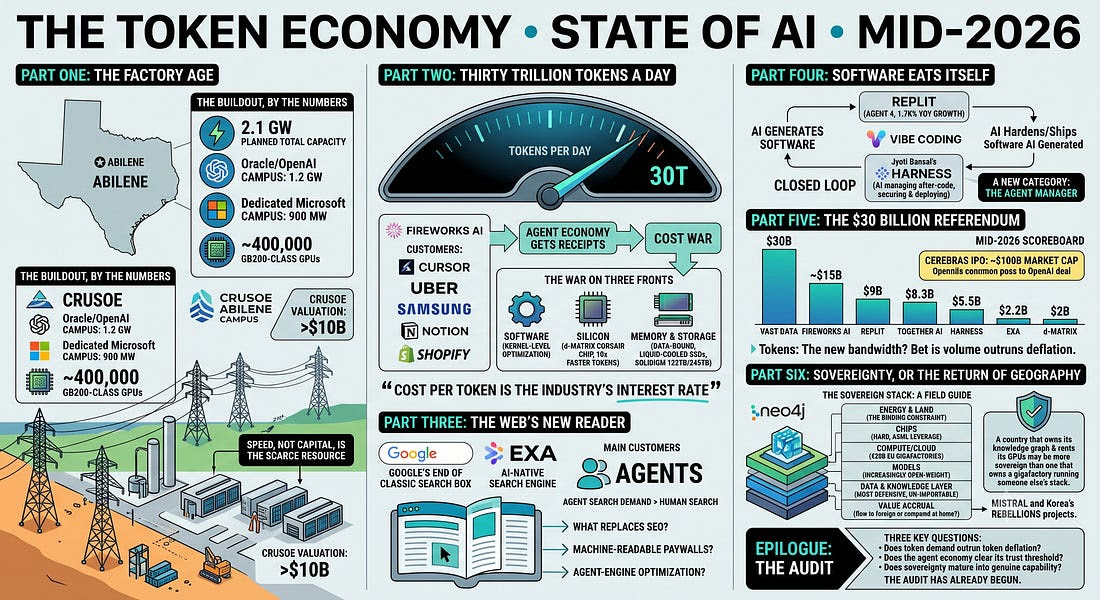
Tokens Are the New Headcount: Is There a New Labor Model?
 Businesses are starting to measure their productive capacity not just by how
many people they employ, but by how many computational units, or tokens, their
artificial intelligence systems process. Traditionally, scaling a company
meant hiring more staff, which brought predictable increases in human
resources costs, management layers, and physical workspace needs. Now,
organizations are supplementing or completely replacing certain repetitive
tasks with automated systems that run on large language models. In this
shifting landscape, the basic unit of work is gradually changing. A token
represents a piece of text or data processed by an algorithm. As companies
integrate these tools into their daily operations, they plan their future
budgets around computing power and software usage rather than relying only on
salaries and benefits. This transition allows for a more flexible approach to
getting things done, as computational resources can be scaled up or down based
on immediate demand without the complexities of hiring or layoffs. Ultimately,
this represents a fundamental shift in how organizations think about labor,
moving from a purely human workforce to a blended model where machine
processing capability is measured, planned, and valued as a core component of
a company's overall productive output and business strategy.
Businesses are starting to measure their productive capacity not just by how
many people they employ, but by how many computational units, or tokens, their
artificial intelligence systems process. Traditionally, scaling a company
meant hiring more staff, which brought predictable increases in human
resources costs, management layers, and physical workspace needs. Now,
organizations are supplementing or completely replacing certain repetitive
tasks with automated systems that run on large language models. In this
shifting landscape, the basic unit of work is gradually changing. A token
represents a piece of text or data processed by an algorithm. As companies
integrate these tools into their daily operations, they plan their future
budgets around computing power and software usage rather than relying only on
salaries and benefits. This transition allows for a more flexible approach to
getting things done, as computational resources can be scaled up or down based
on immediate demand without the complexities of hiring or layoffs. Ultimately,
this represents a fundamental shift in how organizations think about labor,
moving from a purely human workforce to a blended model where machine
processing capability is measured, planned, and valued as a core component of
a company's overall productive output and business strategy.How CISOs can rise to the business resilience challenge
 As business resilience overtakes traditional threat prevention, Chief
Information Security Officers are increasingly stepping into the role of
internal resilience leaders. Rather than focusing solely on keeping systems
online, modern security executives must balance system uptime with strict data
protection. The acceptable balance depends entirely on the industry. For
instance, banks may tolerate extended downtime to prevent data loss, whereas
retail organizations often prioritize rapid recovery to maintain revenue
streams. The rapid growth of artificial intelligence and scattered internal
data further complicates this effort, as organizations struggle to secure
undocumented information across their networks. To effectively rise to this
challenge, security leaders must define the absolute minimum operations their
companies need to function. They must also regularly practice recovery
procedures, treating them as live, real-world exercises rather than passive
documentation. Experts suggest adopting a dedicated operations approach,
applying the same continuous testing to recovery protocols as organizations
apply to development. Crucially, security leaders do not need to shoulder this
burden alone. By forming strategic partnerships with governance, risk,
compliance, and core operations executives, they can frame cybersecurity risks
directly in terms of business impact. This collaborative approach secures
necessary funding and ensures overall business continuity remains a shared
organizational responsibility.
As business resilience overtakes traditional threat prevention, Chief
Information Security Officers are increasingly stepping into the role of
internal resilience leaders. Rather than focusing solely on keeping systems
online, modern security executives must balance system uptime with strict data
protection. The acceptable balance depends entirely on the industry. For
instance, banks may tolerate extended downtime to prevent data loss, whereas
retail organizations often prioritize rapid recovery to maintain revenue
streams. The rapid growth of artificial intelligence and scattered internal
data further complicates this effort, as organizations struggle to secure
undocumented information across their networks. To effectively rise to this
challenge, security leaders must define the absolute minimum operations their
companies need to function. They must also regularly practice recovery
procedures, treating them as live, real-world exercises rather than passive
documentation. Experts suggest adopting a dedicated operations approach,
applying the same continuous testing to recovery protocols as organizations
apply to development. Crucially, security leaders do not need to shoulder this
burden alone. By forming strategic partnerships with governance, risk,
compliance, and core operations executives, they can frame cybersecurity risks
directly in terms of business impact. This collaborative approach secures
necessary funding and ensures overall business continuity remains a shared
organizational responsibility.The What, Why, and How of Mixture of Experts (MoE)
 Mixture of Experts is rapidly becoming the standard architecture for large
language models because it solves a significant scaling problem. In a
traditional model, every single parameter is activated for every word
processed. As models grow larger to become more capable, this approach becomes
incredibly slow and expensive to operate. The Mixture of Experts approach
fixes this by dividing parts of the neural network into smaller sub-networks,
known as experts. When the model processes a piece of text, a routing
mechanism evaluates each token and sends it only to the most relevant one or
two experts. This allows the overall model to have a massive total capacity
while keeping the actual computation per token relatively low and manageable.
A common misconception is that these experts specialize in broad,
human-defined subjects like mathematics, complex coding, or historical facts.
In reality, they focus on low-level statistical and syntactic patterns, such
as punctuation or specific word types. When training these models, a major
challenge is preventing a few experts from doing all the work. Developers
typically use a load-balancing technique to ensure traffic is distributed
evenly across all experts, preventing wasted capacity and maintaining
efficient performance throughout the overall computing system.
Mixture of Experts is rapidly becoming the standard architecture for large
language models because it solves a significant scaling problem. In a
traditional model, every single parameter is activated for every word
processed. As models grow larger to become more capable, this approach becomes
incredibly slow and expensive to operate. The Mixture of Experts approach
fixes this by dividing parts of the neural network into smaller sub-networks,
known as experts. When the model processes a piece of text, a routing
mechanism evaluates each token and sends it only to the most relevant one or
two experts. This allows the overall model to have a massive total capacity
while keeping the actual computation per token relatively low and manageable.
A common misconception is that these experts specialize in broad,
human-defined subjects like mathematics, complex coding, or historical facts.
In reality, they focus on low-level statistical and syntactic patterns, such
as punctuation or specific word types. When training these models, a major
challenge is preventing a few experts from doing all the work. Developers
typically use a load-balancing technique to ensure traffic is distributed
evenly across all experts, preventing wasted capacity and maintaining
efficient performance throughout the overall computing system.6 strategic trade-offs CIOs can’t afford to get wrong
 As artificial intelligence and cybersecurity demands reshape the modern
business landscape, chief information officers face six critical choices. The
first challenge is balancing spending on foundational operations with
investments in new growth. Underfunding daily IT needs risks system stability,
while neglecting growth initiatives threatens overall competitiveness. Second,
technology leaders must weigh rapid innovation against operational resilience.
Pushing new systems too fast can easily disrupt daily operations, but moving
too slowly leads to outdated technology. Third, the push for innovation must
be balanced against risk management. Businesses want quick results, but
leaders must always ensure proper oversight, privacy, and accountability.
Fourth, companies must closely match the speed of technological change with
their own organizational readiness, often requiring controlled rollouts and
staff training to prevent teams from becoming overwhelmed. Fifth, leaders need
to firmly balance data accessibility with data protection. Vast amounts of
sensitive information must be available for new projects without compromising
security or privacy protocols. Finally, organizations face a stark choice
between the desired use of artificial intelligence and its rapidly mounting
financial costs. Many are currently favoring innovation by accepting higher
bills in the short term, though a major shift toward stricter cost
optimization is widely anticipated as actual expenses frequently exceed
initial estimates.
As artificial intelligence and cybersecurity demands reshape the modern
business landscape, chief information officers face six critical choices. The
first challenge is balancing spending on foundational operations with
investments in new growth. Underfunding daily IT needs risks system stability,
while neglecting growth initiatives threatens overall competitiveness. Second,
technology leaders must weigh rapid innovation against operational resilience.
Pushing new systems too fast can easily disrupt daily operations, but moving
too slowly leads to outdated technology. Third, the push for innovation must
be balanced against risk management. Businesses want quick results, but
leaders must always ensure proper oversight, privacy, and accountability.
Fourth, companies must closely match the speed of technological change with
their own organizational readiness, often requiring controlled rollouts and
staff training to prevent teams from becoming overwhelmed. Fifth, leaders need
to firmly balance data accessibility with data protection. Vast amounts of
sensitive information must be available for new projects without compromising
security or privacy protocols. Finally, organizations face a stark choice
between the desired use of artificial intelligence and its rapidly mounting
financial costs. Many are currently favoring innovation by accepting higher
bills in the short term, though a major shift toward stricter cost
optimization is widely anticipated as actual expenses frequently exceed
initial estimates.AI Demands More Engineering Discipline, Not Less
The shift toward building systems with artificial intelligence often leads
teams to believe they can bypass traditional software engineering practices.
However, integrating models into production environments actually requires a
stricter adherence to foundational engineering principles, rather than
abandoning them. When developers rely on language models or machine learning
algorithms to drive core features, they introduce a significant layer of
unpredictability. Unlike traditional code, which follows explicit logic, these
systems deal with probabilities and vast datasets, meaning unexpected
behaviors are inevitable. To handle this challenge, teams must focus heavily
on rigorous testing, version control, and continuous monitoring. You cannot
just deploy a model and assume it will continue working correctly as data
changes over time. Real world applications demand robust pipelines to manage
updates safely and fallbacks to catch errors when the model inevitably makes a
mistake. Furthermore, security and privacy practices become even more critical
when handling the large amounts of data required to make these systems
function. Ultimately, the successful deployment of these tools does not come
from the models themselves, but from the reliable, solid architecture built
around them. Treating artificial intelligence as an excuse to ignore
established engineering methods will only lead to fragile applications and
operational failures in the long run.
Measuring ROI from cybersecurity investments: Looking beyond prevention to business value
 Cybersecurity has shifted from a basic technology requirement to a primary
business priority that directly impacts long-term growth and operational
resilience. However, measuring the return on investment for these initiatives
remains challenging because success is typically defined by the absence of
disruptions rather than direct revenue generation. Instead of relying solely
on technical indicators or the number of threats blocked, organizations should
evaluate security through the lens of business value. This means focusing on
practical metrics like how quickly an issue is detected, the ability to
maintain critical operations during an attack, and overall risk reduction.
While preventing attacks is important, minimizing the impact of any incident
through quick recovery and reduced downtime often delivers greater practical
value. Furthermore, automating routine security tasks improves overall
efficiency and lowers administrative costs, allowing teams to handle more
complex issues. Rather than viewing security as a barrier or a short-term
expense, businesses should see it as a foundation that enables confident
expansion into new technologies. By integrating security into their daily
operations and maintaining clear visibility across all systems, organizations
can build lasting trust with their customers. Ultimately, effective security
investments provide the stability necessary to innovate and operate safely in
a connected environment.
Cybersecurity has shifted from a basic technology requirement to a primary
business priority that directly impacts long-term growth and operational
resilience. However, measuring the return on investment for these initiatives
remains challenging because success is typically defined by the absence of
disruptions rather than direct revenue generation. Instead of relying solely
on technical indicators or the number of threats blocked, organizations should
evaluate security through the lens of business value. This means focusing on
practical metrics like how quickly an issue is detected, the ability to
maintain critical operations during an attack, and overall risk reduction.
While preventing attacks is important, minimizing the impact of any incident
through quick recovery and reduced downtime often delivers greater practical
value. Furthermore, automating routine security tasks improves overall
efficiency and lowers administrative costs, allowing teams to handle more
complex issues. Rather than viewing security as a barrier or a short-term
expense, businesses should see it as a foundation that enables confident
expansion into new technologies. By integrating security into their daily
operations and maintaining clear visibility across all systems, organizations
can build lasting trust with their customers. Ultimately, effective security
investments provide the stability necessary to innovate and operate safely in
a connected environment.Clean Architecture for Serverless: Business Logic You Can Take Anywhere
The presentation explores the practical realities of using the Kotlin
programming language within serverless environments, focusing on the
compromises and performance benefits it offers to developers. It begins by
addressing a common challenge in serverless computing: the initial delay when
a function runs for the first time, often called a cold start. Because the
Java Virtual Machine traditionally takes time to load, using it in a
serverless context can cause noticeable lag. The talk explains how Kotlin,
when combined with advanced compilation tools, helps solve this problem by
converting the code into a native executable that loads almost instantly. This
approach significantly reduces memory usage and startup times, making it a
viable option for short lived functions. The speaker also walks through
typical project setups and demonstrates how the clear and concise syntax of
the language allows developers to write less code while maintaining
readability. While acknowledging that moving away from traditional server
setups requires adjustments in how applications are designed and monitored,
the presentation concludes that Kotlin provides a solid, reliable foundation
for building modern functions. The combination of strong type safety and
modern language features makes it a sensible choice for teams looking to
simplify their infrastructure and daily operations.
Local Governments Face Increasing Cyberattacks
 Local governments are increasingly targeted by cyberattacks because they hold
valuable personal data but often lack the budget and staffing required to
maintain robust security. Cybercriminals recognize this vulnerability,
treating ransomware attacks on small municipalities as a high-volume business
and carefully adjusting their ransom demands to amounts these towns can
actually afford. With local IT teams frequently reduced to just one or two
people juggling multiple responsibilities, staying ahead of sophisticated
security threats becomes a constant struggle. To address this widening
disparity, Alabama has introduced a centralized statewide approach that offers
a very promising solution. Through a partnership with Auburn University and
federal grant funding, the state provides essential cybersecurity services,
such as continuous monitoring, penetration testing, and multi-factor
authentication, at no cost to participating communities. This shared-services
model allows small towns to reach a strong security baseline that would
otherwise be financially out of reach. While cybersecurity experts openly
praise this collective defense strategy and actively encourage other states to
adopt similar frameworks, they also caution that centralized security hubs
require sustained financial support. Furthermore, because these central hubs
access multiple municipal networks, they must maintain exceptional defenses
themselves to prevent becoming prime targets for attackers seeking access to
multiple local agencies.
Local governments are increasingly targeted by cyberattacks because they hold
valuable personal data but often lack the budget and staffing required to
maintain robust security. Cybercriminals recognize this vulnerability,
treating ransomware attacks on small municipalities as a high-volume business
and carefully adjusting their ransom demands to amounts these towns can
actually afford. With local IT teams frequently reduced to just one or two
people juggling multiple responsibilities, staying ahead of sophisticated
security threats becomes a constant struggle. To address this widening
disparity, Alabama has introduced a centralized statewide approach that offers
a very promising solution. Through a partnership with Auburn University and
federal grant funding, the state provides essential cybersecurity services,
such as continuous monitoring, penetration testing, and multi-factor
authentication, at no cost to participating communities. This shared-services
model allows small towns to reach a strong security baseline that would
otherwise be financially out of reach. While cybersecurity experts openly
praise this collective defense strategy and actively encourage other states to
adopt similar frameworks, they also caution that centralized security hubs
require sustained financial support. Furthermore, because these central hubs
access multiple municipal networks, they must maintain exceptional defenses
themselves to prevent becoming prime targets for attackers seeking access to
multiple local agencies.Martin Fowler's Tech Debt Quadrant
Martin Fowler’s Technical Debt Quadrant is a practical framework that
categorizes software debt to help teams manage it effectively. Rather than
treating all technical debt as equal, the model evaluates it along two axes:
whether the debt was taken on intentionally and whether the decision was made
carefully or carelessly. This creates four distinct categories. Reckless and
deliberate debt occurs when a team knowingly takes bad shortcuts without a
plan to fix them, usually requiring a shift in team culture. Prudent and
deliberate debt involves calculated tradeoffs made to meet business goals,
much like a strategic loan that the team plans to repay. Reckless and
inadvertent debt happens when developers lack the experience to realize they
are making mistakes, which highlights a need for training and mentorship.
Finally, prudent and inadvertent debt is the natural result of a team learning
better ways to build a system over time, requiring steady, ongoing
improvements. The guide also highlights a modern challenge: code generated by
artificial intelligence. Because these tools produce code so rapidly and lack
human intent, they can introduce massive amounts of complex debt if left
unchecked. By identifying which category their debt falls into, teams can
apply the right strategy instead of wasting time on the wrong fixes.
India’s DPI export strategy evolves beyond identity and payments to AI
 India is expanding its digital public infrastructure strategy beyond its
foundational identity and payment systems to focus on artificial intelligence,
multilingual services, and specific sectors like healthcare and pensions.
While the country is already testing its identity and payment frameworks in 25
nations, recent discussions highlight a shift toward integrating AI to improve
public service delivery. A key element of this evolution is the development of
voice-guided, multilingual interfaces. Tools like Bhashini aim to bridge
language and literacy gaps by allowing users to interact with government
services through spoken language. Furthermore, the massive amount of data
generated by these digital systems is being used to improve financial
inclusion, such as providing better credit access for small businesses based
on their transaction histories. Indian officials emphasize the importance of
digital sovereignty, advocating for localized AI models that understand
regional languages and adhere to strict privacy controls. As the
infrastructure moves into specialized areas, leaders are calling for the
formal integration of these systems into government operations. This means
shifting from standalone technology projects to a permanent, secure
architecture built on user consent. Ultimately, India intends to share this
broader digital framework globally, offering it as a tested model for digital
democracy and inclusive growth.
India is expanding its digital public infrastructure strategy beyond its
foundational identity and payment systems to focus on artificial intelligence,
multilingual services, and specific sectors like healthcare and pensions.
While the country is already testing its identity and payment frameworks in 25
nations, recent discussions highlight a shift toward integrating AI to improve
public service delivery. A key element of this evolution is the development of
voice-guided, multilingual interfaces. Tools like Bhashini aim to bridge
language and literacy gaps by allowing users to interact with government
services through spoken language. Furthermore, the massive amount of data
generated by these digital systems is being used to improve financial
inclusion, such as providing better credit access for small businesses based
on their transaction histories. Indian officials emphasize the importance of
digital sovereignty, advocating for localized AI models that understand
regional languages and adhere to strict privacy controls. As the
infrastructure moves into specialized areas, leaders are calling for the
formal integration of these systems into government operations. This means
shifting from standalone technology projects to a permanent, secure
architecture built on user consent. Ultimately, India intends to share this
broader digital framework globally, offering it as a tested model for digital
democracy and inclusive growth.




/articles/multi-region-latency-cost-tradeoffs/en/smallimage/multi-region-latency-cost-tradeoffs-thumbnail-1783416229477.jpg)