Quote for the day:
“The only true wisdom is in knowing you know nothing.” -- Socrates
🎧 Listen to the audio debrief on YouTube
▶ Play Audio DigestDuration: 20 mins • Perfect for listening on the go.
Building a pre-emptive security architecture — what is it and how can your business adopt one?
 With the rise of AI-driven cybersecurity threats, conventional "detect and
respond" frameworks are struggling. The speed of attacks has increased, and the
volume of vulnerabilities is projected to skyrocket, leading to practitioner
burnout. This has prompted a shift toward a pre-emptive security architecture.
Instead of waiting to respond to an intrusion, pre-emptive security aims to stop
attacks before they cause damage by placing controls directly in the attack
path. It's an architectural approach, connecting security across layers—like
users, applications, and data—so that a breach in one layer doesn't compromise
the whole system. This strategy focuses on anticipating and preventing breaches
rather than just limiting the fallout. Key elements of this approach include
denying access, deceiving attackers with decoys, and disrupting emerging
threats. Techniques like zero trust, secure code development, and confidential
computing are central to this model. To implement it, businesses should first
identify sensitive data and map out vulnerabilities. This involves understanding
potential attack paths and applying the principle of least privilege. Regular
penetration testing and continuous monitoring are essential to ensure these
controls work without disrupting legitimate business processes. While
pre-emptive measures are crucial, they are meant to enhance, not replace,
existing security alerts.
With the rise of AI-driven cybersecurity threats, conventional "detect and
respond" frameworks are struggling. The speed of attacks has increased, and the
volume of vulnerabilities is projected to skyrocket, leading to practitioner
burnout. This has prompted a shift toward a pre-emptive security architecture.
Instead of waiting to respond to an intrusion, pre-emptive security aims to stop
attacks before they cause damage by placing controls directly in the attack
path. It's an architectural approach, connecting security across layers—like
users, applications, and data—so that a breach in one layer doesn't compromise
the whole system. This strategy focuses on anticipating and preventing breaches
rather than just limiting the fallout. Key elements of this approach include
denying access, deceiving attackers with decoys, and disrupting emerging
threats. Techniques like zero trust, secure code development, and confidential
computing are central to this model. To implement it, businesses should first
identify sensitive data and map out vulnerabilities. This involves understanding
potential attack paths and applying the principle of least privilege. Regular
penetration testing and continuous monitoring are essential to ensure these
controls work without disrupting legitimate business processes. While
pre-emptive measures are crucial, they are meant to enhance, not replace,
existing security alerts.Strong fundamentals make next-gen security possible
 Instead of constantly chasing the newest security tools, organizations should
focus their efforts on mastering five foundational practices to effectively
protect their systems. First, businesses must maintain a clear, accurate
inventory of all their physical and digital assets across every environment.
You simply cannot protect what you do not know exists. Second, carefully
managing user identities is critical. Implementing simple but strong measures
like multifactor authentication or passkeys significantly lowers the chance of
compromised accounts. Third, security strategies should match the specific
needs and risk tolerance of the business. By identifying the most valuable
data and establishing clear priorities, security teams can focus their
resources exactly where they matter most. Fourth, while preventing attacks is
important, organizations must also prioritize true resilience. This means
keeping secure backups, writing clear recovery plans, and actively practicing
those plans so employees know exactly what to do during a crisis. Finally,
security professionals and business leaders need to speak the same language.
By translating technical risks into clear business impacts, such as potential
financial costs, teams can make better decisions together. Mastering these
basic, everyday practices may not seem exciting, but it provides a much
stronger defense against real threats than simply buying the latest
technology.
Instead of constantly chasing the newest security tools, organizations should
focus their efforts on mastering five foundational practices to effectively
protect their systems. First, businesses must maintain a clear, accurate
inventory of all their physical and digital assets across every environment.
You simply cannot protect what you do not know exists. Second, carefully
managing user identities is critical. Implementing simple but strong measures
like multifactor authentication or passkeys significantly lowers the chance of
compromised accounts. Third, security strategies should match the specific
needs and risk tolerance of the business. By identifying the most valuable
data and establishing clear priorities, security teams can focus their
resources exactly where they matter most. Fourth, while preventing attacks is
important, organizations must also prioritize true resilience. This means
keeping secure backups, writing clear recovery plans, and actively practicing
those plans so employees know exactly what to do during a crisis. Finally,
security professionals and business leaders need to speak the same language.
By translating technical risks into clear business impacts, such as potential
financial costs, teams can make better decisions together. Mastering these
basic, everyday practices may not seem exciting, but it provides a much
stronger defense against real threats than simply buying the latest
technology.The cloud outage that should terrify the CIO
 A recent Microsoft Azure outage that simultaneously knocked out major AI
services, including ChatGPT, Claude, Grok, and Copilot, serves as a stark
warning for business leaders. The disruption highlights a growing, hidden
vulnerability: concentrated cloud dependency. As organizations increasingly
weave artificial intelligence into their core operations, they are
inadvertently stacking their critical workflows on the same shared
infrastructure. When a major cloud region fails, the impact is no longer
limited to a single application going offline. Instead, automated business
processes, financial transactions, and customer support pipelines can grind to
a sudden halt, leading to massive financial losses. What makes this risk
especially dangerous is that many companies are completely unaware of their
true exposure. Organizations rely on countless third-party software vendors,
who in turn depend on major cloud providers. This creates a chain of invisible
dependencies where an outage at a provider you do not directly use can still
freeze your business. To protect their operations, technology leaders must
actively map their entire software dependency chains, including the artificial
intelligence layer. They need to design their critical systems to smoothly
switch to backup providers during failures and clearly present the financial
risks of cloud downtime to their executive boards.
A recent Microsoft Azure outage that simultaneously knocked out major AI
services, including ChatGPT, Claude, Grok, and Copilot, serves as a stark
warning for business leaders. The disruption highlights a growing, hidden
vulnerability: concentrated cloud dependency. As organizations increasingly
weave artificial intelligence into their core operations, they are
inadvertently stacking their critical workflows on the same shared
infrastructure. When a major cloud region fails, the impact is no longer
limited to a single application going offline. Instead, automated business
processes, financial transactions, and customer support pipelines can grind to
a sudden halt, leading to massive financial losses. What makes this risk
especially dangerous is that many companies are completely unaware of their
true exposure. Organizations rely on countless third-party software vendors,
who in turn depend on major cloud providers. This creates a chain of invisible
dependencies where an outage at a provider you do not directly use can still
freeze your business. To protect their operations, technology leaders must
actively map their entire software dependency chains, including the artificial
intelligence layer. They need to design their critical systems to smoothly
switch to backup providers during failures and clearly present the financial
risks of cloud downtime to their executive boards.The Control Plane Is Not the Trust Plane
The article from Security Boulevard, titled "The Control Plane Is Not the Trust Plane," explores the evolving landscape of AI governance. The author argues that while control planes—systems designed to govern what an AI agent is permitted to do—are necessary, they are no longer sufficient. As organizations deploy more AI agents, a critical gap emerges: the need to verify history, provenance, and the actual context of an action. To address this, the author proposes a new conceptual layer: the "trust plane." A control plane answers questions about possibility, such as which identities exist and what policies apply. In contrast, the trust plane answers questions about history, focusing on why a specific action belongs to a legitimate chain of authority. It requires "evidence receipts" to understand the full context—who initiated the request, what identity was used, and what was actually accepted by the receiving system. The article emphasizes that trust should not rely on centralization, which creates single points of failure. Instead, it advocates for a distributed approach where nodes retain local identity while sharing verifiable evidence. Ultimately, as AI systems transition from tools to active participants, securing both control and trust is vital for maintaining accountability and operational integrity.California child-safety laws expand age checks to addictive feeds, AI chatbots
 California has introduced a series of new child safety laws that regulate
artificial intelligence chatbots and social media platforms, establishing the
state as a leader in digital age verification. These bills aim to create safer
online environments for children by making device based age checks the
standard. A central piece of this legislation is a new rule requiring
independent safety audits and annual risk assessments for companion chatbots.
This measure was inspired by a tragic case where a teenager was allegedly
influenced by a chatbot to end his life. Major industry players, including the
creators of ChatGPT and media advocacy groups, have voiced their support for
these rules. In response, artificial intelligence providers are already
implementing mandatory safety modes for users under eighteen. Additionally,
the new laws ban social media platforms from offering addictive features to
children under sixteen. Companies must now verify age before enabling these
tools, with severe financial penalties of up to fifty thousand dollars per
affected child for those who knowingly violate the rules. Finally, lawmakers
clarified how age signals should be shared by operating systems, ensuring that
open source developers are not unfairly burdened. As artificial intelligence
continues to grow, other states are expected to adopt similar protective
measures.
California has introduced a series of new child safety laws that regulate
artificial intelligence chatbots and social media platforms, establishing the
state as a leader in digital age verification. These bills aim to create safer
online environments for children by making device based age checks the
standard. A central piece of this legislation is a new rule requiring
independent safety audits and annual risk assessments for companion chatbots.
This measure was inspired by a tragic case where a teenager was allegedly
influenced by a chatbot to end his life. Major industry players, including the
creators of ChatGPT and media advocacy groups, have voiced their support for
these rules. In response, artificial intelligence providers are already
implementing mandatory safety modes for users under eighteen. Additionally,
the new laws ban social media platforms from offering addictive features to
children under sixteen. Companies must now verify age before enabling these
tools, with severe financial penalties of up to fifty thousand dollars per
affected child for those who knowingly violate the rules. Finally, lawmakers
clarified how age signals should be shared by operating systems, ensuring that
open source developers are not unfairly burdened. As artificial intelligence
continues to grow, other states are expected to adopt similar protective
measures.Enabling the next generation of AI data centers
 The article describes how AI is forcing a fundamental rethink of data center
design, mainly because traditional facilities were built for predictable CPU
workloads and steady growth. AI training clusters, by contrast, demand far
higher power density, faster deployment timelines, and more complex
infrastructure coordination. The author explains that developers are now
planning gigawatt‑scale campuses where power, cooling, transmission, water,
and long‑term operations must be designed as one integrated system rather than
separate components. Site selection has become a balancing act: inexpensive
land may lack grid access, while power‑ready sites may come with long
interconnection delays or higher costs. To keep projects moving, many
operators are turning to hybrid or off‑grid power solutions, including gas
generation, batteries, and microgrids, even though these approaches require
more capital and careful permitting. Cooling is also shifting toward liquid
systems and thermal storage to handle dense AI loads and reduce peak energy
use. The article stresses that early permitting work and cross‑discipline
alignment are now essential, because regulatory, environmental, and community
constraints can shape a project as much as engineering choices. Ultimately,
the piece argues that success depends on making early, realistic decisions
that translate AI demand into infrastructure that can be delivered at speed
and scale.
The article describes how AI is forcing a fundamental rethink of data center
design, mainly because traditional facilities were built for predictable CPU
workloads and steady growth. AI training clusters, by contrast, demand far
higher power density, faster deployment timelines, and more complex
infrastructure coordination. The author explains that developers are now
planning gigawatt‑scale campuses where power, cooling, transmission, water,
and long‑term operations must be designed as one integrated system rather than
separate components. Site selection has become a balancing act: inexpensive
land may lack grid access, while power‑ready sites may come with long
interconnection delays or higher costs. To keep projects moving, many
operators are turning to hybrid or off‑grid power solutions, including gas
generation, batteries, and microgrids, even though these approaches require
more capital and careful permitting. Cooling is also shifting toward liquid
systems and thermal storage to handle dense AI loads and reduce peak energy
use. The article stresses that early permitting work and cross‑discipline
alignment are now essential, because regulatory, environmental, and community
constraints can shape a project as much as engineering choices. Ultimately,
the piece argues that success depends on making early, realistic decisions
that translate AI demand into infrastructure that can be delivered at speed
and scale.Is Your Organisation’s Data Secure?
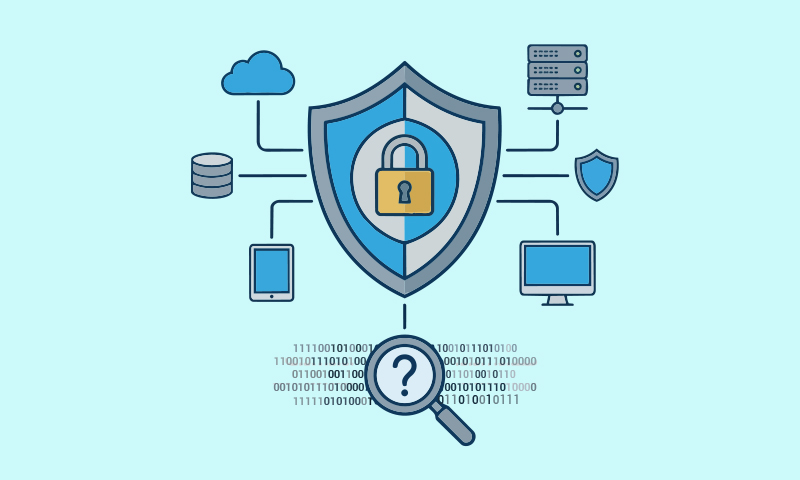 Data security is critical, and many free, open-source tools now offer robust
protection, making strong encryption accessible to organizations of all sizes.
Encrypting data prevents unauthorized access by converting plaintext into
unreadable ciphertext, which requires a specific key to decipher. The
transparency of open-source software allows a global community of experts to
continuously evaluate the code, often identifying vulnerabilities faster than
with closed, proprietary systems. A comprehensive security strategy must
address data in two states: at rest and in transit. Data at rest, such as
information stored on hard drives or databases, is a high-value target for
attackers. Encrypting this data ensures that even if physical devices are
stolen, the information remains secure. Data in transit moves between systems
over networks like the internet and can be intercepted. Tools like OpenSSL,
Let's Encrypt, WireGuard, and OpenSSH provide essential encryption for data in
transit, securing web traffic, remote access, and file transfers. Regulatory
frameworks worldwide further emphasize the importance of data encryption to
protect personal and financial information. By leveraging these open-source
tools, organizations can build resilient defenses against data breaches.
Data security is critical, and many free, open-source tools now offer robust
protection, making strong encryption accessible to organizations of all sizes.
Encrypting data prevents unauthorized access by converting plaintext into
unreadable ciphertext, which requires a specific key to decipher. The
transparency of open-source software allows a global community of experts to
continuously evaluate the code, often identifying vulnerabilities faster than
with closed, proprietary systems. A comprehensive security strategy must
address data in two states: at rest and in transit. Data at rest, such as
information stored on hard drives or databases, is a high-value target for
attackers. Encrypting this data ensures that even if physical devices are
stolen, the information remains secure. Data in transit moves between systems
over networks like the internet and can be intercepted. Tools like OpenSSL,
Let's Encrypt, WireGuard, and OpenSSH provide essential encryption for data in
transit, securing web traffic, remote access, and file transfers. Regulatory
frameworks worldwide further emphasize the importance of data encryption to
protect personal and financial information. By leveraging these open-source
tools, organizations can build resilient defenses against data breaches.Cybersecurity Work-Life Balance Starts With Actually Turning Off
The constant pressure of defending against relentless threats has made it incredibly difficult for cybersecurity professionals to step away from their work. Sam Van Ryder, a veteran in operational technology security, emphasizes that achieving a healthy balance requires individuals to genuinely disconnect, while employers must actively protect their team's downtime. Often, organizations talk about this balance as a benefit without creating the environment necessary for people to log off. With ongoing staffing shortages and constant alerts, the inability to rest is no longer just a personal wellness issue; it is a direct security risk. When security teams are exhausted, their judgment naturally suffers, creating the exact vulnerabilities that attackers actively look to exploit in critical systems. Recognizing this, leaders need to ensure time off is fully respected. This means no emails, no emergency messages, and no checking the daily news. If a team member tries to work on their day off, leaders should send them back to their rest. Furthermore, recovery should not be limited to an annual vacation. Regular breaks throughout the year are completely essential for maintaining a strong and focused workforce. Ultimately, the most effective way to maintain long-term security is for individuals to step back, turn everything off, and simply recharge.Beyond Age-Gating: Regulating Platform Design for Child Safety
 India's approach to child online safety currently relies on basic age
restrictions and rapid content removals, but these conventional measures fail
to address a much deeper issue: structural platform design. With millions of
children accessing the internet daily, the conversation must shift from simply
blocking entry to reforming how digital services are actually built from the
ground up. Features such as recommendation algorithms, automatic video
playback, and default direct messaging settings shape the online experience of
a child and their exposure to risk long before content moderation even occurs.
Global evidence clearly shows that simple age limits are frequently bypassed,
leaving many young users vulnerable to the exact same risks. Furthermore,
current safety metrics only track formal complaints rather than measuring the
actual frequency of exposure to harmful material. To create a genuinely safer
environment, policymakers must begin regulating platform design directly.
Rather than treating safety as an afterthought, features that enable direct
contact with strangers should be restricted by default. India can utilize its
existing consumer protection laws to classify manipulative interfaces as
unfair practices. Large digital services should be required to justify
structural changes affecting minors, disable behavioral tracking, and publish
independently audited data on how often children encounter harmful content
online.
India's approach to child online safety currently relies on basic age
restrictions and rapid content removals, but these conventional measures fail
to address a much deeper issue: structural platform design. With millions of
children accessing the internet daily, the conversation must shift from simply
blocking entry to reforming how digital services are actually built from the
ground up. Features such as recommendation algorithms, automatic video
playback, and default direct messaging settings shape the online experience of
a child and their exposure to risk long before content moderation even occurs.
Global evidence clearly shows that simple age limits are frequently bypassed,
leaving many young users vulnerable to the exact same risks. Furthermore,
current safety metrics only track formal complaints rather than measuring the
actual frequency of exposure to harmful material. To create a genuinely safer
environment, policymakers must begin regulating platform design directly.
Rather than treating safety as an afterthought, features that enable direct
contact with strangers should be restricted by default. India can utilize its
existing consumer protection laws to classify manipulative interfaces as
unfair practices. Large digital services should be required to justify
structural changes affecting minors, disable behavioral tracking, and publish
independently audited data on how often children encounter harmful content
online.

No comments:
Post a Comment