Showing posts with label design thinking. Show all posts

Daily Tech Digest - November 09, 2025


Quote for the day:

"The only way to achieve the impossible is to believe it is possible." -- Charles Kingsleigh


Way too complex: why modern tech stacks need observability

Recent outages have demonstrated that a heavy dependence on digital systems can leading to cascading faults that can halt financial transactions, disrupt public transportation and even bring airport operations to a standstill. ... To operate with confidence, businesses must see across their entire digital supply chain, which is not possible with basic monitoring. Unlike traditional monitoring, which often focuses on siloed metrics or alerts, observability provides a unified, real-time view across the entire technology stack, enabling faster, data-driven decisions at scale. Implementing real-time, AI-powered observability covers every component from infrastructure and services to applications and user experience. ... Observability also enables organizations to proactively detect anomalies before they escalate into outages, quickly pinpoint root causes across complex, distributed systems and automate response actions to reduce mean time to resolution (MTTR). The result is faster, smarter and more resilient operations, giving teams the confidence to innovate without compromising system stability, a critical advantage in a world where digital resilience and speed must go hand in hand. Resilient systems must absorb shocks without breaking. This requires both cultural and technical investment, from embracing shared accountability across teams to adopting modern deployment strategies like canary releases, blue/green rollouts and feature flagging. 


Radical Empowerment From Your Leadership: Understood by Few, Essential for All

“Radical empowerment, for me, isn’t about handing people a seat at the table. It’s about making sure they know the seat is already theirs,” said Trenika Fields, Business Legal, AI Leader at Cisco, MIT Sloan EMBA Class of ’26. “I set the vision and I trust my team to execute in ways that are anchored in the mission and tied to real business outcomes. But trust without depth doesn’t work. That’s where leading with empathy comes in. It’s my secret sauce, and it has to be real. You can’t fake it. People know when it’s performative. Real empathy builds confidence, and confidence fuels bold, decisive execution. When people feel seen, trusted, and strategically aligned, they lead like builders, not bystanders. Strip that trust and empathy away, and radical disempowerment moves in fast. Voices go quiet. Momentum dies. Innovation flatlines. But when you get it right, you don’t just build teams. You build powerhouses that set the standard and raise the bar for everyone else.” Why, given how simple this is, is it so hard for senior leadership to do versus say? I worked in an environment years ago when “radical candor” was the theme du jour rather than “radical empowerment.” An executive over an executive over my boss was explaining radical candor, which very simply put, being constructive and forthright with empathy to help others grow. 


Banks Can Convert Messy Data into Unstoppable Growth

Banks recognize the potential in tapping a trove of customer data, much of it unstructured, as a tool to personalize interactions and become more proactive. They are sitting on a goldmine of unstructured information hidden in PDFs, scanned forms, call notes and emails — data that, once cleaned and organized, can unlock new business opportunities, says Drew Singer, head of product at Middesk. ... The ability to successfully turn data into insights often depends on clear parameters for how data is handled. This includes a shared understanding of who owns the data, how it will be managed and stored, and a defined governance structure — possibly through committees — for overseeing its use, Deutsch says. "If you don’t set these rules, once data starts flowing, you will lose control of it. You will most likely lose quality," he says. ... With the data governance structure firmly in place, FIs are positioned to use additional tools to garner action-oriented insights across the organization. Truist Client Pulse, for example, uses AI and machine learning to analyze customer feedback across channels. ... "We’ve got a population of teammates using the tool as it stands today, to better understand regional performance opportunities …what’s going well with certain solutions that we have, and where there are areas of opportunity to enhance experience and elevate satisfaction to drive to client loyalty," says Graziano. 


Securing Digital Supply Chains: Confronting Cyber Threats in Logistics Networks

Modern logistics networks are filled with connected devices — from IoT sensors tracking shipments and telematics in trucks, to automated sorting systems and industrial controls in smart warehouses and ports. This Internet of Things (IoT) revolution offers incredible efficiency and real-time visibility, but it also increases the attack surface. Each connected sensor, RFID reader, camera, or vehicle telemetry unit is essentially an internet entry point that could be exploited if not properly secured. The spread of IoT devices introduces new vulnerabilities that must be managed effectively. For example, a hacker who hijacks a vulnerable warehouse camera or temperature sensor might find a way into the larger corporate network. ... The tightly interwoven nature of modern supply chains amplifies the impact of any single cyber incident, highlighting the importance of robust cybersecurity measures. Companies are now digitally linked with vendors and logistics partners, sharing data and connecting systems to improve efficiency. However, this interdependence means that a security failure at one point can quickly spread outward. ... While large enterprises may invest heavily in cybersecurity, they often depend on smaller partners who might lack the same resources or maturity. Global supply chains can involve hundreds of suppliers and service providers with varying security levels. 


For OT Cyber Defenders, Lack of Data Is the Biggest Threat

Data in the OT and ICS world is transient, said Lee. Instructions - legitimate, or not - flow across the network. Once executed, they vanish. "If I don't capture it during the attack, it's gone," Lee said. Post-incident forensics is basically impossible without specialized monitoring tools already in place. "So for the companies that aren't doing that data collection, that monitoring, prior to the attacks, they have no chance at actually figuring out if a cyberattack was involved or not." And that is a problem when nation-state adversaries have pre-positioned themselves within the networks of critical infrastructure providers, apparently ready to pivot to OT exploitation in time of conflict. ... Even when critical infrastructure operators do capture OT monitoring data, the sheer complexity of modern industrial processes means that finding out what went wrong is difficult. The inability to make use of more detailed data is an indicator of immaturity in the OT security space, Bryson Bort told Information Security Media Group. "The way I summarize the OT space is, it's a generation behind traditional IT," said Bort, a U.S. Army veteran and founder of the non-profit ICS Village. Bort helps organize the annual Hack the Capitol event, but he makes his living selling security services to critical infrastructure owners and operators. Most operators still don't have visibility into the ICS devices on their work, Bort said. "What do I have? What assets are on my network?"


Cross-Border Compliance: Navigating Multi-Jurisdictional Risk with AI

The digital age has turned global expansion from an aspiration into a necessity. Yet, for companies operating across multiple countries, this opportunity comes wrapped in a Gordian knot of cross-border compliance. The sheer volume, complexity, and rapid change of multi-jurisdictional regulations—from GDPR and CCPA on data privacy to complex Anti-Money Laundering (AML) and financial reporting rules—pose an existential risk. What seems like a local detail in one jurisdiction may spiral into a costly mistake elsewhere. ... AI helps with cross-border compliance by automating risk management through real-time monitoring, analyzing vast datasets to detect fraud, and keeping up with constantly changing regulations. It navigates complex rules by using natural language processing (NLP) to interpret regulatory texts and automating tasks like document verification for KYC/KYB processes. By providing continuous, automated risk assessments and streamlining compliance workflows, AI reduces human error, improves efficiency, and ensures ongoing adherence to global requirements. AI, specifically through technologies like Machine Learning (ML) and Natural Language Processing (NLP), is the critical tool for cutting compliance costs by up to 50% while drastically improving accuracy and speed. AI and machine learning (ML) solutions, often referred to as RegTech, are streamlining compliance by automating tasks, enhancing data analysis, and providing real-time insights.


Best Practices for Building an AI-Powered OT Cybersecurity Strategy

One challenge in defending OT assets is that most industrial facilities still rely on decades-old hardware and software systems that were not designed with modern cybersecurity in mind. These legacy systems are often difficult to patch and contain documented vulnerabilities. Sophisticated adversaries know this and exploit these outdated systems as a point of entry. ... OT cybersecurity and regulatory compliance are tightly linked in manufacturing, but not interchangeable. Consider regulatory compliance the minimum bar you must clear to stay legally and contractually safe. At the same time, cybersecurity is the continuous effort you must take to protect your systems and operations. Manufacturers increasingly must prove OT cyber resilience to customers, partners, and regulators. A strong cybersecurity posture helps ensure certifications are passed, contracts are won, and reputations are protected. ... AI is a powerful tool for bolstering OT cybersecurity strategies by overcoming the common limitations of traditional, rule-based defenses. AI, whether machine learning, predictive AI, or agentic AI, provides advanced capabilities to help defenders detect threats, automate responses, manage assets, and enhance vulnerability management. ... Human oversight and expertise are vital for ensuring AI quality and contextual accuracy, especially in safety-critical OT environments. 


Training Data Preprocessing for Text-to-Video Models

Getting videos ready for a dataset is not merely a checkbox task - it’s a demanding, time-consuming process that can make or break the final model. At this stage, you’re typically dealing with a large collection of raw footage with no labels, no descriptions, and at best limited metadata like resolution or duration. If the sourcing process was well-structured, you might have videos grouped by domain or category, but even then, they’re not ready for training. The problems are straightforward but critical: there’s no guiding information (captions or prompts) for the model to learn from, and the clips are often far too long for most generative architectures, which tend to work with a context window (length of the video, like number of tokens for Large Language Models) measured in tens of seconds, not minutes. ... It might seem like the fastest approach is to label every scene you have. In reality, that’s a direct route to poor results. After all the previous steps, a dataset is rarely clean: it almost always contains broken clips, low-quality frames, and clusters of near-identical segments. The filtering stage exists to strip out this noise, leaving the model only with content worth learning from. This ensures that the model doesn’t spend time on data that won’t improve its output. ... Building a proper text-to-video dataset is an extremely complex task. However, it is impossible to build a text-to-video generation model without a good dataset.


Putting Design Thinking into Practice: A Step-by-Step Guide

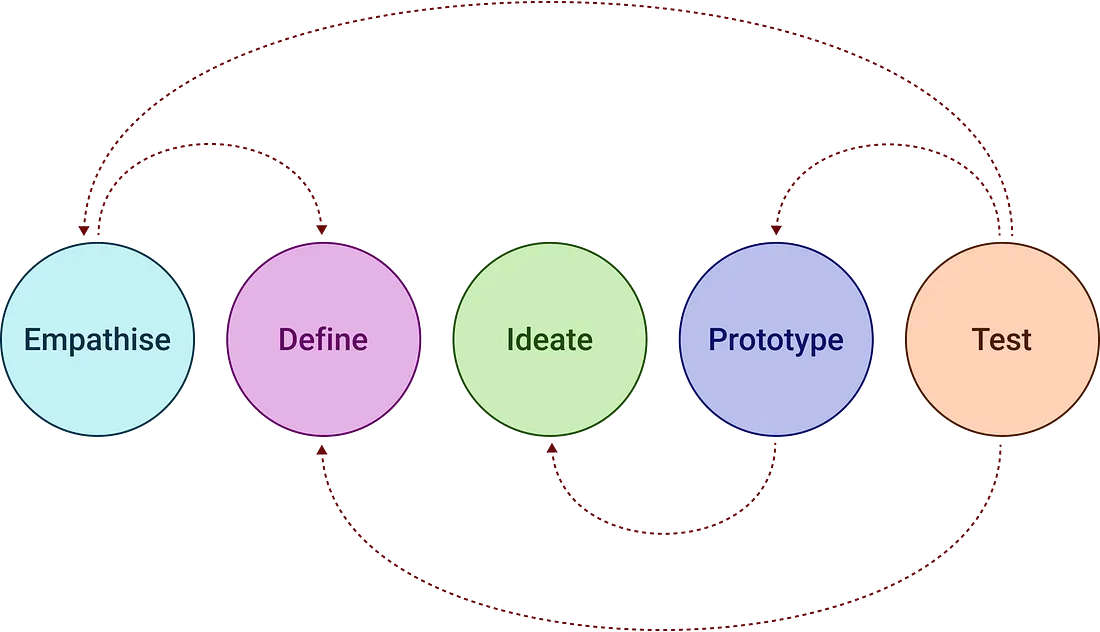
The key aim of this part of the design process is to frame your problem statement. This will guide the rest of your process. Once you’ve gathered insights from your users, the next step is to distil everything down to the real issue. There are many ways to do this, but if you’ve spoken to several users, start by analysing what they said to find patterns — what themes keep coming up, and what challenges do they all seem to face? ... Once you’ve got your problem statement, the next step is to start coming up with ideas. This is the fun part! The aim of this part of idea generation is not to find the perfect idea straight away, but to come up with as many ideas as possible. Quantity matters more than quality right now. Start by brainstorming everything that comes to mind, no matter how unrealistic it sounds. At this point, quantity matters more than quality — you can always refine later. Write your ideas down, sketch them, or talk them through with friends or teammates. You might be surprised at how one silly suggestion sparks a genuinely good idea. ... Testing is the “last” stage of the design process. I say last with a bit of hesitation, because while it is technically last on the diagram, you are guaranteed to get a lot of feedback that will require you to go back to earlier stages of the design process and revisit ideas.


Beyond Resilience: How AI and Digital Twin technology are rewriting the rules of supply chain recovery

For decades, supply chain resilience meant having backup plans, alternate suppliers, safety stock, and crisis playbooks. That model doesn’t hold anymore. In a post-pandemic world shaped by trade wars, climate volatility, and technology shocks, disruptions are neither rare nor isolated. They’re structural. ... The KPIs of resilience have evolved. In most companies, traditional metrics like on-time delivery or supplier lead time fail to capture the system’s true flexibility. Modern analytics teams are redefining the measurement architecture around three key indicators: Mean time to recovery (MTTR): the time between initial disruption and full operational stability;  Conditional value-at-risk (CVaR): a probabilistic measure of financial exposure under extreme stress; Supply network resilience index (SNRI): a composite score tracking substitution agility and cross-tier visibility. ... A hidden benefit of this new approach is its environmental alignment. When Schneider Electric built a multi-tier AI twin for its Asia-Pacific operations, it discovered that optimizing for resilience, diversifying ports, balancing lead times, and automating inventory allocation also reduced carbon intensity per unit shipped by 12%; This was not the goal, but it proved that sustainability and resilience share a common denominator: Efficiency. The smarter the network, the smaller its waste footprint. In boardrooms today, that realization is quietly rewriting ESG strategy.

Daily Tech Digest - June 01, 2025


Quote for the day:

"You are never too old to set another goal or to dream a new dream." -- C.S. Lewis


A wake-up call for real cloud ROI

To make cloud spending work for you, the first step is to stop, assess, and plan. Do not assume the cloud will save money automatically. Establish a meticulous strategy that matches workloads to the right environments, considering both current and future needs. Take the time to analyze which applications genuinely benefit from the public cloud versus alternative options. This is essential for achieving real savings and optimal performance. ... Enterprises should rigorously review their existing usage, streamline environments, and identify optimization opportunities. Invest in cloud management platforms that can automate the discovery of inefficiencies, recommend continuous improvements, and forecast future spending patterns with greater accuracy. Optimization isn’t a one-time exercise—it must be an ongoing process, with automation and accountability as central themes. Enterprises are facing mounting pressure to justify their escalating cloud spend and recapture true business value from their investments. Without decisive action, waste will continue to erode any promised benefits. ... In the end, cloud’s potential for delivering economic and business value is real, but only for organizations willing to put in the planning, discipline, and governance that cloud demands. 


Why IT-OT convergence is a gamechanger for cybersecurity

The combination of IT and OT is a powerful one. It promises real-time visibility into industrial systems, predictive maintenance that limits downtime and data-driven decision making that gives everything from supply chain efficiency to energy usage a boost. When IT systems communicate directly with OT devices, businesses gain a unified view of operations – leading to faster problem solving, fewer breakdowns, smarter automation and better resource planning. This convergence also supports cost reduction through more accurate forecasting, optimised maintenance and the elimination of redundant technologies. And with seamless collaboration, IT and OT teams can now innovate together, breaking down silos that once slowed progress. Cybersecurity maturity is another major win. OT systems, often built without security in mind, can benefit from established IT protections like centralised monitoring, zero-trust architectures and strong access controls. Concurrently, this integration lays the foundation for Industry 4.0 – where smart factories, autonomous systems and AI-driven insights thrive on seamless IT-OT collaboration. ... The convergence of IT and OT isn’t just a tech upgrade – it’s a transformation of how we operate, secure and grow in our interconnected world. But this new frontier demands a new playbook that combines industrial knowhow with cybersecurity discipline.


How To Measure AI Efficiency and Productivity Gains

Measuring AI efficiency is a little like a "chicken or the egg" discussion, says Tim Gaus, smart manufacturing business leader at Deloitte Consulting. "A prerequisite for AI adoption is access to quality data, but data is also needed to show the adoption’s success," he advises in an online interview. ... The challenge in measuring AI efficiency depends on the type of AI and how it's ultimately used, Gaus says. Manufacturers, for example, have long used AI for predictive maintenance and quality control. "This can be easier to measure, since you can simply look at changes in breakdown or product defect frequencies," he notes. "However, for more complex AI use cases -- including using GenAI to train workers or serve as a form of knowledge retention -- it can be harder to nail down impact metrics and how they can be obtained." ... Measuring any emerging technology's impact on efficiency and productivity often takes time, but impacts are always among the top priorities for business leaders when evaluating any new technology, says Dan Spurling, senior vice president of product management at multi-cloud data platform provider Teradata. "Businesses should continue to use proven frameworks for measurement rather than create net-new frameworks," he advises in an online interview. 


The discipline we never trained for: Why spiritual quotient is the missing link in leadership

Spiritual Quotient (SQ) is the intelligence that governs how we lead from within. Unlike IQ or EQ, SQ is not about skill—it is about state. It reflects a leader’s ability to operate from deep alignment with their values, to stay centred amid volatility and to make decisions rooted in clarity rather than compulsion. It shows up in moments when the metrics don’t tell the full story, when stakeholders pull in conflicting directions. When the team is watching not just what you decide, but who you are while deciding it. It’s not about belief systems or spirituality in a religious sense; it’s about coherence between who you are, what you value, and how you lead. At its core, SQ is composed of several interwoven capacities: deep self-awareness, alignment with purpose, the ability to remain still and present amid volatility, moral discernment when the right path isn’t obvious, and the maturity to lead beyond ego. ... The workplace in 2025 is not just hybrid—it is holographic. Layers of culture, technology, generational values and business expectations now converge in real time. AI challenges what humans should do. Global disruptions challenge why businesses exist. Employees are no longer looking for charismatic heroes. They’re looking for leaders who are real, reflective and rooted.


Microsoft Confirms Password Deletion—Now Just 8 Weeks Away

The company’s solution is to first move autofill and then any form of password management to Edge. “Your saved passwords (but not your generated password history) and addresses are securely synced to your Microsoft account, and you can continue to access them and enjoy seamless autofill functionality with Microsoft Edge.” Microsoft has added an Authenticator splash screen with a “Turn on Edge” button as its ongoing campaign to switch users to its own browser continues. It’s not just with passwords, of course, there are the endless warnings and nags within Windows and even pointers within security advisories to switch to Edge for safety and security. ... Microsoft wants users to delete passwords once that’s done, so no legacy vulnerability remains, albeit Google has not gone quite that far as yet. You do need to remove SMS 2FA though, and use an app or key-based code at a minimum. ... Notwithstanding these Authenticator changes, Microsoft users should use this as a prompt to delete passwords and replace them with passkeys, per the Windows-makers’ advice. This is especially true given increasing reports of two-factor authentication (2FA) bypasses that are increasingly rendering basics forms of 2FA redundant.


Sustainable cyber risk management emerges as industrial imperative as manufacturers face mounting threats

The ability of a business to adjust, absorb, and continue operating under pressure is becoming a performance metric in and of itself. It is measured not only in uptime or safety statistics. It’s not a technical checkbox; it’s a strategic commitment that is becoming the new baseline for industrial trust and continuity. At the heart of this change lies security by design. Organizations are working to integrate security into OT environments, working their way up from system architecture to vendor procurement and lifecycle management, rather than adding protections along the way and after deployment. ... The path is made more difficult by the acute lack of OT cyber skills, which could be overcome by employing specialists and establishing long-term pipelines through internal reskilling, knowledge transfer procedures, and partnerships with universities. Building sustainable industrial cyber risk management can be made more organized using the ISA/IEC 62443 industrial cybersecurity standards. Cyber defense is now a continuous, sustainable discipline rather than an after-the-fact response thanks to these widely recognized models, which also allow industries to link risk mitigation to real industrial processes, guarantee system interoperability, and measure progress against common benchmarks.


Design Sprint vs Design Thinking: When to Use Each Framework for Maximum Impact

The Design Sprint is a structured five-day process created by Jake Knapp during his time at Google Ventures. It condenses months of work into a single workweek, allowing teams to rapidly solve challenges, create prototypes, and test ideas with real users to get clear data and insights before committing to a full-scale development effort. Unlike the more flexible Design Thinking approach, a Design Sprint follows a precise schedule with specific activities allocated to each day ...
The Design Sprint operates on the principle of "together alone" – team members work collaboratively during discussions and decision-making, but do individual work during ideation phases to ensure diverse thinking and prevent groupthink. ... Design Thinking is well-suited for broadly exploring problem spaces, particularly when the challenge is complex, ill-defined, or requires extensive user research. It excels at uncovering unmet needs and generating innovative solutions for "wicked problems" that don't have obvious answers. The Design Sprint works best when there's a specific, well-defined challenge that needs rapid resolution. It's particularly effective when a team needs to validate a concept quickly, align stakeholders around a direction, or break through decision paralysis.


Broadcom’s VMware Financial Model Is ‘Ethically Flawed’: European Report

Some of the biggest issues VMware cloud partners and customers in Europe include the company increasing prices after Broadcom axed VMware’s former perpetual licenses and pay-as-you-go monthly pricing models. Another big issue was VMware cutting its product portfolio from thousands of offerings into just a few large bundles that are only available via subscription with a multi-year minimum commitment. “The current VMware licensing model appears to rely on practices that breach EU competition regulations which, in addition to imposing harm on its customers and the European cloud ecosystem, creates a material risk for the company,” said the ECCO in its report. “Their shareholders should investigate and challenge the legality of such model.” Additionally, the ECCO said Broadcom recently made changes to its partnership program that forced partners to choose between either being a cloud service provider or a reseller. “It is common in Europe for CSP to play both [service provider and reseller] roles, thus these new requirements are a further harmful restriction on European cloud service providers’ ability to compete and serve European customers,” the ECCO report said.


Protecting Supply Chains from AI-Driven Risks in Manufacturing

Cybercriminals are notorious for exploiting AI and have set their sights on supply chains. Supply chain attacks are surging, with current analyses indicating a 70% likelihood of cybersecurity incidents stemming from supplier vulnerabilities. Additionally, Gartner projects that by the end of 2025, nearly half of all global organizations will have faced software supply chain attacks. Attackers manipulate data inputs to mislead algorithms, disrupt operations or steal proprietary information. Hackers targeting AI-enabled inventory systems can compromise demand forecasting, causing significant production disruptions and financial losses. ... Continuous validation of AI-generated data and forecasts ensures that AI systems remain reliable and accurate. The “black-box” nature of most AI products, where internal processes remain hidden, demands innovative auditing approaches to guarantee reliable outputs. Organizations should implement continuous data validation, scenario-based testing and expert human review to mitigate the risks of bias and inaccuracies. While black-box methods like functional testing offer some evaluation, they are inherently limited compared to audits of transparent systems, highlighting the importance of open AI development.


What's the State of AI Costs in 2025?

This year's report revealed that 44% of respondents plan to invest in improving AI explainability. Their goals are to increase accountability and transparency in AI systems as well as to clarify how decisions are made so that AI models are more understandable to users. Juxtaposed with uncertainty around ROI, this statistic signals further disparity between organizations' usage of AI and accurate understanding of it. ... Of the companies that use third-party platforms, over 90% reported high awareness of AI-driven revenue. That awareness empowers them to confidently compare revenue and cost, leading to very reliable ROI calculations. Conversely, companies that don't have a formal cost-tracking system have much less confidence that they can correctly determine the ROI of their AI initiatives. ... Even the best-planned AI projects can become unexpectedly expensive if organizations lack effective cost governance. This report highlights the need for companies to not merely track AI spend but optimize it via real-time visibility, cost attribution, and useful insights. Cloud-based AI tools account for almost two-thirds of AI budgets, so cloud cost optimization is essential if companies want to stop overspending. Cost is more than a metric; it's the most strategic measure of whether AI growth is sustainable. As companies implement better cost management practices and tools, they will be able to scale AI in a fiscally responsible way, confidently measure ROI, and prevent financial waste.

Daily Tech Digest - January 24, 2025


Quote for the day:

"Leaders are people who believe so passionately that they can seduce other people into sharing their dream." -- Warren G. Bennis


What comes after Design thinking

The first and most obvious one is that we can no longer afford to design things solely for humans. We clearly need to think in non-human, non-monocentric terms if we want to achieve real, positive, long-term impact. Second, HCD fell short in making its practitioners think in systems and leverage the power of relationships to really be able to understand and redesign what has not been serving us or our planet. Lastly, while HCD accomplished great feats in designing better products and services that solve today’s challenges, it fell short in broadening horizons so that these products and systems could pave the way for regenerative systems: the ones that go beyond sustainability and actively restore and revitalize ecosystems, communities, and resources create lasting, positive impact. Now, everything that we put out in the world needs to have an answer to how it is contributing to a regenerative future. And in order to build a regenerative future, we need to start prioritizing something that is integral to nature: relationships. We need to grow relational capacity, from designing for better interpersonal relationships to establishing systems that facilitate cross-organizational collaboration. We need to think about relational networks and harness their power to recreate more just, trustful, and better functioning systems. We need to think in communities.


FinOps automation: Raising the bar on lowering cloud costs

Successful FinOps automation requires strategies that exploit efficiencies from every angle of cloud optimization. Good data management, negotiations, data manipulation capabilities, and cloud cost distribution strategies are critical to automating cost-effective solutions to minimize cloud spend. This article focuses on how expert FinOps leaders have focused their automation efforts to achieve the greatest benefits. ... Effective automation relies on well-structured data. Intuit and Roku have demonstrated the importance of robust data management strategies, focusing on AWS accounts and Kubernetes cost allocation. Good data engineering enables transparency, visibility, and accurate budgeting and forecasting. ... Automation efforts should focus on areas with the highest potential for cost savings, such as prepayment optimization and waste reduction. Intuit and Roku have achieved significant savings by targeting these high-cost areas. ... Automation tools should be accessible and user-friendly for engineers managing cloud resources. Intuit and Roku have developed tools that simplify resource management and align costs with responsible teams. Automated reporting and forecasting tools help engineers make informed decisions.


Why CISOs Must Think Clearly Amid Regulatory Chaos

At their core, CISOs are truth sayers — akin to an internal audit committee that assesses risks and makes recommendations to improve an organization's defenses and internal controls. Ultimately, though, it's the board and a company's top executives who set policy and decide what to disclose in public filings. CISOs can and should be a counselor for this group effort because they have the understanding of security risk. And yet, the advice they can offer is limited if they don't have full visibility into an organization's technology stack. "Many oversee a company's IT system, but not the products the company sells. That's crucial when it comes to data-dependent systems and devices that can provide network-access targets to cyber criminals. Those might include medical devices, or sensors and other Internet of Things endpoints used in manufacturing lines, electric grids, and other critical physical infrastructure. In short: A company's defenses are only as strong as the board and its top executives allow it to be. And if there is a breach, as in the case of SolarWinds? CISOs do not determine the materiality of a cybersecurity incident; a company's top executives and its board make that call. The CISO's responsibilities in that scenario involves responding to the incident and conducting the follow-up forensics required to help minimize or avoid future incidents.


Building Secure Multi-Cloud Architectures: A Framework for Modern Enterprise Applications

The technical controls alone cannot secure multi-cloud environments. Organizations must conduct cloud security architecture reviews before implementing any multi-cloud solution. These reviews should focus on: Data flow patterns between clouds Authentication and authorization requirements Compliance obligations across all relevant jurisdictions. Completing these tasks thoroughly and diligently will ensure that multi-cloud security is baked into the architectural layer between the clouds and in the clouds themselves. While thorough architecture reviews establish the foundation, automation brings these security principles to life at scale. Automation provides a major advantage to security operations for multi-cloud environments. By treating infrastructure and security as code, organizations can achieve consistent configurations across clouds, implement automated security testing and enable fast response to security events. This helps with the overall security and operational overhead because it allows us to do more with less and to reduce human error. Our security operations experienced a substantial enhancement when we moved to automated compliance checks. Still, we did not just throw AWS services at the problem. We engaged our security team deeply in the process. 


Scaling Dynamic Application Security Testing (DAST)

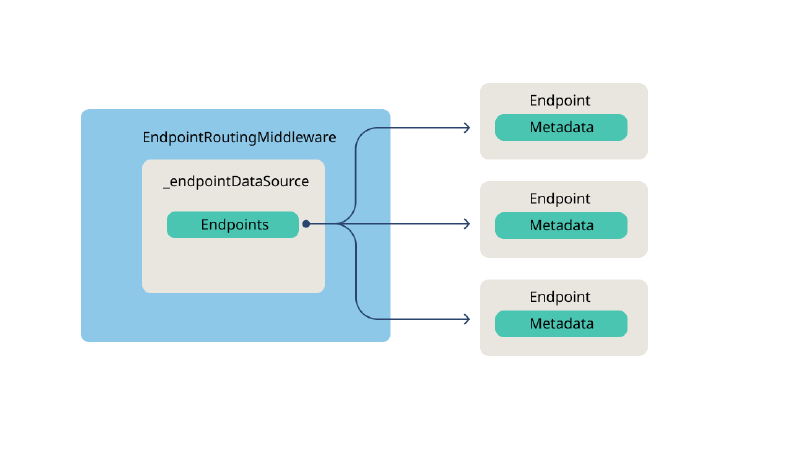
One solution is to monitor requests sent to the target web server and extrapolate an OpenAPI Specification based on those requests in real-time. This monitoring could be performed client-side, server-side, or in-between on an API gateway, load-balancer, etc. This is a scalable, automatable solution that does not require each developer’s involvement. Depending on how long it runs, this approach can be limited in comprehensively identifying all web endpoints. For example, if no users called the /logout endpoint, then the /logout endpoint would not be included in the automatically generated OpenAPI Specification. Another solution is to statically analyze the source code for a web service and generate an OpenAPI Specification based on defined API endpoint routes that the automation can gleam from the source code. Microsoft internally prototyped this solution and found it to be non-trivial to reliably discover all API endpoint routes and all parameters by parsing abstract syntax trees without access to a working build environment. This solution was also unable to handle scenarios of dynamically registered API route endpoint handlers. ... To truly scale DAST for thousands of web services, we need to automatically, comprehensively, and deterministically generate OpenAPI Specifications.


Post-Quantum Cryptography 2025: The Enterprise Readiness Gap

"Quantum technology offers a revolutionary approach to cybersecurity, providing businesses with advanced tools to counter emerging threats," said David Close, chief solutions architect at Futurex. By using quantum machine learning algorithms, organizations can detect threats faster and more accurately. These algorithms identify subtle patterns that indicate multi-vector cyberattacks, enabling proactive responses to potential breaches. Innovations such as quantum key distribution and quantum random number generators enable unbreakable encryption and real-time anomaly detection, making them indispensable in fraud prevention and secure communications, Close said. These technologies not only protect sensitive data but also ensure the integrity of financial transactions and authentication protocols. A cornerstone of quantum security is post-quantum cryptography, PQC. Unlike traditional cryptographic methods, PQC algorithms are designed to withstand attacks from quantum computers. Standards recently established by the National Institute of Standards and Technology include algorithms such as Kyber, Dilithium and SPHINCS+, which promise robust protection against future quantum threats.


Tricking the bad guys: realism and robustness are crucial to deception operations

The goal of deception technology, also known as deception techniques, operations, or tools, is to create an environment that attracts and deceives adversaries to divert them from targeting the organization’s crown jewels. Rapid7 defines deception technology as “a category of incident detection and response technology that helps security teams detect, analyze, and defend against advanced threats by enticing attackers to interact with false IT assets deployed within your network.” Most cybersecurity professionals are familiar with the current most common application of deception technology, honeypots, which are computer systems sacrificed to attract malicious actors. But experts say honeypots are merely decoys deployed as part of what should be more overarching efforts to invite shrewd and easily angered adversaries to buy elaborate deceptions. Companies selling honeypots “may not be thinking about what it takes to develop, enact, and roll out an actual deception operation,” Handorf said. “As I stressed, you have to know your infrastructure. You have to have a handle on your inventory, the log analysis in your case. But you also have to think that a deception operation is not a honeypot. It is more than a honeypot. It is a strategy that you have to think about and implement very decisively and with willful intent.”


Effective Techniques to Refocus on Security Posture

If you work in software development, then “technical debt” is a term that likely triggers strong reactions. Foundationally, technical debt serves a similar function to financial debt. When well-managed, both can be used as leverage for further growth opportunities. In the context of engineering, technical debt can help expand product offerings and operations, helping a business grow faster than paying the debt with the opportunities offered from the leverage. On the other hand, debt also comes with risks and the rate of exposure is variable, dependent on circumstance. In the context of security, acceptance of technical debt from End of Life (EoL) software and risky decisions enable threats whose greatest advantage is time, the exact resource that debt leverages. ... The trustworthiness of software is dependent on the exploitable attack surface. Part of that attack surface are exploitable vulnerabilities. If the outcome of the SBOM with a VEX attestation is a deeper understanding of those applicable and exploitable vulnerabilities, coupling that information with exploit predictive analysis like EPSS helps to bring valuable information to decision-making. This type of assessment allows for programmatic decision-making. It allows software suppliers to express risk in the context of their applications and empowers software consumers to escalate on problems worth solving.


Sustainability, grid demands, AI workloads will challenge data center growth in 2025

Uptime expects new and expanded data center developers will be asked to provide or store power to support grids. That means data centers will need to actively collaborate with utilities to manage grid demand and stability, potentially shedding load or using local power sources during peak times. Uptime forecasts that data center operators “running non-latency-sensitive workloads, such as specific AI training tasks, could be financially incentivized or mandated to reduce power use when required.” “The context for all of this is that the [power] grid, even if there were no data centers, would have a problem meeting demand over time. They’re having to invest at a rate that is historically off the charts. It’s not just data centers. It’s electric vehicles. It’s air conditioning. It’s carbonization. But obviously, they are also retiring coal plants and replacing them with renewable plants,” Uptime’s Lawrence explained. “These are much less stable, more intermittent. So, the grid has particular challenges.” ... According to Uptime, infrastructure requirements for next-generation AI will force operators to explore new power architectures, which will drive innovations in data center power delivery. As data centers need to handle much higher power densities, it will throw facilities off balance in terms of how the electrical infrastructure is designed and laid out. 


Is the Industrial Metaverse Transforming the E&U Industry?

One major benefit of the industrial metaverse is that it can monitor equipment issues and hazardous conditions in real time so that any fluctuations in the electrical grid are instantly detected. As they collect data and create simulations, digital twins can also function as proactive tools by predicting potential problems before they escalate. “You can see which components are in early stages of failure,” a Hitachi Energy spokesperson notes in this article. “You can see what the impact of failure is and what the time to failure is, so you’re able to make operational decisions, whether it’s a switching operation, deploying a crew, or scheduling an outage, whatever that looks like.” ... Digital twins also make it possible for operators to simulate and test operational changes in virtual environments before real-world implementation, reducing excessive costs. “While it will not totally replace on-site testing, it can significantly reduce physical testing, lower costs and contribute to an increased quality of the protection system,” Andrea Bonetti, a power system protection specialist at Megger, tells the Switzerland-based International Electrotechnical Commission. Shell is one of several energy providers that use digital twins to enhance operations, according to Digital Twin Insider. 


Daily Tech Digest - September 22, 2024

Cloud Exit: 42% of Companies Move Data Back On-Premises

Agarwal said: ‘Nobody is running a cloud business as a charity.’ When businesses reach a size where it is economically viable, constructing their own infrastructure can save significant costs while eliminating the ‘cloud middleman’ and associated expenses. That said, the cloud is certainly not “Just someone else’s computer,” as the joke goes. It has added immense value to those who adapted to it. But like artificial intelligence (AI), it has been mythologized and exaggerated as the ultimate tool for efficiency — romanticized to the point where pervasive myths about cost-effectiveness, reliability, and security are enough for businesses to dive headfirst into adoption. These myths are frequently discussed in high-profile forums, shaping perceptions that may not always align with reality, leading many to commit without fully considering potential drawbacks and real-world challenges. ... Avoidable charges and cloud waste were another noteworthy issue revealed in the 2023 State of Cloud Strategy Survey by Hashicorp. 94% of respondents in this survey reported incurring unnecessary expenses because of the underutilization of cloud resources. These costs often result from maintaining idle resources that do not cater to any of the company’s actual operational needs. 


Revitalize aging data centers

Before tackling the specifics of upgrading a data center, it is important to conduct a thorough assessment to identify the specific needs and areas for improvement. This assessment should examine the data center's existing infrastructure, including server capacity, storage solutions, and energy consumption. It is also important to evaluate how these elements stack up against current power standards, grid connection requirements, efficiency benchmarks, and environmental and permit regulations. By benchmarking against newer facilities, operators can identify key areas where technological and infrastructural enhancements are needed. ... While integrating the latest server technologies might seem obvious, these systems demand different support from existing infrastructure. The increased computational loads should not compromise system reliability. Therefore, transitioning to newer generations of processors can result in updates of your data center support infrastructure. This includes upgrading power distribution units (PDUs) to handle higher power densities, enhancing network infrastructure to support faster data transfer rates, and reinforcing structural components to accommodate the increased weight and space requirements of modern equipment.


Personhood: Cybersecurity’s next great authentication battle as AI improves

Although intriguing, the personhood plan has fundamental issues. First, credentials are very easily faked by gen AI systems. Second, customers may be hard-pressed to take the significant time and effort to gather documents and wait in line at a government office to prove that they are human simply to visit public websites or sales call centers. Some argue that the mass creation of humanity cookies would create another pivotal cybersecurity weak spot. “What if I get control of the devices that have the humanity cookie on it?” FaceTec’s Meier asks. “The Chinese might then have a billion humanity cookies at one person’s control.” Brian Levine, a managing director for cybersecurity at Ernst & Young, believes that, while such a system might be helpful in the short run, it likely won’t effectively protect enterprises for long. “It’s the same cat-and-mouse game” that cybersecurity vendors have always played with attackers, Levine says. ... Sandy Carielli, a Forrester principal analyst and lead author of the Forrester bot report, says a critical element of any bot defense program is to not delay good bots, such as legitimate search engine spiders, in the quest to block bad ones.“The crux of any bot management system has to be that it never introduces friction for good bots and certainly not for legitimate customers. 


What’s behind the return-to-office demands?

The effect is clear: an average employee wants to work three days a week in the office, while managers want them there four days. The managers win, of course: today half of all civil servants in Stockholm County work in the office four days a week, a clear increase. There are different conclusions one can draw. Mine are these: Physical workplaces and physical interaction are better than digital workspaces and meetings when it comes to creative tasks and social/cultural togetherness. I think, depending on what you work with, employees and managers are quite in agreement. Leadership in the hybrid work models has not developed in the ways and at the pace required. Managers still have an excessive need for control, with no way to deal with this without trying to return to what was previously comfortable. Employees have probably not managed to convey to their bosses the positive aspects of home work — for the employer. It’s great that your life puzzle is easier and you can take power walks and do laundry, but how does that help the company? It’s no wonder that whispering about sneaky vacations is taking off. And there’s an elephant in the room we should talk about — people really hate open office spaces and activity-based workplaces.


Passwordless AND Keyless: The Future of (Privileged) Access Management

Because SSH keys are functionally different from passwords, traditional PAMs don't manage them very well. Legacy PAMs were built to vault passwords, and they try to do the same with keys. Without going into too much detail about key functionality (like public and private keys), vaulting private keys and handing them out at request simply doesn't work. Keys must be secured at the server side, otherwise keeping them under control is a futile effort. Furthermore, your solution needs to discover keys first to manage them. Most PAMs can't. There are also key configuration files and other key(!) elements involved that traditional PAMs miss. ... Let's come back to the topic of passwords. Even if you have them vaulted, you aren't managing them in the best possible way. Modern, dynamic environments - using in-house or hosted cloud servers, containers, or Kubernetes orchestration - don't work well with vaults or with PAMs that were built 20 years ago. This is why we offer modern ephemeral access where the secrets needed to access a target are granted just-in-time for the session, and they automatically expire once the authentication is done. This leaves no passwords or keys to manage - at all.


Cybersecurity is Beyond Protecting Personal Data

Cyberattacks are not just about stealing personal data; they also involve stealing intellectual property and sensitive corporate information. In India, the number of data breaches has surged in recent years. The Indian Computer Emergency Response Team (CERT-IN) reported over 150,000 cyber incidents in 2023 alone, with significant breaches occurring in sectors such as finance, healthcare, and government. ... While there is a global scarcity of competent cybersecurity personnel, India is experiencing an exceptionally severe shortfall. A report conducted by (ISC)² indicates that there is a 3 million cybersecurity workforce shortage worldwide, with India contributing significantly to this shortfall. This deficiency hinders businesses' capacity to detect and address cyber threats that should be looked after by team members' ignorance and lack of training might lead to human mistakes, which are a common way for cyberattacks to get started. ... Compliance with cybersecurity legislation and standards is critical for data protection and retaining confidence. India's legal landscape is changing, with initiatives like the Information Technology Act and the Personal Data Protection Bill aimed at improving cybersecurity. 


Google calls for halting use of WHOIS for TLS domain verifications

TLS certificates are the cryptographic credentials that underpin HTTPS connections, a critical component of online communications verifying that a server belongs to a trusted entity and encrypts all traffic passing between it and an end user. ... The rules for how certificates are issued and the process for verifying the rightful owner of a domain are left to the CA/Browser Forum. One "base requirement rule" allows CAs to send an email to an address listed in the WHOIS record for the domain being applied for. When the receiver clicks an enclosed link, the certificate is automatically approved. ... Specifically, watchTowr researchers were able to receive a verification link for any domain ending in .mobi, including ones they didn’t own. The researchers did this by deploying a fake WHOIS server and populating it with fake records. Creation of the fake server was possible because dotmobiregistry.net—the previous domain hosting the WHOIS server for .mobi domains—was allowed to expire after the server was relocated to a new domain. watchTowr researchers registered the domain, set up the imposter WHOIS server, and found that CAs continued to rely on it to verify ownership of .mobi domains.


How API Security Fits into DORA Compliance: Everything You Need to Know

Financial institutions rely heavily on third-party service providers, and APIs are the gateway through which many of these vendors access core banking systems. This introduces significant risk, as third-party APIs may become the weakest link in the supply chain. DORA places substantial emphasis on managing these risks, as outlined in Article 28, stating that financial entities must ensure that third-party providers “implement and maintain appropriate measures to manage ICT risks" and that institutions must "ensure the quality and integration of ICT services provided by third parties." You need to start simple and to be able to answer two questions: Who are your vendors? What third-party apps do you have connected? One of the biggest challenges here is the concept of shadow APIs—those untracked, unauthorized, or forgotten endpoints that can remain active long after their intended purpose. Shadow APIs expose financial institutions to vulnerabilities, making it difficult to track and control third-party access. DORA’s Article 28 further reinforces the need for financial institutions to "assess third-party ICT service providers’ ability to protect the integrity, security, and confidentiality of data, and to manage risks related to outsourcing."


Dirty code still runs, and that’s not a good thing

Quality code benefits developers by minimizing the time and effort spent on patching and refactoring later. Having confidence that code is clean also enhances collaboration, allowing developers to more easily reuse code from colleagues or AI tools. This not only simplifies their work but also reduces the need for retroactive fixes and helps prevent and lower technical debt. To deliver clean code, it’s important to note that developers should start with the right guardrails, tests, and analysis from the beginning, in the IDE. Pairing unit testing with static analysis can also guarantee quality. The sooner these reviews happen in the development process, the better. ... Developers and businesses can’t afford to perpetuate the cycle of bad code and, consequently, subpar software. Pushing poor-quality code through to development will only reintroduce software that breaks down later, even if it seems to run fine in the interim. To end the cycle, developers must deliver software built on clean code before deploying it. By implementing effective reviews and tests that gatekeep bad code before it becomes a major problem, developers can better equip themselves to deliver software with both functionality and longevity. 


The Perfect Balance: Merging AI and Design Thinking for Innovative Pricing Strategies

This combination of AI’s optimization and Design Thinking’s creative transformation is exactly what modern businesses need to stay competitive. Relying solely on AI to adjust pricing may lead to efficiency gains, but without the innovation brought by Design Thinking, businesses risk missing out on new opportunities to reshape their pricing models and align them more closely with customer needs. Conversely, while Design Thinking can spark innovation, without AI’s precision, companies might struggle to implement their ideas in a way that maximizes profitability. It is by uniting these two approaches that organizations can build pricing strategies that are both efficient and forward-looking. For businesses, pricing is a powerful lever that influences profitability, market position, and customer perception. In today’s competitive landscape, those that fail to leverage both AI and Design Thinking risk falling behind. AI offers the operational benefits of real-time optimization, driving immediate financial returns. Design Thinking provides the creative space to explore new value propositions and pricing structures that can secure long-term customer loyalty. 


Quote for the day:

"A sense of humor is part of the art of leadership, of getting along with people, of getting things done." -- Dwight D. Eisenhower

Daily Tech Digest - Aug 03, 2024

Solving the tech debt problem while staying competitive and secure

Technical debt often stems from the costs of running and maintaining legacy technology services, especially older applications. It typically arises when organizations make short-term sacrifices or use quick fixes to address immediate needs without ever returning to resolve those temporary solutions. For CIOs, balancing technical debt with other strategic priorities is a constant challenge. They must decide whether to invest resources in high-profile areas like AI and security or to prioritize reducing technical debt. ... CIOs should invest in robust cybersecurity measures, including advanced threat detection, response capabilities, and employee training. Maintaining software updates and implementing multifactor authentication (MFA) and encryption will further strengthen an organization’s defenses. However, technical debt can significantly undermine these cybersecurity efforts. Legacy systems and outdated software can have vulnerabilities waiting to be exploited. Additionally, technical debt is often represented by multiple, disparate tools acquired over time, which can hinder the implementation of a cohesive security strategy and increase cybersecurity risk.


How to Create a Data-Driven Culture for Your Business

With businesses collecting more data than ever, for data analysts it can be more like scrounging through the bins than panning for gold. “Hiring data scientists is outside the reach of most organizations but that doesn't mean you can’t use the expertise of an AI agent,” Callens says. Once a business has a handle on which metrics really matter, the rest falls into place, organizations can define objectives and then optimize data sources. As the quality of the data improves the decisions are better informed and the outcomes can be monitored more effectively. Rather than each decision acting in isolation it becomes a positive feedback loop where data and decisions are inextricably linked: At that point the organization is truly data driven. Subramanian explains that changing the culture to become more data-driven requires top-down focus. When making decisions stakeholders should be asked to provide data justification for their choices and managers should be asked to track and report on data metrics in their organizations. “Have you established tracking of historical data metrics and some trend analysis?” she says. “Prioritizing data in decision making will help drive a more data-driven culture.”


How Prompt Engineering Can Support Successful AI Projects

Central to the technology is the concept of foundation models, which are rapidly broadening the functionality of AI. While earlier AI platforms were trained on specific data sets to produce a focused but limited output, the new approach throws the doors wide open. In simple — and somewhat unsettling — terms, a foundation model can learn new tricks from unrelated data. “What makes these new systems foundation models is that they, as the name suggests, can be the foundation for many applications of the AI model,” says IBM. “Using self-supervised learning and transfer learning, the model can apply information it’s learnt about one situation to another.” Given the massive amounts of data fed into AI models, it isn’t surprising that they need guidance to produce usable output. ... AI models benefit from clear parameters. One of the most basic is length. OpenAI offers some advice: “The targeted output length can be specified in terms of the count of words, sentences, paragraphs, bullet points, etc. Note however that instructing the model to generate a specific number of words does not work with high precision. The model can more reliably generate outputs with a specific number of paragraphs or bullet points.”


Effective Strategies To Strengthen Your API Security

To secure your organisation, you have to figure out where your APIs are, who’s using them and how they are being accessed. This information is important as API deployment increases your organisation’s attack surface making it more vulnerable to threats. The more exposed they are, the greater the chance a sneaky attacker might find a vulnerable spot in your system. Once you’ve pinpointed your APIs and have full visibility of potential points of access, you can start to include them in your vulnerability management processes. By proactively identifying vulnerabilities, you can take immediate action against potential threats. Skipping this step is like leaving the front door wide open. APIs give businesses the power to automate the process and boost operational efficiency. But here’s the thing: with great convenience comes potential vulnerabilities that malicious actors could exploit. If your APIs are internet-facing, then it’s important to put in place rate-limiting to control requests and enforce authentication for every API interaction. This helps take the guesswork out of who gets access to what data through your APIs. Another key measure is using the cryptographic signing of requests.


The Time is Now for Network-as-a-Service (NaaS)

As the world’s networking infrastructure has evolved, there is now far more private backbone bandwidth available. Like all cloud solutions, NaaS also benefits from significant ongoing price/performance improvements in commercial hardware. Combined with the growing number of carrier-neutral colocation facilities, NaaS providers simply have many more building blocks to assemble reliable, affordable, any-to-any connectivity for practically any location. The biggest changes derive from the advanced networking and security approaches that today’s NaaS solutions employ. Modern NaaS solutions fully disaggregate control and data planes, hosting control functions in the cloud. As a result, they benefit from practically unlimited (and inexpensive) cloud computing capacity to keep costs low, even as they maintain privacy and guaranteed performance. Even more importantly, the most sophisticated NaaS providers use novel metadata-based routing techniques and maintain end-to-end encryption. These providers have no visibility into enterprise traffic; all encryption/decryption happens only under the business’ direct control.


Criticality in Data Stream Processing and a Few Effective Approaches

With the advancement of stream processing engines like Apache Flink, Spark, etc., we can aggregate and process data streams in real time, as they handle low-latency data ingestion while supporting fault tolerance and data processing at scale. Finally, we can ingest the processed data into streaming databases like Apache Druid, RisingWave, and Apache Pinot for querying and analysis. Additionally, we can integrate visualization tools like Grafana, Superset, etc., for dashboards, graphs, and more. This is the overall high-level data streaming processing life cycle to derive business value and enhance decision-making capabilities from streams of data. Even with its strength and speed, stream processing has drawbacks of its own. A couple of them from a bird's eye view are confirming data consistency, scalability, maintaining fault-tolerance, managing event ordering, etc. Even though we have event/data stream ingestion frameworks like Kafka, processing engines like Spark, Flink, etc, and streaming databases like Druid, RisingWave, etc., we encounter a few other challenges if we drill down more


Understanding the Impact of AI on Cloud Spending and How to Harness AI for Enhanced Cloud Efficiency

The real magic happens when AI unlocks advanced capabilities in cloud services. By crunching real-time data, AI transforms how businesses operate, making them more agile and strategic in their approaches. Businesses can gain better scalability, run operations more efficiently, and make smarter, data-driven decisions – all thanks to AI. One of the biggest advantages of AI in the cloud is how it helps companies scale up smoothly. By using AI-driven solutions, businesses can predict future demands and optimise resource allocation accordingly. This means they can handle increased workloads without massive infrastructure overhauls, which is crucial for staying nimble and competitive. Scaling AI in cloud computing isn’t without its challenges, though. It requires strategic approaches like getting leadership buy-in, establishing clear ROI metrics, and using responsible AI algorithms. These steps ensure that AI integration not only scales operations but also does so efficiently and with minimal disruption. AI algorithms continuously monitor workload patterns and can make recommendations on adjusting resource allocations accordingly.


Blockchain Technology and Modern Banking Systems

“Zumo's innovative approach to integrating digital assets into traditional banking systems leverages APIs to simplify the process.” As Nick Jones explains, its Crypto Invest solution offers a digital asset custody and exchange service that can be seamlessly incorporated into a bank's existing IT infrastructure. “This provides consumer-facing retail banks with a compliance-focused route to offer their customers the option to invest in digital assets,” says Nick. By doing so, banks can generate new revenue streams, enabling customers to buy, hold and sell crypto within the familiar confines of their own banking platform. Recognising the regulatory and operational challenges faced by banks, Nick Jones believes in developing a sustainable and long-term approach, with a focus on delivering the necessary infrastructure. For banks to confidently integrate digital asset propositions into their business models, they must address the financial, operational and environmental sustainability of the project. Similarly, Kurt Wuckert highlights the feasibility of a hybrid approach for banks, where blockchain solutions are introduced gradually alongside existing systems. 


The transformation fallacy

Describing the migration process so far, Jordaan says that they started with some of the very critical systems. “One of which was the e-commerce system that runs 50 percent of our revenue,” he says. “That was significant, and provided scalability, because we could add more countries into it, and there are events such as airlines that cancel flights and so our customers would suddenly be looking for bookings.” After that, it was a long-running program of lifting and shifting workloads depending on their priority. The remaining data centers are either “just really complicated” to decommission, or are in the process of being shut down. By the end of next year, Jordaan expects TUI to have just one or two data centers. One of the more unique areas of TUI’s business from an IT perspective is that of the cruise ships. “Cruise ships actually have a whole data center on board,” Jordaan says. “It has completely separate networks for the onboard systems, navigation systems, and everything else, because you're in the middle of the sea. You need all the compute, storage, and networks to run from a data center.” These systems are being transformed, too. Ships are deploying satellite connectivity to bring greater Internet connectivity on board. 


AI and Design Thinking: The Dynamic Duo of Product Development

When designing products that incorporate generative AI, it may feel that you are tipping in the direction of being too technology-focused. You might be tempted to forego human intuition in order to develop products that embrace AI’s innovation. Or, you may have a more difficult time discerning what is meant to be human and what is meant to be purely technical, because AI is such a new and dynamic field that changes almost weekly. The human/machine duality is precisely why combining human-centric Design Thinking with the power of Generative AI is so effective for product development. Design Thinking isn’t merely a method; it’s a mindset focusing on user needs, iterative learning, and cross-functional teamwork—all of which are essential for pioneering AI-driven products. ... One might say that focusing on a solution to a problem, instead of the problem itself, is quite an empathetic way to approach a problem. Empathy, a cornerstone of Design Thinking, allows developers to understand their users deeply. ... While AI is a powerful tool, it’s crucial to maintain ethical standards and monitor for biases. Generative AI should not be considered a replacement for human ethics and critical thinking. Instead, use it as a collaborative component for enhancing creativity and efficiency.


Quote for the day:

"The litmus test for our success as Leaders is not how many people we are leading, but how many we are transforming into leaders" -- Kayode Fayemi