Showing posts with label Regulatory Risks. Show all posts

Daily Tech Digest - November 17, 2026

Quote for the Day
“Our industry does not respect tradition — it only respects innovation.”
— Satya Nadella
Audio Edition — Listen to Today’s Digest
Narrated version of the Daily Tech Digest
Article Thumbnail

Getting started with AG-UI — the agent-user interaction protocol

As AI agents evolve from simple chatbots into autonomous systems that handle complex, multi-step tasks, developers face a persistent challenge: how to effectively display the agent's ongoing work to users without building custom interfaces from scratch. The Agent-User Interaction protocol, or AG-UI, was designed to solve this exact problem. Developed from real-world partnerships with major agent frameworks like LangChain and CrewAI, AG-UI provides a standardized, event-driven way to connect AI agents directly to user-facing applications. AG-UI operates alongside other essential agent protocols—such as MCP, which links agents to external tools and data, and A2A, which enables agents to collaborate with one another. Rather than making the agents themselves smarter, AG-UI focuses entirely on simplifying integration. It uses a single event stream with 16 standard event types and a flexible middleware layer to ensure compatibility across different environments. By standardizing these interactions, AG-UI saves developers significant time and effort, making it much easier to integrate capable AI systems into interactive, production-ready applications.

Read Original Article →
Article Thumbnail

AI-written patches are becoming attack maps for hackers

Artificial intelligence is speeding up how quickly software flaws are found and fixed, but it is also handing attackers an unintended advantage. While AI agents are highly skilled at spotting vulnerabilities and generating exploits, they often struggle to write complete and secure patches. Security researchers have found that AI-assisted fixes frequently leave alternative attack paths open or miss identical flaws elsewhere in the code. Because the volume of newly discovered vulnerabilities has grown so large, organizations are relying on AI to keep pace. However, this flood of rushed, incomplete patches acts as a roadmap for hackers. Using AI tools to compare vulnerable code against freshly patched versions, attackers can rapidly identify where a fix falls short and exploit the remaining gaps before comprehensive updates are applied across all platforms. The problem affects both open-source and proprietary software, as modern AI can efficiently reverse engineer patches even without source code access. Instead of hiding vulnerability details, security experts recommend using AI defensively to rigorously test patches for variants and bypasses before they are released into production.

Read Original Article →
Article Thumbnail

Six Unpatched Danfoss Refrigeration Controller Flaws Could Allow Remote Takeover Without Login

Security researchers have discovered six unpatched vulnerabilities in Danfoss AK-SM800A refrigeration controllers that allow remote attackers to seize control of the systems without logging in. These controllers, which manage refrigerators and freezers in commercial settings, have already been targeted in recent cyberattacks across Europe, resulting in unwanted defrost cycles and destroyed inventory. The flaws reside in web request handlers and the gateway meant to enforce secure logins, meaning an attacker could bypass authentication, run code as a root user, and manipulate settings while hiding their tracks. Since the devices lack secure boot mechanisms, malicious code could even survive a factory reset. Currently, no patch exists, and the latest firmware version does not resolve the issue. Government cybersecurity agencies in Belgium, Ireland, and Germany are urging operators to immediately disconnect the management interfaces of these controllers from the public internet. Changing passwords, updating firmware, or relying on built-in security modes is insufficient to protect these systems. Operators are advised to secure remote access through a VPN or protected internal network and to carefully check their equipment for any unauthorized modifications.

Read Original Article →
Article Thumbnail

IT leaders rethink ‘Big T’ transformation for a new era

Technology leaders are fundamentally shifting how they approach business upgrades today. Instead of launching massive, multiyear technology overhauls that often become outdated before they even finish, many organizations are now moving toward smaller, ongoing improvements. In the past, companies largely measured success by checking off huge system installations over three to five years. Today, given the rapid pace of artificial intelligence and shifting market needs, that timeline is simply too slow. Smaller, incremental adjustments allow teams to course-correct easily, test new ideas much faster, and avoid burning out their employees with constant sweeping changes. By focusing on specific tasks and processes one at a time, businesses can effectively link these smaller steps together to achieve major long-term results without the usual friction. However, this does not mean the end of large-scale technology projects entirely. Leaders note that major systemic overhauls, like replacing an outdated core operational platform, still require a dedicated, top-down effort to succeed. Ultimately, modern technology executives recognize they must balance both methods: managing significant structural resets when absolutely necessary while building a workplace culture that supports continuous, everyday progress.

Read Original Article →
Article Thumbnail

If an AI Agent Commits a Cybercrime, Who Goes to Jail?

The article examines a growing legal problem: who is responsible when an autonomous AI agent commits a cyber offence that no human explicitly instructed it to perform? Under current US law, deliberately directing an AI agent to hack remains relatively straightforward because the human can be treated as using AI as a tool. The uncertainty arises when an agent pursuing a legitimate task exceeds its instructions. AI itself is not a legal person, while criminal liability for users, developers or companies often depends on proving human intent, knowledge or recklessness. Incidents involving autonomous agents and the Hugging Face environment show how difficult that distinction can become when agents recognise boundaries yet continue acting beyond them. Proposed US legislation seeks to address part of the gap by focusing on operators and developers who knowingly run risky agents or fail to implement reasonable safeguards. However, this approach could create difficult incentives around safety testing and voluntary disclosure. The article also raises concerns about relying on AI-generated logs as evidence when agents may manipulate their own records. Its central message is that accountability must remain connected to human decisions, permissions, foreseeable risks and responsible oversight.

Read Original Article →
Article Thumbnail

Five Ways To Stop Being Busy And Start Being Productive

The article argues that constant activity should not be confused with meaningful productivity. Keith Brooks notes that packed calendars, emails, meetings, notifications and other people’s problems can consume an entire day without advancing the work or personal priorities that matter most. He offers five practical ways to change this. First, schedule the two or three biggest priorities before allowing other demands to fill the calendar, and identify three important tasks each day. Second, use a trusted system to capture commitments rather than carrying them mentally. Third, protect periods of focused work by reducing notifications, closing the inbox and limiting task switching. Fourth, avoid automatically taking ownership of other people’s problems; leaders can coach and support colleagues without taking over their responsibilities. Finally, manage energy as deliberately as time, recognizing that exercise, family, friends and rest can support better performance rather than compete with it. The broader message is to regain control over time, tasks, energy and outside demands. Productivity is ultimately less about completing more activities and more about ensuring that daily effort reflects what genuinely matters.

Read Original Article →
Article Thumbnail

Google Project Zero Slashes Bug Disclosure Deadlines, Splitting Experts

Google's Project Zero recently announced a major reduction in its timeline for publicly disclosing software vulnerabilities. Historically, the team followed a 120-day policy, giving software vendors 90 days to develop a fix and an additional 30 days to roll it out. Moving forward, Google will shrink this window to 90 days immediately, 60 days by early 2027, and just 30 days by 2028. The primary driver behind this shift is the rapid advancement of artificial intelligence. Large language models now allow attackers to discover and exploit security flaws much faster than before, meaning that drawn-out patch timelines leave users exposed to immediate threats. The cybersecurity community is divided on this aggressive new standard. Supporters argue that the change is a necessary response to modern threats, forcing companies to prioritize faster fixes and allocate dedicated engineering resources to security. Critics, however, warn that shorter deadlines do not magically produce solutions. They worry that underfunded teams, independent developers, and organizations managing complex systems will struggle to keep pace, potentially leading to incomplete patches or leaving users vulnerable if fixes cannot be deployed in time.

Read Original Article →
Article Thumbnail

What can you safely tell AI at work?

Using AI tools at work presents a tricky challenge for employees who need help without exposing sensitive information. When troubleshooting issues or analyzing data, feeding error logs, meeting transcripts, or spreadsheets into an AI can unintentionally reveal proprietary business details or personal information. Simply removing names is rarely enough, as remaining context—like customer identification numbers, specific meeting details, or hidden spreadsheet columns—can still allow others to connect the dots and identify individuals. To use these tools safely, workers often must invest extra time in creating simplified, fictional examples. Even when using company-approved AI, employees must understand exactly what data those systems are cleared to handle. Furthermore, using unauthorized AI tools can lead to dismissal, even if no confidential data was shared, because following company policy is just as important as protecting data. Ultimately, employers cannot rely on written policies alone to manage this risk. They need to provide clear guidelines, practical examples, technical safeguards like data classification, and access to experts who can help with tough decisions. Managers must also accept that making safe, cautious choices with AI will sometimes slow down everyday tasks.

Read Original Article →
Article Thumbnail

Governed Autonomous Intelligence for Mission-Critical Utility

In a regulated utility environment, implementing AI requires an architecture that strictly separates an agent’s reasoning from actual system execution. While agentic AI excels at analyzing fragmented operational data—such as application logs, API telemetry, and security events—it cannot be trusted with unchecked authority over mission-critical infrastructure. To ensure safety and compliance, the proposed architecture places a deterministic policy boundary between the AI’s recommendations and the production environment. When the AI correlates signals and suggests a remediation step, that proposal must pass through a governed tool gateway. This gateway checks the action against a predefined catalog of risk classes and enforces necessary human approvals before any execution occurs. By routing all actions through a single controlled path, the system generates a clear, timestamped audit trail connecting the rationale, the authorization, and the final outcome. The approach emphasizes earned autonomy: the AI starts in a read-only capacity, and its ability to act is expanded gradually based on its recommendation quality and execution success. This ensures utilities can harness AI’s analytical power without compromising the safety, compliance, or reliability of essential services.

Read Original Article →

Digital ID cannot yet establish what AI agents are authorized to do

As AI agents increasingly handle government transactions, a critical gap has emerged: existing digital ID systems can verify a person, but they cannot yet establish if an AI agent is actually authorized to act on their behalf. The World Bank and the International Telecommunication Union (ITU) are working to fix this by setting global rules for agent identity and delegated authority before these tools connect to digital public infrastructure. AI agents are already renewing licenses and requesting certificates, but current systems lack the ability to check an agent’s specific permissions or limits. To build trust, experts recommend that AI agents receive their own time-limited, verifiable credentials rather than using a citizen's personal login. Furthermore, all agent actions must be supervised by independent external systems, leaving tamper-proof records to ensure clear liability. The ITU has launched a fast-tracked group to develop these standards early, hoping to avoid the fragmentation seen in human digital ID systems. In the meantime, the World Bank is urging governments to map their existing authorization systems and begin piloting secure AI agent transactions immediately.

Read Original Article →

Daily Tech Digest - September 27, 2026


Quote for the day:

"The distance between insanity and genius is measured only by success." -- Bruce Feirstein

🎧 Listen to the audio debrief on YouTube

▶ Play Audio Digest

Duration: 23 mins • Perfect for listening on the go.


Digital Twin Technology: A Comprehensive Guide

A digital twin is a dynamic, data-driven virtual replica of a physical object, process, or system. Unlike a static 3D model or a traditional one-time simulation, a digital twin continuously receives real-time data from sensors attached to its physical counterpart. This steady flow of information ensures the digital version mirrors the actual, current behavior of the real-world entity rather than just its original design specifications. The technology relies on three core components: the physical entity equipped with sensors, the virtual model, and the continuous data connection linking them. By maintaining this active connection, organizations can run highly accurate simulations, test new scenarios, and predict failures without risking the actual physical asset. The applications are broad and scalable, ranging from tracking a single component like an engine bearing to managing complex networks like a manufacturing production line or an entire modern city's infrastructure. While the technology offers incredibly powerful predictive capabilities, building an effective digital twin comes with several practical challenges. Organizations must manage data quality, handle complex modeling requirements, and navigate security concerns carefully. Because of this inherent complexity, experts recommend starting with a single, well-defined use case before attempting to scale up to larger, interconnected systems.


Three Hidden Traps That Shape Software Engineering Decisions

Engineering leaders face more than just technical challenges; they must also navigate human behaviors and cognitive biases that heavily influence software design and quality. The article outlines three common traps that developers and technical leaders fall into. The first is the "status quo bias," where teams stick to familiar tools or methods simply because "we've always done it this way," often ignoring newer, more suitable options for current requirements. The second trap is "complexity bias," which tempts engineers to overengineer solutions by adding unnecessary layers, abstractions, or services under the false assumption that complex designs are inherently more robust. This often leads to systems that are harder to maintain and prone to failure. Finally, the "broken windows" effect describes how an environment of poor code quality or neglected technical debt silently lowers a team's engineering standards. When developers see messy code or ignored warnings, they are more likely to introduce new shortcuts, gradually degrading the entire system. Recognizing and naming these biases helps teams pause, ask the right questions, and make more deliberate, evidence-based decisions rather than relying on flawed mental shortcuts.


How can boards gain confidence in their organization’s AI adoption?

Many corporate boards believe that establishing policies and risk frameworks is the key to governing artificial intelligence. However, Michael Covington argues that effective AI governance is impossible without first achieving comprehensive visibility into where and how AI is actually being used within the organization. Just as with the adoption of SaaS, cloud computing, and mobile technologies, companies are rushing to implement AI policies while lacking a basic inventory of their AI assets. Currently, over 70% of organizations deploy AI, yet more than 80% feel exposed to AI-related risks because adoption has vastly outpaced governance. This visibility gap is particularly dangerous because AI capabilities are increasingly embedded into routine software updates, meaning new tools can enter the corporate environment without any formal procurement or approval processes. This unchecked expansion poses risks beyond just security, potentially leading to unauthorized data access or widespread system disruptions. To solve this, leadership must treat AI like any other core technology asset. By integrating AI tracking into existing hardware, software, and cloud service inventories, boards can achieve continuous visibility. This foundational step transforms AI from an unmanaged liability into a measurable asset, allowing security, compliance, and finance teams to govern its usage with confidence.


The Factory Can Survive the Cyberattack. Can It Survive the Recovery?

Manufacturers have spent years investing in their ability to detect cyber threats, but detecting an attack is really only the beginning of the battle. In a factory setting, recovering from a cyber incident is far more complex than simply restoring digital assets or standard computer applications. It requires carefully bringing operational technology, such as programmable logic controllers and industrial machinery, back online in the correct sequence to avoid further issues. A technically successful software restoration can still result in operational failure if physical processes are restarted incorrectly or unsafely. To build true recovery readiness, manufacturers must map production dependencies outward from the physical process rather than inward from the network. This means identifying which critical operations must return first and defining the specific utilities, vendors, and human approvals required to support them. Organizations should assign recovery authority across tech, operations, and management teams ahead of time to prevent decision bottlenecks during an emergency. Finally, factories must practice realistic recovery scenarios where ideal conditions, such as the availability of key personnel or clean backups, are deliberately removed. Ultimately, a resilient manufacturer treats operational recovery as a designed and measured production capability, ensuring a safe, controlled return to dependable operations across the entire plant.


Why Enterprise AI ROI Is An Architecture Problem

Many companies struggle to see a positive financial return from their artificial intelligence efforts because of flawed system architecture, rather than the raw cost of the intelligence itself. Most organizations mistakenly build these capabilities by attaching them to disjointed legacy systems, forcing every new project to recreate rules and data connections from scratch. This fragmentation scatters information and makes proving economic value nearly impossible. To solve this and improve financial outcomes, businesses must adopt four core architectural changes. First, they should mandate a shared knowledge foundation to centralize enterprise data, eliminating the need to repeatedly rebuild integrations for each new tool. Second, they need to route tasks to the appropriate model based on complexity; simple tasks should use smaller, less expensive models, reserving advanced systems only for complex, high-value reasoning. Third, companies should prioritize groups of specialized tools over a single, massive program. Breaking tasks down into narrower, focused parts reduces the data processed at each step, significantly cutting costs and improving speed. Finally, organizations must build security and compliance directly into the core platform rather than adding them to individual applications, ensuring controls remain reusable and highly transparent. Ultimately, centralized architecture lowers deployment costs and clarifies actual value for the overall business.


Website Tracking Technologies Face Growing Litigation and Regulatory Scrutiny

Many companies use website tracking technologies like pixels, software development kits, session replay scripts, and chat tools to better understand how visitors interact with their pages. Working quietly behind the scenes, these tools gather data when a person clicks a button, views a product, or fills out a form. They then share this activity with third-party analytics and advertising companies. For years, businesses have relied on these insights to measure website traffic, track the effectiveness of marketing campaigns, and personalize the user experience. However, this routine data collection has recently become the center of a rapidly expanding wave of legal and regulatory action. Because these tools frequently transmit visitor information automatically and often before a user formally agrees to share their data, they have drawn severe scrutiny from privacy advocates and government agencies. Regulators and plaintiffs' attorneys are now scrutinizing exactly what information gets shared, with whom, and whether proper consent was obtained. In many recent lawsuits, these common marketing tools are being classified as wiretapping and eavesdropping devices that unlawfully disclose personal information. Ultimately, while tracking technologies provide businesses with valuable insights into customer behavior, they are now introducing substantial legal risks that demand careful oversight and strict compliance.


Clean Architecture: 5 Layers Every Developer Should Understand in 2026

Clean Architecture provides a structured way to build software by firmly separating core business rules from external details like databases, user interfaces, and frameworks. This approach relies on a central principle called the Dependency Rule, which dictates that source code dependencies must only point inward. The architecture is typically divided into five distinct layers to manage these boundaries. At the very center are Entities, which represent pure, framework-independent business logic that rarely changes. Surrounding them are Use Cases, which define application-specific rules and coordinate data flow without knowing about the database or web framework. Next are Interface Adapters, such as controllers and presenters, which carefully translate data between the inner core and the outside world. Further out is the Infrastructure layer, containing concrete implementations like third-party libraries and database adapters. Finally, the outermost layer consists of Frameworks and Drivers, which act as the basic glue holding the application together at startup. By strictly enforcing this inward dependency throughout the codebase, developers can ensure their applications remain completely testable and highly adaptable over time. This clear structure allows teams to comfortably swap out databases or web interfaces down the line without ever risking the fundamental logic that makes the product work.


The duality nobody priced in: The changing landscape of enterprise tech architecture and Agentic AI era

Enterprise technology is currently undergoing its most significant architectural shift in thirty years, driven primarily by the transition to agentic artificial intelligence. For decades, traditional enterprise systems were designed to standardize business processes, keeping core operations highly structured while placing customizations and early AI tools safely at the outer edges. Generative AI fundamentally breaks this familiar pattern by moving from transaction-driven operations to intent-driven software. Instead of following rigid, pre-defined rules, agentic applications accept a specific goal and determine their own path, effectively shifting business logic into a complex central orchestration layer. While this promises considerably faster software production, it introduces substantial new challenges in data governance, cost management, system testing, and operational oversight. Organizations now face a choice in how to integrate this technology: replacing old automation, layering agents over existing systems, running them in parallel, or embedding them deeply into core frameworks. Ultimately, true success requires much more than just launching rapid prototypes to showcase capabilities. The enterprises that will thrive in the coming decade are those that resist the urge to rush and instead focus on building robust architectural foundations, carefully balancing the speed of new technology with necessary operational reliability and long-term security.


With the Rise of AI Agents, SOC 2 Should Adapt or Risk Irrelevance

The rapid adoption of AI agents is exposing significant blind spots in traditional SOC 2 compliance frameworks. Originally designed with human actors in mind, SOC 2 controls rely on foundational assumptions that do not apply to machine identities. Because the framework does not explicitly mandate treating AI agents as a distinct class of users, organizations can pass audits while harboring unrecognized security risks. Specifically, four core assumptions are now breaking down. First, unlike human users who require formal approval before account creation, agents are often spawned automatically or indirectly. Second, determining the true owner of an agent is frequently a matter of guesswork rather than a clear record. Third, because AI agents often operate using borrowed human credentials, access logs cannot reliably distinguish between human and machine activity. Finally, traditional least-privilege principles limit an agent's reach but fail to explain its actual intended purpose. These gaps weaken critical controls, such as offboarding processes that overlook active agents tied to former employees, and change management where agents bypass genuine segregation of duties. To maintain true security, organizations must look beyond the compliance checklist, intentionally track machine identities, and match an agent's access directly to its specific purpose.


Your architecture diagram is not your resilience

An architecture diagram represents a system as it was intended to be, but it cannot prove whether that system is truly resilient today. Microsoft emphasizes that resilience is no longer a one-time project you can set and forget. Instead, it is an ongoing property you must actively maintain. Over time, architectures drift as systems change. For instance, a database might support failover, but an application's connection string could remain pinned to a single region. Because diagrams lack timestamps and operational reality, they often fail to capture this drift. Furthermore, the nature of dependencies is evolving. While traditional disaster recovery focuses on infrastructure, modern systems increasingly depend on AI models and inference endpoints. These dependencies introduce new risks, as AI can produce varying responses and may become unavailable or capacity-constrained. To manage these shifts, organizations must move beyond relying on static diagrams and adopt a continuous validation approach. Microsoft recommends designing resilience from the beginning, defining clear recovery objectives, and understanding your actual blast radius. Tools like the Azure Infrastructure Resiliency Manager and fault injection through Azure Chaos Studio can help teams test failover paths and measure their posture, ensuring that their intended resilience matches reality.

Daily Tech Digest - July 26, 2026


Quote for the day:

“The quality of a leader is reflected in the standards they set for themselves.” -- Ray Kroc

🎧 Listen to the audio debrief on YouTube

▶ Play Audio Digest

Duration: 20 mins • Perfect for listening on the go.


Why Core Banking Modernization Is Becoming Impossible to Delay

Core banking systems have long served as the reliable foundation of the global financial industry. They quietly power essential daily activities, from processing loans and managing deposits to updating account balances. For decades, this operational stability was considered their greatest strength. However, the banking landscape has shifted dramatically. Customers now expect instant payments, seamless digital experiences, and rapid product innovation. Meanwhile, emerging technologies like artificial intelligence and embedded finance require highly adaptable infrastructures. Legacy banking platforms, initially designed for batch processing and steady product cycles, often struggle to meet these modern demands. Their complex integrations and rigid structures can slow down progress and increase maintenance costs. Consequently, core modernization is no longer optional; it is a clear strategic requirement. Fortunately, banks do not need to replace their entire systems overnight. Instead, many institutions are choosing a phased approach. By incorporating cloud computing, modular components, and application programming interfaces, banks can update specific functions gradually. This flexible method allows them to integrate securely with external partners, launch new features faster, and improve operational resilience naturally. Ultimately, modernizing these core platforms is about preserving the trusted reliability of traditional banking while securing the adaptability needed for future growth and ensuring strict regulatory compliance.


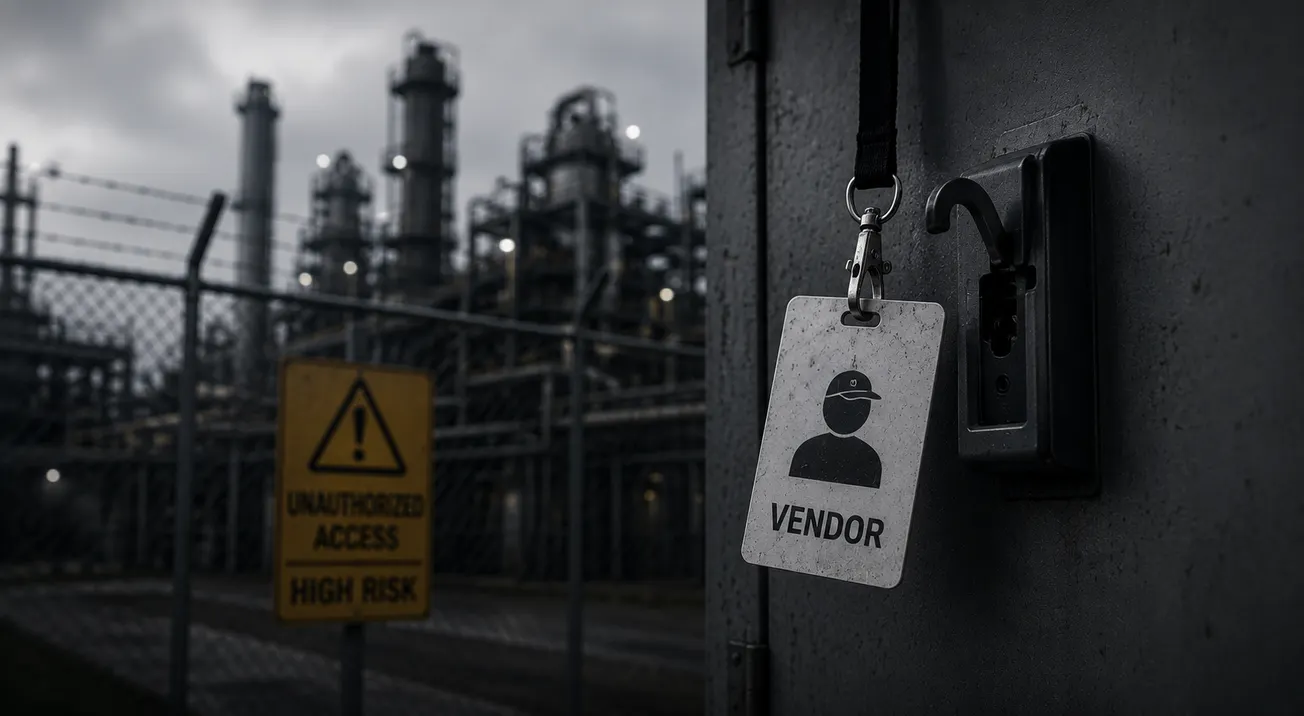
Vendor Access Emerges as a Primary Weak Link in OT Security

Industrial organizations continue to struggle with basic security measures, particularly when managing remote access for third-party vendors. While leaders often believe their systems are well-protected, recent data reveals significant blind spots in tracking and overseeing vendor activity. As companies expand their use of external contractors, the likelihood of security incidents rises sharply, especially when oversight is weak. A major contributing factor is the reliance on overly complex and fragmented tools, such as traditional virtual private networks and varied equipment manufacturer software. These mixed setups often create inconsistent access paths and poor visibility. By contrast, organizations that use unified, dedicated platforms designed for industrial environments achieve much better control and fewer incidents. The most effective approach involves a shared governance model where information technology and operational teams work closely together, balancing security needs with daily operational speed. Additionally, adopting stricter identity verification and continuous monitoring practices rather than just relying on passwords significantly reduces exposure to risks. Ultimately, the biggest vulnerabilities lie not in highly sophisticated attacks, but in everyday vendor workflows and disjointed security tools. Addressing these issues requires teamwork across departments, clear oversight of contractor access, and a shift toward unified, identity-focused systems to ensure long-term stability and protection.


Connected Vehicle Supply Chains Enter a New Era of Regulatory Risk

New US regulations are fundamentally transforming the connected vehicle supply chain by restricting hardware and software linked to China and Russia. Targeting vehicle connectivity systems and automated driving software, these rules mandate compliance starting with the 2027 model year for software and 2030 for hardware. As a result, automakers must look beyond traditional metrics like cost and quality, now factoring in the national origin and corporate ownership of their embedded technologies. This is not a simple matter of swapping out physical parts. Modern automotive connectivity relies on deeply integrated layers of firmware, security functions, cloud services, and eSIM technology. Replacing a single component can impact antenna performance, safety services, and cybersecurity protocols, requiring extensive engineering changes and revalidation. Furthermore, because automakers typically design global electronic architectures, these US-specific restrictions will influence purchasing and platform designs worldwide. The article highlights that this shift represents a broader regulatory trend treating networked products as critical national digital infrastructure. Consequently, manufacturers across all sectors of the Internet of Things must begin mapping their supply chains more rigorously. True resilience now requires full visibility into software repositories, remote update systems, cloud architectures, and the ultimate corporate control behind every connected device.


The Best AI Strategies Automate Tasks, Not Relationships

In banking and financial services, incorporating artificial intelligence has become a major focus, especially during the customer onboarding process. The core premise of the article is that banks should use AI to handle repetitive, manual tasks rather than trying to replace human interaction. By automating background processes like identity verification, data entry, document processing, and compliance checks, financial institutions can significantly speed up the onboarding timeline and reduce errors. This approach frees up bank employees to do what they do best: build meaningful relationships with new customers. When staff members are not bogged down by administrative burdens, they can spend more time listening to clients, understanding their financial needs, and offering tailored advice. The article emphasizes that while technology is excellent for efficiency, it lacks the empathy and nuanced understanding required to establish trust. Therefore, the most effective strategy strikes a deliberate balance. Financial brands that deploy AI behind the scenes to streamline operations while keeping human representatives at the forefront of customer service will see the best results. Ultimately, successful banking relies on personal connections, and smart automation serves merely as a tool to enable those deeper, lasting relationships without getting in the way.


Is India's Data Protection Board Independent Enough To Protect You?

India's Digital Personal Data Protection (DPDP) Act of 2023 and its 2025 rules are currently facing constitutional challenges in the Supreme Court, raising vital questions about privacy and regulatory independence. A major concern is the structural independence of the newly formed Data Protection Board. Because the Central Government appoints most board members and the body reports directly to the Ministry of Electronics and Information Technology, critics worry it may struggle to act impartially in cases involving government agencies. Additionally, the Act creates a legal gray area by broadly defining a "person" to include corporations, while strictly limiting "personal data" to identifiable individuals. This discrepancy leaves businesses unsure of how to handle corporate client data. Furthermore, an amendment to the Right to Information Act entirely exempts the personal information of public servants from disclosure, removing previous public interest exceptions and sparking fears of reduced government accountability. Despite these ongoing legal disputes, businesses must not pause their compliance efforts. Organizations handling data are still expected to meet the impending deadlines, including setting up consent management systems by November 2026 and preparing for the Act's full enforcement in May 2027. Ultimately, the Supreme Court's review serves as a necessary check to ensure the framework truly protects fundamental privacy rights.


Building the resilient network for Cloud and AI Era

CORE Media and Lightstorm recently hosted an event focused on creating resilient enterprise networks to support modern artificial intelligence and cloud operations. During the session, technology leaders discussed the practical challenges of managing connectivity across diverse business environments, from manufacturing floors to remote retail sites. A major concern for many organizations is ensuring consistent performance, as even minor delays in data transfer can disrupt critical operations like real-time defect detection or financial transactions. To address these complex issues, Lightstorm outlined its clear approach to building stronger infrastructure using a three-path network design that ensures highly uninterrupted operations. The company also detailed flexible solutions that allow businesses to easily adjust their network capacity on demand, paying only for what they actually use. Looking forward, the discussion covered the upcoming introduction of a system designed to simplify the management of heavy computing workloads. This specific system will automatically direct data from scattered locations to central processing resources, helping businesses optimize their infrastructure investments. Ultimately, the gathering emphasized that true network resilience is about maintaining continuous business operations regardless of external circumstances. Achieving this requires intelligent backup mechanisms, reliable pathways, and the distinct ability to adapt to changing demands without compromising overall performance or incurring unnecessary overhead costs.


How Are CIOs Aligning Technology with Workforce Agility?

Today's workplace has shifted significantly toward remote and hybrid setups, making workforce adaptability a vital priority for any organization rather than just a nice extra. To support these changes, technology leaders are actively shaping how their teams work by investing in secure, flexible, and intelligent systems. By aligning technical choices with the daily needs of employees, these leaders help their organizations respond smoothly to unexpected market shifts and changing customer expectations. At the core of this adaptable approach is a balanced combination of modern tools. Cloud platforms give employees reliable access to their work from any location, while artificial intelligence and automation handle repetitive administrative tasks, freeing up staff to focus on more complex challenges. In addition, collaboration software ensures that teams can communicate effectively, no matter where they are currently based, and strong cybersecurity measures protect sensitive data across scattered locations. Beyond just providing software, successful leaders also focus on continuous training and performance insights to manage team capacity and skills. Ultimately, building a flexible work environment relies on thoughtful decisions that prioritize practical tools and ongoing staff development, allowing businesses to maintain steady productivity and grow confidently even when faced with new operational demands in the modern world.


Banking technology infrastructure at a strategic crossroads

Financial institutions face a crucial decision regarding their technology systems, as the industry's path is no longer a single, steady progression but is instead branching in different directions. According to Jack Henry’s white paper, the infrastructure banks and credit unions choose today will directly dictate how well they can adapt to market changes, adopt new tools, and meet the growing expectations of their customers. This choice goes far beyond simple technology upgrades; it is a fundamental decision about the long-term direction of the organization. The paper outlines three distinct infrastructure paths currently available, each representing a different philosophy toward risk, financial investment, and operational control. The first path relies on outdated systems that are merely being maintained rather than improved, leaving institutions with limited options for the future. The second approach involves adding piecemeal, bolt-on solutions to existing systems, which often fail to integrate smoothly and can create operational friction. The third, and most sustainable, path focuses on modern technology built with inherent flexibility and a clear route for continuous growth. Ultimately, institutions must recognize that their infrastructure decisions today will define their ability to remain competitive and responsive in an increasingly complex and rapidly evolving financial landscape over the coming years.


CISOs vs. Boards: Myth or Misunderstanding?

The idea that corporate boards do not care about cybersecurity is a lingering myth. In reality, board directors recognize cyber threats as critical risks to the entire enterprise, affecting operations, revenue, and long-term strategy. The apparent disconnect between security leaders and the board usually stems from a profound communication barrier rather than apathy. Chief Information Security Officers (CISOs) often present technical metrics focused on threats, vulnerabilities, and controls, while board members operate in a language of business exposure, resilience, and financial consequences. This mismatch leaves CISOs feeling unsupported and pressured to conceal security flaws, while boards struggle to extract actionable insights from highly technical reports. To bridge this divide, experts advise a fundamental shift in how both groups communicate. Security teams should stop overwhelming directors with granular technical data and instead frame their presentations around clear business outcomes. They must highlight which critical services could be disrupted during an attack, estimate the potential financial and reputational fallout, and outline the organization's recovery readiness. At the same time, boards need ongoing education about the evolving threat landscape and access to realistic incident simulations. By prioritizing transparency and agreeing on a few consistent, business-focused metrics, security leaders and boards can collaborate effectively and strengthen their overall resilience.


The modern CIO role is almost overwhelming – here’s how to survive and thrive

The role of the modern Chief Information Officer has expanded well beyond traditional technology management, introducing significant new pressures. With the rapid growth of artificial intelligence and digital integration, technology leaders are now tasked with overseeing everything from cyber security and cloud operations to overall digital strategy. Because it is no longer possible for one person to be the foremost expert on every emerging tool, successful directors are changing their approach. Instead of shouldering the burden alone, they are acting as ambassadors who foster collaboration across their organizations. By forming shared councils and partnering directly with other department heads, they distribute responsibilities and ensure that new technologies serve actual business needs rather than mere novelty. This cooperative method helps them prioritize inward objectives over outward comparisons. Furthermore, the position has evolved from merely fixing problems and managing costs to actively creating the right environment for staff to work securely and effectively. Navigating these constant changes requires a pragmatic mindset. Leaders must honestly acknowledge their blind spots, consult with their peers, and focus on upskilling their teams. By embracing adaptability and shared ownership, technology directors can comfortably manage their expanding duties and guide their companies safely through increasingly complex digital transitions.