Showing posts with label training. Show all posts

Daily Tech Digest - November 15, 2026

Quote for the Day
“You’ve got to start with the customer experience and work backwards to the technology.”
— Steve Jobs
Audio Edition — Listen to Today’s Digest
Narrated version of the Daily Tech Digest
Article Thumbnail

Shadow AI in the Workplace: Data Security Risks and Governance Strategies

Shadow AI arises when employees use AI tools without their organization’s knowledge or approval, often because they are trying to complete everyday work more efficiently. The article argues that simply blocking public AI services may not solve the problem, since employees can still use personal devices, accounts, or connections, leaving organizations with little visibility into what data is being shared. The main risks include exposure of confidential information and personal data, possible damage to trade-secret protection, and legal or contractual consequences. Rather than relying only on bans, organizations should provide practical, approved alternatives and set clear rules about acceptable AI use. Suggested measures include carefully assessed enterprise AI services, locally operated models for highly sensitive information, straightforward data classification, and data loss prevention controls. Employees should understand which tools are permitted, what information must not be entered into AI systems, when additional approval is required, and how to report accidental disclosures. The central message is that governing Shadow AI requires understanding why employees use unapproved tools and giving them safer ways to meet legitimate work needs while maintaining clear accountability.

Read Original Article →
Article Thumbnail

Designing Consent Management for the DPDP Act: Requirements, Integration and a Reference Architecture

The Digital Personal Data Protection (DPDP) Act of 2023 fundamentally changes how organizations in India handle user consent. Gone are the days of simple checkboxes and ignored privacy policies; consent must now be a provable, purpose-bound record that a user can freely withdraw. The law requires consent to be specific, informed, and tied directly to the exact data needed for a stated purpose. Because organizations must prove they provided clear notices and obtained proper consent, building a robust Consent Management Solution is now a critical architectural requirement. A compliant system needs to version notices in multiple languages, capture consent per purpose rather than through blanket agreements, and immediately propagate any withdrawals to all downstream systems to halt processing. It must also maintain immutable, tamper-evident logs of every consent event to serve as legal evidence. Ultimately, isolated consent management tools are useless. Organizations must integrate their consent systems across collection channels, data platforms, and third-party tools to enforce policies automatically. Without this enterprise-wide integration, a company risks failing audits and violating the strict requirements of the DPDP Act.

Read Original Article →
Article Thumbnail

Is AI Making Us Worse at Cybersecurity?

While artificial intelligence clearly offers productivity and speed advantages, overreliance on it may be quietly degrading the foundational skills of cybersecurity professionals. When security teams outsource their daily tasks to AI, they lose the essential human creativity required to discover novel threats or approach complex problems from unique angles. The sincere emotion and humor necessary for effective communication also disappear, leaving behind sterile, unremarkable messaging that fails to inspire or effectively warn organizations. Most critically, an overdependence on AI for organizing thoughts and generating analysis directly erodes human critical thinking—a vital capability when confronting unprecedented situations where no playbook exists. Security practitioners are increasingly treating interactions like prompts rather than seeking genuine guidance and shared experiences from their peers. To preserve the integrity and effectiveness of the profession, security leaders and individuals must set firm boundaries regarding when to use these tools. By choosing to independently research, think, and communicate instead of deferring to an algorithm, professionals can maintain the sharp analytical edge that the security industry relies upon.

Read Original Article →
Article Thumbnail

Social Influence: Conformity and Group Behavior

Social influence and group dynamics shape our daily behavior much more deeply than we often realize. Without any explicit pressure, we frequently change our actions and beliefs to match what our peers consider normal, mostly to avoid rejection or because we trust the group's collective judgment. When authoritative figures step in, people can obey orders that even go against their own conscience, as demonstrated by famous historical experiments where ordinary individuals administered simulated shocks to others. Group settings also shift our individual performance and sense of responsibility. We might work harder when others are watching, or we might contribute less if our individual effort goes unnoticed in the background. In emergencies, the presence of a crowd often reduces the likelihood that any single person will help, simply because everyone assumes someone else will take the lead. Powerful situational factors can easily override a person's individual personality or values. However, breaking this cycle only requires a small spark; having just one ally is usually enough to empower others to speak up. Understanding these hidden social forces is the most practical way to resist unhealthy group pressure.

Read Original Article →
Article Thumbnail

The fake app on an employee’s phone could be a gateway into your enterprise

Counterfeit mobile applications have evolved from consumer fraud tools into sophisticated entry points for corporate espionage. Threat actors now exploit decentralized workforces by creating high-fidelity clones of essential enterprise apps, such as secure messaging platforms and single sign-on portals. By mimicking trusted software, these fake apps can intercept multi-factor authentication tokens, harvest credentials, and extract proprietary data. The rise of generative AI has accelerated this threat, allowing attackers to decompile legitimate software, understand its authentication flows, and insert malicious code more easily. Attackers often use AI-generated voice clones and targeted phishing to trick employees into downloading these tampered applications. Once installed, the app functions normally while secretly transmitting data to external servers. To defend against this, organizations need a multi-layered approach. This includes enforcing strict application safelisting through mobility management platforms, implementing binary obfuscation in proprietary apps, and deploying mobile threat defense systems for real-time monitoring. Additionally, transitioning to phishing-resistant authentication and educating employees on these specific deceptive tactics are crucial steps in securing mobile endpoints against these targeted attacks.

Read Original Article →
Article Thumbnail

10 SASE certifications to validate converged network and security skills

As organizations continue to merge their network and security systems, the demand for professionals who understand these unified structures is growing rapidly. This approach, often referred to as Secure Access Service Edge, combines traditional wide area networking with modern security tools to protect data and applications regardless of where users are located. To help IT staff prove their capability in this area, several major technology providers now offer targeted certifications. The article highlights ten specific credentials from organizations such as Cato Networks, Cisco, Fortinet, Palo Alto Networks, and Zscaler. These programs range from short introductory courses focused on basic principles and zero trust concepts to advanced exams that test a candidate's practical skills in designing, deploying, and effectively fixing complex network environments. By pursuing these certifications, network engineers and security specialists can clearly demonstrate their practical knowledge of cloud security, identity based access, and policy management. Ultimately, these credentials provide a reliable way for technical professionals to validate their skills, stay current with shifting industry standards, and confidently manage the secure networks that modern organizations rely on every day to operate smoothly and efficiently.

Read Original Article →
Article Thumbnail

Getting Past the Post-Quantum Cryptography Discovery Phase

Security leaders face mounting pressure to transition to new encryption standards, yet most are stuck in the initial discovery phase. While many recognize the importance of the shift, few organizations possess the detailed inventories required to map out a clear migration strategy. Finding every instance of older encryption across web servers, virtual private networks, and internal applications remains a massive hurdle. Although experts estimate that a quantum computer capable of breaking current encryption might not arrive until at least the end of the decade, a more immediate threat exists today. Criminals are currently stealing encrypted, highly sensitive data like financial and health records, with the intention of decrypting it once quantum technology matures. This strategy makes the transition urgent, as waiting for a fully capable machine will be far too late for data meant to stay secure for decades. Successfully migrating will require a generational effort similar to the Y2K preparations, demanding careful prioritization and a solid understanding of business dependencies. To begin, organizations can leverage lightweight scanning tools to build a comprehensive inventory, kickstarting the essential journey to modernize their defenses.

Read Original Article →
Article Thumbnail

Training can spark change, but what makes new behaviours stick? Manish Sinha explains

The article explains why training alone rarely creates lasting behavioural change in organisations. Manish Sinha, CHRO of Mahindra Finance, argues that employees are more likely to adopt new ways of working when they understand their purpose, see practical value, and receive consistent support from leaders. Communication can build awareness, but lasting adoption also depends on what organisations measure, reward, and reinforce in everyday work. Managers are especially important because they translate broad organisational goals into daily expectations and help employees work through uncertainty. Training therefore needs follow-up through coaching, practice, peer learning, refresher sessions, and leadership involvement. Organisational systems must also support the behaviour being encouraged. For example, asking employees to focus on customers while measuring only business volumes can send conflicting signals. Sinha also recommends using regular conversations and field feedback to spot early signs of progress rather than depending solely on formal culture surveys. His broader message is that successful change requires alignment between training, leadership behaviour, performance measures, recognition, accountability, and workplace systems, while allowing local teams enough flexibility to apply shared principles to their circumstances.

Read Original Article →
Article Thumbnail

The AI graveyard: a running list of projects and startups that didn’t make it

The artificial intelligence industry is experiencing a notable reality check, with roughly forty-two percent of corporate AI projects ultimately being abandoned. A growing list of failed startups and canceled product features highlights the practical challenges of building sustainable software in this market. The reasons for these failures vary widely, ranging from funding shortages and fierce competition to technical hurdles and a lack of genuine user demand. Even industry giants are recalibrating their approaches. OpenAI has rolled back unpopular interface redesigns and discontinued standalone products like its video generator and web browser, opting instead to build those features directly into its primary interface. Similarly, highly anticipated hardware devices like the Humane Pin struggled with performance issues and were quickly absorbed by traditional tech companies. Prominent software tools, including the privacy-focused assistant Ollie and the conversational platform Character, also folded under the weight of severe financial, legal, or competitive pressures. Ultimately, this wave of closures serves as a practical record of market reality, demonstrating that initial investment does not guarantee a lasting product if the underlying utility falls short of user expectations.

Read Original Article →
Article Thumbnail

Privacy-enhancing technologies boom, but adoption lags: OECD

Privacy-enhancing technologies (PETs) are experiencing rapid growth in research and development, but real-world adoption remains sluggish, according to a recent report by the Organisation for Economic Co-operation and Development (OECD). These technologies allow organizations to analyze and share sensitive information—such as financial records or medical data—without exposing the underlying personal details. While the number of open-source projects and patent filings has skyrocketed over the past decade, potential buyers often hesitate. The reluctance stems from the perceived complexity of the tools, a severe shortage of skilled privacy engineers and cryptographers, and an unclear return on investment. Furthermore, regulatory uncertainty complicates matters, as organizations are unsure how these technologies align with conflicting data protection and compliance rules. Startups developing PETs often face extended pilot periods and struggle to secure contracts, especially as major tech companies begin integrating similar features directly into their cloud platforms. To help overcome these hurdles, the OECD has launched a global repository of real-world use cases to demonstrate that these privacy tools are practical, effective, and ready for commercial deployment.

Read Original Article →

Daily Tech Digest - July 08, 2026


Quote for the day:

“Companies spend millions on firewalls and encryption, but the weakest link is always the human.” -- Kevin Mitnick

🎧 Listen to this digest on YouTube Music

▶ Play Audio Digest

Duration: 23 mins • Perfect for listening on the go.


AI Sovereignty Is a New Test for Enterprises

As artificial intelligence transitions from a technological experiment into a primary driver of business value, organizations are facing a critical new challenge: AI sovereignty. While traditional digital sovereignty focused merely on where information was physically stored, AI sovereignty demands complete control over the entire system lifecycle. This includes actively managing data lineage, model training frameworks, inference processes, and the underlying computing infrastructure. For modern enterprises, this shift is no longer just about meeting local compliance requirements or data privacy regulations; it is a fundamental test of operational resilience and strategic independence. When companies rely too heavily on third-party global providers without establishing a sovereign framework, they risk severe vendor lock-in, operational fragility, and an inability to adapt to rapidly changing geopolitical rules. Consequently, chief information officers and business leaders must proactively embed sovereignty into their architectural designs from the start rather than treating it as an expensive afterthought. By adopting hybrid operational models that carefully balance scalable global infrastructure with strictly governed local environments, enterprises can protect sensitive data, maintain consumer trust, and confidently accelerate innovation, ultimately turning regulatory constraints into a distinct competitive advantage in a complex global market.


Why IT Keeps Getting Handed an AI Training Problem It Can't Solve Alone

When companies decide they need to train their employees on new artificial intelligence tools, they often make a classic mistake: they hand the responsibility entirely to the IT department. While IT teams know how these systems operate, knowing how to build software is entirely different from knowing how to teach adults new ways of working. This mismatch often results in generic webinars or outdated documentation, particularly because artificial intelligence changes so quickly that formal manuals become obsolete within weeks. Instead of forcing rigid courses, the most successful companies weave learning directly into everyday tasks. They stop focusing on what a tool can theoretically do and instead ask where work currently feels slow or repetitive. By introducing these tools as immediate relief for daily frustrations—and sharing practical examples in regular team meetings or chat channels—employees adopt them naturally. To make this work sustainably, IT teams should not carry the burden alone. The most effective approach requires a partnership: IT provides the technical foundation, human resources or learning professionals handle the teaching strategy, and everyday employees identify the real problems that need solving. When these groups collaborate, they build practical habits instead of forgotten training programs.


Five tips for developing data products

Creating data products is a practical strategy for organizations looking to streamline analytics and artificial intelligence projects. Just as buying pre-packaged ingredients speeds up cooking a meal, data products standardize raw information into consistent, reusable assets that save time and reduce errors. However, building these products requires careful planning. First, teams must determine when a data product is necessary, which usually happens when multiple departments rely on the same information or when ungoverned data poses security risks. Second, organizations must define strict standards for these products, tracking data lineage so users understand where the information originated and how it was modified. Third, data products need rigorous life-cycle management, requiring the same versioning, testing, and quality checks as traditional software to maintain trust. Fourth, because simply building a tool does not guarantee people will use it, product managers must actively drive adoption through dedicated change management and clear communication about business benefits. Finally, companies should measure a data product’s value not just as a technical output, but by tracking its impact on workflow efficiency, faster decision-making, and overall time-to-value. By following these steps, businesses can safely accelerate their technology initiatives.


The Data Quality Crisis Undermining Enterprise Analytics

The piece describes a familiar pattern: companies invest heavily in modern data stacks and cloud infrastructure, yet still end up with reports that people don’t trust. The core problem is messy data moving through otherwise capable systems—things like different teams using different definitions for the same metric, fields that are formatted inconsistently, and pipelines that deliver stale or partial updates. These small, everyday issues compound over time, breaking joins, skewing aggregations, and creating discrepancies that prompt users to double‑check or ignore analytics altogether. The author emphasizes that this is rarely a purely technical failure; it’s often a mix of unclear metric definitions, inconsistent transformations, and a lack of shared ownership across teams. When trust in numbers disappears, the practical value of analytics collapses, because leaders stop relying on dashboards for important decisions. The article cites industry research showing that poor data quality costs organizations millions annually and highlights real‑world examples from large enterprises where data from multiple operational systems created persistent inconsistencies. It also warns that moving to faster, more scalable platforms can simply accelerate the processing of bad data unless governance and quality controls are put in place. Finally, the author calls for pragmatic fixes: clearer definitions, stronger ownership, routine checks for freshness and consistency, and investment in processes that prevent small errors from becoming systemic.


6 ways to make AI accountability stick

As artificial intelligence systems shift from simply offering advice to independently completing tasks in production environments, traditional software governance is no longer sufficient. Organizations are finding that when an AI system makes an error, the lack of clear responsibility often leads to confusion. To prevent this, IT leaders must make accountability an enforceable part of daily operations. First, companies should assign direct ownership to individuals at the very beginning of a project, rather than relying on vague shared responsibility. Second, foundational governance rules must be integrated into normal workflows before scaling up AI deployments. Third, strong data governance is essential; knowing exactly where data comes from allows teams to trace the root cause of any mistakes. Fourth, companies need broad monitoring that tracks not just the AI model itself, but how it interacts with other internal systems and workflows. Fifth, organizations must build clear stopping points where the system pauses and asks a human for permission or guidance. Finally, leaders should manage AI systems more like human employees than traditional software, providing ongoing oversight and regular performance reviews to ensure they continue operating safely and accurately over time.


CDO to CEO Progression: Skills, Mindsets, and Lessons for the Journey

Transitioning from a chief data officer to a chief executive officer is rarely about acquiring new technical abilities. Instead, it requires a fundamental shift in how you view leadership, business strategy, and your role within an organization. Because data officers naturally work across various departments, they already develop essential executive skills, such as aligning diverse teams and balancing competing priorities. However, to be considered for the top role, data professionals must change how they communicate their value. Rather than highlighting technical achievements, they should focus entirely on business impact and outcomes. A strong foundation in business operations allows leaders to shape critical decisions rather than just report on them. Moving into the executive seat also means taking responsibility for profit and loss, where evaluating broad trade-offs becomes necessary. You move from asking if a project is possible to deciding if it is the right move for the company right now. Finally, while numbers are important, relying solely on reports is a mistake. Direct conversations with employees and customers provide the necessary context that dashboards often miss. Ultimately, this leap becomes a natural progression when leaders broaden their focus from data systems to enterprise-wide strategy.


Agents are now users, but is your architecture ready?

As AI agents increasingly act on behalf of humans to manage workflows, they are fundamentally changing who or what uses software. Instead of clicking through visual dashboards, these agents interact directly with APIs. Because of this, software architecture must adapt. Organizations now need a surface visible to agents, which means creating clear, machine readable capabilities rather than just polishing user interfaces. This transition challenges traditional software development because AI models do not behave predictably. While traditional software always gives the same output for a specific input, AI outputs vary. Consequently, development practices must evolve in three main areas. First, testing must shift from static unit tests to continuous evaluations that measure behavior over time. Second, observability needs to track agent actions, such as recognizing when an agent is stuck in an infinite loop, rather than just monitoring basic system health. Finally, safety guardrails must move from the interface level down to centralized control planes that manage access and identity. To prepare for this change, engineering teams should evaluate their current API capabilities. By focusing on a small set of securely managed tools, organizations can lay a solid foundation for safely integrating AI agents into their daily operations.


Why clarity is the missing link in AI adoption

Organizations often treat artificial intelligence adoption as a simple productivity upgrade, pushing new tools onto teams that are already overworked and stressed by constant change. While employees may see the potential benefits, they frequently experience what researchers call "FOBO"—feeling optimistic but overwhelmed. Without clear guidance, this rapid technological shift leads to uneven adoption, hidden workplace experiments, and widespread hesitation because people fear making mistakes or losing their jobs. To fix this, leaders must move beyond vague announcements and provide genuine clarity by focusing on three essential elements. First, they need to set a clear direction by naming the specific business problem the technology is meant to solve, such as reducing administrative tasks or speeding up response times. Second, leaders must establish clear priorities by highlighting two or three main use cases, which protects teams from scattered, performative adoption. Finally, companies need practical guardrails—simple, easily understood boundaries that allow employees to experiment safely without navigating dense, legalistic policies. Ultimately, treating clarity as a daily leadership discipline reduces unnecessary confusion and fear. It transforms a noisy mandate into a focused, human-centered process that empowers people to work with calm confidence.


The hidden risk in global infrastructure deployment

For data center operators expanding internationally, hardware regulatory compliance is no longer a final administrative step; it is a critical operational risk that must be addressed at the earliest stages of design and procurement. As global standards for electrical safety, electromagnetic compatibility, and energy efficiency become increasingly strict, infrastructure that fails to meet these requirements can lead to delayed deployments, costly redesigns, and diminished trust among partners. To avoid these issues, compliance must be engineered into servers and network appliances from the start. This requires careful attention to component selection, power distribution, thermal management, and circuit shielding during the hardware development process. Rather than viewing regional regulations as an obstacle, organizations should treat them as a foundation for reliable expansion. By embedding compliance directly into the supply chain and collaborating closely with testing laboratories, operators can ensure their systems are legally and safely deployable across different jurisdictions. Hardware that inherently meets international standards simplifies procurement and reduces friction in complex projects. Developing deep regulatory expertise helps data center providers mitigate operational risks, protect capital investments, and confidently scale their physical infrastructure across borders without encountering unexpected regulatory roadblocks.


When the sensor starts thinking: SnortML, agentic AI, and the evolving architecture of intrusion detection

The evolution of intrusion detection is shifting from purely signature based models to systems that analyze context using SnortML and agentic AI. SnortML introduces native machine learning to Snort 3, running in parallel with classical signature matching. Rather than relying solely on predefined rules, it evaluates network traffic, primarily HTTP requests, to determine if structural byte patterns resemble exploits like SQL injection. This allows the system to catch unseen variants that bypass traditional signatures. However, because SnortML evaluates individual packets, it remains blind to multistep attacks and broader temporal context. This limitation necessitates the integration of agentic AI. Unlike conventional automation or playbooks, agentic AI maintains state across complex investigations. It autonomously queries external systems, correlates signals across multiple data sources, and builds comprehensive context before recommending a response. In this modern architecture, SnortML acts as the highly precise wire level sensor, while agentic AI serves as the orchestration layer that synthesizes isolated events into a coherent threat narrative. Together, they create a robust defense mechanism. While challenges remain in model explainability and standardized coordination, this combination effectively addresses the growing need for scalable security operations in network defense architectures.

Daily Tech Digest - November 12, 2025


Quote for the day:

"Always remember, your focus determines your reality." -- George Lucas


Agentic AI and Solution Architects

Agentic AI tools are intelligent systems designed to operate with autonomy, agency, and authority—three foundational concepts that define their ability to act independently, pursue goals on behalf of users, and make impactful decisions within defined boundaries. These systems are often built using a multi-agent architecture, where multiple specialized or generalist agents collaborate, either in centralized or decentralized environments. ... As (IT) architects we drive change that creates business opportunities through technical innovation. One of the key activities of a Solution Architect is to design solutions by applying methods and techniques combined with technical and business expertise. The actual solution design process will follow a similar pattern to that of a creative technology design process. An architect will combine and group the different components together according to stakeholder group and will, over several sessions, develop concept views related to key architectural components, establishing different options. Deciding the “right” option will mean balancing the various criteria like functionality, value for money, compliance, quality, and sustainability. IT architecture design involves complex decision-making, planning, and problem-solving that require human expertise and experience. That is where most of the architect’s work is focused on – using knowledge and experience to research a particular subject, to apply design thinking and to solve problems to establish a solution. 


Shadow AI risk: Navigating the growing threat of ungoverned AI adoption

Only half (52%) of global organizations claim to have comprehensive controls in place, with smaller companies lagging even further behind. This lack of robust governance and visibility leaves organizations vulnerable to data breaches, compliance failures, and security risks. For many organizations, AI controls are lacking. ... As AI systems become more autonomous and capable of acting on behalf of users, the risks grow even more complex. The rise of agentic AI, which can make decisions and take independent action within systems, amplifies the impact of weak identity security controls. As these advanced AI systems are given more control over critical systems and data, the potential risk of security breaches and compliance failures grows exponentially. To keep pace, security teams must evolve their identity security strategies to include these emerging machine entities, treating them with the same rigor as human identities. ... To effectively mitigate the risks associated with shadow AI and ungoverned AI adoption, organizations need to start with a solid foundation of governance and visibility. That means implementing clear acceptable use guidelines, access controls, activity logging and auditing, and identity governance for AI entities. By treating AI entities as identities that are subject to the same authentication, authorization, and monitoring as human users, organizations can safely harness the benefits of AI without compromising security.


Secure Product Development Framework: More Than Just Compliance

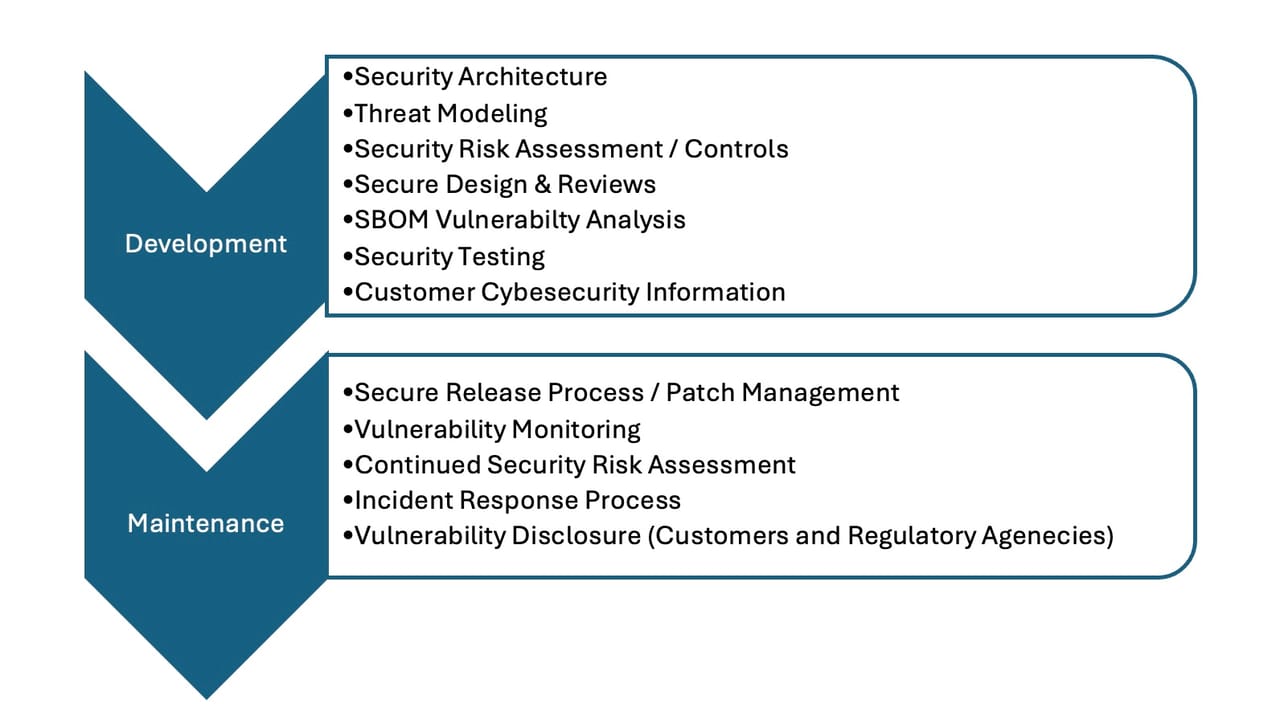
Security risk assessment is a key SPDF activity that starts early in development and continues throughout the product life cycle through on-market support and eventual product retirement. FDA guidance references AAMI SW96, “Standard for medical device security - Security risk management for device manufacturers,” as a recommended standard for a security risk assessment process. Security risk assessment considers both safety and business security risks ... Implementing a clear and consistent security risk assessment process within the SPDF can also save time (and money). Focus can be placed on those areas of the design with the highest security risk, instead of on design areas with little to no security risk. Decisions on whether patches need to be applied in the field are easier to make when based on security risk. Leveraging the same security risk process across products and business areas allows teams to focus on execution rather than designing a new process. Once a product is launched, an SPDF can assist with managing that product. Postmarket SPDF activities include vulnerability monitoring/disclosure, patch management, and incident response. A critical component of vulnerability monitoring is the maintenance and continuous use of a software bill of materials (SBOM). The SBOM provides a machine-readable inventory of all custom, commercial, open-source, and third-party software components within the device. 


Vibe Coding Can Create Unseen Vulnerabilities

Vibe coding does accelerate app prototyping and makes software collaboration easier, but it also has several shortcomings. Security is a serious concern. Large language models (LLMs) are inherently vulnerable to security risks when used by those without sufficient security experience. Moreover, the risk is amplified by the fact that AI is so flexible that it’s impossible to give out simple, universal rules on how to make AI write secure code for you. LLMs may use outdated libraries, lack input validation, or fail to follow secure practices. AI code generators also lack an understanding of trust boundaries and system architectures. When using vibe coding, programmer oversight and review are necessary to prevent these issues from entering production code. Working with black-box code also makes it difficult to provide context about the app. For example, improper configurations may expose internal logic by sending sensitive code snippets to external APIs. This can be a real problem in highly regulated industries with strict rules about code handling. Vibe coding also tends to add technical debt, accumulating unreviewed or unexplained blocks of code. Over time, these code blocks proliferate, creating a glut and making code maintenance more difficult. Since less experienced developers tend to use vibe coding, they can overlook security issues. Consider the recent Tea Dating Advice hack. A hacker was able to access 72,000 images stored in a public 


The state of cloud-native computing in 2025

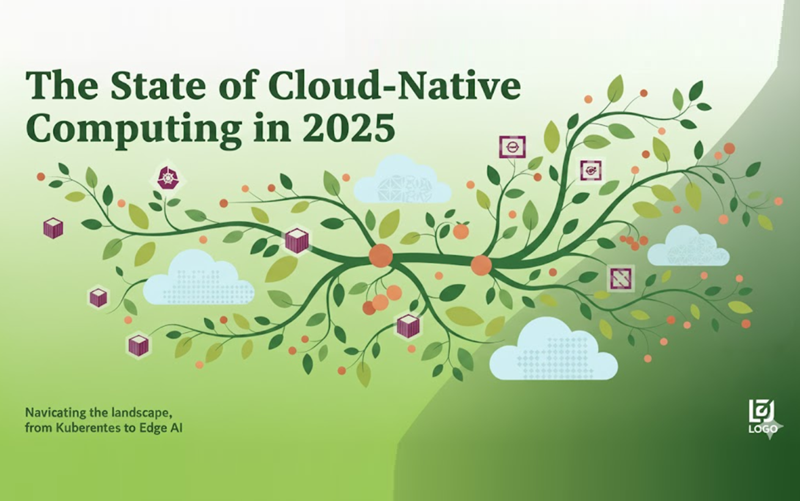
“We’ve reached a level of maturity in the cloud-native ecosystem that people might think that things are now a bit boring. While AI is a natural extension of Kubernetes and cloud-native architectures, there are changes required in the architecture to support AI workloads compared to previous workloads. Platform engineering continues to have strong customer interest… and new AI enhancements allow for even greater productivity for developers and operators. ...” said Miniman ... “However, runaway complexity and cost threaten to derail mass enterprise success. The modern observability stack has become an exorbitant black hole, delivering insufficient value for its exorbitant cost and demands a fundamental rethink of data management. Simultaneously, the data lakehouse gamble failed, proving too complex and expensive. The imperative is clear and necessitates pulling workloads back from the brink with democratized data management to pull workloads back onto central platforms,” said Zilka. ... “The focus has shifted from how quickly I can deploy, to how I can get a handle on costs and how resilient my platform is to changes or outages like we saw recently with AWS. Teams are recognising the overhead these technologies have introduced for developers and are centralising that work. We’re seeing more platform teams set best practices, use tooling to enforce them and move from “adoption mode” to “operational excellence,” said Rajabi.


Insurability now a core test for boardroom AI & climate strategy

Organisations face growing threats from data poisoning and cyber-attacks, prompting insurers to play a more decisive role in risk management. Levent Ergin, Chief Climate, Sustainability & AI Strategist at Informatica, highlighted the increasing scrutiny on what businesses can insure against. ... AI is now a fixture at board meetings due to its direct impact on company valuation. However, he observes a gap between current boardroom discussions and the transformative potential of AI. "AI is now a standing item in every board meeting because it directly shapes valuation. Investors see it as a signal of how forward-thinking a company really is. But many boards are still asking the wrong question: 'How can we use AI to automate or augment our existing processes?' when they should be asking 'What's possible?' It's not just about automating what already exists; it's about reimagining how things are done. ..." said Hanson. ... "Too many businesses still treat AI projects like any other investment, where the return has to be quantified against a specific outcome. In truth, they should be budgeting for failure. The best innovators plan for things not to work first time, just as pharmaceutical companies or tech giants do, because even a 98% failure rate can still produce world-changing results. The moment we stop fearing failure and start funding it, we'll see genuine AI innovation break through," said Hanson.


Are we in a cyber awareness crisis?

To improve cyber awareness, organizations need to move beyond box-ticking exercises and build engagement through relevance and creativity. This is the advice of Simon Backwell, a member of the Emerging Trends Working Group at professional association ISACA, and head of information security at software company Benefex. He advocates for interactive, rather than static training, where employees can explore why something was suspicious, as they learn by doing, rather than guessing the right answer and moving on. ... Not only does AI present new risks from its use within the business, but also from the way criminals are using it. “Email phishing attacks frequently use gen AI chatbots, and vishing attacks, such as robocall scams, now use deepfakes,” notes Candrick. “AI puts social engineering on steroids, yet cybersecurity leaders are still using the same awareness measures that were already insufficient.” While regulatory pressure will play a role in improving AI-related cybersecurity, regulations will always struggle to keep pace, especially in the UK where the process takes time. For example, the EU’s AI Act and Data Act is only now filtering through, much like GDPR did back in 2018, says Backwell. But with how fast AI is advancing – almost weekly – these rules risk becoming outdated as soon as they’re released. ... “As board alignment weakens, CISOs have to work harder to translate cyber risk into business impact, because boards now rank business valuation as their top post-incident concern,” says Cooke.


How to build a supercomputer

When it comes to Hunter’s architecture, Utz-Uwe Haus, head of HPC/AI EMEA research lab, at HPE, describes the Cray EX design as “the architecture that HPE, with its great heritage, builds for the top systems.” A single cabinet in an EX4000 system can hold up to 64 compute blades – high-density modular servers that share power, cooling, and network resources – within eight compute chassis, all of which are cooled by direct-attached liquid-cooled cold plates supported by a cooling distribution unit (CDU). “It's super integrated," he says. “The back part, which is the whole network infrastructure (HPE Slingshot), matches the front part, which contains the blades.” For Hunter, HLRS has selected AMD hardware, but Haus explains that with Cray EX systems, customers can, more or less, select their processing unit of choice from whichever vendor they want, and the compute infrastructure can be slotted into the system without the need to total reconfiguration. “Should HLRS decide at some point to swap [Hunter’s] AMD plates for the next generation, or use another competitor’s, the rest of the system stays the same. They could have also decided not to use our network – keep the plates and put a different network in, if we have that in the form factor. [HPE Cray EX architecture] is really tightly matched, but at the same time, it’s flexible," he says. Hunter itself is intended as a transitional system to the Herder exascale supercomputer, which is due to go online in 2027. 


The AI Reskilling Imperative: Bridging India's talent and gender gap

Policies should shift from less general policies to specific interventions. Initiatives such as Digital India and Skill India need to be bolstered with AI-specific courses available online in the local language. The government can: Sponsor and encourage scholarships and mentorships for Women in AI. Develop financial reward systems for companies reaching gender diversity in their AI teams. Introduce AI literacy and ethics into the national education system, beginning at the secondary school level. ... As the main consumer of AI talent, the private sector should be at the forefront. The first one is the skills-first approach to hiring, but reskilling as an ongoing investment is not an option. Companies should: Devote a huge proportion of CSR budgets to simple AI and digital literacy efforts, especially among women in low-income and rural communities; Launch internal reskilling programs to shift existing workers out of positions at risk of automation (e.g., manual software testing, simple data entry) and into new roles, such as AI integrators or data annotators; Embrace explicit ethical standards for the application of AI, including a workforce transition and support strategy. ... The universities will be obliged to redesign courses that incorporate AI's technical wisdom and infuse them with morals, critical thinking, and subject knowledge. Collaboration between industry and academia is important to ensure courses are practical and incorporate real-world projects.


Enterprises to focus AI spend on cost savings & data control

"CIOs will move from experimenting with AI to orchestrating it, governing outcomes, agents, and data. AI leadership will evolve from pilots to performance. CIOs will be accountable for tangible business outcomes, defining clear frameworks that connect AI investments to enterprise KPIs and ROI. That means managing a new hybrid workforce of humans and digital agents, complete with job descriptions, correlated KPIs and measurement standards, and governance guardrails. Yet none of this will succeed without secure information management, ensuring that the data fueling and training these agents is accurate, compliant, and trustworthy. Simply put, good data results in good AI outcomes. As AI accelerates, traditional network and security operations will be reimagined for an always-on, agent-driven enterprise, where value is derived as much from data discipline as from innovation itself," said Bell. ... "A Major brand fallout will force AI accountability. In the next year, we'll likely see a major brand face real damage from AI misuse. It won't be a cyberattack in the traditional sense but something more subtle, like a plain text prompt injection that manipulates a model into acting against intent. These attacks can force hallucinations, expose proprietary or sensitive information, or break customer trust in seconds. Enterprises will need to verify AI behavior the same way they secure their networks, by checking every input and output. The companies that build AI systems with accountability and transparency at the core will be those that keep their reputations intact," said Berry.

Daily Tech Digest - October 23, 2025


Quote for the day:

“The more you loose yourself in something bigger than yourself, the more energy you will have.” -- Norman Vincent Peale


Leadership lessons from NetForm founder Karen Stephenson

Co-creation is a hot buzzword encouraging individuals to integrate and create with each other, but the simplest way to integrate and create is in the mind of one person — if they’re willing to push forward and do it. Even further, what can an integrated team of diverse minds accomplish when they co-create? ... In the age of AI, humans will need to focus on what humans do well. At the moment, at least, that’s making novel connections, thinking by analogy and creating the new. Our single-field approach to learning, qualifications and career ladders makes it hard for us to compete with machines that are often smarter than we are in any given discipline. For that creative spark and to excel at what messy, forgetful, slow, imperfect humans do best, we need to work, think and live differently. In fact, the founders of five of the largest companies in the world are (or were) polymaths — mentally diverse people skilled in multiple disciplines — Bill Gates, Steve Jobs, Warren Buffett, Larry Page and Jeff Bezos. They learn because they’re curious and want to solve problems, not for a career ladder. It’s easier than ever, today, to learn with AI and online materials and to collaborate with tech and humans around the world. All you need to do is open inward to your talents and desires, explore, collect and fuse.


Why cloud and AI projects take longer and how to fix the holdups

In the case of the cloud, the problem is that senior management thinks that the cloud is always cheaper, that you can always cut costs by moving to the cloud. This is despite the recent stories on “repatriation,” or moving cloud applications back into the data center. In the case of cloud projects, most enterprise IT organizations now understand how to assess a cloud project for cost/benefit, so most of the cases where impossible cost savings are promised are caught in the planning phase. For AI, both senior management and line department management have high expectations with respect to the technology, and in the latter case may also have some experience with AI in the form of as-a-service generative AI models available online. About a quarter of these proposals quickly run afoul of governance policies because of problems with data security, and half of this group dies at this point. For the remaining proposals, there is a whole set of problems that emerge. Most enterprises admit that they really don’t understand what AI can do, which obviously makes it hard to frame a realistic AI project. The biggest gap identified is between an AI business goal and a specific path leading to it. One CIO calls the projects offered by user organizations as “invitations to AI fishing trips” because the goal is usually set in business terms, and these would actually require a project simply to identify how the stated goal could be achieved.


Who pays when a multi-billion-dollar data center goes down?

While the Lockton team is looking at everything from immersion cooling to drought, there are a handful of risks where it feels the industry isn't adequately preparing. “The big thing that isn't getting on people's radars in a growing way is customer equipment," Hayhow says “Looking at this through the lens of the data center owner or developer, it's often very difficult. “It's a bit of an unspoken conversation that the equipment in the white space belongs to the customer. Often you don't have custody over it, you don't have visibility over it, and it’s highly proprietary. But the value of it is growing.” Per square meter of white space, the Lockton partner suggests that the value of the equipment five years from now will be exponentially larger than the value of the equipment five years ago, as more data centers invest in expensive GPUs and other equipment for AI use cases. “Leases have become clearer in terms of placing responsibility for damage to customer equipment more squarely on the shoulders of the owner, developer,” Hayhow says. “We're having that conversation in the US, where the halls are larger, the value of the equipment is greater, and some of the hyperscale customers are being much more prescriptive in terms of wanting to address the topic of damage to our equipment … if you lose 20 megawatts worth of racks of Nvidia chips, the lead time to get those replaced, unless you're building elsewhere, is quite significant.”


AI Agents Need Security Training – Just Like Your Employees

“It may not be as candid as what humans would do during those sessions, but AI agents used by your workforce do need to be trained. They need to understand what your company policies are, including what is acceptable behavior, what data they're allowed to access, what actions they're allowed to take,” Maneval explained. ... “Most AI tools are just trained to do the same thing over and over and so it means decisions are based on assumptions from limited information,” she explained to Infosecurity. “Additionally, most AI tools solve real problems but also create real risks and each solve different problems and creates different risks.” While some cybersecurity experts argue that auditing AI tools is no different to auditing any other software or application, Maneval disagrees. ... Maneval’s said her “rule of thumb” is that whether you’re dealing with traditional machine learning algorithms, generative AI applications of AI agents, “treat them like any other employees.” This not only means that AI-powered agents should be trained on security policies but should also be forced to respect security controls that the staff have to respect, such as role-based access controls (RBAC). “You should look at how you treat your humans and apply those same controls to the AI. You probably do a background check before anyone is hired. Do the same thing with your AI agent. ..."


Why must CISOs slay a cyber dragon to earn business respect?

Why should a security leader need to experience a major cyber incident to earn business colleagues’ respect? Jeff Pollard, VP and principal analyst at Forrester, says this enterprise perception problem is “just part of human nature. If we don’t see the bad thing happening, we don’t appreciate all of the things that were done to prevent that bad thing from happening.” Of course, if an attack turns into an incident and defense goes poorly, “it can easily turn from a hero moment to a scapegoat moment,” Pollard says. Oberlaender, who now works as a cybersecurity consultant, is among those who believe hard-earned experience should be rewarded, but that’s not what he’s seeing in the market today. ... CISOs “feel that they need to fight off an attack to show value, but there are many other successes they can do and show,” says Erik Avakian, technical counselor at Info-Tech Research Group. “Building KPIs is a powerful way to show their value.” ... Chris Jackson, a senior cybersecurity specialist with tech education vendor Pluralsight, reinforces the frustration that many enterprise CISOs feel about the lack of appropriate respect from their colleagues and bosses. “CISOs are a lot like pro sports coaches. It doesn’t matter how well they performed during the season or how many games they won. If they don’t win the championship, it’s seen as a failure, and the coach is often the first to go,” Jackson says. 


The next cyber crisis may start in someone else’s supply chain

Organizations have improved oversight of their direct partners, but few can see beyond the first layer. This limited view leaves blind spots that attackers can exploit, particularly through third-party software or service providers. “We’re in a new generation of risk, one where cyber, geopolitical, technology, political risk, and other factors are converging and reshaping the landscape. The impact on markets and operations is unfolding faster than many organizations can keep up,” said Jim Wetekamp, CEO of Riskonnect. ... Third-party and nth-party risks continue to expose companies to disruption. Most organizations have business continuity plans for supplier disruptions, but their monitoring often stops at direct partners. Only a small fraction can monitor risks across multiple tiers of their supply chain, and some cannot track their critical technology providers at all. Organizations still underestimate how dependent they are on third parties and continue to rely on paper-based continuity plans that offer a false sense of security. ... More companies now have a chief risk officer, but funding for technology and tools has barely moved. Most risk leaders say their budgets have stayed the same even as they are asked to cover more ground. Many are turning to automation and specialized software to do more with what they already have.


Boardroom to War Room: Translating AI-Driven Cyber Risk into Action

Great CISOs today combine strategic leadership, financial knowledge, technological skills, and empathy to turn cybersecurity from a burden on operations into a strong enabler. This change happens faster with artificial intelligence. AI has a lot of potential, but it also makes things more uncertain. It can do things like forecast threats and automate orchestration. CISOs need to see AI problems as more than just technological problems; they need to see them as business risks that need clear communication, openness, and quick response. ... Not storytelling, but data and graphics win over executives. Suggested metrics include: Predictive accuracy - The percentage of risks that AI flagged before a breach compared to the percentage of threats that AI flagged after it happened; Speed of reaction - The average time it took for AI-enabled confinement to work compared to manual reaction; False positive rate - Tech teams employed AI to improve alerts and cut down on alert fatigue from X to Y; Third-party model risk - The number of outside model calls that were looked at and accepted; Visual callout suggestion - A mock-up of a dashboard that illustrates AI risk KPIs, a trendline of predictive value, and a drop in incidences. ... Change from being an IT responder who reacts to problems to a strategic AI-enabled risk leader. Take ownership of your AI risk story, keep an eye on third-party models, provide your board clear information, and make sure your war room functions quickly.


Govt. faces questions about why US AWS outage disrupted UK tax office and banking firms

“The narrative of bigger is better and biggest is best has been shown for the lie it always has been,” Owen Sayers, an independent security architect and data protection specialist with a long history of working in the public sector, told Computer Weekly. “The proponents of hyperscale cloud will always say they have the best engineers, the most staff and the greatest pool of resources, but bigger is not always better – and certainly not when countries rely on those commodity global services for their own national security, safety and operations. “Nationally important services must be recognised as best delivered under national control, and as a minimum, the government should be knocking on AWS’s door today and asking if they can in fact deliver a service that guarantees UK uptime,” he said. “Because the evidence from this week’s outage suggests that they cannot.” ... “In light of today’s major outage at Amazon Web Services … why has HM Treasury not designated Amazon Web Services or any other major technology firm as a CTP for the purposes of the Critical Third Parties Regime,” asked Hillier, in the letter. “[And] how soon can we expect firms to be brought into this regime?” Hillier also asked HM Treasury for clarification about whether or not it is concerned about the fact that “seemingly key parts of our IT infrastructure are hosted abroad” given the outage originated from a US-based AWS datacentre region but impacted the activities of Lloyds Bank and also HMRC.


Quantum work, federated learning and privacy: Emerging frontiers in blockchain research

It is possible to have a future in which the field of quantum computation could serve as the foundation for blockchain consensus. The future is alluring; quantum algorithms can provide solutions to the issues that classical computers find difficult and the method may be more effective and resistant to brute-force attacks. The danger, however, is significant: when quantum computers are sufficiently robust, existing encryption standards can be compromised. ... Federated learning is another upcoming element of blockchain studies, a machine learning model training technique that avoids data centralisation. Federated learning enables various devices or nodes to feed into a standard model instead of storing sensitive data in a central server inaccessible to third parties. ... The issue of privacy is of specific importance today due to the increased regulatory pressure on exchanges and cryptocurrency companies. A compromise between user privacy and regulatory openness could prove to be the key to success. Studies of privacy-saving instruments provide a competitive advantage to blockchain developers and for exchanges interested in increasing their influence on the global economy. ... The decade of blockchain research to come will not be characterised by fast transactions or cheaper costs. It will redraw the borders of trust, calculation, and privacy in digitally based economies. 


Ransomware groups surge as automation cuts attack time to 18 mins

The ransomware group LockBit has recently introduced "LockBit 5.0", reportedly incorporating artificial intelligence for attack randomisation and enhanced targeting options, with a focus on regaining its previous position atop the ransomware ecosystem. Medusa, by contrast, was noted to have fallen behind due in part to lacking widespread automated and customisable features, despite previous activity levels. ReliaQuest's analysis predicts the rise of new groups through the lens of its three-factor model, specifically naming "The Gentlemen" and "DragonForce" as likely to become major threats due to their adoption of advanced technical capabilities. The Gentlemen, for instance, has listed over 30 victims on its data-leak site within its first month of activity, underpinned by automation, prioritised encryption, and endpoint discovery for rapid lateral movement. Conversely, groups such as "Chaos" and "Nova" are likely to remain minor players, lacking the integral features associated with higher victim counts and affiliate recruitment. ... RaaS groups now use automation to reduce breakout times to as little as 18 minutes, making manual intervention too slow. Implement automated containment and response plays to keep pace with attackers. These workflows should automatically isolate hosts, block malicious files, and disable compromised accounts quickly after a critical detection, containing the threat before ransomware can be deployed.