Showing posts with label Chatbot. Show all posts

Daily Tech Digest - November 08, 2026

Quote for the Day
“Culture follows structure — change the system, and behavior will follow.”
— Craig Larman
Audio Edition — Listen to Today’s Digest
Narrated version of the Daily Tech Digest
Article Thumbnail

OWASP Global AppSec: Cybersecurity industry overdue for a ‘market correction’

At the recent OWASP Global AppSec conference, cybersecurity veteran Jeremiah Grossman warned that the industry is heading for a significant market correction. For years, the sector has relied on "compliance and FUD" (fear, uncertainty, and doubt) to sell products, essentially asking enterprises to buy security on faith. Grossman argues this model is unsustainable and that a reckoning is imminent, driven largely by cyber-insurance carriers. As insurance companies accumulate actuarial data on vulnerabilities and breaches, they will soon be able to definitively prove which security tools actually work and which are merely hype. Early findings suggest that a majority of current cybersecurity efforts fail to positively impact an organization's bottom line. When empirical data replaces blind faith, organizations will shift from panic buying the latest tools to demanding demonstrable risk reduction and return on investment. Consequently, vendors will face pressure to consolidate point solutions into integrated platforms, focus on the vulnerabilities attackers actually exploit, and potentially even offer financial guarantees to back up their products' effectiveness. Ultimately, this shift toward data-driven accountability will strengthen the entire cybersecurity landscape.

Read Original Article →

Chatbot Rules Continue To Evolve In California And Colorado

The Chatbot Rules Continue To Evolve In California And Colorado article explains how both states are moving beyond simple AI disclosure requirements toward detailed rules covering chatbot safety, design, verification, and accountability. California’s new measures place particular emphasis on companion chatbots available to children. Operators will face requirements around age assurance, documented risk assessments, child safety policies, parental controls, advertising and data restrictions, crisis-response procedures, and limits on designs that encourage emotional dependence. Independent child-safety audits will also be required for covered operators, while companion chatbots in toys intended for children under 16 are prohibited until 2031. Colorado’s Chatbot Safety Act takes a broader approach, covering conversational AI services that primarily simulate human conversation. It requires AI disclosure, age estimation, protections for minors, self-harm response procedures, and annual reporting. The state also restricts chatbots from presenting their outputs as equivalent to advice from qualified healthcare, legal, mental-health, or dietary professionals. The article’s central message is that companies should assess their products early, because chatbot regulation is moving quickly from transparency toward documented safety controls and ongoing oversight.

Read Original Article →
Article Thumbnail

AI economics: How to decide which AI investments are worth scaling

The article explores how organizations can decide which AI investments are worth scaling by shifting from viewing them as individual projects to managing them as a portfolio. While AI spending is increasing, many initiatives fail to deliver expected business value. To address this, organizations must understand the true total cost of ownership of AI, including infrastructure, labor, and model consumption. This concept, known as AI economics, allows leaders to evaluate investments based on cost per outcome rather than just comparing expenses. This approach requires CIOs, CFOs, and business leaders to collaborate and connect financial, operational, and organizational data. The article proposes a framework based on two questions: whether the business value is real and measured against a baseline, and whether the cost per outcome is lower than previous methods. Based on the answers, initiatives are categorized to start, stop, optimize, or scale. Projects that demonstrate measurable value at a sustainable cost should be scaled, while those failing to meet outcomes should be stopped to free up resources. Projects with value but high costs should be optimized. By managing AI as an investment portfolio, leaders can make evidence-based decisions and clearly communicate the value of AI spending to their boards.

Read Original Article →

The New Knowledge Artifacts of the AI Economy

Artificial intelligence is shifting the focus of software development away from traditional source code and toward new forms of shareable knowledge artifacts. According to Tim O'Reilly, writing for O'Reilly Radar, developers are increasingly less interested in borrowing preexisting code libraries. Because AI agents can generate custom code so effortlessly, engineers prefer to extract specific context and patterns to create bespoke solutions tailored exactly to their needs. This transition mirrors historical shifts, such as the move from distributing proprietary binaries to sharing open-source code repositories. However, this new reality brings unique challenges. Traditional open-source maintainers face a surge of low-quality, automated contributions, and scientific computing communities worry that relying on unverified AI-generated forks could threaten the reliability of foundational tools. While massive SaaS applications and shared source code will remain necessary for standardized environments, the developer community must figure out exactly what these new AI-driven artifacts—like natural language prompts, generation processes, and developer skills—look like. They must also develop new mechanisms and incentives for sharing this contextual knowledge so that the open-source ethos of collaboration and peer production can survive and adapt.

Read Original Article →
Article Thumbnail

Why Critical Infrastructure's Biggest Threats are Hard to Find

Critical infrastructure faces growing threats from sophisticated supply chain compromises and AI-assisted intrusions, but the biggest challenge for organizations is a severe lack of operational visibility. Modern operational technology environments are increasingly complex, often blending legacy equipment with poorly monitored network systems and intricate software dependencies. This lack of oversight allows malicious actors to embed themselves deeply and remain undetected for extended periods. Real-world incidents, such as the poisoning of widely used software libraries or AI-driven reconnaissance of municipal water utilities, demonstrate how quickly these threats can spread across an unprotected landscape. While many companies are rapidly adopting agentic AI to improve efficiency, less than half have established comprehensive AI security literacy, creating a dangerous gap in structural visibility and control. To combat these risks, organizations must implement robust layered defenses, including maintaining a software bill of materials, establishing baseline behavior detection, isolating network segments, and retaining transparent, vendor-independent audit logs. Prioritizing end-to-end visibility ensures that when incidents inevitably occur, security teams can rapidly identify root causes, understand the full scope of the disruption, and prevent future recurrences.

Read Original Article →
Article Thumbnail

Taming Cloud Costs: A Guide to the FinOps Framework in Google Cloud

The article explains how the shift to cloud computing requires a new approach to managing infrastructure costs, a discipline known as Cloud FinOps. In modern cloud environments, developers can instantly provision resources, creating a "tragedy of the commons" where decentralized spending frequently leads to unchecked financial waste. Just as DevOps successfully united software development with IT operations, FinOps bridges the traditional gap between engineering and finance. Instead of enforcing rigid financial approvals that hinder innovation, organizations can leverage the Google Cloud FinOps Framework to integrate cost efficiency directly into the daily developer workflow. This specific strategy involves shifting company culture, updating financial processes to match agile delivery, and utilizing native cloud technology for granular cost visibility. A clear operating model establishes defined roles and communication plans to ensure all stakeholders remain aligned on business goals. Ultimately, FinOps functions as a continuous, proactive cycle of informing, optimizing, and operating. By equipping engineering teams with real-time billing data, automated guardrails, and dynamic forecasting tools, companies can balance rapid software deployment with strict fiscal responsibility, ensuring computing capital is always managed efficiently.
Read Original Article →
Article Thumbnail

Binance's $6.34 Billion Cyber Attack: Lessons for Business Leaders

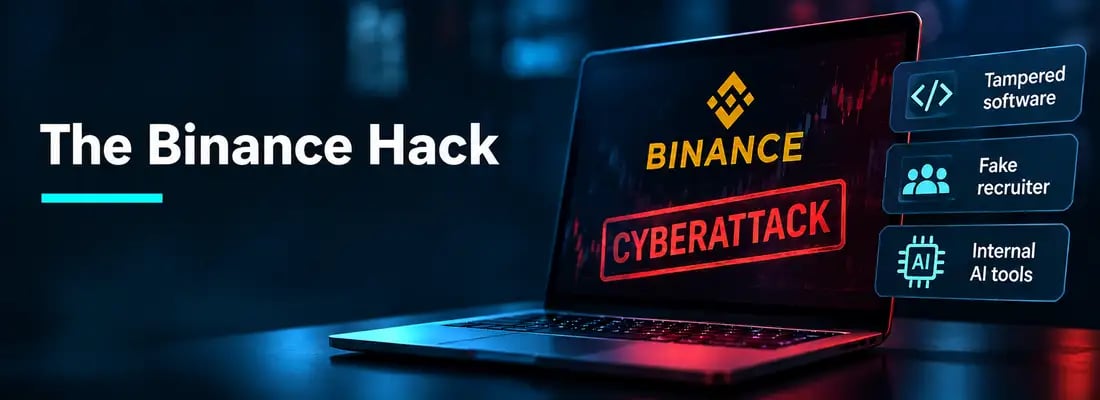
The October 2026 cyberattack on Binance, impacting roughly $6.34 billion in digital assets, serves as a crucial wake-up call for business leaders regarding modern security vulnerabilities. Carried out over several months and attributed to North Korea, the breach did not result from a single failure. Instead, attackers used a sophisticated combination of compromised developer tools found via search engines, elaborate social engineering through fake recruitment processes, and the exploitation of an internal AI tool to maneuver deep into the company’s systems. For organizations outside the crypto space, this incident highlights several vital lessons. First, third-party risk management must extend beyond formal vendors to include the everyday software employees download and the external interactions they have. Second, social engineering is evolving far past simple phishing emails, requiring updated employee awareness training. Third, as companies integrate internal AI tools, they must strictly govern access and permissions. Finally, the attack underscores that standard incident containment measures—like suspending services—may fail if attackers have established alternative access routes, proving the necessity of rigorously testing incident response plans under realistic conditions.

Read Original Article →

Better OT security: You can't plug every hole, so think differently

As operational technology (OT) systems become increasingly connected to digital networks, they face a rising wave of cyber threats, illustrated by a recent attack that compromised the refrigeration systems of over 700 French supermarkets. Unlike traditional IT systems like servers, which can be easily duplicated or shut down for maintenance, OT devices interact directly with the physical world, making downtime far more complicated. Securing these systems requires a fundamental shift in perspective. Instead of treating OT security exactly like IT and attempting to patch every single vulnerability, organizations should prioritize business resilience and operational continuity. Security teams must evaluate risks through an operational lens, weighing the safety and continuity of physical systems against the threat landscape. A layered defense framework—focusing on device discovery, continuous monitoring, tight access controls, and integrated incident response—allows companies to manage these risks effectively. By shaping modern digital security practices to fit the unique requirements and cadence of physical infrastructure, businesses can build resilient environments that protect both their digital networks and their vital physical operations without causing unnecessary disruptions.

Read Original Article →
Article Thumbnail

10 ways the oil and gas industry can leverage digital twin technology

The oil and gas industry faces mounting pressure from market changes and environmental concerns, driving a shift toward digital twin technology. A digital twin is a dynamic virtual model of a physical asset that uses live data to predict behavior and improve daily efficiency. For energy operators, this tool enables predictive maintenance by constantly monitoring equipment to prevent costly breakdowns. It allows teams to simulate different drilling strategies, optimize reservoir extraction rates, and test new facility designs safely in a virtual space. Beyond normal operations, digital twins enhance safety by helping workers prepare for emergencies and reduce environmental impact by modeling clear emission reduction strategies. As the sector adopts more artificial intelligence and connected devices, digital twins will likely lead to fully automated drilling and smarter distribution grids. They also offer a viable path toward cleaner energy by optimizing the performance of wind and solar assets. Managing these highly complex systems requires reliable management platforms to bridge the physical and digital worlds. Ultimately, these virtual models are helping the energy industry build a safer, highly efficient, and highly adaptable operating future.

Read Original Article →
Article Thumbnail

How the Democrats' midterm victory could reshape tech policy

The Democratic Party's sweeping victory in the 2026 midterm elections shifts control of Congress and signals potential changes in federal technology policy. With renewed legislative majorities, lawmakers are expected to intensify their oversight of artificial intelligence accountability, data privacy, and the expanding power of large tech platforms. While the realities of a divided government may slow the passage of comprehensive new laws, immediate impacts could surface through increased congressional hearings and stricter federal procurement requirements that demand robust AI governance from contractors. At the same time, this election exposed growing local pushback against rapid data center expansion, with several communities voting to restrict new developments due to concerns over heavy power and water usage. Consequently, technology leaders can no longer view enterprise IT as politically neutral. Experts advise CIOs to incorporate policy literacy into their long-term planning, as navigating federal scrutiny, state-level infrastructure limitations, and debates over AI-driven automation will become essential for maintaining stability and guiding future investments in the tech industry.

Read Original Article →

Daily Tech Digest - May 01, 2026


Quote for the day:

"Before you are leader, success is all about growing yourself. When you become a leader, success is all about growing others." -- Jack Welch


🎧 Listen to this digest on YouTube Music

▶ Play Audio Digest

Duration: 23 mins • Perfect for listening on the go.


The most severe Linux threat to surface in years catches the world flat-footed

The article "The most severe Linux threat to surface in years catches the world flat-footed" on Ars Technica details a critical vulnerability known as "Copy Fail" (CVE-2026-31431). This local privilege escalation flaw stems from a fundamental logic error in the Linux kernel’s cryptographic subsystem, specifically within memory copy operations. Discovered by researchers using the AI-powered vulnerability platform Xint Code, the bug has existed silently for nearly a decade, impacting almost every major distribution released since 2017. The severity of the threat is heightened by the availability of a remarkably compact exploit—a mere 732-byte Python script—that allows any unprivileged user to gain full root access to a system. The disclosure has sparked significant controversy within the cybersecurity community because the researchers released the proof-of-concept before many distributions could prepare patches. This "no-notice" disclosure left system administrators worldwide scrambling to implement manual mitigations, such as blacklisting the vulnerable algif_aead module to prevent exploitation. As the industry grapples with this widespread risk, the incident underscores the growing power of AI in discovering deep-seated codebase flaws and the ongoing debate regarding coordinated disclosure practices in the open-source ecosystem.


How to Fix Data Platform Sprawl: 3 Patterns and 3 Steps for Better Platform Decisions

In "How to Fix Data Platform Sprawl," Keerthi Penmatsa examines the hidden risks of fragmented enterprise data strategies. As organizations adopt diverse tools like Snowflake and Databricks, they often encounter three detrimental sprawl patterns: costly, redundant pipelines that threaten data consistency; operational friction from tight cross-team dependencies; and fragmented governance that complicates regulatory compliance. While open table formats provide partial relief, Penmatsa argues they cannot resolve the deeper structural complexity. To address this, she proposes a strategic three-lens framework for platform decision-making. First, leaders must evaluate business considerations and operational fit, balancing maintainability against vendor ecosystem benefits. Second, they must prioritize Economics and FinOps alignment to manage the volatile costs of consumption-based models via improved spend tracking. Finally, a focus on data governance and security ensures platforms have the native capabilities for robust policy enforcement and privacy. By moving beyond narrow feature checklists to these holistic strategic bets, executives can transform a chaotic environment into a resilient, value-driven ecosystem. This transition allows technology investments to become sustainable competitive advantages while ensuring rigorous, centralized control over organizational data in the AI era.


AI data debt: The risk lurking beneath enterprise intelligence

"AI Data Debt: The Risk Lurking Beneath Enterprise Intelligence" by Ashish Kumar explores the emerging danger of "AI data debt," a concept analogous to technical debt that arises when organizations prioritize rapid AI deployment over robust data foundations. This debt accumulates through poor data quality, legacy assumptions, and hidden biases, often remaining unrecognized until systems fail at scale. In critical sectors like healthcare and education, such inconsistencies can lead to life-altering erroneous diagnoses or suboptimal learning experiences. The author warns that AI often creates an "illusion of intelligence," projecting authority while relying on flawed inputs that degrade over time through "data drift." To mitigate these risks, Kumar emphasizes the necessity of comprehensive data governance, "privacy by design," and a unified data ontology to ensure semantic consistency across departments. Furthermore, organizations must implement rigorous data-handling mechanisms—including validation checks, lineage tracking, and continuous monitoring—to maintain integrity. Ultimately, the article argues that sustainable enterprise intelligence requires a strategic shift from breakneck scaling to foundational strength. By establishing clear ownership and accountability, businesses can transform data from a latent liability into a reliable strategic asset, ensuring that their AI initiatives remain ethical, compliant, and genuinely effective.


Cyber Threats to DevOps Platforms Rising Fast, GitProtect Report Finds

The "DevOps Threats Unwrapped Report 2026" from GitProtect reveals a concerning 21% increase in cyber incidents targeting DevOps environments throughout 2025, with total downtime nearly doubling to a staggering 9,225 hours. This surge in high-severity disruptions, which rose by 69% year-over-year, cost organizations more than $740,000 in lost productivity. Leading platforms like GitHub, Azure DevOps, and Jira have become prime targets for sophisticated malware campaigns, including Shai-Hulud and GitVenom, which leverage trusted infrastructure for credential harvesting and malware distribution. Attackers are increasingly exploiting automation, poisoned packages, and malicious AI-generated code to bypass traditional perimeter defenses. The report highlights that 62% of outages were driven by performance degradation, though post-incident maintenance consumed a disproportionate 30% of total downtime. With 236 security flaws patched in 2025—many categorized as critical or high severity—the findings underscore that reactive monitoring is no longer sufficient. Daria Kulikova of GitProtect emphasizes that as cybercriminals blend hardware-aware evasion with phishing-as-a-service, organizations must transition toward a proactive DevSecOps model. This approach integrates continuous monitoring and automated security throughout the development lifecycle to safeguard data integrity and maintain business continuity against an increasingly evolving and aggressive global threat landscape.


AI in Banking: An Advanced Overview

The article "AI in Banking: An Advanced Overview" examines how financial institutions are transitioning from basic applications like chatbots toward sophisticated artificial intelligence integrations that streamline operations and deepen customer loyalty. While traditional uses focused on fraud detection, modern banks are now deploying predictive analytics for loan approvals and leveraging generative AI to automate complex knowledge work, such as internal support and marketing development. Experts Jerry Silva and Alyson Clarke emphasize that the true potential of AI lies in moving beyond incremental efficiency to foster innovation in new products and services. However, significant hurdles remain, particularly for institutions burdened by legacy systems that complicate the adoption of open APIs and modern AI capabilities. The piece highlights a shift in focus from cost-cutting to growth, with projections suggesting that by 2028, over half of AI budgets will fund new revenue-generating initiatives. Despite a current lack of specific federal regulations, banks are proactively prioritizing transparency and model explainability to maintain trust. Ultimately, the future of banking in 2026 and beyond will be defined by "agentic AI" and personal digital clones, provided organizations can resolve lingering questions regarding liability and master the data strategies necessary to support these advanced autonomous systems.


ODNI to CISOs on threat assessments: You’re on your own

In his analysis of the 2026 Annual Threat Assessment (ATA), Christopher Burgess argues that the Office of the Director of National Intelligence (ODNI) has pivoted toward a homeland-centric, reactive posture, effectively leaving the private sector to manage its own strategic defense. This year’s ATA omits granular, future-leaning analysis of state actors like China and Russia, instead folding them into broader regional narratives. For security leaders, this represents a dangerous dilution of strategic warning, particularly as it excludes critical updates on persistent infrastructure campaigns like Volt Typhoon. By focusing on immediate operational successes and domestic stability, the Intelligence Community has signaled a contraction in its early-warning role, outsourcing the forecasting of long-term adversary intent to CISOs and CROs. To bridge this gap, Burgess proposes a "resilience premium" framework, urging organizations to prioritize identity integrity, conduct dormant access audits for infrastructure continuity, and accelerate quantum migration roadmaps. Ultimately, while the government reports on past policy outcomes, the burden of anticipating and defending against evolving cyber threats—such as AI-driven anomalies and insider infiltration—now rests squarely on the shoulders of private enterprise, requiring a shift from efficiency-focused security to robust, intelligence-integrated resilience.


Harness teams of agentic coders with Squad

In "Harness teams of agentic coders with Squad," Simon Bisson examines the growing "productivity crisis" where developers are increasingly overwhelmed by AI-generated bug reports and mounting technical debt. To combat this, Bisson introduces Squad, an open-source framework developed by Microsoft's Brady Gaster that orchestrates multiple specialized AI agents through GitHub Copilot. Replicating a traditional development team structure, Squad creates distinct roles such as a developer lead, front-end and back-end engineers, and test engineers. A key architectural innovation is Squad’s rejection of fragile agent-to-agent chatting; instead, it treats agents as asynchronous tasks synchronized via persistent external storage in Markdown format. This ensures shared "memory" and context are preserved across sessions and remain accessible to all team members. Additionally, Squad employs a unique verification process where separate agents fix issues identified by testers, preventing repetitive logic loops and statistical hallucinations. Whether utilized via a CLI, Visual Studio Code, or a TypeScript SDK, the system positions the human developer as a senior architect managing a "pocket team" of artificial junior developers. By leveraging this multi-agent harness, organizations can transform application development into a more efficient, test-driven process, providing a much-needed force multiplier to keep pace with the rapidly evolving demands and security vulnerabilities of modern software engineering.


The Model Is the Data—and That Changes Everything

In "The Model Is the Data—and That Changes Everything," published on HPCwire and BigDATAwire in April 2026, the author examines a profound transformation in artificial intelligence that dismantles the long-standing perception of AI as an enigmatic "magic" black box. Traditionally, the industry separated complex algorithms from the datasets they processed; however, the article argues that we have entered an era where the model and the data are fundamentally unified. This evolution is largely driven by vectorization, where models rely on high-dimensional vectors to interpret raw information directly, effectively making the data’s structural representation the primary source of intelligence. The piece emphasizes that enterprise success no longer depends solely on algorithmic complexity but on "context engineering"—the precise curation of data to guide model reasoning. Consequently, traditional data architectures, which were designed for movement rather than decision-making, are being replaced by integrated platforms. By highlighting the shift from rigid pipelines to dynamic, data-centric systems, the article posits that AI is transitioning from a tool for analysis into a fundamental engine for autonomous discovery. Ultimately, this technological shift dictates that data is not merely fuel for the model; it has become the model itself.


AI chatbots need ‘deception mode’

In his Computerworld article, Mike Elgan addresses the growing concern of AI anthropomorphism, where users mistake software for sentient beings due to human-like traits like empathy, humor, and deliberate response delays. New research indicates that people often perceive slower AI responses as more "thoughtful," a phenomenon Elgan describes as a "user delusion" that tech companies exploit to foster an "attachment economy." By designing chatbots with fake emotional intelligence and simulated empathy, developers lower users' psychological guards, potentially leading to social isolation, misplaced trust, and the leakage of sensitive personal data. To combat this manipulative design trend, Elgan advocates for a regulatory requirement called "deception mode." Proposed by bioethicist Jesse Gray, this framework mandates that AI systems remain strictly neutral and robotic by default. Under this model, human-like qualities would only be accessible if a user explicitly activates a "deception mode" toggle. This approach ensures informed consent, grounding the user in the reality that any perceived "humanity" is merely a programmed facade. Ultimately, Elgan argues that such a feature is essential to preserve human clarity and control as AI continues to integrate into daily life, preventing a future where the majority of society is misled by artificial personalities.


The DPoP Storage Paradox: Why Browser-Based Proof-of-Possession Remains an Unsolved Problem

"The DPoP Storage Paradox: Why Browser-Based Proof-of-Possession Remains an Unsolved Problem" by Dhruv Agnihotri highlights a critical security gap in modern OAuth 2.0 implementations. While DPoP (RFC 9449) effectively binds access tokens to a client-generated key pair to prevent replay attacks, it offers no standardized guidance on browser-side key storage. This leads to a "storage paradox": storing keys as non-extractable objects in IndexedDB prevents exfiltration but fails to stop the "Oracle Attack." In this scenario, an XSS payload uses the browser's own cryptographic subsystem to sign malicious proofs without ever needing to extract the raw key bytes. To mitigate these risks, Agnihotri evaluates several architectural patterns, noting that with the finalization of the FAPI 2.0 Security Profile, sender-constraining has become a mandate rather than an option. The Backend-for-Frontend (BFF) pattern is presented as the industry standard, moving sensitive key material to a secure server-side component. For serverless environments where a BFF is unfeasible, a "zero-persistence" memory-only approach is recommended. This ephemeral strategy restricts the attack window to a single session but requires "Lazy Re-Binding" to rotate keys during page reloads. Ultimately, the article argues that there is no universal "safe default" for browser-based key storage; developers must deliberately align their architecture with their specific threat model and infrastructure constraints.