Quote for the day:
"Always remember, your focus determines your reality." -- George Lucas
The AI plateau: What smart CIOs will do when the hype cools
 During the early stages of GenAI adoption, organizations were captivated by
its potential -- often driven by the hype surrounding tools like ChatGPT.
However, as the technology matures, enterprises are now grappling with the
complexities of scaling AI tools, integrating them into existing workflows and
using them to meet measurable business outcomes. ... History has shown that
transformative technologies often go through similar cycles of hype,
disillusionment and eventual stabilization. ... Early on, many organizations
told every department to use AI to boost productivity. That approach created
energy, but it also produced long lists of ideas that competed for attention
and resources. At the plateau stage, CIOs are becoming more selective. Instead
of experimenting with every possible use case, they are selecting a smaller
number of use cases that clearly support business goals and can be scaled. The
question is no longer whether a team can use AI, but whether it should. ...
CIOs should take a two-speed approach that separates fast, short-term AI
projects from larger, long-term efforts, Locandro said. Smaller initiatives
help teams learn and deliver quick results. Bigger projects require more
planning and investment, especially when they span multiple systems. ... A key
challenge CIOs face with GenAI is avoiding long, drawn-out planning cycles
that try to solve everything at once. As AI technology evolves rapidly,
lengthy projects risk producing outdated tools.
During the early stages of GenAI adoption, organizations were captivated by
its potential -- often driven by the hype surrounding tools like ChatGPT.
However, as the technology matures, enterprises are now grappling with the
complexities of scaling AI tools, integrating them into existing workflows and
using them to meet measurable business outcomes. ... History has shown that
transformative technologies often go through similar cycles of hype,
disillusionment and eventual stabilization. ... Early on, many organizations
told every department to use AI to boost productivity. That approach created
energy, but it also produced long lists of ideas that competed for attention
and resources. At the plateau stage, CIOs are becoming more selective. Instead
of experimenting with every possible use case, they are selecting a smaller
number of use cases that clearly support business goals and can be scaled. The
question is no longer whether a team can use AI, but whether it should. ...
CIOs should take a two-speed approach that separates fast, short-term AI
projects from larger, long-term efforts, Locandro said. Smaller initiatives
help teams learn and deliver quick results. Bigger projects require more
planning and investment, especially when they span multiple systems. ... A key
challenge CIOs face with GenAI is avoiding long, drawn-out planning cycles
that try to solve everything at once. As AI technology evolves rapidly,
lengthy projects risk producing outdated tools. Middle East Tech 2026: 5 Non-AI Trends Shaping Regional Business
The Middle Eastern biotechnology market is rapidly maturing into a
multi-billion-dollar industrial powerhouse, driven by national healthcare and
climate agendas. In 2026, the industry is marking the shift toward
manufacturing-scale deployment, as genomics, biofuels, and diagnostics
projects move into operational phases. ... Quantum computing has moved past
the stage of academic curiosity. In 2026, the Middle East is seeing the first
wave of applied industrial pilots, particularly within the energy and material
science sectors. ... While commercialization timelines remain long, the
strategic value of early entry is high. Foreign suppliers who offer algorithm
development or hardware-software integration for these early-stage pilots will
find a highly receptive market among national energy champions. ...
Geopatriation refers to the relocation of digital workloads and data onto
sovereign-controlled clouds and local hardware and stands out as a major
structural shift in 2026. Driven by national security concerns and the massive
data requirements of AI, Middle Eastern states are reducing their reliance on
cross-border digital architectures. This trend has extended beyond data
residency to include the localization of critical hardware capabilities. ...
the region is moving away from perimeter-based security models toward
zero-trust architectures, under which no user, device, or system receives
implicit trust. Security priorities now extend beyond office IT systems to
cover operational technology
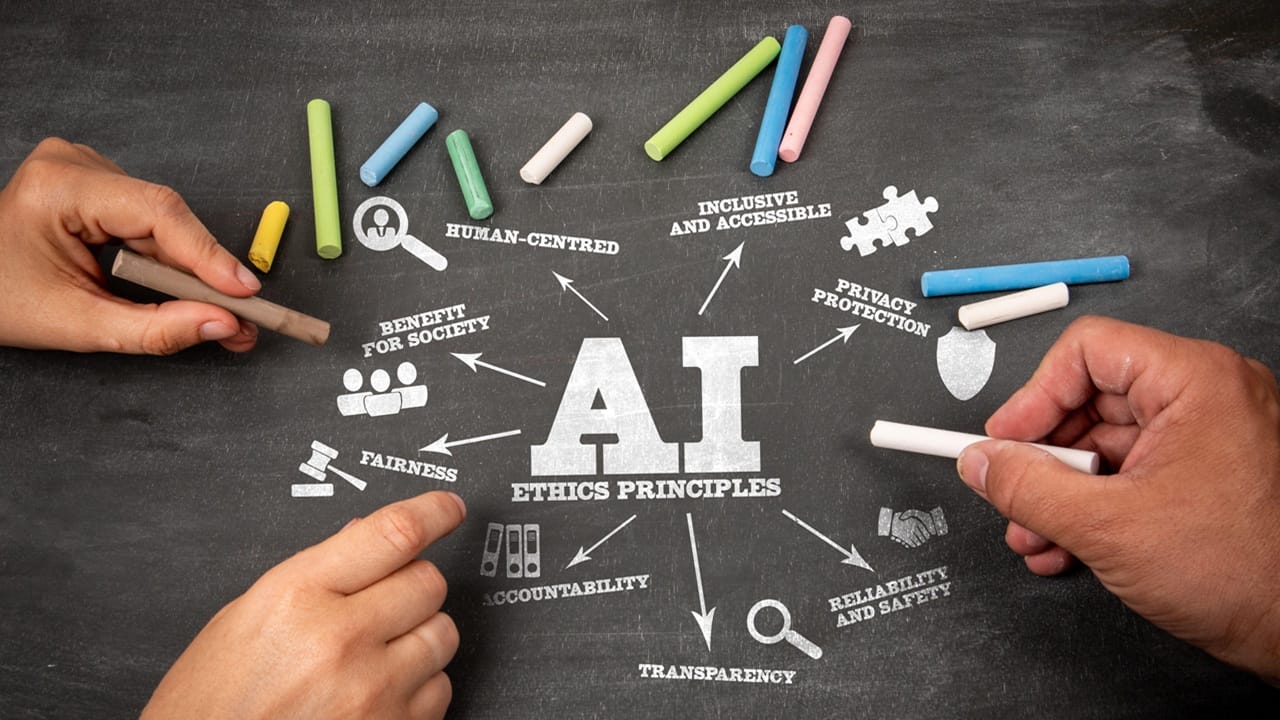 "Capturing AI's value while minimizing risk starts with discipline," Puig
said. "CIOs and their organizations need a clear strategy that ties AI
initiatives to business outcomes, not just technology experiments. This means
defining success criteria upfront, setting guardrails for ethics and
compliance, and avoiding the trap of endless pilots with no plan for scale."
... Puig adds that trust is just as important as technology. "Transparency,
governance, and training help people understand how AI decisions are made and
where human judgment still matters. The goal isn't to chase every shiny use
case; it's to create a framework where AI delivers value safely and
sustainably." ... Data security and privacy emerge as critical issues, cited
by 42% of respondents in the research. While other concerns -- such as
response quality and accuracy, implementation costs, talent shortages, and
regulatory compliance -- rank lower individually, they collectively represent
substantial barriers. When aggregated, issues related to data security,
privacy, legal and regulatory compliance, ethics, and bias form a formidable
cluster of risk factors -- clearly indicating that trust and governance are
top priorities for scaling AI adoption. ... At its core, governance ensures
that data is safe for decision-making and autonomous agents. In "Competing in
the Age of AI," authors Marco Iansiti and Karim Lakhani explain that AI allows
organizations to rethink the traditional firm by powering up an "AI factory"
-- a scalable decision-making engine that replaces manual processes with
data-driven algorithms.
"Capturing AI's value while minimizing risk starts with discipline," Puig
said. "CIOs and their organizations need a clear strategy that ties AI
initiatives to business outcomes, not just technology experiments. This means
defining success criteria upfront, setting guardrails for ethics and
compliance, and avoiding the trap of endless pilots with no plan for scale."
... Puig adds that trust is just as important as technology. "Transparency,
governance, and training help people understand how AI decisions are made and
where human judgment still matters. The goal isn't to chase every shiny use
case; it's to create a framework where AI delivers value safely and
sustainably." ... Data security and privacy emerge as critical issues, cited
by 42% of respondents in the research. While other concerns -- such as
response quality and accuracy, implementation costs, talent shortages, and
regulatory compliance -- rank lower individually, they collectively represent
substantial barriers. When aggregated, issues related to data security,
privacy, legal and regulatory compliance, ethics, and bias form a formidable
cluster of risk factors -- clearly indicating that trust and governance are
top priorities for scaling AI adoption. ... At its core, governance ensures
that data is safe for decision-making and autonomous agents. In "Competing in
the Age of AI," authors Marco Iansiti and Karim Lakhani explain that AI allows
organizations to rethink the traditional firm by powering up an "AI factory"
-- a scalable decision-making engine that replaces manual processes with
data-driven algorithms.
Scaling AI value demands industrial governance
"Capturing AI's value while minimizing risk starts with discipline," Puig
said. "CIOs and their organizations need a clear strategy that ties AI
initiatives to business outcomes, not just technology experiments. This means
defining success criteria upfront, setting guardrails for ethics and
compliance, and avoiding the trap of endless pilots with no plan for scale."
... Puig adds that trust is just as important as technology. "Transparency,
governance, and training help people understand how AI decisions are made and
where human judgment still matters. The goal isn't to chase every shiny use
case; it's to create a framework where AI delivers value safely and
sustainably." ... Data security and privacy emerge as critical issues, cited
by 42% of respondents in the research. While other concerns -- such as
response quality and accuracy, implementation costs, talent shortages, and
regulatory compliance -- rank lower individually, they collectively represent
substantial barriers. When aggregated, issues related to data security,
privacy, legal and regulatory compliance, ethics, and bias form a formidable
cluster of risk factors -- clearly indicating that trust and governance are
top priorities for scaling AI adoption. ... At its core, governance ensures
that data is safe for decision-making and autonomous agents. In "Competing in
the Age of AI," authors Marco Iansiti and Karim Lakhani explain that AI allows
organizations to rethink the traditional firm by powering up an "AI factory"
-- a scalable decision-making engine that replaces manual processes with
data-driven algorithms.Information Management Trends in the Year Ahead
 The digital workforce will make its presence felt. “Fleets of AI agents
trained on proprietary data, governed by corporate policy, and audited like
employees will appear in org charts, collaborate on projects, and request
access through policy engines,” said Sergio Gago, CTO for Cloudera. “They will
be contributing insights alongside their human colleagues.” A potential
oversight framework may effectively be called an “HR department for AI.” AI
agents are graduating from “copilots that suggest to accountable coworkers
inside their digital environments,” agreed Arturo Buzzalino ... “Instead of
pulling data into different environments, we’re bringing compute to the data,”
said Scott Gnau, head of data platforms at InterSystems. “For a long time, the
common approach was to move data to wherever the applications or models were
running. AI depends on fast, reliable access to governed data. When teams make
this change, they see faster results, better control, and fewer surprises in
performance and cost.” ... The year ahead will see efforts to reign in the
huge volume of AI projects now proliferating outside the scope of IT
departments. “IT leaders are being called in to fix or unify fragmented,
business-led AI projects, signaling a clear shift toward CIOs—like myself,”
said Shelley Seewald, CIO at Tungsten Automation. The impetus is on IT leaders
and managers to be “more involved much earlier in shaping AI strategy and
governance.
The digital workforce will make its presence felt. “Fleets of AI agents
trained on proprietary data, governed by corporate policy, and audited like
employees will appear in org charts, collaborate on projects, and request
access through policy engines,” said Sergio Gago, CTO for Cloudera. “They will
be contributing insights alongside their human colleagues.” A potential
oversight framework may effectively be called an “HR department for AI.” AI
agents are graduating from “copilots that suggest to accountable coworkers
inside their digital environments,” agreed Arturo Buzzalino ... “Instead of
pulling data into different environments, we’re bringing compute to the data,”
said Scott Gnau, head of data platforms at InterSystems. “For a long time, the
common approach was to move data to wherever the applications or models were
running. AI depends on fast, reliable access to governed data. When teams make
this change, they see faster results, better control, and fewer surprises in
performance and cost.” ... The year ahead will see efforts to reign in the
huge volume of AI projects now proliferating outside the scope of IT
departments. “IT leaders are being called in to fix or unify fragmented,
business-led AI projects, signaling a clear shift toward CIOs—like myself,”
said Shelley Seewald, CIO at Tungsten Automation. The impetus is on IT leaders
and managers to be “more involved much earlier in shaping AI strategy and
governance. What is outcome as agentic solution (OaAS)?
 The analyst firm, Gartner predicts that a new paradigm it’s named outcome as
agentic solution (OaAS) will make some of the biggest waves, by replacing
software as a service (SaaS). The new model will see enterprises contract for
outcomes, instead of simply buying access to software tools. Instead of SaaS,
where the customer is responsible for purchasing a tool and using it to
achieve results, with OaAS providers embed AI agents and orchestration so the
work is performed for you. This leaves the vendor responsible for automating
decisions and delivering outcomes, says Vuk Janosevic, senior director analyst
at Gartner. ... The ‘outcome scenario’ has been developing in the market for
several years, first through managed services then value-based delivery
models. “OaAS simply formalizes it with modern IT buyers, who want results
over tools,” notes Thomas Kraus, global head of AI at Onix. OaAS providers are
effectively transforming systems of record (SoR) into systems of action (SoA)
by introducing orchestration control planes that bind execution directly to
outcomes, says Janosevic. ... Goransson, however, advises enterprises
carefully evaluate several areas of risk before adopting an agentic service
model, Accountability is paramount, he notes, as without clear ownership
structures and performance metrics, organizations may struggle to assess
whether outcomes are being delivered as intended.
The analyst firm, Gartner predicts that a new paradigm it’s named outcome as
agentic solution (OaAS) will make some of the biggest waves, by replacing
software as a service (SaaS). The new model will see enterprises contract for
outcomes, instead of simply buying access to software tools. Instead of SaaS,
where the customer is responsible for purchasing a tool and using it to
achieve results, with OaAS providers embed AI agents and orchestration so the
work is performed for you. This leaves the vendor responsible for automating
decisions and delivering outcomes, says Vuk Janosevic, senior director analyst
at Gartner. ... The ‘outcome scenario’ has been developing in the market for
several years, first through managed services then value-based delivery
models. “OaAS simply formalizes it with modern IT buyers, who want results
over tools,” notes Thomas Kraus, global head of AI at Onix. OaAS providers are
effectively transforming systems of record (SoR) into systems of action (SoA)
by introducing orchestration control planes that bind execution directly to
outcomes, says Janosevic. ... Goransson, however, advises enterprises
carefully evaluate several areas of risk before adopting an agentic service
model, Accountability is paramount, he notes, as without clear ownership
structures and performance metrics, organizations may struggle to assess
whether outcomes are being delivered as intended.Bridging the Gap Between SRE and Security: A Unified Framework for Modern Reliability
 SRE teams optimize for uptime, performance, scalability, automation and
operational efficiency. Security teams focus on risk reduction, threat
mitigation, compliance, access control and data protection. Both mandates are
valid, but without shared KPIs, each team views the other as an obstacle to
progress. Security controls — patch cycles, vulnerability scans, IAM
restrictions and network changes — can slow deployments and reduce SRE
flexibility. In SRE terms, these controls often increase toil, create
unpredictable work and disrupt service-level objectives (SLOs). The SRE
culture emphasizes continuous improvement and rapid rollback, whereas security
relies on strict change approval and minimizing risk surfaces. ... This
disconnect impacts organizations in measurable ways. Security incidents often
trigger slow, manual escalations because security and operations lack common
playbooks, increasing mean time to recovery (MTTR). Risk gets mis-prioritized
when SRE sees a vulnerability as non-disruptive while security considers it
critical. Fragmented tooling means that SRE leverages observability and
automation while security uses scanning and SIEM tools with no shared
telemetry, creating incomplete incident context. The result? Regulatory
penalties, breaches from failures in patch automation or access governance and
a culture of blame where security faults SRE for speed and SRE faults security
for friction.
SRE teams optimize for uptime, performance, scalability, automation and
operational efficiency. Security teams focus on risk reduction, threat
mitigation, compliance, access control and data protection. Both mandates are
valid, but without shared KPIs, each team views the other as an obstacle to
progress. Security controls — patch cycles, vulnerability scans, IAM
restrictions and network changes — can slow deployments and reduce SRE
flexibility. In SRE terms, these controls often increase toil, create
unpredictable work and disrupt service-level objectives (SLOs). The SRE
culture emphasizes continuous improvement and rapid rollback, whereas security
relies on strict change approval and minimizing risk surfaces. ... This
disconnect impacts organizations in measurable ways. Security incidents often
trigger slow, manual escalations because security and operations lack common
playbooks, increasing mean time to recovery (MTTR). Risk gets mis-prioritized
when SRE sees a vulnerability as non-disruptive while security considers it
critical. Fragmented tooling means that SRE leverages observability and
automation while security uses scanning and SIEM tools with no shared
telemetry, creating incomplete incident context. The result? Regulatory
penalties, breaches from failures in patch automation or access governance and
a culture of blame where security faults SRE for speed and SRE faults security
for friction. The 2 faces of AI: How emerging models empower and endanger cybersecurity
 More recently, the researchers at Google Threat Intelligence Group (GTIG)
identified a disturbing new trend: malware that uses LLMs during execution to
dynamically alter its own behavior and evade detection. This is not
pre-generated code, this is code that adapts mid-execution. ... Anthropic
recently disclosed a highly sophisticated cyber espionage operation,
attributed to a state-sponsored threat actor, that leveraged its own Claude
Codemodel to target roughly 30 organizations globally, including major
financial institutions and government agencies. ... If adversaries are
operating at AI speed, our defenses must too. The silver lining of this
dual-use dynamic is that the most powerful LLMs are also being harnessed by
defenders to create fundamentally new security capabilities. ... LLMs have
shown extraordinary potential in identifying unknown, unpatched flaws
(zero-days). These models significantly outperform conventional static
analyzers, particularly in uncovering subtle logic flaws and buffer overflows
in novel software. ... LLMs are transforming threat hunting from a
manual, keyword-based search to an intelligent, contextual query process that
focuses on behavioral anomalies. ... Ultimately, the challenge isn’t to halt
AI progress but to guide it responsibly. That means building guardrails into
models, improving transparency and developing governance frameworks that keep
pace with emerging capabilities. It also requires organizations to rethink
security strategies, recognizing that AI is both an opportunity and a risk
multiplier.
More recently, the researchers at Google Threat Intelligence Group (GTIG)
identified a disturbing new trend: malware that uses LLMs during execution to
dynamically alter its own behavior and evade detection. This is not
pre-generated code, this is code that adapts mid-execution. ... Anthropic
recently disclosed a highly sophisticated cyber espionage operation,
attributed to a state-sponsored threat actor, that leveraged its own Claude
Codemodel to target roughly 30 organizations globally, including major
financial institutions and government agencies. ... If adversaries are
operating at AI speed, our defenses must too. The silver lining of this
dual-use dynamic is that the most powerful LLMs are also being harnessed by
defenders to create fundamentally new security capabilities. ... LLMs have
shown extraordinary potential in identifying unknown, unpatched flaws
(zero-days). These models significantly outperform conventional static
analyzers, particularly in uncovering subtle logic flaws and buffer overflows
in novel software. ... LLMs are transforming threat hunting from a
manual, keyword-based search to an intelligent, contextual query process that
focuses on behavioral anomalies. ... Ultimately, the challenge isn’t to halt
AI progress but to guide it responsibly. That means building guardrails into
models, improving transparency and developing governance frameworks that keep
pace with emerging capabilities. It also requires organizations to rethink
security strategies, recognizing that AI is both an opportunity and a risk
multiplier.Hacker Conversations: Katie Paxton-Fear Talks Autism, Morality and Hacking
 “Life with autism is like living life without the instruction manual that
everyone else has.” It’s confusing and difficult. “Computing provides that
manual and makes it easier to make online friends. It provides accessibility
without the overpowering emotions and ambiguities that exist in face-to-face
real life relationships – so it’s almost helping you with your disability by
providing that safe context you wouldn’t normally have.” Paxton-Fear became
obsessed with computing at an early age. ... During the second year into her
PhD study, a friend from her earlier university days invited her to a bug
bounty event held by HackerOne. She went – not to take part in the event (she
still didn’t think she was a hacker nor understood anything about hacking),
she went to meet up with other friends from the university days. She thought
to herself, ‘I’m not going to find anything. I don’t know anything about
hacking.’ “But then, while there, I found my first two vulnerabilities.” ...
he was driven by curiosity from an early age – but her skill was in
disassembly without reassembly: she just needed to know how things work. And
while many hackers are driven to computers as a shelter from social
difficulties, she exhibits no serious or long lasting social difficulties. For
her, the attraction of computers primarily comes from her dislike of
ambiguity. She readily acknowledges that she sees life as unambiguously black
or white with no shades of gray.
“Life with autism is like living life without the instruction manual that
everyone else has.” It’s confusing and difficult. “Computing provides that
manual and makes it easier to make online friends. It provides accessibility
without the overpowering emotions and ambiguities that exist in face-to-face
real life relationships – so it’s almost helping you with your disability by
providing that safe context you wouldn’t normally have.” Paxton-Fear became
obsessed with computing at an early age. ... During the second year into her
PhD study, a friend from her earlier university days invited her to a bug
bounty event held by HackerOne. She went – not to take part in the event (she
still didn’t think she was a hacker nor understood anything about hacking),
she went to meet up with other friends from the university days. She thought
to herself, ‘I’m not going to find anything. I don’t know anything about
hacking.’ “But then, while there, I found my first two vulnerabilities.” ...
he was driven by curiosity from an early age – but her skill was in
disassembly without reassembly: she just needed to know how things work. And
while many hackers are driven to computers as a shelter from social
difficulties, she exhibits no serious or long lasting social difficulties. For
her, the attraction of computers primarily comes from her dislike of
ambiguity. She readily acknowledges that she sees life as unambiguously black
or white with no shades of gray.‘A wild future’: How economists are handling AI uncertainty in forecasts
 Economists have time-tested models for projecting economic growth. But they’ve
seen nothing like AI, which is a wild card complicating traditional economic
playbooks. Some facts are clear: AI will make humans more productive and
increase economic activity, with spillover effects on spending and employment.
But there are many unknowns about AI. Economists can’t isolate AI’s impact on
human labor as automation kicks in. Nailing down long-term factory job losses
to AI is not possible. ... “We’re seeing an increase in terms of productivity
enhancements over the next decade and a half. While it doesn’t capture AI
directly… there is all kinds of upside potential to the productivity numbers
because of AI. ... “There are basically two ways this can go. You can get more
output for the same input. If you used to put in 100 and get 120, maybe now
you get 140. That’s an expansion in total factor productivity. Or you can get
the same output with fewer inputs. “It’s unclear how much of either will
happen across industries or in the labor market. Will companies lean into AI,
cut their workforce, and maintain revenue? Or will they keep their workforce,
use AI to supplement them, and increase total output per worker? ... If AI and
automation remove the human element from labor-intensive manufacturing, that
cost advantage erodes. It makes it harder for developing countries to use
cheap labor as a stepping stone toward industrialization.
Economists have time-tested models for projecting economic growth. But they’ve
seen nothing like AI, which is a wild card complicating traditional economic
playbooks. Some facts are clear: AI will make humans more productive and
increase economic activity, with spillover effects on spending and employment.
But there are many unknowns about AI. Economists can’t isolate AI’s impact on
human labor as automation kicks in. Nailing down long-term factory job losses
to AI is not possible. ... “We’re seeing an increase in terms of productivity
enhancements over the next decade and a half. While it doesn’t capture AI
directly… there is all kinds of upside potential to the productivity numbers
because of AI. ... “There are basically two ways this can go. You can get more
output for the same input. If you used to put in 100 and get 120, maybe now
you get 140. That’s an expansion in total factor productivity. Or you can get
the same output with fewer inputs. “It’s unclear how much of either will
happen across industries or in the labor market. Will companies lean into AI,
cut their workforce, and maintain revenue? Or will they keep their workforce,
use AI to supplement them, and increase total output per worker? ... If AI and
automation remove the human element from labor-intensive manufacturing, that
cost advantage erodes. It makes it harder for developing countries to use
cheap labor as a stepping stone toward industrialization.Understanding transformers: What every leader should know about the architecture powering GenAI
 Inside a transformer, attention is the mechanism that lets tokens talk to each
other. The model compares every token’s query with every other token’s key to
calculate a weight which is a measure of how relevant one token is to another.
These weights are then used to blend information from all tokens into a new,
context-aware representation called a value. In simple terms: attention allows
the model to focus dynamically. If the model reads “The cat sat on the mat
because it was tired,” attention helps it learn that “it” refers to “the cat,”
not “the mat.” ... Transformers are powerful, but they’re also expensive.
Training a model like GPT-4 requires thousands of GPUs and trillions of data
tokens. Leaders don’t need to know tensor math, but they do need to
understand scaling trade-offs. Techniques like quantization (reducing numerical
precision), model sharding and caching can cut serving costs by 30–50% with
minimal accuracy loss. The key insight: Architecture determines economics.
Design choices in model serving directly impact latency, reliability and total
cost of ownership. ... The transformer’s most profound breakthrough isn’t just
technical — it’s architectural. It proved that intelligence could emerge from
design — from systems that are distributed, parallel and context-aware. For
engineering leaders, understanding transformers isn’t about learning equations;
it’s about recognizing a new principle of system design.
Inside a transformer, attention is the mechanism that lets tokens talk to each
other. The model compares every token’s query with every other token’s key to
calculate a weight which is a measure of how relevant one token is to another.
These weights are then used to blend information from all tokens into a new,
context-aware representation called a value. In simple terms: attention allows
the model to focus dynamically. If the model reads “The cat sat on the mat
because it was tired,” attention helps it learn that “it” refers to “the cat,”
not “the mat.” ... Transformers are powerful, but they’re also expensive.
Training a model like GPT-4 requires thousands of GPUs and trillions of data
tokens. Leaders don’t need to know tensor math, but they do need to
understand scaling trade-offs. Techniques like quantization (reducing numerical
precision), model sharding and caching can cut serving costs by 30–50% with
minimal accuracy loss. The key insight: Architecture determines economics.
Design choices in model serving directly impact latency, reliability and total
cost of ownership. ... The transformer’s most profound breakthrough isn’t just
technical — it’s architectural. It proved that intelligence could emerge from
design — from systems that are distributed, parallel and context-aware. For
engineering leaders, understanding transformers isn’t about learning equations;
it’s about recognizing a new principle of system design.