Quote for the day:
"Hard work beats talent when talent doesn't work hard." -- Tim Notke
🎧 Listen to this digest on YouTube Music
▶ Play Audio DigestDuration: 17 mins • Perfect for listening on the go.
Ford learned the hard way that AI can't replace experienced engineers
 Ford recently discovered that artificial intelligence cannot substitute for
the nuanced judgment of experienced engineers. In an effort to modernize its
manufacturing and engineering systems, the automaker integrated AI to
accelerate decision making and streamline vehicle development. Executives
assumed that automated systems and adjusted design requirements would
naturally yield high quality products. However, this approach backfired. As
veteran engineers left the company, their undocumented institutional knowledge
was excluded from the datasets used to train Ford’s AI models. Consequently,
the technology struggled to identify and prevent defects, contributing to
quality control issues and leading the industry in vehicle recalls. To resolve
these challenges, Ford rehired and promoted over 350 seasoned engineers.
Rather than replacing human expertise, AI now serves as a supportive tool.
These veteran engineers are currently guiding how data is collected,
interpreted, and fed into the AI systems to rebuild a reliable foundation.
Furthermore, Ford created a dedicated software quality assurance team and
introduced automated AI driven testing to catch defects early in the
development cycle. This transition reflects a balanced strategy where the
company relies on both advanced computing power and decades of practical
automotive experience to prevent problems before they occur.
Ford recently discovered that artificial intelligence cannot substitute for
the nuanced judgment of experienced engineers. In an effort to modernize its
manufacturing and engineering systems, the automaker integrated AI to
accelerate decision making and streamline vehicle development. Executives
assumed that automated systems and adjusted design requirements would
naturally yield high quality products. However, this approach backfired. As
veteran engineers left the company, their undocumented institutional knowledge
was excluded from the datasets used to train Ford’s AI models. Consequently,
the technology struggled to identify and prevent defects, contributing to
quality control issues and leading the industry in vehicle recalls. To resolve
these challenges, Ford rehired and promoted over 350 seasoned engineers.
Rather than replacing human expertise, AI now serves as a supportive tool.
These veteran engineers are currently guiding how data is collected,
interpreted, and fed into the AI systems to rebuild a reliable foundation.
Furthermore, Ford created a dedicated software quality assurance team and
introduced automated AI driven testing to catch defects early in the
development cycle. This transition reflects a balanced strategy where the
company relies on both advanced computing power and decades of practical
automotive experience to prevent problems before they occur.Where AI meets OT: Cybersecurity for a physical world
Integrating artificial intelligence into operational technology requires a
careful approach because, unlike business software, industrial systems have
physical consequences. While artificial intelligence offers clear benefits for
manufacturing, such as improved maintenance and quality control, it introduces
unique risks when connected to machines and factory floors. Industrial
environments often rely on older, existing systems and operate on strict
schedules with limited downtime, making new technology harder to test and
implement safely. Furthermore, software models can become inaccurate over time
as physical equipment naturally ages, which means these tools require ongoing
checks against actual physical outcomes rather than just historical data. The
level of risk also depends on how much control the system has. An advisory
tool leaves the final decision to a human, whereas a system that directly
alters machinery settings requires far stricter oversight. True human
oversight means operators must fully understand the technology's
recommendations and know when to override them. Adding these new digital
connections also expands the cybersecurity risk, as attackers could manipulate
the data feeding the models. Ultimately, these tools hold steady value for
industrial operations, but they must be introduced with strong discipline,
clear operating limits, and reliable backup plans.
How to Build a Powerful LLM Knowledge Base
 Building a knowledge base powered by large language models is a practical,
reliable way to store and retrieve your personal or company information,
leading to better decision-making and clearer team alignment. To create an
effective system, you must start by identifying all your daily information
sources, such as meeting notes, project management tools, and coding
assistants. The critical step is fully automating the collection process;
requiring any manual entry virtually guarantees that valuable context will
eventually be forgotten and lost. Once your data is automatically synced into
the system on a regular schedule, you can use a coding agent to extract
insights. You can do this actively by directly asking your agent questions
when you need specific answers. Alternatively, you can configure your agent to
passively draw on the knowledge base while it works on routine tasks. This
passive retrieval can be managed either through a centralized index file or
via an embedding-based search that pulls relevant information as needed.
Ultimately, consistently capturing and accessing your unique, everyday context
creates a distinct long-term advantage, ensuring that valuable insights are
preserved and always ready to assist you in your daily work.
Building a knowledge base powered by large language models is a practical,
reliable way to store and retrieve your personal or company information,
leading to better decision-making and clearer team alignment. To create an
effective system, you must start by identifying all your daily information
sources, such as meeting notes, project management tools, and coding
assistants. The critical step is fully automating the collection process;
requiring any manual entry virtually guarantees that valuable context will
eventually be forgotten and lost. Once your data is automatically synced into
the system on a regular schedule, you can use a coding agent to extract
insights. You can do this actively by directly asking your agent questions
when you need specific answers. Alternatively, you can configure your agent to
passively draw on the knowledge base while it works on routine tasks. This
passive retrieval can be managed either through a centralized index file or
via an embedding-based search that pulls relevant information as needed.
Ultimately, consistently capturing and accessing your unique, everyday context
creates a distinct long-term advantage, ensuring that valuable insights are
preserved and always ready to assist you in your daily work.Is the CIO Role Merging Into the Business?
 For decades, the role of the Chief Information Officer followed a predictable
path, slowly shifting from managing basic operations to supporting broader
strategy. However, recent trends indicate that this steady progression is
becoming obsolete. The middle ground is collapsing, forcing a clear divide in
the profession. On one hand, some leaders remain stuck in traditional
management, treating technology as a separate, functional necessity. On the
other hand, a new breed of technology executives is emerging as true
enterprise operators who share responsibility for revenue and actively shape
commercial models. In the most effective organizations, technology is no
longer just a supporting layer; it is the central system for making decisions.
As companies embed artificial intelligence deeply into their core operations
and bring critical capabilities inside the firm, the person leading technology
must also architect these decision-making systems. Consequently, the
traditional boundary between technology leadership and business leadership is
rapidly fading. Instead of simply elevating the position to a more strategic
level, the core responsibilities are dissolving directly into the business
itself. Ultimately, the future landscape will be defined not by better
technology departments, but by whether the conventional title needs to exist
at all.
For decades, the role of the Chief Information Officer followed a predictable
path, slowly shifting from managing basic operations to supporting broader
strategy. However, recent trends indicate that this steady progression is
becoming obsolete. The middle ground is collapsing, forcing a clear divide in
the profession. On one hand, some leaders remain stuck in traditional
management, treating technology as a separate, functional necessity. On the
other hand, a new breed of technology executives is emerging as true
enterprise operators who share responsibility for revenue and actively shape
commercial models. In the most effective organizations, technology is no
longer just a supporting layer; it is the central system for making decisions.
As companies embed artificial intelligence deeply into their core operations
and bring critical capabilities inside the firm, the person leading technology
must also architect these decision-making systems. Consequently, the
traditional boundary between technology leadership and business leadership is
rapidly fading. Instead of simply elevating the position to a more strategic
level, the core responsibilities are dissolving directly into the business
itself. Ultimately, the future landscape will be defined not by better
technology departments, but by whether the conventional title needs to exist
at all.Deep dive: Do underwater data centers make sense?
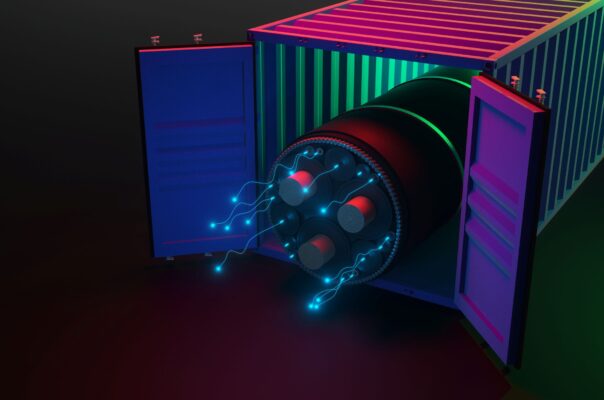 The article evaluates the practicality of underwater data centers as an
alternative to land-based facilities, which struggle with high energy
consumption and space limitations. Traditional data centers use tremendous
amounts of power, largely just to keep servers cool. Submerging these
facilities allows companies to use the ocean as a natural cooling system,
significantly reducing energy requirements. Beyond energy savings, placing
data centers offshore brings them closer to coastal populations. This
proximity shortens the distance data travels, leading to faster loading times
for end users. Research also indicates that underwater servers are
surprisingly reliable. Because they are sealed in a nitrogen-rich environment
without human foot traffic or temperature swings, hardware fails much less
frequently. Despite these benefits, the underwater model has distinct
disadvantages. Routine maintenance is virtually impossible; broken servers
cannot be quickly swapped out. Furthermore, researchers are still studying how
the continuous release of heat might alter local marine ecosystems. There are
also valid concerns regarding the physical security of underwater cables.
While the approach provides clear advantages in efficiency and speed, these
formidable logistical and environmental challenges complicate the decision of
whether underwater data centers are a sensible long-term investment.
The article evaluates the practicality of underwater data centers as an
alternative to land-based facilities, which struggle with high energy
consumption and space limitations. Traditional data centers use tremendous
amounts of power, largely just to keep servers cool. Submerging these
facilities allows companies to use the ocean as a natural cooling system,
significantly reducing energy requirements. Beyond energy savings, placing
data centers offshore brings them closer to coastal populations. This
proximity shortens the distance data travels, leading to faster loading times
for end users. Research also indicates that underwater servers are
surprisingly reliable. Because they are sealed in a nitrogen-rich environment
without human foot traffic or temperature swings, hardware fails much less
frequently. Despite these benefits, the underwater model has distinct
disadvantages. Routine maintenance is virtually impossible; broken servers
cannot be quickly swapped out. Furthermore, researchers are still studying how
the continuous release of heat might alter local marine ecosystems. There are
also valid concerns regarding the physical security of underwater cables.
While the approach provides clear advantages in efficiency and speed, these
formidable logistical and environmental challenges complicate the decision of
whether underwater data centers are a sensible long-term investment.5 T-SQL features that should already exist (2026 SQL Server wish list)
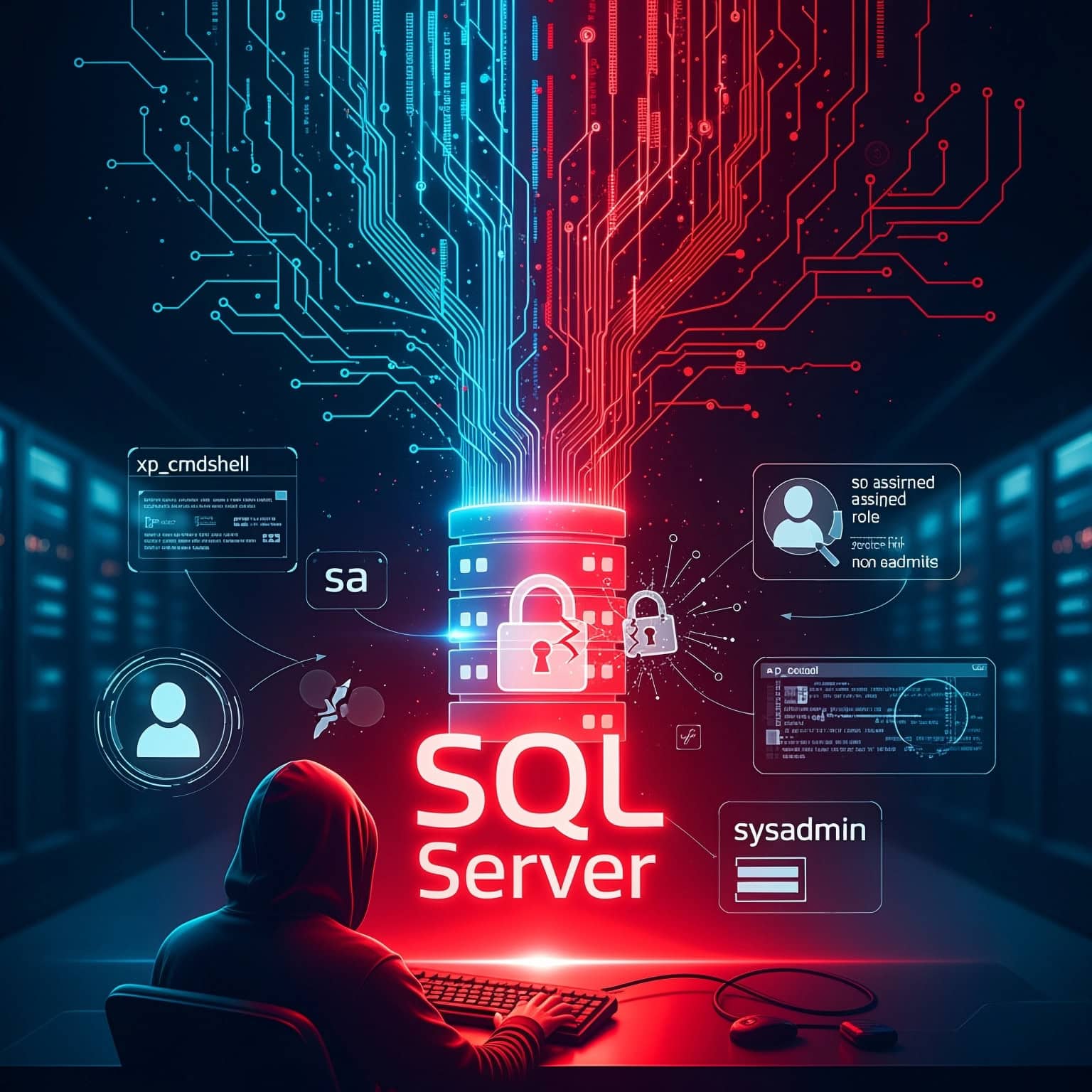 In a recent article by Edward Pollack on Simple Talk, the author reflects on
the state of Microsoft SQL Server in 2026 and outlines five practical features
he believes should be natively supported in T-SQL and the platform. While SQL
Server remains a highly mature database system, Pollack highlights specific
areas where daily tasks for developers and database administrators could be
made far more efficient. First, he argues for the native ability to import
data from compressed file formats, specifically Apache Parquet, which would
eliminate the need to deal with cumbersome plain text files like CSV. Second,
he requests native support for arrays, providing a straightforward alternative
to using text strings or XML to store lists of values. Third, he advocates for
an "OVERLAPS" function to simplify complex date logic into a single line of
code. Fourth, Pollack points out that the current licensing model is overly
complicated and suggests it should be as transparent as the monthly estimates
provided for Azure SQL. Finally, he suggests expanding cloud blob storage
integration so that files and scripts can be managed centrally in the cloud
rather than on local drives.
In a recent article by Edward Pollack on Simple Talk, the author reflects on
the state of Microsoft SQL Server in 2026 and outlines five practical features
he believes should be natively supported in T-SQL and the platform. While SQL
Server remains a highly mature database system, Pollack highlights specific
areas where daily tasks for developers and database administrators could be
made far more efficient. First, he argues for the native ability to import
data from compressed file formats, specifically Apache Parquet, which would
eliminate the need to deal with cumbersome plain text files like CSV. Second,
he requests native support for arrays, providing a straightforward alternative
to using text strings or XML to store lists of values. Third, he advocates for
an "OVERLAPS" function to simplify complex date logic into a single line of
code. Fourth, Pollack points out that the current licensing model is overly
complicated and suggests it should be as transparent as the monthly estimates
provided for Azure SQL. Finally, he suggests expanding cloud blob storage
integration so that files and scripts can be managed centrally in the cloud
rather than on local drives.Shaping a lasting AI strategy in a fast-changing world
 As artificial intelligence becomes a standard tool in business, simply having
access to the technology is no longer enough to stand out. Because most
companies will use the same core platforms and models, a well-defined strategy
is what will truly set an organization apart. The current landscape is marked
by more capable and affordable systems that act as helpful assistants rather
than outright replacements for human workers. Development teams are already
showing how humans and these tools can work together effectively. To succeed,
leaders need to shift their focus from the technology itself to how it
supports their long-term goals over the next three to five years. This
requires answering difficult questions about the company's future direction,
understanding current weaknesses, and identifying the specific skills needed
for tomorrow. Decision-makers must also practice restraint, choosing a few
reliable platforms and focusing on clear priorities rather than chasing every
new trend. By thoughtfully integrating these tools into daily workflows and
supporting human decision-making, businesses can improve their customer
experience and operations. Ultimately, the tools are just the vehicle; a
steady, clear strategy is the route that determines long-term success.
As artificial intelligence becomes a standard tool in business, simply having
access to the technology is no longer enough to stand out. Because most
companies will use the same core platforms and models, a well-defined strategy
is what will truly set an organization apart. The current landscape is marked
by more capable and affordable systems that act as helpful assistants rather
than outright replacements for human workers. Development teams are already
showing how humans and these tools can work together effectively. To succeed,
leaders need to shift their focus from the technology itself to how it
supports their long-term goals over the next three to five years. This
requires answering difficult questions about the company's future direction,
understanding current weaknesses, and identifying the specific skills needed
for tomorrow. Decision-makers must also practice restraint, choosing a few
reliable platforms and focusing on clear priorities rather than chasing every
new trend. By thoughtfully integrating these tools into daily workflows and
supporting human decision-making, businesses can improve their customer
experience and operations. Ultimately, the tools are just the vehicle; a
steady, clear strategy is the route that determines long-term success.The Unglamorous Side of Rust Web Development
In 2026, Rust remains a powerful choice for web development, offering
excellent performance and safety. However, developers still face notable
friction before their code even compiles. The current ecosystem often requires
teams to assemble their own setups from scratch, lacking the complete,
ready-to-use frameworks seen in other programming languages. Several specific
challenges slow down the daily development process. Asynchronous programming
in Rust provides great flexibility, but it complicates debugging and creates
lengthy, hard-to-read error traces. Database management is another hurdle, as
developers frequently have to write and maintain the same database structure
in multiple places instead of using a single unified approach. Additionally,
error handling across different tools remains inconsistent. The heavy reliance
on generated code and complex type systems significantly increases compilation
times, making it harder for developers to test small changes quickly. Despite
these hurdles, the community is actively working on solutions. New frameworks
are emerging to provide more complete starting points and reduce repetitive
setup tasks. Ultimately, while Rust requires a larger initial investment of
time and effort compared to simpler alternatives, its long-term reliability
and speed make it a sensible choice for projects where stability is a core
requirement.
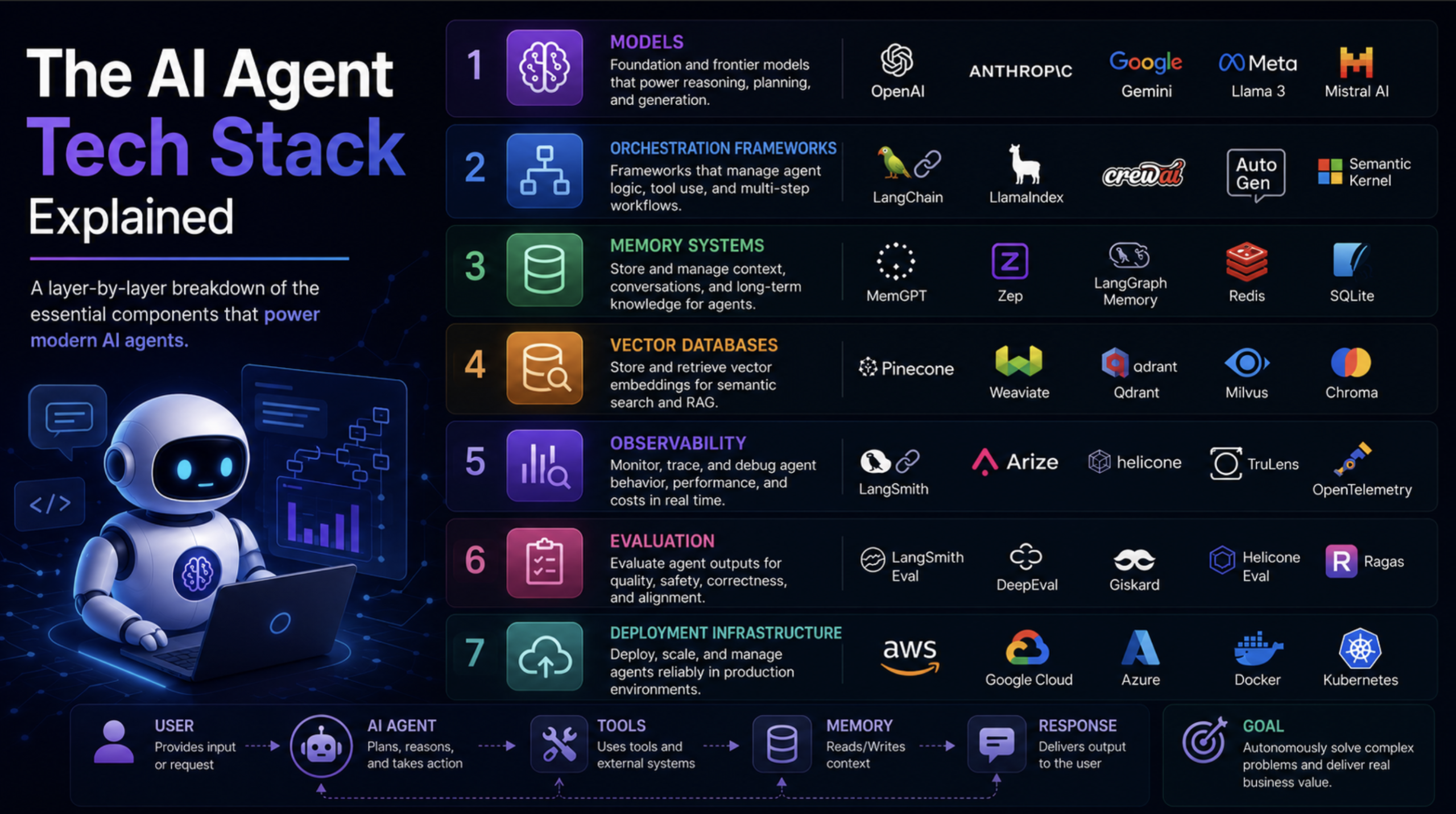 The article outlines the seven fundamental layers required to build and deploy
functional artificial intelligence agents. It moves beyond basic models to
explain the complete technical infrastructure needed for real-world
applications. The guide begins with the foundation model, which acts as the
central brain for reasoning. The second layer is the orchestration framework,
serving as a nervous system to manage actions and control flow. Next, the
third layer covers memory systems that provide essential context by tracking
working, episodic, semantic, and procedural information. The fourth layer
focuses on vector databases and document retrieval, allowing agents to access
private information securely. The remaining layers detail tool integrations
for performing outside actions, observability platforms for monitoring
performance, and the final deployment infrastructure necessary for hosting. By
breaking down the architecture into these distinct components, the text
clarifies that successful systems rely heavily on a well-connected technology
stack rather than just a single language model. It provides a clear, practical
roadmap for software engineers and technical leads who want to understand how
to assemble these exact pieces, whether they are building a simple prototype
or scaling an application for production.
The article outlines the seven fundamental layers required to build and deploy
functional artificial intelligence agents. It moves beyond basic models to
explain the complete technical infrastructure needed for real-world
applications. The guide begins with the foundation model, which acts as the
central brain for reasoning. The second layer is the orchestration framework,
serving as a nervous system to manage actions and control flow. Next, the
third layer covers memory systems that provide essential context by tracking
working, episodic, semantic, and procedural information. The fourth layer
focuses on vector databases and document retrieval, allowing agents to access
private information securely. The remaining layers detail tool integrations
for performing outside actions, observability platforms for monitoring
performance, and the final deployment infrastructure necessary for hosting. By
breaking down the architecture into these distinct components, the text
clarifies that successful systems rely heavily on a well-connected technology
stack rather than just a single language model. It provides a clear, practical
roadmap for software engineers and technical leads who want to understand how
to assemble these exact pieces, whether they are building a simple prototype
or scaling an application for production.
The AI Agent Tech Stack Explained
The article outlines the seven fundamental layers required to build and deploy
functional artificial intelligence agents. It moves beyond basic models to
explain the complete technical infrastructure needed for real-world
applications. The guide begins with the foundation model, which acts as the
central brain for reasoning. The second layer is the orchestration framework,
serving as a nervous system to manage actions and control flow. Next, the
third layer covers memory systems that provide essential context by tracking
working, episodic, semantic, and procedural information. The fourth layer
focuses on vector databases and document retrieval, allowing agents to access
private information securely. The remaining layers detail tool integrations
for performing outside actions, observability platforms for monitoring
performance, and the final deployment infrastructure necessary for hosting. By
breaking down the architecture into these distinct components, the text
clarifies that successful systems rely heavily on a well-connected technology
stack rather than just a single language model. It provides a clear, practical
roadmap for software engineers and technical leads who want to understand how
to assemble these exact pieces, whether they are building a simple prototype
or scaling an application for production.
No comments:
Post a Comment