Daily Tech Digest - February 11, 2025


Quote for the day:

"Your worth consists in what you are and not in what you have." -- Thomas Edison


Protecting Your Software Supply Chain: Assessing the Risks Before Deployment

Given the vast number of third-party components used in modern IT, it's unrealistic to scrutinize every software package equally. Instead, security teams should prioritize their efforts based on business impact and attack surface exposure. High-privilege applications that frequently communicate with external services should undergo product security testing, while lower-risk applications can be assessed through automated or less resource-intensive methods. Whether done before deployment or as a retrospective analysis, a structured approach to PST ensures that organizations focus on securing the most critical assets first while maintaining overall system integrity. ... While Product Security Testing will never prevent a breach of a third party out of your control, it is necessary to allow organizations to make informed decisions about their defensive posture and response strategy. Many organizations follow a standard process of identifying a need, selecting a product, and deploying it without a deep security evaluation. This lack of scrutiny can leave them scrambling to determine the impact when a supply chain attack occurs. By incorporating PST into the decision-making process, security teams gain critical documentation, including dependency mapping, threat models, and specific mitigations tailored to the technology in use. 


Google’s latest genAI shift is a reminder to IT leaders — never trust vendor policy

Entities out there doing things you don’t like are always going to be able to get generative AI (genAI) services and tools from somebody. You think large terrorist cells can’t use their money to pay somebody to craft LLMs for them? Even the most powerful enterprises can’t stop it from happening. But, that may not be the point. Walmart, ExxonMobil, Amazon, Chase, Hilton, Pfizer and Toyota and the rest of those heavy-hitters merely want to pick and choose where their monies are spent. Big enterprises can’t stop AI from being used to do things they don’t like, but they can make sure none of it is being funded with their money. If they add a clause to every RFP that they will only work with model-makers that agree to not do X, Y, or Z, that will get a lot of attention. The contract would have to be realistic, though. It might say, for instance, “If the model-maker later chooses to accept payments for the above-described prohibited acts, they must reimburse all of the dollars we have already paid and must also give us 18 months notice so that we can replace the vendor with a company that will respect the terms of our contracts.” From the perspective of Google, along with Microsoft, OpenAI, IBM, AWS and others, the idea is to take enterprise dollars on top of government contracts. 


Is Fine-Tuning or Prompt Engineering the Right Approach for AI?

It’s not just about having access to GPUs — it’s about getting the most out of proprietary data with new tools that make fine-tuning easier. Here’s why fine-tuning is gaining traction:Better results with proprietary data: Fine-tuning allows businesses to train models on their own data, making the AI much more accurate and relevant to their specific tasks. This leads to better outcomes and real business value. Easier than ever before: Tools like Hugging Face’s Open Source libraries, PyTorch and TensorFlow, along with cloud services, have made fine-tuning more accessible. These frameworks simplify the process, even for teams without deep AI expertise. Improved infrastructure: The rising availability of powerful GPUs and cloud-based solutions has made it much easier to set up and run fine-tuning at scale. While fine-tuning opens the door to more customized AI, it does require careful planning and the right infrastructure to succeed. ... As enterprises accelerate their AI adoption, choosing between prompt engineering and fine-tuning will have a significant impact on their success. While prompt engineering provides a quick, cost-effective solution for general tasks, fine-tuning unlocks the full potential of AI, enabling superior performance on proprietary data.


Shifting left without slowing down

On the one hand, automation enabled by GenAI tools in software development is driving unprecedented developer productivity, further emphasizing the gap created by manual application security controls, like security reviews or threat modeling. But in parallel, recent advancements in code understanding enabled by these technologies, together with programmatic policy-as-code security policies, enable a giant leap in the value security automation can bring. ... The first step is recognizing security as a shared responsibility across the organization, not just a specialized function. Equipping teams with automated tools and clear processes helps integrate security into everyday workflows. Establishing measurable goals and metrics to track progress can also provide direction and accountability. Building cross-functional collaboration between security and development teams sets the foundation for long-term success. ... A common pitfall is treating security as an afterthought, leading to disruptions that strain teams and delay releases. Conversely, overburdening developers with security responsibilities without proper support can lead to frustration and neglect of critical tasks. Failure to adopt automation or align security goals with development objectives often results in inefficiency and poor outcomes. 


How To Approach API Security Amid Increasing Automated Attack Sophistication
We’ve now gone from ‘dumb’ attacks—for example, web-based attacks focused on extracting data from third parties and on a specific or single vulnerability—to ‘smart’ AI-driven attacks often involving picking an actual target, resulting in a more focused attack. Going after a particular organization, perhaps a large organization or even a nation-state, instead of looking for vulnerable people is a significant shift. The sophistication is increasing as attackers manipulate request payloads to trick the backend system into an action. ... Another element of API security is being aware of sensitive data. Personal Identifiable Information (PII) is moving through APIs constantly and is vulnerable to theft or data exfiltration. Organizations do not often pay attention to vulnerabilities. Still, they pay attention when the result is damage to their organization through leaked PII, stolen finances, or brand reputation. ... The security teams know the network systems and the infrastructure well but don't understand the application behaviors. The DevOps team tends to own the applications but doesn’t see anything in production. This split boundary in most organizations makes it ripe for exploitation. Many data exfiltration cases fall in this no man’s land since an authenticated user executes most incidents.


Top 5 ways attackers use generative AI to exploit your systems

Gen AI tools help criminals pull together different sources of data to enrich their campaigns — whether this is group social profiling, or targeted information gleaned from social media. “AI can be used to quickly learn what types of emails are being rejected or opened, and in turn modify its approach to increase phishing success rate,” Mindgard’s Garraghan explains. ... The traditionally difficult task of analyzing systems for vulnerabilities and developing exploits can be simplified through use of gen AI technologies. “Instead of a black hat hacker spending the time to probe and perform reconnaissance against a system perimeter, an AI agent can be tasked to do this automatically,” Mingard’s Garraghan says. ... “This sharp decrease strongly indicates that a major technological advancement — likely GenAI — is enabling threat actors to exploit vulnerabilities at unprecedented speeds,” ReliaQuest writes. ... Check Point Research explains: “While ChatGPT has invested substantially in anti-abuse provisions over the last two years, these newer models appear to offer little resistance to misuse, thereby attracting a surge of interest from different levels of attackers, especially the low skilled ones — individuals who exploit existing scripts or tools without a deep understanding of the underlying technology.”


Why firewalls and VPNs give you a false sense of security

VPNs and firewalls play a crucial role in extending networks, but they also come with risks. By connecting more users, devices, locations, and clouds, they inadvertently expand the attack surface with public IP addresses. This expansion allows users to work remotely from anywhere with an internet connection, further stretching the network’s reach. Moreover, the rise of IoT devices has led to a surge in Wi-Fi access points within this extended network. Even seemingly innocuous devices like Wi-Fi-connected espresso machines, meant for a quick post-lunch pick-me-up, contribute to the proliferation of new attack vectors that cybercriminals can exploit. ... More doesn’t mean better when it comes to firewalls and VPNs. Expanding a perimeter-based security architecture rooted in firewalls and VPNs means more deployments, more overhead costs, and more time wasted for IT teams – but less security and less peace of mind. Pain also comes in the form of degraded user experience and satisfaction with VPN technology for the entire organization due to backhauling traffic. Other challenges like the cost and complexity of patch management, security updates, software upgrades, and constantly refreshing aging equipment as an organization grows are enough to exhaust even the largest and most efficient IT teams.


Building Trust in AI: Security and Risks in Highly Regulated Industries

AI hallucinations have emerged as a critical problem, with systems generating plausible but incorrect information - for instance, AI fabricated software dependencies, such as PyTorture, leading to potential security risks. Hackers could exploit these hallucinations by creating malicious components masquerading as real ones. In another case, an AI libelously fabricated an embezzlement claim, resulting in legal action - marking the first time AI was sued for libel. Security remains a pressing concern, particularly with plugins and software supply chains. A ChatGPT plugin once exposed sensitive data due to a flaw in its OAuth mechanism, and incidents like PyTorch’s vulnerable release over Christmas demonstrate the risks of system exploitation. Supply chain vulnerabilities affect all technologies, while AI-specific threats like prompt injection allow attackers to manipulate outputs or access sensitive prompts, as seen in Google Gemini. ... Organizations can enhance their security strategies by utilizing frameworks like Google’s Secure AI Framework (SAIF). These frameworks highlight security principles, including access control, detection and response systems, defense mechanisms, and risk-aware processes tailored to meet specific business needs.


When LLMs become influencers

Our ability to influence LLMs is seriously circumscribed. Perhaps if you’re the owner of the LLM and associated tool, you can exert outsized influence on its output. For example, AWS should be able to train Amazon Q to answer questions, etc., related to AWS services. There’s an open question as to whether Q would be “biased” toward AWS services, but that’s almost a secondary concern. Maybe it steers a developer toward Amazon ElastiCache and away from Redis, simply by virtue of having more and better documentation and information to offer a developer. The primary concern is ensuring these tools have enough good training data so they don’t lead developers astray. ... Well, one option is simply to publish benchmarks. The LLM vendors will ultimately have to improve their output or developers will turn to other tools that consistently yield better results. If you’re an open source project, commercial vendor, or someone else that increasingly relies on LLMs as knowledge intermediaries, you should regularly publish results that showcase those LLMs that do well and those that don’t. Benchmarking can help move the industry forward. By extension, if you’re a developer who increasingly relies on coding assistants like GitHub Copilot or Amazon Q, be vocal about your experiences, both positive and negative. 


Deepfakes: How Deep Can They Go?

Metaphorically, spotting deepfakes is like playing the world’s most challenging game of “spot the difference.” The fakes have become so sophisticated that the inconsistencies are often nearly invisible, especially to the untrained eye. It requires constant vigilance and the ability to question the authenticity of audiovisual content, even when it looks or sounds completely convincing. Recognizing threats and taking decisive actions are crucial for mitigating the effects of an attack. Establishing well-defined policies, reporting channels, and response workflows in advance is imperative. Think of it like a citywide defense system responding to incoming missiles. Early warning radars (monitoring) are necessary to detect the threat; anti-missile batteries (AI scanning) are needed to neutralize it; and emergency services (incident response) are essential to quickly handle any impacts. Each layer works in concert to mitigate harm. ... If a deepfake attack succeeds, organizations should immediately notify stakeholders of the fake content, issue corrective statements, and coordinate efforts to remove the offending content. They should also investigate the source, implement additional verification measures, and provide updates to rebuild trust and consider legal action. 


Daily Tech Digest - February 10, 2025


Quote for the day:

"If it wasn't hard, everyone would do it, the hard is what makes it great." -- Tom Hanks


Privacy Puzzle: Are Businesses Ready for the DPDP Act?

The State of Data Privacy in India 2024 report shows mixed responses. While 56% of businesses think the DPDP Act addresses key privacy issues, 30% are unsure and 14% remain skeptical. Even more troubling, more than 82% of companies lack transparency in handling data, raising serious trust concerns. ... smaller businesses, such as micro, small and medium enterprises, or MSMEs, and startups, often struggle due to limited resources. Many rely on IT or legal teams to oversee privacy initiatives, with some lacking any formal governance structures. This fragmented approach poses significant risks, especially as these organizations are equally subject to regulatory scrutiny under the DPDP Act. ... Third-party risk is another critical concern. Many enterprises depend on vendors for essential services, yet only 38% use a combination of risk assessments and contractual obligations to manage third-party privacy risks. Eight percent of organizations lack any significant measures, leaving them exposed to potential data leaks and regulatory penalties. ... Despite progress made in privacy staffing and strategy alignment, privacy professionals are experiencing increased stress within a complex compliance and risk landscape, according to new research from ISACA.


CISOs: Stop trying to do the lawyer’s job

“It’s good to be mindful in advance of the security and privacy requirements in the jurisdictions the organization is operating within, and to prepare possible responses should there be incidents that violate those laws and how to respond to those,” says Christine Bejerasco, CISO at WithSecure. Of course, the conversation between the two parties can go smoothly if there’s an existing relationship. If not, that relationship should be built. “Reaching out to legal experts should be as straightforward as reaching out to another colleague,” Bejerasco adds. “Just talk to them directly.” ... Some CISO have a legal background of have an extensive amount of experience working with general counsel. However, this does not mean they should act as legal advisors or take on responsibilities outside their role. “It is important to respect boundaries and not overstep job functions,” says Stacey Cameron, CISO at Halcyon. “There’s nothing wrong with differing opinions, interpretations, or healthy discussions, but for legal matters, it will be the lawyers’ responsibility to make a case on behalf of the company, so we need to respect each other’s roles and stay in our respective lanes.” According to Cameron, overstepping boundaries is one of the biggest mistakes CISOs can make, when they are trying to build a relationship with their organizations’s lawyers. 


Inside Monday’s AI pivot: Building digital workforces through modular AI

The initial deployment of gen AI at Monday didn’t quite generate the return on investment users wanted, however. That realization led to a bit of a rethink and pivot as the company looked to give its users AI-powered tools that actually help to improve enterprise workflows. That pivot has now manifested itself with the company’s “AI blocks” technology and the preview of its agentic AI technology that it calls “digital workforce.” Monday’s AI journey, for the most part, is all about realizing the company’s founding vision. “We wanted to do two things, one is give people the power we had as developers,” Mann told VentureBeat in an exclusive interview. “So they can build whatever they want, and they feel the power that we feel, and the other end is to build something they really love.” ... Simply put, AI functionality needs to be in the right context for users — directly in a column, component or service automation. AI blocks are pre-built AI functions that Monday has made accessible and integrated directly into its workflow and automation tools. For example, in project management, the AI can provide risk mapping and predictability analysis, helping users better manage their projects. 


Courting Global Talent: How can Web3 Startups Attract the Best Developers in the World?

Any company without concrete values guiding its recruitment will often hire quickly and in the end obtain regrettable results. Web3 projects are no exception. Fortunately, there are a number of pre-established values in Web3 that can help offset this tendency: community, inclusivity, sustainability, and collaboration. These beliefs should be the guiding frameworks behind any Web3 startup's hiring policy, enabling them to assess candidates with a clear understanding of whether the applicant's character aligns with the company's DNA. High-performing people are needed in Web3 who can not only bring their own unique experiences to an organisation, but whose broader values very much align with the company's guiding principles. The focus of any hiring strategy should never be quantity over quality, as this will almost always result in disappointment and wasted time. Hiring people who are the right fit - measured by how well the candidate exemplifies the company's overarching values - should be non-negotiable. Likewise, transparency, another of Web3's core tenets, should be baked into every step of the hiring funnel, and it comes in two modes. Firstly, Web3 companies should be aware of their unique value proposition and amplify this in their external marketing efforts.


Is DOGE a cybersecurity threat? A security expert explains the dangers of violating protocols and regulations

Traditionally, the purpose of cybersecurity is to ensure the confidentiality and integrity of information and information systems while helping keep those systems available to those who need them. But in DOGE's first few weeks of existence, reports indicate that its staff appears to be ignoring those principles and potentially making the federal government more vulnerable to cyber incidents. ... Currently, the general public, federal agencies and Congress have little idea who is tinkering with the government's critical systems. DOGE's hiring process, including how it screens applicants for technical, operational or cybersecurity competency, as well as experience in government, is opaque. And journalists investigating the backgrounds of DOGE employees have been intimidated by the acting U.S. attorney in Washington. DOGE has hired young people fresh out of—or still in—college or with little or no experience in government, but who reportedly have strong technical prowess. But some have questionable backgrounds for such sensitive work. And one leading DOGE staffer working at the Treasury Department has since resigned over a series of racist social media posts. ... DOGE operatives are quickly developing and deploying major software changes to very complex old systems and databases, according to reports. 


Australian businesses urged to help shape new data security framework

With the consultation process entering its final stages, businesses are encouraged to take part in upcoming workshops or submit feedback online. Workshops will take place in Sydney on Tuesday 18 February, Brisbane on Wednesday 19 February, and Melbourne on Wednesday 26 February. For those unable to attend, an online survey is available for businesses to provide their insights. Key emphasised the significance of business participation in shaping the framework. "This is the last chance to get involved in the industry consultation," he said. "Workshops are taking place this month, but if people can't attend, we'd love them to complete the survey online." The workshops will be interactive, allowing participants to share their experiences with data security, discuss their existing frameworks, and provide recommendations. ... Without meaningful industry engagement, the framework risks being ineffective or underutilised. Key warned that failing to gather input from businesses could lead to a framework that does not meet their needs. "We essentially would be creating an industry framework that industry may or may not actually utilise," he said. "This is really designed for industry, and we need that kind of input from industry for it to work for them."


Can AI Early Warning Systems Reboot the Threat Intel Industry?

AI platforms learn how multiple campaigns connect, which malicious tools get repeated, and how often threat actors pivot to new malicious infrastructure and domains. That kind of cross-campaign insight is gold for defenders, especially when the data is available in real time. Of course, adversaries won’t line up to feed their best secrets to OpenAI, Microsoft or Google AI platforms. Some hacker groups prefer open-source models, hosting them on private servers where there’s zero chance of being monitored. As these open-source models gain sophistication, criminals can test or refine their attacks without Big Tech breathing down their necks but the lure of advanced online models with powerful capabilities will be hard to avoid. Even as security experts remain bullish on the power of AI to save threat intel, there are adversarial concerns at play. Some warn that attackers can poison AI systems, manipulate data to produce false negatives, or exploit generative models for their own malicious scripts. But as it stands, the big AI platforms already see more malicious signals in a day than any single cybersecurity vendor sees in a year. That scale is exactly what’s been missing from threat intelligence. For all the talk about “community sharing” and open exchanges, it’s always been a tangled mess. 


Security validation: The new standard for cyber resilience

Stolen credentials are a goldmine for attackers. According to Verizon’s 2024 Data Breach Investigations Report (DBIR), compromised credentials account for 31% of breaches over the past decade and 77% of web application attacks. The Colonial Pipeline attack in 2021 is a stark reminder of the damage that can result from leaked credentials—attackers gained access to the company’s VPN using credentials found on the dark web. Security validation makes it easy to test for credential-related risks. ... One of the most significant benefits of security validation is its ability to provide evidence-based guidance for remediation. Rather than adopting a “patch everything” approach, teams can focus on the most critical fixes based on real exploitability risk and system impact. ... Traditional security metrics, such as the number of vulnerabilities patched or the percentage of endpoints with antivirus software, only tell part of the story. Security validation offers a fresh perspective by measuring your posture based on emulated attacks. This shift from reactive to proactive security management is essential in today’s ever-changing threat landscape. By safely emulating real-world attacks in live environments, security validation ensures that your controls can detect, block, and respond to threats before damage occurs.


Cyber insurance is no silver bullet for cybersecurity

Cyber insurance is designed to minimise organisations’ financial losses from cyber incidents by covering costs like breach notification, data restoration, legal fees, and even ransomware payments. Insurers evaluate an organisation’s security posture by assessing the implementation of specific security controls. ... Despite its potential, research reveals that cyber insurance falls short in improving security practices. A report by the Royal United Services Institute (RUSI) think tank points out that cyber insurance policies often lack standardisation and fail to incentivise organisations to adopt security practices aligned with frameworks like ISO 27001 or NIST CSF. Another study emphasises that insurance requirements may be motivated by various other factors (eg, controls that reduce very specific risks, length of policy period, liable risks) rather than improving overall organisational security in a meaningful way. Not only does this gap weaken the argument for cyber insurance improving security, it also poses a risk for businesses. Organisations meeting insurance requirements (which may be minimal in terms of security) may mistakenly believe they are well-protected, only to find themselves vulnerable to attacks that exploit overlooked weaknesses.


The Metamorphosis of Open Source: An Industry in Transition

The rise of artificial intelligence has introduced a new topic to the open source conversation. Unlike traditional software, AI systems include both code and models, data, and training methods, creating complexities that existing open source licenses were not designed to address. Recognizing this gap, the OSI launched the Open Source AI Definition (OSAID) in 2024, marking a pivotal moment in the evolution of open source principles. OSAID v1.0 defines the essential freedoms for AI systems: the rights to use, study, modify, and share AI technologies without restriction. This framework aims to ensure that AI systems labeled as “open source” align with the core values of transparency and collaboration underpinning the movement. However, the journey has not been without challenges. The OSI’s definition has sparked debates, particularly around the legal ambiguities of model weights and data licensing. For instance, while OSAID emphasizes transparency in data sources and methodologies, it does not resolve whether model weights derived from unlicensed data can be freely shared or used commercially. This has left businesses and developers navigating a gray area, where the practical adoption of open source AI models requires careful legal scrutiny.

Daily Tech Digest - February 09, 2025


Quote for the day:

“Be patient with yourself. Self-growth is tender; it’s holy ground. There’s no greater investment.” -- Stephen Covey


Quantum Artificial Intelligence

Classical AI faces limitations related to computational efficiency, data processing capabilities, and pattern recognition in highly complex systems. Quantum computing, leveraging superposition and entanglement, offers promising solutions to overcome these challenges. ... Deep learning models form the backbone of modern AI, but training them requires enormous computing power and time. Quantum Deep Learning (QDL) introduces quantum-based algorithms, such as Grover’s Algorithm and Shor’s Algorithm, which can significantly accelerate deep learning processes, allowing for more sophisticated and efficient AI models. ... Traditional AI systems rely on sequential or limited parallel processing. However, quantum computers can process multiple possibilities simultaneously due to quantum superposition, enabling AI models to analyze vast amounts of data exponentially faster than classical systems. ... Physicist Roger Penrose and neuroscientist Stuart Hameroff proposed the “Orch-OR” (Orchestrated Objective Reduction) theory, suggesting that human consciousness arises from quantum processes within microtubules in brain neurons.If true, this raises the possibility that an AI system powered by quantum computing could simulate or even replicate aspects of human consciousness.


Life After VMware: Which Alternative Is Right For You?

Despite an unhappy VMware customer base, Broadcom is thriving. In its most recent earnings, the company posted record revenues of $51.6 billion, with $2.7 billion coming from software sales. Broadcom is betting that, despite rising costs, enterprises will still choose VMware over competing solutions. However, that gamble is far from certain, with mounting competition from alternative hypervisors, open-source platforms, and public-cloud specific solutions. ... However, moving away from VMware is no simple task. Enterprises must weigh migration complexity, integration challenges, and the long-term viability of their chosen alternative. The decision isn’t just about cost savings — it’s about aligning IT strategy with the future of hybrid cloud, containerization, and AI-driven workloads. ... This shift is already creating winners. Nutanix, Microsoft Hyper-V, Azure Stack HCI, and Red Hat OpenShift Virtualization are emerging as viable competitors. Each of these offer distinct advantages based on business needs and strategic direction, with Nutanix leading the pack. The time to act is now. Enterprises that proactively navigate this transition will mitigate the uncertainties of VMware's new ownership and position themselves for long-term success. 


AI Agents Are Now Trading IP Rights With Each Other—And Earning Crypto for Their Owners

Since Story Protocol functions as an IP market, everything revolves around that idea, and the mechanics are straightforward. I agents register their work on Story's blockchain, and then other agents purchase those assets using crypto. The system handles licensing, rights management, and revenue distribution automatically through smart contracts. Humans can use the system instead of agents, but that’s not nearly as cool. In fact, some agents are already negotiating the IP with other agents—not just humans. “There's a lot of agentic commerce happening on Story because Story is a permissionless, programmable IP system," Lee said. ... Lee described a system where AI-generated content based on Goyer's universe would automatically split revenue between the AI creator and the original IP holder. This model ensures creators are compensated when AI builds on their work. He emphasized that the universe is entirely original, with all characters, ships, and storylines registered on Story. Users can expand on those elements, create side stories, contribute to the canon, and share in the financial benefits. This approach, he said, represents a new way for AI to collaborate with creators, extending and monetizing their work while distributing the rewards. ... Story’s value proposition has also been interesting enough to attract other significant AI projects.


Finally, I Found The Best AI IDE!

Let's be honest. Traditional coding can be... tedious. We spend countless hours wrestling with syntax, debugging obscure errors, and searching Stack Overflow for that one line of code that'll fix everything. ... But the reality, until now, has often fallen short. Many "AI" tools felt like glorified autocomplete, offering suggestions that were more distracting than helpful. Others were locked behind hefty paywalls, making them inaccessible to many developers. ... After extensive testing, my personal winning combination is Aide + Theia.Aide for day-to-day coding. The AI pair-programming features are simply unmatched for productivity. And the fact that it's fully open-source and free is the icing on the cake. Theia IDE for larger projects, collaborative work, or when I need the flexibility of a cloud-based environment. Its compatibility with VS Code extensions and LSP makes it a future-proof choice. Why not Windsurf or Cursor? While Windsurf offers a compelling free tier, its closed-source nature is a dealbreaker. Cursor is fantastic, but the price tag puts it out of reach for many developers. ... The world of AI-powered IDEs is evolving at lightning speed. But for me, the combination of Aide and Theia represents the sweet spot: powerful, flexible, and accessible to everyone. 


Rewiring maintenance with gen AI

As the problems pile up, forward-thinking maintenance functions are searching for new ways to address cost, productivity, and skills challenges. Gen AI is emerging as a transformative solution for these challenges. Gen AI tools use advanced machine learning models to accelerate data analysis, predict potential failures, automate routine tasks, and retain critical knowledge.  ... Armed with the gen AI tool, frontline maintenance teams are now evolving their maintenance strategies, adopting best practices from across the organization. The system continuously updates its library of recommended strategies based on the effectiveness of maintenance interventions elsewhere, helping the organization collaboratively improve overall maintenance performance. Since implementing the gen AI FMEA tool, the company has seen a significant reduction in equipment downtime. Employee capacity has also increased because less time is spent manually creating FMEAs and related work orders. ... Realizing the full potential of gen AI in maintenance is challenging for several reasons. These technologies are novel, requiring maintenance organizations to understand new technologies and avoid unfamiliar pitfalls. And gen AI is advancing extremely rapidly, requiring an agile approach to use-case selection, tool development, and continuous evolution.


Chain-of-Associated-Thoughts (CoAT): An AI Framework to Enhance LLM Reasoning

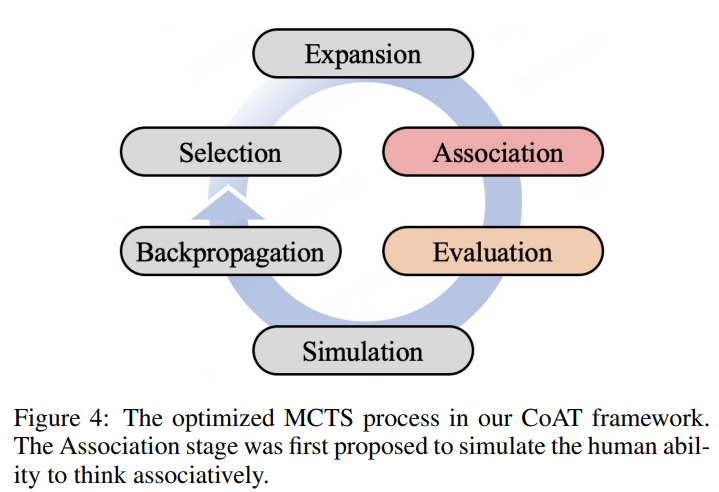
Unlike static RAG approaches that retrieve information upfront, CoAT activates knowledge retrieval in response to specific reasoning steps—equivalent to a mathematician recalling relevant theorems only when needed in a proof. Second, an optimized MCTS algorithm incorporates this associative process through a novel four-stage cycle: selection, expansion with knowledge association, quality evaluation, and value backpropagation. This creates a feedback loop where each reasoning step can trigger targeted knowledge updates, as shown in Figure 4 of the original implementation. ... For retrieval-augmented generation (RAG) tasks, CoAT was compared against NativeRAG, IRCoT, HippoRAG, LATS, and KAG on the HotpotQA and 2WikiMultiHopQA datasets. Metrics such as Exact Match (EM) and F1 scores confirmed CoAT’s superior performance, demonstrating its ability to generate precise and contextually relevant answers. In code generation, CoAT-enhanced models outperformed fine-tuned counterparts (Qwen2.5-Coder-7B-Instruct, Qwen2.5-Coder-14B-Instruct) on datasets like HumanEval, MBPP, and HumanEval-X, underscoring its adaptability to domain-specific reasoning tasks. This work establishes a new paradigm for LLM reasoning by integrating dynamic knowledge association with structured search. 


Begin with problems, sandbox, identify trustworth vendors — a quick guide to getting started with AI

The most valuable testing uses a framework connecting to crucial key performance indicators (KPIs). According to Google Cloud: “KPIs are essential in gen AI deployments for a number of reasons: Objectively assessing performance, aligning with business goals, enabling data-driven adjustments, enhancing adaptability, facilitating clear stakeholder communication and demonstrating the AI project’s ROI. They are critical for measuring success and guiding improvements in AI initiatives.” In other words, your testing framework could be based on accuracy, coverage, risk or whichever KPI is most important to you. You just need to have clear KPIs. Once you do, gather five to 15 people to perform the testing. Two teams of seven people are ideal for this. As those experienced individuals begin testing those tools, you will be able to gather enough input to determine whether this system is worth scaling. Leaders often ask what they should do if a vendor isn’t willing to do a pilot program with them. This is a valid question, but the answer is simple. If you find yourself in this situation, do not engage further with the company. Any worthy vendor will consider it an honor to create a pilot program for you. ... 


Meta has an AI for brain typing, but it’s stuck in the lab

Facebook’s original quest for a consumer brain-reading cap or headband ran into technical obstacles, and after four years, the company scrapped the idea. But Meta never stopped supporting basic research on neuroscience, something it now sees as an important pathway to more powerful AIs that learn and reason like humans. King says his group, based in Paris, is specifically tasked with figuring out “the principles of intelligence” from the human brain. “Trying to understand the precise architecture or principles of the human brain could be a way to inform the development of machine intelligence," says King. “That’s the path.” The typing system is definitely not a commercial product, nor is it on the way to becoming one. The magnetoencephalography scanner used in the new research collects magnetic signals produced in the cortex as brain neurons fire. But it is large and expensive and needs to be operated in a shielded room, since Earth’s magnetic field is a trillion times stronger than the one in your brain. Norman likens the device to “an MRI machine tipped on its side and suspended above the user’s head.” What’s more, says King, the second a subject’s head moves, the signal is lost. “Our effort is not at all toward products,” he says. 


Enterprise Architecture: How AI and Distributed Systems are Transforming Business

Predictive scaling represents the next frontier in enterprise architecture. By analyzing patterns across historical usage, seasonal variations and user behavior, modern systems can anticipate resource needs before demand spikes occur. This proactive approach marks a significant departure from traditional reactive scaling methods, dramatically improving both performance and cost efficiency. The implementation of AI in enterprise systems demands careful consideration of broader organizational goals. Technical teams must build robust data pipelines while maintaining clear communication channels across departments. System architecture should accommodate current needs while remaining adaptable enough to incorporate emerging technologies and methodologies. Predictive scaling is revolutionizing enterprise architecture by enabling systems to anticipate resource needs before demand spikes occur. At Cisco, we implemented predictive scaling in IoT networks managing millions of connected devices. Machine learning algorithms analyzed patterns in device usage and system load, dynamically adjusting server capacity to ensure seamless operations. This 


Building a Culture of Cyber Resiliency with AI

It makes sense that the top concern for cybersecurity leaders is vulnerabilities associated with unpatched software and systems in their current tech stack (54%). Close behind are concerns around vulnerabilities brought on by misconfiguration (48%), and end-of-life systems (43%). Despite recognizing the need to address these exposures, nearly half of organizations surveyed scan for vulnerabilities only once a week, or less frequently, signaling a lack of adequate resources to identify and address potential threats in a timely manner. The Verizon DBIR suggests that organizations took almost two months to patch and remediate 50% of critical vulnerabilities, while these same vulnerabilities became mass-exploitable in five days. This makes it a perilous situation for enterprises. To top it all, threat actors and their methods, powered by AI, are becoming increasingly difficult to detect and prevent. Recent data found that 95% of IT leaders believe that cyber-attacks are more sophisticated than ever before, with AI-powered attacks being the most serious emerging threat. Over 80% of those respondents agreed that scams like phishing have become more difficult to detect with the rise in actors using AI maliciously. 

Daily Tech Digest - February 08, 2025


Quote for the day:

“There is no failure except in no longer trying.” -- Chris Bradford


Google's DMARC Push Pays Off, but Email Security Challenges Remain

Large email senders are not the only groups quickening the pace of DMARC adoption. The latest Payment Card Industry Data Security Standard (PCI DSS) version 4.0 requires DMARC for all organizations that handle credit card information, while the European Union's Digital Operational Resilience Act (DORA) makes DMARC a necessity for its ability to report on and block email impersonation, Red Sift's Costigan says. "Mandatory regulations and legislation often serve as the tipping point for most organizations," he says. "Failures to do reasonable, proactive cybersecurity — of which email security and DMARC is obviously a part — are likely to meet with costly regulatory actions and the prospect of class action lawsuits." Overall, the authentication specification is working as intended, which explains its arguably rapid adoption, says Roger Grimes, a data-driven-defense evangelist at security awareness and training firm KnowBe4. Other cybersecurity standards, such as DNSSEC and IPSEC, have been around longer, but DMARC adoption has outpaced them, he maintains. "DMARC stands alone as the singular success as the most widely implemented cybersecurity standard introduced in the last decade," Grimes says.


Can Your Security Measures Be Turned Against You?

Over-reliance on certain security products might also allow attackers to extend their reach across various organizations. For example, the recent failure of CrowdStrike’s endpoint detection and response (EDR) tool, which caused widespread global outages, highlights the risks associated with depending too heavily on a single security solution. Although this incident wasn’t the result of a cyber attack, it clearly demonstrates the potential issues that can arise from such reliance. For years, the cybersecurity community has been aware of the risks posed by vulnerabilities in security products. A notable example from 2015 involved a critical flaw in FireEye’s email protection system, which allowed attackers to execute arbitrary commands and potentially take full control of the device. More recently, a vulnerability in Proofpoint’s email security service was exploited in a phishing campaign that impersonated major corporations like IBM and Disney. Windows SmartScreen is designed to shield users from malicious software, phishing attacks, and other online threats. Initially launched with Internet Explorer, SmartScreen has been a core part of Windows since version 8. 


Why Zero Trust Will See Alert Volumes Rocket

As the complexity of zero trust environments grows, so does the need for tools to handle the data explosion. Hypergraphs and generative AI are emerging as game-changers, enabling SOC teams to connect disparate events and uncover hidden patterns. Telemetry collected in zero trust environments is a treasure trove for analytics. Every interaction, whether permitted or denied, is logged, providing the raw material for identifying anomalies. The cybersecurity industry have set standards for exchanging and documenting threat intelligence. By leveraging structured frameworks like MITRE ATT&CK, MITRE DEFEND, and OCSF, activities can be enriched with contextual information enabling better detection and decision-making. Hypergraphs go beyond traditional graphs by representing relationships between multiple events or entities. They can correlate disparate events. For example, a scheduled task combined with denied AnyDesk traffic and browsing to MegaUpload might initially seem unrelated. However, hypergraphs can connect these dots, revealing the signature of a ransomware attack like Akira. By analysing historical patterns, hypergraphs can also predict attack patterns, allowing SOC teams to anticipate the next steps of an attacker and defend proactively.


Capable Protection: Enhancing Cloud-Native Security

Much like in a game of chess, anticipating your opponent’s moves and strategizing accordingly is key to security. Understanding the value and potential risks associated with NHIs and Secrets is the first step towards securing your digital environment. Remediation prioritization plays a crucial role in managing NHIs. The identification and classification process of NHIs enables businesses to react promptly and adequately to any potential vulnerabilities. Furthermore, awareness and education are fundamental to minimize human-induced breaches. ... Cybersecurity must adapt. The traditional, human-centric approach to cybersecurity is inadequate. Integrating an NHI management strategy into your cybersecurity plan is therefore a strategic move. Not only does it enhance an organization’s security posture, but it also facilitates regulatory compliance. Coupled with the potential for substantial cost savings, it’s clear that NHI management is an investment with significant returns. For many organizations, the challenge today lies in striking a balance between speed and security. Rapid deployment of applications and digital services is essential for maintaining competitive advantage, yet this can often be at odds with the need for adequate cybersecurity. 


Attackers Exploit Cryptographic Keys for Malware Deployment

Microsoft recommends developers avoid using machine keys copied from public sources and rotate keys regularly to mitigate risks. The company also removed key samples from its documentation and provided a script for security teams to identify and replace publicly disclosed keys in their environments. Microsoft Defender for Endpoint also includes an alert for publicly exposed ASP.NET machine keys, though the alert itself does not indicate an active attack. Organizations running ASP.NET applications, especially those deployed in web farms, are urged to replace fixed machine keys with auto-generated values stored in the system registry. If a web-facing server has been compromised, rotating the machine keys alone may not eliminate persistent threats. Microsoft said recommends conducting a full forensic investigation to detect potential backdoors or unauthorized access points. In high-risk cases, security teams should consider reformatting and reinstalling affected systems to prevent further exploitation, the report said. Organizations should also implement best practices such as encrypting sensitive configuration files, following secure DevOps procedures and upgrading applications to ASP.NET 4.8. 


The race to AI in 2025: How businesses can harness connectivity to pick up pace

When it comes to optimizing cloud workloads and migrating to available data centers, connectivity is the “make or break” technology. This is why Internet Exchanges (IXs) – physical platforms where multiple networks interconnect to exchange traffic directly with one another via peering – have become indispensable. An IX allows businesses to bypass the public Internet and find the shortest and fastest network pathways for their data, dramatically improving performance and reducing latency for all participants. Importantly, smart use of an IX facility will enable businesses to connect seamlessly to data centers outside of their “home” region, removing geography as a barrier and easing the burden on data center hubs. This form of connectivity is becoming increasingly popular, with the number of IXs in the US surging by more than 350 percent in the past decade. The use of IXs itself is nothing new, but what is relatively new is the neutral model they now employ. A neutral IX isn’t tied to a specific carrier or data center, which means businesses have more connectivity options open to them, increasing redundancy and enhancing resilience. Our own research in 2024 revealed that more than 80 percent of IXs in the US are now data center and carrier-neutral, making it the dominant interconnection model.


The hidden threat of neglected cloud infrastructure

Left unattended for over a decade, malicious actors could have reregistered this bucket to deliver malware or launch devastating supply chain attacks. Fortunately, researchers notified CISA, which promptly secured the vulnerable resource. The incident illustrates how even organizations dedicated to cybersecurity can fall prey to the dangers of neglected digital infrastructure.This story is not an anomaly. It indicates a systemic issue that spans industries, governments, and corporations. ... Entities attempting to communicate with these abandoned assets include government organizations (such as NASA and state agencies in the United States), military networks, Fortune 100 companies, major banks, and universities. The fact that these large organizations were still relying on mismanaged or forgotten resources is a testament to the pervasive nature of this oversight. The researchers emphasized that this issue isn’t specific to AWS, the organizations responsible for these resources, or even a single industry. It reflects a broader systemic failure to manage digital assets effectively in the cloud computing age. The researchers noted the ease of acquiring internet infrastructure—an S3 bucket, a domain name, or an IP address—and a corresponding failure to institute strong governance and life-cycle management for these resources.  


DevOps Evolution: From Movement to Platform Engineering in the AI Era

After nearly 20 years of DevOps, Grabner sees an opportunity to address historical confusion while preserving core principles. “We want to solve the same problem – reduce friction while improving developer and operational efficiency. We want to automate, monitor, and share.” Platform engineering represents this evolution, enabling organizations to scale DevOps best practices through self-service capabilities. “Platform engineering allows us to scale DevOps best practices in an enterprise organization,” Grabner explains. “What platform engineering does is provide self-services to engineers so they can do everything we wanted DevOps to do for us.” At Dynatrace Perform 2025, the company announced several innovations supporting this evolution. The enhanced Davis AI engine now enables preventive operations, moving beyond reactive monitoring to predict and prevent incidents before they occur. This includes AI-powered generation of artifacts for automated remediation workflows and natural language explanations with contextual recommendations. The evolution is particularly evident in how observability is implemented. “Traditionally, observability was always an afterthought,” Grabner explains. 


Bridging the IT Gap: Preparing for a Networking Workforce Evolution

People coming out of university today are far more likely to be experienced in Amazon Web Services (AWS) and Azure than in Border Gateway Protocol (BGP) and Ethernet virtual private network (EVPN). They have spent more time with Kubernetes than with a router or switch command line. Sure, when pressed into action and supported by senior staff or technical documentation, they can perform. But the industry is notorious for its bespoke solutions, snowflake workflows, and poor documentation. None of this ought to be a surprise. At least part of the allure of the cloud for many is that it carries the illusion of pushing problems to another team. Of course, this is hardly true. No company should abdicate architectural and operational responsibility entirely. But in our industry’s rush to new solutions, there are countless teams for which this was an unspoken objective. Regardless, what happens to companies when the people skilled enough to manage the complexity are no longer on call? Perhaps you’re a pessimist and feel that the next generation of IT pros is somehow less capable than in the past. The NASA engineers who landed a man on the moon may have similar things to say about today’s rocket scientists who rely heavily on tools to do the math for them.


A View on Understanding Non-Human Identities Governance

NHIs inherently require connections to other systems and services to fulfill their purpose. This interconnectivity means every NHI becomes a node in a web of interdependencies. From an NHI governance perspective, this necessitates maintaining an accurate and dynamic inventory of these connections to manage the associated risks. For example, if a single NHI is compromised, what does it connect to, and what would an attacker be able to access to laterally move into? Proper NHI governance must include tools to map and monitor these relationships. While there are many ways to go about this manually, what we actually want is an automated way to tell what is connected to what, what is used for what, and by whom. When thinking in terms of securing our systems, we can leverage another important fact about all NHIs in a secured application to build that map, they all, necessarily, have secrets. ... Essentially, two risks make understanding the scope of a secret critical for enterprise security. First is that misconfigured or over-privileged secrets can inadvertently grant access to sensitive data or critical systems, significantly increasing the attack surface. Imagine accidentally giving write privileges to a system that can access your customer's PII. That is a ticking clock waiting for a threat actor to find and exploit it.


Daily Tech Digest - February 07, 2025


Quote for the day:

"Doing what you love is the cornerstone of having abundance in your life." -- Wayne Dyer


Data, creativity, AI, and marketing: where do we go from here?

While causes of inefficient data coordination vary, silos remain the most frequent offender. There is still a widespread tendency to collect and store data in isolated buckets that are often made all the more challenging by lingering reliance on manual processing — as underscored by the fact four in ten cross-industry employees cite structuring, preparing and manipulating information among their top data difficulties. Therefore, a sizable number of organizations are working with fragmented and inconsistent data that requires time-consuming wrangling and is often subject to human error. The obvious problem this poses is a lack of the comprehensive data to inform sound decisions. At the AI-assisted marketing level, faulty data has a high potential to jeopardise creative efforts; resulting in irrelevant ads that miss their mark for target audiences and brand goals and misguided strategic moves based on skewed analysis. Of course, there are no quick fixes to tackle these complications. But businesses can reach greater data maturity and efficacy by reconfiguring their orchestration methods. With a streamlined system that persistently delivers consolidated data, marketers will be equipped to extract key performance and consumer insights that steer refined and precise AI-enhanced activity.


How AI is transforming strategy development

Beyond these well-understood risks, gen AI presents five additional considerations for strategists. First, it elevates the importance of access to proprietary data. Gen AI is accelerating a long-term trend: the democratization of insights. It has never been easier to leverage off-the-shelf tools to rapidly generate insights that are the building blocks of any strategy. As the adoption of AI models spreads, so do the consequences of relying on commoditized insights. After all, companies that use generic inputs will produce generic outputs, which lead to generic strategies that, almost by definition, lead to generic performance or worse. As a result, the importance of curating proprietary data ecosystems (more on these below) that incorporate quantitative and qualitative inputs will only increase. Second, the proliferation of data and insights elevates the importance of separating signal from noise. This has long been a challenge, but gen AI compounds it. We believe that as the technology matures, it will be able to effectively pull out the signals that matter, but it is not there yet. Third, as the ease of insight generation grows, so does the value of executive-level synthesis. Business leaders—particularly those charged with making strategic decisions—cannot operate effectively if they are buried in data, even if that data is nothing but signal. 


Why Cybersecurity Is Everyone’s Responsibility

Ultimately, cybersecurity is everyone’s responsibility because the fallout affects us all when something goes wrong. When a company goes through a data breach – say it’s ransomware – a number of people are held to task, and even more are impacted. First, the CEO and CISO will rightly be held accountable. Next, security managers will bear their share of the blame and be scrutinized for how they handled the situation. Then, laws and lawmakers will be audited to see if the proper rules were in place. The organization will be investigated for compliance violations, and if found guilty, will pay regulatory fines, legal costs, and maybe lose professional licenses. If the company cannot recover from the reputational damage, revenue will be lost, and jobs will be cut. Lastly, and most importantly, the users who lost their data can likely be impacted for years, even a lifetime. Bank accounts and credit cards will need to be changed, identity theft will be a pressing risk, and in the case of healthcare data breaches, sensitive, unchangeable information could be leaked or used as blackmail against the victims. ... The burden of cybersecurity rests with us all. There is an old saying attributed to Dale Carnegie: “Here lies the body of William Jay, who died maintaining his right of way— He was right, dead right, as he sped along, but he’s just as dead as if he were wrong.”


Spy vs spy: Security agencies help secure the network edge

“Products designed with Secure by Design principles prioritize the security of customers as a core business requirement, rather than merely treating it as a technical feature,” the introductory web page said. “During the design phase of a product’s development lifecycle, companies should implement Secure by Design principles to significantly decrease the number of exploitable flaws before introducing them to the market for widespread use or consumption. Out-of-the-box, products should be secure with additional security features such as multi-factor authentication (MFA), logging, and single sign-on (SSO) available at no extra cost.” ... However, she doesn’t feel that lumping together internet connected firewalls, routers, IoT devices, and OT systems in an advisory is helpful to the community, and “neither is calling them ‘edge devices,’ because it assumes that enterprise IT is the center of the universe and the ‘edge’ is out there.” “That may be true for firewalls, routers, and VPN gateways, but not for OT systems,” she continued. ... Many are internet connected to support remote operations and maintenance, she noted, so “the goal there should be to give advice on how to remote into those systems securely, and the tone of the advisories should be targeted to the production realities where IT security tools and processes are not always a good idea.”


Will the end of Windows 10 accelerate CIO interest in AI PCs?

“The vision around AI PCs is that, over time, more of the models, starting with small language models, and then quantized large language models … more of those workloads will happen locally, faster, with lower latency, and you won’t need to be connected to the internet and it should be less expensive,” the IDC analyst adds. “You’ll pay a bit more for an AI PC but [the AI workload is] not on the cloud and then arguably there’s more profit and it’s more secure.” ... “It’s smart for CIOs to consider some early deployments of these to bring the AI closer to the employees and processes,” Melby says. “A side benefit is that it keeps the compute local and reduces cyber risk to a degree. But it takes a strategic view and precision targeting. The costs of AI PCs/laptops are at a premium right now, so we really need a compelling business case, and the potential for reduced cloud costs could help break loose those kinds of justifications.” Not all IT leaders are on board with running AI on PCs and laptops. “Unfortunately, there are many downsides to this approach, including being locked into the solution, upgrades becoming more difficult, and not being able to benefit from any incremental improvements,” says Tony Marron, managing director of Liberty IT at Liberty Mutual.


Self-sovereign identity could transform fraud prevention, but…

Despite these challenges, SSI has the potential to be a powerful tool in the fight against fraud. Consider the growing use of mobile driver’s licenses (mDLs). These digital credentials allow users to prove their identity quickly and securely without exposing unnecessary personal information. Unlike traditional forms of identification, which often reveal more data than needed, SSI-based credentials operate on the principle of minimal disclosure, only sharing the required details. This limits the amount of exploitable information in circulation and reduces identity theft risk. Another promising area is passwordless authentication. For years, we’ve talked about the death of the password, yet reliance on weak, easily compromised credentials persists. SSI could accelerate the transition to more secure authentication mechanisms, using biometrics and cryptographic certificates instead of passwords. By eliminating centralized repositories of login credentials, businesses can significantly reduce the risk of credential-stuffing attacks and phishing attempts. However, the likelihood of a fully realized SSI wallet that consolidates identity documents, payment credentials and other sensitive information remains low, at least in the near future. The convenience factor isn’t there yet, and without significant consumer demand, businesses have little motivation to push for mass adoption.


The Staging Bottleneck: Microservices Testing in FinTech

Two common scaling strategies exist: mocking dependencies, which sacrifices fidelity and risks failures in critical integrations, or duplicating staging environments, which is costly and complex due to compliance needs. Teams often resort to shared environments, causing bottlenecks, interference and missed bugs — slowing development and increasing QA overhead. ... By multiplexing the baseline staging setup, sandboxes provide tailored environments for individual engineers or QA teams without adding compliance risks or increasing maintenance burdens, as they inherit the same compliance and configuration frameworks as production. These environments allow teams to work independently while maintaining fidelity to production conditions. Sandboxes integrate seamlessly with external APIs and dependencies, replicating real-world scenarios such as rate limits, timeouts and edge cases. This enables robust testing of workflows and edge cases while preserving isolation to avoid disruptions across teams or systems. ... By adopting sandboxes, FinTech organizations can enable high-quality, efficient development cycles, ensuring compliance while unlocking innovation at scale. This paradigm shift away from monolithic staging environments toward dynamic, scalable sandboxes gives FinTech companies a critical competitive advantage.


From Code to Culture: Adapting Workplaces to the AI Era

As AI renovates industries, it also exposes a critical gap in workforce readiness. The skills required to excel in an AI-driven world are evolving rapidly, and many employees find their current capabilities misaligned with these new demands. In this context, reskilling is not just a response to technological disruption; it is a strategic necessity for ensuring long-term organisational resilience. Today’s workforce is broadening its skillset at an unprecedented pace. Professionals are acquiring 40% more diverse skills compared to five years ago, reflecting the growing need to adapt to the complexities of AI-integrated workplaces. AI literacy has emerged as a crucial area of focus, encompassing abilities like prompt engineering and proficiency with tools. ... Beyond its operational benefits, AI is reimagining innovation and strategic decision-making in a volatile business environment characterised by economic uncertainty and rapid technological shifts. However, organisations must tread carefully. AI is not a panacea, and its effectiveness depends on thoughtful implementation. Ethical considerations like data privacy, algorithmic bias, and the potential for job displacement must be addressed to ensure that AI augments rather than undermines human potential. Transparent communication about AI’s role in the workplace can foster trust and help employees understand its benefits.


CIOs and CISOs grapple with DORA: Key challenges, compliance complexities

“As often happens with such ambitious regulations, the path to compliance is particularly complex,” says Giuseppe Ridulfo, deputy head of the organization department and head of IS at Banca Etica. “This is especially true for smaller entities, such as Banca Etica, which find themselves having to face significant structural challenges. DORA, although having shared objectives, lacks a principle of proportionality that takes into account the differences between large institutions and smaller banks.” This is compounded for smaller organizations due to the prevalence of outsourcing for these firms, Ridulfo explains. “This operating model, which allows access to advanced technologies and skills, clashes with the stringent requirements of the regulation, in particular those that impose rigorous control over third-party suppliers and complex management of contracts relating to essential or important functions,” he says. ... The complexity of DORA, therefore, is not in the text itself, although substantial, but in the work it entails for compliance. As Davide Baldini, lawyer and partner of the ICT Legal Consulting firm, points out, “DORA is a very clear law, as it is a regulation, which is applied equally in all EU countries and contains very detailed provisions. 


True Data Freedom Starts with Data Integrity

Data integrity is essential to ensuring business continuity, and the movement of data poses a significant risk. A lack of pre-migration testing is the main cause of issues such as data corruption and data loss during the movement of data. These issues lead to unexpected downtime, reputational damage, and loss of essential information. As seen by this year’s global incident, one fault, no matter how small, can result in a significant negative impact on the business and its stakeholders. This incident sends a clear message – testing before implementation is essential. Without proper testing, organizations cannot identify potential issues and implement corrective measures. ... This includes testing for both functionality, or how well the system operates after migration, and economics, the cost-effectiveness of the system or application. Functionality testing ensures a system continues to meet expectations. Economics testing involves examining resource consumption, service costs and overall scalability to ascertain whether the solution is economically sustainable for the business. This is particularly important with cloud-based migrations. While organizations can manually conduct these audits, tools on the market can also help can conduct regular automated data integrity audits.