Quote for the day:
“Failure defeats losers, failure inspires winners.” -- Robert T. Kiyosaki
The 'truth serum' for AI: OpenAI’s new method for training models to confess their mistakes
 A confession is a structured report generated by the model after it provides
its main answer. It serves as a self-evaluation of its own compliance with
instructions. In this report, the model must list all instructions it was
supposed to follow, evaluate how well it satisfied them and report any
uncertainties or judgment calls it made along the way. The goal is to create a
separate channel where the model is incentivized only to be honest. ... During
training, the reward assigned to the confession is based solely on its honesty
and is never mixed with the reward for the main task. "Like the Catholic
Church’s 'seal of confession', nothing that the model reveals can change the
reward it receives for completing its original task," the researchers write.
This creates a "safe space" for the model to admit fault without penalty. This
approach is powerful because it sidesteps a major challenge in AI training.
The researchers’ intuition is that honestly confessing to misbehavior is an
easier task than achieving a high reward on the original, often complex,
problem. ... For AI applications, mechanisms such as confessions can provide a
practical monitoring mechanism. The structured output from a confession can be
used at inference time to flag or reject a model’s response before it causes a
problem. For example, a system could be designed to automatically escalate any
output for human review if its confession indicates a policy violation or high
uncertainty.
A confession is a structured report generated by the model after it provides
its main answer. It serves as a self-evaluation of its own compliance with
instructions. In this report, the model must list all instructions it was
supposed to follow, evaluate how well it satisfied them and report any
uncertainties or judgment calls it made along the way. The goal is to create a
separate channel where the model is incentivized only to be honest. ... During
training, the reward assigned to the confession is based solely on its honesty
and is never mixed with the reward for the main task. "Like the Catholic
Church’s 'seal of confession', nothing that the model reveals can change the
reward it receives for completing its original task," the researchers write.
This creates a "safe space" for the model to admit fault without penalty. This
approach is powerful because it sidesteps a major challenge in AI training.
The researchers’ intuition is that honestly confessing to misbehavior is an
easier task than achieving a high reward on the original, often complex,
problem. ... For AI applications, mechanisms such as confessions can provide a
practical monitoring mechanism. The structured output from a confession can be
used at inference time to flag or reject a model’s response before it causes a
problem. For example, a system could be designed to automatically escalate any
output for human review if its confession indicates a policy violation or high
uncertainty.Why is enterprise disaster recovery always such a…disaster?
 One of the brutal truths about enterprise disaster recovery (DR) strategies is
that there is virtually no reliable way to truly test them. ... From a
corporate politics perspective, IT managers responsible for disaster recovery
have a lot of reasons to avoid an especially meaningful test. Look at it from
a risk/reward perspective. They’re going to take a gamble, figuring that any
disaster requiring the recovery environment might not happen for a few years.
And by then with any luck, they’ll be long gone. ... “Enterprises place too
much trust in DR strategies that look complete on slides but fall apart when
chaos hits,” he said. “The misunderstanding starts with how recovery is
defined. It’s not enough for infrastructure to come back online. What matters
is whether the business continues to function — and most enterprises haven’t
closed that gap. ... “Most DR tools, even DRaaS, only protect fragments of the
IT estate,” Gogia said. “They’re scoped narrowly to fit budget or ease of
implementation, not to guarantee holistic recovery. Cloud-heavy environments
make things worse when teams assume resilience is built in, but haven’t
configured failover paths, replicated across regions, or validated workloads
post-failover. Sovereign cloud initiatives might address geopolitical risk,
but they rarely address operational realism.
One of the brutal truths about enterprise disaster recovery (DR) strategies is
that there is virtually no reliable way to truly test them. ... From a
corporate politics perspective, IT managers responsible for disaster recovery
have a lot of reasons to avoid an especially meaningful test. Look at it from
a risk/reward perspective. They’re going to take a gamble, figuring that any
disaster requiring the recovery environment might not happen for a few years.
And by then with any luck, they’ll be long gone. ... “Enterprises place too
much trust in DR strategies that look complete on slides but fall apart when
chaos hits,” he said. “The misunderstanding starts with how recovery is
defined. It’s not enough for infrastructure to come back online. What matters
is whether the business continues to function — and most enterprises haven’t
closed that gap. ... “Most DR tools, even DRaaS, only protect fragments of the
IT estate,” Gogia said. “They’re scoped narrowly to fit budget or ease of
implementation, not to guarantee holistic recovery. Cloud-heavy environments
make things worse when teams assume resilience is built in, but haven’t
configured failover paths, replicated across regions, or validated workloads
post-failover. Sovereign cloud initiatives might address geopolitical risk,
but they rarely address operational realism. The first building blocks of an agentic Windows OS
 Microsoft is adding an MCP registry to Windows, which adds security wrappers and
provides discovery tools for use by local agents. An associated proxy manages
connectivity for both local and remote servers, with authentication, audit, and
authorization. Enterprises will be able to use these tools to control access to
MCP, using group policies and default settings to give connectors their own
identities. ... Be careful when giving agents access to the Windows file system;
use base prompts that reduce the risks associated with file system access. When
building out your first agent, it’s worth limiting the connector to search
(taking advantage of the semantic capabilities of Windows’ built-in Phi small
language model) and reading text data. This does mean you’ll need to provide
your own guardrails for agent code running on PCs, for example, forcing
read-only operations and locking down access as much as possible. Microsoft’s
planned move to a least-privilege model for Windows users could help here,
ensuring that agents have as few rights as possible and no avenue for privilege
escalation. ... Building an agentic OS is hard, as the underlying technologies
work very differently from standard Windows applications. Microsoft is doing a
lot to provide appropriate protections, building on its experience in delivering
multitenancy in the cloud.
Microsoft is adding an MCP registry to Windows, which adds security wrappers and
provides discovery tools for use by local agents. An associated proxy manages
connectivity for both local and remote servers, with authentication, audit, and
authorization. Enterprises will be able to use these tools to control access to
MCP, using group policies and default settings to give connectors their own
identities. ... Be careful when giving agents access to the Windows file system;
use base prompts that reduce the risks associated with file system access. When
building out your first agent, it’s worth limiting the connector to search
(taking advantage of the semantic capabilities of Windows’ built-in Phi small
language model) and reading text data. This does mean you’ll need to provide
your own guardrails for agent code running on PCs, for example, forcing
read-only operations and locking down access as much as possible. Microsoft’s
planned move to a least-privilege model for Windows users could help here,
ensuring that agents have as few rights as possible and no avenue for privilege
escalation. ... Building an agentic OS is hard, as the underlying technologies
work very differently from standard Windows applications. Microsoft is doing a
lot to provide appropriate protections, building on its experience in delivering
multitenancy in the cloud.
Syntax hacking: Researchers discover sentence structure can bypass AI safety rules
 The findings reveal a weakness in how these models process instructions that may
shed light on why some prompt injection or jailbreaking approaches work, though
the researchers caution their analysis of some production models remains
speculative since training data details of prominent commercial AI models are
not publicly available. ... This suggests models absorb both meaning and
syntactic patterns, but can overrely on structural shortcuts when they strongly
correlate with specific domains in training data, which sometimes allows
patterns to override semantic understanding in edge cases. ... In layperson
terms, the research shows that AI language models can become overly fixated on
the style of a question rather than its actual meaning. Imagine if someone
learned that questions starting with “Where is…” are always about geography, so
when you ask “Where is the best pizza in Chicago?”, they respond with “Illinois”
instead of recommending restaurants based on some other criteria. They’re
responding to the grammatical pattern (“Where is…”) rather than understanding
you’re asking about food. This creates two risks: models giving wrong answers in
unfamiliar contexts (a form of confabulation), and bad actors exploiting these
patterns to bypass safety conditioning by wrapping harmful requests in “safe”
grammatical styles. It’s a form of domain switching that can reframe an input,
linking it into a different context to get a different result.
The findings reveal a weakness in how these models process instructions that may
shed light on why some prompt injection or jailbreaking approaches work, though
the researchers caution their analysis of some production models remains
speculative since training data details of prominent commercial AI models are
not publicly available. ... This suggests models absorb both meaning and
syntactic patterns, but can overrely on structural shortcuts when they strongly
correlate with specific domains in training data, which sometimes allows
patterns to override semantic understanding in edge cases. ... In layperson
terms, the research shows that AI language models can become overly fixated on
the style of a question rather than its actual meaning. Imagine if someone
learned that questions starting with “Where is…” are always about geography, so
when you ask “Where is the best pizza in Chicago?”, they respond with “Illinois”
instead of recommending restaurants based on some other criteria. They’re
responding to the grammatical pattern (“Where is…”) rather than understanding
you’re asking about food. This creates two risks: models giving wrong answers in
unfamiliar contexts (a form of confabulation), and bad actors exploiting these
patterns to bypass safety conditioning by wrapping harmful requests in “safe”
grammatical styles. It’s a form of domain switching that can reframe an input,
linking it into a different context to get a different result.
In 2026, Should Banks Aim Beyond AI?
 Developing native AI agents and agentic workflows will allow banks to automate
complex journeys while fine-tuning systems to their specific data and compliance
landscapes. These platforms accelerate innovation and reinforce governance
structures around AI deployment. This next generation of AI applications
elevates customer service, fostering deeper trust and engagement. ... But any
technological advancement must be paired with accountability and prudent risk
management, given the sensitive nature of banking. AI can unlock efficiency and
innovation, but its impact depends on keeping human decision-making and
oversight firmly in place. It should augment rather than replace human
authority, maintaining transparency and accountability in all automated
processes. ... The banking environment is too risky for fully autonomous agentic
AI workflows. Critical financial decisions require human judgment due to the
potential for significant consequences. Nonetheless, many opportunities exist to
augment decision-making with AI agents, advanced models and enriched datasets.
... As this evolution unfolds, financial institutions must focus on executing AI
initiatives responsibly and effectively. By investing in home-grown platforms,
emphasizing explainability, balancing human oversight with automation and
fostering adaptive leadership, banks, financial services and insurance providers
can navigate the complexities of AI adoption.
Developing native AI agents and agentic workflows will allow banks to automate
complex journeys while fine-tuning systems to their specific data and compliance
landscapes. These platforms accelerate innovation and reinforce governance
structures around AI deployment. This next generation of AI applications
elevates customer service, fostering deeper trust and engagement. ... But any
technological advancement must be paired with accountability and prudent risk
management, given the sensitive nature of banking. AI can unlock efficiency and
innovation, but its impact depends on keeping human decision-making and
oversight firmly in place. It should augment rather than replace human
authority, maintaining transparency and accountability in all automated
processes. ... The banking environment is too risky for fully autonomous agentic
AI workflows. Critical financial decisions require human judgment due to the
potential for significant consequences. Nonetheless, many opportunities exist to
augment decision-making with AI agents, advanced models and enriched datasets.
... As this evolution unfolds, financial institutions must focus on executing AI
initiatives responsibly and effectively. By investing in home-grown platforms,
emphasizing explainability, balancing human oversight with automation and
fostering adaptive leadership, banks, financial services and insurance providers
can navigate the complexities of AI adoption.
Building the missing layers for an internet of agents
 The proposed Agent Communication Layer sits above HTTP and focuses on message
structure and interaction patterns. It brings together what has been emerging
across several protocols and organizes them into a common set of building
blocks. These include standardized envelopes, a registry of performatives that
define intent, and patterns for one to one or one to many communication. The
idea is to give agents a dependable way to understand the type of communication
taking place before interpreting the content. A request, an update, or a
proposal each follows an expected pattern. This helps agents coordinate tasks
without guessing the sender’s intention. The layer does not judge meaning. It
only ensures that communication follows predictable rules that all agents can
interpret. ... The paper outlines several new risks. Attackers might inject
harmful content that fits the schema but tricks the agent’s reasoning. They
might distribute altered or fake context definitions that mislead a population
of agents. They might overwhelm a system with repetitive semantic queries that
drain inference resources rather than network resources. To manage these
problems, the authors propose security measures that match the new layer. Signed
context definitions would prevent tampering. Semantic firewalls would examine
content at the concept level and enforce rules about who can use which parts of
a context.
The proposed Agent Communication Layer sits above HTTP and focuses on message
structure and interaction patterns. It brings together what has been emerging
across several protocols and organizes them into a common set of building
blocks. These include standardized envelopes, a registry of performatives that
define intent, and patterns for one to one or one to many communication. The
idea is to give agents a dependable way to understand the type of communication
taking place before interpreting the content. A request, an update, or a
proposal each follows an expected pattern. This helps agents coordinate tasks
without guessing the sender’s intention. The layer does not judge meaning. It
only ensures that communication follows predictable rules that all agents can
interpret. ... The paper outlines several new risks. Attackers might inject
harmful content that fits the schema but tricks the agent’s reasoning. They
might distribute altered or fake context definitions that mislead a population
of agents. They might overwhelm a system with repetitive semantic queries that
drain inference resources rather than network resources. To manage these
problems, the authors propose security measures that match the new layer. Signed
context definitions would prevent tampering. Semantic firewalls would examine
content at the concept level and enforce rules about who can use which parts of
a context.
The Rise of SASE: From Emerging Concept to Enterprise Cornerstone
 The case for SASE depends heavily on the business outcomes required, and there
can be multiple use cases for SASE deployment. However, not everyone is always
aligned around these. Whether you’re looking to modernize systems to boost
operational resilience, reduce costs, or improve security to adhere to
regulatory compliance, there needs to be alignment around your SASE deployment.
Additionally, because of its versatility, SASE demands expertise across
networking, cloud security, zero trust, and SD-WAN, but, unfortunately, these
skills are in short supply. IT teams must upskill or recruit talent capable of
managing (and running) this convergence, while also adapting to new operational
models and workflows. ... However, most of the reported benefits don’t focus on
tangible or financial outcomes, but rather those that are typically harder to
measure, namely boosting operational resilience and enhancing user experience.
These are interesting numbers to explore, as SASE investments are often
predicated on specific and easily measurable business cases, typically centered
around cost savings or mitigation of specific cyber/operational risks. Looking
at the benefits from both a networking and security perspective, the data
reveals different priorities for SASE adoption: IT Network leaders value
operational streamlining and efficiency, while IT Security leaders emphasize
secure access and cloud protection.
The case for SASE depends heavily on the business outcomes required, and there
can be multiple use cases for SASE deployment. However, not everyone is always
aligned around these. Whether you’re looking to modernize systems to boost
operational resilience, reduce costs, or improve security to adhere to
regulatory compliance, there needs to be alignment around your SASE deployment.
Additionally, because of its versatility, SASE demands expertise across
networking, cloud security, zero trust, and SD-WAN, but, unfortunately, these
skills are in short supply. IT teams must upskill or recruit talent capable of
managing (and running) this convergence, while also adapting to new operational
models and workflows. ... However, most of the reported benefits don’t focus on
tangible or financial outcomes, but rather those that are typically harder to
measure, namely boosting operational resilience and enhancing user experience.
These are interesting numbers to explore, as SASE investments are often
predicated on specific and easily measurable business cases, typically centered
around cost savings or mitigation of specific cyber/operational risks. Looking
at the benefits from both a networking and security perspective, the data
reveals different priorities for SASE adoption: IT Network leaders value
operational streamlining and efficiency, while IT Security leaders emphasize
secure access and cloud protection.
Intelligent Banking: A New Standard for Experience and Trust
 At its core, Intelligent Banking connects three forces that are redefining what
"intelligent" really means: Rising expectations - Customers not only expect
their institutions to understand them, but to intuitively put forward
recommendations before they realize change is needed. All while acting with
empathy while delivering secure, trusted experiences. ... Data abundance -
Financial institutions have more data than ever but struggle to turn it into
actionable insight that benefits both the customer and the institution. ... AI
readiness - For years, AI in banking was at best a buzz word that encapsulated
the standard — decision trees, models, rules. ... The next era of AI in banking
will be completely different. It will be invisible. Embedded. Contextual. It
will be built into the fabric of the experience, not just added on top. And
while mobile apps as we know them will likely be around for a while, a fully
GenAI native banking experience is both possible and imminent. ... In the age of
AI, it’s tempting to see "intelligence" purely as technology alone. But the
future of banking will depend just as much on human intelligence as it will
artificial intelligence. The expertise, empathy, and judgement of the
institutions who understand financial context and complexity blended with the
speed, prediction and pattern recognition that uncover insights humans can’t see
will create a new standard for banking, one where experiences feel both
profoundly human and intelligently anticipatory.
At its core, Intelligent Banking connects three forces that are redefining what
"intelligent" really means: Rising expectations - Customers not only expect
their institutions to understand them, but to intuitively put forward
recommendations before they realize change is needed. All while acting with
empathy while delivering secure, trusted experiences. ... Data abundance -
Financial institutions have more data than ever but struggle to turn it into
actionable insight that benefits both the customer and the institution. ... AI
readiness - For years, AI in banking was at best a buzz word that encapsulated
the standard — decision trees, models, rules. ... The next era of AI in banking
will be completely different. It will be invisible. Embedded. Contextual. It
will be built into the fabric of the experience, not just added on top. And
while mobile apps as we know them will likely be around for a while, a fully
GenAI native banking experience is both possible and imminent. ... In the age of
AI, it’s tempting to see "intelligence" purely as technology alone. But the
future of banking will depend just as much on human intelligence as it will
artificial intelligence. The expertise, empathy, and judgement of the
institutions who understand financial context and complexity blended with the
speed, prediction and pattern recognition that uncover insights humans can’t see
will create a new standard for banking, one where experiences feel both
profoundly human and intelligently anticipatory.
Taking Control of Unstructured Data to Optimize Storage
 The modern business preoccupation with collecting and retaining data has become
something of a double-edged sword. On the plus side, it has fueled a
transformational approach to how organizations are run. On the other hand, it’s
rapidly becoming an enormous drain on resources and efficiency. The fact that
80-90% of this information is unstructured, i.e. spread across formats such as
documents, images, videos, emails, and sensor outputs, only adds to the
difficulty of organizing and controlling it. ... To break this down, detailed
metadata insight is essential for revealing how storage is actually being used.
Information such as creation dates, last accessed timestamps, and ownership
highlights which data is active and requires performance storage, and which has
aged out of use or no longer relates to current users. ... So, how can this be
achieved? At a fundamental level, storage optimization hinges on adopting a
technology approach that manages data, not storage devices; simply adding more
and more capacity is no longer viable. Instead, organizations must have the
ability to work across heterogeneous storage environments, including multiple
vendors, locations and clouds. Tools should support vendor-neutral management so
data can be monitored and moved regardless of the underlying platform. Clearly,
this has to take place at petabyte scale. Optimization also relies on
policy-based data mobility that enables data to be moved based on defined rules,
such as age or inactivity, with inactive or long-dormant data.
The modern business preoccupation with collecting and retaining data has become
something of a double-edged sword. On the plus side, it has fueled a
transformational approach to how organizations are run. On the other hand, it’s
rapidly becoming an enormous drain on resources and efficiency. The fact that
80-90% of this information is unstructured, i.e. spread across formats such as
documents, images, videos, emails, and sensor outputs, only adds to the
difficulty of organizing and controlling it. ... To break this down, detailed
metadata insight is essential for revealing how storage is actually being used.
Information such as creation dates, last accessed timestamps, and ownership
highlights which data is active and requires performance storage, and which has
aged out of use or no longer relates to current users. ... So, how can this be
achieved? At a fundamental level, storage optimization hinges on adopting a
technology approach that manages data, not storage devices; simply adding more
and more capacity is no longer viable. Instead, organizations must have the
ability to work across heterogeneous storage environments, including multiple
vendors, locations and clouds. Tools should support vendor-neutral management so
data can be monitored and moved regardless of the underlying platform. Clearly,
this has to take place at petabyte scale. Optimization also relies on
policy-based data mobility that enables data to be moved based on defined rules,
such as age or inactivity, with inactive or long-dormant data.
W.A.R & P.E.A.C.E: The Critical Battle for Organizational Harmony
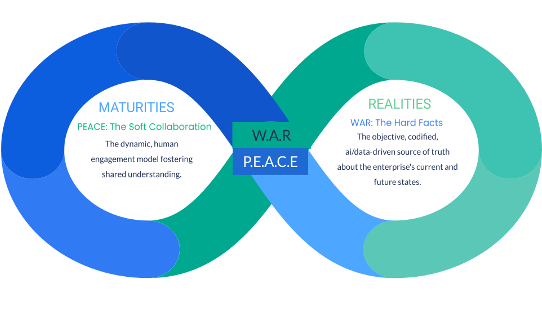 W.A.R & P.E.A.C.E, the pivotal human lens within TRIAL, designed
specifically to address this cultural challenge and shepherd the enterprise
toward AARAM (Agentic AI Reinforced Architecture Maturities)2 with what I term
“speed 3” transformation of AI. ... The successful, continuous balancing of
W.A.R. and P.E.A.C.E. is the biggest battle an Enterprise Architect must win.
Just as Tolstoy explored the monumental scope of war against intimate moments of
peace in his masterwork, the Enterprise Architect must balance the intense
effort to build repositories against the delicate work of fostering
organizational harmony. ... The W.A.R. systematically organizes information
across the four critical architectural domains defined in our previous article:
Business, Information, Technology, and Security (BITS). The true power of W.A.R.
lies in its ability to associate technical components with measurable business
and financial properties, effectively transforming technical discussions into
measurable, strategic imperatives. Each architectural components across BITS are
tracked across Plan, Design & Run lifecycle of change under the guardrails
of BYTES. ... Achieving effective P.E.A.C.E. mandates a carefully constructed
collaborative environment where diverse organizational roles work together
toward a shared objective. This requires alignment across all lifecycle stages
using social capital and intelligence.
W.A.R & P.E.A.C.E, the pivotal human lens within TRIAL, designed
specifically to address this cultural challenge and shepherd the enterprise
toward AARAM (Agentic AI Reinforced Architecture Maturities)2 with what I term
“speed 3” transformation of AI. ... The successful, continuous balancing of
W.A.R. and P.E.A.C.E. is the biggest battle an Enterprise Architect must win.
Just as Tolstoy explored the monumental scope of war against intimate moments of
peace in his masterwork, the Enterprise Architect must balance the intense
effort to build repositories against the delicate work of fostering
organizational harmony. ... The W.A.R. systematically organizes information
across the four critical architectural domains defined in our previous article:
Business, Information, Technology, and Security (BITS). The true power of W.A.R.
lies in its ability to associate technical components with measurable business
and financial properties, effectively transforming technical discussions into
measurable, strategic imperatives. Each architectural components across BITS are
tracked across Plan, Design & Run lifecycle of change under the guardrails
of BYTES. ... Achieving effective P.E.A.C.E. mandates a carefully constructed
collaborative environment where diverse organizational roles work together
toward a shared objective. This requires alignment across all lifecycle stages
using social capital and intelligence.

No comments:
Post a Comment